2027 How to Become a Licensed Counselor (LPC) in North Carolina

Co-Founder and Chief Data Scientist
Becoming a licensed counselor in North Carolina is a multi-year decision that affects where you study, how much supervised experience you need, which exams you take, and what kinds of clients you may eventually serve. Interest in mental health careers remains strong as more people seek professional support for anxiety, depression, trauma, substance use, family stress, and other behavioral health concerns. Approximately 51.3 million adults in the United States received mental health treatment or counseling, reflecting a continued shift toward recognizing mental well-being as part of overall health (Mental Health America, 2025).
This guide explains how North Carolina counseling licensure works, what education and supervised experience you need, how the application and renewal process works, and how to compare counseling programs in the state. It is designed for prospective graduate students, career changers, psychology majors, and counseling professionals considering practice in North Carolina.
How to Become an LPC in North Carolina Table of Contents
- Quick answer: How to become a licensed counselor in North Carolina
- Overview of the counseling profession in North Carolina
- Education and training requirements for North Carolina counselors
- Licensure application, renewal, and timeline
- Top counseling programs in North Carolina for 2027
- Substance abuse counseling in North Carolina
- Licensed counselors compared with other mental health professionals
- Counseling vs. psychology licensure pathways
- Online master’s degrees for mental health counseling
- How to evaluate accredited counseling programs
- Dual credentials for counseling careers
- Behavior analysis and counseling practice
- Challenges licensed counselors face in North Carolina
- School counseling as a related pathway
- How counselors can keep up with rule changes
- Career opportunities for licensed counselors
- Art therapy and counseling specialization
- Marriage and family counseling in North Carolina
- Step-by-step checklist for becoming licensed
Quick answer: How do you become a licensed counselor in North Carolina?
To become a licensed counselor in North Carolina, you generally need to complete a bachelor’s degree, earn a master’s degree in counseling or a closely related field from an accredited institution, complete 3,000 hours of supervised clinical experience after the master’s degree, pass the National Clinical Mental Health Counseling Examination (NCMHCE), pass the North Carolina Jurisprudence Exam, and submit an application to the North Carolina Board of Licensed Clinical Mental Health Counselors (NCBLCMHC).
The full process commonly takes 6 to 8 years, depending on your undergraduate preparation, graduate enrollment status, availability of supervised work, exam timing, and application processing. North Carolina also requires license renewal every two years by June 30th of the renewal year, along with 40 hours of continuing education.
| Requirement | What it means for applicants |
| Graduate education | Complete a master’s degree in counseling or a related field from an accredited institution. |
| Supervised experience | Complete 3,000 hours of supervised clinical experience after earning the master’s degree. |
| National exam | Pass the National Clinical Mental Health Counseling Examination (NCMHCE). |
| State exam | Pass the North Carolina Jurisprudence Exam required by the NCBLCMHC. |
| Licensure renewal | Renew every two years by June 30th of the renewal year and complete 40 hours of continuing education. |
Overview of the Counseling Industry in North Carolina
North Carolina regulates clinical mental health counseling through the North Carolina Board of Licensed Clinical Mental Health Counselors (NCBLCMHC). The board sets rules for education, supervision, examinations, professional conduct, license renewal, and public license verification. Although many people still search for “LPC in North Carolina,” the state’s current professional licensing language centers on Licensed Clinical Mental Health Counselors.
For prospective counselors, the state can be appealing because demand for mental health services intersects with a cost profile that may be more manageable than in some other parts of the country. The average salary of a licensed counselor in North Carolina is $74,801, compared with the national average salary of $89,171 for the same profession (ZipRecruiter, 2025). At the same time, the cost of living in the state is four percent lower than the national average (RentCafe, 2025).
Those figures should be used carefully. Salary depends on license level, employer type, client population, specialization, geographic area, caseload, years of experience, and whether you work in private practice, a hospital, a school, a nonprofit agency, or a government setting. A lower cost of living can help, but it does not remove the need to compare graduate tuition, supervision opportunities, student loan obligations, and expected earnings.
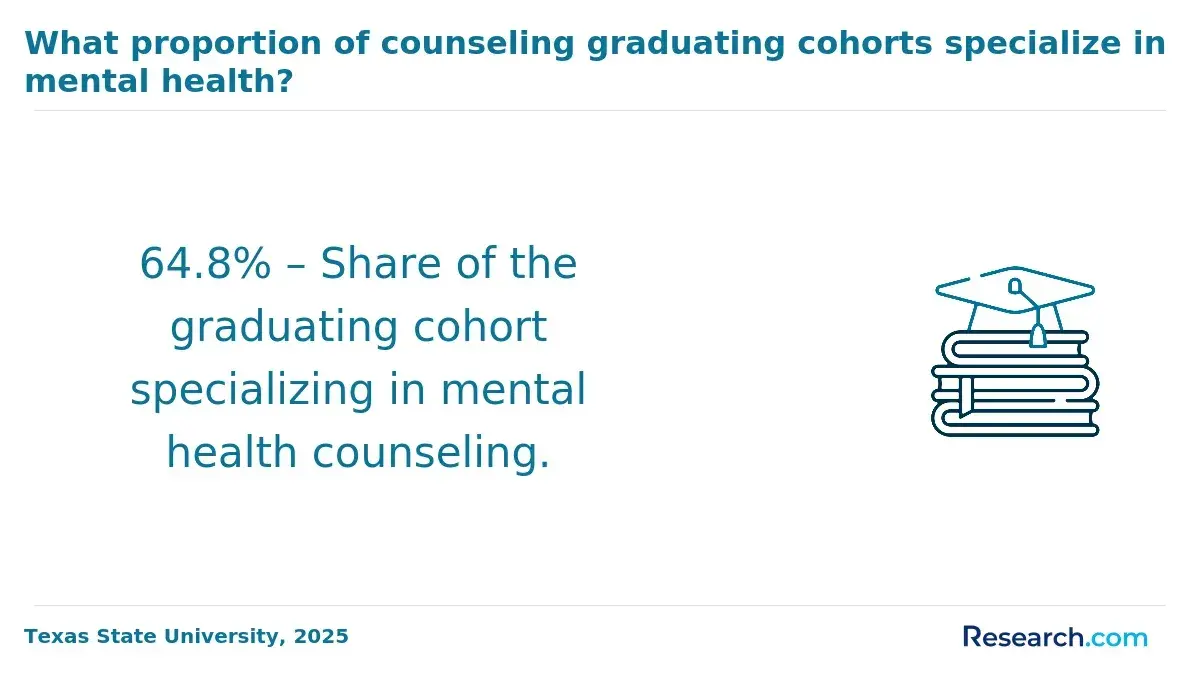
Educational Requirements for Licensed Counselors in North Carolina
North Carolina counseling licensure starts with graduate-level preparation. Your master’s program should prepare you for clinical practice, ethical decision-making, assessment, diagnosis, counseling theory, human development, group work, multicultural counseling, crisis response, and supervised client contact. Choosing the right program matters because not every psychology, human services, or counseling-adjacent degree will automatically satisfy licensure expectations.
- Earn a bachelor’s degree: A bachelor’s degree is the entry point for graduate study. Many students major in psychology, social science, human services, or a related field. If cost and flexibility are major concerns, compare options such as an affordable online psychology degree before applying to graduate school.
- Complete a qualifying master’s degree: The next major step is a master’s degree in counseling or a related field from an accredited institution. Students comparing remote options may also want to review online graduate psychology programs, while confirming that any chosen program aligns with counseling licensure requirements.
- Build supervised clinical experience: North Carolina requires 3,000 hours of supervised clinical experience after the master’s degree. This is where classroom learning becomes professional practice under supervision. The importance of experience is not limited to counseling; it also shapes many career options for psychology degree holders.
- Pass the NCMHCE: Applicants must pass the National Clinical Mental Health Counseling Examination, which evaluates clinical judgment, diagnosis, treatment planning, and decision-making.
- Pass the North Carolina Jurisprudence Exam: This state-specific exam confirms that applicants understand North Carolina counseling laws, rules, and ethical obligations.
| Pathway stage | Best decision to make at this stage | Common risk to avoid |
| Undergraduate study | Choose a major that builds writing, research, human behavior, and helping-skills foundations. | Assuming any bachelor’s major will provide enough preparation for graduate counseling admissions. |
| Graduate program selection | Confirm that the curriculum, accreditation, practicum, and internship structure support North Carolina licensure goals. | Choosing a program only because it is inexpensive or online without checking licensure fit. |
| Supervised practice | Secure supervision that meets board expectations and document hours carefully. | Losing track of supervision records or assuming an employer will manage documentation for you. |
| Exams and application | Plan exam preparation and gather transcripts, supervision verification, and other required materials early. | Waiting until the end of supervision to understand the application process. |
North Carolina Licensure Application and Renewal Process
North Carolina’s behavioral health workforce is broad and multidisciplinary. In 2026, the state’s behavioral health workforce includes more than 30,800 graduate-level clinicians, including clinical social workers, psychologists, counselors, and marriage and family therapists, along with 3,605 mental health and substance use prescribers (UNC Sheps Center, 2026). Counselors are one part of this larger care system, often working with physicians, prescribers, social workers, school personnel, family therapists, and community organizations.
Licensure mobility is also changing. License reciprocity means one state may recognize a professional license issued by another state, allowing a practitioner to work in the new state without repeating the full initial licensing process. North Carolina participates in the Counseling Compact, which allows qualified practitioners from member states to obtain a privilege to practice. Eligible counselors from non-compact states may still apply for the LCMHC license by endorsement (NCBLCMHC, 2025).
ZipRecruiter. (2025, January 15). Licensed Professional Counselor Salary. https://www.ziprecruiter.com/Salaries/Licensed-Professional-Counselor-Salary RentCafe. (2025). Cost of living in North Carolina. https://www.rentcafe.com/cost-of-living-calculator/us/nc/
Before applying, read the board’s current instructions rather than relying only on summaries. Requirements can change, and applicants are responsible for submitting complete and accurate documentation.
Licensure Application Process:
- Complete the National Clinical Mental Health Counseling Examination before submitting the licensure application to the NCBLCMHC.
- Complete the North Carolina Jurisprudence Exam and submit the Certificate of Completion. Both first-time applicants and renewing licensees must complete the exam within six months before the application.
- Collect official transcripts, verification of supervised clinical hours, proof of passing the NCMHCE, and the required application fee.
- Submit the application for board review. During the NCBLCMHC license verification process, the board evaluates whether your documentation satisfies state requirements. You may practice as a licensed counselor only after the board approves the application and issues the license.
Licensure Renewal Process:
- Renew the license every two years by June 30th of the renewal year. The online LCMHC license lookup can be used to confirm whether a license is active.
- Complete 40 hours of continuing education. Part of this requirement may be connected to the jurisprudence exam.
- Submit the renewal application to the NCBLCMHC, including the professional disclosure statement required for the license level being renewed.
- Wait for board review and approval. After NC LPC license verification and renewal approval, the counselor may continue practicing under the renewed license.
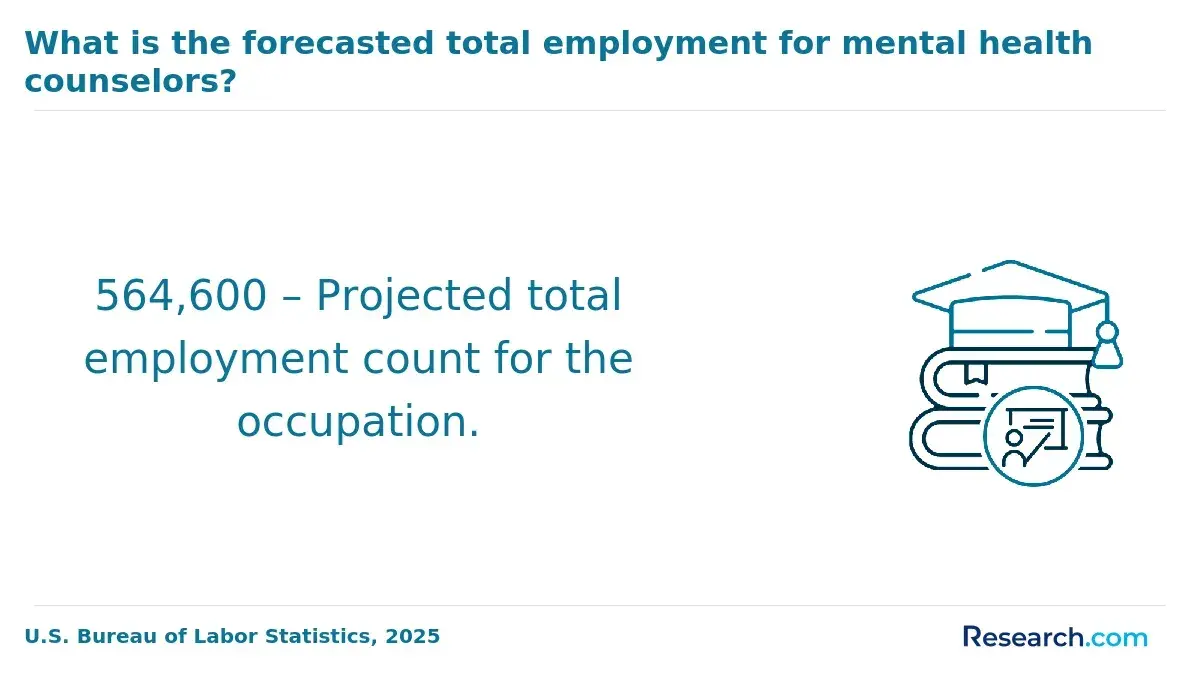
Timeline for Becoming a Licensed Counselor in North Carolina
The North Carolina counseling licensure path usually takes 6 to 8 years from the start of undergraduate preparation through full licensure. The timeline can be shorter or longer depending on transfer credits, full-time or part-time enrollment, whether you already hold a bachelor’s degree, how quickly you secure supervised employment, and how long exam preparation takes.
| Stage | Typical time involved | What happens during this stage |
| Graduate education | 2 to 3 years | Students complete master’s-level counseling coursework, practicum, internship, and degree requirements. |
| Supervised clinical experience | 2 to 3 years | Counselors complete 3,000 hours of supervised clinical experience after the master’s degree. |
| Exam preparation and testing | 3 to 6 months | Applicants prepare for and complete the NCMHCE and the North Carolina Jurisprudence Exam. |
| Licensure application review | 1 to 3 months | The applicant submits documentation and waits for board review and final approval. |
Students who want the most efficient route should plan backward from licensure. Ask programs how they support practicum and internship placement, how graduates transition into supervised roles, and whether faculty advisors understand North Carolina requirements.
List of Top Counseling Programs in North Carolina for 2027
According to our research, there are 2075 licensed professional counselor jobs available in North Carolina (Zippia, 2026). Students entering the field should focus not only on job availability but also on program fit, accreditation, clinical placement quality, specialization options, and total cost. The broader field of counseling, therapy, and psychology careers includes several related paths, so your graduate program should match your intended license and client population.
The following North Carolina programs are commonly considered by students interested in counseling licensure. Always confirm current tuition, admission rules, modality, and licensure alignment directly with the institution before enrolling.
| School | Program options highlighted | Program length | Cost per credit | Credits | Accreditation |
| North Carolina State University | Clinical mental health counseling and student development | Three to five years | $200 (in-state), $533 (out-of-state) | 60 | CACREP |
| Wake Forest University | Clinical mental health counseling and school counseling | Three Years | $1,650 | 60 | CACREP |
| North Carolina Central University | Clinical mental health counseling and school counseling | Three Years | $298.73 (in-state), $1,038.07 (out-of-state) | 60 | CACREP |
| Western Carolina University | School counseling and clinical mental health | Two Years | $586 (in-state), $1,180 (out-of-state) | 60 | CACREP |
| Appalachian State University | Clinical mental health counseling | Two to three years | $478 (in-state), $1,350 (out-of-state) | 60 | CACREP |
North Carolina State University
North Carolina State University offers counselor education pathways that include an M.Ed. in clinical mental health counseling and a student development option. The university also offers doctoral study in counseling and counselor education for students interested in advanced academic, leadership, supervision, or research roles. Its school counseling track is built for students who want to work in advising, student support, and educational service settings.
- Program Length: Three to five years
- Tracks/concentrations: clinical mental health and student development
- Cost per credit: $200 (in-state), $533 (out-of-state).
- Required Credits to Graduate: 60
- Accreditation: Council for Accreditation of Counseling and Related Educational Programs (CACREP)
Wake Forest University
Wake Forest University’s Department of Counseling offers graduate counseling programs with specialization choices and flexible delivery options. Students may pursue online MA in counseling degrees or study on campus. The university also offers an undergraduate counseling minor focused on health and human services, which may be useful for students exploring the field before committing to graduate study.
- Program Length: Three Years
- Tracks/concentrations: clinical mental health and school counseling
- Cost per credit: $1,650
- Required Credits to Graduate: 60
- Accreditation: CACREP
North Carolina Central University
North Carolina Central University’s clinical mental health counseling program combines academic preparation with supervised experiences that support counseling licensure goals in North Carolina. Graduates of the program are also eligible to apply for licensure as a clinical addiction specialist, which may appeal to students who want to work with clients affected by substance use.
- Program Length: Three Years
- Tracks/concentrations: clinical mental health and school counseling
- Cost per credit: $298.73 (in-state), $1,038.07 (out-of-state).
- Required Credits to Graduate: 60
- Accreditation: CACREP
Western Carolina University
Western Carolina University offers master’s degrees in counseling with specialization choices for students preparing for school or clinical mental health work. Graduates may pursue licensure as LPCs and licensed clinical mental health counselor associates. Students comparing helping professions may also consider WCU’s graduate social work and counseling pathways.
- Program Length: Two Years
- Tracks/concentrations: school counseling and clinical mental health
- Cost per credit: $586 (in-state), $1,180 (out-of-state).
- Required Credits to Graduate: 60
- Accreditation: CACREP
Appalachian State University
Appalachian State University offers an on-campus MA in clinical mental health counseling and a dual-degree option that combines clinical mental health counseling with music therapy. Graduates may pursue work in settings such as treatment centers, community mental health centers, veterans administration services, and hospitals.
- Program Length: Two to three years
- Tracks/concentrations: clinical mental health
- Cost per credit: $478 (in-state), $1,350 (out-of-state).
- Required Credits to Graduate: 60
- Accreditation: CACREP
How does substance abuse counseling address critical mental health challenges in North Carolina?
Substance abuse counseling is one of the most important counseling-related specialties because substance use concerns often overlap with depression, anxiety, trauma, family conflict, housing instability, legal issues, and physical health problems. Counselors in this area assess client needs, support treatment planning, coordinate with healthcare and community providers, and help clients work toward recovery goals.
This path may be a strong fit if you want to work in treatment centers, community agencies, integrated behavioral health clinics, hospitals, correctional settings, or nonprofit programs. It can also complement clinical mental health counseling by helping practitioners respond more effectively when substance use is part of a client’s presenting concern. Students who want a focused licensing guide can review how to become a substance abuse counselor in North Carolina.
How Do Licensed Counselors Compare to Other Mental Health Professionals?
Licensed counselors, psychologists, social workers, and marriage and family therapists all support mental health, but they are trained for different scopes of practice. Counselors typically receive master’s-level training focused on therapeutic relationships, counseling techniques, assessment, diagnosis, treatment planning, ethics, and supervised clinical practice. Psychologists generally complete doctoral-level education with deeper emphasis on psychological testing, research, and advanced assessment. Social workers often combine therapy with case management, systems advocacy, benefits navigation, and community resource coordination.
| Profession | Typical focus | When this path may fit |
| Licensed counselor | Individual, group, and sometimes family counseling using clinical mental health training. | You want a therapy-centered career with master’s-level preparation. |
| Psychologist | Assessment, diagnosis, therapy, research, and psychological testing. | You are prepared for doctoral-level training and may want advanced assessment authority. |
| Social worker | Clinical support, case management, resource coordination, and systems-level client advocacy. | You want to combine therapy with social services and community-based intervention. |
| Marriage and family therapist | Relationship systems, family dynamics, couples counseling, and family therapy. | You want to specialize in relational and family-based care. |
For readers comparing overlapping roles, this explanation of the difference between social workers and therapists can help clarify which profession aligns with your preferred scope of practice.
How do counseling and psychology licensure pathways compare in North Carolina?
Counseling and psychology can both lead to mental health careers, but they are not interchangeable licensure tracks. Counseling is generally built around a qualifying master’s degree, supervised counseling experience, and counseling-specific exams. Psychology licensure generally requires doctoral-level preparation, deeper research and assessment training, and separate state requirements.
If your goal is to provide therapy through a master’s-level route, counseling may be the more direct pathway. If your goal includes psychological testing, research-intensive work, academic psychology, or doctoral-level clinical practice, psychology may be more appropriate. Students who are uncertain should compare curricula, licensure rules, supervision requirements, and long-term career goals before enrolling. For a closer look at the psychology route, see how to become a psychologist in North Carolina.
How does an online master's degree prepare you for a career in mental health counseling in North Carolina?
An online master’s degree can be a practical option for working adults, rural students, caregivers, and career changers who need more scheduling flexibility. However, online delivery alone does not determine whether a program is appropriate for North Carolina licensure. The key questions are whether the program is properly accredited, includes required clinical training, supports practicum and internship placement, and prepares students for state and national licensing expectations.
Strong online counseling programs provide structured coursework, faculty interaction, supervised field experiences, clinical skills practice, and preparation for ethical and legal responsibilities. Before enrolling, ask where clinical placements occur, how supervision is arranged, whether the program has experience placing students in North Carolina, and whether graduates have pursued North Carolina licensure. Students comparing remote options can start with this list of the best online master’s in mental health counseling degree programs.
What Should You Look for in Accredited Counseling Programs in North Carolina?
The best counseling program for you is not always the highest-ranked or most familiar name. It is the program that fits your licensure goal, budget, learning style, clinical interests, and timeline. Accreditation should be one of the first things you verify because it can affect licensure eligibility, employer confidence, internship options, and transferability of training.
- Accreditation: Confirm that the program’s accreditation is current and relevant to counseling licensure.
- Licensure alignment: Ask whether the curriculum is designed to meet North Carolina counseling requirements.
- Clinical placements: Find out how practicum and internship sites are approved and whether the school helps students secure placements.
- Faculty background: Look for faculty with counseling licensure, clinical expertise, supervision experience, and research or practice areas that match your interests.
- Cost and aid: Compare tuition, fees, travel costs, technology costs, books, and available aid, not just the advertised per-credit rate.
- Outcomes: Ask about graduation rates, licensure exam support, job placement information, and alumni practice settings.
Students who are still comparing undergraduate or graduate psychology-related options in the state may also find it useful to review strong psychology colleges in North Carolina.
How Can Dual Credentials Enhance Your Counseling Practice in North Carolina?
Dual credentials can expand the populations you serve and the settings where you work, but they also add time, cost, supervision, and renewal obligations. For example, counselors who add social work training may gain stronger preparation in systems advocacy, case management, community resources, and public service settings. This can be valuable when clients need both therapy and support navigating healthcare, housing, education, family services, or public benefits.
Dual credentialing makes the most sense when it supports a clear career goal. It may not be worth the additional expense if you simply want a general private therapy practice. Before pursuing another credential, compare scope of practice, supervision rules, exam requirements, renewal obligations, and salary expectations. If you are considering a social work route, review how to become a social worker in North Carolina.
How Can Behavior Analysis Complement Your Counseling Practice in North Carolina?
Behavior analysis can strengthen a counselor’s ability to understand observable behavior patterns, environmental triggers, reinforcement, skill-building, and measurable behavior change. While counseling and applied behavior analysis are distinct fields, some clients benefit when clinicians understand both emotional processes and behavior-based intervention strategies.
This combination may be especially relevant for professionals working with developmental disabilities, autism-related services, behavioral intervention plans, school-based teams, or structured treatment programs. Counselors considering this route should be careful not to practice outside their competence or license scope. Those interested in a formal behavior analysis credential can explore how to become a behavior analyst in North Carolina.
What Challenges Do LPCs Encounter in North Carolina?
Licensure is only one part of building a sustainable counseling career. North Carolina counselors must also manage documentation, insurance requirements, ethical duties, continuing education, supervision responsibilities, telehealth policies, and emotional demands from client care. Burnout can become a real risk when caseloads are high, administrative time is unpaid or underestimated, and clinicians do not have strong consultation support.
- Administrative load: Progress notes, treatment plans, billing, audits, and compliance work can consume more time than new counselors expect.
- Teletherapy expectations: Clients increasingly expect flexible care options, but counselors must understand privacy, technology, documentation, and jurisdiction rules.
- Insurance and reimbursement: Private practice can offer autonomy, but credentialing, claims, denials, and payment delays can be complex.
- Professional isolation: Counselors outside agency settings may need to intentionally build consultation networks.
- Emotional strain: Trauma work, crisis work, and chronic high-demand caseloads require supervision, boundaries, and self-care systems.
If your priority is reaching practice as efficiently as possible while avoiding unnecessary delays, this guide to the fastest way to become a counselor in North Carolina can help you identify where students often lose time.
How Can School Counseling Enhance LPC Practice in North Carolina?
School counseling is a distinct but related route for professionals who want to support students’ academic, social, emotional, and career development. Counselors in schools collaborate with teachers, administrators, families, and community partners to address student needs early, often before problems become more severe.
This pathway may fit students who enjoy working with children or adolescents, prefer educational environments, and want to support prevention and early intervention. Clinical mental health counselors who understand school systems may also be better prepared to coordinate care for young clients. For a focused overview, see this guide to becoming a school counselor in North Carolina.
How Can LPCs Stay Updated with Regulatory Changes?
Counseling rules, telehealth expectations, supervision standards, compact participation, and renewal processes can change. Licensed professionals should monitor official NCBLCMHC communications, complete continuing education intentionally, and keep copies of all renewal, supervision, and jurisprudence documentation.
Professional associations, supervision groups, continuing education providers, and peer consultation networks can also help counselors notice regulatory changes before they become compliance problems. For a focused licensing overview, review North Carolina LPC license requirements.
Career Opportunities and Growth for LPCs in North Carolina
Licensed counselors in North Carolina can work in many settings, and the best choice depends on your preferred client population, risk tolerance, income goals, and desired schedule. Some counselors want the structure of an agency or hospital. Others eventually move into private practice. Many build careers across several settings over time.
- Private Practice: Counselors who want autonomy may open or join a private practice, though this path also requires business planning, marketing, documentation systems, and knowledge of insurance or private-pay models.
- Hospitals and Clinics: Clinical settings may offer interdisciplinary teamwork, higher-acuity cases, and opportunities to coordinate with medical providers.
- Schools: K-12 institutions need professionals who can support student mental health, crisis response, academic planning, and family communication.
- Community mental health agencies: These settings often serve clients with complex needs and can provide broad experience early in a counselor’s career.
- Substance use and recovery programs: Counselors with addiction-related training may work in outpatient, residential, or integrated treatment settings.
Students interested in family systems or relationship-focused work may also compare counseling with marriage and family therapy pathways, including flexible options such as the most affordable online MFT programs.
Teletherapy and online services have expanded the ways counselors can reach clients, but they also create new responsibilities. Counselors must understand privacy, informed consent, emergency planning, technology platforms, and whether they are authorized to serve clients located in a particular jurisdiction.
The Role of Art Therapy in Mental Health Counseling
Art therapy can be a meaningful specialization for counselors who want to help clients communicate experiences that may be difficult to describe verbally. Creative methods such as drawing, painting, sculpture, and other expressive work can support emotional exploration, stress reduction, trauma processing, identity development, and insight-building when used by appropriately trained professionals.
This specialty may fit counselors who are comfortable integrating creative expression with psychological theory, ethics, assessment, and clinical treatment planning. Art therapists may work in hospitals, schools, rehabilitation centers, community agencies, private practices, and other mental health settings.
Students interested in this niche should look for programs that combine counseling knowledge with formal art therapy preparation. A list of the best master’s in art therapy programs can help prospective students compare options that connect clinical training with creative therapeutic methods.
Importance of Marriage and Family Counseling in North Carolina
Marriage and family counseling focuses on relationship patterns, family roles, communication, conflict, parenting stress, separation, grief, blended families, and other issues that often cannot be understood only at the individual level. In North Carolina, this work can be relevant in schools, clinics, community agencies, faith-adjacent settings, and private practice.
This specialization may be a good fit if you are interested in couples therapy, family systems, child and adolescent family dynamics, or intergenerational patterns. It may be less ideal if you prefer primarily individual therapy and do not want to manage multi-person sessions or relational conflict in real time.
Students who want this route should compare counseling licensure with marriage and family therapy licensure before choosing a graduate program. For a step-by-step overview, see how to become a marriage and family therapist in North Carolina.
What are the steps to become a licensed counselor in North Carolina?
The basic sequence is straightforward, but each step requires planning. Start with undergraduate preparation, choose a qualifying graduate program, complete required clinical training, document supervised hours, pass the NCMHCE and North Carolina Jurisprudence Exam, submit the board application, and maintain the license through renewal and continuing education. For a dedicated walkthrough, see this guide on how to become a licensed mental health counselor in North Carolina.
- Clarify your target role: Decide whether you want clinical mental health counseling, school counseling, substance abuse counseling, marriage and family therapy, psychology, or social work.
- Choose a licensure-aligned graduate program: Confirm accreditation, clinical placement structure, and North Carolina licensure preparation.
- Plan the budget: Compare tuition, fees, books, travel, lost work hours, exam costs, and the cost of completing supervised experience.
- Complete practicum and internship seriously: Use fieldwork to test client populations, settings, and supervision styles.
- Track supervised hours carefully: Maintain accurate records rather than reconstructing documentation later.
- Prepare for exams early: Build NCMHCE study time into your post-graduate plan and complete the jurisprudence requirement within the required timing.
- Apply only when your documentation is complete: Missing transcripts, supervision forms, or exam verification can delay approval.
- Keep learning after licensure: Continuing education is not just a renewal requirement; it protects clients and supports long-term career growth.
Should I study to become a licensed counselor in North Carolina?
Studying to become a licensed counselor in North Carolina can be a worthwhile path if you want a client-facing mental health career, are prepared for graduate school, and understand that licensure requires years of supervised preparation after the degree. The path is demanding, but it can lead to work in private practice, healthcare, schools, community agencies, substance use treatment, family services, and other behavioral health settings.
It may not be the best option if you want a short training route, are uncomfortable with emotionally intense work, or do not want to complete graduate education and post-master’s supervised practice. Students should also be realistic about cost. Tuition, fees, living expenses, unpaid or lower-paid training periods, exam costs, and supervision-related logistics can affect return on investment.
| Choose counseling in North Carolina if... | Consider another route if... |
| You want a therapy-focused career with master’s-level clinical preparation. | You want to conduct extensive psychological testing or pursue doctoral-level psychology practice. |
| You are willing to complete 3,000 hours of supervised clinical experience. | You want a faster credential that does not require a graduate degree. |
| You can manage the cost and time commitment of a 6 to 8 year pathway. | You are unsure whether direct client care is sustainable for you. |
| You want flexibility across private practice, agencies, schools, clinics, and specialized settings. | You are more interested in policy, case management, or systems advocacy than therapy. |
Common mistakes to avoid when pursuing counseling licensure in North Carolina
- Choosing a program before checking licensure fit: A counseling-related title is not enough. Confirm that the degree supports your intended North Carolina license.
- Looking only at tuition: Compare total cost, including fees, books, travel, residency requirements, technology, exam fees, and lost work time.
- Assuming online means easier: Online counseling programs still require rigorous coursework, clinical skills development, practicum, internship, and licensure preparation.
- Waiting too long to plan supervision: The 3,000 hours of supervised clinical experience can become a bottleneck if you do not understand approved supervision early.
- Ignoring documentation: Licensure depends on proof. Keep copies of transcripts, supervision records, exam results, continuing education records, and board communications.
- Assuming salaries are guaranteed: The average salary of $74,801 is only a reference point. Earnings vary by employer, region, specialization, experience, and practice model.
- Relying only on rankings: A highly visible school may not be the best fit for your budget, schedule, specialization, or clinical placement needs.
Questions to ask before enrolling in a North Carolina counseling program
- Is the program accredited, and is that accreditation current?
- Does the curriculum align with North Carolina counseling licensure requirements?
- How does the program help students secure practicum and internship placements?
- Can online students complete clinical requirements in or near their community?
- What is the total estimated cost, including fees and required campus visits if applicable?
- What support does the program provide for the NCMHCE?
- Where do graduates typically work after completing the program?
- Does the program prepare students for any additional credentials, such as addiction counseling, school counseling, or family-focused practice?
- How accessible are faculty advisors and clinical placement coordinators?
- What happens if a student needs to switch from full-time to part-time study?
Related Articles for Nearby States
- 2027 How to Become a Licensed Counselor (LPC) in South Carolina
- 2027 How to Become a Licensed Counselor (LPC) in Virginia
- 2027 How to Become a Licensed Counselor (LPC) in Georgia
- 2027 How to Become a Licensed Counselor (LPC) in Tennessee
- 2027 How to Become a Licensed Counselor (LPC) in West Virginia
- 2027 How to Become a Licensed Counselor (LPC) in Kentucky
- 2027 How to Become a Licensed Counselor (LPC) in Florida
- 2027 How to Become a Licensed Counselor (LPC) in Maryland
- 2027 How to Become a Licensed Counselor (LPC) in Alabama
- 2027 How to Become a Licensed Counselor (LPC) in Pennsylvania
References:
- American Psychological Association. (n.d.). How to become a counselor/therapist. https://www.apa.org/ed/precollege/psn/2025/counselor-career
- American Counseling Association. (n.d.). Continuing education for counselors. https://www.counseling.org/education/continuing-education
- Mental Health America. (2025). The State of Mental Health in America 2025. https://mhanational.org/issues/state-mental-health-america
- National Board for Certified Counselors (NBCC). (n.d.). Licensure & certification. https://www.nbcc.org/licensure
- National Board for Certified Counselors. (n.d.). Professional advancement resources. https://www.nbcc.org/professional-development
- National Board for Certified Counselors. (n.d.). Career & salary info. https://www.nbcc.org/benefits/career
- North Carolina Board of Licensed Clinical Mental Health Counselors. (n.d.). LCMHCS supervision credential info. https://ncblcmhc.org/Licensure/Current/LCMHCS
- North Carolina Board of Licensed Clinical Mental Health Counselors. (n.d.). Licensure information. https://ncblcmhc.org/licensure
- North Carolina Board of Licensed Clinical Mental Health Counselors. (2025). Apply for a License. https://www.ncblcmhc.org/Licensing/Applying
- U.S. Bureau of Labor Statistics. (2025). Occupational outlook for mental health counselors. https://www.bls.gov/ooh/community-and-social-service/mental-health-counselors.htm
- U.S. Department of Health & Human Services. (n.d.). Mental health workforce data & projections. https://www.hhs.gov/mental-health-workforce
Key Insights
- North Carolina counseling licensure is a graduate-level pathway: Applicants need a qualifying master’s degree, 3,000 hours of supervised clinical experience, the NCMHCE, and the North Carolina Jurisprudence Exam.
- The process usually takes years, not months: A realistic full pathway often takes 6 to 8 years, including graduate education, supervised practice, exams, and application review.
- Program choice affects licensure readiness: Accreditation, clinical placement support, cost, supervision preparation, and North Carolina licensure alignment matter more than name recognition alone.
- Salary should be weighed against total cost: The average salary of a licensed counselor in North Carolina is $74,801, while the state’s cost of living is four percent lower than the national average, but individual earnings vary widely.
- Specialization can shape your career options: Substance abuse counseling, school counseling, marriage and family work, art therapy, behavior analysis, and social work-related credentials can expand practice options when they match a clear career goal.
- Licensure does not end with approval: North Carolina counselors must renew every two years by June 30th of the renewal year and complete 40 hours of continuing education to remain in good standing.
Other Things You Should Know About Becoming a Licensed Counselor (LPC) in North Carolina
To become a licensed counselor in North Carolina, you must obtain a master’s degree in counseling or a related field from an accredited institution. Additionally, you need to complete 3,000 hours of supervised clinical experience post-master’s.
You must pass the National Clinical Mental Health Counseling Examination (NCMHCE) and the North Carolina Jurisprudence Exam to qualify for licensure.
To become a Licensed Professional Counselor (LPC) in North Carolina, you must complete 3,000 supervised hours, of which 2,000 must be direct client contact. These hours must be logged under the supervision of a Board-approved supervisor to qualify for licensure.
North Carolina requires a master’s or doctoral counseling degree from a program accredited by CACREP or a program judged substantially equivalent by the North Carolina Board of Licensed Clinical Mental Health Counselors. Applicants must also complete the board’s required coursework and supervised clinical training before licensure.