2027 How to Become a School Counselor in Maryland

Co-Founder and Chief Data Scientist
Becoming a school counselor in Maryland means preparing for a regulated K–12 role that combines academic advising, career planning, crisis referral, family communication, and social-emotional support. The path is not simply “earn a counseling degree and apply.” Maryland expects candidates to meet specific graduate education, supervised fieldwork, testing, special education coursework, background check, and renewal requirements before they can serve as professional school counselors.
This guide is for prospective graduate students, career changers, current educators, out-of-state counselors, and counseling professionals who want to understand the Maryland pathway before investing time and tuition. You will learn which degree routes qualify, how long the process can take, what certification is required, how reciprocity works, what salary and job outlook information is available, and how to choose a program without overlooking accreditation, field placement, or licensure fit.
Quick Answer: How do you become a school counselor in Maryland?
- Earn a qualifying master’s degree in school counseling or a closely aligned counselor education program that meets Maryland State Department of Education requirements.
- Complete the required supervised school counseling field experience, which may include practicum and internship hours depending on the approved pathway.
- Pass the required Praxis School Guidance and Counseling or Praxis II: Professional School Counselor exam, as applicable to Maryland certification standards.
- Submit transcripts, testing documentation, background check materials, and proof of field experience through the Maryland State Department of Education certification process.
- Keep your credential active by renewing it every five years and completing the required professional development credits.
- What degree do I need to become a school counselor in Maryland?
- Are there school counseling focus areas in Maryland?
- How long does a Maryland school counseling degree take?
- What certification do Maryland school counselors need?
- Can a Maryland school counseling license transfer to another state?
- How often do Maryland school counselors renew their credentials?
- Are there alternative pathways into Maryland school counseling?
- What additional certifications can strengthen a Maryland counseling career?
- How can I meet broader counseling licensure requirements in Maryland?
- What is the average salary for school counselors in Maryland?
- What is the job outlook for Maryland school counselors?
- What advancement options are available to Maryland school counselors?
- What challenges do Maryland school counselors face?
What degree do I need to become a school counselor in Maryland?
Maryland school counselors generally need a graduate-level counseling degree that prepares them for K–12 school practice. The safest route is a master’s degree in school counseling from a program that is Maryland-approved, CACREP-accredited, or otherwise designed to meet state certification requirements. Before enrolling, confirm that the program’s fieldwork, coursework, and certification alignment match Maryland State Department of Education expectations.
Maryland recognizes several graduate preparation routes. The right option depends on where you complete your degree, whether you already hold a counseling credential, and whether you are applying as an in-state or out-of-state candidate.
| Maryland pathway | Who it may fit | Key requirement to verify |
| Master’s degree in school counseling with NBCC certification and experience | Candidates who hold a qualifying graduate degree and a valid National Board of Certified Counselors certificate | Two years of satisfactory teaching or counseling experience in a school setting |
| Maryland-approved master’s program with practicum | Students who want the most direct in-state preparation route | At least 500 hours of supervised practicum in school counseling |
| CACREP-accredited master’s program | Students who want a nationally recognized counseling curriculum standard | Program accreditation by the Council for Accreditation of Counseling and Related Educational Programs |
| Out-of-state certification preparation program | Applicants who completed a degree that led to school counseling certification in another state | Either two years of relevant experience or 500 practicum hours |
| Master’s degree plus valid professional license from another state | Experienced school counselors relocating to Maryland | At least 27 months of satisfactory counseling performance |
All routes should be reviewed for Maryland’s special education coursework expectations. This requirement matters because school counselors work with students with disabilities, collaborate on support plans, and help families navigate school-based services. If you are comparing counseling careers more broadly, Research.com’s guide to counseling psychology career requirements can help you see how school counseling differs from clinical, community, and psychology-focused paths.
Questions to ask before choosing a Maryland school counseling program
- Is the program Maryland-approved, CACREP-accredited, or clearly mapped to Maryland certification requirements?
- Does the curriculum include the special education coursework Maryland expects?
- How many practicum and internship hours are built into the degree plan?
- Will the school help you secure K–12 field placements in Maryland?
- Does the program prepare students for the required Praxis exam?
- If the program is online or out of state, has the school confirmed in writing that it meets Maryland certification requirements?
Are there school counseling specializations in Maryland?
Maryland school counseling programs may not always label their options as formal “specializations,” but many allow students to build expertise through electives, field placements, research projects, or dual-licensure planning. The best focus area depends on the population you want to serve and the type of work you want to do after graduation.
- K–12 school counseling: This is the core preparation route for students who want to work across elementary, middle, and high school settings. Training usually covers academic planning, career development, social-emotional support, consultation, and ethical school practice.
- School counseling plus professional counseling licensure preparation: Some students choose programs or course plans that may also support Licensed Clinical Professional Counselor goals. This route can offer more flexibility, but it requires careful planning because school certification and clinical licensure are not the same credential.
- Leadership and counseling program development: This focus suits counselors who want to coordinate schoolwide initiatives, evaluate counseling programs, consult with administrators, or move into district-level roles later in their careers.
- Diversity and urban education: This emphasis prepares counselors to serve culturally, linguistically, and economically diverse communities, including students affected by opportunity gaps, resource disparities, and systemic barriers.
- Prevention and mental health promotion: This area centers on early intervention, wellness programming, crisis referral, and evidence-informed supports for students experiencing stress, anxiety, depression, trauma, or other concerns.
- Social justice and advocacy: Counselors with this focus learn to identify inequitable school policies, advocate for marginalized students, and support access to rigorous coursework, college planning, and career opportunities.
Students comparing focus areas should start with their preferred work setting. A future high school counselor may benefit from college and career readiness training, while someone drawn to elementary counseling may want stronger preparation in child development, family engagement, and classroom guidance. For a broader overview of counseling roles, see Research.com’s discussion of what counselors do and how people enter the field.
| If your goal is... | Prioritize this training | Why it matters |
| Work in elementary schools | Child development, play-based support, family collaboration, classroom lessons | Younger students often need prevention, behavior support, and social-emotional skill building |
| Work in middle schools | Transition support, peer conflict, academic habits, mental health referral | Middle school counselors often support students through developmental, academic, and social changes |
| Work in high schools | College advising, career planning, graduation requirements, postsecondary access | High school counselors help students prepare for graduation, employment, military pathways, college, and training programs |
| Move into leadership | Program evaluation, data use, supervision, consultation, policy | Lead counselors and district coordinators need skills beyond one-on-one counseling |
| Broaden into clinical counseling | Clinical assessment, diagnosis-related coursework, supervised clinical experience | School counselor certification alone does not automatically qualify someone for independent clinical practice |
How long does it take to complete a school counseling degree in Maryland?
A Maryland school counseling master’s degree commonly takes two to three years for full-time students. Many programs require 51 to 60 graduate credits and include supervised practicum and internship experiences. Students who enroll part time, work while studying, or need additional coursework for certification may take three years or more.
The timeline is shaped by more than the number of credits. Field placements can determine how quickly you progress because school counseling internships must fit K–12 calendars, supervision availability, and program approval rules. Some pathways reference at least 500 hours of supervised practicum, while some Maryland-focused program plans may include a minimum of 700 hours of supervised school-based practicum and internship. Always confirm the requirement for your exact certification route.
| Timeline factor | How it can affect completion | What to do before enrolling |
| Full-time or part-time enrollment | Full-time students may finish in about two years; part-time students often need up to three years or longer | Ask for sample degree plans for both pacing options |
| Credit requirement | Programs requiring 51 to 60 graduate credits can take longer than shorter graduate certificates or non-licensure degrees | Confirm the total credits required for certification, not just graduation |
| Field experience | Practicum and internship hours must be scheduled in approved school settings | Ask whether the program arranges placements or expects students to find them |
| Out-of-state preparation | Applicants educated outside Maryland may need extra coursework, testing, or supervised experience | Request a written licensure alignment review from the program or MSDE |
| Certification processing | After graduation, documentation review and application processing can add weeks or months | Prepare transcripts, test scores, background check materials, and experience forms early |
The chart below shows the trend in school counseling program enrollment through the years:
What certification is required to work as a school counselor in Maryland?
To work as a school counselor in Maryland public schools, candidates need the school counselor credential issued through the Maryland State Department of Education. This credential confirms that the applicant has completed the required graduate preparation, field experience, testing, and background review for K–12 school counseling practice.
The process generally includes these steps:
- Complete an eligible graduate program. Choose a master’s-level school counseling or counselor education program that aligns with Maryland certification rules.
- Finish supervised fieldwork. Document the practicum or internship hours required by your pathway, including direct service in school counseling settings.
- Pass the required Praxis exam. Candidates must complete the Praxis School Guidance and Counseling or Praxis II: Professional School Counselor exam required for Maryland school counselor certification.
- Complete fingerprinting and a criminal background check. Maryland requires background review to help protect student safety.
- Submit your certification application. Provide official transcripts, exam scores, field experience documentation, and any additional materials requested through the MSDE process.
- Plan for renewal from the start. Certification is not a one-time task; Maryland school counselors must keep their credential current through the renewal process.
-
: "
Practical tip: Do not rely only on a program’s title. A degree called “counseling,” “mental health counseling,” or “educational counseling” may not automatically meet Maryland school counselor certification requirements. Ask the program for written confirmation of Maryland school counselor eligibility.
"
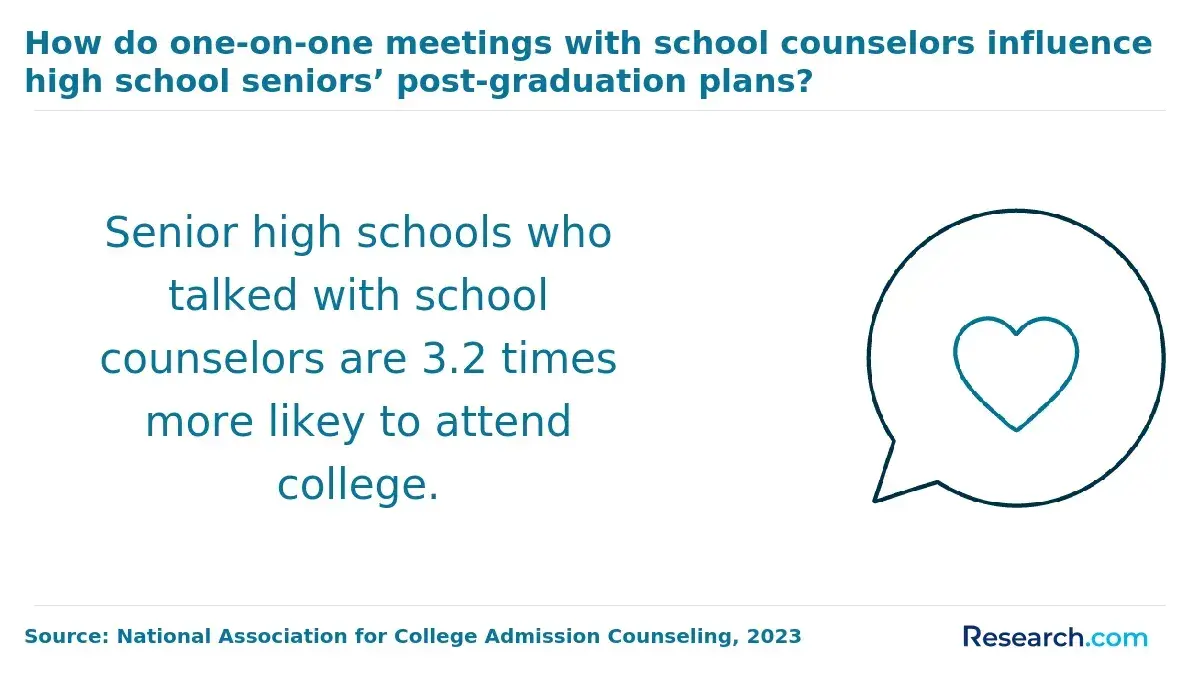
Understanding certification also clarifies the day-to-day role. Maryland school counselors are not only academic schedulers; they contribute to crisis response, referral coordination, family engagement, college and career readiness, attendance support, and student advocacy. The image below highlights the broader impact counselors can have on students’ postsecondary planning.
Can I transfer my Maryland school counseling license between states?
A Maryland school counseling credential does not automatically transfer nationwide. If you move to another state, you will usually apply through that state’s endorsement, reciprocity, or out-of-state educator certification process. The receiving state decides whether your Maryland preparation is equivalent and whether you need additional coursework, exams, background checks, or supervised experience.
The same logic applies in reverse for counselors moving into Maryland. Maryland may recognize certain out-of-state credentials, but applicants must document graduate education, professional licensing status, and experience. One Maryland pathway for incoming out-of-state applicants includes a valid professional school counseling license from another state and at least 27 months of satisfactory counseling performance.
| Transfer task | Why it matters | Common document needed |
| Review the new state’s rules | Each state sets its own school counselor certification standards | State education department checklist |
| Verify your degree and coursework | Some states require specific classes such as special education, ethics, or state law | Official transcripts and course descriptions |
| Show proof of certification | The receiving state needs evidence that your Maryland credential is valid | Credential verification form or copy of certificate |
| Document experience | Experience can affect eligibility for endorsement or professional-level certification | Employer verification or service record |
| Complete required exams | Some states require Praxis, state-specific law exams, or other assessments | Official score reports |
| Complete a background check | Student-facing school roles typically require screening | Fingerprinting and criminal history clearance |
Because there is no single national transfer process for school counselors, start the review before relocating. A reasonable first step is to compare your degree plan, practicum hours, exam scores, and experience against the receiving state’s checklist. If something is missing, ask whether you can work under a provisional or conditional credential while completing the remaining requirement.
How often do Maryland school counselors need to renew their credentials?
Maryland school counselors renew their professional credentials every five years. Renewal helps ensure that counselors continue to develop professionally and remain prepared to support students’ academic, career, social-emotional, and mental health needs.
- Renewal cycle: Maryland credentials must be renewed every five years from the initial date of issuance.
- Professional development: Six professional development credits are required, including at least one credit related to mental health intervention or crisis referral.
- Application method: Renewal materials are submitted online through the Maryland Department of Education certification portal.
- Employment verification: Applicants may need to confirm current employment as a school counselor in a Maryland public or approved private school.
- Renewal fee: A fee applies, and the current amount should be checked on the MSDE certification website.
- Background check: A new background check is generally not required unless there is a break in service or a change in employment setting.
- Best timing: Start several months before expiration so there is time to gather records, upload documents, and resolve any missing information.
How to make renewal easier
- Save certificates and transcripts for every professional development activity as soon as you complete it.
- Track which credits count toward the mental health intervention or crisis referral requirement.
- Review your MSDE account annually instead of waiting until the expiration year.
- Ask your district whether in-service training can count toward renewal credits.
- Keep copies of employment verification, evaluations, and role descriptions in case they are requested.
What are the alternative pathways to become a school counselor in Maryland?
Maryland does not require every school counseling candidate to begin as a classroom teacher. Career changers, mental health professionals, and graduates from related fields may be able to qualify if they complete the required graduate education, fieldwork, special education coursework, testing, and certification application steps.
| Alternative route | Best fit | Important caution |
| CACREP-accredited master’s program | Applicants without a teaching background who want a counseling curriculum built around recognized standards | Confirm that the specific track is school counseling and that it supports Maryland certification |
| Provisional or conditional certification | Candidates who may be allowed to work while completing remaining requirements | Availability and conditions depend on MSDE and employer rules |
| Post-baccalaureate certificate or additional coursework | People who already hold a related degree but lack Maryland-specific school counseling requirements | A certificate alone may not replace the required master’s degree |
| National Certified Counselor pathway | Professionals with a master’s degree, NBCC certification, and relevant school-based experience | Special education credits and school counseling experience still matter |
| Out-of-state certification transfer | Licensed school counselors moving to Maryland | Maryland may require proof of valid licensure, experience, and specific coursework |
Alternative pathways can reduce duplication for qualified applicants, but they are not shortcuts around professional standards. Most candidates still need substantial supervised school counseling fieldwork, and some routes reference 500+ hours. If you are still deciding which counseling credential fits your goals, review Research.com’s overview of different counseling degree types and requirements. Moreover, the chart below shows the number of school counseling programs in the US through the years:
What additional certifications can enhance my counseling practice in Maryland?
Additional credentials can help Maryland school counselors deepen their skills, move into specialized roles, or prepare for work adjacent to school counseling. Useful areas may include crisis intervention, trauma-informed support, college and career advising, behavior support, special education collaboration, and mental health referral systems. The value of an added credential depends on your job goals; not every certificate will improve your qualifications for every role.
Some professionals also explore closely related fields. For example, school psychology involves assessment, consultation, intervention planning, and educational psychology training. If that path interests you, Research.com’s guide on how to become a school psychologist in Maryland explains a different but related student support career.
| Career goal | Credential or training area to consider | Decision point |
| Support students in crisis | Crisis intervention and suicide prevention training | Confirm whether the training counts toward renewal or district requirements |
| Work more closely with mental health teams | Trauma-informed care, referral coordination, behavioral health workshops | Remember that school counseling certification does not equal independent clinical licensure |
| Lead college and career programs | College advising, career development, workforce readiness training | Look for practical tools tied to graduation planning and postsecondary access |
| Expand into assessment-focused roles | School psychology preparation | Check degree, practicum, internship, and credentialing requirements separately |
| Move into district leadership | Program evaluation, data use, supervision, and education leadership coursework | Ask whether administrative certification or an advanced degree is expected |
How can I meet additional counseling licensure requirements in Maryland?
Some Maryland school counselors later pursue Licensed Professional Counselor or related clinical counseling credentials to broaden their practice options. This is a separate process from school counselor certification. It typically involves specific graduate coursework, supervised clinical hours, and passing the required licensing examination.
If your long-term goal includes clinical counseling outside K–12 schools, plan early. A school counseling master’s program may or may not include all coursework and supervised experience needed for clinical licensure. Before choosing electives or internships, compare your degree plan with the LPC licensure requirements in Maryland.
What is the average salary of school counselors in Maryland?
The cited salary source for this article reports an average school counselor salary in Maryland of about $165,423 annually. Treat salary figures as planning estimates rather than guaranteed earnings. Actual pay depends heavily on district salary schedules, contract terms, years of experience, degree level, additional duties, and local funding.
Several factors can influence school counselor compensation in Maryland:
- Location: Pay can vary between urban, suburban, and rural districts because budgets, cost of living, and staffing needs differ.
- Experience: Counselors with more years of service may move up salary steps or qualify for leadership responsibilities.
- Education and credentials: Advanced graduate credits, specialized training, or additional credentials may affect placement on a district salary scale.
- District budget: Compensation is often tied to local funding, collective bargaining agreements, and district priorities.
- Role scope: Lead counselor duties, summer work, coaching, testing coordination, or specialized assignments may affect total compensation.
| Salary question to ask | Why it matters |
| What salary schedule applies to school counselors? | Some districts place counselors on teacher salary schedules, while others may have role-specific structures |
| How are master’s credits beyond the degree counted? | Extra graduate credits may affect salary lane placement in some districts |
| Are summer duties, extended-year work, or stipends available? | Total income can differ from base salary |
| What benefits are included? | Health insurance, retirement, leave, and tuition assistance can significantly affect overall compensation |
| How often do salary steps increase? | Long-term earnings depend on step movement and contract changes |
For students evaluating return on investment, compare the full cost of graduate school with realistic salary expectations in the districts where you want to work. Include tuition, fees, books, commuting, unpaid internship time, lost wages if you reduce work hours, and the timeline to certification.
What is the job outlook for school counselors in Maryland?
The cited outlook information for Maryland indicates school counselor employment is expected to grow by 15.5% from 2022 to 2032, compared with about 4% nationally for similar roles. The same source context notes roughly 6,210 counselors currently employed. These figures suggest demand, but hiring still varies by district, budget cycle, student enrollment, and local staffing priorities.
Several forces are shaping the market for Maryland school counselors:
- Student mental health needs: Schools continue to focus on anxiety, depression, crisis response, trauma-informed support, and referral systems.
- College and career readiness: High schools need counselors who can help students understand graduation requirements, financial aid, college applications, apprenticeships, workforce options, and military pathways.
- Equity and access: Counselors play a role in helping students access advanced coursework, special services, postsecondary planning, and support programs.
- Data-informed counseling: Districts increasingly expect counseling teams to use attendance, academic, behavioral, and outcome data to guide interventions.
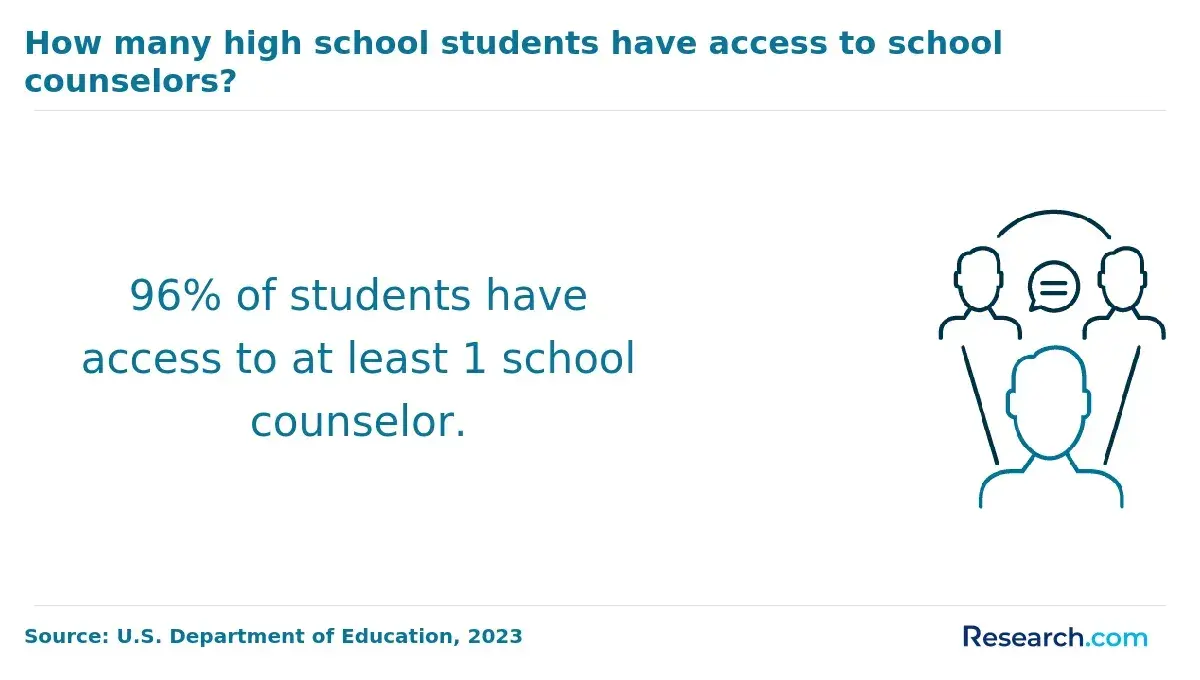
- Technology and AI tools: Digital advising platforms, scheduling systems, early-warning dashboards, and AI-supported tools may reduce some administrative tasks, but they also require counselors to protect privacy, interpret data responsibly, and maintain human judgment.
If you are considering online graduate study, make sure affordability does not come at the expense of licensure alignment. Research.com’s list of affordable CACREP-accredited online counseling programs can be a useful starting point, but you should still verify that any program you choose supports Maryland school counselor certification.
What are the career advancement opportunities for school counselors in Maryland?
Maryland school counselors can advance by gaining experience, developing specialized expertise, leading programs, earning additional credentials, or moving into district, policy, or higher education roles. Advancement usually depends on a mix of performance, leadership ability, graduate training, professional development, and employer requirements.
| Advancement path | What the role may involve | Preparation that helps |
| Lead or head school counselor | Coordinating counseling services, mentoring counselors, managing calendars, and leading schoolwide initiatives | Several years of school counseling experience and strong leadership skills |
| Coordinator of career counseling | Managing district or statewide career readiness programs | Program development, employer partnerships, data analysis, and career advising expertise |
| District or central office administrator | Overseeing counseling programs across multiple schools | Advanced education, administrative experience, and knowledge of policy and compliance |
| College and career readiness specialist | Supporting postsecondary planning, workforce pathways, and graduation-related initiatives | Training in financial aid, admissions, career development, and community partnerships |
| Professional development leader or trainer | Training other counselors and educators on counseling practices, crisis response, or student support systems | Presentation skills, professional association involvement, and documented expertise |
| State-level policy advisor or program director | Influencing school counseling standards, student support programs, and education initiatives | Advanced degrees, leadership record, research literacy, and policy experience |
| University faculty or counselor educator | Teaching graduate students, supervising trainees, and conducting research | Advanced graduate study and experience in counselor education |
For long-term planning, compare school counseling with other counseling careers and graduate degree outcomes. Research.com’s guide to what you can do with a counseling degree can help you evaluate advancement options beyond K–12 schools.
What challenges do school counselors face in Maryland?
Maryland school counselors often balance large student caseloads, crisis response, administrative duties, college and career planning, family communication, documentation, and collaboration with teachers and administrators. The work can be deeply meaningful, but it is not limited to one-on-one counseling sessions.
- High caseloads: Counselors may have limited time for individualized student support when responsible for many students.
- Administrative overload: Scheduling, testing coordination, reporting, and meetings can compete with direct counseling time.
- Mental health complexity: Students may need support for anxiety, depression, trauma, family instability, bullying, grief, or crisis situations.
- Equity gaps: Counselors may need to advocate for students facing barriers related to income, disability, language, race, immigration status, or access to advanced coursework.
- Technology pressure: Digital platforms can improve tracking and communication, but they also add data privacy and workload concerns.
- Boundary management: School counselors must know when to provide school-based support and when to refer students to outside mental health providers.
Career changers should understand these realities before enrolling in a graduate program. If you are trying to enter the profession efficiently, Research.com’s guide to the fastest way to become a counselor in Maryland can help you compare timelines and credential routes.
What do school counselors in Maryland say about their career?
- My school counseling preparation at Towson University helped me understand what Maryland schools need from counselors. Working in a local school has pushed me to grow while supporting students through academic decisions, personal concerns, and family challenges. Maryland’s mix of urban and suburban communities makes the work complex, but it also gives counselors many chances to make a visible difference. The professional development options and job stability help me stay committed to the field. Nyx
- Completing my counseling degree at the University of Maryland, Baltimore County gave me a strong base for working in Maryland’s education system. Once I started in a local school, I saw how cultural diversity, resource differences, and mental health needs shape students’ experiences. That reality made the work feel urgent and meaningful. The school counseling network in Maryland has also helped me keep learning and advancing. Jaylen
- Starting as a school counselor in Maryland felt like the right fit because the state places real value on student support. After graduating from Salisbury University, I began working with students on both academic planning and social-emotional growth. The variety of student backgrounds keeps the job challenging and rewarding. I also appreciate being part of a school community that values inclusion and new approaches to student success. Brent
Common mistakes to avoid when becoming a school counselor in Maryland
- Choosing a program without checking Maryland certification alignment: A counseling degree is not automatically a school counseling credential. Verify eligibility before enrolling.
- Looking only at tuition: A cheaper program may cost more in the long run if it lacks required coursework, field placement support, or certification alignment.
- Assuming online means licensure-ready: Online and hybrid programs can be convenient, but out-of-state programs may not satisfy Maryland requirements unless explicitly designed to do so.
- Ignoring field placement logistics: Practicum and internship hours require time in schools. Working adults should ask how placements are scheduled and supervised.
- Waiting too long to prepare for Praxis: Testing can delay certification if you do not plan around application deadlines.
- Confusing school counseling with clinical counseling: School counselor certification and LPC or LCPC pathways have different rules, scopes, and supervised experience requirements.
- Assuming salary outcomes are guaranteed: Reported averages do not replace district salary schedules, contract details, or location-specific compensation information.
Key Insights
- Maryland school counselors generally need a qualifying master’s degree, supervised school counseling fieldwork, a required Praxis exam, background clearance, and MSDE certification.
- The most direct program choice is one that is Maryland-approved or clearly aligned with Maryland school counselor certification requirements.
- Program length is commonly two to three years for full-time students, but part-time enrollment, field placements, out-of-state coursework review, and certification processing can extend the timeline.
- Maryland credential renewal occurs every five years and requires six professional development credits, including at least one credit in mental health intervention or crisis referral.
- Licensure transfer is not automatic. Counselors moving between states should expect transcript review, credential verification, possible exams, and state-specific coursework checks.
- The cited Maryland salary figure is about $165,423 annually, but actual earnings depend on district salary schedules, experience, credentials, benefits, and role responsibilities.
- The cited job outlook projects 15.5% growth from 2022 to 2032, but hiring still depends on local budgets, student needs, and district staffing decisions.
- The strongest applicants choose programs strategically: accreditation, field placement quality, Maryland certification alignment, Praxis preparation, and total cost matter more than program name alone.
Related Articles for Nearby States
- 2027 How to Become a School Counselor in Virginia
- 2027 How to Become a School Counselor in West Virginia
- 2027 How to Become a School Counselor in Pennsylvania
- 2027 How to Become a School Counselor in Delaware
- 2027 How to Become a School Counselor in New Jersey
- 2027 How to Become a School Counselor in New York
- 2027 How to Become a School Counselor in Ohio
- 2027 How to Become a School Counselor in North Carolina
- 2027 How to Become a School Counselor in Kentucky
- 2027 How to Become a School Counselor in Connecticut
References:
- Bowie State University. (n.d.). Master of Education in School Counseling. https://www.bowiestate.edu/academics/colleges/college-of-education/departments/counseling/graduate-programs/master-of-education-in-school-counseling.php
- CACREP. (2023). CACREP VITAL STATISTICS 2022: Results from a National Survey of Accredited Programs. https://www.cacrep.org/wp-content/uploads/2023/09/2022-Vital-Statistics-Report.pdf
- Counseling Psychology. (n.d.). 2025 best master’s in counseling Maryland - Online & affordable options. https://www.counselingpsychology.org/counseling/schools/maryland
- Hood College. (n.d.). Counseling, school counseling (M.S.). https://www.hood.edu/graduate/academics/programs/counseling-school-counseling
- Indeed. (2025). School counselor salary in Maryland. https://www.indeed.com/career/school-counselor/salaries/MD
- Johns Hopkins University School of Education. (n.d.). MS in counseling admission details. https://education.jhu.edu/masters-programs/ms-in-counseling/ms-in-counseling-admission-details
- Loyola University Maryland. (n.d.). School counseling tuition | Office of Financial Aid. https://www.loyola.edu/department/financial-aid/graduate/tuition-charges/school-counseling.html
- McDaniel College. (n.d.). Master’s in school counseling | Graduate program. https://www.mcdaniel.edu/academics/graduate-professional-studies/school-counseling-ms
- Regent University. (n.d.). Master’s in school counseling degree (Online/Virginia). https://www.regent.edu/program/ma-in-school-counseling
- University of Maryland College of Education. (n.d.). School counseling, M.Ed. https://education.umd.edu/academics/programs/masters/school-counseling-med
- University of Maryland Eastern Shore. (n.d.). Counselor education | Department of Education. https://wwwcp.umes.edu/education/counselor-education
- University of Maryland Extended Studies. (n.d.). Tuition and fees. https://exst.umd.edu/professionals-post-baccalaureates/professional-graduate-programs/edterps-learning-academy-special-education-and-school-counseling-programs/tuition-and-fees
Other Things You Should Know About Being a School Counselor in Maryland
Maryland school counselors are certified by the Maryland State Department of Education, not licensed through a separate school counselor board. Most candidates need a master’s degree in school counseling, a 100-hour practicum, a 600-hour internship, and completion of the Praxis School Counselor exam.
To become a school counselor in Maryland in 2026, students must complete a supervised internship or practicum as part of their graduate program. This typically involves direct counseling experience in a school setting, ensuring trainees gain real-world skills under professional guidance.