
2027 Different Types of Counseling Degrees: Which Is Right for You?

Co-Founder and Chief Data Scientist
Choosing the right counseling degrees can be overwhelming for those who want to help others but are unsure of the best educational path. With various specializations available, understanding which degree aligns with one’s career goals and interests can be challenging.
Employment for educational, guidance, and career counselors and advisors is expected to grow by 4% from 2023 to 2033, highlighting the increasing demand for qualified professionals in this field. With over ten years of experience in career planning, our team ensures that all information presented is based on credible sources. This article will help you explore different counseling degrees and make an informed decision about your future career.
What are the benefits of getting counseling degrees?
- Pursuing counseling degrees provide students with a wide range of educational paths and specializations to explore. The available degree options include an associate's degree, a bachelor's degree, a master’s degree, a doctoral degree, Master of Social Work, Specialized Counseling, and Counseling Psychology.
- Counseling degrees provide the opportunity to earn competitive salaries. Mental health counselors, for instance, have a median annual salary of about $76,930, while school counselors earn approximately $60,569. Specialized positions, such as clinical counselors, can offer even higher earnings, with salaries exceeding $74,572 per year.
- Many universities now offer online counseling degrees, giving students the flexibility to manage work and family responsibilities. These programs include options such as self-paced coursework and hybrid models that combine online learning with occasional in-person sessions.
What can I expect from counseling degrees?
Counseling degrees prepare students for meaningful careers in mental health, education, and community support by providing the skills needed to address emotional, behavioral, and psychological challenges. Most programs are offered at the graduate level, with a master’s degree typically required for licensure in various counseling fields. Students can choose specializations such as:
- mental health counseling
- marriage and family therapy
- school counseling
- substance abuse counseling
Coursework covers counseling theories, ethics, assessment methods, and hands-on skill development, along with clinical internships that fulfill state licensing requirements. Flexible options, including online and hybrid programs, allow students to manage their studies alongside personal responsibilities while completing in-person fieldwork.
Where can I work with counseling degrees?
Graduates with counseling degrees can pursue diverse career opportunities across multiple sectors. Many work in educational institutions as school counselors or career advisors, guiding students through academic challenges and career planning. Colleges and universities also hire counselors to provide mental health support to students dealing with personal and academic pressures. Beyond education, counselors often contribute to community well-being by working in mental health centers, rehabilitation facilities, and nonprofit organizations that support marginalized populations.
In the healthcare sector, counseling professionals play a crucial role in hospitals, clinics, and substance abuse treatment centers, helping individuals manage mental health challenges and addiction. Government agencies, such as social services and correctional facilities, also offer career paths where counselors assist clients in overcoming life challenges. Additionally, some graduates choose corporate roles, applying their skills in employee wellness programs or human resources to support staff development and conflict resolution.
How much can I make with counseling degrees?
The earning potential for counseling graduates varies widely based on specialization, location, and experience. According to the U.S. Bureau of Labor Statistics, mental health counselors earn a median annual salary of approximately $53,710, while school counselors, who play a crucial role in educational settings, earn around $61,710. Rehabilitation counselors typically earn a lower median salary of about $44,040. Salaries can range significantly, with the lowest 10% earning around $36,700 and the highest 10% making up to $89,920 annually.
Job prospects in counseling are strong, with employment for mental health and substance abuse counselors expected to grow by 18% through 2032—much faster than the average for all occupations. Salary levels often depend on the type of employer; government agencies generally offer higher wages compared to private practices or nonprofit organizations.
- 7 Different Types of Counseling Degrees for 2025 Types of Degrees
- How long does it take to complete counseling degree programs? Completion Time
- How does an online counseling program compare to an on-campus program? How does an online counseling program compare to an on-campus program?
- What is the average cost of counseling programs? Average Cost
- What are the financial aid options for students enrolling in a counseling program? Financial Aid
- What are the prerequisites for enrolling in a counseling program? Requirements
- What courses are typically in a counseling program? What courses are typically in a counseling program?
- What types of specializations are available in counseling programs? What types of specializations are available in counseling programs?
- How to Choose the Best Counseling Degree Program How to Choose the Best Counseling Degree Program
- What Complementary Opportunities Can Expand Your Counseling Impact? What Complementary Opportunities Can Expand Your Counseling Impact?
- How Can Advanced Research Degrees Enhance Your Counseling Career? How Can Advanced Research Degrees Enhance Your Counseling Career?
- How can specializing in substance abuse counseling optimize career outcomes and educational investments? How can specializing in substance abuse counseling optimize career outcomes and educational investments?
- What challenges do counseling graduates face in professional practice? What challenges do counseling graduates face in professional practice?
- Can a Faith-Based Counseling Degree Enhance Your Professional Practice? Can a Faith-Based Counseling Degree Enhance Your Professional Practice?
- What career paths are available for graduates of counseling programs? What career paths are available for graduates of counseling programs?
- What is the job market for graduates with counseling degrees? Job Market
- Can Accelerated Counseling Programs Fast-Track My Career? Can Accelerated Counseling Programs Fast-Track My Career?
- What Are the Licensing and Certification Requirements for Counseling Graduates? What Are the Licensing and Certification Requirements for Counseling Graduates?
- Are Advanced Online Doctoral Programs Right for My Counseling Career? Are Advanced Online Doctoral Programs Right for My Counseling Career?
- Is a One Year Master’s Program in Psychology Suitable for My Career Goals? Is a One Year Master’s Program in Psychology Suitable for My Career Goals?
7 Different Types of Counseling Degrees for 2027
Choosing a counseling degree is not just a question of academic level. The degree you select affects whether you can qualify for licensure, what populations you can serve, how long you will spend in school, how much you may pay, and whether your training matches the type of counseling work you want to do. A student who wants an entry-level behavioral health role needs a different path than someone who wants to become a licensed mental health counselor, school counselor, marriage and family therapist, clinical social worker, researcher, or professor.
This guide explains the main types of counseling degrees, how long they take, what they typically cost, how online and campus programs compare, which specializations are available, and what to check before enrolling. It is designed for prospective students comparing counseling programs, career changers evaluating graduate school, and working professionals deciding whether an advanced credential is worth the investment.
Quick answer: Which counseling degree do you need?
For most independent counseling careers, a master’s degree is the standard minimum educational requirement because licensure typically requires graduate-level coursework, supervised clinical training, and state approval. Associate and bachelor’s degrees can lead to support roles, but they usually do not qualify graduates for independent clinical practice. Doctoral degrees are most useful for advanced clinical leadership, academia, research, supervision, or psychology-focused roles.
| Degree type | Best fit | Typical outcome | Key limitation |
| Associate degree | Students testing interest in behavioral health or seeking a lower-cost start | Entry-level support or transfer to a bachelor’s program | Does not generally lead to professional counselor licensure |
| Bachelor’s degree | Students preparing for graduate counseling study or human services roles | Case management, crisis support, or graduate school preparation | Most licensed counseling roles require additional education |
| Master’s degree | Students who want to become licensed counselors or school counselors | LPC, school counselor, marriage and family therapist, or related roles depending on track | Licensure rules vary by state and specialization |
| Doctoral degree | Professionals pursuing research, teaching, supervision, leadership, or psychology practice | Professor, clinical director, counseling psychologist, or senior practitioner | Longer and more expensive than most counseling career paths require |
1. Associate's Degree in Counseling
An associate degree gives students a foundation in psychology, human behavior, helping skills, ethics, and basic client-support concepts. It is usually a starting point rather than a final credential for those who want to provide therapy independently. Students often use this degree to enter the behavioral health workforce quickly or to complete lower-division coursework before transferring to a four-year college.
- Duration: 2 years
- Career Path: Behavioral health technician, support roles in mental health settings
- Tuition Range: $5,000–$15,000 per year
2. Bachelor's Degree in Counseling
A bachelor’s degree in counseling, psychology, social work, human services, or a related field builds broader knowledge of development, mental health, communication, research methods, and social systems. It can qualify graduates for non-licensed roles in mental health, education, social services, and crisis support. It is also the usual academic bridge to a master’s program, which is commonly required for licensure.
- Duration: 4 years
- Career Path: Case manager, mental health assistant, crisis intervention specialist
- Tuition Range: $10,000–$35,000 per year
3. Master's Degree in Counseling
A master’s degree is the main route for students who want to become licensed professional counselors or enter specialized counseling practice. Programs usually combine theory, assessment, ethics, multicultural counseling, diagnosis, treatment planning, practicum, and internship experiences. The best track depends on the license and work setting you want, such as clinical mental health counseling, school counseling, addiction counseling, or marriage and family therapy.
- Duration: 2–3 years
- Career Path: Licensed Professional Counselor (LPC), school counselor, marriage and family therapist
- Tuition Range: $15,000–$40,000 per year
If your goal is clinical practice in mental health settings, compare the best mental health counseling master's programs and verify that each program aligns with your state’s licensure requirements.
4. Doctoral Degree in Counseling
A doctoral degree is designed for professionals who want deeper clinical expertise, research training, university teaching opportunities, program leadership, advanced supervision roles, or psychology-related practice. It is not always necessary for counseling licensure, so applicants should be clear about whether the additional time and cost support their specific career goals. Students comparing lower-cost doctoral options can review the cheapest online PhD in counseling as part of a broader affordability search.
- Duration: 4–6 years
- Career Path: University professor, clinical director, counseling psychologist
- Tuition Range: $25,000–$60,000 per year
5. Master of Social Work (MSW) with a Counseling Focus
An MSW with clinical or counseling-oriented training prepares students to address mental health needs while also considering poverty, family systems, community resources, public policy, and social barriers. This route may appeal to students who want therapy skills but also want the broader systems perspective associated with social work. Licensure titles and requirements vary by state, so students should confirm whether the program supports the Licensed Clinical Social Worker path in the state where they plan to practice.
- Duration: 2 years
- Career Path: Licensed Clinical Social Worker (LCSW), school social worker, mental health counselor
- Tuition Range: $10,000–$35,000 per year
6. Specialized Counseling Degrees
Specialized counseling degrees focus training on a defined client population, treatment area, or professional setting. Common examples include marriage and family therapy, addiction counseling, trauma counseling, rehabilitation counseling, child and adolescent counseling, and career counseling. A specialized degree can be valuable when it matches your intended license, but it can also limit flexibility if the curriculum is too narrow for your state’s requirements or your long-term career plans.
Some students also explore adjacent fields such as sport and performance psychology. If that path interests you, review the education requirements for sports psychologist before choosing a counseling program.
- Duration: 2–3 years (master’s level)
- Career Path: Marriage and family therapist, substance abuse counselor, trauma specialist
- Tuition Range: $15,000–$40,000 per year
7. Counseling Psychology Degrees
Counseling psychology programs connect psychological science with therapeutic practice. Depending on the degree level, students may study assessment, intervention, research, human development, supervision, and evidence-based treatment. These programs are often pursued by students interested in psychology-informed counseling, academic careers, research, or advanced clinical roles.
- Duration: 2–6 years (depending on level)
- Career Path: Counseling psychologist, researcher, clinical supervisor
- Tuition Range: $20,000–$60,000 per year
The chart below summarizes the counselor degrees students most commonly compare when planning an education path.
How long does it take to complete counseling degree programs?
The timeline depends on the degree level, enrollment pace, transfer credits, clinical placement availability, and post-graduate licensure requirements. Students who attend full time can usually complete a bachelor’s degree in psychology, counseling, human services, or a related field in about four years. Part-time students may need longer, especially if they are working while enrolled.
Most professional counseling careers require a master’s degree after the bachelor’s degree. A counseling master’s program generally takes another two to three years and usually includes didactic coursework, skills labs, practicum, internship, and supervised client-contact experiences. These clinical components are not optional extras; they are central to counselor preparation and often tied to licensure eligibility.
Doctoral study adds a longer commitment. Students pursuing a Ph.D. or Psy.D. in counseling, counseling psychology, or clinical psychology may spend another four to six years in advanced coursework, research, clinical training, dissertation or applied doctoral work, and supervised practice. After the degree, many counseling licenses also require post-graduate supervised clinical hours, which can take one to two years to complete.
| Path | Typical academic timeline | When it makes sense |
| Associate degree | 2 years | You want an affordable starting point or an entry-level support role |
| Bachelor’s degree | 4 years | You plan to enter human services work or prepare for graduate counseling study |
| Master’s degree after bachelor’s | 2–3 years | You want a licensure-oriented counseling career |
| Doctoral degree | 4–6 years | You want research, university teaching, senior clinical leadership, or psychology-focused roles |
How does an online counseling program compare to an on-campus program?
Online counseling programs can be a strong option for students who need flexibility because of work, caregiving, military service, commuting distance, or relocation constraints. Online coursework may be asynchronous, synchronous, or a combination of both. However, counseling is a practice-based field, so even online programs usually require supervised practicum or internship experiences in approved settings.
Campus-based counseling programs may offer easier access to in-person faculty interaction, peer practice groups, university clinics, local networking, and structured schedules. They can be a better fit for students who learn best through face-to-face discussion or who want a more traditional cohort experience. The trade-off is less flexibility, and students may need to account for commuting, relocation, and fixed class times.
| Factor | Online counseling program | On-campus counseling program |
| Flexibility | Often better for working adults and students with complex schedules | Usually follows fixed class meeting times |
| Clinical training | May allow local placements, but students must confirm site approval and supervision rules | May provide established partnerships with nearby clinics, schools, or agencies |
| Networking | Requires intentional participation in online cohorts, supervision, and professional groups | Often easier through campus events, faculty access, and local placement networks |
| Licensure fit | Must be checked carefully if you live outside the school’s state | May be more directly aligned with local state requirements |
| Best for | Self-directed students who need location flexibility | Students who prefer in-person structure and campus resources |
What is the average cost of counseling programs?
Counseling degree costs vary widely by school type, residency status, delivery format, degree level, program length, and clinical requirements. For a master’s degree in counseling, tuition commonly ranges from $5,000 to $30,000 per year. Public universities often charge less for in-state students, with annual costs typically between $5,052 and $9,558, while out-of-state students often pay more. Private institutions may charge higher tuition that can exceed $30,000 per year.
Tuition is only one part of the total cost. Students should also budget for textbooks, background checks, liability insurance, technology fees, assessment materials, transportation to field sites, residency or intensive requirements, clinical fees, graduation fees, and licensing exam costs. A lower advertised tuition rate may not be the cheapest option if the program has limited transfer credit, expensive travel requirements, or delayed clinical placements.
The chart below compares tuition costs for Mental Health Counseling majors and shows the gap between in-state public and out-of-state private institutions.
What are the financial aid options for students enrolling in a counseling program?
Students considering a counseling degree should build a funding plan before enrolling. The best approach is to compare tuition, fees, living costs, aid eligibility, employer benefits, assistantships, scholarships, and likely borrowing needs across multiple schools.
Federal Financial Aid
Federal grants and loans can help eligible students pay for counseling-related degrees. Approximately 34% of undergraduate students receive a Federal Pell Grant, and the maximum award is $6,895 per year. The Federal Supplemental Educational Opportunity Grant (FSEOG) may provide additional need-based aid ranging from $100 to $4,000 annually, but funding is limited and depends on the institution.
Graduate counseling students often use federal student loans because grants are less common at the graduate level. Subsidized loans are need-based and do not accrue interest while the student is enrolled. Unsubsidized loans are not limited to students with financial need and begin accruing interest immediately. Borrowers should compare repayment obligations carefully before choosing a high-cost program.
State and Institutional Aid
States, universities, foundations, professional associations, and community organizations may offer scholarships or grants for students pursuing counseling, mental health, education, addiction services, or social work. Some colleges also provide merit awards, need-based aid, graduate assistantships, tuition discounts, or employer partnership benefits. Prospective students should ask each financial aid office which awards apply to their specific program and enrollment status.
| Funding source | What to ask before relying on it |
| Federal grants | Am I eligible at my degree level, and does my enrollment status qualify? |
| Federal loans | What will my monthly repayment look like after graduation? |
| Institutional scholarships | Are awards renewable, and what GPA or credit load must I maintain? |
| Employer tuition assistance | Do I need to stay with the employer after receiving the benefit? |
| Assistantships | Does the workload fit with practicum, internship, and employment obligations? |
What are the prerequisites for enrolling in a counseling program?
Admission requirements depend on the degree level and institution. Associate and bachelor’s programs generally require high school completion or equivalent preparation. Master’s and doctoral programs are more selective because they prepare students for clinical, educational, or advanced professional responsibilities.
- Bachelor’s Degree: Graduate counseling programs usually require a four-year degree from an accredited institution. Psychology, social work, education, sociology, and human services backgrounds are common, but some programs admit students from other majors if they meet prerequisite or leveling-course requirements.
- Application Materials: Applicants are typically asked to submit transcripts, a personal statement, recommendation letters, and sometimes a resume or CV. Programs may look for evidence of maturity, ethical judgment, communication skills, volunteer or work experience, and a realistic understanding of counseling work.
- Standardized Test Scores: Many counseling programs no longer require the GRE, but some graduate schools still request it. International applicants or non-native English speakers may also need TOEFL or IELTS scores to document English proficiency.
What courses are typically in a counseling program?
Counseling curricula are designed to move students from theory to supervised practice. Strong programs teach students how to build therapeutic relationships, assess client needs, apply ethical standards, work across cultural differences, document care, manage crisis situations, and use supervision effectively.
- Counseling Theories: Students compare major therapeutic models and learn how different approaches shape assessment, treatment goals, and counselor-client interactions.
- Ethics and Legal Issues in Counseling: This course covers confidentiality, informed consent, boundaries, mandated reporting, documentation, professional conduct, and legal responsibilities.
- Multicultural Counseling: Students examine how culture, identity, discrimination, socioeconomic status, language, religion, disability, and community context influence mental health and counseling relationships.
- Assessment Techniques: Learners study how counselors use interviews, screening tools, behavioral observations, and assessment results to understand client concerns and track progress.
- Group Counseling: This course focuses on group development, facilitation skills, member roles, conflict management, and therapeutic group processes.
- Crisis Intervention: Students learn how to respond to acute distress, safety concerns, trauma reactions, and urgent client needs while staying within ethical and legal boundaries.
- Practicum and Internship: Supervised fieldwork allows students to apply counseling skills in approved professional settings and is often essential for licensure preparation.
What types of specializations are available in counseling programs?
Specialization choice should be driven by the population you want to serve, the license you need, and the setting where you hope to work. Before enrolling, confirm that the specialization’s coursework and field experience match state requirements for your intended role.
- Clinical Mental Health Counseling: This track prepares students to support clients with emotional, behavioral, and mental health concerns in settings such as private practices, community agencies, hospitals, and outpatient clinics.
- Marriage, Couple, and Family Counseling: Students focus on relationship patterns, family systems, communication, parenting, conflict, and mental health concerns within couples and families.
- Addiction Counseling: This specialization prepares students to work with substance use disorders and addictive behaviors in rehabilitation centers, community programs, hospitals, and recovery-focused organizations.
- School Counseling: Students learn to support academic planning, social-emotional development, student wellness, family communication, and school-based interventions. Becoming a school counselor is also one of the best careers to pursue with a human services master's degree.
- Career Counseling: This area trains counselors to help clients clarify interests, evaluate strengths, plan education, prepare job search materials, and navigate career transitions.
- Rehabilitation Counseling: Students prepare to support people with disabilities, chronic illness, or barriers to employment and independent living.
- Child and Adolescent Counseling: This specialization focuses on development, family involvement, school collaboration, behavior concerns, and mental health support for younger clients.
| Specialization | Choose it if you want to work with | Common settings |
| Clinical mental health counseling | Adults, groups, or diverse clients with mental health concerns | Clinics, agencies, private practice, hospitals |
| Marriage and family therapy | Couples, families, and relational systems | Private practice, family agencies, healthcare settings |
| Addiction counseling | Clients affected by substance use or addictive behaviors | Rehabilitation centers, hospitals, community programs |
| School counseling | K-12 students or learners in educational settings | Elementary, middle, and high schools |
| Rehabilitation counseling | Clients with disabilities or chronic health-related barriers | Government agencies, nonprofits, rehabilitation centers |
How to Choose the Best Counseling Degree Program
The best counseling program is the one that fits your target license, budget, schedule, learning style, clinical placement needs, and long-term career plan. Rankings can be useful, but they should not replace careful verification of accreditation, licensure alignment, fieldwork support, and total cost.
Identify Your Career Goals
Start with the role you want after graduation. Do you want to counsel children, couples, families, people in recovery, college students, or adults with mental health concerns? Do you want to work in schools, clinics, private practice, hospitals, community agencies, or research settings? Your answers should guide your degree level and specialization.
Accreditation
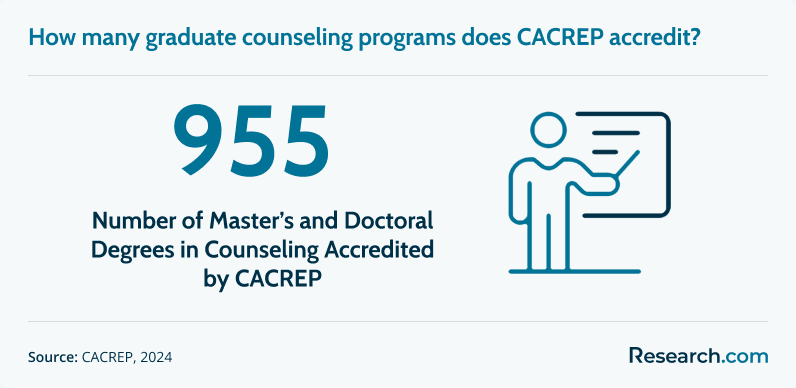
Accreditation matters because it signals that a program has been reviewed against recognized educational standards. For counseling, the Council for Accreditation of Counseling & Related Educational Programs (CACREP) is a common accrediting body to look for. Students comparing flexible options can review CACREP accredited online master's counseling programs, but they should still verify state licensure fit before applying.
Curriculum Alignment
Review the program plan in detail. The curriculum should include counseling theories, ethics, assessment, multicultural counseling, human development, diagnosis when relevant, group counseling, crisis response, practicum, and internship. If you want a specialized license, make sure the course titles and clinical hours match that pathway.
Internship and Practicum Opportunities
Clinical placement support can make or break the student experience. Ask whether the school finds placements, approves student-selected sites, maintains local partnerships, or requires students to secure their own supervisors. Online students should be especially careful if they live in a different state from the institution.
Faculty Expertise
Look at faculty credentials, practice backgrounds, supervision experience, research interests, and availability. Faculty who understand your intended specialty can provide better mentoring, fieldwork guidance, and career advice.
| Question to ask before enrolling | Why it matters |
| Is the program accredited, and by whom? | Accreditation can affect licensure, employer recognition, and transfer options. |
| Does the curriculum meet requirements in the state where I plan to practice? | Licensure rules are state-specific, and online programs may not automatically qualify students everywhere. |
| Who is responsible for finding practicum and internship sites? | Delayed or unsupported placements can extend your time to graduation. |
| What is the full cost, including fees and clinical expenses? | Tuition alone may understate the real cost of attendance. |
| What support is available for licensure exams and post-graduate supervision planning? | A strong program should help students understand the transition from degree completion to licensed practice. |
What Complementary Opportunities Can Expand Your Counseling Impact?
Counseling students can strengthen their career options by adding skills that complement direct client work. Useful areas include trauma-informed practice, telehealth delivery, crisis response, group facilitation, data-informed treatment planning, supervision, community outreach, and interdisciplinary collaboration. Understanding adjacent psychology careers can also help students decide whether they want a counseling-focused path, a psychology-focused path, or a role that blends both perspectives.
How Can Advanced Research Degrees Enhance Your Counseling Career?
Advanced research training can be valuable for counselors who want to move beyond direct service into teaching, program evaluation, policy work, clinical supervision, or evidence-based intervention development. A research-oriented doctorate can build expertise in study design, outcomes measurement, scholarly writing, and interdisciplinary collaboration. Professionals considering this direction can compare options such as an online PhD in psychology while weighing time commitment, dissertation expectations, career goals, and cost.
How can specializing in substance abuse counseling optimize career outcomes and educational investments?
Substance abuse counseling can be a practical specialization for students who want to work in recovery services, behavioral health clinics, hospitals, community agencies, or integrated care settings. Because certification and licensure expectations can differ by state and employer, students should compare required coursework, supervised practice, and credentialing rules before committing to a program. They should also compare program cost with expected career mobility. For cost-focused planning, see How much does it cost to become a substance abuse counselor?.
What challenges do counseling graduates face in professional practice?
New counseling graduates often face a steep transition from supervised student practice to professional responsibility. Common challenges include emotionally demanding caseloads, documentation requirements, ethical decision-making, insurance or agency procedures, client crises, supervision costs, and the need for ongoing self-care. Financial pressure can also affect early-career counselors, which is why program affordability matters. Students comparing lower-cost routes can start with cheapest counseling degree online options while still verifying accreditation and licensure alignment.
Can a Faith-Based Counseling Degree Enhance Your Professional Practice?
Faith-based counseling programs combine counseling concepts with religious or spiritual perspectives. They may be a good fit for students who want to serve in ministry settings, faith-based community organizations, pastoral counseling environments, or counseling centers where spiritual integration is part of the mission. Students should check whether the program is designed for ministry practice, clinical licensure, or both. To compare curriculum and career possibilities, review the Christian counseling grad program guide.
What career paths are available for graduates of counseling programs?
Counseling graduates can work in many settings, but the exact career options depend on degree level, specialization, state licensure, supervised experience, and employer requirements. Students should review common counseling careers early so they can choose a program that supports the role they want.
Marriage and Family Counselor
Marriage and family counselors help couples and families address communication problems, conflict, parenting concerns, divorce-related stress, blended family issues, and relational patterns that affect mental health. Students who need a flexible route can compare a master's degree in family counseling online, but they should confirm that the program meets the requirements for marriage and family therapy licensure in their state.
Career Counselor
Career counselors help clients clarify goals, assess interests, evaluate strengths, explore education options, prepare application materials, and navigate career transitions. They often work in schools, colleges, universities, workforce centers, and career development offices.
Substance Abuse Counselor
Substance abuse counselors support clients dealing with substance use disorders and recovery challenges. Their work may include individual counseling, group sessions, relapse prevention planning, family education, case coordination, and referrals to medical or community resources.
If you are comparing an online addiction counseling degree, pay close attention to accreditation, field experience, state credentialing rules, and whether the degree level matches your target role.
School Counselor
School counselors support students’ academic planning, social development, emotional well-being, college readiness, career exploration, and access to school-based resources. They typically work in elementary, middle, and high schools and must meet state education or school counseling credential requirements.
Mental Health Counselor
Mental health counselors help individuals and groups manage psychological, emotional, behavioral, and life-adjustment concerns. They may develop treatment plans, provide therapy, coordinate care, and support clients coping with anxiety, depression, stress, grief, trauma, or relationship challenges. Students researching how to become a mental health counselor should expect graduate education, supervised experience, and licensure steps. The chart below shows mental health counseling programs by sector.
What is the job market for graduates with counseling degrees?
The counseling labor market is shaped by school needs, mental health awareness, healthcare access, addiction services, workforce transitions, and public demand for professional support. Increased awareness of mental health issues has helped make counseling services more visible, but job availability still depends on location, license type, employer funding, specialization, and experience.
Employment of school and career counselors, as well as advisors, is expected to grow by 4% from 2023 to 2033, which is consistent with the average rate for all occupations. Demand is supported by ongoing needs in education, student support, career planning, and mental health services.
- Schools continue to need professionals who support academic, emotional, and career development.
- Students and families increasingly expect access to mental health-related support in educational settings.
- Career changes and labor market shifts create demand for guidance in education and employment planning.
Can Accelerated Counseling Programs Fast-Track My Career?
Accelerated counseling and psychology programs may shorten the time to degree by using condensed terms, year-round enrollment, transfer credit, or intensive course sequencing. They can be useful for motivated students who already have strong academic preparation and enough time for a heavier workload. The risk is that counseling requires deep skill development and supervised practice, so speed should not come at the expense of clinical readiness or licensure eligibility. Students exploring faster routes can compare the fastest psychology degree online while checking accreditation, field placement structure, and state requirements.
What Are the Licensing and Certification Requirements for Counseling Graduates?
Licensing is one of the most important issues to verify before choosing a counseling program. Requirements differ by state and specialty, but they commonly include an approved graduate degree, specific coursework, supervised clinical experience, examinations, background checks, and continuing education. Students should consult the licensing board in the state where they plan to practice before enrolling, especially if they are considering an online program based elsewhere.
Specialized fields may have additional or different requirements. For example, students comparing marriage and family therapy online programs should verify that the curriculum and clinical practicum meet the expectations for marriage and family therapy licensure, not just general counseling preparation.
Are Advanced Online Doctoral Programs Right for My Counseling Career?
Advanced online doctoral programs can make sense for experienced professionals who want leadership, teaching, clinical specialization, research, supervision, or psychology-focused credentials. They are less suitable for students who simply need the minimum degree for entry into licensed counseling practice. If you are comparing clinical doctoral routes, review online PsyD programs APA and pay close attention to accreditation, residency expectations, internship requirements, and state licensing rules.
Is a One Year Master’s Program in Psychology Suitable for My Career Goals?
A one-year master’s program in psychology may be useful for students who want a fast graduate credential, stronger research preparation, or a bridge to doctoral study. However, it may not meet counseling licensure requirements unless it includes the specific coursework and supervised clinical components required by the state. Before enrolling, compare program purpose, curriculum, fieldwork, and outcomes. For options and comparisons, see our guide to one year masters programs psychology.
Common Mistakes to Avoid When Choosing a Counseling Degree
| Mistake | Why it can hurt you | Better approach |
| Choosing a program before checking licensure rules | You may graduate with credits that do not meet your state’s requirements. | Contact your state licensing board and compare requirements with the program plan. |
| Looking only at tuition | Fees, travel, clinical costs, and delayed graduation can increase total cost. | Request a full cost estimate and ask about all required expenses. |
| Assuming online programs work in every state | State authorization and licensure alignment vary. | Get written confirmation that the program supports your intended state and license. |
| Ignoring field placement support | Difficulty finding practicum or internship sites can slow graduation. | Ask who secures placements and how many approved sites are available near you. |
| Choosing a specialization too early | A narrow track may not fit later career changes. | Balance specialization with broad licensure eligibility and transferable skills. |
| Assuming salary outcomes are guaranteed | Earnings vary by role, license, location, employer, and experience. | Use salary data as one input, not a promise of individual income. |
Here’s What Graduates Have to Say about Counseling Degrees
- Jenny: "Online counseling study gave me the room to keep working and caring for my family while moving toward a new professional goal. The coursework was interactive, and faculty support helped me stay connected even without being on campus. The experience helped me build both practical skills and confidence."
- Melchor: "My online counseling program introduced me to classmates with different life experiences, which made discussions and case examples more meaningful. Studying from home was convenient, but the academic expectations were still serious. I appreciated being able to spend extra time on the topics that challenged me most."
- Shalimar: "Earning a counseling degree online let me keep my life moving while preparing for the next stage of my career. The mix of theory, applied assignments, and virtual practice activities helped me connect classroom learning to real counseling situations."
References:
- Bureau of Labor Statistics, U.S. Department of Labor. (2024). Occupational outlook handbook: School and career counselors and advisors. U.S. BLS
- Data USA. (n.d.). Mental health counseling. Data USA
- Federal Student Aid. (n.d.). Federal Supplemental Educational Opportunity Grant (FSEOG). Student Aid
- Hanson, M. (2024, November 3). Pell Grant statistics. EducationData.org
- Salary.com. (2025). Licensed clinical professional counselor salary. Salary.com
- Salary.com. (2025). Licensed mental health counselor salary in the United States. Salary.com
- Salary.com. (2025). School counselor salary. Salary.com
- Zippia. (2025, January 8). What is a counselor and how to become one. Zippia
Key Insights
- A master’s degree is the most common path for students who want licensed counseling roles; associate and bachelor’s degrees are better viewed as entry-level or preparatory credentials.
- Degree title alone is not enough. Check accreditation, curriculum, practicum, internship, and state licensure alignment before enrolling.
- Online counseling programs can be flexible, but students must verify clinical placement support and whether the program meets requirements in their state.
- Costs vary widely, and tuition does not capture the full price. Include fees, materials, travel, clinical requirements, and licensing expenses in your comparison.
- Specializations such as school counseling, addiction counseling, marriage and family therapy, and clinical mental health counseling can improve career fit when they match your desired license and work setting.
- Accelerated and doctoral options can be useful for the right student, but faster or higher-level programs are not automatically better. Choose the shortest credible path that supports your professional goal.
- The best counseling degree program is the one that balances licensure eligibility, affordability, clinical training quality, faculty support, and realistic career outcomes.
Other Things You Should Know About 7 Different Types of Counseling Degrees
A CACREP-aligned master’s in counseling usually includes 60 semester credits with coursework in counseling theory, ethics, assessment, human growth, research methods, multicultural counseling, and supervised practicum and internship hours. Some states also require a specific course in diagnosis and treatment planning before licensure.
Counseling degrees like the Master of Science in Clinical Mental Health Counseling typically require clinical practicum experience in 2027. This involves a set number of supervised hours in a professional setting, ensuring students gain practical, hands-on experience before entering the field.


