2027 How to Become a Sports Psychologist

Co-Founder and Chief Data Scientist
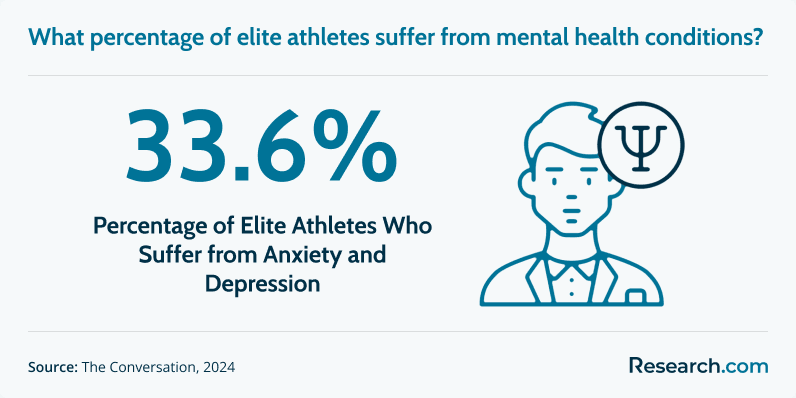
Becoming a sports psychologist is a long-term career decision that combines psychology training, athlete performance work, supervised clinical experience, and, for many roles, state licensure. The field matters because athletes face intense pressure, injury setbacks, identity transitions, and mental health risks at every level of competition. Research cited by the International Olympic Committee reports that 33.6% of top athletes show symptoms of depression and anxiety, while 26.4% of former athletes experience severe mental health concerns.
This guide explains how to become a sports psychologist for 2027, what the work involves, which degrees and credentials matter, how licensure works, what salaries and job outlook data suggest, and how to decide whether this path fits your goals. It is designed for students, career changers, psychology graduates, coaches, and performance professionals who want a practical roadmap rather than a vague career overview.
Quick answer: How do you become a sports psychologist?
To become a sports psychologist, you typically earn a bachelor’s degree, complete graduate training in psychology or sport psychology, gain supervised experience, and pursue licensure if you want to practice independently as a psychologist. The full path often takes around 6 to 14 years, depending on whether you stop at a master’s degree for consulting-oriented roles or complete a doctoral degree for licensure, clinical work, research, or academic positions.
| Career step | Typical purpose | Important decision |
| Bachelor’s degree | Builds a foundation in psychology, exercise science, kinesiology, or a related field | Choose courses, research, internships, or athletic department experience that connect psychology with sport |
| Master’s degree | Provides sport psychology specialization, counseling skills, assessment training, and applied experience | Decide whether you want mental performance consulting, counseling work, or a path toward doctoral study |
| Supervised experience | Develops applied skills with athletes, teams, or clinical clients under professional supervision | Look for placements that match your desired setting, such as college athletics, private practice, rehabilitation, or elite sport |
| Doctoral degree | Supports independent practice, licensure, clinical specialization, research, and academic roles | Compare Ph.D. and Psy.D. programs, accreditation, internship match quality, cost, and licensure alignment |
| Licensure and certification | Establishes legal authority to practice as a psychologist and signals specialized competence | Verify state requirements and consider credentials such as CMPC® when relevant to your career goals |
Key facts you should know about becoming a sports psychologist
- Sports psychologists help athletes improve performance while also supporting mental health, adjustment, recovery, and long-term well-being.
- The training timeline is substantial: it takes around 6 to 14 years to become a sports psychologist when undergraduate, graduate, supervised experience, and doctoral training are considered.
- According to Zippia, the most common skills listed on sports psychologist resumes are crisis interventions (56%), clinical psychology (17.7%), performance enhancement (14.1%), professional athletes (8.5%), player performance (2.3%), and competitive performance (1.5%).
- The 2024 collective EPPP pass rate for all accredited doctorate programs in the United States is 76.87%, compared with 48.8% for non-accredited programs.
- The projected employment growth for psychologists, including sports psychologists, in the United States from 2023 to 2033 is 7%.
- Sports psychologists in the United States earn an average annual salary of $92,813.
- What sports psychologists do
- How to become a sports psychologist for 2027
- Degrees needed for sports psychology
- Licensure requirements for sports psychologists
- Sports psychology specialization options
- Skills successful sports psychologists need
- Certifications that can strengthen your career
- Continuing professional development
- Common professional challenges
- Job outlook for sports psychologists
- Accelerated PsyD options and career timelines
- Cross-disciplinary credentials
- Online learning, digital tools, and remote practice
- Applied behavior analysis in sports psychology and digital career tools
- Mentorship and networking
- Substance abuse concerns in athletes
- Managing education costs
- Sports psychologist salary
- Career paths for aspiring sports psychologists
- Further education for career growth and long-term advancement
What does a sports psychologist do?
A sports psychologist applies psychological science to athletic performance, athlete mental health, injury recovery, motivation, confidence, team functioning, and career transitions. Some professionals focus mainly on performance enhancement. Others are licensed psychologists who can assess and treat mental health conditions. The difference matters: not every person working in “sport psychology” is licensed to provide clinical diagnosis or therapy.
In practice, sports psychologists may work with individual athletes, coaches, teams, athletic departments, youth programs, rehabilitation clinics, military units, or high-performance organizations. Their role often sits at the intersection of counseling, performance consulting, education, assessment, and collaboration with coaches, trainers, physicians, and families.
- Mental performance training: They teach skills such as attention control, confidence building, emotional regulation, goal setting, relaxation, imagery, and competition routines.
- Performance anxiety support: They help athletes manage fear of failure, choking under pressure, perfectionism, embarrassment, and negative self-talk through practical coping strategies.
- Injury and return-to-play support: They address the frustration, fear, loss of identity, and motivation problems that can appear during rehabilitation.
- Pre-competition routines: They help athletes build repeatable mental routines before games, shots, races, serves, pitches, or other high-pressure moments.
- Team communication and culture: They work with teams on trust, role clarity, conflict, leadership, cohesion, and communication patterns.
- Assessment and research: They use interviews, validated tools, behavioral observation, and performance data to understand what affects an athlete’s mindset and performance.
- Mental health counseling: Licensed sports psychologists may support athletes dealing with anxiety, depression, trauma, disordered eating concerns, identity challenges, retirement stress, or major life transitions.
How sports psychologists assess an athlete’s mental state
Assessment is not based on guesswork or motivational slogans. A sports psychologist gathers information from multiple sources so the intervention matches the athlete’s sport, goals, risks, personality, environment, and mental health needs.
| Assessment method | What it helps reveal | How it may be used |
| Clinical or performance interview | Goals, stressors, motivation, performance history, personal concerns, and coping style | Creates an initial case picture and determines whether performance coaching, therapy, or referral is appropriate |
| Standardized psychological measures | Anxiety, coping skills, mood patterns, confidence, attention, and personality-related factors | Supports evidence-informed planning using tools such as the Sport Anxiety Scale (SAS) or Athletic Coping Skills Inventory (ACSI) |
| Observation during training or competition | Body language, communication, reactions to mistakes, pressure responses, and coach-athlete dynamics | Connects psychological patterns with real sport behavior rather than relying only on self-report |
| Performance review | Patterns in consistency, focus, decision-making, or high-pressure execution | Uses statistics, video, or performance trends to identify moments where mindset may affect outcomes |
| Self-monitoring tools | Daily mood, stress, sleep perceptions, confidence, triggers, and thought patterns | Helps athletes recognize patterns and evaluate whether interventions are working |
| Feedback from coaches or teammates | Context on behavior, leadership, relationships, and team role | Adds perspective while requiring careful attention to consent, confidentiality, and ethical boundaries |
Sports psychology can also serve as a foundation for broader leadership roles in athletics. If your long-term interest is running athletic programs rather than providing psychological services, Research.com’s guide to the requirements to be a sports manager may help you compare both paths.
The chart below shows projected employment growth for psychologists and related roles over the next decade.
How does one become a sports psychologist for 2027?
The path to sports psychology resembles other psychology careers because it requires formal education, supervised experience, ethical training, and, for independent clinical practice, licensure. Like the process described in Research.com’s overview of child psychologist requirements, the exact steps depend on the state, the type of clients you want to serve, and whether you plan to diagnose and treat mental health conditions.
- Earn a bachelor’s degree. Start with psychology, sport psychology, exercise science, kinesiology, counseling-related coursework, or another relevant major. Use electives, research projects, volunteer work, or athletic department experience to explore the athlete-performance side of psychology.
- Complete a master’s degree. A graduate program can help you specialize in sport psychology, counseling psychology, performance psychology, or a closely related area. Look for coursework in assessment, counseling skills, ethics, mental performance, research methods, and supervised applied practice.
- Build supervised experience. Applied training is where classroom theory becomes professional judgment. Many aspiring professionals complete internships, practicums, assistantships, or supervised placements with teams, clinics, rehabilitation programs, university athletics, or private practices. A common supervised experience range is 1,500-3,000 hours.
- Decide whether you need a doctorate. A master’s degree may support some consulting or performance roles, but a Ph.D. or Psy.D. is strongly recommended for independent practice, clinical licensure, academic work, and research-intensive careers.
- Meet licensure requirements if you want to practice as a psychologist. Licensure usually requires a doctoral degree, supervised hours, state board approval, and passing the EPPP. Requirements vary, so check the psychology board in the state where you plan to practice.
- Consider sport-specific certification. Credentials such as the CMPC® from AASP can demonstrate specialized preparation in mental performance consulting, especially for professionals working with athletes and teams.
From start to finish, the process commonly takes around 6 to 14 years. A bachelor’s degree usually takes four years, a master’s degree often takes two years, and a doctorate can take about four to eight years. Students trying to shorten the undergraduate portion of the path may compare accelerated psychology programs online, but speed should not come at the expense of accreditation, supervised experience, or graduate school readiness.
| Pathway | Best fit | Limitations to understand |
| Master’s-level sport psychology or performance consulting route | Students who want to work on mental skills, motivation, performance routines, and team development | May not qualify you to practice independently as a licensed psychologist or provide clinical diagnosis and treatment |
| Doctoral clinical, counseling, or psychology route with sport focus | Students who want licensure, therapy roles, independent practice, research, or academic positions | Takes longer, costs more, and usually involves competitive admissions, internships, and licensing exams |
| Coaching, athletic training, or wellness route with sport psychology coursework | Professionals who want to integrate mental skills into existing sport, training, or wellness roles | Does not make someone a licensed psychologist unless they complete the required psychology licensure pathway |
What are the degrees needed to become a sports psychologist for 2027?
Sports psychology careers are built in layers. Undergraduate study gives you the scientific foundation. Graduate study develops applied competence. Doctoral education, when required, prepares you for licensure, advanced clinical work, research, teaching, and independent professional practice.
- Bachelor’s degree: A bachelor’s degree in psychology, sport psychology, kinesiology, exercise science, or a related field is the usual starting point. This stage generally takes about four years and should include coursework in human behavior, statistics, research methods, abnormal psychology, physiology, motivation, and performance-related topics when available.
- Master’s degree: A master’s degree in sport psychology, counseling psychology with a sport focus, performance psychology, or a related area often takes about two years. Strong programs usually include applied practice, ethics, assessment, counseling techniques, sport science context, and supervised fieldwork.
- Doctoral degree: A Ph.D. or Psy.D. in psychology, counseling psychology, clinical psychology, or sport psychology is commonly recommended for those who want independent practice, licensure, research careers, or faculty roles. Doctoral study typically takes four to seven years and involves advanced clinical training, research, assessment, practicum work, and often internship or postdoctoral experience.
How to choose the right degree path
The “best” degree depends on the job you want. If you want to consult on performance routines and work with teams under the correct scope of practice, a master’s-focused route may be enough for some roles. If you want to diagnose and treat mental health conditions, run an independent clinical practice, or call yourself a licensed psychologist, you should plan for doctoral training and state licensure.
| If your goal is... | Consider this education path | Questions to ask before enrolling |
| Mental performance consulting | Master’s degree in sport psychology, performance psychology, or counseling-related field | Does the program include supervised applied sport experience and preparation for relevant certification? |
| Licensed psychologist working with athletes | Doctoral degree in clinical, counseling, or psychology with sport-focused training | Is the program accredited, and does it meet licensure requirements in your intended state? |
| Research or university teaching | Ph.D. with a strong research component | Are faculty publishing in sport psychology, performance, athlete mental health, or related areas? |
| Work in rehabilitation or integrated athlete care | Graduate psychology training plus experience with injury recovery, health psychology, or rehabilitation settings | Are there placements with medical, athletic training, or rehabilitation teams? |
What are the licensure requirements for sports psychologists for 2027?
Licensure is one of the most important decisions in this career. It determines whether you can legally practice as a psychologist, provide clinical services independently, diagnose mental health conditions, and bill or operate within many healthcare and institutional systems. Sport psychology itself may not always be licensed as a separate category, so most professionals who provide clinical services become licensed under the broader psychology requirements in their state.
- Education: Most states require a doctoral degree, such as a Ph.D. or Psy.D., in psychology or a closely related field for independent psychologist licensure. Some jobs may accept master’s-level training, but that does not automatically confer psychologist licensure. Students comparing doctoral options can review accredited online PsyD programs while checking whether each program aligns with state requirements.
- Supervised experience: Candidates commonly complete 1,500 to 3,000 hours of supervised clinical experience, often including post-doctoral work. The goal is to develop safe, ethical, and competent practice before independent licensure.
- Licensing exam: Candidates generally must pass the Examination for Professional Practice in Psychology (EPPP). According to the Association of State and Provincial Psychology Boards (ASPPB), the 2024 collective EPPP pass rate of all accredited doctorate programs in the United States is 76.87%, while non-accredited programs have a rate of 48.8%.
- State-specific rules: Requirements vary by jurisdiction. Some states may require jurisprudence exams, background checks, specific coursework, additional supervised hours, or documentation from doctoral and internship programs.
- Optional professional certification: Certifications from organizations such as the Association for Applied Sport Psychology (AASP) or the American Board of Sport Psychology (ABSP) can support credibility, but they do not replace state licensure when clinical practice is involved.
- License renewal: Licensed psychologists must renew their license on a state-defined schedule and complete continuing education. Requirements often range from 20 to 40 hours every two years and may include ethics or other mandated topics.
Licensure checklist before choosing a graduate program
- Confirm whether the program is accredited and whether that accreditation is recognized by your intended licensing board.
- Ask whether graduates are eligible for psychology licensure in the state where you plan to work.
- Review EPPP preparation, internship outcomes, practicum placement quality, and faculty supervision.
- Check whether online or hybrid coursework affects internship, residency, or state approval requirements.
- Do not assume that a degree title containing “sport psychology” automatically meets clinical psychology licensure rules.
What are the different types of sports psychology specializations for 2027?
Sports psychology is not a single job description. Professionals may specialize in performance, rehabilitation, youth development, team culture, research, clinical care, or high-pressure occupational performance. Choosing a specialization early can help you select the right degree, practicum sites, mentors, and certifications.
| Specialization | Primary focus | Best fit for students interested in... |
| Performance enhancement | Confidence, focus, motivation, imagery, goal setting, pressure management, and routines | Working directly with athletes and teams on measurable performance habits |
| Injury recovery and rehabilitation | Emotional adjustment, fear of reinjury, motivation during rehab, and return-to-play confidence | Collaborating with athletic trainers, physicians, physical therapists, and rehabilitation teams |
| Team dynamics | Communication, leadership, cohesion, role clarity, conflict management, and team culture | Supporting coaches, captains, athletic departments, or organizational performance |
| Youth sports psychology | Developmentally appropriate support for children and adolescents in competitive settings | Helping young athletes manage pressure while preserving motivation, confidence, and enjoyment |
| Sport psychology research | Studying athlete mental health, performance interventions, stress, motivation, and evidence-based practice | Graduate research, doctoral study, academic work, or program evaluation |
| Clinical sport psychology | Mental health assessment and treatment for athletes, often alongside performance concerns | Becoming a licensed psychologist who can address anxiety, depression, trauma, identity issues, and related concerns |
If your interest is less about direct psychological service and more about leading teams, athletic departments, or sports organizations, it may be useful to compare psychology-focused careers with the best jobs for masters in sports management to pursue.
What key skills should a successful sports psychologist possess?
Strong sports psychologists combine clinical judgment, communication skill, sport knowledge, ethical awareness, and practical intervention design. The best professionals can translate psychological science into strategies athletes and coaches can actually use under pressure.
- Clear communication: Athletes, coaches, parents, and medical staff need explanations that are accurate, direct, and usable.
- Empathy and rapport: Athletes are more likely to disclose fear, stress, identity concerns, or performance struggles when they feel respected and understood.
- Assessment competence: Practitioners must know how to interpret interviews, observations, self-reports, and standardized measures responsibly.
- Evidence-based intervention skills: Techniques should be grounded in research and adapted to the athlete’s needs rather than copied from generic motivational advice.
- Sport-specific awareness: A gymnast, pitcher, distance runner, combat athlete, and goalkeeper face different cognitive and emotional demands.
- Adaptability: Work settings range from quiet clinical offices to locker rooms, training facilities, travel environments, and high-pressure competitions.
- Motivation and resilience training: Athletes often need support after injury, selection setbacks, performance slumps, or major transitions.
- Team facilitation: Many roles require managing group conversations, coach-athlete tensions, leadership issues, and communication breakdowns.
- Confidentiality and ethics: Sports settings can create pressure to share sensitive information, so boundaries must be clear from the start.
- Long-term behavior change: Sustainable improvement usually requires practice, feedback, and habit-building, not one-time advice.
- Research literacy: Practitioners should keep up with evolving evidence and avoid unsupported methods.
- Organization and documentation: Managing clients, teams, schedules, notes, referrals, and continuing education requires disciplined systems.
These skills can also support careers that overlap with athletic leadership and administration. If you are weighing whether to study sport management instead, Research.com’s guide asking is sports management a good major may help clarify the trade-offs.
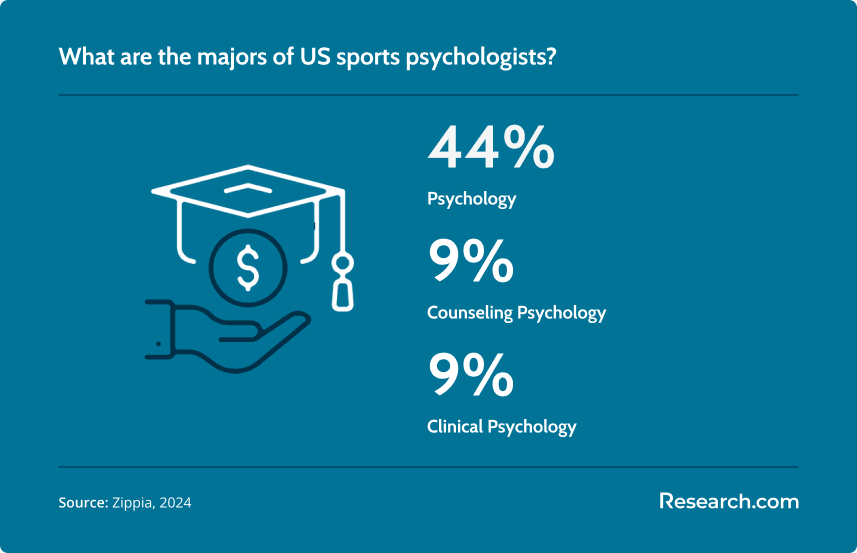
According to Zippia, the most common skills found on sports psychologist resumes in the United States are crisis interventions (56%), clinical psychology (17.7%), performance enhancement (14.1%), professional athletes (8.5%), player performance (2.3%), and competitive performance (1.5%).
What are the best certifications for sports psychologists?
Certifications can strengthen credibility, clarify specialization, and help employers or clients understand your training. They are not a substitute for state licensure when clinical psychology services are involved, but they can be valuable for sport-specific practice.
| Certification | What it emphasizes | Who should consider it |
| Certified Mental Performance Consultant (CMPC®) | Mental performance enhancement, applied sport psychology, and athlete well-being | Professionals working with athletes, teams, or performers; requirements include a master’s or doctoral degree, 400+ supervised hours, and passing the CMPC exam through CMPC certification |
| American Board of Sport Psychology (ABSP) Certification | Advanced sport psychology knowledge, assessment, diagnostics, and intervention training | Graduate-trained professionals seeking deeper preparation in clinical and research-oriented sport psychology |
| Board Certification in Psychology (ABPP – Sports Psychology Specialty) | Specialty recognition for licensed psychologists with sport psychology expertise | Doctoral-level, state-licensed psychologists pursuing advanced board certification |
| Certified Strength and Conditioning Specialist (CSCS®) | Strength training, conditioning, physical performance, and athlete preparation | Professionals who want to integrate physical training knowledge with mental performance support |
| International Society of Sport Psychology (ISSP) Certification | International standards and global sport psychology practice recognition | Practitioners seeking a credential with international relevance |
| Certified Clinical Exercise Physiologist (CEP) | Exercise physiology, wellness, and clinical exercise applications | Professionals connecting athlete wellness, physical conditioning, and mental health strategies |
How do sports psychologists maintain continuous professional development?
Sports psychologists stay current through continuing education, supervision, peer consultation, conferences, journal reading, ethics training, and advanced academic work. This matters because athlete care is affected by changing expectations around mental health, telehealth, privacy, diversity, team culture, and evidence-based performance intervention.
Some practitioners deepen their training through doctoral study, postdoctoral specialization, or additional research preparation. For professionals comparing advanced options, an online doctorate in psychology may be worth reviewing alongside accreditation, internship requirements, state licensure rules, and total cost.
What challenges do sports psychologists face?
Sports psychology can be rewarding, but it is not a simple motivational coaching job. Practitioners often work in environments where athletes want confidentiality, coaches want performance information, organizations want results, and mental health concerns may be minimized until they affect competition.
- Confidentiality pressure: Teams and coaches may ask for information that the athlete has not consented to share.
- Scope-of-practice issues: A consultant must know when an athlete needs licensed clinical care or referral.
- Performance versus well-being tension: The ethical priority is not simply helping an athlete compete at any cost.
- High-pressure schedules: Competition calendars, travel, injuries, and crises can make consistent care difficult.
- Cultural and identity factors: Athletes’ experiences are shaped by race, gender, disability, nationality, socioeconomic background, sport culture, and team environment.
- Boundary management: Practitioners may interact with athletes in informal sport settings while still needing professional boundaries.
- Regulatory complexity: Licensure, telehealth, state lines, documentation, and continuing education rules can vary by jurisdiction.
These challenges are part of why advanced psychology preparation can influence career scope and compensation. Research.com’s overview of the highest paying careers in psychology can help you compare sports psychology with other psychology specializations.
What is the job outlook of sports psychologists?
The United States Bureau of Labor Statistics (BLS) projects employment for psychologists, including sports psychologists, to grow 7% from 2023 to 2033, which is faster than the national average of 4%. Over the same period, about 13,000 openings for psychologist jobs, including roles relevant to sports psychology, are expected each year.
Indeed currently lists more than 200 job listings for sports psychologists in the United States. That count does not include adjacent roles such as rehabilitation specialist, mental health consultant, performance consultant, researcher, or wellness professional.
Current trends affecting sports psychology careers
- More public discussion of athlete mental health: Elite, college, and youth sports organizations are paying greater attention to psychological support, especially around pressure, injury, burnout, identity, and transition.
- Telehealth and remote consulting: Digital tools can expand access, but practitioners must follow licensure, privacy, and state practice rules.
- Data-informed performance work: Video, statistics, self-report tools, and behavioral tracking are increasingly used to connect mindset, routine, and performance patterns.
- Interdisciplinary athlete care: Sports psychologists often collaborate with physicians, athletic trainers, strength coaches, dietitians, academic support staff, and coaches.
- Credential scrutiny: Employers and athletes may ask more questions about licensure, certification, supervised experience, and ethical scope of practice.
Can accelerated PsyD programs fast-track my career in sports psychology?
Accelerated PsyD programs may shorten the doctoral timeline for some students, but they should be evaluated carefully. A faster program is only useful if it provides rigorous clinical training, supervised experience, internship preparation, and alignment with licensure requirements. Students should not choose speed over accreditation, match outcomes, faculty fit, or state approval.
If you are comparing shortened doctoral routes, review options such as the easiest PsyD programs to get into while asking whether the program supports your intended psychology license, sport psychology training goals, and long-term career plans.
Can cross-disciplinary certifications enhance my sports psychology practice?
Cross-disciplinary credentials can be useful when they directly improve your service to athletes. For example, training in behavior analysis, exercise science, strength and conditioning, counseling, or substance abuse support may help a practitioner collaborate more effectively with other professionals and design more targeted interventions.
Credentials should be chosen strategically. A certificate is valuable when it expands your competence within a clearly defined scope of practice. For professionals interested in behavioral intervention training, Research.com’s guide to BCBA online options can help compare affordability and structure.
How can online learning and digital tools boost sports psychology careers?
Online learning can help students and working professionals access advanced coursework, specialized training, and flexible degree pathways. Digital tools can also support remote consultations, athlete self-monitoring, mental skills practice, video review, and data-informed feedback. However, online convenience does not remove the need to verify accreditation, supervised experience, licensure eligibility, and state telehealth rules.
Students focused on doctoral affordability may compare the cheapest online PsyD programs, but total value should include clinical placement support, faculty credentials, student outcomes, licensure alignment, and technology requirements.
How can applied behavior analysis improve interventions in sports psychology?
Applied Behavior Analysis (ABA) can help sports psychology professionals design structured, measurable interventions. ABA principles may support behavior tracking, reinforcement plans, habit formation, skill acquisition, and performance routines. In sport settings, this can be useful for building consistent practice behaviors, improving adherence to rehabilitation plans, or shaping pre-performance routines.
ABA training should be applied ethically and within professional competence. Practitioners who want formal preparation in this area can review the best online applied behavior analysis programs and compare curriculum, supervision, cost, and career fit.
How can mentorship and networking boost your sports psychology career?
Mentorship is especially important in sports psychology because many career opportunities come through supervised practice, athletic department connections, professional associations, referrals, and trusted relationships with coaches or clinicians. A mentor can help you understand ethical boundaries, choose the right graduate program, prepare for certification, find applied placements, and avoid overstating your scope of practice.
- Join professional organizations related to sport psychology, counseling, psychology, or performance science.
- Seek supervisors who have direct experience with athletes or high-performance populations.
- Attend conferences, workshops, and continuing education events where practitioners discuss real cases and ethical issues.
- Build relationships with athletic trainers, coaches, physicians, and academic support professionals without compromising confidentiality.
- Compare salary and role expectations across psychology specialties by reviewing resources such as Research.com’s guide to psychology specialties salaries.
How do sports psychologists address substance abuse challenges in athletes?
Athletes can face substance misuse risks related to injury, pain management, performance pressure, coping problems, social environments, or co-occurring mental health concerns. Sports psychologists do not treat these issues in isolation when specialized care is needed. They may screen for concerns, provide support within their scope, coordinate referrals, and collaborate with substance abuse counselors, physicians, and other mental health professionals.
For students who want to understand this related field, Research.com’s guide to substance abuse counselor education requirements explains a separate but relevant counseling pathway.
How can I manage the costs of pursuing a career in sports psychology?
Sports psychology training can be expensive because the pathway may include undergraduate study, graduate school, supervised experience, doctoral education, licensing exams, certification fees, and continuing education. Cost planning should begin before enrollment, not after loan balances accumulate.
| Cost factor | Why it matters | How to evaluate it |
| Tuition and fees | Sticker price can differ greatly from net cost after aid | Ask for total program cost, not just per-credit tuition |
| Accreditation and licensure fit | A cheaper program may cost more later if it does not support licensure | Confirm eligibility with the state psychology board before enrolling |
| Practicum and internship placement | Weak placement support can delay training and licensure progress | Ask where students train and whether sport-related placements are available |
| Opportunity cost | Full-time study may reduce income while part-time study may extend the timeline | Compare full-time, part-time, online, hybrid, and assistantship options |
| Certification and exam costs | Credentials, licensing exams, and continuing education add expenses beyond tuition | Budget for exams, supervision, travel, memberships, and renewal requirements |
Students looking for lower-cost counseling-related pathways can review the most affordable online counseling degrees, but they should verify whether any program supports their specific sports psychology, counseling, or licensure goals.
How much does a sports psychologist make?
According to recent data from ZipRecruiter, sports psychologists in the United States earn an average annual salary of $92,813. Glassdoor reports a higher figure of $107,063. Both figures are above the collective median annual salary for all US jobs, which is $48,060. Actual sports psychologist salary outcomes depend on education, licensure, employer type, state, client population, specialization, and experience.
Using ZipRecruiter’s data, the US states with the highest average annual salaries for sports psychologists are Washington ($105,120), the District of Columbia ($104,881), New York ($101,541), Massachusetts ($101,363), and Alaska ($99,955).
The US states with the lowest average annual salaries for sports psychologists are Florida ($69,358), West Virginia ($71,853), Arkansas ($76,748), Georgia ($78,370), and Louisiana ($79,367).
Salary factors to consider before choosing this career
- Licensed psychologists may qualify for a broader range of clinical and independent practice roles than non-licensed performance consultants.
- Elite sport jobs can be competitive and may not represent typical early-career earnings.
- Private practice income depends on referrals, business skills, credentials, location, and payer arrangements.
- University, medical, military, and professional sports settings may require different credentials and experience levels.
- Salary data should be treated as a benchmark, not a guarantee.
What are the possible career paths for aspiring sports psychologists?
Sports psychology training can lead to several careers, but the right path depends on your degree level, license status, applied experience, and preferred work environment. Some roles require doctoral-level psychology licensure. Others focus on consulting, coaching, research, or athlete support within a narrower scope.
- Licensed sports psychologist: This route usually requires doctoral education, supervised experience, licensure, and sport-focused training. Students comparing doctoral formats can review online PhD programs in psychology while verifying licensure fit.
- Mental performance consultant: These professionals help athletes strengthen skills such as concentration, confidence, goal setting, visualization, and stress management. Certification such as CMPC® may be relevant.
- Athletic trainer with psychology-informed practice: Professionals in athletic training may apply psychological principles to injury prevention, recovery adherence, and return-to-play confidence within their role.
- Sports coach: Coaching roles can benefit from sport psychology knowledge, especially around motivation, communication, confidence, team culture, and competition preparation.
- College or university instructor: Academic roles may involve teaching, advising, research, publication, and student mentorship.
- Corporate performance consultant: Mental performance principles can also apply to leadership, stress management, team building, and high-pressure workplace performance.
- Youth sports psychology specialist: This path focuses on young athletes, competition pressure, confidence, family expectations, coach communication, and positive sport development.
- Researcher: Researchers study athlete mental health, performance interventions, team dynamics, motivation, and related questions. Students more interested in clinical research and therapy than sport-specific work can explore clinical psychologist programs online.
- Sports psychiatrist: This is a medical career requiring medical training and psychiatric specialization. It differs from becoming a psychologist.
- Military or law enforcement performance consultant: Sport psychology skills can transfer to high-pressure settings that require resilience, focus, stress tolerance, and performance under threat.
For master’s-level options, Research.com’s guide to the best sport psychology jobs with a masters degree provides a closer look at roles that may not require the full doctoral path.
Common mistakes to avoid when becoming a sports psychologist
| Mistake | Why it can hurt your career | Better approach |
| Choosing a program without checking accreditation | It may limit licensure eligibility, internship options, or employer recognition | Confirm accreditation and state board acceptance before applying |
| Assuming all sport psychology roles are clinical roles | Performance consulting and licensed psychology have different legal scopes | Clarify whether your goal requires licensure, certification, or both |
| Focusing only on tuition | A low-cost program may lack placements, supervision, or licensure alignment | Compare total cost, outcomes, supervised training, and career fit |
| Ignoring supervised experience quality | Applied competence depends heavily on mentorship and real practice settings | Ask where students complete practicums, internships, and sport-related placements |
| Overlooking state-specific rules | Licensure and telehealth rules vary by jurisdiction | Review requirements in the state where you plan to practice |
| Relying only on rankings or program marketing | Rankings may not reflect your licensing needs, faculty fit, or sport placement goals | Speak with faculty, current students, alumni, and licensing boards |
| Assuming salary averages are guaranteed | Income varies by location, employer, credentials, experience, and specialization | Use salary data as a planning benchmark, not a promise |
Questions to ask before entering a sports psychology program
- Does this program prepare graduates for licensure in the state where I want to work?
- Is the program accredited, and how does that affect EPPP eligibility or internship placement?
- Do faculty members have expertise in sport psychology, athlete mental health, performance psychology, or rehabilitation?
- What supervised placements are available with athletes, teams, clinics, or athletic departments?
- Does the curriculum distinguish between mental performance consulting and clinical psychological practice?
- What are the program’s completion expectations, internship requirements, and total estimated costs?
- How do graduates perform on licensing exams and where do they work after graduation?
- Will online, hybrid, or accelerated coursework affect my ability to complete required supervised experiences?
Here’s what sports psychologists say about their jobs
-
: "
Sports psychology allows me to combine research, strategy, and human connection in a practical way. One day may involve teaching performance routines, and another may involve helping an athlete manage a personal struggle. The most meaningful part is seeing how better mental health can improve not only one athlete’s performance but the culture around an entire team. — Howard
"
-
: "
One of the most rewarding parts of this work is helping athletes change their relationship with pressure. I once supported a young gymnast whose anxiety made competition feel threatening. With structured mental training, she learned to approach competition with more control and confidence. Watching that shift happen is why this profession matters to me. — Billie
"
-
: "
I wanted a career that connected psychology with sport, and this field gave me that path. I work with athletes at different levels, from youth programs to highly competitive teams, so the work is never repetitive. What keeps me committed is knowing the goal is not just better performance; it is also helping athletes function better as people. — Pat
"
How can further education accelerate your career in sports psychology?
Further education can help sports psychology professionals expand clinical competence, qualify for licensure, strengthen research skills, specialize in athlete mental health, and qualify for higher-level roles. The right next step depends on whether you need a master’s degree, doctoral degree, certification, supervision, or continuing education.
Graduate study can also expand your professional network through faculty mentorship, research teams, practicum sites, and alumni connections. If you are comparing flexible graduate options, Research.com’s guide to masters in psychology online programs can help you evaluate cost and curriculum fit.
Key insights
- Sports psychology is a serious professional pathway that blends performance support, mental health knowledge, assessment, ethics, and athlete-centered intervention.
- The path usually takes around 6 to 14 years, depending on whether you pursue master’s-level consulting work or doctoral training for licensure and independent clinical practice.
- Licensure matters if you want to diagnose, treat, and practice independently as a psychologist; certification can support specialization but does not replace state licensure.
- Accreditation is a major decision factor. The 2024 EPPP pass rate was 76.87% for accredited doctorate programs in the United States and 48.8% for non-accredited programs.
- The BLS projects 7% employment growth for psychologists, including sports psychologists, from 2023 to 2033, with about 13,000 openings each year across psychologist roles.
- Salary data is promising but variable. ZipRecruiter reports an average annual salary of $92,813, while Glassdoor reports $107,063; location, licensure, employer, and experience strongly affect earnings.
- The best program is not always the fastest or cheapest. Choose based on accreditation, licensure alignment, supervised placements, faculty expertise, cost, and your intended role.
- Before enrolling, decide whether you want to be a licensed psychologist, mental performance consultant, researcher, coach, rehabilitation collaborator, or sport organization professional.
References:
- ASPPB (2024). 2024 PsychologyLicensing Exam Scores by Doctoral Program. ASPPB
- BLS (2024, August 29). Psychologists. BLS
- Glassdoor (2024, June 6). How much does a Sports Psychologist make? Glassdoor
- González-Hernández, J. (2024, August 14). Mental health after the Olympics: why so many athletes struggle to adapt to normal life after big competitions. The Conversation
- Indeed (2024, July 3). FAQ: How Long Does It Take To Become a Sports Psychologist? Indeed
- Zippia (2024, June 25). Sports Psychologist skills for your resume and career. Zippia
- ZipRecruiter (2024, December 30). Sport Psychologist Salary. ZipRecruiter
- ZipRecruiter (2024, December 30). What Is the Average Sport Psychologist Salary by State. ZipRecruiter salary data
Other Things You Need to Know About How to Become a Sports Psychologist
In 2027, to practice as a sports psychologist, obtaining certification from the Association for Applied Sport Psychology (AASP) is essential. This requires a relevant graduate degree, 400-hour supervised experience in sports psychology, and passing the Certified Mental Performance Consultant (CMPC) exam.
Yes. To provide psychological treatment, a sports psychologist usually must hold a state psychologist license, which requires a doctoral degree, supervised practice, and passing the Examination for Professional Practice in Psychology (EPPP). Some states also require jurisprudence exams or background checks.
Sports psychologists must complete regular continuing education to maintain their certification. Typical requirements include 20 hours every two years, covering topics like ethical practice and recent sports psychology research, approved by governing bodies such as the American Psychological Association or similar organizations.