
2027 Fastest Online MBA in Healthcare Administration Programs

Co-Founder and Chief Data Scientist
An online MBA in Healthcare Administration is for professionals who want to move from clinical, operational, finance, or administrative roles into healthcare leadership without leaving the workforce. The fastest programs compress graduate business training and healthcare management coursework into intensive online formats, sometimes allowing completion in as few as 10 to 12 months.
This guide explains how accelerated online MBA in Healthcare Administration programs work, what they cost, how they compare with campus-based options, what admissions requirements to expect, and which career paths may follow. It also shows how to evaluate accreditation, flexibility, return on investment, and student support before choosing a program.
The timing matters because healthcare organizations need managers who understand both business performance and patient-centered operations. According to the U.S. Bureau of Labor Statistics, employment of medical and health services managers—a common role for MBA in Healthcare Administration graduates—is projected to grow 28% until 2032, much faster than the average for all occupations.
Quick answer: Is a fastest online MBA in Healthcare Administration worth considering?
A fastest online MBA in Healthcare Administration can be a strong option if you already have professional experience, want to move into healthcare management quickly, and can handle an intensive course load. The degree is most useful when the program is properly accredited, fits your work schedule, offers relevant healthcare leadership coursework, and has a total cost that makes sense for your expected career path.
It may not be the right choice if you need extensive in-person networking, are new to healthcare and need more hands-on exposure, or cannot realistically manage accelerated graduate coursework alongside work and family responsibilities.
What are the main benefits of earning an MBA in Healthcare Administration?
- An MBA in Healthcare Administration can help prepare you for leadership-focused roles such as hospital administrator, healthcare consultant, health services manager, medical and health services manager, healthcare finance manager, and practice administrator.
- The median annual salary for professionals with an MBA in healthcare administration is around $104,280, while senior leadership roles such as hospital administrator or CEO may exceed $200,000 per year.
- Online study can make the degree more accessible for working adults by reducing commuting needs, offering more control over study time, and allowing students to continue working while completing coursework.
What can I expect from an MBA in Healthcare Administration?
An MBA in Healthcare Administration combines advanced business training with coursework focused on healthcare systems, regulation, operations, finance, and leadership. The goal is to prepare students to make business decisions in environments where patient care, compliance, cost control, quality, and organizational strategy all intersect.
Most programs include core MBA subjects such as strategic leadership, financial management, marketing, data analysis, organizational behavior, and operations. Healthcare-focused courses usually address healthcare law and ethics, health policy, healthcare systems, quality improvement, reimbursement, and clinical resource management.
Many programs also include a capstone, applied project, case study sequence, or healthcare-focused elective options. These experiences are especially valuable when they allow students to solve real operational, financial, or strategic problems tied to healthcare organizations.
Where can I work with an MBA in Healthcare Administration?
Graduates can work in many parts of the healthcare sector, including hospitals, clinics, long-term care facilities, nursing homes, group medical practices, urgent care networks, and specialty care organizations. Common titles include hospital administrator, clinic director, healthcare operations manager, practice manager, and administrative director.
The degree can also support roles outside direct care settings. Graduates may work for health insurance companies, pharmaceutical firms, government agencies, nonprofit health organizations, consulting firms, health technology companies, and policy-focused organizations. Possible positions include healthcare consultant, health information manager, healthcare finance manager, policy analyst, medical director support leader, or health services administrator.
How much can I make with an MBA in Healthcare Administration?
Salary outcomes vary by role, employer type, region, experience, and whether the position includes responsibility for budgets, staffing, compliance, or executive decision-making. In the United States, the average annual salary for MBA graduates in hospital or healthcare administration is around $123,586, with hourly wages averaging about $59.42.
Reported salaries typically range from approximately $88,000 at the 25th percentile to $143,500 at the 75th percentile. Top earners can make upwards of $190,000 to $200,000 annually, especially in senior healthcare leadership roles.
Entry-level management roles often pay less than executive positions, while professionals with 5-10 years of experience may see stronger salary growth. Other sources place median salaries for medical and health services managers at around $108,000 to $118,000 per year, with differences by healthcare setting and geographic market.
- Fastest Online MBA in Healthcare Administration Programs for 2027
- Program Length: How Fast Can You Finish?
- Online vs. On-Campus MBA in Healthcare Administration
- Average Cost of an Online MBA in Healthcare Administration
- Financial Aid Options for Online MBA Students
- Admissions Requirements and Prerequisites
- Common Courses in the Curriculum
- Healthcare Administration MBA Specializations
- How to Choose the Best Program
- Career Paths After Graduation
- Job Market for Healthcare Administration MBA Graduates
- Trends Affecting Online Healthcare Administration MBA Programs
- ROI Compared With Other Accelerated Programs
- Common Challenges for Online MBA Students
Fastest Online MBA in Healthcare Administration Programs for 2027
How Research.com evaluates schools
Research.com reviews online MBA in Healthcare Administration programs using a structured ranking methodology that considers program length, student satisfaction, cost, and earning potential. The purpose is to help prospective students compare programs using consistent information rather than marketing claims alone.
Accreditation is one of the most important factors to verify because it signals that a school or business program has gone through external quality review. For this ranking, Research.com uses current and validated information from sources including:
- Integrated Postsecondary Education Data System (IPEDS database)
- Peterson’s database, including the Distance Learning Licensed Data Set
- College Scorecard database
- National Center for Education Statistics
| Program | Fastest listed completion time | Credits | Cost per credit | Accreditation listed |
| Lamar University Online MBA in Healthcare Administration | 1 year | 30 credits | $478 | Association to Advance Collegiate Schools of Business |
| Western Governors University (WGU) Online MBA in Healthcare Administration | 1 year | 36 credits | $264 | Association to Advance Collegiate Schools of Business |
| Southern Illinois University Edwardsville (SIUE) Online MBA in Healthcare Administration | 1 year | 36 credits | $556 | Association to Advance Collegiate Schools of Business |
| Texas A&M University–Corpus Christi (TAMU-CC) Online MBA in Healthcare Administration | 1 year | 36 credits | $507 | Association to Advance Collegiate Schools of Business |
| Louisiana State University (LSU) Online MBA in Healthcare Administration | 1 year | 36 credits | $1,110 | Association to Advance Collegiate Schools of Business |
| University of North Carolina at Wilmington (UNCW) Online MBA in Healthcare Administration | 1 year | 36 credits | $553 | Association to Advance Collegiate Schools of Business |
| Boston College Online Healthcare Administration Program | 1 year | 54 credits | $553 | New England Commission of Higher Education (NECHE) |
| University of Saint Francis (USF) Online MBA in Healthcare Administration | 1 year | 36 credits | $799 | Accreditation Council for Business Schools and Programs |
| Saint Mary’s University of Minnesota (SMUMN) Online MBA in Healthcare Administration | 1 year | 36 credits | $775 | International Accreditation Council for Business Education (IACBE) |
| University of South Carolina Aiken (USC Aiken) MBA in Healthcare Administration | 10 months | 30 credits | $467 | Association to Advance Collegiate Schools of Business |
1. Lamar University Online MBA in Healthcare Administration
Lamar University’s online MBA in Healthcare Administration focuses on healthcare leadership, legal responsibilities in regulated care environments, strategic planning, and management of clinical resources. The curriculum is designed to help students understand how healthcare organizations operate under changing rules, financial pressures, and quality expectations.
- Program Length: 1 year
- Tracks/concentrations: Healthcare Administration
- Cost per credit: $478
- Required credits to graduate: 30 credits
- Accreditation: Association to Advance Collegiate Schools of Business
2. Western Governors University (WGU) Online MBA in Healthcare Administration
Western Governors University offers a competency-based online MBA in Healthcare Administration for professionals who prefer to progress by demonstrating mastery rather than following a traditional semester pace. Students complete 11 required courses and may move forward once they show competency in each subject area.
- Program Length: 1 year
- Tracks/concentrations: Healthcare Administration
- Cost per credit: $264
- Required credits to graduate: 36 credits
- Accreditation: Association to Advance Collegiate Schools of Business
3. Southern Illinois University Edwardsville Online MBA in Healthcare Administration
Southern Illinois University Edwardsville’s online MBA in Healthcare Administration blends core business training with healthcare management coursework. Students study subjects such as finance, marketing, strategy, healthcare policy, healthcare systems, and management of healthcare organizations.
- Program Length: 1 year
- Tracks/concentrations: Healthcare Administration
- Cost per credit: $556
- Required credits to graduate: 36 credits
- Accreditation: Association to Advance Collegiate Schools of Business
4. Texas A&M University–Corpus Christi Online MBA in Healthcare Administration
Texas A&M University–Corpus Christi structures its online MBA in Healthcare Administration around both MBA fundamentals and healthcare-focused study. Coursework includes accounting, managerial economics, finance, marketing, organizational behavior, operations management, strategy, health economics and policy, healthcare financial management, and health law and ethics.
- Program Length: 1 year
- Tracks/concentrations: Healthcare Administration
- Cost per credit: $507
- Required credits to graduate: 36 credits
- Accreditation: Association to Advance Collegiate Schools of Business
5. Louisiana State University Online MBA in Healthcare Administration
Louisiana State University offers an online MBA in Healthcare Administration delivered fully online with accelerated eight-week courses. The program emphasizes leadership, healthcare policy, quality improvement, and strategic decision-making for students seeking executive or senior management responsibilities in healthcare settings.
- Program Length: 1 year
- Tracks/concentrations: Healthcare Administration
- Cost per credit: $1,110
- Required credits to graduate: 36 credits
- Accreditation: Association to Advance Collegiate Schools of Business
6. University of North Carolina at Wilmington Online MBA in Healthcare Administration
The University of North Carolina at Wilmington’s online MBA in Healthcare Administration requires 36 credit hours. Students complete business courses in areas such as business law, accounting, information analysis, operations management, economics, corporate finance, marketing, strategic management, and business analytics, along with healthcare-focused courses in analytics, finance, systems, legal and ethical issues, and strategy.
- Program Length: 1 year
- Tracks/concentrations: Healthcare Administration
- Cost per credit: $553
- Required credits to graduate: 36 credits
- Accreditation: Association to Advance Collegiate Schools of Business
7. Boston College Online Healthcare Administration Program
Boston College offers an online healthcare administration program designed for working professionals who want leadership preparation for healthcare systems and community-focused organizations. Although the credential is an Online Master of Healthcare Administration rather than a traditional MBA, it develops business, management, and healthcare leadership skills relevant to many administrative settings.
- Program Length: 1 year
- Tracks/concentrations: Healthcare Administration
- Cost per credit: $553
- Required credits to graduate: 54 credits
- Accreditation: New England Commission of Higher Education (NECHE)
8. University of Saint Francis Online MBA in Healthcare Administration
The University of Saint Francis allows students to pursue an MBA with a Health Administration concentration. Students may also choose other concentration areas such as Accounting, Cybersecurity, Data Analytics, Finance, and Human Resource Management. The healthcare administration coursework emphasizes applying business concepts to current or future workplace challenges.
- Program Length: 1 year
- Tracks/concentrations: Healthcare Administration
- Cost per credit: $799
- Required credits to graduate: 36 credits
- Accreditation: Accreditation Council for Business Schools and Programs
9. Saint Mary’s University of Minnesota Online MBA in Healthcare Administration
Saint Mary’s University of Minnesota’s online MBA in Healthcare Administration is built for professionals who want an accelerated path into healthcare leadership. The curriculum combines healthcare finance, health and human services, healthcare policy, ethics, organizational leadership, finance, marketing, strategy, and operations.
- Program Length: 1 year
- Tracks/concentrations: Healthcare Administration
- Cost per credit: $775
- Required credits to graduate: 36 credits
- Accreditation: International Accreditation Council for Business Education (IACBE)
10. University of South Carolina Online MBA in Healthcare Administration
The University of South Carolina Aiken offers a fully online MBA in Healthcare Administration with AACSB accreditation. Students can complete the program in as few as 10 months, making it one of the shortest listed options for professionals seeking fast entry or advancement in healthcare leadership.
- Program Length: 10 months
- Tracks/concentrations: Healthcare Administration
- Cost per credit: $467
- Required credits to graduate: 30 credits
- Accreditation: Association to Advance Collegiate Schools of Business
How long does it take to complete an online MBA in Healthcare Administration program?
Accelerated online MBA in Healthcare Administration programs are commonly designed for completion in 12 to 18 months. The fastest listed options may be completed in as few as 10 to 12 months, but that pace usually requires strong time management and a heavier course load.
Traditional full-time MBA programs generally take around 2 years. Part-time formats are often better for students with demanding jobs, caregiving responsibilities, or unpredictable schedules, but they may extend completion to 3 to 4 years.
| Program pace | Typical completion time | Best fit | Main trade-off |
| Accelerated online | 10 to 12 months or 12 to 18 months | Experienced professionals who can commit significant weekly study time | Less breathing room between courses |
| Standard full-time | Around 2 years | Students who want a structured but less compressed MBA experience | Longer time before graduation |
| Part-time online | 3 to 4 years | Working adults who need maximum schedule flexibility | Slower path to credential completion |
| Self-paced or competency-based | Varies by student progress | Independent learners who can move quickly through familiar material | Requires high self-direction |
Program length also depends on required credits, course length, transfer policies, cohort schedules, and whether the program allows self-paced progress. Healthcare professionals who want to combine leadership study with clinical specialization may also compare related options such as the most affordable online pediatric nurse practitioner graduate certificate programs.
How does an online MBA in Healthcare Administration program compare to an on-campus program?
An online MBA in Healthcare Administration is usually the better fit for working professionals who need flexibility, while an on-campus program may be stronger for students who want frequent in-person interaction, campus networking, and structured face-to-face learning. Similar decision factors apply when comparing other healthcare graduate programs, including ASHA-accredited online and on-campus SLP programs.
Online programs typically use learning management systems, recorded or live video lectures, virtual discussions, digital assignments, and remote collaboration tools. Students can often complete coursework from any location with reliable internet access.
Campus-based MBA programs offer regular in-person access to faculty, classmates, guest speakers, alumni events, workshops, and career fairs. They may also provide more visible networking opportunities, although many online programs now use virtual networking, residencies, employer projects, and alumni platforms to close that gap.
| Factor | Online MBA in Healthcare Administration | On-campus MBA in Healthcare Administration |
| Schedule | More flexible; often built for working adults | More fixed class times and campus commitments |
| Networking | Depends on virtual events, group projects, alumni access, and student engagement | Often stronger for face-to-face relationship building |
| Cost considerations | May reduce commuting, housing, and relocation expenses | May involve additional campus-related costs |
| Learning style | Best for self-directed students | Best for students who prefer classroom structure |
| Hands-on exposure | May include virtual simulations, applied projects, or local fieldwork | May offer easier access to campus-based workshops and employer events |
The right format depends on your learning style, work schedule, career goals, and need for in-person professional connections.
What is the average cost of an online MBA in Healthcare Administration program?
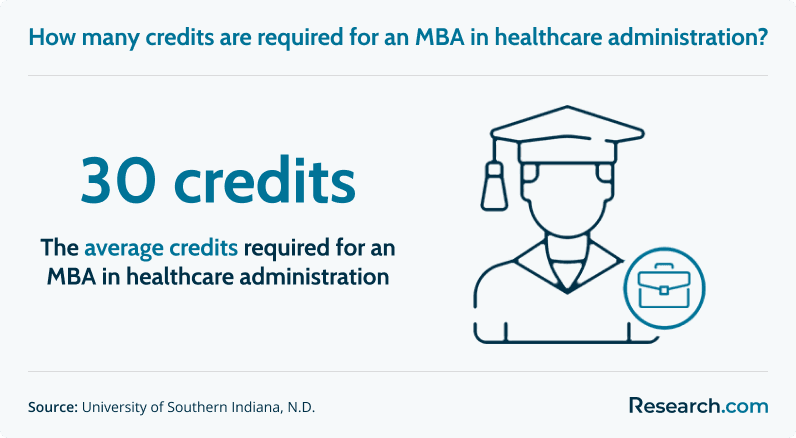
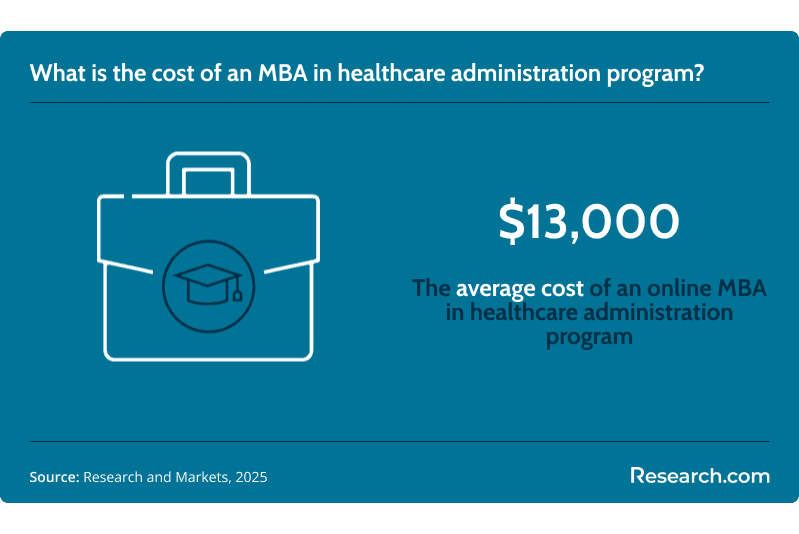
The average cost of an online MBA in Healthcare Administration program in the US typically ranges between $13,000 and $27,000 in total tuition, depending on the school, credit requirement, and tuition structure. Many affordable programs charge around $430 to $470 per credit hour and require about 30 credits, bringing tuition close to $13,000 to $14,000.
For example, the University of Southern Indiana charges approximately $465 per credit, totaling about $13,950, while Fitchburg State University’s program costs around $13,080 in tuition. Some private or highly ranked universities may cost much more, with total tuition reaching $35,000 to $85,000 or even upwards of $100,000 at top-tier institutions.
Students should also account for fees, books, technology costs, graduation fees, and possible travel for residencies or campus visits. When estimating affordability, compare the full cost of attendance rather than tuition alone. Students researching healthcare education costs may also find it useful to compare program pricing with resources such as how much LPN programs cost.
| Cost item | Why it matters | Question to ask |
| Tuition per credit | This is usually the largest direct cost | Is tuition charged per credit, per course, or by term? |
| Total required credits | A lower per-credit rate may still cost more if the program requires more credits | How many credits are required to graduate? |
| Fees | Technology, graduation, and student service fees can increase the total bill | Are fees included in the published tuition estimate? |
| Course materials | Books and digital materials vary by program | Are materials included or billed separately? |
| Residency or travel | Some online programs require short in-person sessions | Are there required campus visits or immersion experiences? |
What are the financial aid options for students enrolling in an online MBA in Healthcare Administration program?
Online MBA students may be eligible for several types of financial support, but availability depends on the school, enrollment status, citizenship or residency status, and program eligibility. Students comparing graduate business pathways may also review options such as the most affordable online DBA programs if they are considering doctoral-level business education later.
- Free Application for Federal Student Aid (FAFSA): Completing the FAFSA is typically the first step for students seeking federal financial aid. It helps determine eligibility for federal assistance programs.
- University scholarships: Many schools offer scholarships for online MBA students. Awards may be based on academic performance, leadership experience, professional background, financial need, or program fit.
- Healthcare industry scholarships: Professional groups in healthcare management and healthcare technology may provide awards for students pursuing healthcare administration or related degrees. Examples include the American College of Healthcare Executives (ACHE), the Healthcare Financial Management Association (HFMA), and the Healthcare Information and Management Systems Society (HIMSS).
- Employer tuition assistance: Healthcare systems, insurers, consulting firms, and public agencies may help employees pay for graduate education when the degree aligns with workforce needs.
- Private student loans: Banks, credit unions, and other private lenders may offer graduate student loans. Compare interest rates, repayment terms, credit requirements, and borrower protections carefully before choosing this option.
What are the prerequisites for enrolling in an online MBA in Healthcare Administration program?
Admissions requirements vary by university, but most online MBA in Healthcare Administration programs evaluate academic preparation, professional experience, and readiness for graduate-level business coursework. Students exploring earlier healthcare career steps may also compare requirements with guidance on how to become a healthcare coordinator.
- Bachelor’s degree: Most programs require a bachelor’s degree from an accredited institution. Some prefer business or healthcare backgrounds, but many accept applicants from other fields.
- GMAT or GRE scores: Some programs still request standardized test scores, but many online MBA programs now offer GMAT/GRE waivers, especially for applicants with professional or managerial experience.
- Work experience: Healthcare administration MBA programs often value professional experience. The required amount of experience can range from 2-5 years, and some programs prefer applicants with leadership, supervisory, or healthcare exposure.
- Official transcripts: Applicants usually submit transcripts from all previously attended colleges and universities. International applicants may need a course-by-course evaluation of foreign transcripts.
- Resume or CV: Schools typically request a current resume showing employment history, leadership responsibilities, healthcare experience, certifications, and professional development.
- Personal statement or essay: Many programs ask applicants to explain career goals, leadership interests, and why healthcare administration is the right concentration.
- Recommendations: Some schools request letters from supervisors, professors, or professional contacts who can comment on the applicant’s readiness for graduate study.
What courses are typically in an online MBA in Healthcare Administration program?
Online MBA in Healthcare Administration programs usually combine general management courses with healthcare-focused courses. The structure is similar to many accelerated graduate business programs, including a fast-track online master’s degree in human resources management, where students build broad leadership skills while developing expertise in a specific professional area.
- Managerial accounting: Covers financial statements, cost behavior, budgeting, internal reporting, and decision-making tools for managers.
- Financial management or corporate finance: Introduces capital budgeting, investment analysis, financial markets, and organizational finance strategy.
- Marketing management: Explores market research, pricing, promotion, service positioning, and communication strategies, often with healthcare applications.
- Organizational behavior and leadership: Examines motivation, team dynamics, communication, change management, and leadership in complex organizations.
- Operations management: Focuses on process improvement, supply chains, workflow design, capacity planning, and service delivery efficiency.
- Strategic management or business policy: Teaches long-term planning, competitive analysis, organizational positioning, and strategic execution.
- Business analytics or data analysis: Develops skills in using data, metrics, and statistical tools to support managerial decisions.
- Healthcare systems and policy: Reviews healthcare delivery models, regulation, access, payer structures, and policy forces shaping care organizations.
- Healthcare law and ethics: Addresses compliance, privacy, liability, ethical decision-making, and governance issues in healthcare settings.
Professionals who want broader government or nonprofit leadership training may also compare healthcare administration coursework with an accelerated master’s in public administration online.
What types of specializations are available in an online MBA in Healthcare Administration program?
Healthcare Administration is itself a concentration within many MBA programs, but some schools allow students to further shape their studies through electives, certificates, or sub-specializations. These options can help students align coursework with specific career goals, just as an accelerated online master’s degree in supply chain management targets a defined business function.
- Healthcare operations management: Focuses on improving facility workflows, patient flow, supply chain processes, staffing efficiency, and resource allocation. Students seeking a broader but related path can also compare the fastest online master’s degree in healthcare management programs.
- Healthcare finance and economics: Covers budgeting, reimbursement, revenue cycle management, payer relationships, cost analysis, Medicare, Medicaid, private insurance, and financial planning in healthcare organizations.
- Healthcare informatics and technology: Prepares students to understand health information systems, data use, digital health tools, technology adoption, and information governance.
- Healthcare policy and regulation: Emphasizes health law, compliance, HIPAA-related issues, ethics, policy analysis, and the effect of government rules on healthcare organizations.
- Population health management: Focuses on outcomes for defined communities or patient groups, preventive care, public health principles, community health initiatives, and data-supported care strategies. Students interested in other fast, career-oriented degrees can compare this structure with the fastest online bachelor’s degree in sports management programs.
How to choose the best online MBA in Healthcare Administration program
The best program is not always the fastest or cheapest one. It is the program that meets quality standards, fits your schedule, supports your career goal, and offers a cost you can justify. Start by verifying institutional accreditation and, when relevant, business program accreditation from recognized bodies such as AACSB.
Then compare program length and workload. A 10-month or 1-year MBA may be attractive, but accelerated pacing can be difficult if you work full time, travel frequently, or have caregiving responsibilities. A slower part-time option may produce a better academic and professional outcome if it allows you to stay consistent.
Review admissions requirements before applying. Many reputable online MBA programs have streamlined admissions and may not require the GMAT or GRE, particularly for experienced professionals. Similar flexibility considerations apply to specialized degrees such as an accelerated MBA environmental management online program.
Finally, compare total tuition, employer tuition assistance, financial aid eligibility, faculty experience, career services, alumni network, healthcare partnerships, capstone opportunities, and student support. Some programs offer competitive rates around $13,000 to $15,000, but lower tuition alone should not determine the decision.
| Selection factor | Why it matters | What to verify before enrolling |
| Accreditation | Supports academic credibility and employer confidence | Institutional accreditation and business program accreditation, if applicable |
| Program pace | Affects workload, stress, and completion timeline | Weekly time expectations and course sequence |
| Healthcare curriculum | Determines how well the MBA prepares you for the healthcare sector | Courses in healthcare finance, law, policy, systems, analytics, and operations |
| Total cost | Impacts ROI and borrowing needs | Tuition, fees, books, residency costs, and payment options |
| Career support | Can help with advancement, networking, and job search strategy | Coaching, employer connections, alumni access, and healthcare-focused advising |
| Flexibility | Important for working professionals | Asynchronous options, start dates, assignment deadlines, and leave policies |
Questions to ask an admissions advisor
- Is the program fully online, or are campus visits required?
- How many hours per week do successful accelerated students usually study?
- Are GMAT or GRE scores required, optional, or waived?
- What healthcare organizations do students work with during projects or capstones?
- Are online students eligible for the same career services as campus students?
- What is the total estimated cost, including fees and course materials?
- Can transfer credits, prior graduate coursework, or employer training reduce the time to completion?
What career paths are available for graduates of an online MBA in Healthcare Administration program?
Graduates can pursue leadership, consulting, operations, finance, policy, and technology-focused roles across healthcare. The degree is especially useful for professionals who want to connect business strategy with patient care delivery, compliance, quality improvement, and organizational performance.
- Hospital administrator or medical and health services manager: Oversees departments, facilities, budgets, staffing, operations, and compliance. Related management paths include health records leadership; the medical records manager salary is at $117,960.
- Healthcare consultant: Helps healthcare organizations analyze processes, reduce inefficiencies, improve quality, manage change, support technology implementation, or strengthen financial performance.
- Practice manager: Manages daily operations in physician offices, specialty clinics, urgent care centers, or outpatient practices. Responsibilities may include staffing, scheduling, billing, patient service, and compliance.
- Healthcare operations manager: Focuses on workflow improvement, patient flow, staffing optimization, supply chain coordination, and resource use across healthcare facilities.
- Healthcare financial manager or analyst: Works on budgeting, financial planning, cost analysis, reimbursement, payer contracts, revenue cycle management, and financial compliance. Senior professionals may move into CFO-level roles with extensive experience.
- Policy or program manager: Leads programs in public agencies, nonprofits, insurers, or healthcare systems. Students interested in government-facing leadership may also review a fast-track public administration degree online.
What is the job market for graduates with an online MBA in Healthcare Administration program?
The job market for healthcare administration graduates is supported by the size and complexity of the healthcare sector, demand for efficient operations, growth in data-driven care, and the need for managers who understand finance, compliance, technology, and patient outcomes.
The global healthcare staffing market is projected to grow from $45.22 billion in 2025 to $82.92 billion by 2034, reflecting a steady annual growth rate of nearly 29%. This signals continued demand for professionals who can help healthcare organizations manage workforce planning, operations, and service delivery.
Graduates may pursue hospital management, health IT leadership, program management, consulting, finance, policy, and executive-track roles. Some professionals also move into non clinical careers in healthcare, where healthcare knowledge is applied outside direct patient care.
Salary potential depends on location, employer, title, experience, and scope of responsibility. Senior roles usually require years of progressive leadership experience, and no degree guarantees a specific salary or promotion.
What emerging trends are shaping online MBA programs in Healthcare Administration?
Online MBA programs in Healthcare Administration are increasingly shaped by digital transformation, healthcare analytics, telehealth, artificial intelligence, workforce pressures, value-based care, and regulation. As healthcare organizations rely more on data, managers need to understand how technology affects operations, quality, finance, and patient access.
Programs are also adding more applied learning through virtual simulations, case studies, capstones, and partnerships with healthcare organizations. For cost-conscious students, comparing options such as a low cost online MBA can help identify programs that balance affordability with relevant curriculum and student support.
| Trend | Why it matters for students |
| AI and analytics | Healthcare managers increasingly need to interpret data, evaluate automation tools, and understand how analytics affect decisions. |
| Telehealth and digital care | Leaders must manage remote care models, patient access, digital workflows, and technology-supported service delivery. |
| Regulatory complexity | Healthcare administrators must understand compliance, privacy, reimbursement, ethics, and policy changes. |
| Workforce management pressure | Staffing, retention, scheduling, and burnout remain major operational concerns for healthcare leaders. |
| Affordability and flexible learning | Working adults increasingly compare online, accelerated, and competency-based formats to reduce time away from work. |
How does the ROI of an online MBA in Healthcare Administration compare to other accelerated programs?
Return on investment depends on total cost, time to completion, lost income, financing, current role, target role, and how quickly the degree helps you qualify for advancement. A healthcare administration MBA can offer strong value when it connects directly to roles in hospital management, healthcare finance, operations, consulting, or executive-track leadership.
However, ROI should be compared with other accelerated professional degrees that may lead to different industries or job markets. For example, students weighing healthcare leadership against built-environment management may compare outcomes with a fast track construction management degree.
How to evaluate ROI before applying
- Calculate the full cost of the program, including tuition, fees, books, technology costs, and travel if required.
- Estimate how much you may need to borrow and what repayment would look like after graduation.
- Compare your current salary with realistic salaries for roles you could qualify for after the degree.
- Ask whether your employer offers tuition assistance, promotion pathways, or leadership development opportunities.
- Review the program’s career services, alumni network, and healthcare employer connections.
- Consider opportunity cost: an accelerated program may finish faster, but it may also require more weekly time and stress.
What are the common challenges faced by online MBA students in Healthcare Administration?
Online MBA students often face challenges related to time management, isolation, workload intensity, technology, and networking. These issues can be more pronounced in accelerated programs because courses move quickly and assignments may overlap with full-time work responsibilities.
The best way to reduce these risks is to evaluate student support before enrolling. Ask about academic advising, faculty access, peer collaboration, tutoring, technical support, career coaching, and virtual networking. Students who want a broader view of available MBA formats can compare a list of online MBA programs.
| Common mistake | Why it can hurt you | Better approach |
| Choosing only by speed | The fastest program may be too demanding for your schedule | Compare workload, course length, and support services |
| Ignoring accreditation | Employers and future schools may question program quality | Verify institutional and business accreditation before applying |
| Looking only at tuition | Fees and materials can increase the real cost | Request a full cost estimate from the school |
| Assuming online means easier | Accelerated online courses can be rigorous and fast-paced | Block weekly study time before the term starts |
| Overlooking networking | Career advancement often depends on relationships as well as credentials | Use virtual events, group projects, alumni platforms, and faculty office hours |
| Expecting guaranteed salary outcomes | Pay depends on role, market, employer, and experience | Research target jobs and compare outcomes with your background |
References
- Data USA. (n.d.). Medical and Health Services Managers. https://datausa.io/profile/soc/medical-health-services-managers
- Education Data Initiative. (2023). Average Graduate Student Loan Debt. https://educationdata.org/average-graduate-student-loan-debt
- Graduate Management Admission Council. (2022). The Value of Graduate Management Education: From the Candidate’s Perspective. https://www.gmac.com/-/media/files/gmac/research/measuring-program-roi/2022-gmac-white-paper-value-of-gme.pdf
- O*NET OnLine. (n.d.). Medical and Health Services Managers. https://www.onetonline.org/link/summary/11-9111.00
- PayScale. (2023). Master of Business Administration (MBA), Health Care Management Degree. https://www.payscale.com/research/US/Degree=Master_of_Business_Administration_(MBA)
- US BLS. (2023). Medical and Health Services Managers. https://www.bls.gov/ooh/management/medical-and-health-services-managers.htm#
Key Insights
- The fastest online MBA in Healthcare Administration programs can shorten the path to a graduate credential, with some options listed at 10 months and many accelerated formats designed around 1 year.
- Speed should not outweigh quality. Accreditation, healthcare-specific coursework, faculty expertise, career support, and total cost are essential decision factors.
- Total tuition varies widely. Many online programs fall between $13,000 and $27,000, while some private or highly ranked options can cost much more.
- Online programs are best for self-directed working professionals who need flexibility; campus programs may better serve students who prioritize in-person networking and structured classroom interaction.
- Admissions commonly require a bachelor’s degree, transcripts, resume, and professional experience; the required amount of experience can range from 2-5 years, though policies differ by school.
- Career outcomes are strongest when the MBA aligns with a clear target role, such as healthcare operations manager, hospital administrator, healthcare consultant, practice manager, finance manager, or policy leader.
- No MBA guarantees a salary or promotion. The best ROI comes from choosing a credible program that fits your career stage, budget, schedule, and healthcare leadership goals.
Other Things You Should Know About the Fastest Online MBA in Healthcare Administration Programs
A fast online MBA in healthcare administration should hold regional accreditation from a U.S. Department of Education-recognized agency, and the business school should ideally have AACSB accreditation. AACSB is not required, but it signals stronger academic standards, especially for employer recognition and graduate study.
To enroll in the fastest online MBA in Healthcare Administration programs in 2027, applicants typically need a bachelor's degree with a minimum GPA of 3.0 and two years of professional work experience in healthcare or a related field.
Fastest online MBA programs in Healthcare Administration for 2027 incorporate AI-driven learning platforms, virtual simulations, and data analytics tools to enhance interactive learning, improve decision-making skills, and provide real-world health administration scenarios, reflecting cutting-edge industry standards.


