
2027 Fastest Online Master's Degree in Public Administration

Co-Founder and Chief Data Scientist
Choosing an accelerated online Master’s in Public Administration is usually a timing decision as much as an education decision. You may already work in government, nonprofit leadership, public affairs, healthcare administration, public safety, or community programs, and you want a graduate credential that can help you move into higher-responsibility roles without pausing your career.
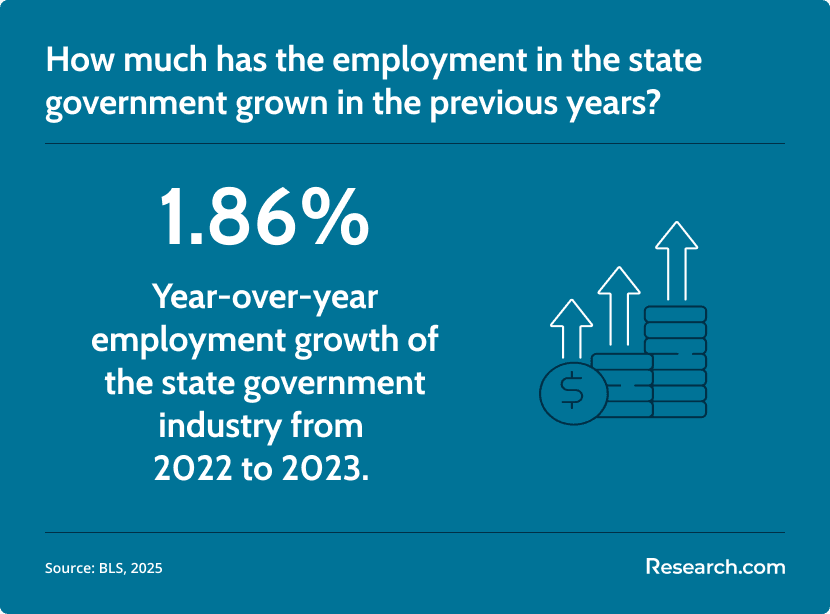
The public sector remains a major employer. State government employs 5.53 million people, representing a 1.86% increase from the previous year (Bureau of Labor Statistics, 2023). That continued growth helps explain why many professionals are comparing fast online MPA programs, especially those that can be completed in 12 to 24 months.
This guide explains what an online MPA covers, how accelerated formats work, what admission requirements to expect, how much programs may cost, which career paths are common, and how to judge whether the degree is worth the time and tuition for your goals.
Quick answer: Is an accelerated online MPA worth it?
An accelerated online Master’s in Public Administration can be worth it if you want to move into public-sector, nonprofit, policy, or administrative leadership roles and you can handle a compressed graduate workload. The best candidates are working adults with clear career goals, strong time-management skills, and an interest in budgeting, policy, organizational leadership, ethics, and program evaluation.
It may not be the right choice if you need a slower pace, are unsure about public service careers, or are choosing a program only because it is fast. Speed should matter, but accreditation, curriculum fit, career services, total cost, and employer recognition matter more.
What are the main benefits of earning an online Master’s in Public Administration?
- MPA graduates may pursue roles connected to public policy and executive leadership. Political scientists and top executives in the public sector have projected job outlooks of 3% and 6% respectively from 2023 - 2033 (BLS, 2023).
- Political Scientists have a median salary of $139,380, while the top executives, which include Chief Executive Officers (CEOs), Mayors, city managers, and governors, earn about $105,350 per year (BLS, 2024).
- An online MPA can help working professionals build leadership, budgeting, policy analysis, communication, and public management skills while continuing to work full time.
- Accelerated formats may shorten the path to completion, but they require consistent weekly study time and careful planning around work and family obligations.
What should I expect from an online Master’s Degree in Public Administration program?
An online Master’s Degree in Public Administration, often called an MPA, is a professional graduate degree focused on managing public programs, analyzing policy, leading organizations, and making decisions in settings where public accountability matters. Unlike a general management degree, an MPA is built around public value, ethics, governance, budgets, community needs, and stakeholder responsibility.
Most online MPA programs combine core courses, electives or concentrations, applied projects, and sometimes an internship or capstone. Students typically study public policy analysis, public budgeting, ethics in government, organizational management, and program evaluation. Many courses use case studies, policy memos, budget exercises, group projects, and applied research rather than purely theoretical assignments.
Online formats vary. Some programs are asynchronous, meaning students complete weekly assignments on their own schedule. Others include live evening sessions, weekend residencies, synchronous discussions, or required group meetings. Accelerated programs often use shorter terms, year-round enrollment, and heavier course loads.
| Program feature | What it usually means for students | Decision tip |
| Accelerated schedule | Courses move quickly and may run in short terms with limited breaks. | Choose this only if you can protect regular study time each week. |
| Asynchronous classes | You can watch lectures and complete assignments around your work schedule. | Helpful for shift workers, parents, and students in different time zones. |
| Capstone project | You apply MPA concepts to a real or simulated public administration problem. | Often more practical for working professionals than a thesis. |
| Internship or practicum | You gain supervised experience in a public, nonprofit, or policy setting. | Important if you are changing careers and lack public-sector experience. |
| Concentration | You focus electives on an area such as nonprofit management, healthcare administration, public finance, emergency management, or policy analysis. | Select a track based on your target role, not only personal interest. |
Where can I work with a Master’s Degree in Public Administration?
An MPA is not limited to traditional government jobs. Government agencies are a major destination, but the degree also applies to organizations that manage public programs, advocate for policy change, deliver community services, oversee grants, or work with regulated industries.
- Local, state, and federal government agencies
- Nonprofit organizations
- International organizations
- Public policy think tanks
- Research institutes and advocacy groups
- Private sector firms dealing with public affairs or social responsibility initiatives
- Healthcare, emergency management, public safety, and community development organizations
Common roles include executive director, development director, program manager, budget analyst, policy analyst, city manager, public affairs specialist, grants administrator, and department director. In many of these positions, the work involves managing people, using public funds responsibly, evaluating programs, communicating with stakeholders, and making decisions under public scrutiny.
How much can I make with a Master’s Degree in Public Administration?
MPA salaries vary widely because graduates work in many sectors. Pay depends on job title, employer type, years of experience, geographic location, budget authority, and whether the role is analytical, managerial, executive, or policy-focused.
Examples from ZipRecruiter show the range of outcomes for common MPA-related roles:
- Public policy analyst: In California, this role earns about $96,000 annually. Meanwhile, Public policy analysts in Washington get $111,238 per year.
- City Manager: The average pay range for a City Manager varies greatly by as much as $84,000.
- Non-Profit Executive Director: Annual salaries can be as high as $155,000 and as low as $11,000.
- Program Administrator or Director: They can earn as high as $137,000 and as low as $35,500. The average salary is $90,629 per year.
| Career goal | MPA value | What to verify before enrolling |
| Move into local government leadership | Builds knowledge of budgeting, policy implementation, public accountability, and municipal operations. | Look for courses in local government management, public finance, and intergovernmental relations. |
| Work in policy analysis | Develops research, data interpretation, policy memo, and evaluation skills. | Prioritize programs with statistics, research methods, economics, and policy analysis coursework. |
| Lead a nonprofit organization | Strengthens fundraising, program evaluation, governance, and leadership preparation. | Choose a nonprofit management concentration or electives in grants and board governance. |
| Advance in public safety or emergency management | Connects leadership training with crisis response, public systems, and interagency coordination. | Check for emergency management, homeland security, or risk management electives. |
- Fastest Online Master’s Degree in Public Administration Programs for 2027
- How long does an Online Master’s Degree in Public Administration take?
- What is the average cost of an Online Master’s Degree in Public Administration?
- What financial aid options are available for online MPA students?
- What are the admission requirements for an online MPA?
- What skills do online MPA students need?
- What courses are included in an online MPA curriculum?
- Does accreditation affect online MPA quality and recognition?
- How can online MPA students use networking and experiential learning?
- What is the return on investment for an online MPA?
- Can I choose a specialization in public administration?
- How can I finish an online MPA faster?
- What career advancement opportunities are available after an online MPA?
- What is the job market for online MPA graduates?
Fastest Online Master’s Degree in Public Administration Programs for 2027
How should you use this ranking?
The fastest program is not automatically the best program for every student. Use this list as a starting point, then compare each school by accreditation, total credits, cost per credit, course schedule, concentration options, faculty experience, career support, and whether the curriculum matches your target role.
Research.com evaluates programs using a transparent methodology that considers academic quality and practical value. The analysis draws from national education sources, including the Integrated Postsecondary Education Data System (IPEDS), Peterson’s, College Scorecard, and the National Center for Education Statistics (NCES). Programs are reviewed for duration, tuition, accreditation, student outcomes, and alignment with relevant professional expectations.
| School | Program length | Tracks or concentrations | Cost per credit | Required credits | Accreditation |
| University of Texas Rio Grande Valley | 12 months | Public Administration | $444.44 | 36 | Southern Association of Colleges and Schools Commission on Colleges (SACSCOC) |
| Syracuse University | Approximately 20 months | Executive Leadership | $1,945 | 30 | Network of Schools of Public Policy, Affairs, and Administration (NASPAA) |
| Barry University | As few as 12 months | General Public Administration | $475 | 36 | Southern Association of Colleges and Schools Commission on Colleges (SACSCOC) |
| Troy University | As few as 15 months | Public Management, Justice Administration, Nonprofit Management, National Security Affairs | $475 | 36 | Southern Association of Colleges and Schools Commission on Colleges (SACSCOC) |
| San Diego State University | 16 months | Criminal Justice, City Planning, Custom Specializations | Approximately $1,000 | 36 | Network of Schools of Public Policy, Affairs, and Administration (NASPAA) |
| California Baptist University | 18–24 months | General Public Administration | Approximately $390 | 36 | Western Association of Schools and Colleges Senior College and University Commission (WSCUC) |
| Franklin University | 14 months | Organizational Leadership, Healthcare Administration, Criminal Justice | $670 | 36 | Higher Learning Commission |
| Arkansas State University | As few as 18 months | Public Management, Nonprofit Management | $340 | 36 | Network of Schools of Public Policy, Affairs, and Administration (NASPAA) |
| Norwich University | 18 months | Public Administration, International Development, Cybersecurity, Emergency Management | Approximately $625 | 36 | New England Commission of Higher Education (NECHE) |
| University of San Francisco | 2 years | Public Administration, International Development, Urban Planning | Approximately $1,000 | 42 | WASC Senior College and University Commission (WSCUC) |
1. University of Texas Rio Grande Valley
The University of Texas Rio Grande Valley offers a fully online interdisciplinary MPA that can be finished in as few as 12 months. The program is structured for students who want a rapid path into or upward within public administration, especially those seeking practical preparation for government and nonprofit work.
- Program Length: 12 months
- Tracks/Concentrations: Public Administration
- Cost per Credit: $444.44
- Required Credits to Graduate: 36
- Accreditation: Southern Association of Colleges and Schools Commission on Colleges (SACSCOC)
2. Syracuse University
Syracuse University offers an online Executive MPA designed for mid-career professionals who want stronger leadership, policy analysis, budgeting, and organizational management preparation. Its executive focus makes it most relevant for students who already have professional experience and want to lead complex public-service organizations.
- Program Length: Approximately 20 months
- Tracks/Concentrations: Executive Leadership
- Cost per Credit: $1,945
- Required Credits to Graduate: 30
- Accreditation: Network of Schools of Public Policy, Affairs, and Administration (NASPAA)
3. Barry University
Barry University provides a 100% online MPA that emphasizes ethical leadership, policy analysis, and public-sector management. Its accelerated timeline and generalist curriculum may appeal to students who want broad preparation rather than a narrow specialization.
- Program Length: As few as 12 months
- Tracks/Concentrations: General Public Administration
- Cost per Credit: $475
- Required Credits to Graduate: 36
- Accreditation: Southern Association of Colleges and Schools Commission on Colleges (SACSCOC)
4. Troy University
Troy University offers an online MPA with multiple concentration options, making it useful for students who want to align their degree with public management, justice administration, nonprofit leadership, or national security affairs. Its curriculum covers public policy, organizational behavior, and public finance.
- Program Length: As few as 15 months
- Tracks/Concentrations: Public Management, Justice Administration, Nonprofit Management, National Security Affairs
- Cost per Credit: $475
- Required Credits to Graduate: 36
- Accreditation: Southern Association of Colleges and Schools Commission on Colleges (SACSCOC)
5. San Diego State University
San Diego State University offers an online MPA for professionals who want leadership preparation in public administration with options connected to criminal justice, city planning, and custom specializations. The program may be a strong fit for students targeting municipal, planning, or public safety leadership.
- Program Length: 16 months
- Tracks/Concentrations: Criminal Justice, City Planning, Custom Specializations
- Cost per Credit: Approximately $1,000
- Required Credits to Graduate: 36
- Accreditation: Network of Schools of Public Policy, Affairs, and Administration (NASPAA)
6. California Baptist University
California Baptist University delivers an online MPA that can be completed in 18–24 months. The program focuses on public administration principles, ethical leadership, and public service, which may suit students seeking a broad administrative foundation.
- Program Length: 18–24 months
- Tracks/Concentrations: General Public Administration
- Cost per Credit: Approximately $390
- Required Credits to Graduate: 36
- Accreditation: Western Association of Schools and Colleges Senior College and University Commission (WSCUC)
7. Franklin University
Franklin University offers an online MPA designed for completion in as few as 14 months. The program uses scenario-based learning and emphasizes practical leadership, organizational effectiveness, and applied public administration.
- Program Length: 14 months
- Tracks/Concentrations: Organizational Leadership, Healthcare Administration, Criminal Justice
- Cost per Credit: $670
- Required Credits to Graduate: 36
- Accreditation: Higher Learning Commission
8. Arkansas State University
Arkansas State University offers an online MPA with an affordable cost per credit and six start dates per year. Students can select public management or nonprofit management, making the program useful for those who want either government-focused or mission-driven organizational leadership preparation.
- Program Length: As few as 18 months
- Tracks/Concentrations: Public Management, Nonprofit Management
- Cost per Credit: $340
- Required Credits to Graduate: 36
- Accreditation: Network of Schools of Public Policy, Affairs, and Administration (NASPAA)
9. Norwich University
Norwich University offers an online MPA with options in public administration, international development, cybersecurity, and emergency management. Its curriculum is designed for students who want strategic leadership skills for public service, security, development, or crisis-related work.
- Program Length: 18 months
- Tracks/Concentrations: Public Administration, International Development, Cybersecurity, Emergency Management
- Cost per Credit: Approximately $625
- Required Credits to Graduate: 36
- Accreditation: New England Commission of Higher Education (NECHE)
10. University of San Francisco
The University of San Francisco offers an online MPA that emphasizes leadership, policy analysis, and public sector management. Its 2-year format may suit students who want flexibility and a broader timeline rather than the most compressed route.
- Program Length: 2 years
- Tracks/Concentrations: Public Administration, International Development, Urban Planning
- Cost per Credit: Approximately $1,000
- Required Credits to Graduate: 42
- Accreditation: WASC Senior College and University Commission (WSCUC)
How long does it take to complete an Online Master’s Degree in Public Administration Program?
An online Master’s Degree in Public Administration typically takes between 12 months and two years to finish. The exact timeline depends on the number of required credits, term length, course load, transfer credit policy, and whether the program is designed as accelerated, standard, part-time, or executive.
Accelerated online MPA programs usually compress the schedule through shorter terms, year-round courses, and fewer long breaks between sessions. This does not necessarily mean the academic expectations are lower. Students still complete graduate-level work in policy analysis, budgeting, research, leadership, and ethics, but they do so in a tighter sequence.
Students who perform well in compressed MPA formats often share habits with learners in other intensive online programs, such as fast-track online economics degree programs: they plan weekly coursework carefully, communicate early with instructors, avoid falling behind, and choose a realistic number of courses per term.
| Completion format | Typical timeline | Best for | Main risk |
| Accelerated full-time online MPA | 12 months to 18 months | Students with strong discipline and a stable weekly schedule | Heavy workload and limited flexibility if work or family demands increase |
| Standard online MPA | About two years | Working adults who want a manageable pace | Longer time before completing the credential |
| Part-time online MPA | Varies by program | Students with demanding jobs, caregiving duties, or unpredictable schedules | Possible loss of momentum if breaks become frequent |
| Executive MPA | Varies by school and cohort model | Mid-career professionals with leadership experience | May require more professional experience for admission |
Based on the Integrated Postsecondary Education Data System (IPEDS) Completions data below, the majority of public administration graduates in 2023 earned a master’s degree, accounting for 75.9% of all completions in the field. Bachelor’s degrees made up 15.1%, while postbaccalaureate certificates accounted for 5.18% and research doctorates represented 2.04%.
Those completion patterns suggest that many students view the master’s degree as the primary advanced credential for public administration career growth.
What is the average cost of an Online Master’s Degree in Public Administration program?
Online MPA tuition can differ substantially by institution, residency policy, credit requirement, fees, and program format. On average, tuition for online MPA programs ranges from $15,000 to $40,000, though individual programs may cost less or more.
For example, the University of Texas Rio Grande Valley (UTRGV) offers an accelerated online MPA program with a total estimated cost of $16,000, equating to approximately $444.44 per credit hour. Students comparing accelerated graduate degrees may see similar cost-and-speed trade-offs in programs such as the shortest management information systems master's degree online, where completion time and tuition structure are also central decision points.
When estimating total cost, do not look only at tuition. Online students may also pay technology fees, course material costs, graduation fees, application fees, proctoring fees, and travel costs if a program includes residencies or required in-person experiences. Some schools include digital resources, virtual library access, career services, academic advising, and online learning platform access in the published cost, while others bill fees separately.
| Cost factor | Why it matters | Question to ask the school |
| Cost per credit | This is the core tuition metric, but it does not always show the full price. | Is the published rate the same for online and out-of-state students? |
| Required credits | More credits can increase the total degree cost. | How many credits are required for graduation, including capstone or internship credits? |
| Fees | Technology, graduation, library, and course fees can add to the total bill. | What mandatory fees are not included in tuition? |
| Transfer credits | Accepted credits may reduce time and cost. | How many graduate credits can I transfer, and what approval process is required? |
| Work schedule impact | An accelerated program may affect your ability to work overtime or take on extra responsibilities. | What is the expected weekly time commitment per course? |
What are the financial aid options for students enrolling in an Online Master’s Degree in Public Administration program?
Online MPA students may qualify for several forms of funding, but eligibility depends on the school, enrollment status, citizenship or residency status, academic standing, employer policies, and program structure. Start the financial aid process early because scholarship, assistantship, and employer reimbursement deadlines may occur before the term begins.
- Federal Financial Aid. Eligible U.S. students can submit the Free Application for Federal Student Aid (FAFSA) to be considered for federal aid options, including federal loans, grants, and work-study opportunities where available.
- Institutional Scholarships. Universities may offer graduate scholarships for MPA students. One example is Walden University’s Believe & Achieve Scholarship®. Awards may be based on merit, need, public service experience, or professional background.
- Employer Tuition Assistance. Public agencies, nonprofits, and private employers may help employees pay for job-related graduate study. Some reimbursement programs require employees to remain with the organization for a period after receiving assistance.
- Private Scholarships and Fellowships. Professional associations, nonprofit organizations, foundations, and government-related groups may fund students preparing for public administration, public policy, or nonprofit careers.
- Graduate Assistantships. These are more common in campus programs, but some online programs may offer research, administrative, or teaching-related opportunities that provide tuition support or a stipend.
- Veterans Benefits. Eligible military veterans and family members may use U.S. Department of Veterans Affairs (VA) education benefits toward an MPA.
- Payment Plans. Many schools allow students to divide tuition into scheduled payments, which can help with cash flow even when it does not reduce total cost.
Students comparing the fastest online public administration degree programs should ask whether accelerated students remain eligible for the same aid as standard-track students. Some awards require a minimum number of credits, continuous enrollment, or specific academic progress.
What are the prerequisites for enrolling in an Online Master’s Degree in Public Administration program?
Admission requirements differ by school, but most online MPA programs look for evidence that applicants can handle graduate-level writing, analysis, leadership concepts, and applied public-service coursework. Requirements may resemble other professional accelerated programs, including an accelerated esports business management degree online, because both types of programs often serve working adults balancing school with professional responsibilities.
- Bachelor’s Degree from an Accredited Institution. Applicants generally need a completed undergraduate degree. Political science, public policy, business, sociology, economics, criminal justice, and nonprofit-related majors may be relevant, but many programs accept students from a wide range of fields.
- Minimum GPA Requirement. Many programs ask for at least a 2.5–3.0 GPA on a 4.0 scale. More selective programs may expect stronger academic performance.
- Letters of Recommendation. Schools commonly request two to three letters from professors, supervisors, or professional contacts who can speak to leadership potential, communication ability, work ethic, and readiness for graduate study.
- Personal Statement or Statement of Purpose. This essay should explain why you want an MPA, what public problems you want to work on, and how the program connects to your career goals.
- Work Experience. Some programs prefer or require experience in government, nonprofits, public service, military service, healthcare, education, policy, or administrative roles. Experience can be especially important for executive MPA programs.
There is no strict age requirement for MPA study or for public administration careers. In 2024, the median age of public administration professionals is 44.9 years old, with those in executive offices averaging 46.4 and those in general government and support departments reaching 49.8 (BLS, 2024).
That age profile shows why online MPA programs often serve mid-career professionals. Many students enter the field after building experience elsewhere, while others use the degree to move from technical or frontline roles into policy, management, or executive responsibility.
What are the essential skills needed for an Online Master’s Degree in Public Administration program?
Online MPA students need more than interest in public service. The format requires self-direction, while the curriculum requires analysis, communication, ethical reasoning, and comfort working with complex institutional problems. These expectations are similar to those in the shortest master’s degree in nonprofit management online, where accelerated timelines reward organized and focused learners.
- Leadership and Decision-Making. Public administrators often lead teams, allocate resources, manage conflict, and make decisions with community impact. Students should be ready to study leadership through ethical and practical lenses.
- Critical Thinking and Analysis. Policy and administrative decisions require evidence. Students must be able to interpret data, compare options, assess trade-offs, and defend recommendations.
- Written and Verbal Communication. MPA coursework often includes memos, reports, presentations, discussion posts, policy briefs, and stakeholder communication. Clear writing is essential.
- Time Management and Self-Motivation. Online students must keep pace without daily in-person reminders. Accelerated courses make procrastination especially risky.
- Technology Proficiency. Students should be comfortable using online learning systems, video conferencing tools, collaborative documents, library databases, spreadsheets, and digital research tools.
- Ethical Judgment. Public administrators must consider transparency, fairness, legality, accountability, and equity when making decisions.
| If you struggle with... | Why it matters in an online MPA | Better preparation strategy |
| Academic writing | Policy memos, research papers, and reports are common assignments. | Use the school writing center early and review public policy writing samples. |
| Quantitative analysis | Budgeting, program evaluation, and policy analysis may involve data interpretation. | Refresh spreadsheet skills and basic statistics before the first term. |
| Online collaboration | Group projects may occur across time zones and work schedules. | Clarify roles, deadlines, and communication channels at the start of each project. |
| Fast deadlines | Accelerated terms leave little recovery time after missed assignments. | Create a weekly study calendar before classes begin. |
What are the core courses in an Online Master’s Degree in Public Administration program?
The core curriculum in an online MPA builds the foundation for public-sector and nonprofit leadership. Courses usually connect theory with applied decision-making, which is also common in career-focused accelerated graduate programs such as fast-track online MBA entrepreneurship programs.
- Public Administration Theory and Practice. Students examine how public agencies developed, how they function, and how administrative decisions affect communities and institutions.
- Public Policy Analysis. This course teaches students to compare policy options, evaluate evidence, and recommend solutions using qualitative and quantitative methods.
- Organizational Behavior and Management. Students study leadership, motivation, team dynamics, change management, and decision-making in public and nonprofit organizations.
- Public Budgeting and Financial Management. This course focuses on budget preparation, financial reporting, resource allocation, fiscal responsibility, and public accountability.
- Research Methods and Data Analysis. Students learn how to collect, analyze, and interpret information used in program evaluation and public decision-making.
- Strategic Communication and Public Relations. Public organizations must communicate with residents, elected officials, media, funders, and partner agencies. Related communication preparation also appears in public relations manager education requirements, especially for students interested in public affairs or stakeholder messaging.
Does Accreditation Impact the Quality and Recognition of an Online MPA Program?
Yes. Accreditation affects how employers, other universities, and sometimes funding sources view an online MPA. Institutional accreditation confirms that the university has been reviewed for academic quality, governance, faculty standards, student support, and financial practices. Programmatic accreditation, such as NASPAA where applicable, can add another layer of field-specific quality review for public policy, affairs, and administration programs.
Accreditation is especially important if you plan to transfer credits, pursue doctoral study, seek employer tuition assistance, or apply for roles where graduate credentials are reviewed carefully. When comparing options, do not treat accreditation as a minor detail. It is one of the first filters to apply before considering speed or cost. Students who are comparing public administration with broader management degrees may also review related options such as cheap online MBA programs, but the accreditation and curriculum questions should remain central.
How can I leverage networking and experiential learning opportunities in an Online MPA program?
Online does not have to mean isolated. Strong online MPA programs build professional connection through live sessions, faculty advising, virtual career events, alumni panels, mentorship, internship support, group consulting projects, and capstones tied to real public problems.
To get value from these opportunities, be intentional. Attend optional webinars, introduce yourself to classmates working in agencies or nonprofits that interest you, ask faculty about research or consulting projects, and use career services before your final term. If your background is outside public service, experiential learning can help you translate coursework into credible experience.
Students exploring management fields beyond public administration may compare adjacent online options, including the fastest sports management bachelor's degree online, but MPA networking should focus on public agencies, nonprofits, policy organizations, civic leadership, and mission-driven employers.
What is the return on investment for an Online MPA?
The ROI of an online MPA depends on whether the degree helps you reach a specific career outcome at a cost and pace you can manage. A strong ROI is not only about salary. It can also include eligibility for promotion, access to leadership roles, a stronger professional network, a shift into public service, or the ability to manage larger programs and budgets.
Before enrolling, compare tuition, required credits, graduation timeline, employer tuition support, job placement resources, alumni outcomes, and whether the curriculum fits your intended role. Avoid assuming that the degree alone guarantees a salary increase. Employers often weigh experience, leadership record, technical skills, location, and organizational budget alongside education.
For broader context, students sometimes compare MPA value with other professional graduate degrees, such as top ranked online MBA programs. An MBA may be better for private-sector business leadership, while an MPA is usually better aligned with public service, policy, nonprofit, and government administration.
Can I specialize in a particular area within Public Administration?
Yes. Many online MPA programs offer concentrations, electives, certificates, or custom tracks. A specialization is useful when it clearly supports your target career. It is less useful if it narrows your coursework without improving your job prospects.
| Specialization | Best suited for | Typical focus |
| Healthcare Administration | Students interested in public health agencies, healthcare systems, or health policy | Health organizations, public health programs, healthcare policy, and administrative leadership |
| Nonprofit Management | Future nonprofit leaders, program directors, and development professionals | Fundraising, governance, grants, program evaluation, and mission-driven management |
| Public Policy or Policy Analysis | Students pursuing analyst, advisor, or research roles | Policy design, data interpretation, evaluation, and evidence-based recommendations |
| Emergency Management or Homeland Security | Professionals in disaster response, public safety, law enforcement, or crisis planning | Preparedness, response, interagency coordination, risk, and security policy |
| Urban Planning or Local Government Management | Students targeting city, county, planning, or regional government roles | Community development, zoning, municipal operations, and local governance |
| Public Finance | Students interested in budgeting, fiscal policy, or finance leadership | Taxation, debt management, intergovernmental transfers, and budget accountability |
- Healthcare Administration. This path prepares students to manage public health agencies, hospitals, health programs, and policy-related healthcare operations. Students who want a business-oriented healthcare credential may also compare fast-track online MBA programs in healthcare administration.
- Nonprofit Management. This track covers fundraising, board governance, community programs, grants, and organizational sustainability for NGOs, foundations, and social enterprises.
- Public Policy or Policy Analysis. Students focus on policy formulation, research, evaluation, and advisory work at local, national, or international levels.
- Emergency Management or Homeland Security. This option supports students interested in disaster planning, crisis leadership, public safety, and security-related administration. Professionals seeking a more specialized security pathway may also consider an accelerated online master's degree in homeland security.
- Urban Planning or Local Government Management. This concentration supports careers in city administration, regional planning, zoning, housing, transportation, and community development.
- Public Finance. Students in this area study taxation, intergovernmental transfers, debt management, and fiscal policy. Some may pursue senior finance leadership. If you are asking, "What does a CFO do?," the role generally involves financial strategy, reporting, risk management, and long-term fiscal oversight.
Some students also combine public administration with another leadership discipline. For example, a fast-track online MBA in HRM may be relevant for professionals who want stronger human resources preparation across public and private organizations.
Specialization choice can affect career direction and salary context. For example, specializing in public policy analysis can support roles such as political scientist. Based on the data below, political scientists can earn $151,630 in the federal government, $130,580 in professional, scientific, and technical services, $91,150 in nonprofit organizations, and $81,620 in educational services (BLS, 2024).
How can I accelerate my completion of an Online Master’s Degree in Public Administration?
Accelerated online MPA programs can often be completed in as little as 12 to 18 months. They usually achieve this through shorter sessions, continuous enrollment, intensive course sequencing, and streamlined degree plans.
To finish faster without creating avoidable academic or financial risk, use the following strategies:
- Ask about transfer credits or credit for prior learning. Some schools allow previously completed graduate coursework, military training, or relevant professional learning to reduce required credits.
- Take more than one course per term only when realistic. A heavier course load can shorten the timeline, but it can also increase burnout risk if your job or family schedule is demanding.
- Choose a capstone option instead of a thesis if available. A practical capstone may fit working professionals better than a traditional research thesis, though requirements vary by school.
- Enroll continuously. Taking courses during summer terms or short sessions can preserve momentum and reduce total completion time.
- Consider competency-based or self-paced formats when appropriate. These formats may allow motivated students to progress after demonstrating mastery, but they require strong independence.
- Plan your course sequence with an advisor. Some classes may be offered only in certain terms or require prerequisites. A missed course can delay graduation.
Another option is a dual master’s degree, such as an MPA/MBA or MPA/MPH, if your long-term goals cross public administration, business, health, or social services. A dual degree may save time compared with earning two separate degrees, but it can also increase workload and total cost.
Students interested in community organizations, human services, or child welfare leadership may also consider an MPA/MSW pathway. If you want to understand how social work graduate study can specialize by population or practice area, review this guide to master of social work specializations.
Are there any opportunities for career advancement after completing an Online Master’s Degree in Public Administration?
Yes. An online MPA can support advancement into management, policy, finance, program leadership, and executive roles, especially when paired with relevant experience. The degree is most valuable when it fills a gap in your leadership, budgeting, analytical, or administrative preparation.
- City or Municipal Manager. These professionals oversee local government operations, budgets, staffing, services, and policy implementation.
- Public Policy Analyst. Policy analysts research problems, evaluate current or proposed policies, and make recommendations. Students comparing this route may also explore an online masters in public policy.
- Nonprofit Executive Director. Executive directors manage staff, fundraising, strategy, board relations, and program performance. Students who completed the cheapest online master's in nonprofit management may use an MPA to broaden their public administration and policy preparation.
- Budget or Financial Manager in the Public Sector. These professionals oversee public funds, budget planning, reporting, compliance, and resource allocation.
- Human Resources Manager in Government or an NGO. HR leaders manage hiring, training, workplace policy, employee relations, and workforce planning.
- Legislative or Policy Advisor. Advisors support elected officials, agencies, or advocacy organizations by drafting policy proposals, analyzing legislation, and communicating recommendations.
- Program Administrator or Director. Program leaders manage public or nonprofit initiatives, track performance, coordinate staff, and ensure compliance with rules and funding requirements.
With experience, graduates may also pursue senior roles such as Chief Administrative Officer, Director of Public Affairs, or Government Relations Manager. However, advancement depends on your work history, leadership record, organizational needs, location, and ability to demonstrate measurable results.
Location can also influence pay. Based on the chart below, the District of Columbia had the highest median earnings in 2023 at $118,337, followed by Maryland at $106,298, and Virginia at $98,253.
These figures suggest that areas with a strong federal and governmental presence may offer higher earning potential for some public administration professionals.
What is the job market for graduates with an Online Master’s Degree in Public Administration?
The job market for online MPA graduates is shaped by demand for policy expertise, agency leadership, nonprofit management, public budgeting, and program administration. The degree can be useful in government, nonprofit, public affairs, international development, healthcare administration, emergency management, and policy research settings.
For students interested in research, policy analysis, and government operations, employment for political scientists is projected to grow by 3% from 2023 to 2033. Approximately 500 openings are expected each year, largely because of retirements and career transitions (BLS, 2023).
For students aiming at executive leadership, demand for top executives in the public sector is projected to grow by 6% over the same period. This represents about 343,800 openings annually as organizations seek leaders who can manage agencies, oversee programs, and implement policies (BLS, 2023).
Many prospective students ask whether an MPA is worth it in the same way others ask, "is a master's in social work worth it?" The answer depends on the role you want, the program you choose, and the cost you take on. With steady employment growth of 1.86% in the state government from 2022 to 2023, public service remains a substantial employment area, but individual outcomes are never guaranteed.
Common mistakes to avoid when choosing an online MPA
- Choosing only the fastest program. A 12-month option is useful only if the curriculum, accreditation, support services, and workload fit your situation.
- Ignoring accreditation. Always verify institutional accreditation and consider whether programmatic accreditation matters for your professional goals.
- Comparing tuition without calculating total cost. Fees, books, technology charges, and lost work flexibility can change the real price.
- Assuming online means easier. Accelerated online graduate courses can be demanding because deadlines arrive quickly.
- Picking a concentration without a career reason. Specializations should support a target role or sector.
- Waiting until graduation to network. Online students should use faculty, alumni, classmates, internships, and career services throughout the program.
- Assuming salary outcomes are guaranteed. Pay depends on location, role, employer type, experience, and leadership responsibility.
Questions to ask before enrolling in an accelerated online MPA
- Is the university institutionally accredited?
- Does the program have NASPAA accreditation or another field-relevant quality marker?
- How many credits are required, and how quickly can a working adult realistically complete them?
- Are classes asynchronous, synchronous, or a mix of both?
- What is the expected weekly workload per course?
- Are internships, practicums, or capstones required?
- Can I transfer graduate credits or receive credit for professional or military experience?
- What career services are available to online students?
- Do graduates work in the roles, agencies, or nonprofit sectors I am targeting?
- What is the full cost after tuition, fees, books, and technology charges?
Key Insights
- An accelerated online MPA is best for focused working professionals who want public-sector, nonprofit, policy, or administrative leadership preparation in a compressed format.
- Programs typically take between 12 months and two years, with faster options requiring stronger time management and fewer breaks.
- Online MPA tuition varies widely, with average tuition for online MPA programs ranging from $15,000 to $40,000, though individual schools may fall outside that range.
- Accreditation, curriculum fit, total cost, and career support should carry more weight than speed alone.
- MPA graduates can work in government, nonprofits, international organizations, think tanks, advocacy groups, public affairs, healthcare administration, public safety, and community development.
- Salary potential depends heavily on role, location, experience, and employer type; the degree can support advancement but does not guarantee a specific income.
- The strongest applicants choose a program with a clear goal in mind, whether that goal is city management, policy analysis, nonprofit leadership, public finance, emergency management, or executive public service.
References:
- Bureau of Labor Statistics. (n.d.). Employment status of the civilian population by sex and age. U.S. Department of Labor. https://www.bls.gov/cps/cpsaat18b.htm
- Bureau of Labor Statistics. (n.d.). Political scientists. U.S. Department of Labor. https://www.bls.gov/ooh/life-physical-and-social-science/political-scientists.htm
- Bureau of Labor Statistics. (n.d.). Top executives. U.S. Department of Labor. https://www.bls.gov/ooh/management/top-executives.htm
- Data USA. (n.d.). Public administration. Data USA. https://datausa.io/profile/naics/public-administration
- ZipRecruiter. (n.d.). City manager salary. https://www.ziprecruiter.com/Salaries/City-Manager-Salary
- ZipRecruiter. (n.d.). Non-profit executive director salary. https://www.ziprecruiter.com/Salaries/Non-Profit-Executive-Director-Salary
- ZipRecruiter. (n.d.). Public policy analyst salary. https://www.ziprecruiter.com/Salaries/Public-Policy-Analyst-Salary
Other Things You Need to Know About an Online Master's Degree in Public Administration
In 2027, admission requirements for the fastest online Master’s in Public Administration typically include a bachelor’s degree in a related field, a resume or CV, letters of recommendation, a statement of purpose, and possibly GRE scores, depending on the institution. Some programs may also require professional experience.
Many accelerated MPA programs offer concentrations such as public policy, nonprofit management, emergency management, and city management. These tracks are usually built into a 30- to 42-credit curriculum and may require 9 to 12 credits of electives, depending on the university’s graduate catalog.


