
2027 How to Become a Licensed Counselor (LPC) in West Virginia

Co-Founder and Chief Data Scientist
Becoming a Licensed Professional Counselor (LPC) in West Virginia is a regulated path that requires the right graduate education, supervised experience, an approved exam, and ongoing continuing education. The decision matters because counseling is a licensed healthcare profession: choosing the wrong program, misunderstanding supervision rules, or assuming another state’s license automatically transfers can delay your career. This guide explains what LPCs do, how West Virginia licensure works, which exams may qualify, how supervision hours are structured, what counselors earn, and how to choose a program that fits your goals, budget, and timeline.
Quick answer: How do you become an LPC in West Virginia?
To become an LPC in West Virginia, you generally need an accredited master’s degree in counseling, a supervised graduate practicum, a background check, a passing score on the National Counselor Examination (NCE) or another approved exam, and post-degree supervised experience. Master’s-level applicants complete 2 years of licensure and 3,000 hours of supervised experience, while doctoral-level applicants complete 1 year of licensure and 1,500 hours. West Virginia also offers licensure by endorsement for qualified out-of-state LPCs, and eligible counselors may use the Interstate Counseling Compact to provide services in other member states.
Key facts about LPC careers in West Virginia
- The Bureau of Labor Statistics projects a 17% employment growth rate from 2024 to 2034 for substance abuse, behavioral disorder, and mental health counselors in the U.S.
- Some sources describe counselor job growth as high, including an 18% projection over the coming decade and an 18% growth estimate by 2032.
- Reported Licensed Professional Counselor salaries in West Virginia range from $37,403 to more than $66,261, with averages commonly near $56,000.
- Counseling therapist averages are around $44,087.
- Licensed Mental Health Counselor salaries may be higher than general mental health counselor salaries, with averages potentially reaching $66,261.
- Licensed Clinical Social Worker salaries average about $58,952.
- For a single person in West Virginia, the estimated monthly cost of living is $1,566 including rent, $702 excluding rent, $864 for rent and utilities, and $520 for food.
- Because reciprocity rules differ by state, LPCs who plan to move, work remotely, or provide telehealth across state lines should verify endorsement and compact eligibility before accepting clients outside West Virginia.
- What is an LPC and what does a licensed counselor do?
- What qualifications are required to become an LPC in West Virginia?
- What skills do licensed counselors need?
- What LPC career paths and specializations are available in West Virginia?
- What continuing education is required for West Virginia counselors?
- What trends are changing counseling careers?
- How is West Virginia LPC licensure different from related mental health licenses?
- What internship and supervision hours are required for LPC licensure?
- How do you specialize in substance abuse counseling in West Virginia?
- How can you pay for LPC education in West Virginia?
- What legal and ethical rules apply to LPC practice?
- How is telehealth changing LPC work in West Virginia?
- How do you choose the right counseling program?
- What do licensed counselors earn in West Virginia?
- How can LPCs prevent burnout?
- What is the job outlook for LPCs in West Virginia?
- Where can you learn more about West Virginia counselor licensure?
- How do policy changes affect LPC licensure?
- How can social work experience complement an LPC career?
- How can you move through the LPC path efficiently?
- Which advanced certifications can strengthen an LPC career?
- How can school counseling expand LPC career options?
- What are the advantages of online LPC programs in West Virginia?
Graduate perspectives on becoming an LPC in West Virginia
Completing an online master’s program in clinical mental health counseling changed my career direction. The flexible format helped me keep working while building the applied counseling skills I needed for licensure. I now support individuals and couples in my community as they work through difficult life situations. Vito
Returning to school while raising a family felt intimidating, but the online LPC program gave me enough structure and flexibility to keep going. Faculty guidance and clinical training helped me feel prepared for professional counseling work, and I now see the impact of that preparation with clients. Kay
The online LPC route was demanding, but it made graduate study possible without leaving my job. After completing the coursework and clinical preparation, I became a Licensed Professional Counselor and now help clients move through stressful transitions and personal challenges. Michael
What is an LPC and what does a licensed counselor do?
A Licensed Professional Counselor is a state-licensed mental health professional who provides counseling, psychotherapy, assessment, treatment planning, and client support. LPCs work with individuals, couples, families, and groups, depending on their training, setting, and scope of practice. They do not prescribe medication, but they may coordinate with physicians, psychiatrists, social workers, schools, courts, or community agencies when clients need additional support.
| Core LPC responsibility | What it means in practice |
| Assessment and diagnosis | Gather client history, evaluate symptoms, identify concerns, and determine whether a mental health diagnosis may apply. |
| Treatment planning | Create goals, select counseling approaches, monitor progress, and revise the plan when client needs change. |
| Therapy and counseling | Use approaches such as cognitive-behavioral therapy, interpersonal therapy, psychoeducation, and other evidence-based methods. |
| Crisis support | Respond to acute emotional distress, safety risks, trauma reactions, or other urgent client needs. |
| Client advocacy and referrals | Connect clients with medical, social, educational, housing, addiction, or psychiatric resources when counseling alone is not enough. |
| Documentation | Maintain accurate clinical records, progress notes, consent forms, referrals, and treatment updates. |
| Wellness and prevention | Teach coping strategies, stress management, communication skills, relapse prevention, and other tools that support long-term mental health. |
LPCs may also provide career counseling, group counseling, addiction support, trauma-informed care, family-focused services, and culturally responsive counseling. Strong practice requires more than technical knowledge; counselors must build trust, maintain ethical boundaries, and adapt their methods to each client’s background and goals.
What qualifications are required to become an LPC in West Virginia?
West Virginia’s LPC pathway combines graduate education, supervised experience, an approved exam, and board review. The safest approach is to check the West Virginia Board of Examiners in Counseling before enrolling, changing states, accepting supervision, or assuming an exam will qualify.
| Requirement area | West Virginia LPC requirement described in the source article | Why it matters |
| Application | Electronic application system; endorsement application for out-of-state licenses at the highest level | The application route depends on whether you are a new applicant or already licensed elsewhere. |
| Background check | Required as part of licensure | Licensure is tied to public protection, professional conduct, and client safety. |
| Education | Master’s degree in counseling from an accredited program | The degree must support LPC eligibility, not just general psychology or human services study. |
| Practicum | Supervised practicum during graduate training | Clinical exposure begins before post-degree supervised practice. |
| Exam | Pass the National Counselor Exam (NCE) or an approved alternative | The exam verifies counseling knowledge and clinical readiness. |
| Scope of practice | Provide guidance on psychological aspects of disorders; cannot prescribe medication | LPCs provide counseling and psychotherapy, not medical prescribing. |
| Supervised experience | 2 years licensure and 3,000 hours supervised experience for master’s applicants, or 1 year licensure and 1,500 hours for doctoral applicants | Post-degree supervised practice is one of the longest parts of the licensure timeline. |
| Supervisor standards | Clinical supervision training and a qualified supervisor as determined by the Board | Hours may not count if supervision is not properly approved. |
The Bureau of Labor Statistics projects a 17% employment growth rate for mental health counselors in the U.S. from 2024 to 2034, which makes careful licensure planning important for students who want to enter the field without unnecessary delays.
In 2024, among the 347,278 counselors employed in the U.S., 63.5% were white, 15.6% were African American, 11.1% were Hispanic or Latino, and 5.1% were of unknown ethnicity. The distribution points to continuing opportunities to strengthen representation and cultural responsiveness across the counseling workforce.
What skills do licensed counselors need?
LPCs need clinical judgment, strong communication, cultural awareness, and the ability to manage emotionally complex situations without losing professional boundaries. A counseling degree teaches theory and technique, but day-to-day effectiveness depends on how well a counselor listens, documents, collaborates, and responds under pressure.
- Active listening: Staying fully present with clients, tracking verbal and nonverbal information, and avoiding premature conclusions.
- Clear communication: Explaining treatment goals, risks, confidentiality, referrals, and coping strategies in language clients can understand.
- Empathy and compassion: Creating a respectful, nonjudgmental environment where clients can discuss difficult experiences safely.
- Critical thinking: Interpreting client information, recognizing patterns, selecting interventions, and knowing when referral or consultation is needed.
- Cultural competence: Understanding how identity, community, trauma, discrimination, religion, socioeconomic status, and family systems may affect care.
- Ethical judgment: Protecting confidentiality, managing dual relationships, documenting appropriately, and following mandated reporting rules.
- Flexibility: Adjusting techniques when a client’s needs, readiness, language, culture, or circumstances require a different approach.
- Observation: Noticing mood changes, body language, avoidance, distress cues, and signs of risk.
- Patience: Recognizing that progress can be uneven and that clients may need time to build trust.
- Self-reflection: Identifying personal biases, monitoring countertransference, and seeking supervision or consultation when needed.
- Confidence and composure: Staying grounded during conflict, crisis, grief, trauma disclosure, or high-stakes clinical decisions.
Clinical and professional skills that affect licensure readiness
- Assessment and diagnosis: Evaluating mental health needs and translating findings into an appropriate treatment plan.
- Boundaries and self-care: Maintaining a sustainable caseload and avoiding emotional overextension.
- Documentation: Keeping records that support continuity of care, ethical compliance, and legal accountability.
- Ethical awareness: Applying rules on informed consent, confidentiality, professional boundaries, supervision, and record security.
- Personal growth: Using reflection, supervision, and continuing education to improve clinical effectiveness.
- Therapeutic techniques: Learning evidence-based approaches such as cognitive-behavioral therapy and knowing when each method is appropriate.
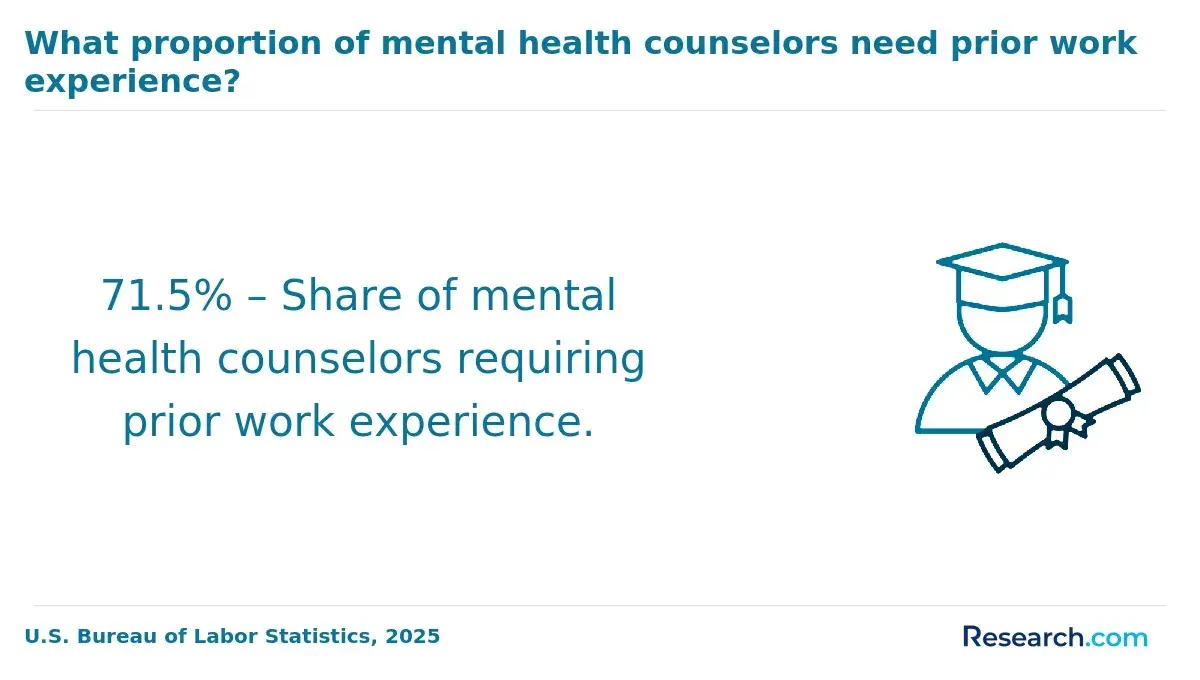
Across the U.S., state licensure boards require mental health counselors to hold a master’s degree as of 2025. Work experience and supervised clinical hours are also common requirements, with 3,000 hours typically required for mental health counselors in state licensing tables.
What can you expect from West Virginia’s required exams for licensure?
West Virginia accepts three exam options for LPC licensure: the National Counselor Examination (NCE), the National Clinical Mental Health Counseling Examination (NCMHCE), and the Certified Rehabilitation Counselor (CRC) certification exam. The best exam choice depends on your degree, career focus, and board eligibility.
| Exam | Best fit | Core format and focus |
| National Counselor Examination (NCE) | Applicants seeking a broad counseling knowledge exam | 200-item multiple-choice exam covering counseling practice, ethics, assessment, treatment planning, clinical focus areas, counseling skills, and core counselor attributes. |
| National Clinical Mental Health Counseling Examination (NCMHCE) | Applicants demonstrating applied clinical decision-making | Clinical case studies that test identification of concerns, analysis, diagnosis, and treatment planning. |
| Certified Rehabilitation Counselor (CRC) certification exam | Applicants with rehabilitation counseling or clinical rehabilitation counseling preparation | 3.5 hours, 175 multiple-choice questions, no breaks, with separate Rehabilitation and Disability and Counseling sections that both require passing scores. |
National Counselor Examination (NCE)
The NCE is a 200-item multiple-choice examination designed to assess the knowledge, skills, and abilities needed for effective counseling practice. Military health systems may recognize the NCE for provider purposes, and online degrees for military students can be a practical option for service members and veterans comparing flexible education formats.
The exam is reviewed and updated to reflect counseling practice and research. Its content aligns with the eight common core areas established by CACREP, the Council for Accreditation of Counseling and Related Educational Programs.
- Professional Practice and Ethics (12%): Administrative and clinical protocols, legal and ethical practice, client rights, confidentiality, record keeping, and self-care.
- Intake, Assessment, and Diagnosis (12%): Intake interviews, assessment procedures, diagnostic decision-making, treatment modality selection, and crisis intervention.
- Areas of Clinical Focus (29%): Counseling concerns such as adjustment, aging, anxiety, depression, grief, substance abuse, trauma, and related issues.
- Treatment Planning (9%): Goal setting, barriers, strengths, collaboration with providers and support systems, and treatment termination.
- Counseling Skills and Interventions (30%): Therapeutic alliance, theory-based techniques, cultural considerations, family dynamics, crisis work, communication skills, distance counseling, and psychoeducation.
- Core Counseling Attributes (8%): Self-awareness, genuineness, empathy, cultural sensitivity, positive regard, and ethical behavior.
National Clinical Mental Health Counseling Examination (NCMHCE)
The NCMHCE evaluates applied clinical competence for entry-level mental health counselors. Rather than testing only recall, it uses case-based scenarios that require examinees to identify client concerns, analyze the situation, form diagnostic impressions, and develop treatment plans.
- Purpose: Measure knowledge and skills required for competent clinical practice.
- Content style: Clinical simulations and case studies.
- Measurement focus: Application of theory, clinical skills, and decision-making.
- Target population: Entry-level counselors with appropriate preparation, including graduates of CACREP-accredited programs.
- Areas assessed: Human growth and development theories, social and cultural foundations, helping relationships, group counseling theories, career counseling and lifestyle development, assessment, research and program evaluation, and professional orientation.
Certified Rehabilitation Counselor (CRC) certification exam
The CRC exam is designed for candidates with a master’s degree in Rehabilitation Counseling or Clinical Rehabilitation Counseling and a 600-hour internship. It lasts 3.5 hours, includes 175 multiple-choice questions, has no breaks, and requires passing both the Rehabilitation and Disability section and the Counseling section.
- Professional Orientation and Ethical Practice: 10.7%
- Counseling Theories, Techniques and Evidence-Based Practices: 11.3%
- Group and Family Counseling: 4.7%
- Crisis and Trauma Counseling and Interventions: 6.0%
- Medical and Psychosocial Aspects of Chronic Illness and Disability: 9.3%
- Assessment/Evaluation, Occupational Analysis, and Service Implementation: 10.7%
- Career Development and Job Placement: 9.3%
- Business Engagement: 7.6%
- Community Resources and Partnerships: 8.0%
- Case Management: 10.0%
- Health Care and Disability Management: 5.0%
- Research, Methodology, and Performance Management: 5.3%
CRC scoring is conjunctive, meaning candidates must pass both sections. Test takers receive a preliminary pass or fail result at the testing site, and official results with diagnostics are mailed within 4 weeks. Students must submit official transcripts before results are released and certification is finalized.
What LPC career paths and specializations are available in West Virginia?
An LPC license can lead to work in community agencies, hospitals, schools, private practice, employee assistance programs, addiction treatment, rehabilitation settings, and veteran-focused services. The right specialization depends on the population you want to serve, the setting you prefer, and whether you are comfortable with crisis work, insurance billing, school systems, or interdisciplinary teams.
| Career option | What LPCs do | When this path makes sense |
| Community mental health | Provide counseling to individuals, couples, families, and groups in clinics, hospitals, or outpatient programs. | Choose this if you want broad clinical exposure and experience with diverse client needs. |
| Employee Assistance Programs | Help employees address personal, workplace, stress, family, or behavioral health concerns that affect well-being and job performance. | Consider this route if you are interested in short-term counseling, workplace wellness, and organizational settings. |
| Private practice | Operate independently or in a group practice, manage clients, documentation, scheduling, referrals, and sometimes billing. | This fits counselors who want autonomy and are ready for business responsibilities. |
| School counseling | Support students’ academic, social, emotional, and developmental needs in educational settings. | This is a strong option if you want to work with children or adolescents and collaborate with educators. |
| Career counseling | Guide clients through career exploration, decision-making, job search strategy, and career transitions. | Choose this if you enjoy assessment, planning, coaching, and workforce development. |
| Marriage and family work | Address relationship patterns, communication, conflict, parenting, and family systems. | This path fits counselors who prefer relational and systems-focused therapy. |
| Mental health counseling | Diagnose, treat, and help prevent conditions such as anxiety, depression, trauma, and related concerns. | Choose this if you want a broad clinical practice focused on emotional and behavioral health. |
| Military and veteran counseling | Support service members, veterans, and families with military-related stressors, transition issues, trauma, grief, and readjustment. | This is a good fit if you want to serve military-connected populations. |
| Rehabilitation counseling | Help clients with disabilities or chronic illness adapt, build independence, and pursue meaningful work and life goals. | Consider this if disability services, vocational support, and health-related adjustment interest you. |
| Substance abuse counseling | Support clients and families affected by addiction, relapse risk, co-occurring concerns, and recovery planning. | This path fits counselors who want focused addiction treatment training; substance abuse counselor degree programs may support CE credits and specialization knowledge. |
Some counselors combine interests. For example, an LPC who wants to work with older adults may pair counseling expertise with aging-related study and review what can you do with a gerontology degree. Others may later pursue a clinical doctoral degree; students interested in practice-focused doctoral training can compare online PsyD program options.
West Virginia’s cost profile can influence career planning. A single person’s estimated monthly living cost in WV is $1,566 including rent, $702 excluding rent, $864 for rent and utilities, and $520 for food. These figures may help healthcare workers compare take-home pay, job location, and quality-of-life considerations. The same cost context is one reason some readers also compare West Virginia with the best states to work as a nurse and other healthcare careers.
What continuing education is required for West Virginia counselors?
West Virginia requires Licensed Professional Counselors and Licensed Marriage and Family Therapists to complete 35 continuing education hours every two years. CE is not just a renewal task; it is how counselors stay current on ethics, clinical methods, legal changes, veteran mental health, and supervision responsibilities.
| Continuing education item | Requirement |
| Renewal cycle | Every two years, or biannially |
| Total CE hours | 35 hours |
| Ethics | Three (3) hours must be in ethics |
| Veteran mental health | Two (2) hours must address mental health conditions common among veterans and their families |
| ALPS supervision | Counselors with supervisory status must complete an additional 3 hours in clinical supervision training every two years |
| Approved Licensed Professionals | ALPs must complete three (3) contact hours in clinical supervision training |
| Online CE | Up to 20 hours may be completed online through NBCC-approved providers |
| Approval source | Courses must be approved by the National Board for Certified Counselors, the American Counseling Association, or the West Virginia Board of Examiners in Counseling (WVBEC) |
LPC continuing education focus areas
- Appraisal of individuals and families: Interviewing, testing, data gathering, and interpretation methods used to understand client and family dynamics.
- Human growth and development: Normal and abnormal personality development across the lifespan, excluding test and measurement courses.
- Marriage and family studies: Family structures, family development, gender, culture, substance abuse, and other factors that affect family systems.
- Professional ethics: Application of the American Association for Marriage and Family Therapy Code of Ethics, confidentiality rules, and clinical boundaries; religious ethics courses are excluded.
- Research: Statistics, qualitative analysis, quantitative analysis, and other research methods that inform better clinical practice.
- Systems theory: Historical development, theory, and current trends in marriage and family therapy and family-system interventions.
LMFT continuing education focus areas
- Appraisal of individuals and families: Individual and family differences, testing, and interpretation of assessment information.
- Human growth and development: Lifespan development, normal and abnormal personality development, and human sexuality, excluding test and measurement courses.
- Marriage and family studies: Family structures, development, gender, culture, substance abuse, and related issues.
- Professional ethics: AAMFT ethics, confidentiality, licensure, professional socialization, and interprofessional cooperation, excluding religious ethics courses.
- Research: Research design, statistics, qualitative methods, and quantitative methods.
- Systems theory: Foundational theory, history, and current marriage and family therapy trends.
- Treatment of mental and emotional disorders: Etiology, assessment, diagnosis, treatment planning, and prevention.
- Veterans’ mental health: Screening for PTSD, readjustment concerns, suicide risk, military sexual assault, depression, and grief.
What trends are changing counseling careers?
Counseling work is being shaped by demand for mental health services, technology, specialization, and higher expectations for culturally responsive care. None of these trends removes the need for licensure, ethics, or clinical judgment. Instead, they change how counselors document, deliver care, collaborate, and build sustainable practices.
- More specialization: Employers and clients increasingly look for counselors with focused experience in areas such as addiction, trauma, adolescents, veterans, grief, LGBTQ+ issues, or career counseling.
- Telehealth and remote counseling: Secure video platforms and digital records make services more accessible, but counselors must understand confidentiality, informed consent, state licensure rules, and emergency planning.
- Data-informed practice: Counselors may use structured assessments, progress measures, and outcome tracking to evaluate treatment effectiveness.
- Preventive mental healthcare: Counseling may include wellness education, coping-skills development, stress reduction, and early intervention rather than only crisis response.
- Integrated care: Mental health counselors may collaborate more often with primary care physicians and other healthcare professionals as mind-body connections receive greater attention.
- Soft skills in an automated workplace: As technology expands, human skills such as empathy, listening, rapport-building, and communication remain central to counseling.
- Lifelong learning: Workshops, CE courses, supervision, consultation, and research updates are increasingly important for ethical and competent practice.
- Rising demand: Mental health awareness and reduced stigma contribute to strong employment projections, including the 17% employment growth estimate from 2024 to 2034 and the previously cited 18% growth projection by 2032.
How is West Virginia LPC licensure different from related mental health licenses?
An LPC is not the same credential as an LMFT, LCSW, psychologist, school counselor, or behavior analyst. These professions may overlap in client populations, but they differ in education, supervision, exams, scope of practice, and the systems in which they work.
| Credential or role | Primary focus | How it differs from LPC preparation |
| LPC | Broad mental health counseling, psychotherapy, assessment, treatment planning, and client support | Training emphasizes counseling theory, clinical mental health, ethics, assessment, and supervised counseling practice. |
| LMFT | Relationships, couples, families, and family systems | Coursework and supervision focus more heavily on relational dynamics and family therapy; compare the path in this guide to how to become a marriage and family therapist in West Virginia. |
| LCSW | Clinical social work, case management, systems support, advocacy, and therapy when clinically licensed | Social work education often includes policy, community systems, social services, and case coordination in addition to clinical practice. |
| Psychologist | Psychological assessment, therapy, research, diagnosis, and advanced clinical work depending on training | Psychologists typically follow a doctoral-level path and may have broader psychological testing roles. |
| School counselor | Student academic, emotional, social, and career development in school settings | School roles may involve education-system requirements in addition to counseling preparation. |
If you are choosing between LPC and LMFT, the practical question is this: do you want broad mental health counseling training, or do you want a career centered on couples and family systems? LPC candidates usually train across varied clinical concerns, while LMFT candidates focus more directly on relational patterns, family dynamics, and therapy with couples and families.
What internship and supervision hours are required for LPC licensure?
Supervised experience is where LPC candidates convert academic preparation into professional counseling practice. Before counting hours, confirm that your supervisor is approved and that your work setting, documentation, client-contact categories, and supervision format meet board expectations.
| Supervision item | West Virginia requirement described in the source article |
| Master’s degree applicants | 3,000 hours of post-master’s supervised experience |
| Doctoral degree applicants | 1,500 hours of post-degree supervised experience |
| Direct client service | At least 50% of total hours must involve direct service to clients |
| Individual supervision | Minimum 150 individual supervision hours with an ALPS |
| Practicum or internship credit | Up to 600 hours from a master’s-level practicum or internship may be applied |
| ALPS qualifications | Permanent LPC licensure for 2+ years, at least 5 years of counseling experience, and authority to provide post-graduate degree supervision for applicants |
Common supervision mistakes to avoid
- Starting clinical hours before confirming that the supervisor qualifies under West Virginia rules.
- Counting administrative tasks as direct client service without understanding the 50% direct-service requirement.
- Failing to document supervision dates, hours, client-contact categories, and supervisor approvals consistently.
- Assuming practicum or internship hours automatically count without verifying the limit of up to 600 hours.
- Waiting until the end of supervision to ask whether the experience met board standards.
What are the steps to specialize in substance abuse counseling in West Virginia?
LPCs who want to focus on addiction treatment may need targeted coursework, supervised clinical experience with substance-use cases, and any additional state-recognized certification or training required for specific roles. Substance abuse counseling can involve relapse prevention, family education, co-occurring mental health concerns, crisis work, and coordination with medical or recovery-support providers.
- Confirm whether your LPC training already includes addiction counseling coursework.
- Identify West Virginia requirements for any additional substance abuse credential you plan to pursue.
- Seek practicum, internship, or post-degree supervision in a recognized substance abuse treatment setting.
- Choose CE courses focused on addiction assessment, motivational interviewing, relapse prevention, ethics, trauma, and co-occurring disorders.
- Find mentors who work in treatment centers, outpatient programs, recovery organizations, or integrated behavioral health settings.
For a more focused breakdown of this specialty route, review how to become a substance abuse counselor in West Virginia.
How can you pay for LPC education in West Virginia?
A counseling master’s degree is a major investment, so financing should be part of your program search from the beginning. Do not compare programs by tuition alone. Include fees, books, travel for residencies, technology, internship-related costs, exam fees, lost work hours, and the length of time before you can qualify for independent practice.
| Funding option | How it may help | What to verify |
| Scholarships | Reduce out-of-pocket cost without repayment. | Eligibility, deadlines, renewal rules, and whether awards apply to online students. |
| Grants | May lower the amount you need to borrow. | Need-based criteria, enrollment requirements, and program eligibility. |
| Low-interest loans | Spread education costs over time. | Total repayment amount, interest, deferment, and whether your expected salary can support repayment. |
| Federal student aid | Can provide access to federal loan and aid options. | Institutional eligibility and your enrollment status. |
| State-funded initiatives | May support students entering high-need fields. | Service obligations, geographic requirements, and application timing. |
| Employer tuition reimbursement | Helps working professionals pay for part of the degree. | Grade requirements, repayment clauses, approved programs, and whether counseling degrees qualify. |
| Flexible payment plans | Breaks charges into scheduled payments. | Fees, due dates, and whether the plan covers all required costs. |
Students who are still exploring human services careers and need a lower-cost starting point may compare the cheapest online social work degree options before committing to a graduate counseling path. If your goal is LPC licensure, however, confirm that your eventual master’s program meets West Virginia counseling requirements.
What legal and ethical rules apply to LPC practice?
LPCs in West Virginia must follow legal and ethical rules that protect clients, the public, and the counselor’s license. The most important areas include confidentiality, informed consent, mandatory reporting, scope of practice, documentation, boundaries, supervision, telehealth security, and continuing education.
- Confidentiality: Clients must understand what information is private and what exceptions may apply.
- Mandatory reporting: Counselors must know when law or ethics requires action to protect children, vulnerable adults, or individuals at risk.
- Informed consent: Clients should receive clear information about services, fees, limits of confidentiality, telehealth practices, records, and treatment expectations.
- Accurate documentation: Progress notes, treatment plans, assessments, referrals, and consent records should be timely and secure.
- Scope of practice: LPCs must stay within counseling roles and cannot prescribe medication.
- Professional boundaries: Dual relationships, conflicts of interest, and inappropriate personal involvement can create ethical and licensing risk.
- Regulatory awareness: Counselors should track board updates and use CE to stay current on rule changes.
Readers comparing counseling with doctoral psychology careers can review how to become a psychologist in West Virginia to understand how legal scope and credential requirements differ.
How is telehealth changing LPC work in West Virginia?
Telehealth has expanded how LPCs reach clients, especially in rural areas or for people with transportation, mobility, scheduling, or privacy barriers. It also adds responsibilities. A counselor providing virtual care must think about licensure jurisdiction, informed consent, emergency procedures, secure technology, documentation, client location, and whether telehealth is clinically appropriate for the client’s needs.
| Telehealth benefit | Telehealth risk to manage |
| Clients may access counseling without long travel times. | Counselors must verify where the client is located and whether practice across state lines is allowed. |
| Scheduling may be more flexible for working adults and caregivers. | Virtual sessions require reliable technology and backup plans for disconnection or crisis. |
| Rural clients may have more provider options. | Privacy can be harder if clients do not have a safe, confidential space. |
| Digital records and secure platforms can support continuity of care. | Technology must be selected and used in a way that protects confidentiality. |
Because addiction treatment and telehealth often overlap, counselors who want affordable specialty training can compare the most affordable online substance abuse counseling degree programs.
How do you choose the right counseling program in West Virginia?
The best counseling program is the one that meets licensure requirements, fits your life, provides strong clinical placement support, and prepares you for the exam and supervision process. A well-known school is not enough if the curriculum does not align with West Virginia LPC rules.
| Program factor | Questions to ask before enrolling |
| Accreditation | Is the counseling program accredited, and does it meet West Virginia LPC education requirements? |
| Curriculum | Does coursework cover counseling theory, ethics, assessment, diagnosis, human development, group counseling, research, and clinical mental health practice? |
| Practicum and internship | Who helps secure placements, and do placements meet West Virginia expectations? |
| Licensure alignment | Does the program publish clear information about LPC eligibility in West Virginia? |
| Exam preparation | Does the program support preparation for the NCE, NCMHCE, or another approved exam? |
| Faculty expertise | Do faculty have relevant counseling licenses, clinical experience, and specialization areas? |
| Student support | Are advising, career services, clinical placement support, writing help, and technology support available? |
| Outcomes | Can the school share graduation rates, licensure exam pass rates, and employment support information? |
| Cost | What is the full cost after fees, travel, books, residencies, and internship expenses? |
Students comparing local academic options can review good colleges for psychology in West Virginia, but psychology programs and counseling licensure programs are not always interchangeable. Always verify LPC alignment directly.
Online vs. campus LPC programs: which is better?
| Format | Advantages | Trade-offs | Best for |
| Online program | Flexible scheduling, reduced commuting, access to programs outside your immediate area, and potential fit for working adults. | Requires self-discipline, reliable technology, and careful verification of practicum and internship placement support. | Students balancing work, family, rural location, or transportation limits. |
| Campus program | In-person networking, direct access to faculty, campus resources, and local placement relationships. | May require commuting, relocation, or fixed class times. | Students who prefer face-to-face learning and structured campus routines. |
| Hybrid program | Combines online coursework with some in-person learning or residencies. | May include travel and scheduling requirements. | Students who want flexibility but still value periodic in-person training. |
Common program-selection mistakes
- Choosing a program before confirming LPC licensure alignment.
- Looking only at tuition while ignoring fees, internship expenses, travel, technology, and exam costs.
- Assuming all online counseling programs meet West Virginia requirements.
- Relying only on rankings instead of checking clinical placement quality and licensure outcomes.
- Ignoring transfer credit policies, especially if you already completed graduate coursework.
- Assuming salary outcomes are guaranteed after graduation.
- Failing to ask who is responsible for finding practicum and internship sites.
What do licensed counselors earn in West Virginia?
Reported salary figures vary by source, job title, employer, setting, experience, license level, specialization, and whether the counselor works in private practice, community mental health, healthcare, education, or government. The numbers below should be treated as reference points, not guaranteed earnings.
| Role | Reported West Virginia salary information |
| Licensed Professional Counselor | Salary.com: $57,841; Indeed.com: $37,403; Payscale.com: $56,028 |
| Counseling Therapist | Salary.com: $44,087; Indeed.com: $31.96 per hour |
| Licensed Mental Health Counselor | Salary.com: $66,261 |
| Mental Health Counselor | Payscale.com: $50,568; DataUSA.io: $48,254 |
| Licensed Clinical Social Worker | Indeed.com: $58,952 |
The salary chart shows a wide range for counseling roles in West Virginia. LPC figures range from $37,403 to more than $66,261, with many reported averages near $56,000. Counseling therapists average about $44,087, Licensed Mental Health Counselors may average as high as $66,261, and Licensed Clinical Social Workers average around $58,952.
How can LPCs prevent burnout?
Counseling is emotionally demanding. Burnout prevention should begin during graduate training and continue through supervision, early career work, and private practice. Counselors who ignore workload limits may experience compassion fatigue, reduced clinical effectiveness, ethical risk, and career dissatisfaction.
- Set clear professional boundaries: Protect personal time, limit after-hours availability, and avoid letting documentation or crisis work consume every evening.
- Use consultation and peer support: Regular conversations with colleagues or mentors can reduce isolation and improve clinical decision-making.
- Maintain physical routines: Exercise, walking, yoga, sleep routines, and regular meals support resilience under stress.
- Practice mindfulness: Breathing exercises, meditation, grounding techniques, and reflective pauses can help counselors reset between sessions.
- Develop nonwork interests: Hobbies, community involvement, creative activities, and family time help maintain identity outside the counselor role.
- Monitor caseload intensity: A caseload with heavy trauma, crisis, grief, or substance-use cases may require additional supervision or schedule adjustments.
- Take continuing education seriously: Training in ethics, trauma, suicide risk, telehealth, and specialty areas can reduce uncertainty and professional stress.
What is the job outlook for LPCs in West Virginia?
LPC career prospects are supported by greater public attention to mental health, demand for addiction treatment, telehealth access, school-based mental health needs, and integrated care. Opportunities may appear in private practice, hospitals, schools, community mental health centers, government agencies, employee assistance programs, substance use treatment programs, and corporate wellness settings.
- Demand is strong nationally: The Bureau of Labor Statistics projects 17% employment growth from 2024 to 2034 for substance abuse, behavioral disorder, and mental health counselors.
- Work settings are varied: Counselors may work in schools, clinics, hospitals, private practice, community agencies, and workplace wellness programs.
- Specialization can improve fit: Addiction, trauma, school counseling, grief counseling, veteran mental health, and family-focused counseling may open more targeted paths.
Students interested in education-based counseling roles and lower-cost pathways can explore the most affordable online school counseling degrees, while still confirming state-specific licensing and school credential requirements.
Where can you learn more about West Virginia counselor licensure?
Because licensure rules can change, prospective counselors should use current board guidance, program advisors, and licensure-specific resources rather than relying only on general career descriptions. For a broader guide to the mental health counseling route, review how to become a licensed mental health counselor in West Virginia.
How do policy changes affect LPC licensure?
State policy updates can affect supervision rules, exam acceptance, endorsement eligibility, telehealth practice, continuing education, and documentation expectations. Candidates should check requirements before enrolling, before beginning supervised hours, before applying for endorsement, and before providing services to clients located outside West Virginia. For a licensure-specific reference point, see West Virginia LPC license requirements.
How can social work experience complement an LPC career?
Social work experience can strengthen an LPC career by adding knowledge of community systems, case management, child welfare, crisis intervention, public benefits, advocacy, and interdisciplinary care. This combination can be useful in community mental health, hospitals, schools, substance-use treatment, and agencies serving families with complex needs.
If you are considering a credential shift or want to understand how social work licensure compares with counseling, review how to become a social worker in West Virginia.
How can you move through the LPC path efficiently?
The fastest realistic route is not about skipping requirements. It is about avoiding errors that force you to repeat coursework, lose supervision hours, or delay your application. Plan backward from West Virginia licensure rules before selecting a school or clinical site.
- Choose a counseling master’s program that clearly supports West Virginia LPC eligibility.
- Confirm practicum and internship expectations before the first clinical term.
- Prepare for an accepted exam while still in graduate school or early in supervised practice.
- Line up an approved supervisor before beginning post-degree hours.
- Track direct client service, individual supervision, dates, settings, and supervisor approvals from day one.
- Use CE and specialty training strategically rather than waiting until renewal deadlines.
- Check board rules regularly so policy changes do not surprise you late in the process.
For additional timeline-focused guidance, compare your plan with the fastest way to become a counselor in West Virginia.
Which advanced certifications can strengthen an LPC career?
Advanced credentials can help LPCs build a niche, collaborate with other professionals, and serve clients with specialized needs. The right credential should match your clinical goals, employer expectations, and client population. Do not pursue a certification only because it sounds impressive; confirm that it supports the work you actually want to do.
- Addiction-focused credentials: Useful for counselors working in substance-use treatment, recovery support, or co-occurring disorder settings.
- Trauma-informed training: Helpful for work with abuse, violence, grief, veterans, first responders, and complex trauma.
- Supervision credentials: Important for experienced counselors who want to supervise new professionals.
- Behavior analysis credentials: May support work with behavioral interventions and interdisciplinary care; readers interested in this route can review how to become a behavior analyst in West Virginia.
How can school counseling expand LPC career options?
School counseling can broaden an LPC’s career by creating opportunities to support children and adolescents in academic, social, emotional, and career development. Work in schools also requires collaboration with teachers, administrators, families, and community providers. Because school roles may involve separate education-system rules, counselors should verify whether additional credentials or state education requirements apply.
If this path fits your goals, review the requirements for becoming a school counselor in West Virginia.
What are the advantages of online LPC programs in West Virginia?
Online LPC programs can be a practical choice for students who need flexibility, live far from campus, work full time, or have family responsibilities. The key is to choose an online program that meets West Virginia licensure expectations and provides real support for clinical placements.
- Flexibility: Online coursework can make it easier to balance graduate study with employment, caregiving, and rural access challenges.
- Access to accredited programs: Some online programs hold recognized accreditation, including CACREP accreditation, which can help students compare program quality and licensure alignment.
- Lower indirect costs: Online students may reduce commuting, relocation, housing, and campus-related expenses.
- Work-study balance: Part-time and asynchronous options may allow students to keep working while completing coursework.
- Specialization options: Online programs may offer tracks in clinical mental health, marriage and family therapy, school counseling, addiction counseling, and related areas. Students interested in relational therapy can compare online MFT programs.
- Networking: Discussion boards, webinars, virtual career events, online supervision preparation, and internships can help students build professional connections.
- Experienced faculty: Many programs use instructors with professional counseling experience, which can make coursework more practical.
- Licensure support: Strong programs help students understand exam preparation, practicum expectations, internship requirements, and state licensure steps.
Key Insights
- West Virginia LPC licensure requires more than a counseling degree; applicants must plan for exams, supervised experience, documentation, and board approval.
- Master’s-level applicants complete 3,000 hours of post-master’s supervised experience, while doctoral-level applicants complete 1,500 hours.
- At least 50% of supervision hours must involve direct client service, and candidates need at least 150 individual supervision hours with an ALPS.
- West Virginia accepts the NCE, NCMHCE, and CRC certification exam, but the best option depends on your training and career direction.
- LPC salaries in West Virginia vary widely by title and source, from $37,403 to more than $66,261, so students should evaluate ROI carefully and avoid assuming guaranteed earnings.
- Online LPC programs can work well for busy adults, but only if the program aligns with West Virginia requirements and supports practicum and internship placement.
- Telehealth creates more access, but counselors must verify licensure jurisdiction, privacy, informed consent, and emergency procedures before seeing clients remotely.
- The strongest LPC candidates choose programs carefully, document supervision from the beginning, pursue useful specializations, and stay current through continuing education.
Related Articles for Nearby States
- 2027 How to Become a Licensed Counselor (LPC) in Virginia
- 2027 How to Become a Licensed Counselor (LPC) in Ohio
- 2027 How to Become a Licensed Counselor (LPC) in Kentucky
- 2027 How to Become a Licensed Counselor (LPC) in Pennsylvania
- 2027 How to Become a Licensed Counselor (LPC) in Maryland
- 2027 How to Become a Licensed Counselor (LPC) in North Carolina
- 2027 How to Become a Licensed Counselor (LPC) in Tennessee
- 2027 How to Become a Licensed Counselor (LPC) in Indiana
- 2027 How to Become a Licensed Counselor (LPC) in South Carolina
- 2027 How to Become a Licensed Counselor (LPC) in Georgia
References:
- DataUSA. (2024). Mental Health Counselors & Marriage and Family Therapists in West Virginia. DataUSA.
- Indeed.com. (2024). Average Counseling Therapist Salaries in West Virginia. Indeed.com.
- Indeed.com. (2024). Average Licensed Clinical Social Worker Salaries in West Virginia. Indeed.com.
- Indeed.com. (2024). Average Licensed Professional Counselor Salaries in West Virginia. Indeed.com.
- Payscale.com. (2024). Average Licensed Professional Counselor Salary in West Virginia. Payscale.com.
- Payscale.com. (2024). Average Mental Health Counselor Salary in West Virginia. Payscale.com.
- Salary.com. (2024). Counseling Therapist Salary in West Virginia. Salary.com.
- Salary.com. (2024). Licensed Mental Health Counselor Salary in West Virginia. Salary.com.
- Salary.com. (2024). Licensed Professional Counselor Salary in West Virginia. Salary.com.
- U.S. Bureau of Labor Statistics. (2024). Occupational Employment and Wage Statistics: Counselors, All Other. U.S. Bureau of Labor Statistics.
- Zippia. (2024). Counselor demographics and statistics: Number of counselors in the US. Zippia.
Other Things You Should Know About Licensed Counselors in West Virginia Careers
In 2027, aspiring LPCs in West Virginia must pass the National Counselor Examination (NCE) administered by the National Board for Certified Counselors and the West Virginia Jurisprudence Exam. These exams assess professional knowledge and understanding of local laws.
The West Virginia Board of Examiners in Counseling issues LPC licenses and regulates counselor practice in the state. It reviews applications, sets supervision and examination standards, and manages renewals and disciplinary actions for licensed counselors under West Virginia law.


