2027 Most Affordable Online Bachelor's Programs in Social Work

Co-Founder and Chief Data Scientist
Social workers help others through difficult periods in their lives. As issues like poverty and discrimination persist, they remain in high demand. The U.S. Bureau of Labor Statistics (BLS) projects about 638,000 openings for social workers between 2022 and 2032, suggesting it is timely to consider entering the field.
If you are concerned about the cost of the degree or would like to hold a job while studying, you may prefer to earn your degree online. This guide covers essential details about an online bachelor's in social work (BSW), including costs, affordable schools, and career paths for graduates.
What are the benefits of getting a degree in social work?
- Online bachelor's programs in social work offer flexibility for students who need to work while studying or are concerned about the cost of education.
- Graduates can work in schools, hospitals, mental health clinics, senior centers, or private practices.
- The median salary for social workers in 2023 was $58,380.
What can I expect from a bachelor’s program in social work?
A bachelor of social work program prepares graduates to become licensed social workers. The program typically requires 120 units of coursework in social sciences and social work, along with supervised fieldwork experience. Students develop professional values and ethics while gaining the competence to help others cope with issues related to aging, mental health, social justice, and more.
Where can I work with a bachelor’s degree in social work?
With an online bachelor's in social work, you can find employment in schools, hospitals, and mental health clinics. Social workers can also work with older adults in senior centers or establish private practices offering counseling and therapy.
Apart from direct service roles, you can also pursue careers in advocacy and policy. In these roles, you will be able to help create policies and programs that help improve the quality of life in your community.
How much can I make with a bachelor’s degree in social work?
According to the BLS, social workers made a median of $58,380 in 2023. However, salaries can vary significantly: the lowest 10% of earners made less than $38,400, while the top 10% earned more than $94,910.
The wide pay scale highlights the influence of experience, location, and employer on what you earn. While a BSW may not guarantee the highest salaries, it does give graduates a versatile and transferable skill set that they can use in many different fields. With experience and additional qualifications, earning potential can increase over time.
- 2027 List of the Most Affordable Online Social Work Programs Best Programs
- How long does it take to complete an online bachelor’s in social work program? Completion Time
- How does an online bachelor’s in social work program compare to an on-campus program? Online vs On-Campus
- What is the average cost of an online bachelor’s in social work program? Average Cost
- What are the financial aid options for students enrolling in an online bachelor’s in social work program? Financial Aid
- What are the prerequisites for enrolling in an online bachelor’s in social work program? Requirements
- What courses are typically in an online bachelor’s in social work program? What courses are typically in an online bachelor’s in social work program?
- What types of specializations are available in online bachelor’s in social work programs? What types of specializations are available in online bachelor’s in social work programs?
- How to choose the best online bachelor’s in social work program? How to choose the best online bachelor’s in social work program?
- The Impact of a Bachelor’s in Social Work on Long-Term Career Success The Impact of a Bachelor’s in Social Work on Long-Term Career Success
- Why is accreditation important when choosing an online social work program? Why is accreditation important when choosing an online social work program?
- What career paths are available for graduates of online bachelor’s in social work programs? What career paths are available for graduates of online bachelor’s in social work programs?
- What challenges do online social work students face? What challenges do online social work students face?
- What emerging trends are transforming social work education and practice? What emerging trends are transforming social work education and practice?
- What is the job market for graduates with an online bachelor’s in social work degree? Job Market
- How a BSW Supports School-Based Social Work How a BSW Supports School-Based Social Work
- What are the licensure and certification requirements for social work professionals? What are the licensure and certification requirements for social work professionals?
- What role does interdisciplinary training play in enhancing your social work practice? What role does interdisciplinary training play in enhancing your social work practice?
- How do online BSW programs facilitate professional networking and career development? How do online BSW programs facilitate professional networking and career development?
- How does a bachelor’s in social work prepare you for an MSW? How does a bachelor’s in social work prepare you for an MSW?
- What student support services are available in online BSW programs? What student support services are available in online BSW programs?
- How does earning potential in social work compare to related fields? How does earning potential in social work compare to related fields?
Most Affordable Online Social Work Programs: 2026 Guide to Online BSW Costs, Accreditation, and Career Fit
Choosing an online bachelor’s in social work is not just a tuition decision. You need a program that is affordable, accredited, flexible enough for your schedule, and aligned with licensure or graduate-school plans. For many students, the best choice is a Council on Social Work Education-accredited online or hybrid BSW program that includes supervised fieldwork and keeps total costs manageable.
This guide is for prospective undergraduate students, transfer students, working adults, and career changers comparing affordable online social work degrees. You will learn which programs offer lower published tuition, how online BSW programs work, what field placement requirements to expect, how accreditation affects licensure, and what questions to ask before enrolling.
Quick answer: What is the most affordable online bachelor’s in social work?
Based on the programs reviewed here, published tuition ranges from $268 to $707 per credit for online bachelor’s programs in social work. The University of Nebraska at Kearney has the lowest listed per-credit rate at $268 for residents, while Bemidji State University has a listed program cost of $21,910 for 70 credits. The right “most affordable” program depends on your residency status, transfer credits, fees, field placement costs, and whether the degree meets your state’s social work licensure expectations.
How do we rank schools?
Research.com reviewed affordable online social work programs using information from the IPEDS database, Peterson’s database, the Distance Learning Licensed Data Set from the College Scorecard database, and the National Center for Education Statistics. We considered affordability, online availability, program structure, and accreditation information. For a fuller explanation of our evaluation process, see our methodology page.
Affordable online BSW programs compared
| Rank | School | Program Length | Estimated Cost | Credits Required | Accreditation |
| 1 | University of Nebraska at Kearney | Four years | $268 per credit resident rate; $410 per credit non-resident rate | 120 | Council on Social Work Education (CSWE) |
| 2 | Bemidji State University | Four years | $313 per credit | 70 | Council on Social Work Education (CSWE) |
| 3 | East Central University | Two to four years | $322 per credit resident rate; $638 per credit non-resident rate | 124 | Council on Social Work Education (CSWE) |
| 4 | Angelo State University | Four years | $319 per credit resident rate; $729 per credit non-resident rate | 120 | Council on Social Work Education (CSWE) |
| 5 | University of North Dakota | Four years | $462 per credit | 120 | Council on Social Work Education (CSWE) |
| 6 | Aurora University | Two to four years | $465 per credit | 120 | Council on Social Work Education (CSWE) |
| 7 | University of Massachusetts Global | Four years | $500 per credit | 120 | Council on Social Work Education (CSWE) |
| 8 | University of Louisville | Four years | $527 per credit | 120 | Council on Social Work Education (CSWE) |
| 9 | Northern Arizona University | Four years | $682 per credit | 120 | Council on Social Work Education (CSWE) |
| 10 | University of Hawai'i at Mānoa | Two to three years | $707 per credit resident rate; $1,389 per credit non-resident rate | 59 | Council on Social Work Education (CSWE) |
1. University of Nebraska at Kearney
The University of Nebraska at Kearney offers an online Bachelor of Science in Social Work with a broad generalist foundation. Students study human behavior, research methods, social science concepts, and ethical practice while preparing to work with people and communities experiencing complex social challenges.
- Program length: Four years
- Tracks or concentrations: None specified
- Estimated cost: $268 per credit resident rate; $410 per credit non-resident rate
- Required credits to graduate: 120
- Accreditation: Council on Social Work Education (CSWE)
2. Bemidji State University
Bemidji State University offers a Bachelor of Social Work that blends online coursework with limited campus meetings. Students move through the program as a cohort, attend campus sessions one Saturday per month, and complete the rest of the coursework through synchronous and asynchronous online learning. The program ends with a 480-hour internship that may be completed locally, either full-time in one semester or part-time over two semesters.
- Program length: Four years
- Tracks or concentrations: None specified
- Estimated cost: $313 per credit
- Required credits to graduate: 70
- Accreditation: Council on Social Work Education (CSWE)
3. East Central University
East Central University’s online Bachelor of Social Work is designed for students preparing for generalist social work practice. The curriculum emphasizes scientific inquiry, cultural awareness, global perspectives, and professional values. Students can use electives to tailor the degree and build applied experience through internship opportunities.
- Program length: Two to four years
- Tracks or concentrations: None specified
- Estimated cost: $322 per credit resident rate; $638 per credit non-resident rate
- Required credits to graduate: 124
- Accreditation: Council on Social Work Education (CSWE)
4. Angelo State University
Angelo State University offers a Bachelor of Social Work that can be completed on campus or fully online. The program prepares students to advocate for people facing social, mental, or physical barriers. Its biophysical approach covers assessment, communication, policy, and intervention for generalist practice. Graduates are eligible for the Texas State Board of Social Work Examiners Licensing Exam.
- Program length: Four years
- Tracks or concentrations: None specified
- Estimated cost: $319 per credit resident rate; $729 per credit non-resident rate
- Required credits to graduate: 120
- Accreditation: Council on Social Work Education (CSWE)
5. University of North Dakota
The University of North Dakota offers an online Bachelor of Science in Social Work with some required campus sessions. Students prepare for roles in advocacy, direct service, research, and community support. Graduates are eligible for social work licensure in most states. The university also offers financial support to qualified students who agree to work for a North Dakota child welfare agency after graduation.
- Program length: Four years
- Tracks or concentrations: None specified
- Estimated cost: $462 per credit
- Required credits to graduate: 120
- Accreditation: Council on Social Work Education (CSWE)
6. Aurora University
Aurora University’s online Bachelor of Social Work combines core social work theory with supervised field experience. Faculty use simulation technology to help students practice professional judgment and clinical-style communication before entering agency settings. Students complete an approved supervised internship, and some courses use free openly licensed online materials to help reduce textbook costs.
- Program length: Two to four years
- Tracks or concentrations: Addictions, Child Welfare
- Estimated cost: $465 per credit
- Required credits to graduate: 120
- Accreditation: Council on Social Work Education (CSWE)
7. University of Massachusetts Global
The University of Massachusetts Global offers an online Bachelor of Arts in Social Work focused on social change, organizational dynamics, technology use, and service to diverse communities. Students complete 400 hours of supervised field experience, giving them structured opportunities to practice intervention, communication, and professional decision-making.
- Program length: Four years
- Tracks or concentrations: None specified
- Estimated cost: $500 per credit
- Required credits to graduate: 120
- Accreditation: Council on Social Work Education (CSWE)
8. University of Louisville
The University of Louisville offers an online Bachelor of Social Work for students who want to advocate for marginalized populations and support community-level change. Students may pursue a Drug and Alcohol Counseling specialization. Graduates can also continue into the university’s Master of Science in Social Work with advanced standing.
- Program length: Four years
- Tracks or concentrations: Drug and Alcohol Counseling
- Estimated cost: $527 per credit
- Required credits to graduate: 120
- Accreditation: Council on Social Work Education (CSWE)
9. Northern Arizona University
Northern Arizona University offers a CSWE-accredited online Bachelor of Social Work built around generalist preparation. The program is designed for students interested in social justice, community advocacy, and service to people affected by substance abuse, mental health needs, homelessness, and related challenges. Students complete coursework, electives, and fieldwork while maintaining flexibility for work and personal obligations.
- Program length: Four years
- Tracks or concentrations: None specified
- Estimated cost: $682 per credit
- Required credits to graduate: 120
- Accreditation: Council on Social Work Education (CSWE)
10. University of Hawai'i at Mānoa
The University of Hawai'i at Mānoa offers a hybrid Bachelor of Social Work distance education option for students across the Hawaiian islands. The program is grounded in social justice issues affecting Hawai'i’s multicultural communities and includes practice experience through community agencies. Students graduate with foundational knowledge, professional values, and applied skills for entry-level social work practice.
- Program length: Two to three years
- Tracks or concentrations: None specified
- Estimated cost: $707 per credit resident rate; $1,389 per credit non-resident rate
- Required credits to graduate: 59
- Accreditation: Council on Social Work Education (CSWE)
If you already know you want advanced clinical, leadership, or doctoral-level study, compare BSW options with later pathways such as MSW programs and online DSW programs with no GRE requirement.
Social work is not the right fit for every student. If you are still exploring majors, compare helping professions with humanities and research-oriented degrees, including affordable online history degree programs.
What graduates say about earning a social work degree online
- Michael: "As a single father, an online social work program made college possible for me. I could study from home, care for my children, and still keep up with assignments and class expectations. It was demanding, but it gave me a path I would not have had otherwise."
- Lisa: "I had started a social work degree years earlier but had to stop. The online format helped me return, finish the credential, and begin using those skills in work that feels meaningful."
- Olivia: "For me, online learning worked well as an adult student. The materials were organized, the expectations were clear, and the total cost was more manageable than I expected."
Key Findings
- Online BSW programs can be affordable, but the lowest per-credit price is not always the lowest total degree cost.
- CSWE accreditation is one of the most important factors for students who may seek licensure or advanced standing in an MSW program.
- Most online BSW programs still require in-person fieldwork, so students should confirm placement support before enrolling.
- Tuition varies by residency status, transfer credit, program fees, and whether a school uses flat-rate or per-credit online pricing.
- A BSW can lead to entry-level social work and human services roles, but clinical practice and many advanced roles typically require an MSW and state licensure.
How long does an online bachelor’s in social work take?
A full-time online bachelor’s in social work usually takes four years. Transfer students or students in accelerated formats may finish sooner, while part-time students often need more time. Aurora University, for example, lists a completion range of two to four years.
The timeline depends on transfer credits, general education requirements, field placement availability, course sequencing, and whether the program admits students directly into the social work major or requires a separate upper-division application.
| Student Type | Likely Timeline | What to Check |
| First-time full-time student | Four years | General education, social work prerequisites, and field placement timing |
| Transfer student | Two to four years | How many credits transfer into the major and not just electives |
| Part-time working adult | Longer than four years | Course rotation, fieldwork schedule, and maximum time-to-completion policies |
| Accelerated student | As few as two years in some programs | Whether the pace is realistic with work, caregiving, and internship responsibilities |
Online vs. on-campus BSW programs: What is different?
An online bachelor’s in social work delivers lectures, readings, assignments, discussions, and advising through a digital learning platform. Some courses may be asynchronous, while others require scheduled live participation. However, social work is a practice-based field, so online students should expect in-person training through field placements, internships, practicums, or required campus sessions.
| Factor | Online BSW | On-Campus BSW |
| Class access | Coursework is completed online through scheduled or self-paced modules | Students attend classes in person on campus |
| Fieldwork | Usually completed in person at an approved local agency | Usually arranged through regional agency partners near campus |
| Flexibility | Better for working adults, caregivers, and students outside commuting range | Better for students who prefer face-to-face learning and campus services |
| Networking | Requires intentional use of virtual events, advising, and field supervisors | More informal networking through campus activities and faculty access |
| Best fit | Self-directed learners who can manage deadlines independently | Students who want regular in-person structure and peer interaction |
What is the average cost of an online bachelor’s in social work?
The programs in this guide list online BSW tuition between $268 and $707 per credit. Bemidji State University’s program is listed at $21,910 for 70 credits. These figures are useful for comparison, but they do not always reflect the final price a student pays.
Your total cost can change based on residency status, transfer credit, university fees, field placement expenses, technology charges, textbooks, and whether the school charges online students a different rate than campus students. Before enrolling, ask for a full cost estimate that includes tuition, required fees, course materials, fieldwork costs, and graduation fees.
| School | Estimated Cost Per Credit | Number of Credits Required |
| University of Nebraska at Kearney | $268 | 120 |
| Bemidji State University | $313 | 70 |
| East Central University | $322 | 124 |
| Angelo State University | $319 | 120 |
| University of North Dakota | $462 | 120 |
What financial aid is available for online BSW students?
Online BSW students may qualify for federal, state, institutional, and private aid. The first step is usually completing the Free Application for Federal Student Aid (FAFSA), which schools use to determine eligibility for grants, loans, work-study, and some scholarships.
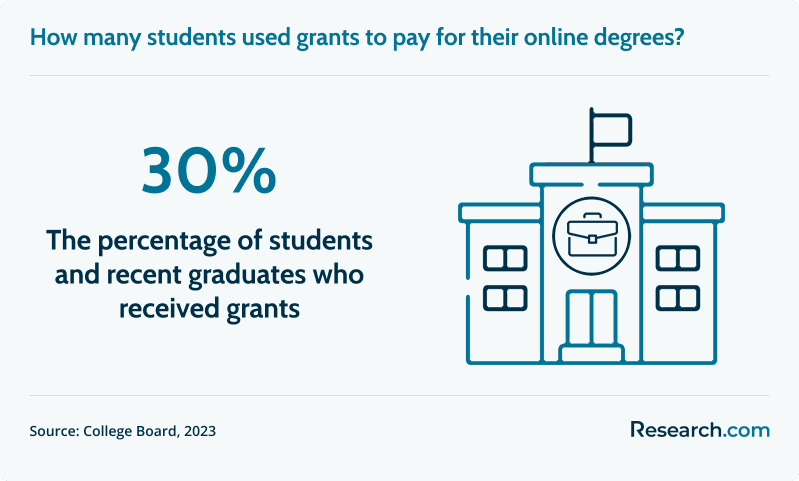
Grants are especially valuable because they generally do not need to be repaid. In a 2023 Wiley survey, nearly a third, or 30%, of online students and recent graduates said they used grants to help pay for their degrees. College Board data also shows how much grants can affect net price: first-time, full-time students at public institutions paid an average of $2,730 in tuition and fees after grants, while students at private nonprofit four-year institutions paid about $15,910.
| Aid Option | How It Helps | Question to Ask |
| Federal grants | Reduce out-of-pocket cost and usually do not require repayment | Am I eligible after filing the FAFSA? |
| Federal student loans | Spread payment over time but must be repaid with interest | What will my estimated monthly repayment be? |
| Institutional scholarships | May be based on need, merit, transfer status, or social work commitment | Are online BSW students eligible for the same awards as campus students? |
| Employer tuition assistance | Can reduce cost for students already working in human services or related settings | Does my employer require me to remain employed after using the benefit? |
| Service-based aid | May support students who commit to work in a high-need agency or region | What happens if I cannot meet the service obligation? |
What are the admission requirements for an online bachelor’s in social work?
Admission requirements vary by school. Some universities admit students directly as first-year social work majors, while others require students to complete general education and prerequisite courses before applying to the professional BSW sequence.
A social work degree may fit students who are empathetic, organized, ethical, comfortable with difficult conversations, and interested in public service. It can be one of the best college majors to pursue for students who want a helping profession, but interest alone is not enough. Applicants still need to satisfy academic and program-specific requirements.
- High school diploma or equivalent
- Standardized test scores, if required by the institution
- Official transcripts
- Letters of recommendation
- Personal statement or admissions essay
- Prerequisite coursework
- Fieldwork, practicum, or professional readiness requirements
What courses are usually included in an online BSW?
Online BSW programs combine social science foundations with professional social work practice. Students study human behavior, policy, ethics, research, diversity, and intervention methods. Most programs also require supervised field education, where students apply classroom knowledge in approved community, nonprofit, healthcare, school, or public service settings.
- Introduction to Social Work
- Human Behavior and the Social Environment
- Social Welfare Policy and Services
- Research Methods
- Ethics in Social Work
- Diversity and Oppression
- Fieldwork or Practicum
Students interested in legal advocacy, court systems, or client rights may also compare social work with adjacent training routes such as accelerated online paralegal programs.
What BSW specializations are available online?
Many bachelor’s programs are generalist degrees, meaning students build broad entry-level skills before choosing a narrower practice area. Some programs offer concentrations or electives in areas such as addictions or child welfare. Students who want advanced clinical specialization often continue into MSW training, including online clinical MSW programs.
- Child Welfare
- Mental Health
- Substance Abuse
- Gerontology
- Community Development
- Non-Profit Management
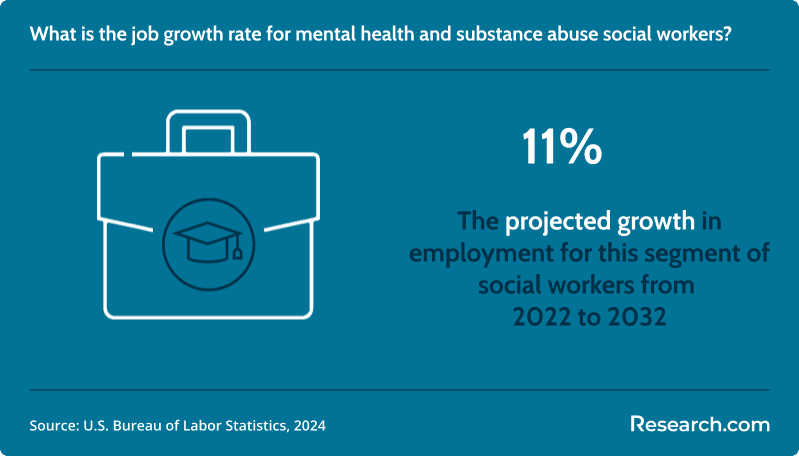
When comparing specializations, look at both your interests and labor market demand. The BLS reports that most social workers work with children, families, or students. It also projects stronger demand for mental health and substance abuse social workers from 2022 to 2032, with job growth of 11%.
How to choose the best online BSW program
The best online bachelor’s in social work is the one that is accredited, affordable after aid, realistic for your schedule, and compatible with your career goals. Start with CSWE accreditation, then compare cost, field placement support, transfer policies, faculty access, student services, and licensure alignment in your state. Even easy online college degrees should be evaluated carefully for accreditation, employer recognition, and long-term usefulness.
| Selection Factor | Why It Matters | What to Ask Before Applying |
| CSWE accreditation | Supports licensure eligibility and MSW advanced standing opportunities | Is the BSW currently accredited by CSWE? |
| Total cost | Fees, materials, and fieldwork costs can change affordability | Can you provide a full program cost estimate? |
| Transfer credit | Accepted credits can reduce both time and cost | Will my credits count toward the major or only electives? |
| Field placement support | Online students still need approved in-person practice sites | Does the school help find placements in my area? |
| Licensure preparation | Requirements differ by state | Does this program meet social work licensing requirements where I plan to work? |
| Student support | Online learners need advising, tech help, tutoring, and career services | Are services available during evenings or weekends? |
Is a bachelor’s in social work worth it for long-term career success?
A BSW can be worth it for students who want a mission-driven career in direct service, community advocacy, child welfare, healthcare support, school-based services, or nonprofit work. It provides foundational training in social policy, ethics, human behavior, case management, research, and field practice.
Job stability and career growth
Social work demand is connected to ongoing needs in mental health, healthcare, aging services, family support, disability services, and substance abuse treatment. An older Bureau of Labor Statistics projection cited a 9% increase from 2021 to 2031. The more recent job-market section of this guide uses a 7% projected increase between 2022 and 2032.
A BSW can support entry-level employment in healthcare organizations, schools, public agencies, community programs, and nonprofit service providers. However, students should understand that many advanced or independent practice roles require graduate education and state licensure.
Earning potential in social work
Social work is often chosen for service impact, but pay still matters. Bureau of Labor Statistics data cited here lists a median annual wage of $50,000 for social workers, with variation by location, setting, experience, and specialization. Some healthcare and advanced roles may exceed $70,000 per year, particularly when paired with graduate education or specialized credentials.
Personal fit and professional impact
Social workers often help people navigate housing instability, family stress, school challenges, trauma, illness, mental health needs, disability systems, and public benefits. The work can be meaningful, but it can also be emotionally demanding. Students should consider whether they can maintain boundaries, handle documentation, manage caseloads, and work within complex systems.
Career flexibility and graduate pathways
A BSW can lead directly into human services roles, but it also creates a strong foundation for an MSW. Students who want clinical licensure, supervisory roles, policy leadership, or higher-paying specialized positions often use the BSW as the first step. For a broader career-fit discussion, review whether a social work degree is worth it.
Why CSWE accreditation matters for online social work programs
Accreditation is one of the highest-stakes factors in a social work degree decision. A low-cost program that lacks appropriate recognition may limit licensure options, transfer opportunities, financial aid access, or MSW advanced standing eligibility.
- Program quality: CSWE-accredited programs are reviewed against professional education standards for curriculum, field education, faculty qualifications, and student outcomes.
- Licensure eligibility: Many states use CSWE accreditation as part of social work licensing requirements. Students should always verify rules with the state where they plan to practice.
- Employer confidence: Employers often recognize accredited BSW programs because they reflect a defined professional preparation standard.
- Financial aid access: Accreditation can affect eligibility for federal aid and institutional funding.
- Credit transfer and graduate admission: Accredited coursework is more likely to be recognized by other colleges and MSW programs.
What jobs can you get with an online bachelor’s in social work?
An online BSW can prepare graduates for entry-level roles in social services, child welfare, case management, community support, advocacy, and nonprofit programs. For example, caseworkers may help coordinate safe environments for children, while community support workers may connect clients with housing, food, employment, healthcare, or crisis resources.
Students seeking leadership, clinical, or higher-paying roles may later pursue accelerated online MSW programs. With additional education and experience, graduates may move into roles such as social work coordinator, program manager, policy analyst, or agency administrator.
Social work overlaps with healthcare, counseling, education, public policy, and human services. Students comparing alternatives may review an accelerated online healthcare administration degree. Pay comparisons also matter: the average salary of ultrasound technicians is higher than that of social workers. If you are asking how much an ultrasound tech makes per hour, the figure cited is $41.78; for social workers, it is $28.07.
| Career Direction | Typical Focus | When It Makes Sense |
| Casework | Client assessment, service plans, referrals, and documentation | You want direct contact with individuals and families |
| Child and family services | Safety planning, family support, and child welfare systems | You are prepared for high-stakes, emotionally complex work |
| Community support | Housing, food access, benefits navigation, and crisis resources | You want to work with community agencies and local service networks |
| Nonprofit program work | Program delivery, outreach, advocacy, and reporting | You want mission-driven work with possible advancement into management |
| Graduate clinical pathway | Advanced assessment, therapy preparation, and licensure progression | You plan to earn an MSW and pursue state licensure |
What challenges do online social work students face?
Online BSW students often need to balance coursework, employment, family responsibilities, and field placement hours. The online format can be flexible, but social work field education is not optional and usually requires scheduled in-person time at an approved agency.
- Finding a field placement: Ask whether the school identifies placements or expects students to locate agencies themselves.
- Time management: Online courses can still include fixed deadlines, group projects, live sessions, and practicum schedules.
- Technology access: Reliable internet, video conferencing tools, and learning-platform support are essential.
- Professional networking: Online students must be intentional about attending virtual events, connecting with faculty, and building relationships with supervisors.
- Emotional strain: Coursework and field experiences may involve trauma, poverty, crisis, discrimination, and family conflict.
If you plan to continue after the BSW, compare graduate options early, including affordable online MSW programs, so you understand admission requirements and potential advanced standing opportunities.
What trends are shaping social work education and practice?
Online BSW programs are increasingly using digital tools to prepare students for modern practice environments. Common developments include telehealth simulations, virtual case management exercises, interactive learning platforms, trauma-informed practice content, cultural competency training, and interdisciplinary collaboration.
These shifts reflect real changes in service delivery. Social workers may interact with clients through hybrid service models, document case notes in digital systems, coordinate care across agencies, and respond to mental health and substance abuse needs alongside healthcare, education, legal, and behavioral health professionals. Students considering graduate-level options can also explore what careers are available with a master’s in social work.
What is the job market for online BSW graduates?
The BLS projects a 7% increase in social work jobs between 2022 and 2032, which is faster than the average job growth rate. Demand is linked to needs in aging services, mental health care, substance abuse treatment, child and family services, healthcare settings, and community programs.
Job outcomes are not guaranteed. Hiring depends on your location, experience, field placement, licensure eligibility, language skills, specialization, and whether you continue into graduate study.
How does a BSW prepare students for school social work?
A BSW can introduce students to child development, family systems, crisis response, social policy, and community resources that are relevant to school-based practice. However, school social worker requirements vary by state and often include licensure, certification, or an advanced degree.
- Child and adolescent development: BSW coursework helps students understand developmental stages, family context, and social factors that affect student well-being.
- Conflict resolution and crisis intervention: School settings require professionals who can respond to bullying, behavioral concerns, mental health crises, and family stressors.
- Community and family engagement: School social workers often coordinate with parents, teachers, administrators, and outside agencies to support student success.
If school social work is your goal, review specific school social worker requirements before choosing a program.
What are the licensure and certification requirements for social workers?
Social work licensure is regulated by states. Requirements often include a CSWE-accredited degree, supervised experience, an application to the state licensing board, background checks, and a passing score on the required exam. Rules differ for bachelor’s-level, master’s-level, clinical, and independent practice credentials.
Before enrolling, contact the licensing board in the state where you plan to work. Ask whether the online BSW meets educational requirements, what fieldwork is required, whether additional supervised hours are necessary, and what title or scope of practice the license allows. For more career options, see what you can do with a social work degree.
How does interdisciplinary training strengthen social work practice?
Social workers often collaborate with educators, counselors, healthcare providers, legal advocates, behavior specialists, and public agencies. Interdisciplinary training helps students understand client needs from more than one professional perspective and can improve assessment, communication, referral, and intervention planning.
For example, knowledge of behavior analysis can support evidence-informed intervention planning, especially when working with clients who have behavioral, developmental, or learning-related needs. Students interested in that connection can explore what you can do with a master’s in behavior analysis.
How do online BSW programs support networking and career development?
Strong online BSW programs provide more than recorded lectures. Look for career advising, field placement coordination, faculty office hours, alumni panels, virtual mentorship, resume support, interview preparation, and networking events with agencies or professional associations.
Students who want long-term leadership, advanced practice, or doctoral-level opportunities may also compare later pathways such as the most affordable online DSW programs.
How does a BSW prepare you for an MSW?
A Bachelor of Social Work gives students a foundation in human behavior, social policy, research, ethics, generalist practice, and supervised fieldwork. That foundation can make the transition to graduate-level social work smoother.
Many MSW programs offer advanced standing to students who hold a BSW from an eligible program. Advanced standing can shorten the master’s timeline, often to as little as one year, which may reduce tuition and help students reach specialized roles sooner. Common MSW pathways include clinical social work, school social work, policy, administration, healthcare social work, and community practice.
If you are planning beyond the bachelor’s degree, review what you can do with an MSW before choosing your BSW electives and field placements.
What support services should online BSW students expect?
Student support can make a major difference in online social work education. At minimum, look for academic advising, transfer credit review, technical support, library access, tutoring, writing help, disability services, mental health resources, and career services.
Because social work students complete field education, placement support is especially important. Ask whether the school has staff dedicated to field placements for online students, how far in advance placements are arranged, and what happens if a local agency cannot accept you. Students planning to continue to graduate school can also compare the best online advanced standing MSW programs.
How does social work earning potential compare with related fields?
Salary comparisons should account for region, employer type, experience, licensure level, and specialization. Social work pay may differ from counseling, healthcare administration, human services, education, and allied health careers. A BSW may be enough for some entry-level roles, but advanced licensure or an MSW can expand long-term earning potential.
Students comparing adjacent majors can review human services major salary information to understand how related service fields differ in education requirements, job responsibilities, and compensation patterns.
Can additional certifications improve your social work career options?
Additional certifications can help social workers build specialized knowledge in areas such as addictions, school services, case management, trauma-informed care, behavioral health, or counseling-related practice. Certifications do not replace state licensure, but they can support professional development and signal focused expertise to employers.
Before paying for a certification, verify that it is recognized by employers, relevant to your practice area, and compatible with your state’s rules. Students interested in therapeutic or counseling-adjacent roles can review counseling certification and licensure requirements.
Common mistakes to avoid when choosing an online BSW
| Mistake | Why It Can Hurt You | Better Approach |
| Choosing only by the lowest tuition rate | Fees, transfer limits, and extra credits can raise the real cost | Compare full program cost after aid and transfer evaluation |
| Ignoring CSWE accreditation | Licensure and MSW advanced standing options may be limited | Confirm current CSWE accreditation before applying |
| Assuming “online” means no in-person requirements | Fieldwork is usually completed in person | Ask how field placements are arranged in your area |
| Not checking state licensure rules | Requirements vary by state and practice level | Contact your state licensing board before enrolling |
| Overlooking student support | Online learners may need advising, tech help, tutoring, and placement support | Ask about services for remote students specifically |
| Relying only on rankings | A highly ranked program may not fit your schedule, budget, or state requirements | Use rankings as a starting point, then verify fit and outcomes |
Questions to ask before enrolling in an online social work program
- Is the BSW program currently accredited by the Council on Social Work Education?
- Does the program meet education requirements for licensure in the state where I plan to work?
- How many of my transfer credits will apply to the degree and the social work major?
- What is the total estimated cost, including tuition, fees, books, technology, and fieldwork expenses?
- Are online students eligible for the same scholarships and grants as campus students?
- How are field placements arranged for students outside the university’s local area?
- Are courses asynchronous, synchronous, or a mix of both?
- What student support services are available outside normal business hours?
- Does the program offer concentrations such as addictions, child welfare, or drug and alcohol counseling?
- Will this BSW qualify me for advanced standing in an MSW program?
References:
- College Board. (n.d.). Trends in College Pricing Highlights. College Board Research. Retrieved June 6, 2024, from https://research.collegeboard.org/trends/college-pricing/highlights
- U.S. Bureau of Labor Statistics. (2023, April 17). Social and Human Service Assistants: Occupational Outlook Handbook. Retrieved June 6, 2024, from https://www.bls.gov/ooh/community-and-social-service/social-and-human-service-assistants.htm
- U.S. Bureau of Labor Statistics. (2024, April 17). Social and Community Service Managers: Occupational Outlook Handbook. Retrieved June 6, 2024, from https://www.bls.gov/ooh/management/social-and-community-service-managers.htm
- U.S. Bureau of Labor Statistics. (2024, April 17). Substance Abuse, Behavioral Disorder, and Mental Health Counselors: Occupational Outlook Handbook. Retrieved June 6, 2024, from https://www.bls.gov/ooh/community-and-social-service/substance-abuse-behavioral-disorder-and-mental-health-counselors.htm
Key Insights
- The most affordable online BSW is not always the program with the lowest posted tuition. Compare total cost after transfer credits, fees, residency rules, and financial aid.
- CSWE accreditation should be a non-negotiable factor if you may pursue licensure, an MSW, or advanced standing later.
- Online social work degrees still require real-world practice. Confirm field placement support before enrolling, especially if you live far from campus.
- A BSW can lead to entry-level social services roles, but clinical practice, independent practice, and many leadership roles usually require an MSW and state licensure.
- Use rankings as a starting point, not the final decision. The best program is the one that fits your budget, schedule, state requirements, fieldwork needs, and long-term career plan.
Other Things You Should Know About the Most Affordable Online Bachelor's Programs in Social Work
Yes. Accredited online Bachelor of Social Work programs require supervised field education, usually about 400 to 600 hours, completed at an approved agency or placement site. Programs must follow CSWE accreditation standards, and the placement often must be arranged in the student's state or region.