2027 Best Accelerated Paralegal Programs Online

Co-Founder and Chief Data Scientist
The increasing demand for paralegals has made it essential for aspiring professionals to find effective and efficient training programs. Many students are now seeking accelerated online paralegal programs to quickly enter the workforce without sacrificing the quality of their education.
In 2023, there were over 660 paralegal programs in the U.S. To help students find the right program, I have researched and identified the best accelerated online paralegal programs available. Using my career planning and academic counseling experience, I've compiled a list of top programs detailing key information to help you make a decision.
What are the benefits of online accelerated paralegal programs?
- Completing an online accelerated paralegal program opens the door to various legal roles, such as paralegals, legal assistants, and legal researchers.
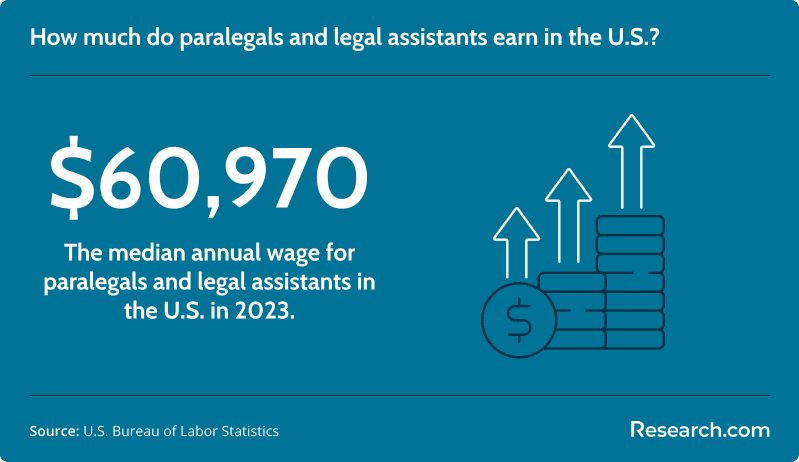
- According to the U.S. Bureau of Labor Statistics, paralegals and legal assistants can expect a median salary of around $60,970 per year.
- Earning your degree online allows you to balance your studies with personal and professional commitments, offering flexibility and the ability to access high-quality education from anywhere.
What can I expect from online accelerated paralegal programs?
- Expect to cover core subjects such as legal research and writing, ethics, civil litigation, contracts, criminal law, and family law, providing a well-rounded foundation in paralegal studies.
- Programs typically last between 6 to 12 months, offering a fast-track option for students to enter the workforce quickly.
- The average cost ranges from $5,000 to $15,000, making it a cost-effective alternative to traditional degree programs.
- Many online programs offer self-paced courses, allowing students to progress through the material at their own speed, accommodating personal and professional commitments.
- Courses often include training in legal technology and software commonly used in law offices, enhancing practical skills and job readiness.
- Paralegals and legal assistants can look forward to positive job growth until 2032, with these occupations seeing 43,000 openings each year during the period.
Where can I work with an online accelerated paralegal certification?
An online accelerated paralegal certification opens up diverse employment opportunities. Law firms commonly hire paralegals to assist attorneys with legal documents, research, and case management. Corporate legal departments need paralegals for contracts, compliance, and legal matters. Government agencies employ paralegals in public defenders' and district attorneys' offices for criminal cases and policy issues. Non-profits seek paralegals for advocacy, legal aid, and compliance work.
Paralegals also find roles in niche areas. Healthcare organizations need them for medical-legal cases and regulations, while universities require support for academic policies and intellectual property issues. Real estate firms, insurance companies, and financial institutions hire paralegals for contracts, claims, and compliance. This certification provides a strong foundation for a rewarding career in various fields.
How much can I make as a graduate of online accelerated paralegal program?
Entry-level paralegals typically earn between $35,000 and $45,000 per year, while those with several years of experience can see their salaries rise to between $50,000 and $70,000 annually. Specialized fields such as corporate law, intellectual property, or healthcare can offer higher pay, ranging from $60,000 to $80,000.
Additionally, paralegals working in major cities or regions with high demand, like New York, California, or Washington D.C., often earn higher salaries, sometimes exceeding $80,000 per year.
- List of Best Accelerated Paralegal Programs Online for 2027 Program List
- How long does it take to complete an accelerated paralegal program online? How long does it take to complete an accelerated paralegal program online?
- How does an accelerated paralegal program online compare to an on-campus program? How does an accelerated paralegal program online compare to an on-campus program?
- What is the average cost of an accelerated paralegal program online? Program Cost
- What are the financial aid options for students enrolling in an accelerated paralegal program online? Financial Aid
- What are the prerequisites for enrolling in an accelerated paralegal program online? Program Requirements
- What courses are typically in an accelerated paralegal program online? What courses are typically in an accelerated paralegal program online?
- What types of specializations are available in accelerated paralegal programs online? What types of specializations are available in accelerated paralegal programs online?
- How to supplement your paralegal education for career advancement How to supplement your paralegal education for career advancement
- How to choose the best accelerated paralegal program online? How to choose the best accelerated paralegal program online?
- Is an Accelerated Paralegal Program the Optimal Alternative to a criminal law degree online? Is an Accelerated Paralegal Program the Optimal Alternative to a criminal law degree online?
- Is an Accelerated Paralegal Program Online Worth the Investment? Program ROI
- What career paths are available for graduates of accelerated paralegal programs online? What career paths are available for graduates of accelerated paralegal programs online?
- How Can Accelerated Online Paralegal Programs Meet the Needs of Working Adults? How Can Accelerated Online Paralegal Programs Meet the Needs of Working Adults?
- Do Employers Value Accelerated Online Paralegal Programs? Do Employers Value Accelerated Online Paralegal Programs?
- How Do Accelerated Online Paralegal Programs Align with Broader Fast Track Education Trends? How Do Accelerated Online Paralegal Programs Align with Broader Fast Track Education Trends?
Best Accelerated Online Paralegal Programs for 2027
Choosing an accelerated online paralegal program is usually a time-sensitive decision: you want legal career training quickly, but you also need a credential employers will respect. The right program can help you build legal research, writing, litigation, document preparation, and case management skills without spending years in school. The wrong program can leave you with limited career support, unclear accreditation, or credits that do not transfer.
This guide is for career changers, working adults, recent graduates, and legal support professionals who want a faster route into paralegal work. It explains how accelerated online paralegal programs work, how long they take, what they cost, what to check before enrolling, and how to compare certificate programs against degrees and other legal education paths.
Quick Answer: What Is the Best Accelerated Online Paralegal Program?
The best accelerated online paralegal program depends on your goal. If you want the fastest training, compare short certificate programs that can be completed in 12 to 15 weeks. If you want stronger employer recognition, prioritize programs with American Bar Association approval or institutional accreditation. If you may continue into a degree later, ask whether credits transfer before enrolling.
Most accelerated online paralegal programs can be completed in 6 months to 1 year, though some listed programs are shorter or longer. Costs vary widely, and online accelerated paralegal programs generally range from $3,000 to $15,000 or more.
How Research.com Reviews Schools and Programs
Research.com evaluates programs using data from established education sources, including the IPEDS database, Peterson’s database and its Distance Learning Licensed Data Set, the College Scorecard database, and the National Center for Education Statistics. These sources help students compare schools using consistent institutional data. For more detail on how Research.com evaluates programs, review the methodology page.
Accelerated Online Paralegal Programs at a Glance
| Program | Length | Cost | Credits | Accreditation Information Provided |
| North Carolina State University Paralegal Certificate Course | 14 weeks | $1,989 | No information available | No information available |
| Boston University Paralegal Studies Certificate | 14 weeks (non-credit program) | $3,995 | N/A | New England Commission of Higher Education (NECHE) |
| UC Berkeley Extension Certificate Program in Paralegal Studies | 6 to 12 months | $7,970 | 60 credits | No information available |
| University of Miami Paralegal Certificate Program | 2 years | N/A | 60 credit hours | Southern Association of Colleges and Schools Commission on Colleges |
| Franklin Pierce University Online Undergraduate Paralegal Certificate | 1 year | N/A | 30 credit hours | New England Commission of Higher Education (NECHE) |
| Hamline University Online Paralegal Certificate | 9 months | N/A | 20 credits | American Bar Association |
| University of Cincinnati College of Law Certificate in Legal Studies | 14-15 weeks | N/A | N/A | American Bar Association |
| Roosevelt University Online Paralegal Studies Certificate | 1 year | $796 per credit | 24 credit hours | American Bar Association |
| University of Texas at San Antonio Paralegal Certificate Program | 11 months | $1750 per semester | No information available | No information available |
| UC San Diego Paralegal Certificate Program | 12 weeks | $5,100-$5,200 | No information available | American Bar Association |
1. North Carolina State University Paralegal Certificate Course
The NC State University Paralegal Certificate Course is built for people entering the legal field as well as professionals who already have some legal experience. The program is organized into two parts. Part 1 introduces paralegal studies, the American legal system, and the role of paralegals. Part 2 moves into more advanced work, including legal research, legal writing, and advocacy in formal and informal legal settings.
- Program Length: 14 weeks
- Tracks/concentrations: none
- Cost: $1,989
- Required Credits to Complete: No information available
- Accreditation: No information available
2. Boston University Paralegal Studies Certificate
The Boston University Paralegal Studies Certificate is a fast non-credit option for students who want practical preparation for legal support roles. The curriculum emphasizes applied skills such as legal writing, document preparation, and case management. Students may also benefit from Boston University’s career resources and professional network.
- Program Length: 14 weeks (non-credit program)
- Tracks/concentrations: N/A
- Cost per Credit: $3,995
- Required Credits to Complete: N/A
- Accreditation: New England Commission of Higher Education (NECHE)
3. UC Berkeley Extension Certificate Program in Paralegal Studies
The UC Berkeley Extension Certificate Program in Paralegal Studies is fully online and taught by instructors who are practicing attorneys. Students receive access to online resources and support while studying legal research, case file management, client communication, legal writing, and administrative legal procedures. The program can be completed in as little as 6 months to a year.
- Program Length: 6 to 12 months
- Tracks/concentrations: N/A
- Cost: $7,970
- Required Credits to Complete: 60 credits
- Accreditation: No information available
4. University of Miami Paralegal Certificate Program
The University of Miami Paralegal Certificate Program uses a structured, hands-on format that helps students move from legal concepts to practical application. The curriculum develops legal terminology, research techniques, and workplace-ready legal support skills through a building-block approach.
- Program Length: 2 years
- Tracks/concentrations: N/A
- Cost per Credit: N/A
- Required Credits to Complete: 60 credit hours
- Accreditation: Southern Association of Colleges and Schools Commission on Colleges
5. Franklin Pierce University Online Undergraduate Paralegal Certificate
The Franklin Pierce University Online Undergraduate Paralegal Certificate is designed for students who want a flexible online format with a broad introduction to legal systems and paralegal responsibilities. Coursework covers legal research, writing, substantive law, online discussion, and assignments that mirror tasks used in legal workplaces.
- Program Length: 1 year
- Tracks/concentrations: N/A
- Cost per Credit: N/A
- Required Credits to Complete: 30 credit hours
- Accreditation: New England Commission of Higher Education (NECHE)
6. Hamline University Online Paralegal Certificate
The Hamline University Online Paralegal Certificate is intended for students who already hold a bachelor’s degree and want to transition into legal work. The curriculum includes civil procedure, legal writing, ethics, and other core legal subjects. Students looking for a shorter post-baccalaureate option may find this structure especially relevant.
- Program Length: 9 months
- Tracks/concentrations: N/A
- Cost per Credit: N/A
- Required Credits to Complete: 20 credits
- Accreditation: American Bar Association
7. University of Cincinnati College of Law Certificate in Legal Studies
The University of Cincinnati College of Law Certificate in Legal Studies gives students a foundation in legal principles, legal procedures, research, writing, and analysis. The program is designed to prepare students for entry-level legal roles and may allow students to shape coursework around their interests and career plans.
- Program Length: 14-15 weeks
- Tracks/concentrations: N/A
- Cost per Credit: N/A
- Required Credits to Complete: N/A
- Accreditation: American Bar Association
8. Roosevelt University Online Paralegal Studies Certificate
Roosevelt University offers an Online Paralegal Studies Certificate for students who want a convenient route into legal support work. The curriculum covers legal concepts, case management, document drafting, and legal technology. Students should compare total tuition carefully because the program lists a per-credit cost.
- Program Length: 1 year
- Tracks/Concentrations: N/A
- Cost per Credit: $796
- Required Credits to Complete: 24 credit hours
- Accreditation: American Bar Association
9. University of Texas at San Antonio Paralegal Certificate Program
The UT San Antonio Paralegal Certificate Program is arranged in three phases or semesters. Paralegal 1 covers Law, Legal Research, and Civil Litigatio. Paralegal 2 includes Civil Litigation 2, Legal Writing, Contracts and Business Organizations, LexisNexis, and ProDoc. Paralegal 3 includes Family Law, Wills and Probate, and Criminal Law and Procedure. Each phase lasts approximately 14 weeks, allowing students to build legal skills in an accelerated sequence.
- Program Length: 11 months
- Tracks/concentrations: N/A
- Cost per Semester: $1750
- Required Credits to Complete: No information available
- Accreditation: No information available
10. UC San Diego Paralegal Certificate Program
The UC San Diego Division of Extended Studies Paralegal Certificate Program blends legal theory with practical legal workplace skills. The curriculum focuses on civil litigation and the working relationship between attorneys and paralegals. Students study legal research, legal writing, interviewing, substantive law, and procedural law.
- Program Length: 12 weeks
- Tracks/concentrations: N/A
- Total Cost: $5,100-$5,200
- Required Credits to Complete: No information available
- Accreditation: American Bar Association
How to Use This List
This list should be a starting point, not your only decision tool. Accelerated paralegal programs differ in length, cost, credit value, admissions requirements, accreditation, and employer recognition. Before choosing a program, confirm the latest tuition, format, transfer policy, and accreditation status directly with the school.
| If Your Priority Is... | Look For... | Be Careful About... |
| Fast completion | Programs lasting 12 weeks, 14 weeks, or 14-15 weeks | Condensed coursework that may require heavy weekly study time |
| Employer recognition | American Bar Association approval or strong institutional accreditation | Programs that do not clearly explain accreditation or approval |
| Future degree transfer | Credit-bearing certificates with clear transfer policies | Non-credit programs if you plan to continue into a degree |
| Lower upfront cost | Programs with transparent total tuition and fee information | Per-credit pricing, technology fees, books, and payment deadlines |
| Working while studying | Asynchronous online courses and strong academic support | Live sessions or deadlines that conflict with your work schedule |
How Long Does It Take to Complete an Accelerated Online Paralegal Program?
After learning what a paralegal does and how to become one of them, the next practical question is how quickly you can become job-ready. In many cases, an accelerated paralegal program can be completed in 6 months to 1 year. Some intensive options take less time, while programs with more credits or broader coursework may take longer.
Program length depends on the school’s calendar, the number of required credits, whether the program is credit or non-credit, and whether you study full time or part time. A shorter program can help you enter the job market faster, but it may also compress reading, writing assignments, legal research, and exams into a demanding schedule.
Online vs. On-Campus Accelerated Paralegal Programs
Online and campus-based paralegal programs can both prepare students for legal support roles. The better choice depends on your schedule, learning style, need for local networking, and ability to stay organized without in-person class meetings.
| Factor | Online Accelerated Program | On-Campus Program |
| Schedule | Often easier to fit around work, family, or commuting constraints | Usually requires attendance at set class times |
| Pace | May allow faster completion, similar to how some students compare flexible options such as the cheapest online MSW programs | May follow a more traditional academic calendar |
| Interaction | Uses discussion boards, email, video meetings, and online group work | Offers in-person access to classmates, instructors, and campus services |
| Resources | Relies heavily on online libraries, legal databases, and other digital learning resources | May include physical libraries, campus labs, and face-to-face advising |
| Best for | Self-directed students who need flexibility | Students who learn best through structured classroom contact |
What Is the Average Cost of an Accelerated Online Paralegal Program?
The cost of an accelerated online paralegal program can range from $3,000 to $15,000 or more. Some cheap online degrees and certificate options may reduce expenses because students do not need to relocate or commute, but tuition is only part of the total cost.
When comparing prices, look beyond the advertised tuition. Ask whether the cost includes books, legal database access, technology fees, graduation fees, exam fees, and career services. Shorter programs with fewer credits may cost less, while longer or more comprehensive programs can cost more. Institutional reputation and accreditation may also affect price.
Financial Aid Options for Accelerated Online Paralegal Students
Financial aid availability depends on the school, program type, accreditation, and whether the program is credit-bearing. Before enrolling, ask the financial aid office whether the program qualifies for federal aid, institutional aid, scholarships, payment plans, or employer tuition benefits.
- Federal Financial Aid: Some accredited online paralegal programs may qualify for Pell Grants, Federal Direct Loans, or Federal Work-Study. Students must complete the Free Application for Federal Student Aid (FAFSA) to apply for federal aid.
- Scholarships: Schools, legal associations, community organizations, and scholarship platforms may offer awards for paralegal students. Eligibility can depend on academic merit, financial need, career goals, or background.
- Grants: Grants may come from federal, state, or institutional sources and generally do not need to be repaid. Availability varies by program and student eligibility.
- Employer Tuition Assistance: If you already work in a law firm, corporate office, government agency, or related field, ask whether your employer offers reimbursement or tuition support.
- Private Loans: Private loans may help cover remaining costs, but students should compare interest rates, repayment terms, and borrower protections carefully.
- Work-Study Programs: Some programs may connect students with paid work-study opportunities that combine income with field-related experience.
Common Prerequisites for Accelerated Online Paralegal Programs
Admissions requirements vary by institution. Some programs are open to students with a high school diploma or equivalent, while others require prior college coursework, an associate degree, or a bachelor’s degree. Always review the program’s admissions page before applying.
- Educational background: Most programs require a high school diploma or GED. Some may require college credits or a completed associate or bachelor’s degree. Students planning a longer academic path can also compare affordable online masters programs in related fields.
- Computer and technology readiness: Online students need reliable internet access and basic ability to use word processing, email, research databases, learning platforms, and online communication tools.
- Language proficiency: Students usually need proficiency in the language of instruction, commonly English. Additional requirements may apply for non-native speakers.
- Legal background or experience: Prior legal experience is not always required, but it may strengthen an application or help students handle accelerated coursework.
- Application materials: Programs may request an application form, transcripts, recommendation letters, a resume or CV, and a statement explaining career goals.
- Minimum GPA: Some schools set a minimum GPA requirement, typically ranging from 2.0 to 3.0 on a 4.0 scale.
Typical Courses in an Accelerated Online Paralegal Program
Accelerated online paralegal programs focus on the legal knowledge and job tasks paralegals use most often. A strong curriculum should teach students how to research law, draft legal documents, organize case materials, understand litigation procedures, and follow ethical boundaries.
- Introduction to paralegal studies: Covers the paralegal role, the legal system, ethics, professional expectations, and legal career settings.
- Legal research and writing: Teaches students to use legal databases, analyze authority, prepare legal memos, and draft documents such as briefs or pleadings.
- Civil litigation: Explains lawsuits, pleadings, discovery, motions, trial preparation, and the paralegal’s role in litigation support.
- Criminal law and procedure: Introduces criminal law principles, criminal procedure, and the legal support tasks used in prosecution and defense settings. Students comparing legal and behavioral science paths may also explore the cheapest online psychology degree programs or learn how law and psychology intersect to define forensic psychology.
- Contracts and business law: Reviews contract formation, interpretation, breach, remedies, and common business transactions.
- Real estate law: Covers property rights, deeds, mortgages, leases, transactions, and real-property legal issues.
Common Specializations in Online Paralegal Programs
Not every accelerated program offers specializations, but some allow students to focus on a practice area. A specialization can be useful if you already know the type of law firm, agency, or legal department where you want to work.
- Litigation: Prepares students to help attorneys manage civil or criminal cases, including trial preparation, discovery, and case organization.
- Corporate law: Focuses on business entities, contracts, corporate governance, regulatory compliance, and mergers and acquisitions.
- Family law: Covers divorce, custody, support, adoption, domestic violence, court procedures, and ethics in family-related legal matters.
- Real estate law: Builds knowledge of property transfers, land use, leases, mortgages, and real estate documentation.
- Intellectual property law: Introduces patents, trademarks, copyrights, trade secrets, and licensing agreements. Students considering this area can review more about intellectual property law.
- Immigration law: Examines visas, citizenship, asylum, immigration filings, and deportation proceedings.
How to Strengthen Your Paralegal Education After a Certificate
An accelerated certificate can help you enter the field, but additional education and professional development may improve your long-term options. One path is earning an associate degree in legal studies, which can provide broader legal training and may be useful for students who want a more formal academic credential.
You can also build expertise through targeted training in corporate law, e-discovery, intellectual property, compliance, legal technology, or litigation support. Membership in organizations such as the National Association of Legal Assistants (NALA) or the American Association for Paralegal Education (AAfPE) may provide continuing education, networking, and professional development resources.
Legal workplaces increasingly rely on research databases, case management platforms, e-discovery tools, and document systems. Becoming comfortable with tools such as LexisNexis, Westlaw, and case management software can help you show employers that you are prepared for modern legal support work.
How to Choose the Best Accelerated Online Paralegal Program
The best program is not simply the shortest or cheapest one. It is the program that fits your career goal, budget, schedule, location, and future education plans. Use the following checklist before applying.
- Check accreditation and approval: Confirm institutional accreditation and ask whether the paralegal program has ABA approval. Students who specifically want ABA-recognized options can review a list of ABA approved paralegal programs.
- Read the curriculum closely: Look for legal research, legal writing, litigation, ethics, document drafting, and legal technology. If you want a specific practice area, confirm that the program covers it.
- Confirm whether the program is credit-bearing: Non-credit certificates may be valuable for skills training, but they may not transfer into a degree later.
- Compare total cost: Ask for the full program price, including books, fees, legal database access, technology fees, and payment deadlines.
- Review faculty experience: Instructors with legal practice experience may provide stronger real-world context.
- Evaluate student support: Look for tutoring, advising, technical support, career services, resume help, and internship guidance.
- Ask about job outcomes carefully: Schools should be transparent about career support, but no program can guarantee employment or salary.
| Question to Ask | Why It Matters |
| Is the institution accredited? | Accreditation affects credibility, aid eligibility, and transfer options. |
| Is the paralegal program ABA-approved? | Some employers prefer or require graduates from ABA-approved programs. |
| Is this a credit or non-credit certificate? | Credit status can affect transferability and future degree planning. |
| What is included in the published tuition? | Fees, books, software, and database access can change the real cost. |
| Does the program include practical assignments? | Employers value writing samples, research experience, and case-related tasks. |
| What career services are available to online students? | Remote learners need access to advising, resume help, and employer connections. |
Is an Accelerated Paralegal Program a Good Alternative to an Online Criminal Law Degree?
An accelerated paralegal program and a criminal law degree online serve different purposes. A paralegal certificate is usually the faster, more practical option for students who want legal support training and a shorter path to entry-level legal work. A criminal law or criminal justice degree generally provides broader academic study and may be better for students interested in law enforcement, corrections, public safety, policy, or later graduate study.
Choose the paralegal route if your goal is to assist attorneys, prepare documents, conduct legal research, and work in law firms, corporate legal departments, government offices, or nonprofit legal settings. Consider the degree route if you want a broader credential that may support multiple justice-related career paths.
Is an Accelerated Online Paralegal Program Worth the Investment?
An accelerated online paralegal program may be worth it if it helps you gain relevant legal skills, qualifies you for entry-level roles, fits your schedule, and has a cost you can reasonably manage. The value depends on the program’s credibility, curriculum, career support, and whether employers in your target market recognize the credential.
To evaluate return on investment, compare tuition against time to completion, lost work time, financing costs, and realistic local job opportunities. Students still exploring career-focused education options can also compare paralegal programs with online degrees that pay well to see whether another path better fits their financial and career goals.
Career Paths for Graduates of Accelerated Online Paralegal Programs
Accelerated paralegal programs are shorter than many fastest online degree completion programs, but they can still lead to several legal support roles. Common options include:
- Paralegal or legal assistant: Supports attorneys in law firms, corporate legal departments, agencies, and nonprofit organizations through research, drafting, case management, and client communication.
- Corporate compliance specialist: Helps organizations follow laws, regulations, and internal policies through audits, training, documentation, and compliance procedures.
- Legal researcher: Reviews statutes, regulations, case law, and legal issues to help attorneys prepare cases or advise clients.
- Legal technology specialist: Supports legal teams with document automation, case management tools, e-discovery systems, and legal research platforms.
- Mediator or arbitrator: Uses communication and negotiation skills to help parties resolve disputes outside of court.
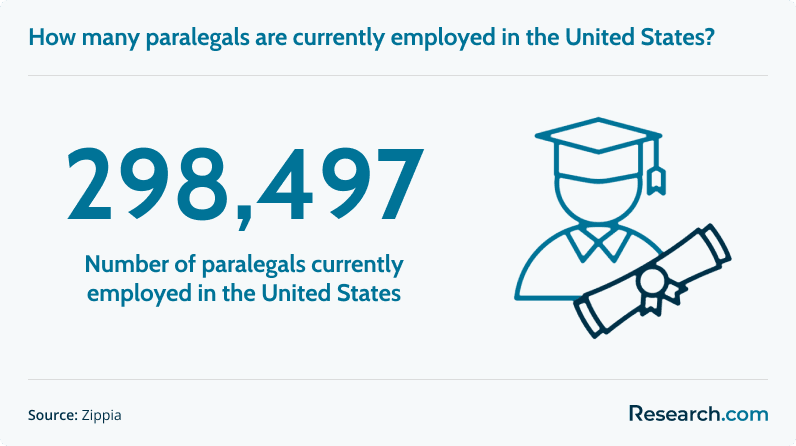
Graduates may find opportunities in law firms, corporate legal departments, government agencies, nonprofit organizations, and other workplaces that need legal support. More than 298,497 paralegals are currently employed in the United States. Some professionals with public-sector goals may also compare legal support training with affordable online master's public administration programs.
Job Market and Salary Outlook for Paralegal Graduates
According to the U.S. Bureau of Labor Statistics (BLS), employment of paralegals and legal assistants is projected to grow by 4% from 2022 to 2032, faster than the average for all occupations. The BLS connects this demand to the need for legal services and the cost-saving use of paralegals for tasks that attorneys may otherwise handle.
As of 2023, the median annual wage for paralegals and legal assistants is $60,970. Earnings can vary by location, employer type, experience, and specialization. Paralegals in metropolitan areas or higher-cost regions, as well as those with skills in corporate law, intellectual property, or healthcare law, may have stronger earning opportunities. Larger firms, corporations, and government agencies may also offer higher pay or additional benefits compared with smaller firms or nonprofit organizations.
The chart below shows the largest employers of paralegals and legal assistants:
How to Transition Into a Paralegal Career From Another Field
Career changers often bring useful skills into paralegal work. Administrative experience, writing ability, research skills, customer service, project coordination, finance, healthcare, psychology, and business experience can all translate into legal support tasks. The key is to connect your previous work to the legal skills employers need.
- Identify transferable strengths: Organization, attention to detail, confidentiality, writing, research, communication, and deadline management are valuable in legal settings. Students with psychology interests may compare legal training with an accelerated psychology degree online, especially if they are interested in mediation or law-related behavioral fields.
- Choose a program aligned with your target role: If you want corporate work, look for contracts and compliance. If you want litigation, look for civil procedure, discovery, legal writing, and trial preparation.
- Build a legal vocabulary quickly: Accelerated programs can introduce legal research, civil litigation, contracts, ethics, and document drafting in a condensed format.
- Seek practical experience: Internships, volunteer roles, legal aid clinics, and administrative work in law offices can help you demonstrate readiness.
- Use career services early: Ask for resume reviews, mock interviews, job search support, and advice on explaining your career change to legal employers.
Further Specialization After an Accelerated Paralegal Program
After completing an accelerated program, you can continue building expertise through a paralegal certificate online in a specialized area or through additional training in e-discovery, legal technology, corporate law, intellectual property, healthcare law, immigration law, or compliance. Joining professional organizations such as the National Association of Legal Assistants (NALA) or the American Association for Paralegal Education (AAfPE) may also provide continuing education, job listings, and networking opportunities.
Potential Challenges of Accelerated Online Paralegal Programs
Accelerated online paralegal programs can be efficient, but they are not easy. Students must manage dense reading assignments, legal writing, unfamiliar terminology, research tools, and deadlines in a shortened schedule. Working adults should be especially realistic about weekly time commitments before enrolling.
| Common Challenge | Why It Happens | Better Approach |
| Underestimating the workload | Accelerated courses compress material into fewer weeks | Ask for a sample weekly schedule before enrolling |
| Choosing based only on price | Low tuition does not always include strong support or employer recognition | Compare accreditation, curriculum, career services, and total cost |
| Ignoring technology requirements | Online legal research and writing require reliable tools | Confirm software, database access, and technical support |
| Assuming all certificates transfer | Non-credit programs may not apply toward a degree | Ask about transfer credit policies in writing |
| Relying only on rankings | A ranked program may still be a poor fit for your goals | Match the program to your schedule, local market, and career target |
Students comparing accelerated legal training with other advanced education paths, including high paying master degrees, should weigh speed against long-term career development, credential value, and employer expectations.
Benefits of ABA-Approved Online Paralegal Programs
For many students, ABA approval is an important signal of program quality. Not every paralegal job requires an ABA-approved credential, but some employers prefer it. If employer recognition is a priority, compare ABA-approved online paralegal programs before applying.
- Stronger credibility with some employers: Law firms, government agencies, and corporate legal departments may prefer candidates from ABA-approved programs.
- Clearer quality standards: ABA-approved programs must meet established academic and professional expectations for paralegal education.
- Career and networking advantages: ABA-approved programs may offer connections to legal employers, internships, job fairs, and professional events.
- Practical legal preparation: ABA-approved curricula are designed to build legal knowledge, ethical judgment, research ability, and applied paralegal skills.
How Accelerated Online Paralegal Programs Serve Working Adults
Working adults often need programs that fit around job schedules, caregiving, commuting limits, and financial obligations. Accelerated online paralegal programs may support these students through asynchronous coursework, live webinars, modular lessons, academic advising, and career support. Students who need flexible, budget-conscious options can also compare schools designed for working learners, including affordable online colleges for working adults.
Do Employers Value Accelerated Online Paralegal Programs?
Employers generally care less about whether a program was online or accelerated and more about whether the candidate can perform legal support tasks reliably. Accreditation, ABA approval, writing ability, research skills, professionalism, internships, and legal technology experience can all affect how an employer views a credential.
Graduates can strengthen their applications by preparing writing samples, highlighting legal research assignments, earning relevant certifications, and networking with attorneys and legal professionals. Candidates comparing quick education pathways should remember that a fast credential, whether a paralegal certificate or a 6-month associate degree, still needs to translate into demonstrable job skills.
How Accelerated Online Paralegal Programs Fit Fast-Track Education Trends
Accelerated online paralegal programs reflect a broader demand for career-focused education that reduces time to completion while teaching practical skills. Similar to college fast track programs, these programs appeal to students who want a shorter route to employment or a way to reskill without leaving the workforce.
The best fast-track programs do more than shorten the calendar. They provide structured coursework, meaningful assignments, career support, and skills that match employer expectations. For paralegal students, that means legal research, writing, ethics, litigation support, document management, and legal technology.
References
- O*Net OnLine. (n.d.). 23-2011.00 - Paralegals and legal assistants. O*NET OnLine.
- Salary.com. (n.d.). Paralegal I salary. Salary.com.
- U.S. Bureau of Labor Statistics. (2023). Paralegals and Legal Assistants. U.S. Bureau of Labor Statistics.
- Zippia. (2024, April 5). Paralegal Demographics and Statistics [2024]: Number of paralegals in the US. Zippia.
Key Insights
- Accelerated does not always mean better: A 12-week or 14-week program may be efficient, but it can also require intense weekly study and strong self-discipline.
- Accreditation matters: Institutional accreditation and ABA approval can affect employer confidence, financial aid eligibility, and future education options.
- Costs vary widely: Online accelerated paralegal programs generally range from $3,000 to $15,000 or more, so compare total cost rather than tuition alone.
- Credit status is important: Non-credit certificates may build skills quickly, but students who plan to continue into a degree should verify transfer policies before enrolling.
- Career outcomes depend on more than the certificate: Legal writing ability, research skills, technology familiarity, internships, networking, and local employer demand all influence job prospects.
- Use the program list strategically: Choose based on your timeline, budget, accreditation needs, learning style, and target legal specialty—not just school name or speed.
Other Things You Should Know About Accelerated Paralegal Program Online
In 2027, an online accelerated paralegal program should be accredited by organizations recognized by the American Bar Association (ABA). Regional and national accreditation bodies are also crucial for ensuring academic quality and eligibility for federal financial aid. Ensure the program's credentials are up-to-date.
Enrolling in a 2027 accelerated paralegal program online typically requires a high school diploma or GED. Some programs might also ask for prior coursework in legal studies or complete a placement test to assess readiness for the intensive curriculum.
Many accelerated online paralegal programs require a capstone, practicum, or both to show applied skills before graduation. These experiences are often completed in the final term and may include legal research, drafting, and case analysis. Some programs require 30 to 60 credit hours for completion.