
2027 Best Lawyer Degree Programs for Future Lawyers

Co-Founder and Chief Data Scientist
Choosing a college major before law school is not about finding one “correct” pre-law degree. It is about building the academic record, reasoning skills, writing ability, and practical exposure that law schools and legal employers value. The right undergraduate path can help you earn a strong GPA, prepare for the LSAT or GRE, explore legal career options, and keep backup career choices open if your plans change.
This guide is for high school students, transfer students, college undergraduates, and career changers who are considering law school. It explains what pre-law really means, which majors can prepare you well, how to compare degree options, what experience to gain before applying, and how to avoid expensive mistakes when planning a legal education.
Quick Answer: What Is the Best Degree for Future Lawyers?
The best degree for future lawyers is usually the major in which you can earn strong grades while developing advanced reading, writing, research, logic, and analytical skills. Law schools do not require a specific pre-law major. Common choices include political science, history, English, philosophy, economics, business administration, criminal justice, psychology, public policy, and sociology. STEM majors can also be strong options, especially for students interested in patent law, technology law, health law, cybersecurity law, or environmental law.
Key Things You Should Know About Lawyer Degree Programs for Future Lawyers
- A pre-law major is not required: Law schools generally accept applicants from many academic backgrounds. Political science, history, business, English, economics, philosophy, and criminal justice are common choices, but no single major guarantees admission.
- Academic performance matters: A challenging major can help, but a strong GPA, rigorous coursework, LSAT or GRE preparation, persuasive writing, and strong recommendations are central to a competitive law school application.
- Legal careers vary widely: A law degree can lead to work in corporate law, criminal defense, public interest law, intellectual property, government, compliance, mediation, policy, academia, consulting, and legal technology.
- Earnings are uneven across the profession: Graduates from top-tier law schools may access prestigious first-year associate roles offering upwards of $190,000 per year, but salaries depend heavily on school, class rank, geography, employer type, practice area, and debt load.
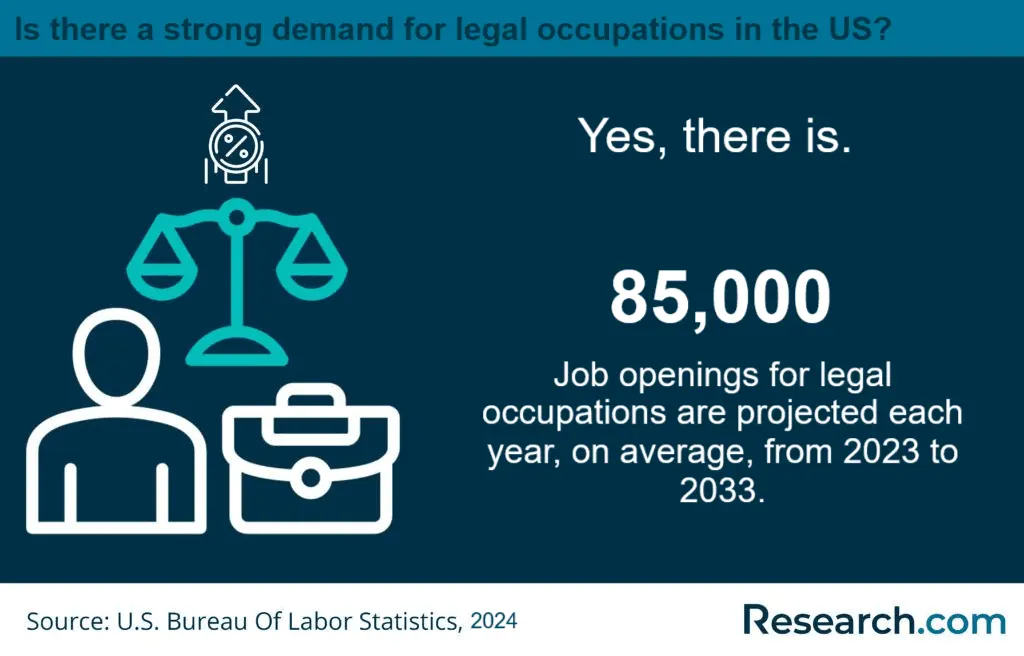
- The job outlook is steady, not automatic: The Bureau of Labor Statistics projects demand for lawyers to grow 4% between 2023 and 2033. Growth areas include cybersecurity law, environmental law, technology law, regulatory compliance, and privacy-related legal work.
- Experience can clarify your decision: Internships, clerkships, legal aid volunteering, mock trial, debate, research projects, and attorney shadowing can help you understand whether law school is a good fit before you commit to the cost and workload.
- Top 10 Degree Programs for Future Lawyers for 2027
- What is a pre-law or lawyer degree program for future lawyers?
- What are the prerequisites to entering law school?
- How do you choose the best lawyer degree for future lawyers?
- What skills do you need to develop while attending a pre-law degree program?
- What can I expect from the best lawyer degree programs?
- Can you succeed in law school if you majored in science?
- Can a Paralegal Certification Boost Your Pre-Law Profile?
- Is Investing in Affordable Online Legal Certifications a Strategic Pre-Law Decision?
- Could an online paralegal program enhance my pre-law profile?
- How can I manage the cost of my legal education?
- Are online pre-law programs a viable option for aspiring lawyers?
- What are good alternative pre-law degrees for future lawyers?
- What is the best way to gain legal experience before applying to law school?
- How can I tailor my coursework to prepare for law school, regardless of my pre-law major?
- How Can Specialized Intelligence Education Bolster Legal Expertise?
- How Can a Master's Degree in Legal Studies Enhance Your Legal Career Prospects?
- Could an Associate Degree Support My Journey to Law School?
- Can Accelerated Paralegal Certification Programs Enhance My Pre-Law Experience?
- What Additional Personal Readiness Factors Should Pre-Law Students Consider?
Top 10 Lawyer Degree Programs for Future Lawyers for 2027
The following undergraduate degrees are not “lawyer degrees” in the professional sense; becoming an attorney requires law school, a Juris Doctor, and bar admission. Instead, these majors are strong pre-law options because they build skills that law schools test and lawyers use every day: close reading, evidence-based reasoning, persuasive writing, policy analysis, quantitative thinking, ethical judgment, and communication under pressure.
| Pre-law degree option | Best fit for students interested in | Core preparation value |
| Business Administration | Corporate law, contracts, entrepreneurship, compliance | Business context, negotiation, finance, organizational decision-making |
| Economics | Antitrust, regulation, tax, finance, policy | Data analysis, market reasoning, quantitative problem-solving |
| Criminal Justice | Criminal law, prosecution, defense, corrections, public safety | Justice system knowledge, legal procedure, ethics, criminology |
| Political Science | Government, constitutional law, public policy, advocacy | Policy analysis, legal institutions, argumentation, research |
| History | Constitutional law, civil rights, public policy, academia | Document analysis, research, context-building, persuasive interpretation |
| English | Litigation, appellate work, legal writing, advocacy | Writing, rhetoric, textual analysis, close reading |
| Philosophy | Legal theory, ethics, litigation, constitutional law | Logic, argument structure, moral reasoning, analytical precision |
| Psychology | Family law, criminal law, mediation, jury consulting, advocacy | Human behavior, research methods, credibility analysis, communication |
| Public Policy | Regulation, government, nonprofit advocacy, administrative law | Policy design, impact analysis, governance, stakeholder communication |
| Sociology | Social justice, criminal law, civil rights, community advocacy | Social systems analysis, research, inequality studies, applied policy thinking |
1. Bachelor's in Business Administration
A Bachelor’s in Business Administration can be a practical pre-law choice for students who want to understand how companies operate before studying contracts, mergers, employment disputes, corporate governance, or regulatory compliance. A business administration degree typically strengthens decision-making, negotiation, problem-solving, communication, and financial literacy. Courses in business law, accounting, ethics, economics, and management can help future law students read contracts, evaluate risk, and understand the business impact of legal advice.
This major also gives students useful backup and bridge roles before law school. Work in management, human resources, compliance, financial analysis, consulting, or operations can expose you to policies, contracts, workplace regulations, and negotiation. That experience can make legal concepts less abstract once you enter law school.
2. Bachelor’s in Economics
A Bachelor’s in Economics is a strong option for students drawn to antitrust law, corporate law, tax, banking regulation, public policy, or financial compliance. Economics coursework trains students to evaluate incentives, interpret data, compare policy outcomes, and understand markets. Classes such as microeconomics, macroeconomics, econometrics, and public policy can support legal work involving regulation, competition, damages, and financial systems.
Economics majors can build relevant experience through financial analysis, policy research, banking, consulting, government regulation, or data-focused research roles. These positions can help students practice evidence-based reasoning, a skill that matters in both law school exams and legal practice.
Students comparing cost-conscious options can review these cheapest economics degree programs online.
3. Bachelor’s in Criminal Justice
A Bachelor’s in Criminal Justice can prepare students who are interested in prosecution, criminal defense, juvenile justice, corrections, policing, victim advocacy, or public safety policy. The major introduces students to criminal procedure, criminology, constitutional issues, forensic methods, ethics, and the structure of courts and correctional systems.
Relevant pre-law experience may include work in law enforcement, corrections, probation, victim services, forensic investigation, legal advocacy, or courthouse support. The advantage of this major is direct exposure to the justice system. The caution is that students should still take writing-intensive, research-heavy, and logic-based courses so their preparation is not limited to applied criminal justice topics.
4. Bachelor’s in Political Science
Law remains one of the most common careers for political science majors because the field directly studies government, courts, policy, elections, institutions, and public power. Political science majors learn how laws are made, challenged, interpreted, and implemented. Courses in constitutional law, political theory, international relations, public administration, and public policy can help students understand the legal system before entering law school.
Good preparation roles include legislative assistant, campaign staffer, policy analyst, government intern, advocacy coordinator, and public administration assistant. These experiences help students see how law, politics, and public decision-making interact in real settings.
5. Bachelor’s in History
A Bachelor’s in History is valuable for pre-law students because legal work often depends on reconstructing events, interpreting documents, identifying patterns, and explaining how rules developed over time. History majors practice reading dense sources, weighing evidence, writing persuasive arguments, and placing disputes in context. Courses in constitutional history, legal history, civil rights history, political history, and archival research can be especially useful.
Before law school, history majors may gain experience in research, public policy, education, archives, museums, government offices, or nonprofit organizations. These roles build the close reading and written analysis skills that law school demands.
6. Bachelor’s in English
A Bachelor’s in English is one of the clearest routes for students who want to develop advanced reading and writing skills before law school. A degree in English builds close textual analysis, rhetoric, argument structure, editing discipline, and persuasive communication. Courses in literature, composition, technical writing, rhetoric, linguistics, and professional writing can translate directly to legal briefs, motions, memos, and client communications.
Useful pre-law roles for English majors include editing, journalism, publishing, public relations, grant writing, communications, and research assistance. These fields require precision, audience awareness, and the ability to turn complex information into clear language.
7. Bachelor’s in Philosophy
A Bachelor’s in Philosophy is a strong pre-law option for students who enjoy logic, argument, ethics, and abstract reasoning. A philosophy degree teaches students to identify assumptions, test conclusions, evaluate moral claims, and build arguments step by step. Courses in logic, ethics, political philosophy, philosophy of law, epistemology, and moral reasoning can sharpen the habits used in case analysis and legal debate.
Philosophy students can prepare for law school through policy work, ethics consulting, research, writing, teaching support, nonprofit work, or debate-related activities. The major is especially useful for students who want to strengthen LSAT-style reasoning and law school classroom discussion skills.
8. Bachelor’s in Psychology
A Bachelor’s in Psychology can help future lawyers understand human behavior, decision-making, memory, bias, conflict, trauma, and communication. Those topics matter in client counseling, negotiation, witness preparation, jury dynamics, family law, criminal law, mediation, and employment disputes. Helpful courses may include social psychology, forensic psychology, cognitive psychology, abnormal psychology, statistics, and research methods.
Students can gain relevant experience in human resources, counseling support, social services, forensic interviewing, conflict resolution, crisis services, or community programs. Psychology also builds research literacy, which helps students evaluate expert testimony and empirical evidence later in legal practice.
9. Bachelor’s in Public Policy
A Bachelor’s in Public Policy is a natural fit for students interested in how laws affect communities, institutions, budgets, and public outcomes. The major focuses on policy design, cost-benefit analysis, ethics, public administration, governance, and evaluation. Courses in constitutional law, administrative policy, ethics, economics, and policy analysis can prepare students for regulatory, government, nonprofit, and advocacy-oriented legal careers.
Pre-law experience may include legislative work, policy research, advocacy, nonprofit management, public administration, or community organizing. This path is especially useful for students who want to connect legal training with practical problem-solving in public systems.
10. Bachelor’s in Sociology
A Bachelor’s in Sociology gives future lawyers a framework for understanding institutions, inequality, communities, crime, family systems, social movements, and structural barriers. This perspective can be useful in civil rights, criminal law, housing law, immigration law, family law, employment law, and public interest advocacy. Courses in criminology, law and society, social theory, race and inequality, research methods, and statistics can support legal analysis.
Sociology majors can prepare through social services, community advocacy, nonprofit work, policy research, criminal justice roles, or direct-service organizations. The major is most powerful when paired with strong writing, data analysis, and legal research experiences.
What is a pre-law or lawyer degree program for future lawyers?
A pre-law program is an undergraduate preparation path for students who plan to apply to law school. It is not the same as a Juris Doctor program, and it does not qualify you to practice law. Instead, pre-law preparation usually combines a regular college major with advising, law-related electives, LSAT or GRE planning, internships, research, writing-intensive coursework, and extracurricular activities such as mock trial or debate.
Future lawyers should understand these core points:
- Pre-law is usually an advising track, not a required major: Some colleges offer a formal pre-law concentration, but law schools generally do not require one.
- The goal is skill development: The best preparation emphasizes analytical reasoning, legal reading, persuasive writing, research discipline, ethics, and oral communication.
- Many majors can work: Political science, history, philosophy, English, economics, criminal justice, business, sociology, psychology, public policy, and STEM fields can all support law school readiness.
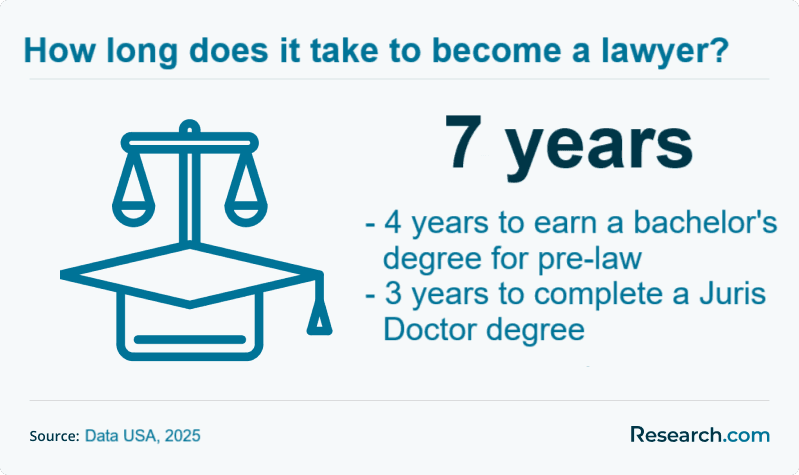
- Professional legal training comes later: To become a lawyer, students typically complete a bachelor’s degree, attend law school, earn a Juris Doctor, and meet bar admission requirements.
What are the prerequisites to entering law school?
Law school admission requirements vary by institution, but most applicants need a bachelor’s degree, a standardized test score if required by the school, strong academic records, recommendations, a personal statement, and evidence that they can handle demanding reading and writing. The following steps are common for aspiring lawyers.
1. Earn a Bachelor’s Degree
- Complete an accredited undergraduate program: Applicants typically need a bachelor’s degree from an accredited institution before starting law school.
- Choose any rigorous major that fits your strengths: Law schools do not require one specific undergraduate field. Political science, history, English, philosophy, economics, business, criminal justice, and even social work can be relevant. Students asking what jobs can you get with a social work degree may find that social work can also support a later path into advocacy, family law, public interest law, or policy.
- Protect your GPA: Undergraduate performance is one of the most important parts of the application. Pick a major that challenges you but also gives you a realistic path to strong grades.
2. Take the LSAT or GRE
- LSAT: The Law School Admission Test remains the most common exam for law school applicants and evaluates reading comprehension, analytical reasoning, and logical reasoning.
- GRE: Some law schools accept the Graduate Record Examination as an alternative, which can help applicants who are also considering other graduate programs.
- Test policy matters: Always verify each law school’s current testing requirements before deciding which exam to take.
3. Build a Complete Application
- Personal statement: Use this essay to explain your motivation, judgment, maturity, background, and readiness for legal study.
- Letters of recommendation: Most applicants submit two to three letters from professors, supervisors, or mentors who can speak to their writing, reasoning, work ethic, and character.
- Resume or CV: Include employment, internships, research, leadership, service, campus activities, honors, and responsibilities that show discipline and initiative.
4. Gain Relevant Experience
- Legal exposure: Internships with law firms, courts, advocacy groups, legal aid offices, government agencies, or public service organizations can strengthen your application and clarify your interests.
- Skill-building activities: Debate, mock trial, student government, research assistantships, writing centers, and policy organizations can demonstrate preparation for legal analysis and communication.
How do you choose the best lawyer degree for future lawyers?
The best pre-law degree is the one that helps you become a stronger law school applicant while giving you a realistic academic, financial, and career plan. Do not choose a major only because it sounds legal. Choose one that builds your skills, supports your interests, and leaves you with useful options if you delay law school or decide on another path.
| Decision factor | Why it matters | Questions to ask before choosing |
| Academic strength | Law schools pay close attention to GPA and rigor. | Can I earn strong grades in this major while taking challenging courses? |
| Skill alignment | Law school requires heavy reading, writing, reasoning, and research. | Will this major force me to write, analyze, argue, and revise often? |
| Career interest | Your major can introduce you to a practice area. | Does this degree connect to corporate, criminal, public interest, technology, health, or environmental law? |
| Backup options | Not every pre-law student attends law school immediately. | What jobs could I pursue with this bachelor’s degree alone? |
| Advising and support | Law school applications require planning. | Does the college offer pre-law advising, LSAT resources, mock trial, internships, or alumni connections? |
| Cost and ROI | Law school can add significant debt after undergraduate costs. | Can I reduce undergraduate borrowing before applying to law school? |
1. Prioritize Transferable Legal Skills
- Critical thinking: Philosophy, history, economics, mathematics, political science, and science courses can strengthen structured reasoning.
- Writing and communication: English, communications, journalism, history, and public policy can help you become a clearer writer and speaker.
- Research ability: Sociology, psychology, economics, political science, and history often require evidence-based projects that resemble legal research habits.
2. Match Your Major to Possible Practice Areas
- Corporate or business law: Business administration, finance, accounting, or economics may be useful.
- Environmental law: Environmental science, public policy, economics, or political science can provide relevant context.
- Technology or intellectual property law: Computer science, engineering, data science, or other STEM fields may be valuable.
- Criminal law: Criminal justice, sociology, psychology, political science, or forensic science can offer useful background.
3. Look for Academic Rigor and Support
- Course quality matters: Choose programs with demanding writing, research, and analytical assignments rather than easy electives with little feedback.
- Pre-law advising can save time: Strong advisors can help you sequence courses, prepare for the LSAT or GRE, request recommendations, and apply strategically.
- Experiential options are valuable: Mock trial, moot court, internships, legal clinics, policy labs, and undergraduate research can strengthen your profile.
4. Balance Interest, GPA, and Backup Careers
- Interest improves performance: Students often do better in majors they genuinely enjoy, which can help their GPA and recommendation letters.
- Prestige is not everything: A respected program helps, but a weak GPA from a major you dislike can hurt more than a practical major where you excel.
- Keep alternatives open: Choose a degree that can lead to meaningful work if you postpone law school, attend part time, or change direction.
5. Avoid Common Pre-Law Misconceptions
- There is no perfect pre-law major: Law schools admit students from many fields, so your performance and preparation matter more than the label on your transcript.
- STEM can be an advantage: Engineering, computer science, biology, chemistry, and physics can be especially relevant in intellectual property, patent, health, environmental, privacy, and technology law.
- Legal studies is not automatically better: A legal studies major can help if it is rigorous, but it is not required and should still be paired with strong writing and analytical coursework.
The chart below compares earnings across legal occupations, including lawyer vs paralegal salaries. Entry-level legal roles can help students build experience before or during law school, but they should be evaluated alongside long-term costs, admissions goals, and professional licensing requirements.
What skills do you need to develop while attending a pre-law degree program?
Pre-law students should use college to build the habits that make law school manageable: reading carefully, thinking logically, writing clearly, asking better questions, and managing heavy workloads. The major matters less than whether you deliberately practice these skills.
1. Critical Thinking and Analytical Reasoning
Legal study requires breaking complex problems into rules, facts, arguments, and consequences. Courses in philosophy, economics, political science, mathematics, history, and science can strengthen this skill. Debate, mock trial, and case competitions also force you to test claims from multiple sides.
2. Strong Written Communication
Lawyers write briefs, memos, contracts, letters, policies, and arguments. Take writing-intensive courses every year if possible. Seek feedback from professors, use campus writing centers, revise deeply, and learn how to support claims with evidence rather than opinion.
3. Oral Communication and Public Speaking
Lawyers must explain complicated issues to clients, judges, juries, agencies, executives, and colleagues. Public speaking courses, student government, debate, theater, presentations, and Toastmasters can help you become concise, confident, and persuasive.
4. Research and Information Evaluation
Legal work depends on finding reliable authority, distinguishing strong evidence from weak evidence, and applying information accurately. Research-heavy courses in history, sociology, psychology, economics, and political science can help. Research assistant roles are also useful preparation.
5. Ethical and Logical Judgment
Lawyers regularly face conflicts of interest, confidentiality concerns, fairness issues, and strategic choices with real consequences. Ethics, logic, philosophy, public policy, criminal justice, and professional responsibility-related courses can help students think through difficult decisions carefully.
6. Time Management and Organization
Law school reading loads and legal deadlines are demanding. Build systems before you arrive: calendars, outlines, task lists, document organization, citation tracking, and weekly review routines. Do not wait until law school to learn how to manage competing deadlines.
7. Collaboration and Teamwork
Legal work is often team-based, even in adversarial settings. Group research projects, student organizations, moot court, community initiatives, and internships can help you practice cooperation, feedback, delegation, and professional communication.
8. Persuasion and Negotiation
Advocacy is not only speaking loudly; it requires understanding interests, framing arguments, listening strategically, and knowing when to compromise. Debate, mediation workshops, negotiation simulations, communication classes, and psychology courses can build these skills.
9. Attention to Detail
Small mistakes in legal work can affect deadlines, filings, contracts, and client outcomes. Practice proofreading, following assignment instructions exactly, checking citations, and reviewing your work for ambiguity before submitting it.
10. Adaptability and Problem-Solving
Legal problems rarely arrive in clean textbook form. Internships, volunteer work, policy projects, client-facing roles, and research assignments can help you learn to adjust when facts change or instructions are incomplete.
What can I expect from the best lawyer degree programs?
Strong pre-law preparation is not limited to a course catalog. The best programs combine rigorous academics, advising, career exposure, and opportunities to test your interest in law before you apply to graduate school.
- Writing-heavy and reading-heavy coursework: Expect assignments that require case analysis, essays, research papers, policy briefs, presentations, and revision.
- Analytical training: Good programs push students to identify assumptions, compare interpretations, evaluate evidence, and defend conclusions.
- Research development: Students should learn how to locate credible sources, synthesize information, and explain findings clearly.
- Practical legal exposure: Look for internships, mock trial, moot court, legal studies clubs, court observation, alumni panels, and community legal partnerships.
- Application support: Strong pre-law advising may include LSAT or GRE planning, school list development, personal statement review, recommendation strategy, and application timelines.
- Flexible major pathways: Since there is no required pre-law major, the best colleges allow students to combine their chosen field with law-related electives, writing courses, ethics, public speaking, and experiential learning.
| Program feature | Why it helps future lawyers | Red flag to watch for |
| Dedicated pre-law advisor | Helps with course planning, testing, applications, and timelines | Generic advising with little knowledge of law school admissions |
| Mock trial or moot court | Builds argumentation, teamwork, evidence analysis, and confidence | Activities exist on paper but have little student participation |
| Internship connections | Creates exposure to law firms, courts, nonprofits, and agencies | No clear process for finding or earning credit for internships |
| Writing support | Improves statements, papers, briefs, and legal-style analysis | Few writing-intensive courses or limited faculty feedback |
| Career outcome transparency | Helps students compare value and plan realistically | Programs imply law school admission or high salaries are guaranteed |
Can you succeed in law school if you majored in science?
Yes. A science major such as biology, chemistry, or physics can prepare students well for law school, especially when paired with strong writing and reasoning coursework. Science students develop evidence evaluation, technical reading, hypothesis testing, data analysis, precision, and problem-solving. Those habits can translate well to legal analysis.
Science backgrounds may be especially useful in environmental law, intellectual property law, patent-related work, health law, bioethics, regulatory compliance, cybersecurity-related legal work, and technology law. Students in Science, Technology, Engineering, and Mathematics should add courses or experiences in writing, public speaking, ethics, logic, and policy so they can show both technical depth and legal communication readiness.

Can a Paralegal Certification Boost Your Pre-Law Profile?
A paralegal certificate can help pre-law students who want practical exposure to legal research, document preparation, case organization, terminology, and legal office workflows. Completing a paralegal certification online may strengthen your resume if it leads to applied skills or legal work experience. It is most useful when it complements, rather than replaces, strong undergraduate grades, rigorous writing courses, and LSAT or GRE preparation.
Is Investing in Affordable Online Legal Certifications a Strategic Pre-Law Decision?
Affordable online legal certifications can be worthwhile for students who need flexible, focused training without taking on unnecessary cost. These programs may introduce case management, legal document review, research procedures, and office technology. The key is to evaluate quality, accreditation or institutional credibility, total cost, completion time, and whether the credential helps you obtain internships or entry-level legal work. Students comparing practical legal training options can review online paralegal programs as one possible starting point.
Could an online paralegal program enhance my pre-law profile?
An online paralegal program can support a pre-law plan if it gives you usable legal skills and fits your schedule without weakening your GPA. Coursework in legal research, document drafting, litigation support, case management, and legal technology can help you understand the day-to-day work behind legal practice. It may also help you qualify for legal assistant or paralegal-related roles before law school. Students who want a more structured credential can compare options for a paralegal degree online.
How can I manage the cost of my legal education?
Cost planning should start before law school. Undergraduate debt can limit your choices later, especially if you want public interest, government, nonprofit, or lower-paying legal work. Compare tuition, fees, scholarships, transfer credit, living expenses, commuting costs, exam preparation costs, and the likely cost of law school after your bachelor’s degree. Also consider whether an online, hybrid, public university, community college transfer, or employer-supported path can reduce expenses.
For students considering legal education beyond the JD track, comparing master of legal studies online cost options can help clarify whether a graduate legal studies program fits their goals and budget.
| Cost-control strategy | How it helps | What to verify |
| Start at a lower-cost institution before transferring | Can reduce the cost of general education courses | Transfer agreements, credit acceptance, and GPA impact |
| Apply broadly for scholarships | May lower undergraduate or law school borrowing | Renewal rules, GPA requirements, and deadlines |
| Choose a major with backup career value | Provides income options if law school is delayed | Local job market and internship availability |
| Use employer tuition support | Can offset certificates, degrees, or graduate study | Eligibility, repayment obligations, and approved programs |
| Compare online and campus formats | May reduce commuting or relocation costs | Accreditation, academic support, and transfer policies |
Are online pre-law programs a viable option for aspiring lawyers?
Online pre-law pathways can work well for students who need flexibility because of employment, family obligations, location, or cost. The format itself is not the main issue. What matters is whether the program is academically rigorous, properly accredited, writing-intensive, well-supported, and accepted by future graduate schools. Students should confirm that online courses provide meaningful faculty feedback, advising, career services, and opportunities for research or experiential learning.
Students interested in an affordable law-adjacent major may compare options such as the cheapest criminal justice degree online, especially if they are interested in criminal law, public safety, corrections, or policy. Before enrolling, verify accreditation, transfer policies, student support, and whether the program offers internships or practical legal exposure.
What are good alternative pre-law degrees for future lawyers?
Many majors outside the traditional pre-law list can prepare students effectively, especially when they connect to a specific legal field or build strong analytical skills. These alternatives can be particularly useful for students who want a distinctive application profile or a backup career path.
- Communications: A communications degree can strengthen public speaking, persuasion, negotiation, message strategy, and media literacy.
- International Relations: This major can support interests in diplomacy, international business law, human rights law, immigration, and global governance.
- Environmental Science: Students interested in environmental law, land use, energy regulation, or sustainability policy may benefit from scientific and policy knowledge.
- Engineering: Engineering builds technical reasoning and problem-solving skills that can be valuable in patent law and intellectual property law.
- Computer Science: Computer science can prepare students for legal work involving cybersecurity, artificial intelligence, data privacy, digital evidence, and technology regulation.
- Health Sciences: Health-related majors may be useful for health law, medical malpractice, bioethics, insurance regulation, and healthcare compliance.
- Mathematics or Statistics: Quantitative training can support work in tax, finance, antitrust, damages analysis, risk, and regulatory matters.
- Education: An education degree can connect to education law, special education rights, school governance, and policy compliance.
What is the best way to gain legal experience before applying to law school?
The best legal experience before law school is experience that helps you understand what lawyers actually do and gives you evidence of responsibility, writing ability, judgment, and service. You do not need a prestigious internship to benefit. Consistent, meaningful exposure is often more valuable than a short title with little substance.
- Intern at a law firm: Legal assistant or intern roles can introduce you to case preparation, client communication, document organization, and research.
- Shadow an attorney: Observing lawyers in different practice areas can help you compare litigation, transactional work, government practice, public defense, prosecution, and nonprofit advocacy.
- Join a pre-law society: Campus organizations may offer speaker events, law school visits, application workshops, and peer networks.
- Volunteer with legal aid organizations: Pro bono clinics, advocacy groups, public defenders’ offices, and community organizations can expose you to access-to-justice issues.
- Work in a courthouse: Court internships or clerk roles can help you understand filings, hearings, courtroom procedures, and judicial administration.
- Compete in debate or mock trial: These activities build public speaking, argument structure, evidence handling, and composure under pressure.
- Become a research assistant: Supporting faculty research in law, policy, history, economics, sociology, or political science can strengthen writing and analysis.
- Pursue government or policy internships: Legislatures, agencies, city offices, and public policy organizations can show how law affects public decision-making.
The chart below shows the industries with the highest level in employment of legal occupations.
How can I tailor my coursework to prepare for law school, regardless of my pre-law major?
You can make almost any major law-school-ready by choosing electives strategically. Your transcript should show that you can handle intensive reading, write clearly, reason logically, and evaluate evidence.
- Take writing-intensive courses: Choose classes that require research papers, persuasive essays, policy memos, literature analysis, or technical writing.
- Study logic and critical thinking: Philosophy, mathematics, formal logic, statistics, and analytical reasoning courses can support LSAT-style thinking.
- Add law-related electives: Constitutional law, criminal justice, public policy, administrative law, business law, civil rights, or legal studies courses can provide useful context.
- Build research depth: History, sociology, political science, economics, psychology, and science courses with major research projects can prepare you for legal research demands.
- Practice public speaking: Communication, rhetoric, debate, theater, and presentation-heavy seminars can improve oral advocacy.
- Learn business and economics basics: Contracts, regulation, markets, accounting, and finance knowledge can help students interested in corporate, tax, employment, or commercial law.
- Study ethics and philosophy: Ethics, moral philosophy, professional responsibility, and political theory can deepen your judgment in legal dilemmas.
Common Mistakes Pre-Law Students Should Avoid
| Mistake | Why it can hurt you | Better approach |
| Choosing a major only because it says “pre-law” | The label alone does not guarantee admission or strong preparation. | Choose a rigorous major where you can earn strong grades and build legal skills. |
| Ignoring accreditation | Credits, financial aid, transfer options, and graduate admission can be affected. | Verify institutional accreditation before enrolling. |
| Focusing only on tuition | Fees, housing, books, commuting, test prep, and law school debt also matter. | Compare total cost of attendance and likely borrowing. |
| Assuming online programs are automatically easier | Weak online programs may offer limited support or poor feedback. | Evaluate faculty access, writing support, advising, outcomes, and rigor. |
| Waiting too long to prepare for the LSAT or GRE | Late testing can limit application timing and school choices. | Create a testing and application calendar early. |
| Neglecting backup career planning | Plans can change, and law school may not happen immediately. | Select a major with practical employment value outside law. |
How Can Specialized Intelligence Education Bolster Legal Expertise?
Legal work increasingly intersects with cybersecurity, national security, sanctions, privacy, investigations, compliance, and risk assessment. Students or professionals interested in these areas may benefit from intelligence-focused education that teaches structured analysis, threat assessment, information evaluation, and strategic decision-making. A master's degree intelligence can be relevant for those pursuing law-adjacent or post-law roles involving security, regulation, government, or complex data-driven investigations.
How Can a Master's Degree in Legal Studies Enhance Your Legal Career Prospects?
A master’s degree in legal studies is not the same as a JD and typically does not qualify graduates to practice law. However, it can help professionals who need advanced legal knowledge for compliance, human resources, contracts administration, corporate governance, risk management, healthcare administration, education administration, or policy work. It may be especially useful for people who want legal literacy without becoming licensed attorneys. To compare possible outcomes, review What can you do with a master of legal studies?.
Could an Associate Degree Support My Journey to Law School?
An associate degree can be a practical first step for students who want to reduce costs, test their interest in legal studies, or build college-level momentum before transferring into a bachelor’s program. An associate pathway may introduce legal research, document analysis, court systems, legal terminology, and applied reasoning. Students considering this route should verify transferability, accreditation, advising quality, and whether credits apply toward a bachelor’s degree. One option to explore is a legal studies associate's degree online.
Can Accelerated Paralegal Certification Programs Enhance My Pre-Law Experience?
Accelerated paralegal certification programs can be useful for students who want fast, focused exposure to legal research, document drafting, litigation support, and case management. These programs are most valuable when they lead to practical skills, internships, or entry-level legal office experience. They should not distract from GPA, degree completion, or law school test preparation. Students who need a shorter credential can compare the quickest online paralegal certification programs.
What Additional Personal Readiness Factors Should Pre-Law Students Consider?
Pre-law readiness is not only academic. Students should also consider stress tolerance, financial discipline, workload management, ethical judgment, communication style, and long-term motivation. Legal careers tied to government, law enforcement, national security, or intelligence may require additional personal, physical, or situational readiness standards. Students interested in those fields can review guidance on CIA physical requirements to understand how broader career expectations may intersect with legal or security-focused goals.
Current Trends Affecting Future Lawyers
- Technology is changing legal work: Lawyers increasingly work with e-discovery tools, legal research platforms, automation, cybersecurity issues, privacy rules, and artificial intelligence-related questions. Students with technical literacy may have an advantage in emerging legal areas.
- Regulation is expanding in complex industries: Healthcare, finance, data privacy, environmental compliance, employment, and technology continue to create demand for professionals who can interpret rules and manage risk.
- Employers value practical experience: Internships, clinics, legal assistant work, research, and policy experience can help students demonstrate maturity and workplace readiness.
- Cost sensitivity is increasing: Because legal education can be expensive, students should compare undergraduate costs, law school scholarship opportunities, expected debt, and realistic career outcomes before enrolling.
- Nontraditional legal careers are growing in visibility: Compliance, legal operations, mediation, legal technology, policy analysis, and risk management can appeal to students who want law-related work without following a traditional attorney path.
Questions to Ask Before Choosing a Pre-Law Degree Program
- Is the institution accredited, and will credits transfer if I change schools?
- Does the major require substantial writing, research, analysis, and presentations?
- Can I realistically earn a strong GPA in this program?
- Does the college offer pre-law advising, LSAT or GRE planning, and application support?
- Are mock trial, moot court, debate, internships, or undergraduate research available?
- What legal or law-adjacent internships do students commonly obtain?
- What career options would I have with this bachelor’s degree if I do not attend law school immediately?
- How much total debt might I carry before starting law school?
- Does the program connect to the area of law I may want to practice?
- Will online, hybrid, transfer, or accelerated options reduce cost without weakening academic quality?
References:
- College Factual. (2023). 2023 Most Popular Colleges for Pre-Law. collegefactual.com.
- Data USA. (2023). Pre-Law Studies. datausa.io.
- Niche. (2023, October). Undergraduate Pre-law Studies. niche.com.
- United States Bureau of Labor Statistics. (2024, April 3). Occupational Employment and Wage Estimates: United States. BLS.
- United States Bureau of Labor Statistics. (2024, April 3). Occupational Employment and Wage Statistics: 23-1011 Lawyers. BLS.
- United States Bureau of Labor Statistics. (2024, August 29). Occupational Outlook Handbook: Lawyers. BLS.
Key Insights
- No undergraduate major is required for law school: Pre-law is usually a preparation track, not a mandatory degree. Choose the major that helps you build strong grades, strong writing, and strong reasoning.
- Law school admissions are skill-based and evidence-based: GPA, LSAT or GRE performance, recommendations, personal statements, experience, and academic rigor matter more than simply choosing a “legal” major.
- Popular does not always mean best: In the 2020-2021 academic year, 586 students earned degrees in pre-law, making it the 576th most popular major in the United States. In 2021, 331 students received bachelor's degrees and 91 received associate degrees in pre-law studies, a 14% increase from the previous year.
- Geography and outcomes vary: In 2022, Lynchburg, VA; East Lansing, MI; and Santa Ana, CA had the highest concentrations of pre-law studies graduates. During the 2019-2020 academic year, applicants with majors in pre-law and related fields did not have the highest average LSAT scores or law school acceptance rates compared with other majors.
- Debt planning is part of career planning: High salaries are possible in some legal jobs, including first-year associate roles upwards of $190,000 per year, but outcomes differ widely. Compare costs, scholarships, school placement, and realistic career goals before borrowing heavily.
- Experience matters before you commit: Internships, legal aid volunteering, research, courthouse work, mock trial, debate, paralegal training, and policy roles can help you confirm whether law is the right path.
- The legal market is evolving: The BLS projects lawyer employment to grow 4% between 2023 and 2033, with technology, cybersecurity, environmental regulation, privacy, and compliance shaping new opportunities for future lawyers.
Other Things You Should Know About Lawyer Degree Programs for Future Lawyers
Essential courses in 2027 lawyer degree programs typically include Constitutional Law, Civil Procedure, Contracts, and Ethics. They provide a solid foundation for understanding legal systems and preparing for the bar exam. Specialization courses, such as Intellectual Property Law, may also be crucial for targeted career paths.
A lawyer degree program should be approved by the American Bar Association (ABA) for graduates to qualify for the bar exam in most U.S. states. ABA approval signals that the program meets standards for faculty, curriculum, academic support, and institutional resources.


