2027 Paralegal vs. Lawyer: Explaining the Difference

Co-Founder and Chief Data Scientist
Choosing between a paralegal career and becoming a lawyer is really a decision about authority, time, cost, responsibility, and long-term career goals. Both roles support the legal system, but they are not interchangeable. Lawyers are licensed to advise clients, appear in court, and take professional responsibility for legal matters. Paralegals perform much of the research, drafting, file management, and client-support work that keeps legal teams moving, but they work under attorney supervision and cannot practice law independently.
This guide is for students considering legal careers, paralegals thinking about law school, career changers comparing education options, and working adults deciding whether a faster legal credential is enough. You will learn how the two roles differ, what each path requires, how salaries and job outlook compare, what paralegals are legally prohibited from doing, and how to decide which route fits your goals.
Quick answer: paralegal vs. lawyer
The main difference is legal authority. Lawyers must complete a law degree, pass the bar exam, and become licensed before they can provide legal advice, represent clients in court, set legal strategy, and sign certain legal documents. Paralegals usually complete a certificate, associate degree, or bachelor’s degree and support attorneys through research, drafting, investigation, case organization, and client communication. A paralegal career is typically faster to enter, while becoming a lawyer takes longer and carries broader responsibility and higher earning potential.
What are the benefits of getting a degree in law?
- A law degree can lead to multiple legal and law-adjacent careers, including solicitor, barrister, corporate counsel, compliance officer, public service professional, policy specialist, and legal technology role.
- The median annual salary for lawyers was $145,760 in May 2023.
- Online law-related programs can help working students study while managing employment, family responsibilities, or other commitments.
- What separates the work of paralegals and lawyers?
- Which tasks are reserved for licensed lawyers?
- What education do paralegals and lawyers need?
- How long does each career path take?
- Can a paralegal become a lawyer more easily?
- Which skills matter most for paralegals?
- How do advancement options differ?
- How do the paralegal and lawyer job markets compare?
- How much do paralegals and lawyers earn?
- What misconceptions should students avoid?
- Which specialized training options can speed up a paralegal career?
- Is an easier law degree the right shortcut?
- Can accelerated master’s programs help legal professionals?
- How can advanced degrees affect long-term legal careers?
- Can an accelerated bachelor’s degree support a legal career?
- Can accelerated doctoral programs support legal research careers?
- Are quick online degrees useful for legal career preparation?
- Can affordable online education be valuable in law-related careers?
- What do accelerated online master’s programs offer legal professionals?
What are the key differences in the roles of paralegals vs. lawyers?
Paralegals and lawyers both contribute to legal work, but the scope of their authority is very different. Lawyers carry the license, ethical responsibility, and decision-making power to practice law. Paralegals help attorneys prepare and manage legal matters, but they do not independently represent clients or provide legal advice.
| Category | Paralegal | Lawyer |
| Legal authority | Works under attorney supervision and supports legal matters. | Can practice law after meeting licensing requirements. |
| Client advice | May communicate factual updates but cannot give legal opinions. | Can interpret law, recommend strategy, and advise clients. |
| Court representation | Helps prepare exhibits, filings, research, and case materials. | Can appear in court and advocate for clients. |
| Education path | Often certificate, associate degree, or bachelor’s degree in paralegal studies or a related field. | Typically bachelor’s degree, Juris Doctor degree, bar exam, and licensure. |
| Responsibility level | Responsible for accuracy, organization, research support, and procedural assistance. | Professionally accountable for legal advice, legal strategy, representation, and client outcomes. |
- Education and licensing: Lawyers must complete the required legal education, pass the bar exam, and secure a license. Paralegals generally enter the field with shorter academic programs and may add voluntary certification.
- Daily work: Lawyers set strategy, advise clients, negotiate, argue motions, and sign off on legal work. Paralegals investigate facts, draft documents, organize files, conduct research, and help cases move efficiently.
- Courtroom role: Lawyers can address judges and juries. Paralegals may help prepare for hearings or trials, but they do not appear as the client’s legal advocate.
What specific tasks are paralegals not allowed to do compared to lawyers?
Paralegals can perform substantial legal support work, but they must avoid activities that amount to unauthorized practice of law. The exact rules can vary by jurisdiction, employer, and practice setting, but several restrictions are widely recognized.
- Give legal advice: Paralegals may explain procedures or share factual information approved by an attorney, but they cannot tell a client what legal action to take or interpret the law for that client.
- Represent clients in court: A paralegal cannot act as the client’s courtroom advocate. Litigation advocacy is reserved for licensed attorneys.
- Create the attorney-client relationship: Paralegals cannot independently accept a case, reject a case, or formally establish representation on behalf of a firm.
- Set legal fees: Fee decisions and engagement terms belong to the attorney or firm leadership, not to a paralegal acting independently.
- Sign documents requiring an attorney signature: Paralegals may prepare drafts and filings, but attorney approval and signature are required when the law or court rules demand it.
- Conduct litigation for a client: Paralegals support litigation, but they do not control legal arguments, courtroom advocacy, or legal strategy.
-
: "
Practical rule: If the task requires legal judgment, independent legal advice, formal representation, or professional legal accountability, it belongs to a lawyer.
"
What education is required to become a paralegal versus a lawyer?
The paralegal route is usually shorter and less expensive than the lawyer route. Lawyers must complete a longer sequence of academic study, testing, and licensing before they can practice law. Paralegals may qualify through several education pathways, depending on employer expectations and the legal market in their area.
Paralegal education requirements
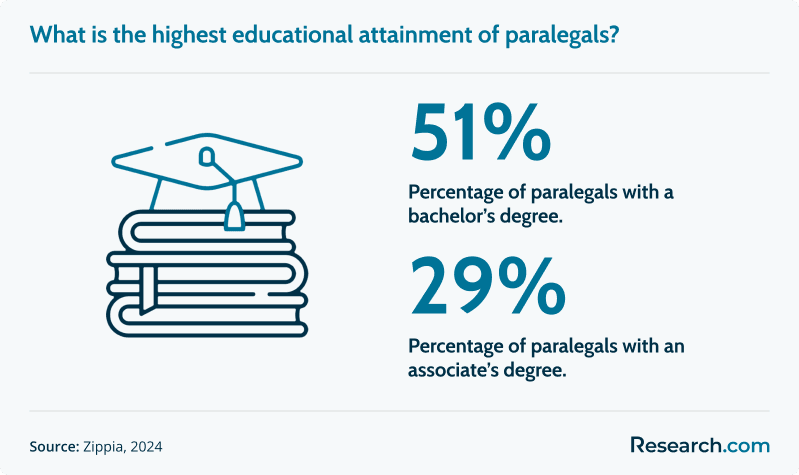
- Common credentials: Many paralegals complete an associate degree, bachelor’s degree, or certificate in paralegal studies. Some employers may consider candidates with a high school diploma and strong legal experience, but formal paralegal training is often preferred.
- ABA-approved options: Students who want a recognized legal support credential can compare ABA approved paralegal programs, especially if they want structured training in legal research, writing, civil procedure, ethics, and litigation support.
- Certification: Certification is not always required, but it can help demonstrate competence, especially for candidates without extensive work experience.
- Focused training: Shorter programs may emphasize legal databases, court filing systems, legal writing, case management, and document preparation.
Lawyer education requirements
- Juris Doctor degree: To become a lawyer, students typically earn a JD from an accredited law school after completing an undergraduate degree.
- Bar examination: After law school, candidates must pass the bar exam in the jurisdiction where they plan to practice.
- Licensure and character review: Bar admission usually includes additional requirements beyond the exam, such as fitness and character review.
- Continuing legal education: Licensed lawyers often complete continuing legal education to maintain their license and stay current with legal developments.
Education path comparison
| Path | Typical education | Best fit | Main trade-off |
| Paralegal certificate | Short postsecondary legal training | Career changers or degree holders who want legal support skills quickly | May be less competitive than a degree in some markets |
| Associate degree in paralegal studies | Two-year legal support curriculum | Students seeking entry-level paralegal roles with formal training | May limit advancement compared with a bachelor’s degree in some settings |
| Bachelor’s degree | Four-year undergraduate education | Students considering law school, compliance, policy, or senior legal support roles | Requires more time before full-time employment |
| Juris Doctor | Law school after undergraduate study | Students who want to practice law as licensed attorneys | Longer, more demanding, and tied to bar admission |
Advanced legal education opportunities
Not every legal career requires a JD. Some professionals use adjacent graduate study to strengthen policy, compliance, research, or justice-system expertise. For example, students interested in criminal justice administration can review the easiest criminal justice master's programs to compare flexible options that may complement law-related work without replacing attorney licensure.
How long does it take to become a lawyer compared to a paralegal?
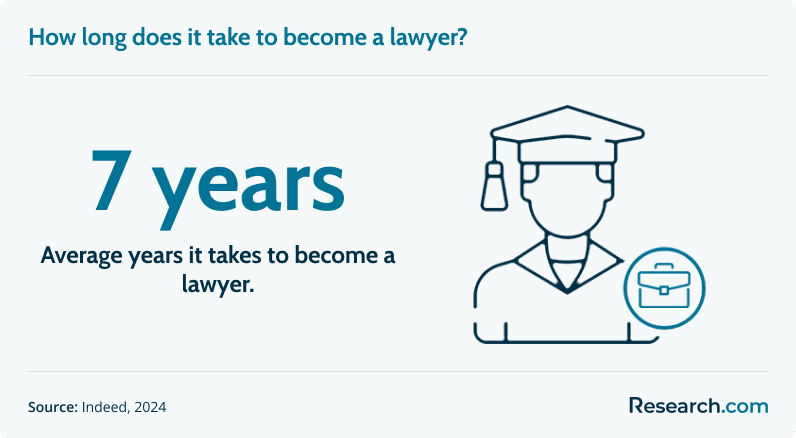
The lawyer pathway usually takes much longer. It typically takes about seven years to become a lawyer: four years for a bachelor’s degree and three years of law school for the Juris Doctor degree. Bar exam preparation and admission requirements can add more time depending on the jurisdiction and the candidate’s timeline.
Students often ask what is the best degree for a lawyer. There is no single required pre-law major, but some undergraduate programs may build stronger skills in writing, analysis, logic, politics, business, or public policy.
Becoming a paralegal is usually faster. Many paralegals complete a certificate or associate degree in one to two years. A bachelor’s degree can take about four years, but it is not always required for entry-level paralegal positions.
Cost also differs. Law school normally requires a larger investment than most paralegal programs. When comparing program prices, students should look beyond tuition and consider fees, books, bar preparation, lost income, financial aid, and debt. For context on how online graduate costs can vary by field, students sometimes compare legal education expenses with unrelated programs such as master's in library science online cost, but the more useful comparison is total cost against realistic legal career outcomes.
| Career goal | Approximate timeline stated in this guide | Required licensing step | Fastest practical entry point |
| Paralegal | One to two years for many certificate or associate degree routes; about four years for a bachelor’s degree | Licensure is not generally required in the same way attorney licensure is | Certificate, associate degree, or entry-level legal support role |
| Lawyer | About seven years before bar admission steps are complete | Bar exam and jurisdiction-specific licensing requirements | Bachelor’s degree followed by JD and bar passage |
Is it easier to transition from being a paralegal to a lawyer?
Being a paralegal can make the move to law school more informed, but it does not remove the formal requirements for becoming an attorney. A paralegal still needs the required law degree, bar exam passage, and licensure before practicing law.
The advantage is practical exposure. Paralegals often enter law school already familiar with legal terminology, case files, court deadlines, client communication, legal databases, and the pace of law office work. That experience can help them understand legal concepts faster and make more realistic decisions about practice areas.
However, paralegal experience is not a shortcut around academic rigor. Law school requires intensive reading, legal analysis, exam writing, and professional judgment. Students considering the transition should evaluate debt, work-life balance, admissions requirements, and whether they want the responsibilities that come with attorney licensure. Legal and policy roles can also overlap with political science degree jobs, so students should compare attorney work with other policy, advocacy, and compliance careers before committing.
When the paralegal-to-lawyer path makes sense
- You enjoy legal analysis, not only administrative case support.
- You want authority to advise clients and make legal strategy decisions.
- You are prepared for law school costs, bar preparation, and licensing rules.
- You have observed attorneys closely and still want the workload and accountability of the role.
When staying a paralegal may be the better choice
- You want a faster path into legal work.
- You prefer research, drafting, and operations over courtroom advocacy or client responsibility.
- You want to avoid the time and debt associated with law school.
- You can advance through specialization, certification, or management without becoming an attorney.
What skills do paralegals need that are different from lawyers?
Paralegals and lawyers share many abilities, including research, writing, ethics, confidentiality, and analytical thinking. The difference is emphasis. Paralegals often need exceptional execution skills because they manage the details that allow attorneys to make timely legal decisions. Their work can also intersect with policy and administrative systems, similar to some topics covered in an online master public policy.
- Case organization: Paralegals track deadlines, maintain files, organize discovery, prepare binders, monitor court rules, and keep multiple matters moving at once.
- Precision and proofreading: Small errors can create missed deadlines, rejected filings, or inaccurate records. Detail orientation is essential.
- Client communication: Paralegals often collect information, update clients, coordinate signatures, and explain next steps without crossing into legal advice.
- Legal technology: Modern paralegals frequently use legal research platforms, e-discovery tools, document management systems, spreadsheets, court filing portals, and case management software.
- Workflow judgment: Strong paralegals know when to act independently, when to escalate to an attorney, and when a question requires legal advice.
| Skill area | Why it matters for paralegals | Common mistake |
| Legal research | Helps attorneys evaluate facts, statutes, regulations, and case law efficiently. | Copying sources without confirming jurisdiction, currency, or relevance. |
| Drafting | Supports pleadings, contracts, memos, discovery, and correspondence. | Using templates without adapting them to the case. |
| Technology | Improves speed, accuracy, and document control. | Ignoring e-discovery, database, and filing-system skills. |
| Communication | Keeps clients and legal teams informed. | Accidentally giving advice instead of factual updates. |
What career advancement opportunities are available for paralegals vs. lawyers?
Both careers offer advancement, but they move in different directions. Lawyers often progress through associate, senior attorney, partner, government counsel, in-house counsel, judge, or specialized practice roles. Paralegals typically advance through specialization, senior support roles, litigation technology, compliance, management, or law school.
Paralegal advancement opportunities
- Specialization: Paralegals can build expertise in areas such as corporate law, intellectual property, healthcare law, immigration, litigation, family law, real estate, or e-discovery.
- Senior and management roles: Experienced paralegals may become senior paralegals, lead paralegals, litigation support managers, or paralegal supervisors.
- Compliance and operations: Legal experience can translate into contract administration, regulatory compliance, risk management, legal operations, or court administration.
- Further study: Some paralegals strengthen client-facing, writing, or leadership skills through graduate study, including options such as an affordable master's degree in communications.
Students should be careful not to choose unrelated programs simply because they are flexible. For example, easy BSW online programs may be valuable for social work goals, but they are not direct substitutes for paralegal education, attorney licensure, or legal technology training.
Lawyer advancement opportunities
- Law firm partnership: Attorneys in private practice may pursue partnership, which often depends on legal skill, client development, revenue generation, leadership, and years of strong performance.
- Practice specialization: Lawyers may focus on fields such as tax, family law, criminal defense, corporate transactions, litigation, labor law, intellectual property, or environmental law.
- In-house counsel: Some lawyers move to corporations, universities, healthcare systems, financial institutions, or technology companies to advise a single organization.
- Public service and judiciary roles: Lawyers may work as prosecutors, public defenders, agency counsel, judges, policy advisors, or nonprofit advocates.
How does the job market for paralegals compare to that for lawyers?
The paralegal and lawyer job markets are shaped by different employer needs. Paralegals are often hired to improve efficiency, manage document-heavy matters, reduce attorney workload, and support litigation or transactional teams. Lawyers are hired for legal judgment, client representation, negotiation, advocacy, and strategic responsibility.
According to the Bureau of Labor Statistics information cited in this article, the employment outlook for paralegals includes a projected growth rate of 1% over the next decade, with about 37,300 openings for paralegals and legal assistants projected each year. Law firms, corporations, government agencies, insurers, healthcare organizations, and compliance departments may all use paralegal support.
The lawyer market can be more competitive because law school graduates compete for roles that require bar passage, clerkships, government positions, private practice jobs, and in-house opportunities. The National Association for Law Placement has reported that a higher percentage of recent law school graduates are finding employment in positions requiring bar passage, but competition remains a major factor.
Legal research and writing experience can also support adjacent careers. For students asking what can you do with a master's in writing, legal content, compliance documentation, policy writing, contract review support, and research-heavy legal roles may be worth exploring, though they are separate from attorney licensure.
Current trends affecting both careers
- Legal technology is changing workflows: E-discovery tools, automated document review, AI-assisted research, and case management platforms are raising expectations for technical fluency.
- Cost pressure increases demand for efficient staffing: Some employers assign appropriate tasks to paralegals instead of junior attorneys to control costs, while still requiring attorney supervision.
- Compliance work continues to expand across industries: Healthcare, finance, technology, education, and government contractors often need professionals who understand regulations, documentation, and risk.
- Online education is more common, but quality varies: Students should verify accreditation, transfer policies, faculty qualifications, student support, and whether the program fits their actual career goal.
What is the average salary of a paralegal vs. a lawyer?
The salary gap between paralegals and lawyers reflects differences in licensing, liability, education, and legal authority. The median annual salary for paralegals is approximately $60,970, and the top 10% of paralegals earn upwards of $98,830 annually. Lawyers have a much higher reported median annual salary of around $145,760.
| Role | Salary figure cited in this guide | Why pay varies |
| Paralegal | Median annual salary of approximately $60,970; top 10% earning upwards of $98,830 annually | Location, employer type, legal specialty, certification, experience, and technology skills |
| Lawyer | Median annual salary of around $145,760; median annual salary for lawyers was $145,760 in May 2023 | Practice area, market, employer, billable work, partnership potential, public vs. private sector, and experience |
Salary data should never be treated as a guarantee. A new paralegal in a small office may earn less than the median, while a highly specialized paralegal in a major market may earn more. Similarly, some lawyers earn very high incomes, while others work in public service, small firms, or lower-paying markets and may also carry law school debt.
What are the biggest misconceptions about paralegals vs. lawyers?
Misunderstanding the difference between these careers can lead students to choose the wrong program, underestimate licensure requirements, or assume that one role is simply a lesser version of the other. The reality is more specific.
- Misconception: Paralegals are just secretaries. Paralegals may perform administrative work, but their role can include legal research, drafting, document review, witness coordination, discovery support, and trial preparation. Unlike many jobs with library science degree, paralegal work is tied directly to legal procedure and attorney-supervised case preparation.
- Misconception: Paralegals can give legal advice if they know the answer. Knowledge is not the same as license authority. Paralegals must avoid independent legal advice.
- Misconception: Every paralegal wants to become a lawyer. Many paralegals build long-term careers without attending law school. Senior paralegal, litigation support, compliance, and legal operations roles can be rewarding paths.
- Misconception: All lawyers are wealthy. Lawyer salaries vary widely by practice area, region, employer, and debt burden. High earning potential does not guarantee high take-home income.
- Misconception: Online legal education is automatically easier. A reputable online program still requires serious reading, writing, deadlines, and legal analysis.
Which career path should you choose?
The better option depends on what kind of legal work you want to do and how much time, money, and responsibility you are prepared to take on. Choose the paralegal route if you want to enter the legal workforce sooner, prefer structured support work, and do not need attorney authority. Choose the lawyer route if you want to advise clients, lead legal strategy, appear in court, and accept the obligations of professional licensure.
| Choose this path if... | Paralegal | Lawyer |
| You want the fastest route into legal work | Usually the better fit | Usually not the fastest option |
| You want to represent clients in court | Not permitted | Required role for many practice areas |
| You want lower education time before employment | Often stronger fit | Requires longer preparation |
| You want maximum legal authority | Limited by supervision rules | Strongest fit after licensure |
| You are concerned about law school debt | May reduce education cost and risk | Requires careful ROI analysis |
What specialized training options can fast track a paralegal career?
Specialized training can help paralegals compete for better roles, especially in practice areas that rely on technical knowledge or complex documentation. An accelerated paralegal program may be useful for students who already know they want legal support work and need a faster, structured path into the field.
Useful specialization areas include e-discovery, litigation support, contract management, intellectual property, healthcare compliance, immigration procedure, corporate records, and legal research technology. The best option depends on local employer demand and the type of law office, agency, or company where the student wants to work.
Is the easiest law degree the right option to accelerate your legal career?
An easier or more flexible program can be helpful, but students should not confuse convenience with career fit. If the goal is attorney licensure, the program must support the jurisdiction’s legal education and bar admission requirements. If the goal is legal knowledge for compliance, business, policy, or paralegal work, a non-JD legal studies option may be enough.
Students comparing easiest law degree programs should ask whether the credential is designed for bar preparation, legal studies, criminal justice, policy, or professional development. The fastest program is not always the right one if it does not lead to the intended outcome.
Can accelerated master's programs transform your legal career?
Accelerated graduate programs may help legal professionals gain advanced skills in management, compliance, policy, negotiation, data analysis, or legal administration. They are most useful when they solve a clear career problem: moving into leadership, changing industries, strengthening credentials, or building specialized expertise.
Working professionals can compare one year online masters programs if they need a shorter academic timeline, but they should confirm workload expectations, accreditation, employer recognition, and whether the degree improves their specific career path.
What factors should working professionals consider when choosing an online legal degree program?
Working adults should evaluate online legal programs with a practical checklist rather than choosing by speed alone. Important factors include accreditation, total cost, course format, faculty experience, transfer credit policy, career support, student services, technology requirements, and whether the curriculum matches the intended role.
Professionals balancing work and school can review resources on the best online degree programs for working students, but they should still verify that any program under consideration fits legal career goals and not just general online convenience.
Questions to ask before enrolling
- Is the institution accredited?
- Does the program prepare students for paralegal work, law school, compliance, or another legal-adjacent role?
- Are courses asynchronous, live online, hybrid, or self-paced?
- What legal technology platforms are included?
- Will credits transfer if you later pursue another degree?
- What career services are available for legal placements?
- Are internships, externships, or practical projects built into the curriculum?
How do internships and practical experiences enhance legal career opportunities?
Internships, externships, clinics, clerkships, and supervised legal projects help students test whether legal work fits them. They also build references, writing samples, professional networks, and familiarity with deadlines, client confidentiality, and legal workplace expectations.
Students trying to move quickly into entry-level roles sometimes ask, What is the easiest bachelor's degree to get? A better question is whether the degree builds writing, research, reasoning, communication, ethics, and problem-solving skills that legal employers value.
How do advanced degrees impact long-term career success?
Advanced degrees can help legal professionals when they support a defined career goal. A graduate credential may be useful for compliance leadership, public policy, business law, legal operations, academia, research, or specialized administrative roles. However, advanced degrees do not automatically produce higher pay or attorney authority.
Students comparing the highest paying graduate degrees should examine outcomes carefully: salary potential, debt, field demand, employer expectations, and whether the credential is actually required for advancement.
Could an accelerated bachelor degree program provide a strong foundation for a legal career?
An accelerated bachelor’s degree can be useful for students who want to reach law school eligibility faster or qualify for legal support, compliance, or policy roles sooner. Strong undergraduate preparation usually includes writing, research, logic, ethics, communication, statistics, public institutions, and analytical reasoning.
Students considering accelerated bachelor degree programs should check whether the pace is realistic. Faster programs can save time, but they may require heavier weekly reading and writing commitments.
Can accelerated doctoral programs enhance legal research careers?
Doctoral study may be relevant for professionals focused on legal scholarship, policy research, criminology, public administration, higher education, or interdisciplinary research. It is not the standard route for becoming a practicing lawyer, but it can support research-heavy or academic careers.
Professionals reviewing the shortest PhD in the world should look beyond speed and ask whether the program has credible supervision, rigorous research methods, recognized accreditation, and a dissertation or applied research structure that fits their goals.
Are quick online degrees a proven pathway to legal career success?
Quick online degrees can help students build credentials faster, but they are not automatically a proven path to legal career success. The value depends on accreditation, curriculum quality, employer recognition, practical training, and whether the program aligns with the desired role.
For students comparing good online degrees, legal career planning should start with the target job. A paralegal, compliance analyst, legal assistant, policy analyst, and attorney all require different preparation.
Can affordable online education deliver lasting value in the legal profession?
Affordable online education can be valuable if it reduces debt while still providing credible training. In law-related careers, the cheapest option is not always the best option; students should balance price with accreditation, legal writing instruction, technology training, employer reputation, and career support.
Students looking for lower-cost options can compare cheapest online schools, but they should confirm financial aid eligibility, program outcomes, and whether the credential supports their intended legal or legal-adjacent role.
What benefits do accelerated online master's programs offer for legal professionals?
Accelerated online master’s programs may help experienced legal professionals strengthen leadership, compliance, policy, communication, or analytical skills without stepping away from work for an extended period. They are especially useful when the student already has legal experience and needs a credential to move into management or a specialized area.
Before enrolling, compare workload, accreditation, total cost, and career relevance. A guide to the shortest masters degree programs online can help narrow options, but the final decision should be based on fit rather than speed alone.
Common mistakes to avoid when comparing paralegal and lawyer careers
| Mistake | Why it can hurt you | Better approach |
| Choosing a program without checking accreditation | The credential may not meet employer, transfer, financial aid, or licensing expectations. | Verify institutional accreditation and, when relevant, program recognition before applying. |
| Assuming paralegal work is the same as practicing law | Paralegals cannot give legal advice or represent clients independently. | Understand unauthorized practice rules before taking on client-facing responsibilities. |
| Looking only at tuition | Fees, books, software, exam costs, commuting, and lost income can change the real price. | Calculate total cost and compare it with realistic salary outcomes. |
| Using rankings as the only decision tool | A highly ranked program may not fit your schedule, budget, location, or career goal. | Use rankings as one input, then evaluate curriculum, support, outcomes, and cost. |
| Assuming salary medians are guaranteed | Pay depends on location, employer, experience, and specialization. | Research local job postings and speak with professionals in your target market. |
| Starting law school without understanding the job | Law school is a major time and financial commitment. | Shadow attorneys, work in a legal office, or complete an internship first. |
Practical steps for choosing the right legal career path
- Define the work you want to do. Decide whether you want support work, legal operations, research, compliance, advocacy, courtroom work, or client advising authority.
- Check legal authority requirements. If your goal requires giving legal advice or representing clients, you need the lawyer path and bar admission.
- Compare time and cost honestly. Include tuition, fees, books, exam costs, living expenses, debt, and lost income.
- Research local employers. Review job postings for paralegals, legal assistants, compliance specialists, and entry-level attorneys in your region.
- Look for practical training. Prioritize programs with legal writing, research databases, internships, e-discovery, and case management exposure.
- Talk to professionals. Interview paralegals and attorneys about workload, stress, pay, advancement, and career satisfaction.
- Recheck data before enrolling. Salary and job outlook figures change, so verify current Bureau of Labor Statistics and program-level information before making a financial commitment.
Key Insights
- The central distinction is authority: lawyers can practice law after licensure; paralegals support legal work under attorney supervision.
- Paralegals cannot provide legal advice, represent clients in court, create attorney-client relationships, set legal fees, or sign documents that require an attorney’s signature.
- The paralegal path is usually faster, often taking one to two years for many certificate or associate degree options, while becoming a lawyer typically takes about seven years plus bar-related steps.
- The median annual salary for paralegals is approximately $60,970, and the top 10% of paralegals earn upwards of $98,830 annually.
- The median annual salary for lawyers was $145,760 in May 2023, but lawyer income varies widely by market, practice area, employer, and debt burden.
- The article cites a projected paralegal growth rate of 1% over the next decade and about 37,300 openings for paralegals and legal assistants each year; a prior summary also listed 15%, so readers should verify the current BLS outlook before relying on any single figure.
- Technology skills matter more than ever for both roles, especially legal research platforms, e-discovery, document management, and case management systems.
- The best choice depends on your target responsibilities: choose paralegal if you want faster entry into legal work; choose lawyer if you want independent legal authority and are prepared for law school, licensing, and higher professional accountability.
References
- Bureau of Labor Statistics (BLS). (2023). 23-2011 Paralegals and Legal Assistants. Occupational Employment and Wages, May 2023. https://www.bls.gov/oes/current/oes232011.htm.
- Bureau of Labor Statistics (BLS). (2024). Paralegals and Legal Assistants. Occupational Outlook Handbook. https://www.bls.gov/ooh/legal/paralegals-and-legal-assistants.htm
- National Association of Legal Assistants (NALA). (2023). 2022 National Utilization & Compensation Survey Overview. https://nala.org/wp-content/uploads/2023/02/2022-NALA-Compensation-Utilization-Survey-Summary.pdf
- Paralegal Institute. (2025). Tasks Paralegals Generally CAN NOT Perform. https://paralegal-institute.com/tasks-paralegals-generally-can-not-perform/
- Peel, N. (2022). How Can Paralegals Avoid Engaging Unauthorized Practice Law. https://www.smokeball.com/blog/how-can-paralegals-avoid-engaging-unauthorized-practice-law
- Zippia. (2024). Paralegal Demographics and Statistics in the US. https://www.zippia.com/paralegal-jobs/demographics/
- ZipRecruiter. (2024). What Is the Average Paralegal Salary by State. https://www.ziprecruiter.com/Salaries/Paralegal-Salary.
Other Things You Should Know About Paralegals and Lawyers
In 2027, paralegals typically hold an associate's degree in paralegal studies or a related field. Some may pursue a bachelor's degree to enhance job prospects. Certification from programs like NALA or NFPA can further validate a paralegal's skills and qualifications.
In 2027, paralegals are not authorized to represent clients in court. While they support attorneys by conducting research, drafting documents, and managing files, only licensed lawyers can provide legal advice and represent clients in court proceedings.
In 2027, paralegals typically need an associate degree or paralegal certification, while lawyers must complete a bachelor's degree, attend law school for a Juris Doctor (JD) degree, and pass the bar exam. Lawyers undergo more extensive education to handle legal responsibilities.
To become a lawyer in 2027, individuals must typically earn a Bachelor's degree, pass the Law School Admission Test (LSAT), complete a Juris Doctor (JD) degree from a law school, and pass their state's bar examination. These steps are essential for gaining the necessary legal knowledge and credentials to practice law.