
2027 How to Become a Therapist without a Psychology Degree

Co-Founder and Chief Data Scientist
Becoming a therapist can be overwhelming, especially if you don't have a psychology degree. There are a lot of educational and licensing requirements that may make you feel lost and discouraged. As a career planning expert with over a decade of experience, I have created a comprehensive guide to pursuing a career in therapy without a psychology degree. I researched credible sources to help you with this challenge.
In 2025, 137 million Americans, or 40% of the U.S. population, live in Mental Health Professional Shortage Areas. The shortage of therapists highlights the urgent need for alternative routes for therapist certification.
In this article, you'll find practical steps, valuable insights, and resources to guide you toward a rewarding career in therapy. Whether you're a student exploring career options or considering a change, this article will provide a roadmap to success.
Key things you should know about becoming a therapist
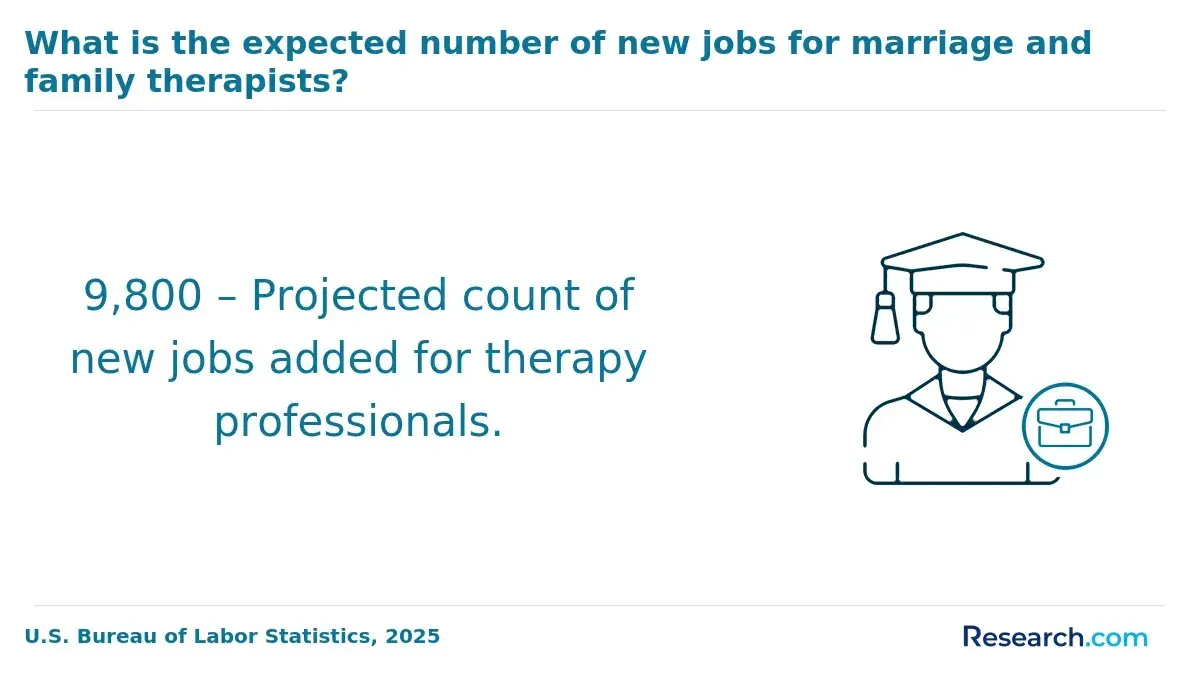
- Substance abuse, behavioral disorder, and mental health counselors are expected to be the most in-demand behavioral professionals by 2034, with a job outlook of 16.8%.
- Career options include mental health counselors ($59,190 median salary), social workers ($60,060), and community health workers ($51,030).
- By 2038, the U.S. will face a deficit of 122,620 mental health counselors.
- Therapist-related job outlook is projected to grow by 10.4% through 2034.
- Mental health counselors are mostly employed in outpatient care centers, with 26,320 professionals employed in 2024.
- How to Become a Therapist Without a Psychology Degree Career Steps
- How to Become a Licensed Therapist Licensing
- Why pursue a career in therapy? Why pursue a career in therapy?
- Can I pursue a career in therapy with a degree in a related field like social work or counseling? Can I pursue a career in therapy with a degree in a related field like social work or counseling?
- How do I apply for licensure or certification as a therapist without a traditional psychology background? How do I apply for licensure or certification as a therapist without a traditional psychology background?
- What specializations within therapy can I pursue without a psychology degree? What specializations within therapy can I pursue without a psychology degree?
- How do I determine which specialization aligns with my interests and career goals? How do I determine which specialization aligns with my interests and career goals?
- What are the financial implications of pursuing a career in therapy without a psychology degree? What are the financial implications of pursuing a career in therapy without a psychology degree?
- What are the career benefits of accelerated psychology degree programs? What are the career benefits of accelerated psychology degree programs?
- Are there financial aids available for students pursuing alternative pathways to therapy careers? Financial Aid
- What accreditation factors should I consider in therapy education? What accreditation factors should I consider in therapy education?
- Can an accelerated master's in psychology online fast-track my therapy career success? Can an accelerated master's in psychology online fast-track my therapy career success?
- What resources or tools are available to help me explore different career paths in therapy? What resources or tools are available to help me explore different career paths in therapy?
- Can an online doctorate enhance my therapy career prospects? Can an online doctorate enhance my therapy career prospects?
- What are the challenges of switching to a therapy career later in life? Challenges
- Affordable Education Pathways to Therapy Careers Education Pathways
- What alternative therapy careers can I pursue without a traditional psychology background? What alternative therapy careers can I pursue without a traditional psychology background?
- Can an accelerated educational pathway fast-track my therapy career? Can an accelerated educational pathway fast-track my therapy career?
- What is the easiest education degree for aspiring therapists? What is the easiest education degree for aspiring therapists?
- Can I pursue a career in forensic psychology without a traditional psychology degree? Can I pursue a career in forensic psychology without a traditional psychology degree?
- Can a BCBA Certification Enhance My Therapy Career Without a Psychology Degree? Can a BCBA Certification Enhance My Therapy Career Without a Psychology Degree?
Can You Become a Therapist Without a Psychology Degree?
You can build a therapy-related career without earning an undergraduate degree in psychology, but you cannot simply start practicing psychotherapy without meeting your state’s education, supervised experience, and licensure rules. The right path depends on the role you want: mental health counseling, social work, marriage and family therapy, substance abuse counseling, school counseling, occupational therapy, community health work, or a creative therapy field such as art or music therapy.
This guide is for career changers, students with non-psychology degrees, and people comparing counseling, social work, psychology, and allied health routes. You will learn which therapy-related jobs may be open without a psychology major, which roles require graduate school, how licensure works, what costs to expect, and how to choose a specialization that fits your goals.
Quick Answer: The Practical Path
The most realistic way to become a licensed therapist without a psychology degree is to earn a qualifying graduate degree in counseling, social work, marriage and family therapy, or another approved clinical field; complete supervised clinical hours; pass the required exam; and apply through your state licensing board. If you want to enter the field sooner, consider support roles such as community health worker, case aide, behavioral health technician, or peer support specialist while you work toward the credentials required for independent practice.
Here’s What Graduates Have to Say About Their Therapist Career
- : "Taking a nontraditional route into therapy has been demanding, but it has also been deeply meaningful. I did not begin with a psychology background, so I had to be intentional about learning counseling methods, ethical practice, and how people respond to stress, trauma, and change. Today, those skills shape the way I support clients in everyday sessions. — Julie"
- : "I once assumed that therapy careers were closed to anyone who had not majored in psychology. After researching alternative pathways, I realized that counseling and human services programs can also lead to client-facing work. Each course and supervised experience helped me better understand relationships, emotions, and the responsibility that comes with helping people. — Victor"
- : "Choosing therapy after studying another field helped me discover work that matches my values. The process required additional education and careful planning, but it also gave me confidence that I could serve my community in a practical and compassionate way. — Charlotte"
How to Become a Therapist Without a Psychology Degree
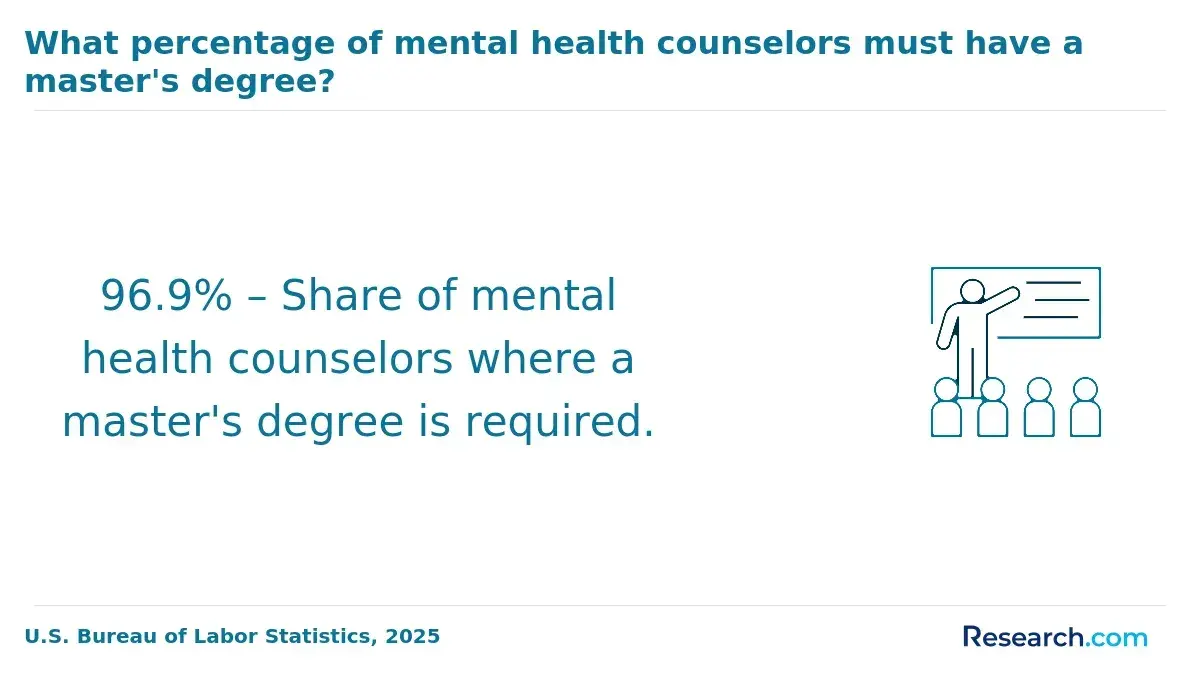
If you are asking what you can do with a bachelor’s degree in psychology, therapy is one possible direction. If your degree is in another subject, you still have options, but the requirements vary widely. Some entry-level behavioral health and community support jobs may accept a high school diploma or some college coursework, while licensed clinical roles usually require a master’s degree, supervised practice, and a state-issued license.
The steps below explain how to move from interest to eligibility. They cover role selection, education, supervised experience, licensing, certification, salaries, and decision points that can prevent costly mistakes.
1. Start by separating “therapy” jobs from therapy-adjacent jobs.
Many people use the word therapist broadly, but licensing boards make important distinctions. A licensed therapist may diagnose or treat mental health conditions within the scope allowed by state law. Therapy-adjacent professionals may provide education, coaching, advocacy, rehabilitation support, or case management, but they may not have the same authority to provide clinical psychotherapy.
The following roles are commonly considered by people who want to work in mental health or human services without first earning a psychology degree:
| Role | Median annual salary stated | What the work usually involves | Decision note |
| Mental Health Counselor | $59,190 | Assesses client needs, creates treatment goals, monitors progress, and provides counseling within the professional scope allowed by license or employer. | Often requires graduate education and state licensure for independent clinical practice. |
| Community Health Worker | $51,030 | Connects communities with health resources, provides basic health education, supports outreach, documents local needs, and may offer basic counseling support. | A practical entry point for gaining experience before graduate study. |
| Social Worker | $60,060 | Supports people facing challenges such as housing instability, disability, unemployment, family stress, illness, or access to services. Clinical social workers may also provide therapy. | If you are exploring counseling career options, compare social work requirements carefully because clinical practice typically requires advanced credentials. |
| Occupational Therapist | $98,340 | Helps clients build or regain daily living and work skills after illness, injury, disability, developmental challenges, or cognitive changes. | This is a health profession with its own education and licensing pathway, not a shortcut to mental health counseling. |
| School Counselor | $65,140 | Supports students with academic planning, social development, emotional concerns, and school success. | Requirements differ by state and school system; students interested in school-based mental health may also review school psychology programs in Florida as one example of education pathways. |
2. Choose a target role before choosing a degree.
Before asking how to become a therapist, decide which kind of client work you want to do. A person who wants to counsel couples, treat substance use disorders, support students, provide rehabilitation services, or deliver clinical social work may need different coursework, practicum placements, exams, and licenses.
Use these questions to narrow the path:
- What population do you want to serve? Children, college students, families, veterans, people with disabilities, people in recovery, or adults managing anxiety, depression, trauma, or life transitions may all require different training.
- Do you want independent clinical authority? Private practice and diagnosis-related work generally require a license, supervised hours, and a graduate degree.
- How much school are you willing to complete? Some support roles are accessible sooner, while licensed counseling, clinical social work, marriage and family therapy, psychology, and occupational therapy require more formal preparation.
- Which state will you practice in? State boards control licensure requirements, so a program that works in one state may not satisfy another state’s rules.
For substance abuse and behavioral disorder counseling, education expectations can range from a high school diploma to a master’s degree depending on the employer, setting, level of responsibility, and state rules. Do not assume one job posting represents the entire profession.
3. Enroll only in education that supports your intended credential.
If an entry-level job accepts high school graduates, you may be able to begin working in behavioral health, community outreach, residential services, or case support while building experience. However, higher education often becomes necessary when you want more responsibility, clinical authority, or long-term advancement.
For licensed social work, applicants are commonly expected to complete an accredited bachelor’s or master’s program in social work and meet field education requirements. Counseling and marriage and family therapy routes usually require a relevant graduate degree and supervised clinical training. If your previous degree is unrelated, a certificate may help with preparation or admissions, but it may not replace a required master’s degree for licensure.
Students from science or health-related backgrounds may still have useful preparation. For example, someone with an online biology degree may already understand health systems, research, and human development concepts that are relevant in some healthcare settings.
4. Plan for licensure or certification before you graduate.
Licensure is not an afterthought. If your goal is to practice therapy legally, map the licensing requirements before enrolling. There are specific steps to becoming a licensed professional counselor, and similar structured rules apply to social work, marriage and family therapy, psychology, substance abuse counseling, and several creative therapy fields.
| Credential or license | Common purpose | Typical requirements to verify |
| Professional Counselor License | Allows eligible professionals to practice as an LPC, LMHC, LCPC, or similar title depending on the state. | Master’s degree in counseling or a related field, supervised clinical experience, and a licensing exam. |
| Marriage and Family Therapist License | Supports clinical work with couples, families, and relationship systems. | Master’s degree in marriage and family therapy, supervised experience, and a required exam. |
| Social Work License | Allows qualified social workers to provide services; clinical therapy usually requires the LCSW level or equivalent. | Master’s degree in social work, supervised clinical experience, and a licensing exam. |
| Substance Abuse Counselor Certification | Prepares professionals to support clients with substance use and recovery needs. | State-specific education, supervised training, and a certification or licensing exam. |
| Art Therapy or Music Therapy Certification | Supports therapeutic work using creative modalities. | Specialized graduate-level preparation, supervised clinical experience, and certification through a recognized professional body. |
| Additional Certifications | Can strengthen credibility or specialize practice in areas such as trauma-informed care, play therapy, or the National Certified Counselor pathway. | Specific coursework, experience, supervision, and continuing education, depending on the credential. |
How to Become a Licensed Therapist
Licensed therapists may come from counseling, social work, marriage and family therapy, psychology, or other regulated clinical fields. Licensed psychologists are one example of highly trained mental health professionals who can provide assessment and treatment services. In 2025, 104,012 psychologists were employed in the U.S. The psychologist route is usually longer than the master’s-level counseling or social work route because it typically requires doctoral training, internships, postdoctoral experience, and licensing exams.
What qualifications matter most for therapists?
| Qualification area | Why it matters | What to check |
| Clinical and interpersonal skills | Therapists need strong listening, ethical judgment, documentation, communication, empathy, and evidence-informed practice skills. | Look for programs with supervised practice, role-play, case formulation, ethics training, and feedback from qualified instructors. |
| Education and supervised training | Clinical practice requires structured preparation, not only interest in helping people. | For psychology licensure, doctoral study and internships are typically required. If cost is a concern, compare legitimate affordable options rather than choosing the cheapest program without checking licensure fit. |
| Licensure and examinations | Licensure protects clients by setting minimum standards for education, experience, ethics, and testing. | Psychologist candidates commonly complete a doctorate from an accredited institution, doctoral and postdoctoral internships, and the Examination for Professional Practice in Psychology (EPPP). Some states may also require jurisprudence or oral examinations. |
| Specialized certification | Certifications can document focused skills beyond a general license. | Marriage and family therapy, music therapy, psychoanalytic therapy, and other modalities may have separate requirements. The APA provides state licensure and certification information for psychologists. |
Why Pursue a Career in Therapy?
Therapy careers can be meaningful, but they are not easy. The work requires emotional steadiness, ethical boundaries, documentation discipline, cultural humility, and continuous learning. People are often drawn to the field because they want to support others during difficult periods, but the strongest candidates also understand that therapy is a regulated healthcare service, not informal advice-giving.
- Direct impact: Therapists and therapy-related professionals support clients through grief, stress, family conflict, addiction recovery, disability, trauma, school challenges, and other life issues.
- Professional meaning: Many clinicians value seeing clients build coping skills, improve relationships, and make measurable progress.
- Multiple work settings: Professionals may work in clinics, schools, hospitals, community agencies, rehabilitation centers, private practices, or nonprofit organizations.
- Room for specialization: Therapy careers can focus on children, couples, families, older adults, trauma, substance use, education, rehabilitation, creative expression, or behavioral intervention.
- Ongoing learning: Ethical practice requires continuing education, supervision, updated knowledge, and attention to new tools such as telehealth platforms.
- Public need: Mental health care remains a major workforce and access issue, with almost 56 million people currently receiving treatment.
Can I Pursue a Therapy Career With a Degree in Social Work, Counseling, or Another Related Field?
Yes. Social work, counseling, marriage and family therapy, rehabilitation counseling, and related fields can all support therapy careers if the program meets the requirements for the license or credential you want. A psychology major is not the only academic foundation for clinical work.
- Relevant helping skills: Social work and counseling programs often emphasize interviewing, rapport-building, ethics, assessment, case planning, and client advocacy.
- Human behavior coursework: These programs commonly examine development, social systems, mental health, family dynamics, crisis response, and environmental influences on well-being.
- Supervised practice: Field placements, practicums, and internships help students apply counseling techniques under professional oversight.
- Specialization options: Graduates may focus on areas such as mental health counseling, school counseling, substance abuse counseling, clinical social work, or marriage and family therapy.
- Licensure eligibility: In many locations, graduates from approved counseling or social work programs can pursue licensure after meeting degree, supervision, exam, and application requirements.
How Do I Apply for Licensure or Certification Without a Traditional Psychology Background?
The application process depends on your profession and state, but the basic sequence is similar: confirm the rules, complete an approved education pathway, document supervised experience, pass required exams, and submit a complete application. Some therapy-related occupations require a specific type of college degree, while others accept certificates or nondegree training for limited roles.
- Identify the licensing board. Find the official board for counseling, social work, marriage and family therapy, psychology, occupational therapy, or substance abuse counseling in the state where you plan to work.
- Confirm degree requirements in writing. Check whether your program must hold specific accreditation, include certain courses, or provide a minimum number of practicum hours.
- Complete supervised experience. Work under an approved supervisor and track hours exactly as the board requires.
- Prepare for the required exam. Licensing and certification exams usually test ethics, assessment, diagnosis or case formulation, treatment planning, documentation, and professional standards.
- Submit the application. Provide transcripts, supervision verification, exam results, fees, identification, and any other state-required documentation.
- Complete background checks if required. Many boards require criminal background screening before issuing a credential.
- Maintain the credential. Licenses and certifications often require renewal fees, continuing education, and compliance with ethical standards.
What Therapy Specializations Can I Pursue Without a Psychology Degree?
Your specialization should match the population you want to serve, the level of clinical authority you want, and the education you are willing to complete. A non-psychology background does not automatically block you from these areas, but each path has its own credential rules.
| Specialization | Best fit for people who want to... | Important caution |
| Counseling and Marriage Therapy | Help individuals, couples, and families address emotional, relational, and behavioral concerns. | Independent practice typically requires a qualifying master’s degree and license. |
| Social Work | Combine counseling, advocacy, case management, and community support. | Clinical therapy generally requires advanced licensure, not only a bachelor’s degree. |
| Substance Abuse Counseling | Support people working toward recovery and relapse prevention. | Requirements vary sharply by state and job level. |
| Mental Health Counseling | Work with clients facing anxiety, depression, trauma, stress, grief, or adjustment issues. | Licensure is usually required for independent clinical work. |
| Art Therapy | Use creative expression to help clients process emotion and experience. | Specialized graduate training and certification may be required. |
| Music Therapy | Use music-based interventions to support emotional, cognitive, or behavioral goals. | This field has its own training expectations and credentialing process. |
| Occupational Therapy | Help clients improve daily functioning after injury, illness, disability, or developmental challenges. | It is a distinct healthcare profession with separate licensure standards. |
| Rehabilitation Counseling | Help clients overcome employment, education, and independence barriers related to disability or injury. | Program approval and credentialing should be checked before enrollment. |
| School Counseling | Support students’ academic, social, and emotional development. | State education departments may set separate school credential rules. |
| Coaching | Help clients with personal or professional goals outside clinical mental health treatment. | Coaching is not a substitute for licensed therapy and should not be marketed as clinical treatment unless legally authorized. |
How Do I Choose the Right Therapy Specialization?
The best specialization is the one that fits your strengths, values, preferred client population, legal scope of practice, and financial reality. Do not choose a path only because it sounds meaningful; choose it because the required training, supervision, and daily work match what you are prepared to do.
- Study the actual job duties. Read job descriptions and licensing board rules, not just program marketing pages.
- Talk to working professionals. Ask therapists, social workers, counselors, and supervisors what their typical week looks like, including paperwork and crisis work.
- Use personal experience carefully. Lived experience can build empathy, but it should not replace formal training or boundaries.
- Compare education length and cost. Some paths require graduate study, supervised hours, exam fees, and continuing education. If cost is a barrier, compare affordable online bachelor’s degree options before committing.
- Check employment settings. Some specialties are more common in schools, hospitals, community agencies, rehabilitation facilities, or private practice.
- Test the field before enrolling. Volunteer, shadow, work in a support role, or complete an internship to see whether the environment suits you.
- Consider geographic mobility. If you may move, ask how portable the license is and whether additional coursework or exams may be needed.
What Are the Financial Implications of Becoming a Therapist Without a Psychology Degree?
The financial side includes more than tuition. You may need prerequisite courses, graduate school, practicum-related expenses, licensing applications, exam fees, supervision costs, liability insurance, continuing education, and possibly unpaid or lower-paid training periods. Before enrolling, estimate the full cost from your current education level to licensure.
| Cost category | What to budget for | How to reduce risk |
| Education | Certificates, prerequisite courses, bachelor’s completion, or graduate programs such as counseling, social work, or a master’s degree in educational psychology. | Confirm that the program supports your intended license before comparing price. |
| Licensing and certification | Application fees, exam fees, transcript fees, background checks, and renewal costs. | Use the state board website to list exact steps and deadlines. |
| Supervision | Some supervised clinical hours may involve employer-provided supervision, while other arrangements may require additional payment. | Ask programs and employers how post-graduate supervision is usually arranged. |
| Continuing education | Workshops, webinars, conferences, ethics training, and specialty certifications. | Look for employer reimbursement or professional association discounts. |
| Liability insurance | Coverage for professional practice, particularly in clinical or private practice settings. | Compare policies based on scope, exclusions, and employer coverage. |
| Private practice startup | Office or telehealth platform costs, records systems, marketing, billing tools, furniture, and compliance support. | Gain supervised agency experience before taking on the business and legal responsibilities of practice ownership. |
| Student debt | Loans used for undergraduate completion, graduate school, or certifications. | Estimate monthly repayment before enrolling and compare it with realistic salaries in your target role. |
What Are the Career Benefits of Accelerated Psychology Degree Programs?
Accelerated psychology programs may help some students move through coursework more quickly, especially career changers who already have college credits or professionals who need flexible scheduling. The main benefit is time efficiency, but speed should never override licensure compatibility, accreditation, clinical placement quality, or student support.
An online accelerated psychology degree may be useful if you need psychology coursework for graduate admissions, want to strengthen your academic foundation, or are trying to enter a therapy-related graduate pathway sooner. However, accelerated undergraduate study alone usually does not qualify someone for independent therapy practice.
Before choosing a faster program, ask whether the curriculum includes the prerequisites you need, whether credits transfer into graduate programs, and whether the pace is realistic alongside work or caregiving responsibilities.
Are There Financial Aid Options for Alternative Therapy Pathways?
Students pursuing therapy-related education may be able to use scholarships, grants, federal aid, employer support, or professional association funding. Availability depends on the program type, accreditation status, enrollment level, citizenship or residency rules, financial need, and the funder’s priorities.
- Scholarships: Schools, nonprofits, associations, and foundations may support students entering counseling, social work, psychology, rehabilitation, or creative therapy fields.
- Grants: Government agencies, private foundations, and nonprofit organizations may fund students, research, or mental health workforce initiatives.
- Federal financial aid: Eligible students can complete the Free Application for Federal Student Aid (FAFSA) to determine access to federal grants, loans, and work-study.
- Employer tuition assistance: Healthcare systems, schools, nonprofits, and public agencies may help employees pay for relevant training.
- Professional associations: Organizations in counseling, social work, art therapy, and related areas may offer scholarships, grants, awards, or reduced-cost continuing education.
- Community support: Local nonprofits, religious institutions, civic organizations, and workforce programs may provide smaller awards that can still reduce out-of-pocket costs.
What Accreditation Factors Should I Consider in Therapy Education?
Accreditation and licensure alignment are among the most important checks you can make. A program can be legitimate academically but still fail to meet the specific course, practicum, or accreditation requirements for your target license. Before enrolling, compare the curriculum against your state board’s rules and ask the school to explain licensure outcomes for graduates.
Key factors include institutional accreditation, programmatic accreditation where applicable, clinical placement support, faculty qualifications, ethics training, supervision quality, and whether the program discloses state-by-state licensure information. For a broader overview of degree expectations, review this guide on what degree you need to be a therapist.
Can an Accelerated Master’s in Psychology Online Fast-Track My Therapy Career?
An accelerated online master’s program can shorten the academic timeline, but it only helps your therapy career if it meets the requirements for your intended credential. Some psychology master’s programs are academic or research-focused rather than designed for counseling licensure. Others may support preparation for specific roles but still require additional supervised experience or exams.
If you are considering an accelerated master’s in psychology online, verify accreditation, practicum or internship expectations, state authorization, licensing alignment, faculty support, and whether the pace allows enough time to build clinical judgment.
What Resources Can Help Me Explore Therapy Career Paths?
Because therapy careers differ by title, setting, client population, and legal scope, use multiple sources before choosing a program. Career assessments can help with self-reflection, but licensing boards, professional associations, supervisors, and working clinicians provide more concrete information about requirements and daily work.
- Career assessments: Tools such as the Holland Code, Myers-Briggs Type Indicator, and Strong Interest Inventory may help you identify work environments and strengths, but they should not be the only basis for your decision.
- Professional associations: The American Counseling Association, social work organizations, art therapy associations, and related groups can provide career and credential information.
- Career counseling services: Colleges, workforce centers, and private career counselors can help you compare programs, transferable skills, and labor market options.
- Informational interviews: Ask licensed professionals how they chose their specialization, what surprised them, and what they would do differently.
- Licensing board websites: These are essential for verifying degree, supervision, exam, and renewal requirements.
- Internships and volunteer roles: Hospitals, schools, clinics, residential programs, and community agencies can expose you to client populations before you commit to graduate school.
- Online courses and webinars: Short courses can build foundational knowledge, but they do not replace licensure-required education.
Can an Online Doctorate Improve My Therapy Career Prospects?
An online doctorate may support advanced practice, research, teaching, leadership, or specialized expertise, depending on the degree type and licensure rules. It can be valuable for professionals who want deeper clinical knowledge or broader career options, but it is a major commitment and should be evaluated carefully.
When comparing online psychology PhD programs, review accreditation, residency or internship requirements, faculty credentials, dissertation expectations, licensure outcomes, and whether the format is accepted in the state where you want to practice.
What Are the Challenges of Switching to a Therapy Career Later in Life?
Career changers often bring maturity, work experience, and communication skills to therapy training. They also face practical constraints that traditional students may not have. Planning early can make the transition more manageable.
- Length of training: Graduate school, field placements, supervised hours, and exams may take several years.
- Financial pressure: Tuition, reduced work hours, commuting, childcare, supervision fees, and licensing costs can strain a household budget.
- Schedule demands: Practicum and internship placements may require daytime availability, even in online programs.
- Technology expectations: Telehealth, electronic records, online supervision tools, and digital privacy practices are now part of many therapy settings.
- Experience gaps: If your prior career was not in human services, volunteer work or entry-level behavioral health roles can help you build credibility.
- Emotional adjustment: Therapy training involves feedback, self-reflection, ethical scrutiny, and exposure to client distress.
Affordable Education Pathways to Therapy Careers
Affordability matters because therapy pathways can involve several stages of education and credentialing. The lowest tuition is not always the best value if the program does not meet licensing requirements, lacks clinical placement support, or has weak advising. A better approach is to compare total cost, time to completion, accreditation, licensure alignment, and likely career use.
Online programs can help working adults manage school alongside employment and family responsibilities. They may also reduce relocation and commuting costs. However, online students should ask how practicums are arranged, whether local placements are available, and whether the program is authorized for their state.
If graduate study is part of your plan, this guide to the cheapest online master’s degree in psychology can help you compare lower-cost options while keeping quality and fit in mind.
What Alternative Therapy Careers Can I Pursue Without a Traditional Psychology Background?
Alternative therapy careers may appeal to people who want to combine mental health support with creativity, education, behavior analysis, rehabilitation, or community services. Examples include art therapy, music therapy, drama therapy, behavioral intervention, rehabilitation counseling, and school-based support roles. These paths can be rewarding, but they are not unregulated shortcuts; many require specialized graduate education, supervised practice, and certification.
If creative therapy interests you, review the art therapist career path and salary information to understand education, training, and credential expectations before applying to programs.
Can an Accelerated Educational Pathway Fast-Track My Therapy Career?
Accelerated programs can reduce time in school, but only when they preserve academic quality, clinical preparation, and licensing alignment. A compressed schedule may be helpful for disciplined students with strong support systems, but it can be risky for those who need more time to absorb clinical material or complete fieldwork.
For students pursuing doctoral-level clinical psychology, an accelerated PsyD program may appear attractive. Before choosing one, ask about accreditation, internship match support, practicum quality, faculty mentorship, student workload, licensure exam preparation, and state eligibility.
What Is the Easiest Education Degree for Aspiring Therapists?
There is no universally “easy” therapy degree because the right program depends on the license and population you want to serve. Counseling and social work may feel more direct than a psychology doctorate for some students, but they still require rigorous graduate coursework, supervised practice, ethical training, and exams.
A Bachelor of Social Work followed by a Master of Social Work can be a clear route for people drawn to both clinical care and social services. A counseling master’s may be a better fit for those focused primarily on mental health counseling, school counseling, or related services. If you are drawn to legal and behavioral questions, compare specialized options such as an online master’s program in forensic psychology, while remembering that forensic psychology programs may not automatically lead to therapist licensure.
Can I Pursue Forensic Psychology Without a Traditional Psychology Degree?
Forensic psychology combines behavioral science with legal and criminal justice contexts. People without a traditional psychology background may enter related roles through targeted graduate programs, research training, legal studies, criminal justice experience, or supervised applied work. However, clinical forensic psychology roles often require advanced psychology education and licensure.
If this area interests you, study the difference between forensic psychology research, legal consulting, victim advocacy, correctional treatment, and licensed clinical practice. You can also review whether forensic psychologists are in high demand and what employers typically require.
Can a BCBA Certification Enhance My Therapy Career Without a Psychology Degree?
Board Certified Behavior Analyst preparation can be a strong option for people interested in behavior assessment, intervention planning, autism services, education, developmental disabilities, and applied behavior analysis. It is not the same as becoming a licensed psychotherapist, but it can complement therapy-adjacent work in schools, clinics, homes, and community settings.
Before pursuing this route, confirm coursework standards, supervised fieldwork requirements, exam expectations, and state behavior analyst licensing rules. Cost-conscious students can compare affordable online BCBA degree programs.
How Can Specialized Online Degrees Move a Therapy Career Forward?
Specialized online degrees can help professionals build expertise in a focused area, especially when the program is aligned with their career goals and credential requirements. Examples include forensic psychology, educational psychology, applied behavior analysis, counseling, and related fields. The value depends on fit: a specialized degree is useful when employers recognize it, the curriculum is rigorous, and the program supports the role you want.
For example, an affordable forensic psychology master’s online may support work in justice-related settings, policy, research, or behavioral analysis. It should not be treated as a substitute for a counseling or psychology license unless your state board explicitly accepts the degree for that purpose.
Common Mistakes to Avoid
| Mistake | Why it can hurt you | Better approach |
| Choosing a program before choosing a license | You may graduate from a program that does not qualify you for the credential you want. | Start with the state licensing board, then work backward to approved degrees and courses. |
| Assuming online means automatically flexible | Clinical placements, synchronous classes, and residency requirements may still affect your schedule. | Ask for a sample course schedule and practicum expectations before enrolling. |
| Comparing only tuition | Fees, travel, supervision, exam costs, and lost work hours can change the real cost. | Build a full budget from enrollment through licensure. |
| Confusing coaching with therapy | Coaching does not authorize diagnosis or treatment of mental health conditions. | Use accurate titles and stay within your legal scope of practice. |
| Ignoring state differences | Licensure requirements can vary by location. | Verify rules in the state where you intend to practice, especially if you may move. |
| Relying only on rankings | A highly ranked program may still be wrong for your license, budget, or schedule. | Use rankings as one input, not the final decision. |
Questions to Ask Before Enrolling in a Therapy-Related Program
- Which license or certification does this program prepare students to pursue?
- Does the program meet requirements in the state where I plan to practice?
- Is the institution accredited, and is programmatic accreditation required for my goal?
- How are practicum, internship, and supervised field placements arranged?
- What percentage of graduates pursue licensure, and what support is available for exam preparation?
- What costs beyond tuition should I expect?
- Can I attend part time, and will that affect placement or financial aid?
- Will my prior credits, degree, or work experience reduce the time or cost?
- What jobs can graduates realistically pursue before full licensure?
- What happens if I move to another state after graduation?
References
- American Counseling Association. Licensure Requirements. Retrieved March 2026, from https://www.counseling.org/resources/licensure-requirements
- Health Resources and Services Administration. State of the Behavioral Health Workforce, 2025. https://bhw.hrsa.gov/sites/default/files/bureau-health-workforce/data-research/Behavioral-Health-Workforce-Brief-2025.pdf
- Health Resources and Services Administration. State of the U.S. Health Care Workforce, 2025. https://bhw.hrsa.gov/sites/default/files/bureau-health-workforce/data-research/State-of-US-Health-Care-Workforce-2025.pdf
- U.S. Bureau of Labor Statistics. Occupational projections, 2024–2034, and worker characteristics. Retrieved March 2026, from https://www.bls.gov/emp/tables/occupational-projections-and-characteristics.htm
Key Insights
- You do not need a psychology bachelor’s degree to enter every therapy-related career, but licensed clinical therapy usually requires a qualifying graduate degree, supervised experience, exams, and state approval.
- The fastest path is not always the best path. Choose a target license first, then select the degree that satisfies that license.
- Counseling, social work, marriage and family therapy, occupational therapy, substance abuse counseling, art therapy, and BCBA-related work each have different scopes of practice.
- Entry-level behavioral health and community roles can help you gain experience while you prepare for graduate school or licensure.
- Accreditation, state authorization, clinical placement quality, and licensure outcomes matter more than program marketing claims.
- Budget for the full pathway: tuition, fees, supervision, exams, insurance, continuing education, and possible income changes during training.
- Before enrolling, ask whether the program meets requirements in your state and whether graduates can pursue the exact role you want.
Other Things You Should Know About Becoming a Therapist Without a Psychology Degree
You usually need a state counseling, marriage and family therapy, or social work license, not a psychology degree. Most states require a master’s degree, 2,000 to 4,000 supervised clinical hours, and passage of a licensing exam such as the NCE, NCMHCE, or ASWB exam.
Yes, some states allow practice as a therapist without a psychology degree by requiring other qualifications like a master’s in counseling or social work. It's important to check each state's licensing board for specific requirements applicable in 2027.


