
2027 How To Become a Therapist: Types & Requirements

Co-Founder and Chief Data Scientist
Becoming a therapist is a major professional commitment: you are choosing a regulated career that usually requires graduate education, supervised clinical training, state licensure, and ongoing professional development. The reward is meaningful work helping people manage mental health concerns, relationship problems, trauma, addiction, life transitions, school challenges, and disability-related barriers.
This guide is for students, career changers, and working professionals who want a clear map of the therapist career path. You will learn what degree you may need, how long licensure can take, how common therapist licenses differ, what therapists earn, how to compare accredited programs, and which choices can affect your long-term career options.
Quick answer: How do you become a therapist?
Most licensed therapist careers require a bachelor’s degree, a relevant master’s degree or doctorate, supervised clinical experience, a licensing exam, and state licensure. The exact path depends on whether you want to become a mental health counselor, marriage and family therapist, clinical social worker, school counselor, psychologist, substance abuse counselor, rehabilitation counselor, or another type of therapist.
Key things you should know about becoming a therapist:
- Therapy is a licensed profession in most clinical settings, so your degree choice should match the license you want to pursue.
- Common specializations include clinical mental health counseling, marriage and family therapy, school counseling, clinical social work, rehabilitation counseling, child therapy, substance abuse counseling, and clinical psychology.
- Mental health counselors can earn an average annual salary of $53,710, though pay can change significantly by location, employer, credentials, and practice setting.
- Steps and requirements to become a therapist
- Typical timeline for becoming licensed
- Types of therapists and what they do
- Therapist salary expectations
- How to specialize in family therapy, child therapy, and related areas
- Daily responsibilities of therapists
- Why accreditation matters for therapy programs
- LMFT vs. LPC vs. LCSW licenses
- Therapist job outlook
- Finding affordable, accredited therapy degree programs
- Factors that affect therapist earning potential
- Managing therapist burnout
- Common career challenges for therapists
- Choosing between social work and psychology
- Using BCBA certification to expand practice options
- Considering online PsyD programs
- Using advanced online education for career growth
- Adding mentorship to formal therapy training
- Using applied behavior analysis training in therapy
- Evaluating affordable online degrees
- How online therapy programs handle internships
What are the steps and requirements to become a therapist?
The basic path to becoming a therapist is similar across many counseling and mental health roles, but the required degree, supervised hours, exams, and license name vary by state and specialization. Start with the license you want, then work backward to choose the right program.
- Identify the therapy role you want. Decide whether your goal is marriage and family therapy, clinical mental health counseling, school counseling, clinical social work, rehabilitation counseling, substance abuse counseling, psychology, or a creative modality such as art therapy. If you are drawn to art-based clinical work, review this guide on how to become an art therapist.
- Complete a bachelor’s degree. Many future therapists major in psychology, sociology, social work, human services, education, or another related field. Your undergraduate coursework should help you build a foundation in human behavior, research literacy, ethics, social systems, and mental health concepts.
- Earn the graduate degree required for your license. Most therapist roles require a master’s degree in counseling, marriage and family therapy, social work, school counseling, rehabilitation counseling, or a closely related field. Clinical psychologists generally need a doctoral degree, such as a Ph.D. or Psy.D.
- Finish supervised clinical training. After or during graduate study, you must complete supervised experience with real clients. Requirements commonly range from 1,000 to 4,000 hours, depending on the state and license.
- Pass the required licensing exam. Depending on your field, your exam may include the National Counselor Examination (NCE), an ASWB exam for social workers, or the MFT national exam.
- Apply for licensure in your state. Licensing boards set their own rules for education, exams, background checks, supervised hours, documentation, and continuing education. Always verify requirements with the board in the state where you plan to practice.
Therapist career path at a glance
| Stage | What you do | Why it matters |
| Bachelor’s degree | Study psychology, sociology, social work, human services, or a related subject. | Builds the academic foundation needed for graduate admission. |
| Graduate degree | Choose a master’s or doctoral program aligned with your intended license. | Licensure boards often require a specific degree type or curriculum. |
| Supervised practice | Complete 1,000 to 4,000 hours under approved supervision. | Develops clinical judgment before independent practice. |
| Licensing exam | Pass the exam required for your field and state. | Demonstrates minimum professional competency. |
| Continuing education | Complete ongoing training after licensure. | Helps maintain credentials and stay current with practice standards. |
How long does it take to become a licensed therapist?
The time required depends on your degree path, state rules, supervision pace, and whether you pursue a master’s-level license or a doctoral-level psychology credential. If you are specifically comparing the counseling route, this resource explains how long it takes to become a mental health counselor.
| Requirement | Typical time involved | Decision point |
| Bachelor’s degree | Typically four years | Choose a major and electives that support graduate admission. |
| Master’s degree | Usually 2–3 additional years | Some students compare traditional programs with the best online master's in psychology 1 year options when speed is a priority. |
| Supervised clinical hours | Often one to two years | Requirements may range from 1,000 to 4,000 hours. |
| Exam and licensure application | Several months | Plan for exam preparation, board review, and documentation. |
| Doctoral psychology path | Additional four to six years | A Ph.D. or Psy.D. may extend the total timeline to 10 to 15 years. |
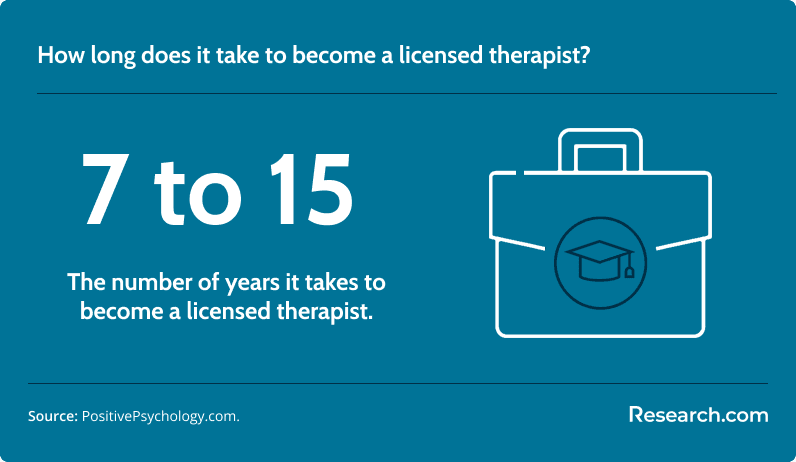
From the beginning of undergraduate study to full licensure, many therapist paths take seven to 15 years. A master’s-level route may be shorter, while a doctoral route can take longer. If you are wondering, do you need a psychology degree to be a therapist?, the answer depends on the license: many programs accept related undergraduate majors, but most licensed clinical roles require graduate training in psychology, counseling, social work, marriage and family therapy, or a closely related field.
What are the different types of therapists?
“Therapist” is a broad term, not one single job title. The right option depends on the clients you want to serve, the setting where you want to work, the level of diagnosis and assessment you want to perform, and how much schooling you are willing to complete. If speed is one of your biggest concerns, compare your options with this guide to the quickest way to become a therapist.
Clinical Psychologist
Clinical psychologists assess, diagnose, and treat mental health disorders such as anxiety, depression, PTSD, bipolar disorder, schizophrenia, and other complex conditions. Many work in hospitals, private practice, research settings, academic institutions, or specialized clinics. This path usually requires a doctoral degree, such as a Ph.D. or Psy.D.
Marriage and Family Therapist (MFT)
Marriage and family therapists work with couples, families, and individuals through a relationship-based lens. Their training focuses on family systems, communication patterns, conflict, parenting issues, relational trauma, and mental health concerns that affect family dynamics.
Mental Health Counselor
Mental health counselors help clients manage emotional distress, anxiety, depression, stress, life changes, and behavioral challenges. They use counseling methods to help clients build insight, develop coping skills, improve decision-making, and work toward treatment goals. A master’s degree and supervised clinical experience are typically required.
School Counselor
School counselors support students’ academic planning, emotional development, social adjustment, college and career readiness, and school-related stress. They often coordinate with teachers, administrators, parents, and community resources. A master’s degree in school counseling and state certification are commonly required.
Clinical Social Worker
Clinical social workers provide therapy while also addressing practical barriers that affect mental health, such as housing instability, family stress, financial strain, healthcare access, and social services. The typical degree is a Master of Social Work, and many professionals pursue LCSW licensure. Flexible students may compare online LCSW programs when planning this route.
Substance Abuse Counselor
Substance abuse counselors help people affected by alcohol, drug, or other substance use disorders. Their work may include screening, treatment planning, relapse prevention, group counseling, family education, and recovery support. Education and certification requirements differ by state and employer.
Child Therapist
Child therapists work with children and adolescents experiencing emotional, developmental, behavioral, or family-related challenges. They may use play therapy, family sessions, trauma-informed methods, behavioral strategies, or school-based supports. Students looking for a faster undergraduate route into helping professions may consider an accelerated human services degree online.
Rehabilitation Counselor
Rehabilitation counselors help people with physical, emotional, developmental, or cognitive disabilities build independence, pursue employment, access resources, and improve quality of life. This path often requires graduate training in rehabilitation counseling and, depending on the role, licensure.
Which therapist path fits which goal?
| If you want to... | Consider this path | Best fit for |
| Work with couples and family systems | Marriage and Family Therapist | Relationship conflict, parenting concerns, family communication, relational trauma |
| Provide broad mental health counseling | Mental Health Counselor or LPC path | Anxiety, depression, coping skills, life transitions, individual therapy |
| Combine therapy with resource advocacy | Clinical Social Worker | Clients affected by social, economic, healthcare, or family-system barriers |
| Work in K–12 education | School Counselor | Student support, academic planning, social-emotional development |
| Use advanced assessment and doctoral-level practice | Clinical Psychologist | Diagnosis, testing, research-informed treatment, specialized clinical roles |
| Focus on addiction recovery | Substance Abuse Counselor | Substance use disorders, relapse prevention, recovery planning |
How much can I earn as a therapist?
Therapist salaries vary by license, employer, region, caseload, specialization, experience, and whether you work for an organization or operate a private practice. The figures below reflect the average salaries provided in the source article.
| Therapist role | Average salary | What can affect earnings |
| Clinical Psychologist | $92,740 | Doctoral training, private practice, specialty areas such as forensic psychology or neuropsychology, and work setting |
| Marriage and Family Therapist (MFT) | $58,510 | Location, private practice opportunities, demand for family and couples counseling, and client base |
| Mental Health Counselor | $53,710 | Employer type, state, specialization, years of experience, and clinical credentials |
| Clinical Social Worker | $58,380 | Clinical license, agency type, healthcare setting, specialization, and supervisory responsibilities |
| Rehabilitation Counselor | $44,040 | Population served, government or private-sector employment, specialty focus, and advanced credentials |
Salary should not be evaluated in isolation. Also consider tuition, unpaid or lower-paid supervised hours, licensing fees, insurance requirements, continuing education costs, benefits, schedule flexibility, and the emotional demands of the role. The chart below provides additional salary context for therapist occupations.
How do you specialize in areas like family therapy or child therapy?
Specialization usually starts with your graduate program and continues through practicum placements, supervised hours, post-graduate training, certifications, and the client populations you serve. For therapists who want to integrate religious or faith-based approaches, a Christian counseling certification may be relevant, depending on the practice setting and client needs.
- Select a graduate program with the right clinical focus. Look for coursework in family systems, child development, trauma, play therapy, behavioral interventions, couples counseling, or adolescent mental health.
- Use practicum and internship strategically. Choose placements in schools, family counseling centers, pediatric clinics, youth programs, community agencies, or child-focused mental health organizations.
- Build supervised hours with the population you want to serve. If your goal is child therapy, prioritize work with children and adolescents. If your goal is family therapy, seek supervisors experienced in systemic practice.
- Add specialized training after graduation. Options may include LMFT preparation, play therapy training, or evidence-based trauma treatment such as trauma-focused cognitive-behavioral therapy (TF-CBT).
- Document your expertise. Keep records of training hours, supervised experience, workshops, continuing education, and certifications because employers, insurers, and clients may ask about your qualifications.
Common specialization choices
| Specialization | Useful training focus | Common work settings |
| Family therapy | Family systems, couples counseling, parenting, conflict resolution | Private practice, family counseling agencies, healthcare organizations |
| Child therapy | Child development, play therapy, trauma-informed care, behavior support | Schools, pediatric clinics, youth mental health centers |
| Substance abuse counseling | Addiction treatment, relapse prevention, group counseling, recovery planning | Rehabilitation centers, outpatient clinics, community programs |
| Trauma therapy | Trauma assessment, stabilization, evidence-based trauma interventions | Clinics, hospitals, community agencies, private practice |
What are the daily tasks of a therapist?
A therapist’s day is not limited to client sessions. Clinical work also involves planning, documentation, coordination, risk assessment, ethics, scheduling, and ongoing learning.
- Meeting with clients. Therapists conduct individual, group, couple, or family sessions and use interventions matched to the client’s goals and clinical needs.
- Assessing concerns and setting goals. They gather client history, identify symptoms or life stressors, and translate concerns into measurable treatment objectives.
- Creating and updating treatment plans. Therapists choose appropriate approaches, such as cognitive-behavioral therapy, family systems work, psychoeducation, or other evidence-informed methods.
- Keeping clinical records. Session notes, assessments, progress updates, safety plans, consent forms, and treatment documentation must be accurate and timely.
- Coordinating care. Therapists may communicate with psychiatrists, primary care providers, school staff, social workers, case managers, or community agencies when appropriate and authorized.
- Responding to crises. Some clients may experience panic, severe distress, suicidal ideation, abuse concerns, or urgent safety risks that require immediate clinical action.
- Managing administrative work. Private practice therapists often handle scheduling, billing, insurance paperwork, marketing, compliance, and business operations.
How important is accreditation for therapy degree programs?
Accreditation is one of the first things to verify before enrolling in a therapy degree program. It signals that a school or program has been reviewed against academic standards, and it can affect financial aid eligibility, graduate admission, employer recognition, and licensure eligibility.
For therapy careers, the most important question is not simply whether a school is accredited. You also need to know whether the specific program meets the educational requirements for the license you want in the state where you plan to practice. Some states require particular coursework, practicum formats, supervision rules, or programmatic accreditation.
Questions to ask before choosing a therapy program
- Is the institution accredited by a recognized accrediting body?
- Does the program meet licensure requirements in the state where I plan to work?
- Does the curriculum include the required clinical, ethics, diagnosis, assessment, and practicum components?
- How are supervised placements arranged, especially for online students?
- What licensing exams do graduates typically prepare for?
- Are graduates eligible for federal financial aid?
- What support is available for internship placement, exam preparation, and career advising?
Graduates from accredited schools may pursue roles in industries with average salaries such as state government ($86,030), outpatient care centers ($61,390), individual and family services ($50,700), and offices of other health practitioners ($49,190). The chart below shows salary information for leading therapy employment settings.
What is the difference between an LMFT, LPC, and LCSW license?
LMFT, LPC, and LCSW licenses can all lead to clinical mental health work, but they are built around different training models. Choose based on the clients you want to serve, the type of problems you want to address, and the professional identity that best matches your goals.
| License | Primary focus | Best fit if you want to... |
| Licensed Marriage and Family Therapist (LMFT) | Relationships, family systems, couples, and family dynamics | Work with couples, families, and individuals through a systemic lens |
| Licensed Professional Counselor (LPC) | Broad mental health counseling for individuals, groups, and communities | Provide psychotherapy for a wide range of emotional and psychological concerns |
| Licensed Clinical Social Worker (LCSW) | Clinical therapy combined with social work, advocacy, and resource navigation | Address mental health while also helping clients manage social and practical barriers |
- LMFT: This license is often a strong match for students interested in couple conflict, parenting, family trauma, relationship patterns, and intergenerational dynamics.
- LPC: This route offers broad preparation in counseling, assessment, psychotherapy, and mental health treatment. Counselors who want to work with addiction-related concerns may strengthen their preparation through an addiction counselor certification.
- LCSW: This path is well suited to professionals who want to combine therapy with case coordination, social services, community systems, and client advocacy.
What is the job outlook for therapists?
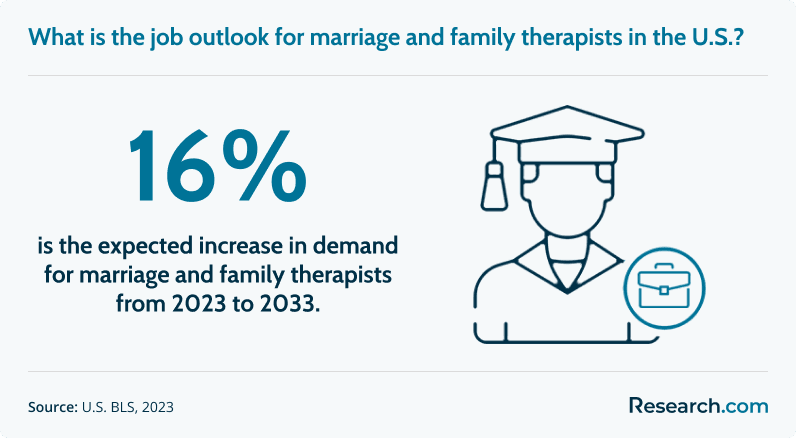
The employment outlook for many therapy roles is strong in the cited labor-market projections. According to the research summarized in the original article, employment for marriage and family therapists is expected to increase by 16%, while employment for mental health counselors is expected to increase by 19% from 2023 to 2033.
Several forces continue to shape demand for therapists, including broader public recognition of mental health needs, teletherapy adoption, integrated behavioral healthcare, school-based mental health support, and the use of digital tools for scheduling, documentation, screening, and client communication. These trends can expand access, but they also increase the need for therapists who understand ethics, privacy, cultural competence, and technology-supported care.
Where therapists commonly work
- Private practices
- Hospitals and healthcare systems
- Community mental health agencies
- Schools and colleges
- Substance use treatment centers
- Outpatient care centers
- Government and nonprofit organizations
- Individual and family services organizations
How can I access affordable and accredited therapy degree programs?
Affordable does not always mean low value, and expensive does not automatically mean better. The right program is one that fits your budget while also meeting accreditation, curriculum, practicum, and licensure requirements. If you are interested in couples and family systems work, compare options such as marriage and family therapy online programs carefully before enrolling.
How to compare therapy programs without focusing only on tuition
| Factor | Why it matters | What to ask |
| Accreditation | Can affect licensure, financial aid, and employer recognition | Is the school accredited, and does the program meet my state’s licensing rules? |
| Total cost | Fees, books, travel, residencies, and supervision costs can add up | What is the full estimated cost through graduation? |
| Clinical placement support | Internships are essential for skill development and licensure | Does the program help secure placements in my area? |
| Licensure alignment | Programs may not qualify graduates for every state | Which state licenses does this curriculum support? |
| Flexibility | Working adults may need online, evening, or part-time options | Can I complete coursework and clinical hours while employed? |
| Graduate outcomes | Career support and exam preparation can matter after graduation | What support is available for licensing exams and job placement? |
What factors most influence my earning potential as a therapist?
Your income as a therapist can be shaped by your license, geographic area, years of experience, specialty, client population, employer, and whether you work in private practice. Telehealth, integrated care, and advanced credentials can also affect opportunities, but none of these factors guarantee a specific salary. For a broader compensation breakdown, review this counselor salary report.
Ways therapists may improve long-term earning potential
- Choose a license that matches in-demand services in your region.
- Develop a focused specialty, such as trauma, family therapy, child therapy, addiction, or behavioral intervention.
- Gain experience in settings that offer supervision, benefits, and advancement.
- Build skills in documentation, risk assessment, ethics, telehealth, and evidence-based practice.
- Consider private practice only after understanding business expenses, insurance, marketing, liability coverage, and caseload management.
How can I effectively manage therapist burnout?
Therapist burnout can affect clinical judgment, empathy, health, and career longevity. Because therapists often hear about trauma, grief, abuse, crisis, and severe stress, burnout prevention should be treated as a professional responsibility, not an afterthought. Some graduate programs, including an affordable masters in counseling online, may include wellness, ethics, and self-care content that helps students prepare for this reality.
- Use supervision consistently. Consultation helps therapists process difficult cases and improve decision-making.
- Set caseload boundaries. Too many high-acuity clients without support can increase compassion fatigue.
- Protect recovery time. Schedule breaks, documentation time, and time away from clinical work.
- Keep professional boundaries clear. Healthy limits protect both the client and therapist.
- Continue learning. Training in trauma, crisis response, and ethics can reduce uncertainty and stress.
- Seek personal support when needed. Therapists may benefit from their own therapy, peer consultation, or wellness routines.
Can integrating organizational psychology enhance my therapy leadership?
Organizational psychology can be useful for therapists who want to move into supervision, program management, clinic leadership, workplace mental health, employee wellness, or behavioral health administration. It focuses on workplace behavior, team dynamics, leadership, conflict, motivation, and organizational change. If your goal is to lead programs rather than only provide direct care, a program such as the cheapest masters organizational psychology online may help you compare adjacent graduate options.
What are the common challenges therapists face in their careers?
Therapy can be deeply meaningful, but it is not an easy profession. The work requires emotional steadiness, ethical judgment, detailed documentation, tolerance for uncertainty, and the ability to build trust without taking responsibility for every client outcome.
| Challenge | Why it happens | Better way to prepare |
| Emotional strain | Clients may discuss trauma, loss, crisis, abuse, or severe mental illness. | Use supervision, consultation, and personal wellness practices. |
| Work-life balance | Evening appointments, private practice tasks, and crisis work can extend the workday. | Set scheduling limits and protect nonclinical time. |
| Continuing education | Licensure often requires ongoing training and documentation. | Plan CE requirements early instead of rushing before renewal. |
| Ethical dilemmas | Confidentiality, boundaries, mandated reporting, and dual relationships can be complex. | Study your code of ethics and consult supervisors or boards when needed. |
| Client boundaries | Therapists must be warm and supportive while maintaining a professional relationship. | Discuss policies clearly and document important decisions. |
| Administrative burden | Notes, billing, insurance, compliance, and scheduling take time. | Build systems and avoid underestimating non-session workload. |
Common mistakes to avoid when planning a therapy career
- Choosing a graduate program before checking whether it meets state licensure requirements.
- Looking only at tuition instead of total cost, including fees, books, residencies, travel, and unpaid clinical time.
- Assuming every online program can place you in a local internship site.
- Ignoring transfer credit policies, practicum requirements, and supervision rules.
- Choosing a license based only on salary rather than client population, scope of practice, and long-term fit.
- Assuming salary averages guarantee personal earnings.
- Waiting until graduation to learn about licensing exams and supervised hour requirements.
What graduates have to say about becoming a therapist
-
: "
Choosing therapy as my profession has been one of the most meaningful decisions I have made. Watching clients gain stability, confidence, and direction gives the work a strong sense of purpose, and the process has helped me grow personally as well as professionally. – Max
"
-
: "
The training path was demanding, but the relationships I build with clients make the effort worthwhile. The communication, empathy, and listening skills I developed in this field have changed how I show up in every part of my life. – Sebastian
"
-
: "
What I value most about being a therapist is the variety. I have been able to work across private practice, schools, and community settings, and each environment has shown me a different way to support people through difficult moments. – Kelly
"
Social Work or Psychology? How to Choose the Right Degree for Your Therapeutic Career
Social work and psychology can both lead to mental health careers, but they emphasize different professional models. Social work often focuses on clinical care, advocacy, case management, community systems, and the social factors that shape well-being. Psychology often emphasizes assessment, research, diagnosis, behavior, cognition, and clinical intervention. For a deeper comparison, review this guide to social work degree vs psychology degree.
| Choose this direction if... | Social work may fit | Psychology may fit |
| You want to combine therapy with resource navigation | Strong fit | Possible, but not usually the main emphasis |
| You are interested in assessment and research | Included in some programs | Often a stronger fit |
| You want a broad community and systems perspective | Strong fit | Depends on program focus |
| You are considering doctoral-level clinical psychology | May not be the direct route | Often the more direct route |
How can a board-certified behavior analyst certification enhance my practice?
Behavior analysis can help therapists who work with behavior change, developmental disabilities, autism-related supports, school-based interventions, or structured treatment plans. A board-certified behavior analyst credential may expand your ability to use applied behavior analysis methods, but it should be evaluated against your existing license, scope of practice, state rules, and client population.
Are online PsyD programs a viable option for advancing my therapy career?
Online PsyD programs may work for experienced professionals who need flexibility while pursuing advanced clinical training, leadership preparation, or doctoral-level study. The key is to evaluate clinical training requirements, residency expectations, accreditation, faculty access, licensure alignment, and internship support. Start by comparing online PsyD programs with the requirements of the state where you intend to practice.
How can advanced online education boost my therapy career?
Advanced online education can help working professionals add credentials, refresh clinical skills, or move toward a new specialization without leaving the workforce. Some students also compare fast online degrees when they need to complete undergraduate requirements before applying to graduate school. The main caution is licensure alignment: speed and convenience should never outweigh program quality or clinical eligibility.
How can mentorship complement formal education in therapy?
Mentorship helps future therapists translate coursework into real clinical judgment. A strong mentor can model documentation, ethics, client engagement, crisis response, case conceptualization, and professional boundaries. When comparing programs such as the cheapest online counseling degree options, ask whether students receive structured supervision, faculty guidance, peer consultation, and field-placement support.
Can an online master's in applied behavior analysis strengthen my therapeutic expertise?
An online master’s in applied behavior analysis may be valuable for therapists who want more structured training in behavior assessment and intervention. This can be especially relevant for professionals working with developmental, educational, or behavioral concerns. Compare curriculum, supervised experience, certification alignment, and state requirements when reviewing the best online master's in applied behavior analysis programs.
Are affordable online degrees a smart investment for my therapy career?
Affordable online degrees can be a strong investment when they are accredited, licensure-aligned, clinically rigorous, and supported by reliable advising. They can also reduce borrowing, which matters because many therapy careers require years of education before independent licensure. If psychology is your target field, compare programs such as the cheapest masters in clinical psychology online while checking whether the degree actually supports your intended career outcome.
How do online therapy programs integrate clinical internships effectively?
Quality online therapy programs do not replace clinical training with online coursework alone. They usually combine remote classes with supervised field placements, local partnerships, simulations, faculty oversight, and structured documentation of clinical hours. When evaluating options such as MSW online programs, ask who finds the placement, how supervisors are approved, what happens if a local site falls through, and whether the experience meets licensure rules in your state.
Key Insights
- Most licensed therapy careers require a bachelor’s degree, a graduate degree, supervised clinical hours, a licensing exam, and state licensure.
- The therapy license you choose matters: LMFT, LPC, LCSW, psychologist, school counselor, rehabilitation counselor, and substance abuse counselor paths prepare you for different scopes of practice.
- The full timeline often ranges from seven to 15 years, depending on whether you pursue a master’s-level or doctoral-level route.
- Accreditation and state licensure alignment should be verified before enrollment, especially for online programs.
- Salary varies widely, but the article’s cited averages include $58,510 for marriage and family therapists and $53,710 for mental health counselors.
- Employment for marriage and family therapists is expected to increase by 16%, while employment for mental health counselors is expected to increase by 19% from 2023 to 2033.
- The best program is not always the cheapest or fastest; it is the one that meets licensure requirements, provides quality clinical training, and fits your career goal.
- Burnout prevention, supervision, ethical practice, and strong boundaries are essential for long-term success in therapy work.
References:
- U.S. Bureau of Labor Statistics. (2024). Occupational Outlook Handbook: Substance Abuse, Behavioral Disorder, and Mental Health Counselors. BLS.
- Coursera. (2023, December 15). How to become a physical therapist: 2025 step-by-step guide. Coursera.
- California Learning Resource Network. (2023, December 30). What training do you need to be a therapist? CLRN.
- Therapy Helpers. (2023). What Kinds of Therapists Are There? A Comprehensive Guide. TherapyHelpers.
Other Things You Should Know About Becoming a Therapist
Aspiring therapists in 2027 need to pass the National Clinical Mental Health Counseling Examination (NCMHCE) or the Examination for Professional Practice in Psychology (EPPP), depending on their specialization. These exams assess clinical skills and knowledge necessary for professional practice.
State licensing boards issue therapist licenses, with titles and rules set by each state. Common boards include the board of behavioral health, psychology, or counseling. Applicants usually submit transcripts, supervised experience hours, exam scores, and a jurisprudence or ethics requirement before approval.


