2027 Counseling Salaries: How Much Does a Counselor Make?

Co-Founder and Chief Data Scientist
Choosing counseling as a career is not only a question of purpose; it is also a financial decision. Counselor pay can differ widely by specialty, employer, state, license level, and whether the role is clinical, school-based, medical, administrative, or private practice. In 2023, school and career counselors had a mean annual wage of $66,990, while rehabilitation counselors earned $44,040 per year, showing why it is risky to rely on one “average counselor salary” when planning a career.
This guide breaks down counseling salaries by specialization, industry, employer type, education level, and career path. It is designed for students comparing counseling degrees, working professionals considering licensure, and counselors deciding whether to specialize, move into leadership, or pursue private practice. You will also learn how certification, online programs, licensing rules, and high-demand niches can affect long-term earning potential.
Quick answer: How much do counselors make?
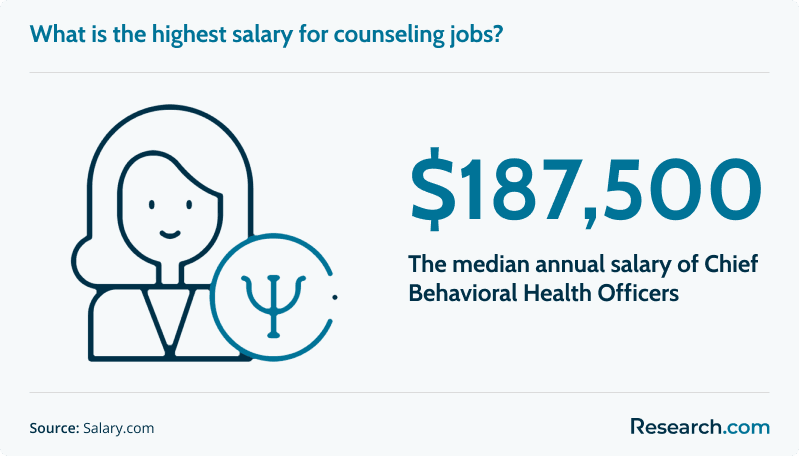
Counseling salaries commonly fall from nearly $40,000 to more than $60,000 per year, but the range depends heavily on the type of counseling work. Based on 2023 Bureau of Labor Statistics data, genetic counselors reported the highest median annual salary among the listed counseling occupations at $95,770, while rehabilitation counselors reported $44,040. Leadership roles can pay considerably more; chief behavioral health officer has an average annual salary of $187,500.
Key things you should know about counseling salaries
- Counselor income is specialization-driven. Many counseling roles cluster between nearly $40,000 and over $60,000 per year, but clinical niche, industry, and license level can move earnings higher or lower.
- Among the counselor categories listed by the BLS, genetic counselors had the strongest 2023 median annual salary at $95,770.
- The overall median annual salary for substance abuse, behavioral disorder, and mental health counselors was $53,710, while hospitals reported a higher industry figure of $54,740.
- Chief behavioral health officer is the highest-paying counselor-related leadership role cited here, with an average annual salary of $187,500.
- Employment for mental health, substance abuse, and behavioral disorder counselors is projected to grow 18% from 2022 to 2032.
- Elementary and secondary schools employ 46% of school and career counselors, making them the largest employer group for that specialization.
- Types of counselors and how specialties affect pay
- Average counselor salary by specialization
- Counselor salary by industry
- Highest-paying counseling jobs
- Counselor job outlook
- Largest employers of counselors
- Alternative jobs for counseling professionals
- Counseling degree options
- How certification affects counseling careers
- Career options with a counseling degree
- How ABA training can strengthen a counseling career
- Ways to shorten the path to counseling licensure
- Online accelerated programs and counseling career timelines
- How to choose a counseling master's program
- Whether online counseling degrees are flexible and cost-effective
- How long it takes to become a counselor
- Strategies that can support six-figure counseling earnings
- Steps to becoming a licensed professional counselor
- How education level affects counselor salary
- How licensing differences affect counseling salaries
- Counseling career paths
- Counseling salary trends and future outlook
What counselors say they value about the profession
-
: "
Counseling is meaningful because progress is often personal, gradual, and deeply human. Helping clients feel heard and watching them build healthier patterns can make the work feel worthwhile beyond the paycheck. - Harper
"
-
: "
School counseling offers the chance to support students at a formative point in their lives. Academic planning, emotional support, and crisis response can all happen in the same week, and student growth is often the strongest motivation. - Mateo
"
-
: "
The work rarely feels repetitive. Counselors meet people from different backgrounds, listen to difficult stories, and help clients identify strengths they may not yet see in themselves. - Aisha
"
What are the different types of counselors?
Counseling is not one job. It is a group of related professions that serve different populations and problems. Some counselors focus on mental health treatment, some work in schools, some support recovery from addiction, and others help clients navigate disability, grief, relationships, genetics, or career decisions. The specialization you choose affects your required degree, license, work setting, salary ceiling, and daily responsibilities.
| Counseling specialty | Typical focus | Common work settings | Best fit for people who want to... |
| Mental Health Counselors | Support clients dealing with anxiety, depression, stress, trauma, adjustment concerns, and other mental health needs. | Community agencies, clinics, private practices, hospitals, and telehealth settings. | Provide therapy and ongoing emotional support to individuals or groups. |
| School Counselors | Help students with academic planning, social-emotional development, college readiness, and career exploration. | Elementary schools, middle schools, high schools, and postsecondary institutions. | Work with young people and collaborate with families, teachers, and administrators. |
| Marriage and Family Therapists (MFTs) | Address relationship patterns, communication problems, conflict, and family systems. | Private practice, outpatient centers, family service agencies, and state government roles. | Specialize in couples, family dynamics, and relational therapy. |
| Substance Abuse Counselors | Help clients manage addiction, recovery, relapse prevention, and co-occurring behavioral health concerns. | Outpatient treatment centers, residential programs, hospitals, and community agencies. | Work directly with people recovering from substance use disorders. The path for how to become a drug abuse counselor typically involves graduate training and supervised experience. |
| Rehabilitation Counselors | Assist people with disabilities in reaching employment, education, independent living, and accessibility goals. | Vocational rehabilitation agencies, state government, care facilities, and community programs. | Combine counseling, advocacy, case coordination, and employment support. |
| Career Counselors | Guide clients through self-assessment, job searches, career changes, resumes, interviews, and long-term planning. | Schools, colleges, workforce centers, private practice, and corporate settings. | Help people make practical education and employment decisions. |
| Grief Counselors | Support clients coping with death, loss, life transitions, and bereavement. | Hospice programs, private practice, hospitals, religious organizations, and community agencies. | Offer trauma-informed and compassionate care to people experiencing loss. Students can explore how to become a grief counselor to understand education and credential expectations. |
| Child and Adolescent Counselors | Work with children and teens experiencing family conflict, school stress, developmental concerns, behavioral issues, or mental health symptoms. | Schools, clinics, youth agencies, hospitals, and private practices. | Support young clients and coordinate care with parents, teachers, and healthcare providers. |
| Genetic Counselors | Explain genetic testing, inherited conditions, reproductive risk, and medical decision-making to individuals and families. | Hospitals, doctors' offices, labs, outpatient care centers, and universities. | Combine counseling skills with medical genetics. Students comparing the top genetic counseling programs should look closely at clinical training and accreditation. |
What is the average counselor salary?
The average counselor salary depends on which counseling occupation you mean. A school counselor, rehabilitation counselor, genetic counselor, and mental health counselor may all use counseling skills, but their labor markets, credentials, and pay structures differ. According to 2023 BLS data, median annual salaries for selected counseling occupations were:
| Counseling occupation | 2023 median annual salary | Salary interpretation |
| Genetic Counselors | $95,770 | Highest listed median among these counselor categories, reflecting specialized medical and genetic expertise. |
| School and Career Counselors and Advisors | $61,710 | Often tied to education systems, academic calendars, institutional budgets, and state or district requirements. |
| Substance Abuse, Behavioral Disorder, and Mental Health Counselors | $53,710 | A large and fast-growing group that includes many clinical, community, and addiction-focused roles. |
| Counselors, All Other | $52,360 | A broad category covering counseling roles not separately classified by the BLS. |
| Rehabilitation Counselors | $44,040 | Often employed in community, vocational, and state-supported service settings. |
Location can shift earnings substantially. The chart below shows that substance abuse, behavioral disorder, and mental health counselors in Alaska, the highest-paid state shown, earned an annual mean wage above the national average.
What is the typical counselor salary per industry?
Industry matters because counseling services are funded differently across hospitals, schools, government agencies, outpatient clinics, residential care centers, and private practices. A counselor with the same degree may see different pay offers depending on whether the employer is a hospital system, school district, nonprofit agency, state government office, or specialized medical provider. This is also why masters in counseling psychology salary outcomes should be evaluated by setting, not just by job title.
Mental Health, Substance Abuse, and Behavioral Disorder Counselors
| Industry | Median annual salary |
| Hospitals | $54,740 |
| Health Practitioner Offices | $50,260 |
| Individual and Family Services | $49,210 |
| Outpatient Mental Health Centers | $48,640 |
| Residential Mental Health Centers | $44,150 |
School and Career Counselors
| Industry | Median annual salary |
| Elementary and Secondary Schools | $65,930 |
| Other Educational Services | $52,390 |
| Junior Colleges and Postsecondary Institutions | $50,370 |
| Healthcare and Social Assistance Organizations | $39,650 |
Rehabilitation Counselors
| Industry | Median annual salary |
| State Government | $54,790 |
| Individual and Family Services | $40,260 |
| Community and Vocational Rehabilitation Services | $36,400 |
| Care Facilities | $35,730 |
Marriage and Family Therapists
| Industry | Median annual salary |
| State Government | $77,000 |
| Outpatient Care Centers | $59,870 |
| Health Practitioner Offices | $50,920 |
| Individual and Family Services | $50,370 |
Genetic Counselors
| Industry | Median annual salary |
| Outpatient Care Centers | $110,630 |
| Medical and Diagnostic Labs | $101,560 |
| Hospitals | $87,340 |
| Postsecondary Institutions | $84,520 |
| Doctors' Offices | $82,820 |
What are the highest paying counseling jobs?
The highest counseling-related salaries usually appear in leadership, administration, specialized medical counseling, or advanced clinical practice. Direct service roles can be meaningful and stable, but the largest salary jumps often come when counselors supervise teams, manage behavioral health programs, run departments, or build specialized practices.
| High-paying counseling-related job | Average annual salary | Why it pays more |
| Chief Behavioral Health Officer | $187,500 | Executive-level responsibility for behavioral health strategy, budgets, compliance, staffing, and program outcomes. |
| Behavioral Health Director | $115,519 | Management of clinical teams, operations, service delivery, and quality standards. |
| Director of Counseling | $106,000 | Oversight of counseling programs, staff supervision, policy implementation, and institutional support services. |
Another way to understand earning potential is to look at the top 10% within each counseling occupation. These figures do not guarantee individual earnings, but they show the upper salary range reported for experienced or better-paid professionals in each category.
| Counseling occupation | Top 10% median annual salary |
| Genetic Counselors | $128,380 |
| Marriage and Family Therapists | $98,700 |
| School and Career Counselors | $98,530 |
| Mental Health, Substance Abuse, and Behavioral Disorder Counselors | $82,710 |
| Rehabilitation Counselors | $71,270 |
What is the job outlook for counselors?
The labor market for counselors is stronger in some specialties than others. Mental health access, addiction treatment demand, school support needs, and medical genetics are all shaping hiring. The broader U.S. job growth projection for all occupations from 2022 to 2032 is 3%, but several counseling occupations exceed that rate.
One reason demand remains high is the shortage of mental health professionals in many parts of the country. One report noted that 77% of US counties experience severe shortages.
| Counseling occupation | Projected job growth, 2022 to 2032 | Projected annual openings, 2022 to 2032 |
| Mental Health, Substance Abuse, and Behavioral Disorder Counselors | 18% | 42,000 |
| Genetic Counselors | 16% | 300 |
| Marriage and Family Therapists | 15% | 5,900 |
| School and Career Counselors | 5% | 26,600 |
| Rehabilitation Counselors | 2% | 6,700 |
Fast growth does not automatically mean high pay in every job. It means more demand for workers in that occupation. Salary still depends on setting, licensure, reimbursement structures, state budgets, experience, and whether the role is clinical, administrative, or specialized.
Who are the biggest employers of counselors?
The largest employers differ by counselor type because each specialization serves a different client population. School counselors are concentrated in education. Genetic counselors are concentrated in healthcare. Rehabilitation counselors are often connected to vocational and community services. Knowing where most jobs are located helps you choose internships, practicum placements, and early-career roles strategically.
Mental Health, Substance Abuse, and Behavioral Disorder Counselors
- Outpatient Mental Health and Substance Abuse Centers: 18%
- Individual and Family Health Services: 15%
- Offices of Other Health Professionals: 12%
- Hospitals: 9%
- Outpatient Mental Health and Substance Abuse Centers: 9%
School and Career Counselors
- Elementary and Secondary Schools: 46%
- Junior Colleges and Postsecondary Institutions: 38%
- Healthcare and Social Assistance: 6%
- Other Educational Services: 4%
- Private Practice: 1%
Marriage and Family Therapists
- Individual and Family Services: 29%
- Office of Other Health Professionals: 28%
- Outpatient Care Centers: 13%
- Private Practice: 11%
- State Government: 6%
Genetic Counselors
- Hospitals: 42%
- Doctors' Offices: 18%
- Medical and Diagnostic Labs: 9%
- Outpatient Care Centers: 8%
- Postsecondary Institutions: 7%
Rehabilitation Counselors
- Community and Vocational Services: 34%
- State Government: 17%
- Residential and Nursing Care Centers: 14%
- Individual and Family Services: 14%
- Private Practice: 1%
What are alternative jobs for counselors?
Counseling training builds transferable skills in communication, assessment, documentation, crisis response, ethics, behavior change, and case coordination. If direct clinical counseling is not the right long-term fit, counselors may move into advocacy, training, academic support, human resources, program management, or adjacent helping professions. Some professionals also explore values-based counseling routes, including how to become a Christian counselor, when they want to combine counseling support with a spiritual framework.
| Alternative role | How counseling skills transfer | When this path may make sense |
| Mental Health Advocate | Uses knowledge of client needs, access barriers, and community systems to support policy or service improvements. | You want systems-level impact instead of one-on-one counseling. |
| Program Developer/Trainer | Turns clinical or behavioral health knowledge into workshops, staff training, prevention programs, or school and workplace education. | You enjoy teaching, curriculum design, and organizational support. |
| Research Assistant/Associate | Applies counseling knowledge to studies on interventions, treatment outcomes, or mental health conditions. | You are interested in evidence-based practice and may later pursue doctoral study. |
| Life Coach | Uses goal-setting, motivational interviewing, and behavior-change strategies outside a clinical diagnosis-and-treatment model. | You prefer personal development work and understand the legal limits of nonclinical coaching. |
| Human Resources Professional | Communication, conflict resolution, employee support, and career-development skills translate well to HR roles. | You want to work inside organizations rather than clinical or educational settings. |
| Academic Advisor | Student support, planning, and career guidance align closely with higher education advising. | You like working with students but do not want a school counseling license path. |
| Student Affairs Professional | Uses crisis response, inclusion, student development, and wellness skills in college support services. | You want a campus-based role with broad student engagement. |
| Social Service Provider | Empathy, assessment, resource navigation, and case support apply to agencies serving families and communities. | You are drawn to community work, advocacy, and practical support services. |
What are the different types of counseling degrees?
Your degree choice determines which counseling roles you can legally pursue. Some support roles are available with an undergraduate degree, but independent clinical practice, school counseling, marriage and family therapy, and many higher-paying roles typically require graduate education, supervised experience, and state licensure.
Undergraduate Counseling Degrees
Associate and bachelor's programs in counseling exist, but many students begin in broader majors such as psychology, human services, education, social work, child development, or rehabilitation studies. Counseling may appear as a concentration, minor, or career track within those programs.
An undergraduate degree can help you qualify for support roles, case management, behavioral health technician positions, community outreach jobs, or graduate school admission. It usually is not enough for independent licensed counseling practice.
Graduate Degrees in Counseling
A master's degree is the common entry point for professional counseling licensure and many clinical counseling jobs. Students comparing graduate options should verify whether the program aligns with the license they want and the state where they plan to practice. Related graduate paths can be confusing, so it is useful to understand the difference between MSW and MSSW before choosing between counseling and social work routes.
| Graduate degree | Primary focus | Common career direction |
| Master of Counseling | Counseling theories, ethics, helping skills, assessment, and practice foundations. | Mental health, community, school, or agency counseling roles depending on concentration and licensure alignment. It may also be one answer to the question, What degree do you need to be a substance abuse counselor? |
| Master of Arts in Counseling Psychology | Psychological theory, development, personality, behavior, and counseling practice. | Therapy, counseling, private practice, academic support, or mental health settings depending on state rules. |
| Master of Social Work with Counseling Concentration | Clinical helping skills within social, cultural, policy, and community systems. | Clinical social work, hospitals, schools, agencies, government programs, and mental health clinics. |
| Master of Marriage and Family Therapy | Couples, families, relational systems, communication, and family dynamics. | Licensed marriage and family therapy, counseling centers, family services, and private practice. |
| Master of School Counseling | Student support, academic planning, social-emotional development, and career readiness. | School counselor roles in elementary, middle, and high schools. |
| Master of Rehabilitation Counseling | Disability services, vocational planning, independent living, and rehabilitation support. | Vocational rehabilitation agencies, hospitals, community organizations, and disability service programs. |
Students considering psychology roles often ask, Can you be a psychologist with a masters? For licensed counseling psychologist roles, a doctorate is often required. Completing the right counseling psychologist education can lead to advanced clinical, academic, or leadership opportunities.
How does certification impact a counselor's career?
Certification can improve a counselor's credibility, expand eligible job options, and signal specialized training. Credentials such as the National Certified Counselor (NCC) or advanced behavioral credentials like board certified behavior analyst BCBA can help employers and clients understand a professional's area of competence.
Certification is not the same as state licensure. Licensure determines whether you can legally practice in regulated counseling roles. Certification is often an additional credential that may support specialization, mobility, promotion, or client trust. Counselors interested in addiction, trauma-informed care, behavioral interventions, school counseling, or family therapy should compare which credentials are valued in their intended state and work setting.
| Credential decision | Potential benefit | Question to ask before investing |
| National or specialty certification | May strengthen credibility and demonstrate focused knowledge. | Do employers in my target setting prefer or require this credential? |
| State licensure | Often required for independent clinical counseling or regulated practice. | Does my degree meet the exact education and supervised-hour rules in my state? |
| Continuing education | Helps maintain credentials and stay current with ethical and clinical standards. | Which continuing education topics support my salary and career goals? |
What career options are available to counselors?
Counseling graduates can work in mental health agencies, schools, hospitals, addiction treatment centers, rehabilitation programs, college advising offices, private practices, employee assistance programs, and community organizations. The right choice depends on your degree level, license, preferred population, tolerance for paperwork and crisis work, and desired salary range. For a broader view of what can you do with a counseling degree, compare roles by required credential rather than job title alone.
How can specialized training in ABA enhance counseling careers?
Applied Behavior Analysis training can be valuable for counselors who work with behavioral intervention, developmental disabilities, autism services, school-based supports, or behavior-focused treatment plans. ABA does not replace counseling licensure, but it can add a practical intervention skill set. Professionals comparing the best ABA programs in the US should check whether the curriculum supports their credential goals and whether supervised experience requirements are built into the program structure.
How can I fast-track my counseling license?
The fastest legitimate route to counseling licensure is not simply the shortest program. It is the shortest accredited, state-aligned path that still satisfies required coursework, practicum, supervised clinical hours, exams, background checks, and application rules. A guide to the fastest way to become a therapist can help students identify timeline-saving options without choosing a program that fails to meet licensure requirements.
- Choose a graduate program that is designed for your intended license and state.
- Confirm practicum and internship placement support before enrolling.
- Start tracking supervised hours early and keep documentation organized.
- Prepare for the required licensing exam before graduation if your state timeline allows it.
- Avoid programs that advertise speed but do not clearly explain licensure alignment.
Can online accelerated programs expedite my counseling career?
Online accelerated counseling programs can shorten the classroom portion of the journey, especially for students who can handle heavier course loads. However, counseling is not a fully academic credential. Licensure also requires supervised field experience, and those hours may control the actual timeline. For example, a student comparing the fastest MFT program should verify not only course length but also clinical placement support and state certification standards.
| Program format | Main advantage | Main risk | Best for |
| Online accelerated | Condensed coursework and flexible scheduling. | Heavy workload and possible field placement challenges. | Self-directed students who already understand licensure requirements. |
| Traditional campus-based | In-person networking, faculty access, and local practicum connections. | Less schedule flexibility. | Students who prefer structured support and face-to-face training. |
| Part-time online or hybrid | More manageable pace for working adults. | Longer completion timeline. | Students balancing employment, caregiving, or financial constraints. |
How do I choose the right counseling master's program?
The right counseling master's program is the one that matches your target license, specialty, budget, schedule, and supervised training needs. Do not choose only by tuition, ranking, or speed. A low-cost program can become expensive if credits do not transfer, field placements are weak, or the curriculum does not meet your state's licensure rules. Students seeking faith-integrated counseling education can compare options such as a Christian counseling master's online while still checking accreditation, practicum requirements, and professional outcomes.
Questions to ask before enrolling
- Is the institution accredited, and is the counseling program recognized for my intended license path?
- Does the curriculum meet my state's coursework requirements?
- How are practicum and internship placements arranged?
- What is the expected total cost, including fees, books, travel, residencies, and clinical requirements?
- Can I complete supervised hours in my state if the program is online?
- What exam preparation, career advising, and licensure support does the program provide?
- Are faculty members experienced in the specialty I want to enter?
Are online counseling degree programs a cost-effective, flexible option?
Online counseling degree programs can be a practical choice for students who need schedule flexibility or live far from a campus. They may reduce commuting and relocation costs, but they are not automatically cheaper or easier. Students still need supervised clinical experience, and some programs require in-person residencies, synchronous classes, or local placement coordination. Cost-conscious students can compare options such as the most affordable online bachelor's degree in substance abuse counseling, while also verifying academic quality and career alignment.
How long does it take to become a counselor?
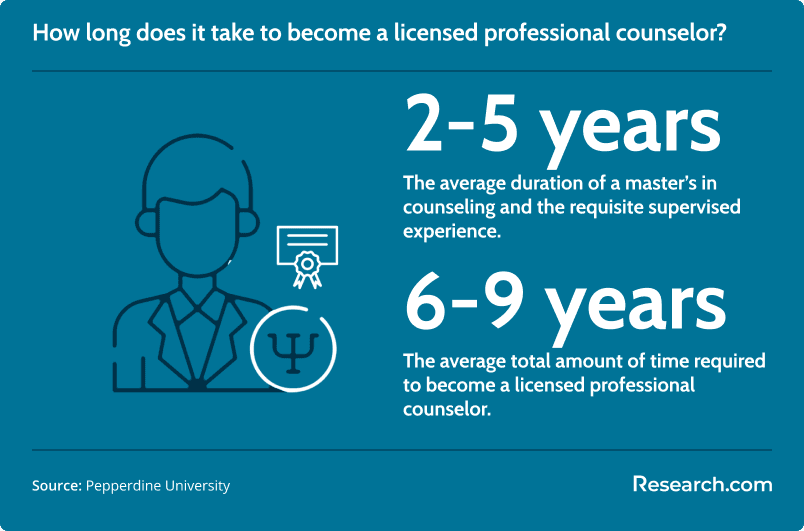
The typical pathway includes four years for a bachelor's degree and two to five years for a master's degree, supervised experience, and licensure application steps. In total, becoming a licensed professional counselor often takes around six to nine years.
Accelerated programs can reduce the academic timeline, but they do not remove clinical supervision requirements. Students who choose a faster route should be prepared for heavier terms, tighter deadlines, and careful planning around practicum or internship hours.
What strategies can lead to six-figure earnings in counseling?
Six-figure earnings in counseling are most realistic when counselors combine experience with one or more of the following: specialized expertise, leadership responsibilities, private practice ownership, high-demand credentials, strong referral networks, or work in higher-paying healthcare and administrative settings. It is not guaranteed, and it usually does not happen immediately after graduation. Counselors looking for practical planning ideas can review steps to earning six figures as a therapist.
- Specialize strategically: Focus areas such as addiction, trauma, family therapy, behavioral health leadership, or medical genetics may create stronger opportunities when paired with the right credentials.
- Move into supervision or administration: Director and executive roles generally pay more because they involve staff oversight, compliance, budgets, and program outcomes.
- Build business skills: Private practice income depends on referrals, payer mix, scheduling, compliance, documentation, and expenses.
- Choose higher-paying settings carefully: Hospitals, outpatient care centers, state government, and specialized medical environments can offer stronger salaries for certain roles.
- Keep licensure portable when possible: Understanding state rules can help counselors avoid career interruptions when relocating or expanding telehealth services.
How does one become a licensed professional counselor?
Licensure is the legal pathway to many professional counseling roles. Requirements vary by state, so students should treat the steps below as a general roadmap and confirm details with the licensing board where they plan to practice.
- Earn a Bachelor's Degree: Start with an accredited undergraduate degree in counseling, psychology, social work, human services, or a related field. Students looking for lower-cost pathways can compare affordable online counseling programs.
- Complete a Master's Program: Choose a graduate counseling program that matches your intended license, such as clinical mental health counseling, school counseling, counseling psychology, or marriage and family therapy.
- Complete Supervised Clinical Experience: Fulfill required practicum, internship, and post-degree supervised work. State requirements commonly range from 2,000 to 4,000 hours.
- Pass the Required Exam: Many states use the National Counselor Examination (NCE) or another approved licensing exam.
- Apply for State Licensure: Submit transcripts, supervised-hour documentation, exam results, background checks, and any state-specific forms or fees.
- Maintain the License: Complete continuing education, follow ethical standards, and renew the license according to state rules.
How does education level impact a counselor's salary?
Education affects both salary and legal scope of practice. A bachelor's degree may qualify someone for support roles, but a master's degree is usually the minimum for licensure in clinical counseling, school counseling, and marriage and family therapy. Doctoral education can lead to academic, research, leadership, or advanced clinical opportunities.
| Education or credential level | Common opportunities | Salary impact described in the source text |
| Bachelor's Degree | Case management, community outreach, behavioral support, and some entry-level helping roles. | Entry-level positions may range from $30,000 to $45,000 per year, depending on industry and location. |
| Master's Degree | Licensed professional counseling, mental health counseling, marriage and family therapy, and school counseling routes. | Professionals with a master's degree may see salaries often in the range of $50,000 to $70,000 annually, depending on region and employer type. |
| Doctorate Degree (Ph.D. or Psy.D.) | Leadership, college teaching, research, advanced clinical roles, or private practice opportunities. | Doctoral-level counselors may access some of the highest counseling salaries, often exceeding $80,000 per year. |
| Certifications and Licensure | Licensed Professional Counselor (LPC), Certified Substance Abuse Counselor (CSAC), Board Certified Behavior Analyst (BCBA), and other specialty credentials. | Specialized credentials can strengthen eligibility for roles with better compensation packages. |
How do licensing differences affect counseling salaries?
Different licenses lead to different scopes of practice, job titles, employer options, reimbursement pathways, and salary ceilings. For example, Licensed Professional Counselor (LPC) and Licensed Clinical Social Worker (LCSW) credentials can overlap in some mental health settings, but they come from different training models and may qualify professionals for different roles depending on state rules. A detailed comparison of requirements and earning potential is available in this guide to LPC vs LCSW salary.
Before choosing a degree, confirm whether it leads to the exact credential you want. Changing paths later can mean extra coursework, delayed supervision, or additional exams.
What are different career paths in counseling?
Counseling career paths differ by client population, setting, license, and intervention style. The best path is the one that fits both your professional interests and the type of daily work you can sustain.
| Career path | Main work | Credential considerations |
| Grief Counseling | Helping clients process bereavement, traumatic loss, and major life transitions. | May require counseling licensure plus trauma-informed or bereavement-focused training. Students can review how to become a grief counselor for specific preparation steps. |
| Marriage and Family Therapy | Supporting couples and families through communication problems, conflict, parenting issues, and relational stress. | Typically requires graduate education, supervised clinical experience, and MFT licensure. |
| School Counseling | Providing academic, social-emotional, and career support to students. | Usually requires a school counseling graduate program and state education credential or certification. |
| Mental Health Counseling | Delivering counseling services to individuals or groups with emotional, behavioral, or mental health concerns. | Generally requires a master's degree, supervised hours, exam completion, and state licensure. |
Counseling Salary Trends and Predictions for the Future
Counseling salaries are being shaped by rising mental health demand, telehealth expansion, specialization, school support needs, and the continued shortage of mental health professionals in many regions. The BLS projects 18% job growth for mental health, substance abuse, and behavioral disorder counselors from 2022 to 2032, which suggests strong hiring demand in that segment.
Telehealth has expanded where some counselors can work, especially when licensure rules allow services across approved jurisdictions. However, telehealth does not remove licensing requirements, privacy obligations, documentation standards, or state practice rules. Counselors who understand both in-person and online service delivery may be better positioned as employers continue to use hybrid care models.
Specialized counseling areas such as trauma-informed counseling, addiction therapy, school counseling, and behavioral health leadership may continue to attract attention from employers. Still, higher pay usually depends on credentials, experience, employer funding, and ability to take on more complex responsibilities. Counselors who want to plan around these trends can explore broader careers in counseling to compare options.
Common mistakes to avoid when planning a counseling career
| Mistake | Why it can hurt your career | Better approach |
| Choosing a program before checking licensure rules | A degree may not meet the requirements in the state where you want to practice. | Confirm state board requirements before applying. |
| Focusing only on tuition | Fees, residencies, books, travel, and unpaid clinical hours can change the true cost. | Compare total cost of attendance and placement support. |
| Assuming online programs work everywhere | Some online programs may not meet every state's fieldwork or coursework rules. | Ask for written licensure alignment information for your state. |
| Ignoring supervision logistics | Clinical hour delays can slow licensure even after graduation. | Ask how the school helps students secure practicum and internship sites. |
| Relying only on rankings | A highly visible program may not fit your license, budget, schedule, or specialty. | Use rankings as one input, not the whole decision. |
| Assuming salary outcomes are guaranteed | Pay varies by state, employer, specialty, license, and experience. | Compare salary data by occupation and setting, then evaluate local job postings. |
References
- BLS (2023, December 18). Marriage and Family Therapists. BLS occupational outlook data
- BLS (2023, September 6). Rehabilitation Counselors. BLS rehabilitation counselor profile
- BLS (2023, September 6). School and Career Counselors and Advisors. BLS school and career counselor profile
- BLS (2023, September 6). Substance Abuse, Behavioral Disorder, and Mental Health Counselors. BLS mental health and substance abuse counselor profile
- Glassdoor (2024, February 10). Director of Counseling Salaries. Glassdoor salary listing
- Prothero, A. (2023, January 5). The School Counselor-Student Ratio: There’s Good News and Bad News. EducationWeek report
- Salary.com (2024, March 26). Chief Behavioral Health Officer Salary in the United States. Salary.com salary data
- ZipRecruiter (2024, April 9). Behavioral Health Director Salary. ZipRecruiter behavioral health director salary
- ZipRecruiter (2024, April 9). Child And Adolescent Therapist Salary. ZipRecruiter child and adolescent therapist salary
- ZipRecruiter (2024, April 9). Grief Counselor Salary. ZipRecruiter grief counselor salary
- ZipRecruiter (2024, April 10). What Is the Average Licensed Professional Counselor Salary by State. ZipRecruiter LPC salary by state
Key Insights
- Counseling can be financially viable, but salary varies sharply by specialty. Genetic counselors reported a 2023 median annual salary of $95,770, while rehabilitation counselors reported $44,040.
- Industry choice matters. For example, state government reported $77,000 for marriage and family therapists, while outpatient care centers reported $110,630 for genetic counselors.
- The strongest projected growth in this guide is for mental health, substance abuse, and behavioral disorder counselors at 18% from 2022 to 2032.
- A master's degree is the key credential for many licensed counseling paths, but state licensure rules should guide program selection from the start.
- High earnings are most likely when counselors add specialization, leadership responsibility, strong credentials, or business skills rather than relying on degree level alone.
- Before enrolling in any counseling program, verify accreditation, licensure alignment, supervised placement support, total cost, and whether the program fits your intended state and specialty.
Other Things You Should Know About Counseling Salaries
School counselors often earn salaries tied to public-school pay scales and may need a state certification or license. Mental health and substance abuse counselors usually need a master’s degree and supervised clinical hours, and licensed roles typically pay more. National pay data from the BLS separates these occupations into different wage ranges.
In 2027, location significantly affects counseling salaries, with high-cost states typically paying more. Specialization in niche fields can lead to higher pay compared to general practice. Experience level also impacts earnings, with seasoned counselors generally earning higher salaries than those just entering the field.
To maximize counselor salaries in 2027, a master's degree in counseling or a related field is typically required. Additional certifications or specializations can further enhance earning potential, with licenses from accredited bodies like the National Board for Certified Counselors being advantageous.