
2027 Most Affordable Online Real Estate Degree Programs

Co-Founder and Chief Data Scientist
Choosing an online real estate degree is not the same decision as choosing a real estate licensing course. A license can qualify you to work as a sales agent in your state, while a degree can build broader skills in finance, property law, investment analysis, management, and business strategy. For students, career changers, and working real estate professionals, the main question is whether the added time and cost of a degree will support better career mobility.
This guide explains what online real estate degree programs cover, how they compare with campus-based options, what they may cost, which schools offer relevant programs, and what career paths graduates can pursue. It also covers accreditation, financial aid, licensing considerations, job outlook, and common mistakes to avoid before enrolling.
Quick Answer: Is an Online Real Estate Degree Worth It?
An online real estate degree can be worthwhile if you want more than basic licensure preparation. It is most useful for students who want to move into brokerage, property management, commercial real estate, real estate finance, development, or leadership roles. In 2024, real estate brokers and sales agents in the US earned a median annual wage of $58,960, compared with $49,500 for all US occupations, according to the US Bureau of Labor Statistics (BLS, 2025). However, a degree does not replace state licensing requirements, and salary outcomes are not guaranteed.
What are the benefits of getting an online real estate degree?
- Broader career options: A real estate-focused online program can prepare students for roles such as real estate sales agent, broker, property manager, real estate manager, or association manager.
- Above-average median wages in several roles: In 2024, real estate brokers and sales agents in the US earned a median hourly wage of $28.35. Property, real estate, and community association managers earned $32.07. Both were above the $23.80 median hourly wage for all US occupations in the same year (US BLS, 2025).
- Flexible study format: Online programs can make it easier to complete coursework while working, caring for family, or preparing for licensing. Students usually need a dependable computer, stable internet access, and the discipline to keep up with assignments, virtual discussions, and exams.
What can I expect from online real estate degree programs?
Online real estate degree programs typically combine business fundamentals with courses focused on property markets. At the bachelor’s level, students may study real estate finance, property management, real estate law, market analysis, urban planning, accounting, business communication, and management. Some programs are standalone real estate degrees, while others are business, finance, or business administration programs with a real estate concentration, minor, or certificate.
The strongest programs do more than deliver lectures online. They may use case studies, market research projects, investment analysis assignments, property management scenarios, virtual collaboration, and real estate software tools. Some also include internships or career services that help students connect classroom concepts with brokerage, leasing, investment, or management work.
Before enrolling, students should confirm whether the program helps with state licensing preparation. Real estate licensure is regulated by states, so a degree may support career preparation but may not automatically satisfy licensing education requirements in every location.
Where can I work with an online real estate degree?
Real estate graduates may work for brokerages, property management firms, leasing companies, developers, investment groups, homeowners associations, government agencies, or their own businesses. Many professionals in this field are self-employed, which makes business, finance, marketing, and client-management skills especially valuable.
- In 2023, about 54% of the 113,600 real estate brokers employed in the US were self-employed, while 42% worked in real estate, rental, and leasing companies.
- Among the 430,700 real estate sales agents employed in the US in 2023, 53% were self-employed; 39% worked in real estate, rental, and leasing firms; and 3% worked in construction (US BLS, 2025).
- About 467,100 property, real estate, and community association managers were employed in the US in 2023. Of these workers, 50% worked in real estate companies; 37% were self-employed; and 2% worked for religious, grantmaking, civic, professional, and similar organizations (US BLS, 2025).
How much can I make with an online real estate degree?
Earnings depend on role, location, licensing status, commission structure, experience, property type, and market conditions. In 2024, real estate brokers and sales agents in the US had a median annual wage of $58,960. Property, real estate, and community association managers had a median annual wage of $66,700. Both figures were above the $49,500 median annual wage for all US occupations in the same year (US BLS, 2025).
| Occupation | 2024 Median Hourly Wage | What the figure means |
| Real Estate Brokers and Sales Agents | $28.35 | This reflects the median hourly wage reported by the US BLS for brokers and sales agents. |
| Property, Real Estate, and Community Association Managers | $32.07 | This applies to managers who oversee properties, communities, budgets, operations, or associations. |
| All US Occupations | $23.80 | This is the national median hourly wage across all occupations for comparison. |
- Real Estate Brokers and Sales Agents: $28.35
- Property, Real Estate, and Community Association Managers: $32.07
- All US Occupations: $23.80
The federal minimum wage in 2025 is $7.25 per hour, but states and cities may set their own minimum wage rates (US Government, 2025). Real estate compensation can differ sharply from minimum-wage work because many roles include commissions, fees, or portfolio-based responsibilities.
- Online Real Estate Degree Programs for 2027
- How long does an online real estate degree take?
- Online vs. on-campus real estate programs
- Average cost of an online real estate degree
- Financial aid for online real estate students
- Admissions requirements and prerequisites
- Common online real estate courses
- Should you add business education?
- Why accreditation matters
- Advanced degrees that may support a real estate career
- Challenges of online real estate programs
- How online programs provide hands-on training
- Real estate degree specializations
- How to choose the best online real estate degree
- Career paths after graduation
- Job market for online real estate graduates
List of Online Real Estate Degree Programs for 2027
The programs below are examples of online or flexible real estate-related academic options from accredited institutions in the US. This list was developed using the Research.com methodology and data reviewed from the IPEDS database, Peterson's database, the College Scorecard database, and the National Center for Education Statistics. Students should verify tuition, delivery format, transfer policies, and licensing relevance directly with each school before applying.
| School | Program Type | Real Estate Focus | Credits | Cost per Credit | Accreditation |
| Arkansas State University | BS in Business Administration | Area of study in Real Estate | 120 credits | $282 | HLC; AACSB International |
| Louisiana State University | BS in Finance | Real Estate concentration | 120 credits | $301 | SACSCOC; AACSB International |
| Old Dominion University | BS in Business Administration in Financial Management | Real Estate major | 120 credits | $408 (Residents); $439 (Non-resident) | SACSCOC; AACSB International |
| Purdue University | Minor option | Real Estate or Real Estate Finance | 18 credits | Contact the university for information on tuition. | HLC; AACSB International |
| The University of Alabama at Birmingham | Undergraduate certificate | Real Estate certificate | 15 credits | $377 (Resident); $938 (Non-resident) | SACSCOC; AACSB International |
1. Arkansas State University
Arkansas State University offers a fully online bachelor of science in business administration with multiple areas of study, including real estate, sales, finance, human resource management, and supply chain management. The curriculum includes business-focused coursework in accounting, business communication, business statistics, management information systems, and marketing.
- Program Length: 4 years
- Areas of Specialization:
- Real Estate
- Agricultural Business
- Business Law
- Economics
- Finance
- Financial Wellness
- Hospitality Management
- Human Resource Management
- Marketing
- Marketing Analytics
- Sales
- Supply Chain Management
- General
- Cost per Credit: $282
- Required Credits to Graduate: 120 credits
- Accreditation: Higher Learning Commission (HLC); AACSB International
2. Louisiana State University
Louisiana State University offers an online bachelor of science in finance with a real estate concentration through the Shreveport College of Business. Students study finance and real estate through coursework that may include real estate law, investment and taxation, financial services management, and general finance.
- Program Length: 4 years
- Area of Specialization: Real Estate
- Cost per Credit: $301
- Required Credits to Graduate: 120 credits
- Accreditation: Southern Association of Colleges and Schools Commission on Colleges (SACSCOC); AACSB International
3. Old Dominion University
Old Dominion University offers an online bachelor of science in business administration in financial management with a real estate major through the Strome College of Business. The program includes coursework in principles of real estate, real estate finance, and real estate property management.
- Program Length: 4 years
- Area of Specialization: Real Estate
- Cost per Credit: $408 (Residents); $439 (Non-resident)
- Required Credits to Graduate: 120 credits
- Accreditation: SACSCOC; AACSB International
4. Purdue University
Purdue University, through the Daniels School of Business, offers the Dean V. White Real Estate Finance Program. Students in Daniels School of Business majors may pursue a real estate finance minor, while students outside the business school may pursue a real estate minor.
- Program Length: N/A
- Specialized Minors:
- Real Estate
- Real Estate Finance
- Cost per Credit: Contact the university for information on tuition.
- Required Credits to Complete Minor: 18 credits
- Accreditation: HLC; AACSB International
5. The University of Alabama at Birmingham
The University of Alabama at Birmingham offers an undergraduate real estate certificate that can be completed online, on campus, or in a hybrid format. The certificate focuses on commercial and residential real estate, with attention to investing and finance. Students are also required to complete internships.
- Program Length: 5 courses
- Areas of Specialization: N/A
- Cost per Credit: $377 (Resident); $938 (Non-resident)
- Required Credits to Graduate: 15 credits
- Accreditation: SACSCOC; AACSB International
How long does it take to complete an online real estate degree program?
The completion timeline depends on the credential. A certificate is usually the shortest option and may take 6 months to a year. This path can make sense for students who want focused real estate coursework, already hold a degree, or need a faster way to build industry knowledge.
A bachelor’s degree in real estate or a related field such as finance or business administration usually takes about 3 to 4 years for full-time students. Part-time enrollment, transfer credits, accelerated terms, and prior college coursework can change the timeline. Students preparing for sales-focused roles may also compare degree coursework with sales representative qualifications to understand how client development, negotiation, and relationship-building fit into the real estate field.
| Credential | Typical Timeframe | Best Fit | Main Limitation |
| Undergraduate certificate | 6 months to a year | Students who want targeted real estate training quickly | May not provide the broader business foundation of a bachelor’s degree |
| Bachelor’s degree | 3 to 4 years full time | Students seeking broader preparation in finance, law, management, and real estate markets | Requires more time and tuition than a certificate |
| Minor | N/A | Students already completing another major who want real estate coursework | May not be enough by itself for some specialized roles |
How does an online real estate degree program compare to an on-campus program?
Online and campus-based real estate programs can lead to similar academic credentials, but the learning experience differs. The better choice depends on your schedule, learning style, networking needs, and budget.
| Factor | Online Real Estate Degree | On-Campus Real Estate Degree |
| Flexibility | Often better for working adults, parents, military-connected students, and students outside commuting distance | Requires attendance at set times and locations |
| Networking | May rely on virtual discussions, online events, alumni platforms, and career services | Usually provides more in-person access to classmates, professors, and local employers |
| Cost considerations | May reduce commuting, housing, and relocation costs | May involve additional campus-related expenses |
| Hands-on experience | Can include simulations, projects, remote collaboration, and internships | May offer easier access to local field visits, in-person events, and campus-based recruiting |
| Student discipline | Requires strong time management and independent study habits | Provides more structured face-to-face accountability |
Choose online learning if you need flexibility and can stay organized without a fixed classroom schedule. Consider campus learning if you value in-person networking, local employer events, and a more structured academic environment.
What is the average cost of an online real estate degree program?
The cost of an online real estate program depends on the school, credential level, residency status, required credits, transfer credits, and fees. Tuition per credit is the best starting point, but it is not the full cost. Students should also review technology fees, textbooks, licensing exam costs, internship requirements, and whether online students pay resident or non-resident rates.
Arkansas State University lists its online bachelor of science in business administration with a real estate focus at $282 per credit hour, or approximately $33,840 for the 120-credit program. Louisiana State University charges $301 per credit hour for its online bachelor of science in finance with a real estate concentration, equal to about $36,120 for the full 120-credit program.
Old Dominion University lists different rates by residency: $408 per credit hour for Virginia residents and $439 per credit hour for non-residents. For a 120-credit program, that equals $49,440 for residents and $52,680 for non-residents.
The University of Alabama at Birmingham lists $377 per credit hour for in-state students and $938 for out-of-state students. A 120-credit comparison would equal $45,240 and $112,560, respectively, although students should verify the exact certificate cost directly with the university because the listed undergraduate certificate requires 15 credits.
| School | Cost per Credit | Credits Listed | Important Cost Note |
| Arkansas State University | $282 | 120 credits | Approximately $33,840 for tuition based on listed credits |
| Louisiana State University | $301 | 120 credits | Approximately $36,120 for tuition based on listed credits |
| Old Dominion University | $408 (Residents); $439 (Non-resident) | 120 credits | $49,440 for residents and $52,680 for non-residents based on listed credits |
| The University of Alabama at Birmingham | $377 (Resident); $938 (Non-resident) | 15 credits | Verify total certificate cost because certificate credits differ from a 120-credit bachelor’s comparison |
Students comparing online tuition across disciplines may find it helpful to review how pricing is presented in resources such as the most affordable online physics degree programs. If your long-term plan includes management, finance, or executive roles, you may also compare bachelor’s costs with future graduate options such as an accelerated MBA program.
The chart below visualizes cost-per-credit data for featured online real estate degree programs in the US based on current tuition information from the listed institutions.
What are the financial aid options for students enrolling in an online real estate degree program?
Online students may be eligible for several forms of financial support, but eligibility depends on the school, program type, enrollment status, and student circumstances. Before applying, confirm whether the institution participates in federal aid programs and whether the specific certificate, minor, or degree qualifies.
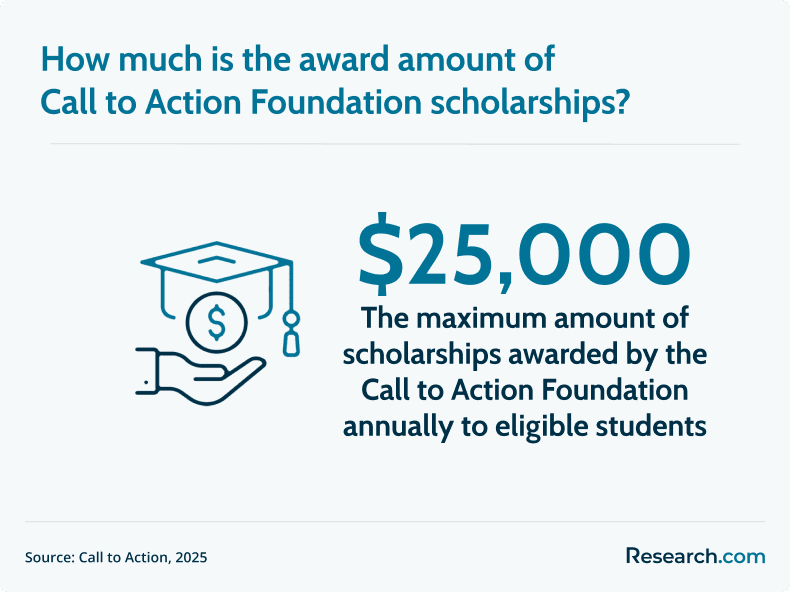
- Call to Action Scholarship Program: The Call to Action Foundation offers need-based scholarships to students attending public, nonprofit colleges and universities in Arizona, Colorado, Idaho, Iowa, Nevada, and Utah. Eligible students may receive up to $25,000 per year for 4 years. Applicants must maintain a 3.0 GPA, complete 500 hours of community service, and participate in the foundation’s educational activities.
- PG&E Grants & Scholarships: Pacific Gas & Electric Company provides grants and scholarships through ERG & ENG Scholarships and Better Together STEM Scholarships. ERG & ENG Scholarships range from $1,000 to $6,000, while Better Together STEM Scholarships may award $2,500, $5,000, or $10,000. Applicants must be California residents and PG&E customers during the application period.
- CREW Chicago Scholarship: CREW Chicago awards three scholarships each year worth up to $3,000 each. Eligible applicants include undergraduate or graduate students studying real estate, construction, facility management, architecture, urban planning, and related fields.
Common funding options include federal aid, institutional scholarships, state grants, private scholarships, employer tuition reimbursement, payment plans, and military or veteran education benefits when applicable. Students who are comparing affordability across short online credentials may also find useful budgeting ideas in resources such as low cost sterile processing technician certification online.
Questions to ask about financial aid
- Is the online real estate program eligible for federal financial aid?
- Are certificate students eligible for the same aid as bachelor’s degree students?
- Does the tuition rate change for out-of-state online students?
- Are there separate fees for technology, exams, internships, or course materials?
- Does the school offer scholarships for business, finance, real estate, or transfer students?
What are the prerequisites for enrolling in an online real estate degree program?
Admissions requirements for online real estate programs are usually similar to other undergraduate business programs. Requirements vary by school, but most programs look for evidence that the applicant is ready for college-level work.
- High School Diploma or GED: Undergraduate applicants generally need a high school diploma or an equivalent credential.
- Minimum GPA Requirement: Many schools use GPA to evaluate academic readiness, often in the range of 2.5 to 3.0.
- Standardized Test Scores: Some universities are test-optional, while others may request SAT or ACT scores for admission or scholarship review.
Compared with more specialized graduate pathways, such as how to get into SLP grad school, many undergraduate real estate programs have more accessible entry requirements. Still, applicants should review transfer rules, math expectations, business prerequisites, and technology requirements before applying.
What courses are typically in an online real estate degree program?
Online real estate programs usually blend real estate-specific subjects with business, finance, communication, and management courses. The exact curriculum depends on whether the program is a certificate, minor, concentration, or full bachelor’s degree.
| Course Area | What Students Learn | Why It Matters in Real Estate |
| Principles of Real Estate | Property ownership, land use, terminology, and basic legal concepts | Builds the foundation for brokerage, management, and investment work |
| Real Estate Finance | Mortgage markets, lending practices, valuation, and investment analysis | Helps students evaluate deals, financing options, and risk |
| Property Management | Leasing, tenant relations, maintenance planning, rent collection, and operations | Prepares students to manage residential or commercial assets |
| Real Estate Law | Contracts, zoning, property rights, and legal responsibilities | Supports ethical and compliant decision-making |
| Urban Economics and Land Use | Market forces, city development, land valuation, and planning concepts | Useful for development, investment, and public-sector roles |
- Principles of Real Estate: Introduces core concepts such as property ownership, land use, legal structures, and industry terminology.
- Real Estate Finance: Covers mortgage markets, financing tools, lending practices, and investment analysis.
- Property Management: Focuses on daily operations, tenant issues, leasing, maintenance, and budgeting.
- Real Estate Law: Examines contracts, zoning laws, property rights, and compliance issues.
- Urban Economics and Land Use: Explores how economic and planning decisions affect property markets and land values.
Should I pursue additional business education alongside my online real estate degree?
Additional business education can be valuable if your goals include brokerage ownership, commercial real estate, investment analysis, asset management, development, or executive leadership. Real estate is closely tied to finance, marketing, negotiation, accounting, and operations, so students who strengthen those areas may be better prepared for complex roles.
An MBA or targeted business coursework may make sense after you have defined your career direction and gained some industry exposure. Students comparing graduate business options can review resources such as the cheapest MBA programs to understand how cost, format, and curriculum differ across programs.
How do accreditation and quality assurance impact program value?
Accreditation matters because it signals that a school or business program has met recognized academic standards. It can affect transfer credits, graduate school options, employer confidence, and financial aid eligibility. Institutional accreditation may come from agencies such as HLC or SACSCOC, while business programs may also hold AACSB International accreditation.
Quality assurance goes beyond the accreditation label. Students should look for transparent learning outcomes, qualified faculty, current curriculum, career support, student feedback, and program review practices. Similar evaluation principles apply across fields; for example, comparisons of the cheapest online MBA in healthcare management show why cost should be weighed alongside accreditation, curriculum relevance, and student support.
What advanced online degrees can complement my real estate career?
Advanced online degrees can support a real estate career when they build skills that match your target role. A master’s degree in finance may help students interested in investment, valuation, portfolio analysis, or capital markets. An MBA may support brokerage ownership, management, development, or executive roles. Business analytics coursework can also be useful for students who want to work with market data, pricing trends, and investment models.
Not every advanced degree is equally relevant. Students should compare curriculum, accreditation, admissions requirements, and career alignment before enrolling. Exploring programs in other online professional fields, such as an online PharmD program, can also show how online education formats differ by discipline and professional expectations.
What challenges might I face with an online real estate degree program?
Online study offers flexibility, but it also requires self-management. Students must keep up with deadlines, participate in digital discussions, complete group projects remotely, and seek networking opportunities more intentionally than they might on campus.
- Limited face-to-face networking: Real estate is relationship-driven, so online students should actively use alumni networks, local associations, internships, and brokerage events.
- Self-paced does not mean low effort: Flexible courses still require consistent study time, especially in finance, law, and analytics-heavy subjects.
- Hands-on learning may require initiative: Students may need to find internships, shadowing opportunities, or local mentors to supplement online coursework.
- Licensing rules vary: A program may be academically strong but still not meet a state’s prelicensing education requirements.
When comparing online real estate with other career-oriented degree paths, such as highest paying medical jobs with a bachelor's degree, remember that real estate outcomes often depend heavily on licensing, local market conditions, sales ability, and professional network development.
How do online real estate degree programs integrate hands-on training?
Well-designed online programs can include practical learning even without a traditional classroom. Common approaches include property valuation projects, market analysis assignments, case studies, simulations, internship placements, remote group work, and career-service connections with employers or alumni.
Students should ask each school how it supports experiential learning. Does the program require an internship? Are local placements available for online students? Are there virtual networking sessions with brokers, developers, property managers, or finance professionals? Similar questions apply across other online professional programs, including the most affordable online Pharm D degree, where practical training and program structure can strongly affect value.
What types of specializations are available in online real estate degree programs?
Specializations help students connect their coursework to a specific part of the real estate industry. A student interested in commercial investment needs different preparation than someone who wants to manage apartment communities or work in residential sales. Students who are still deciding how sales fits into their education may also compare real estate tracks with guidance on what to major in for a sales career.
- Real Estate Finance: Focuses on investment analysis, valuation, risk, return, mortgage lending, and financing structures. This is a strong fit for students interested in commercial real estate, investment firms, banking, or financial institutions.
- Property Management: Covers tenant relations, leases, maintenance planning, budgets, and operations for residential or commercial properties. This track is useful for students who want to oversee rental portfolios or work for management companies.
- Urban Planning and Development: Examines land use, zoning, infrastructure, sustainability, and development patterns. It may fit students interested in public planning agencies, development firms, or community growth projects.
How do you choose the best online real estate degree program?
The best online real estate degree is not automatically the cheapest, fastest, or most recognizable. It is the program that fits your state requirements, career goal, schedule, budget, and academic needs.
- Check accreditation first: Confirm that the institution is accredited. Examples mentioned in this guide include the Higher Learning Commission (HLC), the Southern Association of Colleges and Schools Commission on Colleges (SACSCOC), and AACSB International.
- Compare curriculum to your target role: Brokerage, property management, finance, development, and association management require overlapping but different skills. Look for courses that match your intended path.
- Ask about licensing alignment: Do not assume a degree automatically satisfies your state’s prelicensing education requirement. Verify directly with your state real estate commission or licensing authority.
- Review total cost, not only tuition: Include fees, books, software, internship expenses, licensing courses, exam costs, and potential travel.
- Evaluate student support: Strong advising, career services, tutoring, faculty access, and alumni networks can make a major difference in an online program.
- Look at transfer policies: If you have prior college credit, ask how many credits transfer and how they apply to degree requirements.
Common mistakes to avoid
| Mistake | Why It Can Hurt You | Better Approach |
| Choosing a program without checking accreditation | It may affect financial aid, transfer credits, or employer recognition | Verify institutional and business accreditation before applying |
| Assuming the degree replaces licensing | Real estate licenses are state-regulated | Confirm state prelicensing and exam requirements separately |
| Focusing only on tuition per credit | Fees, books, software, and licensing costs can change affordability | Calculate the full expected cost before enrolling |
| Ignoring networking opportunities | Real estate careers often depend on relationships and referrals | Use internships, alumni groups, local associations, and broker events |
| Relying only on rankings | A highly ranked school may not fit your schedule, state, or goals | Use rankings as one input, not the final decision |
What career paths are available to graduates of online real estate degree programs?
Graduates can pursue sales, management, finance, and operations roles across residential, commercial, and community real estate. Some roles require state licensure, while others emphasize business, management, or analytical skills.
- Real Estate Sales Agent: Helps clients buy, sell, or rent property. This is often an entry point into the field and typically requires state licensure.
- Real Estate Broker: Handles transactions independently and may supervise agents after meeting broker licensing requirements. Brokers may also operate their own firms.
- Property Manager: Oversees residential or commercial properties, including tenant communication, maintenance, rent collection, leases, and budgets.
- Real Estate Manager: Manages property portfolios or real estate assets with a focus on value, operations, and return on investment. Some duties may overlap with a sales manager job description, especially when the role involves leasing teams, sales targets, or revenue strategy.
- Association Manager: Manages homeowner or condominium associations by overseeing budgets, rules, maintenance issues, meetings, and resident concerns.
Like students exploring what jobs can you get with a military science degree, real estate students may find that their degree leads to several possible paths rather than one fixed occupation. Transferable skills in communication, finance, leadership, and negotiation can apply across many real estate settings.
The chart below shows 2024 median annual wages for real estate professionals in the US based on 2025 US BLS data.
What is the job market like for graduates of online real estate degree programs?
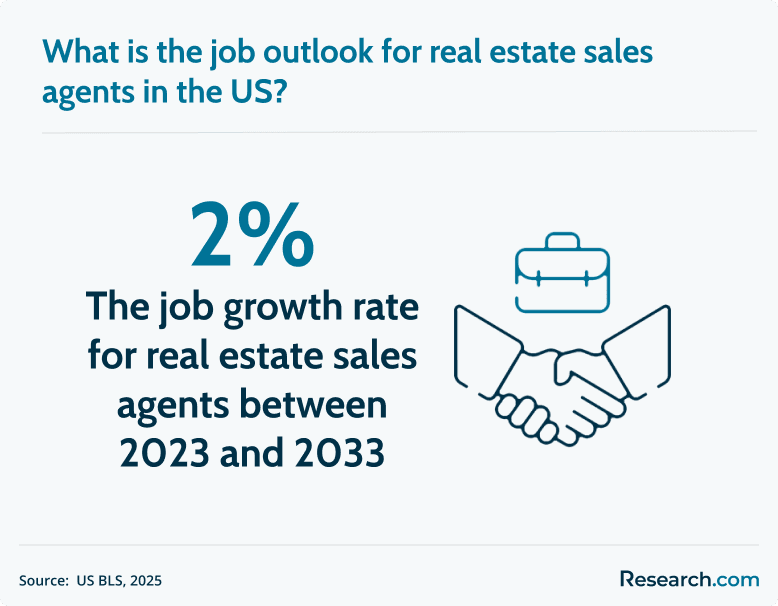
The job market is steady but competitive. Employment for real estate brokers and sales agents is projected to grow by 2% from 2023 to 2033, which is slower than the average for all occupations. Even with modest growth, about 46,000 openings are expected each year over the decade, largely because workers leave the occupation or retire (US BLS, 2025).
Property, real estate, and community association managers have a slightly stronger outlook. Employment in this occupation is projected to grow by 3% from 2023 to 2033, which aligns with the average for all occupations. The field is expected to have about 37,800 openings each year, also driven largely by replacement needs (US BLS, 2025).
Graduates may improve their competitiveness by building skills in property technology, digital marketing, financial analysis, data-driven valuation, customer relationship management, compliance, and local market research. Students aiming for investment, asset management, or executive roles may also consider graduate finance study, such as an online masters in finance.
Current Trends Affecting Real Estate Education and Careers
- Technology is changing daily work: Real estate professionals increasingly use digital listings, virtual tours, customer relationship management tools, market analytics platforms, and automated marketing systems.
- AI is becoming a productivity tool: AI can help with drafting listing descriptions, analyzing market information, organizing leads, and summarizing documents, but professionals still need judgment, compliance knowledge, and client trust.
- Employer expectations are broader: Brokerages and property firms may value candidates who understand finance, data, negotiation, law, and digital marketing in addition to sales.
- Licensing remains state-specific: Online education can be flexible, but students still need to verify licensing rules in the state where they plan to work.
- Entrepreneurial paths remain common: Since many brokers and sales agents are self-employed, business planning, lead generation, budgeting, and personal branding are important career skills.
Practical Steps Before You Enroll
- Define your target role: Decide whether you are aiming for sales, brokerage, property management, commercial real estate, finance, development, or association management.
- Check state licensing requirements: Confirm what your state requires for sales agent or broker licensure and whether the academic program helps meet any of those requirements.
- Verify accreditation: Review institutional accreditation and, when relevant, business-school accreditation.
- Compare total program cost: Include tuition, fees, books, software, licensing classes, exam fees, and any internship-related costs.
- Ask about transfer credits: Students with previous college coursework should request a transfer evaluation before committing.
- Review the curriculum closely: Make sure the program includes the subjects you need, such as real estate finance, law, property management, market analysis, or development.
- Evaluate career support: Look for internship help, employer connections, resume support, interview preparation, and alumni networking.
- Plan for networking outside class: Join local real estate associations, attend broker open houses, seek mentors, and build relationships early.
References:
- US Bureau of Labor Statistics. (2025, May 16). Occupational Employment and Wage Statistics. Occupational Employment and Wage Statistics Query System. https://data.bls.gov/oes/#/industry/000000
- US Bureau of Labor Statistics. (2025, April 18). Property, Real Estate, and Community Association Managers. Occupational Outlook Handbook. https://www.bls.gov/ooh/management/property-real-estate-and-community-association-managers.htm
- US Bureau of Labor Statistics. (2025, April 18). Real Estate Brokers and Sales Agents. Occupational Outlook Handbook. https://www.bls.gov/ooh/sales/real-estate-brokers-and-sales-agents.htm
- US Government. (2025, April 01). Minimum wage. Jobs, labor laws, and unemployment. https://www.usa.gov/minimum-wage
Key Insights
- An online real estate degree can strengthen your business, finance, legal, and management skills, but it does not automatically replace state licensing requirements.
- The best credential depends on your goal: certificates are faster, bachelor’s degrees are broader, and minors can add real estate knowledge to another major.
- In 2024, real estate brokers and sales agents earned a median annual wage of $58,960, while property, real estate, and community association managers earned $66,700 (US BLS, 2025).
- Job growth from 2023 to 2033 is projected at 2% for real estate brokers and sales agents and 3% for property, real estate, and community association managers (US BLS, 2025).
- Before enrolling, verify accreditation, licensing alignment, total cost, transfer credit policies, internship access, and career support.
- Online learning works best for students who are self-directed and willing to build professional networks outside the virtual classroom.
Other Things You Should Know About Online Real Estate Degree Programs
Yes. Most employers and graduate schools expect a degree from a regionally accredited college or university. In the United States, the six regional accreditors recognized by the U.S. Department of Education review institutional quality, while some real estate programs also seek program-specific approval from bodies such as ACBSP.
Admission requirements typically include a high school diploma or GED, transcripts, and sometimes a personal statement. Some programs may require letters of recommendation. It's essential to check specific school websites for any additional requirements or prerequisites for 2027.
To assess affordability in 2027, consider factors like tuition costs, available financial aid, and additional fees. Compare the cost per credit hour among institutions and evaluate the program's value, including accreditation, resources, and career support. Ensure the program aligns with your educational and financial goals.


