
2027 Best Accelerated LVN to RN Online Bridge Programs

Co-Founder and Chief Data Scientist
Many LVNs find themselves hitting a ceiling—managing heavy workloads with limited authority, recognition, or room to grow. For those ready to step into more advanced clinical or leadership roles, bridging to RN is often the clearest path forward.
This shift comes at a pivotal time: over 25% of registered nurses in the U.S. are expected to retire within five years, creating urgent demand for experienced, practice-ready professionals. This guide, prepared by experts in career planning, offers more than a list of online LVN to RN bridge programs—it serves as a strategic resource for navigating options, comparing outcomes, and making a decisive next move.
What are the benefits of getting an accelerated LVN to RN online bridge program?
- Becoming a Registered Nurse grants access to high-impact roles in critical care units, emergency departments, and specialty clinics, expanding your scope of practice and professional autonomy.
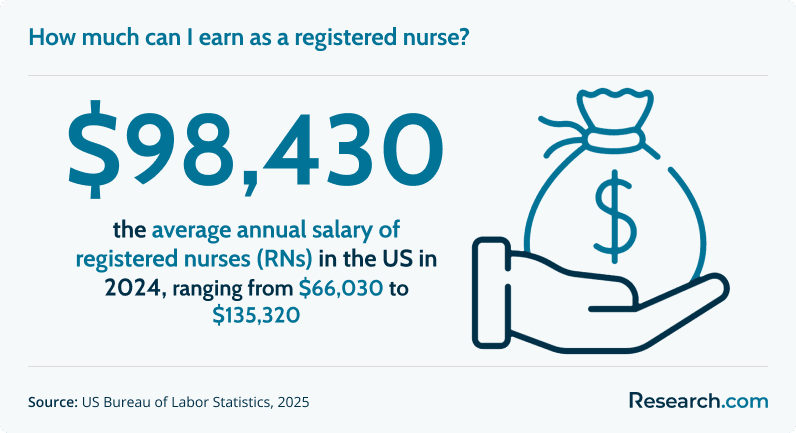
- You can expect a substantial salary boost, with the average RN in the U.S. earning around $98,430 annually—a significant jump from the average LVN salary.
- Online programs allow you to complete coursework on your own schedule, making it possible to continue working and managing personal responsibilities while you advance your credentials.
What can I expect from an accelerated LVN to RN online bridge program?
Students in an accelerated program can expect an intense but manageable academic pace that combines flexible online coursework with mandatory, in-person clinical experience. The core challenge for many experienced Licensed Practical or Vocational Nurses (LPNs/LVNs) is not just the volume of work, but the fundamental cognitive shift the curriculum demands. Learners are pushed to move beyond task-based skills to apply analytical frameworks, evidence-based practice, and leadership principles to patient care.
Success in an accelerated program hinges on a proactive strategy, not just hard work. Creating a dedicated weekly study schedule and protecting that time is essential. Clear communication with employers and family about academic commitments helps set realistic expectations from the start. Finally, building a strong support system with classmates proves critical, as peers often become the most valuable resource for navigating the pressure and staying motivated.
Where can I work with an accelerated LVN to RN online bridge program?
Graduates gain immediate access to high-acuity settings that are often closed to LVNs, including hospital critical care units, emergency departments, and outpatient surgery centers. This credential also opens doors to specialized roles in areas like oncology, pediatrics, and cardiology, allowing for deeper clinical focus and career development in a specific area of interest.
Beyond direct patient care, the RN license is a gateway to some of the fastest-growing sectors in healthcare. Professionals with clinical expertise are in high demand for roles in telehealth, providing virtual patient consultations and monitoring. Others pursue careers in nursing informatics, working with electronic health records and data to improve patient outcomes.
How much can I make with an accelerated LVN to RN online bridge program?
The financial return on becoming a Registered Nurse is significant. In the U.S., the average annual salary for an RN is approximately $98,430, a substantial increase over the LVN average of around $64,150.
This national figure, however, is a baseline. Actual earning potential is directly influenced by strategic career decisions. Key factors such as geographic location, choice of specialty, and the type of healthcare facility all play a major role in determining final compensation.
- List of the Best Accelerated LVN to RN Online Bridge Programs for 2027 List of Programs
- How long does it take to complete an accelerated LVN to RN online bridge program? Completion Time
- How does an online accelerated LVN to RN online bridge program compare to an on-campus program? How does an online accelerated LVN to RN online bridge program compare to an on-campus program?
- What is the average cost of an accelerated LVN to RN online bridge program? Program Cost
- What are the financial aid options for students enrolling in an accelerated LVN to RN online bridge program? Financial Aid
- What are the prerequisites for enrolling in an accelerated LVN to RN online bridge program? What are the prerequisites for enrolling in an accelerated LVN to RN online bridge program?
- What courses are typically in an accelerated LVN to RN online bridge program? What courses are typically in an accelerated LVN to RN online bridge program?
- What types of specializations are available in an accelerated LVN to RN online bridge program? What types of specializations are available in an accelerated LVN to RN online bridge program?
- How to Choose the Best Accelerated LVN to RN Online Bridge Program How to Choose the Best Accelerated LVN to RN Online Bridge Program
- What career paths are available for graduates of an accelerated LVN to RN online bridge program? What career paths are available for graduates of an accelerated LVN to RN online bridge program?
- What is the job market for graduates with an accelerated LVN to RN online bridge program? Job Market
- What are the NCLEX pass rates and completion statistics for these programs? What are the NCLEX pass rates and completion statistics for these programs?
- Does bridging to an RN license pave the way for advanced practice roles? Does bridging to an RN license pave the way for advanced practice roles?
- What distinguishes the LVN to RN pathway from direct-entry NP programs? What distinguishes the LVN to RN pathway from direct-entry NP programs?
- Can the LVN to RN Bridge Accelerate My Pathway to a Doctor of Nursing Practice? Can the LVN to RN Bridge Accelerate My Pathway to a Doctor of Nursing Practice?
Best Accelerated LVN to RN Online Bridge Programs for 2027
Licensed vocational nurses and licensed practical nurses often look for LVN to RN bridge programs when they want a broader scope of practice, stronger career mobility, and a path toward roles that require registered nurse licensure. The challenge is choosing a program that is fast without being risky, flexible without being unsupported, and affordable without creating problems for licensure or employment.
This guide is for working LVNs and LPNs comparing accelerated online or hybrid bridge programs. It explains how these programs work, how long they take, what they cost, how clinicals are handled, what prerequisites to expect, and how to judge whether a program is worth your time and money. It also compares featured programs so you can narrow your options more efficiently.
Quick Answer: What Is the Fastest Practical Path from LVN to RN?
The fastest LVN to RN pathway is usually an accelerated ADN or ASN bridge program that gives credit for prior LVN/LPN education and allows online theory coursework with in-person clinical training. Many accelerated bridge programs take 12 to 24 months after prerequisites, while BSN bridge options usually take longer but may offer better long-term advancement options. The best choice depends on your state licensure requirements, transfer credits, clinical placement support, budget, and whether your target employers prefer a BSN.
How Research.com Evaluates Programs
Because an RN program is a major financial and professional commitment, our ranking process emphasizes transparent program data, institutional credibility, cost, completion expectations, accreditation, and student decision factors. Research.com uses established education data sources such as the IPEDS database, Peterson's database, the College Scorecard database, and The National Center for Education Statistics.
These sources help support comparisons of online and hybrid LVN/LPN to RN bridge programs, but students should still verify current tuition, state approval, clinical placement rules, and admissions requirements directly with each school. To learn more about how Research.com builds education rankings, visit our methodology page.
Featured Program Comparison
| School | Program | Length | Credential Path | Reported Cost or Tuition | Best Fit |
| Texas State Technical College | LVN to RN Transition Nursing Program | 20 months | RN transition pathway | $18,420 total tuition | LVNs seeking a hands-on transition program with career-focused support |
| Azusa Pacific University | BS in Nursing LVN to BSN | 2 years after prerequisites | BSN | $835 per credit | LVNs who want a bachelor’s-level nursing pathway and cohort learning |
| Hutchinson Community College | Nursing LPN to RN Online Bridge AAS | 1.5 years | AAS with BSN coursework option through KU partnership | $131 in-state; $162 out-of-state per credit | LPNs who want an efficient ADN pathway with future BSN momentum |
| Herzing University | Online LPN to RN Options BSN Program | 28 months for BSN track | BSN | $755 per credit | Working LPNs who need asynchronous online lectures and clinical placement assistance |
| Jersey College | LPN to RN Bridge Program | 6 semesters | RN bridge pathway | $44,263 total program cost | Students who prefer a patient-centered bridge curriculum with a structured semester format |
| Georgia State University | LPN to BSN Bridge Program | 3 years | BSN | $306 in-state; $980 out-of-state per credit | LPNs seeking BSN preparation with formal credit for prior learning |
| Missouri State University - West Plains | ASN LPN-to-RN Bridge Program | 1 year | ASN | $212 in-state; $289.50 out-of-state per credit | LPNs who want a highly accelerated seated or online option |
| Johnson County Community College | LPN to RN Bridge | 3 semesters after prerequisites | AAS | Approximately $6,861 total program cost | LPNs who qualify for advanced standing and want a lower-cost community college route |
| Lehigh Carbon Community College | Nursing A.A.S. ADN LPN-to-RN Transition | 3 semesters | ADN/A.A.S. | $135 in-district; $405 out-of-state per credit | LPNs who want a transition course model leading to NCLEX-RN eligibility |
| Western Kentucky University | Online LPN to ASN Bridge Program | 4 semesters | ASN | $309.08 per credit | LPNs who want a customized plan using prior learning and challenge exams |
1. Texas State Technical College - LVN to RN Transition Nursing Program
Texas State Technical College offers an LVN to RN Transition Nursing Program designed for licensed vocational nurses who want to build on existing patient-care experience and prepare for registered nursing responsibilities. The program emphasizes applied clinical learning and prepares graduates for entry-level RN roles in hospitals, physician practices, home health settings, and related care environments. Students also participate in a career success course connected to the college’s money-back guarantee initiative.
- Program Length: 20 months
- Required Credits to Graduate: Not specified
- Total Tuition: $18,420
- Accreditation: Southern Association of Colleges and Schools Commission on Colleges (SACSCOC)
2. Azusa Pacific University - BS in Nursing LVN to BSN
Azusa Pacific University’s LVN to BSN pathway is intended for LVNs who want to move directly into bachelor’s-level nursing preparation rather than stopping at an ADN. The program uses a cohort format, offers instruction at multiple regional locations, and includes simulation lab experiences that support clinical skill development and leadership preparation.
- Program Length: 2 years after prerequisites
- Required Credits to Graduate: 120
- Cost per Credit: $835
- Accreditation: Commission on Collegiate Nursing Education (CCNE)
3. Hutchinson Community College - Nursing LPN to RN Online Bridge AAS
Hutchinson Community College offers an LPN to RN Online Bridge AAS pathway that combines community college nursing preparation with an academic partnership through the University of Kansas. Students can work toward the ADN at HutchCC while also taking online KU coursework that may support future BSN progress. This structure may appeal to LPNs who want a faster RN route without losing sight of long-term educational advancement.
- Program Length: 1.5 years
- Required Credits to Graduate: 69
- Cost per Credit: $131 in-state; $162 out-of-state
- Accreditation: Accreditation Commission for Education in Nursing (ACEN)
4. Herzing University - Online LPN to RN Options BSN Program
Herzing University’s online LPN to RN BSN option delivers lecture coursework fully online in an asynchronous format, which can help working students study around shifts and family responsibilities. The program covers evidence-based practice, care coordination, and professional nursing concepts. Students should note that online coursework does not eliminate in-person requirements; the program includes local clinical placement support and required multi-day skills intensives at a designated campus.
- Program Length: 28 months for the BSN track
- Required Credits to Graduate: 120
- Cost per Credit: $755
- Accreditation: Commission on Collegiate Nursing Education (CCNE)
5. Jersey College - LPN to RN Bridge Program
Jersey College’s LPN to RN Bridge Program is built around a holistic view of nursing care, encouraging students to consider physical, emotional, and social dimensions of patient needs. The program uses prior LPN preparation as the foundation for a broader RN scope of practice and may suit students who want a structured bridge format focused on patient-centered care.
- Program Length: 6 semesters
- Required Credits to Graduate: 75
- Total Program Cost: $44,263
- Accreditation: Commission of the Council on Occupational Education (COE)
6. Georgia State University - LPN to BSN Bridge Program
Georgia State University’s LPN to BSN Bridge Program formally recognizes prior practical nursing education by awarding 18 articulation credit hours. The hybrid structure combines online flexibility with required face-to-face learning, making it a potential fit for LPNs who want a BSN while receiving academic credit for their existing professional preparation.
- Program Length: 3 years
- Required Credits for Nursing Major: 47
- Cost per Credit: $306 in-state; $980 out-of-state
- Accreditation: Southern Association of Colleges and Schools Commission on Colleges (SACSCOC)
7. Missouri State University - West Plains - ASN Licensed Practical Nurse to Registered Nurse Bridge Program
Missouri State University - West Plains offers an accelerated LPN-to-RN bridge track that can be completed in 1 year. Students may choose between a seated classroom cohort and a fully online learning option, giving applicants a clearer choice based on learning style and schedule. The program also awards 15 credit hours for prior LPN coursework.
- Program Length: 1 year
- Required Credits to Graduate: 65
- Cost per Credit: $212 in-state; $289.50 out-of-state
- Accreditation: Accreditation Commission for Education in Nursing (ACEN)
8. Johnson County Community College - LPN to RN Bridge
Johnson County Community College uses an advanced standing model for qualified LPNs. Accepted students can bypass the first year of the traditional RN curriculum after completing two transition courses, then receive credit for the first two foundational nursing courses. This structure allows students to complete the Associate of Applied Science degree in three semesters, plus any remaining general education requirements.
- Program Length: 3 semesters after prerequisites
- Required Credits to Graduate: 56
- Total Program Cost: Approximately $6,861
- Accreditation: Accreditation Commission for Education in Nursing (ACEN)
9. Lehigh Carbon Community College - Nursing A.A.S. ADN
Lehigh Carbon Community College offers an LPN-to-RN transition track within its Nursing A.A.S. program. The curriculum includes a transition course that recognizes students’ existing LPN knowledge while preparing them for broader RN responsibilities. Graduates complete a required virtual review course and are eligible to sit for the NCLEX-RN.
- Program Length: 3 semesters
- Required Credits to Graduate: 66
- Cost per Credit: $135 in-district; $405 out-of-state
- Accreditation: Accreditation Commission for Education in Nursing (ACEN)
10. Western Kentucky University - Online LPN to ASN Bridge Program
Western Kentucky University’s Online LPN to ASN Bridge Program creates an individualized academic plan for each student. The program may use credit for prior learning, challenge exams for selected courses, and online lectures to reduce unnecessary repetition. Clinical hours are completed locally, which can make the program more workable for students who cannot relocate.
- Program Length: 4 semesters
- Required Credits to Graduate: 61
- Cost per Credit: $309.08
- Accreditation: Accreditation Commission for Education in Nursing (ACEN)
How Long Does an Accelerated LVN to RN Online Bridge Program Take?
Most accelerated LVN-to-RN bridge programs take 12 to 24 months after all prerequisites are complete. ADN and ASN bridge programs are usually shorter, while LVN-to-BSN programs take longer because they include bachelor’s-level general education and nursing leadership coursework. Your actual timeline depends on your license status, transfer credits, science prerequisites, course availability, and whether you study full time or part time.
LVNs who entered practice through a vocational certificate or diploma may need additional college coursework before starting the nursing bridge sequence. Common missing requirements include Anatomy, Microbiology, Chemistry, English Composition, and college-level math. This prerequisite stage can add multiple semesters if courses are not already complete.
LVNs with an Associate of Applied Science may be able to move faster, but only after the school reviews official transcripts. Some credits may transfer cleanly, while others may not meet the target program’s age limits, lab requirements, or course equivalency standards. A transcript evaluation is one of the most important early steps.
An RN bridge program is more demanding than a short occupational certificate because it prepares students for a wider scope of practice, independent clinical judgment, and licensure testing. A short program such as a medical assistant degree online 6 weeks may prepare students for a focused support role, but RN education requires deeper science, clinical reasoning, and supervised patient-care training.
| Student Starting Point | Likely Time Factor | What to Check Before Applying |
| LVN/LPN certificate or diploma | Prerequisite courses may add time before the bridge sequence | Science labs, math, English, TEAS requirements, and course expiration rules |
| LVN/LPN with AAS coursework | Transfer credit may shorten the path | Transcript evaluation, articulation credit, and remaining general education requirements |
| LVN/LPN seeking ADN or ASN | Usually the faster RN licensure route | NCLEX-RN eligibility, employer BSN expectations, and RN-to-BSN options |
| LVN/LPN seeking BSN | Longer timeline but stronger bachelor’s-level preparation | Clinical placement logistics, total credits, tuition, and leadership coursework |
Online vs. On-Campus Accelerated LVN to RN Bridge Programs
Online LVN to RN bridge programs usually move lecture-based content, readings, assignments, exams, and discussions into a digital learning platform. However, they still require in-person clinical practice, skills validation, labs, simulations, or campus intensives. An online program is not a fully remote nursing license pathway.
The delivery format matters for convenience, but accreditation and state approval matter more for licensure and employment. Nursing students should prioritize programs with recognized nursing accreditation from ACEN or CCNE when applicable, along with approval from the relevant state board of nursing. This quality-control principle applies across health education; students comparing accredited medical billing and coding schools online also need to verify that a credential will be recognized by employers or certifying bodies.
| Factor | Online or Hybrid LVN to RN | On-Campus LVN to RN |
| Best for | Working LVNs/LPNs who need schedule flexibility | Students who prefer fixed class times and in-person interaction |
| Course delivery | Online lectures, assignments, and discussions; clinicals in person | Classroom lectures, campus labs, and clinicals in person |
| Clinical training | Required in approved health care settings | Required in approved health care settings |
| Main risk | Weak clinical placement support or unclear state authorization | Less flexibility for students balancing employment and caregiving |
| Credential outcome | RN eligibility if program meets state requirements | RN eligibility if program meets state requirements |
How Clinical Placements Work for Online Students
Every RN program requires supervised clinical practice. Online coursework can reduce commuting for lectures, but it cannot replace hands-on training with patients. Some schools arrange clinical placements through established hospital or clinic partnerships, while others expect students to help identify local sites or preceptors.
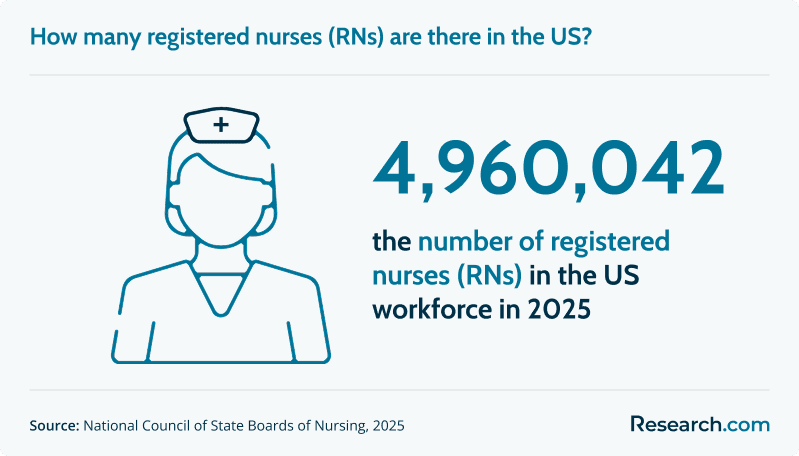
Before enrolling, ask the school to explain exactly how clinical placement works in your state and what happens if a site is unavailable. This is especially important for students comparing fast track medical assistant to RN bridge programs online, because bridge students often need flexibility without sacrificing licensure compliance. Local clinical options can also matter for rural students, particularly since only 16% of RNs currently live in rural areas.
What Is the Average Cost of an Accelerated LVN to RN Online Bridge Program?
The total cost of an LVN-to-RN bridge program commonly ranges from $10,000 to over $40,000, depending on whether the school is public or private, whether the program leads to an ADN/ASN or BSN, and how many prerequisites or transfer credits you still need. Some schools charge per credit, while others publish a total program cost or semester-based tuition.
Tuition is only one part of the financial picture. Students should also budget for application fees, entrance exams such as the TEAS, textbooks, online platform fees, lab fees, uniforms, scrubs, immunizations, background checks, drug screening, liability insurance, travel to clinical sites, and NCLEX-related expenses. Programs in other health fields can also use different pricing models; for example, the shortest online doctorate in behavioral health leadership may follow a per-credit or flat-rate structure depending on the institution.
| Cost Category | Why It Matters | Question to Ask |
| Tuition | The largest visible cost, but not always the full cost | Is tuition charged per credit, per term, or for the full program? |
| Prerequisites | Missing science or general education courses can add cost and time | Which of my prior courses will transfer? |
| Clinical expenses | Travel, compliance checks, uniforms, and supplies can add up | What clinical costs are not included in tuition? |
| Technology and lab fees | Online programs may still charge platform, simulation, or lab-related fees | Are all mandatory fees listed in the published cost estimate? |
| Licensure preparation | Graduation does not remove the need to prepare for NCLEX-RN | Does the program include NCLEX review or charge separately? |
Financial Aid Options for Accelerated LVN to RN Bridge Students
LVN-to-RN students may be able to combine employer support, scholarships, grants, and federal student aid to reduce out-of-pocket costs. The smartest approach is to look for funding that does not need to be repaid before relying heavily on loans.
- Employer tuition reimbursement: Start with your current employer. Hospitals, long-term care organizations, and health systems may support LVNs who are advancing into RN roles because it helps fill staffing needs and retain experienced employees. Ask human resources about tuition reimbursement, work commitments, grade requirements, eligible schools, and annual funding limits.
- Scholarships and grants: Nursing students may qualify for awards through professional associations, foundations, state workforce programs, and federal initiatives. The American Association of Colleges of Nursing maintains information on scholarships and financial aid for nursing students, and students should also check state nursing organizations and local hospital foundations.
- Federal student aid: Complete the FAFSA after exploring employer and scholarship options. Federal aid may include grants and student loans, and federal loans often have borrower protections that private loans may not offer.
Ways to Lower the Cost Before You Enroll
- Complete transferable prerequisites at a lower-cost accredited community college when allowed.
- Ask whether the school awards credit for LVN/LPN coursework, challenge exams, or prior learning.
- Compare total program cost, not just tuition per credit.
- Confirm whether clinical travel, lab supplies, and testing fees are included.
- Use employer funding strategically if it requires continued employment after graduation.
Prerequisites for Accelerated LVN to RN Online Bridge Programs
Every LVN to RN bridge program requires an active, unencumbered LVN or LPN license. Beyond that, admissions requirements vary by state, school, credential level, and applicant background. Most programs also require official transcripts, minimum grades in prerequisite courses, entrance testing, immunization records, CPR certification, background screening, and proof that the applicant can participate in clinical training.
For LVN/LPN Certificate or Diploma Holders
About 75% of LPNs/LVNs enter the field through a vocational certificate or diploma. These nurses may need to complete college-level prerequisites before they can begin the RN bridge sequence. Typical prerequisites include:
- Anatomy and Physiology I and II with labs
- Microbiology with lab
- General Chemistry
- English Composition
- College-level Math, often Statistics
Applicants from emergency services backgrounds may also compare nursing bridge options that recognize prior health care coursework. For example, some shortest paramedic to RN online pathways may allow relevant credits to apply toward prerequisites. Many nursing programs also require an entrance exam such as the TEAS.
For LVN/LPN AAS Degree Holders
LVNs who already have an Associate of Applied Science may be able to transfer more coursework, but transfer credit is never automatic. The nursing school must evaluate each transcript to determine whether courses meet its content, lab, grade, and time-limit requirements. If a science course is too old or a specific prerequisite is missing, the student may still need additional classes before starting the bridge sequence.
This academic review is one reason RN preparation differs sharply from a short skills course such as a 4-week online course for medical coding and billing. Registered nursing programs must verify that students have the science foundation and clinical readiness needed for safe patient care.
Common Courses in an Accelerated LVN to RN Online Bridge Program
The core academic shift from LVN/LPN to RN is the move from task-focused care to broader clinical judgment. RN students learn to assess patients, interpret data, prioritize competing needs, plan interventions, evaluate outcomes, communicate with interdisciplinary teams, and manage care for multiple patients.
Many programs use the nursing process, often summarized as ADPIE: Assessment, Diagnosis, Planning, Implementation, and Evaluation. While course names differ by school, bridge curricula commonly include:
- Advanced medical-surgical nursing or complex health alterations
- Leadership and management in nursing
- Evidence-based practice
- Community and public health nursing
- Nursing research
- Maternal-child, pediatric, or family nursing content
- Mental health nursing
- Pharmacology and medication safety
- Clinical judgment and NCLEX-RN preparation
Students who later enjoy mentoring, training, and curriculum development may eventually explore academic or clinical teaching roles. Research.com’s guide to nurse educator salary and career paths explains how experienced nurses can move into education-focused positions.
Can You Specialize During an LVN to RN Bridge Program?
Most LVN-to-RN bridge programs are generalist programs. They are designed to prepare students for RN licensure, not to certify them in a specialty such as critical care, pediatrics, oncology, emergency nursing, or labor and delivery. Specialty development usually happens after graduation through employment, supervised experience, continuing education, and professional certification.
Students who want stronger bachelor’s-level preparation may compare fastest LPN to BSN online program options, especially if their long-term goals include leadership, public health, graduate school, or employers that prefer BSN-prepared nurses.
Typical Path from General RN to Specialty Nurse
- Graduate from an approved program and pass the NCLEX-RN: Licensure is the required first step.
- Apply for entry-level RN roles in the target specialty: New graduates may look for openings in areas such as emergency departments, ICUs, women’s health, pediatrics, or medical-surgical units.
- Build supervised clinical experience: Specialty competence develops through direct patient care, mentoring, preceptorship, and continuing education.
- Pursue professional certification when eligible: Many specialty certifications require documented experience before candidates can sit for the exam.
How to Choose the Best Accelerated LVN to RN Online Bridge Program
The best LVN to RN bridge program is not always the fastest or cheapest. It is the program that meets licensure requirements in your state, has appropriate accreditation and approval, offers dependable clinical placement support, fits your budget, and matches your career goals. Use the questions below before signing an enrollment agreement.
1. Confirm Accreditation and State Approval
Start by checking whether the nursing program is accredited by ACEN or CCNE when applicable and approved by the state board of nursing for the state where you plan to seek licensure. Institutional accreditation alone is not enough to answer every nursing licensure question. Ask the admissions team directly: “Will this program make me eligible to sit for the NCLEX-RN in my state?” Then verify the answer with the state board of nursing.
2. Evaluate Clinical Placement Support
Clinical placement is one of the biggest make-or-break factors in online nursing education. A program may have strong online coursework but weak local placement support. Ask whether clinical placement is guaranteed, who finds the site, how far students may need to travel, what happens if a site cancels, and whether the school has existing agreements in your region.
3. Compare ADN/ASN and BSN Pathways
| Pathway | When It Makes Sense | Trade-Off |
| ADN or ASN bridge | You want the fastest practical route to RN licensure and plan to work while finishing a BSN later | Some employers may prefer or require a BSN for hiring or advancement |
| LVN/LPN to BSN | You want bachelor’s-level preparation now and are aiming for leadership, Magnet hospitals, or graduate school | Usually takes longer and may cost more upfront |
| Hybrid program | You need online flexibility but can attend labs, simulations, or campus intensives | Travel and scheduling requirements may still be significant |
| Campus-based program | You learn best in person and want structured face-to-face support | Less flexible for working nurses with rotating shifts |
4. Ask These Questions Before Applying
- Is the nursing program ACEN- or CCNE-accredited, and is it approved by the state board of nursing?
- Will this program meet RN licensure requirements in the state where I plan to practice?
- How many of my credits will transfer, and can I get that in writing?
- Who is responsible for finding clinical placements?
- Are any campus visits, labs, or intensives required?
- What is the total cost of attendance, including fees, supplies, testing, and clinical expenses?
- What are the program’s NCLEX-RN pass rates and completion rates?
- Can I keep working while enrolled, or does the clinical schedule make that unrealistic?
- Does the school offer tutoring, NCLEX support, and advising for bridge students?
Common Mistakes to Avoid
| Mistake | Why It Can Hurt You | Better Move |
| Choosing only by speed | A fast program can still delay you if prerequisites, clinicals, or licensure rules are unclear | Compare total timeline from prerequisites through NCLEX-RN eligibility |
| Ignoring programmatic accreditation | Licensure, transfer, graduate school, and employer recognition may be affected | Verify ACEN or CCNE status and state board approval |
| Assuming online means fully remote | All RN programs require in-person clinical training | Ask about clinical sites, labs, simulations, and travel before enrolling |
| Looking only at tuition | Fees, supplies, prerequisites, and travel can change the real cost | Request a full cost-of-attendance estimate |
| Assuming salary outcomes are guaranteed | Pay varies by location, employer, shift, specialty, and experience | Research local RN job postings and employer education preferences |
Career Paths After an Accelerated LVN to RN Online Bridge Program
An RN license can expand a nurse’s clinical responsibilities and open doors to settings and roles that may not be available to LVNs/LPNs. Many graduates move into hospital-based RN positions, specialty units, care coordination, public health, home health, long-term care leadership, or ambulatory care.
Clinical Roles for New RN Bridge Graduates
- Staff Registered Nurse
- Medical-Surgical Nurse
- Emergency Department Nurse
- ICU or Step-Down Unit Nurse
- Maternal-Child or Pediatric Nurse
- Home Health Registered Nurse
- Long-Term Care RN Supervisor
- Clinic or Ambulatory Care RN
Moving from Bedside Care into Leadership
Experienced LVNs who become RNs often bring practical patient-care confidence into their new role. With additional experience, they may pursue positions such as Charge Nurse, Unit Supervisor, Nurse Manager, case management staff, clinical educator, or care coordinator. Some nurses also move into recruitment or workforce roles because they understand clinical staffing needs firsthand. If that path interests you, Research.com’s guide on how much do nurse recruiters make explains the nurse recruiter career route.
Job Market Outlook for LVN to RN Bridge Graduates
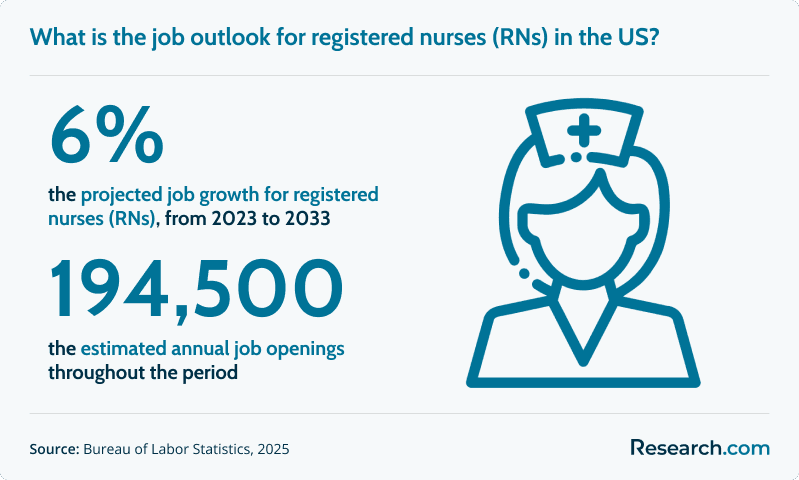
The labor market for registered nurses remains strong. The U.S. Bureau of Labor Statistics projects about 194,500 openings for RNs each year over the next decade. Demand is influenced by retirements, population health needs, and the ongoing need for skilled nurses across hospitals, outpatient facilities, long-term care, home health, and community settings. Broader workforce data from the American Nurses Association also highlights ongoing issues among nurses in the workforce.
The BSN Advantage
Bridge students should pay close attention to employer education preferences. By 2022, nearly 72% of RNs held a BSN or higher as their main credential. Many urban hospitals, Magnet-recognized organizations, leadership roles, and specialty tracks may prefer or require a BSN. For some LVNs, the most practical strategy is to earn an ADN or ASN first, start working as an RN, and then complete an RN-to-BSN program with employer tuition support.
How AI and Technology Are Changing RN Work
Technology is reshaping nursing workflows, but it is not replacing the need for licensed clinical judgment. RNs increasingly use electronic health records, telehealth platforms, medication safety systems, remote monitoring tools, clinical decision support, and data-driven quality dashboards. Bridge students should look for programs that teach safe technology use, documentation accuracy, evidence-based decision-making, and communication across digital care environments.
NCLEX Pass Rates and Completion Statistics: What to Check
NCLEX-RN pass rates, completion rates, and job placement information can help you judge whether a program prepares students effectively. These numbers are often available through school disclosures or state boards of nursing. A strong program should be willing to explain recent pass rates, how many students complete on time, and what academic support is available for students who struggle.
Do not rely on affordability alone. A low-cost program that lacks clinical support or has weak licensure outcomes may cost more in the long run. If price is a major factor, compare programs using both cost and student outcomes; Research.com’s guide to the cheapest nursing program can help you think through affordability alongside program quality.
What Graduates Say About LVN to RN Online Bridge Programs
-
: "I expected my LVN experience to be treated like background knowledge rather than real preparation. Instead, it helped me connect classroom concepts to actual patients during clinicals. The theories made more sense because I had already seen many of those situations at work.
—Brenda"
-
: "I chose an ADN bridge because I wanted to become an RN quickly and keep my costs manageable. The online format let me continue working while I studied. After earning my RN, I was able to use my hospital’s support to keep moving toward the BSN.
—Carlos"
-
: "Returning to school after many years was intimidating, especially with the science courses. Being able to replay online lectures helped me work through difficult topics at my own pace. I already had bedside confidence, but the program helped me build academic confidence too.
—Leigh"
Does an LVN to RN Bridge Help You Reach Advanced Practice Roles?
Yes, earning RN licensure can become the first major step toward advanced nursing roles, but it is not the final credential for advanced practice. After becoming an RN, nurses may pursue BSN completion, graduate nursing education, specialty certification, leadership roles, or advanced practice pathways depending on their goals.
Students who eventually want to become nurse practitioners should understand the difference between RN preparation and graduate NP preparation. RN bridge programs build the licensure foundation, while nurse practitioner programs require advanced clinical training. If you are researching long-term NP options, review NP direct entry programs to understand how different pathways compare.
How Is the LVN to RN Pathway Different from Direct-Entry NP Programs?
An LVN to RN bridge program is for licensed practical or vocational nurses who already have nursing experience and want to become registered nurses. Direct-entry NP programs are typically designed for people who hold bachelor’s degrees in non-nursing fields and want an accelerated route into advanced nursing education. These are different audiences, different admissions models, and different career stages.
LVN-to-RN students usually need to focus first on RN licensure, clinical judgment, and NCLEX-RN eligibility. Direct-entry NP students are preparing for graduate-level advanced practice after meeting program-specific nursing requirements. If you are comparing nontraditional routes into advanced nursing, Research.com’s guide to direct-entry NP programs for non-nurses with bachelor's degrees explains how those programs work.
Can an LVN to RN Bridge Shorten the Path to a Doctor of Nursing Practice?
An LVN to RN bridge can support a long-term path toward doctoral nursing education by helping you earn the RN credential and build stronger clinical foundations. However, a Doctor of Nursing Practice requires additional education beyond RN licensure, typically including BSN and graduate-level preparation depending on the route.
For LVNs with long-range leadership, advanced practice, or systems-level goals, the bridge program is best viewed as an early step in a multi-stage plan. After becoming an RN and completing any required bachelor’s or graduate preparation, nurses may compare doctoral options such as the shortest DNP program online.
References
- American Association of Colleges of Nursing. (2025). Fact sheet: Nursing workforce. Retrieved May 25, 2024, from https://www.aacnnursing.org/news-information/fact-sheets/nursing-workforce
- Data USA. (2025). Registered nursing. Retrieved May 25, 2024, from https://datausa.io/profile/soc/registered-nurses
- National Council of State Boards of Nursing. (2025). National nursing workforce survey. Retrieved May 25, 2024, from https://www.ncsbn.org/research/national-nursing-workforce-survey.page
- University of St. Augustine for Health Sciences. (2024). Nursing shortage: A 2024 data study reveals key insights. Retrieved May 25, 2024, from https://www.usa.edu/blog/nursing-shortage/
- U.S. Bureau of Labor Statistics. (2025). Licensed practical and licensed vocational nurses. Occupational Outlook Handbook. Retrieved May 25, 2024, from https://www.bls.gov/ooh/healthcare/licensed-practical-and-licensed-vocational-nurses.htm
- U.S. Bureau of Labor Statistics. (2025). Occupational employment and wage statistics. Retrieved May 25, 2024, from https://www.bls.gov/oes/
- U.S. Bureau of Labor Statistics. (2025). Registered nurses. Occupational Outlook Handbook. Retrieved May 25, 2024, from https://www.bls.gov/ooh/healthcare/registered-nurses.htm
- U.S. Census Bureau. (2021, April 5). Who are our health care workers? Retrieved May 25, 2024, from https://www.census.gov/library/stories/2021/04/who-are-our-health-care-workers.html
Key Insights
- An accelerated LVN to RN online bridge program can be a strong option for licensed LVNs/LPNs who want RN licensure without starting nursing school from the beginning.
- Online does not mean fully remote. RN programs still require in-person clinical practice, and clinical placement support should be one of your top selection criteria.
- Most accelerated bridge programs take 12 to 24 months after prerequisites, but missing science or general education courses can extend the timeline.
- ADN and ASN bridge programs are usually faster and may cost less upfront; LVN-to-BSN programs take longer but can improve long-term competitiveness for leadership, specialty, and graduate options.
- Do not enroll until you verify state board approval, ACEN or CCNE accreditation when applicable, NCLEX-RN eligibility, total cost of attendance, and transfer credit decisions.
- The best program is not simply the shortest one. It is the program that gets you to RN licensure safely, affordably, and with enough academic and clinical support to finish.
Other Things You Need to Know About Online LVN to RN Bridge Programs
In 2027, admission requirements for top accelerated LVN to RN online bridge programs usually include a current LVN license, completion of prerequisite courses in anatomy and physiology, transcripts from previous nursing education, and a minimum GPA, often around 2.5-3.0.
Most accelerated LVN to RN bridge programs require about 400 to 600 supervised clinical hours, completed in approved hospitals, clinics, or simulation labs. Programs also require documented skills check-offs and direct supervision by a clinical instructor to meet state board of nursing standards.


