2027 Best Accelerated LPN/LVN to BSN Online Bridge Programs

Co-Founder and Chief Data Scientist
The nursing profession is undergoing a fundamental educational shift. With data showing that 71.7% of the registered nurse workforce now holds a bachelor’s degree and 25% of all RNs are expected to retire within five years, the path to long-term career security and leadership is increasingly defined by earning a BSN. This presents a critical opportunity for licensed practical nurses ready to advance.
To help you capitalize on this industry-wide demand, career planning experts with over a decade of experience have created this comprehensive guide. It is far more than a simple list of online LPN/LVN to BSN bridge programs; it is your strategic roadmap to making a confident, high-value investment in your professional future.
Throughout this guide, you will find clear answers on program lengths, costs, curriculum, and career paths, and learn how to choose the best fit for your accelerated path to a BSN.
What are the benefits of getting an accelerated LPN/LVN to BSN online bridge program?
- Access to Top-Tier Career Opportunities. A BSN is your key to unlocking leadership roles and securing positions at premier, Magnet-status hospitals. These elite institutions, which offer better work environments and structured career advancement, increasingly require a bachelor's degree for their nursing staff.
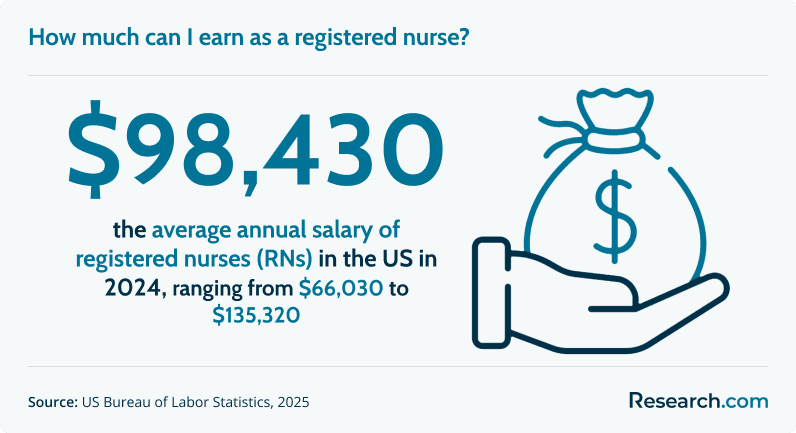
- A Significant Increase in Earning Potential. The financial leap from an LPN to a BSN-prepared RN is substantial. While LPNs earn an average of $64,150 annually, the average salary for RNs is $98,430.
- The Flexibility to Balance Your Career and Education. Online programs provide the flexibility to complete coursework on a schedule that suits your life, enabling you to continue earning an income while investing in your future career advancement.
What can I expect from an accelerated LPN/LVN to BSN online bridge program?
You can expect a demanding but flexible academic schedule combined with non-negotiable, mandatory in-person clinical experiences and labs. It is essential to be perfectly clear about this from the start: “online” refers to how you will learn nursing theory, not the entire degree. You will be required to complete a significant number of hands-on clinical hours at approved healthcare facilities to gain practical experience.
These clinical requirements are just as rigorous as those in any traditional on-campus program. They are an absolute prerequisite for earning your degree and qualifying for RN licensure. This hybrid model demands a high level of self-discipline and excellent time management to balance your studies, work, and clinical schedules.
Academically, you should also prepare for a shift from task-oriented skills to higher-level strategic thinking, with courses that challenge you to lead, analyze research, and understand community health on a deeper level.
Where can I work with an accelerated LPN/LVN to BSN online bridge program?
A BSN dramatically expands your career landscape, opening doors to roles with far greater autonomy and strategic focus.
- Opens doors to leadership and strategic roles beyond bedside care.
- Work in public health, wellness programs, or insurance as a case manager.
- Qualify for nursing informatics to improve patient outcomes with data.
- Only 16% of RNs work in rural areas—your skills are urgently needed.
- Manage clinics, run telehealth, or lead public health efforts in your community.
- Choose between high-tech hospitals or impactful community work.
How much can I make with an accelerated LPN/LVN to BSN online bridge program?
As a BSN-prepared registered nurse, your earning potential is significant, with salaries reaching over $135,320 annually depending on your location and role. However, the most important financial benefit isn't just the starting salary; it's your long-term earnings trajectory.
Think of it as an investment advisor would. The BSN is the credential that qualifies you for management positions, specialized clinical roles, and leadership tracks within major health systems. These are the positions with higher pay scales and structured advancement. Throughout a full career, this access to upward mobility creates a significantly steeper and higher earning curve, representing a powerful and compounding return on your educational investment.
- List of the Best Accelerated LPN/LVN to BSN Online Bridge Programs for 2027 List of Programs
- How long does it take to complete an accelerated LPN/LVN to BSN online bridge program? Completion Time
- How does an accelerated LPN/LVN to BSN online bridge program compare to an on-campus program? How does an accelerated LPN/LVN to BSN online bridge program compare to an on-campus program?
- What is the average cost of an accelerated LPN/LVN to BSN online bridge program? Program Cost
- What are the financial aid options for students enrolling in an accelerated LPN/LVN to BSN online bridge program? Financial Aid
- What are the prerequisites for enrolling in an accelerated LPN/LVN to BSN online bridge program? What are the prerequisites for enrolling in an accelerated LPN/LVN to BSN online bridge program?
- What courses are typically in an accelerated LPN/LVN to BSN online bridge program? What courses are typically in an accelerated LPN/LVN to BSN online bridge program?
- What types of specializations are available in an accelerated LPN/LVN to BSN online bridge program? What types of specializations are available in an accelerated LPN/LVN to BSN online bridge program?
- How to choose the best accelerated LPN/LVN to BSN online bridge program? How to choose the best accelerated LPN/LVN to BSN online bridge program?
- What career paths are available for graduates of an accelerated LPN/LVN to BSN online bridge program? What career paths are available for graduates of an accelerated LPN/LVN to BSN online bridge program?
- What is the job market for graduates of an accelerated LPN/LVN to BSN online bridge program? Job Market
- How can I further advance my nursing career post-BSN? How can I further advance my nursing career post-BSN?
- Can an Accelerated LPN/LVN to BSN Program Fast-Track My Path to Becoming a Nurse Practitioner? Can an Accelerated LPN/LVN to BSN Program Fast-Track My Path to Becoming a Nurse Practitioner?
- How do I transition from a BSN to a doctoral degree in nursing? How do I transition from a BSN to a doctoral degree in nursing?
Best Accelerated LPN/LVN to BSN Online Bridge Programs for 2027
Choosing an accelerated LPN/LVN to BSN online bridge program is not just about finding the fastest route to a bachelor’s degree. You are deciding how to move from practical or vocational nursing into registered nursing, how much debt or employer funding to take on, whether your clinical placements will be realistic, and whether the program will support RN licensure and long-term career mobility.
This guide is for licensed practical nurses and licensed vocational nurses who want a more direct path to a BSN while continuing to work. It explains how online bridge programs work, what they cost, how long they take, how to compare accreditation and clinical requirements, and which career paths may open after graduation. It also highlights common mistakes that can delay licensure or increase costs.
Quick answer: Is an accelerated LPN/LVN to BSN online bridge program worth it?
An accelerated LPN/LVN to BSN online bridge program can be worth it if you already hold an active LPN or LVN license, want to become eligible for RN licensure, and need a bachelor’s degree for stronger advancement options. The best programs combine accredited nursing coursework, local or low-residency clinical experiences, transcript-friendly transfer policies, and clear NCLEX-RN preparation. The path is usually most valuable for working nurses who want a BSN without stepping away from employment full time.
It may not be the best first choice if you need the lowest-cost route to RN licensure quickly, have many missing prerequisites, or live in a state where the program does not meet clinical or licensure requirements. In those cases, an LPN-to-ADN program followed by an RN-to-BSN program may be a more practical staged pathway.
How do we rank schools?
Research.com evaluates schools with a focus on transparency, affordability, academic quality, and student decision-making. Because a nursing degree is a major financial and professional commitment, our ranking process uses recognized education data sources, including the IPEDS database, Peterson's database, the College Scorecard database, and The National Center for Education Statistics.
These sources help us compare accelerated LPN/LVN to BSN online bridge programs using consistent institutional and program-level information. To understand how Research.com evaluates schools, see our ranking methodology.
Program comparison at a glance
| School | Best fit | Program length | Credits | Cost per credit | Accreditation |
| Wilson College | Working LPNs who need low-residency clinical blocks | 2 years | 120 | $475 | National League for Nursing Commission for Nursing Education Accreditation (NLN CNEA) |
| University of Arkansas | Experienced LPNs with recent clinical work hours | 2 to 3 years | 120 | $339.10 | Commission on Collegiate Nursing Education (CCNE) |
| Southwestern Oklahoma State University | Licensed LPNs/LVNs seeking a highly accelerated structure | 2 years | 125 | $339.76 | Higher Learning Commission (HLC) |
| Azusa Pacific University | Students who prefer a cohort model and simulation-based learning | 2 years | 120 | $835 | Commission on Collegiate Nursing Education (CCNE) |
| Fitchburg State University | Working LPNs who need online, evening, and daytime options | 2 years | 120 | $311 | Commission on Collegiate Nursing Education (CCNE) |
| Nebraska Methodist College | LPNs who want close faculty support in clinical learning | 2 years | 127 | $350 | Commission on Collegiate Nursing Education (CCNE) |
| Herzing University | Busy LPNs who need online core courses and placement support | 28 months | 120 | $755 | Commission on Collegiate Nursing Education (CCNE) |
| University of Sioux Falls | LPNs seeking a Christian-based nursing education | 2 years | 83, with 30 credits awarded for the current LPN license | $390 | Commission on Collegiate Nursing Education (CCNE) |
| Gurnick Academy of Medical Arts | California LVNs preparing for California-focused practice | 2 to 3 years | 120 semester credits | $802 | California Board of Registered Nursing (BRN) |
| Georgia State University | Georgia LPNs who want online coursework with face-to-face instruction | 3 years | 47 credits for the nursing major | $306 in-state; $980 out-of-state | Southern Association of Colleges and Schools Commission on Colleges (SACSCOC) |
1. Wilson College
Wilson College offers an online LPN to BSN pathway that is especially useful for nurses who cannot travel to campus frequently. Its low-residency clinical format allows students who live more than two hours away to complete hands-on requirements in concentrated 7- to 10-day blocks.
The program is designed for working LPNs who want a direct BSN route while keeping employment manageable. Graduates are prepared for the NCLEX-RN and develop evidence-based, holistic nursing skills that support patient care, communication, and clinical decision-making.
- Program Length: 2 years
- Required Credits to Graduate: 120
- Cost per Credit: $475
- Accreditation: National League for Nursing Commission for Nursing Education Accreditation (NLN CNEA)
2. University of Arkansas
The University of Arkansas offers a Licensed Practical Nurse to Bachelor of Science in Nursing program for LPNs who already have substantial clinical experience. Admission requirements include 2,000 hours of recent LPN work experience and a TEAS score of at least 65%, which means applicants should be prepared to show both practice readiness and academic readiness.
This program is a strong fit for currently practicing LPNs who meet licensure expectations and want to expand their ability to care for patients in acute and chronic care settings. The curriculum emphasizes concepts that help nurses improve patient care across varied healthcare environments.
- Program Length: 2 to 3 years
- Required Credits to Graduate: 120
- Cost per Credit: $339.10
- Accreditation: Commission on Collegiate Nursing Education (CCNE)
3. Southwestern Oklahoma State University
Southwestern Oklahoma State University provides an online LPN to BSN option built for fast academic progression. The program includes eight-week sessions and 116 required clinical hours, which may be completed within 100 miles of the student’s home.
This option is best for disciplined LPNs/LVNs who can handle an intensive pace and want a BSN-focused route that prepares them for broader professional responsibilities. Graduates build advanced nursing knowledge, leadership capacity, and stronger clinical judgment.
- Program Length: 2 years
- Required Credits to Graduate: 125
- Cost per Credit: $339.76
- Accreditation: Higher Learning Commission (HLC)
4. Azusa Pacific University
Azusa Pacific University offers a BS in Nursing LVN to BSN program that uses a cohort model, giving students a structured sequence and consistent peer group. The program also incorporates simulation technology, allowing students to practice clinical decision-making with virtual patients before and alongside hands-on clinical learning.
This pathway is well suited to students who prefer a guided curriculum rather than a highly self-paced model. It prepares graduates to provide compassionate nursing care and participate in team-based settings such as hospitals, clinics, and schools.
- Program Length: 2 years
- Required Credits to Graduate: 120
- Cost per Credit: $835
- Accreditation: Commission on Collegiate Nursing Education (CCNE)
5. Fitchburg State University
Fitchburg State University offers an LPN to BS in Nursing Bridge Program that blends online learning, evening courses, and traditional daytime scheduling. This hybrid approach is intended to help working LPNs move through an accelerated curriculum without relying entirely on standard daytime classes.
The program is designed for motivated nurses who want flexibility but can still manage a fast pace. Its curriculum emphasizes professional nursing practice, social responsibility, diversity, and the ability to respond to complex healthcare needs.
- Program Length: 2 years
- Required Credits to Graduate: 120
- Cost per Credit: $311
- Accreditation: Commission on Collegiate Nursing Education (CCNE)
6. Nebraska Methodist College
Nebraska Methodist College offers an Accelerated LPN to BSN Degree Program with a strong emphasis on faculty support and student outcomes. During clinicals, students benefit from a 1:10 faculty-to-student ratio, which can be valuable for nurses who want close guidance while transitioning into RN-level responsibilities.
The program prepares graduates for work in acute care, clinics, and community health. Reported outcomes include 96% of BSN graduates employed within six months and a 93.3% NCLEX pass rate.
- Program Length: 2 years
- Required Credits to Graduate: 127
- Cost per Credit: $350
- Accreditation: Commission on Collegiate Nursing Education (CCNE)
7. Herzing University
Herzing University offers an Online LPN to RN BSN program with 100% online core courses and scheduling options that include on-demand and evening formats. The program also provides a team that helps students identify clinical placements near home, which can reduce one of the biggest logistical challenges in online nursing education.
This program is a practical option for working LPNs who need flexibility but still want a structured pathway to BSN completion. Students build skills in care management, evidence-based practice, and professional nursing leadership, with access to virtual academic services and career coaching.
- Program Length: 28 months
- Required Credits to Graduate: 120
- Cost per Credit: $755
- Accreditation: Commission on Collegiate Nursing Education (CCNE)
8. University of Sioux Falls
The University of Sioux Falls offers an LPN to BSN program rooted in Christian values, service, and servant leadership. The curriculum integrates ethical practice, evidence-based care, and holistic well-being.
This program is best for LPNs who want nursing education connected to Christian principles and community service. Students develop clinical judgment, leadership skills, and hands-on experience for serving diverse patient populations.
- Program Length: 2 years
- Required Credits to Graduate: 83 (LPNs receive 30 credits toward graduation based on their current LPN license.)
- Cost per Credit: $390
- Accreditation: Commission on Collegiate Nursing Education (CCNE)
9. Gurnick Academy of Medical Arts
Gurnick Academy of Medical Arts offers an LVN to BSN Advanced Placement program for students preparing for nursing practice in California. The curriculum includes certifications in child abuse reporting and disaster management, which align with state public health requirements.
This program is suited to LVNs who want a California-focused route toward BSN-level preparation. Students study evidence-based practice, critical thinking, leadership, and safe care for diverse communities across the lifespan.
- Program Length: 2 to 3 years
- Required Semester Credits to Graduate: 120
- Cost per Credit: $802
- Accreditation: California Board of Registered Nursing (BRN)
10. Georgia State University
Georgia State University offers an LPN to BSN Bridge Program that combines online coursework with required face-to-face instruction. Clinical rotations include acute care and community-based agencies, helping students build broader patient care judgment.
The program is a strong option for working Georgia LPNs who need a hybrid format and want preparation for the NCLEX-RN. Students also examine how social, cultural, and economic factors shape health outcomes, which is important for leadership and community-centered nursing practice.
- Program Length: 3 years
- Required Credits for Nursing Major: 47
- Cost per Credit: $306 (in-state); $980 (out-of-state)
- Accreditation: Southern Association of Colleges and Schools Commission on Colleges (SACSCOC)
How long does it take to complete an accelerated LPN/LVN to BSN online bridge program?
Most online LPN/LVN to BSN bridge programs take 15 months to four years, depending on your prior credits, prerequisite status, enrollment pace, and clinical placement timeline. “Accelerated” does not mean fully online or clinical-free. Nursing programs still require in-person clinical experiences, and those requirements can affect your graduation date.
Typical completion timelines by starting point
| Starting point | Likely academic work before BSN nursing courses | Typical BSN bridge coursework time | Estimated total time |
| LPN/LVN with vocational certificate or diploma | About 50-60 credits of general education and science prerequisites | 18 to 24 months after prerequisites | Three to four years |
| LPN/LVN with an associate’s degree | Most prerequisites may already be complete | 15 to 24 months | About two years or less |
| LPN/LVN with some college credits | Depends on transcript evaluation and transfer policy | Varies by program plan | Requires school-specific review |
For LPNs with a vocational certificate or diploma
If your LPN or LVN training was certificate- or diploma-based, you may need one to two years of general education and science coursework before entering upper-level BSN nursing courses. Common requirements include Anatomy and Physiology, Microbiology, Chemistry, English Composition, and related college-level prerequisites. Many students complete these courses at a community college to reduce cost and improve transfer flexibility.
Some nurses use this period to add adjacent healthcare credentials. For example, exploring short online surgical tech certificate programs may broaden clinical exposure, although it should not distract from the prerequisites required for BSN admission.
For LPNs with an associate’s degree
If you already hold an associate’s degree, you may be closer to direct BSN bridge entry because many general education requirements may already be satisfied. The key step is not guessing. Request an official transcript evaluation from each school so you know exactly which credits transfer, which courses remain, and whether your timeline is realistic.
Clinical placements can speed up or delay graduation
Every online LPN/LVN to BSN student must plan for in-person clinical rotations. Some schools help secure placements; others expect students to identify approved sites and preceptors. If clinical arrangements fall through, your progress can slow even when your online coursework is complete. Ask admissions staff how early placements are arranged, who approves sites, and what happens if a local preceptor is unavailable.
The chart below lists the number of RN degrees awarded in 2023, as published by the BLS in 2025.
How does an accelerated LPN/LVN to BSN online bridge program compare to an on-campus program?
The most important difference is not whether the program is online or campus-based. It is whether the program is accredited, approved for your licensure goals, clinically feasible, and structured in a way you can complete. Employers and licensing boards care far more about program quality, clinical preparation, and eligibility than about the course delivery format alone.
| Factor | Online accelerated bridge program | On-campus bridge program | Decision point |
| Course flexibility | Often better for working nurses, especially with asynchronous coursework | Usually follows a fixed schedule | Choose online if your work or family schedule requires more control |
| Clinical placements | May require local placement coordination or travel for intensives | Often uses established local clinical partners | Ask who secures clinical sites before enrolling |
| Faculty access | May rely on virtual office hours, online advising, and remote support | Offers more face-to-face interaction | Choose based on how much structure and live support you need |
| Licensure preparation | Can prepare students for NCLEX-RN if properly approved and accredited | Can prepare students for NCLEX-RN if properly approved and accredited | Verify state approval and NCLEX eligibility directly |
| Self-discipline required | High, especially in accelerated formats | Moderate to high, with more built-in schedule structure | Be honest about your study habits and time management |
- Accreditation matters more than format. Programmatic accreditation from the Commission on Collegiate Nursing Education (CCNE) or another recognized nursing accreditor is a major signal of academic quality and graduate readiness.
- Clinical placement support can make or break the online experience. Online programs vary widely. Some provide dedicated placement coordinators, while others place more responsibility on the student.
- Online programs require strong time management. Flexibility is useful, but accelerated online nursing coursework can be demanding. Students who fall behind may struggle to recover in shorter terms.
What is the average cost of an accelerated LPN/LVN to BSN online bridge program?
The listed cost per credit for the programs in this guide ranges from $306 to $980. Your total cost, however, depends on more than tuition. You must account for transfer credits, prerequisite courses, fees, books, supplies, clinical travel, required campus visits, testing costs, background checks, uniforms, and any lost work hours during clinicals.
A low per-credit rate may not be the cheapest option if the school accepts fewer transfer credits or requires more courses. A higher per-credit program may be more affordable in practice if it awards credit for your LPN/LVN license, accepts more prerequisites, or helps you avoid delayed clinical placement.
Costs to ask about before enrolling
| Cost category | Why it matters | Question to ask |
| Tuition per credit | Sets the baseline cost of coursework | Is the rate different for online, in-state, out-of-state, or nursing courses? |
| Transfer credit policy | Can reduce both time and total tuition | How many of my previous credits will apply to the BSN? |
| Online and technology fees | May be charged each term or course | What fees are not included in the tuition estimate? |
| Clinical expenses | Travel, placement, compliance, and scheduling can add costs | Will I need to travel, and who arranges clinical sites? |
| Employer reimbursement | May significantly lower out-of-pocket costs | Does my employer require a work commitment after reimbursement? |
Some nurses also compare related healthcare bridge pathways, including accelerated RN to EMT bridge programs online, when evaluating how additional credentials may support broader career flexibility. For LPNs aiming for RN licensure and BSN-level roles, however, the central question should remain whether the program meets nursing licensure, accreditation, and clinical requirements.
Employer tuition reimbursement is often one of the most important funding sources for working nurses. Many healthcare organizations help LPNs advance their education because BSN-prepared nurses can fill broader clinical and leadership roles. Ask your HR department about annual reimbursement caps, grade requirements, eligible schools, repayment rules, and whether the benefit applies to online programs.
What financial aid options are available for accelerated LPN/LVN to BSN online bridge students?
Working adults sometimes assume they will not qualify for aid, but nursing students may have access to employer benefits, federal aid, scholarships, loan repayment programs, and professional association funding. The best approach is to combine multiple sources and reduce borrowing wherever possible.
- Employer tuition reimbursement: Start with your current employer. Hospitals, long-term care facilities, clinics, and health systems may offer tuition assistance for LPNs moving into RN or BSN roles.
- Government grants and loan repayment: Programs such as the Health Resources and Services Administration (HRSA) Nurse Corps Scholarship and Loan Repayment Program may support nurses who commit to working in critical shortage settings after graduation.
- Private nursing scholarships: Organizations such as the Johnson & Johnson Foundation maintain scholarship resources for nursing students at different education levels.
- Professional association grants: Nursing associations at the national and state levels may offer scholarships, grants, or continuing education funding for members advancing their credentials.
- School-based aid: Ask each school’s financial aid office about institutional scholarships, payment plans, and aid eligibility for online bridge students.
Before accepting loans, calculate your net cost after transfer credits, employer reimbursement, grants, and scholarships. Also confirm whether you must remain with your employer for a certain period after using tuition benefits.
What are the prerequisites for enrolling in an accelerated LPN/LVN to BSN online bridge program?
Most accelerated LPN/LVN to BSN programs require an active, unencumbered LPN or LVN license, college prerequisites, and evidence that you can handle upper-division nursing coursework. Exact requirements vary by school and state, so do not rely on general admission language alone. Request a program-specific checklist before applying.
Common admission requirements
- Current LPN or LVN license: Programs typically require active licensure in good standing.
- Prerequisite science courses: Anatomy and Physiology I & II with labs, Microbiology, and Chemistry are common requirements.
- General education courses: English Composition, Statistics, psychology, humanities, and social science courses may be required.
- Minimum GPA: Schools may set minimum cumulative or prerequisite GPA standards.
- Entrance exam or testing: Some programs require exams such as the TEAS.
- Clinical compliance: Background checks, drug screening, immunizations, CPR certification, and health documentation may be required before clinical placement.
Applicants with a certificate or diploma
Because 75% of LPNs begin with a vocational certificate, many applicants need additional college coursework before entering the BSN nursing sequence. This often means completing about 50-60 credit hours of general education and science classes. A community college can be a cost-conscious place to complete prerequisites, especially if it has transfer agreements with nearby universities.
If your background includes emergency medical services, you may also compare nursing bridge pathways such as a fast track paramedic to RN bridge online option. The right route depends on your current license, credits, state rules, and whether you want an ADN first or a BSN pathway.
Applicants with an associate’s degree
An associate’s degree may satisfy many general education requirements, but transfer is never automatic. Send official transcripts to each program and ask for a written evaluation showing accepted credits, remaining prerequisites, and estimated time to completion.
Comparing requirements across healthcare careers can also help you confirm that nursing is the right long-term path. For example, reviewing the best MRI technician programs can show how imaging career preparation differs from BSN-level nursing education.
What courses are typically in an accelerated LPN/LVN to BSN online bridge program?
An LPN/LVN to BSN curriculum builds on your practical nursing experience and shifts your focus toward RN-level judgment, patient advocacy, leadership, population health, and evidence-based practice. Instead of simply learning more tasks, you learn how to plan, coordinate, evaluate, and improve care across settings.
| Course area | What you learn | Why it matters for BSN-prepared nurses |
| Advanced health assessment | More comprehensive assessment, documentation, and clinical reasoning | Supports safer RN-level decision-making |
| Leadership and management | Delegation, staffing, unit coordination, quality improvement, and team communication | Prepares nurses for charge nurse and supervisory responsibilities |
| Evidence-based practice and nursing research | How to interpret research and apply findings to patient care | Helps nurses improve protocols and advocate for safer practice |
| Community and public health | Population health, prevention, health education, and community-based care | Expands practice beyond bedside care to communities and systems |
| Health policy and professional nursing roles | Ethics, scope of practice, regulation, and healthcare systems | Supports safe delegation and legal practice |
Professional role courses are especially important because BSN-prepared nurses often supervise or coordinate care with other healthcare workers. Understanding scope of practice helps nurses answer practical workplace questions, including whether medical assistants can draw blood and how delegation rules apply in specific settings.
What specializations are available after an accelerated LPN/LVN to BSN online bridge program?
The LPN/LVN to BSN is usually not a specialization by itself. It is the degree that positions you to become an RN and later pursue specialty credentials, leadership roles, or graduate nursing education. Think of the BSN as the platform that makes future specialization possible.
Typical specialization pathway
- Earn the BSN: Complete the bridge program and satisfy academic and clinical requirements.
- Become eligible for RN licensure: Meet state requirements and prepare for the NCLEX-RN if the program leads to eligibility.
- Build experience in a clinical area: Many specialty paths require one to three years of RN experience in areas such as emergency care, pediatrics, intensive care, or community health.
- Earn a specialty certification: Nurses may pursue credentials such as Certified Emergency Nurse (CEN) or Critical Care Registered Nurse (CCRN), depending on experience and career goals.
- Consider graduate education: A BSN can support entry into MSN or DNP programs for advanced practice, leadership, education, or informatics roles.
Technology-driven nursing roles are also becoming more visible as healthcare systems rely on electronic records, analytics, and digital workflows. Nurses interested in blending clinical expertise with data and systems can explore questions such as what a clinical informatics specialist does and how BSN preparation supports that path.
The chart below lists the industries with the highest annual average salaries for RNs, as published by the BLS in 2025.
How should you choose the best accelerated LPN/LVN to BSN online bridge program?
The best program is the one that meets licensure requirements, fits your schedule, accepts the most usable transfer credit, provides realistic clinical support, and produces outcomes that justify the cost. Rankings can narrow your options, but they should not replace your own verification process.
Use this decision checklist before applying
| What to check | Why it matters | Red flag |
| Programmatic nursing accreditation | Supports degree recognition, graduate study, and employer confidence | The school discusses institutional accreditation but avoids nursing program accreditation details |
| State licensure eligibility | Determines whether the program supports your RN licensing goal | The program cannot confirm eligibility in your state |
| Clinical placement process | Clinical delays can postpone graduation | You must find all sites and preceptors with little school support |
| Transfer credit evaluation | Accepted credits can reduce cost and time | You are asked to enroll before receiving a clear transcript review |
| Total cost of attendance | Fees and clinical expenses can change affordability | Only tuition is disclosed, with no full cost breakdown |
| NCLEX-RN preparation | Licensure success depends on readiness, not just graduation | No clear preparation plan, testing support, or outcomes discussion |
| Schedule format | Working nurses need realistic weekly expectations | “Flexible” is advertised, but live classes or clinical hours conflict with work |
- Verify accreditation first. Accreditation is the non-negotiable starting point. Look for recognized nursing accreditation and confirm state approval where applicable.
- Get transcript answers in writing. A generous transfer policy can save months and reduce tuition. A vague estimate is not enough.
- Ask directly about clinical placements. Use precise questions: “Who identifies clinical sites?” “Can I complete clinicals near my home?” “What happens if no preceptor is available?”
- Calculate net cost, not sticker price. Include tuition, fees, transfer credits, reimbursement, scholarships, travel, books, and testing expenses.
- Match the program format to your life. Full-time accelerated study may not be realistic if you work long shifts, rotate schedules, or have caregiving responsibilities.
If your long-term goal is advanced practice, you may also compare BSN-to-DNP pathways such as accelerated online women's health nurse practitioner DNP programs. That comparison can help you understand how today’s BSN choice may affect tomorrow’s graduate school options.
When an LPN-to-ADN-to-BSN route may be smarter
A direct LPN/LVN to BSN program is not always the most practical route. Some nurses choose an LPN-to-ADN program first, become eligible for RN licensure sooner, then complete an RN-to-BSN later. This staged approach may reduce risk if you need a quicker salary step, want a lower initial cost, or are unsure you can commit to a full BSN bridge immediately.
What career paths are available after an accelerated LPN/LVN to BSN online bridge program?
A BSN can expand your nursing career beyond task-focused bedside care. It signals preparation in leadership, research, community health, care coordination, and systems-based practice. For many employers, especially larger hospitals and healthcare systems, the BSN is also a preferred credential for advancement.
| Career path | Main responsibilities | Why the BSN helps |
| Nurse Manager or Charge Nurse | Supervise nursing staff, coordinate unit operations, manage patient flow, and support safety standards | BSN coursework includes leadership, delegation, communication, and quality improvement |
| Public Health Nurse | Support prevention programs, health education, outreach, and community-based care | BSN programs include community and population health preparation |
| Nursing Informatics Specialist | Work with electronic health records, data workflows, and technology-supported care improvements | BSN education strengthens systems thinking and evidence-based decision-making |
| Case Management Nurse | Coordinate care plans for patients with complex or chronic conditions | BSN preparation supports care coordination, advocacy, and interprofessional communication |
| Graduate nursing student | Prepare for advanced practice, education, leadership, or doctoral study | A BSN is commonly the foundation for MSN and DNP pathways |
The BSN can also improve access to employers that prefer baccalaureate-prepared nurses. Hospitals participating in the Magnet Recognition Program often emphasize higher levels of nursing education, strong practice environments, and quality improvement. While a BSN does not guarantee a specific job or salary, it can make you more competitive for roles with greater responsibility.
What is the job market for graduates of an accelerated LPN/LVN to BSN online bridge program?
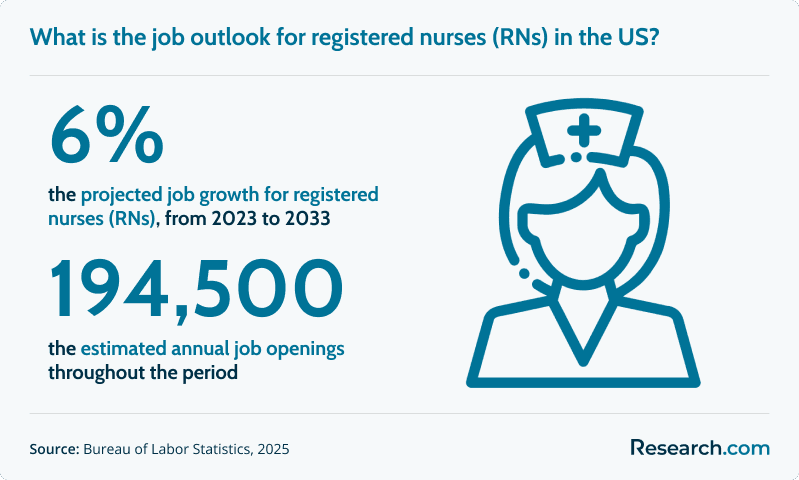
The RN labor market remains favorable for qualified nurses, and the BSN can strengthen your position within that market. The U.S. Bureau of Labor Statistics projects 6% growth for registered nurses through 2033, with about 194,500 job openings each year due to growth and replacement needs.
The practical value of the BSN is not only access to RN opportunities. It can also help you compete for preferred roles, leadership tracks, specialty units, public health positions, and employers that increasingly expect advanced education. In hiring, nurse recruiters often look for clinical competence, communication skills, adaptability, and growth potential.
If you want to understand that hiring process more clearly, reviewing what nurse recruiters do can help you see how credentials, experience, and leadership potential are evaluated. A BSN can be one strong signal that you are prepared for more complex nursing responsibilities, but your experience, licensure status, references, and interview performance also matter.
Current trends affecting LPN/LVN to BSN students
- Employers continue to value BSN preparation. Healthcare organizations need nurses who can lead teams, coordinate care, and apply evidence-based practice.
- Online nursing education is more common, but clinicals remain in person. Students should expect flexibility in coursework, not a fully remote path.
- Technology skills are increasingly important. Comfort with electronic health records, virtual learning platforms, and data-informed care can help graduates adapt.
- Clinical placement capacity can be competitive. More students in online and hybrid programs may mean earlier planning is necessary.
- Affordability pressure is real. Tuition reimbursement, transfer credits, and careful program selection can make the difference between a manageable investment and unnecessary debt.
How does an accelerated bridge program compare to choosing the cheapest nursing degree?
An accelerated LPN/LVN to BSN online bridge program is designed for nurses who want RN preparation, BSN-level education, and advancement potential in one pathway. The most affordable online nursing programs may be a better fit if your top priority is minimizing tuition, but the cheapest route is not automatically the best route.
| Option | Best for | Trade-off |
| Accelerated LPN/LVN to BSN bridge | LPNs/LVNs who want a direct path to BSN-level preparation | May require more upfront time, cost, and clinical planning |
| Lowest-cost nursing degree option | Students focused primarily on minimizing tuition | May not offer the same direct BSN pathway, support services, or advancement alignment |
| LPN-to-ADN, then RN-to-BSN | Nurses who want to become RN-eligible sooner and complete the BSN later | Requires two academic steps instead of one integrated bridge |
The right choice depends on your timeline, finances, state requirements, employer reimbursement, and career goals. Do not choose based on tuition alone. Compare total cost, transfer credit, licensure eligibility, clinical support, and the point at which you can realistically increase your nursing responsibility.
What do graduates say about accelerated LPN/LVN to BSN online bridge programs?
- Kenji: "I had already completed an associate's degree, so I was worried about paying for courses I did not need. The school gave me a clear transfer review before I committed, and I finished in just under two years. Six months later, I moved into a clinical supervisor position that had never been available to me as an LPN."
- Bao: "A traditional daytime program would not have worked with two young children. I studied after bedtime, during naps, and whenever my schedule allowed. It was demanding, but finishing the BSN changed how my family saw my career and how I saw myself as a nurse."
- Shelly: "Public health was always my goal, but I did not have the degree for it. The BSN coursework in community health helped me connect my clinical experience to population-level care. I now work with the county health department on outreach programs in neighborhoods I know personally."
How can I advance my nursing career after earning a BSN?
After completing a BSN, nurses can pursue advancement through specialty certification, leadership roles, graduate education, informatics, education, case management, public health, or advanced practice. The best next step depends on whether you want deeper bedside expertise, more autonomy, administrative responsibility, or a teaching or systems-focused role.
If advanced practice is your goal, compare MSN and DNP options carefully. Programs such as direct-entry nurse practitioner programs may be relevant for certain students, but licensed nurses should verify whether a BSN-to-NP, MSN, or DNP route is the correct fit. Always compare accreditation, clinical placement expectations, state authorization, board certification preparation, and whether the program aligns with your intended nurse practitioner population focus.
Can an accelerated LPN/LVN to BSN program fast-track my path to becoming a nurse practitioner?
An accelerated LPN/LVN to BSN program can shorten the distance between practical nursing and graduate-level nursing study, but it does not make someone a nurse practitioner by itself. You must first complete the BSN, satisfy RN licensure requirements, gain appropriate experience when required or recommended, and then complete an accredited graduate program for the nurse practitioner role you want.
Some students researching advanced practice also look at direct nurse practitioner programs for non nurses. Those programs serve a different audience, so LPNs and LVNs should compare them carefully against BSN-to-MSN or BSN-to-DNP pathways designed for licensed nurses.
How do I transition from a BSN to a doctoral degree in nursing?
A BSN can lead to doctoral nursing study, especially through Doctor of Nursing Practice programs. DNP programs focus on advanced clinical practice, evidence-based care, leadership, quality improvement, and systems change. They are often pursued by nurses who want advanced practice roles, executive leadership, or high-level clinical impact.
When comparing doctoral pathways, consider program length, accreditation, faculty qualifications, clinical partnerships, population focus, and whether the format works with your employment schedule. If speed matters, reviewing options such as the shortest DNP program can help you compare accelerated formats while still checking quality and licensure alignment.
Common mistakes to avoid when choosing an LPN/LVN to BSN online bridge program
- Choosing a program before verifying accreditation: Always confirm nursing accreditation and state approval before enrolling.
- Assuming online means fully remote: Nursing programs still require in-person clinical experiences, labs, simulations, or intensives.
- Ignoring state licensure rules: A program available online may not meet requirements in every state.
- Looking only at tuition per credit: Fees, clinical travel, transfer credits, and extra prerequisites can change the real cost.
- Not asking who secures clinical placements: Placement delays can extend your program and increase expenses.
- Skipping an official transcript evaluation: Verbal estimates are not enough when time and money are at stake.
- Assuming salary outcomes are guaranteed: A BSN can improve competitiveness, but pay depends on location, employer, experience, specialty, and shift.
- Relying only on rankings: Rankings are a starting point. Your best program must fit your state, credits, schedule, finances, and career plan.
Key Insights
- Accelerated LPN/LVN to BSN online bridge programs are best for licensed practical or vocational nurses who want a direct route toward BSN-level preparation and RN career mobility.
- Program length can range from 15 months to four years because prerequisites, transfer credits, and clinical placement logistics vary widely.
- Accreditation, state licensure eligibility, and clinical placement support should be checked before cost, convenience, or ranking position.
- The listed cost per credit in this guide ranges from $306 to $980, but the real price depends on fees, transfer credits, clinical expenses, and employer reimbursement.
- Online coursework can make nursing education more flexible, but all credible BSN bridge pathways still include in-person clinical learning.
- A BSN can support advancement into leadership, public health, case management, informatics, specialty certification, and graduate nursing education.
- If a direct BSN bridge feels too expensive or too long, an LPN-to-ADN followed by an RN-to-BSN may be a lower-risk alternative.
References:
- American Association of Colleges of Nursing. (2025). Nursing shortage. Retrieved July 10, 2025 from https://www.aacnnursing.org/news-data/fact-sheets/nursing-shortage
- Data USA. (2025). Registered nursing. Retrieved May 24, 2024, from https://datausa.io/profile/cip/registered-nursing
- National Council of State Boards of Nursing. (2025). Active RN licenses. Retrieved July 10, 2025, from https://www.ncsbn.org/nursing-regulation/national-nursing-database/licensure-statistics/active-rn-licenses.page
- U.S. Bureau of Labor Statistics. (2025). Licensed practical and licensed vocational nurses. Occupational Outlook Handbook. Retrieved July 10, 2025, from https://www.bls.gov/ooh/healthcare/licensed-practical-and-licensed-vocational-nurses.htm
- U.S. Bureau of Labor Statistics. (2025). Occupational employment and wage statistics. Retrieved July 10, 2025, from https://data.bls.gov/oesprofile/
- U.S. Bureau of Labor Statistics. (2025). Registered nurses. Occupational Outlook Handbook. Retrieved July 10, 2025, from https://www.bls.gov/ooh/healthcare/registered-nurses.htm
- U.S. Census Bureau. (2021, April 5). Who are our health care workers? Retrieved July 10, 2025, from https://www.census.gov/library/stories/2021/04/who-are-our-health-care-workers.html
- University of St. Augustine for Health Sciences. (2024). Nursing shortage: A 2024 data study reveals key insights. Retrieved July 10, 2025, from https://www.usa.edu/blog/nursing-shortage/
Other Things You Should Know About Accelerated LPN/LVN to BSN Online Bridge Programs
State nursing board rules can affect whether you may enroll, complete clinicals, and sit for the RN licensure exam after graduation. Many programs require approval in the state where clinicals occur, and some require that the BSN curriculum meet board standards for RN preparation and supervised practice hours.
In 2027, accelerated LPN/LVN to BSN programs typically require about 500-800 hours of clinical practice. These hours are arranged at approved healthcare sites and supervised by licensed professionals to ensure students gain hands-on nursing experience crucial for their qualification.
You'll need a reliable internet connection, a computer with updated software, and a webcam for participating in online LPN/LVN to BSN bridge programs in 2027. Some programs may also require specific software or learning management systems to access course materials and assignments.