
2027 Best Accelerated EMT to RN Online Bridge Programs

Co-Founder and Chief Data Scientist
Many EMTs are reaching a crossroads—facing burnout, limited career growth, and the desire for greater clinical responsibility. As demand grows for professionals who can lead under pressure, the transition from EMT to RN is becoming a compelling next step for those with frontline experience.
With the median age of registered nurses at 46 and over 25% expected to retire or leave within five years, the healthcare system is bracing for a major talent gap. This guide, crafted by career planning experts, offers more than a list of online EMT to RN bridge programs—it provides a strategic roadmap for leveraging EMT skills into long-term success in nursing.
What are the benefits of getting an accelerated EMT to RN online bridge program?
- Unlock unparalleled career optionality, allowing you to pivot between high-acuity roles in hospital surgical units and sustainable positions in outpatient clinics or home health services.
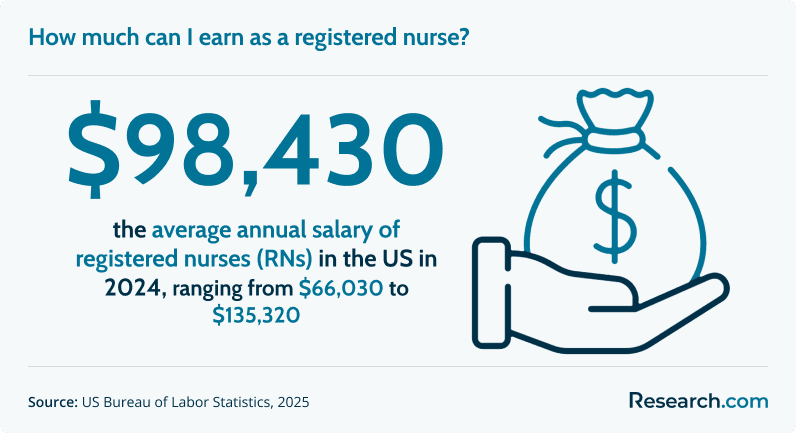
- Achieve a transformative salary increase, with registered nurses earning an average annual salary of $98,430, more than double the typical EMT wage.
- Gain access to top-tier nursing education from anywhere, offering the flexibility needed to balance your studies with demanding work and family commitments.
What can I expect from an accelerated EMT to RN online bridge program?
Students should expect a fast-paced and demanding academic environment. These programs combine flexible online coursework with required, in-person clinical practice. “Online” does not mean easier—it requires students to manage their own learning and stay on track. “Accelerated” means the curriculum is compressed, demanding intense focus and strong time management.
Reputable programs are accredited by ACEN or CCNE and meet the same standards as traditional degrees. Employers and state boards fully recognize these credentials. Success depends on a student’s self-discipline and commitment to mastering both online theory and hands-on clinical skills.
Where can I work with an accelerated EMT to RN online bridge program?
With an RN license, graduates can work in nearly any healthcare setting—not just emergency departments. Former EMTs often thrive in high-acuity roles like ICUs, trauma centers, or flight nursing, but many other paths are available. RNs can also work in outpatient clinics, physician offices, or corporate wellness programs with more regular hours.
Telehealth has expanded remote nursing opportunities, allowing for virtual care and patient education from home. Nurses can also make an impact through public health or school-based roles. This career flexibility lets nurses choose jobs that fit their goals and work-life balance needs.
How much can I make with an accelerated EMT to RN online bridge program?
Becoming a registered nurse brings a major jump in earning potential. EMTs earn about $44,790 annually, while RNs average $98,430—a key reason many pursue online EMT to RN bridge programs. This sharp increase can be life-changing financially.
Starting salaries vary, but long-term income growth is strong. Specialization or advanced degrees can lead to six-figure salaries. Even without further education, the RN license offers far greater financial stability than an EMT role, making the investment well worth it.
- List of the Best Accelerated EMT to RN Online Bridge Programs for 2027 List of Programs
- How long does it take to complete an accelerated EMT to RN online bridge program? Completion Time
- How does an accelerated EMT to RN online bridge program compare to an on-campus program? How does an accelerated EMT to RN online bridge program compare to an on-campus program?
- What is the average cost of an accelerated EMT to RN online bridge program? Program Cost
- What are the financial aid options for students enrolling in an accelerated EMT to RN online bridge program? Financial Aid
- What are the prerequisites for enrolling in an accelerated EMT to RN online bridge program? What are the prerequisites for enrolling in an accelerated EMT to RN online bridge program?
- What courses are typically in an accelerated EMT to RN online bridge program? What courses are typically in an accelerated EMT to RN online bridge program?
- What types of specializations are available in an accelerated EMT to RN online bridge program? What types of specializations are available in an accelerated EMT to RN online bridge program?
- How to Choose the Best Accelerated EMT to RN Online Bridge Program How to Choose the Best Accelerated EMT to RN Online Bridge Program
- What career paths are available for graduates of an accelerated EMT to RN online bridge program? What career paths are available for graduates of an accelerated EMT to RN online bridge program?
- What challenges might I face in an accelerated EMT to RN online bridge program? What challenges might I face in an accelerated EMT to RN online bridge program?
- What is the job market for graduates with an accelerated EMT to RN online bridge program? Job Market
- Can I transition directly into advanced practice roles after my accelerated EMT to RN program? Can I transition directly into advanced practice roles after my accelerated EMT to RN program?
- Can advanced education further accelerate my nursing career? Can advanced education further accelerate my nursing career?
- How does this program pave the path to advanced practice roles? How does this program pave the path to advanced practice roles?
List of the Best Accelerated EMT to RN Online Bridge Programs for 2027
EMTs who want to become registered nurses are usually looking for three things: a faster route to licensure, a program flexible enough to fit around work, and a credential that state boards and employers will recognize. The challenge is that many programs marketed as “online” or “accelerated” still require in-person labs, clinical rotations, prerequisite science courses, and state-specific licensure approval.
This guide explains how accelerated EMT to RN online bridge programs work, what they cost, how long they take, which admissions requirements matter most, and how to compare programs without being misled by speed or tuition claims. It also clarifies an important point: true EMT-to-RN bridge programs are less common than accelerated ADN or BSN pathways that accept students with healthcare experience. EMT experience can strengthen an application and help in clinical settings, but it does not usually replace nursing prerequisites or licensure requirements.
Quick Answer: What is the fastest online EMT to RN path?
The fastest realistic route from EMT to RN is usually an accelerated ADN or BSN pathway with online theory courses, in-person skills labs, and supervised clinical placements. The advertised nursing program may take 12 months, 14 months, 15 months, 16 months, or 18-24 months, but the full timeline often reaches three to four years once prerequisite courses, admissions cycles, clinical scheduling, NCLEX-RN preparation, and state licensure are included.
For most EMTs, the best program is not simply the shortest one. It is an accredited RN program with strong NCLEX-RN outcomes, clear clinical placement support, transparent tuition, and approval for the state where the student plans to become licensed.
How do we rank schools?
Research.com evaluates programs with a focus on practical decision-making: accreditation, program structure, affordability indicators, student outcomes, and whether the format fits students who need flexibility. Because nursing education is a major financial and career commitment, our rankings use transparent data sources including the IPEDS database, Peterson's database, the College Scorecard database, and The National Center for Education Statistics.
These sources help compare institutions using consistent education data rather than marketing claims. To learn more about how Research.com evaluates schools and programs, see our ranking methodology.
Best accelerated online and hybrid RN pathways for EMTs
The programs below are accelerated, online, hybrid, or distance-supported nursing pathways that may fit EMTs who already have healthcare experience and can meet admissions requirements. Students should confirm directly with each school whether EMT experience affects admissions, transfer credit, clinical placement options, or prerequisite expectations.
| School and Program | Program Length | Credits | Published Cost Detail | Accreditation |
| Elmhurst University - Online Accelerated BSN | 16 months | 60 | $833.33 per credit | Commission on Collegiate Nursing Education (CCNE) |
| Grand Canyon University - Accelerated BSN (ABSN) Program | 16 months | 123 | Approximately $26,200 total tuition | Commission on Collegiate Nursing Education (CCNE) |
| Concordia University Irvine - Accelerated Bachelor of Science in Nursing | 15 months | 59 | $990 per credit | Commission on Collegiate Nursing Education (CCNE) |
| Saint Joseph’s College of Maine - Hybrid Accelerated Bachelor of Science in Nursing | 15 months (4 semesters) | 60 | $900 per credit | Commission on Collegiate Nursing Education (CCNE) |
| Cleveland State University - Accelerated Bachelor of Science in Nursing | 16 months (4 semesters) | 69 | $307.20 - $441.60 per credit in-state; $435.97 - $626.70 per credit out-of-state | Commission on Collegiate Nursing Education (CCNE) |
| University of Massachusetts Boston - Accelerated Bachelor's of Science in Nursing | 12 months | 54 | Approximately $37,800 total tuition | New England Commission of Higher Education (NECHE) |
| University of Texas at Arlington - Bachelor of Science in Nursing Online | 15 months | 51 | Approximately $21,675 total tuition | Commission on Collegiate Nursing Education (CCNE) |
| Thomas Edison State University - Accelerated Bachelor of Science in Nursing | 15 months | 60 | Approximately $41,580 total tuition | Commission on Collegiate Nursing Education (CCNE) |
| Holy Family University - Second Degree Distance Hybrid BSN | 14 months | 59 | $883 per credit | Commission on Collegiate Nursing Education (CCNE) |
| Madonna University - ABSN Program | 16 months (4 semesters) | 53 | $1,094 per credit | Commission on Collegiate Nursing Education (CCNE) |
1. Elmhurst University - Online Accelerated BSN
Elmhurst University offers an accelerated online BSN designed for students entering nursing from another field. The program combines online academic coursework with an on-campus residency, giving students a structured way to build hands-on skills in the school’s Simulation Center while completing much of the didactic work remotely. Its curriculum emphasizes ethical practice, social responsibility, and patient-centered care, with attention to adult and older adult populations.
- Program Length: 16 months
- Required Credits to Graduate: 60
- Cost per Credit: $833.33
- Accreditation: Commission on Collegiate Nursing Education (CCNE)
2. Grand Canyon University - Accelerated BSN (ABSN) Program
Grand Canyon University’s ABSN program is built for students who do not already have a nursing background but want a direct path into registered nursing. The program uses a hybrid structure and frames nursing practice through servant leadership and Christian values. Students who want a mission-oriented learning environment may find this model appealing, especially if they can commit to the pace of a 16-month curriculum.
- Program Length: 16 months
- Required Credits to Graduate: 123
- Total Tuition: Approximately $26,200
- Accreditation: Commission on Collegiate Nursing Education (CCNE)
3. Concordia University Irvine - Accelerated Bachelor of Science in Nursing (ABSN)
Concordia University Irvine provides an ABSN route for students who already have college experience and want to shift into nursing quickly. The program is shaped by Dr. Jean Watson’s caring philosophy and offers learning options that include campus-based and hybrid formats. Because the 15-month schedule is intensive and full-time, applicants should carefully assess whether they can reduce outside obligations before enrolling.
- Program Length: 15 months
- Required Credits to Graduate: 59
- Cost per Credit: $990
- Accreditation: Commission on Collegiate Nursing Education (CCNE)
4. Saint Joseph’s College of Maine - Hybrid Accelerated Bachelor of Science in Nursing (ABSN)
Saint Joseph’s College of Maine offers a hybrid ABSN pathway for students with a non-nursing bachelor’s degree. Coursework is delivered 100% online, while two required campus immersions provide concentrated skills training. The program is designed to move students into practice in 15 months, and applicants should ask the school about clinical placement expectations, residency timing, and current NCLEX-RN outcomes before applying.
- Program Length: 15 months (4 semesters)
- Required Credits to Graduate: 60
- Cost per Credit: $900
- Accreditation: Commission on Collegiate Nursing Education (CCNE)
5. Cleveland State University - Accelerated Bachelor of Science in Nursing (ABSN)
Cleveland State University offers a full-time hybrid ABSN program that may be especially attractive to Ohio residents because of its lower in-state tuition range. The program is structured around equitable care, community engagement, and nursing practice in diverse settings. Students comparing public and private ABSN options should pay close attention to residency status, total fees, and clinical site availability.
- Program Length: 16 months (4 semesters)
- Required Credits to Graduate: 69
- Cost per Credit (In-State): $307.20 - $441.60
- Cost per Credit (Out-of-State): $435.97 - $626.70
- Accreditation: Commission on Collegiate Nursing Education (CCNE)
6. University of Massachusetts Boston - Accelerated Bachelor's of Science in Nursing (ABSN)
The University of Massachusetts Boston offers one of the shortest listed timelines, with a 12-month ABSN for students who can handle a highly compressed schedule. The program emphasizes health equity, urban health, and transcultural care. Because students must be available for clinical requirements near Boston, this option is best suited to applicants who can commit full-time and live within commuting distance.
- Program Length: 12 months
- Required Credits to Graduate: 54
- Total Tuition: Approximately $37,800
- Accreditation: New England Commission of Higher Education (NECHE)
7. University of Texas at Arlington - Bachelor of Science in Nursing Online
The University of Texas at Arlington offers an accelerated online BSN pathway that combines online learning with faculty-supervised clinical experiences through healthcare partnerships in Texas. This structure can help students connect academic content to practice, but it also means applicants should confirm location requirements and clinical eligibility before assuming the program will work from any state.
- Program Length: 15 months
- Required Credits to Graduate: 51
- Total Tuition: Approximately $21,675
- Accreditation: Commission on Collegiate Nursing Education (CCNE)
8. Thomas Edison State University (TESU) - Accelerated Bachelor of Science in Nursing (BSN)
Thomas Edison State University’s accelerated BSN is intended for students ready to move into nursing through a focused 15-month plan. The program includes clinical experiences in Magnet-designated facilities, which can expose students to established nursing practice standards. Applicants should still verify admission competitiveness, current pass rates, and clinical scheduling before choosing this route.
- Program Length: 15 months
- Required Credits to Graduate: 60
- Total Tuition: Approximately $41,580
- Accreditation: Commission on Collegiate Nursing Education (CCNE)
9. Holy Family University - Second Degree Distance Hybrid BSN (ABSN)
Holy Family University offers a 14-month distance hybrid BSN for second-degree students. The program focuses on ethical decision-making, cultural humility, critical thinking, and evidence-informed patient care. Its speed can be appealing, but students should evaluate whether they can manage the academic load, lab requirements, and clinical expectations within the compressed timeline.
- Program Length: 14 months
- Required Credits to Graduate: 59
- Cost per Credit: $883
- Accreditation: Commission on Collegiate Nursing Education (CCNE)
10. Madonna University - ABSN Program
Madonna University’s ABSN program is rooted in Catholic and Franciscan values and emphasizes care for the whole person. Its academic practice partnership with Henry Ford Health gives students access to clinical learning in metro Detroit healthcare settings. This program may fit students who want a values-based nursing education and can commit to a 16-month, four-semester structure.
- Program Length: 16 months (4 semesters)
- Required Credits to Graduate: 53
- Cost per Credit: $1,094
- Accreditation: Commission on Collegiate Nursing Education (CCNE)
How long does it take to complete an accelerated EMT to RN online bridge program?
The complete path from EMT certification to RN licensure typically takes three to four years, even when the nursing portion is labeled accelerated. The reason is simple: most nursing schools require prerequisite college courses before admission, and those courses are separate from EMT training.
The accelerated nursing phase itself may be much shorter. Depending on the program and degree type, students may see advertised timelines of 12 months, 14 months, 15 months, 16 months, or 18-24 months. Those timelines usually begin only after prerequisites are complete and after the student has been admitted to the nursing cohort.
Typical EMT to RN timeline
| Stage | What Happens | Why It Matters |
| Prerequisite phase | Students complete required college science and general education courses. | Nursing schools use these courses to judge academic readiness for pathophysiology, pharmacology, and clinical reasoning. |
| Application and admission | Applicants submit transcripts, test scores if required, proof of prerequisites, background checks, and other materials. | Accelerated nursing programs can be selective, and missing one requirement can delay admission by a term or more. |
| Core nursing program | Students complete online theory courses, labs, simulations, and clinical rotations. | This is the formal RN preparation stage that leads toward NCLEX-RN eligibility. |
| NCLEX-RN and state licensure | Graduates apply to the state board of nursing and sit for the NCLEX-RN exam. | Passing the licensing exam and meeting state requirements are required to practice as an RN. |
The prerequisite phase is often the hidden time commitment
Before entering an accredited RN program, many students need 1-2 years of college-level prerequisites. Common requirements include Anatomy & Physiology, Microbiology, Chemistry, Psychology, English, and mathematics or statistics. These courses are not optional because they provide the science foundation nurses use when evaluating symptoms, medications, diagnoses, and care plans.
Healthcare roles can look similar from the outside, but the education behind them differs. For example, comparing LPN and CNA responsibilities shows how training level affects scope of practice. RN education requires a deeper academic base because registered nurses must make complex clinical judgments and coordinate patient care across settings.
The length of the nursing program also depends on whether the student chooses an Associate Degree in Nursing or a Bachelor of Science in Nursing. ADN pathways are often shorter, while BSN pathways may take longer but can support broader advancement options later.
How does an accelerated EMT to RN online bridge program compare to an on-campus program?
The biggest difference is where students complete the classroom portion of the program. Online and hybrid RN programs deliver lectures, discussions, assignments, and exams through a learning platform, which can help working EMTs manage school around shifts. Campus-based programs usually follow a more fixed in-person schedule with regular classroom meetings.
Flexibility does not mean the program is easier. Nursing courses are demanding in any format, and online students need strong self-discipline, reliable technology, and enough weekly study time to keep pace. Students comparing healthcare training options may also notice this same trade-off in programs such as an accelerated online surgical tech associate's degree, where online coursework still has to be paired with hands-on skill development.
Program quality depends less on delivery format and more on accreditation, licensure eligibility, clinical training, faculty support, and student outcomes. An accredited online or hybrid nursing program must meet established standards for curriculum and practice preparation, just as campus programs do.
Online vs. on-campus EMT to RN pathways
| Factor | Online or Hybrid RN Program | On-Campus RN Program |
| Course delivery | Theory courses are completed online or partly online. | Students attend scheduled classes in person. |
| Flexibility | Often better for students balancing work and family responsibilities. | More structured, which can help students who prefer set class times. |
| Labs and simulations | Usually require campus visits, residencies, or designated skills sessions. | Typically completed on campus throughout the term. |
| Clinical rotations | Must be completed in approved healthcare settings. | Must be completed in approved healthcare settings. |
| Best fit | Self-directed students who can manage deadlines and travel for required in-person components. | Students who want face-to-face instruction and a predictable campus routine. |
The non-negotiable requirement: in-person clinical practice
No legitimate RN program can be completed entirely online. Every student must complete supervised clinical hours in approved healthcare environments such as hospitals, clinics, community health sites, or other patient care settings. These experiences are essential because nursing is a licensed clinical profession, not only an academic subject.
This is similar to the distinction between patient-facing and administrative healthcare roles. A comparison of medical administrative assistant and medical assistant careers shows why direct patient care changes training expectations. RN programs require even more extensive clinical preparation because registered nurses assess patients, administer medications, educate families, coordinate care, and respond to changing clinical conditions.
Before enrolling in an online or hybrid program, ask exactly how clinical placements are arranged. Some schools place students directly; others expect students to help identify approved sites. That difference can affect both stress and graduation timing.
What is the average cost of an accelerated EMT to RN online bridge program?
Tuition varies widely. An accelerated EMT to RN pathway may cost approximately $10,000 for an associate’s degree at a public community college or more than $50,000 for a bachelor’s degree at a private university. Students should also budget for textbooks, technology fees, background checks, immunizations, uniforms, lab supplies, testing fees, travel to clinical sites, and NCLEX-RN expenses.
Lower tuition does not automatically mean lower quality, and higher tuition does not guarantee better outcomes. The more reliable indicators are nursing accreditation, state approval, NCLEX-RN pass rates, clinical placement support, and graduate employment outcomes. Students comparing nursing with other healthcare entry routes may also review options such as fast track surgical tech certification programs online, but RN licensure generally requires a more extensive academic and clinical commitment.
Cost factors to compare before enrolling
| Cost Factor | Why It Matters | Question to Ask |
| Tuition structure | Programs may charge by credit, semester, or total program package. | Is the quoted price total tuition or only tuition before fees? |
| Prerequisite courses | These may need to be completed before admission and may not be included in the advertised program cost. | Which prerequisites do I still need, and where can I complete them affordably? |
| Clinical travel | Online students may need to travel to labs, immersions, or clinical sites. | How far are typical clinical placements from where I live? |
| Fees and supplies | Nursing students often pay for testing platforms, uniforms, health screenings, equipment, and licensure steps. | Can the school provide a full estimated cost of attendance? |
| Time away from work | Accelerated programs may make full-time employment difficult. | How many hours per week do students typically spend in class, study, lab, and clinicals? |
How to think about return on investment
The financial case for nursing depends on more than the first RN job. An RN license can open hospital, outpatient, emergency, community health, leadership, informatics, and graduate education pathways. A BSN-prepared RN may also continue toward advanced roles, including nurse educator careers; students exploring that direction can review what nurse educators do and how the career path works.
The smartest ROI calculation compares total cost, debt, lost work hours, licensure eligibility, likely local employment opportunities, and long-term advancement options. Avoid choosing a program solely because it is fast. A fast program that lacks clinical support or does not meet state requirements can become the most expensive option.
What are the financial aid options for students enrolling in an accelerated EMT to RN online bridge program?
Students usually fund nursing school by combining several sources rather than relying on one award. The goal is to reduce borrowing first, then use loans carefully if needed. EMTs should also ask current employers whether tuition reimbursement is available for employees moving into nursing roles.
- Federal financial aid: Students should begin with the Free Application for Federal Student Aid. FAFSA results determine eligibility for federal grants, federal student loans, and some school-based aid.
- Scholarships and grants: Nursing schools, hospitals, community foundations, professional associations, and first responder organizations may offer gift aid. Scholarship availability differs by location, background, academic record, and program type.
- Employer tuition reimbursement: Hospitals, ambulance services, health systems, and public agencies may help employees pay for nursing education when the credential supports workforce needs.
- Payment plans: Some schools allow students to divide tuition into installments, which can reduce the need for private loans.
- Workforce or service-based funding: In some areas, students may find programs tied to service commitments, rural healthcare needs, or local nursing shortages.
Funding research is not limited to entry-level nursing. Students interested in broader healthcare education can also see how advanced programs are financed by reviewing resources such as the fastest online doctorate in pharmacy programs.
Scholarship strategy for EMTs and first responders
EMTs should search for scholarships using multiple identities: first responder, emergency medical services professional, healthcare worker, career changer, adult learner, nursing student, and community service applicant. Some awards are need-based, but others reward service, academic achievement, leadership, or professional commitment.
Cost-conscious students should evaluate nursing programs with the same discipline they would use when comparing the most affordable online associate's degree in surgical tech programs: look beyond tuition, compare total cost, verify accreditation, and ask whether credits and clinical requirements align with career goals.
What are the prerequisites for enrolling in an accelerated EMT to RN online bridge program?
Most accelerated RN programs require applicants to finish specific college-level prerequisites before admission. A competitive GPA is often important because accelerated cohorts may have limited seats. Requirements differ by institution, but science grades are especially important because they predict readiness for nursing coursework.
Common prerequisites include:
- Anatomy & Physiology I with Lab
- Anatomy & Physiology II with Lab
- Microbiology with Lab
- General or Introductory Chemistry
- English Composition
- General Psychology
- Human Growth and Development or Developmental Psychology
- College-Level Mathematics or Statistics
Why EMT certification usually does not replace prerequisites
An EMT certification demonstrates emergency care training and field readiness, but it is not the same as college-level science preparation. EMT education is highly valuable, especially for assessment, triage, teamwork, and urgent response. Nursing school, however, requires a broader academic base in physiology, microbiology, pharmacology, pathophysiology, evidence-based practice, and care planning.
In practical terms, EMT experience can help students perform under pressure and communicate in clinical environments. It usually does not eliminate the need for prerequisite courses unless a specific school grants limited credit under a clearly published policy.
Questions to ask admissions before applying
- Does my EMT certification provide any admissions advantage or transfer credit?
- Which prerequisites must be completed before I apply, and which can be in progress?
- Is there a minimum grade required for science courses?
- How recent must prerequisite coursework be?
- Does the program meet RN licensure requirements in the state where I plan to work?
- How are online students supported in finding clinical placements?
What courses are typically in an accelerated EMT to RN online bridge program?
After prerequisites are complete, nursing coursework moves beyond emergency protocols into clinical reasoning, disease processes, medication safety, population health, and coordinated patient care. EMTs often enter with strong assessment habits, but RN education requires a different level of planning, documentation, delegation, and evaluation.
Common nursing courses include:
- Fundamentals of Nursing: Covers patient safety, basic nursing care, communication, infection control, documentation, and the professional role of the nurse.
- Pathophysiology: Explains how diseases disrupt normal body function and how those changes connect to patient signs and symptoms.
- Pharmacology: Focuses on medication actions, indications, contraindications, side effects, dosage safety, and patient education.
- Medical-Surgical Nursing: Prepares students to care for adults with acute and chronic conditions in hospital and other clinical settings.
- Maternal/Newborn and Pediatric Nursing: Introduces nursing care for pregnant patients, newborns, children, and families.
- Mental Health Nursing: Builds skills in therapeutic communication, behavioral health assessment, and care for patients with psychiatric conditions.
- Community and Population Health: Examines prevention, public health, health education, and care across communities.
- Leadership and Professional Practice: Develops skills in delegation, ethics, quality improvement, teamwork, and transition to RN practice.
The nursing process changes how EMTs think about care
Nursing education is organized around the clinical decision-making framework known as Assess, Diagnose, Plan, Implement, Evaluate. EMTs are trained to act quickly within protocols; nurses must also create individualized care plans, monitor responses over time, educate patients, coordinate with interdisciplinary teams, and revise interventions based on outcomes.
This shift can be challenging at first, but EMTs bring useful strengths: rapid assessment, comfort in urgent situations, concise communication, and experience with patients under stress.
What types of specializations are available in an accelerated EMT to RN online bridge program?
Accelerated EMT to RN programs prepare students for general RN licensure. They do not usually award a nursing specialty at graduation. Specialization comes later through RN experience, employer training, professional certification, and sometimes graduate education.
Former EMTs often gravitate toward high-acuity areas because their field experience aligns well with fast assessment and urgent decision-making. Common long-term specialization goals include:
- Emergency and trauma nursing: Provides care in emergency departments and trauma settings.
- Critical care nursing: Supports patients with complex, unstable, or life-threatening conditions in intensive care units.
- Flight and transport nursing: Delivers advanced care during air or ground transport.
- Operating room nursing: Assists surgical teams before, during, and after procedures.
- Community and public health nursing: Focuses on prevention, education, outreach, and population health.
Advanced specialization usually requires a BSN and graduate education
The RN license can be the first step toward advanced practice, but it is not the final credential for roles such as nurse practitioner or nurse anesthetist. Nurses who want greater autonomy usually need a BSN and then graduate-level preparation. Over 71.7% of the current RN workforce holds a BSN or higher degree, which shows how common continued education has become in the profession.
Some students begin in bridge-style healthcare pathways before moving into advanced nursing education. For example, Research.com also covers the fastest medical assistant to RN bridge program online for students comparing different allied health starting points.
How to Choose the Best Accelerated EMT to RN Online Bridge Program
The best program is the one that gets you to RN licensure legally, affordably, and with enough support to finish. Speed matters, but it should come after accreditation, state approval, clinical placement, NCLEX-RN preparation, and cost transparency.
Program selection checklist
| Selection Factor | What to Verify | Why It Matters |
| Programmatic accreditation | Confirm accreditation through ACEN or CCNE when applicable. | Accreditation affects licensure eligibility, transferability, employer recognition, and graduate school options. |
| State board approval | Check the nursing board in the state where you plan to become licensed. | Online programs may not meet every state’s requirements. |
| NCLEX-RN pass rates | Ask for recent first-time pass rate data. | Pass rates help show whether graduates are prepared for licensure. |
| Clinical placement support | Find out whether the school arranges placements or expects students to help secure them. | Clinical delays can postpone graduation and licensure. |
| Total cost | Request a full cost estimate, including fees, supplies, and travel. | Advertised tuition may not reflect the full expense. |
| Schedule intensity | Ask how many hours per week students spend in coursework, lab, clinicals, and study. | Accelerated programs can be difficult to combine with full-time work. |
| Student support | Review advising, tutoring, simulation support, technical help, and NCLEX preparation. | Online students need fast access to help when problems arise. |
Accreditation is the first filter, not the last detail
Never enroll in a nursing program until you verify accreditation and state approval. A program that is not properly recognized may leave graduates unable to sit for the NCLEX-RN or obtain licensure. That risk can turn months of study and thousands of dollars into a dead end.
Students should check accreditation through the accreditor’s official database and confirm licensure eligibility through the relevant state board of nursing. Do not rely only on a school webpage, recruiter statement, or advertisement.
Common mistakes to avoid
- Choosing the fastest program without checking licensure eligibility: A short timeline is useless if the program does not qualify you for RN licensure in your state.
- Assuming “online” means no travel: Labs, simulations, intensives, and clinical rotations may require in-person attendance.
- Looking only at tuition: Fees, equipment, prerequisite courses, and lost work hours can change the real cost.
- Ignoring clinical placement policies: Students can lose time if they discover too late that the school does not secure local placements.
- Assuming EMT experience replaces nursing prerequisites: Most schools still require college science courses.
- Relying only on rankings: Rankings can narrow the list, but the final decision should match your state, schedule, budget, and licensure plan.
What career paths are available for graduates of an accelerated EMT to RN online bridge program?
After passing the NCLEX-RN and obtaining state licensure, graduates can pursue many nursing roles across hospitals, clinics, public health agencies, schools, long-term care facilities, home health organizations, and telehealth settings. EMTs may find the transition especially natural in urgent care, emergency departments, trauma units, and transport environments, but the RN license also makes it possible to move into steadier or less physically intense roles.
| Career Direction | Common Settings | Why It May Fit Former EMTs |
| Emergency and trauma nursing | Emergency departments, trauma centers, urgent care settings | Builds on rapid assessment, crisis response, and comfort with unstable patients. |
| Critical care nursing | ICUs, step-down units, specialty hospital units | Appeals to students who want complex cases and advanced monitoring. |
| Operating room or procedural nursing | Surgical departments, ambulatory surgery centers, procedural suites | Fits students who like teamwork, precision, and protocol-driven environments. |
| Outpatient and clinic nursing | Primary care offices, specialty clinics, community health centers | May offer a more predictable pace than emergency response work. |
| Telehealth and triage nursing | Remote care platforms, health systems, insurance-related care teams | Uses assessment and communication skills without constant bedside physical demands. |
| Leadership and non-bedside roles | Case management, informatics, quality improvement, administration | Provides long-term options as nurses gain experience and additional education. |
Beyond bedside care
The RN license can also support advancement into charge nurse roles, unit management, case management, legal nurse consulting, nursing informatics, education, and healthcare administration. These paths usually require experience and may require additional credentials.
Entry-level healthcare certifications can be valuable, and students comparing options may review the most affordable online patient care technician certification programs. However, RN licensure generally provides a broader platform for clinical advancement, leadership, and graduate education.
What challenges might I face in an accelerated EMT to RN online bridge program?
Accelerated nursing programs are demanding because they compress complex material into a short period. EMTs may be comfortable in emergencies, but nursing school adds heavy reading, care plans, exams, pharmacology, lab skills, simulation, and clinical documentation. Students who have been out of college for a while may need extra time to rebuild study habits.
Online learning also requires discipline. Students must track deadlines, participate consistently, troubleshoot technology issues, and study independently. Clinical rotations can add scheduling pressure, especially for students who are still working shifts. Some programs also require travel for labs, campus immersions, or assigned clinical sites.
Financial pressure is another common obstacle. Tuition is only part of the cost; students may also pay for equipment, learning platforms, health requirements, transportation, and reduced work hours. Those prioritizing affordability can compare options such as the cheapest BSN online program while still checking accreditation and licensure eligibility.
How to prepare before the program starts
- Complete prerequisite science courses with strong grades before applying.
- Build a weekly study schedule based on the program’s expected workload.
- Save money for fees, supplies, clinical travel, and possible work reduction.
- Ask family or roommates for support during exams, labs, and clinical rotations.
- Refresh anatomy, physiology, dosage calculation, and medical terminology before classes begin.
- Connect with advisors early if you need tutoring, accommodations, or clinical planning help.
What is the job market for graduates with an accelerated EMT to RN online bridge program?
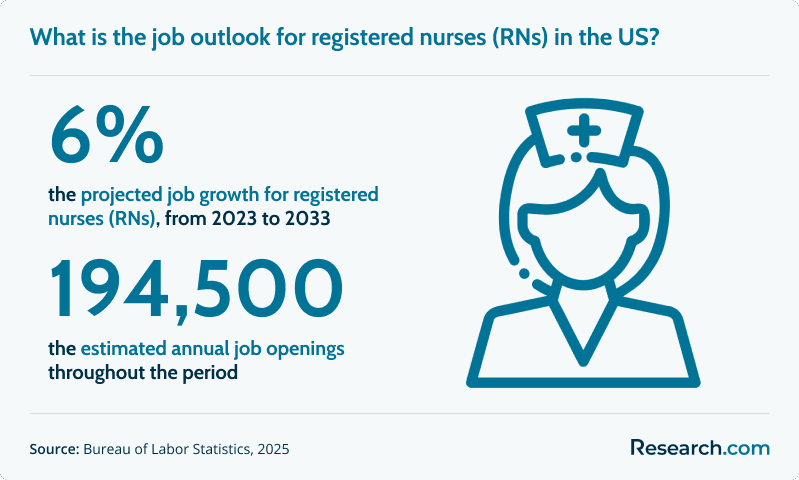
The employment outlook for registered nurses remains strong compared with many occupations. According to the U.S. Bureau of Labor Statistics, RN employment is projected to grow by 6% between 2023 and 2033, with an estimated 194,500 job openings for RNs expected each year. Demand is tied to ongoing healthcare needs, an aging population, and workforce replacement as nurses retire or leave roles.
EMT vs. RN market scale
The difference in labor market size is significant. The U.S. EMT workforce is approximately 178,000 professionals, while the healthcare system is expected to have 194,500 RN openings each year. That means projected annual RN openings exceed the size of the entire EMT workforce. For EMTs seeking more career mobility, this scale is one reason nursing can be an attractive next step.
The transition is not automatic, however. Graduates still need to pass the NCLEX-RN, obtain state licensure, and compete for roles based on clinical experience, location, schedule availability, and employer preferences. EMT experience can help in interviews and clinical settings, but RN hiring depends on nursing qualifications.
Here’s What Graduates Have to Say about Their Accelerated EMT to RN Online Bridge Program
- Tiffany: "I wanted more responsibility and a clearer future. As an EMT, I had strong field experience, but I did not see many advancement options. Nursing school gave me a plan: earn the RN license, continue toward the BSN, and eventually consider graduate study. The online format helped me start that next stage without completely stepping away from work."
- Ralph: "I was exhausted from the pace and physical strain of EMS. I still wanted patient care, but I needed more stability for my family. When I started working as a nurse, the financial difference was real; my first nursing paycheck was almost double what I had been making. More than anything, the career security changed how I thought about my future."
- Fatima: "Paying for school worried me the most. I started with the FAFSA, then looked for awards for first responders and talked to my employer about tuition help. A scholarship and reimbursement program made the cost much easier to handle. I learned that you have to build a funding plan, not wait for one perfect source."
Can I transition directly into advanced practice roles after my accelerated EMT to RN program?
No, an accelerated EMT to RN program does not by itself qualify graduates for advanced practice nursing roles. To become an advanced practice registered nurse, graduates typically need RN licensure, additional nursing education, clinical experience, and a graduate-level degree that meets certification and state requirements.
Students planning a long-term nurse practitioner path should map the sequence early: RN licensure, BSN completion if needed, clinical experience, graduate admissions prerequisites, supervised advanced practice hours, certification, and state APRN licensure. Some pathways are designed for students entering nursing from a non-nursing background, and Research.com covers direct NP programs no BSN for readers comparing those options. However, every advanced path should be checked for accreditation, state authorization, clinical placement quality, and graduate outcomes.
Can advanced education further accelerate my nursing career?
Advanced education can expand a nurse’s options beyond entry-level RN practice. Graduate study may lead to specialized clinical roles, leadership positions, education, research, informatics, or policy-focused work. It can also help nurses qualify for roles with more autonomy and responsibility, depending on the degree and state rules.
Nurses who already hold a graduate nursing degree may later consider doctoral preparation. For example, Research.com reviews options such as the shortest MSN to DNP program for nurses comparing doctoral timelines. The right choice depends on career goals: clinical practice, executive leadership, teaching, systems improvement, or advanced specialty care.
How does this program pave the path to advanced practice roles?
An accelerated EMT to RN pathway can be the first step toward advanced nursing practice because it leads to the RN credential, which is the foundation for most nursing advancement. Former EMTs may bring strong assessment skills, emergency response experience, and patient communication ability, but they still need formal nursing education to progress into higher-level roles.
After RN licensure, students who want advanced practice should determine whether they need a BSN, what experience graduate programs expect, and which specialty aligns with their goals. Those comparing structured advanced practice pathways can review direct nurse practitioner programs, but they should remember that program names, admissions standards, licensure eligibility, and clinical placement models vary widely.
References
- American Association of Colleges of Nursing. Nursing shortage. https://www.aacnnursing.org/news-data/fact-sheets/nursing-shortage
- Data USA. Registered nursing. https://datausa.io/profile/cip/registered-nursing
- University of St. Augustine for Health Sciences. Nursing shortage: A 2024 data study reveals key insights. https://www.usa.edu/blog/nursing-shortage/
- U.S. Bureau of Labor Statistics. Occupational employment and wage statistics. https://data.bls.gov/oesprofile/
- U.S. Bureau of Labor Statistics. Occupational outlook handbook: EMTs and paramedics. https://www.bls.gov/ooh/healthcare/emts-and-paramedics.htm
- U.S. Bureau of Labor Statistics. Occupational outlook handbook: Licensed practical and licensed vocational nurses. https://www.bls.gov/ooh/healthcare/licensed-practical-and-licensed-vocational-nurses.htm
- U.S. Bureau of Labor Statistics. Occupational outlook handbook: Medical assistants. https://www.bls.gov/ooh/healthcare/medical-assistants.htm
- U.S. Bureau of Labor Statistics. Occupational outlook handbook: Nursing assistants and orderlies. https://www.bls.gov/ooh/healthcare/nursing-assistants.htm
- U.S. Bureau of Labor Statistics. Occupational outlook handbook: Registered nurses. https://www.bls.gov/ooh/healthcare/registered-nurses.htm
Key Insights
- Accelerated EMT to RN online bridge programs are rarely 100% online. Expect online theory courses, but also in-person labs, simulations, clinical rotations, and state licensure steps.
- The full EMT-to-RN timeline is usually longer than the advertised nursing program length because prerequisites may take 1-2 years before the accelerated cohort begins.
- Accreditation and state approval are non-negotiable. Verify the program through official accreditor and nursing board sources before paying tuition or applying.
- Clinical placement support can make or break an online nursing program. Ask whether the school arranges placements or expects students to find approved sites.
- Cost comparisons should include tuition, fees, supplies, prerequisite courses, travel, NCLEX-RN expenses, and possible lost wages from reducing work hours.
- EMT experience is valuable, especially in assessment and urgent care environments, but it usually does not replace Anatomy & Physiology, Microbiology, Chemistry, and other nursing prerequisites.
- The RN job market offers a much larger employment base than EMS, with 6% projected growth between 2023 and 2033 and an estimated 194,500 RN openings each year.
- The best choice is not always the fastest program. Choose the accredited pathway that fits your state, budget, clinical access, learning style, and long-term nursing goals.
Other Things You Should Know About Accelerated EMT to RN Online Bridge Programs
Most EMT to RN bridge programs require the TEAS, while some accept the HESI A2 instead. Schools usually ask for a minimum score before admission, and competitive programs often set cutoffs in reading, math, and science to screen applicants.
Accelerated EMT to RN programs usually require applicants to have an active EMT license, a valid CPR certification, and some prerequisite coursework like anatomy and physiology. The exact requirements vary, so check with each program to ensure you meet their specific criteria.


