
2027 Fastest Online Doctorate Programs in Pharmacy (Pharm.D.)

Co-Founder and Chief Data Scientist
Healthcare professionals seeking career advancement often face a major roadblock: the time it takes to earn a Doctor of Pharmacy (Pharm.D.) degree. For those with a bachelor’s or master’s degree or those already working in clinical or academic settings, finding a fast, accredited path to a Pharm.D. can be challenging—especially when exploring online doctorate programs in pharmacy.
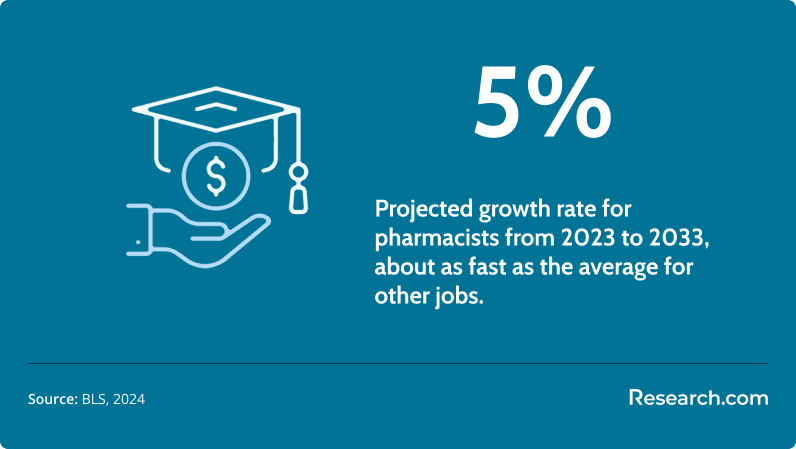
Yet the demand is clear. The U.S. Bureau of Labor Statistics projects a 5% growth in pharmacist jobs from 2023 to 2033, with around 14,200 new openings each year. This article explores the fastest online Pharm.D. programs available for 2027. Created by experts in career planning, it will help readers compare accelerated options and choose a program that supports timely advancement.
What are the benefits of getting an online doctorate program in pharmacy?
- Qualifies you for advanced roles like clinical pharmacist, research scientist, or pharmacy director in hospitals, academia, or regulatory agencies.
- Median annual salary for pharmacists is around $137,480 as of 2024, according to the U.S. Bureau of Labor Statistics.
- Online Pharm.D. programs offer flexible schedules, allowing working professionals to upskill without pausing their careers.
What can I expect from an online doctorate program in pharmacy?
Online Pharm.D. programs offer a flexible format designed for working professionals. You’ll complete a core curriculum covering pharmacology, therapeutics, patient care, and health systems. Most programs also include a capstone project focused on solving real-world pharmacy problems. Expect to complete an internship or experiential hours at approved clinical sites in your area.
Classes are typically delivered through asynchronous lectures, live virtual sessions, and interactive modules. Some programs may require occasional campus visits.
Tuition ranges from $44,000 to $188,000, depending on the school and program length. While timelines vary, accelerated options may let you finish in as little as two years. These programs balance academic rigor with the flexibility to maintain your job.
Where can I work with an online doctorate program in pharmacy?
An online Doctor of Pharmacy (Pharm.D.) opens doors to diverse roles across healthcare, education, government, and research sectors. According to the U.S. Bureau of Labor Statistics, as of May 2023, pharmacists are employed in several high-demand industries:
- Health and Personal Care Stores: Employ about 134,050 pharmacists, making up 12.09% of the field.
- Hospitals (State, Local, and Private): Employ around 86,810 pharmacists, accounting for 1.52% of total pharmacy employment.
- Food and Beverage Stores: Employ roughly 23,750 pharmacists, or 0.78% of the workforce.
- General Merchandise Stores: Employ nearly 20,740 pharmacists, around 0.65% of the total.
- Nondurable Goods Wholesalers: Employ about 7,690 pharmacists, roughly 1.95% of the profession.
How much can I make with an online doctorate program in pharmacy?
Pharm.D. professionals earn strong salaries across healthcare sectors. The following roles had 2023 median pay according to the U.S. Bureau of Labor Statistics and related sources:
- Pharmacists (General): $66.10 per hour; $137,480 per year
- Clinical Pharmacists (Hospitals): $69.20 per hour; $151,200 per year
- Pharmacy Directors (with experience): $78.50 per hour; $196,500 per year
- Academic Pharmacy Faculty (with certifications/Ph.D.): $50.25 per hour; $170,500 per year
- List of the Best Online Doctorate Programs in Pharmacy for 2027 List of Programs
- How long does it take to complete an online doctorate program in pharmacy? Program Length
- How does an online doctorate program in pharmacy compare to an on-campus program? How does an online doctorate program in pharmacy compare to an on-campus program?
- What is the average cost of an online doctorate program in pharmacy? Program Cost
- What are the financial aid options for students enrolling in an online doctorate program in pharmacy? Financial Aid
- What are the prerequisites for enrolling in an online doctorate program in pharmacy? What are the prerequisites for enrolling in an online doctorate program in pharmacy?
- What courses are typically in an online doctorate program in pharmacy? What courses are typically in an online doctorate program in pharmacy?
- What types of specializations are available in an online doctorate program in pharmacy? What types of specializations are available in an online doctorate program in pharmacy?
- How to Choose the Best Online Doctorate Programs in Pharmacy How to Choose the Best Online Doctorate Programs in Pharmacy
- What career paths are available for graduates of an online doctorate program in pharmacy? What career paths are available for graduates of an online doctorate program in pharmacy?
- What is the job market for graduates with an online doctorate program in pharmacy? Job Market
- What Challenges Should You Consider with Online Pharm.D. Programs? What Challenges Should You Consider with Online Pharm.D. Programs?
- How Do Online Pharm.D. Programs Foster Professional Networking and Continuing Education? How Do Online Pharm.D. Programs Foster Professional Networking and Continuing Education?
- Is Investing in an Online Pharm.D. Program Worth It? Is Investing in an Online Pharm.D. Program Worth It?
- How Do Online Pharm.D. Programs Prepare You for Licensing Exams? How Do Online Pharm.D. Programs Prepare You for Licensing Exams?
Best Online Doctorate Programs in Pharmacy for 2027
Choosing an online Doctor of Pharmacy program is not just a question of convenience. It affects your eligibility for pharmacist licensure, your clinical training options, your debt load, and the type of pharmacy career you can realistically pursue. Online and hybrid Pharm.D. pathways can work well for licensed pharmacists, career changers with the right prerequisites, and students who need more flexibility than a traditional campus schedule allows, but they still require in-person rotations and careful accreditation review.
This guide explains how online Pharm.D. programs work, which schools stand out, what they cost, how long they take, what admissions requirements to expect, and how to compare programs before applying. It also covers financial aid, specialization options, licensing preparation, job outcomes, and common mistakes to avoid when evaluating online pharmacy doctorate programs.
Quick answer: What is the best online Pharm.D. program?
The best online Doctor of Pharmacy program for you is the ACPE-accredited option that matches your background, state licensure goals, clinical rotation access, budget, and preferred learning format. Some programs are designed for licensed pharmacists completing a U.S. Pharm.D.; others are hybrid pathways for students entering the profession. Before applying, verify Accreditation Council for Pharmacy Education accreditation, ask where clinical rotations can be completed, compare total program cost rather than tuition alone, and confirm the program prepares graduates for required licensing exams.
How we rank online pharmacy doctorate programs
Because pharmacy school can require a major financial investment, our rankings focus on transparent, decision-useful information. Research.com reviews institutional and program data from sources such as the IPEDS database, Peterson's database, the College Scorecard database, and The National Center for Education Statistics. We weigh factors such as accreditation, program structure, affordability, academic quality, student support, and relevance to pharmacy career outcomes. You can learn more about the evaluation process on Research.com's methodology page.
| School | Format or audience | Program length | Credits or units | Published cost | Accreditation |
| Duquesne University | Online pathway for licensed pharmacists seeking a U.S. Pharm.D. | 4 years | 142 credits | $1,995 per credit hour | Accreditation Council for Pharmacy Education (ACPE) |
| Butler University | Online Pharm.D. with asynchronous work, live sessions, simulations, and clinical experiences | 4 years | 139 credits | $51,530 tuition cost per year | Accreditation Council for Pharmacy Education (ACPE) |
| Creighton University | Hybrid distance pathway with online coursework and supervised experiential training | 4 years | 151 credits | $40,908 tuition cost (1st year to 3rd year) / $61,362 tuition cost (4th year) | Accreditation Council for Pharmacy Education (ACPE) |
| West Coast University | Hybrid Pharm.D. with labs, technology-supported coursework, and clinical practice | 33 months | 144 credits | $1,321 per credit hour (Prior to Fall 2025) / $1,387 per credit hour (Effective Fall 2025) | Accreditation Council for Pharmacy Education (ACPE) |
| St. John Fisher University | Hybrid online Pharm.D. with live online classes, self-paced learning, and rotations | 4 years | 151 credits | $1,233 per credit hour | Accreditation Council for Pharmacy Education (ACPE) |
| University of Findlay | Online pathway for licensed pharmacists completing a U.S. Pharm.D. | 4 years | 142 units | $170,960 total program cost | Accreditation Council for Pharmacy Education (ACPE) |
| D’Youville University | Online Pharm.D. for licensed pharmacists balancing work and study | 3 years | 141 to 143 credits | $187,050 full program tuition cost | Accreditation Council for Pharmacy Education (ACPE) |
| Shenandoah University | Non-Traditional Doctor of Pharmacy pathway for licensed pharmacists | 8 semesters | 53 credits | $43,150 tuition cost | Accreditation Council for Pharmacy Education (ACPE) |
| Lipscomb University | Doctor of Pharmacy program with clinical, leadership, and professional development emphasis | Not stated | 147 credits | $19,969 per semester tuition cost | Accreditation Council for Pharmacy Education (ACPE) |
| Manchester University | Hybrid Pharmacy Distance Pathway with online coursework and campus immersions | 4 years | 144 credits | $1,215 per credit hour (1st year to 3rd year) / $1,189 per credit hour (4th year) | Accreditation Council for Pharmacy Education (ACPE) |
1. Duquesne University
The online Pharm.D. pathway at Duquesne University is built for licensed pharmacists who want to earn a U.S. Doctor of Pharmacy degree without leaving their current location. The program emphasizes patient-centered decision-making, interprofessional practice, clinical reasoning, and applied learning through virtual simulations, case discussions, and experiential rotations.
- Best fit: Licensed pharmacists who need an online format but still want structured clinical preparation.
- Program Length: 4 years
- Required Credits to Graduate: 142
- Cost: $1,995 per credit hour
- Accreditation: Accreditation Council for Pharmacy Education (ACPE)
2. Butler University
Butler University offers an online Doctor of Pharmacy pathway that combines self-paced coursework, live class meetings, virtual simulation, and hands-on clinical experience. The curriculum is especially relevant for pharmacists seeking stronger clinical, leadership, patient safety, and academic preparation.
- Best fit: Licensed pharmacists who want a flexible but interactive online learning model.
- Program Length: 4 years
- Required Credits to Graduate: 139
- Cost: $51,530 tuition cost per year
- Accreditation: Accreditation Council for Pharmacy Education (ACPE)
3. Creighton University (Hybrid)
The hybrid Doctor of Pharmacy program at Creighton University uses distance learning, interactive online activities, virtual lab work, and in-person experiential rotations. Students develop pharmacy knowledge while practicing communication, ethical judgment, and team-based care across varied healthcare settings.
- Best fit: Students who want online flexibility but can meet hybrid and clinical placement requirements.
- Program Length: 4 years
- Required Credits to Graduate: 151
- Cost: $40,908 tuition cost (1st year to 3rd year) / $61,362 tuition cost (4th year)
- Accreditation: Accreditation Council for Pharmacy Education (ACPE)
4. West Coast University (Hybrid)
The Pharm.D. program at West Coast University is a hybrid option that combines online learning tools with in-person laboratory work, case-based instruction, and clinical practice. The program’s shorter 33 months timeline may appeal to students who want an accelerated route and can manage an intensive schedule.
- Best fit: Students looking for an accelerated hybrid Pharm.D. with required hands-on components.
- Program Length: 33 months
- Required Credits to Graduate: 144
- Cost: $1,321 per credit hour (Prior to Fall 2025) / $1,387 per credit hour (Effective Fall 2025)
- Accreditation: Accreditation Council for Pharmacy Education (ACPE)
5. St. John Fisher University
St. John Fisher University offers a hybrid online Doctor of Pharmacy program that blends live online instruction, asynchronous coursework, and clinical rotations. The program is designed to develop critical thinking, ethical practice, and collaborative patient care skills for pharmacy settings that require both clinical judgment and communication.
- Best fit: Learners who want a structured hybrid format with both synchronous and self-paced components.
- Program Length: 4 years
- Required Credits to Graduate: 151
- Cost: $1,233 per credit hour
- Accreditation: Accreditation Council for Pharmacy Education (ACPE)
6. University of Findlay
The online Doctor of Pharmacy program at University of Findlay serves licensed pharmacists who want to complete a U.S. Pharm.D. through a distance-accessible pathway. Coursework includes live online meetings, asynchronous study, experiential learning, medication safety, clinical reasoning, and interprofessional collaboration.
- Best fit: Licensed pharmacists who need a structured online pathway to a U.S. Pharm.D.
- Program Length: 4 years
- Required Units to Graduate: 142
- Cost: $170,960 total program cost
- Accreditation: Accreditation Council for Pharmacy Education (ACPE)
7. D’Youville University
The online Pharm.D. at D’Youville University is designed for licensed pharmacists who need a flexible schedule while continuing professional and personal responsibilities. Students complete online coursework, live virtual sessions, and applied experiences intended to deepen clinical skills and support advancement in healthcare practice.
- Best fit: Working pharmacists who want a shorter online pathway and can manage clinical expectations.
- Program Length: 3 years
- Required Credits to Graduate: 141 to 143
- Cost: $187,050 full program tuition cost
- Accreditation: Accreditation Council for Pharmacy Education (ACPE)
8. Shenandoah University
Shenandoah University offers a Non-Traditional Doctor of Pharmacy pathway for licensed pharmacists who want to continue working while completing an online curriculum. The asynchronous model is especially useful for students who need schedule control, though success requires strong self-management and consistent progress.
- Best fit: Licensed pharmacists who prefer asynchronous coursework and already have pharmacy practice experience.
- Program Length: 8 semesters
- Required Credits to Graduate: 53
- Cost: $43,150 tuition cost
- Accreditation: Accreditation Council for Pharmacy Education (ACPE)
9. Lipscomb University
The Doctor of Pharmacy program at Lipscomb University combines science-based instruction, applied practice, patient care, leadership preparation, and professional formation. The program may appeal to students seeking mentorship and a values-informed pharmacy education environment.
- Best fit: Students who want clinical preparation with leadership development and mentorship.
- Required Credits to Graduate: 147
- Cost: $19,969 per semester tuition cost
- Accreditation: Accreditation Council for Pharmacy Education (ACPE)
10. Manchester University
The Pharmacy Distance Pathway at Manchester University uses a hybrid structure that pairs online coursework with periodic on-campus immersions. Students build clinical reasoning, communication, ethical decision-making, and practical skills through structured rotations in different pharmacy environments.
- Best fit: Students who need distance learning but can travel for required in-person experiences.
- Program Length: 4 years
- Required Credits to Graduate: 144
- Cost: $1,215 per credit hour (1st year to 3rd year) / $1,189 per credit hour (4th year)
- Accreditation: Accreditation Council for Pharmacy Education (ACPE)
How long does it take to complete an online doctorate program in pharmacy?
Most online Doctor of Pharmacy programs take 4 years to complete, but the timeline depends heavily on your prior education, licensure status, transfer credits, and clinical rotation schedule.
Students who are already licensed pharmacists may qualify for nontraditional or accelerated pathways because some programs recognize prior pharmacy education and professional experience. These students often complete online Pharm.D. study in 2 to 3 years, while some accelerated hybrid options can be finished faster. West Coast University, for example, lists a 33 months pathway.
Students who do not already hold pharmacy licensure usually need a full professional Pharm.D. pathway, which is more similar to the traditional campus-based route. These programs must include didactic coursework, skills labs, Introductory Pharmacy Practice Experiences, and Advanced Pharmacy Practice Experiences, so online coursework does not eliminate hands-on requirements.
| Student profile | Likely timeline | What affects completion speed |
| Licensed pharmacist entering a nontraditional Pharm.D. pathway | About 2 to 3 years in many cases | Credit for prior coursework, licensure waivers, work schedule, and clinical placement availability |
| Student entering a standard online or hybrid Pharm.D. | Usually 4 years | Prerequisite completion, course sequencing, rotation requirements, and full-time enrollment |
| Student in an accelerated hybrid program | May be shorter; one listed pathway is 33 months | Intensive course load, fewer breaks, and required in-person experiences |
Program length can also be affected by retention and academic support. ACPE-reported attrition rates for Pharm.D. programs average around 13.4%, so advising, tutoring, cohort support, and reliable rotation coordination matter. If you want a much faster healthcare entry point before committing to pharmacy school, accelerated online medical assistant associate degree programs can provide a shorter route into patient-facing healthcare experience.
How does an online doctorate program in pharmacy compare to an on-campus program?
Online and campus Pharm.D. programs can lead to the same professional goal when they are ACPE-accredited and meet state licensing requirements. The major difference is delivery format, not academic standard. Online students still complete in-person clinical rotations, and hybrid programs may require campus visits for labs, skills assessments, or immersions.
Some students use a staged healthcare pathway before applying to pharmacy school. For example, the shortest online medical assistant associate degree can help students gain healthcare exposure before deciding whether a Pharm.D. is the right long-term investment.
| Comparison area | Online or hybrid Pharm.D. | Campus Pharm.D. |
| Accreditation expectations | Must meet ACPE standards for licensure eligibility | Must meet ACPE standards for licensure eligibility |
| Course delivery | Online lectures, live sessions, simulations, and possible campus immersions | In-person lectures, labs, campus activities, and direct faculty interaction |
| Clinical training | Completed in person through local or affiliated clinical sites | Completed in person through school-arranged sites, often near campus |
| Flexibility | Often better for working adults and students outside commuting distance | Better for students who prefer face-to-face structure and campus resources |
| Cost factors | May reduce housing and commuting costs, but tuition varies widely | May include relocation, campus fees, housing, and transportation costs |
| Best for | Self-directed learners who can manage online coursework and clinical logistics | Students who want daily in-person interaction and campus-based support |
Curriculum and outcomes
Both formats cover core pharmacy sciences, pharmacotherapy, patient care, law, ethics, public health, and clinical decision-making. Online delivery may use recorded lectures, synchronous discussions, case-based learning, and virtual simulations, while campus programs rely more heavily on in-person labs and classroom interaction.
Clinical rotations
Online students must still complete Introductory Pharmacy Practice Experiences and Advanced Pharmacy Practice Experiences in person. Before enrolling, ask whether the school secures placements near you or expects you to help identify sites. Rotation quality can vary by region, so this is one of the most important questions for online students.
Employer perception
Employers generally focus on accreditation, licensure, clinical readiness, references, and experience rather than whether didactic coursework was online. There is no evidence that graduates of ACPE-accredited online Pharm.D. programs face a hiring disadvantage solely because of delivery format, although some employers may value hybrid or campus experiences for roles requiring extensive direct patient interaction.
Cost and accessibility
Online pharmacy programs can be more accessible for students who cannot relocate. Some pharmacist school online options may also reduce indirect expenses.
- Average private online Pharm.D. cost: $62,800
- Average in-person cost: $198,600
Tuition is only one part of the cost comparison. Students should also factor in technology fees, travel for campus immersions, rotation travel, lost work hours, books, exam fees, and state licensing expenses.
Flexibility and support
Online programs often include asynchronous coursework, which can help students balance school with employment or family responsibilities. However, flexibility does not mean lower workload. A Howard University study found that student satisfaction between traditional and online Pharm.D. graduates was statistically equivalent, but success still depends on time management, accessible faculty, and strong academic support.
What is the average cost of an online doctorate program in pharmacy?
The average total cost of online doctorate programs in pharmacy ranges from $18,000 to $62,000 in tuition and fees, with major variation by school type, residency status, and program structure. Public programs list ranges from $18,075 and $61,784 for out-of-state students and $5,515 to $44,244 for in-state students, while private programs range from $31,350 and $67,096.
If you are unsure whether to commit to the full Pharm.D. pathway, fast track pharmacy technician certification programs online can be a lower-cost way to test your interest in pharmacy work before pursuing a doctorate.
| Cost category | What to check before enrolling |
| Tuition and required fees | Ask for the full program estimate, not only the per-credit rate. |
| Clinical rotation expenses | Confirm whether travel, placement fees, background checks, immunizations, and site onboarding costs are included. |
| Campus immersion costs | Hybrid programs may require travel, lodging, meals, and time away from work. |
| Technology and course materials | Ask about software, simulation platforms, exam proctoring, devices, and textbooks. |
| Licensure and exam costs | Budget for NAPLEX preparation, state-specific requirements, applications, and exam-related expenses. |
| Lost income | Consider whether the course and rotation schedule will reduce your work hours. |
Borrowing is common in pharmacy education. In 2023, the average student loan debt for Pharm.D. graduates was approximately $167,711, with public school graduates owing about $138,060 and private school grads averaging $200,305. Graduate tuition has also been rising at roughly 3.5% annually since 2000, so students should compare costs early and ask schools for the most current tuition and fee sheet.
Financial aid can reduce the upfront burden. Around 82% of pharmacy students use federal loans, and many online doctorate programs in pharmacy offer institutional grants or merit-based scholarships. Employer tuition assistance may also help, with some benefits covering up to $5,250 annually.
What financial aid options are available for online Pharm.D. students?
Online Pharm.D. students may qualify for many of the same aid options as campus students if the program is eligible and properly accredited. The most common sources include federal loans, institutional scholarships, grants, employer reimbursement, and, in some cases, assistantships.
| Aid option | How it works | What to ask |
| Federal aid through FAFSA | Students submit the FAFSA to be considered for eligible federal aid. Around 74% of graduate students received some form of financial aid in 2019–20, averaging $25,300 each. | Is this online Pharm.D. eligible for federal financial aid? |
| Scholarships and grants | Schools may offer pharmacy-specific awards based on need, merit, service, leadership, or professional goals. USC reports that 90% of their pharmacy students receive financial assistance, and the institution awards over $28 million annually. | Which awards are renewable, and what GPA or enrollment status is required? |
| Employer tuition reimbursement | Some employers provide education benefits, including up to $5,250 annually in tax-free tuition assistance. | Will my employer cover prerequisite, doctoral, or licensure-related coursework? |
| Graduate assistantships | Some programs offer teaching or research roles with stipends or tuition reductions. Approximately 12% of graduate students received such roles in 2019–20. | Are assistantships available to online or hybrid Pharm.D. students? |
| Federal student loans | Loans are widely used by Pharm.D. students. The average Pharm.D. graduate owes around $167,711 in student loans. | What will my estimated monthly repayment look like under different income scenarios? |
Do not compare aid packages only by the first-year award. Ask whether scholarships continue through rotations, whether part-time enrollment changes eligibility, and whether summer coursework is included. Also clarify whether employer tuition benefits are paid upfront or reimbursed after grades are posted.
What are the prerequisites for enrolling in an online doctorate program in pharmacy?
Admissions requirements vary by school and by pathway. A traditional or hybrid Pharm.D. program usually requires prerequisite science coursework and evidence that you can handle professional-level study. A nontraditional Pharm.D. for licensed pharmacists may place more weight on licensure, professional experience, and prior pharmacy education.
Educational background
A bachelor’s degree is not always mandatory. About 39% enter with an associate certificate or master’s, while 61% hold a bachelor’s degree. Common undergraduate preparation includes biology, chemistry, pharmacy, or another science-heavy field. Students who want healthcare exposure before applying may consider options such as the fastest phlebotomy technician certification online, which can build patient interaction experience.
Required science coursework
Most programs expect completed coursework in biology, general chemistry, organic chemistry, anatomy, physiology, and related foundational sciences. Some schools may also require calculus, statistics, microbiology, or communication coursework. Always compare your transcript to each program’s prerequisite list before applying.
Licensed pharmacist pathways
Licensed pharmacists may qualify for waivers, advanced standing, or modified requirements. These pathways are typically designed for professionals who already have pharmacy credentials but need a U.S. Pharm.D. for advancement, licensure mobility, academic work, or clinical practice goals.
Healthcare experience
Clinical or pharmacy experience can strengthen an application. Roughly 60–70% of online Pharm.D. candidates have this experience before applying. Related credentials, including accelerated sterile processing technician online certificate programs, may help applicants understand healthcare operations and strengthen readiness for clinical environments.
Standardized tests
The PCAT was officially retired in January 2024, and over 70% of schools no longer require it. Many pharmacy schools now use holistic admissions review, which may include GPA, prerequisite grades, interviews, essays, recommendation letters, work history, and professional goals.
Programs accepting bachelor-level applicants see an 87% acceptance rate, partly because enrollment demand has shifted toward nontraditional routes. Still, acceptance does not guarantee success. Applicants should evaluate whether they have enough time, academic preparation, and financial support to complete the program.
What courses are typically included in an online doctorate program in pharmacy?
Online Pharm.D. curricula combine biomedical science, medication therapy, clinical decision-making, patient assessment, pharmacy law, ethics, public health, and supervised practice. Students who want an entry-level pharmacy role before doctoral study may start with the fastest online pharmacy technician certification programs to gain exposure to dispensing workflows and pharmacy operations.
Core pharmacy coursework
Common courses include pharmaceutics, biochemistry, physiology, medicinal chemistry, pharmacology, pharmacotherapy, pharmacokinetics, pharmacy law, ethics, public health, and patient assessment. Advanced modules may address diabetes, infectious diseases, cardiovascular care, medication safety, and complex patient cases.
Experiential education
Students complete Introductory Pharmacy Practice Experiences and Advanced Pharmacy Practice Experiences. These placements may total up to 36 weeks of supervised clinical training and are required to meet professional and state licensure expectations. Online programs typically arrange local or affiliated clinical site placements so students can build hands-on skills.
Virtual simulation and skills practice
Many programs use simulation tools to practice dispensing accuracy, communication, counseling, and clinical judgment before students work with patients. Platforms such as simulations like MyDispense allow students to work through realistic medication scenarios. In one study, over 80% of participants reported improved confidence and skills after using it.
Electives and concentration areas
Electives may include oncology, geriatrics, infectious diseases, pediatrics, pharmacy management, pharmacogenomics, or regulatory topics. As of 2025, more than 50% of Pharm.D. programs offer specialized tracks, although availability varies significantly by school.
What specializations are available in online doctorate programs in pharmacy?
Specializations allow Pharm.D. students to align clinical training with career goals. Not every online or hybrid program offers formal concentrations, so applicants should check whether a school provides structured tracks, elective clusters, residency preparation, research opportunities, or practice experiences in their target area. Students interested in management or executive roles may also compare pharmacy leadership pathways with broader organizational leadership careers.
| Specialization area | Common career direction | Why students choose it |
| Clinical pharmacy | Hospital, ambulatory care, specialty clinics, and medication therapy management | Strong fit for students who want direct patient-care responsibilities. |
| Oncology | Cancer care teams, infusion centers, specialty pharmacies, and hospitals | Appeals to students interested in complex medication regimens and high-touch patient care. |
| Geriatrics | Long-term care, senior health programs, primary care, and medication safety roles | Useful for pharmacists focused on aging populations and polypharmacy risk. |
| Pediatrics | Children’s hospitals, pediatric clinics, and specialty care settings | Designed for students interested in child-specific dosing, safety, and counseling. |
| Infectious diseases | Antimicrobial stewardship, hospitals, public health, and clinical consulting | Relevant for students drawn to complex therapeutics and population health. |
| Pharmacogenomics | Personalized medicine, research, clinical decision support, and health systems | Fits students interested in genetics-driven medication selection. |
| Pharmacovigilance and regulatory affairs | Drug safety, compliance, pharmaceutical companies, and regulatory organizations | Best for students who want industry, policy, or safety-focused roles. |
| Pharmacy management | Pharmacy director, operations manager, community pharmacy leadership, and health-system administration | Useful for pharmacists aiming for leadership, budgeting, staffing, and quality improvement roles. |
Clinical and specialty growth areas
Clinical pharmacy is among the most common specialization choices. Hospital and clinic roles are reported to be expanding at around 7–8% growth through 2032, which is faster than general pharmacist employment at 5%. Oncology, geriatrics, and pediatrics are often cited as high-demand areas because patient needs are becoming more complex.
Research, industry, and policy pathways
Students interested in pharmaceutical innovation, AI-supported drug development, drug safety, or regulatory policy may prefer pharmacogenomics, pharmacovigilance, or industrial pharmacy electives. These pathways can lead away from traditional dispensing and toward research, compliance, medical affairs, or safety monitoring.
How to choose a specialization
Do not choose a concentration only because it sounds prestigious. Ask whether the school offers relevant rotations, faculty expertise, residency preparation, research projects, and employer connections. Students who are still exploring healthcare may first complete a fast track online phlebotomy technician certification to gain patient care exposure before committing to a specialty-heavy pharmacy plan.
How to Choose the Best Online Doctorate Program in Pharmacy
The best online Pharm.D. program is not always the highest-ranked or fastest option. It is the program that protects your licensure eligibility, provides reliable clinical placements, fits your learning style, and makes financial sense. Students exploring shorter healthcare education routes can also review the best medical certificate programs online before deciding whether pharmacy school is the right next step.
Step 1: Verify ACPE accreditation
ACPE accreditation is essential for pharmacist licensure eligibility. Do not assume a program qualifies because it is online, well-known, or offered by a regionally accredited university. Confirm the Pharm.D. program itself is ACPE-accredited and ask whether the pathway you are applying to is included.
Step 2: Confirm licensure alignment in your state
Licensure rules can vary by state. Ask the program whether its curriculum, rotations, and exam preparation satisfy requirements in the state where you plan to practice. This is especially important for online students completing rotations outside the school’s home state.
Step 3: Evaluate clinical placement support
Clinical rotations are not optional. Ask whether the school places students, approves student-suggested sites, has established partners near you, or requires travel. A flexible online format loses value if you cannot complete required rotations on time.
Step 4: Compare total program cost
Look beyond tuition. Include fees, travel, books, exam preparation, licensing costs, rotation expenses, technology requirements, and potential lost income. Ask for a full cost-of-attendance estimate and compare it with expected borrowing.
Step 5: Review student support and outcomes
Look for advising, tutoring, faculty access, mental health resources, technical support, career services, residency advising, and NAPLEX preparation. Programs with student satisfaction around 85% or higher and retention or completion rates above 70% may indicate stronger support, but ask how those figures are calculated.
Step 6: Check faculty and learning format
Find out whether faculty are practicing pharmacists, researchers, clinical specialists, or experienced educators. Also ask how much of the program is asynchronous, how often live attendance is required, and whether exams are proctored.
Step 7: Do not rely only on rankings
Rankings are a starting point, not a final decision tool. A lower-cost program with strong ACPE accreditation, reliable rotations, and state licensure alignment may be a better choice than a higher-ranked program that requires expensive travel or offers limited support in your region.
| Question to ask before applying | Why it matters |
| Is the Pharm.D. program ACPE-accredited? | Accreditation is tied to licensure eligibility. |
| Will this program meet requirements in my state? | Online delivery can create state authorization and licensure complications. |
| Who arranges clinical rotations? | Delayed or weak placements can slow graduation and affect readiness. |
| How often must I attend live sessions or travel to campus? | Hybrid requirements can affect work, family, and travel budgets. |
| What is the full cost of attendance? | Per-credit tuition does not show the complete financial commitment. |
| What are recent NAPLEX outcomes and support services? | Licensing exam preparation is central to career entry. |
| Are scholarships renewable? | A strong first-year award may not reduce total debt if it disappears later. |
What career paths are available for graduates of an online doctorate program in pharmacy?
Graduates of ACPE-accredited online or hybrid Pharm.D. programs can pursue the same broad categories of pharmacist roles as campus graduates, provided they meet licensure requirements. If you are comparing healthcare roles, understanding the difference between pharmacy technician and medical assistant can help clarify why a Pharm.D. is a professional doctorate rather than an entry-level support credential.
| Career path | Typical settings | What the role involves |
| Clinical pharmacist | Hospitals, ambulatory care clinics, specialty practices, and telehealth settings | Medication therapy management, patient counseling, care-team collaboration, and clinical decision support. |
| Community pharmacist | Retail pharmacies, independent pharmacies, and community health programs | Dispensing, immunizations, medication counseling, adherence support, and patient education. |
| Specialty pharmacist | Oncology, geriatrics, pediatrics, infectious disease, and complex therapy settings | Managing high-risk medications, monitoring outcomes, and supporting patients with complex conditions. |
| Clinical research pharmacist | Academic medical centers, contract research organizations, and pharmaceutical companies | Study drug management, protocol compliance, patient safety, and research coordination. |
| Pharmacy manager or director | Hospitals, health systems, retail chains, and specialty pharmacy organizations | Staff leadership, compliance, budgeting, workflow design, quality improvement, and operations. |
| Academic pharmacist | Pharmacy schools, universities, and teaching hospitals | Teaching, research, mentoring, curriculum development, and clinical practice. |
| Regulatory affairs or pharmacovigilance specialist | Pharmaceutical companies, consulting firms, and regulatory-focused organizations | Drug safety, labeling, compliance, adverse event monitoring, and policy implementation. |
Clinical roles
Hospitals, outpatient clinics, specialty care practices, and telehealth organizations hire pharmacists for patient-care roles. The BLS predicts 5% growth in pharmacist jobs from 2023 to 2033, while clinical roles are reported to be growing faster at 7–8%.
Research and academic roles
Clinical research pharmacists earn an average of $147,500 annually. Opportunities may be available in pharmacogenomics, drug development, telepharmacy, clinical trials, and teaching, depending on experience, residency training, research background, and employer needs.
Leadership and administrative roles
Pharm.D. graduates with management experience may pursue roles such as pharmacy director or pharmacy manager. Some directors earn approximately $188,750, while managers earn around $155,000. Leadership roles usually require more than a degree; employers often look for licensure, experience, communication skills, compliance knowledge, and operational judgment.
Specialized pharmacy roles
Specialties such as oncology, geriatrics, and pediatrics can lead to advanced clinical roles and higher earnings. The average pharmacist's salary in 2024 was about $137,480, while employment statistics show about 95% of Pharm.D. graduates secure relevant roles within six months, regardless of program format. Some students start in healthcare support before pharmacy school; the shortest sterile processing technician certification programs can be one way to gain exposure to healthcare systems before moving into pharmacy or another clinical pathway.
What is the job market for graduates with an online doctorate program in pharmacy?
The job market for Pharm.D. graduates is changing rather than simply expanding in one direction. Traditional retail dispensing roles face pressure from automation, consolidation, and changing pharmacy business models, while hospitals, clinics, specialty pharmacy, telepharmacy, and medication management roles continue to create opportunities for clinically trained pharmacists.
The U.S. Bureau of Labor Statistics projects 5% growth in pharmacist jobs from 2023 to 2033, with about 14,200 new openings annually. Demand is shaped by patient-care expansion, medication complexity, telehealth, specialty drugs, chronic disease management, and shortages in underserved areas.
Employers in hospitals, clinics, community care, telehealth, and the pharmaceutical industry hire Pharm.D. graduates for both patient-facing and nontraditional roles. If you want to start with a pharmacy support role first, a cheap pharmacy tech program can help you gain exposure before committing to doctoral study.
Studies show that online doctorate programs in pharmacy are treated similarly to campus programs in hiring when they are ACPE-accredited and graduates are licensed. Employment surveys indicate that around 95% of Pharm.D. grads, regardless of delivery format, secure relevant jobs within six months of graduation.
Demand varies by location. Rural states and pharmacy deserts may have more severe access gaps, which can create opportunities for pharmacists willing to work in underserved communities. Major pharmacy chains such as Walgreens and CVS are also expanding tuition support programs to attract future pharmacists.
Current trends affecting pharmacy careers
- Clinical care is becoming more important: Pharmacists are increasingly involved in medication therapy management, chronic disease support, immunizations, and care-team collaboration.
- Telepharmacy is expanding access: Remote consultation and digital medication management can support patients in rural and underserved areas.
- AI and automation are changing workflows: Automation may reduce some routine dispensing tasks, but it also increases the need for pharmacists who can verify safety, counsel patients, interpret clinical data, and manage complex therapy decisions.
- Specialty medications require deeper expertise: Oncology, biologics, infectious disease, and rare disease therapies often require advanced monitoring and patient education.
- Employer expectations are rising: Many roles now emphasize communication, interprofessional teamwork, data literacy, regulatory awareness, and leadership in addition to medication expertise.
What challenges should you consider with online Pharm.D. programs?
Online Pharm.D. programs can be flexible, but they are not easy. Students must manage demanding science coursework, clinical expectations, technology-based learning, and rotation logistics without the daily structure of a campus schedule. Before enrolling, be honest about your available study time, work obligations, family responsibilities, and comfort with remote learning.
| Challenge | Why it matters | How to reduce the risk |
| Limited face-to-face structure | Some students struggle without regular in-person class routines. | Choose a program with live sessions, advising, tutoring, and clear weekly deadlines. |
| Clinical site variability | Local rotations may differ in quality, specialty exposure, and preceptor availability. | Ask how sites are vetted and what happens if a placement falls through. |
| Technology dependence | Online exams, simulations, lectures, and communication require reliable systems. | Confirm hardware requirements, tech support hours, and backup procedures. |
| Travel requirements | Hybrid programs may require campus visits or distant rotations. | Request a calendar of required immersions and estimated travel costs. |
| Work-school conflict | Clinical rotations may not fit around full-time work. | Ask whether rotations are full-time, part-time, local, or scheduled in fixed blocks. |
| Debt risk | Pharm.D. borrowing can be substantial. | Compare total cost, scholarships, employer benefits, and repayment scenarios. |
If you are comparing lower-cost healthcare pathways before committing to pharmacy school, the most affordable online schools for medical billing and coding courses may provide a more affordable entry into healthcare administration and reimbursement work.
Common mistakes to avoid when choosing an online Pharm.D. program
- Choosing a program before checking ACPE accreditation: Accreditation is essential for licensure eligibility and should be verified before you apply.
- Comparing only tuition: Fees, travel, rotations, books, exam costs, technology, and lost work hours can significantly change the true price.
- Assuming online means fully remote: Pharm.D. students must complete in-person experiential training, and hybrid programs may require campus visits.
- Ignoring state licensure requirements: A program that works for one state may not automatically meet expectations in another.
- Underestimating clinical placement logistics: Delayed rotations can delay graduation, licensing, and employment.
- Relying only on rankings: Rankings can help create a shortlist, but accreditation, fit, cost, rotations, and support are more important.
- Assuming salary outcomes are guaranteed: Earnings vary by location, role, employer, specialization, experience, and licensure status.
- Borrowing without a repayment plan: Compare expected debt with realistic salary ranges and ask about loan counseling before enrolling.
What graduates say about online doctorate programs in pharmacy
- : "Working hospital shifts while completing a Pharm.D. was demanding, but the online format gave me enough structure to keep moving forward. I earned the credential I needed for a clinical manager role without leaving my job. — Serge"
- : "My rotations were arranged through local clinics, and the virtual classes kept me connected to faculty and classmates. After two and a half years, I moved into teaching pharmacology and mentoring pharmacy students. — Ida"
- : "I had regulatory affairs experience, but I needed stronger clinical grounding. The online Pharm.D. helped me build that expertise while continuing my consulting work. — Caryl"
How do online Pharm.D. programs support networking and continuing education?
Strong online Pharm.D. programs do more than deliver lectures. They connect students with faculty, alumni, preceptors, professional organizations, career events, and continuing education opportunities. These connections can matter when applying for residencies, clinical roles, management positions, or industry jobs.
Look for programs that offer virtual speaker series, alumni mentoring, research presentations, professional association involvement, residency advising, and career coaching. Students interested in healthcare leadership beyond pharmacy practice may also compare pharmacy management coursework with the most affordable online programs in health care administration.
Is investing in an online Pharm.D. program worth it?
An online Pharm.D. can be worth it when it is ACPE-accredited, aligned with your state licensing goals, reasonably affordable for your financial situation, and connected to the type of pharmacy role you want. It may be especially valuable for licensed pharmacists who need a U.S. Pharm.D. for advancement or for students who cannot relocate for a campus program.
The investment is less attractive if you are unsure about becoming a pharmacist, cannot complete in-person rotations, would need to borrow heavily without a repayment plan, or live in a region where the program cannot support clinical placements. Before committing, compare the Pharm.D. with other healthcare education options, including the cheapest online him degree programs, if your interests include healthcare data, compliance, coding, or administration rather than direct medication management.
| An online Pharm.D. may be worth it if... | You may want another pathway if... |
| You are committed to pharmacist licensure and patient care. | You mainly want a quick healthcare credential. |
| The program is ACPE-accredited and meets your state requirements. | You cannot confirm licensure alignment before enrolling. |
| You can complete clinical rotations without major disruption. | Your location makes rotations difficult or expensive. |
| The debt level fits your expected career path. | You would need to borrow heavily without clear income or repayment planning. |
| You are self-directed and comfortable with online learning. | You need daily in-person structure to stay engaged. |
How do online Pharm.D. programs prepare students for licensing exams?
Online Pharm.D. programs prepare students for licensing by combining required coursework, clinical rotations, patient-care simulations, assessment practice, and targeted board review. The main licensing exam for pharmacists is the NAPLEX, and many states also require additional state-specific law or jurisprudence exams.
Effective programs use NAPLEX-style practice questions, case-based reviews, simulated patient scenarios, faculty-led workshops, and academic support for students who need remediation. Ask each school for recent exam outcomes, how board preparation is built into the curriculum, and whether support continues after graduation. Students comparing allied healthcare credentials and financial support options may also review accredited medical billing and coding schools online with financial aid.
Key Insights
- Accreditation is the first filter: Only consider Pharm.D. programs with ACPE accreditation if your goal is pharmacist licensure.
- Online does not mean hands-off: Students still complete in-person clinical rotations, and hybrid programs may require campus visits.
- Most programs take 4 years: Licensed pharmacists may qualify for shorter or nontraditional pathways, including options completed in 2 to 3 years or 33 months.
- Total cost matters more than sticker tuition: Include fees, travel, rotation costs, exam preparation, licensing expenses, and possible lost income.
- Clinical placement support can make or break the experience: Ask exactly how rotations are arranged, approved, supervised, and replaced if needed.
- Career outcomes depend on more than format: Employers care about licensure, clinical competence, specialization, experience, and communication skills.
- Pharmacy roles are shifting: Clinical care, telepharmacy, specialty medications, regulatory work, and technology-supported practice are increasingly important.
- The right program is personal: Choose based on licensure fit, learning format, support services, cost, rotations, and career goals—not ranking position alone.
References:
- South College. (2025, July 7). Doctor of Pharmacy - South College. https://www.south.edu/doctor-of-pharmacy
- Calvino, A. (2025, January 14). Is online college more affordable? | UTSA Online. UTSA Online Programs. https://online.utsa.edu/blog-content/cost-of-an-online-degree-vs-traditional-education
- Hanson, M. (2024b, August 31). Cost of Online Education vs. Traditional Education [2024]: Comparison. Education Data Initiative. https://educationdata.org/cost-of-online-education-vs-traditional-education
- Hanna, M. (2025, June 23). Average student loan debt statistics for pharmacists. LendEDU. https://lendedu.com/blog/average-pharmacist-student-loan-debt
- Hunt, M. (2025, March 10). Average graduate school debt in 2025. Bankrate. https://www.bankrate.com/loans/student-loans/average-graduate-school-debt
- Financial Resources | Pharmacy is Right for Me (Pharm4me). (n.d.). https://pharmacyforme.org/financial-resources
- Biswal, S. (2025, June 27). Pharmacy school costs in 2025. UWorld RxPrep Pharmacy. https://pharmacy.uworld.com/blog/how-much-does-pharmacy-school-cost
- MyShortlister, & Bojkovska, V. (2020c, June 25). 40+ tuition reimbursement stats for employer consideration. Shortlister. https://www.myshortlister.com/insights/tuition-reimbursement-statistics
- Pharmacy school requirements & prerequisites (Updated). (n.d.). https://www.stepful.com/post/pharmacy-school-requirements-prerequisites
- This is a drill: the simulations training next-generation pharmacists - The Pharmaceutical Journal. (2024, January 5). The Pharmaceutical Journal. https://pharmaceutical-journal.com/article/feature/this-is-a-drill-the-simulations-training-next-generation-pharmacists
- Nguyen, K. T., Dao, M. L., Nguyen, K. N., Nguyen, H. N., Nguyen, H. T., & Nguyen, H. Q. (2023). Perception of learners on the effectiveness and suitability of MyDispense: a virtual pharmacy simulation and its integration in the clinical pharmacy module in Viet Nam. BMC Medical Education, 23(1). https://doi.org/10.1186/s12909-023-04773-5
- Pharm.D. – Future students. (n.d.). https://web.uri.edu/pharmacy/academics/pharmd/pharm-d-prospective-students
- Miroscholarship. (2025, June 28). Top pharmacy specializations for a thriving career in 2025. MiroScholarship. https://miroscholarship.com/top-pharmacy-specializations-for-a-thriving-career-in-2025
- Req. (2025, March 24). Pharmacy career outlook: Is a career in pharmacy worth it? Roseman University. https://www.roseman.edu/student-experience/news/pharmacy-career-outlook-is-a-career-in-pharmacy-worth-it
- Author, B. S. (2025, January 8). Top 5 High-Demand Careers for pharmacists in 2025. Bluebird Staffing. https://bluebirdstaffing.com/2025/01/08/top-5-high-demand-careers-for-pharmacists-in-2025
- Price, J. (2025, June 25). PharmD Program accreditation. Accreditation Council for Pharmacy Education. https://www.acpe-accredit.org/pharmd-program-accreditation
- Fein, A. J., PhD. (2025, June 3). Pharmacist salaries and Employment in 2024: Retail employment collapse offset by hospital boom. https://www.drugchannels.net/2025/06/pharmacist-salaries-and-employment-in.html
- Pharmacists. (2025, August 28). Bureau of Labor Statistics. https://www.bls.gov/ooh/healthcare/pharmacists.htm
- Fnap, J. H. B. P. (2023b, February 14). Pharmacists in nontraditional roles are not included in Bureau of Labor Statistics count of working pharmacists. Pharmacy Times. https://www.pharmacytimes.com/view/pharmacists-in-nontraditional-roles-are-not-included-in-bureau-of-labor-statistics-count-of-working-pharmacists
- Is a career in pharmacy worth it? | University of Findlay. (n.d.). https://pharmdonline.findlay.edu/blog/pharmacy-career-worth-it
Other Things You Should Know About Online Doctorate Programs in Pharmacy
A 2027 online Pharm.D. program should hold accreditation from the Accreditation Council for Pharmacy Education, or ACPE, before its graduates can qualify for licensure. ACPE-accredited programs must meet standards reviewed by the U.S. Department of Education-recognized accreditor system and are the key credential boards look for.
Yes, some fastest online Pharm.D. programs in 2027 may require prior pharmacy-related work experience. This requirement varies by institution, with some expecting a minimum of one to two years of practical experience in a pharmacy setting.
Students enrolling in the fastest online Pharm.D. programs in 2027 should be proficient in using learning management systems, virtual communication platforms, and online research databases, as these tools are integral for participating in and completing coursework and interacting with faculty and peers.





