2027 Best HBCUs for Online Master’s in Social Work Programs

Co-Founder and Chief Data Scientist
It’s a reality for many: 57% of Black MSW graduates are the first in their families to earn the degree. This path can feel like navigating a world with unwritten rules, leaving you to wonder if your unique life experience is an asset or a liability.
This guide is different. While many resources focus on overcoming academic deficits, our career planning experts, with over a decade of experience, will show you how to leverage your unique strengths. We'll explore how specific HBCU online social work programs are strategically designed to turn your lived experience into your greatest professional asset, empowering you to become the most effective social worker you can be.
What are the benefits of getting an HBCU for online Master's in Social Work?
- Graduates are prepared for high-impact roles in a growing field, working in settings like healthcare, schools, and community leadership.
- Earning potential is competitive, with median salaries for social workers ranging from $58,000 to $69,000 annually, and the degree provides a pathway to higher-paying leadership positions.
- Online programs offer the flexibility to earn this powerful, CSWE-accredited degree while balancing work and life commitments, all within a uniquely supportive and culturally-affirming educational environment.
What can I expect from an HBCU for online Master's in Social Work?
You can expect a fully rigorous and nationally respected education. Every program on this list is accredited by the Council on Social Work Education (CSWE), which is the non-negotiable quality standard for the entire field. This accreditation ensures your degree is recognized and valued by employers and licensing boards in all 50 states.
The curriculum for HBCU online social work programs covers all the core competencies you would find at any top institution, preparing you for effective and ethical practice.
The curriculum in these programs is built on a deep foundation of social justice and often integrates Afrocentric perspectives. This approach doesn't just teach you the skills of social work; it provides a powerful lens for understanding and addressing the systemic issues that impact communities, giving you a more relevant and effective professional toolkit.
Where can I work with an HBCU for online Master's in Social Work?
An online MSW from an HBCU prepares you for high-impact roles across the entire social work field. Because the degree is CSWE-accredited, it opens doors to licensure and professional practice nationwide. Key sectors with the highest levels of employment for social workers include:
- Individual and Family Services: Employs over 83,000 social workers in roles like clinical therapy, case management, and family support services.
- Local Government: Employs over 69,000 social workers in areas such as child protective services, public health, and community outreach programs.
- State Government: Employs nearly 68,000 professionals in policy development, program administration, and social service agencies.
- Elementary and Secondary Schools: Employs over 57,000 school social workers who support students' academic and emotional well-being.
How much can I make with an HBCU for online Master's in Social Work?
Your salary will vary based on your chosen specialization, licensure level (LCSW), and geographic location. This advanced credential is the key to unlocking higher-paying clinical, supervisory, and leadership roles.
As of May 2024, median annual wages for key social work roles were as follows:
- All Other Social Workers: $69,480 per year
- Healthcare Social Workers: $68,090 per year
- Mental Health and Substance Abuse Social Workers: $60,060 per year
- Child, Family, and School Social Workers: $58,570 per year
- List of the Best HBCUs for Online Master's in Social Work Programs for 2027 List of Programs
- How does an HBCU for online Master's in Social Work program compare to an on-campus program? How does an HBCU for online Master's in Social Work program compare to an on-campus program?
- What is the average cost of an HBCU for online Master's in Social Work program? Program Cost
- What are the financial aid options for students enrolling in an HBCU for online Master's in Social Work program? Financial Aid
- What are the prerequisites for enrolling in an HBCU for online Master's in Social Work program? What are the prerequisites for enrolling in an HBCU for online Master's in Social Work program?
- What courses are typically in an HBCU for online Master's in Social Work program? What courses are typically in an HBCU for online Master's in Social Work program?
- What types of specializations are available in an HBCU for online Master's in Social Work program? Specializations
- How to Choose the Best HBCUs for Online Master's in Social Work Program How to Choose the Best HBCUs for Online Master's in Social Work Program
- What career paths are available for graduates of an HBCU for online Master's in Social Work program? Career Paths
- What is the job market for graduates of an HBCU for online Master's in Social Work program? Job Market
- What Does the Research Say About the Effectiveness of HBCU Online MSW Programs? What Does the Research Say About the Effectiveness of HBCU Online MSW Programs?
Best HBCUs for Online Master's in Social Work Programs for 2027
Choosing an online Master of Social Work from an HBCU is not just a question of convenience. It is a decision about licensure preparation, field placement quality, cultural grounding, cost, and the kind of communities you want to serve after graduation. HBCU MSW programs can be especially appealing to students who want graduate social work training shaped by social justice, community advocacy, racial equity, and culturally responsive practice.
This guide is designed for prospective MSW students comparing online HBCU options, including career changers, working human services professionals, recent BSW graduates, and students seeking an Advanced Standing pathway. You will learn how these programs differ, what they cost, how long they take, what accreditation means, what careers they can lead to, and how to avoid common mistakes before enrolling.
Quick Answer: Is an Online MSW from an HBCU Worth Considering?
An online MSW from an HBCU can be a strong choice if you want graduate social work training with flexible coursework, supervised field education, and a curriculum that emphasizes culturally responsive practice and social justice. The best fit depends on whether the program aligns with your state licensure goals, your preferred specialization, your budget, and your ability to complete required in-person fieldwork.
The most important step is to verify accreditation and licensure alignment before applying. For many social work roles, especially clinical roles, earning an MSW from a CSWE-accredited program is a key requirement. Students should confirm current program status through the CSWE-accredited program directory and ask each school how online students are supported with field placements in their local area.
How We Rank HBCU Online MSW Programs
Because graduate education requires a major financial and professional commitment, rankings should help students compare programs using transparent information rather than marketing claims. Research.com evaluates schools using established education data sources, including the IPEDS database, Peterson's database, the College Scorecard database, and The National Center for Education Statistics.
These sources help provide a consistent basis for reviewing HBCU online social work programs. To understand how Research.com evaluates institutions and programs, see the Research.com methodology page.
At-a-Glance Comparison of Featured HBCU Online MSW Programs
| School | Program Length | Credits | Cost per Credit | Listed Accreditation | Best Fit |
| Howard University | As few as 16 months (Traditional) or 8 months (Advanced Standing) | 60 (Traditional) or 30 (Advanced Standing) | $1,288.00 | Council on Social Work Education (CSWE) | Students seeking direct practice or community, administration, and policy training grounded in the Black Perspective |
| Morgan State University | 2 years | 60 (Traditional) or 30 (Advanced Standing) | $667.00 | Middle States Commission on Higher Education (MSCHE) | Students interested in urban social work, family services, or addictions-focused practice |
| Florida Agricultural and Mechanical University | Varies | 67 | $878.40 | Council on Social Work Education (CSWE) | Students focused on macro practice, social service administration, and community development |
| Clark Atlanta University | 2-3 years | 59 (Traditional) or 38 (Advanced Standing) | $1,068.00 | Council on Social Work Education (CSWE) | Students pursuing advanced clinical practice with child and family or health and mental health specialization options |
| Fort Valley State University | 1-3 years | 54 (Traditional) or 30 (Advanced Standing) | $296.00 | Council on Social Work Education (CSWE) (Pre-Candidacy Status) | Students seeking a fully online MSW with mental health or addictions counseling emphasis |
| Virginia State University | Varies | 45 | $609.47 | Southern Association of Colleges and Schools Commission on Colleges (SACSCOC) | Students interested in trauma-informed practice and community advocacy |
| Prairie View A&M University | Varies | 56 | $362.59 | Southern Association of Colleges and Schools Commission on Colleges (SACSCOC) | Students interested in medical social work, behavioral health, and health disparities |
| Alabama A&M University | 2-3+ years | 60 | $787.00 | Council on Social Work Education (CSWE) | Students preparing for advanced generalist work in family, child welfare, or community mental health settings |
1. Howard University – Master of Social Work | Online
Howard University’s online MSW is built around the Black Perspective and prepares students for both direct client service and broader community or policy leadership. The program combines social justice-focused coursework with individualized field placements, giving students opportunities to connect theory with practice in communities relevant to their goals.
- Program Length: As few as 16 months (Traditional) or 8 months (Advanced Standing)
- Specializations: Direct Practice; and Community, Administration and Policy (CAP) Practice
- Required Credits to Graduate: 60 (Traditional) or 30 (Advanced Standing)
- Cost per Credit: $1,288.00
- Accreditation: Council on Social Work Education (CSWE)
2. Morgan State University – Online MSW
Morgan State University’s online MSW centers on social work practice in urban environments and prepares students to respond to social, economic, and structural challenges affecting families and communities. Its mostly asynchronous format may appeal to working students who need flexibility while pursuing concentrations in urban family services or addictions.
- Program Length: 2 years
- Specializations: Urban Children, Youth, and Families; and Addictions
- Required Credits to Graduate: 60 (Traditional) or 30 (Advanced Standing)
- Cost per Credit: $667.00
- Accreditation: Middle States Commission on Higher Education (MSCHE)
3. Florida Agricultural and Mechanical University – Master of Social Work, M.S.W.
Florida Agricultural and Mechanical University prepares MSW students for macro-level social work roles, particularly in community-based organizations, social service systems, and administrative settings. The curriculum emphasizes program planning, implementation, evaluation, poverty reduction, and responses to social injustice.
- Program Length: Varies
- Concentration: Social Work Administration, Policy, and Community Development
- Required Credits to Graduate: 67
- Cost per Credit: $878.40
- Accreditation: Council on Social Work Education (CSWE)
4. Clark Atlanta University – Master of Social Work Program
Clark Atlanta University’s MSW program prepares students for advanced clinical social work through a curriculum informed by an Afrocentric perspective and humanistic values. Students can focus on child and family services or health and mental health, depending on the populations and practice settings they hope to serve.
- Program Length: 2-3 years
- Specializations: Child and Family; and Health/Mental Health
- Required Credits to Graduate: 59 (Traditional) or 38 (Advanced Standing)
- Cost per Credit: $1,068.00
- Accreditation: Council on Social Work Education (CSWE)
5. Fort Valley State University – Master of Social Work
Fort Valley State University offers a fully online MSW shaped by a Pan-Africanism perspective and focused on ethical, evidence-informed clinical practice. The synchronous format may benefit students who prefer live interaction, while the mental health and addictions options support students interested in serving historically marginalized communities.
- Program Length: 1-3 years
- Specializations: Mental Health Counseling; and Alcohol and Drug Addiction Counseling
- Required Credits to Graduate: 54 (Traditional) or 30 (Advanced Standing)
- Cost per Credit (In-State): $296.00
- Accreditation: Council on Social Work Education (CSWE) (Pre-Candidacy Status)
6. Virginia State University – Master of Social Work
Virginia State University’s MSW program emphasizes culturally competent and trauma-informed practice. Students study how to support individuals and communities by building on strengths, resilience, advocacy, and social and economic justice.
- Program Length: Varies
- Concentration: Trauma-Informed Practice
- Required Credits to Graduate: 45
- Cost per Credit (In-State): $609.47
- Accreditation: Southern Association of Colleges and Schools Commission on Colleges (SACSCOC)
7. Prairie View A&M University – Social Work, MSW
Prairie View A&M University’s MSW uses an Africentric curriculum and prepares students for clinical practice connected to medical social work, behavioral health, and health disparities. The program may be a strong match for students who want to work in health systems or community health settings serving diverse populations.
- Program Length: Varies
- Specialization: Medical Social Work/Behavioral Health
- Required Credits to Graduate: 56
- Cost per Credit (In-State): $362.59
- Accreditation: Southern Association of Colleges and Schools Commission on Colleges (SACSCOC)
8. Alabama A&M University – Master of Social Work
Alabama A&M University prepares advanced generalist social workers to serve vulnerable populations across rural and urban communities. Students can focus on family and child welfare or community mental health while building skills in practice, advocacy, and policy engagement.
- Program Length: 2-3+ years
- Concentrations: Family and Child Welfare; and Community Mental Health
- Required Credits to Graduate: 60
- Cost per Credit (In-State): $787.00
- Accreditation: Council on Social Work Education (CSWE)
What Is an HBCU Online MSW Program?
An HBCU online MSW program is a graduate social work degree offered by a Historically Black College or University through online coursework, with required supervised field education completed in person. The online format may reduce relocation barriers, but it does not remove the hands-on training requirement that is central to social work education.
Most online MSW programs include three major parts: foundational social work theory, advanced practice coursework, and supervised field placement. Students usually study human behavior, social welfare policy, research, ethics, assessment, intervention, and culturally responsive practice. Students who already hold a BSW may qualify for Advanced Standing, which can reduce the number of required credits.
Who Should Consider an Online MSW from an HBCU?
| You May Be a Strong Fit If... | You May Want to Reconsider If... |
| You want an MSW program that foregrounds racial justice, community empowerment, and culturally responsive practice. | You need a program with no in-person requirements. Accredited MSW programs require supervised fieldwork. |
| You are working or have family responsibilities and need online coursework. | You cannot commit to field placement hours during the program. |
| You want to serve communities affected by systemic inequity, health disparities, poverty, trauma, or policy barriers. | You are not interested in direct service, advocacy, research, administration, or policy work. |
| You already have a BSW and want to explore an Advanced Standing option. | You have not confirmed whether the program meets licensure expectations in your state. |
How Long Does It Take to Complete an HBCU Online Master's in Social Work Program?
Most full-time MSW programs take about two years. Part-time options are commonly designed for students balancing school with employment, caregiving, or other obligations, and they typically take three to four years.
Some students can finish faster through Advanced Standing. If you earned a Bachelor of Social Work from a CSWE-accredited program, you may be able to skip foundational MSW coursework and complete the graduate degree in as little as one year.
Choosing Between Traditional, Part-Time, and Advanced Standing Tracks
| Path | Typical Student | Main Advantage | Key Trade-Off |
| Traditional full-time MSW | Students without a BSW or those ready for a heavier course load | Completes the degree in about two years | Can be demanding alongside full-time work |
| Part-time MSW | Working adults, caregivers, and students needing more flexibility | Spreads coursework and fieldwork over a longer period | Usually takes three to four years |
| Advanced Standing MSW | Students with a qualifying BSW from a CSWE-accredited program | May shorten completion to as little as one year | Admission standards may be more specific, and not all students qualify |
Online Format: Synchronous vs. Asynchronous
When comparing programs, pay close attention to how online learning is delivered. Synchronous courses require students to attend live classes at set times. Asynchronous courses allow students to complete lessons and assignments on a more flexible schedule. Some programs use both formats.
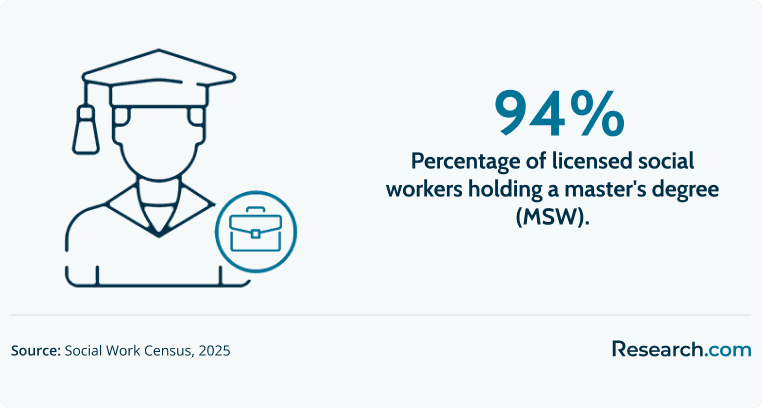
The format matters because field education, employment, and family responsibilities can quickly create scheduling conflicts. A program that looks affordable or prestigious may still be the wrong fit if its live class times or internship expectations are not realistic for your life. This degree is a major professional investment, and workforce data shows that 94% of all licensed social workers hold an MSW.
How Does an HBCU Online Master's in Social Work Compare to an On-Campus Program?
For employers and licensing boards, the most important issues are accreditation, curriculum quality, supervised field education, and state licensure alignment. In a well-structured online MSW, students can study the same core competencies, learn from qualified faculty, and earn the same degree as campus-based students.
The strongest online social work programs are designed to preserve academic rigor while giving students more flexibility. The diploma typically does not identify the degree as online, but students should still confirm how the program supports remote learners, especially with advising and field placement coordination.
Online vs. On-Campus MSW: Which Format Makes More Sense?
| Factor | Online HBCU MSW | On-Campus HBCU MSW |
| Flexibility | Often better for working adults and students outside the university’s region | Better for students who want a fixed campus routine |
| Community | Depends heavily on cohort design, live sessions, advising, and virtual student engagement | Usually easier to access in-person events, faculty offices, and campus organizations |
| Fieldwork | Completed in person, usually near the student’s location if approved | Often coordinated through local or regional agency relationships |
| Best for | Students who need geographic flexibility and can manage independent learning | Students who want daily campus access and face-to-face networking |
How Online Programs Build HBCU Community
The main difference between online and campus study is the student experience. Strong online programs intentionally create connection through cohort models, live discussions, faculty office hours, virtual student groups, and advisor support. This matters because the HBCU experience is often defined by mentorship, belonging, and professional identity formation.
Students comparing online formats may also find it useful to review how other advanced education pathways organize concentrations and student support, such as guides explaining what are the different types of EdD programs.
Regardless of format, accredited MSW programs require supervised, in-person field education. This is where students practice assessment, case planning, advocacy, documentation, ethical decision-making, and collaboration with clients and agencies.
What Is the Average Cost of an HBCU Online Master's in Social Work Program?
The price of an online MSW varies widely by institution, tuition classification, and program length. Based on the programs discussed here, total tuition for a two-year online MSW can range from about $14,000 to $77,000. For out-of-state students, the range is typically between $40,000 and $77,000.
Do not compare programs using tuition alone. Review the full cost of attendance, including fees, textbooks, technology requirements, travel for any required campus experiences, field placement-related costs, and future licensure exam expenses. Students comparing broader MSW affordability options can also review Research.com’s guide to online MSW programs.
Cost Factors to Check Before Applying
| Cost Factor | Why It Matters | Question to Ask |
| In-state vs. out-of-state tuition | Residency status can substantially change the total price. | Do online students qualify for in-state, out-of-state, or separate online tuition? |
| Program length | More credits usually mean higher total tuition. | How many credits are required for my track? |
| Advanced Standing eligibility | Students with a qualifying BSW may need fewer credits. | Does my BSW qualify, and what documents are required? |
| Fees and materials | Technology fees, course materials, and fieldwork costs can add up. | What fees are not included in the published tuition rate? |
| Licensure preparation | Graduates may face exam, application, and supervision costs after the degree. | What licensure support does the program provide? |
Understanding the Full Investment
Graduate students should build a realistic budget before enrolling. This approach applies across health and human services programs, whether you are comparing an MSW or reviewing a WGU online nursing degree.
Debt should also be part of the conversation. The average loan debt for MSW graduates in 2020 was about $47,965. That figure does not mean every student will borrow that amount, but it shows why scholarships, employer support, public service benefits, and lower-cost pathways deserve serious attention.
What Financial Aid Options Are Available for HBCU Online MSW Students?
Most graduate students use more than one funding source. A practical financial aid plan may combine federal loans, scholarships, grants, employer assistance, payment plans, and long-term loan forgiveness strategies tied to public service work.
Federal Student Aid
The first step is completing the Free Application for Federal Student Aid (FAFSA). This form determines eligibility for federal student loans and other aid options that may be available through the school.
Scholarships and Grants
Scholarships and grants do not need to be repaid, making them especially valuable. Look for awards for social work students, HBCU students, first-generation students, minority students, public service applicants, and students committed to underserved communities. The university’s financial aid office and social work department are often the best starting points.
Employer Tuition Assistance
If you already work in human services, healthcare, education, government, or nonprofit settings, ask whether your employer offers tuition reimbursement or professional development funding. Some agencies support employees pursuing credentials that strengthen clinical, case management, or leadership capacity.
Loan Forgiveness Programs
Social workers often work for nonprofit organizations, schools, hospitals, and government agencies. Students using federal loans should learn about Public Service Loan Forgiveness and other repayment options early, because eligibility depends on loan type, employer type, and repayment history.
Thinking Beyond Salary
When evaluating return on investment, include benefits and career stability in addition to wages. For example, social workers in healthcare environments may receive employer-sponsored benefits. Data shows that 79% of medical social workers receive medical coverage and 73% receive dental benefits from their employers.
What Are the Prerequisites for Enrolling in an HBCU Online Master's in Social Work Program?
Admissions requirements vary by university, but most MSW programs ask for evidence that you can handle graduate-level writing, ethical reasoning, fieldwork expectations, and emotionally demanding practice environments.
- Bachelor’s degree: Applicants typically need a bachelor’s degree from an accredited college or university.
- Minimum GPA: Many programs look for an undergraduate GPA around a 3.0, although some schools review applicants more flexibly.
- Letters of recommendation: Schools often request academic or professional references who can speak to your readiness for graduate social work.
- Personal statement: The essay should explain your motivation, relevant experience, career goals, and fit with the program. Students who want to strengthen advanced writing skills can explore related academic pathways such as accelerated online professional writing degrees.
- Resume or work history: Human services, advocacy, healthcare, education, nonprofit, or community-based experience can strengthen an application.
- Advanced Standing documentation: Applicants seeking Advanced Standing usually need proof of a qualifying BSW and may need additional materials.
Why Holistic Admissions Matter
Many MSW programs, including HBCU programs, consider more than grades. Professional experience, lived experience, community service, leadership, resilience, and commitment to social justice can help admissions committees understand your potential.
A non-social work undergraduate major is not unusual. Data shows that about 66% of new MSW students earned their bachelor's degree in a field other than social work. Your personal statement should connect your background to the competencies and responsibilities of the profession.
What Courses Are Typically Included in an HBCU Online Master's in Social Work Program?
MSW curricula are built around social work competencies and field education. Course names vary, but students generally study individuals, families, communities, institutions, policy systems, research, ethics, and interventions.
| Course Area | What Students Learn | Why It Matters |
| Human Behavior and the Social Environment | How people develop within families, communities, cultures, and systems | Helps social workers understand client needs in context; related fields such as an online anthropology degree also examine culture and human behavior |
| Social Welfare Policy and Services | How policies shape access to resources, rights, benefits, and services | Prepares students to identify structural barriers and advocate for change |
| Social Work Research Methods | How to evaluate evidence, interpret data, and apply research to practice | Supports evidence-informed decision-making |
| Clinical Assessment and Diagnosis | How to assess client needs, risks, strengths, and possible interventions | Essential for many direct practice and clinical roles |
| Field Education/Internship | Supervised practice in a real agency or community setting | Connects classroom learning with professional social work responsibilities |
The study of social systems, inequality, institutions, and human interaction also overlaps with sociology. Students exploring adjacent career options may want to review possible sociology jobs.
The HBCU Curriculum Advantage
The difference is not always visible in course titles. An HBCU social welfare policy course, for example, may place deeper emphasis on racial justice, economic inequality, community resilience, and historically rooted systems of exclusion. That perspective can help future social workers move beyond individual-level explanations and understand how policy, institutions, and history shape client outcomes.
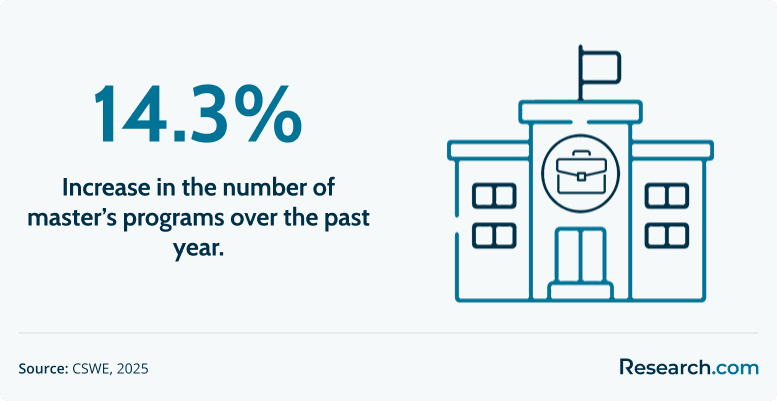
Interest in graduate social work education has continued to grow. The field saw a 14.3% increase in the number of accredited master's programs in the last year alone.
What Specializations Are Available in HBCU Online MSW Programs?
Specializations help students align the MSW with a career direction. Most options fall into micro, mezzo, or macro practice. The right choice depends on whether you want to work mainly with individuals, organizations, communities, or systems.
| Practice Level | Typical Focus | Examples of Specializations | Best For |
| Micro practice | Direct work with individuals, families, and small groups | Mental health counseling, child and family services, healthcare social work | Students interested in therapy, case management, assessment, or direct client support |
| Mezzo practice | Work with organizations, schools, hospitals, neighborhoods, and community groups | School social work, hospital case management, nonprofit program development | Students who want to improve services within organizations or local communities |
| Macro practice | Policy, administration, advocacy, and systems change | Social policy analysis, community organizing, nonprofit leadership | Students who want to influence laws, programs, funding, or institutional practices |
Clinical and Direct Practice
Clinical and direct practice pathways are designed for students who want to work closely with clients. These tracks may support careers in mental health, child and family services, substance use, healthcare, and community-based counseling. In healthcare, social workers often collaborate with nurses and other clinicians, so understanding related roles such as what does a LPN do in a nursing home can help students see how interdisciplinary care teams function.
Community and Organizational Practice
Mezzo-level specializations prepare students to improve programs, coordinate services, supervise teams, and support communities. This route can be a good fit for students who want to shape service delivery but do not want their entire career centered on one-on-one counseling.
Policy, Administration, and Advocacy
Macro-level social work focuses on systems: policy, budgets, agencies, laws, institutional practices, and community organizing. HBCUs have a long tradition of preparing leaders for justice-oriented public service, making this route especially meaningful for students drawn to advocacy and structural change.
Choosing Your Scale of Impact
Ask yourself where you want to create change. If you want to sit with clients and provide direct support, a micro-level concentration may fit. If you want to manage programs or strengthen agencies, mezzo practice may be better. If you want to change policies or lead large-scale initiatives, macro practice may be the right path.
Specialized graduate credentials are common across health and human services fields. For example, nurses may pursue online graduate certificate programs WHNP to prepare for advanced practice in a focused area. In social work, your specialization serves a similar purpose by signaling the populations, settings, or systems you are preparing to serve. In the high-growth field of mental health, top-earning social workers can make over $100,000 per year.
How to Choose the Best HBCU Online Master's in Social Work Program
The best online HBCU MSW program is the one that fits your licensure goal, career direction, schedule, budget, and field placement needs. A famous school name is not enough. Use the checklist below before committing.
- Confirm current accreditation. For social work licensure, programmatic accreditation can be critical. Verify the program’s current status, not just the university’s institutional accreditation.
- Check state licensure alignment. Ask whether the curriculum and fieldwork meet requirements in the state where you plan to practice.
- Compare specializations. Match the program’s focus to your career goal. A policy-oriented MSW may not be ideal if your goal is clinical therapy.
- Review the delivery format. Confirm whether courses are synchronous, asynchronous, or hybrid, and make sure the class schedule is realistic.
- Ask about field placement support. Online students should know who finds placements, how agencies are approved, and what happens if a placement falls through.
- Calculate total cost. Include fees, books, travel, technology, licensure costs, and potential lost work hours during field placement.
- Evaluate student support. Look for advising, faculty access, cohort connection, writing support, career services, and alumni mentoring.
Questions to Ask Admissions Before You Apply
| Question | Why It Matters |
| Is the MSW program currently CSWE-accredited, in candidacy, or pre-candidacy? | Your licensure path may depend on programmatic accreditation status. |
| Does the program meet licensure requirements in my state? | Online programs may enroll students across state lines, but licensing rules vary. |
| How are field placements arranged for online students? | Fieldwork is one of the most important parts of the degree. |
| Can I complete fieldwork while working full-time? | Many students underestimate the scheduling demands of internships. |
| What is the total cost of attendance for my track? | Tuition per credit does not show the full cost. |
| What support is available for licensure exams and post-graduate supervision? | Graduation is not always the final step toward independent practice. |
Common Mistakes to Avoid When Choosing an Online HBCU MSW
- Assuming institutional accreditation is enough. Institutional accreditation and social work program accreditation are not the same. Verify what your state licensing board requires.
- Ignoring field placement logistics. Online coursework can be flexible, but field education requires scheduled, supervised, in-person hours.
- Choosing based only on tuition. A lower tuition rate may not include fees, books, residency requirements, or additional costs tied to fieldwork.
- Overlooking state licensure rules. A program can be reputable and still require careful review for your specific state.
- Assuming Advanced Standing is automatic. A BSW alone may not guarantee admission to an Advanced Standing track.
- Relying only on rankings. Rankings are a starting point. Your final decision should include accreditation, specialization, cost, schedule, and field support.
What Career Paths Are Available After an HBCU Online Master's in Social Work?
An MSW can prepare graduates for roles across direct practice, community programs, healthcare, education, policy, advocacy, and nonprofit leadership. Exact job eligibility depends on state licensure rules, experience, supervision, and the type of role.
| Career Direction | Possible Roles | Typical Work Settings |
| Direct practice | Licensed Clinical Social Worker, medical social worker, school social worker, mental health social worker | Clinics, schools, hospitals, community agencies, behavioral health organizations |
| Community leadership | Program director, clinical supervisor, case management supervisor, nonprofit manager | Nonprofits, public agencies, healthcare systems, family service organizations |
| Policy and systems work | Policy analyst, advocate, community organizer, executive director | Government agencies, advocacy groups, foundations, research or policy organizations |
From Practitioner to Leader
Many social workers begin in direct practice and later move into supervision, program administration, policy, or executive leadership. For example, a healthcare social worker has a median wage of around $68,000. With experience, that professional may supervise teams, manage programs, or move into department leadership.
Social work leadership can overlap with broader health administration responsibilities, especially in hospitals, behavioral health systems, and community health organizations. Students interested in that direction may want to compare MSW leadership paths with MHA degree jobs.
What Is the Job Market for HBCU Online MSW Graduates?
The job market for social workers is considered strong, and the U.S. Bureau of Labor Statistics projects overall employment growth faster than the average for all occupations over the next decade. Graduates of HBCU online social work programs may enter a field with demand across healthcare, schools, government, mental health, child welfare, substance use services, and community organizations.
Why Cultural Responsiveness Matters in the Labor Market
Employers serving diverse communities often need social workers who understand culture, history, community trust, structural barriers, and equity-centered practice. HBCU MSW programs may offer a meaningful advantage for students who want this preparation built into the learning experience rather than treated as a separate topic.
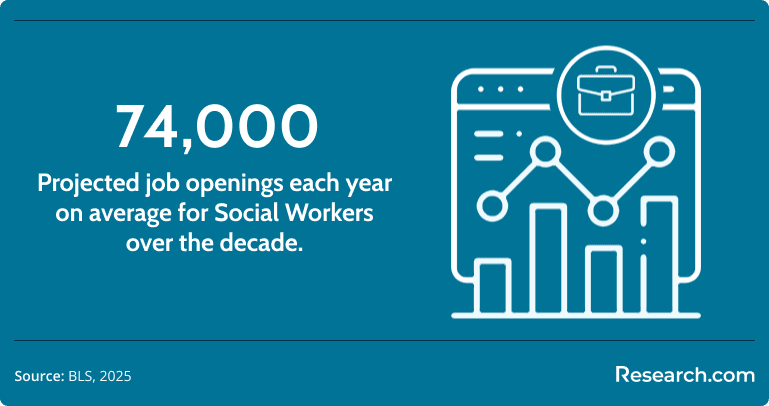
There is also a documented national shortage of social workers of color. With a projected 74,000 job openings for social workers on average each year, graduates who combine an MSW with cultural responsiveness, field experience, and licensure preparation may be positioned for a range of meaningful roles.
Current Trends Affecting Online MSW Students
- Telehealth and hybrid service delivery: Social workers increasingly need comfort with remote communication, digital documentation, and ethical service delivery across online and in-person settings.
- Greater attention to trauma-informed care: Programs with trauma-focused coursework can be useful for students entering schools, healthcare, child welfare, behavioral health, or community crisis roles.
- Growing demand for culturally responsive practice: Employers and communities continue to need practitioners who can work effectively across cultural, racial, economic, and geographic differences.
- Field placement competition: Online students should ask early how placements are secured, especially in areas with limited agencies or high student demand.
- Technology and AI in human services: Social workers may encounter AI-assisted documentation, screening tools, case management platforms, and data systems. Students should learn both the practical uses and ethical risks of these tools, including bias, privacy, and overreliance on automated recommendations.
What Does the Research Say About HBCU Online MSW Programs?
Available workforce and education research supports several practical conclusions. MSW education remains central to licensed social work preparation, many students enter MSW programs from non-social work undergraduate backgrounds, and culturally responsive training is increasingly relevant to the needs of diverse communities.
It is important, however, to be cautious about broad claims. Outcomes vary by program quality, accreditation status, field placement strength, student support, licensure requirements, and local labor markets. Online delivery can be effective when programs provide rigorous coursework, accessible faculty, strong advising, meaningful peer connection, and well-supervised field education.
What Graduates Say About HBCU Online Master's in Social Work Programs
- : "I was the first person in my family to start a master's program, so I expected to feel isolated. Instead, my online cohort met for virtual study sessions every week, and faculty made themselves available during online office hours. Even from different states, we built the kind of support system I had hoped to find. — Amara"
- : "I live in Oregon and assumed an HBCU graduate experience was not realistic for me. The online program changed that. The live discussions brought together perspectives I had never encountered in my local area, and I gained access to a professional network and legacy that would otherwise have felt out of reach. — Michael"
- : "Before the program, I thought of my background only as my personal story. My classes helped me understand those experiences through a professional and academic lens. I learned how to describe my perspective as part of cultural responsiveness, and that changed how I saw my value as a future social worker. — Brianna"
References
- Council on Social Work Education. (2021, March 11). Report shows growing demand for social work education. CSWE. Retrieved September 29, 2025, from https://www.cswe.org/news/newsroom/report-shows-growing-demand-for-social-work-education
- Council on Social Work Education. (2022, May 18). Survey shows Black social work students face higher costs than others. CSWE. Retrieved September 29, 2025, from https://www.cswe.org/news/newsroom/survey-shows-black-social-work-students-face-higher-costs-than-others
- Data USA. (n.d.). Child, family, & school social workers. Retrieved September 29, 2025, from https://datausa.io/profile/soc/child-family-and-school-social-workers
- Data USA. (n.d.). Healthcare social workers. Retrieved September 29, 2025, from https://datausa.io/profile/soc/healthcare-social-workers
- Data USA. (n.d.). Mental health & substance abuse social workers. Retrieved September 29, 2025, from https://datausa.io/profile/soc/mental-health-and-substance-abuse-social-workers
- National Center for O*NET Development. (n.d.). 21-1021.00 - Child, family, and school social workers. O*NET OnLine. Retrieved September 29, 2025, from https://www.onetonline.org/link/summary/21-1021.00
- National Center for O*NET Development. (n.d.). 21-1022.00 - Healthcare social workers. O*NET OnLine. Retrieved September 29, 2025, from https://www.onetonline.org/link/summary/21-1022.00
- National Center for O*NET Development. (n.d.). 21-1023.00 - Mental health and substance abuse social workers. O*NET OnLine. Retrieved September 29, 2025, from https://www.onetonline.org/link/summary/21-1023.00
- Payscale. (n.d.). Average medical social worker salary. Retrieved September 29, 2025, from https://www.payscale.com/research/US/Job=Medical_Social_Worker/Salary
- Social Work Census. (2025). Social work workforce study series report 2. Retrieved September 29, 2025, from https://swcensus.org/wp-content/uploads/2025/07/Social-Work-Workforce-Study-Series-Report-2.pdf
- U.S. Bureau of Labor Statistics. (2024, April 3). Occupational employment and wages, May 2023: 21-1021 Child, family, and school social workers. Retrieved September 29, 2025, from https://www.bls.gov/oes/2023/may/oes211021.htm
- U.S. Bureau of Labor Statistics. (2024, April 3). Occupational employment and wages, May 2023: 21-1029 Social workers, all other. Retrieved September 29, 2025, from https://www.bls.gov/oes/2023/may/oes211029.htm
- U.S. Bureau of Labor Statistics. (2024, September 4). Occupational outlook handbook: Social workers. Retrieved September 29, 2025, from https://www.bls.gov/ooh/community-and-social-service/social-workers.htm
- ZipRecruiter. (n.d.). Child family and school social workers salary. Retrieved September 29, 2025, from https://www.ziprecruiter.com/Salaries/Child-Family-And-School-Social-Workers-Salary#TableView
- ZipRecruiter. (n.d.). Healthcare social workers salary. Retrieved September 29, 2025, from https://www.ziprecruiter.com/Salaries/Healthcare-Social-Workers-Salary#TableView
- ZipRecruiter. (n.d.). Mental health and substance abuse social workers salary. Retrieved September 29, 2025, from https://www.ziprecruiter.com/Salaries/Mental-Health-And-Substance-Abuse-Social-Workers-Salary#TableView
Key Insights
- Accreditation comes first. Before applying, confirm the program’s current CSWE status and ask whether it meets licensure expectations in the state where you plan to work.
- Online does not mean fully remote. MSW students must complete supervised field education in person, even when coursework is delivered online.
- Advanced Standing can shorten the path. Students with a qualifying BSW may complete fewer credits, but eligibility is not automatic.
- Cost varies widely. Tuition can range from about $14,000 to $77,000 for a two-year online MSW, and out-of-state students may face totals between $40,000 and $77,000.
- HBCU programs may offer a distinct professional lens. Many emphasize racial justice, community advocacy, cultural responsiveness, and the historical context of social work practice.
- The best program depends on your goal. Future therapists, policy advocates, healthcare social workers, nonprofit leaders, and school social workers should compare specializations, field placement options, and licensure preparation differently.
- Do not rely on rankings alone. Use rankings as a starting point, then verify accreditation, cost, format, fieldwork support, student services, and career alignment before enrolling.
Other Things You Should Know About HBCUs for Online Master's in Social Work Programs
Yes. CSWE-accredited online MSW programs require supervised field education, usually 900 to 1,200 hours total. Students complete placements in approved agencies, and most programs arrange local sites near the student’s home so they can meet practicum requirements without relocating.
Online Master’s in Social Work programs at HBCUs typically require around 60 credit hours for completion. These programs often include core social work courses, electives, and a field practicum component, providing comprehensive preparation for a career in social work.