
2027 What Can You Do with a Forensic Psychology Degree: Costs & Job Opportunities

Co-Founder and Chief Data Scientist
Note from the author, Imed Bouchrika, PhD, career planning expert:
If you are considering a degree in forensic psychology, the most important question is not just whether the field is interesting. It is whether the credential you choose will match your career goals, budget, and licensure plans. Federal wage data I reviewed shows that forensic psychologists earn an annual mean wage of $95,647, but that figure applies to a broad range of work settings and experience levels. In practice, forensic psychology can lead to roles in courts, corrections, research, victim services, mental health agencies, and law enforcement support.
This guide breaks down what a forensic psychology degree is, which education level fits different goals, how much programs can cost, how long the path usually takes, what careers are realistic, and what to check before enrolling. It is designed to help you compare options with less guesswork and make a smarter decision about your education path in 2026.
Quick answer: Is a forensic psychology degree worth it?
Yes, if you want to work where psychology and the legal system overlap and you are willing to plan carefully for the right degree level. A forensic psychology degree can support careers in criminal justice, corrections, research, advocacy, and applied mental health. However, if you want to become a licensed psychologist, you will usually need a doctorate, supervised experience, and state licensure. If you only want to enter related fields more quickly, a bachelor’s, master’s, or certificate program may be a better fit.
Benefits of earning a degree in forensic psychology
- It can open doors to roles in criminal justice, corrections, courts, law enforcement, research, and mental health services.
- It lets you contribute to public safety, victim support, offender rehabilitation, and evidence-based decision-making.
- It can lead to stable work with competitive pay, especially for graduates who continue to advanced study or licensure.
What is a forensic psychology degree?
A forensic psychology degree prepares students to apply psychological principles in legal, correctional, and criminal justice settings. The field focuses on understanding behavior, assessing mental health in legal contexts, and using research to support decisions in courts, treatment programs, and public safety systems.
Depending on the level of study, programs may emphasize counseling skills, research methods, abnormal psychology, criminal behavior, or legal procedures. Some degrees are designed for graduate study and licensure, while others are meant to build job-ready knowledge for related roles.
What you can study in a forensic psychology program
Coursework varies by school and degree level, but students commonly study the psychological, legal, and research foundations of the field. Typical topics include:
- Theories of criminal behavior
- Psychology and the legal system
- Evaluation and treatment of offenders
- Psychopathology
- Research design and methods
- Family law issues
- Interviewing and interrogation
At the graduate level, programs often add supervised field experience, practicum work, or research training to prepare students for applied settings.
Who should consider a forensic psychology degree?
This degree is a strong fit if you want to work with legal systems, behavior assessment, offender rehabilitation, victim support, or criminal justice research. It is also a good option if you already have a psychology, criminal justice, or social science background and want to specialize.
It may be less suitable if you want a purely clinical therapy career without legal involvement, or if you are looking for the fastest route into the workforce and do not plan to continue to graduate study.
Where can you work with a forensic psychology degree?
Graduates can pursue roles in government agencies, legal institutions, research organizations, schools, correctional settings, and mental health services. Some professionals work directly with courts during pretrial, trial, or post-trial proceedings. Others focus on investigation, assessment, treatment, training, or policy.
Common work settings include:
- Court systems and legal consulting
- Correctional facilities
- Juvenile justice programs
- Law enforcement agencies
- Mental health clinics and hospitals
- Research centers and universities
- Victim advocacy organizations
Some graduates also move into teaching, and there are 52,500 professors of psychology employed in the United States, with a salary of $80,330.
What jobs can you get with a forensic psychology degree?
Your options depend on the degree level you complete. A bachelor’s degree can support entry-level and support roles, while a master’s degree may lead to specialist, research, or counseling-related positions. A doctorate is usually required for licensure and for many clinical and independent practice roles.
| Career path | Typical work focus | Best degree level |
| Law enforcement consultant | Training, profiling support, behavior assessment, and communication strategies | Master’s or doctorate |
| Correctional counselor | Inmate support, parole-related assessment, and rehabilitation planning | Master’s or doctorate |
| Jury consultant | Jury selection support, trial strategy, and witness preparation | Master’s or doctorate |
| Research specialist | Crime prevention, recidivism, and behavioral research | Master’s or doctorate |
| Victim advocate | Support for victims and families during legal processes | Bachelor’s or master’s |
| College instructor | Teaching psychology or criminal justice topics | Usually doctorate |
How much can you make with a forensic psychology degree?
Earnings vary based on role, location, education level, licensure, and years of experience. The salary figures below are estimates and should be used as general benchmarks rather than guarantees.
| Role | Estimated annual pay |
| Forensic psychologist | $95,647 |
| Criminal profiler | $82,375 |
| Behavioral health director | $123,219 |
| Clinical psychologist | $95,830 |
Keep in mind that the minimum educational requirement for a forensic psychology degree is not the same as the requirement to become a licensed forensic psychologist. A master’s degree may be enough for some related jobs, but a doctorate is generally needed for licensure and for independent clinical practice.
Competition for master’s-level roles can be narrower than for doctorate-prepared professionals. If your goal is licensure, clinical authority, or broader advancement opportunities, the doctorate pathway is usually the more direct route.
- Best forensic psychology programs
- How long it takes to complete a program
- Online vs. on-campus programs
- Average cost of a forensic psychology program
- Financial aid options
- Prerequisites for enrollment
- Typical courses
- Common specializations
- How to choose the best program
- Career paths for graduates
- Licensing and certification requirements
- How to advance your career
- Professional development opportunities
- Emerging trends shaping the field
- Challenges early-career professionals face
- Typical job duties
- Why internships matter
- Job market outlook
- Ethical considerations
- Common research areas
- Are accelerated programs a good option?
- Can counseling training strengthen your career?
- Return on investment
Best forensic psychology programs
The right program depends on your target role. If you want licensure, you should focus on doctoral pathways. If you want a faster or more affordable way to build expertise, a certificate or master’s degree may make more sense. Use the schools below as examples of how programs differ in format, cost, length, and academic focus.
How we evaluate schools
Our rankings are based on our methodology and on current data from the IPEDS database, Peterson’s database, the College Scorecard database, and the National Center for Education Statistics. We look for programs that balance academic quality, value, and relevance to the field.
When comparing programs, do not rely on prestige alone. Check whether the curriculum supports your career goal, whether the school is accredited, and whether the format works for your schedule and budget.
1. Washington University in St. Louis
Washington University in St. Louis offers a Certificate in Forensic Psychology through the School of Continuing & Professional Studies. It is built for professionals who want focused knowledge at the intersection of behavior, law, and criminal justice.
- Program Length: 1 year
- Cost per Credit: $665-$1,200
- Required Credits to Graduate: 15
- Accreditation: Higher Learning Commission
2. Arizona State University
Arizona State University offers a Bachelor of Arts in Psychology with a concentration in Forensic Psychology. The online format is intended for students who want an undergraduate foundation that connects mental health with legal and criminal justice issues.
- Program Length: 4 years
- Cost: $11,308 (Arizona resident) per year; $31,450 (Non-resident)
- Required Credits to Graduate: 120
- Accreditation: Higher Learning Commission
3. University of Denver
The University of Denver offers a Master of Arts in Forensic Psychology that blends clinical psychology foundations with practicum experience. Students can also connect with the Denver Forensic Institute for Research, Service, and Training (Denver FIRST), which supports applied learning in forensic settings.
- Program Length: 2 years
- Cost: $78,600 per year
- Required Credits to Graduate: 36
- Accreditation: American Psychological Association (APA)
4. City University of New York (CUNY)
The City University of New York offers a Master of Arts in Forensic Psychology at John Jay College of Criminal Justice. The program is geared toward students interested in criminal justice, applied research, and forensic science-related careers.
- Program Length: 2 years
- Cost per Credit: $470 (New York resident); $855 (Out-of-state)
- Required Credits to Graduate: 42
- Accreditation: Middle States Commission on Higher Education (MSCHE)
5. Marymount University
Marymount University offers a Master of Arts in Forensic and Legal Psychology. This interdisciplinary program blends psychology, law, criminal justice, and public policy, with attention to the juvenile justice system, law enforcement, and intelligence-related work.
- Program Length: 18 to 24 months
- Cost per Credit: $1,275
- Required Credits to Graduate: 39
- Accreditation: Southern Association of Colleges and Schools Commission on Colleges (SACSCOC)
6. Kean University
Kean University offers a Master of Arts in Forensic Psychology through its psychology program. The curriculum includes advanced abnormal psychology, behavioral assessment, and criminal behavior. Applicants need a bachelor’s degree and prerequisite coursework in psychology-related subjects.
- Program Length: 2 years
- Cost per Credit: $816 (in-state); $980 (out-of-state)
- Required Credits to Graduate: 36
- Accreditation: Middle States Commission on Higher Education (MSCHE)
7. Liberty University
Liberty University offers a 100% online Master’s in Criminal Justice with a concentration in Forensic Psychology. The program is designed for students who want to study psychological approaches to criminal behavior while also learning about legal systems and criminal justice practice.
- Program Length: 18 months
- Cost per Credit: $565, $424 (first responders), $275 (military or military spouse)
- Required Credits to Graduate: 36
- Accreditation: Southern Association of Colleges and Schools Commission on Colleges (SACSCOC)
8. Fairleigh Dickinson University
Fairleigh Dickinson University offers an MA in Forensic Psychology for students interested in juvenile or adult courts, correctional facilities, and law enforcement. The program also provides a pathway toward a Ph.D. in Clinical Psychology with a Forensic Psychology track.
- Program Length: 1.5 years
- Cost per Credit: $647
- Required Credits to Graduate: 36
- Accreditation: Middle States Commission on Higher Education (MSCHE)
9. George Washington University
The MA in Forensic Psychology at George Washington University gives students two curriculum tracks: Applied Forensics and Applied Psychology. This structure allows students to align the degree more closely with either legal systems work or broader psychological practice.
- Program Length: 2 years
- Cost per Credit: $1,480
- Required Credits to Graduate: 37
- Accreditation: Middle States Commission on Higher Education (MSCHE)
10. Florida Institute of Technology
Florida Institute of Technology offers a Bachelor of Arts in Forensic Psychology for students who want early exposure to crime analysis, crime prevention, and human behavior. Graduates can use the degree as preparation for further graduate study.
- Program Length: 4 years
- Cost per Year: $40,340
- Required Credits to Graduate: 120
- Accreditation: Southern Association of Colleges and Schools Commission on Colleges (SACSCOC)
How long does it take to complete a forensic psychology program?
Timelines depend on the credential you choose and whether you study full time or part time. A forensic psychology career that leads to licensure is a long-term path, not a short academic sprint.
| Credential | Typical length | What it can lead to |
| Bachelor’s degree | 4 years | Entry-level support roles and graduate school preparation |
| Master’s degree | 2 years | Specialist roles, applied roles, or preparation for doctoral study |
| Doctoral degree (Ph.D. or Psy.D.) | 4-7 years | Licensure and advanced clinical or forensic practice |
| Postdoctoral training | 1-2 years | Licensure preparation and advanced supervised experience |
In many cases, becoming a licensed forensic psychologist takes around 10-15 years of education and training. Accelerated programs can shorten the classroom portion, but they do not remove licensure or supervised practice requirements.
How does an online forensic psychology program compare to an on-campus program?
Both formats can work well, but they serve different students. The best choice depends on your schedule, learning style, and whether you need in-person training or access to campus-based resources.
| Format | Advantages | Potential drawbacks |
| Online | Flexible scheduling, fewer commuting costs, easier to balance work and school | Less face-to-face interaction, may require strong self-discipline, practicum options may be more limited |
| On-campus | More direct interaction with faculty and peers, easier access to labs and campus services | Less flexibility, commuting or relocation may be necessary |
Online programs are often a strong choice for working adults, career changers, and students who need flexibility. On-campus study may be better if you want close mentoring, structured class time, and a traditional academic environment. Before enrolling, confirm that any practicum, internship, or licensure-related component can be completed in your state.
What is the average cost of a forensic psychology program?
Costs vary widely by degree level, residency status, delivery format, and school type. College Tuition Compare reports the following estimated tuition and fee ranges for forensic psychology programs:
| Program level | Public, in-state | Public, out-of-state | Private |
| Undergraduate degree | $7,687 | $26,401 | $28,000-$43,000 |
| Graduate degree | $11,167 | $20,272 | $16,000-$50,000 |
| *Values are estimates. |
Online certificate programs can cost about $3,500 to $30,000, depending on credit requirements and school pricing. When comparing costs, do not focus only on tuition. Also consider fees, books, travel, internships, relocation, and whether the program helps you reach licensure or your target job.
What financial aid options are available?
Because psychology programs can be expensive, it is worth exploring every aid option before you commit. Financial aid can reduce debt and improve the return on your degree.
Common options include:
- Scholarships: The American Psychological Association (APA) and related organizations offer scholarships and awards for psychology students at different stages of study.
- Grants: Federal and state grants are often need-based and do not require repayment.
- Loans: Loans can cover gaps, but repayment should be weighed carefully against expected earnings.
- Fellowships and awards: Some graduate students can access competitive funding for psychology or forensic psychology study.
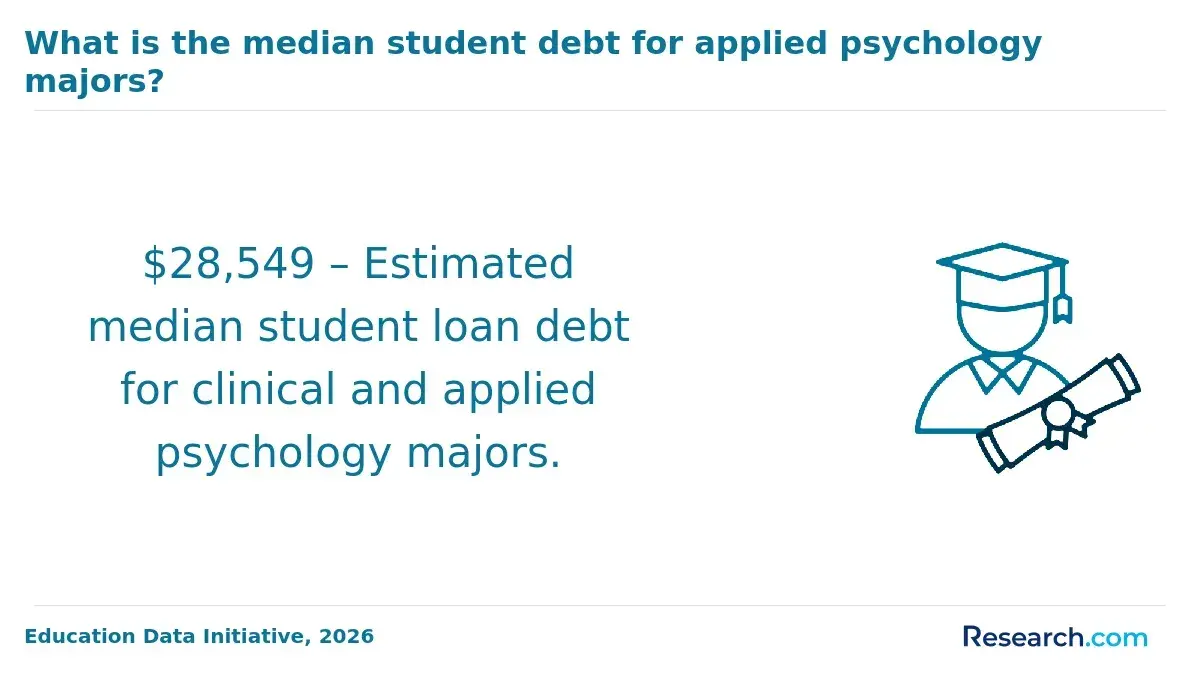
According to recent student loan statistics, psychology students have a debt of around $28,549. That makes funding strategy an important part of your decision, not an afterthought.
What are the prerequisites for enrolling?
Admission requirements vary by school and by degree level. Master’s and doctorate programs usually have stricter academic and testing expectations than bachelor’s or certificate programs.
- Proof of graduation: Schools usually require a high school diploma, GED transcript, or equivalent proof of completion for undergraduate admission.
- Transcripts: Graduate applicants often need at least a 3.0 GPA, though exact requirements differ.
- Prior coursework: Master’s applicants usually need a related bachelor’s degree, and doctoral applicants generally need both a bachelor’s and a master’s degree.
- SAT or ACT scores: Some undergraduate programs still require standardized test scores.
- Supporting materials: Applications may also require a resume, personal statement, letters of recommendation, an interview, or an application fee.
If English is not your first language, some programs may also require proof of English proficiency.
What courses are typically in a forensic psychology program?
At the undergraduate level, forensic psychology programs usually include a foundation in psychology, statistics, and research. Graduate study goes deeper into assessment, law, ethics, and applied practice. Common courses include:
- Forensic psychology
- Psychology and law
- Correctional psychology
- Psychological disorders
If your goal is to become a forensic psychologist, plan on a doctoral degree, supervised hours, and postdoctoral requirements for licensure. A bachelor’s or master’s degree can still be valuable, but it usually leads to related roles rather than full licensure as a psychologist.
What specializations are available?
Specializations let you tailor the degree to a specific population or setting. That can make your training more useful and your resume more focused.
- Adult psychology
- Child and family psychology
- Forensic neuropsychology
- Law enforcement
These concentrations can support work in corrections, probation, victim services, courts, federal agencies, policy, and research. The best specialization is the one that matches the environment you want to work in after graduation.
How to choose the best forensic psychology program
The right program should match your career target, not just your interest in the subject. Use the following factors to compare options before you apply.
1. Accreditation
Make sure the institution is properly accredited. Accreditation affects transferability, financial aid access, employer recognition, and in some cases licensure eligibility. If you plan to pursue a doctorate or licensure, this step is non-negotiable.
2. Career alignment
Choose a program that supports the job you actually want. A certificate may be enough for professional development, while a doctorate is usually necessary for licensed practice. If you are unsure, start by identifying whether you want clinical work, research, corrections, or legal consulting.
3. Practicum and internship opportunities
Programs with supervised field experience can improve job readiness and strengthen applications for graduate school or employment. This is especially important for students planning to enter applied settings.
4. Faculty expertise
Look for faculty members whose research or professional background matches your goals. Faculty experience can shape the quality of mentoring, research opportunities, and professional connections.
5. Student support and class size
Smaller class sizes can make it easier to get feedback, build relationships, and receive guidance on research or practicum work. That can matter a lot in graduate programs with substantial writing and field training requirements.
Questions to ask before you enroll
- Does this program support licensure where I plan to work?
- What internship or practicum options are available?
- How many graduates move into roles related to this field?
- Are there hidden fees beyond tuition?
- Can I transfer credits if I later change programs?
- What support exists for career placement or research mentoring?
What career paths are available for graduates?
Forensic psychology graduates often move into roles that require careful judgment, behavioral insight, and knowledge of the justice system. Some jobs are direct fits for the field, while others are adjacent roles that make use of similar training.
- Law enforcement consultant: Supports agencies such as the FBI, CIA, and local police by helping with profiling, training, applicant screening, and communication strategies for working with people with mental illness or disabilities.
- Correctional counselor: Works with inmates, former offenders, attorneys, and case workers to provide counseling, assessments, and parole-related input.
- Jury consultant: Assists legal teams with jury selection, witness preparation, trial strategy, and communication during litigation.
Other possible paths include victim advocacy, research, probation support, federal work, and teaching.
What are the licensing and certification requirements?
Licensure is required if you want to practice as a psychologist in most settings. After completing a doctorate, candidates usually need supervised clinical hours, internship experience, and a passing score on the Examination for Professional Practice in Psychology (EPPP). Some states also require extra forensic training or continuing education.
Because state rules differ, you should verify the requirements where you plan to practice before choosing a program. A degree that looks strong on paper may still fall short if it does not align with your state’s licensure pathway.
If you are comparing doctoral options, consider doctorate in psychology programs that can align with your intended licensure route.
How can you advance your forensic psychology career?
Advancement usually comes from a mix of education, specialization, experience, and networking. A degree alone is not enough to stand out in a competitive market.
- Pursue advanced training in areas like risk assessment, trauma-informed practice, or digital forensic methods.
- Join professional organizations and attend conferences to build visibility and professional contacts.
- Work with mentors who can help you navigate licensure, research, and job placement.
- Keep learning through workshops, continuing education, and certificate programs.
If you are looking for an advanced pathway, a forensic psychologist career path can help you understand the progression from student to practitioner.
What professional development opportunities exist?
Forensic psychology is an evolving field, so ongoing training matters. Many organizations and universities offer workshops, certificate programs, and seminars on assessment, legal changes, ethics, and research methods.
Continuing education can help you stay current, sharpen your clinical judgment, and keep up with changes in court expectations or evidence-based practice. If you are trying to control costs while continuing your education, you may also want to compare an affordable online master’s in psychology option with a more traditional graduate route.
How are emerging trends reshaping forensic psychology careers?
Forensic psychology is being influenced by technology, changing legal expectations, and more interdisciplinary work. Employers increasingly value professionals who can combine psychological insight with data literacy and strong ethical judgment.
Current trends include greater use of digital tools in assessments, remote learning and supervision in education, and broader interest in risk prediction and behavioral analysis. These developments do not replace human judgment, but they do raise expectations for technical fluency and continuous learning.
If you are exploring flexible doctoral options, online PsyD programs may be worth comparing with campus-based doctoral study.
What challenges do early-career forensic psychologists face?
Early-career professionals often discover that the field is more demanding than it first appears. The biggest challenges usually include licensure requirements, limited entry-level openings, heavy paperwork, emotionally difficult cases, and the need to apply classroom knowledge in real-world legal settings.
New professionals may also struggle with balancing objectivity, workload, and client needs. Mentorship and supervised experience are especially valuable during this stage. If cost is a concern, you may want to compare a low-cost master’s in forensic psychology online with a longer doctoral route before deciding.
What are the typical job duties of a forensic psychologist?
Daily responsibilities vary by setting, but the role often blends assessment, consultation, research, and testimony.
- Conduct evaluations: Assess defendants, witnesses, offenders, or victims in legal contexts.
- Provide expert testimony: Explain psychological findings in court when appropriate.
- Support investigations: Assist with behavioral analysis or criminal profiling.
- Conduct research: Study crime patterns, trauma, treatment effectiveness, or decision-making in legal systems.
- Consult with legal teams: Advise attorneys, judges, and law enforcement on behavioral or mental health issues.
- Work with offenders: Provide therapy or intervention aimed at rehabilitation and reduced recidivism.
- Train others: Help professionals in justice settings understand mental health and behavior.
How do internships and practical experience improve readiness?
Internships, field placements, and supervised practicums turn theory into usable skill. They help students learn how to document findings, communicate with legal professionals, handle ethical dilemmas, and work with real clients or case material.
These experiences also make graduate applications and job applications stronger because they show that you have already worked in applied settings. For students who want more flexibility, an affordable online doctorate in psychology can be a practical way to combine advanced study with applied training, as long as the program still meets licensure needs.
What is the job market like for forensic psychology graduates?
The job market is shaped by demand for psychology services, public safety concerns, and the growing use of behavioral expertise in legal settings. The U.S. Bureau of Labor Statistics forecasts 6% growth in overall employment for psychologists through 2034.
That growth does not guarantee a job in a specific niche, but it does suggest continued demand for psychology-related expertise. Forensic psychology graduates may compete for a mix of clinical, research, legal, and criminal justice positions, depending on their education and experience.
Technology is also reshaping the field. Employers and researchers are increasingly interested in data analysis, digital evidence, and AI-supported assessment methods, including work related to neuroprediction. These tools may expand research opportunities, but they also increase the need for ethical oversight and specialized training.
In some cases, forensic psychology training overlaps with broader psychology or criminology pathways, and graduates may also work alongside a forensic scientist in multidisciplinary settings.
What ethical issues should you expect in forensic psychology?
Ethics sit at the center of this profession because psychologists often work with sensitive records, legal proceedings, and vulnerable people. The role demands clear boundaries and disciplined judgment.
- Confidentiality: You may need to protect privacy while also meeting legal reporting obligations.
- Impartiality: Your conclusions should remain objective, even when one side wants a favorable opinion.
- Informed consent: People should understand the purpose and limits of an evaluation or intervention.
- Cultural competence: Bias can distort assessments, so ongoing self-awareness and training are essential.
- Emotional resilience: The work can involve trauma, violence, and distressing case material.
Ethics training should be a major part of any program you consider. If you want graduate study that includes this focus, compare online forensic psychology master’s programs carefully and review their ethics coursework, practicum structure, and licensure alignment.
What kinds of research are common in forensic psychology?
Research in this field often explores criminal behavior, witness reliability, jury decision-making, risk assessment, trauma, and rehabilitation outcomes. The goal is to improve both legal practice and mental health support in justice-related settings.
Common research topics include:
- Offender behavior and treatment response
- Recidivism and risk prediction
- Witness memory and credibility
- Trauma effects on victims and witnesses
- How juries make decisions
- What makes rehabilitation programs more effective
Strong research training can also support moves into school-based or counseling-related roles. If that interests you, you might later consider a school counseling degree online as a related path.
Are accelerated forensic psychology programs a good option?
Accelerated programs can work well for motivated students who already have a solid academic base and need a faster route. They are especially appealing to working adults and career changers who want to reduce the time spent in school.
That said, speed should never come before fit. Before choosing an accelerated format, confirm that the program is accredited, includes the training you need, and still supports your licensure or employment goals. Some programs compress the schedule without reducing academic expectations, which means the pace can be intense.
If you want to compare fast-track options, review accelerated online psychology degree programs and verify that the format still includes practicum or field experience when needed.
Can mental health counseling training strengthen a forensic psychology career?
Yes. Counseling training can improve interviewing, de-escalation, therapeutic communication, and treatment planning. Those skills are useful in offender rehabilitation, victim services, and other applied settings where psychology and public safety intersect.
Additional counseling preparation can also widen your employment options if you want to move between forensic, clinical, and community-based work. If that route interests you, compare mental health counseling master’s programs to see whether they complement your forensic goals.
What is the return on investment of a forensic psychology degree?
Return on investment depends on how much you spend, how long you study, and what kind of job you want after graduation. For some students, the ROI is financial. For others, it is about access to meaningful work and long-term specialization.
The U.S. Bureau of Labor Statistics reports a median annual salary of $92,740 for psychologists, while forensic psychologists often earn competitive salaries, with an annual mean wage of $87,877. Advanced degrees can improve earning potential, but the payoff is usually stronger for students who choose a program aligned with licensure or a clear job pathway.
Graduate tuition can be substantial, with costs ranging from $11,097 to $54,819 depending on the institution. Financial aid can reduce the burden, but you should still compare the total cost of attendance against realistic career outcomes in your region.
A forensic psychology degree may be worth it if you want long-term career flexibility, specialized expertise, and work that connects mental health to public service. If you are still deciding whether psychology is the right academic investment, review our guide on whether a psychology degree is worth it.
Common mistakes to avoid
- Choosing a program without checking accreditation.
- Assuming an online program automatically meets licensure requirements in your state.
- Focusing only on tuition instead of total cost and career payoff.
- Ignoring whether the curriculum includes practicum or supervised experience.
- Relying on rankings instead of reviewing program fit and outcomes.
- Assuming a master’s degree alone will qualify you for licensed psychologist roles.
Questions to ask before enrolling
- What jobs do graduates of this program actually pursue?
- Does the program support licensure in the state where I plan to work?
- What supervised experiences are built into the curriculum?
- How much will the degree cost after fees and other expenses?
- Are there assistantships, scholarships, or employer tuition benefits available?
- How does the program support career placement or doctoral admission?
Key insights
- A forensic psychology degree can lead to work in courts, corrections, research, victim services, law enforcement support, and mental health settings.
- If you want to become a licensed forensic psychologist, plan for a doctorate, supervised experience, and state licensure requirements.
- Master’s, bachelor’s, and certificate programs can still be valuable, but they usually lead to related roles rather than licensure.
- Costs vary widely, so compare tuition, fees, practicum requirements, and financial aid before committing.
- Accreditation, licensure alignment, and internship opportunities matter more than prestige alone.
- Accelerated and online programs can be smart choices for the right student, but only if they still match professional requirements.
- The best return on investment comes from choosing a program that fits your career goal, your budget, and the state where you plan to work.
References
- American Psychological Association (n.d.). Forensic psychology. https://dictionary.apa.org/forensic-psychology
- American Psychological Association (n.d.). Specialty Guidelines for Forensic Psychology. https://www.apa.org/practice/guidelines/forensic-psychology
- College Tuition Compare (n.d.). Forensic Psychology Program 2025 Tuition. https://www.collegetuitioncompare.com/majors/42.2812/forensic-psychology
- Comparably. (2026). Criminal Profiler Salary. https://www.comparably.com/salaries/salaries-for-criminal-profiler
- Education Data Initiative. (2026). Student Loan Debt by Major [2026]. https://educationdata.org/student-loan-debt-by-major
- Forensics Colleges (n.d.). Online Certificate in Forensic Psychology. https://www.forensicscolleges.com/online/certificate-in-forensic-psychology
- PsychologyJobs.com. (2026). Clinical Psychologist Salary Guide 2026. https://psychologyjobs.com/career-advice/clinical-psychologist-salary
- Psychology Jobs (n.d.). Forensic Psychologist Jobs & Forensic Psychology Career Guide. https://psychologyjobs.com/career-advice/forensic-psychology-careers/#Where_Does_a_Forensic_Psychologist_Work
- U.S. Bureau of Labor Statistics. (2025). Psychologists. https://www.bls.gov/ooh/life-physical-and-social-science/psychologists.htm
- Zippia. (2025). Forensic Psychologist Demographics and Statistics in the US. https://www.zippia.com/forensic-psychologist-jobs/demographics
- ZipRecruiter. (2026). Forensic Psychologist Salary. https://www.ziprecruiter.com/Salaries/Forensic-Psychologist-Salary
Other Things You Should Know About Forensic Psychology Degrees
In 2027, pursuing a forensic psychology degree can cost between $20,000 to $50,000 annually, depending on the institution and geographical location. Besides tuition, students should consider additional expenses such as textbooks, accommodation, and potential internship or certification fees.
Most states require a doctoral degree in psychology, supervised postdoctoral hours, and a state psychology license to use the title forensic psychologist in 2027. Licensing is issued by state boards, while board certification from the American Board of Professional Psychology can strengthen credibility but is not required.
Forensic psychology students in 2027 can access financial aid options like grants, scholarships, and federal student loans. The Free Application for Federal Student Aid (FAFSA) remains a crucial tool, and some schools may offer specific scholarships for forensic psychology majors.





