2027 Online General Studies Degrees That Help Build Project Coordination Skills

Co-Founder and Chief Data Scientist
Choosing a flexible degree is harder when your goal is practical career movement, not just a diploma. Online general studies degrees can help working adults build communication, organization, data, and business skills used in project coordination roles.
The U.S. Bureau of Labor Statistics reports a May 2024 median annual wage of $100,750 for project management specialists, showing why structured coordination skills can matter economically. This guide explains what these programs teach, who they fit, what they cost, and how to compare them before enrolling.
Key Things You Should Know
- Online general studies degrees work best for project coordination when students choose concentrations or electives in business, communication, information systems, operations, and leadership rather than treating the major as a collection of unrelated credits.
- The BLS reports a May 2024 median annual wage of $100,750 for project management specialists, but entry-level project coordinators often earn less because the category includes experienced specialists and managers.
- College Board's 2024 data lists average 2024-25 tuition and fees of $11,610 for in-state public four-year institutions and $43,350 for private nonprofit four-year institutions, so transfer credits and online tuition policies strongly affect total cost.
How do online general studies degrees help build practical project coordination skills?
An online general studies degree is an interdisciplinary program that lets students combine courses across fields such as business, communication, technology, social science, and humanities.
For project coordination, the value is not that the degree has one narrow technical focus; it is that students can intentionally build a broad skill set used to keep projects on schedule, document work, support teams, communicate with stakeholders, and solve operational problems.
Project coordinators usually do not own the full project strategy the way project managers do. Instead, they support planning, scheduling, status reporting, meeting follow-up, resource tracking, and issue escalation. A well-planned general studies curriculum can support those responsibilities if the student chooses courses that map to real workplace tasks.
Students comparing general studies with more specialized majors should be honest about their goals. If you want a broad, flexible degree that accepts many transfer credits, general studies may be one of the easiest bachelor degree to get in terms of credit flexibility, though not necessarily in academic effort. If you want a highly technical project role in engineering, construction, cybersecurity, or software development, a specialized major may be a stronger fit.
These are the main ways the degree can translate into coordination skills when the course plan is built deliberately:
- Communication practice: writing, presentation, and professional communication courses help students create status updates, meeting notes, stakeholder messages, and project documentation.
- Business context: management, accounting, marketing, and operations courses help students understand budgets, workflow, customer expectations, and team structure.
- Technology confidence: information systems, spreadsheet, database, and analytics courses help students work with project dashboards, shared files, reports, and productivity tools.
- Problem-solving habits: social science, research methods, and applied capstone courses help students define problems, compare options, and explain decisions with evidence.
- Team coordination: leadership and organizational behavior courses help students understand motivation, conflict, accountability, and cross-functional collaboration.
The strongest online programs also include applied assignments, such as project plans, team presentations, case analyses, or capstone projects. These deliverables can become portfolio samples for entry-level project coordinator applications, especially when the student can explain the tools used, constraints managed, and results documented.
What careers in project coordination can a general studies degree prepare you for?
A general studies degree can support several coordination-focused roles, especially when paired with relevant electives, internships, work experience, or certifications.
It is usually strongest for business, nonprofit, healthcare administration, education administration, operations, marketing, and administrative project environments. It is less direct for regulated or highly technical roles that require engineering, architecture, nursing, accounting licensure, or advanced IT credentials.
The table below summarizes common job targets for graduates who build a project-focused course plan. Use it to compare how close each role is to project coordination and what extra preparation may be needed.
| Role | Typical responsibilities | How a general studies degree helps | What may strengthen the application |
| Project coordinator | Track deadlines, update schedules, prepare reports, coordinate meetings, and support project managers | Builds broad communication, organization, business, and technology skills | Spreadsheet skills, project software experience, internship, CAPM or Google Project Management certificate |
| Program assistant | Support recurring programs, maintain records, communicate with participants, and prepare materials | Fits interdisciplinary roles in nonprofits, education, government contractors, and healthcare administration | Customer service experience, grant or compliance exposure, strong writing samples |
| Operations coordinator | Monitor workflows, support vendors, document processes, and help resolve scheduling or supply issues | Combines business, communication, and problem-solving coursework | Operations management, Excel, process improvement, supply chain electives |
| Administrative services coordinator | Coordinate office systems, purchasing, facilities requests, records, and internal communication | General studies aligns with broad administrative and organizational responsibilities | Budget tracking, procurement knowledge, office software proficiency |
| Marketing project assistant | Coordinate campaign timelines, content calendars, creative reviews, and vendor communication | Supports writing, communication, and team coordination | Marketing electives, portfolio samples, project management tool experience |
For many students, the best first target is not "project manager" but "project coordinator," "program assistant," or "operations coordinator." Those roles can help you build documented project experience, which employers often value when considering applicants for higher-responsibility project management roles.
A practical career path may look like this:
- Choose project-relevant electives during the degree, especially business communication, management, information systems, and analytics.
- Use current work, volunteering, or class projects to document scheduling, reporting, budgeting, or stakeholder communication experience.
- Apply first to coordination, assistant, or operations roles where the job description emphasizes organization and communication more than advanced technical expertise.
- Add a recognized project management certification after you understand which industry you want to enter.
- Move toward project manager or program manager roles after building evidence of scope, schedule, budget, and stakeholder management experience.
How does an online general studies program compare to campus options for project-focused study?
Online and campus programs can both build project coordination skills, but they create different learning conditions. Online programs often fit adult learners who need schedule flexibility, while campus programs may offer easier access to in-person networking, student organizations, and local internships. The better option depends less on the format and more on whether the program offers the right courses, support, applied projects, and employer-relevant experiences.
The comparison below shows the trade-offs that matter most for students who want project-focused outcomes rather than simply a convenient degree format.
| Factor | Online general studies | Campus general studies | Best fit |
| Schedule | Often asynchronous or evening-friendly | Usually fixed meeting times | Online for working adults; campus for students who prefer structured routines |
| Networking | Requires intentional outreach through virtual events, LinkedIn, and faculty contact | More spontaneous access to peers, faculty, clubs, and local employers | Campus for students who learn best through in-person relationships |
| Project practice | Can include virtual team projects, discussion boards, and digital collaboration tools | Can include live presentations, group meetings, and campus-based projects | Either format if assignments produce portfolio-quality work |
| Technology exposure | Often builds comfort with learning platforms, remote collaboration, file sharing, and digital communication | May use similar tools but with more face-to-face support | Online for students targeting remote or hybrid coordination roles |
| Accountability | Requires strong self-management | Provides more physical structure and immediate reminders | Campus for students who struggle with independent deadlines |
Students who are considering a business-heavy project path should also compare general studies with an online business program. If the goal is operations, supervision, budgeting, or management, researching the cheapest online business management degree options can reveal whether a more specialized credential is available at a similar cost.
Online study can be especially relevant for project coordination because many coordination jobs now involve remote meetings, shared dashboards, cloud documents, and asynchronous updates. However, online learning is not automatically easier. A common mistake is choosing an online program for flexibility without planning weekly study blocks, which can turn convenience into missed deadlines.
What courses in a general studies curriculum best support project coordination roles?
The most useful general studies curriculum is intentional. Instead of selecting electives only because they are available or convenient, students should build a course mix that mirrors project coordination tasks: communicating clearly, tracking information, supporting teams, understanding organizations, and using data to make decisions.
The table below shows course areas that are especially useful for project-focused students and how they connect to workplace responsibilities.
| Course area | Why it matters for project coordination | Useful course examples |
| Professional communication | Project coordinators write updates, summarize decisions, and translate information for different audiences | Business writing, technical writing, public speaking, interpersonal communication |
| Management and leadership | Coordination roles require understanding team structure, motivation, accountability, and conflict | Principles of management, organizational behavior, leadership studies |
| Information systems | Projects rely on shared tools, databases, spreadsheets, dashboards, and digital workflows | Management information systems, productivity software, database fundamentals |
| Quantitative reasoning and analytics | Coordinators often track progress, compare metrics, and explain performance trends | Statistics, data literacy, business analytics, spreadsheet modeling |
| Operations and process improvement | Many coordination roles focus on workflow, scheduling, handoffs, and bottlenecks | Operations management, quality management, supply chain basics |
| Project management | Directly introduces scope, schedule, risk, stakeholders, and project life cycles | Introduction to project management, agile project management, project planning |
| Capstone or applied seminar | Gives students a final project that can demonstrate planning, research, presentation, and execution | General studies capstone, applied research project, internship seminar |
If your school allows a concentration, choose one that reinforces your target industry. Business, organizational leadership, communication, healthcare administration, information technology, or public administration can all pair well with project coordination, depending on where you want to work.
Before registering each term, students should ask academic advisors these questions:
- Which electives count toward both the general studies degree and a business, leadership, communication, or technology concentration?
- Does the program offer a project management course or allow one from another department to count toward the degree?
- Can prior military, workplace, community college, or professional training credits reduce the remaining degree requirements?
- Are there capstone, internship, service-learning, or applied research options that produce work samples for a portfolio?
- Will the course sequence build toward a coherent transcript, or will it look like unrelated credits?
A strong transcript tells a story. For project coordination, that story should show that you can communicate, organize, analyze, collaborate, and use technology in a professional environment.
What admission requirements do online general studies programs typically have for adult learners?
Admission requirements vary by school, but online general studies programs are often designed for transfer students, returning adults, military-affiliated students, and people with some college credit but no completed degree. Many programs offer more flexible pathways than selective campus majors, though students still need to meet institutional standards.
Typical admission materials may include the following, and each item affects how quickly you can be admitted and how many credits you can bring with you:
- High school diploma, GED, or equivalent documentation for first-time college students.
- Official transcripts from every college previously attended, even if credits are old or grades were uneven.
- Minimum GPA requirement, which may differ for first-year, transfer, and readmission applicants.
- Placement information for math or writing if prior college coursework does not satisfy general education requirements.
- Application form, identity verification, residency information, and sometimes a short personal statement.
- Military training records, professional certifications, or prior learning assessment materials if the school evaluates nontraditional credit.
Adult learners should pay close attention to transfer policy. A program that accepts 90 transfer credits may be much faster and cheaper for a student with prior coursework than a program that accepts only 60. However, maximum transfer credit is not the same as guaranteed transfer credit; the school must still evaluate whether those credits apply to degree requirements.
Common admission mistakes include applying before collecting all transcripts, assuming old credits will automatically count, ignoring readmission options at a former college, and choosing a school before understanding residency requirements. Some universities require students to complete a minimum number of credits through that institution, even if they accept many transfer credits on paper.
How long does it usually take to earn an online general studies degree, and at what cost?
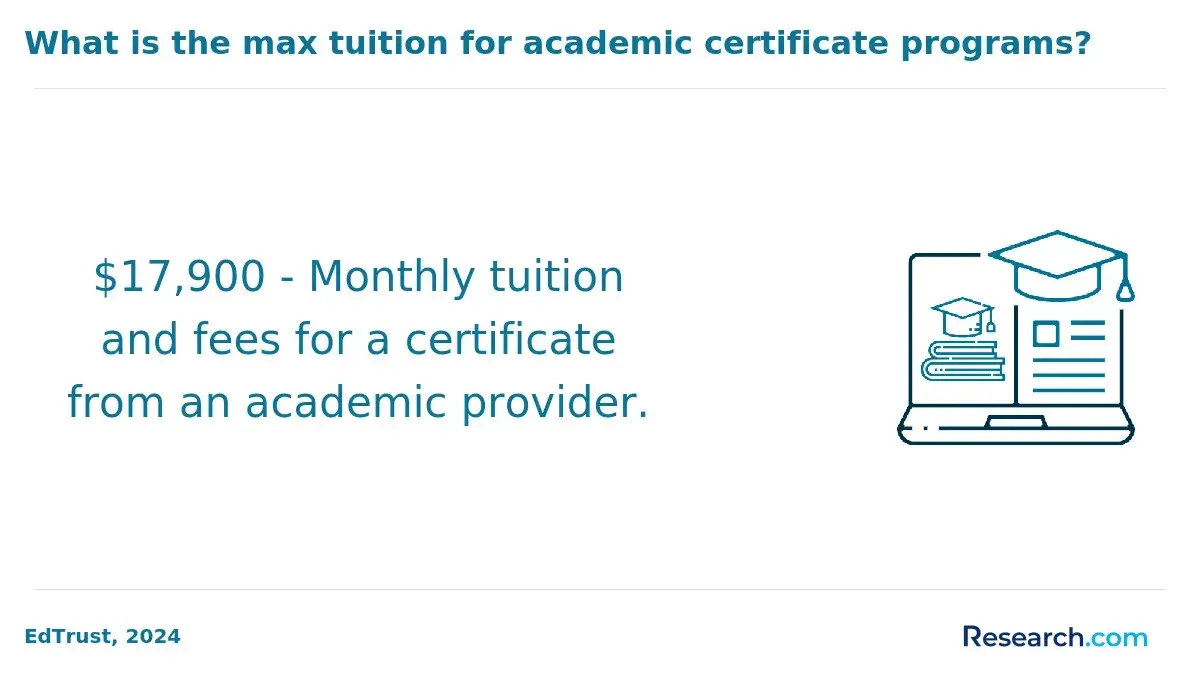
A bachelor's degree normally requires about 120 semester credits, while an associate degree usually requires about 60. The actual timeline for an online general studies student depends on transfer credits, course load, term length, prior learning credit, and whether the student attends full time or part time. For adult learners, the fastest path is often not the most intense program; it is the program that applies the most existing credit toward the degree.
College Board's 2024 data lists average published 2024-25 tuition and fees of $11,610 for in-state students at public four-year institutions. That benchmark is useful because many online public universities price programs around resident, nonresident, or special online tuition rates, and the difference can change total cost substantially.
The table below summarizes common timeline and cost variables. Use it to estimate your likely completion path before comparing schools.
| Student situation | Typical time consideration | Cost factor to check | Decision implication |
| No prior college credit | Often about four years full time for a bachelor's degree | Total tuition across all required credits | Compare first-year support, advising, and general education options carefully |
| Associate degree completed | Often about two years full time if credits transfer cleanly | Transfer agreement, upper-division tuition, and remaining major requirements | Choose a school that applies the associate degree efficiently |
| Some college, no degree | Highly variable based on accepted credits | Transcript evaluation and institutional residency requirement | Request a degree audit before committing |
| Working adult attending part time | May take longer but can reduce overload and withdrawal risk | Per-credit tuition, fees, and financial aid enrollment thresholds | Balance speed with sustainable weekly workload |
| Accelerated online student | Can finish faster with shorter terms and heavier course loads | Flat-rate tuition, course availability, and transfer credit limits | Best for organized students with predictable study time |
If speed is a priority, compare degree-completion programs and 2 year accelerated bachelor degrees, especially if you already have an associate degree or substantial transfer credit. Accelerated programs can be efficient, but they require disciplined time management because shorter terms compress readings, assignments, and group work.
To reduce cost without weakening quality, take these steps before enrolling:
- Ask for an official or preliminary transfer evaluation, not just a general estimate.
- Compare total program cost, including technology fees, course materials, graduation fees, and repeated-course policies.
- Check whether online students pay in-state, out-of-state, or separate online tuition.
- Ask whether prior learning assessment, military credit, CLEP exams, or employer training can apply to electives.
- Confirm that required courses are offered often enough to support your intended graduation date.
The biggest cost mistake is focusing only on the lowest per-credit price. A slightly higher tuition rate can be cheaper overall if the school accepts more transfer credits, offers faster course sequencing, and helps you avoid extra semesters.
How can students verify accreditation and quality of online general studies programs?
Accreditation is one of the most important checks before enrolling. For general studies students, institutional accreditation matters because it affects transfer credit, federal financial aid eligibility, graduate school consideration, and employer confidence. Programmatic accreditation is less common for general studies than for fields such as nursing, education, engineering, or business, so the first step is verifying the institution itself.
Students should compare affordability only after confirming legitimacy. Lists of cheap online colleges can be useful starting points, but low tuition should never replace accreditation, credit-transfer, student support, and course-quality checks.
Use this quality checklist before submitting an application or deposit:
- Confirm institutional accreditation through the U.S. Department of Education's Database of Accredited Postsecondary Institutions and Programs or the school's accreditor listing.
- Check whether the online program is offered by the same accredited institution that appears on the transcript and diploma.
- Ask for a written degree plan showing how your transfer credits apply to specific requirements.
- Review course rotation so you know whether project-relevant electives are available when you need them.
- Look for online student services, including advising, tutoring, library access, career services, disability accommodations, and technical support.
- Ask whether the program includes applied assignments, internship options, capstone projects, or portfolio-building opportunities.
- Review withdrawal, refund, satisfactory academic progress, and financial aid policies before enrolling.
Red flags include unclear accreditation language, pressure to enroll immediately, refusal to provide total cost estimates, vague transfer-credit answers, missing faculty information, and promises of guaranteed jobs or salaries. A trustworthy school should be able to explain costs, credits, support, and outcomes without relying on high-pressure sales tactics.
What salary ranges and earning potential exist for project coordinators with general studies degrees?
Salary potential depends on role title, industry, location, experience, technical skill, and whether the job is closer to administrative support or formal project management. A general studies degree can help meet bachelor's-degree preferences for some coordinator roles, but salary is not determined by the major alone.
The BLS reported a May 2024 median annual wage of $100,750 for project management specialists. This figure is best viewed as an upper career-context benchmark rather than a typical starting salary for all project coordinators, because the occupational group includes more experienced specialists who may manage budgets, schedules, vendors, and complex initiatives.
The table below explains how to interpret salary expectations by career stage without assuming that every general studies graduate enters the same labor market.
| Career stage | Common titles | Salary interpretation | What can improve earning potential |
| Entry-level coordination | Project assistant, program assistant, administrative coordinator | Often below the BLS median for project management specialists because responsibilities are more supportive | Strong Excel skills, clear writing samples, internship experience, industry knowledge |
| Experienced coordinator | Project coordinator, operations coordinator, implementation coordinator | May move closer to specialist-level pay when the role includes scheduling, reporting, vendor contact, and cross-functional work | Documented project outcomes, software proficiency, CAPM or similar credential |
| Project specialist or junior project manager | Project specialist, associate project manager, implementation specialist | More likely to align with BLS project management specialist data when responsibilities include scope, schedule, and risk tracking | Several years of project experience, stakeholder management, budgeting exposure |
| Project manager path | Project manager, program manager, operations manager | Compensation varies widely by industry and complexity of work | PMP eligibility, leadership record, advanced technical or industry specialization |
Students should evaluate return on investment by comparing likely debt, time to completion, current income, employer tuition assistance, and realistic target roles. The safest approach is to look at job postings in your region before enrolling and record which titles ask for a bachelor's degree, which skills appear repeatedly, and which project tools employers name.
AI and automation are also changing the skills mix. Scheduling tools, templates, dashboards, and AI writing assistants can reduce repetitive coordination work, but they also increase the value of judgment, stakeholder communication, data interpretation, and follow-through. Students who learn both digital tools and human coordination skills are better positioned than those who rely only on general administrative experience.
What is the job outlook and industry demand for project coordination professionals in the U.S.?
Project coordination demand is tied to how organizations manage change: technology implementations, healthcare operations, construction schedules, marketing campaigns, compliance projects, product launches, and process improvement efforts all require people who can track moving parts.
The BLS projects employment for project management specialists to grow 7% from 2023 to 2033, which is faster than the average for all occupations. For readers, that suggests durable demand, but not automatic hiring for every applicant.
The industries below commonly use project coordination skills. The best target depends on your background, electives, and comfort with the industry's pace and terminology.
| Industry | Why coordination skills are needed | Useful preparation |
| Healthcare administration | Patient programs, compliance initiatives, scheduling, process improvement, and department projects | Healthcare terminology, privacy awareness, data tracking |
| Information technology | Software rollouts, system migrations, help desk projects, vendor coordination, and documentation | Information systems courses, agile basics, technical writing |
| Construction and facilities | Schedules, permits, vendors, materials, safety documentation, and client updates | Operations coursework, spreadsheet skills, industry-specific training |
| Marketing and communications | Campaign calendars, creative workflows, approvals, events, and content production | Communication courses, marketing electives, portfolio samples |
| Nonprofit and education | Programs, grants, events, community services, reporting, and stakeholder coordination | Grant writing, public administration, service-learning experience |
| Business operations | Process improvement, customer implementation, procurement, vendor work, and internal initiatives | Management, analytics, operations, and business communication |
Employer expectations are shifting toward proof of applied skills. A bachelor's degree may help clear an education screen, but job postings increasingly ask for evidence: experience with Microsoft Excel or Google Sheets, project management platforms, meeting facilitation, documentation, customer communication, and the ability to manage deadlines across teams.
Students can respond to this market by building a simple project portfolio during school. Useful examples include a project charter, risk register, communication plan, dashboard, stakeholder map, meeting agenda, status report, and final reflection explaining what changed during the project and how decisions were made.
How can a general studies graduate strengthen qualifications with certifications in project coordination?
Certifications can help general studies graduates signal project-specific knowledge, especially when their degree title is broad. A certification does not replace experience, but it can give employers a clearer reason to connect your education with project coordination work.
The best certification depends on career stage. New coordinators usually benefit from entry-level project management or agile training, while experienced professionals may pursue advanced credentials after meeting work-experience requirements.
| Credential or training | Best for | How it supports project coordination | Important limitation |
| Certified Associate in Project Management | Students and early-career professionals | Introduces project terminology, life cycles, scope, schedule, cost, quality, and stakeholders | It signals knowledge but does not prove hands-on project leadership experience |
| Project Management Professional | Experienced project professionals | Recognized credential for people who have led and directed projects | Requires documented experience and is usually not the first credential for new graduates |
| Google Project Management Certificate | Beginners seeking practical exposure | Covers project documentation, agile concepts, stakeholder communication, and job-ready terminology | Employer recognition varies, so pair it with work samples |
| Scrum or agile foundations training | Students targeting technology, product, marketing, or operations teams | Helps explain sprints, backlogs, standups, retrospectives, and iterative workflows | Agile knowledge is most useful when matched to industries that actually use agile methods |
| Microsoft Excel, data analytics, or business software certificates | Coordinators who track metrics, budgets, schedules, and reports | Strengthens practical reporting and dashboard skills | Tool certificates should support, not replace, broader coordination ability |
To choose the right credential, follow a job-posting-first approach:
- Collect 10 to 15 job postings for project coordinator, operations coordinator, program assistant, or implementation coordinator roles in your target region or remote market.
- Highlight repeated requirements, especially software, certification names, industry knowledge, and years of experience.
- Choose one credential that appears often or clearly fills a gap in your resume.
- Build two or three portfolio samples that use the credential's concepts, such as a project plan, schedule, risk log, or status report.
- Update your resume bullets to connect coursework, certification, and real examples instead of listing the credential alone.
A common mistake is collecting multiple beginner certificates without applying the skills. One well-chosen credential plus a clear portfolio and relevant experience is usually more persuasive than a long list of unrelated badges.
Other Things You Should Know About General Studies
It can be, especially when it comes from an accredited institution and the student can explain a coherent focus. Employers may respond better when your resume highlights a concentration, relevant electives, projects, tools, and work experience rather than relying only on the degree title.
Many 2027 online general studies programs require a capstone worth 3 to 4 credits, and some offer a practicum with 40 to 120 supervised hours. These experiences often include planning, scheduling, teamwork, and reporting tasks that directly support project coordination skills.
Yes, a general studies degree can offer practical project coordination skills by integrating courses in business, communication, and management. These degrees often include opportunities for learning essential skills like organization, time management, and resource allocation, which are crucial for project coordination roles.
Yes, depending on the graduate program. Some master's programs accept applicants from many undergraduate majors, while others require prerequisite coursework. If graduate school is a possibility, check admission requirements early and use electives to complete needed prerequisites.
References
- The Project Manager Salary: What to Expect and How to Earn More https://www.icagile.com/resources/the-project-manager-salary-what-to-expect-and-how-to-earn-more
- Online Bachelor's Degree in Project Management | CSU Global | Accredited https://csuglobal.edu/academic-programs/undergraduate-degrees/bachelors-degree-project-management
- General Studies Degree Jobs: 10 Careers + Salaries (2026) | Extern https://www.extern.com/post/general-studies-degree-jobs-career-guide
- Project Management Job Market Report (UK) - May 2026 https://www.learningpeople.com/uk/career-insights/job-market-insights/project-management/
- Online Bachelor's Degree: General Studies https://www.umgc.edu/online-degrees/bachelors/general-studies