
2027 Most Affordable Online MSW Programs

Co-Founder and Chief Data Scientist
A bachelor's degree limits you to strict agency budgets and heavy administrative caseloads. The path to professional autonomy, higher pay, and the ability to bill insurance independently requires a Master of Social Work (MSW) and, subsequently, your clinical license.
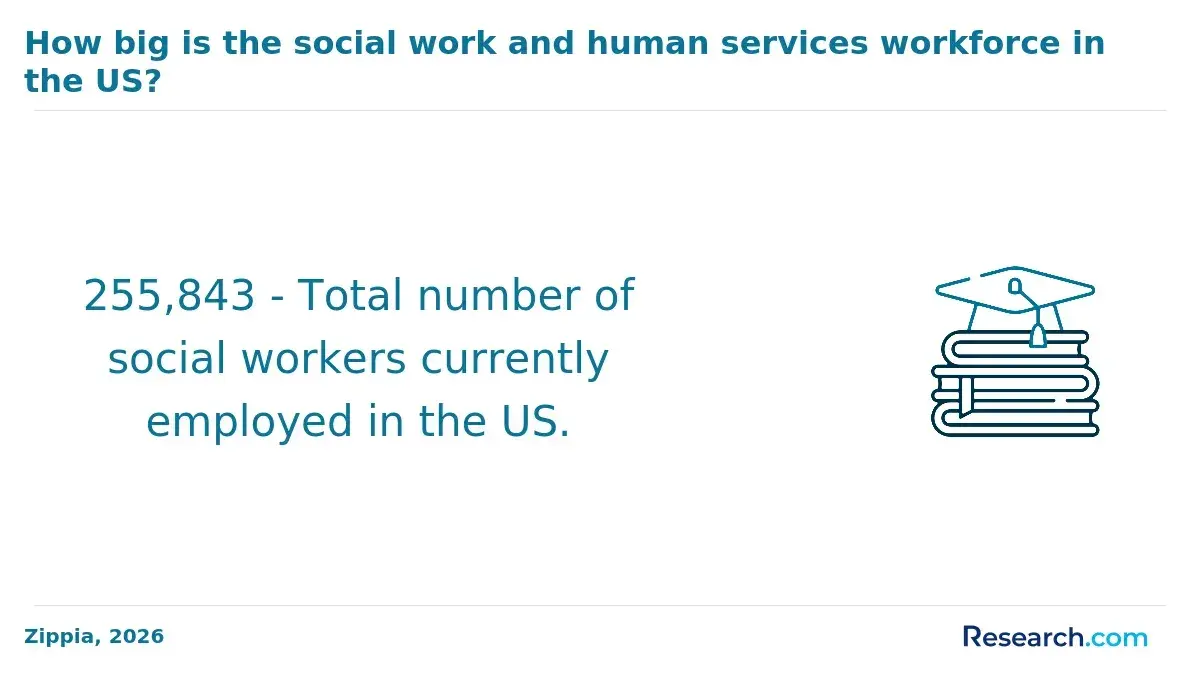
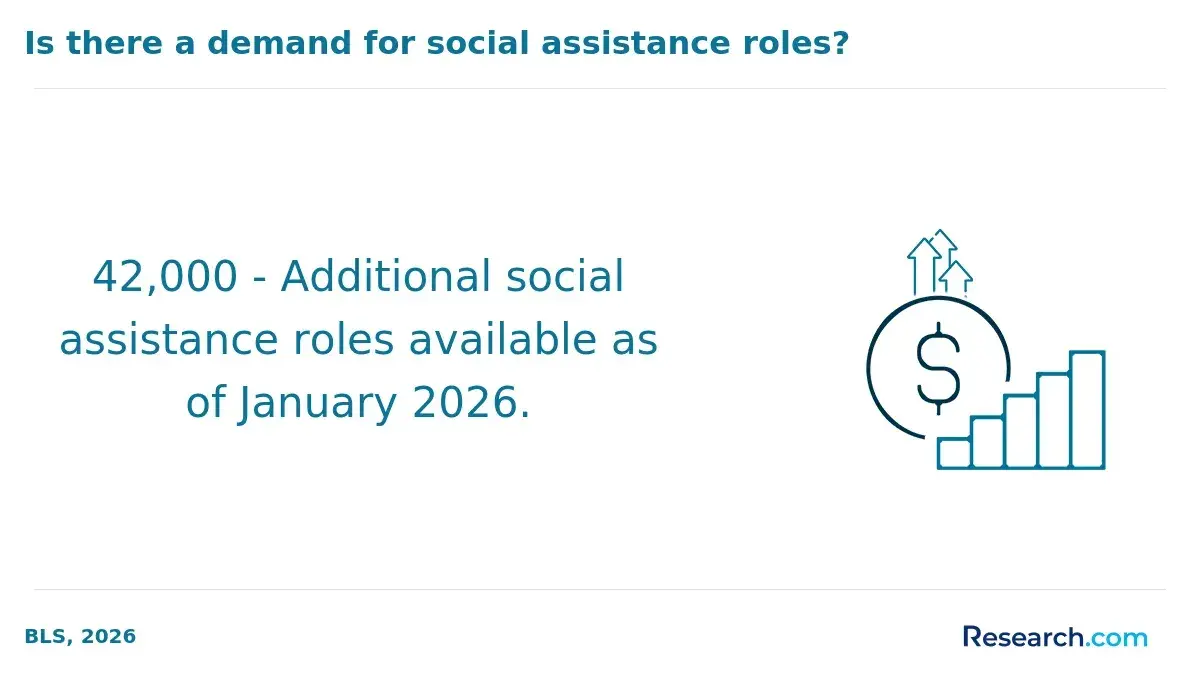
What adds to the challenge is the expectation of over 74,000 job openings for social workers by 2034. In our continuous tracking of CSWE-accredited pathways within the Research.com database, we have mapped out exactly how to navigate the distance learning landscape. This comprehensive guide bypasses generic brochure advice to explain the ins and outs of affordable online MSW programs that will actually get you hired.
What are the benefits of an affordable online MSW degree?
- A Master’s in Social Work (MSW) degree helps you become a licensed social worker or licensed clinical social worker, enabling you to work in healthcare facilities, government agencies, corporations, schools, and many other institutions.
- With an MSW degree, one can earn around the median salary of $57,862 per year.
- Obtaining an MSW degree online helps you save on costs such as travel, board, and lodging and have close interactions with professors and clinic patients, giving you much flexibility in working while you study.
What can I expect from an affordable online MSW degree?
Getting an MSW opens up doors to a diverse and rewarding career in social work. The program sets you up for state licensure, so you can work independently or with your chosen organization. You can specialize in mental health, child welfare, or policy, paving the way for careers in public welfare, advocacy, and research.
Get ready for a two-year journey balancing coursework, assignments, and a busy field placement with lots of weekly hands-on experience. The program is challenging, but the chance to make a positive impact on people and communities makes it all worthwhile.
In a nutshell, an MSW gives you the skills and qualifications for a fulfilling career in social work. It takes dedication and good time management, but the personal and professional growth you’ll experience is priceless. Plus, you get to do something special—make a real difference in the world.
Where can I work with an affordable online MSW degree?
Getting an MSW opens up exciting possibilities for a meaningful career in different areas, like government and nonprofits. You could be a Case Manager dealing with mental health challenges, a Child Welfare Specialist helping kids through tough times, or a Substance Abuse Counselor aiding individuals in overcoming addiction.
Beyond clinical settings, an MSW gives you the power to make a positive impact in various fields. You could be an Art Therapist using creativity for healing, a Medical Social Worker offering crucial support to patients and families dealing with chronic illness, or a Child Protective Services Worker advocating for vulnerable kids.
How much I can make with an affordable online MSW degree?
Income potential with an MSW is fundamentally dictated by your licensing level and your ability to bill insurance, rather than just the setting where you work.
A standard MSW graduate (often licensed as an LMSW or LSW, depending on the state) working in a community agency, hospital, or non-profit will typically see salaries plateau between $55,000 and $70,000. In these roles, your income ceiling is strictly capped by the agency’s operating budget, government grants, and fixed departmental funding.
The only way to significantly break this income ceiling is to secure your LCSW (Licensed Clinical Social Worker) designation. An LCSW unlocks the legal authority to generate billable hours by independently charging commercial insurance, Medicare, and Medicaid for psychotherapy services. Because agency caseloads are notoriously high and lead to massive burnout, many LCSWs resort to opening a private practice or working as 1099 independent contractors (freelancers) for group practices. In private practice, an LCSW can set their own hourly rates—often ranging from $120 to $200 per session—giving them total control over their earning potential.
- 2027 List of Most Affordable Online MSW Programs Affordable MSWs
- How long does it take to complete an MSW program? Program Duration
- How does an online master’s in social work compare to an on-campus program? Online vs Campus
- What is the average cost of an MSW program? Program Cost
- What are the financial aid options for students enrolling in an MSW program? Financial Aid
- What are the prerequisites for enrolling in an MSW program? Admission Requirements
- What courses are typically in an MSW program? Curriculum
- What types of specializations are available in online MSW programs? Specializations
- How to choose the best MSW program? How to choose the best MSW program?
- What are the advantages of accelerated online MSW programs? What are the advantages of accelerated online MSW programs?
- What are the main differences between MSW and LCSW careers? What are the main differences between MSW and LCSW careers?
- How do online MSW programs facilitate networking and mentoring opportunities? How do online MSW programs facilitate networking and mentoring opportunities?
- What challenges do online MSW programs present and how can they be overcome? What challenges do online MSW programs present and how can they be overcome?
- How do online MSW programs provide comprehensive student support and engagement? How do online MSW programs provide comprehensive student support and engagement?
- Can an accelerated associate degree online streamline the path to an MSW? Can an accelerated associate degree online streamline the path to an MSW?
- What career paths are available for graduates of MSW programs? What career paths are available for graduates of MSW programs?
- How do online MSW programs support career transitions for professionals in other fields? How do online MSW programs support career transitions for professionals in other fields?
- What is the job market for graduates with an MSW degree? What is the job market for graduates with an MSW degree?
- Is earning an MSW degree worth the investment? Is earning an MSW degree worth the investment?
- Why does accreditation matter for online MSW programs? Why does accreditation matter for online MSW programs?
- What core competencies are developed in an online MSW program? What core competencies are developed in an online MSW program?
- Can an undergraduate foundation accelerate your MSW success? Can an undergraduate foundation accelerate your MSW success?
2026 List of the Most Affordable Online MSW Programs
If you are comparing online Master of Social Work programs, the real question is not just “Which one is cheapest?” It is “Which low-cost program will still qualify me for licensure, fit my schedule, and actually lead to the kind of social work career I want?” That matters in 2026 because tuition, field placement demands, and licensing requirements can change the true cost of an MSW far beyond the published sticker price.
This guide is built to help you compare affordable online MSW options with the details that matter most: tuition, credit requirements, program length, accreditation, field placement realities, advanced standing eligibility, financial aid, and career outcomes. You will also see where an online MSW makes the most sense, when it may not, and how to avoid expensive mistakes before you enroll.
Quick answer: what is the most affordable online MSW?
The most affordable online MSW is usually not the one with the lowest annual tuition alone. The best value program is the one that combines manageable tuition, CSWE accreditation, a field placement structure that works in your state, and a curriculum that aligns with your licensure goals. In general, public universities tend to offer the lowest overall cost, and advanced standing options can reduce both time and total tuition if you already have a CSWE-accredited BSW.
How do we rank schools?
We built this list to help students compare programs using reliable, transparent data rather than marketing claims. Our research methodology draws from reputable sources such as the IPEDS database, Peterson’s database, including the Distance Learning Licensed Data Set, the College Scorecard database, and the National Center for Education Statistics. The goal is to surface programs that may offer better affordability without ignoring accreditation, format, or degree path.
Affordable online MSW programs: top options
The programs below are presented as a practical comparison tool, not as a guarantee of the best fit for every student. Tuition is only one piece of the decision. Before choosing any school, confirm field placement support, licensure alignment, and whether the online format is available in your state.
1. University of Wyoming
- Annual Tuition: $9,000 to $17,000
- Estimated Cost Per Credit: $299
- Online MSW Programs: Non-advanced 60 credits, Advanced 31 credits
- Program Length: Two to three years
2. California State University-San Bernardino
- Annual Tuition: $10,000 to $16,000
- Estimated Cost Per Credit: $280
- Online MSW Programs: Non-advanced 60 credits, Advanced 36 credits
- Program Length: Two to three years
3. University of South Dakota
- Annual Tuition: $10,000 to $20,000
- Cost Per Credit: $340.15
- Online MSW Programs: Non-advanced 60 credits, Advanced 30 credits
- Program Length: Two to three years
4. University of West Florida
- Annual Tuition: $11,000 to $62,000
- Cost Per Credit: In-state $384.60, Out-of-state $1,044.24
- Online MSW Programs: Non-advanced 60 credits, Advanced 30 credits
- Program Length: Two to three years
5. Western New Mexico University
- Annual Tuition: $11,000 to $22,000
- Cost Per Credit: Resident Graduate 286.88, Non-Resident Graduate 371.04
- Online MSW Programs: Non-advanced 60 credits, Advanced 39 credits
- Program Length: Two to three years
6. Texas State University
- Annual Tuition: $11,000 to $19,000
- Estimated Cost Per Credit: $317.36
- Online MSW Programs: Non-advanced 62 credits, Advanced 36 credits
- Program Length: Two to three years
7. Delaware State University
Delaware State University offers a fully online MSW with one specialization in Advanced Generalist Practice focused on individuals, families, groups, organizations, and communities. The program can be completed part-time or full-time and may take up to three years. Coursework emphasizes the Black perspective in social work, strengths-based practice, and methods for helping client systems create change.
- Annual Tuition: $13,000 to $26,000
- Cost Per Credit: $438
- Online MSW Programs: Non-advanced 60 credits, Advanced 30 credits
- Program Length: Two to three years
8. Concord University
- Annual Tuition: $17,000 to $29,000
- Estimated Cost Per Credit: $485
- Online MSW Programs: Non-advanced 60 credits, Advanced 36 credits
- Program Length: Two to three years
9. Saint Leo University
The Saint Leo University MSW online programs are available to students physically residing in Florida, Maryland, Illinois, Mississippi, New Jersey, Georgia, South Carolina, North Carolina, Texas, Tennessee, and Virginia. The curriculum emphasizes evidence-based social work research and advanced clinical practice. Students complete online coursework, internship hours, and a one-weekend on-campus seminar. Topics include military social work, psychopathology, and the connection between culture, environment, and mental health.
- Annual Tuition: $17,000 to $34,000
- Cost Per Credit: $550
- Online MSW Programs: Full-time/part-time 62-credit program, Full-time/part-time Advanced Standing 32-credit program
- Program Length: Two to three years
10. University of Arkansas
The University of Arkansas Advanced Standing MSW is delivered fully online and offers one of the fastest routes to the degree. It is a full-time option only. Students complete coursework independently and also complete a year-long internship of 22 hours. Working students may be allowed to complete field placement at their current job, depending on restrictions. The program can also prepare graduates for doctoral study.
- Annual Tuition: More than $17,000
- Cost Per Credit: $437.54
- Online MSW Programs: Advanced 39 credits
- Program Length: One year
11. Westfield State University
- Annual Tuition: $18,000 to $50,000
- Estimated Cost Per Credit: $520
- Online MSW Programs: Non-advanced 66 credits, Advanced 37 credits
- Program Length: Three to four years
12. Appalachian State University
- Annual Tuition: $2,900 to $11,000
- Estimated Cost Per Credit: In-State $319, Out-of-state $1,194.16
- Online MSW Programs: Advanced 33 credits
- Program Length: One to two years
13. New Mexico State University
- Annual Tuition: $6,000
- Estimated Cost Per Credit: $444.40
- Online MSW Programs: Non-advanced 60 credits, Advanced 30 credits
- Program Length: One to two years
14. University of Montana
The University of Montana’s MSW is designed to prepare students to create change at the interpersonal, family, and community levels. The program focuses on ethical practice, collaboration, policy analysis, advocacy, and research. Graduates are prepared to meet educational requirements for the LCSW exam and enter integrated practice settings.
- Annual Tuition: $12,000
- Estimated Cost Per Credit: $600
- Online MSW Programs: Non-advanced 60 credits
- Program Length: Three years
15. Angelo State University
- Annual Tuition: $7,000 to $15,000
- Estimated Cost Per Credit: In-State $805.11, Out-of-state $1,645.33
- Online MSW Programs: Non-advanced 66 credits, Advanced 36 credits
- Program Length: One to four years
16. Winona State University
- Annual Tuition: $10,000 to $12,000
- Estimated Cost Per Credit: $731
- Online MSW Programs: Non-advanced 60 credits, Advanced 42 credits
- Program Length: One to two years
17. Fort Hays State University
- Annual Tuition: Estimated $9,000+
- Estimated Cost Per Credit: $319.45
- Online MSW Programs: Non-advanced 66 credits, Advanced 36 credits
- Program Length: One to two years
18. University of North Alabama
- Annual Tuition: $16,650 to $33,300
- Estimated Cost Per Credit: In-State $495, Out-of-state $990
- Online MSW Programs: Non-advanced 60 credits, Advanced 30 credits
- Program Length: One to two years
19. East Carolina University
- Annual Tuition: $5,000 to $19,000
- Estimated Cost Per Credit: In-State $289.55, Out-of-state $1,020.05
- Online MSW Programs: Non-advanced 60 credits, Advanced 30 credits
- Program Length: Two to three years
20. Texas A&M University Commerce
- Annual Tuition: $3,500 to $7,500 for 9 credits
- Estimated Cost Per Credit: In-State $758, Out-of-state $1,116
- Online MSW Programs: Non-advanced 57 credits, Advanced 33 credits
- Program Length: One to four years
21. Jackson State University
- Annual Tuition: $4,397.50 to $5,397.50
- Estimated Cost Per Credit: In-State $611.50, Out-of-state $1,611.50
- Online MSW Programs: Non-advanced 57 credits, Advanced 30 credits
- Program Length: Two to three years
22. University of Houston
- Annual Tuition: $4,000 to $9,000
- Estimated Cost Per Credit: In-State $376 to $474.76, Out-of-state $896 to $994.76
- Online MSW Programs: Non-advanced 51 credits, Advanced 34 credits
- Program Length: Two to three years
23. University of Georgia
- Annual Tuition: $7,500 for 12 credits
- Estimated Cost Per Credit: $629
- Online MSW Programs: Non-advanced 60 credits
- Program Length: Three years
24. Florida State University
- Annual Tuition: $4,000 to $6,000 for 9 credits
- Estimated Cost Per Credit: In-State $444, Out-of-state $625
- Online MSW Programs: Non-advanced 61 credits, Advanced 39 credits
- Program Length: Two to three years
25. Boise State University
- Annual Tuition: $18,000 to $31,000 for the whole program
- Estimated Cost Per Credit: 495
- Online MSW Programs: Non-advanced 61 credits, Advanced 37 credits
- Program Length: Two to three years
What makes an online MSW program affordable?
An affordable MSW is not just a low tuition rate. The true cost includes credits required, field placement demands, residency requirements, technology fees, and the income you may lose while completing unpaid practicum hours. A program with a slightly higher tuition can still be the better value if it reduces the total number of credits or helps you finish sooner through advanced standing.
| Cost factor | Why it matters | What to check before applying |
| Tuition per credit | Directly affects total program cost | Compare both resident and non-resident pricing |
| Total credits | More credits usually mean more tuition and more time | Check whether the program is 51, 57, 60, 61, 62, 66, or another credit total |
| Advanced standing option | Can shorten the path if you already have a BSW | Confirm BSW eligibility and recency rules |
| Field placement support | Influences hidden time and travel costs | Ask who secures placements and where they are located |
| State authorization | Affects whether you can enroll and complete fieldwork in your state | Verify online availability in your state before applying |
| Licensure alignment | Determines whether the degree can support your career goals | Confirm CSWE accreditation and state licensing rules |
How long does it take to complete an affordable online MSW program?
Most full-time MSW students finish in about two years, but the timeline depends on whether you enter as a traditional student or through advanced standing. If you already have a strong undergraduate social work background, some programs can be completed in as little as one year. Part-time pathways can extend the timeline to three or four years, especially when field placement and work schedules have to be balanced carefully.
For many students, time is as important as tuition. A shorter program can reduce total costs, limit time away from work, and help you reach licensure sooner. That said, accelerated study is not automatically better if it creates an unmanageable field placement burden.
Online MSW vs. on-campus MSW: which is better?
The best format depends on how you learn, how much flexibility you need, and whether you can handle the real-world demands of field education. Online MSW programs are often a strong fit for working adults, career changers, and students who do not live near a campus. On-campus programs may be better for students who want more face-to-face interaction and a more traditional academic setting.
| Factor | Online MSW | On-campus MSW |
| Schedule flexibility | Usually stronger | Usually more structured |
| Commute and relocation | Often reduced or eliminated | May require travel or moving |
| Networking | Can be strong, but requires intentional effort | Often happens more naturally |
| Field placement | May require self-advocacy and local coordination | Often easier to coordinate through campus connections |
| Best for | Working professionals, parents, and remote learners | Students who want in-person structure and direct classroom interaction |
If you choose online learning, do not assume the practicum experience will be easier just because the coursework is remote. In many programs, field placement still requires in-person service hours, supervisor coordination, and careful scheduling. That is where many students feel the greatest strain, not in the virtual classroom itself.
What are the financial aid options for MSW students?
MSW students can use standard federal aid through the FAFSA, but social work students may also qualify for field-specific support. These options can reduce debt, but some of them come with service commitments after graduation.
| Financial aid option | What it can do | What to watch for |
| Federal student loans | Can help cover tuition and living costs | Borrow responsibly and compare repayment plans |
| Scholarships and grants | Can reduce the amount you need to borrow | Deadlines and eligibility rules vary |
| Title IV-E Child Welfare Stipend | Can provide tuition help and a living stipend | Usually requires service in public child welfare after graduation |
| Public Service Loan Forgiveness | May help forgive remaining federal loan balances after 120 qualifying payments | Requires qualifying employment and eligible repayment plans |
| Employer tuition assistance | Can offset costs while you continue working | Often has grade or employment requirements |
If debt is a major concern, compare aid before comparing tuition. A program with modestly higher sticker price may be cheaper after scholarships, employer support, or stipend programs are factored in.
What are the prerequisites for entering an MSW program?
Admission requirements vary by school, but most online MSW programs ask for a combination of academic records, application materials, and readiness indicators. Applicants should expect to provide:
- Bachelor’s degree. Many programs require an accredited BSW or a related undergraduate background.
- Official transcripts. Schools use these to review prior coursework and academic performance.
- Personal statement and resume. These help admissions teams evaluate motivation, professional experience, and fit.
- Letters of recommendation. Programs commonly request two to three references from academic or professional contacts.
- Test scores, if required. Some schools may ask for GRE or similar test results, while others do not.
- Interview. Some programs use interviews to assess communication skills and program fit.
- Background check. Field placement sites may require screening before students begin practicum work.
Before applying, ask each school whether it has prerequisite social work or liberal arts coursework, since that can affect both admission and transfer credit decisions.
What courses are usually included in an MSW program?
MSW coursework is designed to move students from general practice knowledge into more advanced work with individuals, families, organizations, and communities. Exact course names vary by school, but common subjects include:
- Social policy and service delivery. Examines how systems shape access to care and support.
- Community theory and practice. Focuses on community-level intervention and planning.
- Child and youth services. Covers practice with children, adolescents, and families.
- Evidence-based practice. Teaches students how to use research in client care.
- Interpersonal practice. Builds communication, assessment, and relationship skills.
- Criminal law and justice systems. Explores social work in legal and correctional settings.
- Policy and advocacy. Prepares students to influence systems and legislation.
- Government and institutions. Studies how agencies and public systems operate.
- Minority studies. Strengthens cultural competence and awareness of inequity.
- Racial history. Examines the historical context that continues to shape practice today.
- Organizational theory. Helps students understand leadership, systems, and management, including leadership development skills.
What specializations are available in online MSW programs?
Specializations help students align graduate study with a specific career setting or client population. The best concentration is the one that matches your long-term goals, not just the one that sounds most interesting on paper.
| Specialization | Common focus | Possible career settings |
| Child and Family Services | Family systems, child welfare, and advocacy | Family services agencies, foster care, child protection |
| Clinical Social Work | Assessment, diagnosis, and treatment | Mental health clinics, hospitals, private practice after licensure |
| Corporate Social Work | Employee well-being and organizational support | Employee assistance, HR-related support roles |
| Domestic Violence Work | Crisis response and survivor support | Shelters, advocacy organizations, legal support services |
| Healthcare Social Work | Care coordination and patient advocacy | Hospitals, rehabilitation centers, healthcare systems |
| Military Social Work | Service member and veteran support | Veterans’ services, military families, outreach programs |
| School Social Work | Student support and crisis intervention | K-12 schools and district support services |
| Substance Abuse | Addiction counseling and recovery support | Treatment centers, recovery programs, community agencies |
Choose a specialization only after checking whether it aligns with your state licensing rules and intended practice setting. Some states have tighter requirements for school, clinical, or healthcare roles.
How to choose the best online MSW program
The smartest way to choose an online MSW is to start with licensure, then cost, then convenience. That order matters because the cheapest program is a bad deal if it cannot support your professional goals.
Here are the factors that deserve the most attention:
- CSWE accreditation. This should be the first filter. If the program is not accredited by the Council on Social Work Education (CSWE), it may not meet licensing expectations in your state.
- Field placement support. Ask whether the school places students or expects you to find your own practicum sites.
- State authorization. Make sure the school accepts students in your state and can support fieldwork there.
- Program format. Decide whether you need fully online, hybrid, part-time, or full-time study.
- Total credit load. Fewer credits can mean lower cost and a shorter path to graduation.
- Advanced standing. If you already have a CSWE-accredited BSW, this can save significant time.
- Licensure alignment. Confirm the program supports the kind of license you want to pursue after graduation.
If a school is vague about field placements, state eligibility, or licensure preparation, treat that as a warning sign. Clear answers are a good indicator that the program understands the realities of online social work education.
Who should consider an accelerated online MSW?
Accelerated online MSW programs are usually the best fit for students who already hold a BSW from a CSWE-accredited institution and want to move quickly into the profession. These are often advanced standing programs, which waive the first year of MSW coursework for eligible applicants.
This option can work well if you want to reduce tuition, shorten the timeline, and begin supervised work toward licensure sooner. It may be less suitable if you need a part-time schedule, if your BSW is older than the program allows, or if you need more flexibility to keep working full-time.
In practice, accelerated study is a trade-off: faster completion, but a more intense pace. That is a strong option for prepared students, not a universal one.
What is the difference between an MSW and an LCSW?
The difference between an MSW and an LCSW is simple but important. An MSW is the graduate degree. An LCSW is a clinical license that you earn after the degree, supervised experience, and an exam.
With an MSW, graduates can often work in case management, community services, healthcare coordination, policy, or generalist practice. With an LCSW, a social worker may gain the authority to diagnose mental health conditions, provide clinical psychotherapy, and in many states operate a private practice.
If your goal is clinical therapy, you should plan for the full pathway, not just the degree. The MSW is the starting point, not the end of the licensing journey.
What career paths can graduates pursue with an MSW?
An MSW can lead to several career paths, but the right path depends on whether you want direct service, administration, policy, or clinical practice. Early-career graduates often begin in agency settings where they gain supervised experience and build the hours needed for later licensure.
Possible career directions include:
- Medical social work in hospitals and healthcare systems
- Child welfare and family services
- School social work and student support services
- Mental health and substance use services
- Community organization and nonprofit work
- Policy and advocacy roles
- Program management and social services leadership
- Private practice after clinical licensure
Some roles may be listed by employers under broader titles such as social and community service manager or school counselor-related positions, but the fit depends on your license, experience, and state rules. An MSW is most valuable when it is matched to a clearly defined career goal.
How do online MSW programs help career changers?
Online MSW programs are especially useful for adults moving into social work from education, healthcare, business, or nonprofit roles. The flexible format makes it easier to keep working while preparing for a new profession.
- They recognize transferable skills. Leadership, communication, case coordination, and crisis management often transfer well.
- They fit around work schedules. Many programs are designed for part-time or asynchronous study.
- They allow focused specialization. Career changers can choose tracks that match their past experience, such as healthcare or school social work.
- They support practical application. Students can often connect prior work experience to field placement settings.
- They can include career support. Advising, alumni connections, and internship help may make the transition smoother.
For career changers, the biggest advantage is not just convenience. It is the ability to enter a new field without stopping your current life first.
What is the job outlook for MSW graduates?
The broader social work field continues to show steady demand, and the U.S. Bureau of Labor Statistics projects social work-related job growth through 2034. For many students, that makes the MSW a practical degree if they want access to a wide range of service, clinical, and leadership roles.
Graduates commonly find opportunities in mental health, child and family services, healthcare, schools, community agencies, and substance use treatment settings. Demand is strongest where agencies need licensed professionals, case managers, and clinicians who can work with complex needs.
Is an MSW worth the cost?
An MSW can be worth the investment if it matches your career goals, licensure plan, and financial situation. For students who want clinical work, leadership roles, or a more specialized social work career, the degree is often a necessary step. For those who only want entry-level support roles, a graduate degree may not deliver the same return.
To judge value, compare the full cost of attendance against likely outcomes. That means tuition, fees, field placement-related expenses, lost work hours, and how quickly you can move into better-paying or more advanced roles. It also means considering whether you can use public service programs, employer aid, or loan forgiveness to lower the net cost.
The most honest answer is this: an MSW is worthwhile when it unlocks the career path you actually want. It is less compelling if you are choosing it only because it seems like the cheapest graduate option.
Why accreditation matters for online MSW programs
Accreditation is not optional when you are choosing a social work graduate program. For most students, CSWE accreditation is the baseline requirement because licensure boards use it to evaluate whether your education meets professional standards.
A CSWE-accredited MSW program is more likely to align with licensure expectations, field education requirements, and employer confidence. It can also affect access to financial aid and transferability of your degree.
If a program is not accredited, ask very carefully whether it will qualify you for licensure in your state. In many cases, the safest choice is to rule out any program that cannot clearly demonstrate CSWE approval.
What core competencies do online MSW students build?
Online MSW programs are designed to strengthen the skills needed for professional practice, not just classroom knowledge. Students typically develop:
- Clinical reasoning and assessment
- Ethical decision-making
- Culturally responsive practice
- Evidence-based intervention skills
- Policy analysis and advocacy
- Interdisciplinary collaboration
- Leadership and program coordination
- Research literacy
These competencies matter because modern social work is increasingly shaped by data, regulation, integrated care, and interdisciplinary teams. Technology does not replace the profession; it raises the bar for how clearly you communicate, document, and collaborate.
Can prior undergraduate study help you move faster through an MSW?
Yes. A strong undergraduate foundation can help reduce duplicated coursework and may improve your readiness for graduate study. Students with a cost-conscious bachelor’s degree or an accredited BSW may be better positioned for advanced standing or transfer-friendly pathways.
If you are still choosing your bachelor’s path, it can be smart to think ahead. A well-planned undergraduate degree may save time later, especially if your goal is to move directly into an MSW and eventually into licensure.
Common mistakes when choosing an online MSW
Students often make avoidable mistakes when they focus only on tuition. The most common ones include:
- Choosing a program without confirming CSWE accreditation
- Assuming all online programs accept students in every state
- Overlooking field placement logistics
- Ignoring the total number of required credits
- Forgetting to account for unpaid practicum hours
- Picking a specialization without checking licensure relevance
- Assuming salary outcomes are guaranteed after graduation
If you avoid these mistakes early, you are much more likely to choose a program that is affordable in practice, not just on paper.
Questions to ask before you enroll
Before committing to any online MSW, ask the admissions team these questions:
- Is the program CSWE accredited?
- Do you accept students in my state?
- How are field placements arranged?
- Can I complete field hours at my current workplace?
- Do you offer advanced standing?
- What is the total number of credits required?
- What licensure outcomes have recent graduates pursued?
- What scholarships, stipends, or employer partnerships are available?
- Are classes synchronous, asynchronous, or mixed?
- How much direct support do online students receive?
The quality of the answers often tells you more than the brochure does. A school that responds clearly and specifically is usually easier to work with once classes begin.
Key Insights
- Low tuition does not automatically mean low cost. Field placement time, lost wages, and credit load can change the real price of an MSW.
- CSWE accreditation should be your first filter because licensure eligibility depends on it in most cases.
- Advanced standing is the fastest and often cheapest route, but it only works for students who already have a qualifying BSW.
- Online MSW programs are a strong fit for working adults and career changers, but field placement still requires serious planning.
- The best program is the one that balances affordability, placement support, schedule fit, and licensure alignment.
- Before enrolling, confirm state authorization, total credits, practicum expectations, and financial aid options so you understand the full investment.
Other Things You Should Know About MSW Degrees
In 2027, prerequisites for enrolling in an affordable online MSW program typically include a bachelor’s degree from an accredited institution. Some programs may require prior coursework in social sciences. Additionally, letters of recommendation and a personal statement are often necessary to demonstrate readiness for advanced social work studies.
In 2027, affordable online MSW programs typically take 2-4 years to complete, depending on whether students enroll part-time or full-time. Accelerated options are sometimes available, allowing for quicker completion. Be sure to check individual program offerings for specific duration details.
Yes. The key accrediting body for U.S. social work degrees is the Council on Social Work Education (CSWE). To qualify for licensure in most states, an online MSW should come from a CSWE-accredited program, including any required field education components.
Field placement requirements for the 2027 most affordable online MSW programs typically include 900 to 1,200 hours of hands-on experience in a social work setting. Students often work under the supervision of a licensed social worker, gaining practical skills while integrating knowledge from their coursework. Programs may offer placements in diverse settings like schools, hospitals, or non-profit organizations.
Several affordable online MSW programs in 2026 do not require the GRE for admission. This flexibility helps streamline the application process, allowing applicants to focus on fulfilling other important requirements, like relevant undergraduate coursework and professional references.
In 2027, students enrolling in affordable online MSW programs can explore several financial aid options, including federal student loans, grants such as the Pell Grant for eligible students, and scholarships offered by universities. Additionally, some schools provide work-study programs that allow students to earn money while attending classes.


![2027 Best Advanced Standing Online MSW Programs [CSWE Accredited] thumbnail](https://research.com/resized/uploads/Online_Advanced_Standing_MSW_301dbd5368.jpg?format=thumbnail)


