
2027 What is the difference between an MSW and an LCSW?

Co-Founder and Chief Data Scientist
Social work plays a crucial role in addressing the well-being and quality of life of individuals and communities. Social workers provide invaluable support and assistance to those facing various challenges, including mental health issues, poverty, discrimination, and social inequality. While there are various designations in the field of social work, this article will focus on the differences between a master of social work (MSW) and a licensed clinical social worker (LCSW).
When it comes to the topic of MSW vs LCSW, the main difference lies in the fact that the former is primarily a degree, and the latter is a profession. As a degree, MSW provides a broad foundation in social work practice. Meanwhile, LCSW represents a higher level of specialization in clinical social work, particularly in the areas of mental health services and therapy.
While graduates of MSW and LCSW professionals contribute to the betterment of society, they have distinct roles, responsibilities, and other characteristics that set them apart. In this article, our research team has thoroughly examined multiple data points that shed light on the distinct attributes of MSW vs LCSW. We will explore these differences that set MSW program graduates and LCSW professionals apart, highlighting the unique qualities that distinguish each group.
- What is MSW? What is MSW?
- What is LCSW? What is LCSW?
- What Role Does Macro Social Work Play in Advancing Community Well-Being? What Role Does Macro Social Work Play in Advancing Community Well-Being?
- What Are the Ethical and Legal Considerations in MSW and LCSW Practice? Legal Considerations
- How Can Undergraduate Preparation Impact Your Social Work Career? How Can Undergraduate Preparation Impact Your Social Work Career?
- What Job Opportunities Can MSW Graduates Pursue? Job Opportunities
- What Are the Benefits of Pursuing a Doctorate in Social Work? What Are the Benefits of Pursuing a Doctorate in Social Work?
- Key Differences Between MSW and LCSW Key Differences
- Can an Affordable Online Human Services Program Deliver Quality Outcomes? Can an Affordable Online Human Services Program Deliver Quality Outcomes?
- Financial Considerations and Career Growth in MSW and LCSW Financial Considerations
- How Do Accreditation and Curriculum Standards Impact Program Quality? How Do Accreditation and Curriculum Standards Impact Program Quality?
- The Impact of MSW and LCSW on Social Work and Mental Health The Impact of MSW and LCSW on Social Work and Mental Health
- Emerging Trends in Social Work Practice Emerging Trends in Social Work Practice
MSW vs. LCSW: What Do These Credentials Mean?
If you are comparing an MSW and an LCSW, you are really comparing two different stages of a social work career: a graduate degree and a clinical license. An MSW, or Master of Social Work, is the academic credential that prepares you for advanced social work roles. An LCSW, or licensed clinical social worker, is a state-issued license that allows qualified social workers to provide clinical mental health services, often independently.
This distinction matters because it affects what jobs you can pursue, whether you can diagnose and treat mental health conditions, how long your training may take, and what salary range may be realistic. This guide explains what an MSW is, what an LCSW is, how the two differ, and how to decide which path fits your goals in social services, counseling, healthcare, schools, policy, or private practice.
Quick answer: An MSW is a master’s degree. An LCSW is a professional clinical license earned after completing an MSW, supervised clinical experience, and a licensing exam. If you want broad social work roles in advocacy, case management, community programs, or administration, an MSW may be enough. If you want to provide independent therapy, diagnose mental health disorders, or open a clinical practice, you will usually need LCSW licensure.
An MSW is widely considered a core graduate qualification for advanced social work practice. Programs typically train students in human behavior, social policy, research, ethics, intervention methods, community practice, and specialized fields such as healthcare, child welfare, mental health, school social work, and community development. Graduates may use the degree to enter many social work career pathways, though state rules determine which roles require licensure.
Demand for graduate social work education has grown. According to the Council on Social Work Education (CSWE), the number of students enrolling in MSW programs has increased by 25.9% over the past 10 years. CSWE is a national organization focused on strengthening social work education in the United States.
What You Usually Need to Enter and Complete an MSW Program
MSW admission requirements differ by school, but most programs evaluate academic preparation, readiness for fieldwork, and commitment to social work values. Before applying, review each program’s accreditation, field placement structure, admissions standards, and timeline.
- Bachelor’s degree. Most programs require a bachelor’s degree from an accredited college or university. A bachelor’s degree in social work or a related field may be preferred for some tracks, but many MSW programs also admit students from other undergraduate majors.
- CSWE accreditation. Accreditation is one of the most important checks. A CSWE-accredited program has been reviewed against professional social work education standards and is more likely to meet state licensure expectations. This applies whether you are comparing campus programs, hybrid options, or the best online MSW programs.
- Prerequisite coursework. Some schools ask applicants to complete specific undergraduate courses before enrollment. Depending on the institution, these may include sociology, psychology, statistics, anthropology, cultural studies, or related social science subjects.
- Application materials. Applicants commonly submit transcripts, recommendation letters, a statement of purpose, and sometimes a resume or CV. Some programs also require an interview or scores from standardized tests such as the Graduate Record Examinations (GRE) or Miller Analogies Test (MAT).
- Program length and format. Full-time MSW programs generally take two years to complete. Part-time, online, and hybrid formats may offer more flexibility but can extend the completion timeline.
- Coursework and field education. MSW students complete classroom learning and supervised field placement, also called practicum or internship. Coursework usually covers social policy, human behavior, research methods, cultural competency, social work ethics, and practice models. Field placement gives students supervised experience in agencies, schools, hospitals, community programs, or other approved settings.
Career Outlook for MSW Graduates
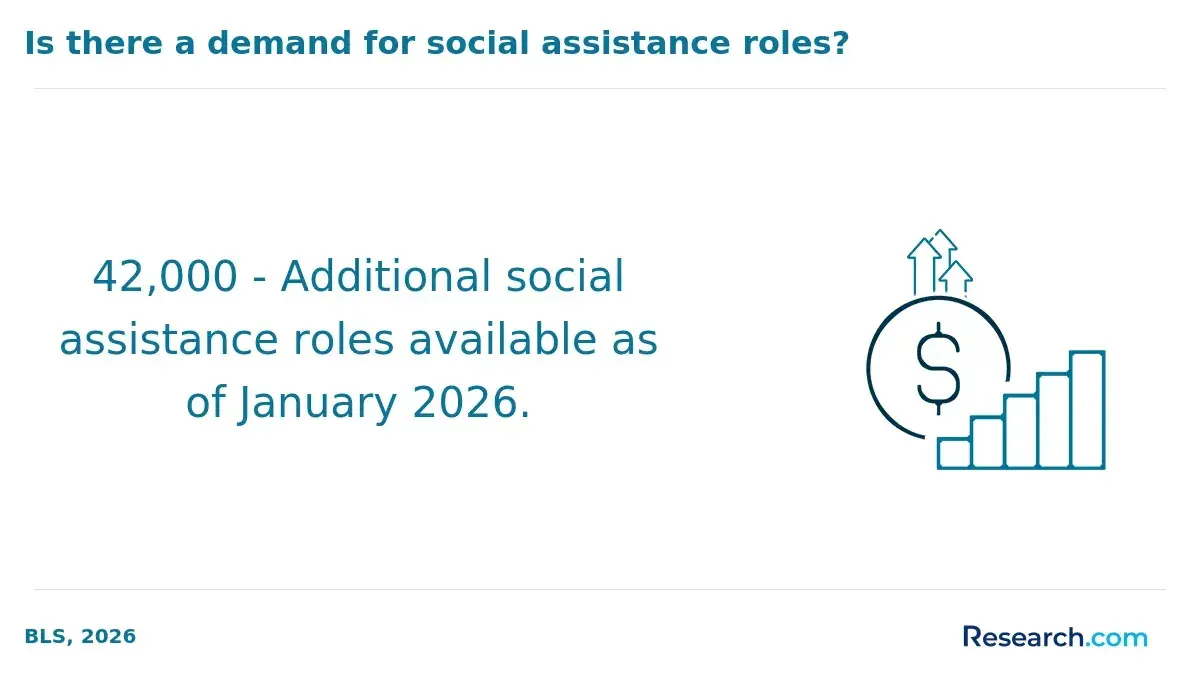
According to the Bureau of Labor Statistics (BLS), there were approximately 810,900 social workers in the United States as of 2025. The profession is projected to grow by 6% from 2024 to 2034, which the BLS describes as faster than average.
MSW graduates can work across healthcare, schools, government, nonprofit agencies, child welfare, housing services, corrections, community programs, and mental health organizations. If your long-term goal includes counseling, the MSW can also be part of the preparation for becoming a counselor or for specialized roles such as forensic social work, depending on state rules and employer requirements.
| MSW Career Path | What the Role Usually Involves | When This Path Makes Sense |
| Clinical social worker | Provides mental health support, conducts assessments, helps create treatment plans, and may deliver counseling under the level of licensure allowed by the state. | Best for MSW graduates who plan to pursue clinical licensure or work in supervised behavioral health settings. |
| School social worker | Supports students facing emotional, behavioral, attendance, family, or social challenges and coordinates with teachers, parents, and administrators. | Suitable for professionals who want to work with children, families, and school systems. |
| Medical social worker | Works in hospitals, clinics, hospice, or other healthcare settings to support patients and families, assist with discharge planning, coordinate services, and connect people with resources. | Strong fit for those interested in healthcare, crisis support, patient advocacy, and interdisciplinary care teams. |
| Child welfare social worker | Assesses child safety, works with families, coordinates services, and helps respond to abuse, neglect, or family disruption. | Appropriate for people committed to child protection, family services, and high-stakes casework. |
| Community organizer or advocate | Builds programs, supports policy change, conducts outreach, and works with communities to address inequality and improve access to services. | Good choice for MSW graduates interested in social justice, policy, and systems-level change. |
Social work can be meaningful, but it is not a low-pressure profession. In hospital settings, for example, researchers Heenan and Birrell found that social workers may struggle to define their professional identity because their responsibilities are broad, crisis-oriented, and shaped by complex family and service-user needs. Prospective students should consider not only job titles and salaries but also emotional demands, caseload expectations, supervision quality, and workplace support.
Salary Outlook for MSW-Level Roles
As of 2025, the average median annual wage for social workers in the United States is $61,330 (US BLS, 2025). Pay for MSW graduates varies by experience, state, employer, specialization, license status, and whether the position is clinical, administrative, school-based, healthcare-based, or community-focused.
| Role | Salary Information Stated | Important Context |
| School social worker | $41,000 to $69,000 per year; average base salary around $51,000 | District budgets, geographic location, years of experience, and school system policies can affect pay. |
| Medical social worker | $62,742 to $75,919 per year; median salary around $69,000 | Hospitals, clinics, hospice settings, and regional labor markets may offer different compensation levels. |
| Child welfare social worker | National average salary of $61,513 per year; range from approximately $21,000 to $92,000 annually | Agency type, government involvement, caseload, and region can strongly influence earnings. |
| Housing specialist | Average salary around $50,000 annually | This role focuses on helping individuals and families locate affordable, appropriate housing. |
| Geriatric social worker | $42,000 to $64,000 per year; median average of $52,588 annually | Demand may be shaped by aging populations, healthcare systems, and community support programs. |
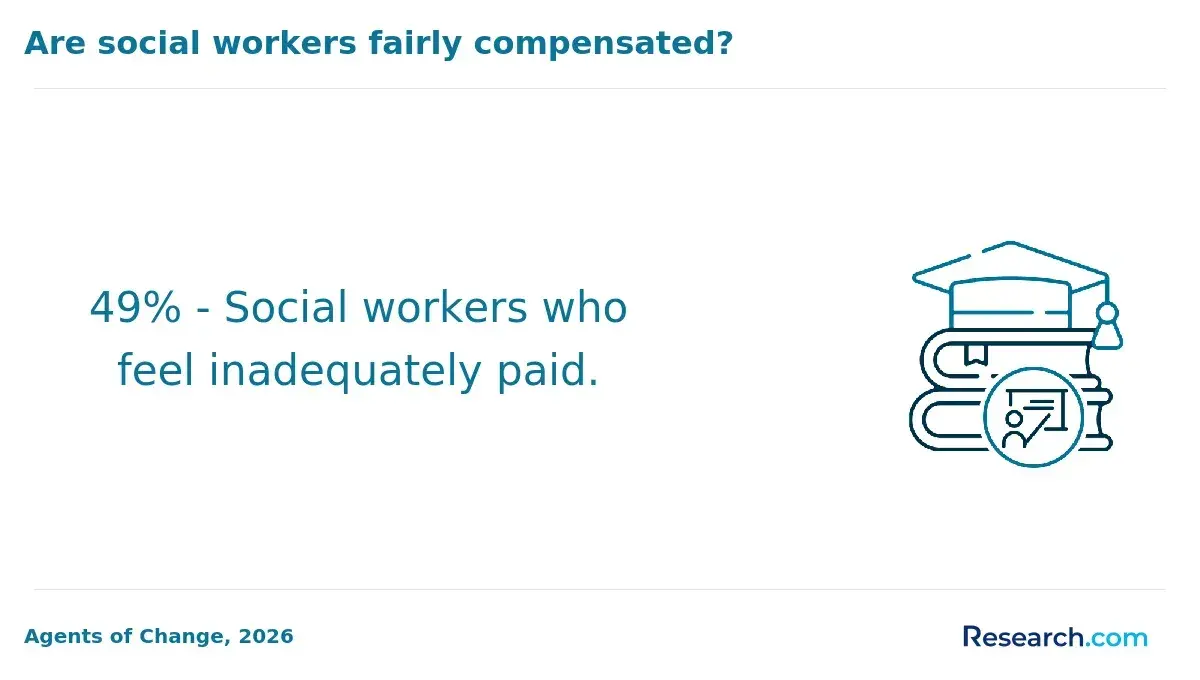
Public perception of social workers is generally favorable, but compensation remains a debated issue. A recent survey by the National Association of Social Workers (NASW), conducted with Ipsos, found that 81% of Americans agree that working with social workers has helped improve their situation. The same source indicates that only around 50% agree that social workers should be paid more than the national average of $50,000 a year. You can review the survey findings from Ipsos and NASW.
What Is an LCSW?
LCSW stands for licensed clinical social worker. Unlike an MSW, which is a degree, an LCSW is a professional license. A person typically becomes eligible for LCSW licensure after earning an accredited MSW, completing required supervised clinical experience, and passing the required licensing exam.
LCSWs are trained for clinical mental health practice. Depending on state law, they may assess clients, diagnose mental health disorders, create treatment plans, provide psychotherapy, and work with individuals, families, and groups. They may be employed in hospitals, mental health clinics, private practices, rehabilitation centers, social service agencies, and other healthcare or behavioral health settings.
Licensing rules are not identical everywhere. States and countries may use different titles, supervision requirements, exam rules, and scopes of practice. Always verify requirements with the licensing board in the jurisdiction where you plan to work.
Typical Education, Training, and Licensing Steps for LCSW Candidates
The route to becoming an LCSW is more specialized than earning an MSW alone. While requirements vary, the following steps are commonly expected.
- Earn an MSW from an accredited institution. LCSW candidates generally need a master of social work degree. The MSW provides the clinical, ethical, theoretical, and practice foundation required for advanced social work. Students interested in mental health, justice systems, and behavioral science may also compare related fields, including programs discussed in guides to the best colleges for forensic psychology.
- Complete supervised clinical experience. After graduation, aspiring LCSWs usually must complete a required amount of supervised clinical work. The exact requirement depends on the jurisdiction but is typically around 3,000 hours. During this stage, candidates work under a licensed clinical social worker or another approved mental health professional.
- Pass the required licensure exam. Candidates typically must pass a licensing examination that evaluates clinical knowledge, ethics, legal responsibilities, assessment, diagnosis, and treatment planning.
- Meet state licensing board rules. Each state licensing board sets its own application process, documentation standards, renewal requirements, continuing education expectations, and practice rules. Do not assume that one state’s requirements apply everywhere.
Career Outlook for LCSWs
The LCSW path can expand clinical and leadership options beyond many MSW-only roles. It is especially relevant for social workers who want to provide therapy, work independently, supervise clinicians, or build a specialized mental health practice.
| LCSW Career Path | Core Responsibilities | Why Licensure Matters |
| Psychotherapist | Provides individual, family, and group therapy; assesses client needs; develops treatment plans; applies therapeutic approaches. | LCSW licensure can allow independent clinical practice, subject to state law. |
| Clinical supervisor | Guides social workers and mental health professionals, reviews cases, supports ethical practice, and helps clinicians build skills. | Supervision roles often require advanced clinical experience and an active license. |
| Program manager or administrator | Oversees services, budgets, compliance, staff, program evaluation, and coordination with stakeholders. | Clinical licensure can strengthen credibility in behavioral health and social service leadership. |
| Policy analyst or advocate | Studies social problems, evaluates policies, and recommends changes to improve social conditions and access to care. | Clinical experience can add practical insight to policy recommendations. |
| Consultant or trainer | Trains organizations or professionals on topics such as trauma-informed care, cultural competence, mental health awareness, and ethical practice. | LCSW credentials may support authority when training clinical or human services teams. |
Salary Outlook for LCSWs
The median LCSW salary in the United States is around $77,800 and can fall anywhere between $71,300 and $86,100. Earnings depend on location, experience, specialization, employment setting, caseload, reimbursement rates, and whether the LCSW works in private practice, government, nonprofit leadership, healthcare, or clinical supervision.
| LCSW Role or Setting | Salary Information Stated | What Can Influence Pay |
| Mental health clinical director | $52,570 to $78,943 per year; national average more than $64,000 annually | Agency size, local budgets, leadership scope, and clinical program complexity. |
| Government social worker | The average salary of social workers in the federal government is $83,600 per year. | Level of government, region, years of experience, and position classification. |
| Nonprofit organization program manager | $39,000 to $59,000 per year | Organization size, budget, program responsibility, and management level. |
| Social work case manager | Median salary of $63,000 per year or as high as $83,000 annually | Clinical skill set, employer type, client population, and coordination responsibilities. |
| Private practice therapist | Potential to earn as high as $93,780 in a year | Rates, client volume, location, payer mix, reputation, business costs, and experience. |
Where Does Macro Social Work Fit Into the MSW vs. LCSW Decision?
Not every social worker wants to provide therapy. Macro social work focuses on systems, organizations, communities, and policies rather than one-on-one clinical treatment. Professionals in this area may work on community development, advocacy, research, program design, policy reform, organizational leadership, and social justice initiatives.
If your goal is broad social impact, an MSW with a macro or community practice focus may be a better fit than pursuing clinical licensure immediately. A clinical license can still be valuable in some leadership roles, but it is not always necessary for policy, advocacy, and program development work. Students interested in systems-level change can explore macro social work career options to understand how this path differs from clinical practice.
Ethical and Legal Responsibilities in MSW and LCSW Practice
Social work practice is guided by ethics, law, confidentiality, informed consent, professional boundaries, documentation standards, and client rights. Both MSW graduates and LCSWs must understand these responsibilities, but LCSWs often carry added clinical obligations because they may diagnose, treat, and manage mental health care independently.
Key issues include protecting client privacy, recognizing conflicts of interest, reporting when required by law, practicing within one’s competence, obtaining informed consent, and using supervision appropriately. Social work also differs from adjacent disciplines in its strong focus on person-in-environment practice, social justice, and client systems. Readers comparing fields may find it useful to review how social work relates to broader behavioral and social science distinctions, such as sociology vs psychology.
How Undergraduate Preparation Can Shape Your Social Work Options
Your undergraduate background can affect how quickly you move into graduate social work study, what field placements feel familiar, and whether you qualify for advanced standing. A bachelor’s degree in social work may provide early exposure to ethics, social policy, human behavior, case management, and field education. Students who need flexibility can compare online degrees in social work as a possible starting point.
However, an undergraduate social work degree is not the only route. Many MSW students enter from psychology, sociology, criminal justice, public health, education, or other majors. What matters most is whether the program you choose supports your target career, offers relevant field placements, and aligns with state licensing expectations.
What Jobs Can You Get With an MSW?
An MSW can lead to roles in direct practice, case management, healthcare, schools, community organizations, public agencies, nonprofit leadership, research, program coordination, advocacy, and policy work. Some positions require additional state licensure or certifications, especially when the job involves clinical services, school systems, or independent practice.
Before enrolling, match the degree to your target job descriptions. Look at whether employers ask for “MSW required,” “license preferred,” “LCSW required,” or “clinical supervision provided.” For a broader list of possibilities, see this guide to jobs you can get with a master’s in social work.
Should You Consider a Doctorate in Social Work After an MSW or LCSW?
A doctorate in social work, especially a DSW, is usually not required for entry into social work practice or LCSW licensure. It may make sense later for professionals who want advanced clinical leadership, executive roles, university teaching, research-informed practice leadership, program design, or high-level administration.
The value of a doctorate depends on your career goal. If you want to provide therapy, the LCSW is often the more direct credential. If you want to lead organizations, teach, supervise, influence policy, or specialize deeply, doctoral education may be worth comparing. Professionals seeking flexible advanced study can review options such as the most affordable online DSW degree programs.
Key Differences Between MSW and LCSW
The simplest distinction is this: an MSW is the graduate degree; an LCSW is a clinical license. The degree can qualify you for many social work roles, while the license can expand your clinical scope of practice after you meet additional requirements.
| Category | MSW | LCSW |
| Credential type | Graduate degree in social work. | State-issued clinical social work license. |
| Education | Requires completion of a master of social work program. | Usually requires an MSW plus post-graduate supervised clinical experience. |
| Clinical training | Includes coursework and field education; clinical depth varies by concentration and placement. | Requires additional supervised clinical practice focused on assessment, diagnosis, treatment, and therapy. |
| Scope of practice | May qualify graduates for case management, advocacy, program coordination, policy, community practice, and supervised counseling roles. | Can allow independent clinical services, including diagnosis and psychotherapy, depending on state law. |
| Licensure | The degree itself is not a license, though it may support eligibility for state licensure or certification. | Represents advanced clinical licensure after meeting state requirements. |
| Best fit | Students seeking broad social work roles, administration, advocacy, community practice, or a foundation for licensure. | Professionals pursuing therapy, clinical supervision, mental health practice, or private practice. |
Both MSW graduates and LCSWs can build strong careers. The right choice depends on whether you want a broad social work career, a clinical mental health career, or a path that combines both.
Can an Affordable Online Human Services Program Still Be a Good Choice?
Affordable online human services programs can be worthwhile when they are accredited, academically rigorous, transparent about costs, and connected to meaningful field or applied learning opportunities. Flexibility alone is not enough. Students should evaluate whether the curriculum builds practical skills, whether faculty have relevant experience, and whether the program supports career goals in social services, behavioral health, case management, or community programs.
Online programs may use virtual collaboration, case studies, supervised projects, simulations, and structured mentorship to help students practice decision-making and client-centered problem-solving. Still, students should confirm how hands-on experience is arranged, especially if they plan to continue into an MSW or pursue licensure later.
Cost is important, but the cheapest program is not always the best value. Before choosing a cheap online human services program, check accreditation, transfer policies, student support, practicum expectations, and how well the degree aligns with your intended career path.
How Accreditation and Curriculum Standards Affect Program Quality
Accreditation helps students identify programs that meet recognized academic and professional standards. For MSW students, CSWE accreditation is especially important because many states and employers rely on it when evaluating licensure eligibility and professional preparation.
Curriculum quality also matters. Strong programs include ethics, evidence-informed practice, policy, human behavior, research, cultural responsiveness, field education, and preparation for the populations students want to serve. Ask programs about faculty qualifications, field placement support, licensure exam preparation, alumni outcomes, and student services.
Students who already hold a qualifying social work background may also compare advanced standing MSW programs online, which can offer a shorter path when the student meets eligibility requirements.
What Should You Consider When Choosing an Online MSW Program?
An online MSW can be a strong option for working adults, caregivers, career changers, and students who do not live near a campus-based program. The key is to evaluate it like a professional investment, not just a convenient class schedule.
| Question to Ask | Why It Matters |
| Is the MSW program CSWE-accredited? | Accreditation can affect licensure eligibility, employer recognition, and transferability of the credential. |
| How are field placements arranged? | Field education is central to MSW training, and poor placement support can delay graduation or weaken career preparation. |
| Does the curriculum match your target path? | A student pursuing school social work, healthcare, macro practice, or clinical licensure may need different electives and placements. |
| What is the total cost, not just tuition? | Fees, travel, technology costs, books, lost work hours, and field placement requirements can change affordability. |
| Does the program meet your state’s licensure expectations? | Online programs may enroll students across states, but licensure rules remain state-specific. |
| What support is available? | Advising, writing support, career services, supervision guidance, and licensure preparation can affect student outcomes. |
Students looking for accessible admissions options can compare an easy MSW online program, but admissions flexibility should never replace accreditation, field quality, or licensure alignment.
Financial Considerations and Career Growth for MSW and LCSW Paths
The MSW vs. LCSW decision has financial consequences. You are weighing tuition, time in school, supervised post-graduate work, licensing fees, potential student debt, salary growth, and the type of work you want to do long term.
Tuition Costs and Financial Aid
Pursuing an MSW can require a major investment. Tuition costs can range from $10,000 to $60,000 or more depending on the program’s location, format, and whether the school is public or private. Financial aid may include scholarships, grants, loans, employer support, and external opportunities from professional or government sources.
If cost is a major concern, compare total program price, not just per-credit tuition. Some affordable online MSW programs may allow students to keep working while enrolled, but field placements can still affect work schedules.
Salary Expectations and Return on Investment
Salary should be evaluated realistically. The median salary for MSW graduates typically ranges between $50,000 and $65,000 per year, while clinical, leadership, and specialized roles may pay more. LCSWs, because of their clinical license and ability to practice independently in many settings, generally have higher earning potential. According to the U.S. Bureau of Labor Statistics, LCSWs earn a median salary of approximately $77,800 annually, with some private practice and clinical supervision roles earning more depending on experience and location.
Return on investment is strongest when the program leads to the role you actually want. A lower-cost MSW that does not support your licensure goals may be less valuable than a higher-cost program with strong field placement and clinical preparation. Likewise, LCSW licensure may not be necessary if your goal is macro practice, policy work, or program administration.
Career Advancement Opportunities
An MSW can support advancement into program management, policy advising, agency leadership, school services, healthcare social work, community development, and nonprofit administration. Additional certifications or specialized training may help in fields such as school social work, healthcare management, child welfare, or gerontology.
An LCSW can open doors to independent clinical practice, therapy, clinical supervision, behavioral health leadership, consulting, and private practice. Some LCSWs later pursue a Doctorate in Social Work to move into teaching, executive leadership, advanced clinical supervision, or high-level program development.
Job Market Growth and Stability
The social work field is expected to grow by approximately 6% from 2024 to 2034, supported by demand for mental health services and social welfare programs. MSWs and LCSWs may both benefit from this growth, but LCSWs may have particular opportunities in clinical roles, private practice, and mental health service settings.
Long-Term Financial Rewards
An MSW offers versatility. An LCSW offers clinical authority. The better financial choice depends on whether the added time, supervision, licensing process, and clinical responsibilities align with your income goals and preferred daily work. Students should estimate total education cost, likely debt, local salaries, licensure timelines, and realistic employment opportunities before committing.
How MSWs and LCSWs Contribute to Social Work and Mental Health
MSW graduates and LCSWs often work in connected but distinct ways. MSW-trained professionals may focus on housing, education, healthcare access, case coordination, community resources, family support, program development, and advocacy. Their work often addresses social and environmental factors that affect a client’s well-being.
LCSWs add advanced clinical mental health practice. They may assess symptoms, diagnose mental health conditions, provide therapy, respond to crises, and help clients manage trauma, anxiety, depression, substance use, and other behavioral health concerns. Their clinical training also allows them to contribute to program design, mental health policy, and clinical supervision.
In many settings, the best care is collaborative. MSW professionals may connect clients to services and address social barriers, while LCSWs provide clinical treatment and mental health planning. Together, they can support both the emotional and practical needs that affect client outcomes.
Students who want a faster graduate route may compare 1 year MSW programs online, but accelerated study should be weighed against field placement demands, workload, licensure goals, and readiness for advanced practice.
Current Trends Affecting MSW and LCSW Careers
Social work is changing as mental health needs, technology, policy priorities, and employer expectations evolve. Students entering the field should understand how these trends may influence training and job opportunities.
- Telehealth and digital service delivery. Virtual counseling and online client support have expanded access for many clients, especially those in remote or underserved areas. LCSWs providing therapy may need skills in telehealth ethics, privacy, documentation, and crisis planning.
- Data-informed practice. Agencies increasingly use outcome tracking, case management systems, and program data to evaluate services. MSW graduates who understand research and data can contribute to stronger interventions and program evaluation.
- Diversity, equity, and inclusion. Social workers continue to address inequities in housing, healthcare, education, justice systems, and community resources. Cultural responsiveness and anti-oppressive practice are important in both direct service and leadership roles.
- Trauma-informed care. Many agencies now expect social workers to understand how trauma affects behavior, trust, relationships, and service engagement. This is especially important in clinical, school, child welfare, healthcare, and crisis-response settings.
- Interdisciplinary collaboration. Social workers increasingly coordinate with educators, nurses, physicians, psychologists, law enforcement, legal professionals, and community organizations to address complex needs.
- Specialized practice areas. Opportunities continue to exist in geriatric social work, forensic social work, disaster response, school social work, healthcare, housing, and behavioral health. Students exploring options can review what you can do with a degree in social work.
Common Mistakes When Comparing MSW and LCSW Paths
| Mistake | Why It Can Hurt You | Better Approach |
| Assuming an MSW automatically makes you an LCSW | An MSW is usually required for LCSW licensure, but it does not grant the license by itself. | Review your state’s post-MSW supervised hours, exam, and application requirements before enrolling. |
| Choosing a program without checking accreditation | A non-accredited program may create licensure or employer recognition problems. | Verify CSWE accreditation for MSW programs and confirm state licensing board acceptance. |
| Focusing only on tuition | Fees, field placement logistics, travel, technology, and lost work hours can change the real cost. | Calculate total cost of attendance and compare financial aid, transfer credit, and schedule flexibility. |
| Ignoring field placement quality | Weak or poorly matched placements can limit skill development and professional networking. | Ask how placements are assigned, supervised, and aligned with clinical or macro career goals. |
| Assuming online programs always meet licensure rules | State licensing requirements can vary, even when a program is offered nationally. | Contact the program and your state licensing board before applying. |
| Using salary averages as guarantees | Actual pay depends on location, employer, license status, experience, and specialization. | Compare local job postings and salary guides before estimating return on investment. |
How to Decide: MSW, LCSW, or Another Human Services Path?
The right credential depends on the work you want to do. If you want flexible social work roles in case management, advocacy, community programs, public agencies, or nonprofit administration, an MSW may be enough. If your goal is therapy, diagnosis, independent clinical practice, or private practice, the LCSW path is usually the more appropriate long-term target.
Some students may also compare adjacent human services options. Many careers with a human services degree focus on community support, case coordination, and service delivery, but they may not lead to the same clinical scope as an MSW followed by LCSW licensure.
Use this decision process before choosing a program:
- Define your preferred daily work. Decide whether you want therapy, case management, policy work, school support, healthcare coordination, advocacy, or administration.
- Check job postings in your state. Look for whether employers require an MSW, LMSW, LCSW, school credential, or other license.
- Verify accreditation and licensure rules. Confirm CSWE accreditation and state board requirements before enrolling.
- Compare total cost and timeline. Include tuition, fees, field placement hours, supervised post-graduate work, exam costs, and possible lost income.
- Ask about field placement support. Strong placements can shape your first job, supervision options, and clinical readiness.
- Evaluate long-term fit. A broad MSW route and an LCSW clinical route can both be rewarding, but they lead to different responsibilities and pressures.
Career goals can also be state-specific. For example, students may compare the best MSW programs in California or research questions such as how much a social worker makes in New York before choosing where to study and practice.
Key Insights
- An MSW is a degree; an LCSW is a license. Most LCSWs first earn an MSW, then complete supervised clinical hours, pass a licensing exam, and meet state board requirements.
- The MSW is broader. It can prepare graduates for roles in case management, schools, healthcare, child welfare, housing, advocacy, policy, community work, and administration.
- The LCSW is more clinical. It is the stronger route for professionals who want to provide therapy, diagnose mental health disorders, supervise clinicians, or pursue private practice.
- Accreditation is nonnegotiable. Students should verify CSWE accreditation and confirm that the program supports licensure in the state where they plan to work.
- Salary depends on role and license status. As of 2025, the average median annual wage for social workers is $61,330, while the median LCSW salary is around $77,800 and can fall anywhere between $71,300 and $86,100.
- Online programs can be valuable, but details matter. Field placement support, licensure alignment, total cost, faculty expertise, and student services are just as important as flexibility.
- Choose based on the work you want, not the credential name alone. If you want systems change or program leadership, an MSW may be sufficient. If you want independent clinical practice, plan for the full LCSW pathway.
References:
- Council on Social Work Education. (n.d.). Statistics on social work education in the United States. Council on Social Work Education | CSWE.
- Eva. (n.d.). How much should I pay my nonprofit’s program manager? Springly.
- Shersher, J. (2023, March 31). Social work supervision requirements. SocialWorkLicensure.org.
- Social Work License Map. (n.d.). Master of social work programs. Social Work License Map.
- US BLS. (2025). Social workers: Occupational outlook handbook. US Bureau of Labor Statistics.
- Zippia. (2025). What is a clinical social worker? Definition, career, and overview. Zippia.com.
Other things you should know about MSW and LCSW
Yes, obtaining an MSW is typically required before pursuing an LCSW license. An MSW provides the foundational education necessary for clinical social work practice, while the LCSW credential involves additional supervised clinical hours and passing a licensing exam to practice independently in most states.
When choosing between an MSW and an LCSW career path, consider your career goals. MSW is ideal if you want a versatile social work education, allowing work in various settings. An LCSW requires further clinical training beyond an MSW and provides the ability to practice independently in clinical settings or offer therapy.
After obtaining an MSW, individuals must complete around 3,000 hours of supervised clinical experience and pass a licensure exam to become an LCSW. The specific requirements can vary by jurisdiction.
Yes, in 2027, MSW graduates primarily qualify for roles in community organizations, policy planning, and administrative positions. In contrast, LCSWs have additional opportunities in clinical settings, where they can provide therapy, conduct assessments, and diagnose mental health conditions due to their licensure and additional clinical training. **PAA Question** What should I consider when choosing between an MSW and an LCSW career path? **Answer** When choosing between an MSW and an LCSW in 2027, consider your career goals. MSWs focus on policy, community work, and social services, while LCSWs can provide clinical therapy and mental health assessments, often requiring more training and licensure. **PAA Question** What additional training is required to become an LCSW? **Answer** Becoming an LCSW in 2027 requires completing a Master of Social Work (MSW) program, followed by additional supervised clinical hours, and passing a state-administered licensing exam, which qualifies them for advanced clinical roles in social work. **PAA Question** How do salaries compare between MSWs and LCSWs? **Answer** As of 2027, LCSWs typically earn higher salaries than MSWs due to their advanced licensure and ability to work in clinical roles. LCSWs have the potential for financial growth through independent practice and specialized clinical positions. **PAA Question** Can MSW holders work independently in clinical settings? **Answer** No, MSW holders cannot work independently in clinical settings in 2027 without further licensure. Only LCSWs, with their additional training and licensure, are allowed to provide clinical services independently, including therapy and mental health counseling.
To become an LCSW in 2027, candidates must hold an MSW degree, complete 3,000 supervised clinical hours post-graduation, and pass the Association of Social Work Boards (ASWB) Clinical Exam. Specific state requirements may also apply.
MSW holders typically work under the supervision of a licensed professional when providing clinical services. To work independently in clinical settings, social workers must obtain LCSW licensure.
Most states require the ASWB Clinical Examination for LCSW licensure. Applicants also need an MSW from a CSWE-accredited program, about 3,000 supervised clinical hours, and approval from the state social work board before they can sit for the exam.


