2027 Sociology Degree: Requirements, Career Prospects & Salary

Co-Founder and Chief Data Scientist
Choosing a sociology degree is really a decision about how you want to use social research, human behavior, and institutional analysis in your career. Some students want to work directly with communities. Others are aiming for policy, research, human resources, nonprofit leadership, education, criminal justice, or graduate study. The challenge is that sociology is broad, so the best program is not always the most famous one—it is the one that fits your budget, preferred learning format, career direction, and need for research or field experience.
This guide explains what a sociology degree includes, how online and campus programs compare, what students may pay, which careers are common, and how to evaluate whether a program is worth the investment. It is designed for prospective undergraduate and graduate students, working adults considering online study, and sociology majors trying to connect their degree to a realistic career plan.
Quick Answer: Is a Sociology Degree Worth It?
A sociology degree can be worth it for students who want a flexible social science education with applications in research, public policy, human services, human resources, market research, advocacy, education, and nonprofit work. The degree is strongest when students pair it with practical experience, data skills, internships, a clear specialization, or graduate training for roles that require licensure or advanced credentials. According to 2025 data from the U.S. Bureau of Labor Statistics, sociologists earned a median annual wage of $102,600, while salary outcomes for sociology graduates vary widely by role, industry, location, degree level, and experience.
What Are the Main Benefits of Getting a Sociology Degree?
- A sociology degree gives students a transferable foundation for roles in human resources, social services, policy analysis, market research, community development, criminal justice, and advocacy.
- Salary potential depends heavily on job title and education level. One cited figure places the median annual salary for sociology degree holders at around $105,132, while specialized research, consulting, and leadership roles may pay more than entry-level community or support positions.
- Online sociology programs can help working adults, caregivers, and place-bound students complete coursework with more scheduling flexibility, especially when programs offer asynchronous classes, remote advising, and virtual student support.
What Can I Expect From a Sociology Degree?
A sociology degree teaches students how societies are organized, how institutions shape behavior, and why patterns such as inequality, migration, family structure, crime, education, and work differ across groups and communities. Students learn to ask research-based questions about social life rather than relying only on personal opinion or anecdote.
- Students study social structures, group behavior, culture, inequality, institutions, and social change.
- Most programs include discussion-based coursework, research assignments, statistics, writing projects, and applied analysis of current social problems.
- Common required courses include Research Methods, Statistics, and Social Theory.
- A PhD in sociology may take students up to 7 years to complete, depending on program structure, research progress, funding, and dissertation requirements.
- Depending on the institution, tuition for sociology degrees in 2025 ranged from approximately $12,000 to over $55,000.
| Degree Level | Best For | Typical Outcome | Important Consideration |
| Bachelor’s degree | Students seeking entry-level roles or a foundation for graduate school | Human services, HR, research assistance, nonprofit work, education support, criminal justice-related roles | Internships and data skills often matter as much as the major itself. |
| Master’s degree | Students targeting research, policy, program evaluation, administration, or advanced social science roles | Policy analyst, research analyst, program manager, nonprofit leadership, doctoral preparation | Look for assistantships, thesis options, applied research opportunities, and employer connections. |
| PhD | Students pursuing academic, advanced research, or high-level institutional research careers | University teaching, research leadership, think tanks, advanced consulting, specialized policy work | Time to completion, funding, advisor fit, and dissertation support are major decision factors. |
Where Can I Work With a Sociology Degree?
Sociology graduates work in many settings because the major develops research, writing, interviewing, cultural analysis, and problem-solving skills. The right work environment depends on whether you prefer direct service, organizational strategy, research, policy, or public-facing advocacy.
- Social work and human services
- Human resources and employee relations
- Market research and consumer insights
- Public policy and government agencies
- Nonprofit organizations and advocacy groups
- Education and student support services
- Criminal justice, corrections, and community reentry programs
The broad nature of sociology is both an advantage and a risk. It gives graduates flexibility, but students should avoid graduating with only general coursework. Employers usually respond better to a focused profile: for example, sociology plus statistics, sociology plus HR experience, sociology plus nonprofit internships, or sociology plus criminal justice coursework.
How Much Can I Make With a Sociology Degree?
Earnings for sociology graduates vary because many people with the degree do not hold the job title “sociologist.” Entry-level positions in areas such as social work support, community outreach, or human resources may offer salaries ranging from $30,000 to $50,000 per year. Mid-career professionals in roles such as research analyst, program coordinator, or nonprofit administrator may earn $50,000 to $80,000 annually.
Advanced education can improve access to higher-paying roles, especially in research, academia, consulting, program evaluation, or policy leadership. Students who complete a master’s degree or a part time PhD program in sociology or a related field may qualify for specialized positions where salaries can exceed $100,000 per year.
Some industries, including market research and management consulting, may offer stronger compensation for sociology graduates who can combine theory with statistical analysis, survey design, qualitative research, data visualization, and business communication. In those settings, potential earnings may surpass $90,000 annually, particularly for candidates with proven analytical experience.
- Best Sociology Degrees for 2027
- How long does a sociology degree take?
- Online vs. campus sociology programs
- Average sociology degree cost
- Financial aid options for sociology students
- Admission requirements and prerequisites
- Common sociology courses
- Sociology concentrations and specializations
- How to choose the right sociology program
- Lower-cost alternatives for sociology students
- Supplementary online programs for sociology careers
- Career paths for sociology graduates
- How online PsyD programs may complement sociology
- Emerging trends in sociology education and careers
- Job market outlook for sociology graduates
- Digital transformation and sociology careers
- Sociology vs. related social science degrees
- Internships and networking for sociology students
- Continuing education after a sociology degree
- Interdisciplinary study and sociology career outcomes
- Mental health counseling knowledge and sociology practice
- Challenges of earning a sociology degree and finding work
- Key insights before choosing a sociology degree
Best Sociology Degrees for 2027
The programs below represent well-known sociology options at different degree levels. Use this list as a starting point, not as a substitute for checking admissions requirements, total cost, curriculum, transfer policies, graduation requirements, and whether the program supports your intended career path.
How Do We Rank Schools?
Research.com rankings draw from structured research and data review by our editorial and research team. Sources include the IPEDS database, Peterson's database, the College Scorecard database, and the National Center for Education Statistics. These sources help compare institutional and program data in a consistent way. Readers who want more detail can review the Research.com methodology.
| School and Program | Program Length | Cost or Tuition | Credits or Units | Accreditation |
| Harvard University Bachelor’s Degree in Sociology | 4 years | $54,269 | 120 | New England Association of Schools and Colleges (NEASC) |
| University of California Berkeley (UCB) MA in Sociology | 2 years (full-time) | $26,098 per year | 36 units | Western Association of Schools and Colleges (WASC) |
| Stanford University BA in Sociology | 4 years | $58,176 per year | 120 units | Western Association of Schools and Colleges (WASC) |
| University of California, Los Angeles Bachelor of Arts in Sociology | 4 years | $14,221 per year | 120 units | Western Association of Schools and Colleges (WASC) |
| University of Chicago Bachelor of Arts in Sociology | 4 years (full-time) | $58,852 per year | 120 credits | Higher Learning Commission (HLC) |
| Yale University Bachelor of Arts in Sociology | 4 years (full-time) | $61,950 | 120 credits | New England Association of Schools and Colleges (NEASC) |
| New York University Bachelor of Arts (BA) in Sociology | 4 years full-time | Tuition and fees: $63,290 per year | 120 credits | Middle States Commission on Higher Education |
| University of Wisconsin-Madison Bachelor of Science (BS) in Sociology | 4 years full-time (8 semesters) | $10,762 per year | 120 credits | Higher Learning Commission (HLC) |
| University of Pennsylvania Bachelor of Arts (BA) in Sociology | 4 years full-time | $61,680 per year | 120 credits | Middle States Commission on Higher Education |
| Princeton University Bachelor of Arts in Sociology | 4 years full-time | $57,820 per year | N/A | Middle States Commission on Higher Education |
Program Notes
- Harvard University Bachelor’s Degree in Sociology: This undergraduate program emphasizes sociological theory, research methods, and analysis of social institutions, making it suitable for students considering graduate study or research-oriented careers.
- University of California Berkeley (UCB) MA in Sociology: The program includes study in social stratification and inequality, social change and movements, and comparative-historical sociology, with a strong focus on theory, methods, and empirical research.
- Stanford University BA in Sociology: Stanford’s curriculum combines social theory, empirical inquiry, and interdisciplinary study for students interested in education, policy, social services, or further academic preparation.
- University of California, Los Angeles BA in Sociology: UCLA’s program builds core knowledge in sociological principles and methods while encouraging students to analyze inequality, globalization, and social change through coursework and experiential learning.
- University of Chicago BA in Sociology: The program is known for social science research and interdisciplinary scholarship, with opportunities to engage with faculty-led research and applied sociological questions.
- Yale University BA in Sociology: Yale’s degree combines classroom study, independent research, and applied learning to help students understand social behavior, institutions, and cultural patterns.
- New York University BA in Sociology: NYU offers an urban, interdisciplinary setting where students can connect sociological study with public policy, education, social services, and research opportunities.
- University of Wisconsin-Madison BS in Sociology: This BS option highlights empirical methods, quantitative reasoning, and data analysis, which can be useful for students interested in research, market analysis, and program evaluation.
- University of Pennsylvania BA in Sociology: Penn’s program blends theory, empirical research, and interdisciplinary study for students preparing for advocacy, social services, research, or graduate education.
- Princeton University BA in Sociology: Princeton’s program focuses on rigorous social analysis, research, and theoretical understanding for students interested in policy, academia, social services, or analytical careers.
What Graduates Often Say About Studying Sociology
“Sociology changed how I read the world. I learned to question the systems behind inequality, race, class, globalization, and everyday social behavior rather than accepting them at face value.” - Dawn
“I expected sociology to lead only to social work, but the research and social trend analysis I learned became valuable in marketing. The degree helped me understand people, data, and culture in a business context.” - Chris
“The most meaningful part of the major was seeing theory outside the classroom. Community service and work with people experiencing poverty helped me connect sociological concepts to real human needs.” - Jade
Key Findings
- The field of sociology saw approximately 3,800 jobs in 2025, with opportunities spread across research, education, government, nonprofit, and applied social science settings.
- Sociologists earn a median annual wage of $105,132, indicating that advanced or specialized sociology roles can offer solid earning potential.
- The average cost of a sociology degree depends on institution type, residency, and degree level, with bachelor’s programs ranging from $26,027 to $50,000 annually.
- Scientific research and development services constituted the predominant sector for sociologists, with 37% of sociology degree holders finding employment.
- The Bureau of Labor Statistics forecasts a 4% growth in employment opportunities for sociologists from 2024 to 2034, surpassing the average growth rate for all professions.
How Long Does It Take to Complete a Sociology Degree?
The time required depends on the credential, enrollment status, transfer credits, course availability, and whether the student must complete a thesis, internship, practicum, comprehensive exam, or dissertation.
- Bachelor's degree: A full-time student typically completes the degree in around four years. Part-time students may need longer, especially if required courses are not offered every term.
- Master's degree: Most full-time master’s programs take about one to two years. Accelerated, evening, online, or part-time formats may shorten or extend the timeline.
- Doctoral degree (PhD): A sociology PhD typically takes around five to seven years beyond the bachelor’s degree and includes coursework, exams, dissertation research, and dissertation defense.
| Student Situation | Likely Timeline Impact | Planning Tip |
| Full-time undergraduate student | Most likely to finish in the standard four-year timeline | Map required courses early so theory, methods, and statistics are completed on schedule. |
| Part-time working adult | Completion may take longer | Choose a program with predictable course rotations and strong online advising. |
| Transfer student | Timeline depends on accepted credits | Request an official transfer evaluation before enrolling. |
| Graduate student pursuing research | Thesis or dissertation progress can affect graduation date | Confirm advisor availability, research fit, and funding expectations before committing. |
How Does an Online Sociology Degree Compare to an On-Campus Program?
Online sociology degrees are often best for students who need flexibility because of work, caregiving, commuting limits, military service, or geographic location. Many online programs use asynchronous coursework, which lets students complete lectures, readings, and discussions around their schedule.
On-campus programs may be a better fit for students who want face-to-face seminars, easier access to faculty, campus-based research centers, student organizations, local internships, and in-person networking. The strongest choice depends less on format and more on program quality, faculty access, student support, internship options, and whether the learning model matches your habits.
| Factor | Online Sociology Degree | On-Campus Sociology Degree |
| Scheduling | More flexible for working or remote students | More structured class meeting times |
| Interaction | Often discussion boards, video meetings, email, and virtual office hours | In-person seminars, faculty conversations, and campus events |
| Internships | May require students to find approved local or virtual placements | May have established relationships with nearby organizations |
| Best for | Self-directed students who need location or schedule flexibility | Students who benefit from campus routines and face-to-face learning |
| Risk to watch | Weak engagement if the program has limited advising or career support | Higher commuting, housing, or opportunity costs for some students |
What Is the Average Cost of a Sociology Degree?
The cost of a sociology degree depends on school type, state residency, program level, delivery format, fees, housing, books, transportation, and how many credits transfer. Students should compare total cost of attendance, not tuition alone.
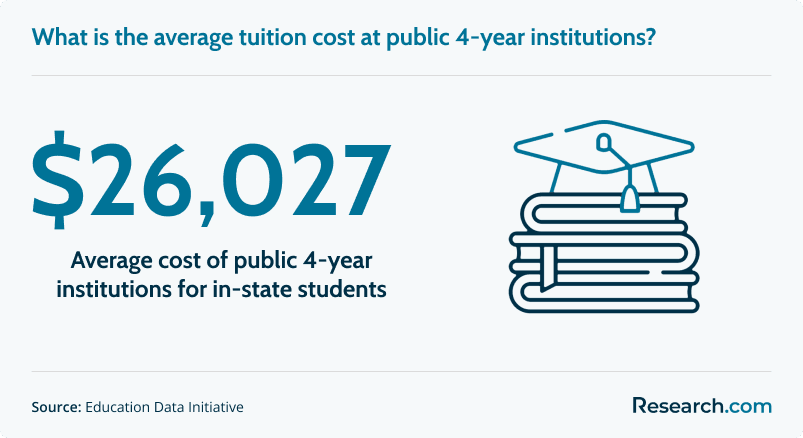
- Bachelor's degree: On average, students enrolled at public 4-year institutions in their home state allocate $26,027 for a single academic year, while out-of-state students budget around $27,000 for the same period. Private four-year institutions tend to have higher tuition costs, with average annual tuition and fees ranging from $36,000 to $50,000.
- Master's degree: According to Peterson's database, the average annual tuition for a master's degree program in sociology at a public institution ranges from $8,000 to $20,000 for in-state students and $15,000 to $30,000 for out-of-state students. Private institutions' average annual tuition for master's degree programs in sociology can range from $20,000 to $40,000 or more.
- Doctoral degree (PhD): According to data from the NCES, the average annual tuition and fees for doctoral programs in sociology at public institutions ranged from $10,000 to $20,000 for in-state students and $15,000 to $30,000 for out-of-state students. At private institutions, the average annual tuition for doctoral programs in sociology can range from $20,000 to $40,000 or more.
Cost Factors Students Often Miss
- Mandatory university and technology fees
- Books, research software, statistical tools, and course materials
- Housing, transportation, parking, or relocation costs
- Internship expenses, including travel or reduced work hours
- Extra semesters caused by limited course availability
- Interest costs if student loans are needed
What Are the Financial Aid Options for Students Enrolling in a Sociology Degree?
Sociology students may be able to reduce out-of-pocket costs through grants, scholarships, federal aid, work-study, assistantships, employer benefits, and state programs. The best approach is to apply early, compare net price across schools, and ask whether departmental awards are available for sociology majors or graduate students.
- Scholarships: These awards do not have to be repaid and may be based on grades, financial need, community service, research interests, identity-based eligibility, or major-specific criteria.
- Grants: Grants also do not require repayment and are often awarded based on financial need by federal, state, institutional, or private sources.
- Federal student aid: Students can complete the Free Application for Federal Student Aid (FAFSA) to be considered for eligible grants, federal loans, and work-study.
- Work-study program: Work-study programs allow eligible students with financial need to earn money through part-time employment while enrolled.
- Student loans: Federal student loans typically offer borrower protections and repayment options that private loans may not provide. Students should compare long-term repayment costs before borrowing.
- Employer tuition assistance: Some employers offer tuition assistance programs for workers pursuing degrees related to organizational development, social services, HR, data analysis, or leadership.
- State financial aid: Many states provide grants, scholarships, or loan forgiveness programs for residents attending in-state colleges or preparing for public service careers.
Questions to Ask About Financial Aid
- What is the full cost of attendance after fees, books, housing, and transportation?
- What is the average net price after grants and scholarships?
- Are sociology majors eligible for departmental scholarships?
- Does the graduate program offer assistantships, tuition remission, or stipends?
- Can transfer credits reduce the total number of credits I must pay for?
- Will part-time enrollment change my financial aid eligibility?
What Are the Prerequisites for Enrolling in a Sociology Degree?
Admission requirements vary by school and degree level. Undergraduate programs usually focus on general college readiness, while graduate programs place more emphasis on prior coursework, writing ability, research interests, academic references, and fit with faculty expertise.
- High school diploma or equivalent: Most bachelor’s programs require a high school diploma, GED, or equivalent credential.
- Minimum GPA: Some undergraduate and graduate programs set minimum GPA requirements, especially for transfer or graduate applicants.
- Standardized test scores: Some schools may ask for SAT or ACT scores, although many institutions have reduced or eliminated test requirements for undergraduate admission.
- Prerequisite courses: Certain programs may prefer or require prior coursework in sociology, psychology, anthropology, statistics, writing, or social science research.
- Letters of recommendation: Graduate programs and some selective undergraduate programs may ask for references from teachers, professors, supervisors, or mentors.
What Courses Are Typically in a Sociology Degree?
Sociology curricula usually combine theory, methods, statistics, substantive topic courses, electives, and sometimes internships or capstone projects. Students who want stronger career outcomes should look for programs that balance social theory with applied research skills.
- Introduction to Sociology: Students learn basic sociological concepts, institutions, socialization, inequality, culture, and the sociological imagination.
- Sociological Research Methods: This course covers research design, surveys, interviews, experiments, qualitative analysis, sampling, ethics, and interpretation. It can also support students interested in data management careers.
- Social Theory: Students study classical and contemporary theories about power, institutions, conflict, social order, identity, inequality, and change.
- Social Stratification: Coursework examines how class, race, gender, ethnicity, education, and other social categories affect access to resources and opportunities.
- Family and Gender: Students analyze family systems, relationships, gender roles, work, reproduction, marriage, and social expectations.
- Deviance and Social Control: This area explores norms, crime, punishment, social control, institutional responses, and the criminal justice system.
- Globalization and Social Change: Students study how economic, political, cultural, and technological forces reshape communities and societies.
What Types of Specializations Are Available in a Sociology Degree?
Specializations help students turn a broad major into a more targeted career pathway. A concentration can also make graduate school applications stronger by showing a clear area of interest.
| Specialization | What It Covers | Potential Career Direction |
| Criminology | Crime, deviance, punishment, policing, corrections, inequality, law, and rehabilitation | Criminal justice, probation, reentry programs, policy research, advocacy |
| Social Inequality | Class, race, gender, ethnicity, social mobility, institutions, and resource distribution | Policy analysis, nonprofit work, advocacy, research, education |
| Family and Gender | Family structures, gender systems, caregiving, work, marriage, and social identity | Human services, family policy, community programs, advocacy |
| Urban Sociology | Cities, neighborhoods, housing, migration, urban inequality, and community development | Urban planning support, community development, local government, nonprofit programs |
| Environmental Sociology | Society-environment relationships, sustainability, environmental justice, and public attitudes | Environmental nonprofits, policy research, sustainability programs, community advocacy |
Students interested in law enforcement, corrections, courts, or public safety may also compare sociology criminology tracks with programs similar to the cheapest criminal justice degree online.
Alternatives for Pursuing a Sociology Degree While Saving on Costs
Students who want a sociology credential but need to control costs should compare tuition, transfer credit policies, online fees, completion time, and available aid before enrolling. One practical option is to research the cheapest online sociology degree programs, especially if relocation or campus housing would make a traditional program unaffordable.
Affordable online sociology programs can still provide a strong curriculum in social theory, research methods, cultural diversity, social inequality, and applied analysis. The key is to verify institutional accreditation, faculty access, student services, internship support, and whether online students receive the same advising and career resources as campus students.
| Cost-Saving Strategy | When It Makes Sense | What to Check First |
| Start at a community college | You need lower-cost general education credits before transferring | Transfer agreements and whether sociology prerequisites will count |
| Choose an online public university | You need flexibility and lower living costs | Online fees, accreditation, advising, and internship options |
| Use employer tuition benefits | Your job supports education related to HR, public service, leadership, or analytics | Reimbursement limits, grade requirements, and service commitments |
| Apply for departmental scholarships | You have strong grades, research interests, or community involvement | Deadlines, eligibility rules, and renewal requirements |
| Transfer prior credits | You have previous college coursework | Maximum transfer credits and how they apply to major requirements |
How to Choose the Best Sociology Degree
The best sociology program is the one that fits your goals, not simply the one with the most recognizable name. Students should compare academic quality, affordability, flexibility, career support, and the program’s strength in the specialization they want to pursue.
- Check institutional accreditation: Confirm that the college or university is accredited by a recognized accreditor. Accreditation affects credit transfer, graduate school eligibility, and access to federal financial aid.
- Look beyond rankings: Rankings can be useful, but they do not reveal whether a program has the specialization, advising, internship access, or course schedule you need.
- Review faculty expertise: If you are interested in inequality, criminology, health, family, race, data analysis, or policy, check whether faculty publish or teach in that area.
- Study the curriculum closely: Strong programs include theory, research methods, statistics, writing, and applied electives. Students interested in clinical or social service pathways may also explore related options such as an LCSW degree online.
- Evaluate career preparation: Look for internships, alumni outcomes, career coaching, research assistantships, capstone projects, and employer partnerships.
- Compare total cost and completion time: A lower tuition rate may not save money if the program has poor transfer policies, limited course availability, or weak advising.
Common Mistakes to Avoid When Choosing a Sociology Program
- Choosing a school based only on name recognition without checking curriculum fit
- Ignoring accreditation or assuming every online program has equal recognition
- Looking only at tuition instead of total cost of attendance
- Failing to ask how internships work for online or part-time students
- Assuming a sociology degree automatically qualifies you for licensed social work or counseling roles
- Graduating without practical experience, research samples, or data skills
- Not asking whether credits will transfer before switching schools
Can Supplementary Online Programs Enhance Your Sociology Career?
Short, targeted online programs can strengthen a sociology background when they add concrete skills employers understand. Useful add-ons may include human services, program evaluation, grant writing, case management, statistical software, data visualization, mediation, nonprofit management, or crisis response. Students who want faster applied preparation may compare the shortest human services programs online with full degree options.
The most useful supplementary program is one that fills a specific gap. For example, a sociology major interested in community services may benefit from case management training, while a student aiming for market research may get more value from analytics and survey software.
What Career Paths Are Available for Graduates of Sociology Degrees?
Sociology graduates can move into many roles, but job titles often depend on experience, internships, graduate education, and technical skills. Students should review job postings early and build a résumé around the requirements they see most often.
| Career Path | What the Role Usually Involves | How Sociology Helps |
| Social worker | Supporting individuals and families, coordinating services, advocating for clients, and connecting people to resources | Understanding inequality, institutions, community needs, and social systems |
| Human resources specialist | Recruiting, employee relations, training, benefits, workplace policy, and organizational support | Analyzing group behavior, diversity, workplace culture, and communication patterns |
| Market research analyst | Studying consumers, trends, survey results, and competitive conditions | Applying research methods, data interpretation, and social trend analysis |
| Community organizer | Mobilizing residents, building coalitions, supporting advocacy campaigns, and addressing local problems | Understanding power, institutions, social movements, and community dynamics |
| Policy analyst | Researching public issues, evaluating policy effects, and preparing recommendations | Connecting data, institutions, inequality, and social outcomes |
| Nonprofit manager | Managing programs, staff, budgets, fundraising, and strategic planning | Assessing community needs and designing mission-driven programs, including in areas connected to education jobs in demand |
| Probation officer | Supervising people on probation, monitoring compliance, and connecting individuals with rehabilitation resources | Understanding deviance, social control, family systems, and community reintegration |
| Education administrator | Overseeing academic programs, student services, school operations, or departmental functions | Analyzing institutions, student populations, inequality, and organizational behavior |
In 2026, the field of sociology offered approximately 4,200 jobs, providing insights into the evolving employment landscape for sociologists. According to data from the U.S. Bureau of Labor Statistics, sociologists found employment across various sectors, with scientific research and development services remaining the largest employer, accounting for 46% of jobs in the field in 2025.
The chart below provides an overview of the largest sectors hiring sociologists:
Can Pursuing Online Accredited PsyD Programs Complement a Sociology Degree?
Psychology training can complement sociology when a student wants a deeper understanding of individual behavior, mental health, assessment, or therapeutic systems. Sociology focuses on groups, institutions, and social patterns, while PsyD training is more clinically and psychologically oriented. Students considering this route should carefully review admission requirements, practicum expectations, accreditation, and licensure rules before enrolling in online accredited PsyD programs.
This combination may be useful for professionals working in social services, community mental health administration, behavioral research, or program design. However, a PsyD is a major commitment and should not be treated as a simple career add-on.
What Are the Emerging Trends in Sociology Education and Career Paths?
Sociology programs are increasingly emphasizing applied research, data literacy, digital methods, public sociology, social inequality, health, migration, environmental justice, and interdisciplinary study. Employers often want graduates who can translate social analysis into clear reports, dashboards, program evaluations, policy briefs, or community recommendations.
Another trend is the blending of sociology with adjacent fields. Students interested in crime, law, and behavioral analysis may compare sociology coursework with options such as the cheapest forensic psychologist degree online. The right combination depends on whether the student wants to analyze systems, work with individuals, conduct research, or pursue a licensed role.
What Is the Job Market for Graduates With a Sociology Degree?
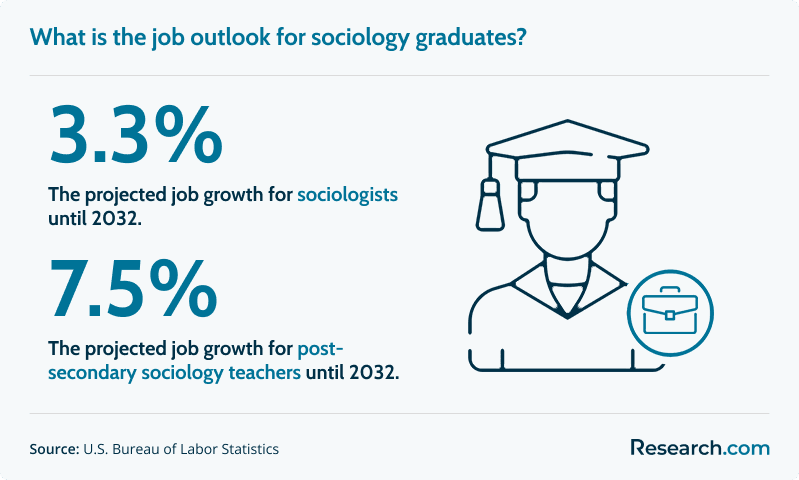
According to the Bureau of Labor Statistics, the job outlook for sociologists is projected to expand by 4% from 2024 to 2034, slightly below the average growth rate for all occupations. This suggests stable but competitive demand for professionals who can conduct research, interpret social patterns, and help organizations understand complex social issues.
The employment value of sociology often comes from transferable skills: research design, critical thinking, writing, interviewing, data analysis, cultural awareness, communication, and problem-solving. These skills can also support further study in related areas, including behavioral psychology masters programs.
Graduates are generally more competitive when they can show evidence of applied ability. Useful proof includes internship evaluations, research papers, policy briefs, survey projects, statistical analysis samples, grant writing experience, community engagement work, or a portfolio of writing and data projects.
How Can Digital Transformation Enhance Your Sociology Career?
Digital tools are changing how sociologists collect, analyze, and communicate information. Students who know statistical software, survey platforms, qualitative coding tools, spreadsheets, dashboards, and data visualization can often compete for a wider range of research and analyst roles.
Digital competence is especially valuable in market research, public policy, human resources analytics, nonprofit evaluation, public health research, and social media analysis. Some students may also expand into psychology-related doctoral study, including options such as the cheapest doctorate degree in psychology online, but that path should be evaluated carefully because doctoral programs require major time, cost, and professional commitment.
How Does Sociology Differ From Related Social Science Degrees?
Sociology overlaps with other social sciences but asks different questions. It is primarily concerned with social patterns, institutions, groups, inequality, culture, and collective behavior.
| Field | Main Focus | How It Differs From Sociology |
| Anthropology | Human cultures, societies, evolution, language, and historical or cross-cultural contexts | Anthropology often emphasizes cultural comparison and long-term human development, while sociology usually focuses more on contemporary institutions and social structures. |
| Psychology | Individual behavior, mental processes, cognition, emotion, and mental health | Psychology looks closely at individuals, while sociology studies groups, systems, institutions, and social influences. |
| Political Science | Government, power, policy, elections, institutions, and political behavior | Political science centers on political systems, while sociology examines broader social forces that may shape political attitudes and participation. |
| Economics | Markets, resources, production, consumption, and financial behavior | Economics studies resource allocation, while sociology examines how economic systems affect communities, inequality, identity, and social life. |
| Social Work | Direct practice, client support, intervention, and community services | Social work is practice-focused and may require licensure; sociology is more analytical and research-oriented, though the two fields often inform each other. |
How Can Internships and Networking Enhance Your Sociology Career?
Internships help sociology students convert classroom learning into work experience. They also clarify which career settings feel like a good fit. A student may discover that they prefer research over direct service, HR over advocacy, or policy writing over case management only after working in a real organization.
Networking also matters because many sociology-related jobs are found through nonprofits, local agencies, research centers, community organizations, faculty referrals, and professional associations. Students interested in helping professions can use internships to explore adjacent fields such as careers in counseling, while still recognizing that counseling roles may require separate graduate education and licensure.
Good Internship Sites for Sociology Students
- Nonprofit organizations and community agencies
- Research centers and survey organizations
- Human resources departments
- Public policy offices and local government agencies
- Schools, colleges, and student support programs
- Criminal justice, reentry, or probation-related organizations
- Healthcare, public health, or social services agencies
How Can Continuing Education Opportunities Further Enhance Your Sociology Career?
Continuing education can help sociology graduates specialize after completing a broad degree. Strong options include certificates in data analytics, GIS, nonprofit management, grant writing, mediation, HR, project management, public health, program evaluation, or behavioral studies.
Graduate study can also be useful when the target role requires advanced training. Students interested in the intersection of social systems and individual behavior may compare sociology graduate pathways with psychology masters programs online. Before enrolling, students should check whether the credential leads to the role they want and whether licensure is required.
Can Complementing Sociology With Interdisciplinary Studies Boost Career Outcomes?
Interdisciplinary study can improve career outcomes when it adds a marketable skill or a clearer professional direction. Sociology pairs especially well with statistics, computer science, public health, criminal justice, political science, education, business, communications, psychology, and environmental studies.
For example, sociology plus data analytics can support research and analyst roles. Sociology plus public health can lead toward community health or health equity work. Sociology plus psychology may help students understand both systems and individual behavior; some students compare options such as fast track psychology programs online when they want faster psychology-focused preparation.
How Can Mental Health Counseling Expertise Enhance Your Sociology Practice?
Mental health counseling knowledge can deepen a sociology graduate’s understanding of trauma, family systems, community stress, behavioral patterns, and service delivery. This can be useful in nonprofit management, social services administration, community advocacy, public policy, and research on health or inequality.
However, counseling is not the same as sociology. Students who want to provide therapy or clinical mental health services should review licensure requirements in their state and consider formal programs such as the top clinical mental health counseling graduate programs. A sociology background may support that path, but it usually does not replace required counseling coursework, supervised clinical hours, or licensing exams.
What Are the Challenges of Pursuing a Sociology Degree and Entering the Job Market?
The first challenge is career ambiguity. Sociology does not always point to one obvious job title, so students must be intentional about internships, electives, and skill-building. A student who graduates with no work experience may have a harder time explaining how the degree applies to a specific job.
The second challenge is competition for entry-level social impact roles. Some positions in social work, counseling, case management, education, and community services may require additional credentials, supervised experience, or graduate education. Students should check job postings before assuming a bachelor’s degree alone will meet every requirement.
The third challenge is employer translation. Outside the social sciences, hiring managers may not immediately understand what sociology graduates can do. Students need to describe their skills in employer language: research design, survey analysis, report writing, stakeholder communication, program evaluation, diversity analysis, policy research, and community engagement.
The fourth challenge is emotional strain in some career settings. Work with poverty, trauma, housing insecurity, family crisis, incarceration, or community violence can be meaningful but demanding. Students considering these paths should seek supervision, realistic job previews, and training in professional boundaries. Those exploring adjacent applied fields can review human services major careers to compare possible roles.
Key Insights
- A sociology degree is most valuable when it is paired with a clear direction: research, policy, HR, social services, market research, nonprofit work, criminal justice, education, or graduate study.
- Do not choose a program based only on prestige. Compare accreditation, total cost, curriculum, faculty expertise, internship access, transfer policy, and career support.
- Online sociology degrees can be a strong option for students who need flexibility, but students should verify advising quality, internship support, and student services before enrolling.
- Salary outcomes vary widely. The cited 2025 U.S. Bureau of Labor Statistics median annual wage for sociologists is $102,600, while other cited salary figures include $105,132 for sociology degree holders.
- Students who develop statistics, research methods, writing, data visualization, and applied field experience are usually better positioned than students who complete only general coursework.
- Sociology is not a substitute for licensure-based fields such as clinical counseling or licensed social work. If your target job is licensed, confirm the exact degree, supervised hours, and exam requirements in your state.
- The strongest sociology graduates can explain both what they studied and what they can do: analyze social patterns, conduct research, communicate findings, evaluate programs, and work effectively with diverse communities.
References
- Hanson, M. (2026, February 14). Average cost of college: yearly tuition + expenses. Education Data Initiative.
- U.S. Bureau of Labor Statistics. (2025). Occupational Outlook Handbook: Sociologists. U.S. Bureau of Labor Statistics.
- Zip Recruiter. (2025). Sociology Degree Salary. Zip Recruiter.
- College Board. (2025). Trends in College Pricing 2025. College Board.
- U.S. Bureau of Labor Statistics. (2025, August 28). Occupational outlook handbook. U.S. Bureau of Labor Statistics.
- U.S. Bureau of Labor Statistics. (2025, April 2). Occupational employment and wages — May 2024 [Press release]. U.S. Bureau of Labor Statistics.
Other Things You Should Know About a Sociology Degree
Sociology graduates can pursue master’s and doctoral study in sociology, social work, public policy, criminology, or data analysis. Most master’s programs require a 3.0 GPA, transcripts, letters of recommendation, and a statement of purpose, while PhD programs usually expect research experience and an MA or strong honors thesis.
In 2027, sociology graduates can explore careers in areas like social research, community development, public policy, and human resources. Median salary varies but typically starts around $50,000 annually, with higher earnings in specialized roles or advanced positions.