2027 Database Management Careers: Guide to Career Paths, Options & Salary

Co-Founder and Chief Data Scientist
Choosing a database management career means deciding whether you want to work at the center of how organizations store, secure, move, and use data. The field is no longer limited to maintaining traditional databases. Employers now need professionals who can manage cloud platforms, protect sensitive information, support analytics teams, improve data quality, and help leaders make decisions from reliable data.
This guide is for students, career changers, IT professionals, and working database specialists who want a clearer view of database management careers in 2026. It explains the main roles, required skills, education options, salary and job outlook data, certifications, specializations, industry applications, and practical steps for building a stronger career path.
Quick Answer: Is Database Management a Good Career Path in 2026?
Yes, database management can be a strong career path for people who enjoy technology, structured problem-solving, data security, and systems thinking. The field offers multiple routes, including database administration, data architecture, data engineering, business intelligence, information security, cloud database management, and data science. According to US BLS data cited in this guide, database architects have a median annual wage of $135,980, while database administrators have a median annual wage of $104,620. Career outcomes vary by role, industry, location, employer, experience, and technical specialization.
What are the main benefits of pursuing a database management career?
- Strong earning potential: Many database-related roles pay above the national average, especially positions involving architecture, cloud systems, cybersecurity, management, or advanced analytics.
- Broad industry demand: Finance, healthcare, education, technology, telecommunications, hospitality, manufacturing, and research organizations all depend on reliable data systems.
- Clear specialization options: Professionals can move toward cloud databases, data engineering, data governance, security, business intelligence, bioinformatics, or leadership roles.
- Meaningful business impact: Good database management supports accurate reporting, faster operations, safer systems, and better strategic decisions.
- Continuous technical growth: The work changes as organizations adopt cloud platforms, automation, AI tools, real-time analytics, and stronger data privacy practices.
- Database management career opportunities in 2026
- How database management supports major industries
- Skills needed for database management careers
- Common roles in database management
- How to advance in database management
- Typical database management career paths
- Certifications and added skills that support advancement
- Database management specializations
- How professionals keep up with database technology
- Database management salary and job outlook
- Best education pathways for database management
- Database management in bioinformatics and healthcare research
- Accelerated computer science degrees and database careers
- Professional networks and mentorship
- Online AI degrees and database expertise
- Advanced degrees for database management professionals
- Interdisciplinary paths in database management
- Ethical issues in database management
- Future trends in database management careers
- Future-ready skills for database professionals
- Related fields that can expand career options
- Common challenges and how to handle them
What are the career opportunities in database management for 2026?
Database management careers are expanding beyond traditional database administrator work. Organizations now need people who can design scalable systems, migrate databases to the cloud, maintain data quality, secure sensitive information, automate routine tasks, and connect databases with analytics and AI tools.
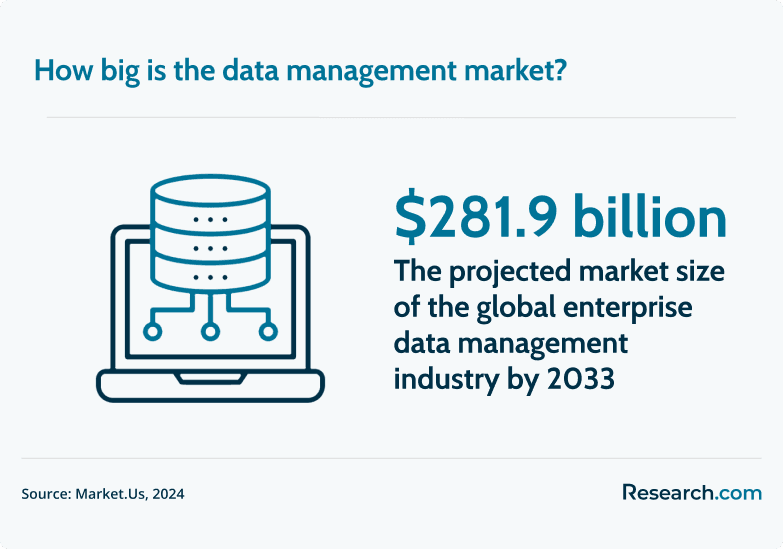
The global enterprise data management market is projected to reach $281.9 billion by 2033. That growth reflects a larger shift: data is no longer just an IT asset. It is part of operations, compliance, customer service, product development, research, and executive decision-making.
Where the strongest opportunities are emerging
- Cloud database management: Employers increasingly need professionals who understand AWS, Microsoft Azure, Google Cloud, migration planning, cost optimization, backup strategies, and cloud-native database services.
- Data architecture: Organizations need data models, integration strategies, and storage frameworks that can support analytics, compliance, and long-term growth.
- Data governance: As privacy, accuracy, and accountability become more important, professionals who can define policies, ownership, quality standards, and access rules are valuable.
- Security-focused database roles: Database professionals who understand encryption, access controls, monitoring, breach prevention, and regulatory requirements are increasingly important.
- Business intelligence and analytics support: Many teams need database professionals who can prepare reliable datasets for reporting, dashboards, and advanced analytics.
- Industry-specific data systems: Healthcare, finance, education, manufacturing, and research organizations often need specialists who understand both database technology and sector-specific requirements.
| Career direction | Best fit for | Typical focus |
| Database administration | People who enjoy reliability, maintenance, security, and troubleshooting | Performance, backups, access, uptime, updates, and recovery |
| Data architecture | Professionals interested in system design and long-term data strategy | Data models, database structure, integration, governance, and scalability |
| Data engineering | People who like programming, pipelines, and analytics infrastructure | Data pipelines, transformation, storage, workflow automation, and data availability |
| Cloud database management | IT professionals who want to work with modern infrastructure | Cloud migration, managed database services, monitoring, cost control, and resiliency |
| Data governance | Professionals interested in policy, quality, privacy, and compliance | Data standards, ownership, stewardship, retention, access, and regulatory alignment |
How does database management contribute to various industries?
Database management supports the systems that organizations use to operate, serve customers, manage risk, and make decisions. The exact use case differs by industry, but the core need is the same: data must be accurate, secure, accessible, and usable.
- Hospitality: Hotels, restaurants, and travel companies use databases to manage reservations, guest profiles, loyalty programs, pricing, inventory, and service preferences. Reliable database systems help personalize service and improve operational planning.
- Economics and finance: Banks, insurers, investment firms, and financial departments rely on databases for transactions, billing, account records, risk models, product data, reporting, and compliance documentation.
- Telecommunications: Telecom providers use database systems to manage customer accounts, service plans, call records, network usage, billing, and support interactions.
- Education: Schools, colleges, and universities use databases for student records, enrollment, course schedules, faculty information, learning systems, financial aid, and institutional reporting.
- Manufacturing: Manufacturers depend on data systems for production schedules, supply chains, inventory, quality control, vendor records, equipment maintenance, and demand forecasting.
- Healthcare and research: Healthcare organizations and research teams use databases for patient records, lab results, genomics, clinical studies, epidemiology, and privacy-sensitive analytics.
| Industry | Database management value | Examples of data handled |
| Finance | Improves accuracy, compliance, fraud detection, and reporting | Transactions, account records, billing data, risk data |
| Healthcare | Supports secure access, research, care coordination, and analytics | Patient records, lab data, clinical information, research datasets |
| Education | Streamlines administration and institutional reporting | Student records, courses, grades, enrollment, schedules |
| Manufacturing | Improves planning, inventory control, and supply chain visibility | Inventory, production data, suppliers, quality metrics |
| Hospitality | Enables personalization, pricing decisions, and efficient operations | Reservations, guest profiles, loyalty data, inventory |
What skills are essential for a successful career in database management?
Database management requires both technical depth and practical communication skills. Some roles require a bachelor’s degree, graduate degree, or vendor certification, while others are more open to candidates who can demonstrate strong project experience. Students who want a broader analytics foundation may also compare database-focused study with an online data analytics degree.
Core technical skills
- Database management systems: Professionals should understand how databases are planned, designed, implemented, monitored, secured, and optimized. Based on DB-Engines ranking scores, the top three most popular DBMSs worldwide as of 2026 are Oracle (1234.5), MySQL (1089.4), and PostgreSQL.
- SQL and query design: Many database jobs require the ability to write, optimize, and troubleshoot queries. Microsoft describes structured query language (SQL), which is considered the most popular query language.
- Programming and scripting: Python, R, PHP, C Suite, and scripting tools can help professionals automate tasks, support data pipelines, validate data, and integrate systems.
- Data modeling: Database professionals need to understand relationships, schemas, normalization, indexes, constraints, and data structures that support performance and accuracy.
- Cloud platforms: AWS, Azure, and Google Cloud skills are increasingly useful because many organizations operate hybrid or cloud-based data environments.
- Business intelligence: Database work often supports dashboards, reports, metrics, and analytics. Professionals should understand how business goals affect data collection, storage, and reporting.
- Data analysis: A foundation in statistics, data interpretation, metadata, and quality assessment helps professionals support analytics teams and identify system improvements.
- Security and privacy requirements: Database professionals should understand access control, encryption, auditing, retention, and relevant rules. US professionals should also be aware that Federal laws on information technology in the United States may differ from laws in other jurisdictions.
Essential workplace skills
- Attention to detail: Small errors in database structure, permissions, queries, or migration steps can create large operational problems.
- Communication: Database professionals often explain technical limitations, security risks, reporting issues, and data requirements to nontechnical stakeholders.
- Analytical thinking: Troubleshooting performance problems, data quality issues, and system failures requires careful reasoning and evidence-based decisions.
- Organization: Strong documentation, naming conventions, version control, backup planning, and task prioritization make database environments easier to maintain.
- Project and people management: Senior roles may involve budgets, team leadership, vendor coordination, risk planning, and cross-department collaboration.
The chart below shows widely used DBMS platforms worldwide.
What are the different roles available within the field of database management?
Database management is not one job. It is a family of roles that differ in scope, technical depth, and business responsibility. Some professionals keep databases running day to day; others design enterprise data strategies, build analytics infrastructure, protect systems from threats, or lead large IT teams.
| Role | What the role does | Good fit for |
| Data architect | Designs database structures, data models, integration plans, and governance frameworks that align with organizational goals. | Professionals who like strategy, systems design, and cross-functional planning. |
| Database administrator | Maintains databases, manages access, monitors performance, handles backups, supports recovery, and protects data integrity. | People who enjoy reliability, troubleshooting, security, and operational responsibility. |
| Computer systems analyst | Studies business systems, identifies technology gaps, documents requirements, and recommends improvements. | Professionals who can connect business needs with technical solutions. |
| Software developer | Builds applications that store, retrieve, process, and display data using databases and software systems. | People who enjoy coding, application design, testing, and user-focused problem-solving. |
| Information security analyst | Protects systems and data from unauthorized access, cyberattacks, breaches, and compliance failures. | Professionals interested in cybersecurity, monitoring, risk reduction, and incident response. |
| Data scientist | Uses statistics, programming, machine learning, and visualization to extract insights from large datasets. | People who enjoy analytics, modeling, research questions, and decision support. |
| Computer and information systems manager | Oversees IT teams, systems, budgets, projects, infrastructure, and technology strategy. | Experienced professionals who want leadership and planning responsibilities. |
| Computer network architect | Designs communication networks that support data movement, connectivity, security, and distributed systems. | Professionals interested in infrastructure, networking, scalability, and secure connectivity. |
Which database management role should you choose?
- Choose database administration if you like keeping systems stable, secure, and available.
- Choose data architecture if you want to design long-term data structures and enterprise data strategies.
- Choose data engineering if you enjoy coding, pipelines, automation, and analytics infrastructure.
- Choose information security if you want to focus on protecting databases and sensitive information.
- Choose data science if you prefer modeling, statistical analysis, and insight generation over system maintenance.
- Choose IT management if you want to lead teams and make technology decisions at the organizational level.
How can professionals advance their careers in the field of database management?
Career growth in database management usually comes from combining education, hands-on experience, specialization, and proof of technical competence. Many professionals begin by getting an information technology degree, earning an associate degree, completing certificates, or choosing an affordable online computer science degree before moving into more specialized roles.
Practical ways to move forward
- Build deeper technical range: Strengthen SQL, data modeling, indexing, database design, scripting, operating systems, and cloud database skills.
- Learn cloud platforms: Experience with AWS, Azure, and Google Cloud can help professionals qualify for cloud database administration, migration, and architecture roles.
- Earn role-aligned certifications: Vendor certifications can validate skills in Oracle, Microsoft Azure, AWS, or other platforms.
- Document real projects: Employers value evidence. Build a portfolio showing database design, query optimization, migration work, data cleaning, dashboards, or security improvements.
- Move toward specialization: Consider data architecture, cloud databases, business intelligence, data governance, cybersecurity, or analytics depending on your strengths.
- Develop leadership ability: Senior database roles often require mentoring, documentation standards, vendor coordination, project planning, and stakeholder communication.
What are the typical career progression paths for database management professionals?
There is no single database management ladder. Some professionals stay technical and move into architecture or engineering. Others transition into analytics, security, consulting, or IT leadership. The best path depends on whether you prefer hands-on systems work, business-facing analysis, or management responsibility.
| Starting point | Possible next step | Long-term direction |
| Help desk or junior IT support | Junior database administrator or systems analyst | Database administrator, cloud database specialist, or IT manager |
| Junior database administrator | Database administrator or database developer | Senior DBA, database architect, or data governance lead |
| Software developer | Backend developer or database developer | Data engineer, solutions architect, or software engineering manager |
| Data analyst | BI developer or analytics engineer | Data engineer, data scientist, or analytics manager |
| Information security analyst | Database security specialist | Security architect, risk manager, or information systems manager |
| Database administrator | Senior DBA or cloud database administrator | Database architect, data platform lead, or IT director |
Career moves that often improve advancement prospects
- Add business intelligence skills: Learn how databases support dashboards, KPIs, executive reporting, and strategic decision-making.
- Lead small projects: Volunteer for migrations, performance tuning, documentation, disaster recovery testing, or data quality initiatives.
- Mentor junior staff: Teaching others signals readiness for senior or lead roles.
- Understand multiple database types: Relational, non-relational, cloud-based, distributed, and hybrid systems each have different use cases.
- Specialize by industry: Finance, healthcare, manufacturing, education, and e-commerce often have distinct compliance, security, and performance needs.
What additional skills or certifications can help individuals climb the career ladder in database management?
Professionals who want senior or specialized roles may choose graduate education, targeted certificates, or both. Some pursue an online master’s degree in data science or compare other useful online degrees to build advanced analytics, leadership, or technical skills. Zippia reports that 13% of database managers have a master’s degree.
Certifications to consider
- Oracle Certified Professional (OCP)
- Microsoft Certified: Azure Database Administrator Associate
- AWS Certified Database
Certifications are most useful when they match the tools used in your target job. A cloud certification may help with cloud migration or managed database roles, while an Oracle credential may be more relevant in organizations that rely heavily on Oracle database systems.
| Credential or skill area | When it helps most | What to verify before investing |
| Vendor database certification | You want to work with a specific platform such as Oracle, Azure, or AWS | Whether job postings in your region request that credential |
| Cloud certification | You want database roles involving migration, monitoring, automation, or cloud architecture | Whether the certification includes database-specific services, not only general cloud concepts |
| Data science or analytics degree | You want to move into analytics engineering, data science, or BI leadership | Whether coursework includes SQL, statistics, machine learning, and real projects |
| Cybersecurity training | You want to specialize in access control, monitoring, audit readiness, and breach prevention | Whether the program covers data protection, compliance, and hands-on security tools |
| Leadership training | You are preparing for team lead, manager, or architect roles | Whether it builds budgeting, stakeholder management, documentation, and planning skills |
What are the different specializations within the field of database management?
Specialization matters because database management jobs can vary widely. A professional maintaining production databases needs different strengths than someone designing enterprise data architecture or building analytics pipelines.
- Database administration: Focuses on uptime, performance, backups, recovery, security, access permissions, and routine maintenance.
- Database development: Involves designing database objects, writing queries, optimizing performance, and supporting application requirements.
- Data architecture: Centers on enterprise data models, database structure, integration plans, standards, governance, and long-term scalability.
- Data analysis: Uses databases to retrieve, clean, interpret, and report data for business decisions.
- Data engineering: Builds data pipelines, manages transformations, supports storage systems, and prepares data for analytics or machine learning.
- Data governance: Establishes policies for data ownership, quality, access, privacy, lifecycle management, compliance, and accountability.
- Database security: Protects data through access control, encryption, monitoring, auditing, vulnerability management, and incident response.
- Cloud database management: Manages databases hosted in cloud or hybrid environments, including migration, cost control, scaling, and recovery planning.
How do professionals stay updated on advancements in database management technologies?
Database technology changes quickly. Professionals who rely only on what they learned in school can fall behind as employers adopt cloud services, automation, AI-supported tools, real-time analytics, stronger security controls, and new database models.
- Follow vendor updates: Review release notes, documentation, and training from Oracle, Microsoft, MongoDB, AWS, Azure, and Google Cloud.
- Use professional communities: Participate in DBA forums, cloud communities, open-source groups, and data engineering discussions where practitioners share real problems and fixes.
- Attend learning events: Conferences, workshops, webinars, and hands-on labs can help professionals learn new tools faster than passive reading alone.
- Read technical publications: Industry resources such as DBMS2 and Database Journal can help professionals track emerging database trends and best practices.
- Build side projects: Practical experiments with replication, indexing, cloud migration, NoSQL databases, or monitoring tools can turn theory into job-ready skills.
- Renew or upgrade certifications: Certification renewal can force structured learning, especially when platforms change significantly.
What is the current job market outlook for professionals in database management?
Database management remains a practical career area because organizations continue to need people who can manage data reliability, security, infrastructure, and analytics readiness. However, demand is not equal across every role. Some traditional administration tasks are becoming more automated, while roles tied to data architecture, security, cloud systems, analytics, and AI-supported data platforms may offer stronger growth prospects.
US BLS projects a 4% growth in the overall employment of database architects and administrators from 2024 to 2034, with 7,800 openings on average each year in that decade. The median annual wage for these professions is $135,980 for a database architect and $104,620 for a database administrator.
Meanwhile, a computer systems analyst's median annual wage is $103,790. In addition, employment as a computer systems analyst is projected to grow by 9% from 2024 to 2034, translating to an average of 34,200 openings per year during that timeframe.
The table below summarizes salary and employment outlook figures for several database-related roles.
Data Management Careers: Median Annual Wage and Job Outlook
| Role | Salary | Demand |
| Database Architects | $135,980 | 9% |
| Database Administrators | $104,620 | -1% |
| Computer Systems Analysts | $103,790 | 9% |
| Software Developers | $133,080 | 16% |
| Information Security Analysts | $124,910 | 29% |
| Data Scientists | $112,590 | 34% |
| Computer and Information Systems Managers | $171,200 | 15% |
| Computer Network Architects | $130,390 | 12% |
Source: US BLS, 2025
How to interpret these salary figures
- Salary is not guaranteed: Actual earnings depend on location, employer, industry, experience, education, certifications, and technical specialization.
- Job titles overlap: A “database engineer,” “data platform engineer,” or “cloud database administrator” may not map neatly to one BLS category.
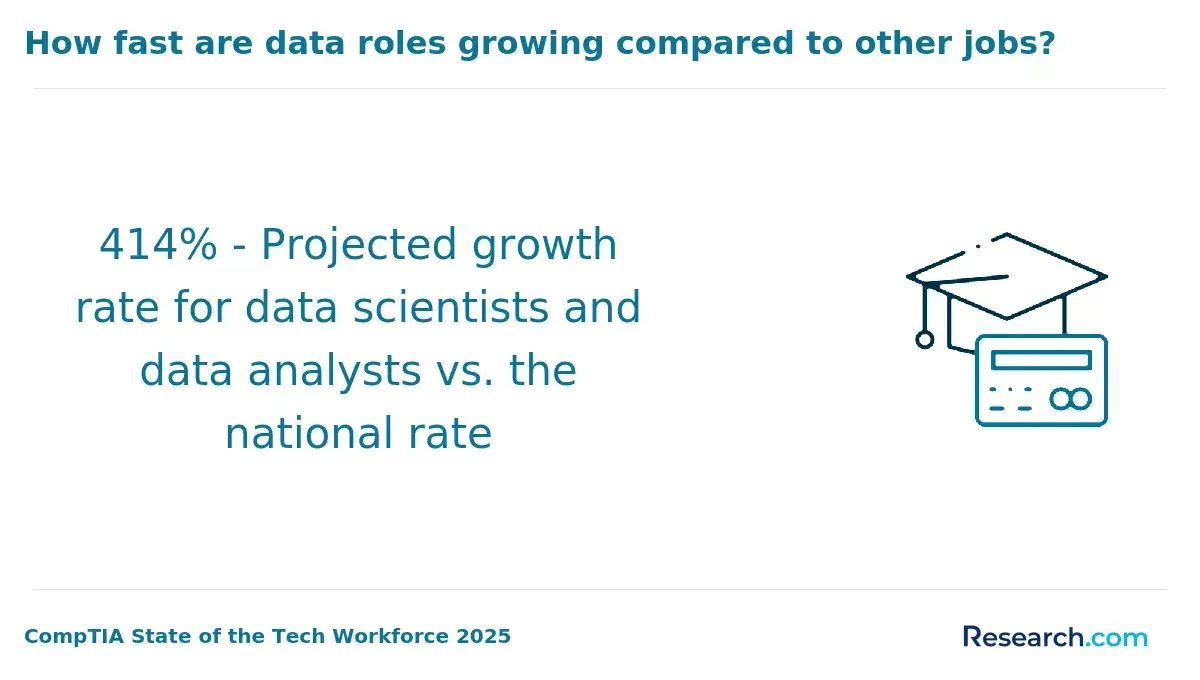
- Growth varies by role: Traditional DBA work may grow more slowly than data science, information security, or software development roles.
- Advanced skills can matter: Cloud, automation, security, and architecture skills may improve competitiveness for higher-level roles.
What are the best educational pathways for a career in database management?
The best education path depends on your starting point. A recent high school graduate, a working IT support specialist, a software developer, and a business analyst may each need a different route into database management.
| Pathway | Best for | What to look for |
| Associate degree or certificate | Students seeking entry-level IT, support, or junior database roles | SQL, networking, operating systems, database fundamentals, and transfer options |
| Bachelor’s degree | Students seeking a broad foundation for database, software, analytics, or IT roles | Computer science, information systems, data management, programming, and security coursework |
| Online bachelor’s degree | Working adults or students needing flexibility | Accreditation, hands-on labs, transfer credit policies, faculty support, and career services |
| Vendor certifications | Professionals targeting specific platforms | Alignment with job postings and opportunities for hands-on practice |
| Master’s degree | Professionals pursuing architecture, analytics, data science, leadership, or specialized roles | Advanced databases, cloud systems, big data, machine learning, governance, and capstone projects |
- Bachelor’s degree programs: A bachelor’s degree in computer science, information systems, information technology, or database management remains a common route into the field. Students who need flexibility can compare an accredited online bachelor degree with campus-based programs.
- Specialized certifications: Credentials such as Oracle Certified Professional, Microsoft Certified Azure Database Administrator Associate, and AWS Certified Database can help professionals demonstrate platform-specific skills.
- Advanced degrees: A master’s program may be useful for professionals targeting database architecture, data science, machine learning, bioinformatics, IT leadership, or advanced analytics roles.
Questions to ask before choosing a database management program
- Is the institution accredited?
- Does the curriculum include SQL, database design, data modeling, cloud platforms, security, and analytics?
- Are there hands-on labs, projects, internships, or capstones?
- Does the program prepare students for specific certifications?
- Can prior credits transfer?
- What support is available for online students?
- What career services, employer partnerships, or alumni networks does the program offer?
- Does the total cost include fees, software, exams, books, and technology requirements?
How can advanced degrees strengthen your database management trajectory?
Advanced degrees can help experienced professionals move from implementation work into architecture, research, analytics, AI, security, or leadership. The value is strongest when the program teaches advanced technical concepts and requires applied projects that match your career goal.
For example, professionals interested in life sciences data may consider an interdisciplinary option such as MSC bioinformatics online, where database skills intersect with biological data, research systems, and healthcare analytics.
How is database management transforming bioinformatics and healthcare research?
Bioinformatics and healthcare research depend on large, complex, sensitive datasets. Database professionals help researchers store, organize, retrieve, secure, and analyze information used in genomics, personalized medicine, epidemiology, clinical research, and public health studies.
In these settings, database management is not just a technical function. It affects research reproducibility, privacy protection, access control, data sharing, and the speed at which teams can analyze complex biological information. Professionals who want to work at this intersection may explore a bioinformatics degree online to build domain-specific expertise.
Can an accelerated computer science degree propel your database management career?
An accelerated computer science degree can be useful for learners who want a faster route into programming, algorithms, systems design, software development, and database fundamentals. This path may fit motivated students who can manage an intensive course load and already have the time, discipline, and support needed to move quickly.
Before enrolling, compare pacing, accreditation, transfer policies, technical support, course sequencing, and total cost. If speed is a major factor, reviewing how long to get a computer science degree can help you decide whether an accelerated format matches your goals.
What role do professional networks and mentorship play in advancing database management careers?
Networking and mentorship can help database professionals learn what employers actually need, identify skill gaps, find hidden opportunities, and make better decisions about certifications or graduate study. A mentor can also provide guidance on moving from junior technical work into architecture, cloud, analytics, consulting, or leadership.
Useful networking options include professional associations, database user groups, cloud vendor communities, cybersecurity groups, alumni networks, open-source projects, and conferences. Professionals working in adjacent technical spaces may also broaden their perspective through related study areas, including an online degree in game development, where backend systems, performance, user data, and interactive software design can overlap with database concepts.
Can an online degree in AI expand database management expertise?
Yes, an AI-focused degree can expand database management expertise when it teaches machine learning, data pipelines, model deployment, automation, analytics, and ethical data use. AI does not replace the need for well-designed databases; it increases the need for clean, governed, accessible, and secure data.
Professionals who pursue an online degree in AI may be better prepared for roles involving predictive analytics, AI-ready data infrastructure, automated data quality checks, intelligent monitoring, and data platforms that support machine learning workflows.
How can an interdisciplinary approach boost database management innovation?
Database professionals often become more valuable when they understand the industry context behind the data. Healthcare, finance, education, gaming, manufacturing, and biotechnology each have different terminology, regulations, workflows, and data quality concerns.
An interdisciplinary program, such as a health informatics online program, can help professionals apply database skills to healthcare interoperability, privacy, records management, analytics, and clinical decision support. This kind of domain knowledge can make technical solutions more practical and better aligned with real organizational needs.
What are the ethical considerations in database management careers?
Database professionals often work with sensitive, personal, financial, medical, educational, or proprietary information. Ethical database management means protecting people, maintaining trust, and preventing misuse of data.
- Data privacy: Professionals must limit access to personal information and follow applicable privacy laws, policies, and consent requirements.
- Data accuracy: Poor-quality data can lead to wrong decisions. Database teams should support validation, correction, documentation, and quality controls.
- Compliance: Professionals need to understand relevant rules such as GDPR or CCPA when applicable and ensure systems support required protections.
- Transparency: Organizations should be clear about how data is collected, stored, shared, retained, and used.
- Responsible deletion: Data that is no longer needed should be securely removed according to retention policies and legal obligations.
- Bias reduction: Database professionals should help identify incomplete, skewed, or discriminatory data practices that could affect analytics or automated decisions.
- Access control: Users should have only the access they need for legitimate work.
- Accountability: Logging, auditing, documentation, and change management help trace decisions and detect misuse.
What are the future trends shaping database management careers?
The database management field is being reshaped by cloud adoption, AI, automation, real-time data needs, privacy rules, cybersecurity risks, and the growing variety of data formats. Professionals who understand these shifts can make better education and career decisions.
Cloud-based database services
Cloud database platforms from Amazon Web Services, Microsoft Azure, and Google Cloud Platform allow organizations to scale storage, automate maintenance, improve availability, and reduce dependence on physical infrastructure. Database professionals need to understand managed services, migration planning, monitoring, cost management, and disaster recovery.
Artificial intelligence and machine learning
AI and machine learning are changing how organizations analyze data, automate database monitoring, detect anomalies, optimize workflows, and forecast outcomes. Professionals who understand both database fundamentals and AI-ready data infrastructure can support more advanced use cases.
Data security and compliance
Cyber threats and regulatory requirements continue to push organizations toward stronger access controls, encryption, auditing, monitoring, and privacy-by-design practices. Database professionals with security knowledge may be better positioned for high-responsibility roles.
NoSQL and multi-model databases
Relational databases remain important, but organizations also use NoSQL and multi-model systems for document data, graph relationships, time-series data, high-volume applications, and flexible schemas. MongoDB, Cassandra, and MarkLogic are examples of technologies professionals may encounter.
Edge computing and real-time processing
Internet of Things systems, logistics networks, healthcare monitoring, financial platforms, and industrial operations can require real-time or near-real-time data processing. Tools such as Apache Kafka, Redis, and InfluxDB are often discussed in this context.
Hybrid database environments
Many organizations use both on-premises and cloud systems. This creates demand for professionals who understand synchronization, integration, governance, security, latency, and cost trade-offs across hybrid environments.
Professionals who want broader technical preparation may compare advanced software and database-focused study options, including a masters in software engineering.
What skills do database management professionals need to acquire for future success?
Future-ready database professionals need more than basic SQL and maintenance skills. They need to understand how databases connect to cloud infrastructure, analytics, AI systems, security frameworks, and business decision-making.
- Cloud database services: Managed databases, migration, high availability, performance monitoring, and cost optimization.
- Automation: Scripting, workflow automation, infrastructure as code, automated testing, and monitoring alerts.
- AI and analytics literacy: Data pipelines, model-ready datasets, feature stores, machine learning basics, and responsible AI practices.
- Security engineering: Encryption, identity and access management, auditing, vulnerability management, and breach response.
- Data governance: Stewardship, metadata, lineage, quality rules, retention, and accountability.
- Communication: The ability to explain database risks, trade-offs, costs, and requirements to business stakeholders.
Professionals interested in AI-powered data systems may consider an online masters in artificial intelligence to deepen their understanding of automation, analytics, and machine learning applications.
How can exploring related fields expand your career prospects?
Database skills transfer well into fields that depend on structured information, research data, automation, and analytics. Exploring related areas can help professionals find specialized opportunities with less direct competition than general database roles.
- Biotechnology: Database skills support genomics, lab data systems, research records, regulatory documentation, and analytics. Professionals can explore careers in biotechnology if they want to combine data systems with life sciences.
- Healthcare informatics: Database expertise supports patient records, interoperability, privacy, and healthcare analytics.
- Cybersecurity: Database professionals can specialize in protecting sensitive systems and monitoring access risks.
- Software engineering: Backend development, API design, performance tuning, and scalable application architecture often depend on strong database knowledge.
- Business intelligence: Reporting, dashboards, data warehouses, and analytics roles rely on well-structured databases.
How to overcome common challenges in a database management career
Database management can be rewarding, but the work carries real pressure. Databases must stay available, secure, accurate, and fast. Mistakes can affect customers, employees, compliance, and business operations.
| Common challenge | Why it matters | Better approach |
| Managing complex data structures | Poor design can cause slow queries, duplicate data, reporting errors, and difficult maintenance. | Use clear data models, normalization where appropriate, indexing strategies, partitioning, documentation, and performance testing. |
| Protecting data security and privacy | Breaches can create legal, financial, and reputational harm. | Apply encryption, access controls, audits, monitoring, least-privilege permissions, and compliance-aware retention policies. |
| Keeping up with new technology | Cloud services, NoSQL systems, AI tools, and automation practices change job expectations. | Schedule ongoing learning, complete labs, follow vendor updates, and pursue targeted certifications only when they support your goals. |
| Handling workload and uptime pressure | Database failures can disrupt operations and create after-hours emergencies. | Use automated monitoring, backup validation, disaster recovery plans, runbooks, and realistic escalation procedures. |
| Choosing a specialization | A general skill set may not be enough for senior roles. | Use job postings to compare demand for cloud, security, architecture, governance, analytics, or industry-specific skills. |
Professionals seeking deeper technical preparation in data systems may compare affordable graduate options, including cheapest online data science masters programs, while carefully reviewing accreditation, curriculum, faculty, projects, and total cost.
Common mistakes to avoid when planning a database management career
- Choosing a program without checking accreditation: Accreditation can affect transfer credits, employer recognition, and eligibility for some forms of financial aid.
- Focusing only on tuition: Compare total cost, including fees, books, software, exam vouchers, hardware, and time away from work.
- Assuming every online program is equally practical: Look for hands-on labs, cloud access, database projects, and career support.
- Collecting certifications without a plan: Certifications are more useful when they match target roles and local employer demand.
- Ignoring soft skills: Communication, documentation, stakeholder management, and teamwork are essential in senior database roles.
- Relying only on rankings: A highly ranked program may still be a poor fit if it lacks the courses, schedule, cost, or specialization you need.
- Assuming salary outcomes are guaranteed: Published salary data describes broad labor market patterns, not individual job offers.
Key Insights
- Database management is a strong career area for people who want to work with data systems, security, cloud infrastructure, analytics, and business-critical technology.
- The field includes many roles, including database administrator, database architect, data engineer, systems analyst, information security analyst, data scientist, and IT manager.
- US BLS data cited here reports median annual wages of $135,980 for database architects and $104,620 for database administrators, but individual salaries depend on location, employer, experience, specialization, and education.
- Cloud platforms, AI, automation, data governance, cybersecurity, and real-time analytics are reshaping employer expectations for database professionals.
- A bachelor’s degree is a common entry point, but certificates, associate degrees, graduate programs, vendor credentials, and project portfolios can also support career growth.
- The best specialization depends on your strengths: administration for reliability, architecture for design, engineering for pipelines, security for protection, governance for policy, and analytics for decision support.
- Before choosing a program or certification, verify accreditation, curriculum, hands-on learning opportunities, transfer policies, total cost, and alignment with real job postings.
References:
- Market.Us. (2024). Global Enterprise Data Management Market. https://market.us/report/enterprise-data-management-market/
- Statista. (2024). Ranking of the most popular relational database management systems worldwide, as of June 2024. https://www.statista.com/statistics/1131568/worldwide-popularity-ranking-relational-database-management-systems/
- US BLS. (2025). Computer Systems Analysts. https://www.bls.gov/ooh/computer-and-information-technology/computer-systems-analysts.htm
- US BLS. (2025). Computer Network Architects. https://www.bls.gov/ooh/computer-and-information-technology/computer-network-architects.htm
- US BLS. (2025). Computer and Information Systems Managers. https://www.bls.gov/ooh/management/computer-and-information-systems-managers.htm
- US BLS. (2025). Data Scientists. https://www.bls.gov/ooh/math/data-scientists.htm
- US BLS. (2025). Database Administrators and Architects. https://www.bls.gov/ooh/computer-and-information-technology/database-administrators.htm
- US BLS. (2025). Information Security Analysts. https://www.bls.gov/ooh/computer-and-information-technology/information-security-analysts.htm
- US BLS. (2025). Software Developers, Quality Assurance Analysts, and Testers. https://www.bls.gov/ooh/computer-and-information-technology/software-developers.htm
- WifiTalents (2026). Database Management Industry Statistics. https://wifitalents.com/database-management-industry-statistics/
- Zippia. (n.d.). Database Manager Education Requirements. https://www.zippia.com/database-manager-jobs/education/
Other Things You Should Know About Data Management Careers
In 2027, database management salaries continue to rise due to the high demand for skilled professionals. Data analysts earn around $75,000 to $110,000 annually. Database administrators can expect $90,000 to $130,000, while data scientists and engineers typically earn between $100,000 and $150,000, reflecting growth in the field.
In 2027, careers in database management encompass roles such as Database Administrator, Data Analyst, Data Engineer, and Cloud Database Specialist. Professionals can also specialize in emerging fields like AI-enhanced database systems and blockchain technology, leading to positions in innovative technology sectors.
For a career in database management, mastering SQL for database querying and manipulation is fundamental. Proficiency in major database management systems (DBMS) like Oracle, MySQL, and Microsoft SQL Server is essential. Understanding data modeling and database design principles ensures efficient database structures. Familiarity with cloud databases, such as Amazon RDS and Google Cloud SQL, is increasingly important. Skills in backup and recovery procedures and security best practices protect data integrity. Additionally, knowledge of data warehousing, ETL (Extract, Transform, Load) processes, and proficiency in programming languages like Python or R for data analysis and automation significantly enhance a database manager’s capabilities.