
2027 Is AP Computer Science Principles Hard?

Co-Founder and Chief Data Scientist
AP Computer Science Principles is often the first serious computer science course students consider, so the real question is not just “Is AP Computer Science Principles hard?” but “Is it the right AP course for my skills, schedule, college plans, and career interests?” The answer depends on your math readiness, study habits, teacher support, comfort with abstract thinking, and willingness to complete a project-based exam component.
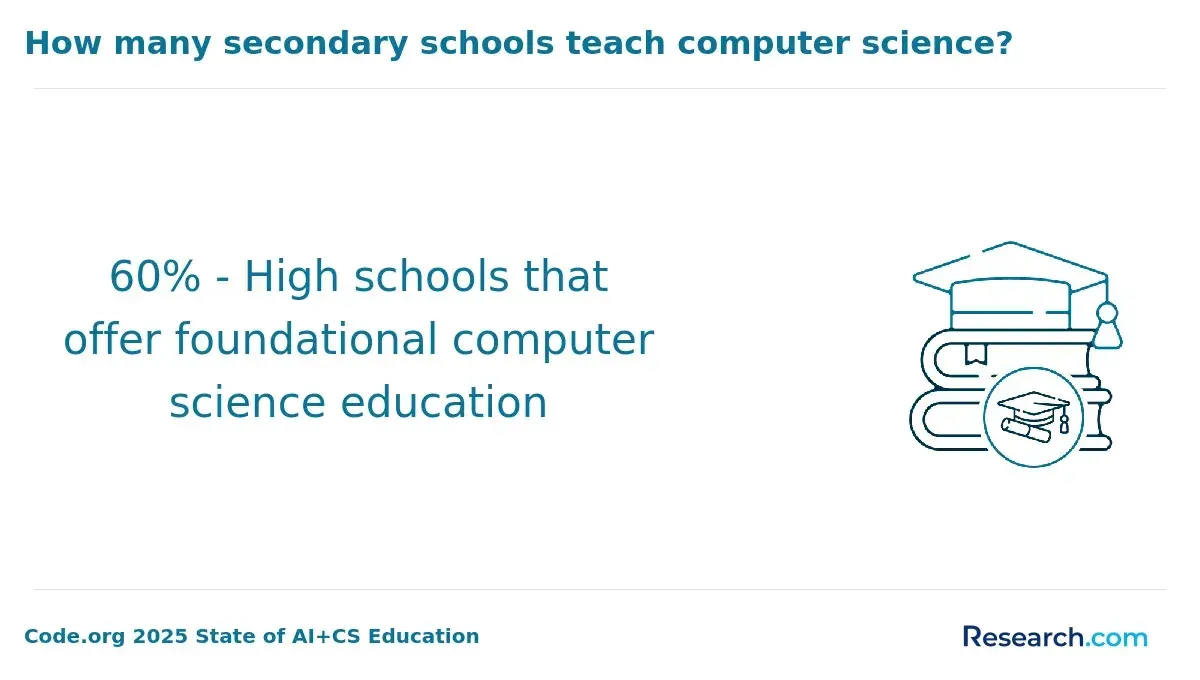
The course is designed for beginners, not only for students who already code. According to the College Board, of the 175,174 test takers in May 2025, 61.9% scored three or higher. That suggests AP CSP is manageable for many students, but it is not effortless. Success usually comes from steady practice, understanding the exam format early, and starting the Create performance task before deadlines become stressful. With over 60% of American high schools offering the course, students now have broader access to a class that can introduce them to programming, data, networks, cybersecurity concepts, and the social impact of computing (College Board, 2025).
This guide explains what AP CSP covers, how difficult it is compared with other AP classes, when to take it, how the exam is scored, how to prepare, and how the course can support future study in computer science, cybersecurity, data science, artificial intelligence, and other STEM fields.
AP Computer Science Principles Table of Contents
- What AP Computer Science Principles covers
- What makes AP Computer Science Principles difficult
- Best time to take AP Computer Science Principles
- AP Computer Science Principles exam overview
- Scoring, placement, and college credit
- Resources and opportunities after AP CSP
- Extracurricular activities that support AP CSP
- Career options for students with AP CSP experience
- Mentorship and networking in AP CSP
- AP CSP as a cybersecurity starting point
- Common AP CSP challenges
- AP CSP and interdisciplinary STEM careers
- AP CSP and cybersecurity readiness
- AP CSP and data science preparation
- Credentials to consider after AP CSP
- Using a personal project to improve AP CSP performance
- How AP CSP prepares students for advanced computer science
- AP CSP and emerging technology careers
Quick answer: Is AP Computer Science Principles hard?
AP Computer Science Principles is usually considered an accessible AP course for students who are new to computer science, but it can still be challenging because it combines concepts, programming, data analysis, internet systems, ethics, and a major performance task. You do not need previous coding experience, but you should be comfortable with algebra-level reasoning, problem solving, and learning through trial and error.
| Question | Short answer | What it means for students |
| Do you need to know how to code before AP CSP? | No. | The course introduces programming and computational thinking, but prior practice can make the class easier. |
| Is AP CSP easier than AP Computer Science A? | Often, for beginners. | AP CSP is broader and less Java-focused, while AP Computer Science A goes deeper into programming. |
| What is the biggest challenge? | The Create performance task and abstract concepts. | Students must build, explain, test, and document a program rather than only answer multiple-choice questions. |
| Is AP CSP useful for college? | Yes, if aligned with your goals. | It can support future technology study, but college credit depends on each school’s AP policy. |
| Who should take it? | Students curious about technology, problem solving, data, or computing careers. | It is also useful for students exploring STEM fields outside traditional computer science. |
What does the AP Computer Science Principles course cover?
AP Computer Science Principles, commonly called AP CSP, is an introductory course that teaches how computing works, how programs are created, how data is used, and how technology affects people and society. In 2024, 175,261 students took the exam (College Board, 2024), making it a major entry point into high school computer science.
The College Board organizes AP CSP around five major course ideas. These are not isolated units; they connect throughout the course through projects, discussions, programming activities, and exam preparation.
| AP CSP big idea | What students study | Why it matters |
| Creative Development | Designing, testing, improving, and collaborating on computing innovations. | Students learn that software is built through revision, feedback, and teamwork. |
| Data | How data represents information, reveals patterns, and supports new knowledge. | Data skills are central to analytics, artificial intelligence, cybersecurity, and scientific research. |
| Algorithms and Programming | Problem-solving steps, programming structures, procedures, iteration, selection, and abstraction. | This is the foundation for writing programs that solve real problems. |
| Computing Systems and Networks | How computing devices, internet systems, and networks transmit and process data. | Students understand how digital communication works behind the scenes. |
| Impact of Computing | Privacy, security, bias, access, intellectual property, and ethical technology use. | Students learn to evaluate technology as a social force, not just a technical tool. |
By the end of the course, students should be able to design and evaluate computational solutions, create algorithms, build programs using abstractions, test code, study computing innovations, and participate responsibly in collaborative computing environments.
What are the main benefits of taking AP CSP?
- It gives beginners a structured entry into computer science. Students learn core ideas without needing to start with an advanced programming course.
- It builds transferable thinking skills. Logical reasoning, debugging, data interpretation, collaboration, and project planning are useful in many majors and careers.
- It helps students understand technology more critically. AP CSP covers not only how computing systems work but also how they affect privacy, security, equity, and daily life.
- It can support future degree planning. Students considering a computer science degree can use AP CSP to test their interest before committing to a college major.
How is AP CSP different from AP Computer Science A?
AP CSP is broader and more concept-based. It introduces programming, data, networks, ethics, and computing’s social impact. AP Computer Science A is more programming-intensive and focuses on Java. Students who want an overview of computing often start with AP CSP, while students who already enjoy coding or plan to major in computer science may also take AP Computer Science A later.
| Course | Best for | Main focus | Programming intensity |
| AP Computer Science Principles | Beginners, undecided STEM students, students interested in technology’s role in society. | Computational thinking, programming basics, data, networks, cybersecurity concepts, and ethics. | Moderate. |
| AP Computer Science A | Students ready for a deeper programming course. | Java programming, object-oriented design, algorithms, and code analysis. | Higher. |
Should you take AP Computer Science Principles?
You should consider AP CSP if you are curious about technology, enjoy solving problems, want to strengthen your STEM profile, or are exploring computing-related careers. It is not limited to future computer science majors. Students interested in engineering, business analytics, digital media, cybersecurity, biology, economics, and public policy can also benefit from understanding how computing systems and data shape modern work.
- Take AP CSP if you want a broad introduction. It is a good fit if you want to understand computer science without immediately committing to a programming-heavy course.
- Consider AP Computer Science A if you mainly want coding depth. Students who want to focus on Java and programming structure may prefer AP CSA or take it after AP CSP.
- Think about your college goals. If you are comparing a campus-based or online computer science degree program, AP CSP can help you decide whether the field is genuinely interesting to you.
- Be honest about workload. The course is manageable for many students, but the Create task, exam review, and regular practice require consistent time.
- Look at career relevance. The cited job outlook of 20% from 2024 to 2034 (BLS, 2025) shows why computing knowledge remains valuable across industries, though no AP class can guarantee future employment or salary.
What factors influence the difficulty of AP Computer Science Principles?
AP CSP difficulty depends less on memorizing facts and more on whether you can reason through unfamiliar problems, explain your process, and keep up with project deadlines. A student with no coding background can succeed, but students who avoid practice or delay the Create task may find the course stressful.
Pass rate and comparison with other AP courses
The AP Computer Science Principles exam pass rate was 63.5%. For context, the cited pass rates for Calculus BC, Chemistry, and English Literature were 80.9%, 54.0%, and 77.9%, respectively (College Board, 2024). These comparisons do not prove that one course is objectively easier than another, because students self-select into AP subjects. However, they do show that AP CSP sits within the normal range of AP-level challenge.
Course content and abstraction
Some students expect AP CSP to be only about coding. It is broader than that. The course asks students to understand algorithms, data representation, computing systems, network communication, cybersecurity concerns, and the ethical consequences of computing. The abstract nature of some topics can feel difficult at first, especially for students who are more comfortable with concrete step-by-step assignments.
Math and reasoning background
The College Board AP Course Overview expects students to have a strong foundation in basic linear functions, the composition of functions, and the ability to represent points in the plane using Cartesian coordinates. Advanced math is not the focus, but mathematical reasoning helps students understand variables, conditions, patterns, logic, and algorithms.
Do you need coding experience before AP CSP?
No. AP CSP is built as an introductory course, so students are not expected to arrive with previous programming experience. That said, trying a beginner-friendly language such as Python or Java before or during the course can make the programming portions feel less intimidating.
Teacher support, study habits, and school resources
Instruction matters. Teacher training, access to devices, class pacing, and feedback on projects can affect how difficult AP CSP feels. States invested over $88 million in computer science education in 2024 alone, and 60% of high schools offered foundational computer science. The strongest investments are in training teachers to teach computer science because funding alone does not guarantee effective instruction (Code.org et al., 2024).
Study habits also make a measurable difference. Students who actively review, use several study strategies, and avoid distractions tend to perform better than students who rely on passive reading or last-minute review. For AP CSP, effective study means writing code, tracing algorithms, explaining concepts out loud, reviewing mistakes, and practicing exam-style questions.
| Factor | Why it affects difficulty | Better strategy |
| No coding background | Programming syntax and debugging may feel unfamiliar. | Start with small programs and practice regularly instead of waiting for major assignments. |
| Weak time management | The Create task becomes stressful if postponed. | Set milestones for idea selection, coding, testing, video, and written responses. |
| Abstract topics | Algorithms, abstraction, and data can be hard to visualize. | Use diagrams, examples, pseudocode, and peer explanations. |
| Limited teacher feedback | Students may not know whether their explanations meet rubric expectations. | Use official scoring guidelines, sample responses, and class review sessions. |
| Too many simultaneous AP classes | Competing deadlines can reduce practice time. | Plan weekly AP CSP review blocks before exam season. |
When is the best time to take AP Computer Science Principles?
The best time to take AP CSP is after you have completed the recommended math preparation and can realistically manage the workload with your other courses. Many students take it in 10th or 11th grade, giving them time to take AP Computer Science A, advanced math, internships, dual enrollment, or additional STEM courses afterward.
Recommended grade level and prerequisites
The College Board 2024 AP Course Overview lists several readiness expectations:
- Students should have completed a first-year high school algebra course with a solid understanding of basic linear functions, composition of functions, and multi-step problem-solving strategies that may involve collaboration.
- Students should be able to represent points on a plane using Cartesian (x, y) coordinates.
- Students and advisers should understand that meaningful computer science coursework requires mathematical reasoning.
- No previous computer science course is required.
How to prepare before the course starts
- Strengthen algebra basics. Review variables, functions, coordinate points, and logical problem solving.
- Try beginner coding exercises. Short activities in block-based coding or a beginner-friendly language can reduce anxiety.
- Learn basic vocabulary. Terms such as algorithm, variable, list, procedure, input, output, iteration, selection, and abstraction appear throughout the course.
- Practice explaining your thinking. AP CSP rewards students who can describe what code does and why a design choice matters.
- Ask about your school’s pacing. Find out when your teacher begins the Create task and how much class time is reserved for it.
Balancing AP CSP with other courses and activities
AP CSP is often manageable alongside other demanding courses, but only if students plan ahead. The course includes projects, written explanations, programming practice, and exam review, so it should not be treated as an “easy AP” that can be ignored until spring.
- Use a weekly schedule. Reserve time for programming practice, vocabulary review, and long-term project work.
- Break large assignments into checkpoints. For the Create task, separate the process into planning, coding, testing, video production, and written responses.
- Get help early. Ask your teacher, classmates, or a mentor when a concept stops making sense.
- Use collaboration properly. Collaboration is part of computing, but submitted work must follow course and exam rules.
- Protect your energy. Students taking multiple AP classes should avoid scheduling all major review and project work for the same week.
How AP CSP fits college and career planning
Students considering a bachelor’s program, an associate’s degree in computer science, or another science-related degree should check how AP CSP fits into their academic plan. Some colleges grant credit, some offer placement, and others may treat AP CSP mainly as evidence of academic preparation. If you already know your target colleges, review their AP policies before assuming a score will reduce tuition or shorten your degree timeline.
AP Computer Science Principles Exam: An Overview
The AP CSP Exam measures both conceptual understanding and applied computing skills. It includes a multiple-choice exam and the Create performance task, which requires students to build and explain a program. Understanding the structure early is one of the best ways to reduce stress because the exam rewards preparation over last-minute memorization.
AP CSP exam format
The end-of-course AP Exam is a 2-hour assessment. The multiple-choice section makes up 70% of the overall exam score. The Create performance task accounts for 30% and is completed through the course with at least 12 hours of dedicated class time.
| Exam component | Weight | What students do | Preparation priority |
| Single-select multiple-choice questions | Part of the 70% multiple-choice score | Answer 57 questions by choosing one correct response. | Practice concepts, vocabulary, algorithms, and code tracing. |
| Single-select questions with a reading passage | Part of the 70% multiple-choice score | Answer five questions connected to a passage about a technological advancement. | Practice reading technical scenarios and identifying key implications. |
| Multi-select multiple-choice questions | Part of the 70% multiple-choice score | Answer eight questions that may require more than one correct choice. | Read carefully and avoid selecting answers that are only partly true. |
| Create performance task | 30% | Develop a program, submit code, create a video, and write responses to prompts. | Start early, test thoroughly, and align responses with the rubric. |
How the Create performance task is scored
The 2025 AP Computer Science Principles Scoring Guidelines explain how the Create performance task is evaluated. Students should study the rubric before they begin their project, not after the program is complete. A strong project is not just a working program; it must also be documented clearly enough for readers to understand its purpose, data use, algorithm, procedure, and testing.
Create task scoring rows explained
- Program Purpose and Function: The submitted video must show the program running with input, functionality, and output. The written response must explain what the program is meant to do and what the video demonstrates.
- Data Abstraction: Students must include two code segments: one that stores data in a list or collection and another that uses that data to support the program’s purpose. The response should identify the list variable and explain the role of the data.
- Managing Complexity: The response must show how a list helps simplify or organize the program. Students should explain how the code would be harder to write, maintain, or modify without that list.
- Procedural Abstraction: Students must show a student-developed procedure with at least one parameter that affects what the procedure does, plus a call to that procedure. The explanation should connect the procedure to the overall program.
- Algorithm Implementation: The selected algorithm must include sequencing, selection, and iteration. Students must explain the steps clearly enough that someone else could understand how the algorithm works.
- Testing: Students must describe two procedure calls using different arguments that cause different code segments to execute. The response should identify the tested conditions and the results.
How to prepare effectively for the AP CSP exam
Procrastination is a major risk in AP CSP because the course includes both exam content and a project-based submission. About three-quarters of polled students perceive themselves as academic procrastinators, with 75% considering themselves procrastinators according to recent research (Solving Procrastination, 2024). Recent data also indicates that 46% of school students regularly delay writing term papers, 30% delay submitting weekly assignments, and 28% postpone studying for exams (Jobera, 2026). For AP CSP, delaying the Create task can create avoidable mistakes.
- Start with the course framework. Know the computational thinking practices, learning objectives, and five big ideas.
- Practice programming every week. Short, repeated coding practice is more effective than occasional long sessions.
- Use AP Computer Science Principles practice exams. Timed practice helps you learn pacing and identify weak areas.
- Review official sample responses. Compare high-scoring and low-scoring Create task examples to understand what the rubric rewards.
- Trace code by hand. Write down variable values, loop changes, and outputs to build accuracy.
- Study data and abstraction carefully. These topics often separate students who can code from students who can explain computing concepts well.
- Work with peers strategically. Discuss ideas, quiz each other, and explain concepts, while following rules about independent submitted work.
- Build small real-world projects. Practical projects help students understand why algorithms, lists, procedures, and testing matter.
AP CSP exam day tips
- Read each question fully. AP CSP questions often include precise wording about conditions, outputs, data, or ethical implications.
- Do not leave multiple-choice questions blank. There is no penalty for incorrect answers, so an educated guess is better than no answer.
- Watch for multi-select wording. These questions require careful evaluation of every option.
- Manage your pace. The 2-hour exam moves quickly if you spend too long on one unfamiliar problem.
- Stay calm when code looks unfamiliar. Use logic: identify inputs, follow the sequence, track changes, and eliminate impossible answers.
Scoring and College Credit for AP Computer Science Principles
AP CSP scores are reported on the standard AP scale of 1 to 5. A score of 3 is generally described by the College Board as “qualified,” a 4 as “well qualified,” and a 5 as “extremely well qualified.” However, college credit is never automatic. Each college or university decides how it uses AP CSP scores.
How colleges may use AP CSP scores
| Possible outcome | What it means | What students should verify |
| College credit | The AP score may count toward credits required for graduation. | Minimum score, credit hours granted, and whether the credit applies to a major or elective. |
| Course placement | The AP score may allow a student to skip an introductory course. | Whether skipping the course is wise for the intended major. |
| Elective recognition | The score may count only as general elective credit. | Whether elective credit reduces time or cost in the degree plan. |
| No credit | The college may not award credit for AP CSP. | Whether AP CSP still helps with readiness or admissions context. |
College credit policies vary widely
Credit policies differ by institution. Alabama State University, for instance, has a minimum score of “3”, whereas Duke University and Michigan State University require a minimum of “5” and “1,” respectively. Students should confirm the policy for each college they are considering rather than relying on general assumptions.
The College Board’s AP credit policy search tool is a useful starting point for checking how schools evaluate AP Computer Science Principles scores. After using it, students should still confirm details on the college registrar or admissions website because policies can change.
Exploring Additional Resources and Opportunities
AP CSP can be the beginning of a larger learning path. Students who enjoy the course can keep building skills through online courses, projects, clubs, competitions, internships, and future college coursework.
Resources for students who want to keep learning computer science
- Online courses and MOOCs: Coursera, edX, Udemy, and similar platforms offer lessons in programming, algorithms, data structures, artificial intelligence, web development, and more.
- Programming language practice: Python, Java, C++, and JavaScript are common next steps. Students should focus on building small projects rather than only watching tutorials.
- Open-source projects: GitHub can help students observe real codebases, report issues, improve documentation, and eventually contribute code.
- Internships and research experiences: Students can look for school, university, nonprofit, or company-based opportunities that introduce them to computing work.
- Hackathons and coding competitions: These events help students practice teamwork, rapid prototyping, and problem solving under time constraints.
How to compare AP courses after AP CSP
Students sometimes search for the “easiest” AP classes, but the better question is which AP courses fit their strengths, goals, and schedule. AP classes that have historically had higher pass rates include AP Art & Design: Drawing, AP Chinese Language, AP Art & Design: 2-D, AP Research, AP Seminar, AP Spanish Language, AP English Literature, AP Calculus BC, AP Japanese Language, and AP Art & Design: 3-D.
Pass rate alone should not decide your schedule. A student who enjoys programming may perform better in a computing course than in a high-pass-rate subject that does not match their interests. Students should speak with teachers, counselors, and older students before building an AP plan.
Computer science basics students should understand after AP CSP
AP CSP does not cover every area of computer science in depth, but it introduces ideas that connect to many advanced topics. Students who continue in the field will encounter these areas:
- Programming: Writing instructions that computers can execute to solve problems or create applications.
- Algorithms and Data Structures: Designing procedures for solving problems and organizing information efficiently.
- Computer Architecture: Studying how hardware components work together inside computing systems.
- Operating Systems: Understanding software that manages hardware, applications, memory, files, and user interaction.
- Databases: Storing, organizing, retrieving, and protecting structured information.
- Networks and Security: Connecting systems while protecting data from unauthorized access and misuse.
- Artificial Intelligence and Machine Learning: Building systems that use data to recognize patterns, make predictions, or support decisions.
- Software Engineering: Planning, developing, testing, maintaining, and improving software systems.
- Human-Computer Interaction: Designing tools and interfaces that people can use effectively.
- Ethical and Social Implications: Evaluating privacy, bias, access, intellectual property, automation, and the broader effects of technology.
How to compare computer science schools and programs
If AP CSP strengthens your interest in technology, your next decision may be which college program to pursue. Do not rely only on rankings or reputation. Compare programs based on academic quality, cost, outcomes, and fit.
| Factor | Why it matters | Questions to ask |
| Accreditation | Accreditation affects degree recognition, transferability, and sometimes financial aid eligibility. | Is the institution accredited by a recognized accreditor? |
| Curriculum | A strong program should cover core computing while offering electives in areas such as AI, cybersecurity, software engineering, or data science. | What courses are required, and how often are advanced electives offered? |
| Faculty | Faculty experience can affect research access, teaching quality, and mentorship. | Do faculty have relevant research, industry, or teaching expertise? |
| Facilities and resources | Labs, software, hardware, and industry partnerships can improve hands-on learning. | What tools and labs are available to students? |
| Internships and job support | Career services and employer connections can help students gain practical experience. | What internship, co-op, and job placement support does the program provide? |
| Cost and location | Total cost includes tuition, fees, housing, technology, transportation, and lost work time. | What is the full cost of attendance, and what financial aid is realistic? |
What extracurricular activities can complement AP Computer Science Principles?
Extracurricular activities can turn AP CSP concepts into real experience. They also help students discover which parts of computing they enjoy most before choosing a college major or career path.
- Coding clubs: A school coding club gives students a low-pressure place to practice programming, discuss projects, and solve problems with peers.
- Hackathons and coding competitions: These events encourage students to build solutions quickly, divide tasks, communicate clearly, and test ideas under time limits.
- Robotics teams: Robotics connects programming with sensors, hardware, automation, design, and engineering problem solving.
- Open-source projects: Students can learn how real software teams organize code, track issues, review contributions, and maintain documentation.
- Technology-based service: Teaching basic coding, helping community organizations with simple websites, or supporting digital literacy projects can strengthen both technical and communication skills.
What are the career prospects for students with AP CSP backgrounds?
AP CSP alone does not qualify a student for advanced technology jobs, but it can be an early step toward the computer and information technology field. Employment in this field is projected to grow much faster than average by 2033, resulting in many hundreds of thousands of new jobs. The median annual wage for computer and information technology occupations is $104,420, higher than the median for all occupations.
Students who continue their education and build technical skills may eventually pursue roles such as:
| Career path | Typical work | Median pay cited |
| Computer and Information Research Scientist | Develop new uses for computing technology and solve complex computing problems. | $131,490 |
| Computer Network Architect | Design and build data communication networks. | $120,520 |
| Computer Programmer | Write, modify, test, and troubleshoot code for software and applications. | $93,000 |
| Database Administrator | Create, organize, maintain, and secure systems for storing data. | $101,000 |
| Information Security Analyst | Plan and implement protections for computer systems and networks. | $102,600 |
For a broader view of compensation and role options, students can review Research.com’s guide to the highest paying jobs in computer science field.
How can mentorship and networking enhance your AP Computer Science Principles experience?
Mentorship can make AP CSP more practical by connecting classroom concepts to real projects, college decisions, and career paths. A teacher, older student, college mentor, developer, data analyst, cybersecurity professional, or graduate student can help explain difficult topics, review project ideas, recommend resources, and show what computing work looks like beyond school assignments.
Networking does not have to mean formal professional events. Students can join coding communities, school clubs, online forums, hackathons, and academic programs. Speaking with learners pursuing an online master of computer science can also help students understand how early coursework connects to advanced study and specialization.
Can AP Computer Science Principles Serve as a Stepping Stone to Cybersecurity?
Yes. AP CSP introduces several ideas that matter in cybersecurity, including algorithms, data, networks, privacy, security, and ethical computing. It will not make a student a cybersecurity specialist, but it can help students understand why secure design, careful data handling, and risk awareness are essential in computing.
Students who enjoy the security-related parts of AP CSP can later explore networking, operating systems, scripting, digital forensics, and security fundamentals. Those comparing degree options may want to evaluate cost, accreditation, and curriculum in programs such as the cheapest cyber security degree online.
What are the most common challenges students face in AP Computer Science Principles?
Most AP CSP problems are manageable when students identify them early. The biggest mistake is assuming the course will be simple because it is introductory. Introductory does not mean automatic.
| Common challenge | Why it happens | How to handle it |
| Abstract concepts | Terms such as abstraction, algorithm, and data representation may be new. | Use examples, diagrams, and short explanations instead of memorizing definitions only. |
| Create task pressure | Students underestimate the time needed to design, test, record, and write responses. | Begin planning early and match every response to the rubric. |
| Connecting theory to code | Students may understand an idea in class but struggle to apply it in a program. | Build small projects that use one concept at a time. |
| Time management | AP CSP often competes with other AP classes, sports, clubs, and college planning. | Schedule weekly review and project milestones. |
| Overconfidence after early units | The first topics may feel simple, causing students to delay serious practice. | Start AP-style questions and Create task planning before the final review period. |
Can AP Computer Science Principles serve as a pathway to interdisciplinary STEM careers?
AP CSP can support many STEM interests because computing is now embedded in science, engineering, healthcare, environmental research, economics, and design. Students learn how to structure problems, work with data, and evaluate technology’s impact, which are useful beyond traditional programming careers.
For example, a student interested in engineering might use AP CSP to explore automation, modeling, data collection, and embedded systems before comparing options such as electrical engineering degree online cost. A student interested in biology or environmental science might use computing skills to analyze data or simulate systems.
How does AP Computer Science Principles contribute to cybersecurity readiness?
AP CSP contributes to cybersecurity readiness by introducing students to the logic and responsibility behind computing systems. Data, networks, algorithms, privacy, and ethical decision-making all connect directly to cybersecurity. Students begin learning how systems can fail, how data can be exposed, and why secure design requires both technical and human judgment.
Students who want to evaluate whether cybersecurity is a good long-term path can review Research.com’s guide, Is cybersecurity worth it?, before choosing advanced courses or degree programs.
Can AP Computer Science Principles pave the way for a career in data science?
AP CSP can be an early foundation for data science because it introduces data abstraction, algorithms, and computational reasoning. Data science requires much more advanced preparation in statistics, programming, databases, and machine learning, but AP CSP helps students see how data can be collected, represented, processed, and used to answer questions.
Students who later pursue graduate-level training may compare options such as an affordable master in data science, but the stronger immediate next steps after AP CSP are more programming, math, statistics, and project-based data analysis.
What additional credentials can amplify your competitive edge after AP Computer Science Principles?
After AP CSP, students can strengthen their profile through additional coursework, certifications, projects, competitions, and eventually degree programs. The right credential depends on the student’s goal. A future software developer may need deeper programming and project work. A cybersecurity student may need networking and security fundamentals. A future AI student will need programming, math, and data skills.
Students interested in advanced artificial intelligence study can compare programs such as the fastest online master's degree in artificial intelligence, but high school students should first focus on strong fundamentals: programming practice, math readiness, ethical technology awareness, and completed projects they can explain clearly.
How can developing a personal project help you excel in AP Computer Science Principles?
A personal project is one of the best ways to make AP CSP feel real. Instead of learning isolated concepts, students use programming, data, procedures, testing, and design decisions to create something that works. The project does not need to be complex. A simple app, quiz, game, calculator, tracker, website, or data visualization can teach valuable lessons if it is planned and tested carefully.
- It applies course concepts. Students practice algorithms, variables, lists, procedures, inputs, outputs, and testing in a real context.
- It strengthens problem solving. Debugging teaches persistence and helps students learn how to break a large problem into smaller pieces.
- It creates portfolio evidence. A finished project can show initiative, creativity, and technical growth on applications or in interviews.
- It encourages exploration. Students can try web development, mobile apps, games, automation, or data projects beyond the AP CSP syllabus.
- It improves collaboration. Team projects teach version control habits, communication, task division, and peer feedback.
- It increases motivation. Students are more likely to practice when the project solves a problem they personally care about.
Students who discover that they enjoy building projects may later compare affordable degree options, including a cheap online computer science degree, but they should evaluate curriculum quality, accreditation, support services, and total cost instead of choosing by tuition alone.
How does AP Computer Science Principles prepare you for advanced computer science studies?
AP CSP prepares students for advanced computer science by building the habits they will need later: decomposing problems, writing and testing code, reasoning about data, explaining algorithms, and thinking ethically about technology. These skills support future courses such as AP Computer Science A, college programming, data structures, software engineering, cybersecurity, databases, and artificial intelligence.
The course’s interdisciplinary focus is also useful. Students see that computing connects with art, science, business, social studies, and public policy. This broader view can help students choose whether they want a programming-heavy path, a data-focused path, a security path, or a field that uses computing as a tool.
Students considering long-term technology careers should also think realistically about cost, time, and return on investment. Research.com’s guide on how much does my computer career cost can help students examine the relationship between education choices and career planning.
Can AP Computer Science Principles open doors to emerging tech careers?
AP CSP can introduce the thinking patterns used in emerging fields such as artificial intelligence, machine learning, the Internet of Things, cybersecurity, data science, and automation. The course does not provide advanced training in these areas, but it helps students build the foundation needed to study them later.
Students interested in AI-focused graduate education may eventually compare programs such as masters in AI online. Before that stage, they should prioritize programming, math, statistics, data analysis, and ethics because emerging technology fields require both technical skill and responsible decision-making.
What are the next steps after completing AP Computer Science principles?
After AP CSP, students should choose a next step based on what they learned about their interests. Students who liked programming can take AP Computer Science A or a college-level introductory programming course. Students who liked data can study statistics, databases, or data visualization. Students who liked security topics can explore networking and cybersecurity fundamentals. Students who liked building projects can join hackathons, coding clubs, or open-source communities.
Students who want a faster college route into computing may compare an accelerated computer science degree. Before enrolling, they should verify accreditation, transfer credit policies, total cost, course pacing, academic support, and whether the program matches their career goal.
Common mistakes to avoid with AP Computer Science Principles
- Choosing AP CSP only because it seems easy. Interest matters. Students who dislike technology or project work may struggle to stay motivated.
- Waiting too long to begin the Create task. The project requires planning, testing, video evidence, and written explanations.
- Ignoring the rubric. A program can work but still lose points if the written responses do not meet scoring criteria.
- Assuming all colleges award credit. AP credit depends on the institution and score requirement.
- Practicing only coding and ignoring concepts. The exam also tests data, networks, cybersecurity, ethics, and computing impacts.
- Relying only on rankings when choosing future programs. Accreditation, curriculum, cost, transfer credit, and support services matter more than a name alone.
- Assuming salary outcomes are guaranteed. Reported wages are useful context, but actual earnings depend on education, location, experience, industry, and job market conditions.
Is AP Computer Science Principles worth it?
AP Computer Science Principles is worth considering for students who want an accessible introduction to computer science, a stronger understanding of digital technology, or a foundation for future STEM study. It is especially useful for students who are unsure whether they want to pursue computing because it offers a broad view before they commit to a more specialized course or degree.
AP CSP can also help students compare long-term academic paths, including computer science vs computer engineering. Computer science usually focuses more on software, algorithms, and computation, while computer engineering often connects computing with hardware and electrical systems. AP CSP leans toward the computing and software side but introduces ideas useful in both.
Students asking whether technology or science degrees are worthwhile can also review Research.com’s guide, are science degrees worth it. The short answer is that value depends on program quality, cost, career goals, student effort, and labor market conditions. AP CSP can be a low-risk way to begin exploring those decisions before college.
Key Insights
- AP CSP is beginner-friendly but still requires real effort. No coding background is required, but students need consistent practice, algebra-level reasoning, and good time management.
- The exam is both conceptual and project-based. Multiple-choice questions make up 70% of the score, while the Create performance task makes up 30%.
- The Create task should be planned early. Students must build a program, show it running, submit code, and explain purpose, data, abstraction, algorithms, and testing.
- AP CSP is broader than AP Computer Science A. It covers programming plus data, networks, cybersecurity concepts, ethics, and computing’s impact on society.
- College credit varies by institution. A score of 3, 4, or 5 may lead to credit or placement at some schools, but students must verify each college’s AP policy.
- The course can support many paths. AP CSP is useful for students exploring computer science, cybersecurity, data science, AI, engineering, business analytics, and interdisciplinary STEM fields.
- AP CSP is most valuable when paired with action. Students gain more from the course when they build projects, join clubs, seek mentors, practice coding, and choose future courses strategically.
References:
- Code.org. (2025). 2025 State of AI + CS Education. Retrieved from https://advocacy.code.org/stateofcs
- CompTIA. (2026, January). IT Industry Outlook 2026. https://www.comptia.org/en-us/resources/research/it-industry-outlook-2026
- George, K. (2025, October). CERP Pulse Survey: A Snapshot of 2025 Undergraduate Computing Enrollment Patterns. Center for Evaluating the Research Pipeline, Computing Research Association. https://cra.org/crn/2025/10/cerp-pulse-survey-a-snapshot-of-2025-undergraduate-computing-enrollment-patterns
- Grand View Research. (2026). IT Services Market (2026 - 2033). https://www.grandviewresearch.com/industry-analysis/it-services-market-report
- U.S. Bureau of Labor Statistics. (2025, August 8). Occupational projections, 2024–2034, and worker characteristics, 2024. Retrieved February 2026, from https://www.bls.gov/emp/tables/occupational-projections-and-characteristics.htm
Other Things You Should Know About AP Computer Science Principles
The AP CSP course covers creative development, data, algorithms and programming, computing systems and networks, and the impact of computing. These topics provide a comprehensive foundation in computer science concepts and skills.
The pass rate for the AP CSP exam in 2024 was 64.0%, indicating that a majority of students scored three or higher.
AP CSP focuses on computational thinking and problem-solving skills rather than specific programming languages, unlike AP Computer Science A, which emphasizes programming in Java. AP CSP also integrates computer science with other disciplines, providing a broader perspective on the societal impact of technology.
Students can prepare for the AP CSP exam by reviewing the course framework, practicing programming, completing practice exams, studying sample responses, seeking additional resources, collaborating with peers, and applying computer science principles to real-world projects.
Prior coding experience is not necessary for AP Computer Science Principles. Designed for beginners, the course introduces concepts like programming, algorithms, and data analysis, making it accessible to all students. A background interest in technology and problem-solving can enhance understanding but is not required for enrollment.


