
2027 How to Become a Computer Hardware Engineer: Step-By-Step Guide

Co-Founder and Chief Data Scientist
Computer hardware engineering is the career path for people who want to design the physical systems that make computing possible: processors, circuit boards, memory devices, embedded systems, networking equipment, sensors, and other electronic components. If you are deciding whether this field is worth pursuing, the real question is not simply “Do I like technology?” It is whether you want a career that combines engineering design, electronics, testing, programming, troubleshooting, and long product-development cycles.
This guide explains what computer hardware engineers do, how to enter the field, which degrees and certifications can help, what salaries and job growth look like, and how to compare education options. It also covers practical decision points: when a bachelor’s degree is enough, when graduate study may be useful, which related careers are realistic, how cybersecurity and AI are changing hardware work, and what mistakes to avoid before enrolling in a program.
Demand for skilled technology professionals continues to be shaped by business adoption of digital tools. About 75% of global companies may adopt cloud computing, E-commerce, digital trade, AI technologies, and big data analytics through 2027, while more than 86% plan to take on digital platforms and apps (Statista, 2025). As organizations rely on faster, safer, and more efficient devices, hardware engineers remain important contributors to the technology supply chain.
Computer Hardware Engineer Table of Contents
- Why pursue a career in computer hardware engineering?
- Computer Hardware Engineering Career Outlook
- Required Skills for Computer Hardware Engineer
- How to Start Your Career in Computer Hardware Engineering
- How can I advance my career in computer hardware engineering?
- What are the factors to consider when evaluating the affordability of online computer science degrees?
- Why Is Cybersecurity Integration Critical for Hardware Engineering?
- How Can Cyber Security Expertise Complement Computer Hardware Engineering?
- Is pursuing an interdisciplinary advanced degree beneficial for computer hardware engineering?
- How Can Computer Hardware Engineers Enhance Health Information Management Systems?
- How Can a Career Transition Enhance Your Earning Potential?
- How can interdisciplinary education boost innovation in computer hardware engineering?
- How can interdisciplinary online degrees complement your computer hardware engineering career?
- What should you consider when choosing an online bachelor's degree in computer hardware engineering?
- Alternative Career Options for Computer Hardware Engineer
- What are the emerging trends in computer hardware engineering?
- How to Accelerate Your Education in Computer Hardware Engineering
Quick Answer: Is Computer Hardware Engineering a Good Career?
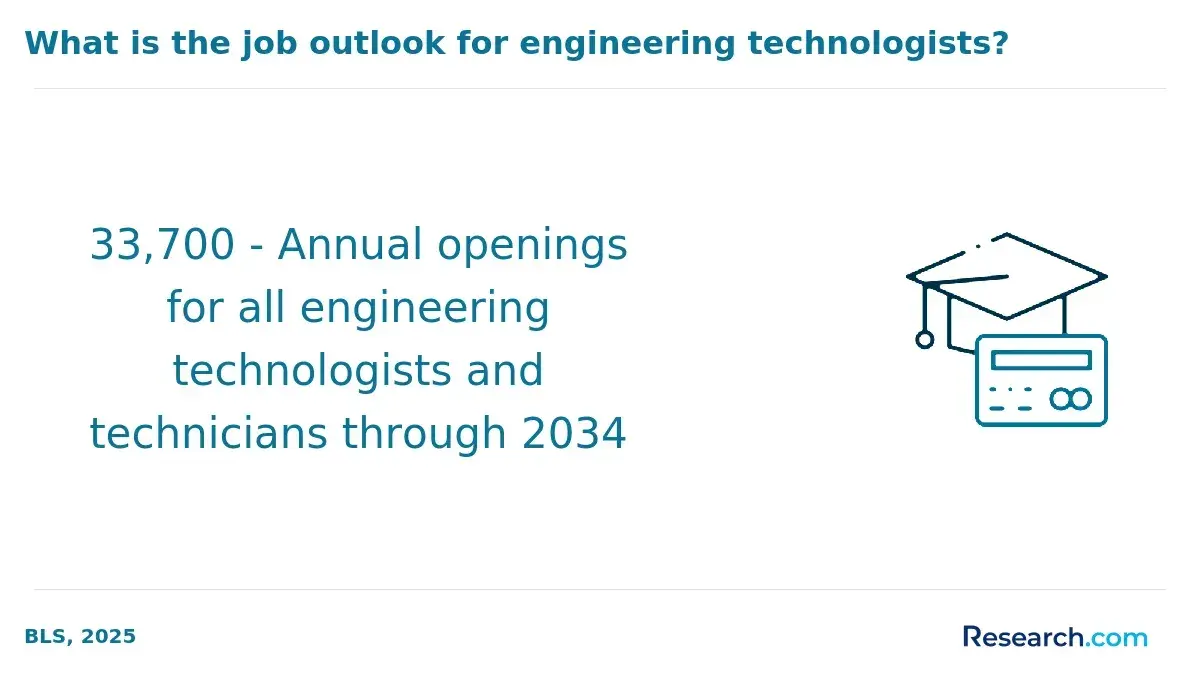
Computer hardware engineering can be a strong career choice for students who enjoy electronics, systems design, testing, and applied problem-solving. The U.S. Bureau of Labor Statistics estimates 4,700 job openings for computer hardware engineers each year, on average, through 2034, and the salary range for computer hardware engineers in the United States typically falls between $85,430 and $223,820.
The field is best suited for people who are comfortable with math, physics, circuits, programming, and technical documentation. Most full hardware engineering roles require at least a bachelor’s degree, although associate degrees and certificates may support technician, support, and testing roles.
| Best Fit | May Not Be the Best Fit |
| Students who like building, testing, and improving physical computing systems | Students who want a mostly people-facing or nontechnical role |
| Learners interested in circuits, embedded systems, semiconductors, robotics, or device design | Learners who prefer software-only work and want to avoid electronics or hardware labs |
| Professionals willing to keep learning as AI, cybersecurity, and manufacturing methods evolve | People looking for a quick career change without substantial technical preparation |
Why pursue a career in computer hardware engineering?
Computer hardware engineers design, develop, test, and refine the physical components that support modern computing. Their work may involve processors, circuit boards, routers, memory systems, embedded controllers, sensors, and specialized hardware used in automobiles, medical devices, appliances, consumer electronics, industrial systems, and government technology.
This career can be rewarding because hardware engineers help turn concepts into working products. Unlike some technology roles that focus only on code or business operations, hardware engineering requires professionals to think about electrical behavior, system performance, manufacturability, energy efficiency, reliability, and how physical components interact with software.
The job is also collaborative. Hardware engineers may work with software developers, mechanical engineers, manufacturing teams, cybersecurity specialists, product managers, quality assurance staff, and clients. That collaboration can make the work intellectually demanding, but it also creates opportunities to develop broader technical and leadership skills.
From an employment perspective, the field offers a combination of technical depth, industry flexibility, and strong earning potential. The U.S. Bureau of Labor Statistics estimates a total of 4,700 job openings for computer hardware engineers yearly, on average, through 2034. The salary of computer hardware engineers in the United States typically falls between $85,430 and $223,820.

Computer Hardware Engineering Career Outlook
The career outlook for computer hardware engineering is favorable. Through 2034, expected job growth in the field of computer hardware engineering is 7.3%, much faster than the average for all occupations.
Demand is tied to the fact that hardware is no longer limited to desktop computers and servers. Computing components are embedded in vehicles, medical devices, security systems, home appliances, telecommunications equipment, robotics, manufacturing systems, and connected infrastructure. Organizations need engineers who can make these systems faster, smaller, safer, more reliable, and more energy efficient.
| Career Outlook Factor | What It Means for Students |
| Projected job growth of 7.3% through 2034 | The field is expected to expand faster than the average for all occupations. |
| 4,700 average annual job openings through 2034 | Openings may come from both growth and replacement needs. |
| Salary range of $85,430 to $223,820 | Compensation can be strong, but outcomes vary by role, industry, education, experience, and location. |
| Use of hardware across many industries | Graduates may find opportunities beyond traditional computer companies, including manufacturing, healthcare, automotive, and government-related work. |
Students should still approach salary and job-growth data carefully. A degree does not guarantee a specific job title or income. Employers may prioritize hands-on lab experience, internships, project portfolios, programming ability, familiarity with design tools, and experience working in cross-functional teams.
Required Skills for Computer Hardware Engineer
Computer hardware engineering requires a mix of engineering fundamentals, programming knowledge, design-tool proficiency, and communication skills. Much of the work involves designing a component, testing it, finding weaknesses, revising the design, validating performance, and documenting the result. That process rewards patience and precision.
If you are asking, “What coding language should I learn?” the answer depends on your target role. Hardware-focused programs emphasize electronics and architecture, but many jobs still require low-level programming, scripting, or familiarity with hardware description languages.
Core technical skills
- Circuit design. Hardware engineers need to understand how circuits are created, tested, and integrated into larger systems. This is one of the clearest distinctions between software-centered computing and hardware-centered engineering. The difference between computer science and computer engineering often comes down to emphasis: computer science generally focuses more on theory and software, while computer engineering gives more attention to computing systems, architecture, and hardware design.
- Computer-aided design. CAD tools help engineers create, model, and refine hardware designs before production. These tools can improve accuracy, documentation, and workflow. A study published in Results in Engineering also discussed how CAD can be advanced through integration with Artificial Intelligence, manufacturing, and extended reality.
- Operating systems knowledge. Hardware must work with operating systems that manage memory, processes, files, devices, and user interaction. Examples include iOS, Windows, Unix, and Linux. Even when engineers are not building operating systems, they need to understand how hardware behavior affects system performance.
- Programming and hardware description languages. C and C++ remain relevant because they are commonly used in systems programming, embedded development, and performance-sensitive applications. Hardware engineers may also work with hardware description languages, which describe the structure or behavior of digital circuits.
- Testing and troubleshooting. Engineers must know how to isolate faults, interpret test results, and improve designs based on performance, thermal behavior, timing, reliability, and compatibility.
Professional skills employers value
- Communication. Hardware engineers often explain design choices, test results, production constraints, and technical risks to teammates who may not share the same specialty.
- Critical thinking. Strong engineers evaluate assumptions, compare design trade-offs, and update their approach when evidence changes. Critical thinking has developed over more than 2,500 years as a broad intellectual discipline, and it remains essential in technical decision-making.
- Creativity. New hardware solutions often require engineers to adapt existing knowledge to unfamiliar problems, whether the goal is lower power use, smaller size, better speed, improved durability, or lower production cost.
- Analytical thinking. Hardware engineers need to interpret complex system behavior and identify root causes. Similar analytical habits are also emphasized in fields such as digital investigations and computer forensics course online programs.
| Skill Area | Why It Matters | How to Build It |
| Electronics and circuit analysis | Supports design, testing, and debugging of physical systems | Take lab-based courses and complete hands-on hardware projects |
| Programming | Helps with embedded systems, device control, automation, and testing | Practice C, C++, scripting, and relevant hardware description languages |
| CAD and design tools | Allows engineers to model and document designs accurately | Use academic labs, software simulations, and project-based assignments |
| Technical communication | Improves collaboration with engineering, product, and manufacturing teams | Write design notes, test reports, and project documentation |
How to Start Your Career in Computer Hardware Engineering
Most computer hardware engineering jobs require substantial technical preparation. Students typically build that foundation through a bachelor’s degree in computer engineering, electrical engineering, information technology, computer science, or a closely related field. About 21% of computer hardware engineers work in the semiconductor and other electronic component manufacturing services (BLS, 2025), which shows why electronics, manufacturing awareness, and component-level knowledge matter.
If your interests are more software-centered, you may want to compare this path with how to become a software developer. Hardware engineering and software development overlap, especially in embedded systems, but they are not the same career.
Typical entry path
- Build math and science foundations. Courses in calculus, physics, electronics, and digital logic can prepare you for more advanced engineering work.
- Choose a relevant degree. A bachelor’s degree is the common starting point for full engineering roles, while associate degrees may lead to technician and support positions.
- Complete hands-on projects. Employers often want proof that you can design, test, debug, and document hardware systems.
- Learn programming for hardware contexts. C, C++, scripting, and hardware description languages can be valuable depending on the role.
- Seek internships or lab experience. Practical experience can help you move from classroom knowledge to employable engineering skills.
- Create a technical portfolio. Include projects, schematics, test procedures, code samples, prototypes, and concise explanations of design decisions.
What jobs can computer hardware engineering majors get?
| Career Level | Occupation | What the Role Involves | Median Salary | Common Industries |
| Entry-level | Hardware support technician | Maintains, repairs, and supports internal technology equipment and hardware assets. | $51,154 | Information Technology |
| Intermediate | Hardware engineer | Designs, develops, tests, and improves hardware systems and components. | $155,020 | Computer systems design and related services Research and development in the physical, engineering, and life sciences Semiconductor and other electronic component manufacturing Computer and peripheral equipment manufacturing Federal government |
| Mid-level | Analog design engineer | Develops analog circuits and systems for uses that may include consumer electronics, telecommunications, manufacturing, and industrial equipment. | $186,238 | Technology Manufacturing Professional Fortune 500 Telecommunication |
| Senior or executive-level | Hardware engineering director | Leads hardware engineering functions, teams, processes, and major technical initiatives. | $236,520 | Computer systems design and related services Research and development in the physical, engineering, and life sciences Semiconductor and other electronic component manufacturing Computer and peripheral equipment manufacturing Federal government |
What can I do with an Associate’s Degree in Computer Hardware Engineering?
An associate degree can be useful if you want to enter the workforce sooner in a technical support, testing, or technician role. It may not be enough for many full engineering positions, but it can help you gain experience while deciding whether to continue toward a bachelor’s degree.
Hardware Test Technician
Hardware test technicians evaluate computer hardware components and systems. They run performance and functionality tests, record results, identify failures, and share feedback that helps engineers improve the design.
Median Salary: $50,812
Computer Support Technician
Computer support technicians diagnose and repair hardware problems, install or upgrade components, and help users resolve technical issues involving devices, peripherals, and systems.
Median Salary: $60,340
Technical Support Representative
A technical support representative may use hardware knowledge to help customers understand, use, troubleshoot, or choose computer hardware products. This path can be a practical starting point for people with an associate degree or certificate-level preparation.
Median Salary: $48,620
What can I do with a Bachelor’s Degree in Computer Hardware Engineering?
A bachelor’s degree is the standard educational foundation for many hardware engineering jobs. It can also prepare students for related roles in networks, embedded systems, systems design, and technical product development.
Network Engineer
Network engineers design, implement, secure, and maintain systems that allow data to move efficiently between devices, servers, and users. Hardware knowledge can be useful when working with network infrastructure and performance constraints.
Median Salary: $73,340
Embedded Systems Developer
Embedded systems developers write code that controls machines, devices, vehicles, modems, cellular devices, and appliances. A developer’s job requirement may include writing code across the design, testing, and integration process.
Median Salary: $87,129
Intermediate Hardware Engineer
Intermediate hardware engineers design, test, and implement components such as processors, peripherals, circuit boards, and memory systems. There are around 76,800 computer hardware engineers in the United States. Salary ranges vary by education, certifications, skills, industry, location, and experience. The typical salary range for an intermediate hardware engineer falls between $85,430 and $223,820.
Median Salary: $115,500
Can you get a computer hardware engineering job with just a certificate?
A certificate can strengthen your resume, but it usually does not replace a bachelor’s degree for full computer hardware engineering roles. Certificates are more useful when they support a related degree, demonstrate a specific technical skill, or help a technician move into a more specialized position.
Many employers prefer candidates with bachelor’s-level preparation because hardware engineering requires advanced technical knowledge. About 69.3% of aspiring hardware engineers have a bachelor’s degree.
A certificate may still be worthwhile if you are targeting hardware support, IT support, networking, repair, product support, or a narrow vendor-specific skill. It can also show initiative if you are already working in technology and want to move closer to engineering work.
| Credential | Best Use | Limitations |
| Certificate | Skill proof, support roles, technician roles, career add-on | Often not enough for full hardware engineering jobs |
| Associate degree | Testing, support, repair, and technician positions | May require further education for engineering advancement |
| Bachelor’s degree | Most entry-level hardware engineering and related technical roles | Still should be paired with projects, internships, and tool experience |
| Graduate degree | Specialization, research, leadership, advanced engineering work | Best pursued when it supports a clear career goal |
How can I advance my career in computer hardware engineering?
Career advancement usually comes from a combination of deeper technical expertise, project leadership, industry specialization, and business understanding. After earning a Bachelor’s Degree in Computer Engineering or a related field, you may pursue specialized coursework, certifications, graduate education, or progressively complex engineering projects. Some professionals also complete a computer science masters online to strengthen their systems, software, AI, or computing theory background.
What can I do with a Master’s in Computer Hardware Engineering?
A master’s degree may be useful if you want to work on advanced systems, move into technical leadership, or specialize in areas such as embedded systems, architecture, AI hardware, cybersecurity, telecommunications, or research and development.
Hardware Product Manager
Hardware product managers connect engineering work with business goals. They coordinate with executives, designers, engineers, manufacturing teams, and users to guide product releases, prioritize improvements, and define product direction.
Median Salary: $106,000
Computer Systems Manager
Computer systems managers oversee technology operations within an organization. In some nontechnology companies, this role may overlap with Chief Information Officer responsibilities.
Median Salary: $133,879
Hardware Engineer
A senior hardware engineer may analyze, design, develop, implement, and test hardware for complex products. Responsibilities can include test strategy, stress testing, performance evaluation, and improvement of components such as processors and circuit boards.
Median Salary: $155,020
What kind of job can I get with a Doctorate in Computer Hardware Engineering?
A doctorate is most relevant for people interested in advanced research, university teaching, executive technical leadership, or highly specialized engineering roles. It is not required for most industry hardware engineering jobs, so students should weigh the time and cost carefully.
Hardware Engineering Director
Hardware engineering directors lead engineering teams and make sure projects, processes, and technical decisions align with organizational goals and policies.
Median Salary: $236,520
Chief Technology Officer (CTO)
A CTO guides an organization’s technology strategy, research and development priorities, and long-term technical investments. This role requires both technical judgment and executive-level business decision-making.
Median Salary: $294,568
Chief Information Technology Officer (CITO)
A CITO sets long-term technology policies, procedures, and departmental goals. This executive may also evaluate hardware acquisitions, advise on major technical projects, and help the organization respond to changes in the information technology industry.
Median Salary: $321,417
Which certification is best for computer hardware engineering?
No single certification is universally required for computer hardware engineers. The best credential depends on your target role. Vendor-neutral certifications may support IT, support, networking, and service roles, while vendor-specific credentials may help if you work with a particular platform or technology ecosystem.
- Certified Hardware and Technology Engineer (CHTE). The CHTE certification is a vendor-neutral credential intended for computer service professionals who want to demonstrate hardware and technology competence.
- CompTIA A+. This certification covers IT support topics that include hardware, operating systems, networking, and security. It includes two examinations and requires 20 continuing education credits for renewal.
- Apple Certified Support Professionals. This credential validates knowledge of Apple services, tools, and support practices used by organizations that support iPad, iPhone, and Mac users. Apple may update its certifications, so candidates should check current requirements before enrolling.
- BICSI RCDD Credential. The Registered Communications Distribution Designer credential is connected to data communications technology planning, design, integration, and implementation. Students interested in broader technology infrastructure paths can also review information systems career opportunities.
Before choosing a certification, check whether employers in your target job postings mention it. A credential is most valuable when it aligns with the work you want to do.
| Career Goal | Credential Strategy |
| Hardware support or repair | Consider hardware service and IT support certifications. |
| Engineering design role | Prioritize an accredited degree, lab work, CAD skills, programming, and project experience. |
| Networking or infrastructure | Consider credentials related to network fundamentals, communications systems, or infrastructure design. |
| Leadership or product roles | Combine technical expertise with project management, product strategy, and communication skills. |
What are the factors to consider when evaluating the affordability of online computer science degrees?
Affordability is not just the advertised tuition price. When comparing online computer science or computer engineering-related programs, evaluate total cost, transfer credit policies, fees, course materials, technology requirements, program length, financial aid options, and whether the degree supports your target job. A lower-cost option may be attractive, but it should still provide the technical depth and credibility needed for hardware-related careers.
Students looking for lower-cost options can compare programs such as the cheapest online computer science degree, but they should also review curriculum fit. If your goal is hardware engineering, make sure the program includes relevant coursework in computer architecture, systems, electronics, embedded computing, or related engineering topics.
| Affordability Factor | Why It Matters |
| Tuition and required fees | The published tuition may not include all charges. |
| Program duration | A longer program may increase total cost even if per-credit tuition is lower. |
| Transfer credit policy | Accepted credits can reduce both time and cost. |
| Technology and lab requirements | Hardware-related coursework may require software, equipment, simulations, or campus visits. |
| Career alignment | A program is more affordable in practical terms when it supports the role you actually want. |
Why Is Cybersecurity Integration Critical for Hardware Engineering?
Cybersecurity now affects hardware design from the beginning of the product cycle. Hardware vulnerabilities can expose data, weaken connected systems, or make devices easier to compromise. Engineers therefore need to think about secure boot processes, firmware protection, device authentication, physical tampering risks, and how hardware choices affect overall system security.
This is especially important as more devices connect to networks and exchange sensitive data. Hardware engineers do not need to become full-time cybersecurity specialists in every role, but they do need enough security awareness to design systems that are harder to exploit. Professionals who want a deeper security foundation can explore What can you do with a masters in cybersecurity?
How Can Cyber Security Expertise Complement Computer Hardware Engineering?
Cybersecurity knowledge can help hardware engineers identify risks earlier, communicate more effectively with security teams, and build products that better withstand evolving threats. This is valuable in areas such as medical devices, autonomous systems, industrial equipment, government systems, consumer electronics, and connected infrastructure.
Targeted training can also make an engineer more competitive for roles involving secure design, firmware, embedded systems, and risk management. For students comparing cost-conscious options, the cheapest online cyber security degree can provide a starting point for evaluating programs that add security knowledge to a technical background.
Is pursuing an interdisciplinary advanced degree beneficial for computer hardware engineering?
An interdisciplinary advanced degree can be useful when it supports a specific career direction. Hardware engineers who want to work in medical devices, biotechnology equipment, sensors, diagnostics, or laboratory automation may benefit from understanding life sciences and regulated product environments. For that kind of path, programs such as biotech master's programs online may provide complementary knowledge.
The key is fit. Do not pursue an interdisciplinary degree simply because it sounds innovative. Choose it when the additional field clearly connects to the industries, products, or leadership roles you want.
How Can Computer Hardware Engineers Enhance Health Information Management Systems?
Hardware engineers can contribute to health information management by improving the devices and infrastructure used to capture, transmit, store, and secure health data. Reliable circuitry, power management, sensor integration, and system-level design can affect the performance of medical devices and digital health environments.
Healthcare technology also requires attention to privacy, security, reliability, and regulatory expectations. Engineers who want to better understand digital health records and healthcare data workflows may consider related education, including the cheapest HIM online degree programs, as a complement to technical engineering skills.
How Can a Career Transition Enhance Your Earning Potential?
Hardware engineers can increase their long-term earning potential by moving into roles that combine technical skill with leadership, product ownership, cybersecurity, software, AI, or systems architecture. The strongest transitions usually build on existing expertise rather than abandoning it entirely.
For example, an engineer with hardware design experience may transition into product management, embedded systems, secure hardware, technical sales engineering, R&D leadership, or architecture roles. Some of these paths overlap with sectors associated with the best paying tech jobs, but higher compensation is never automatic. It depends on skills, experience, responsibility level, employer, and market demand.
How can interdisciplinary education boost innovation in computer hardware engineering?
Interdisciplinary education can help hardware engineers solve problems that do not fit neatly inside one field. Combining hardware knowledge with areas such as bioinformatics, healthcare, AI, sustainability, manufacturing, or data systems can lead to more specialized products and stronger cross-functional collaboration.
For example, professionals interested in computational biology, medical devices, or biological data systems may find that bioinformatics masters programs online provide useful context for designing hardware that supports research, diagnostics, or health technology applications.
How can interdisciplinary online degrees complement your computer hardware engineering career?
Online interdisciplinary degrees can be helpful for working professionals who want to broaden their expertise without stepping away from employment. The best options add knowledge that directly improves your ability to design, evaluate, manage, or secure complex systems.
In healthcare technology, for instance, engineers may benefit from understanding data governance, clinical workflows, privacy expectations, and user-centered system design. A program such as a health informatics bachelor degree online can complement engineering experience for professionals interested in healthcare devices, digital health platforms, or health data infrastructure.
What should you consider when choosing an online bachelor's degree in computer hardware engineering?
An online bachelor’s degree can be a practical route into computer hardware engineering or a related technology field, especially for students who need flexibility. However, hardware engineering is hands-on, so you should look closely at how the program delivers labs, projects, design tools, and technical support.
- Accreditation and reputation. Accreditation helps confirm that a program meets recognized academic standards. Engineering students should pay special attention to programmatic accreditation where relevant, including ABET recognition. You can begin comparing options through lists of accredited online bachelor degree programs.
- Curriculum alignment. Review whether the courses cover circuit design, computer architecture, digital logic, embedded systems, operating systems, C or C++, and hardware-oriented design work.
- Lab and project access. Ask how online students complete hardware labs. Some programs use shipped kits, simulations, local proctoring, remote labs, or short campus residencies.
- Faculty and advising support. Hardware students often need guidance on course sequencing, transfer credits, internships, and capstone projects.
- Technology requirements. Confirm whether the program requires CAD software, specific operating systems, lab equipment, webcams, high-performance computers, or other tools.
- Career services. Look for internship support, employer connections, portfolio guidance, and alumni outcomes related to engineering or technical roles.
| Question to Ask | Why It Matters |
| Is the program accredited? | Accreditation can affect employer confidence, transferability, graduate admission, and educational quality. |
| How are labs completed online? | Hardware engineering requires applied practice, not only lectures. |
| Does the curriculum include hardware-specific courses? | A general computing degree may not provide enough electronics or architecture depth. |
| Can I transfer prior credits? | Transfer policies can significantly affect total cost and completion time. |
| What career outcomes do graduates pursue? | Outcomes help you judge whether the program aligns with your goals. |
Common mistakes when choosing a program
- Choosing based only on tuition. A low price is not enough if the program lacks relevant labs, projects, or hardware coursework.
- Ignoring accreditation. Accreditation can matter for graduate school, employer recognition, and overall academic credibility.
- Assuming every computer science program prepares you for hardware engineering. Some computer science programs are software-heavy and may not include enough electronics or design work.
- Overlooking hands-on experience. Employers often want evidence that you can build, test, troubleshoot, and document systems.
- Assuming salary outcomes are guaranteed. Salary ranges depend on many factors, including role, industry, location, experience, and performance.
Alternative Career Options for Computer Hardware Engineers
Hardware engineering skills can transfer to several adjacent careers. Engineers understand systems, constraints, technical documentation, product behavior, and troubleshooting, which can be valuable in software, research, writing, infrastructure, entrepreneurship, and industry-specific technology roles. Hardware engineers also offer revolutionary technologies in healthcare and other sectors where reliable devices and systems matter.
What else can a computer hardware engineer do?
- Technical Writer. Hardware engineers who can explain complex systems clearly may write manuals, design documentation, product guides, white papers, and training materials. About 33% of technical writers worked for companies that offer professional, scientific, and technical services.
- Computer and Information Research Scientist. This path may involve developing new computing approaches, improving architecture, advancing networking technology, strengthening information security, or increasing computing performance.
- Computer Programmer. Hardware graduates can move into programming roles, especially when they understand system architecture, electronics, and low-level computing. Additional software practice is usually necessary, but the transition is realistic with focused skill building.
- Entrepreneur. Hardware engineers can use technical knowledge to identify product opportunities, build prototypes, and understand manufacturing constraints. Business development, marketing, finance, and customer discovery skills are also important for success.
| Alternative Path | Why Hardware Engineers May Fit | Additional Skills to Build |
| Technical writing | Ability to explain systems, specifications, and product behavior | Clear writing, audience analysis, documentation tools |
| Programming | Understanding of architecture and systems-level behavior | Software development, testing, version control |
| Research | Strong technical foundation and problem-solving ability | Advanced math, research methods, graduate-level specialization |
| Entrepreneurship | Ability to identify and prototype technical products | Marketing, finance, sales, operations, business planning |
What are the emerging trends in computer hardware engineering?
Computer hardware engineering is being reshaped by AI, cybersecurity, 5G, connected devices, energy efficiency, and specialized computing. These trends do not eliminate the need for hardware engineers; they change what engineers must know and how they design systems.
- AI-focused hardware. AI applications often require specialized hardware such as GPUs and TPUs that can handle large datasets and real-time computation. Engineers are increasingly asked to improve performance while managing power use, heat, and cost.
- 5G and connected systems. 5G supports innovation in IoT, autonomous vehicles, smart cities, and low-latency communication. Hardware engineers contribute to chips, antennas, signal processing components, and connected-device infrastructure.
- Cybersecurity by design. Security cannot be added only at the end of development. Hardware engineers must consider firmware protection, device identity, secure components, and the risks created by connected systems.
- Sustainability and efficiency. Organizations face pressure to reduce energy use and waste. Engineers are working on smaller, more efficient devices, recyclable materials, and designs that reduce environmental impact.
- Wearables and compact devices. Wearable technology requires small, efficient, reliable chips and sensors that can operate under size, power, and durability constraints.
Professionals who want to deepen their understanding of AI-related systems may compare advanced study options, including the cheapest online masters in artificial intelligence. As with any graduate program, the best choice depends on curriculum fit, cost, accreditation, and career goals.
How to Accelerate Your Education in Computer Hardware Engineering
Students who want to enter the field sooner may consider accelerated or transfer-friendly online programs. These pathways can reduce time to completion when students bring prior credits, take heavier course loads, or follow condensed schedules. However, speed should not come at the expense of lab quality, accreditation, or technical depth.
A fast track computer science degree may be useful for students seeking computing credentials quickly, but hardware-focused students should verify whether the program includes enough systems, architecture, electronics, or embedded coursework. A fast software-heavy program may not fully prepare someone for hardware engineering roles.
Ways to move faster without weakening your preparation
- Transfer eligible credits. Ask schools how prior college, military, or professional learning is evaluated.
- Choose a program with clear course sequencing. Hardware-related courses often have prerequisites, so poor planning can delay graduation.
- Use summers or shorter terms strategically. Accelerated formats can help, but avoid overloading difficult lab or math-heavy courses.
- Build projects while studying. A faster degree is more valuable when paired with a portfolio that shows practical ability.
- Confirm support for online labs. Do not enroll until you understand how hands-on requirements are delivered.
Computer Hardware Engineers Help Improve the Performance, Reliability, and Security of Technology
Computer hardware engineering is a strong fit for people who want to understand how computing works at the physical and system level. The field requires discipline, technical curiosity, and a willingness to test and revise designs until they perform reliably.
A relevant computer engineering or computing degree can provide the foundation for this path. Students whose interests lean more toward software design may also compare related options such as a software engineer online degree. The best choice depends on whether you want to build the physical systems behind technology, the software that runs on them, or a career that combines both.
Key Insights
- Computer hardware engineering is best for hands-on technical problem-solvers. The career centers on designing, testing, and improving physical computing systems, not just using technology.
- The labor outlook is positive. Expected job growth is 7.3% through 2034, with 4,700 average annual job openings projected through 2034.
- Most engineering roles require a bachelor’s degree. Certificates and associate degrees can help with support, testing, and technician roles, but they usually do not replace bachelor’s-level preparation for full hardware engineering jobs.
- Salary potential is strong but not guaranteed. U.S. computer hardware engineer salaries typically fall between $85,430 and $223,820, with outcomes depending on role, experience, industry, education, and location.
- Core skills include circuits, CAD, operating systems, programming, testing, and communication. Employers value engineers who can combine technical accuracy with clear documentation and teamwork.
- Cybersecurity and AI are changing the field. Hardware engineers increasingly need to understand secure design, AI workloads, specialized processors, power efficiency, and connected-device risks.
- Graduate study is most useful when tied to a goal. A master’s or doctorate can support specialization, research, or leadership, but it should match a specific career plan.
- Program choice matters. Before enrolling online, check accreditation, lab delivery, curriculum depth, transfer policies, technology requirements, and career support.
References:
- National Society of Professional Engineers. (2025). Insights on Industry Issues and Opportunities. PE Magazine, Issue 1, 2025. https://www.nspe.org/career-growth/pe-magazine/issue-1-2025/insights-industry-issues-opportunities
- National Student Clearinghouse Research Center. (2026, January 15). Final Fall Enrollment Trends. https://nscresearchcenter.org/final-fall-enrollment-trends
- Salary.com. (2026). Hardware Development Engineering Director Salary in the United States. Retrieved March 2026, from https://www.salary.com/research/salary/alternate/hardware-design-engineering-senior-director-salary
- Statista. (2025, November 28). Global ranking of technologies to be adopted by companies. https://www.statista.com/statistics/1382924/technology-adoption-forecast
- U.S. Bureau of Labor Statistics. (2025, August 28). Occupational projections and worker characteristics. Retrieved March 2026, from https://www.bls.gov/emp/tables/occupational-projections-and-characteristics.htm
- ZipRecruiter. Hardware Support Technician Salary. Retrieved March 2026, from https://www.ziprecruiter.com/Salaries/Hardware-Support-Technician-Salary
Other Things You Should Know About How to Become a Computer Hardware Engineer
To become a computer hardware engineer, you typically need at least a Bachelor’s Degree in Information Technology, Computer Engineering, or a related field. This foundational education provides the necessary technical skills and knowledge required for the profession.
Industries employing computer hardware engineers include technology companies, telecommunications firms, aerospace and defense, manufacturing, and automotive industries. These sectors require hardware engineers to design, develop, and test complex systems and are continuously in need of updated hardware solutions.
Essential skills for computer hardware engineers include circuit design, proficiency in CAD software, knowledge of operating systems (e.g., iOS, Windows, Unix, Linux), and familiarity with computing languages such as C and C++. Additionally, critical thinking, creativity, analytical thinking, and communication skills are vital.
Beneficial certifications for computer hardware engineers include Certified Hardware and Technology Engineer (CHTE), CompTIA A+, and Apple Certified Support Professional. These certifications validate technical skills and enhance career prospects.
While a certificate can introduce you to hardware engineering concepts, most employers in 2027 prefer candidates with a bachelor's degree in computer engineering or a related field. Certificates may supplement your education but aren't typically sufficient alone for entry-level positions.
Advancing your career in computer hardware engineering can be achieved through specialized courses, certifications, gaining extensive field experience, and pursuing advanced degrees like a master's or doctorate. High-level positions include hardware engineering director, CTO, and CITO.


