2027 How to Become a Computer Network Architect: Step-By-Step Guide

Co-Founder and Chief Data Scientist
If you are considering a career in network architecture, the role you are preparing for is no longer limited to designing LANs, WANs, routers, and switches. Legacy infrastructure usage dipped slightly for the first time in several years, with both on-premises data center usage and colocation usage declining by about 5% in 2024. At the same time, 80% of enterprises plan to spend most of their IT hosting budget on cloud by 2025, which means network architects now need to understand cloud, hybrid environments, security, automation, compliance, and business continuity.
This guide explains how to become a computer network architect, what the job involves, which skills and credentials matter, how much network architects earn, and how cloud computing, AI, cybersecurity, and data privacy are changing the profession. It is written for students, career changers, IT support professionals, network administrators, systems analysts, and engineers who want to decide whether this career path fits their goals.
How to Become a Computer Network Architect Table of Contents
- What does a computer network architect do?
- Is becoming a computer network architect worth it?
- How network architects support business performance
- Skills computer network architects need
- How to make your education count
- Education options for future network architects
- Steps to become a computer network architect
- AI and automation in network architecture
- How to find network architect jobs
- Privacy, compliance, and network design
- Challenges in modern network architecture
- Flexible ways to prepare for this career
- Sustainability in network design
- Cybersecurity and network architecture
- Advanced education and AI-enabled networks
- Using data science to improve network performance
Quick Answer: How do you become a computer network architect?
Most computer network architects start by earning a bachelor’s degree in computer science, information technology, information systems, engineering, or a related field. They then build several years of hands-on IT experience in roles such as network administrator, systems analyst, network engineer, or cloud engineer. Certifications in networking, cybersecurity, cloud platforms, and vendor technologies can strengthen a candidate’s profile, especially for senior or specialized roles.
The role usually requires strong technical ability, but it also depends on communication, planning, budgeting, vendor coordination, and the ability to translate business needs into secure and scalable network designs.
| Career decision | What to know |
| Typical starting point | A bachelor’s degree plus entry-level IT or networking experience |
| Common feeder roles | Network administrator, network engineer, systems analyst, cloud support specialist |
| Useful credentials | CCNP, CISSP, JNCIA, CCIE, cloud and security certifications |
| Core focus areas | Network design, cloud integration, security, automation, performance, compliance |
| Best fit for | People who enjoy solving infrastructure problems, designing systems, and working across technical and business teams |
What is a computer network architect?
A computer network architect designs the communication systems that allow an organization’s people, applications, data, devices, and cloud services to connect reliably and securely. The role may also be called network architect, network engineer, infrastructure architect, cloud network architect, or enterprise network architect, depending on the employer and the scope of work.
At a practical level, network architects decide how networks should be built, expanded, secured, monitored, and modernized. They plan network capacity, choose hardware and software, evaluate vendors, develop architecture diagrams, set security controls, and make sure the design supports business needs. Based on a CompTIA survey, implementing data management is a top-priority activity as identified by 35% of IT professionals, followed by automating security activities (33%) and improving web or mobile presence (33%). These priorities show why networking is no longer just an infrastructure concern; it directly affects analytics, security, customer experience, and digital operations.
Computer network architects work with routers, switches, firewalls, VPNs, load balancers, wireless systems, cloud networking tools, identity controls, monitoring platforms, and automation frameworks. They also need to understand how applications move data, how users access systems, and how network decisions affect performance, cost, security, and uptime.
Security is now built into the role. Network architects help implement firewalls, segmentation, encryption, access controls, monitoring, and resilience measures that reduce the risk of outages and unauthorized access. They also need to address network challenges clearly with nontechnical leaders, because many network decisions involve cost, risk, compliance, and business continuity.
What is the average computer network architect salary?
According to the U.S. Bureau of Labor Statistics (BLS), computer network architects receive a median annual wage of approximately $130,390. The lowest 10 percent earned around $79,520, while the highest 10 percent earned over $198,030.
Actual pay can differ widely by location, employer, industry, seniority, certification mix, and the complexity of the network environment. A professional designing cloud-heavy, high-availability, or security-sensitive networks for a large enterprise may earn more than someone supporting a smaller or less complex environment.
Among U.S. states, Washington is the highest paying at $156,410. Among industries, computer network architects working for web search portals, libraries, archives, and other information services receive the highest salary at $189,390 annually. If you are comparing infrastructure careers, you may also want to review how to become hardware engineer, since hardware engineering can also lead to strong compensation.
Why pursue a career as a computer network architect?
Becoming a computer network architect can be a strong career choice for experienced IT professionals who want to move from maintaining systems to designing the infrastructure strategy behind them. The work is technical, but it is also analytical and business-facing. A network architect must understand what the organization is trying to accomplish and then design a network that can support those goals securely and efficiently.
The career is attractive because networks sit at the center of cloud adoption, cybersecurity, remote work, AI workloads, data analytics, and digital transformation. A study by the Harvard Business Review shows that the top priority of 37% of companies is improving data quality, spurred by generative AI. Better data quality depends not only on software and governance, but also on reliable infrastructure that moves data safely and quickly.
Network architects do not necessarily need to master every programming language or know how many types of coding languages are there, but they do need enough technical depth to understand automation scripts, infrastructure-as-code concepts, cloud networking, application traffic, security policies, and system dependencies. Their value comes from connecting technical choices to measurable business needs.
| Reason to choose this career | Why it matters | Possible drawback |
| Strong salary potential | Specialized infrastructure, security, and cloud skills are valued by many employers. | Higher-paying roles usually require substantial experience and proven results. |
| Strategic technical work | You help design systems instead of only troubleshooting them. | Design mistakes can affect uptime, budgets, security, and user experience. |
| Continuous learning | Cloud, AI, automation, and cybersecurity keep the work current. | The field can feel demanding if you do not enjoy ongoing skill development. |
| Career mobility | Experience can lead to senior architect, cloud architect, security architect, or IT leadership roles. | Advancement often depends on communication and project leadership, not technical skill alone. |
Computer Network Architect Career Outlook
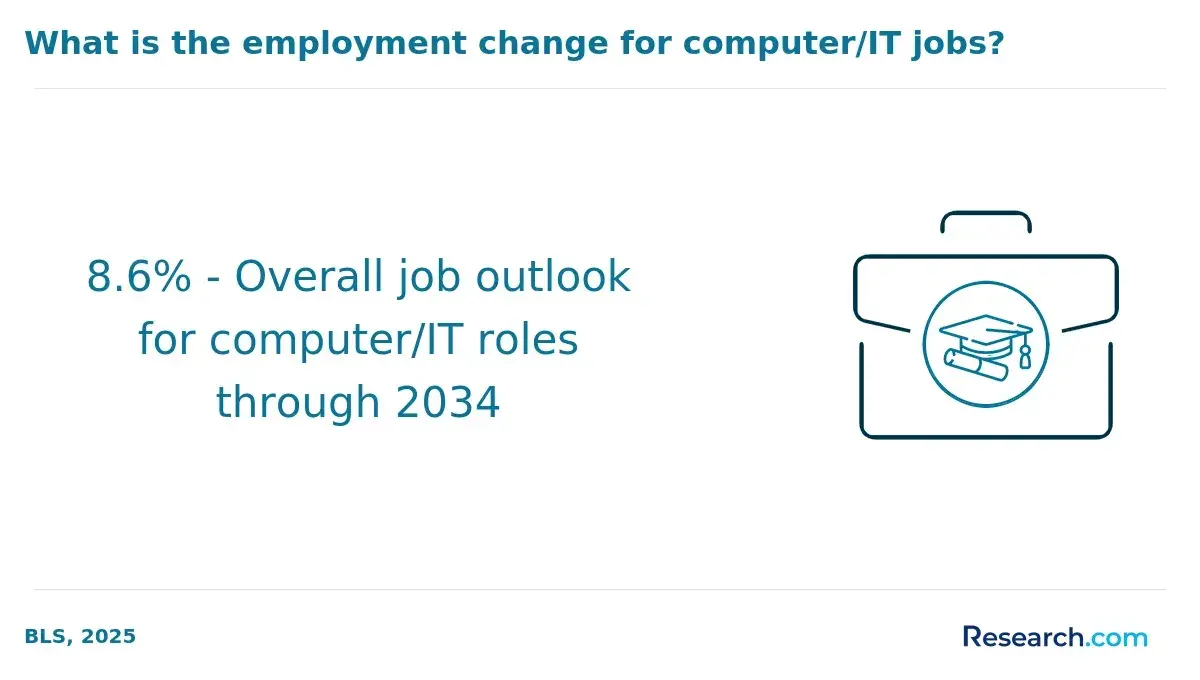
The career outlook for computer network architects is favorable because organizations continue to depend on fast, secure, and scalable digital infrastructure. Based on BLS data, computer network architect jobs grew by 12% through 2034. Network architects may also be grouped within broader computer and information technology occupations, which collectively have a notably high growth rate.
Employers need network architects when they modernize legacy systems, increase bandwidth, redesign branch connectivity, adopt cloud services, improve disaster recovery, implement zero trust policies, or support AI and analytics workloads. Network architects also monitor capacity and performance, evaluate traffic patterns, improve Quality of Service (QoS), and recommend upgrades before bottlenecks affect users.
The expansion of cloud computing, the Internet of Things (IoT), and digital transformation initiatives further increases demand for professionals who can connect traditional infrastructure with cloud-based systems. Healthcare, finance, government, education, manufacturing, and technology companies often need network architects who understand both performance requirements and regulatory obligations.
How do computer network architects contribute to business success?
Computer network architects affect business outcomes because network design influences speed, reliability, security, collaboration, customer experience, and operating cost. When the network is poorly planned, employees lose time, applications slow down, outages become more likely, and security gaps become harder to manage. When the network is well designed, the organization can scale services, support new locations, protect data, and adopt new technologies with less disruption.
A strong network architecture supports business success in several ways:
- Productivity: Reliable connectivity helps employees access applications, data, collaboration tools, and cloud platforms without constant interruptions.
- Security: Segmentation, encryption, access controls, monitoring, and zero trust principles reduce exposure to cyber threats.
- Scalability: A flexible design allows organizations to add users, locations, devices, cloud workloads, and applications without rebuilding the entire network.
- Cost control: Capacity planning, virtualization, automation, and vendor evaluation can reduce waste and prevent expensive emergency upgrades.
- Resilience: Redundant links, failover planning, backup connectivity, and disaster recovery design help keep operations running during incidents.
If you are preparing for this path, you should compare education costs early. Many students ask how much does a computer science degree cost before choosing a program, because tuition, transfer credits, certification preparation, and employer reimbursement can all affect the total investment.
Skills computer network architects need
A computer network architect needs a mix of deep technical expertise, business judgment, and communication ability. Job descriptions often emphasize routing, switching, firewalls, cloud networking, and security, but employers also look for people who can document designs, explain trade-offs, manage projects, and work with executives, vendors, engineers, and security teams. Among the focus areas on career growth, 48% identified technical skills in the current role, 44% on durable skills, and 43% on technical skills in new roles.
Essential technical skills for computer network architects
- Networking technologies. Network architects need strong knowledge of TCP/IP, LAN/WAN design, routing, switching, VPNs, wireless systems, firewalls, load balancing, network virtualization, and connectivity between locations and cloud environments.
- Network design and architecture. The role requires the ability to create secure, scalable, high-performing designs that match business goals, budget limits, user needs, and risk tolerance.
- Network security. Architects must understand encryption, identity and access management, network segmentation, intrusion detection and prevention, vulnerability management, and security monitoring.
- Cloud computing and virtualization. Because many organizations use hybrid and cloud-first environments, network architects should know how cloud networking, virtual networks, containers, and virtualized infrastructure affect performance and security.
- Network monitoring and analysis. Architects need to interpret logs, traffic flows, latency, utilization, packet loss, and availability metrics so they can diagnose problems and improve network design.
Essential professional skills for computer network architects
- Communication and collaboration. Network architects must explain complex infrastructure decisions to IT teams, executives, vendors, clients, auditors, and nontechnical stakeholders. They also need to convert business requirements into practical technical designs.
- Project management. Network architecture projects often involve timelines, budgets, procurement, testing, migrations, risk controls, and cross-functional teams. These skills are useful in many technical careers, including paths that explain how to become software developer.
- Adaptability and continuous learning. Networking changes quickly. Cloud platforms, automation tools, threat patterns, compliance rules, and vendor technologies require regular skill updates.
- Problem-solving and critical thinking. Architects need to evaluate competing designs, identify root causes, anticipate failure points, and recommend solutions that balance reliability, security, and cost.
- Professional ethics. Network architects often have access to sensitive systems and data. Integrity, confidentiality, and responsible access management are essential, and related investigative and security concepts are also emphasized in an online computer forensics degree.
Key Tech Areas That Are Understaffed

Maximizing Your Educational Investment for a Career in Network Architecture
Education matters in network architecture, but the best path is not always the most expensive or longest one. The right program should help you build fundamentals in operating systems, computer networks, security, databases, cloud computing, and systems administration while leaving room for hands-on labs, internships, certifications, and work experience.
Some students choose a traditional four-year degree. Others look for accelerated or online options that let them move faster while continuing to work. If speed is important, you may compare programs that market themselves as the fastest computer science degree. The main question is not only how quickly you can finish, but whether the curriculum gives you enough depth in networking, cloud, cybersecurity, and systems design.
Before enrolling, check accreditation, transfer credit rules, course availability, lab requirements, tuition and fees, certification alignment, and career support. A lower tuition rate may not be the best value if the program lacks technical depth or does not support your career goals.
What educational pathways are available for aspiring computer network architects?
There is no single route into network architecture, but most successful candidates combine formal education, hands-on IT experience, and targeted certifications. A bachelor’s degree is common for architect-level roles, but an associate degree can be a cost-conscious starting point for students who plan to transfer or enter IT support first. If affordability is a major concern, researching the cheapest online associate degree in computer science can help you compare lower-cost entry points.
| Pathway | Best for | What to watch for |
| Associate degree | Students who want an affordable start or plan to transfer into a bachelor’s program | May not be enough by itself for architect-level positions |
| Bachelor’s degree | Students seeking the most common academic foundation for network architecture roles | Program quality, labs, internships, and networking coursework vary |
| Certifications | Working IT professionals who need proof of vendor, security, or cloud skills | Certifications are strongest when paired with real experience |
| Graduate study | Professionals targeting leadership, cloud architecture, cybersecurity, AI, or research-heavy roles | May not be necessary for every network architect position |
| Bootcamps and short courses | Professionals who need focused upskilling in a specific technology | Quality and employer recognition vary significantly |
How to Start Your Computer Network Architect Career
Step 1: Earn a related bachelor’s degree.
Start by building a strong foundation in computer systems and networking. Many employers prefer candidates with a bachelor’s degree in computer science, information technology, computer engineering, management information systems, or a related field. Prioritize programs that include networking, operating systems, cybersecurity, cloud computing, databases, scripting, and systems design. A structured academic foundation is useful in many technical roles, including computer programming jobs.
Step 2: Build experience in information systems or networking.
Network architect is rarely a first IT job. Most professionals first work as network administrators, systems analysts, help desk specialists, network engineers, cloud support specialists, or security analysts. These roles teach you how networks behave in production, how outages are handled, how users report problems, and how infrastructure choices affect real operations. In 2024, machine learning/artificial intelligence ranks among the most in-demand cloud technologies as identified by 41% of IT professionals, with container-as-a-service and serverless computing also seeing significant adoption increases. Like professionals with a coding degree, network architects need practical experience before they can credibly design complex systems.
Step 3: Decide whether advanced study will help.
Advanced study is optional, but it can be useful if you want to specialize in cloud architecture, cybersecurity, AI-enabled infrastructure, data engineering, or IT leadership. The lack of talent required to manage the cloud is the top concern of organizations in 2024. Cloud skill shortages, cybersecurity risk, and data privacy requirements all create opportunities for network professionals who can combine architecture knowledge with advanced technical or management expertise. If you want a flexible academic route, review institutions offering computer science programs online.
Step 4: Earn relevant certifications.
Certifications can validate your skill set, especially when they match the technologies used by your target employers. Common options include Cisco Certified Network Professional (CCNP), Certified Information Systems Security Professional (CISSP), and Juniper Networks Certified Internet Associate (JNCIA). More advanced professionals may pursue credentials in cloud networking, security architecture, automation, or enterprise infrastructure. Networking technologies and practices evolve rapidly, and particular technologies require more time to learn. For instance, it takes three to six months longer to progress for cloud skills compared to other technology skills.
Step 5: Apply for network architect roles when your experience is strong enough.
Before applying, make sure your resume shows architecture-level impact rather than only support tasks. Highlight network redesigns, cloud migrations, security improvements, uptime improvements, documentation, vendor work, cost savings, automation, and cross-team leadership. Research each employer’s infrastructure needs before interviews and be prepared to discuss trade-offs, not just tools. Salary research also matters; reviewing the management information systems salary range can help you understand how related IT roles compare when negotiating.
| Stage | Typical goal | Evidence employers look for |
| Student or career starter | Learn fundamentals and complete labs | Degree progress, projects, internships, basic certifications |
| Entry-level IT professional | Support networks and systems in real environments | Troubleshooting, documentation, tickets, monitoring experience |
| Network engineer or administrator | Implement and maintain infrastructure | Routing, switching, firewall, VPN, cloud, and security experience |
| Senior engineer or architect candidate | Design scalable, secure, business-aligned networks | Architecture diagrams, migration work, capacity planning, leadership |

How can artificial intelligence and automation drive innovation in network architecture?
AI and automation are changing how networks are monitored, configured, secured, and optimized. Instead of relying only on manual reviews, network architects can use automation to standardize configurations, reduce repetitive work, and respond faster to performance or security events. Machine learning can help identify traffic anomalies, predict capacity issues, and support proactive maintenance before users experience disruption.
These tools do not remove the need for network architects. They raise the skill level required. Architects must understand which tasks should be automated, how to validate automated changes, how to protect automation pipelines, and how to avoid introducing misconfigurations at scale. Professionals who want to combine networking and security may also compare the cyber security online degree cost when planning their education.
How to Start Looking for Computer Network Architect Jobs
When you are ready to search for computer network architect jobs, do not rely on job boards alone. Use a focused strategy that combines employer research, professional networking, recruiter conversations, certification communities, and direct applications. Look for roles under titles such as network architect, cloud network architect, infrastructure architect, enterprise network architect, network engineer, solutions architect, or security network architect.
Based on a survey by PwC, 54% of companies in EMEA have already adopted cloud in all or most parts of their business. This creates demand for professionals who can design secure cloud-connected networks and support hybrid environments. You can also join professional associations and technical communities such as the International Association of Computer Science and Information Technology (IACSIT) or the Institute of Electrical and Electronics Engineers (IEEE), where networking, learning, and job leads may be available.
| Job search action | Why it helps |
| Target employers with complex infrastructure | Large, regulated, cloud-heavy, or multi-location organizations often need architecture expertise. |
| Customize each resume | Show the exact tools, designs, migrations, and security controls relevant to the posting. |
| Build a portfolio of architecture work | Sanitized diagrams, migration plans, and project summaries can demonstrate design thinking. |
| Use professional communities | Vendor groups, certification communities, and engineering forums can surface roles before public postings. |
| Prepare for scenario interviews | Architect interviews often test your ability to explain trade-offs, risks, and design choices. |
How can I advance my career as a computer network architect?
Career advancement usually comes from expanding your scope. A network architect who can design only traditional networks may have fewer options than one who understands cloud migration., automation, security architecture, compliance, and business continuity. Continuous learning through certifications, conferences, workshops, vendor training, and advanced projects can help you qualify for higher-level roles.
Now that 92% of organizations have embraced multi-cloud infrastructure, network architects who can manage complexity across providers may have more opportunities. Professionals who understand zero trust architecture can also stand out because organizations increasingly need networks designed around identity, verification, least privilege, and continuous monitoring.
To move up, seek projects that expose you to new environments: cloud migrations, mergers, data center modernization, SD-WAN, segmentation, network automation, disaster recovery, IoT, and cybersecurity initiatives. Advancement may lead to roles such as senior network architect, cloud architect, security architect, enterprise architect, infrastructure manager, or IT director.
How do evolving data privacy and regulatory requirements shape network design?
Network design must now account for privacy, compliance, auditability, and data governance from the beginning. Regulations and industry rules such as GDPR and HIPAA can affect where data travels, how it is encrypted, who can access it, how activity is logged, and how quickly incidents must be detected and reported.
For network architects, compliance is not only a legal issue. It changes segmentation strategies, remote access policies, backup designs, monitoring requirements, vendor decisions, and cloud architecture. In regulated industries, the best design is not simply the fastest or cheapest; it is the one that supports performance while meeting security and documentation obligations. Students interested in broader infrastructure and systems design may also compare an affordable bachelors in electrical engineering degree as part of their planning.
What are the critical challenges in modern network architecture?
Modern network architects must balance old and new infrastructure at the same time. Many organizations still operate legacy systems, on-premises applications, and traditional data centers while also adopting cloud platforms, SaaS tools, remote access systems, and AI workloads. The challenge is to integrate these environments without creating weak points, excessive cost, or poor performance.
Common challenges include security threats, cloud complexity, skills gaps, budget constraints, compliance requirements, vendor lock-in, network visibility, and downtime risk. Architects also need to decide when to modernize, when to retain existing systems, and how to migrate without interrupting business operations. If you are weighing a security-focused path, reviewing whether is cybersecurity a good major can help you compare network architecture with cybersecurity careers.
What are some emerging trends in computer network architecture?
Several trends are reshaping what employers expect from network architects. These trends do not replace core networking knowledge; they build on it.
- Edge computing: Organizations use edge computing when they need data processing closer to users, devices, or physical locations. This can reduce latency and reduce the amount of data sent back to centralized cloud environments.
- Software-defined networking (SDN): SDN separates network control from physical hardware, allowing more centralized management, faster policy changes, and greater automation.
- Network function virtualization (NFV): NFV shifts functions that once required dedicated appliances into software-based services that can run on standard servers.
- Zero trust security: Zero trust assumes no user or device should be trusted automatically. Access must be verified, limited, monitored, and continuously evaluated.
- 5G integration: As 5G expands, network designs may need to support more connected devices, higher bandwidth, lower latency, and new mobile or edge use cases.
Charting a Path to Success on Your Schedule
Not every future network architect can attend school full time on campus. Many people enter this career while working in IT, supporting a family, serving in the military, or changing careers. Flexible education can help, but the format should still provide rigorous technical training and opportunities for practical work.
Self-Paced Online Programs
Self-paced study can work well for disciplined learners who need control over their schedule. These programs may cover networking, cloud computing, cybersecurity, operating systems, and systems administration. If flexibility is a priority, compare self-paced online college programs carefully and check whether courses include hands-on labs, instructor access, and employer-recognized credentials.
Bootcamps and Short-Term Certifications
Bootcamps and certification courses can be useful when you need a focused skill quickly. Credentials such as Cisco Certified Network Associate (CCNA) or CompTIA Network+ can help build foundational knowledge, especially for early-career IT professionals. However, short programs should not be treated as a full substitute for experience if your goal is an architect-level role.
Hybrid Learning Models
Hybrid programs combine online coursework with in-person labs, campus sessions, or scheduled meetings. This format can be useful when you want flexibility but still need structured support, equipment access, or face-to-face collaboration.
How can sustainable practices drive innovation in network architecture?
Sustainability is becoming part of infrastructure planning because networks consume power, require cooling, and influence how organizations use data centers and cloud resources. Network architects can support sustainability by recommending energy-efficient hardware, optimizing equipment utilization, using virtualization where appropriate, consolidating underused systems, and designing networks that reduce unnecessary traffic and waste.
Sustainable design is not only environmental. It can also improve resilience and operating efficiency. Architects who combine AI, automation, and infrastructure knowledge may be better prepared to identify inefficiencies and optimize capacity. Professionals interested in that intersection can explore programs such as the fastest online master of artificial intelligence.
How does cybersecurity shape modern network architecture?
Cybersecurity is now a core design requirement for network architecture. Traditional perimeter defenses are not enough for cloud systems, remote work, partner access, mobile devices, and multi-cloud infrastructure. Network architects must design with segmentation, encryption, identity controls, least privilege, monitoring, incident response, and resilience in mind.
Security-focused network design also supports compliance and business continuity. A network that cannot isolate threats, verify access, or maintain availability during an attack exposes the organization to operational, financial, and legal risk. Professionals who want deeper preparation in this area can review what can you do with a masters in cybersecurity to compare advanced cybersecurity roles with network architecture paths.
How can advanced education integrate AI into network infrastructure?
Advanced education can help network professionals understand how AI and machine learning apply to infrastructure operations. Relevant coursework may include data modeling, automation, cybersecurity analytics, cloud architecture, distributed systems, and performance optimization. The goal is not simply to “add AI” to a network, but to use data and automation responsibly to improve reliability, visibility, and decision-making.
Professionals who want to specialize in AI-enabled infrastructure may compare an online masters in artificial intelligence with cloud, cybersecurity, or data science programs. The best option depends on whether your target role is infrastructure architecture, AI engineering, security analytics, or technical leadership.
How can data science optimize network architecture?
Data science can improve network architecture by turning logs, traffic patterns, utilization metrics, performance data, and security signals into actionable decisions. Instead of relying only on reactive troubleshooting, architects can use analytics to identify bottlenecks, predict capacity needs, detect unusual behavior, and evaluate whether a design is meeting service-level expectations.
Data-driven network design is especially useful in large, hybrid, cloud, and multi-location environments where manual analysis is difficult. Professionals who want stronger analytics skills can review affordable data science masters programs online and compare them with AI, cybersecurity, and cloud-focused graduate options.
The Computer Network Architect Role Continues to Evolve
The modern computer network architect is no longer responsible only for local networks and wide-area connectivity. The role of computer network architects today includes cloud adoption, hybrid infrastructure, automation, security, resilience, compliance, sustainability, and support for data-intensive business goals.
The usual path starts with education, moves through hands-on IT experience, and grows through certifications, increasingly complex projects, and continuous learning. Some professionals enter without a traditional computer science degree, especially if they have strong experience and recognized certifications. Still, the foundation is the same: understand how hardware, software, cloud services, users, applications, and security controls interact across a network.
Common mistakes to avoid
- Choosing a program without checking accreditation. Accreditation affects transfer credit, financial aid eligibility, graduate school options, and employer confidence.
- Focusing only on tuition. Compare total cost, fees, books, equipment, certification preparation, transfer policies, and time to completion.
- Assuming certifications replace experience. Credentials help, but architect-level roles usually require evidence that you have worked with real systems.
- Ignoring cloud and security. Traditional routing and switching remain important, but employers increasingly expect cloud networking and cybersecurity knowledge.
- Applying too early for architect roles. If your resume shows only support tasks, build more engineering, design, migration, or security project experience first.
- Relying only on rankings. Rankings can help narrow options, but program fit, curriculum, cost, flexibility, and outcomes matter more for your situation.
Questions to ask before choosing this career path
- Do I enjoy designing systems, not just fixing individual technical problems?
- Am I willing to keep learning as cloud, security, AI, and automation tools change?
- Can I communicate technical risks and trade-offs to nontechnical leaders?
- Does my education plan include hands-on networking, cloud, and security practice?
- Which entry-level or mid-level IT roles will help me build the right experience?
- Which certifications match the employers, vendors, and industries I want to target?
Key Insights
- Network architecture is becoming cloud-centered. Legacy infrastructure usage dipped slightly, and many enterprises are shifting larger portions of IT hosting budgets to cloud environments.
- The role is strategic, not just technical. Computer network architects design systems that affect uptime, security, scalability, cost, compliance, and business productivity.
- Salary potential is strong but experience-driven. The BLS reports a median annual wage of approximately $130,390, with pay varying by location, industry, seniority, and specialization.
- Most candidates need both education and experience. A bachelor’s degree is common, but hands-on roles such as network administrator, systems analyst, or network engineer usually come before architect positions.
- Cloud, cybersecurity, AI, and automation are now essential skill areas. Network architects who understand hybrid infrastructure, zero trust, monitoring, and automated operations are better positioned for advancement.
- Certifications can strengthen your profile. Credentials such as CCNP, CISSP, JNCIA, and advanced vendor certifications are most valuable when they validate skills you have applied in real environments.
- Program choice should be practical. Before enrolling, compare accreditation, cost, labs, transfer credits, flexibility, certification alignment, and career support.
- Continuous learning is part of the job. The strongest network architects keep updating their skills as infrastructure, security threats, regulations, and employer expectations change.
References:
- Bean, R. (2025, January 2). 6 Ways AI Changed Business in 2024, According to Executives. Harvard Business Review
- Bureau of Labor Statistics (2025, August 28). Computer and Information Technology Occupations.
- Bureau of Labor Statistics (2025, August 28). Computer Network Architects: Occupational Employment and Wages.
- CompTIA (2024). IT Industry Outlook 2024. CompTIA
- Flexera (2025). State of the Cloud Report.
- Gerosa, M. & Lawson, A. (2025, June). 2025 State of Tech Talent. Linux Foundation.
- Growin (2025, April 24). The Rise of Multi-Cloud Strategies: Discover the Pros and Cons for Businesses in 2025. Growin
- Help Net Security (2024, December 31). The state of cybersecurity and IT talent shortages. Help Net Security
- Luxner, T. (2024, March 28). Cloud computing trends: Flexera 2024 State of the Cloud Report. Flexera
- PwC (2024). 2024 Cloud and AI Business Survey
- Rackspace Technology (2025, January 14). The 2025 State of Cloud Report. Rackspace Technology
Other Things You Should Know About How to Become a Computer Network Architect
To advance in your career as a computer network architect in 2027, pursue advanced certifications like Cisco's CCNP or CCIE, participate in relevant workshops, and stay updated with the latest networking technologies. Building experience with cloud networking and automation tools can also enhance your career prospects and opportunities for higher-level positions.
Begin by obtaining a Bachelor's degree in computer science or a related field. Gain practical experience through internships or entry-level IT jobs. Familiarize yourself with networking protocols and tools, and consider pursuing recognized certifications. Finally, build a strong network with professionals in the field for guidance and opportunities.
Essential skills include knowledge of networking technologies, network design and architecture, network security, cloud computing, and virtualization. Additionally, soft skills such as communication, project management, continuous learning, problem-solving, and ethical conduct are crucial for success in this role.
To advance your career as a computer network architect in 2027, focus on gaining relevant certifications like CCNP or CompTIA Network+. Engage in continuous learning with courses on the latest technologies, participate in industry workshops, and build a robust professional network to stay ahead in your field.
Continuous learning is crucial for staying updated with the latest networking technologies, security practices, and industry standards. It involves engaging in online courses, obtaining certifications, and attending workshops and conferences. Continuous learning helps network architects adapt to evolving technologies and maintain their relevance in the industry.