2027 Best Online Computer Forensics Degree Programs

Co-Founder and Chief Data Scientist
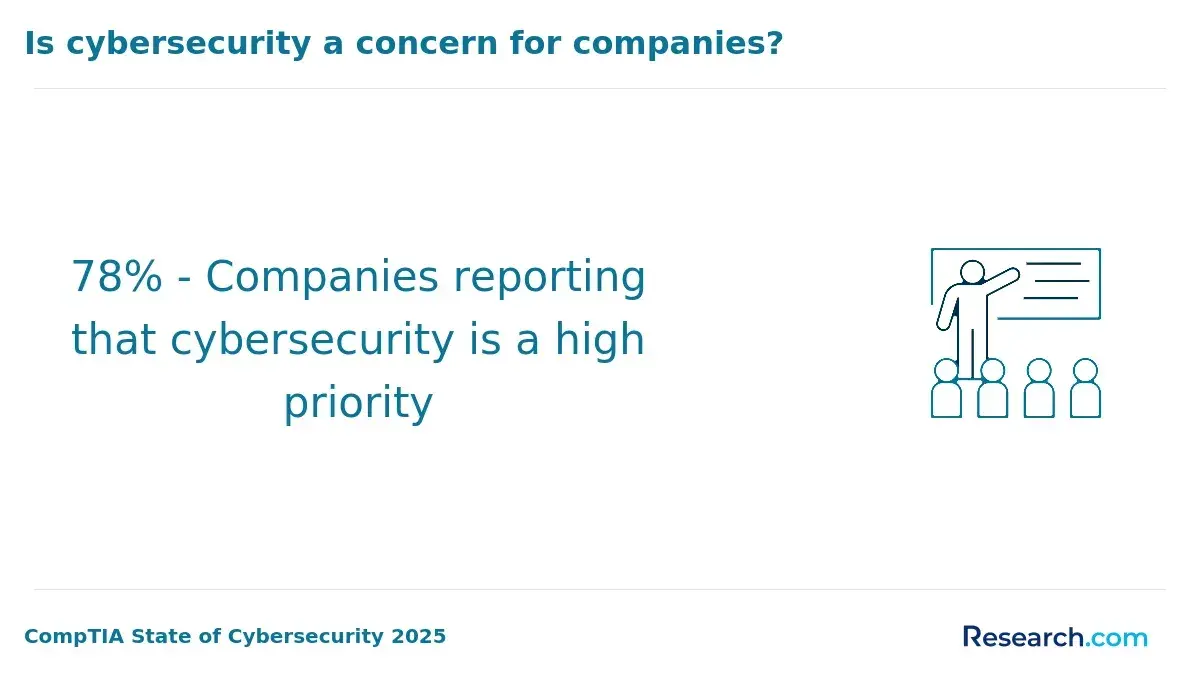
Choosing an online computer forensics degree is a practical decision about cost, credibility, technical training, and career fit. The field matters because digital evidence now appears in fraud cases, ransomware incidents, corporate investigations, healthcare data breaches, and law enforcement work. Cybercrime damages are expected to surpass $10 trillion by 2025, according to Stevenson University, and many organizations still lack enough trained professionals to investigate attacks and protect evidence.
This guide is for students comparing online bachelor’s programs in computer forensics, cybersecurity, digital investigations, or related computing fields. You will learn how online programs work, what employers look for, what these degrees cost, which courses and skills matter, how to compare schools, and what career paths may follow. You will also find a practical list of online programs and questions to ask before enrolling.
Quick answer: Yes, you can earn a computer forensics degree online, and employers can take it seriously if the school is properly accredited and the program includes hands-on labs, digital evidence training, cybersecurity fundamentals, and legal or ethical coursework. The best choice is not simply the cheapest or most flexible program; it is the program that matches your career goal, budget, schedule, transfer credit situation, and need for practical forensic tools.
Best Online Computer Forensics Degree Programs Table of Contents
- Can you complete a computer forensics degree fully online?
- Do employers respect online computer forensics degrees?
- Are online computer forensics degrees recognized internationally?
- Online vs. campus computer forensics programs
- How much does an online computer forensics degree cost?
- Admission, technical, and skill requirements
- Courses commonly found in online computer forensics programs
- How to choose a strong online computer forensics program
- 2027 best online computer forensics programs
- What does it take to work in computer forensics?
- Computer forensics career paths
- Educational paths that can complement computer forensics
- How online programs prepare students for real investigations
- Accelerated and continued learning options
- Soft skills for computer forensics careers
- Challenges online students face and how to handle them
- Health informatics and digital investigations
- Artificial intelligence in computer forensics
- Professional credentials that can strengthen your degree
- Emerging trends in computer forensics
- Interdisciplinary study and career flexibility
- Data analytics for digital evidence analysis
Can you complete a computer forensics degree fully online?
Yes. Many students can complete a computer forensics degree entirely online, depending on the school’s format and whether the program requires internships, proctored exams, or in-person residencies. Online learning has become common across higher education: 98% of universities offer online courses, and 53% of students enroll in at least one online course.
Most online bachelor’s programs in computer forensics, cybersecurity, or digital investigations require 120 credits and are designed to take about four years for full-time students. Some programs offer multiple start dates, year-round terms, transfer credit options, or accelerated formats that can shorten the timeline. Students who want a faster path may also compare accelerated online computer science bachelor’s programs, especially if they are comfortable with heavier course loads.
Computer forensics is usually housed in a computing, cybersecurity, criminal justice, or information technology department. Students who want a broader technical foundation may also compare programs offered by the best computer science schools, since computer science, cybersecurity, and forensics frequently overlap in areas such as operating systems, networks, programming, and data recovery.
Do employers respect online computer forensics degrees?
Employers can respect an online computer forensics degree when it comes from an accredited institution and demonstrates relevant technical training. The delivery format matters less than the quality of the school, the rigor of the curriculum, and the student’s ability to use forensic tools, document evidence, communicate findings, and follow legal procedures.
Online degrees have also become more familiar to employers. More than 70% of organizations have reported hiring candidates with online degrees within the past 12 months, while 96% of online program graduates report a positive return on investment through employment opportunities. Even so, hiring managers may still evaluate the institution’s reputation, accreditation, hands-on learning opportunities, and the applicant’s portfolio, certifications, internships, or prior IT experience.
If you plan to advance beyond entry-level work, look at how the bachelor’s degree connects to graduate study. Some students later pursue an online master’s in computer science, a cybersecurity master’s program, or a specialized computer forensics graduate degree to qualify for more technical or leadership-focused roles.
Are online computer forensics degrees recognized internationally?
An online computer forensics degree may be recognized outside the United States, but recognition depends on the country, employer, licensing or immigration rules, and the institution granting the degree. Before enrolling, students who plan to work internationally should ask whether the school is regionally or institutionally accredited, whether transcripts clearly show the credential awarded, and whether the target country evaluates online degrees differently from campus-based degrees.
The safest approach is to check with professional associations, credential evaluation agencies, public-sector employers, or regulatory authorities in the country where you hope to work. Similar caution applies when comparing related programs such as an online cybersecurity degree, because cybersecurity and digital forensics credentials may be interpreted differently across regions.
Online vs. campus computer forensics programs
Online and campus-based computer forensics programs can teach the same core subjects: digital evidence handling, operating systems, cybersecurity, networking, legal issues, and investigative methods. The major difference is not necessarily academic quality. It is the learning environment, access to equipment, scheduling flexibility, and how students practice technical skills.
| Factor | Online computer forensics degree | Campus computer forensics degree | Best fit |
| Schedule | Often more flexible, with asynchronous or evening coursework | Usually follows fixed class meeting times | Online works well for working adults and students with family responsibilities |
| Labs and forensic tools | May use remote labs, virtual machines, simulations, and cloud-based tools | May provide direct access to physical labs, forensic workstations, and specialized hardware | Campus can be better if you learn best through supervised physical lab work |
| Networking | Relies on online discussion, virtual events, alumni groups, and remote career services | Offers in-person peer interaction, local employer events, and campus organizations | Choose based on how much structure and face-to-face contact you need |
| Location | Available to students who do not live near a suitable program | Requires commuting or relocation | Online is useful when local options are limited |
| Cost structure | May reduce commuting, housing, and campus-related costs, but technology fees may apply | May include housing, transportation, and on-campus fees | Compare total cost of attendance, not tuition alone |
Are online programs cheaper?
Online study can reduce costs tied to commuting, housing, relocation, and some campus services. However, online degrees are not automatically cheaper. Students may still pay technology fees, course material costs, lab platform fees, proctoring fees, and out-of-state tuition. The same caution applies to related online programs such as a programming degree online.
Are online degrees as good as campus degrees?
An online degree can be as academically useful as a campus degree when the school is accredited, the curriculum is current, and the program includes meaningful technical practice. The stronger question is whether the specific program prepares you for the work you want. For computer forensics, that means evidence handling, reporting, cybersecurity foundations, legal awareness, and practice with realistic investigation scenarios.
Cyberseek data indicates that 52% of the employed cyber workforce hold advanced degrees, with many in computers and IT fields. That does not mean every role requires graduate education, but it does show why students should think beyond the bachelor’s degree and consider how their program supports long-term growth.
How much does an online computer forensics degree cost?
The average total cost of earning an online computer forensics degree at a public university is $14,900 when considering the expenses of an online, full-time undergraduate student at a four-year college. Online students at private nonprofit schools pay an average of $40,700, while full-time students attending private for-profit schools for four years pay $18,200 on average.
Graduate programs usually have a different price structure, so students planning to continue after the bachelor’s degree should separately compare tuition and fees for a master’s in computer forensics.
| Cost item | Why it matters | Question to ask before enrolling |
| Tuition per credit | Most bachelor’s programs require 120 credits, so small per-credit differences add up | Is tuition the same for online, in-state, and out-of-state students? |
| Technology and lab fees | Forensics courses may require virtual labs, software, proctoring, or security platforms | Are forensic lab tools included in tuition or billed separately? |
| Transfer credits | Accepted credits can reduce both time and cost | How many prior credits can I transfer into the program? |
| Books and software | Technical courses may require specialized materials | Does the school provide required software access? |
| Financial aid | Accreditation affects eligibility for federal aid and some employer tuition benefits | Is the institution eligible for federal financial aid? |
Is an online computer forensics degree worth it?
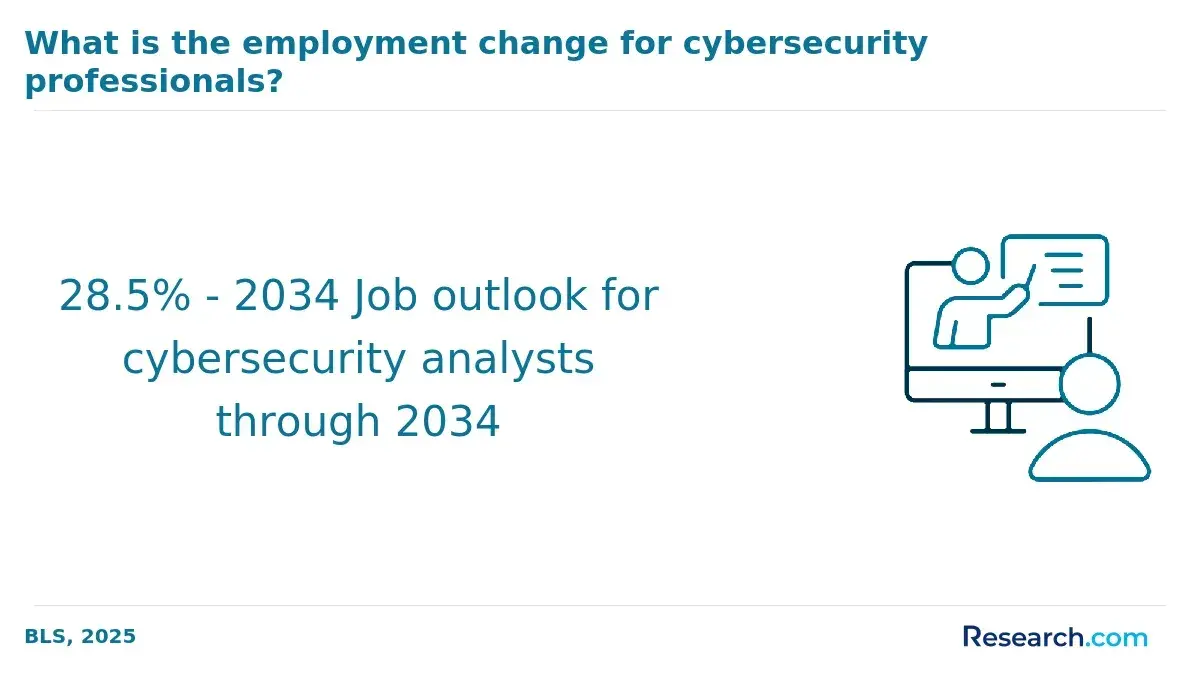
An online computer forensics degree can be worth it for students who want a technical career tied to cybersecurity, investigations, compliance, incident response, or law enforcement support. The BLS reports 35% job growth for the computer security industry in the country, and the broader cybersecurity labor market continues to face a talent shortage.
Globally, there are still 3.5 million unfilled cybersecurity jobs this year, with more than 750,000 of those roles in the U.S. This demand-and-supply gap is expected to continue through 2025. At the same time, the labor market is not risk-free: as of writing, 210,269 tech employees have already been laid off.
The practical takeaway is this: demand is strong, but outcomes are not guaranteed. A degree is more valuable when paired with hands-on labs, internships, certifications, a project portfolio, and a clear job target. Students who want to move into leadership or advanced security roles may later consider a cybersecurity master’s degree.
| Position | Entry level (<1 year) | Early career (1-4 years) | Mid-career (5-9 years) | Experienced (10-19 years) | Late career (20+ years) |
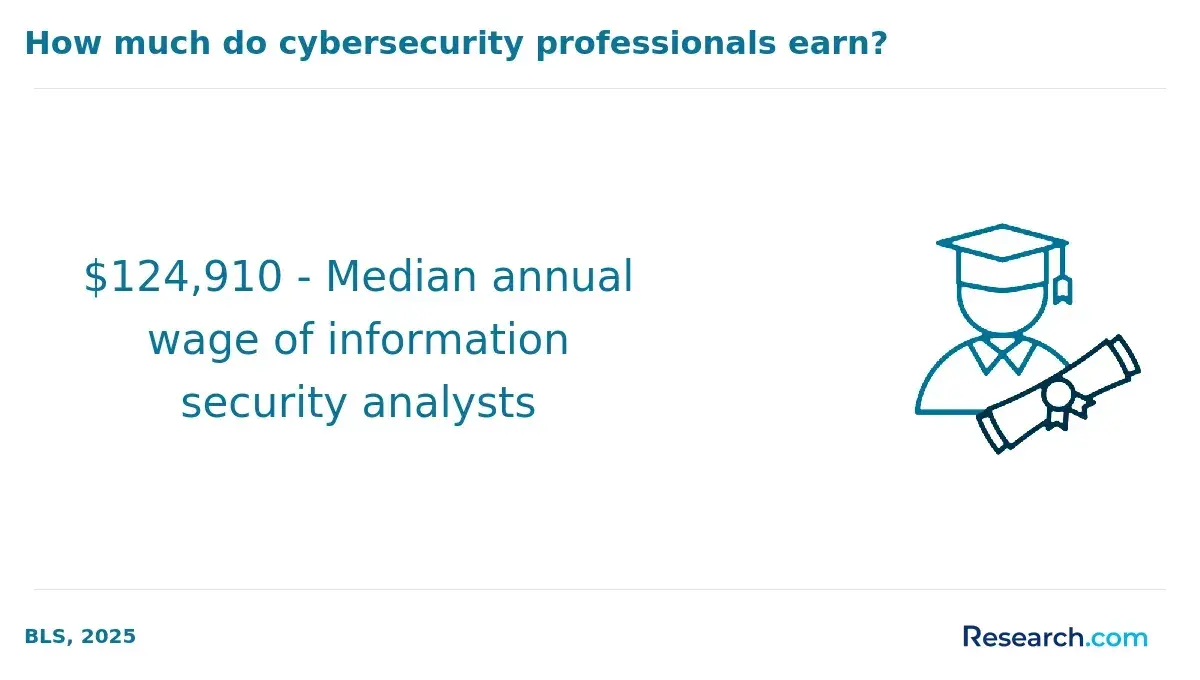
| Information security analyst | $60,000 | $68,000 | $82,000 | $95,000 | $101,000 |
| Forensic computer analyst | $63,000 | $70,000 | $86,000 | $101,000 | $99,000 |
| Information security officer | $67,000 | $76,000 | $92,000 | $107,000 | $114,000 |
Admission, technical, and skill requirements
Requirements vary by institution and degree level. Undergraduate programs usually focus on high school preparation and general admission materials, while graduate programs may require a completed bachelor’s degree, prerequisite coursework, professional experience, or standardized test scores.
Common admission requirements
- Academic record. Bachelor’s programs usually require a high school diploma or equivalent. Graduate programs require a bachelor’s degree. Some programs may expect prior coursework in mathematics, computer science, cybersecurity, or information technology.
- Application form and transcripts. Applicants typically submit an online application, contact information, academic history, and official or unofficial transcripts.
- Personal statement. Some schools ask for an essay explaining your interest in digital investigations, career goals, related experience, and reasons for choosing the program.
- Test scores. A program may request ACT or SAT scores for bachelor’s admission or GRE scores for graduate admission, although policies vary.
Skills that help students succeed
- Cybersecurity fundamentals. Students should become comfortable with encryption, network defense, secure data handling, malware behavior, and incident response concepts.
- Basic coding and scripting awareness. You do not need to master every type of coding language, but basic scripting and programming literacy can help with automation, log review, and technical troubleshooting.
- Data analysis and investigation. Digital forensics work requires identifying relevant files, interpreting system activity, recognizing patterns, and explaining what the evidence does and does not prove.
- Attention to detail. A small documentation error can weaken an investigation. Students must learn careful note-taking, evidence preservation, and clear report writing.
- Legal and ethical judgment. Digital evidence must be handled with respect for privacy, search authority, admissibility rules, and chain-of-custody requirements.
Technology requirements for online learning
At minimum, online students need a reliable computer, stable internet access, a webcam or microphone for some courses, and the ability to use learning platforms. Computer forensics programs may also require virtual machines, remote lab access, security tools, or specific operating system configurations. Students should be ready to learn file systems, operating systems, hardware basics, software troubleshooting, and network concepts.
These skills also overlap with broader technology roles. Students comparing future options may review the skills required for coding jobs to understand how programming, troubleshooting, and systems knowledge can support multiple career paths.
Courses commonly found in online computer forensics programs
Online computer forensics programs combine theory with applied technical work. The strongest programs help students practice how to identify a breach, preserve evidence, recover data, analyze activity, and explain findings to legal, business, or technical audiences.
| Course area | What students learn | Why it matters in the field |
| Digital evidence analysis | Evidence acquisition, preservation, metadata review, file systems, data recovery, and evidence documentation | Forensic findings must be traceable, repeatable, and defensible |
| Cybersecurity and network forensics | Network architecture, log analysis, intrusion detection, breach investigation, and attack reconstruction | Many investigations begin with network alerts, compromised accounts, or suspicious traffic |
| Mobile device forensics | Mobile operating systems, app data, communications records, extraction methods, and device-specific challenges | Phones often contain location, message, photo, and app evidence relevant to cases |
| Legal and ethical issues | Privacy, evidence admissibility, chain of custody, expert testimony, and investigative boundaries | Technical findings can lose value if evidence is collected or reported improperly |
| Incident response | Containment, recovery, malware triage, communication, and post-incident review | Many employers need professionals who can both investigate and help reduce future risk |
How to choose a strong online computer forensics program
Rankings can help you build an initial shortlist, but they should not replace your own program review. The right school depends on your budget, transfer credits, learning style, career goal, and whether you need strong preparation for cybersecurity, law enforcement, corporate investigations, or graduate study.
Program quality checklist
- Accreditation. Confirm that the institution is accredited. For computer forensics and cybersecurity, also look for relevant designations such as National Centers of Academic Excellence (CAE), awarded by the National Security Agency and the Department of Homeland Security. Some related programs may also connect to specialized bodies such as the Forensic Science Education Programs Accreditation Commission or the Accreditation Board for Engineering & Technology.
- Hands-on labs. Ask whether students use virtual machines, forensic imaging tools, log analysis exercises, mobile forensics labs, or case-based simulations.
- Faculty experience. Instructors should understand current cybersecurity and forensic investigation practices. The same principle applies in adjacent fields: students who want to become a Java developer benefit from instructors who know the current tools and workplace expectations.
- Career support. Look for internship support, employer connections, resume reviews, interview preparation, and alumni networks.
- Curriculum alignment. Compare courses against your target job. A student asking, what can you do with a cyber security degree, may need a broader security curriculum, while a future forensic analyst needs deeper evidence-handling practice.
- Transfer and graduate pathways. If you may continue into graduate school or switch institutions, verify credit transfer policies early.
- Related forensic education. Some students also compare broader forensic science degrees if they are interested in lab science, criminalistics, or non-digital evidence.
Common mistakes to avoid
| Mistake | Why it can hurt you | Better approach |
| Choosing based only on tuition | The cheapest program may lack labs, career support, or relevant coursework | Compare total cost, accreditation, tools, faculty, and outcomes together |
| Ignoring accreditation | Unaccredited programs may limit aid, transfer credits, or employer acceptance | Verify institutional accreditation before applying |
| Assuming all online programs are identical | Some emphasize cybersecurity broadly, while others focus on investigations | Read course descriptions and match them to your target role |
| Overlooking lab access | Digital forensics is practice-heavy | Ask how students complete forensic imaging, analysis, and reporting exercises online |
| Expecting a degree to guarantee a job | Hiring also depends on experience, certifications, location, clearance needs, and interview performance | Build a portfolio, pursue internships, and consider certifications |
2027 best online computer forensics programs
Research.com compiled this list of online computer forensics and closely related cybersecurity programs using factors such as merit, accessibility, tuition, and overall prominence. A degree can be valuable over time; the Association of Public and Land-grant Universities notes that education pays. Still, students should verify current tuition, fees, curriculum, admissions rules, and online availability directly with each school before applying.
| School and program | Program details | Cost and credits | Accreditation or designation stated |
| Champlain College Bachelor of Science in Computer Forensics & Digital Investigations | Program length: 4 years. Courses include Criminal Law, Criminal Procedure, Networking Fundamentals, and more. Champlain College is home to the Senator Patrick Leahy Center for Digital Investigation & Cybersecurity. | Cost per credit: $328. Required credits to graduate: 120. | New England Commission of Higher Education |
| Robert Morris University Bachelor of Science in Cyber Forensics and Information Security | Program length: 4 years. Courses include Computing Principles & Practices, Fundamentals of Programming, Operating Systems, and more. The program combines business, cyber technology, law, and organizational behavior and reports a 92% job or graduate school placement. | Cost per credit: $795. Required credits to graduate: 120. | Council for the Accreditation of Educator Preparation |
| University of Potomac Bachelor of Science in Cybersecurity | Program length: 4 years. Tracks or concentrations include Government Contract Management, Healthcare Management, Information Management, International Business, and Management. | Cost per credit: $240. Required credits to graduate: 120. | Middle States Commission on Higher Education |
| Pace University Bachelor of Science in Professional Technology Studies, Computer Forensics Concentration | Program length: 4 years. Tracks or concentrations include Business Technology Leadership and Computer Forensics. The program develops broad IT knowledge and an understanding of cybercrime and the criminal justice system. | Cost per credit: $555. Required credits to graduate: 120. | Middle States Commission on Higher Education. Pace is designated as a National Center of Academic Excellence in Cyber Defense Education by the Department of Homeland Security and the NSA. |
| Stevenson University Bachelor’s in Cybersecurity and Digital Forensics | Program length: 4 semesters. Courses include Intrusion and Penetration Testing, Incident Response and Investigation, Forensic Evidence Collection Tools and Techniques, and more. | Cost per credit: $450. Required credits to graduate: 120. | Middle States Commission on Higher Education; Defense Cyber Crime Center |
What does it take to work in computer forensics?
Computer forensics work suits people who enjoy technology, investigation, documentation, and problem-solving under pressure. The job is not only about finding files or running tools. Professionals must protect evidence integrity, explain technical findings to nontechnical stakeholders, and understand how their work may affect legal, financial, or public safety decisions.
Students considering this path should be comfortable with continuous learning. Devices, cloud systems, malware, encryption, and attacker tactics change quickly. Many computer science careers require ongoing skill development, but computer forensics adds another layer: your conclusions may need to stand up to legal, regulatory, or executive scrutiny.
Computer forensics career paths
An online computer forensics degree can support roles in cybersecurity, law enforcement, consulting, corporate security, compliance, and government agencies. Job titles vary, and some positions require prior IT experience, security clearance, certifications, or specialized training.
| Career path | What the role does | Good fit for students who enjoy |
| Forensic computer analyst | Recovers, preserves, and analyzes data from computers, storage devices, networks, or other digital sources for investigations | Evidence analysis, technical documentation, and legal procedures |
| Cybersecurity analyst | Monitors systems, investigates alerts, evaluates risks, and helps defend networks and data | Threat detection, security tools, and incident prevention |
| Information security officer | Develops policies, oversees security programs, manages risk assessments, and supports compliance | Governance, leadership, and risk management |
| Penetration tester or ethical hacker | Tests systems for weaknesses and recommends fixes before attackers exploit them | Offensive security, problem-solving, and technical experimentation |
| Incident response specialist | Responds to breaches, contains damage, supports recovery, and documents lessons learned | Fast-moving investigations, crisis response, and malware or network analysis |
Educational paths that can complement computer forensics
Computer forensics is interdisciplinary. A student may strengthen career options by adding advanced computer science, cybersecurity, data science, artificial intelligence, criminal justice, psychology, health informatics, or engineering knowledge. The right add-on depends on the work you want.
For example, an affordable online master’s degree in computer science may help students deepen their background in artificial intelligence, software engineering, data systems, or advanced computing. Students who want a broader technical credential at the undergraduate level can also compare an online computer science degree.
Not every complementary field is equally relevant for every student. Psychology can help investigators understand behavior patterns, but an accelerated psychology degree online makes the most sense for students interested in cybercrime investigation, fraud behavior, victim support, or roles that intersect with criminal justice. Similarly, an affordable online bachelor’s in electrical engineering degree may be more useful for students interested in hardware, embedded systems, IoT devices, or technical analysis beyond standard software environments.
How online programs prepare students for real investigations
A strong online computer forensics program should prepare students for the practical reality of digital investigations: incomplete data, multiple devices, legal constraints, time pressure, and the need to explain findings clearly. Coursework should move beyond definitions and require students to practice evidence handling, timeline building, report writing, and incident analysis.
Real investigations often involve computers, mobile devices, cloud services, network logs, and deleted or hidden files. Students should look for programs that include network forensics, mobile forensics, cloud-related investigation topics, and case-based assignments. Even programs promoted as one of the easiest computer science degree options still require discipline if they include technical labs and forensic analysis.
Legal and ethical training is equally important. Students must understand chain of custody, privacy boundaries, evidence authentication, and how to avoid altering data. A technically accurate finding can lose value if the collection process is flawed or poorly documented.
Accelerated and continued learning options
Accelerated programs can help motivated students finish faster, but they are not automatically easier. They usually compress assignments and require stronger time management. This format may be useful for working professionals, career changers, and students who already have transfer credits or a clear target role.
| Student type | Why acceleration may help | Risk to consider |
| Working professionals | Can move into cybersecurity or forensics without spending as many years in school | Balancing work, labs, and deadlines can be difficult |
| Career changers | Provides a structured route into digital investigations | Students without IT experience may need extra preparation |
| Highly motivated students | May reduce time to completion and total opportunity cost | Fast pacing can limit time for internships or portfolio projects |
Soft skills for computer forensics careers
Technical ability gets you into the work; communication helps you succeed in it. Computer forensics professionals must translate complex findings for attorneys, executives, investigators, auditors, clients, or juries. They also need sound judgment when evidence is ambiguous.
- Written communication: Reports should be clear, factual, and defensible.
- Verbal communication: Investigators often explain methods and findings to nontechnical decision-makers.
- Teamwork: Digital investigations may involve legal, compliance, security, HR, and law enforcement personnel.
- Adaptability: New devices, applications, cloud platforms, and threat tactics require constant learning.
- Leadership: Senior professionals may coordinate incident response, manage evidence workflows, or brief executives.
Students interested in combining technical investigation with advanced automation or strategy may also explore the fastest AI master’s programs after building a strong computing foundation.
Challenges online students face and how to handle them
Online computer forensics programs offer flexibility, but students must be proactive. The biggest challenges are limited physical lab access, isolation, time management, and the need to practice with specialized tools outside a traditional classroom.
| Challenge | Why it happens | How to respond |
| Limited access to physical labs | Online students may rely on virtual tools instead of campus hardware | Choose programs with remote labs, virtual machines, and realistic case exercises |
| Isolation | Students may have fewer informal conversations with classmates and faculty | Use discussion boards, office hours, student groups, and professional communities |
| Time pressure | Many online learners work while studying | Block weekly lab time and avoid taking too many technical courses at once |
| Tool learning curve | Forensic platforms can be complex for beginners | Start with operating systems, networking, and scripting fundamentals |
| Unclear career direction | Forensics overlaps with cybersecurity, compliance, law enforcement, and IT | Compare job descriptions early and build projects around your target role |
Students still deciding whether a computing path fits them can review the broader question, is computer science a good major?, before committing to a specialized forensics program.
Health informatics and digital investigations
Health informatics can broaden a computer forensics skill set for students interested in healthcare data breaches, patient privacy, electronic health records, or HIPAA-related investigations. Healthcare environments involve sensitive records, specialized systems, and strict compliance expectations, so investigators benefit from understanding how clinical data is created, stored, accessed, and audited.
Students who want to work at the intersection of cybersecurity, healthcare, and digital evidence may compare online health informatics degree programs as a complementary option rather than a replacement for core forensic training.
Artificial intelligence in computer forensics
Artificial intelligence can support computer forensics by helping classify large volumes of data, identify anomalies, prioritize alerts, and detect patterns that would be difficult to review manually. AI does not replace careful evidence handling or professional judgment, but it can make investigations more efficient when used responsibly.
Students interested in this direction should build a foundation in data structures, statistics, scripting, cybersecurity, and ethical AI use. An AI master’s degree online may be a useful later step for professionals who want to specialize in machine learning-assisted investigations, threat detection, or automated evidence review.
Professional credentials that can strengthen your degree
Certifications can help demonstrate specialized skills, especially when your degree is broad or you are competing for technical roles. Credentials such as Certified Computer Examiner (CCE) or Certified Forensic Computer Examiner (CFCE) may signal commitment to professional standards and current investigative methods.
Before paying for a certification, check job postings in your target market. Some employers prefer vendor-neutral security credentials, while others value forensic examiner certifications, cloud security credentials, or incident response experience. Professional memberships can also help through networking, continuing education, and exposure to real-world investigative practices.
Emerging trends in computer forensics
Computer forensics is changing as evidence moves across cloud platforms, mobile apps, connected devices, encrypted systems, and large-scale enterprise networks. Students should choose programs that acknowledge these changes rather than focusing only on traditional computer hard-drive analysis.
Cloud forensics
As organizations move data and applications to cloud environments, investigators must understand remote storage, access logs, shared responsibility models, and jurisdictional issues. Cloud evidence can be distributed across systems and regions, which makes legal and technical procedures more complicated.
AI and machine learning
AI and machine learning are increasingly used to detect anomalies, classify files, and assist with threat identification in large datasets. Professionals who understand both forensic standards and AI limitations may be better prepared for advanced investigative environments.
Privacy and compliance
Regulations such as GDPR, CCPA, and HIPAA make privacy knowledge essential. Computer forensics professionals must know how to investigate while minimizing unnecessary exposure of personal or regulated data.
Specialized areas
Network forensics, IoT forensics, and blockchain investigations are growing in relevance as organizations adopt connected devices and digital assets. Students considering specialized technical roles may also review computer science degree jobs to understand how advanced computing skills can affect career options.
Public-private collaboration
Cyber investigations often involve businesses, law enforcement, insurers, regulators, and outside consultants. Professionals who can communicate across sectors and maintain sound evidence practices are likely to be more useful than those who only know tools.
Interdisciplinary study and career flexibility
Interdisciplinary study can make computer forensics professionals more adaptable. Hardware knowledge can help with device-level analysis, computer science can strengthen systems thinking, data science can improve pattern detection, and legal or criminal justice coursework can improve investigative judgment.
The key is to avoid collecting credentials without a plan. Choose complementary study based on the evidence environments you want to work with: corporate networks, mobile devices, healthcare systems, IoT hardware, malware, fraud data, or law enforcement cases.
Data analytics for digital evidence analysis
Data analytics can improve digital investigations by helping professionals process large datasets, spot unusual patterns, visualize activity, and prioritize the evidence most likely to matter. This is especially useful in cases involving logs, financial transactions, user activity, cloud environments, or enterprise security events.
Students who want deeper quantitative training may consider related graduate options such as the cheapest data science master’s programs online. Data analytics should complement, not replace, forensic procedure: evidence still needs proper collection, preservation, validation, and documentation.
Questions to ask before choosing an online computer forensics degree
- Is the institution accredited, and can I verify that accreditation independently?
- Does the program teach digital evidence handling, chain of custody, report writing, and legal issues?
- What forensic tools, virtual labs, or simulations will I use?
- Can I transfer credits, and how many will apply to the major?
- What is the total cost, including technology, lab, proctoring, and course material fees?
- Does the curriculum align better with law enforcement, corporate cybersecurity, incident response, or compliance?
- Are internships, capstones, portfolios, or employer-connected projects available?
- What certifications do graduates commonly pursue?
- How does the school support online students with tutoring, advising, and career services?
- If I plan to work outside the U.S., how will this degree be evaluated internationally?
Key Insights
- Online computer forensics degrees can be credible. Employers are more likely to value them when they come from accredited institutions and include applied labs, evidence handling, cybersecurity, and legal coursework.
- Program fit matters more than format. Online and campus degrees can both work, but students should compare labs, faculty experience, career support, transfer policies, and total cost.
- Costs vary widely. The average total cost is $14,900 at public universities, $40,700 at private nonprofit schools, and $18,200 at private for-profit schools for full-time online undergraduate study.
- Cybersecurity demand is strong but not a guarantee. The field reports 35% job growth, and there are 3.5 million unfilled cybersecurity jobs globally, but students still need practical skills, experience, certifications, and a clear job strategy.
- Digital forensics is both technical and legal. Professionals must know how to recover and analyze data while preserving chain of custody, respecting privacy, and producing defensible reports.
- Hands-on practice is essential. A strong online program should include remote labs, forensic tool practice, realistic case exercises, and opportunities to build a portfolio.
- Specialization can improve career direction. Cloud forensics, mobile forensics, incident response, AI-assisted analysis, healthcare data investigations, and data analytics can each lead to different opportunities.
- Avoid choosing only by ranking or tuition. The best online computer forensics degree is the one that matches your target role, schedule, budget, and need for credible technical training.
References:
- BLS. (2025, August 28). Information Security Analysts. BLS.
- BLS. (2025, August 28). Occupational projections, 2024–2034, and worker characteristics. BLS.
- Coffey, L. (2024, January 30). Students Distancing From Distance Learning. Inside Higher Ed.
- Cyber Seek. (2024). Cybersecurity Supply/Demand Heat Map. Cyber Seek.
- NCES. (2024, May). Price of Attending an Undergraduate Institution. NCES.
- Peck, Devlin. (2025, January 3). Online Learning Statistics: The Ultimate List in 2025. Devlin Peck.
- Northeastern University. Employer perspectives on online education. Northeastern University.
- Stevenson University. (n.d.). Online Bachelor’s in Cybersecurity and Digital Forensics. Stevenson University.
- University of Illinois Chicago. (n.d.). Are online degrees respected by employers? University of Illinois Chicago.
Other Things You Should Know About Online Computer Forensics Degree Programs
Employers will take your online degree seriously as long as it is obtained from an accredited institution. Accreditation ensures that the program meets high educational standards and is recognized in the industry.
Yes, online computer forensics degrees from accredited institutions are recognized globally. However, it is important to check the specific recognition requirements and regulations of the country where you plan to work.
The cost varies depending on the institution. On average, a degree from a public university costs around $14,900, while private institutions can charge between $24,700 and $42,200. Additional costs such as textbooks and technology fees should also be considered.
Admission prerequisites in 2027 typically include a high school diploma or GED, a minimum GPA of 2.5, and submission of SAT or ACT scores. Some programs may require a personal statement or prior coursework in computing or related fields.
Common requirements include a high school diploma or equivalent for undergraduate programs, and a bachelor's degree for graduate programs. You may also need to submit application forms, personal statements, transcripts, and standardized test scores.
Courses typically include Digital Evidence Analysis, Cybersecurity and Network Forensics, Mobile Device Forensics, and Legal and Ethical Issues in Computer Forensics. These courses provide both theoretical knowledge and practical skills.
An online computer forensics degree typically takes about 3 to 4 years to complete in 2027. Some programs may offer accelerated options, which can reduce the time to approximately 2 years, depending on transfer credits and course load.
Yes, many institutions offer fully online computer forensics degree programs, allowing students to complete coursework and participate in virtual labs from anywhere in the world. These programs provide flexibility and often include interactive elements to ensure comprehensive learning experiences similar to on-campus courses.
Yes. Reputable online computer forensics degrees are accredited by regional accreditors such as the Higher Learning Commission or Middle States Commission, just like campus programs. Some schools also seek program-specific recognition through computing bodies, but institutional accreditation is the main credential employers and graduate schools check.