2027 Best Forensic Science Degree Guide: Costs, Requirements & Job Opportunities

Co-Founder and Chief Data Scientist
If you want to work with evidence, laboratory methods, and courtroom-ready reporting, a forensic science degree can be a practical path into a specialized and competitive field. But choosing the right program matters just as much as choosing the major itself. The best option is not always the most famous school; it is the program that matches your career goal, meets accreditation standards, offers the right labs and internships, and leads to jobs you actually want.
This guide breaks down what a forensic science degree includes, which skills it builds, what it can cost, what jobs it can lead to, and how to compare programs more intelligently. It also explains when a forensic science degree makes sense, when a related major may be a better fit, and what to check before you enroll.
Quick answer: A forensic science degree prepares students to collect, analyze, and interpret evidence for criminal investigations and related legal work. If you want the strongest long-term value, prioritize programs with FEPAC accreditation, substantial laboratory training, internship opportunities, and coursework in chemistry, biology, statistics, and criminal justice. That combination is the clearest signal that a program can support both entry-level forensic work and broader lab or science careers.
- What is a forensic science degree?
- What are the key skills gained from a forensic science degree?
- How does forensic science contribute to criminal justice reform?
- How do forensic science graduates stay competitive in the job market?
- Cost of Forensic Science Degree
- Forensic Science Degree Jobs
- Types of Degrees in Forensic Science
- Forensic Science Degree Requirements
- What to Look for in a Forensic Science Program
- Specializations in Forensic Science
- Majors Related to Forensic Science
- Best Forensic Science Degree Programs for 2027
- Should You Consider a Dual Focus in Forensic Science and Criminal Justice?
- Are Online Forensic Science Programs a Viable Alternative to Traditional Degrees?
- Can Interdisciplinary Training in Psychology Enhance Forensic Investigations?
- How Can Continuing Education and Certifications Enhance Your Forensic Career?
- What Alternative Career Paths Can a Forensic Science Degree Unlock?
- Can a Specialized Master's Degree in Forensic Psychology Expand My Career Opportunities?
- Can a Doctorate in Psychology Complement Forensic Science Expertise?
- Can Clinical Mental Health Counseling Training Enhance Forensic Science Careers?
Forensic science is the application of science to legal questions, especially those involving crime scenes, physical evidence, and courtroom testimony. In practice, forensic professionals do far more than what is shown on television. They document scenes, preserve evidence, run laboratory tests, interpret results, and explain those findings in ways that judges, attorneys, investigators, and juries can understand.
The field draws on chemistry, biology, physics, statistics, psychology, digital tools, and law. It is also highly procedural, which means accuracy, chain of custody, and documentation matter as much as technical knowledge. That is why a forensic science degree is usually built around both lab work and broader scientific reasoning.
According to the Occupational Information Network, forensic science technicians collect and analyze physical evidence for criminal investigations (Occupational Information Network, 2024). The work may involve substances such as tissue, hair, and fiber, along with specialized areas like ballistics, fingerprints, toxicology, handwriting analysis, and digital evidence. Many professionals also serve as expert witnesses in court.
Because the field is interdisciplinary, strong programs usually combine lectures, laboratory courses, internships, and research. Students may study blood spatter, toxicology, evidence handling, and courtroom communication while also learning ethics and professional standards. If you are comparing schools, you should look beyond marketing language and focus on whether the program prepares you for real forensic work.
Program quality matters for another reason: not all degrees offer the same job value. The growth in forensic science education has increased interest in the field, but a degree only helps if it gives you the scientific foundation employers expect. The Bureau of Labor Statistics noted rising demand for specialized evidence recovery technicians, and the occupation outlook for forensic science technicians remains stronger than average (Bureau of Labor Statistics, 2024). That makes accreditation, lab access, and career preparation especially important.
The most recognized U.S. quality standard is accreditation from the Forensic Science Education Programs Accreditation Commission (FEPAC). FEPAC-accredited programs must meet science-based curriculum expectations, including coursework in math, physics, and chemistry, along with forensic training. That matters because the rigorous scientific base can also support careers outside traditional forensic work, including laboratory roles in chemical, pharmaceutical, government, and medical settings (FEPAC, 2026).
What can you do with a forensic science degree?
A forensic science degree can lead to laboratory work, field investigation, evidence processing, and other technical roles in the public or private sector. Common job titles include forensic science technician, crime scene technician, fingerprint technician, forensic accountant, forensic computer analyst, and forensic psychologist. Some graduates work for local or state agencies, while others move into federal, hospital, legal, or corporate settings.
Among the highest-paying employers in the field, the Federal Executive Branch reported an annual average salary of $128,430 (U.S. Bureau of Labor Statistics, 2024). That does not mean every forensic graduate will earn that amount, but it does show that specialized government work can offer stronger compensation than many entry-level roles.
What are the key skills gained from a forensic science degree?
Students who choose strong forensic science colleges usually leave with a blend of lab skills, investigative habits, and communication abilities. Those skills are valuable not only in crime labs but also in quality control, public service, and other scientific workplaces.
Here are the most useful skills a forensic science degree should develop:
- Laboratory technique: Students learn methods such as DNA analysis, toxicology testing, and fingerprint comparison. These skills support careful evidence analysis and defensible reporting.
- Precision and documentation: Forensic work depends on noticing small details, labeling evidence correctly, and maintaining clean records. A minor error can affect an entire case.
- Analytical reasoning: Students practice connecting evidence, identifying patterns, and forming conclusions from incomplete information.
- Legal and ethical awareness: A forensic scientist must understand evidence handling rules, privacy concerns, and professional conduct in legal settings.
- Written and oral communication: Reports, case notes, and expert testimony all require clear explanations that non-scientists can understand.
How does forensic science contribute to criminal justice reform?
Forensic science can improve fairness in the justice system when it is used carefully and validated properly. Its biggest value is objectivity: scientific evidence can support or challenge claims that might otherwise rely too heavily on memory, assumption, or bias.
Key ways forensic science supports reform include:
- Helping correct wrongful convictions: DNA testing has been central to many exonerations. Groups such as The Innocence Project have used forensic evidence to re-examine convictions and identify errors.
- Improving evidence reliability: Scientific testing can be more consistent than eyewitness accounts, especially when evidence is collected and interpreted using validated procedures.
- Speeding up investigations: Digital records, fingerprints, trace evidence, and lab analysis can help narrow suspects and clarify events faster than traditional methods alone.
- Informing policy and standards: As the field has matured, it has highlighted the need for stronger protocols, better training, and more transparent methods. Professionals with interdisciplinary training, including psychology, can help advance that work.
- Increasing accountability: Reliable forensic evidence can hold suspects, institutions, and agencies accountable while also protecting innocent people from unsupported accusations.
How do forensic science graduates stay competitive in the job market?
Competition can be strong in forensic science, especially for the most desirable lab and government roles. Graduates stand out when they combine formal education with hands-on experience, technical specialization, and ongoing professional development.
- Earn respected certifications: Credentials from organizations such as the American Board of Criminalistics or digital forensics bodies can strengthen a resume when they match the job target.
- Add advanced education when needed: A forensics degree online at the bachelor’s or master’s level can help working students build credentials while staying employed.
- Get real experience: Internships, lab assistant roles, and volunteer work help students understand evidence workflows and professional expectations.
- Build professional connections: Groups such as the American Academy of Forensic Sciences can help students learn current standards and meet employers.
- Track technology changes: Modern forensic work is increasingly shaped by digital evidence, automation, improved DNA methods, and data analysis tools. Staying current matters.
Cost of a forensic science degree
The price of a forensic science degree depends on several variables: the degree level, public versus private status, residency, and whether the school charges additional lab or program fees. Associate’s, bachelor’s, master’s, and doctoral programs all carry different costs, so the total investment can vary widely.
How much does it cost to get a forensic science degree?
Among the best schools offering bachelor’s forensic science programs, tuition and fees can range from $9,750 to $63,400 (NCES, 2024). The average cost among top schools is $24,841, and the median is $21,154. For graduate study, public degree-granting institutions have an average cost of $13,634 (NCES, 2025), while private institutions average $29,088. The national average cost for attending is $21,343, and the cost of graduate study can range from $9,950 to $48,250 on average.
| Program level | Typical length | Cost context from cited sources | Best for |
| Associate’s | 2 years | Usually the lowest-cost entry point, but exact pricing varies by school | Students seeking entry-level support roles or a transfer path |
| Bachelor’s | 4 years | $9,750 to $63,400 among top schools; average $24,841 | Most entry-level forensic technician roles |
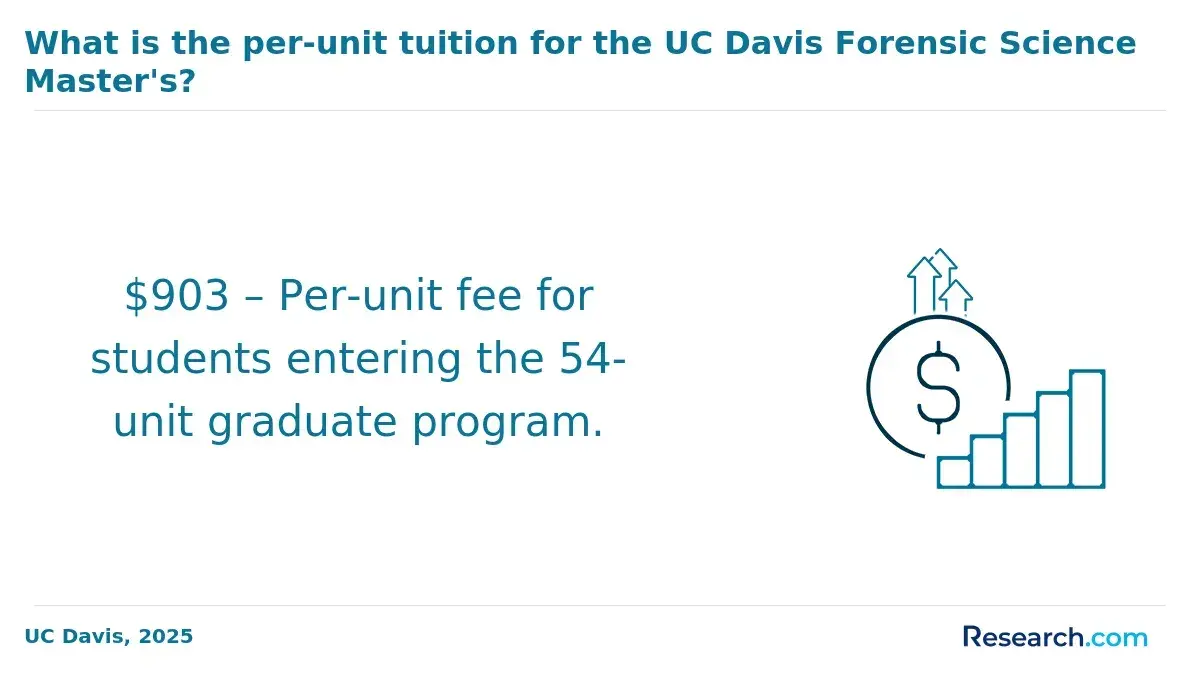
| Master’s | 2 years | Public average $13,634; private average $29,088 | Specialization, advancement, or lab leadership |
| Doctorate | 4 to 5 years | Often the highest total investment because of time and research demands | Research, teaching, or highly specialized expert roles |
Is a degree in forensic science worth it?
It can be, but only if the program is credible and the student has a realistic career plan. Forensic science is not a quick route to easy money. It is a technical field that can pay off over time, especially for graduates who enter specialized government, lab, or investigative roles.
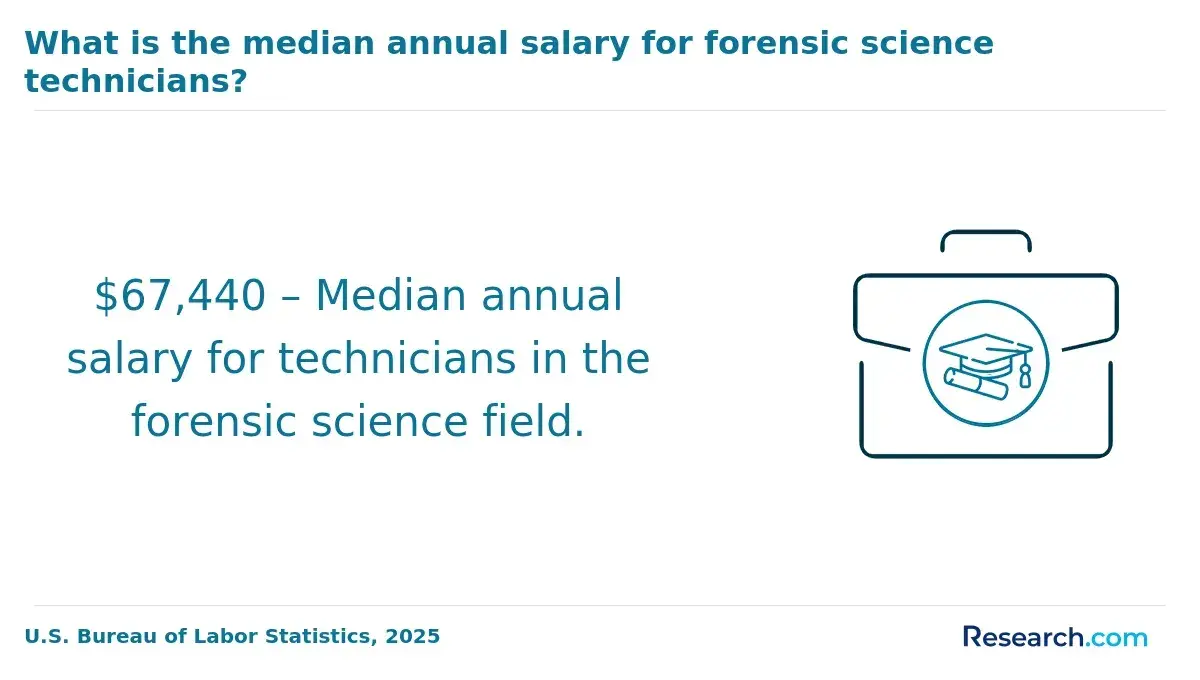
The U.S. Bureau of Labor Statistics reports that forensic science technicians have a median pay of $60,590 a year, and employment is projected to grow by 14% through 2034, which is faster than average. That growth does not guarantee a job, but it does suggest continued demand for qualified candidates. In higher-paying industries such as general medical and surgical hospitals and the Federal Executive Branch, average annual wages can reach $75,720 to $120,790. Strong planning and career strategy can improve the return on your education.
Forensic science degree jobs
A forensic science degree can lead to a range of jobs, but the best-known roles usually require at least a bachelor’s degree and significant training. Entry-level positions often focus on evidence handling, lab procedures, or field support before moving into more advanced analysis.
The field includes specialties such as firearms examination, criminalistics, anthropology, digital evidence, chemistry, and biology. The more specific your training, the easier it may be to match your education to a job title.
Is forensic science in high demand?
Forensic science technicians are projected to grow by 14% through 2034, which is faster than the average for all occupations (Bureau of Labor Statistics, 2024). That outlook is stronger than the 6% projected growth for occupations in the life, physical, and social sciences overall.
Data USA also reports that broader forensic science and technology graduates are seeing steady workforce growth, with about 1.25 million employed in the field and an average wage of about $73,788 a year (Data USA, 2024). The market is not guaranteed, but it remains active and technically specialized.
What jobs can you get with a forensic science degree?
Here are some common roles and what they usually involve:
- Crime scene technician. Works with police and investigators to secure scenes, document evidence, collect materials, and prepare reports. In the U.S., crime scene technicians earn $43,178 on average.
- Fingerprint technician. Processes and compares fingerprint evidence using biometric tools and related imaging systems. Fingerprint technicians earn an average of $37,059.
- Forensic science technician. May work in the field, the lab, or both. Duties can include evidence collection, testing, classification, and reporting. Their national average salary is $48,166.
- Forensic scientist. Usually a more advanced title tied to specialization and experience. Common areas include chemistry, pathology, and toxicology. They have a national average salary of $65,160.
- Forensic accountant. Examines financial records for fraud, hidden assets, or losses and may testify in court. The national average salary is $79,085.
What kind of salary can I earn with a forensic science degree?
Recent figures place the average annual wage of forensic science graduates at $73,120 as of 2024. Actual pay depends heavily on employer type, location, education level, and specialization. The highest-paying industry listed here is the Federal Executive Branch, with an average yearly salary of $126,110. General Medical and Surgical Hospitals follow at $79,240. State and local governments employ the largest shares of workers in the field, with 24% and 21%, respectively.
Geography also matters. In California, forensic science technicians earn the highest average annual wage at $114,430, and the state employed 2,420 forensic science technicians as of May 2024. Illinois follows with an average annual wage of $96,840 and 610 employed forensic science technicians in the same period.
Top Industries for Forensic Science Technicians

Types of degrees in forensic science
The best degree level for you depends on your career target, budget, and timeline. Some students need only an entry-level credential, while others need advanced specialization, research training, or a path toward graduate study.
What kinds of forensic science degrees are there?
1. Associate’s degree in forensic science
Average time to complete: 2 years
An associate’s degree introduces students to evidence collection, basic laboratory methods, and common forensic technologies. Coursework often includes fingerprint techniques, crime scene basics, and introductory lab procedures. Many programs combine lecture courses with hands-on lab experience. Common subjects may include forensic psychology, dentistry, forensic medicine, psychology, and pathology.
Entry-level jobs: lab assistant, intelligence analyst, coroner support roles
2. Bachelor’s degree in forensic science
Average time to complete: 4 years
A bachelor’s program is the most common starting point for forensic science technicians. FEPAC standards call for at least 30 hours in natural science core, 12 hours in specialized science courses, 15 hours in forensic science courses, and 12 hours in additional specialization courses, for a total of 69 required FEPAC course hours. Schools may add their own prerequisites, and many programs also require laboratory work, a capstone experience, internships, and independent research.
Common FEPAC topic areas include:
- Courtroom testimony
- Introduction to law
- Quality assurance
- Ethics
- Professional practice
- Evidence identification, collection, and processing
Entry-level jobs: fingerprint analyst, forensic science technician, forensic specialist
3. Master’s degree in forensic science
Average time to complete: 2 years
A master’s degree is useful for students who want deeper specialization or advancement. Tracks may include criminalistics, forensic pathology, and financial forensics. Graduate study usually includes advanced lab work and more technical coursework, such as Advanced Forensic DNA Analysis, Advanced Forensic Toxicology, and Forensic Serology and DNA. Some related fields, including forensic accounting, may require training in another discipline first.
High-level jobs: forensic scientist, forensic computer analyst, crime scene investigator
4. Doctoral degree in forensic science
Average time to complete: 4 to 5 years
Doctoral programs focus on research design, statistical methods, and original scholarship. Students often come from multiple backgrounds, including finance and computer science, and the curriculum is usually tailored to the dissertation topic. Topics may include forensic toxicology, crime scene reconstruction, human molecular biology, and criminal law and ethics.
High-level jobs: educator, forensic anthropologist, forensic pathologist
5. Certificate in forensic science
Average time to complete: 6 months or more
Certificates can be undergraduate or graduate level, and they can be broad or highly focused. Undergraduate certificates often include courses such as Forensic Evidence and Principles of Forensic Biology, plus an internship. They may help students build job-ready skills or strengthen a related degree. Graduate certificates are often aimed at working professionals such as law enforcement officers, judges, evidence technicians, nurses, and attorneys who want focused forensic training. Common topics include pathology, digital evidence, crime scene investigation, criminal procedure, and human anatomy.
Entry-level jobs: evidence custodian, forensic autopsy technician, property officer
Forensic science degree requirements
Admission rules vary by school, but most programs ask for evidence of prior education, transcripts, and application materials. Competitive programs can add GPA thresholds, testing requirements, or extra documentation.
Admission requirements
- Proof of prior graduation. Applicants usually need a high school diploma for undergraduate study or a bachelor’s degree for graduate study.
- Transcript and GPA review. Most schools ask for official transcripts and may set minimum GPA standards, though these vary widely.
- ACT or SAT scores. Some undergraduate programs still consider standardized test results, though requirements differ by institution.
General requirements
- Recommendation letters
- Application and processing fees
- Statement of purpose
- CV or résumé
- TOEFL or IELTS for international students
Skill requirements
Forensic professionals need a mix of technical, analytical, and interpersonal abilities. The job may involve database management, lab equipment, report writing, presentation software, image processing, and courtroom communication. Students also benefit from training in active listening, critical thinking, inductive and deductive reasoning, and professional communication.
The field continues to move toward more collaborative and multidisciplinary practice. Morgan et al. (2024), in The future of forensic science: global perspectives and strategic priorities, found that practitioners and researchers favored a more holistic, collaborative approach to evidence and intelligence work. That means students should expect their training to cross into related fields rather than remain narrow and isolated.
What to look for in a forensic science program
When you compare programs, begin with accreditation. In the United States, FEPAC accreditation is the clearest quality marker for forensic science programs. It does not guarantee a job, but it does help show that the curriculum meets recognized scientific standards.
Next, look closely at specialization options. Some schools focus more on biology, chemistry, or digital evidence, while others offer broader training. If you already know your interest area, choose a program that supports it early rather than assuming you can specialize later.
Faculty expertise matters too. Good instructors should have professional or research experience in the area you want to enter. The student-to-faculty ratio can also affect how much mentoring, lab supervision, and feedback you receive.
Facilities are equally important. A forensic science program should give you access to the kind of lab environment you will use after graduation. Review the school website, ask admissions questions, and talk with current students or alumni when possible.
Financial aid is another major factor. Schools, foundations, and professional organizations may offer support. For example, The Association of Firearm and Tool Mark Examiners awards an annual $2,000 grant to qualified applicants. It is worth asking each school what aid, grants, and assistantships may be available.
| What to compare | Why it matters | Questions to ask |
| Accreditation | Signals curriculum quality and professional alignment | Is the program FEPAC-accredited? |
| Lab access | Forensic work is hands-on, not just theoretical | What equipment and facilities will students use? |
| Internships | Real experience improves employability | Are internships required, and where do students place? |
| Faculty | Mentorship and research support can shape your career | What are the instructors’ backgrounds? |
| Cost and aid | ROI depends on both price and support | What grants, scholarships, or assistantships exist? |
| Specialization | Helps align training with a specific career path | Does the program support my area of interest? |
Specializations in forensic science
Forensic science is broad enough that many professionals narrow their focus. The right specialization depends on the kind of evidence you want to analyze and the environment you want to work in.
- Forensic biology: Studies biological evidence such as blood, hair, and DNA.
- Forensic chemistry: Examines substances like drugs, accelerants, and explosives.
- Forensic toxicology: Analyzes drugs, poisons, and their effects on the body.
- Forensic anthropology: Works with skeletal remains to help identify individuals.
- Digital forensics: Recovers and interprets data from computers, phones, and other devices.
- Forensic odontology: Uses dental evidence to support identification.
- Crime scene investigation: Focuses on scene documentation, evidence collection, and chain of custody.
- Forensic psychology: Applies psychological methods to legal and investigative questions.
Majors related to forensic science
If you want a similar career outcome without a forensic science major, these related fields can also lead into evidence analysis, lab work, or investigative roles:
Best forensic science degree programs for 2027
In the 2024-2025 academic year, 3,425 forensic science and technology degrees were awarded in the United States. Public four-year institutions accounted for 1,844 completions, making them the largest contributor to degree production in the field during that period.
When evaluating “best” programs, focus on what the ranking is based on. Useful measures include accreditation, lab resources, internship access, faculty expertise, and affordability. A program is only the “best” for you if it fits your career plan and budget.
How forensic science fits into a multidisciplinary career path
Forensic science evolves as other scientific and technical fields evolve. Better DNA methods, stronger imaging tools, digital evidence systems, and improved statistical methods all affect how the field works. That means the strongest professionals usually stay curious and keep learning.
Research is especially active because the field depends on collaboration across biology, computer science, psychology, medicine, law, and other disciplines. If you enjoy working at the intersection of science and public service, forensic science can be a strong fit. The challenge is real, but so is the variety of career directions available.
Career growth also remains a major reason students consider this field. Forensic science technician employment is projected to rise by 14%, with a projected employment change of 2,600 by 2034 from a total number of jobs of 18,500 in 2024. Many related roles also continue to appear in public safety, legal services, education, and national security. That makes the degree more flexible than many students expect.
If you are still deciding what degree to take, forensic science is worth considering when you want science-based work with a direct connection to justice, documentation, and public impact.
Should you consider a dual focus in forensic science and criminal justice?
A dual focus can be a smart choice if you want both technical evidence skills and a better understanding of policing, court systems, and legal procedure. That combination is especially useful for students who want investigative roles, policy work, or positions that bridge scientific analysis and justice administration.
At the same time, a double focus is not necessary for every student. If your goal is a laboratory career, chemistry, biology, or forensic chemistry may be a stronger match. If you want to compare options, reviewing the easiest criminal justice degree online can help you understand how that field complements forensic training.
Best for: students who want flexible career options across law enforcement, evidence analysis, and justice policy.
Less ideal for: students who want a purely lab-based track and prefer deeper specialization in one science.
Are online forensic science programs a viable alternative to traditional degrees?
Online forensic science programs can work well for students who need flexibility, but they are not automatically equal to in-person degrees. The strongest online options still need solid accreditation, meaningful lab components, and realistic methods for hands-on training. Some programs use hybrid formats, virtual simulations, or local lab partnerships to make this possible.
Online study is often a better fit for working adults, career changers, and students who cannot relocate. It may also reduce commuting and housing costs. However, students should be careful: not every online program meets the requirements needed for licensure, internships, or certain lab-based jobs. If price is a major factor, you can review the cheapest online forensic science degree options, but affordability should never replace accreditation checks.
Can interdisciplinary training in psychology enhance forensic investigations?
Yes. Psychology can strengthen forensic work by improving interview techniques, behavioral analysis, victim support, and interpretation of human behavior in legal contexts. It is especially useful in cases that require understanding memory, trauma, risk, deception, or offender behavior.
This kind of training is not a substitute for forensic science, but it can make a graduate more versatile. Students who want faster entry into the field may consider the best accelerated online psychology degree programs as one way to build complementary skills more quickly. The best use of psychology in forensic work is usually practical: better analysis, better communication, and better judgment.
How can continuing education and certifications enhance your forensic career?
Forensic science changes quickly, especially in digital evidence, DNA methods, instrumentation, and reporting standards. Continuing education helps professionals stay current and can also support promotion, specialization, or a move into a new niche.
Useful options include professional workshops, certificate programs, refresher lab training, and certifications linked to your specialty. These are particularly helpful for analysts who want to move into supervisory or expert roles. If you are also comparing broader career options, you may want to explore the cheapest criminal justice degree online as a related educational path.
What alternative career paths can a forensic science degree unlock?
Not every forensic science graduate ends up in a crime lab. The degree can support work in compliance, quality assurance, research, investigation, and consulting, especially when paired with a related minor or additional training.
Some graduates move into criminology, data analysis, lab management, or private-sector investigation. For a wider view of possible outcomes, review criminology bachelor degree jobs. The key is to match your coursework and experience to a target role early, not after graduation.
Can a specialized master's degree in forensic psychology expand my career opportunities?
Yes, especially if you want to work in behavioral analysis, correctional settings, court consulting, or research-based roles. A master’s in forensic psychology can deepen your understanding of motive, risk, witness behavior, and legal decision-making.
That said, this path is most useful when it fits a clear goal. It is not the same as a forensic science degree, and it will not replace laboratory training. For students comparing cost and format, the most affordable online master's degrees in forensic psychology can be a good starting point.
Can a doctorate in psychology complement forensic science expertise?
A doctorate in psychology can add depth for professionals interested in research, expert testimony, advanced assessment, or academic work. It may be especially valuable if you want to analyze behavior in legal contexts or contribute to forensic policy and scholarship.
This route is usually best for students who already know they want advanced research or counseling-related responsibilities. If affordability and flexibility matter, an affordable doctor of psychology degree online may be worth comparing.
Can clinical mental health counseling training enhance forensic science careers?
Clinical mental health counseling training can strengthen forensic work when the role involves victim support, behavioral assessment, crisis communication, or collaboration with mental health systems. It adds practical insight into trauma, intervention, and human behavior.
It is not a direct substitute for forensic science coursework, but it can broaden your career options and make you more effective in interdisciplinary settings. Students interested in this overlap can review the best clinical mental health counseling graduate programs for a deeper look at that pathway.
Common mistakes to avoid when choosing a forensic science program
- Skipping accreditation checks: A program may sound impressive but still lack the quality standard you need.
- Choosing based on tuition alone: The cheapest option is not always the best if it lacks labs, internships, or employer recognition.
- Assuming all online programs are equivalent: Some online degrees do not support the hands-on training forensic work requires.
- Ignoring specialization fit: A general program may not help if your goal is digital forensics, toxicology, or DNA analysis.
- Overlooking placement outcomes: Ask where graduates work, not just how many graduates there are.
- Expecting instant job placement: Forensic science is a technical field, and most roles require experience, training, and patience.
Questions to ask before enrolling
- Is the program FEPAC-accredited?
- How much lab time will students receive?
- Are internships required or encouraged?
- What types of equipment and facilities are available?
- What specialties does the program support?
- What jobs do recent graduates typically get?
- What financial aid options are available?
- Does the program prepare students for graduate study or licensure, if needed?
Key Insights
- A forensic science degree is most valuable when it combines science, lab work, legal knowledge, and real evidence-handling practice.
- FEPAC accreditation is one of the clearest quality signals for U.S. forensic science programs.
- The best career value usually comes from programs with strong labs, internships, and a clear specialization path.
- Forensic science can lead to roles in crime labs, government agencies, private investigation, digital forensics, and related technical fields.
- Cost varies widely, so students should compare tuition, aid, lab access, and likely career outcomes instead of focusing on price alone.
- Online programs can work, but only if they still provide credible hands-on training and meet your career requirements.
- If you want broader flexibility, related majors such as chemistry, biology, psychology, computer science, or statistics can also support forensic careers.
- Continuing education matters because forensic methods, digital tools, and evidence standards keep changing.
References:
- College Factual. (2025). 2025 Criminology Degree Guide. https://www.collegefactual.com/majors/social-sciences/criminology/
- American Academy of Forensic Sciences. (2025). 2025 FEPAC Standards for Undergraduate Programs. FEPAC. https://www.aafs.org/sites/default/files/FEPAC_Standards_for_Undergraduate_Programs_2025.pdf
- American Academy of Forensic Sciences. (2026). FEPAC: Forensic Science Education Programs Accreditation Commission. https://www.aafs.org/fepac/
- National Center for Education Statistics. (2025). Completions 2024-25. Integrated Postsecondary Education Data System (IPEDS). https://nces.ed.gov/ipeds/use-the-data
- Data USA. (2024). Forensic Science & Technology. https://datausa.io/profile/cip/forensic-science-technology
- Morgan, R. J., & Bull, P. A. (2024). The future of forensic science: global perspectives and strategic priorities. Journal of Forensic Sciences, 69(2), 415-428. https://onlinelibrary.wiley.com/journal/15564029
- National Center for Education Statistics. (2024). Price of Attendance of Undergraduate Institutions. U.S. Department of Education, Institute of Education Sciences. https://nces.ed.gov/programs/coe/indicator/cua
- Occupational Information Network. (2024). 19-4092.00 - Forensic Science Technicians. O*NET OnLine. https://www.onetonline.org/link/summary/19-4092.00
- U.S. Bureau of Labor Statistics. (2025). Occupational Outlook Handbook: Forensic Science Technicians. https://www.bls.gov/ooh/life-physical-and-social-science/forensic-science-technicians.htm
- Zippia. (2025). Forensic Scientist Demographics and Statistics in the US. https://www.zippia.com/forensic-scientist-jobs/demographics/
- ZipRecruiter. (2026). Salary: Criminology Graduate (March, 2026) United States. https://www.ziprecruiter.com/Salaries/Criminology-Graduate-Salary
Other Things You Should Know About Forensic Science Degrees
In 2027, a forensic science degree typically requires courses in biology, chemistry, criminal justice, and specialized forensic topics such as DNA analysis and crime scene investigation. Programs might also include lab work and internships to provide practical experience, equipping graduates with a well-rounded skill set for forensic careers.
Most programs expect high school preparation in biology, chemistry, and algebra, with many preferring physics or calculus. Applicants usually need a standard college-prep diploma, minimum GPA near 2.5 to 3.0, and SAT or ACT scores only where a school still requires them.
In 2027, the cost of a forensic science degree varies widely depending on the institution. On average, in-state tuition for a bachelor's degree ranges from $10,000 to $20,000 per year, while out-of-state or private institutions may charge between $25,000 and $50,000 annually.