2027 Is a 2-Year Forensic Science Degree Worth It: Accelerated Bachelor's ROI & Time Trade-Offs

Co-Founder and Chief Data Scientist
A 2-year forensic science degree can mean two different things: an associate-level program that prepares you for support roles, or an accelerated bachelor’s pathway that compresses a four-year curriculum into about two years. That distinction matters because it affects admissions, workload, cost, transfer options, and the jobs you can realistically pursue after graduation.
The appeal is clear. Recent data shows that accelerated bachelor's graduates enter the workforce 30% faster, potentially increasing lifetime earnings by 15%. The trade-off is that faster programs are academically demanding, often leaving less room for internships, part-time work, or repeated practice in laboratory settings.
This guide explains how 2-year forensic science programs are structured, what they cost, how financial aid works, what jobs graduates may qualify for, and how salary outcomes compare with traditional bachelor’s degrees. Use it to decide whether the faster timeline is worth the intensity—and whether the credential matches the forensic science career you want.
Key Benefits of a 2-Year Forensic Science Degree
- Accelerated 2-year forensic science degrees reduce time-to-employment by up to 50%, enabling quicker entry into growing fields with a projected 14% job growth by 2030.
- Lower tuition and living costs during the shorter program enhance ROI, often resulting in a faster break-even point compared to traditional 4-year degrees.
- Focused curricula emphasize practical skills and certifications, increasing job readiness and salary potential relative to longer, broader programs.
How Do 2-Year Forensic Science Programs Work?
Two-year forensic science programs shorten the path to a credential by increasing the pace, reducing long breaks, and concentrating required coursework into a tighter schedule. Some programs are associate degrees; others are accelerated bachelor’s programs designed for students who already have transfer credits or can study year-round. Before enrolling, confirm which credential the program awards, because employers often treat an associate degree and a bachelor’s degree very differently.
Common program features
- Accelerated pacing: Courses may run in 8- or 12-week sessions instead of traditional semesters. This lets students complete more credits in a year, but it also means assignments, exams, and labs arrive quickly.
- Year-round enrollment: Many accelerated programs reduce or eliminate long summer breaks. Students make faster progress but have less recovery time between terms.
- Heavy credit loads: Students may take 15 to 18 credit hours in a term to stay on a two-year schedule. That pace can be difficult for learners who also work full time or have substantial family responsibilities.
- Science-heavy coursework: Core classes usually include chemistry, biology, criminal justice, evidence handling, forensic analysis, and laboratory methods. Students who are weak in math or science may need remediation before starting.
- Online, hybrid, or campus delivery: Lectures may be online, but many programs still require in-person labs, simulations, or hands-on evidence-processing activities.
- Frequent assessment: Students are usually evaluated through quizzes, lab reports, case projects, written analyses, and exams. Falling behind early can be hard to recover from in compressed terms.
- Streamlined curriculum: Accelerated plans often reduce elective flexibility. That helps with speed but may limit exploration of specialties such as toxicology, digital forensics, or crime scene reconstruction.
The main advantage is time. Students may reduce tuition exposure, living costs, and opportunity costs by finishing sooner. The main risk is depth. Forensic science depends on accuracy, documentation, and laboratory judgment, so students should look for programs with strong lab access, qualified faculty, and clear internship or practicum options. Students comparing other fast-track professional routes may also review options such as pharmacy school online, but forensic science has its own lab and evidence-handling requirements.
The U.S. Bureau of Labor Statistics projects 14% job growth in forensic science technician roles, which helps explain why some students consider a faster route into the field. Still, speed should not be the only deciding factor; the program’s credential level, accreditation status, lab training, and employer reputation matter just as much.
What Are the Admission Requirements for a 2-Year Forensic Science Degree?
Admission requirements vary by school and credential level. Associate programs may admit students with a high school diploma or GED and place them into college-level courses based on readiness. Accelerated bachelor’s programs are often more selective because students must complete upper-division science and forensic coursework on a compressed schedule.
Typical requirements to expect
- Prior education: Applicants usually need a high school diploma or GED equivalent. Accelerated bachelor’s programs may also expect previous college credits, an associate degree, or completed general education requirements.
- GPA expectations: Many programs look for a minimum GPA around 2.5 to 3.0. Grades in math and science courses often receive extra attention because forensic science relies on laboratory reasoning and quantitative skills.
- Standardized tests: Some institutions may ask for SAT or ACT scores, while others have waived them. Test-optional does not mean open admission; schools may still review transcripts, prerequisites, and placement assessments.
- Prerequisite coursework: Biology, chemistry, and algebra are commonly expected before or early in the program. Missing prerequisites can delay graduation, even in a program marketed as two years.
- Relevant experience: Volunteer work, law enforcement exposure, lab experience, or public safety experience can strengthen an application, though it is not always required.
- Skills assessment: Programs may evaluate writing, critical thinking, and communication skills because forensic professionals must document findings clearly and explain technical information accurately.
Questions to ask before applying
- Does the two-year timeline assume transfer credits or full-time enrollment?
- Are labs online, in person, or hybrid?
- Will the program qualify you for the specific jobs you want?
- Are internships, practicums, or agency partnerships available?
- Is the institution accredited in a way that supports federal financial aid and transfer options?
Sources such as the National Center for Education Statistics highlight that accelerated forensic science programs can cut degree completion time by up to 50%. That can be valuable for students ready for an intensive schedule, but it can be risky for applicants who need a slower pace to build science fundamentals. Students comparing fast career-entry options in health or science fields may also consider a medical assistant program, though the training goals and career outcomes are different.
What Does a Typical Week Look Like in a 2-Year Forensic Science Program?
A typical week in a 2-year forensic science program is structured and demanding. Students should expect a combination of lectures, lab work, readings, written assignments, case exercises, and independent study. In an accelerated format, the workload is not just heavier; deadlines also arrive closer together.
Weekly academic rhythm
- Lectures and class sessions: Students may attend several focused sessions each week covering biology, chemistry, criminal justice, crime scene methods, evidence analysis, and forensic procedures.
- Lab work and simulations: Depending on the program format, labs may involve microscopy, chemical analysis, mock evidence processing, documentation exercises, or virtual lab simulations.
- Assignments and assessments: Weekly quizzes, lab reports, written exercises, and case analyses are common. These assignments test both scientific understanding and attention to detail.
- Group work: Students may collaborate on case studies, mock investigations, or evidence interpretation activities. Group projects help build communication skills, but they can also be challenging when schedules are tight.
- Independent study: A substantial amount of work happens outside class. Students need time to review notes, prepare lab reports, read technical material, and practice scientific reasoning.
- Instructor interaction: Office hours, discussion boards, email, and virtual meetings can be essential in accelerated programs. Waiting too long to ask for help can quickly affect grades.
- Time management: Students must plan each week carefully. A missed lab report or failed quiz can have a larger impact when a course lasts only a few weeks.
One graduate described the experience as “intensive but rewarding,” recalling late nights “pouring over lab reports and case files.” He said the accelerated format “forced me to develop discipline quickly.” That kind of structure can benefit highly motivated students, but it can overwhelm learners who need more time to process technical material.
He also noted that burnout was a real risk. “It was challenging to keep up,” he said, “but every hurdle felt like a step toward truly understanding how forensic science works in real investigations.” Prospective students should take that seriously: success in a two-year format depends as much on stamina and organization as on interest in forensic science.
Yes, some 2-year forensic science programs are available online, but students should read the delivery details carefully. Forensic science is a hands-on field, and programs that appear fully online may still require in-person labs, campus residencies, local lab partnerships, or proctored exams.
Online format options
- Fully online programs: These may work well for theory-based coursework such as criminal justice, forensic ethics, report writing, and introductory science concepts. However, fully online formats may offer limited hands-on laboratory practice.
- Hybrid programs: Hybrid programs combine online lectures with required in-person labs or intensive sessions. This format is often better suited for students who need flexibility but still want practical training.
- Asynchronous courses: Students can watch lectures and complete assignments on their own schedule, which helps working adults. The challenge is that self-paced access does not reduce the amount of work due each week.
- Synchronous sessions: Live online classes provide more interaction with instructors and classmates, but they require students to be available at set times.
- Technology requirements: Students typically need reliable high-speed internet, a computer with webcam capabilities, and access to required software or digital lab platforms.
- Student support: Strong online programs provide virtual tutoring, advising, career counseling, library access, and technical help. These services are especially important in accelerated formats.
The key question is whether the online program provides enough practical preparation for your intended role. If you want a crime lab or evidence technician position, ask how the program teaches chain of custody, lab documentation, instrument use, safety procedures, and evidence handling. Convenience matters, but it should not come at the expense of skills employers expect.
The cost of a 2-year forensic science degree depends on the institution, credential level, residency status, delivery format, transfer credits, and lab requirements. Accelerated programs may reduce the total time you spend enrolled, but they can also concentrate tuition, fees, books, and living expenses into a shorter period.
Costs to include in your budget
- Tuition: Schools often charge by credit hour. Accelerated students may pay more per term because they take more credits at once, even if the total degree cost is lower than a longer path.
- Mandatory fees: Lab fees, technology fees, student service fees, and campus fees can add to the bill. These costs may apply even to online or hybrid students.
- Books and materials: Forensic science textbooks, lab manuals, safety equipment, and specialized materials can be expensive. Confirm whether digital materials are included in tuition.
- Technology costs: Online students may need upgraded computers, webcams, software, or secure testing tools. Hybrid students may also need to travel for labs.
- Lab and practicum expenses: Some programs charge separately for laboratory access, supplies, background checks, uniforms, or placement-related requirements.
- Living and opportunity costs: A faster program may reduce rent, commuting, and time away from the workforce. However, the workload may also limit your ability to work while enrolled.
When comparing programs, do not look only at tuition per credit. Ask for a full cost-of-attendance estimate and a term-by-term payment schedule. A program that looks cheaper on paper may be harder to afford if payments are due in large, compressed installments.
The financial implications of an accelerated path should be evaluated alongside your career goals. Students considering cost-saving alternatives in other fields may review the cheapest medical coding certification online, but forensic science programs should be judged on lab quality, credential value, and employment outcomes—not speed alone.
To understand the true cost of a 2 year forensic science degree, include tuition, fees, materials, technology, lab requirements, transportation, lost work hours, and the cost of any additional education you may need for advancement.

Yes, students may be able to use financial aid for 2-year forensic science programs if the school is properly accredited and the program is eligible for aid. Eligibility can differ by institution, credential type, enrollment status, and academic calendar, so students should verify aid details before committing.
Common financial aid options
- Federal student aid: Eligible students at accredited institutions may receive Pell Grants, federal loans, and work-study funds. In accelerated programs, disbursement timing may differ because aid is often tied to credit hours and academic terms.
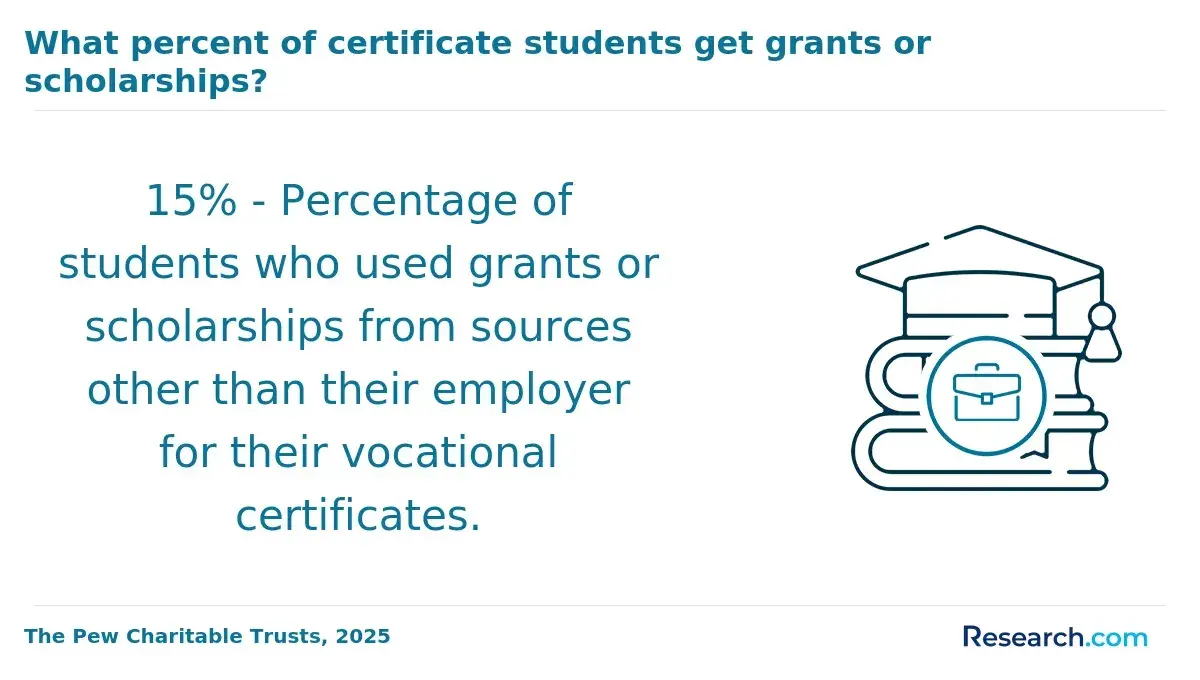
- Scholarships and grants: Students can look for awards related to forensic science, STEM, criminal justice, public service, academic merit, financial need, or demographic background.
- Employer tuition assistance: Working adults may qualify for tuition reimbursement or tuition assistance. Employers may require students to remain employed for a certain period after completing the degree.
- Payment plans: Some colleges allow students to divide tuition into installments. Payment plans can help with cash flow, but they are not the same as grants or scholarships because the full balance remains due.
- State and institutional aid: Depending on the school and student residency status, additional aid may be available through state programs or college-based awards.
Financial aid questions to ask
- Is the institution accredited and approved for federal student aid?
- Is the specific forensic science program eligible for aid?
- How are aid disbursements scheduled in accelerated terms?
- Will taking 15 to 18 credit hours affect billing or aid timing?
- What happens to aid eligibility if you withdraw from a short course?
A recent graduate said financial aid required careful planning because “the two-year schedule meant disbursements came at different times than traditional programs.” She said she stayed in close contact with her financial aid advisor to make sure she met deadlines and enrollment requirements.
She also combined scholarships, employer tuition support, and a payment plan to keep costs manageable. Her experience highlights an important point: accelerated programs can be financially efficient, but only if students understand when bills are due and when aid will arrive.
Job options depend heavily on whether the 2-year program awards an associate degree or an accelerated bachelor’s degree. Associate-level graduates may qualify for support roles in labs, law enforcement agencies, evidence units, or related technical settings. Accelerated bachelor’s graduates may be more competitive for forensic science technician roles, depending on coursework, lab experience, and employer requirements.
Possible roles for graduates
- Forensic science technician: These roles may involve collecting, processing, analyzing, and documenting evidence. Some employers require a bachelor’s degree or significant laboratory coursework.
- Crime lab assistant: Lab assistants support testing, sample preparation, documentation, and routine lab operations under supervision.
- Evidence technician: Evidence technicians receive, catalog, store, transfer, and safeguard physical evidence. Accuracy and chain-of-custody procedures are central to the role.
- Criminal justice support roles: Graduates may assist with case documentation, records, investigative support, or court-related preparation.
- Environmental or public health laboratory roles: Some forensic science skills transfer to sample testing, quality control, and public safety-related lab work.
- Industrial quality control: Chemistry, documentation, and analytical skills can support quality assurance positions in manufacturing or regulated industries.
The accelerated format can help students build technical skills such as microscopy, chemical analysis, evidence documentation, and crime scene processing more quickly. However, graduates should not assume every forensic role will be open immediately. Some jobs require additional certifications, specialized training, background checks, internships, or a bachelor’s degree.
The Bureau of Labor Statistics' projection of a 10% job growth for forensic science technicians through 2032 suggests continued demand, but hiring can still be competitive. Crime labs and public agencies may favor applicants with strong science coursework, hands-on lab experience, and clear documentation skills.
Students comparing education timelines should note that accelerated degrees save 12 to 24 months versus traditional paths, potentially reducing tuition expenses and allowing faster workforce access. For those reviewing accelerated healthcare options with a different career focus, this overview of the cheapest online WHNP programs may offer a useful point of comparison.
Salary comparisons depend on the credential, employer, location, lab experience, and job title. In general, a shorter program can help students earn sooner, while a traditional bachelor’s degree may provide stronger access to higher-paying forensic science roles over time.
Key salary differences
- Early-career earnings: Graduates with a 2-year forensic science degree typically earn between $35,000 and $45,000 annually at the start of their careers. Graduates with a bachelor’s degree often begin in the $50,000 to $60,000 range.
- Long-term earning potential: Bachelor’s degree holders may see median salaries exceeding $70,000 after several years of experience. Graduates with only a 2-year degree may need further education, certification, or specialized training to reach similar levels.
- Employer preference: Many forensic science roles, especially those involving independent analysis, prefer or require a bachelor’s degree. Associate-level credentials may be better suited for support positions.
- Faster workforce entry: A 2-year pathway can put students into the job market about two years earlier. Earlier earnings can partly offset lower starting pay, especially if tuition and debt are lower.
- Debt and affordability: Lower total cost can improve short-term return on investment. However, students should weigh those savings against any future cost of completing a bachelor’s degree.
The best choice depends on the role you want. If your goal is a support position in evidence handling or lab assistance, a shorter credential may be enough to start. If your goal is advancement in forensic analysis, toxicology, DNA-related work, or supervisory roles, a bachelor’s degree may offer stronger long-term value.
For students comparing affordability across fields, resources such as the cheapest online DNP programs can show how cost varies in other degree categories. For forensic science specifically, salary planning should focus on credential level, lab experience, employer requirements, and local hiring conditions.
The return on investment for an accelerated forensic science degree depends on more than tuition. The strongest ROI usually comes from a program that is affordable, accredited, respected by employers, rich in lab training, and aligned with the jobs students actually want.
Factors that shape ROI
- Time-to-completion: Accelerated degrees can significantly shorten the timeline compared with traditional programs. Finishing sooner may reduce living costs and help students begin earning earlier.
- Total program cost: Per-credit tuition is only one part of the equation. Fees, books, lab expenses, technology, travel, and lost work hours all affect ROI.
- Opportunity cost savings: Spending less time enrolled may mean fewer years out of the labor market. Given the median forensic science technician salary of just under $62,000 annually and strong job growth projections, earlier workforce entry can matter.
- Credential level: An accelerated bachelor’s degree may have a different labor-market value than an associate degree. Students should confirm which jobs the credential supports.
- Lab and internship access: Forensic employers often value practical skills. Programs with strong hands-on training may produce better outcomes than programs focused mostly on theory.
- Employment outcomes: Graduation rates, job placement support, employer partnerships, and alumni outcomes can help students judge whether the program delivers value.
- Transferability of skills: Scientific reasoning, documentation, data analysis, quality control, and critical thinking can transfer to law enforcement, healthcare, environmental testing, and industrial settings.
A strong ROI does not always mean choosing the cheapest or fastest program. It means choosing the program that gives you the right credential, enough laboratory preparation, manageable debt, and credible access to the type of forensic or technical work you want.
A 2-year forensic science degree may be right for you if you want a faster route into the workforce, can handle an intensive schedule, and understand the limits of the credential. It is best suited for disciplined students who are comfortable with science, deadlines, lab reports, and independent study.
A good fit if you:
- Can study full time or close to full time.
- Have strong preparation in biology, chemistry, algebra, and writing.
- Want to reduce time in school and begin earning sooner.
- Are comfortable with compressed courses and frequent deadlines.
- Have confirmed that the credential matches your target jobs.
- Can access required labs, practicums, or in-person sessions.
Think carefully if you:
- Need to work full time while enrolled.
- Prefer slower-paced learning or need extra time with science courses.
- Want advanced forensic analysis roles that commonly prefer a bachelor’s degree or higher.
- Need extensive internship experience before applying for jobs.
- Are unsure whether the program is accredited or eligible for financial aid.
Financially, a shorter program can reduce tuition exposure and living expenses, which may lower student debt and improve early ROI. The trade-off is that some employers prefer candidates with a bachelor’s degree or higher for advanced roles. If the program is an accelerated bachelor’s degree, it may offer a stronger balance of speed and credential value. If it is an associate degree, it may be better viewed as a starting point or transfer pathway.
Before enrolling, compare at least three programs on credential level, accreditation, total cost, lab access, internship options, graduate outcomes, and employer requirements in your area. The right program is not simply the fastest one; it is the one that moves you toward a realistic forensic science career without creating unnecessary debt or closing off future advancement.
What Graduates Say About Their 2-Year Forensic Science Degree
- : "“Given my professional background, enrolling in a 2-year forensic science program was a strategic decision to deepen my expertise without lengthy time away from work. The accelerated pace demanded efficiency and focus, which ultimately refined my skills and practical knowledge. As a result, I have seen a tangible impact on my career growth and credibility in forensic investigations.” — Elias"
- : "“The compact nature of the 2-year forensic science degree appealed to me because I wanted to minimize costs, which averaged around $30,000 for the entire program. Managing a busy schedule required strict discipline, but knowing my efforts could support rapid career advancement made it worthwhile. This degree opened doors to specialized roles that would have taken much longer to achieve otherwise.” — Arjun"
- : "“I chose the 2-year accelerated bachelor's degree in forensic science because it offered a faster route into the workforce without sacrificing the quality of education. Balancing the intense schedule was challenging, but the program's structure kept me motivated and organized. Since graduating, the degree has significantly boosted my job prospects, allowing me to enter the crime lab field swiftly and confidently.” — Derrick"
Other Things You Should Know About Forensic Science Degrees
Admission requirements for a 2-year forensic science degree in 2027 typically include a high school diploma with a strong GPA, completion of prerequisite science courses, and satisfactory scores on standardized tests like the SAT or ACT. Some programs may also require letters of recommendation.
In 2027, forensic science graduates can expect a competitive salary range, influenced by growing demand in forensic analysis roles and technological advancements. Employment trends indicate promising opportunities in government agencies, private labs, and consulting firms, potentially elevating salaries above industry averages.
- Return on Investment for a College Degree in Criminal Justice ROI or a College Degree in Criminal Justice https://www.criminaljusticeprograms.com/articles/return-on-investment-for-a-college-degree-in-criminal-justice/
- Best Forensic Science Master's Degrees Online https://www.onlinemastersdegrees.org/best-programs/criminal-justice/forensic-science/
- Digital Forensic Investigation, M.S. - University of New Haven https://www.newhaven.edu/lee-college/graduate-programs/digital-forensic-investigation/index.php
- Forensic Science - BSc (Hons) https://www.kent.ac.uk/courses/undergraduate/73/forensic-science-bsc
- Accelerated Graduate Programs https://www.loyola.edu/academics/forensic-science/graduate/accelerated.html
- Forensic Science Graduate School Funding: Complete Guide https://www.crimesceneinvestigatoredu.org/blog/forensic-science-graduate-school-funding/
- Forensic Science, B.S., Crime Scene Investigation Concentration to Criminology and Criminal Justice, M.A. Accelerated Program https://www.slu.edu/social-work/academics/criminology-criminal-justice/forensic-science-bs-crime-scene-investigation-concentration-to-criminology-criminal-justice-ma-accelerated.php
- Forensic Science, B.S. | Roberts Wesleyan University https://www.roberts.edu/all-programs/traditional-undergraduate/forensic-science-bs/
- Bachelor of Forensic Science https://www.murdoch.edu.au/course/undergraduate/b1418