
2027 Most Affordable Online Master’s Degree in Christian Counseling

Co-Founder and Chief Data Scientist
A note from the author, Imed Bouchrika, PhD, career planning expert:
It can be challenging to look for a credible master's in Christian counseling program that sufficiently explores the intersection of faith and mental health without causing financial strain. The latter is crucial especially since 2023 data states that the average debt among master's degree holders is $83,651.
In this article, drawing upon my 10+ years of experience in career planning, I present a comprehensive guide to the most affordable, accredited online master's degree in Christian counseling programs today. By exploring this resource, readers can make informed decisions about their education, ensuring financial feasibility and alignment with their career aspirations.
What are the benefits of getting an affordable online master's degree in Christian counseling?
- An online master’s degree in Christian counseling opens doors to various career options, spanning healthcare, government, and secular organizations.
- According to 2023 data, graduates can potentially earn an average annual salary of $31,158. The highest-paying cities for Christian counselors are San Buenaventura, CA ($113,271) and San Francisco, CA ($38,494).
- Online Christian counseling degrees offer flexibility, which is crucial for professionals juggling work and studies.
What can I expect from an affordable online master's degree in Christian counseling?
- The most affordable online master's degree in Christian counseling programs offer comprehensive curricula to equip them with the theoretical knowledge and practical skills needed for counseling within a Christian framework.
- The program typically covers foundational topics such as counseling theories, techniques, and ethics, while also delving into specialized areas like marriage and family counseling, crisis intervention, and spiritual formation.
- These online master's programs can cost an average of $5,000 to $9,000 per year.
- An affordable online master's degree in Christian counseling may take 2 to 3 years to complete.
- Many of these programs also provide opportunities for practical experience so students can apply their theoretical knowledge to real-world settings.
How much can I make with an affordable online master's degree in Christian counseling?
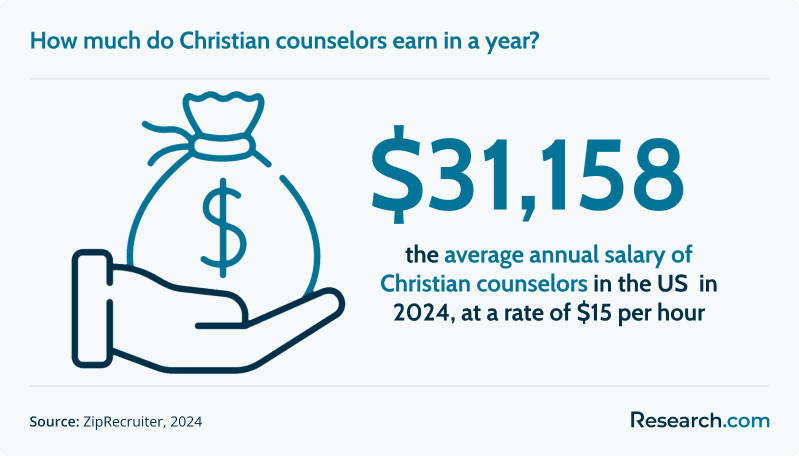
On average, Christian counselors in the United States earned approximately $31,158 annually in 2024, at an hourly rate of $15.
However, specific regions may offer higher salaries. For instance, Christian counselors reported an average annual salary of $113,271 in San Buenaventura, CA, making it one of the highest-paying cities for this profession.
Other cities in California, such as San Francisco, San Jose, Oakland, and Hayward, also offered competitive salaries ranging from $36,362 to $38,494 annually. These figures highlight the potential for higher earnings for individuals with a Christian counseling degree in certain geographic areas.
- 2027 Most Affordable Online Master’s Degree in Christian Counseling Affordable Programs
- How long does it take to complete an online master's degree in Christian counseling? Completion Time
- How does an online master's degree in Christian counseling compare to an on-campus program? How does an online master's degree in Christian counseling compare to an on-campus program?
- What is the average cost of an online master's degrees in Christian counseling? Average Cost
- What are the financial aid options for students enrolling in an online master's degrees in Christian counseling? Financial Aid
- What are the prerequisites for enrolling in an online master's degrees in Christian counseling? Requirements
- How is the changing landscape of religious counseling affecting state regulations? How is the changing landscape of religious counseling affecting state regulations?
- What courses are typically in online master's degrees in Christian counseling? What courses are typically in online master's degrees in Christian counseling?
- What types of specializations are available in online master's degrees in Christian counseling? What types of specializations are available in online master's degrees in Christian counseling?
- How do you choose the best affordable online master's degree in Christian counseling? How do you choose the best affordable online master's degree in Christian counseling?
- What career paths are available for graduates of online master's degrees in Christian counseling? What career paths are available for graduates of online master's degrees in Christian counseling?
- What is the job market for graduates of online master's degrees in Christian counseling? Job Market
- How can a spiritual counseling certification enhance your online master's degree in Christian counseling? How can a spiritual counseling certification enhance your online master's degree in Christian counseling?
- How do online master's programs ensure effective clinical training and supervision? How do online master's programs ensure effective clinical training and supervision?
- How to build a successful career after earning an online master's degree in Christian counseling? How to build a successful career after earning an online master's degree in Christian counseling?
- How do online master's programs in Christian counseling prepare students for specialized areas like substance abuse counseling? How do online master's programs in Christian counseling prepare students for specialized areas like substance abuse counseling?
- What challenges do graduates of online master's degrees in Christian counseling typically face? What challenges do graduates of online master's degrees in Christian counseling typically face?
- How important is accreditation in online master's degrees in Christian counseling? How important is accreditation in online master's degrees in Christian counseling?
- What is the fastest way to become a therapist? What is the fastest way to become a therapist?
- What additional qualifications can expand your counseling expertise? What additional qualifications can expand your counseling expertise?
- Is pursuing an LPC or LCSW more beneficial for Christian counselors? Is pursuing an LPC or LCSW more beneficial for Christian counselors?
2027 Affordable Online Master’s Degrees in Christian Counseling: Cost, Licensure, and Program Fit
Choosing an online master’s degree in Christian counseling is not only a tuition decision. Students also need to know whether the program is designed for ministry counseling, pastoral care, biblical counseling, or a state-licensed clinical counseling path. Those differences affect what you can legally do after graduation, where you can work, whether supervised clinical hours are required, and whether the degree will support future licensure.
This guide is for prospective graduate students who want faith-integrated counseling training at a manageable cost. It explains how affordable online Christian counseling master’s programs compare, what they typically cost, how long they take, which credentials matter, and what questions to ask before enrolling.
Quick Answer: Is an Online Master’s in Christian Counseling Worth It?
An online master’s degree in Christian counseling can be worthwhile for students who want to serve in churches, ministries, faith-based nonprofits, pastoral care roles, life coaching, or non-licensure counseling settings. It may not be the right choice if your primary goal is to become a licensed professional counselor, marriage and family therapist, or clinical mental health provider unless the program clearly meets your state’s licensure requirements.
The most affordable programs listed here average about $439.68 per credit, with an average total tuition of around $14,600 for the full program. Costs vary from $300 to $620 per credit. Before enrolling, confirm accreditation, clinical training expectations, transfer credit rules, faith alignment, and whether the curriculum supports your intended career path.
How we evaluate affordable online Christian counseling master’s programs
Research.com rankings use a transparent methodology that considers affordability, program characteristics, and available outcomes information. For this guide, the school selection process used data from the IPEDS database from the National Center for Education Statistics, Peterson's database, specifically its Distance Learning Licensed Data Set, and College Scorecard to review costs and outcomes where available.
Affordability matters, but it should not be the only filter. A low-cost program is only a good value if it fits your professional goal, provides appropriate academic support, and carries recognized accreditation.
Affordable Online Master’s Degrees in Christian Counseling: Program Comparison
| School | Program | Cost | Credits | Accreditation |
| Ohio Christian University | Master of Arts in Ministry | $400 per credit hour | 36 | Higher Learning Commission (HLC) |
| Amberton University | MS in Family Studies with a Specialization in Christian Counseling | $300 per credit hour | 36 | Southern Association of Colleges and Schools Commission on Colleges (SACSOC) |
| Holy Apostles | Master of Arts in Pastoral Studies | $410 per credit hour | 36 | New England Commission of Higher Education (NECHE), the Connecticut Office of Higher Education (CTOHE), and the Association of Theological Schools (ATS) |
| Liberty University | Master of Arts in Pastoral Counseling | $13,564 for the program | 30 | SACSCOC |
| Grace College and Theological Seminary | Master of Arts in Ministry Studies | $16,776 for the program | 36 | HLC, ATS |
| Veritas Baptist College | Master of Ministry | Estimated $12,420 for the program | 30 | Transnational Association of Christian Colleges and Schools (TRACS) |
| Bob Jones University | Master of Arts in Biblical Counseling | Estimated $450 per credit hour | 33-41 | SACSOC |
| Regent University | M.A. in Pastoral Counseling | Estimated $615 per credit hour | 30 | SACSOC |
| Clarks Summit University | Master of Arts in Counseling | $316 to $620 per credit hour | 30 | Middle States Commission on Higher Education (MSCHE) |
| Maranatha Baptist University | Master of Arts in Biblical Counseling | $345 per semester hour | 33 | HLC |
1. Ohio Christian University Master of Arts in Ministry
Ohio Christian University offers a ministry-focused graduate program with a concentration in pastoral care and counseling. The curriculum combines biblical studies, theology, church history, and applied ministry preparation. It is best suited for pastors, church staff, and lay leaders who want stronger counseling and care skills for service in congregational and community settings.
- Concentrations: Practical Theology; Sport, Recreation and Fitness Ministries; Pastoral Care and Counseling
- Cost: $400 per credit hour
- Required Credits to Graduate: 36
- Accreditation: Higher Learning Commission (HLC)
2. Amberton University MS in Family Studies with a Specialization in Christian Counseling
The Amberton University program blends family studies, counseling concepts, human development, ethics, and Christian counseling principles. It is designed for students interested in social service agencies, churches, parent education programs, and other human services environments. The specialization encourages students to develop a personal Christian counseling model while learning contemporary counseling theories and ethical practice.
- Cost: $300 per credit hour
- Required Credits to Graduate: 36
- Accreditation: Southern Association of Colleges and Schools Commission on Colleges (SACSOC)
3. Holy Apostles Master of Arts in Pastoral Studies
The online pastoral counseling-related program at Holy Apostles prepares students for ecclesial ministry, lay leadership, parish service, religious education, catechetical leadership, youth ministry, and pastoral support roles. The program may also interest Christian Life Coaches and licensed mental health counselors who want additional formation in psycho-spiritual support for emotional and relational concerns.
- Cost: $410 per credit hour
- Required Credits to Graduate: 36
- Accreditation: New England Commission of Higher Education (NECHE), the Connecticut Office of Higher Education (CTOHE), and the Association of Theological Schools (ATS)
4. Liberty University Master of Arts in Pastoral Counseling
Liberty University offers a pastoral counseling master’s program that connects theology, ministry training, and counseling-informed methods. Students study ways to support people facing relational conflict, addiction, trauma, marriage concerns, and family challenges. The program is structured for those who want to use counseling tools in ministry or pastoral care contexts rather than assume automatic eligibility for clinical licensure.
- Cost: $13,564 for the program
- Required Credits to Graduate: 30
- Accreditation: SACSCOC
5. Grace College and Theological Seminary Master of Arts in Ministry Studies
The online Grace College and Theological Seminary Master of Arts in Ministry Studies is a 36-hour degree for current and aspiring ministry professionals. The program emphasizes practical ministry preparation, theological development, and professional readiness. Its Counseling concentration focuses on ministry-based care tools for supporting people through personal, relational, and spiritual challenges.
- Concentrations: Counseling, Christian Ministry, Women’s Leadership Studies, Technology, Leadership and Management, Spiritual Formation
- Cost: $16,776 for the program
- Required Credits to Graduate: 36
- Accreditation: HLC, ATS
6. Veritas Baptist College Master of Ministry
Veritas Baptist College offers a ministry graduate program with a Biblical Counseling concentration. The degree includes core coursework in biblical leadership, discipleship, research, and systematic theology, followed by specialization coursework and electives. The Biblical Counseling concentration includes counseling principles, counseling procedures, and premarital, marital, and family counseling.
- Concentrations: Biblical Counseling, Pastoral, Missions
- Cost: Estimated $12,420 for the program
- Required Credits to Graduate: 30
- Accreditation: Transnational Association of Christian Colleges and Schools (TRACS)
7. Bob Jones University Master of Arts in Biblical Counseling
The biblical counseling master’s program at Bob Jones University centers on theology, progressive sanctification, and the sufficiency of Scripture. Students examine counseling and psychology through a biblical framework and learn to evaluate secular and Christian theories in light of the program’s theological commitments.
- Concentrations: Biblical Counseling
- Cost: Estimated $450 per credit hour
- Required Credits to Graduate: 33-41
- Accreditation: SACSOC
8. Regent University M.A. in Pastoral Counseling
Regent University offers a non-licensure pastoral counseling program for pastors, nonprofit professionals, ministry leaders, and others who need biblically grounded counseling tools. The curriculum covers areas such as marriage, family, substance abuse, crisis counseling, legal and ethical issues, liability concerns, treatment evaluation, and faith-based emotional and spiritual healing strategies.
- Concentrations: Pastoral Counseling
- Cost: Estimated $615 per credit hour
- Required Credits to Graduate: 30
- Accreditation: SACSOC
9. Clarks Summit University Master of Arts in Counseling
The Clarks Summit University Master of Arts in Counseling begins with 9 credits in Bible and theology connected directly to counseling. The program frames Scripture as the foundation for its approach and is intended for counseling-related work in church or ministry environments. Students who want state professional counselor licensure are advised by the university to consider its Master of Science in Counseling instead.
- Concentrations: Counseling
- Cost: $316 to $620 per credit hour
- Required Credits to Graduate: 30
- Accreditation: Middle States Commission on Higher Education (MSCHE)
10. Maranatha Baptist University Master of Arts in Biblical Counseling
Maranatha Baptist University offers a biblical counseling master’s program with applied courses in areas such as crisis counseling and addictive behavior, along with biblical and theological study. The program emphasizes biblical and systematic theology, a dispensational hermeneutical framework, cultural discernment, and effective use of Scripture in counseling conversations.
- Concentrations: Biblical Counseling
- Cost: $345 per semester hour
- Required Credits to Graduate: 33
- Accreditation: HLC
How long does it take to complete an online master's degree in Christian counseling?
Most full-time students complete an online master’s degree in Christian counseling in two to three years. The exact timeline depends on the number of required credits, whether courses are offered in accelerated terms, whether students enroll full time or part time, and whether transfer credits are accepted. This is similar to the timeline decision students face in other online graduate programs, including online MFA degree options.
Students should look beyond the advertised completion time. A 30-credit program may move faster than a 36-credit or 41-credit program, but practicum requirements, capstone projects, thesis expectations, and course sequencing can extend the calendar. Working adults should ask whether the program offers asynchronous coursework, predictable course rotations, and part-time plans that do not delay graduation unnecessarily.
| Enrollment choice | Best for | Trade-off |
| Full-time enrollment | Students who want to finish quickly and can manage a heavier course load | Less flexibility for work, ministry, or family responsibilities |
| Part-time enrollment | Working adults, pastors, caregivers, and career changers | Longer time to graduation |
| Accelerated format | Students with strong time management and clear career goals | More intensive reading, writing, and weekly deadlines |
| Transfer-credit pathway | Students with previous graduate credits in counseling, ministry, theology, or psychology | Transfer rules vary by school and may limit how many credits apply |
How does an online master's degree in Christian counseling compare to an on-campus program?
An online master’s degree in Christian counseling is usually the better fit for students who need flexibility, live far from a Christian college or seminary, or want to continue working while studying. This mirrors the appeal of other distance-learning counseling pathways, such as an online addiction counseling degree.
Online study can also reduce indirect expenses because students may avoid relocation, commuting, and campus housing. However, tuition is only one part of the cost picture. As shown in unrelated graduate cost comparisons such as online MBA cost guides, students should compare the full price of attendance, not just the advertised per-credit rate.
On-campus programs may offer stronger in-person community, easier access to faculty, chapel or ministry formation activities, and live practice opportunities. Online programs can still be effective, but students should confirm how supervision, peer interaction, advising, and field placements work. If your priority is the lowest possible graduate tuition, compare this field with broader lists of the cheapest online masters programs, but make sure the curriculum still matches your counseling goals.
| Factor | Online Christian counseling master’s | On-campus Christian counseling master’s |
| Schedule flexibility | Usually stronger for working adults | Less flexible if classes meet at fixed times |
| Community and networking | Depends on discussion boards, virtual meetings, cohorts, and residencies | Often stronger through in-person faculty and peer interaction |
| Field experience | May require local placement arrangements | May provide easier access to campus-based partners |
| Cost control | Can reduce relocation and commuting expenses | May include more campus-related costs |
| Best fit | Self-directed students who need flexibility | Students who want structured in-person formation |
What is the average cost of an online master's degree in Christian counseling?
The affordable online Christian counseling master’s programs reviewed here average approximately $439.68 per credit. The average total tuition is around $14,600 for the full program, which is below the average cost of a full master’s degree program that can be around $19,749.
Among the programs listed, per-credit costs range from $300 to $620. That range is broadly comparable to some other low-cost graduate education options, including cheap online master’s programs for teachers. Cost differences may reflect program length, institutional funding model, student fees, technology fees, or whether tuition is charged by credit hour or as a full-program rate.
Students comparing Christian counseling degrees should weigh affordability alongside accreditation, course quality, faculty background, advising, and clinical or ministry training. The same logic applies when comparing other counseling-related options, such as the most affordable online school counseling degrees.
Affordability is especially important because Christian counseling roles may pay less than some licensed clinical counseling occupations. Christian counselors typically earn less than the median annual salary of all occupations in the U.S. at $46,310 in 2022. In 2024, Christian counselors earn around $31,158, on average, per year.
| Cost item | What to ask before enrolling |
| Tuition | Is the price listed per credit, per semester hour, or for the entire program? |
| Fees | Are there technology, graduation, practicum, library, or distance-learning fees? |
| Books and materials | Are textbooks, Bible software, counseling resources, or digital platforms required? |
| Travel | Does the program require residencies, intensives, or campus visits? |
| Field placement | Will you need to pay for background checks, liability insurance, or site-related expenses? |
What financial aid options are available for online Christian counseling master’s students?
Students in affordable online Christian counseling master’s programs may be able to reduce out-of-pocket costs through federal aid, institutional scholarships, employer assistance, private scholarships, or graduate assistantships. The right mix depends on school eligibility, enrollment status, employer benefits, and personal finances.
- Federal Student Aid. Eligible students can submit the Free Application for Federal Student Aid (FAFSA) to be considered for federal loans, work-study, and other aid that may help cover tuition, fees, books, and living expenses.
- Scholarships. Universities, churches, denominations, foundations, and private organizations may offer scholarships for students studying counseling, ministry, psychology, theology, or family studies.
- Employer Tuition Assistance. Churches, schools, nonprofits, and religious organizations may help employees pay for graduate education if the degree supports their current or future role.
- Graduate Assistantships. Some institutions provide tuition assistance or stipends in exchange for teaching, research, student support, ministry, or administrative work.
- Private Loans. Private student loans can fill funding gaps, but they often have different interest rates, repayment protections, and eligibility rules than federal loans.
Because the programs reviewed here average around $14,600 in total tuition, some students may be able to limit borrowing by combining part-time work, church support, scholarships, and payment plans. Even students considering other low-cost graduate options, such as an MBA under 10k, should compare net price after aid rather than tuition alone.
The chart below compares annual average salaries for different types of counselors in the U.S.
What are the prerequisites for enrolling in an online master's degree in Christian counseling?
Admission requirements vary by school, but most online Christian counseling master’s programs expect applicants to demonstrate academic readiness, personal maturity, and a clear reason for pursuing faith-based counseling training.
- Bachelor’s degree. Applicants usually need a bachelor’s degree from an accredited institution. Some schools accept many undergraduate majors, while others prefer backgrounds in psychology, counseling, theology, ministry, social work, or related fields.
- Minimum GPA. Many programs expect a minimum undergraduate GPA, often around 3.0 on a 4.0 scale.
- Letters of recommendation. Schools may request academic, ministry, or professional references who can speak to the applicant’s character, readiness, and potential for graduate study.
- Personal statement or essay. Applicants may need to explain their educational background, ministry or counseling experience, career goals, and reasons for choosing Christian counseling.
- Relevant experience. Volunteer or professional experience in ministry, counseling support, social services, education, psychology, or pastoral care can strengthen an application.
- Prerequisite coursework. Some programs may require prior study in psychology, counseling theories, biblical studies, theology, or religious studies before full admission.
How are religious counseling regulations changing?
Faith-based counseling sits at the intersection of ministry, pastoral care, mental health support, ethics, and state regulation. The key issue for students is scope of practice: what services can you legally provide with a Christian counseling degree, and when do you need a state clinical license?
States such as California and New York have tightened expectations around religious counseling, particularly around client autonomy, confidentiality, ethical boundaries, and the role of religious beliefs in counseling settings. Students considering clinical pathways should pay close attention to state-specific rules, especially if they plan to work with vulnerable populations, trauma, family systems, or LGBTQ+ clients.
Some graduates may pursue related clinical pathways such as marriage and family therapy. If that is your goal, compare Christian counseling programs with the most affordable online MFT programs and verify that the curriculum, supervised hours, and accreditation align with your state’s licensing board.
What courses are typically included in an online master's degree in Christian counseling?
Online Christian counseling master’s programs usually combine counseling theory, biblical or theological study, ethics, human development, and applied helping skills. Some programs also help students understand related professions, including the difference between counseling and social work.
- Counseling Theories and Techniques. Students examine major counseling approaches and learn how different methods may be interpreted or applied within a Christian framework.
- Biblical Counseling. This course focuses on using Scripture, theology, and Christian worldview principles to address spiritual, emotional, and relational concerns.
- Ethical and Legal Issues in Counseling. Students study confidentiality, informed consent, boundaries, cultural sensitivity, liability, referrals, and the limits of non-licensed counseling practice.
- Marriage and Family Counseling. Coursework may cover family systems, communication, conflict resolution, premarital counseling, and couple or family support from a Christian perspective.
- Trauma and Crisis Counseling. Students learn basic intervention concepts for grief, crisis, trauma, and community distress while considering spiritual care and referral responsibilities.
What specializations are available in online Christian counseling master’s programs?
Specializations help students match their degree to a ministry setting, client population, or counseling interest. Not every specialization leads to licensure, so students should read program disclosures carefully.
| Specialization | Best for students interested in | Important caution |
| Marriage and Family Therapy | Supporting couples, families, and relational systems | State MFT licensure usually has specific education and supervised-hour requirements |
| Addiction Counseling | Helping people affected by substance use or behavioral addictions | Credential requirements vary by state and role |
| Trauma and Crisis Counseling | Serving people after grief, violence, disasters, or major life disruption | Clinical trauma work may require licensed supervision or advanced training |
| Child and Adolescent Counseling | Working with children, teens, parents, and youth ministries | Minors require careful attention to consent, reporting, and safeguarding rules |
| Pastoral Counseling | Providing spiritual care, emotional support, and guidance in ministry settings | Pastoral counseling is not the same as state-licensed psychotherapy |
| Integration of Faith and Counseling | Studying how psychology, theology, and spirituality interact | Integration models vary widely by institution and denomination |
How do you choose the best affordable online master's degree in Christian counseling?
The best program is the one that fits your calling, budget, schedule, theological commitments, and legal career pathway. Use the steps below before submitting an application.
- Start with your intended role. Decide whether you want ministry counseling, pastoral care, biblical counseling, coaching, nonprofit work, or a state-licensed clinical counseling career.
- Verify accreditation. Look for recognized institutional accreditation and, where relevant, specialized accreditation. Accreditation can affect credit transfer, employer acceptance, financial aid, and licensure eligibility.
- Read licensure disclosures. Do not assume a Christian counseling degree qualifies you for LPC, LMFT, addiction counseling, or mental health counseling licensure. Contact your state board before enrolling.
- Compare total cost. Add tuition, fees, books, residency travel, technology costs, background checks, and practicum expenses.
- Review the curriculum. Make sure the program covers the populations and issues you expect to serve, such as marriage, family conflict, trauma, addiction, grief, or pastoral care.
- Ask about faculty expertise. Review whether instructors have ministry experience, counseling credentials, research expertise, or clinical backgrounds relevant to your goals.
- Evaluate online support. Strong programs provide advising, library access, writing help, technology support, faculty interaction, and career guidance.
- Check field training requirements. Ask whether you must find your own practicum site, whether supervision is included, and whether local placements are available in your state.
- Assess faith alignment. Review the school’s theological tradition, statement of faith, counseling model, and expectations for biblical integration.
Questions to ask admissions before enrolling
- Is this program licensure-track, non-licensure, ministry-focused, or pastoral counseling-focused?
- Will this degree meet requirements in my state for my intended counseling role?
- How many students complete the program, and how long do they usually take?
- Are online students eligible for the same scholarships and services as campus students?
- What fieldwork, practicum, internship, or supervision is required?
- Can I transfer graduate credits into the program?
- Are there required synchronous class meetings, residencies, or campus visits?
What career paths are available after an online master's degree in Christian counseling?
Graduates can pursue several faith-based helping roles, but job titles and legal permissions vary by state, employer, and licensure status.
- Christian Counselor. Provides faith-integrated support for emotional, relational, and spiritual concerns in settings such as ministries, nonprofits, or private faith-based organizations.
- Pastoral Counselor. Works in churches or religious institutions to offer spiritual guidance, pastoral care, and counseling-informed support.
- Christian Life Coach. Helps clients pursue personal growth, spiritual development, goal setting, and values-based decision-making.
- Marriage and Family Therapist. Supports couples and families with relationship concerns, but this role usually requires state-specific licensure.
- Addiction Counselor. Assists people affected by substance abuse or behavioral addictions, often requiring state-recognized credentials depending on the setting.
- Community Outreach Worker. Coordinates support services, ministry outreach, referrals, and community programs through churches, nonprofits, or social service organizations.
A note on licenses and certifications
Christian counselors do not always need state licenses or certifications for ministry-based or pastoral roles. However, optional credentials from organizations such as the National Christian Counselors Association (NCCA), including Certified Temperament Counselor (CTC) or Licensed Clinical Pastoral Counselor-Advanced Certified, may help demonstrate training in Christian counseling methods.
By contrast, roles such as marriage and family therapist, addiction counselor, clinical mental health counselor, and licensed professional counselor are generally regulated at the state level. Students should research requirements before choosing a degree. This distinction helps explain why counseling psychology salary and some licensed clinical roles may differ from salaries for non-licensed Christian counselors. Students comparing income potential can also review clinical mental health counseling salary information as part of broader career planning.
What is the job market for graduates of online master's degrees in Christian counseling?
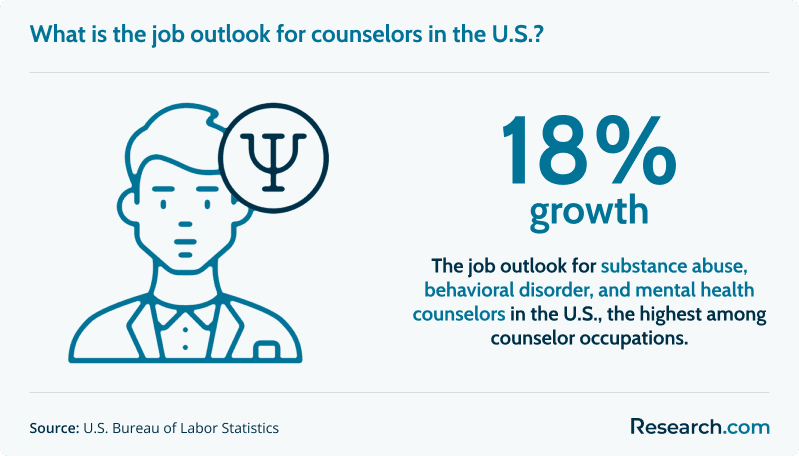
There is limited occupation-specific labor market data for Christian counselors. However, related counseling fields show demand. The projected job growth for substance abuse, behavioral disorder, and mental health counselors is 18% from 2022 to 2032.
This does not mean every Christian counseling graduate will have the same employment outlook or salary outcome. Job prospects depend on licensure, experience, geographic area, employer type, denomination or ministry network, specialization, and whether the role is clinical, pastoral, coaching, or nonprofit-based.
Graduates with clear scope-of-practice knowledge, supervised experience, referral skills, and additional credentials may be better positioned for sustainable work. Those who want clinical counseling careers should prioritize programs that align with state licensure pathways rather than relying on the Christian counseling title alone.
How can a spiritual counseling certification strengthen a Christian counseling master’s degree?
A supplemental spiritual counseling certification can help graduates deepen their spiritual care skills, clarify their professional identity, and demonstrate ongoing training. It may be useful for pastoral counselors, chaplaincy-adjacent roles, ministry leaders, or coaches who want additional preparation in faith-based support.
Certification should not be confused with state clinical licensure. Before investing in any credential, ask who recognizes it, what training it requires, whether supervised experience is included, and whether it supports your intended role.
How do online Christian counseling programs provide clinical training and supervision?
Strong online programs use structured assignments, supervised practice opportunities, virtual simulations, case discussions, and local site placements to help students apply classroom learning. Some programs maintain partnerships with agencies, churches, counseling centers, or ministry organizations, while others expect students to locate approved local sites.
Prospective students should ask how field training is approved, who provides supervision, how performance is evaluated, and whether the experience satisfies any credential or licensure requirement. Students comparing broader program quality can review this guide to a Christian counseling master's degree online.
How can graduates build a successful Christian counseling career?
A degree alone is rarely enough. Career progress usually depends on experience, professional relationships, ethical practice, credentials, and a clear service niche.
- Gain supervised experience. Seek internships, practicums, church counseling ministries, nonprofit roles, crisis support programs, or supervised helping roles that build practical judgment.
- Pursue the right credential. Choose certifications or licenses based on your target role, not on title alone. If you want clinical practice, start with state licensure rules.
- Build a referral network. Connect with pastors, licensed counselors, social workers, physicians, recovery programs, schools, and community agencies so you know when to refer clients.
- Develop a specialization. Areas such as marriage support, grief, addiction recovery, trauma-informed ministry, youth care, or family support can help clarify your career direction.
- Keep learning. Counseling methods, ethics, trauma care, mandated reporting, telehealth, and cultural competency continue to evolve.
- Communicate your scope clearly. Avoid representing yourself as a licensed therapist unless you hold the required license in your state.
Students who want the fastest way to become a counselor should compare accelerated academic options, licensure timelines, and supervised-hour requirements before choosing a program.
How do online Christian counseling programs prepare students for substance abuse counseling?
Some Christian counseling programs include coursework in addiction, recovery, family systems, crisis support, and faith-integrated intervention strategies. Students may study substance abuse through both psychological and theological lenses, especially in programs with addiction counseling or pastoral care electives.
Students who want to become addiction counselors should not assume Christian counseling coursework is enough. Credentialing rules differ by state and employer. For role-specific planning, review guidance on how to become a substance abuse counselor.
What challenges do online Christian counseling graduates commonly face?
Graduates often face several practical challenges: unclear licensure pathways, limited live mentorship, inconsistent field placement support, and the need to balance faith-based counseling with legal and ethical standards. Online learners may also need to work harder to develop professional networks than students in campus cohorts.
Choosing a counseling degree online accredited can reduce quality concerns, but accreditation alone does not guarantee licensure eligibility or employment. Students should verify outcomes, field training, faculty access, and state requirements before enrolling.
How important is accreditation in online master's degrees in Christian counseling?
Accreditation is one of the most important quality checks for online Christian counseling programs. Institutional accreditation can affect federal financial aid eligibility, credit transfer, graduate school admission, and employer recognition. Programmatic accreditation may matter for certain counseling licensure pathways.
Students planning clinical counseling careers should be especially cautious. Some states and employers look for specific counseling accreditation. Reviewing CACREP online counseling programs can help students understand how specialized counseling accreditation differs from general institutional accreditation.
| Common mistake | Better approach |
| Choosing the cheapest program without checking accreditation | Verify institutional and, if needed, programmatic accreditation before applying |
| Assuming pastoral counseling equals licensed therapy | Confirm the legal scope of practice in your state |
| Looking only at tuition | Compare total cost, including fees, books, travel, and placement expenses |
| Ignoring fieldwork requirements | Ask how practicum or supervision is arranged for online students |
| Relying only on rankings | Use rankings as a starting point, then evaluate fit, outcomes, and licensure alignment |
What is the fastest way to become a therapist?
The fastest way to become a therapist depends on your state, target license, prior education, and supervised-hour requirements. A Christian counseling master’s degree may support ministry counseling or pastoral care, but it may not be the fastest route to licensed clinical therapy unless it is designed for that purpose.
Accelerated degree programs
- Accelerated master’s programs: Some universities offer intensive counseling or therapy programs that can be completed in as little as 18 months.
- Bridge programs: Students with related undergraduate backgrounds, such as psychology or human services, may find programs that reduce duplication and streamline graduate preparation.
Online and hybrid learning options
- Flexible online programs: Asynchronous coursework can help students continue working while completing academic requirements.
- Hybrid programs: Some degrees combine online courses with short residencies, intensives, or local clinical placements.
Clinical experience and licensure preparation
- Practicums and internships: Structured supervised experience helps students build practical skills while completing degree requirements.
- Exam preparation: Some programs include preparation for counseling exams such as the National Counselor Examination (NCE) or other required licensing tests.
- State-specific planning: Researching supervised-hour requirements early can prevent delays after graduation.
If your goal is clinical practice, confirm that your chosen program supports the fastest way to become a therapist in your state without sacrificing accreditation, supervision quality, or ethical preparation.
What additional qualifications can expand your counseling expertise?
Additional training can help Christian counseling graduates serve specific populations more responsibly. Coursework or credentials in addiction support, trauma-informed care, family systems, crisis response, chaplaincy, or behavioral health can deepen skills and improve referral judgment.
Professionals who want broader addiction-related preparation may also compare options such as the cheapest bachelor's degree in substance abuse counseling online, especially if they are building a foundation before or alongside graduate study.
Is an LPC or LCSW pathway more useful for Christian counselors?
LPC and LCSW pathways serve different professional goals. LPCs generally focus on counseling and psychotherapy, often in outpatient mental health settings. LCSWs combine clinical social work, counseling, case management, advocacy, and community support. Christian counselors who want clinical authority, insurance reimbursement options, or broader mental health roles should compare these pathways carefully.
The better choice depends on your state rules, desired work setting, client population, and whether you prefer a counseling-centered or social-work-centered scope. For a deeper comparison, review this guide to LPC vs LCSW.
Student Perspectives on Online Christian Counseling Master’s Programs
-
: "Online Christian counseling study gave me room to prepare for helping work without stepping away from my existing responsibilities. The virtual discussions and peer interaction made the program feel connected, not isolated.
— Alice"
-
: "The online format allowed me to keep serving locally while building practical counseling knowledge. The experience helped me connect classroom learning with community outreach work.
— Edmund"
-
: "Coming from another field, I needed a program that made faith integration and counseling concepts understandable. The online coursework helped me see new ways to support people seeking faith-based help.
— Jake"
References
- Gallup. (2024). Religion. Retrieved March 8, 2024, from Gallup.
- U.S. Bureau of Labor Statistics. (2023). Occupational employment and wages, May 2022 - 21-1018 substance abuse, behavioral disorder, and mental health counselors. Retrieved March 8, 2024, from BLS.
- U.S. Bureau of Labor Statistics. (2023). Substance abuse, behavioral disorder, and mental health counselors. Retrieved March 8, 2024, from BLS.
- U.S. Bureau of Labor Statistics. (2023). May 2022 national industry-specific occupational employment and wage estimates - NAICS 813100 - religious organizations. Retrieved March 8, 2024, from BLS.
- ZipRecruiter. (2024a). Christian counselor salary. Retrieved March 8, 2024, from ZipRecruiter.
- ZipRecruiter. (2024b). Christian life coach salary. Retrieved March 8, 2024, from ZipRecruiter.
- ZipRecruiter. (2024c). Pastoral counselor salary. Retrieved March 8, 2024, from ZipRecruiter.
Key Insights
- Affordable online Christian counseling master’s programs can be a strong fit for ministry, pastoral care, biblical counseling, life coaching, and faith-based nonprofit work.
- The programs reviewed average about $439.68 per credit and around $14,600 in total tuition, but students should compare full cost after fees, aid, books, and fieldwork expenses.
- Licensure is the biggest decision point. A non-licensure pastoral or biblical counseling degree may not qualify graduates for LPC, LMFT, addiction counselor, or clinical mental health roles.
- Accreditation, state requirements, supervision structure, and curriculum fit matter more than ranking position alone.
- Students who want clinical therapy careers should verify state board requirements before enrolling, not after graduation.
- The best-value program is not simply the cheapest option. It is the program that matches your faith commitments, budget, schedule, career goal, and legal scope of practice.
Other Things You Should Know About Affordable Online Master's Degrees in Christian Counseling
While prerequisites may vary by institution, most affordable online Master's programs in Christian Counseling require a bachelor's degree in psychology, theology, or a related field. Some programs may also require courses in counseling fundamentals or biblical studies before admission in 2027.
Students in 2027 can explore scholarships, federal loans, and institution-based grants to manage costs. Some schools offer work-study programs and tuition discounts for clergy or religious workers, aiding affordability. These options can significantly alleviate the financial burden of obtaining a degree in Christian Counseling.
It should hold regional institutional accreditation, and any counseling-focused program should clearly state the accreditor and approval status. For Christian counseling, check whether the school is accredited by a recognized agency listed by the U.S. Department of Education or CHEA, because this affects credit transfer, licensure review, and financial aid eligibility.


