
2027 LPC Counseling Licensure Requirements in Arkansas

Co-Founder and Chief Data Scientist
Becoming a Licensed Professional Counselor (LPC) in Arkansas is a multi-step process: you must complete the right graduate education, practice under supervision, pass required exams, and document your readiness to work independently. The decision matters because counseling is a regulated profession; choosing the wrong degree program or misunderstanding supervision rules can delay licensure by months or years.
This guide is for students comparing counseling graduate programs, career changers planning a path into mental health counseling, Licensed Associate Counselors (LACs) working toward full licensure, and out-of-state counselors considering Arkansas. It explains the education, coursework, supervised experience, exams, application steps, license types, career outlook, renewal expectations, and common mistakes to avoid. The original source material notes that about 70% of Arkansas residents report needing counseling services at some point, which underscores why the state uses a structured licensing process to prepare qualified counselors for community needs.
Quick answer: Arkansas LPC requirements at a glance
To become an LPC in Arkansas, you generally need a graduate degree in counseling or a closely related field, qualifying coursework, practicum and internship training, LAC status after graduation, 3,000 hours of supervised post-master’s counseling experience, and passing scores on required examinations. Full LPC licensure allows independent counseling practice in Arkansas.
- Graduate education is mandatory: Arkansas expects a master’s degree in counseling or a closely related field from an accredited institution, typically including at least 60 semester credits.
- Supervised practice is a major part of the timeline: After graduation, candidates complete 3,000 supervised counseling hours before full LPC licensure.
- Exams confirm professional readiness: Applicants must pass the National Counselor Examination (NCE) or an equivalent board-approved exam, along with Arkansas-specific requirements.
- What degree is required to become an LPC in Arkansas?
- What core coursework is required for LPC licensure in Arkansas?
- How many supervised counseling hours are required for LPC licensure in Arkansas?
- What exams are required for LPC licensure in Arkansas?
- How do you apply for LPC licensure in Arkansas?
- How long does it take to be a Licensed Professional Counselor in Arkansas?
- What types of LPC licenses are offered in Arkansas?
- Does Arkansas have LPC reciprocity with other states?
- What is the demand for LPCs in Arkansas?
- How does LPC licensure affect career growth in Arkansas?
- What are the ongoing requirements for maintaining LPC licensure in Arkansas?
- What is the earning potential for LPCs in Arkansas?
- What questions should you ask before choosing an Arkansas counseling program?
- What do LPCs in Arkansas say about their career?
- Can you become an LPC in Arkansas with a psychology or social work degree?
- Do LPCs in Arkansas have the same scope of practice as psychologists?
- What is the difference between an LPC and an LMHC in Arkansas?
- Can LPCs in Arkansas diagnose and treat mental health disorders?
- References
What degree is required to become an LPC in Arkansas?
Arkansas requires graduate-level preparation before a counselor can move toward professional licensure. The safest path is a counseling master’s program designed around state licensure standards, but some related degrees may qualify if they include the required counseling content and clinical training.
- Master’s degree in counseling: This is usually the most direct option because the curriculum is built around counseling theory, ethics, assessment, diagnosis, practicum, internship, and supervised clinical preparation.
- Master’s degree in a closely related field: A graduate degree in psychology, social work, human services, or another related area may be considered if the coursework meets the Arkansas Board of Examiners in Counseling expectations.
- Doctoral degree in counseling or a related discipline: A qualifying doctoral degree can also support licensure if it includes the required subject areas, credit expectations, and clinical components.
| Degree path | When it makes sense | Licensure risk to check |
| Master’s in counseling | Best fit for students who know they want LPC licensure in Arkansas. | Confirm the program includes the Arkansas-required coursework, practicum, internship, and at least 60 semester credits. |
| Related master’s degree | May work for applicants who already studied psychology, social work, human services, or a similar field. | Course gaps can create delays; request a course-by-course review before assuming eligibility. |
| Doctoral degree | Useful for advanced clinical, teaching, leadership, research, or supervision goals. | The degree title alone is not enough; the curriculum must still satisfy counseling licensure standards. |
What core coursework is required for LPC licensure in Arkansas?
The Arkansas LPC education requirement is not just about earning a graduate degree. The degree must cover specific counseling competencies so future counselors can assess clients, apply ethical standards, understand human development, work with diverse populations, and provide supervised services before licensure.
- Human Growth and Development: Life span development and how developmental stages affect counseling needs.
- Social and Cultural Foundations: Multicultural counseling, social context, and culturally responsive practice.
- Helping Relationships or Counseling Theories: Major counseling models, therapeutic relationship-building, and intervention approaches.
- Group Counseling and Dynamics: Group development, leadership, facilitation, and ethical group practice.
- Lifestyle and Career Development: Career counseling theories, vocational assessment, and life planning.
- Appraisal of Individuals: Assessment methods, testing concepts, interpretation, and responsible use of evaluation tools.
- Research and Evaluation: Research methods, program evaluation, and evidence-informed counseling practice.
- Professional Orientation: Counselor identity, ethics, legal responsibilities, and professional standards.
- Family and Relationship Counseling: Counseling methods for couples, families, and relational systems.
- Abnormal Psychology/DSM: Mental health disorders, diagnostic criteria, and clinical conceptualization.
- Practicum: 100 hours total, including 40 hours of supervised direct client contact.
- Internship: 600 hours total, including at least 240 hours of supervised client service.
- Telemental Health or Technology-Assisted Counseling: At least one credit hour focused on counseling delivered through technology.
Before enrolling, compare the program’s course map against Arkansas requirements instead of relying only on the degree title. A program may sound counseling-related but still miss a required topic, practicum hour, internship hour, or technology-assisted counseling component.
If you want a broader view of the full path from graduate school to licensure, Research.com’s guide on how long it takes to become a licensed counselor can help you estimate the education and supervised practice timeline.
| Program feature to verify | Why it matters for Arkansas LPC licensure |
| At least 60 semester credits | Credit shortages may require additional graduate coursework before eligibility. |
| Required counseling content areas | The board reviews whether your education prepared you in the core areas expected of counselors. |
| 100-hour practicum with 40 direct hours | This introduces supervised client-facing counseling before internship. |
| 600-hour internship with 240 direct hours | This provides more intensive supervised clinical preparation before graduation. |
| One credit hour in technology-assisted counseling | Arkansas expects training in telemental health or technology-supported counseling practice. |
How many supervised counseling hours are required for LPC licensure in Arkansas?
Arkansas requires 3,000 supervised counseling hours after the master’s degree for full LPC licensure. These hours are normally completed while the candidate holds the Licensed Associate Counselor (LAC) credential and practices under an approved supervisor.
- Direct client contact: At least 2,200 hours must involve counseling services with clients, such as work with individuals, couples, families, or groups.
- Indirect client contact: Up to 800 hours may include professional activities that support client care, such as documentation, case management, consultation, test administration, or related clinical tasks.
- Supervision structure: During the first 500 direct contact hours, the requirement is 1 hour of supervision for every 10 hours worked. For the remaining 2,500 hours, the requirement changes to 1 hour of supervision for every 20 hours of client contact.
- Approved supervision: Supervision must be provided by a qualified LPC or LMFT approved by the Arkansas Board.
- Graduate clinical hours are separate: The 100-hour practicum and 600-hour internship are completed during the degree program before the 3,000 post-master’s supervised hours.
| Requirement | Arkansas expectation | What candidates should track |
| Total post-master’s supervised experience | 3,000 hours | Dates, work settings, supervisor approvals, and total accumulated hours. |
| Direct client contact | At least 2,200 hours | Client-facing counseling activities by category and date. |
| Indirect client contact | Up to 800 hours | Case notes, consultation, administrative clinical work, and other eligible activities. |
| Early supervision ratio | 1 hour of supervision per 10 hours worked for the first 500 direct contact hours | Supervision logs showing the correct ratio during the early phase. |
| Later supervision ratio | 1 hour per 20 hours of client contact for the remaining 2,500 hours | Ongoing logs signed or verified according to board expectations. |
-
: "
One Arkansas LPC described the supervised experience as demanding but useful: it took about two and a half years after graduation to complete the required hours. The counselor emphasized that consistent supervision, careful paperwork, and exposure to varied client situations helped build confidence for independent practice.
"
What exams are required for LPC licensure in Arkansas?
Arkansas uses exams to evaluate both general counseling knowledge and state-specific professional readiness. Candidates should confirm the current exam sequence with the Arkansas Board of Examiners in Counseling because timing and documentation rules can affect when an application moves forward.
- National Counselor Examination (NCE): This 200-question multiple-choice exam covers counseling theory, assessment, intervention, ethics, and professional practice. It is a core national exam for counselor licensure candidates.
- Arkansas Jurisprudence Exam: This exam focuses on Arkansas counseling laws, board rules, ethical obligations, and state-specific professional responsibilities.
- Oral Examination before ABEC: The oral exam evaluates applied judgment, ethical reasoning, communication, and readiness to practice in real scenarios.
- Optional National Clinical Mental Health Counseling Examination (NCMHCE): Licensed Associate Counselors may take this board-approved clinical examination, which focuses on mental health diagnosis and treatment and can count toward supervised experience hours.
If you are entering counseling from another academic background, it may help to review Research.com’s guide on how to become a therapist without a bachelor’s in psychology before committing to a graduate program.
| Exam | Purpose | Best preparation strategy |
| National Counselor Examination (NCE) | Tests broad counseling knowledge and professional foundations. | Use a study plan organized by content domain, not just practice questions. |
| Arkansas Jurisprudence Exam | Checks understanding of Arkansas-specific law, ethics, and board rules. | Study current board rules and state counseling regulations directly. |
| Oral Examination before ABEC | Assesses applied clinical judgment and professional readiness. | Practice explaining ethical decisions clearly and concisely using case examples. |
| National Clinical Mental Health Counseling Examination (NCMHCE) | Evaluates clinical decision-making related to diagnosis and treatment. | Review case-based scenarios and clinical reasoning processes. |
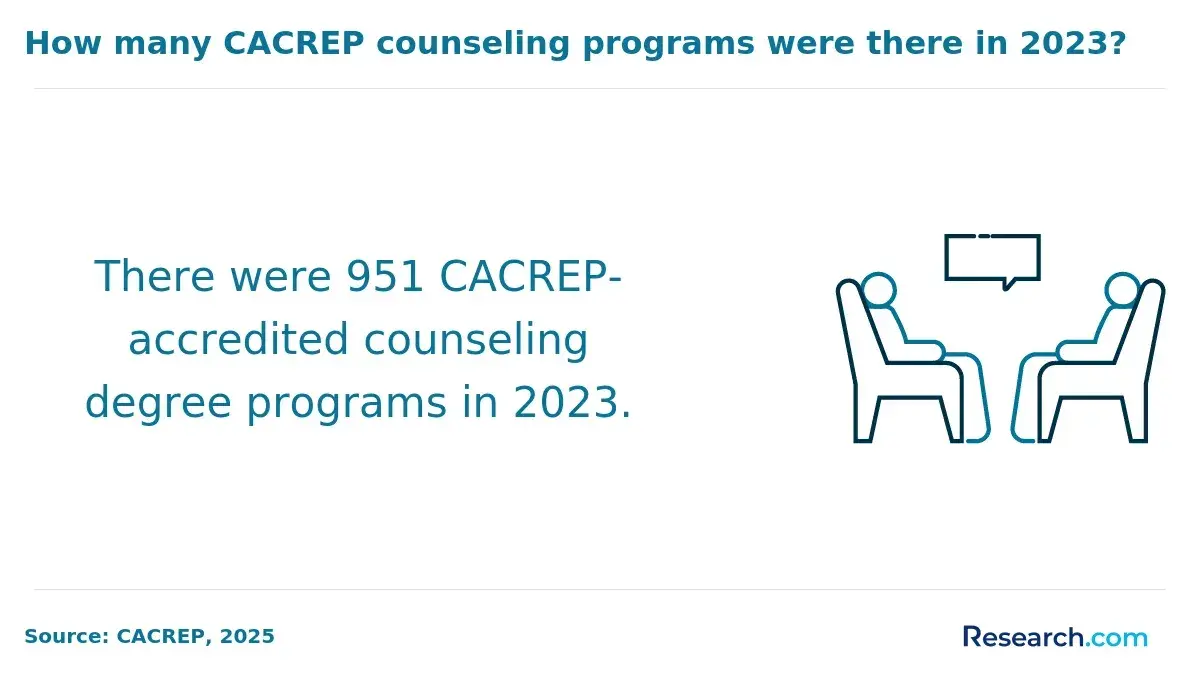
The chart below shows the distribution of CACREP-accredited programs among public and private institutions:
How do you apply for LPC licensure in Arkansas?
The Arkansas LPC application process is easiest to manage when you treat it as a documentation project from the beginning of graduate school. Keep syllabi, transcripts, practicum and internship records, supervisor approvals, employment records, exam confirmations, and professional references organized before you need them.
- Finish the required graduate education: Complete a qualifying master’s degree in counseling or a closely related field from an accredited school. The program should include at least 60 semester hours and the Arkansas-required content areas, including one credit hour in technology-assisted counseling services.
- Complete practicum and internship training: Your degree should include a 100-hour practicum with 40 direct client hours and a 600-hour internship with 240 direct client hours. These experiences must align with the state’s clinical training expectations.
- Apply for Licensed Associate Counselor status: After graduation, submit the LAC application so you can begin supervised post-master’s practice. Required materials include transcripts, proof of legal ability to work in the U.S., and a $200 fee.
- Complete supervised post-master’s experience: Work as an LAC while accumulating the required 3,000 hours under an approved supervisor. Track direct hours, indirect hours, supervision sessions, and supervisor signatures carefully.
- Pass the required examinations: Complete the National Counselor Examination (NCE) and Arkansas-required exam steps, including the oral examination before ABEC.
- Submit the final LPC application: Provide the final documentation package, including transcripts, exam results, supervision verification, three professional references, and plans for client records. A $200 fee applies.
- Wait for board approval: Once approved, you can practice independently as a Licensed Professional Counselor in Arkansas.
| Application stage | Common delay | How to avoid it |
| Graduate program review | Missing coursework or insufficient clinical hours. | Compare the program curriculum with Arkansas requirements before enrolling. |
| LAC application | Incomplete transcripts or unclear eligibility documentation. | Request official transcripts early and confirm application instructions. |
| Supervised hours | Poor hour tracking or supervisor approval problems. | Use a consistent log and verify supervision ratios regularly. |
| Exam stage | Waiting too long to prepare or misunderstanding exam order. | Create a study timeline and confirm testing rules with the board. |
| Final LPC application | Missing references, supervision forms, or client record plans. | Build a checklist and collect documents before submitting. |
How long does it take to be a Licensed Professional Counselor in Arkansas?
The full path to LPC licensure in Arkansas typically takes about nine years when counting undergraduate education, graduate school, post-master’s supervised experience, exams, and application review. The exact timeline depends on whether you study full time or part time, how quickly you secure supervision, and how efficiently you complete and document clinical hours.
- Bachelor’s degree: This step usually takes around four years and often includes coursework in psychology, human services, social sciences, or a related field.
- Master’s degree in counseling: Graduate study usually takes two to three years and includes required coursework, practicum, internship, and direct client training.
- Post-master’s supervised experience: Candidates often spend about three years working as an LAC while completing 3,000 supervised hours.
- Exams and application review: Candidates must prepare for and pass required exams, submit documentation, and wait for board review, which may take several weeks to a few months.
| Stage | Typical time involved | What to focus on |
| Bachelor’s degree | Around four years | Build a strong academic foundation and prepare for graduate admission. |
| Master’s degree | Two to three years | Choose a licensure-aligned program with required coursework and clinical training. |
| LAC supervised experience | About three years | Complete 3,000 hours and maintain accurate supervision records. |
| Exams and final approval | Several weeks to a few months for review after submission | Prepare early and submit a complete application package. |
-
: "
An Arkansas counselor who completed the full path described the process as “intense but rewarding.” The counselor noted that graduate coursework, practicum demands, 3,000 supervised hours, exam preparation, and application waiting periods required long-term discipline, but each stage strengthened clinical judgment and confidence.
"
What types of LPC licenses are offered in Arkansas?
Arkansas uses a tiered counseling licensure structure. This allows new graduates to practice under supervision, experienced counselors to practice independently, and qualified professionals to supervise the next generation of counselors.
- Licensed Associate Counselor (LAC): This credential is for graduates who have met the education requirements but still need 3,000 supervised client hours before full independent licensure.
- Licensed Professional Counselor (LPC): This is the independent practice license for counselors who have completed supervised experience, passed required exams, and received board approval.
- Licensed Professional Counselor Supervisor (LPC-S): This designation is for experienced LPCs who complete additional supervision preparation and are approved to supervise associate counselors.
| License type | Who it is for | Practice implications |
| LAC | Post-master’s counselors working toward independent licensure. | Practice is supervised and hours count toward LPC eligibility. |
| LPC | Counselors who completed education, exams, and supervised experience. | Allows independent counseling practice in Arkansas. |
| LPC-S | Experienced LPCs approved to supervise others. | Creates opportunities in supervision, leadership, and workforce development. |
If your long-term goal includes university teaching, advanced clinical specialization, research, or senior leadership, you may also compare doctoral pathways such as an online PhD in counseling.
Does Arkansas have LPC reciprocity with other states?
Arkansas does not offer automatic LPC reciprocity in the simple sense of transferring a license without review. Instead, out-of-state counselors generally pursue licensure by endorsement. The board evaluates whether the applicant’s education, exams, supervised experience, and current license are comparable to Arkansas standards.
Applicants may need to document a 60-hour graduate program, 3,000 supervised client contact hours, and a passing score on the National Counselor Examination (NCE). An oral interview before the Arkansas Board of Examiners in Counseling is usually part of the process. If an applicant lacks a state-specific requirement, such as training in technology-assisted counseling, the board may require additional coursework or supervision before approving full licensure.
| Out-of-state issue | What Arkansas may review | Possible outcome |
| Graduate credit hours | Whether the applicant completed a 60-hour graduate program. | Additional coursework may be required if credits are short. |
| Supervised experience | Whether prior supervision matches Arkansas’s 3,000-hour standard. | Some applicants may need more supervised hours. |
| Examination history | Whether the applicant passed the NCE or another acceptable exam. | Testing may be required if the prior exam does not satisfy board rules. |
| State-specific training | Whether coursework included technology-assisted counseling or other Arkansas-specific expectations. | Applicants may need to complete an additional course. |
The chart below lists the top skills of LPCs:
What is the demand for LPCs in Arkansas?
Demand for LPCs in Arkansas is shaped by mental health awareness, service access needs, healthcare workforce shortages, school counseling needs, and the growth of behavioral health services in both urban and rural communities. LPCs may work in private practice, community mental health agencies, hospitals, schools, substance use treatment programs, telehealth settings, and nonprofit organizations.
The original article notes that in 2022 there were hundreds of job openings for LPC therapists listed at once. It also points to demand in urban areas, Northwest Arkansas, and rural communities where access to behavioral health care can be limited. Students who want to reduce education costs while meeting licensure requirements may want to compare affordable CACREP-accredited online counseling programs.
| Work setting | Why LPCs are hired | Best fit for counselors who want |
| Community mental health agencies | Assessment, treatment planning, crisis support, and ongoing counseling. | Broad clinical exposure and experience with diverse client needs. |
| Schools | Student support, behavioral interventions, family coordination, and counseling services. | Work with children, adolescents, families, and educational teams. |
| Hospitals and healthcare systems | Behavioral health support, integrated care, discharge planning, and crisis response. | Interdisciplinary clinical work and structured environments. |
| Private practice | Individual, couples, family, or group counseling for clients seeking outpatient care. | Greater independence after full LPC licensure. |
| Rural service settings | Expanded access to mental health support in underserved communities. | Community-based practice and potentially broader roles. |
How does LPC licensure affect career growth in Arkansas?
LPC licensure changes what a counselor can do professionally. It can qualify counselors for independent practice, clinical roles that require licensure, leadership opportunities, supervision pathways, and specialized work that may not be available to unlicensed or associate-level candidates.
- More clinical job options: Hospitals, agencies, schools, and behavioral health organizations often require or prefer licensed counselors for advanced clinical roles.
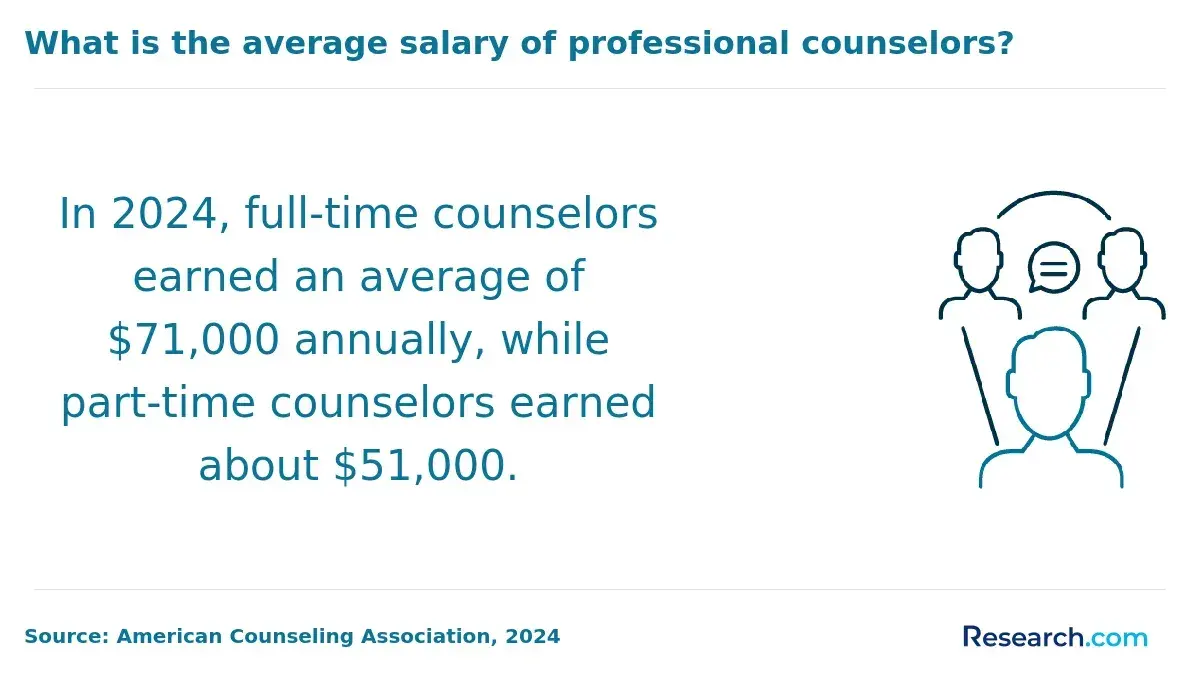
- Stronger earning potential: The original source cites average salaries around $59,467 yearly and top counselors making over $83,500, though actual pay depends on location, setting, specialization, and experience.
- Private practice eligibility: Full LPC licensure allows counselors to practice independently, manage their caseload, and develop a client base.
- Supervision and leadership pathways: Experienced LPCs may pursue LPC-S status and supervise associate counselors.
- Specialization opportunities: Licensure can support further training in areas such as trauma, couples counseling, child and adolescent counseling, substance use, assessment, or telehealth.
- Long-term job stability: The article cites counseling field growth in Arkansas by about 27% through 2030, placing licensed counselors in a stronger position than candidates without the credential.
- Continuing professional development: Renewal requirements push LPCs to keep skills current and stay aligned with ethical and legal standards.
Students comparing counseling-related pathways should be careful not to assume every therapy degree leads to the same license. For example, marriage and family therapy programs have different licensing targets; Research.com’s list of shortest online MFT programs may be useful for readers comparing counseling and MFT options.
Current trends affecting Arkansas counseling careers
Several practical trends are changing how future LPCs should prepare. Telehealth is now a routine part of counseling access, and Arkansas specifically expects at least one credit hour related to telemental health or technology-assisted counseling. Employers also increasingly expect counselors to document care carefully, coordinate with healthcare or school teams, and understand ethics in digital communication.
Another trend is the growing importance of licensure planning before enrollment. Online and hybrid counseling programs can be convenient, but students must verify that the program’s curriculum, practicum, internship, and state authorization align with Arkansas requirements. A program that works for one state may not automatically satisfy another state’s counseling board.
Common mistakes to avoid when pursuing Arkansas LPC licensure
| Mistake | Why it causes problems | Better approach |
| Choosing a program based only on convenience or tuition | A cheaper or faster program may lack required coursework or clinical hours. | Compare curriculum, practicum, internship, accreditation, and state licensure alignment. |
| Assuming a psychology or social work degree automatically qualifies | Related degrees may still miss counseling-specific requirements. | Request a course review before applying or enrolling in additional coursework. |
| Starting supervision without verifying supervisor approval | Hours may not count if supervision does not meet board expectations. | Confirm supervisor eligibility before logging post-master’s hours. |
| Tracking only total hours | Arkansas distinguishes direct client contact, indirect activities, and supervision ratios. | Maintain detailed logs for direct hours, indirect hours, and supervision sessions. |
| Waiting until the end to study for exams | Exam delays can slow the final application. | Build exam preparation into your supervised practice timeline. |
| Assuming online programs always meet Arkansas rules | Online programs may not satisfy state-specific licensure requirements. | Ask the program directly whether it prepares graduates for Arkansas LPC licensure. |
| Relying only on rankings | Rankings rarely show whether a program fits your licensure plan, budget, and schedule. | Use rankings as one input, then verify licensure outcomes and total cost. |
What are the ongoing requirements for maintaining LPC licensure in Arkansas?
After becoming an LPC, counselors must keep the license active through renewal and continuing education. Arkansas requires LPCs to renew every two years, and continuing education helps counselors maintain current knowledge in ethics, clinical practice, legal responsibilities, and emerging service delivery methods.
Because renewal rules can change, LPCs should check board instructions before each renewal cycle, keep proof of completed continuing education, submit required fees on time, and maintain accurate professional records. For readers still mapping the full career pathway, Research.com’s guide on how to become a mental health counselor in Arkansas provides related planning information.
What is the earning potential for LPCs in Arkansas?
Arkansas LPC earnings vary by region, work setting, experience, specialization, caseload, credentials, and whether the counselor works in an agency, school, healthcare organization, or private practice. The article cites average salaries around $59,467 yearly and top counselors making over $83,500. These figures should be treated as benchmarks, not guarantees.
Urban areas may offer higher client volume and more employer competition, while rural areas may offer different incentives or broader community roles. Candidates should compare salary expectations against graduate school cost, unpaid or lower-paid clinical training time, supervision availability, and the timeline to full licensure. If speed is a major concern, review Research.com’s guide to the fastest way to become a counselor in Arkansas.
What questions should you ask before choosing an Arkansas counseling program?
Before committing to a graduate counseling program, ask questions that directly affect licensure eligibility, cost, clinical placement, and career outcomes. Do not rely only on admissions materials; request written confirmation when possible.
- Licensure alignment: Does the program meet Arkansas LPC educational requirements, including at least 60 semester credits?
- Required coursework: Does the curriculum include every Arkansas-required content area?
- Technology-assisted counseling: Does the program include at least one credit hour in telemental health or technology-assisted counseling?
- Practicum and internship: Does the program include a 100-hour practicum with 40 direct client hours and a 600-hour internship with 240 direct hours?
- Placement support: Who helps students find practicum and internship sites in Arkansas?
- Supervisor availability: Does the program or alumni network help graduates identify approved supervisors for LAC hours?
- Total cost: What is the full cost, including tuition, fees, books, residency requirements, travel, exam costs, and application fees?
- Online approval: If the program is online, is it authorized to enroll Arkansas students and support Arkansas licensure preparation?
- Graduate outcomes: How many graduates pursue LAC or LPC licensure, and what support do they receive?
Can you become an LPC in Arkansas with a psychology or social work degree?
Possibly, but the degree must match Arkansas counseling requirements closely enough to satisfy the board. A psychology, social work, or human services graduate degree may be considered a closely related field, but applicants should not assume approval based on the program title alone.
The key question is whether the transcript includes the required counseling content areas, graduate credit expectations, practicum, internship, and Arkansas-specific training components. If not, the applicant may need additional coursework before qualifying for the LAC or LPC pathway.
Do LPCs in Arkansas have the same scope of practice as psychologists?
No. LPCs and psychologists are both mental health professionals, but they are trained, licensed, and regulated under different standards. LPCs focus on counseling, assessment within their scope, treatment planning, psychotherapy, prevention, and client support. Psychologists typically complete doctoral-level psychology training and may have broader authority in psychological testing and certain diagnostic assessment areas depending on state law and credentials.
Students should choose the LPC path if their goal is counseling practice. Those who want to become psychologists should review psychology licensure requirements separately because the education and supervised training path is different.
What is the difference between an LPC and an LMHC in Arkansas?
Arkansas uses the LPC title for Licensed Professional Counselors. Some other states use the LMHC title, meaning Licensed Mental Health Counselor, for a similar type of counseling license. The titles may look different across states, but each state defines its own education, exam, supervision, renewal, and scope-of-practice rules.
If you hold an LMHC from another state and want to practice in Arkansas, you would generally apply through Arkansas’s endorsement process rather than assuming automatic transfer.
Can LPCs in Arkansas diagnose and treat mental health disorders?
Arkansas LPCs are trained to provide professional counseling services, use diagnostic knowledge, and treat mental health concerns within their legal and ethical scope of practice. Required coursework includes Abnormal Psychology/DSM, and the optional NCMHCE focuses on mental health diagnosis and treatment.
However, counselors must practice within their competence, training, supervision, and board rules. Complex cases, testing needs, medication questions, or concerns outside the counselor’s scope may require consultation or referral to another qualified professional.
What do LPCs in Arkansas say about their career?
- My counseling program at the University of Arkansas at Little Rock gave me a strong mix of theory, supervised practice, and preparation for working with Arkansas communities. Starting in a school setting showed me how much young people need consistent emotional support. The work can be challenging, but the stability and community trust have helped me grow into the role. Luna
- After finishing my degree at Arkansas State University, I began counseling in a community school environment. Arkansas requires flexibility because families, schools, and local traditions all shape how clients experience care. The career has given me room to keep learning while serving people in a meaningful way. Miles
- Harding University helped me prepare academically, but working with students in rural Arkansas taught me the importance of creativity and empathy. Limited resources can make the job harder, yet the relationships in these communities make the work deeply worthwhile. Ongoing training and licensure renewal also keep me moving forward professionally. Teresa
Related Articles for Nearby States
- 2027 LPC Counseling Licensure Requirements in Missouri
- 2027 LPC Counseling Licensure Requirements in Oklahoma
- 2027 LPC Counseling Licensure Requirements in Tennessee
- 2027 LPC Counseling Licensure Requirements in Mississippi
- 2027 LPC Counseling Licensure Requirements in Louisiana
- 2027 LPC Counseling Licensure Requirements in Texas
- 2027 LPC Counseling Licensure Requirements in Kentucky
- 2027 LPC Counseling Licensure Requirements in Kansas
- 2027 LPC Counseling Licensure Requirements in Alabama
- 2027 LPC Counseling Licensure Requirements in Illinois
References:
- How to Become a Licensed Counselor (LPC) in Arkansas https://onlinecounselingprograms.com/become-a-counselor/counseling-licensure/how-to-become-a-counselor-in-arkansas/
- Licensed Professional Counselor (LPC) Process - School of Counseling, Human Performance and Rehabilitation - UA Little Rock https://ualr.edu/chpr/counseling/lpc-process/
- Arkansas Board of Examiners in Counseling - Arkansas Department of Health https://healthy.arkansas.gov/boards-commissions/boards/examiners-in-counseling-arkansas-state-board/
- How to Become a Licensed Counselor (LPC) in Arkansas for 2025 | Research.com https://research.com/careers/how-to-become-a-licensed-counselor-lpc-in-arkansas
- Certification / Licensure | Counselor Education and Supervision | University of Arkansas https://cned.uark.edu/certification-licensure.php
- Licensure and Graduation Requirements | Henderson State University https://www.hsu.edu/academics/teachers-college/counselor-education/licensure-and-graduation-requirements/
- Arkansas, AR: LPC, LAC - Licensed Professional Counseling Certification - Human Services EduHuman Services Edu https://www.humanservicesedu.org/arkansas-counseling-lpc/
- Psychology and Counseling https://www.astate.edu/degrees/eds-psychology-and-counseling-clinical-mental-health-counseling
- How to Become a Psychologist in Arkansas | Steps to take in AR https://www.psychologist-license.com/psychologist-requirements/arkansas-psychologist/
- Arkansas Counseling License Requirements https://www.counselingdegreeguide.org/licensure/arkansas/
Key Insights
- The most direct Arkansas LPC path is a licensure-focused counseling master’s degree. A related degree may work, but only if it includes the required coursework, clinical training, and credit hours.
- Supervised experience is the longest post-graduate step. Candidates need 3,000 supervised hours, including at least 2,200 direct client hours and appropriate supervision ratios.
- Do not treat online programs as automatically license-eligible. Verify Arkansas alignment, practicum and internship requirements, and the one-credit technology-assisted counseling requirement before enrolling.
- LAC status is the bridge to full LPC licensure. New graduates typically practice under supervision as Licensed Associate Counselors before they can qualify for independent LPC practice.
- Licensure improves career flexibility. Full LPC status can support independent practice, clinical roles, supervision pathways, specialization, and stronger earning potential.
- Out-of-state counselors need endorsement review, not automatic reciprocity. Arkansas evaluates education, supervised hours, exams, and state-specific requirements case by case.
- The best way to avoid delays is documentation. Keep transcripts, syllabi, hour logs, supervision forms, exam records, and references organized from the start.
Other Things You Should Know About Becoming an LPC in Arkansas
Arkansas requires a master’s or doctoral degree in counseling or a closely related field from a regionally accredited institution. The program must include at least 60 graduate semester hours, with core coursework in ethics, assessment, human growth, counseling theory, and supervised practicum experience.
In 2027, aspiring LPCs in Arkansas must complete 3,000 hours of supervised clinical experience, including 1,500 direct client contact hours. This must be gained over a minimum of two years, under the supervision of a licensed professional counselor (LPC) or other approved supervisor.


