
2027 Shortest Online MFT Programs

Co-Founder and Chief Data Scientist
The demand for marriage and family therapists (MFTs) is rising, with a 14% job growth projected by 2032. For those seeking a faster path to licensure, shortest online MFT programs offer accredited, accelerated options without compromising quality. Experts emphasize the importance of streamlined coursework, strong clinical placements, and flexible scheduling for career success.
This guide provides expert-backed insights on top-ranked programs to help you make an informed choice. Whether switching careers or starting fresh, the right program can fast-track your journey into this growing field.
What are the benefits of the shortest online MFT programs?
- Graduates can pursue roles as licensed marriage and family therapists (MFTs) in private practice, mental health clinics, and hospitals, helping individuals and families navigate life challenges.
- The median annual salary for marriage and family therapists is $56,570, according to the Bureau of Labor Statistics, with higher earnings in certain industries and locations.
- Online programs allow students to complete coursework on their own schedule, making it easier to balance education with work and personal commitments.
What can I expect from the shortest online MFT programs?
- Courses cover key topics such as psychotherapy techniques, family counseling, human development, ethics, and mental health assessment to prepare students for clinical roles.
- Some of the shortest online MFT programs can be completed in as little as 18 to 24 months, helping students enter the workforce faster.
- Average tuition ranges from $20,000 to $50,000 with many programs offering financial aid, scholarships, and flexible payment plans.
- Programs typically feature asynchronous coursework, live virtual discussions, and interactive assignments, allowing students to balance studies with personal and professional commitments.
- Supervised practicum and internship hours are required to meet state licensure standards, ensuring students gain hands-on experience before becoming licensed therapists.
Where can I work as a graduate of the shortest online MFT programs?
As a graduate of the shortest online MFT programs, you can pursue a variety of career paths in mental health and therapy. Many graduates choose to open their own private practice, offering counseling services to individuals, couples, and families. Others find positions in community mental health clinics, hospitals, and healthcare facilities, where they collaborate with other healthcare professionals to address mental and emotional well-being.
Additionally, MFT graduates can work in schools, universities, and social service agencies, helping students manage personal challenges or providing support in nonprofit and government organizations. The flexibility of these programs prepares you to work in a range of settings, offering meaningful support to those in need.
How much can I make as a graduate of the shortest online MFT programs?
On average, marriage and family therapists earn a median annual salary of $56,570 according to the Bureau of Labor Statistics. However, salaries can vary widely, with those in private practice or high-demand areas potentially earning more.
In addition to salary, many MFTs also have opportunities for career advancement, which can lead to higher pay. For instance, working in specialized areas such as trauma therapy or substance abuse counseling can offer additional financial benefits. With experience and a growing client base, it’s possible to increase your earnings significantly over time.
- Shortest Online MFT Programs for 2027 Online MFT Programs
- How long does it take to complete the shortest online MFT programs? Program Length
- How does the shortest online MFT programs compare to an on-campus program? Online Vs. On-Campus
- What is the average cost of the shortest online MFT programs? Average Cost
- What are the financial aid options for students enrolling in the shortest online MFT programs? Financial Aid Options
- What are the prerequisites for enrolling in the shortest online MFT programs? Requirements
- What courses are typically in the shortest online MFT programs? Courses
- What types of specializations are available in the shortest online MFT programs? What types of specializations are available in the shortest online MFT programs?
- How to choose the shortest online MFT programs? How to choose the shortest online MFT programs?
- How do online MFT programs support ongoing professional development? How do online MFT programs support ongoing professional development?
- What career paths are available for graduates of the shortest online MFT programs? What career paths are available for graduates of the shortest online MFT programs?
- Can advanced academic research elevate clinical expertise? Can advanced academic research elevate clinical expertise?
- How can a drug counselor degree complement my online MFT program? How can a drug counselor degree complement my online MFT program?
- How Can I Balance Affordability with Quality in My Online MFT Program? How Can I Balance Affordability with Quality in My Online MFT Program?
- Do Employers Value Online MFT Degrees Equally? Do Employers Value Online MFT Degrees Equally?
- What is the job market for graduates of the shortest online MFT programs? What is the job market for graduates of the shortest online MFT programs?
- What are the essential steps to transition from graduation to licensure? What are the essential steps to transition from graduation to licensure?
- Why Does Accreditation Matter for Online MFT Programs? Why Does Accreditation Matter for Online MFT Programs?
- What are the potential challenges of completing the shortest online MFT programs? What are the potential challenges of completing the shortest online MFT programs?
- Is the Investment in an Online MFT Program Worth the Cost? Is the Investment in an Online MFT Program Worth the Cost?
- Do Employers care if you earned your psychology degree online? Do Employers care if you earned your psychology degree online?
- Can Accelerated Psychology Programs Online Complement My MFT Training? Can Accelerated Psychology Programs Online Complement My MFT Training?
Shortest Online MFT Programs for 2027
Choosing a short online marriage and family therapy program is not just a question of speed. You also need to know whether the program can support state licensure, provide supervised clinical training, fit your budget, and prepare you for real client work with individuals, couples, and families. A fast program that does not meet your state’s requirements can delay your license and cost more in the long run.
This guide is for prospective graduate students comparing accelerated or shorter online MFT pathways. You will find program options, expected completion timelines, cost considerations, accreditation issues, online-versus-campus trade-offs, licensure steps, career paths, and practical questions to ask before enrolling.
Quick answer: What is the shortest online MFT program?
The shortest online MFT programs commonly take 18 to 24 months for full-time students, although the exact timeline depends on course load, practicum placement, internship scheduling, and state licensure requirements. A shorter timeline can be useful for career changers and working adults, but students should prioritize accreditation, clinical placement support, and licensure alignment over speed alone.
How do we rank schools?
Research.com evaluates schools using data from established education sources, including the IPEDS database from the National Center for Education Statistics, Peterson’s data resources including the Distance Learning Licensed Data Set, College Scorecard from the U.S. Department of Education, and additional information from the National Center for Education Statistics.
These sources help compare institutions using factors such as program availability, institutional data, distance learning information, and other higher education indicators. Rankings should be used as a starting point, not as the only basis for choosing a program.
For more detail on how Research.com evaluates institutions and programs, review our ranking methodology.
Fast comparison of shortest online MFT programs
| School | Program | Program Length | Credits or Training Requirement | Accreditation Listed |
| Northwestern University | Master of Science in Marriage and Family Therapy | 2 years (on-campus) or as few as 21 months (online) | 25 | Commission on Accreditation for Marriage and Family Therapy Education (COAMFTE) |
| Alliant International University | Master of Arts in Marital and Family Therapy | 2 years | 60-credit program | Commission on Accreditation for Marriage and Family Therapy Education (COAMFTE) |
| Touro University Worldwide | Master of Arts in Marriage and Family Therapy | 2 years | 72 credit hours | Commission on Accreditation for Marriage and Family Therapy Education (COAMFTE) |
| Mid-America Christian University | Master of Science in Counseling, Marital, Couples, and Family Counseling/Therapy | 2 years | 60 | Council for Accreditation of Counseling and Related Educational Programs (CACREP) |
| Pepperdine University | Master of Arts in Clinical Psychology with an Emphasis in Marriage and Family Therapy | 2 years | 14-unit program (Certificate Program ) | Commission on Accreditation for Marriage and Family Therapy Education (COAMFTE) |
| Antioch University | Master of Arts in Marriage and Family Therapy | 2 years | 86 to 89 | Commission on Accreditation for Marriage and Family Therapy Education (COAMFTE) |
| University of Southern California | Master of Marriage and Family Therapy | 2 years | 60 | Commission on Accreditation for Marriage and Family Therapy Education (COAMFTE) |
| University of San Diego | Master of Arts in Marital and Family Therapy | 2 years | 60 | Commission on Accreditation for Marriage and Family Therapy Education (COAMFTE) |
| Capella University | Master of Science in Marriage and Family Therapy | 2 years | 72 | Commission on Accreditation for Marriage and Family Therapy Education (COAMFTE) |
| Liberty University | Master of Arts in Marriage and Family Therapy | 2 Semesters | 100-hour practicum and a 600-hour internship | Commission on Accreditation for Marriage and Family Therapy Education (COAMFTE) |
1. Northwestern University - Master of Science in Marriage and Family Therapy
Northwestern University offers its Master of Science in Marriage and Family Therapy through The Family Institute. The program is built around clinical preparation for students who want to work with individuals, couples, and families using a relational and systemic lens.
- Program Length: 2 years (on-campus) or as few as 21 months (online)
- Tracks/Concentrations: N/A
- Cost per Year: $2,171
- Required Credits to Graduate: 25
- Accreditation: Commission on Accreditation for Marriage and Family Therapy Education (COAMFTE)
2. Alliant International University - Master of Arts in Marital and Family Therapy
Alliant International University offers the Master of Arts in Marital and Family Therapy through the California School of Professional Psychology. The program may appeal to students who want practice-focused clinical training and the option to study general MFT or chemical dependency.
- Program Length: 2 years
- Tracks/Concentrations: General MFT, Chemical Dependency Specialization Track
- Cost per Year: $14,314 per semester
- Required Credits to Graduate: 60-credit program
- Accreditation: Commission on Accreditation for Marriage and Family Therapy Education (COAMFTE)
3. Touro University Worldwide - Master of Arts in Marriage and Family Therapy
Touro University Worldwide offers an online Master of Arts in Marriage and Family Therapy for students who need a flexible format while preparing for clinical practice. The program includes an MFT Clinical Track and is designed for students pursuing licensure-oriented preparation.
- Program Length: 2 years
- Tracks/Concentrations: MFT Clinical Track
- Cost per Year: $525 per semester credit
- Required Credits to Graduate: 72 credit hours
- Accredation: Commission on Accreditation for Marriage and Family Therapy Education (COAMFTE)
4. Mid-America Christian University - Master of Science in Counseling, Marital, Couples, and Family Counseling/Therapy
Mid-America Christian University offers a faith-based Master of Science in Counseling with a specialization in Marital, Couples, and Family Counseling/Therapy. Students considering this option should review how the program’s counseling accreditation and curriculum align with their state’s intended license.
- Program Length: 2 years
- Tracks/Concentrations: Marital, Couples, and Family Counseling/Therapy
- Cost per Year: $19,752 annually
- Required Credits to Graduate: 60
- Accreditation: Council for Accreditation of Counseling and Related Educational Programs (CACREP)
5. Pepperdine University - Master of Arts in Clinical Psychology with an Emphasis in Marriage and Family Therapy
Pepperdine University offers graduate training connected to clinical psychology and marriage and family therapy. Because program titles, emphases, and certificate requirements can affect licensure planning, applicants should confirm the exact credential, unit requirements, and state eligibility before applying.
- Program Length: 2 years
- Tracks/Concentrations: Marriage and Family Therapy as an emphasis within the Master of Dispute Resolution (MDR) program
- Cost per Year: $2,570 per unit
- Required Credits to Graduate: 14-unit program (Certificate Program )
- Accreditation: Commission on Accreditation for Marriage and Family Therapy Education (COAMFTE)
6. Antioch University - Master of Arts in Marriage and Family Therapy
Antioch University offers a Master of Arts in Marriage and Family Therapy focused on ethical, clinically grounded training. The program emphasizes systemic thinking and prepares students to work with clients across varied relationship structures, communities, and clinical settings.
- Program Length: 2 years
- Tracks/Concentrations: N/A
- Cost per Year: $1,168 per credit unit
- Required Credits to Graduate: 86 to 89
- Accreditation: Commission on Accreditation for Marriage and Family Therapy Education (COAMFTE)
7. University of Southern California (USC) - Master of Marriage and Family Therapy
The University of Southern California offers a Master of Marriage and Family Therapy for students seeking advanced clinical education at a major research university. Applicants should compare tuition, field placement support, and licensure alignment carefully because the program carries a high per-unit cost.
- Program Length: 2 years
- Tracks/Concentrations: N/A
- Cost per Year: $2,354 per unit
- Required Credits to Graduate: 60
- Accreditation: Commission on Accreditation for Marriage and Family Therapy Education (COAMFTE)
8. University of San Diego - Master of Arts in Marital and Family Therapy
The University of San Diego offers a Master of Arts in Marital and Family Therapy at a private Catholic university. The program is grounded in a humanistic and systemic perspective and is intended for students preparing for ethical clinical work with couples and families.
- Program Length: 2 years
- Tracks/Concentrations: N/A
- Cost per Year: $1,650 per unit
- Required Credits to Graduate: 60
- Accreditation: Commission on Accreditation for Marriage and Family Therapy Education (COAMFTE)
9. Capella University - Master of Science in Marriage and Family Therapy
Capella University offers an online Master of Science in Marriage and Family Therapy for students who prefer distance learning and structured graduate preparation. As with any online clinical program, students should ask how practicum and internship placements are arranged in their local area.
- Program Length: 2 years
- Tracks/Concentrations: N/A
- Cost per Year: $497 per credit
- Required Credits to Graduate: 72
- Accreditation: Commission on Accreditation for Marriage and Family Therapy Education (COAMFTE)
10. Liberty University - Master of Arts in Marriage and Family Therapy
Liberty University offers a Master of Arts in Marriage and Family Therapy in a Christian academic environment. Prospective students should verify the stated timeline, practicum expectations, internship structure, and whether the program satisfies the requirements of the state where they plan to practice.
- Program Length: 2 Semesters
- Tracks/Concentrations: N/A
- Cost per Year: $565/Credit
- Required Credits to Graduate: 100-hour practicum and a 600-hour internship
- Accreditation: Commission on Accreditation for Marriage and Family Therapy Education (COAMFTE)
How long does it take to complete the shortest online MFT programs?
The shortest online MFT programs generally take 18 to 24 months, but the true completion time depends on the academic calendar, whether courses are offered year-round, how quickly students can secure clinical sites, and whether they enroll full time or part time. Even when coursework moves quickly, clinical training can determine the final graduation date.
Students in accelerated formats should expect intensive reading, case conceptualization, recorded practice sessions, live supervision, and assignments in areas such as psychotherapy approaches, family counseling, ethics, assessment, and treatment planning. A shorter program does not mean less clinical responsibility.
Full-time study is usually the fastest route. Part-time enrollment can make sense for students balancing work, caregiving, or financial constraints, but it may extend the timeline. Before choosing a program, ask whether practicum and internship hours can begin early or only after specific coursework is completed.
How do the shortest online MFT programs compare to on-campus programs?
Online MFT programs are often more flexible than campus-based programs because many allow students to complete didactic coursework remotely. This can be especially helpful for working adults, military students, parents, or students who do not live near a campus. Similar to accelerated online nurse practitioner programs, the convenience is strongest when the program has clear clinical placement procedures.
Campus programs may offer more face-to-face interaction, local networking, and easier access to university-affiliated training sites. Online students may need to be more proactive about building relationships with faculty, supervisors, classmates, and local agencies.
| Factor | Online MFT Program | On-Campus MFT Program |
| Course access | Remote classes, often with asynchronous components | Scheduled in-person classes |
| Flexibility | Better for students who need location flexibility | Better for students who prefer fixed class meetings |
| Clinical training | Usually completed in the student’s local community, depending on approval | May use established local placement relationships |
| Networking | Requires intentional participation in virtual events and professional groups | More spontaneous peer and faculty interaction |
| Best fit | Self-directed students who can manage deadlines and site searches | Students who want frequent in-person support and campus resources |
What is the average cost of the shortest online MFT programs?
The average cost of the shortest online MFT programs typically ranges from $20,000 to $50,000 for the entire program. The final cost depends on tuition rate, number of credits, university type, technology fees, residency requirements, and how long a student remains enrolled. As with other professional programs, including some lower-cost online pharmacy school options, the least expensive program is not automatically the best value.
Students should calculate total cost, not only advertised tuition. Books, application fees, background checks, liability insurance, telehealth training tools, technology requirements, travel to clinical sites, and possible residency or intensive sessions can increase the overall price.
Financial aid may reduce out-of-pocket costs, but loans still have to be repaid. A practical cost comparison should include tuition, fees, expected borrowing, interest, time away from full-time work, and whether the program has strong licensure and placement outcomes.
What are the financial aid options for students enrolling in the shortest online MFT programs?
Students in online MFT programs may be able to use several types of aid, depending on the institution’s eligibility and the student’s financial situation. Start by confirming that the school participates in federal aid programs and that the specific program qualifies.
- Federal student loans. Eligible graduate students can submit the FAFSA and may qualify for federal loan options with structured repayment plans.
- Institutional scholarships and grants. Some universities offer awards based on financial need, academic profile, professional goals, or commitment to mental health service.
- State-funded aid. Certain states provide grants or loan assistance for students entering counseling, behavioral health, or mental health professions.
- Employer tuition reimbursement. Students already working in healthcare, education, social services, or behavioral health may receive partial tuition support from an employer.
- Private scholarships. Professional associations, community foundations, and mental health organizations may fund students pursuing counseling or therapy careers.
| Cost question to ask | Why it matters |
| Is tuition charged per credit, per term, or per unit? | Pricing models can make programs difficult to compare. |
| Are clinical placement fees separate? | Fieldwork costs may not be included in the posted tuition. |
| Are campus visits or residencies required? | Travel and lodging can add costs for online students. |
| Does the program qualify for federal financial aid? | This affects loan access and repayment options. |
| What is the total estimated program cost? | Total cost gives a clearer picture than per-credit tuition alone. |
What are the prerequisites for enrolling in the shortest online MFT programs?
Most online MFT master’s programs require a bachelor’s degree from an accredited institution. A background in psychology, counseling, social work, human development, sociology, or a related field may help, but many programs consider applicants from other academic areas if they can show readiness for graduate-level clinical study. Students comparing alternate credential routes may also review certificate programs connected to higher-paying career paths, but MFT licensure generally requires graduate clinical education.
Common admission requirements include transcripts, a personal statement, letters of recommendation, a resume, and sometimes an interview. Many programs prefer or require a minimum GPA around 3.0, although admissions policies vary.
Prior experience in mental health, education, case management, ministry, social services, or crisis support can strengthen an application, but it is not always mandatory. More important is the applicant’s ability to handle emotionally demanding coursework, ethical responsibilities, supervised client contact, and professional feedback.
What courses are typically in the shortest online MFT programs?
Accelerated online MFT programs cover the same core clinical foundation students need for marriage and family therapy practice. The compressed format usually means students take courses in a more intensive sequence, not that they skip essential content.
- Foundations of marriage and family therapy. Introduces major MFT theories, systemic thinking, relational assessment, and the therapist’s role.
- Human development across the lifespan. Examines developmental stages and how individual growth affects couples, parents, children, and family systems.
- Couples and family therapy methods. Builds practical skills for communication patterns, conflict, relational distress, parenting issues, and family change.
- Ethics and professional practice. Covers confidentiality, informed consent, mandated reporting, boundaries, documentation, and legal responsibilities.
- Clinical practicum / Internship. Places students in supervised settings where they apply theory, receive feedback, and build direct client experience.
What types of specializations are available in the shortest online MFT programs?
Some shorter MFT programs offer formal specializations, while others provide electives, practicum experiences, or faculty expertise in specific clinical areas. Students should choose a specialization only if it supports their career goals and does not interfere with licensure requirements.
- Couples therapy. Focuses on communication, conflict patterns, intimacy concerns, separation, reconciliation, and relationship repair.
- Child and adolescent therapy. Prepares students to address emotional, behavioral, developmental, and family-based concerns affecting younger clients.
- Trauma therapy. Builds skills for working with clients and families affected by abuse, violence, grief, crisis, or other traumatic experiences.
- Substance abuse counseling. Addresses substance use disorders within relational and family systems.
- Family systems therapy. Emphasizes how family roles, boundaries, communication patterns, and intergenerational dynamics shape client concerns.
How to choose the shortest online MFT programs?
Start with licensure, not speed. Each state sets its own rules for marriage and family therapist education, supervised hours, exams, and post-graduate experience. A program that is short and convenient is only useful if it moves you toward eligibility in the state where you plan to practice.
Next, review accreditation, curriculum, clinical placement support, faculty qualifications, and student support. Strong programs should explain how they teach family therapy, assessment, ethics, multicultural practice, teletherapy, documentation, and supervised clinical work. Review employer expectations and MFT career considerations before committing.
Finally, compare total cost and likely return. A short program may reduce time in school, but tuition, fees, and unpaid internship hours can still be substantial. Students looking for lower-cost options can also compare broader affordable online MFT master’s programs.
Questions to ask before enrolling
- Does the program meet the education requirements for my intended state license?
- Is the program COAMFTE, CACREP, or otherwise recognized for my licensure path?
- Who is responsible for finding practicum and internship sites?
- Can I complete clinical hours where I live?
- Are there required campus visits, residencies, or synchronous class meetings?
- What is the total program cost, including fees and clinical expenses?
- What support is available for licensure exams, documentation, and post-graduate planning?
How do online MFT programs support ongoing professional development?
A strong online MFT program should support students beyond coursework. Useful services may include licensure advising, clinical placement guidance, supervision preparation, career coaching, alumni networking, continuing education information, and mentorship. These supports matter because MFT graduates often need to complete additional supervised experience after graduation before becoming fully licensed.
When comparing schools, ask whether professional development is embedded throughout the program or offered only near graduation. Students should also check whether faculty and advisors understand the licensing process in multiple states, especially if they plan to relocate.
What career paths are available for graduates of the shortest online MFT programs?
Graduates of online MFT programs can pursue several counseling and behavioral health roles, but job titles and legal scope of practice depend on state licensure, additional credentials, and employer requirements. Some roles may require a separate school counseling, substance abuse, or clinical counseling credential.
- Marriage and family therapist. Provides therapy to individuals, couples, and families in private practice, community agencies, healthcare settings, or group practices.
- School counselor. Supports students with social, emotional, academic, and family-related challenges when the graduate also meets school counseling requirements.
- Substance abuse counselor. Works with clients and families affected by substance use, often in treatment centers, integrated care settings, or community agencies.
- Trauma specialist. Focuses on clients coping with trauma, grief, violence, crisis, or major life disruption.
- Clinical director. Oversees therapy teams, programs, compliance, and service delivery in mental health clinics, hospitals, public policy roles, or community organizations.
Can advanced academic research elevate clinical expertise?
Advanced research training can strengthen clinical practice by helping therapists evaluate evidence, interpret mental health trends, and apply treatment models more carefully. It may also support career moves into teaching, supervision, program evaluation, policy, or leadership.
Students who want a deeper research path after MFT training may explore online doctoral programs in psychology, but they should confirm how a doctorate fits their licensure goals, time constraints, and financial plan.
How can a drug counselor degree complement my online MFT program?
Substance use issues often affect couples, parenting, finances, trust, safety, and family functioning. For that reason, additional substance abuse training can be useful for MFT students who want to work in integrated behavioral health, addiction treatment, community agencies, or family recovery services.
A substance abuse counseling degree can help build targeted skills in screening, intervention, relapse prevention, and coordinated care. Students should check whether separate certification or licensure is required in their state.
How can I balance affordability with quality in my online MFT program?
Affordability matters, but the cheapest option is not always the best choice for a licensure-based career. A low tuition rate can become expensive if the program offers weak placement support, does not meet state requirements, lacks recognized accreditation, or leaves students without adequate preparation for supervised practice.
Compare tuition alongside accreditation, curriculum depth, faculty experience, clinical site support, student services, and licensure guidance. Students comparing counseling-related options may also review affordable online counseling degree programs to understand how costs vary across related fields.
Do employers value online MFT degrees equally?
Employers typically care most about whether the degree is from a legitimate institution, whether the program meets licensure requirements, whether the graduate completed supervised clinical training, and whether the candidate can work ethically and competently with clients. The online format itself is usually less important than program quality and licensure eligibility.
Accredited clinical programs, including pathways similar to CACREP-accredited online counseling master’s programs, can provide assurance that students completed a structured curriculum and supervised training. Graduates should be ready to explain their practicum, internship, supervision, client population experience, and telehealth skills during interviews.
What is the job market for graduates of the shortest online MFT programs?
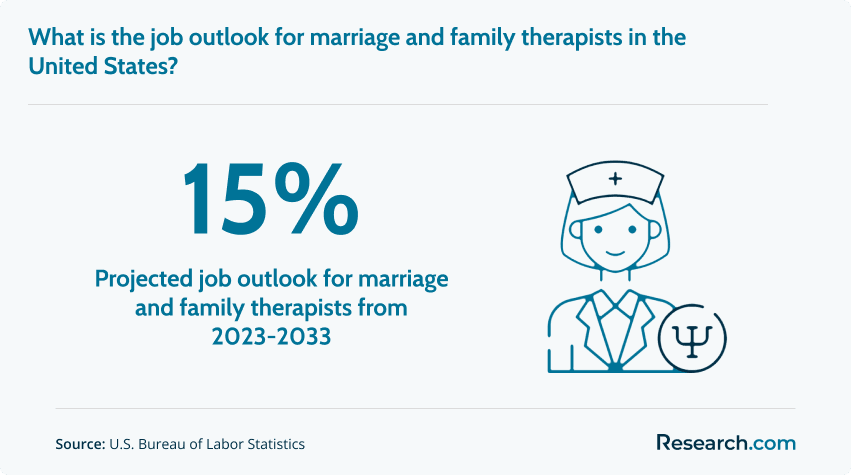
The job market for marriage and family therapists is supported by continued demand for mental health services. The article’s cited U.S. Bureau of Labor Statistics data reports a 16% growth in demand projected from 2021 to 2031. Demand is tied to greater awareness of mental health needs and the use of therapy services for individuals, couples, and families.
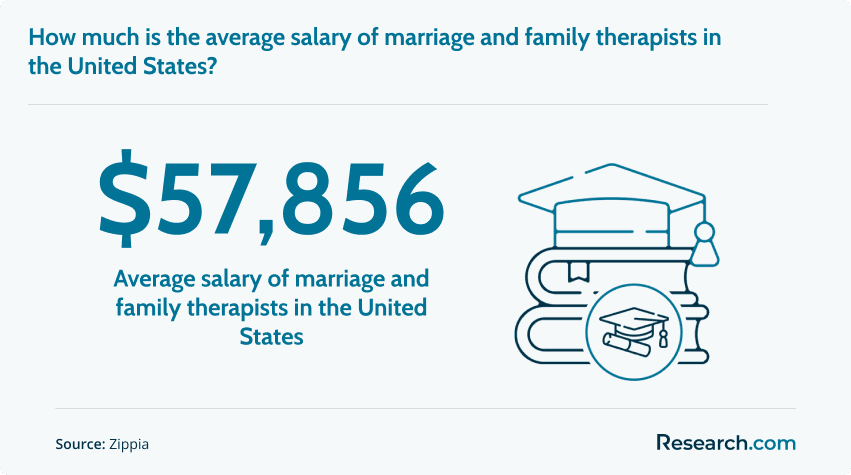
MFTs earn a median annual salary of $56,570, with higher earnings possible in private practice or urban areas, where salaries can exceed $70,000. Pay can vary by state, employer, licensure status, specialization, caseload, and years of experience. Students comparing healthcare salaries should not assume MFT earnings will follow the same pattern as an entry-level MSN salary.
Teletherapy has also expanded how some therapists deliver care, but state licensure rules still matter. Graduates who want remote work should verify where they can legally practice, how supervision is handled, and whether employers require additional telehealth training.
What graduates say about online MFT programs
- Kyle: "My online MFT program made it possible to keep working and stay present for my family while completing graduate coursework. The flexible format helped me manage assignments, and the supervised internship gave me the practical experience I needed."
- Lisa: "The online classes were challenging, and I appreciated learning with classmates from different locations and backgrounds. The program helped me build confidence in working with individuals and families."
- Oliver: "I was able to connect what I learned in class with what I was seeing during internship. Studying from home gave me flexibility, but the clinical expectations still felt serious and professional."
What are the essential steps to transition from graduation to licensure?
Graduation is only one part of becoming a licensed marriage and family therapist. After completing the degree, graduates usually need to satisfy state-specific requirements for supervised clinical experience, examinations, documentation, and applications.
- Check your state board requirements. Confirm education, hour, supervision, and exam rules directly with the licensing board.
- Submit required documentation. Keep syllabi, transcripts, practicum records, internship logs, supervisor forms, and program verification documents.
- Complete supervised post-graduate experience. Many states require additional supervised hours after the degree.
- Prepare for required exams. Build a study plan and confirm which exam your state accepts.
- Maintain professional support. Mentorship, consultation, and professional association involvement can help during the transition.
For a more detailed career roadmap, review Research.com’s guide on how to become a marriage and family therapist.
Why does accreditation matter for online MFT programs?
Accreditation matters because MFT is a regulated clinical profession. Licensing boards and employers often use accreditation and institutional legitimacy as signals that a program includes appropriate coursework, faculty oversight, clinical training, ethics preparation, and quality control.
COAMFTE accreditation is specifically associated with marriage and family therapy education, while CACREP is associated with counseling programs. The right accreditation depends on your intended license and state rules. Students exploring related behavioral health paths can also compare requirements across psychology careers.
What are the potential challenges of completing the shortest online MFT programs?
Accelerated online MFT programs can be demanding. Students may face heavy weekly workloads, limited in-person interaction, difficulty finding approved clinical placements, technology requirements, and the need to balance coursework with emotionally intense client training.
Licensure complexity is another challenge. State rules differ, and online students who live outside the institution’s home state should verify eligibility before enrollment. Students comparing cost-sensitive behavioral health programs may also review options such as the most affordable online psychology degree programs, but psychology and MFT pathways have different licensing outcomes.
| Common mistake | Better approach |
| Choosing the shortest program without checking licensure rules | Confirm state board requirements before applying. |
| Comparing only tuition | Calculate total cost, including fees, travel, books, and clinical expenses. |
| Assuming the school will find every clinical placement | Ask for written details about placement support and student responsibilities. |
| Ignoring accreditation | Verify institutional and programmatic accreditation before enrolling. |
| Relying only on rankings | Use rankings as one input alongside licensure fit, cost, support, and outcomes. |
Is the investment in an online MFT program worth the cost?
An online MFT program can be worth the investment if it leads to licensure eligibility, offers strong clinical preparation, fits your budget, and supports your preferred career path. It may not be worth it if the program does not meet your state’s requirements, requires excessive borrowing, or provides limited help with supervised training.
To evaluate return on investment, compare total tuition, fees, likely debt, clinical placement costs, unpaid fieldwork time, graduation timeline, licensure preparation, and realistic salary expectations. Students weighing related graduate options can compare MFT programs with alternatives such as affordable online BCBA degree programs, but the best choice depends on whether you want to provide family therapy, behavior analysis, counseling, or another service.
Do employers care if you earned your psychology degree online?
For clinical hiring, employers generally focus on accreditation, licensure status, supervised experience, references, and practical competence. An online degree from a credible program can be respected, but graduates still need to demonstrate clinical readiness.
Students concerned about employer perception can read more about whether online psychology degrees are legitimate and respected. The same decision logic applies to MFT: delivery format matters less than quality, accreditation, licensure alignment, and supervised experience.
Can accelerated psychology programs online complement my MFT training?
Additional psychology coursework can help MFT students strengthen assessment skills, research literacy, developmental understanding, and familiarity with mental health conditions. However, psychology programs do not automatically replace MFT licensure requirements.
Students who want broader behavioral health knowledge may consider accelerated online psychology programs as a complementary option. Before enrolling in an additional program, confirm that the coursework supports your career goals and does not duplicate training you already receive in an MFT curriculum.
Key Insights
- The shortest online MFT programs often take 18 to 24 months, but clinical placement timing can affect the real completion date.
- Licensure alignment is the most important factor. Always check your state board requirements before enrolling.
- COAMFTE and CACREP serve different professional education pathways, so verify which accreditation fits your intended license.
- Total cost matters more than advertised tuition. Include fees, travel, books, technology, clinical expenses, and potential loan repayment.
- Online programs can be respected by employers when they are accredited, clinically rigorous, and lead to licensure eligibility.
- Fast programs require strong time management. Students should be ready for intensive coursework, supervision, and field training.
- Do not choose a program based only on rankings or speed. The best program is the one that fits your state, budget, learning style, and long-term clinical goals.
References:
- American Association for Marriage and Family Therapy (AAMFT). (2022). Part 2: Marriage and family therapist workforce study 2022. AAMFT workforce study.
- Bureau of Labor Statistics (BLS). (2024). Marriage and family therapists. U.S. Department of Labor profile.
- Data USA. (2024). Marriage and family therapists. Data USA occupational profile.
- Zippia. (2025). Marriage and family therapist salaries. Zippia salary data.
Other Things You Should Know About the Shortest Online MFT Programs
In 2027, the shortest online Marriage and Family Therapy (MFT) programs typically range from 18 to 24 months for those with a relevant undergraduate degree. These accelerated programs focus on essential coursework and clinical practice required for licensure.
The shortest online MFT programs should hold regional accreditation and, for licensure-focused preparation, programmatic accreditation from COAMFTE. COAMFTE-accredited MFT programs must meet curriculum and supervised-clinical training standards that align with state licensing expectations.


