2027 Most Affordable MBA in Healthcare Management Programs Online

Co-Founder and Chief Data Scientist
There is a growing demand for skilled healthcare managers, but traditional business degrees often lack the specific knowledge and expertise needed for this field. As well, the traditional MBA path, with its hefty price tag and rigid schedules, can be an impractical option.
Based on my extensive research on this area using government and other institutional studies, affordable online MBA in healthcare management programs are emerging as the perfect launchpad for your career plans.
To help you, I have identified the programs that offer accessible tuition fees, flexible online learning, and specialized knowledge that bridges the gap between healthcare and business. Hopefully, this will help you choose the best program as you pursue an MBA in healthcare.
What are the benefits of getting an online MBA in Healthcare Management?
- Healthcare administration is one of the business masters with a high job outlook of 28%
- Healthcare professionals in management, administrative, and leadership positions typically earn around $101,000 annually
- Healthcare systems and hospitals, consulting firms, and pharmaceutical and medical device companies are the top employers of MBA in healthcare management graduates
What can I expect from an online MBA in Healthcare Management?
Enhanced skills and knowledge, career advancement, and personal growth are among the rewards of pursuing MBA in healthcare management programs. It will open doors to a wide range of career paths within healthcare organizations, including hospitals, pharmaceutical companies, insurance providers, consulting firms, and government agencies. You can pursue leadership roles in areas like hospital administration, healthcare finance, operations management, project management, and policy development.
Where can I work with an online MBA in Healthcare Management?
As an MBA in Healthcare Management, you can take on administrative roles in hospitals like such as administrator, department director, operations manager, financial manager, and patient relations manager. In 2023, 30% of medical and health service managers worked in hospitals. Opportunities will also open for you in clinics and medical groups, nursing homes and long-term care facilities, and public health agencies.
Beyond traditional healthcare organizations, you can also work for pharmaceutical companies, medical device and equipment companies, healthcare consulting firms, and health insurance companies. In the public sector and non-profit organizations, healthcare policy analyst, program manager, and grant administrator are among the roles that would fit your qualifications.
How much can I make with an online MBA in Healthcare Management?
According to the U.S. Bureau of Labor Statistics (BLS), healthcare professionals in management, administrative, and leadership positions typically earn around $101,000 and can earn more than $200,000 in senior-level roles.
Salary aggregator sites like PayScale and Glassdoor provide more detailed data on specific roles. For example, clinical practice managers average around $138,000, healthcare or hospital administrators average around $84,000, and hospital executives can earn more than $150,000.
- 2027 Most Affordable MBA in Healthcare Management Programs Online Best Programs
- How long does it take to complete an MBA in Healthcare Management program? Completion Time
- How does an online MBA in Healthcare Management compare to an on-campus program? Online vs On-Campus
- What is the average cost of an MBA in Healthcare Management program? Average Cost
- What are the financial aid options for students enrolling in an MBA in Healthcare Management program? Financial Aid
- What are the prerequisites for enrolling in an MBA in Healthcare Management program? Requirements
- What courses are typically in an MBA in Healthcare Management program? What courses are typically in an MBA in Healthcare Management program?
- What types of specializations are available in MBA in Healthcare Management programs? What types of specializations are available in MBA in Healthcare Management programs?
- How to choose the best MBA in Healthcare Management program? How to choose the best MBA in Healthcare Management program?
- What career paths are available for graduates of MBA in Healthcare Management programs? What career paths are available for graduates of MBA in Healthcare Management programs?
- What are the most in-demand skills for Healthcare Management MBA graduates? What are the most in-demand skills for Healthcare Management MBA graduates?
- How do online MBA programs in Healthcare Management support student success? How do online MBA programs in Healthcare Management support student success?
- How do online MBA programs integrate medical billing and coding competencies? How do online MBA programs integrate medical billing and coding competencies?
- What are the experiential learning opportunities in online MBA programs for Healthcare Management? What are the experiential learning opportunities in online MBA programs for Healthcare Management?
- Interdisciplinary Opportunities with an MBA in Healthcare Management Interdisciplinary Opportunities with an MBA in Healthcare Management
- What is the job market for graduates with an MBA in Healthcare Management? Job Market
- The Importance of Leadership and Communication in Healthcare Management The Importance of Leadership and Communication in Healthcare Management
- Can an accelerated PharmD program complement an online MBA in Healthcare Management? Can an accelerated PharmD program complement an online MBA in Healthcare Management?
- What is the return on investment for an online MBA in Healthcare Management? What is the return on investment for an online MBA in Healthcare Management?
- What is the role of data analytics in Healthcare Management MBAs? What is the role of data analytics in Healthcare Management MBAs?
- How can advanced pharmacy education elevate healthcare management leadership? How can advanced pharmacy education elevate healthcare management leadership?
- How is telehealth transforming career opportunities in Healthcare Management? How is telehealth transforming career opportunities in Healthcare Management?
- How do online MBA programs in Healthcare Management address cybersecurity challenges? How do online MBA programs in Healthcare Management address cybersecurity challenges?
2027 Most Affordable MBA in Healthcare Management Programs Online
An online MBA in healthcare management is designed for professionals who want business leadership training without leaving the healthcare field. It can fit nurses, clinicians, administrators, analysts, insurance professionals, and career changers who want to move into hospital leadership, healthcare operations, consulting, revenue cycle management, health policy, or healthcare entrepreneurship.
The main decision is not simply whether to earn an MBA. It is whether the program is affordable, accredited, flexible enough for your schedule, and aligned with the healthcare role you want next. This guide explains how online MBA healthcare management programs work, what they cost, how long they take, what to compare before enrolling, and which lower-cost online options may be worth reviewing first.
Quick answer: Is an affordable online MBA in healthcare management worth considering?
An affordable online MBA in healthcare management can be worth considering if you already have healthcare experience, want management responsibility, and need a flexible graduate program that combines business fundamentals with healthcare-specific topics such as finance, operations, policy, compliance, analytics, and quality improvement. It is usually less useful for students who want direct clinical licensure, prefer a research-heavy public health degree, or need a program that guarantees a specific salary outcome.
School choice still matters. If you are asking whether the MBA provider affects the value of the degree, the practical answer is yes: accreditation, employer recognition, curriculum fit, career support, and total cost can all influence the return you receive from the program.
How Research.com ranked these programs
Research.com built this ranking to help readers compare affordable online MBA programs in healthcare management using transparent education data and program-level details. The ranking draws on sources such as the IPEDS database, the Peterson’s Distance Learning Licensed Data Set, the Department of Education College Scorecard, and the National Center for Education Statistics.
When reviewing the programs below, do not focus on tuition alone. Compare credit requirements, delivery format, accreditation, pacing, concentrations, admissions expectations, transfer credit rules, and whether the curriculum matches your intended healthcare career path.
| Program | Typical completion time | Credits | Cost per credit | Best fit |
| Fitchburg State University | 18 months | 36 | $536 | Working professionals who want an asynchronous healthcare management MBA |
| University of North Carolina Pembroke | 21 months | 42 | $1,197 | Students who want multiple healthcare administration tracks |
| West Liberty University | 18 months | 36 | $520 | Students seeking a self-paced online structure with healthcare management coursework |
| Texas A&M University | 18 months | 36 | $807 | Students who prefer a blended online format with live components |
| Western Governors University | 12 to 24 months | Variable based on demonstrated competencies | Variable based on enrollment term | Self-directed learners who want competency-based progression |
| The University of Texas | 21 months | 36 | $1,005 | Healthcare professionals pursuing senior management preparation |
| Spring Arbor University | 18 months | 36 | $895 | Students seeking healthcare administration with an ethical leadership emphasis |
| Lamar University | 12 months | 30 | $564 | Students looking for a short completion timeline |
| Liberty University | 24 months | 45 | $565 | Students interested in a faith-based healthcare management MBA |
| Concordia University | 18 to 24 months | 48 | $728 | Students comparing healthcare administration, leadership, and informatics options |
1. Fitchburg State University: Online MBA in Healthcare Management
Fitchburg State University offers an asynchronous MBA in Healthcare Management for professionals who need a schedule that fits around work. Students complete online video lectures, activities, and discussion-based coursework while earning 36 credits in 18 months. The format is especially practical for students who can manage independent weekly deadlines without required campus attendance.
- Program length: 18 months
- Track or concentration: Healthcare Management
- Cost per credit: $536
- Required credits to graduate: 36
- Accreditation: New England Commission on Higher Education (NEASC)
2. University of North Carolina Pembroke: Online MBA in Healthcare Administration
The University of North Carolina offers a blended MBA in Healthcare Administration for professionals preparing for leadership roles in healthcare organizations. The program combines asynchronous study with live online sessions, case work, and team projects. Students can choose from Health Policy and Management, Health Innovation and Entrepreneurship, or Healthcare Analytics, making it a stronger option for those who already know which side of healthcare administration they want to enter.
- Program length: 21 months
- Tracks or concentrations: Health Policy and Management, Health Innovation and Entrepreneurship, Healthcare Analytics
- Cost per credit: $1,197
- Required credits to graduate: 42
- Accreditation: Southern Association of Colleges and Schools Commission on Colleges (SACSCOC)
3. West Liberty University: Online MBA in Healthcare Administration
West Liberty University provides an asynchronous online MBA option for students who want to build healthcare administration knowledge while maintaining control over when they study. The program uses online modules, quizzes, and discussion forums, and students complete 36 credits in 18 months. It is accredited by The Higher Learning Commission (HLC).
- Program length: 18 months
- Track or concentration: Healthcare Management
- Cost per credit: $520
- Required credits to graduate: 36
- Accreditation: Higher Learning Commission (HLC)
4. Texas A&M University: Online MBA in Healthcare Administration
Texas A&M University offers a blended online MBA in Healthcare Administration for students who want advanced business training with healthcare applications. The program combines online coursework, live online sessions, and optional on-campus residencies. Students complete 36 credits in 18 months, and the program is accredited by the Southern Association of Colleges and Schools Commission on Colleges (SACSCOC).
- Program length: 18 months
- Track or concentration: Healthcare Management
- Cost per credit: $807
- Required credits to graduate: 36
- Accreditation: Southern Association of Colleges and Schools Commission on Colleges (SACSCOC)
5. Western Governors University: Online MBA in Healthcare Management
Western Governors University uses a competency-based model for its MBA in Healthcare Management. Instead of moving only by semester pacing, students progress by demonstrating mastery through assessments and online modules, with mentor support throughout the program. The program length is 12 to 24 months, while the cost per credit and required credits vary based on enrollment term and demonstrated competencies. The program is accredited by the Northwest Commission on Colleges and Universities (NWCCU).
- Program length: 12 to 24 months
- Track or concentration: Healthcare Management
- Cost per credit: Variable based on enrollment term
- Required credits to graduate: Variable based on demonstrated competencies
- Accreditation: Northwest Commission on Colleges and Universities (NWCCU)
6. The University of Texas: Online MBA in Healthcare Management
The University of Texas MBA in Healthcare Management is structured for healthcare professionals who want preparation for higher-level administrative or executive responsibilities. Students use live online sessions, case studies, asynchronous coursework, and individual consulting projects to build applied management skills. The SACSCOC-accredited program requires 36 credits and is typically completed in 21 months.
- Program length: 21 months
- Track or concentration: Healthcare Management
- Cost per credit: $1,005
- Required credits to graduate: 36
- Accreditation: Southern Association of Colleges and Schools Commission on Colleges (SACSCOC)
7. Spring Arbor University: Online MBA in Healthcare Administration
Spring Arbor University offers an online MBA in Healthcare Administration for students who want to connect business leadership with ethics-focused healthcare decision-making. The program includes online modules, interactive activities, and live online sessions, and it can be completed in 18 months. It is accredited by the Higher Learning Commission (HLC).
- Program length: 18 months
- Track or concentration: Healthcare Administration
- Cost per credit: $895
- Required credits to graduate: 36
- Accreditation: Higher Learning Commission (HLC)
8. Lamar University: Online MBA in Healthcare Administration
Lamar University offers an online MBA in Healthcare Administration for students who want a shorter graduate business pathway. Students complete online modules, case studies, and discussions while earning 30 credits in 12 months. Students comparing this MBA with an administrative master’s can also review affordable online MHA program options. Lamar’s program is accredited by the Southern Association of Colleges and Schools Commission on Colleges (SACSCOC).
- Program length: 12 months
- Track or concentration: Healthcare Management
- Cost per credit: $564
- Required credits to graduate: 30
- Accreditation: Southern Association of Colleges and Schools Commission on Colleges (SACSCOC)
9. Liberty University: Online MBA in Healthcare Management
Liberty University offers an online MBA in Healthcare Management for students who want healthcare leadership training within a faith-based academic environment. The curriculum covers business functions and how they connect within healthcare organizations, including leadership, operations, finance, and management decision-making.
- Program length: 24 months
- Track or concentration: Healthcare Management
- Cost per credit: $565
- Required credits to graduate: 45
- Accreditation: Accreditation Council for Business Schools and Programs.
10. Concordia University: Online MBA in Health Care Management
Concordia University offers an online MBA in Health Care Management with asynchronous coursework, video lectures, and discussion forums. Students can compare concentrations in Healthcare Administration, Healthcare Leadership, and Healthcare Informatics. The program is typically completed in 18 to 24 months and is accredited by the Accreditation Council for Business Schools and Programs.
- Program length: 18 to 24 months
- Tracks or concentrations: Healthcare Administration, Healthcare Leadership, Healthcare Informatics
- Cost per credit: $728
- Required credits to graduate: 48
- Accreditation: Accreditation Council for Business Schools and Programs
What graduates say about earning an MBA in Healthcare Management online
- Sarah: "Working hospital shifts while studying late at night was demanding, but the online format made the degree possible. The program strengthened my leadership and finance skills while allowing me to stay present for my patients. I now help lead efficiency improvements in my hospital, and the effort feels worthwhile."
- David: "The degree helped me move from clinical research into consulting. Because the program was flexible, I could connect my coursework to the career change I was making. The lectures used practical healthcare examples, and the online discussions exposed me to perspectives from professionals across the field. I now advise major companies on healthcare investment strategy."
- Maria: "Returning to school after raising three children felt intimidating, but online learning made it realistic. I could study while managing family responsibilities, and the professional network I built through the program gave me confidence. I am now preparing to grow my own healthcare consulting business."
Key Findings
Affordable online MBA programs in healthcare management can differ sharply in price, pacing, credits, and delivery style. The shortest listed option can be completed in 12 months, while other programs take 18 months, 21 months, 24 months, or 18 to 24 months. Cost per credit ranges from $520 to $1,197 among the programs that publish a fixed per-credit figure in this guide.
The best program for you depends on your career target. Hospital operations, healthcare analytics, policy, revenue cycle, informatics, consulting, and executive leadership may require different electives and experiential projects. Accreditation, employer tuition support, transfer credit rules, and career services should be checked before submitting an application.
How long does it take to complete an online MBA in Healthcare Management program?
Most full-time MBA in Healthcare Management programs take 12 to 24 months. Part-time students often take longer, commonly three to four years or more, because they reduce their course load while working. Accelerated programs may finish in as little as 11-16 months, but they usually require a heavier weekly time commitment.
In 2023, 43% of business master’s applicants selected full-time, one-year programs. Executive MBA programs are another option for experienced professionals and typically last 12 to 18 months, often using weekend or online modules.
Your timeline can change based on transfer credits, course load, internships, capstones, prerequisites, and how quickly you complete assignments. Students with prior graduate coursework related to healthcare management should ask each school whether those credits can shorten the program.
| Program pace | Typical timeline | Who it fits best | Main trade-off |
| Accelerated | 11-16 months | Students who can handle an intensive schedule | Less flexibility and faster assignment cycles |
| Full-time | 12 to 24 months | Students who want steady progress without extending the degree | May be difficult with demanding healthcare shifts |
| Part-time | Three to four years or more | Working professionals balancing employment and family responsibilities | Longer time before graduation |
| Executive MBA | 12 to 18 months | Experienced managers seeking senior leadership development | Often designed for students with significant work history |
How does an online MBA in Healthcare Management compare to an on-campus program?
Online and campus-based MBA programs can both be academically rigorous when they are properly accredited and supported by qualified faculty. A 2023 survey of business school leaders found that 38% strongly agree that online courses and degrees will be the norm, which reflects how normalized online graduate business education has become.
The better format depends on how you learn, where you live, and how much schedule control you need. Online programs usually offer more flexibility. Campus programs may offer more face-to-face networking, structured classroom time, and easier access to in-person faculty conversations.
| Factor | Online MBA in Healthcare Management | On-campus MBA in Healthcare Management |
| Flexibility | Better for working professionals, shift workers, and students outside commuting range | Better for students who want fixed class meetings and campus routines |
| Academic rigor | Can match campus rigor when the same standards and accreditation apply | Often includes direct classroom discussion and in-person group work |
| Networking | Depends heavily on virtual events, team projects, alumni access, and residencies | Often stronger for local relationship-building and campus-based recruiting |
| Cost | May be cheaper because of reduced commuting and relocation costs | May involve housing, transportation, parking, and campus fees |
| Self-discipline | Requires strong time management and independent study habits | Provides more external structure through scheduled classes |
Academic rigor
Accredited online programs often use the same core MBA standards as campus programs. The difference is delivery. Online courses may use recorded lectures, live sessions, simulations, discussion boards, case studies, and group projects. Campus programs place more emphasis on in-person classroom exchange and faculty availability during office hours.
Flexibility and cost
Online study is usually the practical choice for healthcare professionals with rotating schedules or geographic constraints. Campus study can be valuable for students who want a full-time student experience and stronger in-person networking. Cost comparisons should include tuition, fees, books, technology fees, travel, lost work hours, and whether you need to relocate.
Learning style and discipline
Online MBA students must be comfortable managing deadlines without daily in-person reminders. If you need face-to-face accountability, an on-campus or hybrid program may be a better fit. If you are organized and already work full time, online learning may allow you to apply lessons immediately at work.
What is the average cost of an online MBA in Healthcare Management program?
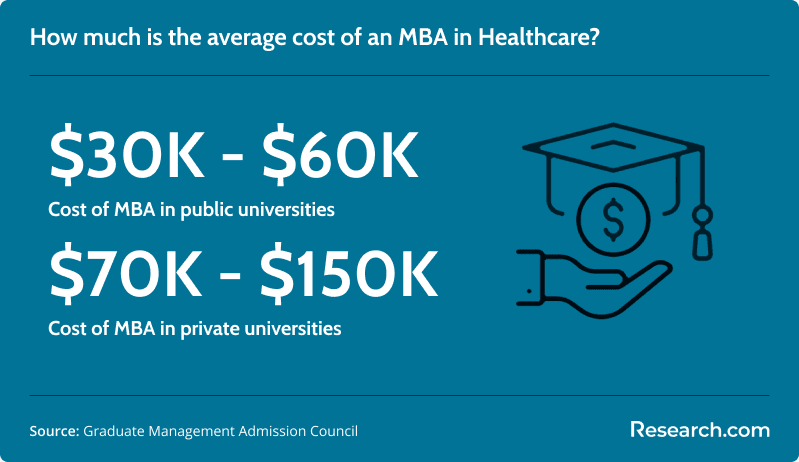
Full-time MBA tuition and fees average between $30,000 and $60,000 per year at public universities and $70,000 to $150,000 at private universities. Part-time programs can range from $20,000 to $40,000 per year at public universities and $40,000 to $80,000 at private universities, although the cost is spread over a longer enrollment period.
Understanding the full cost of an online MBA program is essential because tuition is only one part of the decision. In 2023, 31% of prospective students identified program cost as a major barrier affecting whether they would pursue a business master’s degree.
Accelerated MBA in Healthcare Management programs can cost $50,000 to $80,000 because the coursework is compressed. Executive MBA programs are often the most expensive option, ranging from $70,000 to $150,000 for the full program because they frequently include premium services and an experienced-professional format.
Public universities are often less expensive than private universities, and in-state tuition can be much lower than out-of-state or international tuition. However, students should also compare fees, books, technology requirements, residency costs, and the number of credits required to graduate.
| Cost item | Why it matters | Question to ask before enrolling |
| Tuition per credit | Programs with more credits can cost more even when the per-credit rate looks low | What is the total tuition for all required credits? |
| Fees | Online, technology, graduation, and student service fees can raise the final price | Are fees included in the published tuition estimate? |
| Books and materials | Some MBA courses use paid simulations, cases, and software | What are the estimated materials costs per term? |
| Residencies or travel | Hybrid programs may require travel even if most coursework is online | Are campus visits required or optional? |
| Time away from work | Lost income can affect ROI, especially in accelerated formats | Can I keep my current work schedule while enrolled? |
What financial aid options are available for students enrolling in an online MBA in Healthcare Management program?
Students pursuing an online MBA in Healthcare Management may be able to use federal loans, school scholarships, external awards, employer tuition assistance, and healthcare organization grants. Financial aid can make the degree more manageable, but borrowing should be evaluated against expected career benefits, current debt, and repayment obligations. In 2023, 48% of business school applicants did not view their current debt level as a barrier to pursuing an MBA.
Federal student aid
- Federal Direct Unsubsidized Loans: Graduate students can use these loans regardless of financial need, with interest accruing during enrollment and grace periods. The maximum borrowing limit is $20,500 per year.
- Federal Direct Grad PLUS Loans: These loans can cover remaining eligible costs after unsubsidized borrowing, but they require a credit check.
- Pell Grants: Pell Grants are need-based grants commonly associated with undergraduate study; students should confirm current graduate eligibility rules directly through federal student aid resources and their financial aid office.
Scholarships and grants
- University scholarships: Many schools offer merit-based scholarships or need-based grants for MBA students, including students in healthcare-related concentrations.
- Program-based awards: Some healthcare management departments maintain separate scholarship opportunities, so contact the program office as well as the central financial aid office.
- External scholarships: Organizations, foundations, and scholarship databases such as Scholarships.com or Fastweb may list awards for healthcare administration or graduate business students.
- Industry scholarships: Professional associations and healthcare employers sometimes support students preparing for healthcare leadership careers.
Employer assistance
- Tuition reimbursement: Hospitals, health systems, insurers, and healthcare technology companies may reimburse part of the cost if the degree supports your current or future role.
- Healthcare organization scholarships and grants: Large healthcare organizations may fund employees or future leaders in specific management areas.
What are the prerequisites for enrolling in an online MBA in Healthcare Management program?
Admission requirements vary, but most online MBA programs in healthcare management evaluate academic preparation, professional experience, quantitative readiness, writing ability, and fit with the program’s goals.
- Bachelor’s degree: Applicants generally need a bachelor’s degree from an accredited institution. Business, healthcare, or related majors may help, but some programs accept students from any field.
- GPA: Competitive programs often expect a minimum undergraduate GPA of 3.0 or higher, though strong experience, essays, recommendations, or interviews may help offset a lower GPA.
- GMAT or GRE: Some programs still require standardized test scores, especially more selective programs, while others use work history, essays, interviews, or prior academic performance instead.
- Healthcare work experience: Many programs value experience in hospitals, clinics, insurance, public health, pharmaceuticals, health technology, or healthcare operations.
- Prerequisite coursework: Students without a business background may need coursework in statistics, finance, accounting, healthcare administration, or related subjects.
What courses are typically in an online MBA in Healthcare Management program?
These programs combine standard MBA training with healthcare-focused management courses. In 2023, 76% of graduate management applicants considered multiple program types, 12% chose a master’s in management, and 4% specifically selected a master’s in health administration program. That comparison matters because an MBA, MHA, and management master’s may lead to overlapping but different career paths.
Core business administration courses
- Accounting and finance: Financial management, cost accounting, healthcare financial analysis, and reimbursement methods.
- Marketing and strategy: Healthcare marketing, market research, competitive analysis, and strategic management for healthcare organizations.
- Operations management: Healthcare operations, supply chain management, quality management, and lean healthcare principles.
- Organizational behavior and leadership: Healthcare leadership, human resources, organizational change, and team effectiveness.
- Information systems: Healthcare information systems, data analytics, health informatics, and cybersecurity in healthcare.
Healthcare-specific courses
- Healthcare economics and policy: Health policy analysis, healthcare economics, delivery systems, and comparative healthcare models.
- Health law and ethics: Healthcare compliance, legal risk, medical malpractice, patient privacy, and ethical decision-making.
- Healthcare management: Health services administration, hospital management, long-term care management, and public health management.
- Healthcare finance: Revenue cycle management, financial modeling, budgeting, forecasting, and healthcare risk management.
- Healthcare marketing and communications: Patient engagement, brand strategy, public relations, and social media use in healthcare settings.
Common electives
- Healthcare entrepreneurship: Innovation, new ventures, social entrepreneurship, and healthcare venture capital.
- Health informatics: Big data analytics, artificial intelligence in healthcare, telemedicine, and telehealth.
- Global health management: International health systems, health disparities, access to care, and global health challenges.
- Health policy and advocacy: Policy development, lobbying, and advocacy for health reform.
- Quality and safety management: Patient safety, quality improvement frameworks, and healthcare accreditation.
The next chart shows the program preference of MBA applicants in 2023.
What specializations are available in online MBA in Healthcare Management programs?
Specializations help you align the MBA with a specific healthcare function. The best concentration depends on whether you want to manage money, operations, technology, clinical business units, public health programs, or new ventures.
| Specialization area | Common focus | Good fit for |
| Healthcare finance | Revenue cycle, budgeting, financial modeling, risk management, and capital planning | Students targeting analyst, finance manager, or revenue leadership roles |
| Health insurance and managed care | Payment models, insurance markets, reimbursement, and payer strategy | Students interested in insurers, managed care organizations, or payer-provider strategy |
| Healthcare operations management | Clinic operations, hospital workflows, supply chains, staffing, and quality improvement | Students pursuing hospital, clinic, or department management |
| Health informatics and technology | Data analytics, digital health, artificial intelligence, telehealth, and information systems | Students who want to connect healthcare management with technology strategy |
| Health services administration | Practice management, facility operations, compliance, and service delivery | Students focused on administrative leadership in care organizations |
| Long-term care management | Aging services, post-acute care, residential care, and long-term operations | Students interested in serving aging populations |
| Public health management | Community health, prevention programs, public agencies, and population health | Students drawn to government, nonprofit, and public health leadership |
| Healthcare entrepreneurship | Startups, innovation, new service models, and healthcare venture creation | Students planning to launch or scale healthcare ventures |
| Global health management | International health systems, access to care, and global health delivery | Students interested in NGOs, global organizations, or international health work |
| Healthcare marketing and communications | Branding, patient engagement, public relations, and healthcare communication strategy | Students pursuing marketing, communications, or patient experience leadership |
How should you choose the best online MBA in Healthcare Management program?
The best online MBA in Healthcare Management is the one that fits your career goal, schedule, budget, learning style, and employer expectations. MBA programs are also changing with the market, so students should look for current coursework in analytics, digital health, policy, operations, leadership, and technology.
Step 1: Define the role you want after graduation
Start with the job, not the brochure. Decide whether you are aiming for hospital administration, healthcare consulting, finance, operations, entrepreneurship, policy, informatics, or executive leadership. If you are still exploring the field, compare this degree with a broader healthcare administration degree before committing.
Step 2: Build a realistic school list
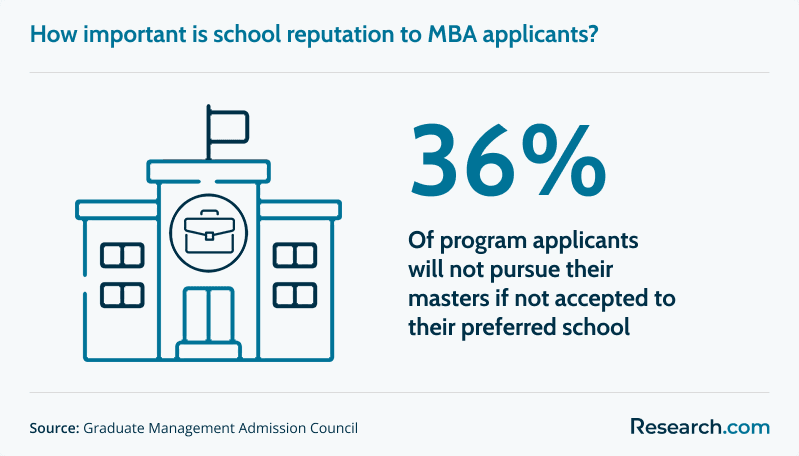
List programs that match your target specialization, preferred format, accreditation needs, and budget. In 2023, 36% of business school applicants considered not getting into their preferred school a major roadblock, so include strong alternatives rather than relying on one program.
Step 3: Check accreditation and employer recognition
Confirm institutional accreditation and look for business accreditation when relevant. If you work for a hospital or health system, ask HR whether tuition reimbursement applies to the specific school and program.
Step 4: Compare curriculum and experiential learning
Review course descriptions, capstone requirements, case work, consulting projects, and whether students work on real healthcare problems. A lower-cost program may be a better value if it offers applied projects that connect directly to your current or desired role.
Step 5: Speak with admissions, students, and alumni
Ask admissions staff about workload, faculty access, transfer credits, career support, and graduation requirements. Contact current students or alumni to learn how responsive faculty are, how group projects work online, and whether the program helped them move into healthcare leadership.
Step 6: Score each program using your priorities
Create a simple comparison matrix. Weight the factors that matter most to you, such as cost, time to completion, concentration, accreditation, flexibility, employer reimbursement, and career services.
| Question to ask | Why it matters |
| Is the institution accredited by a recognized accreditor? | Accreditation affects quality assurance, credit transfer, employer acceptance, and aid eligibility. |
| Does the program include healthcare-specific coursework? | A general MBA may not provide enough preparation for healthcare policy, compliance, reimbursement, or operations. |
| Are courses asynchronous, synchronous, or blended? | Delivery format affects students with shifts, family responsibilities, and time zone constraints. |
| What is the total program cost, not just cost per credit? | Fees, books, required credits, and residencies can change affordability. |
| Can I transfer credits? | Approved credits may reduce both time and cost. |
| What career services are available to online students? | Online students should receive meaningful access to advising, networking, and employer connections. |
What career paths are available for online MBA in Healthcare Management graduates?
Healthcare management graduates can work across hospitals, clinics, insurers, consulting firms, government agencies, public health organizations, healthcare technology companies, pharmaceutical organizations, and startups. The US had 407 hospital systems as of 2023, and healthcare organizations continue to need leaders who can manage staffing, budgets, compliance, digital transformation, and operational pressure during the healthcare staffing crisis.
Students comparing outcomes can review common jobs available with an MBA in healthcare management to see how titles vary by experience and employer type.
| Career area | Example roles | What the work involves |
| Hospital and clinic management | Hospital Administrator, Department Director, Medical Practice Manager | Overseeing operations, staffing, budgets, patient experience, compliance, and service quality |
| Financial leadership | Healthcare Financial Analyst, Revenue Cycle Manager, Healthcare Investment Banker | Managing budgets, reimbursement, revenue processes, financial analysis, and investment strategy |
| Consulting and strategy | Healthcare Management Consultant, Policy Analyst, Health Informatics Consultant | Improving operations, evaluating policy, implementing technology, and advising organizations |
| Entrepreneurship and innovation | Healthcare Entrepreneur, Director of Innovation, Venture Capitalist | Launching services, funding startups, building new care models, or leading innovation teams |
| Public health and government | Public Health Administrator, Health Policy Analyst, Global Health Manager | Managing programs, analyzing policy, improving population health, and working with public agencies or NGOs |
| Additional paths | Healthcare Marketing and Communications, Health Information Management, Medical Education and Research Administration | Leading communication, patient data management, academic health programs, or research administration |
What skills are most important for Healthcare Management MBA graduates?
Healthcare management roles require business judgment, people leadership, regulatory awareness, and the ability to make decisions in complex care environments. The most useful skills include:
- Leadership and team management: Healthcare managers must lead clinical and nonclinical teams, manage conflict, and align departments around organizational goals.
- Financial acumen: Budgeting, reimbursement, revenue cycle, cost control, and financial forecasting are central to healthcare operations.
- Healthcare policy knowledge: Managers need to understand regulation, compliance, privacy, payment systems, and policy changes affecting care delivery.
- Data analysis: Leaders increasingly use dashboards, quality metrics, electronic health record data, and operational analytics to guide decisions.
- Communication: Managers must explain business issues to clinicians, clinical issues to executives, and organizational priorities to staff and stakeholders.
- Problem-solving and critical thinking: Healthcare managers routinely deal with staffing shortages, workflow problems, budget constraints, and patient safety concerns.
How do online MBA programs in Healthcare Management support student success?
Strong online MBA programs support students with career coaching, faculty access, mentorship, virtual networking, writing help, technical support, and online communities. For working professionals, these services are not extras; they can determine whether students can stay on track while balancing employment and graduate coursework.
Look for career centers that serve online learners, not only campus students. Useful support may include resume reviews, healthcare leadership webinars, alumni panels, mock interviews, employer events, and capstone advising. Students who are earlier in their academic path may also compare an online bachelor’s degree in healthcare administration before moving into graduate business study.
How do online MBA programs integrate medical billing and coding competencies?
Online MBA healthcare management programs may include billing, coding, reimbursement, compliance, and revenue cycle management as part of healthcare finance or operations coursework. The goal is not usually to train students as entry-level coders; it is to help future managers understand how documentation, coding accuracy, payer rules, claims workflows, and reimbursement strategy affect organizational finances.
Students who want deeper technical preparation can compare dedicated medical billing and coding programs. Those credentials may be more appropriate for hands-on coding roles, while an MBA is more focused on management and strategic oversight.
What experiential learning opportunities are available in online MBA programs for Healthcare Management?
Experiential learning helps students move from theory to practice. Online MBA programs may use live case studies, consulting projects, simulations, capstones, group strategy assignments, virtual internships, and mentorship projects with healthcare organizations.
Students should ask whether projects use current healthcare challenges such as workforce shortages, digital health implementation, reimbursement pressure, patient access, quality improvement, or operational redesign. Professionals interested in pharmacy-related management may also review an online pharmacist degree pathway for additional clinical and pharmaceutical context.
Interdisciplinary opportunities with an MBA in Healthcare Management
Healthcare managers rarely work in isolation. They coordinate with clinicians, finance teams, IT departments, compliance officers, public health professionals, legal advisors, and community partners. An MBA in Healthcare Management can help students build the business language needed to work across these groups.
Working with public health professionals
Healthcare management coursework often overlaps with public health policy, population health, prevention, and crisis response. Managers who understand public health can better support quality initiatives, emergency planning, community health programs, and policy implementation.
Collaborating with healthcare IT professionals
Healthcare organizations rely on electronic health records, health information systems, cybersecurity, data analytics, and digital care platforms. MBA students with healthcare IT awareness are better prepared to work with technical teams and lead technology-enabled change.
Coordinating with clinical professionals
Business strategies must support clinical outcomes. Healthcare managers need to understand how decisions about staffing, budgets, scheduling, documentation, and workflows affect clinicians and patients.
Connecting finance and operations
Healthcare leaders must balance financial discipline with quality care. MBA coursework in budgeting, resource allocation, revenue cycle management, and operations can help managers make better trade-offs.
Using behavioral science in leadership
Healthcare leadership requires more than technical knowledge. Courses in organizational behavior, leadership, and communication can help managers build trust, reduce burnout, improve teamwork, and support retention.
Building global healthcare perspective
Students interested in international work can use healthcare management training to understand access, equity, public health infrastructure, global emergencies, and cross-border collaboration.
Understanding healthcare ethics and law
Managers need legal and ethical awareness when handling privacy, compliance, patient safety, staffing decisions, and organizational risk. This is especially important in heavily regulated healthcare environments.
Further resources
Students who want more depth in healthcare technology and data systems can compare the best health informatics programs as a related interdisciplinary option.
What is the job market for graduates with an online MBA in Healthcare Management?
The job market for healthcare management graduates is supported by the size and complexity of the healthcare sector. Aging populations, technology adoption, staffing pressure, regulatory requirements, and changing care models all increase the need for capable managers.
The Bureau of Labor Statistics (BLS) projects 28% job growth for medical and health services managers, including professionals with MBA training in Healthcare Management, from 2021 to 2031. That growth is much faster than the average for all occupations, but individual outcomes still depend on experience, location, employer type, leadership ability, and specialization.
An MBA in Healthcare Management can support career paths beyond hospital administration, including consulting, finance, operations, health policy, entrepreneurship, informatics, and public health leadership.
This chart shows the robust growth of healthcare management careers through 2032 compared with other management occupations.
Why leadership and communication matter in healthcare management
Healthcare managers work in environments where decisions affect patients, staff, finances, compliance, and community trust. Strong leadership and communication are essential because managers must coordinate multidisciplinary teams, respond to operational disruptions, and explain complex decisions clearly.
Effective leaders set direction, motivate staff, manage conflict, and support change without losing sight of patient care. Communication is equally important. A healthcare manager may need to discuss financial constraints with executives, workflow concerns with nurses, compliance requirements with staff, and service changes with external partners.
Many MBA programs include coursework in leadership theory, organizational behavior, team management, negotiation, and communication for healthcare settings. Students who need a faster undergraduate route into the field may compare an accelerated healthcare management degree online before pursuing graduate study.
Can an accelerated PharmD program complement an online MBA in Healthcare Management?
An accelerated PharmD can complement an online MBA for professionals who want both clinical pharmacy knowledge and management preparation. This combination may be useful for leadership roles involving medication management, pharmacy operations, pharmaceutical policy, clinical service strategy, or interdisciplinary decision-making.
The pairing is not necessary for every healthcare manager. It makes the most sense for students whose career goals connect business leadership with pharmacy practice, medication safety, formulary strategy, pharmaceutical services, or clinical operations. Students considering this route can explore accelerated PharmD programs online.
What is the return on investment for an online MBA in Healthcare Management?
ROI depends on total program cost, how much debt you take on, whether your employer helps pay, how quickly you complete the degree, and whether the MBA helps you move into higher-responsibility roles. Graduates may benefit from access to management, consulting, operations, finance, and executive-track opportunities, but no program can guarantee a salary increase.
A practical ROI review should compare tuition, fees, time commitment, lost work hours, loan repayment, and realistic career outcomes. Students focused mainly on affordability may also compare the cheapest online healthcare management degree options to decide whether an MBA or another healthcare administration credential is the better financial fit.
What role does data analytics play in Healthcare Management MBAs?
Healthcare organizations increasingly rely on data to manage quality, costs, staffing, patient outcomes, access, risk, and operational performance. MBA students who understand analytics can interpret dashboards, evaluate trends, ask better questions, and make evidence-informed management decisions.
Analytics coursework may cover healthcare data, business intelligence, predictive modeling, operational metrics, information systems, and decision support. Students who want deeper analytics preparation may compare an affordable online MBA in business analytics as an alternative or complementary business pathway.
How can advanced pharmacy education elevate healthcare management leadership?
Advanced pharmacy education can strengthen healthcare leadership by adding expertise in medication management, pharmaceutical policy, regulatory issues, safety, and pharmacy operations. When combined with MBA-level management training, this background can support stronger budgeting, service-line planning, interdisciplinary collaboration, and compliance decisions.
This path is especially relevant for pharmacists, pharmacy administrators, clinical leaders, and healthcare executives whose organizations manage complex medication services. Students interested in this combination can review doctor of pharmacy online programs.
How do online MBA programs in Healthcare Management address cybersecurity challenges?
Healthcare managers increasingly need to understand cybersecurity because patient data, billing systems, telehealth platforms, electronic health records, and connected devices create operational and compliance risk. MBA programs may address cybersecurity through risk management, healthcare information systems, governance, privacy, crisis response, and case studies on breaches.
Students who want stronger preparation in health information management can compare the best online CAHIIM accredited HIM degree programs. This can be useful for learners who want to connect healthcare leadership with data governance, privacy, records management, and digital risk.
Other things you should know about an online MBA in Healthcare Management
Can I transfer credits from an online program to a traditional MBA?
Credit transfer depends on accreditation, course equivalency, grades, recency of coursework, and the receiving school’s policy. Credits from accredited institutions are more likely to be reviewed, but acceptance is never automatic.
Traditional MBA programs may limit how many credits you can transfer, require that courses match their own core curriculum, or reject credits that do not meet their academic standards. Before enrolling, ask both the current and future school for written transfer policies.
Which accrediting bodies are recognized for healthcare MBAs?
Healthcare MBA students should check both institutional accreditation and business accreditation. Common business accreditors include the Association to Advance Collegiate Schools of Business (AACSB), the Accreditation Council for Business Schools and Programs (ACBSP), and the International Accreditation Council for Business Education (IACBE).
Healthcare-focused graduate management education may also involve the Commission on Accreditation of Healthcare Management Education (CAHME). Regional accreditors also matter because they verify broad institutional quality. Examples include the Southern Association of Colleges and Schools Commission on Colleges (SACSCOC) and the New England Commission on Higher Education (NEASC).
The Joint Commission’s Gold Seal of Approval is not an academic program accreditor, but it can signal a healthcare organization’s commitment to quality and patient safety. Students should not confuse organizational accreditation with degree-program accreditation.
How is telehealth transforming career opportunities in Healthcare Management?
Telehealth has changed how healthcare organizations think about access, staffing, patient engagement, compliance, reimbursement, technology platforms, and service-line growth. Healthcare managers may be asked to design virtual care workflows, evaluate digital patient experience, manage vendor relationships, and ensure that telehealth models support both care quality and financial sustainability.
Students interested in healthcare career earnings more broadly can compare fields highlighted among the best paying medical bachelor’s degrees, while recognizing that MBA-level management roles follow different hiring and compensation patterns.
Is an MBA in Healthcare Management a good career move?
An MBA in Healthcare Management can be a good career move for professionals who want leadership responsibility in a complex and mission-driven industry. It is strongest for students who like problem-solving, people management, finance, operations, and systems improvement.
| Potential advantages | Potential drawbacks |
| Healthcare organizations continue to need skilled managers as the industry grows and changes. | Management roles can involve pressure, long hours, staffing challenges, and urgent decisions. |
| The work can connect business leadership with patient care improvement. | Work-life balance may be difficult in hospitals and other 24/7 healthcare settings. |
| Graduates can pursue roles in administration, consulting, finance, policy, operations, and entrepreneurship. | Healthcare regulation, reimbursement rules, and compliance demands can be complex. |
| Managers may access strong benefits and above-average salaries depending on role, employer, location, and experience. | Burnout is a risk if workload, conflict, and responsibility are not managed well. |
| The field rewards continuous learning because healthcare technology, policy, and care models keep changing. | Many leadership roles require a bachelor’s degree, graduate education, certifications, and relevant experience. |
If you want a lower-stress role with predictable hours, this may not be the best fit. If you are energized by leadership, operational challenges, healthcare improvement, and cross-functional decision-making, the degree may align well with your goals.
Which MBA is best for healthcare?
The best MBA in healthcare management depends on your experience and career target. A nurse manager may need leadership and operations coursework. A financial analyst may need healthcare finance and reimbursement. A technology-focused student may prefer informatics or analytics. A future consultant may need strategy, data, and applied project work.
- Clarify your background: Decide whether you are advancing within healthcare or entering from another industry.
- Match the concentration to the job: Compare hospital administration, consulting, finance, policy, entrepreneurship, analytics, and informatics options.
- Choose the right delivery format: Decide whether asynchronous, synchronous, blended, accelerated, part-time, or executive formats fit your schedule.
- Check accreditation and outcomes: Review institutional accreditation, business accreditation, faculty experience, career support, and alumni paths.
- Compare total cost: Look beyond tuition per credit and calculate fees, books, residencies, transfer credits, and employer reimbursement.
Common mistakes to avoid when choosing an online MBA in Healthcare Management
- Choosing only by tuition: A low per-credit rate can still lead to a high total cost if the program requires more credits or extra fees.
- Ignoring accreditation: Accreditation affects financial aid, transfer credit, employer recognition, and academic credibility.
- Assuming all online programs are fully asynchronous: Some require live sessions, residencies, group meetings, or scheduled exams.
- Overlooking specialization fit: A program focused on general management may not prepare you for healthcare analytics, revenue cycle, policy, or informatics roles.
- Relying only on rankings: Rankings can help you start a shortlist, but your best program depends on cost, schedule, support, curriculum, and career goals.
- Assuming salary outcomes are guaranteed: Career advancement depends on experience, location, employer demand, leadership ability, and networking, not the degree alone.
- Failing to confirm employer reimbursement: If you plan to use tuition assistance, verify eligible schools, minimum grades, reimbursement caps, and service commitments before enrolling.
Key Insights
- An affordable online MBA in healthcare management is best for professionals who want business leadership roles in healthcare, not clinical licensure.
- The listed programs vary widely: completion times include 12 months, 18 months, 21 months, 24 months, and 18 to 24 months, while fixed per-credit costs range from $520 to $1,197.
- Accreditation, total program cost, credit requirements, format, specialization, and career support matter more than tuition alone.
- Online programs can match campus rigor when properly accredited, but they require stronger time management and self-direction.
- Healthcare management careers can include hospital administration, consulting, finance, revenue cycle, public health, informatics, innovation, and policy roles.
- Students should compare the MBA with related options such as an MHA, healthcare administration degree, health informatics program, business analytics MBA, or pharmacy pathway when those better match their career goals.
- The smartest next step is to build a shortlist, calculate total cost, verify accreditation, ask about transfer credits and employer reimbursement, and speak with alumni before applying.
References:
- American Hospital Association (2023). Fast Facts: US Health Systems
- Associations of MBAs and Business Graduates Association (2022). Transformation and the Emerging Business Model Shift in Business Education.
- Graduate Management Admission Council (2022). Application Trends Survey.
- Graduate Management Admission Council (2022). Demand for Graduate Business Degrees.
- US Bureau of Labor Statistics (2023). Medical and Health Services Managers.
Other Things You Should Know About MBA in Healthcare Management Online
Affordable online MBA programs in Healthcare Management may offer specializations such as Health Informatics, Healthcare Finance, and Global Health Management. These specializations allow students to tailor their studies to specific career goals within the healthcare industry.
Applicants typically need a bachelor's degree, a competitive GPA, and professional experience. Some programs may require GMAT or GRE scores. Specific requirements vary by institution, so it's vital to check each program's criteria for 2027 admission.
In 2027, schools like Eastern New Mexico University, Fort Hays State University, and Southern New Hampshire University are among the most affordable institutions offering online MBA programs in Healthcare Management. These programs provide quality education at lower tuition rates compared to national standards.