
2027 What Can You Do with an MBA Degree? Costs & Job Opportunities

Co-Founder and Chief Data Scientist
An MBA is a major career and financial decision. For some professionals, it can speed up promotion into management, expand access to business networks, and support a move into consulting, finance, technology, healthcare, entrepreneurship, or executive leadership. For others, the cost, time commitment, or opportunity cost may outweigh the benefits—especially if a shorter credential, specialized master’s degree, or employer-based training would meet the same goal.
This guide explains what an MBA degree is, what it is used for, how much it can cost, what jobs it may lead to, and how to compare program formats such as full-time, part-time, executive, online, hybrid, specialized, and accelerated MBAs. It is designed for bachelor’s degree holders, working professionals, career changers, and future business leaders comparing an MBA with other master’s degrees in business.
You will also learn how to evaluate accreditation, admissions requirements, return on investment, career services, specializations, and affordable options, including flexible MBA programs. While MBA specializations such as finance, consulting, and accounting are often associated with strong earning potential and are commonly discussed among high-paying college and graduate pathways, the best MBA is not automatically the most expensive or most selective program. The right choice depends on your career target, work experience, budget, schedule, and expected payoff.
- What is an MBA degree?
- Cost of MBA Degree
- MBA Degree Jobs
- Types of Degrees in MBA
- MBA Degree Requirements
- What to Look for in an MBA Program
- Majors Related to MBA
- Tips for Reducing the Cost of an MBA Degree
- How do online MBA programs compare to traditional ones?
- Should I choose an MBA or online masters in organizational leadership?
- What Are the Affordable Executive MBA Options Available?
- How Can I Measure the ROI of My MBA Investment?
- Is an Accelerated MBA Program Right for You?
- Are there MBA programs that forgo the GMAT requirement?
- Are affordable online business colleges a viable option for quality MBA education?
- How does a business management and administration degree compare to an MBA?
- Are there affordable options for pursuing an executive MBA online?
- 2027 Best MBA Programs
- What are the benefits of joining professional MBA associations and networks?
- What are the different MBA specializations?
- Choosing the Right MBA Program for Your Career Goals
Quick Answer: What Is an MBA and Is It Worth It?
An MBA, or Master of Business Administration, is a graduate business degree focused on management, leadership, strategy, finance, operations, marketing, analytics, and organizational decision-making. It is most useful for professionals who want to move into management, change business functions, build a stronger professional network, or qualify for roles where employers prefer graduate-level business training.
An MBA can be worth it when the program’s cost, format, reputation, accreditation, career support, and specialization match your goals. It is less likely to be worth it if you enroll only for prestige, borrow heavily without a realistic salary plan, choose a program without checking accreditation, or pursue the degree when a targeted certificate or specialized master’s program would be enough.
| Best Fit for an MBA | May Not Be the Best Fit |
| Professionals seeking management, consulting, finance, product, operations, or executive roles | Students who want a highly technical research degree with little management focus |
| Career changers who need broad business credibility and a network | Applicants who need only one narrow skill, such as basic bookkeeping or entry-level digital marketing |
| Working professionals who can use employer sponsorship, scholarships, or part-time study | Students who would need to take on large debt without a clear career outcome |
| Entrepreneurs who want stronger finance, strategy, operations, and leadership skills | People expecting the degree alone to guarantee a promotion or salary increase |
What is an MBA degree?
An MBA degree is a graduate-level business program that combines management theory with practical decision-making. Most programs cover areas such as accounting, finance, economics, marketing, operations, leadership, business analytics, strategy, communication, and organizational behavior. Depending on the school, students may also complete consulting projects, internships, case competitions, simulations, global experiences, or capstone projects.
The purpose of an MBA is not simply to teach business vocabulary. A strong program should help students diagnose complex business problems, evaluate data, manage people, communicate with stakeholders, allocate resources, understand financial trade-offs, and make decisions under uncertainty. That is why MBA graduates work across many industries rather than only in banking or corporate finance.
What can you do with an MBA degree?
An MBA can support several career moves: promotion into management, transition into a new industry, movement from a technical role into business leadership, preparation for entrepreneurship, or entry into competitive fields such as consulting, investment banking, corporate strategy, product management, and healthcare administration. Students often ask, what can you do with an MBA in finance, but finance is only one path among many MBA career options.
Early-career MBA graduates may pursue analyst, associate, project manager, product manager, operations, marketing, or business development roles. Experienced professionals may use the degree to move into director, vice president, general manager, partner, founder, or C-suite positions. The outcome depends heavily on work history, school network, location, internship access, specialization, and how actively the student uses career services.
| Career Goal | How an MBA Can Help | What to Check Before Enrolling |
| Move into management | Builds leadership, finance, operations, and people-management skills | Leadership curriculum, alumni outcomes, employer partnerships |
| Change industries | Provides broader business credibility and access to recruiters | Internship access, career coaching, placement history in the target industry |
| Enter consulting or finance | Develops analytical, financial, and strategic problem-solving skills | Recruiting pipelines, case interview support, finance electives |
| Advance in healthcare, technology, or nonprofit work | Connects business tools to sector-specific management challenges | Relevant concentration, faculty experience, experiential projects |
| Start or grow a business | Strengthens planning, fundraising, operations, and market analysis | Entrepreneurship resources, incubators, mentors, investor connections |
In financial services, MBA graduates may target investment banking, commercial banking, risk management, corporate finance, or wealth management roles. In technology, common paths include product management, business development, project management, operations, or strategy. Marketing-focused graduates may pursue brand management, market research, product marketing, or growth strategy. Nonprofit and public-sector organizations may value MBA training for program management, fundraising, operations, budgeting, and policy implementation.
Cost of MBA Degree
MBA cost varies widely because tuition is only one part of the total investment. Program format, school type, residency status, location, length, course load, travel requirements, books, technology fees, healthcare, housing, lost income, and financing costs can all change what a student actually pays.
How much does it cost to get an MBA degree?
According to the latest data cited from NCES, the average yearly cost of graduate tuition and required fees in degree-granting postsecondary institutions is $43,620. Public, private, in-state, and out-of-state prices can differ substantially. In-state public options may be much less expensive than private or out-of-state programs, while elite full-time programs can carry a much higher total cost once living expenses are included.
Based on school-published data reviewed for this guide, MBA tuition for in-state public institutions could cost $17,100 per year. In-state students may pay $3,000-$17,000 less than out-of-state students, depending on the institution and residency policy.
For private institutions, NCES data showed average tuition and fees for full-time MBA programs in the United States of $51,478. These figures do not capture every cost. Students should also budget for living expenses, books, course materials, travel, technology, healthcare, student fees, and the income they may give up if they leave work for a full-time program.
A separate BusinessBecause report examining MBA costs at top-ranked U.S. business schools estimated an average total cost—including living costs, healthcare, and materials—of $189,000 ($94,000 per year). The estimate applies to individuals with no dependents and does not account for financial aid.
| Type of Institution | Reported MBA Cost Figure |
| Public (In-state) | $22,106 |
| Public (Out-of-State) | $44,662 |
| Private | $51,478 |
| Private (Top-ranked, total cost) | $94,000 |
Is a degree in MBA worth it?
An MBA may be worth the investment if it leads to a realistic career outcome that justifies the tuition, fees, time, and opportunity cost. The strongest ROI cases usually involve one or more of the following: a clear promotion path, employer tuition support, access to a strong recruiting network, a high-demand specialization, or a program format that lets the student keep working while enrolled.
Value also depends on program quality. In online and hybrid MBAs, student satisfaction can depend heavily on how well the program is designed and supported. In the study “Students’ perceptions of online learning in higher education during COVID-19: an empirical study of MBA and DBA students in Egypt,” Soliman et al. found that, “The factors that were found to have the greatest impact on the online educational experience are instructor-student communication and course design. Both university support and student collaboration were found to only have an indirect impact on student satisfaction through perceived learning outcomes.”
How to estimate MBA ROI before you apply
- Calculate the full cost. Include tuition, fees, books, travel, housing, interest on loans, and lost wages if you reduce work hours or leave your job.
- Compare likely career outcomes. Look at roles graduates actually enter, not only the highest-profile placements.
- Check whether your target employers recruit there. Career services and alumni access matter most when they connect to your intended industry.
- Estimate payback time. Compare your expected post-MBA compensation with your current compensation and total borrowing.
- Factor in risk. No MBA guarantees a promotion, relocation opportunity, or salary increase.
MBA Degree Jobs
MBA graduates work in many fields because management problems exist in every sector. Finance, banking, consulting, technology, manufacturing, consumer goods, healthcare, public relations, nonprofit management, and government-related roles can all use MBA-level skills. Students interested in communication-centered business roles may also compare paths connected to a public relations degree, while those focused on hospitals, clinics, health systems, or long-term care facilities can explore healthcare administration careers.
If you plan to study MBA online, the key question is not whether the degree is online or on campus. The better question is whether the program has the accreditation, faculty support, career services, alumni network, and employer recognition needed for your specific job target.
Is an MBA degree in high demand?
The Corporate Recruiters Survey of 2026 showed continued demand for MBA graduates. In 2025, 90% of recruiters planned to hire MBA graduates across all industries. In addition, the U.S. Bureau of Labor Statistics projects overall employment in management occupations to grow 6.1% from 2024 to 2034, faster than the average for all occupations, with about 1.1 million annual openings over the decade.
Technology is also changing the value of management skills. Automation can replace or reshape some routine tasks, but roles that require judgment, cross-functional leadership, negotiation, strategy, and people management may be more resilient. Students concerned about job automation risks should look for MBA programs that teach data literacy, AI-aware decision-making, analytics, change management, and ethical technology leadership.
What jobs can you get with an MBA degree?
| Role | Typical Responsibilities | Why an MBA Can Be Useful |
| Chief Executive Officer | Sets company direction, makes major corporate decisions, oversees operations, and communicates with boards, investors, employees, and the public | Requires broad understanding of strategy, finance, leadership, risk, and organizational performance |
| Chief Financial Officer | Leads financial planning, reporting, funding strategy, investor communication, budgeting, and long-term financial decisions | Benefits from advanced finance, accounting, forecasting, and executive decision-making training |
| Business Intelligence Analyst | Analyzes business data, market patterns, customer behavior, and operational trends to support decisions | Combines analytics with business context and strategic communication |
| Product Manager | Coordinates product strategy, budgets, development priorities, customer needs, and go-to-market plans | Requires cross-functional leadership across finance, engineering, marketing, and operations |
| IT Manager | Oversees technology systems, IT security standards, equipment, infrastructure, and technology teams | Helps technical leaders connect systems decisions with business strategy and risk management |
| Operations Research Analyst | Uses analytical methods to improve scheduling, pricing, production, resource allocation, and operational efficiency | Strengthens quantitative decision-making and business process improvement |
| Policy Analyst | Studies policy effects, gathers data, prepares recommendations, and communicates findings for agencies, universities, or research organizations | Supports data-informed analysis, stakeholder communication, and organizational planning |
| Purchasing Manager | Manages procurement of goods, materials, supplies, vendor relationships, and supply chain decisions | Connects negotiation, operations, finance, and supply chain strategy |
| Human Resources Manager | Leads hiring, workforce planning, employee relations, compensation coordination, and long-term talent strategy | Builds leadership, organizational behavior, analytics, and strategic planning skills |
| Consultant | Advises organizations on strategy, operations, growth, process improvement, regulation, or organizational change | Relies on structured problem-solving, communication, client management, and industry analysis |
What kind of salary can I earn with an MBA degree?
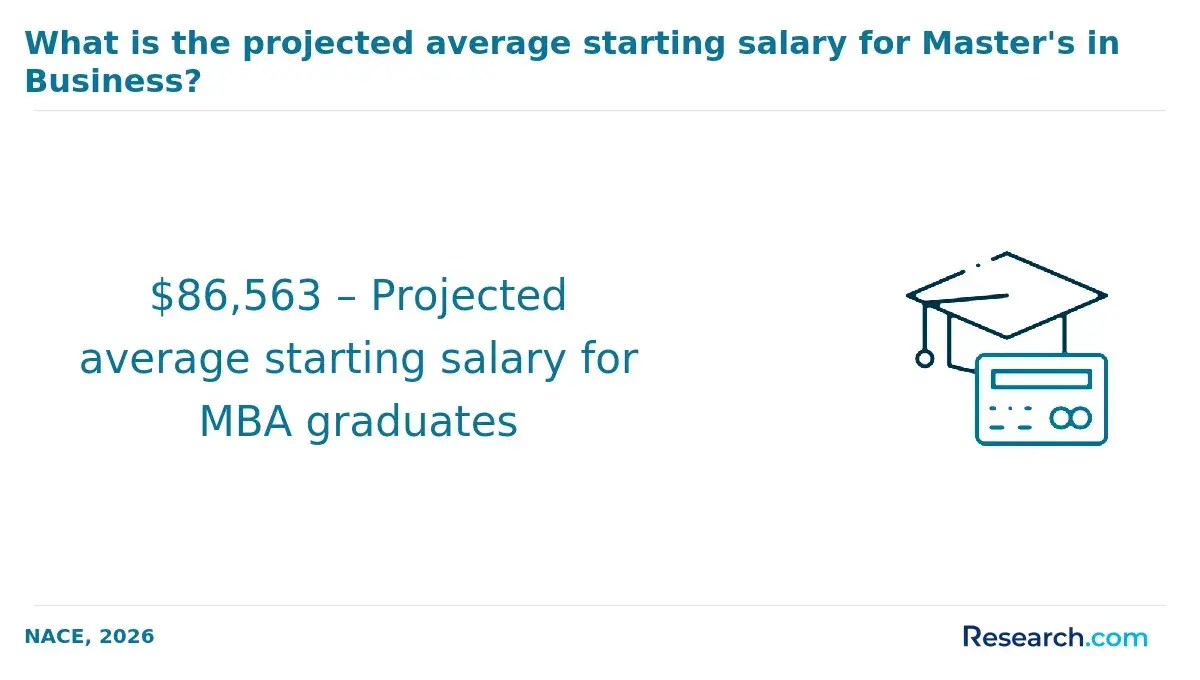
Research.com reviewed the latest available Graduate Management Admission Council (GMAC) data on MBA career paths and salaries and found that the average starting salary for candidates with an MBA is $77,632. The average yearly salary of MBA graduates is $121,324.
Experience, school reputation, geography, industry, role, prior work history, and specialization can all affect compensation. A Forté Foundation study showed that some MBA graduates increased their salary between $133,511 and $144,956 up to two years after graduating. These figures should be used as reference points rather than guarantees.
Salary and Job Outlook: What to Consider Before You Borrow
- Industry matters. Consulting, finance, technology, healthcare, manufacturing, nonprofit, and public-sector roles can have very different compensation patterns.
- Pre-MBA experience matters. Employers often hire MBA graduates based on the combination of degree, work history, leadership evidence, and technical skills.
- Location matters. Salaries and living costs vary by region, and relocation may affect ROI.
- Program network matters. A lower-cost program with strong local employer relationships may outperform a more expensive program if your goal is regional advancement.
- Debt matters. A higher salary can still feel financially limiting if monthly loan payments are too large.
Types of Degrees in MBA
MBA programs are not all built for the same student. The right format depends on your career stage, ability to pause work, need for networking, budget, and learning preference. Before comparing rankings, decide which structure fits your life.
Common MBA formats compared
| MBA Type | Best For | Main Advantage | Main Trade-Off |
| Full-time MBA | Students who can step away from full-time work | Strong access to internships, recruiting, student organizations, and campus networks | Higher opportunity cost if you stop earning income |
| Executive MBA | Mid- to senior-level professionals with substantial experience | Designed around working executives and peer networking | May be expensive and less suited to early-career applicants |
| Specialized MBA | Students targeting a specific field such as finance, healthcare, marketing, sustainability, or analytics | Focused electives can support a clearer career pivot | Less flexible if your career goals change |
| International or Global MBA | Students seeking multinational, cross-cultural, or global business roles | Exposure to international business issues and diverse classmates | May require travel, relocation, or international study components |
| Part-time MBA | Working professionals who want to keep their jobs | Lower opportunity cost and more schedule flexibility | Can take longer to complete |
| Online or Hybrid MBA | Students who need location flexibility or cannot attend campus regularly | Convenient for working adults and geographically distant students | Networking quality varies by program design |
Full-time MBA
A full-time MBA is usually the best fit for students who can make graduate school their primary commitment. Many full-time programs last two years, although some schools offer one-year formats with a more intensive schedule. Students often benefit from internships, international study options, clubs, consulting projects, case competitions, and frequent interaction with classmates and recruiters.
Executive MBA (EMBA)
An Executive MBA is designed for experienced professionals, often at the mid-career or senior level, who want advanced leadership training without leaving the workforce. EMBA programs are commonly offered part time and may focus on strategy, organizational behavior, executive decision-making, financial leadership, and change management.
Specialized MBA
A specialized MBA builds general management skills while allowing students to focus on a specific area such as finance, healthcare, marketing, sustainability, analytics, or entrepreneurship. For example, an online MBA in healthcare management may emphasize healthcare operations, health system strategy, finance, regulation, and organizational leadership in medical settings.
International or Global MBA
An international or global MBA is built for students who want a broader view of business across borders. These programs may include globally diverse cohorts, international faculty, study abroad, multinational case studies, foreign language exposure, or multi-campus study. Common topics include global strategy, international trade, cross-cultural management, and multinational operations.
Part-time MBA
A part-time MBA is often the practical choice for students who want to continue working while earning the degree. The curriculum may be similar to a full-time program, but courses are spread over a longer period. Completion can take two to five years, depending on course load and school policy.
Online or Hybrid MBA
Online and hybrid MBAs allow students to complete some or all coursework remotely. They can be full time or part time and may reduce relocation and commuting costs. Quality depends on instructional design, faculty access, live interaction, group work, career services, and how intentionally the program creates networking opportunities.
MBA Degree Requirements
MBA admissions requirements vary by school and format. Full-time, executive, online, part-time, and specialized programs may evaluate applicants differently, but most schools look for evidence that a student can handle graduate business coursework and contribute meaningfully to class discussions.
Common admission requirements
- Bachelor’s degree. Applicants generally need an undergraduate degree because the MBA is a graduate program.
- Work experience. Many applicants enter with two to five years of relevant professional experience, while executive programs usually expect more.
- Test scores. Some schools request GMAT or GRE scores, although policies vary and some programs use school-specific assessments or waivers.
- Resume. A current resume helps admissions committees evaluate leadership, progression, responsibilities, and professional achievements.
- Recommendation letters. Strong references often come from supervisors, clients, mentors, professors, or other people who can speak to performance and potential.
- Statement of purpose. This essay explains why you want an MBA, what you plan to do with it, and why the program fits your goals.
- Interview. Some programs use interviews to assess communication skills, motivation, fit, and readiness for graduate business study.
Skills that help MBA students succeed
- Analytical thinking. MBA coursework often asks students to interpret ambiguous data and recommend action.
- Problem-solving. Students need to break complex business problems into manageable decisions.
- Communication. Written, verbal, and presentation skills matter because business leaders must persuade, explain, and align stakeholders.
- Collaboration. Group projects, case discussions, and team-based assignments require productive teamwork.
- Time management. Working students in particular need systems for managing deadlines, meetings, reading, and projects; some use school organization and time management apps for support.
- Adaptability. Business conditions shift quickly, so students should be prepared to revise assumptions and learn new tools.
What to Look for in an MBA Program
A strong MBA choice starts with fit. The best program for one student may be a poor choice for another if it does not match the student’s goals, budget, location, schedule, or target industry. Use the factors below before relying on rankings alone.
| Factor | Why It Matters | Questions to Ask |
| Accreditation | Signals that the school or program has met recognized educational standards | Is the business school accredited by AACSB, ACBSP, or another recognized accreditor? |
| Curriculum | Determines whether you will build the skills your target role requires | Are there courses in finance, analytics, leadership, strategy, operations, and your chosen specialization? |
| Career services | Can affect internships, job search strategy, employer access, and career transitions | What coaching, employer events, resume support, interview preparation, and alumni access are available? |
| Format | Controls schedule, networking style, opportunity cost, and pace | Can I realistically complete this program while managing work and personal responsibilities? |
| Cost and aid | Directly affects ROI and financial risk | What is the total cost after scholarships, employer support, and required fees? |
| Outcomes | Shows whether graduates reach roles similar to your target | Where do graduates work, and what types of roles do they enter? |
| Network | Peer and alumni relationships can be valuable long after graduation | How active is the alumni network in my industry or region? |
Accreditation: Because an MBA requires substantial time and money, accreditation should be one of your first checks. Business school accreditors such as the Association to Advance Collegiate Schools of Business (AACSB) and the Accreditation Council for Business Schools and Programs (ACBSP) are commonly referenced in MBA program evaluation.
Curriculum: The degree should build both foundational business fluency and skills connected to your goal. A student targeting corporate finance needs different electives than someone aiming for healthcare operations or entrepreneurship. Crisis leadership may also be valuable. In “Crisis leadership: The new imperative for MBA curricula,” published in The International Journal of Management Education, Hertelendy et al. argued that the pandemic “revealed substantive deficiencies in leadership” and that “effective crisis leadership stems from a strong foundation in the form of crisis leadership education.”
Career resources: Career services are especially important for students using an MBA to change industries or roles. Look for mentorship, internships, employer events, alumni connections, interview preparation, case interview support, and access to recruiters in your target field.
Common mistakes when choosing an MBA program
- Choosing only by ranking. A highly ranked program may not be the best fit if it lacks your specialization, target recruiters, or schedule flexibility.
- Ignoring accreditation. Always verify accreditation before applying, especially for online or lower-cost programs.
- Looking only at tuition. Fees, travel, books, housing, interest, and lost income can change the real cost.
- Assuming online means easier. Good online MBAs can be rigorous and require strong time management.
- Expecting guaranteed salary outcomes. Salary depends on many variables, including experience, location, industry, and job search performance.
- Overlooking transfer and waiver policies. Some programs may allow course waivers or transfer credits, while others may not.
- Not asking about employer relationships. Career outcomes often depend on whether the school has connections to the employers you want.
Majors Related to MBA
If you are not sure whether an MBA is the best graduate path, compare it with related business and management fields. Some students need broad leadership training, while others may benefit more from a specialized academic route.
Tips for Reducing the Cost of an MBA Degree
An MBA can be expensive, but students have several ways to reduce the financial burden. The goal is not simply to find the cheapest program; it is to find the lowest-cost option that still has the accreditation, curriculum, faculty support, and career value you need.
- Compare online and campus options. Online programs may reduce commuting, relocation, and housing costs. If price is a central concern, review affordable online MBA programs and compare total cost, not just tuition.
- Apply for scholarships and fellowships. Business schools and outside organizations may offer merit-based, need-based, diversity-focused, industry-specific, or leadership-focused awards.
- Ask about employer sponsorship. Some employers provide tuition reimbursement or sponsorship when the degree supports business needs.
- Evaluate in-state tuition. Public universities may charge lower rates for in-state students, which can significantly reduce borrowing.
- Consider accelerated formats. One-year and other accelerated programs can lower living expenses and reduce time away from the workforce.
- Review tax benefits carefully. Students may want to check whether education-related tax benefits apply to their situation.
- Control living expenses. Housing, food, travel, and personal expenses can make a major difference in total cost.
- Borrow conservatively. Only borrow what you need, and compare expected monthly payments with realistic post-graduation income.
How do online MBA programs compare to traditional ones?
Online MBA programs are designed for students who need more flexibility than a traditional campus schedule allows. The best online programs use structured learning platforms, live or recorded lectures, group projects, faculty interaction, case discussions, and digital collaboration tools. Some also offer residencies, in-person networking weekends, or optional campus experiences.
Traditional full-time programs may offer stronger in-person networking, easier access to campus recruiting, and more immersive student life. Online programs may be better for working professionals who cannot relocate or pause their careers. Students who want a shorter path can compare fast online MBA options, but they should confirm that speed does not come at the expense of support, rigor, or career alignment.
| Feature | Online MBA | Traditional Campus MBA |
| Schedule | Often more flexible for working professionals | Usually more structured and campus-based |
| Networking | Depends on live sessions, residencies, cohorts, and alumni programming | Often stronger through daily in-person interaction |
| Cost | May reduce relocation and commuting expenses | May involve higher living or relocation costs |
| Career change support | Varies widely by program | Often strong in full-time programs with established recruiting pipelines |
| Best fit | Working adults, remote students, and students needing flexibility | Students who can study full time and want immersive recruiting and networking |
Should I choose an MBA or online masters in organizational leadership?
An MBA and a master’s in organizational leadership both prepare students for leadership, but they are not identical. An MBA is broader and usually includes finance, accounting, marketing, operations, strategy, economics, analytics, and leadership. A leadership-focused degree puts more emphasis on organizational behavior, change management, communication, team development, and internal transformation.
Choose an MBA if you want general business training, broader management credibility, or access to roles in finance, consulting, product, operations, strategy, or executive management. Consider an online master’s in organizational leadership if your main goal is to lead teams, manage change, improve culture, or move into people-centered leadership roles without needing the full finance and operations scope of an MBA.
What Are the Affordable Executive MBA Options Available?
Executive MBA programs serve experienced professionals who want graduate business training while continuing to work. Many use weekend, modular, hybrid, or online formats to reduce schedule disruption. Because EMBA students often have more professional experience, the peer network can be one of the program’s most valuable features.
Affordable EMBA options should still be evaluated carefully. Check accreditation, faculty quality, total fees, residency requirements, cohort profile, executive coaching, alumni access, and whether the curriculum supports your intended move. Students comparing cost-focused programs can review executive MBA programs with lower fees as a starting point for further due diligence.
How Can I Measure the ROI of My MBA Investment?
To measure MBA ROI, compare what you will spend with the realistic career benefits you expect to receive. Include tuition, fees, books, living expenses, travel, interest, and any income lost while studying. Then compare those costs with likely salary growth, promotion potential, job mobility, employer sponsorship, and the value of the network.
Regional tuition benchmarks can help you understand affordability. For example, students comparing program pricing can review resources such as Maryland online MBA cost information to see how costs vary by school and format. A sound ROI estimate should include conservative, moderate, and optimistic salary scenarios rather than assuming the highest possible outcome.
Is an Accelerated MBA Program Right for You?
An accelerated MBA may be a strong choice if you already have business experience, can handle an intensive academic schedule, and want to reduce time away from career growth. These programs compress coursework and may lower opportunity cost by helping students return to full-time work sooner.
They are not ideal for everyone. Students who need more time for internships, career exploration, foundational business courses, or networking may prefer a traditional two-year or part-time format. If speed is a priority, compare 12 month MBA programs online and review workload, student support, employer recognition, and career outcomes before applying.
Are there MBA programs that forgo the GMAT requirement?
Yes. Some MBA programs use test-optional, test-waiver, or holistic admissions policies that place more emphasis on work experience, undergraduate performance, leadership history, quantitative readiness, certifications, or prior graduate coursework. These policies can help experienced professionals who have strong backgrounds but do not want to submit GMAT scores.
A no-GMAT policy should not be the only reason to choose a program. Students should still verify accreditation, curriculum depth, faculty qualifications, completion support, career services, and outcomes. Cost-conscious applicants can begin with affordable online MBA programs with no GMAT requirement, then compare each school’s standards and student support.
Are affordable online business colleges a viable option for quality MBA education?
Affordable online business colleges can be viable when they are accredited, academically rigorous, transparent about costs, and clear about student outcomes. Lower price does not automatically mean lower quality, but students should be cautious of programs that provide little information about accreditation, faculty, curriculum, graduation support, or employer recognition.
When comparing affordable online business colleges, ask whether courses include real business projects, live faculty access, peer interaction, career coaching, and current content in analytics, technology, finance, leadership, and strategy.
How does a business management and administration degree compare to an MBA?
A business management and administration degree usually focuses on foundational business operations, management principles, organizational processes, and practical administration. It may be offered at the undergraduate or graduate level, depending on the school. An MBA is a graduate professional degree that typically emphasizes strategic leadership, advanced decision-making, finance, analytics, operations, and cross-functional management.
Students comparing a business management and administration degree with an MBA should look at degree level, admissions requirements, work experience expectations, curriculum depth, employer recognition, and career outcomes. If your goal is entry-level business knowledge, a management or administration degree may be enough. If your goal is higher-level leadership or a major career pivot, an MBA may offer stronger positioning.
Are there affordable options for pursuing an executive MBA online?
Yes. Online executive MBA programs can make executive education more accessible for working professionals by reducing relocation and commuting requirements. The best affordable options balance cost with academic quality, cohort strength, executive-level curriculum, faculty engagement, and career support.
Before enrolling, compare tuition, fees, required travel, residency sessions, technology requirements, accreditation, student profile, and alumni network. A low-cost program can be a smart investment, but only if it supports your professional goals. Students can compare online executive MBA options to identify programs that may fit both budget and career needs.
2027 Best MBA Programs
The following programs were selected using the latest available data reviewed by Research.com researchers and factors such as academic ratings, enrollment rate, affordability, online reliability, and related indicators. Use this list as a starting point, not as a substitute for your own comparison of cost, fit, accreditation, format, specialization, and career outcomes.
1. Harvard University MBA program
The Harvard Business School MBA program is a two-year, full-time MBA built around general management and entrepreneurship. Students join a global academic and professional community and engage with peers, faculty, and staff while preparing for leadership roles across industries.
- Program Length: Two years
- Tracks/concentrations: None
- Annual Cost of Attendance: $73,440
- Accreditation: AACSB
2. University of Pennsylvania Wharton MBA program
The Wharton MBA program provides a broad business foundation while allowing students to customize their education through 19 majors and 200 electives. This flexibility can be useful for students with specific goals in areas such as accounting, business analytics, international business, finance, marketing, or entrepreneurship.
- Program Length: 20 months, including a 3.5-month summer internship
- Tracks/concentrations: Offers 19 majors, including accounting, business analytics, and international business
- Annual Cost of Attendance: $84,874
- Accreditation: AACSB
3. University of California, San Diego MBA program
The UCSD MBA at the Rady School of Management emphasizes data-driven business education. Students study how data informs strategy, operations, management, finance, marketing, and innovation.
- Program Length: Two years
- Tracks/concentrations: None
- Annual Cost of Attendance: $63,210 (in-state), $72,858 (out-0f-state)
- Accreditation: WSCUC
4. Indiana University Online MBA program
The Indiana University Online MBA is an online program with coursework in business foundations, core business functions, and innovation. Students can select from seven majors and 50% electives, giving them room to tailor the degree to their goals.
- Program Length: Two years
- Tracks/concentrations: Business Operations, Management, Innovation
- Annual Cost of Attendance: $78,246
- Accreditation: AACSB
5. HEC Paris MBA program
The HEC Paris MBA uses a “learning-by-doing approach” that connects leadership concepts with practical application. The program reports a 93% international student body from 60 countries and includes 7 specializations, 14 core courses, and more than 35 elective courses.
- Program Length: 16 months
- Tracks/concentrations: Advanced Management, Data and AI for Business Transformation, Entrepreneurship, Finance, Strategic Marketing, Strategy, Sustainable and Disruptive Innovation
- Annual Cost of Attendance: € 87,000 ($93,172)
- Accreditation: AACSB, AMBA, EQUIS
What are the benefits of joining professional MBA associations and networks?
Professional MBA associations, alumni groups, and business networks can extend the value of the degree beyond the classroom. They are most useful when students participate actively rather than simply adding membership to a resume.
- Build relationships with executives, founders, consultants, investors, recruiters, and professionals across industries.
- Attend conferences, seminars, panels, and meetups that can lead to job leads, partnerships, mentorship, or client relationships.
- Use webinars, workshops, and short courses to stay current on leadership, digital transformation, analytics, sustainability, and market trends.
- Find mentors who can offer practical guidance on promotions, career pivots, entrepreneurship, and executive presence.
- Access member-only job boards, consulting opportunities, and leadership openings.
- Receive resume feedback, interview preparation, career coaching, and professional branding support.
- Pursue specialized credentials in areas such as project management or financial analysis when they support your career target.
- Participate in advocacy, policy discussions, or industry standards work through association committees.
- Stay informed about issues such as ethics, diversity, sustainability, governance, and responsible business leadership.
- Read newsletters, journals, salary reports, forecasts, and research summaries that support better career planning.
- Learn from executive interviews, case studies, and peer discussions about real management challenges.
What are the different MBA specializations?
MBA specializations help students align a broad business degree with a specific career path. A concentration can be valuable when it gives you advanced vocabulary, tools, projects, and employer signals in your target field. It is less useful if you choose it only because it sounds popular and not because it connects to your goals.
| Specialization | Common Focus Areas | Potential Career Directions |
| Finance | Financial analysis, risk management, corporate finance, investments, valuation | Investment banking, corporate finance, financial consulting, risk management |
| Marketing | Consumer behavior, brand strategy, digital marketing, market research, product positioning | Marketing director, product manager, brand strategist, market research leader |
| Healthcare Management | Healthcare operations, healthcare finance, health system strategy, compliance, service delivery | Hospital administrator, healthcare consultant, department director, healthcare operations manager |
| Information Technology | Information systems, cybersecurity leadership, digital transformation, technology strategy | IT manager, chief information officer, technology project manager, digital transformation leader |
- Finance: A finance MBA can be useful for students targeting investment banking, corporate finance, financial planning, risk, or consulting. Cost-conscious students can compare affordable online MBA finance programs.
- Marketing: A marketing specialization develops skills in customer insight, brand management, digital channels, product strategy, and data-informed campaign decisions.
- Healthcare Management: This track is designed for students who want to lead healthcare organizations, improve operations, manage departments, or consult for health systems.
- Information Technology: An IT specialization prepares business leaders to manage systems, cybersecurity priorities, technology teams, and digital transformation initiatives.
Choosing the Right MBA Program for Your Career Goals
The right MBA program should connect directly to your next career step. A student targeting investment banking, a nurse moving into healthcare administration, a software engineer aiming for product leadership, and an entrepreneur building a company may all need different programs.
- Program format: Full-time, part-time, online, hybrid, executive, and accelerated MBAs serve different students. If you work full time and need flexibility, compare online or part-time formats, including one-year online MBA programs in the USA.
- Accreditation: Confirm that the institution and business program meet recognized standards. Accreditation can affect employer perception, transferability, and confidence in academic quality.
- Specializations: Choose a program with strong coursework, faculty, projects, and recruiting connections in your intended area, whether that is finance, consulting, marketing, entrepreneurship, technology, or healthcare.
- Program length: A two-year program may provide more time for internships and career exploration. An accelerated program may reduce opportunity cost. A part-time program may make it easier to keep earning income.
- Reputation and alumni network: Reputation matters most when it is connected to the industry, geography, or employers you want to reach.
- Cost and financial aid: Compare tuition, fees, scholarships, assistantships, employer reimbursement, loan terms, and total cost of attendance.
- Location and global exposure: Some students benefit from studying near target employers, financial centers, technology hubs, healthcare systems, or international business networks.
- Career outcomes: Ask for placement data, internship access, employer lists, salary reporting methods, and examples of roles graduates enter.
Questions to ask an MBA admissions advisor
- What percentage of students in my target field secure internships or job offers through the school?
- Which employers recruit from this program for the roles I want?
- How are online students included in networking, career fairs, and alumni events?
- What is the full cost of attendance, including fees and required travel?
- Are scholarships, assistantships, fellowships, or employer partnerships available?
- What support is available for students changing careers?
- How current is the curriculum in analytics, AI, digital transformation, and crisis leadership?
- What is the average time to completion for students in my format?
- How does the school report salary and employment outcomes?
- What happens if I need to pause enrollment or reduce my course load?
Is an MBA degree right for you?
An MBA may be right for you if you want broader business leadership training, a stronger management credential, access to a professional network, and a clearer path toward higher-responsibility roles. It can be especially useful for professionals who already have work experience and know how the degree fits into their next move.
An MBA may not be the best choice if your goal is purely technical, if you are unsure what career outcome you want, or if the debt would create financial pressure without a realistic payoff. Before applying, compare program formats, verify accreditation, calculate ROI, talk with alumni, and ask employers in your target field which schools and skills they value. If you are interested in global business roles, you can also review guidance on building an international business career.
Key Insights
- An MBA is a career strategy, not just a credential. It works best when tied to a clear goal such as promotion, career change, consulting, finance, product management, healthcare leadership, entrepreneurship, or executive advancement.
- Cost varies widely. Tuition, fees, housing, travel, books, healthcare, loan interest, and lost income all affect the true cost of the degree.
- ROI should be estimated before enrollment. Compare total cost with realistic salary growth, promotion potential, employer support, and placement outcomes.
- Accreditation is essential. Check recognized business accreditation before committing, especially for online, accelerated, or low-cost programs.
- Format matters. Full-time MBAs may offer stronger immersive recruiting; online and part-time MBAs may work better for employed professionals; executive MBAs are designed for experienced leaders.
- Specialization should match your career plan. Finance, marketing, healthcare management, and IT can support different outcomes, but a concentration is valuable only if it aligns with your target role.
- Career services can make or break value. Employer access, internships, alumni networks, coaching, and interview preparation are central to MBA outcomes.
- Online MBAs can be strong when well designed. Look for faculty interaction, cohort engagement, live learning, career support, and meaningful networking opportunities.
- Salary outcomes are not guaranteed. Experience, industry, location, school network, job market conditions, and individual performance all affect earnings.
- Avoid choosing by prestige alone. The best MBA is the one that fits your goals, budget, schedule, and target employers.
References:
- Bryant, J. (2025, October 2). How Much Does an MBA Cost? Full Statistics. BestColleges
- Graduate Management Admission Council. (2025). Corporate Recruiters Survey 2025 Summary Report. GMAC
- Hanson, M. (2024, November 23). Average Cost of a Master’s Degree. Education Data Initiative
- Hoppock, D. (2026, February 18). What Is the Average Salary for an MBA Graduate? Investopedia
- Nam, J. (2025, February 21). How Much Does Grad School Cost? BestColleges
- National Association of Colleges and Employers (2025). NACE Salary Survey Winter 2025. NACE
Other Things You Should Know About MBA Degrees
Admission requirements for an MBA program in 2027 typically include a bachelor's degree, GMAT or GRE scores, and 2-5 years of work experience. Some programs may also require letters of recommendation and a statement of purpose. Always check specific program details as they can vary.
In 2027, MBA graduates can expect a strong salary outlook, with average starting salaries ranging from $105,000 to $125,000 annually depending on industry and job location. High demand sectors like technology and consulting may offer even higher compensation packages.
Many MBA programs still ask for GMAT or GRE scores in 2027, but some waive them for applicants with strong work experience, advanced degrees, or a high undergraduate GPA. Admissions offices set the policy, and deadlines usually fall in rounds from August through April.
In 2027, MBA graduates can pursue diverse career paths, including management roles in finance, marketing, technology, and healthcare. Additionally, emerging fields like sustainability and data analytics broaden opportunities. Graduates often find roles as consultants, project managers, and entrepreneurs, capitalizing on the strategic and leadership skills gained during their programs.
In 2027, online MBA programs often cost 20% to 40% less than their on-campus counterparts due to lower overhead expenses. However, specific cost differences can vary widely depending on the institution, so potential students should compare individual program fees for accurate budgeting.


