2027 Best Online MBA Programs in Healthcare Administration

Co-Founder and Chief Data Scientist
An online MBA in Healthcare Administration is usually considered by professionals who want to move from clinical, operational, administrative, finance, or business roles into healthcare leadership. The challenge is that programs can look similar at first glance, even though they differ significantly in accreditation, cost, completion time, healthcare coursework, networking access, and career support.
This guide is designed to help you compare online healthcare MBA programs with a practical lens. You will learn what the degree covers, how long it can take, what careers it may support, how much it can cost, what accreditation means, and which program features matter most before you enroll.
Quick answer: Is an online MBA in Healthcare Administration worth considering?
An online MBA in Healthcare Administration can be a strong option for working professionals who want graduate-level business training with a healthcare focus. It is especially relevant for people aiming for management roles in hospitals, physician practices, outpatient centers, long-term care organizations, insurance companies, pharmaceutical companies, or healthcare consulting.
The degree is not the only route into healthcare leadership, but it can help students build skills in finance, operations, strategy, health policy, analytics, compliance, and organizational leadership. According to PayScale in 2023, professionals with an MBA in Healthcare Management reported annual pay of $88,000, while US BLS (2023) reported that Medical and Health Services Managers earned an average yearly salary of $104,830.
What are the main benefits of an online MBA in Healthcare Administration?
- Business skills that transfer across sectors. Students study management, finance, analytics, marketing, operations, and leadership, which can be applied in healthcare as well as other industries.
- Flexible graduate education. Online MBA formats often make it easier for working adults to continue earning income while completing coursework.
- Healthcare-specific leadership preparation. Courses in health policy, healthcare finance, quality improvement, health informatics, and compliance can prepare students for the operational realities of healthcare organizations.
- Potential salary growth. PayScale reported an annual pay figure of $88,000 for MBA Healthcare Management degree holders in 2023, though individual outcomes depend on experience, location, employer, and role.
What can you expect from online MBA programs in Healthcare Administration?
Online MBA programs in Healthcare Administration combine the core business curriculum of an MBA with specialized healthcare management training. Students typically study accounting, finance, strategy, leadership, marketing, analytics, and operations, then apply those tools to healthcare systems, hospitals, insurance models, patient care organizations, regulatory environments, and health technology.
- Graduates may pursue roles in health services management, a field for which US BLS (2023) projected 28% growth from 2022 to 2032.
- The degree can support advancement into several types of healthcare leadership positions, including executive-level roles in large healthcare systems for professionals with substantial experience.
- Not every healthcare administration role is public-facing. Many positions focus on department operations, budgeting, staffing, quality measurement, records, compliance, and internal coordination.
- In larger organizations, healthcare managers may work with senior administrators, physician groups, specialists, finance teams, quality departments, or compliance offices.
| Program feature | What it usually means for students | Why it matters |
| Core MBA courses | Finance, accounting, leadership, strategy, analytics, marketing, and operations | Builds broad management capability beyond healthcare alone |
| Healthcare concentration | Health policy, healthcare finance, healthcare operations, quality improvement, and informatics | Connects business concepts to healthcare systems and regulations |
| Capstone or applied project | Case-based or organization-based work tied to real healthcare problems | Helps students demonstrate practical leadership and problem-solving skills |
| Online delivery | Asynchronous, synchronous, hybrid, part-time, or accelerated formats | Determines whether the program fits your work schedule and learning style |
Where can you work with an online MBA in Healthcare Administration?
Many graduates target medical and health services management roles. In 2022, these professionals held 509,500 jobs. Hospitals, including state, local, and private hospitals, accounted for the largest share of employment at 30%.
Other major employment settings included:
- Offices of Physicians, at 12%.
- Nursing and Residential Care Facilities, at 9%.
- Government Entities, at 7%.
- Outpatient Care Centers, at 7%.
Graduates can also work in insurance companies, long-term care facilities, pharmaceutical companies, consulting firms, health technology organizations, public health agencies, and integrated delivery networks.
How much can you make with an online MBA in Healthcare Administration?
- PayScale reported in 2023 that professionals with an MBA in Healthcare Management earned annual pay of $88,000, while Clinical Managers had a median yearly salary of $75,571.
- US BLS (2023) reported that Medical and Health Services Managers earned an average yearly salary of $104,830.
- Salary should not be treated as guaranteed. Compensation varies by job title, employer, region, prior healthcare experience, leadership background, and whether the role involves budget authority or executive responsibility.
| Career or credential data point | Reported figure | Source noted in article |
| MBA in Healthcare Management annual pay | $88,000 | PayScale, 2023 |
| Clinical Manager median yearly salary | $75,571 | PayScale, 2023 |
| Medical and Health Services Managers average yearly salary | $104,830 | US BLS, 2023 |
| Projected growth for Medical and Health Services Managers | 28% from 2022 to 2032 | US BLS, 2023 |
- Best online MBA programs in healthcare administration for 2027
- Admission requirements for online MBA programs in healthcare administration
- Career options for online MBA in healthcare administration graduates
- Common courses in an online MBA in healthcare administration
- Typical completion time for an online healthcare administration MBA
- Healthcare MBA curriculum compared with a general MBA
- Why accreditation matters for online healthcare MBA programs
- Average cost of an online MBA in healthcare administration
- Financial aid options for healthcare MBA students
- Flexibility in online MBA healthcare administration programs
- Networking opportunities in online MBA healthcare administration programs
- Online learning platforms used in healthcare MBA programs
- Return on investment for an online MBA in Healthcare Administration
- Experiential learning in online healthcare administration MBA programs
- One-year and fast-track online MBA options
- Accelerated pathways and healthcare administration career advancement
- Legal and regulatory factors in healthcare administration MBA programs
- Class schedules in online healthcare MBA programs
- Online MBA in Healthcare Administration vs. Executive MBA
- How to choose the right online MBA program in Healthcare Administration
- Emerging trends in online MBA healthcare administration programs
- Health informatics as a healthcare administration MBA specialization
Best online MBA programs in Healthcare Administration for 2027
How do we rank schools?
Research.com evaluates programs with the goal of helping students compare academic options more clearly before making a major education investment.
For this ranking of online MBA programs in Healthcare Administration, researchers reviewed current data from the Integrated Postsecondary Education Data System (IPEDS), Peterson’s database, and Peterson’s Distance Learning Licensed Data Set. The review also used information from the College Scorecard database and the National Center for Education Statistics. You can review additional details in Research.com’s methodology section.
| Rank | School | Program highlights | Completion details stated |
| 1 | University of North Carolina-Chapel Hill (UNC Kenan-Flagler) | AACSB-accredited MBA with healthcare electives, the Center for the Business of Health, Healthcare Club activities, and an annual Healthcare Conference | 18 to 36 months |
| 2 | University of Arizona (Eller) | AACSB-accredited online Healthcare Management program with seven core courses, nine electives, a capstone, and international immersion opportunities | 30 credits; as little as 12 months |
| 3 | Rice University (Jones) | AACSB-accredited online MBA with a Healthcare focus and foundation courses in accounting, analytics, marketing, leadership, and finance | 54 credit hours; 22 months |
| 4 | University of Massachusetts-Amherst (Isenberg) | AACSB-accredited MBA with a healthcare administration focus offered with the UMass School of Public Health and Health Sciences | 45 credits; 20 to 24 months |
| 5 | University of Utah (Eccles) | MBA foundation with healthcare-focused electives and graduate career management support | 43.5 credit hours; two-year duration |
| 6 | The University of Texas at Dallas (Naveen Jindal) | AACSB-accredited dual degree option pairing the online MBA with an MS in Healthcare Leadership and Management | 20 to 24 months |
| 7 | Ball State University (Miller) | AACSB-accredited Healthcare Administration concentration developed with IU Health Ball Memorial Hospital | 30 to 40 credits |
| 8 | Hofstra University (Zarb) | AACSB-accredited online MBA in Strategic Healthcare Management with leadership assessment and individualized executive coaching | 36 credit hours; 16 months full-time or 30 months part-time |
| 9 | Pennsylvania State University-World Campus | CAHME-accredited online program with healthcare administration coursework and optional Global Immersion | 49 credits; 28 months |
| 10 | Texas Tech University (Rawls) | AACSB-accredited online MBA in Healthcare Organization Management with an optional Global Immersion | 36 credit hours; as little as 12 months |
1. University of North Carolina-Chapel Hill (UNC Kenan-Flagler)
The University of North Carolina-Chapel Hill (UNC Kenan-Flagler) offers an online MBA pathway in Healthcare Administration that can be completed in 18 to 36 months. The AACSB-accredited program is connected to the Center for the Business of Health, which focuses on major challenges facing the healthcare sector. Students may take courses such as Challenge of Healthcare, Healthcare Marketing Strategy, Global Healthcare, and Value Creation for Life Science Companies. Beyond coursework, students can participate in Healthcare Club activities and the annual Healthcare Conference, which is offered in collaboration with the UNC School of Medicine and helps students build exposure to healthcare employers and recruiters.
2. University of Arizona (Eller)
The University of Arizona (Eller) offers an online Healthcare Management program requiring 30 credits. The curriculum includes seven core courses covering topics from healthcare economics to market-based management, followed by nine healthcare and business electives and a capstone course. The AACSB-accredited program is fully online, offers two start dates each year, and can be completed in as little as 12 months. Students may also participate in international immersion experiences.
3. Rice University (Jones)
Rice University (Jones) offers an online MBA with a Healthcare focus. Students build a foundation in Financial Accounting, Business Analytics, Marketing Strategy, Leadership, and Finance, then use electives to apply business concepts to their professional goals. The AACSB-accredited program requires 54 credit hours, takes 22 months, and offers start dates in January, April, July, and October. Online students learn from Rice Business faculty known for teaching, research, and practice.
4. University of Massachusetts-Amherst (Isenberg)
The University of Massachusetts-Amherst (Isenberg) offers an online MBA focus in Healthcare Administration in partnership with the UMass School of Public Health and Health Sciences. Students complete business and public health coursework designed for healthcare settings. To form the optional focus area, MBA students complete nine elective credits from courses such as Aging, Policy, Politics, and Law, Communication Theory, Comparative Healthcare System, e-commerce Logistics, Ethical Issues in Public Health, and Financial Management of Health Institutions. The AACSB-accredited program requires 45 credits and usually takes 20 to 24 months. Partnerships with healthcare organizations may also support internship and employment opportunities.
5. University of Utah (Eccles)
The University of Utah (Eccles) offers graduate healthcare administration training with business-focused coursework in Finance, Accounting, Marketing, and Operations. Students may also take healthcare electives such as Healthcare Delivery Systems, Health Policy and Regulation, Health Services Marketing, Healthcare Finance, Healthcare Analytics, Public Health Leadership, and Health Care Operations Management. The program requires 43.5 credit hours and is structured over a two-year duration. Students can use graduate career management resources and receive support from the MHA career development and employer relations manager.
6. The University of Texas at Dallas (Naveen Jindal)
The University of Texas at Dallas (Naveen Jindal) offers an MS in Healthcare Leadership and Management that can be combined with the online MBA as a dual degree option. This structure helps students pair general business training with deeper healthcare administration knowledge. The AACSB-accredited pathway takes 20 to 24 months and includes courses such as Healthcare Informatics Leadership for Physicians, Healthcare Financial and Operations Accounting, The American Healthcare System, Strategic Leadership of Healthcare Organizations, and Healthcare Cost Management and Control. The Naveen Jindal School of Management also hosts the Center for Healthcare Leadership and Management, which supports executive education, research, and networking for healthcare professionals.
7. Ball State University (Miller)
Ball State University (Miller) offers an online MBA concentration in Healthcare Administration. Developed with IU Health Ball Memorial Hospital, the curriculum is aligned with competency areas identified by the American College of Healthcare Executives (ACHE). The AACSB-accredited program requires 30 to 40 credits. Healthcare electives include Introduction to Healthcare Administration, Healthcare Financial Management and Performance Evaluation, Healthcare Marketing, Healthcare Policy and Ethics, and Health Informatics.
8. Hofstra University (Zarb)
Hofstra University (Zarb) offers an online MBA in Strategic Healthcare Management. The AACSB-accredited program requires 36 credit hours and can be completed in 16 months full-time or 30 months part-time. Courses include Health Law and Ethics, Healthcare Finance, Health Services Human Resources, Healthcare Information Technology and Architecture, and Marketing of Healthcare Services. Students also complete leadership assessment and individualized executive coaching using the Hogan Development Survey.
9. Pennsylvania State University-World Campus
Pennsylvania State University-World Campus offers an online healthcare administration program accredited by the Commission on Accreditation of Healthcare Management Education (CAHME). The program includes 49 credits and can be completed within 28 months. Courses include Financing Healthcare, Clinical Issues for Health Services Management, Quality Improvement in Healthcare, Healthcare Marketing, Health Economics, Health Law, and Information Systems in Health Services Administration. Students may also choose an optional Global Immersion.
10. Texas Tech University (Rawls)
Texas Tech University (Rawls) offers an online MBA in Healthcare Organization Management requiring 36 credit hours. The AACSB-accredited curriculum includes Financial and Managerial Accounting, Information Technology and Operations Management, Managing Organizational Behavior and Organizational Design, Leadership and Ethics, and HOM I: Introduction to Healthcare Systems. The program can be completed in as little as 12 months and includes an optional Global Immersion.
What graduates often value in an online MBA in Healthcare Administration
- Graduates commonly highlight the ability to keep working while building healthcare management knowledge and leadership confidence.
- Many students value interactive online discussions, group projects, virtual simulations, and case studies because these experiences connect coursework to actual healthcare decisions.
- Students also tend to appreciate networking through virtual seminars, faculty interaction, peer collaboration, and alumni communities, especially when the program creates structured opportunities rather than leaving networking to chance.
Key findings
- Online MBA in Healthcare Administration programs in this guide commonly require 30 to 54 credit hours.
- Completion time typically ranges from 12 to 36 months, although some programs may take up to 38 months depending on structure and pacing.
- US BLS (2023) projected 28% growth from 2022 to 2032 for Medical and Health Services Managers.
- Graduates of an accredited online MBA degree in Healthcare Administration often pursue roles in hospitals, which accounted for 30% of employment among Medical and Health Services Managers.
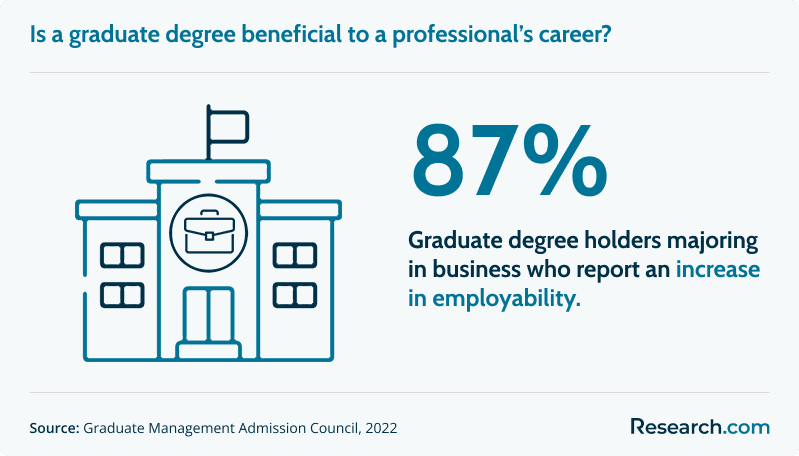
- A survey of graduate business degree alumni found that 87% reported improved employability.
What are the requirements for an online MBA program in Healthcare Administration?
Admission requirements vary by school, but online healthcare MBA programs commonly look for evidence that applicants can handle graduate business coursework and contribute to a professional learning environment. Some students compare this path with the easiest online MBA options, but healthcare administration usually requires strong quantitative, communication, and leadership skills because students must apply business decisions to regulated healthcare environments.
Common admissions materials
- Bachelor’s degree from an accredited institution.
- Official transcripts.
- Resume or curriculum vitae showing professional experience.
- Statement of purpose or essays explaining healthcare leadership goals.
- Letters of recommendation.
- GMAT or GRE scores if required, though some programs waive these tests.
- Interview, prerequisite coursework, or quantitative readiness review for selected programs.
Skills that matter before and during the program
- Analytical ability. Healthcare administrators review financial data, utilization patterns, quality metrics, staffing information, and operational performance to identify problems and improve systems.
- Clear communication. Leaders must explain decisions to staff, clinicians, executives, vendors, insurers, and sometimes patients or community stakeholders.
- Attention to detail. Healthcare organizations depend on accurate records, billing information, schedules, policies, and compliance documentation.
- Leadership capability. Administrators often hire, train, evaluate, and guide teams while keeping departments aligned with organizational goals.
- Technology readiness. Students and managers should be comfortable with email, productivity tools, analytics platforms, and electronic health record systems.
What are the career opportunities for online MBA program in Healthcare Administration graduates?
An online MBA in Healthcare Administration can prepare graduates for leadership roles across healthcare delivery, operations, finance, compliance, quality improvement, and facilities management. The degree is most valuable when paired with relevant work experience, industry knowledge, and measurable management accomplishments.
| Career path | Typical focus | Salary and outlook data stated |
| Medical Health Services Managers | Improve day-to-day operations, coordinate with department leaders, manage resources, and support staff performance | $104,830 average yearly salary; 28% growth from 2022 to 2032 |
| Nursing Home Administrators | Oversee staffing, supplies, services, and operations in long-term care settings | $101,870 annual salary; 5% predicted job growth from 2022 to 2032 |
| Administrative Services and Facilities Managers | Manage facility operations, records, safety, workplace services, and support functions | $101,870 average annual salary; 5% projected growth from 2022 to 2032 |
What are the core courses in an online MBA program in Healthcare Administration?
Students in standard, accelerated, and short online MBA programs commonly complete core business courses, healthcare electives, and an applied capstone or thesis-style project. The goal is to help students connect business theory with operational, financial, and policy decisions in healthcare organizations.
- Biostatistics and Epidemiology. Students learn statistical methods used in healthcare settings, including data collection, analysis, reporting, presentation, descriptive statistics, inferential statistics, and epidemiology concepts. Students comparing cost-conscious options may also review MBA online programs with healthcare coursework.
- Healthcare Management. This course usually covers strategic planning, managerial decision-making, organizational change, and best practices for leading complex healthcare environments.
- Healthcare Policy and Reform. Students examine healthcare policy challenges, reform proposals, cost pressures, quality improvement, and access issues, often through simulations or case-based assignments.
- Healthcare Finance. Learners analyze financial statements, budgets, reimbursement models, and case studies showing how healthcare managers use financial data to make difficult decisions.
These courses help students build industry-relevant skills and compete for roles where healthcare knowledge, business judgment, and data literacy are all important.
Data USA reports that educational backgrounds among healthcare management professionals include Bachelor’s Degrees held by 231,185 people and Graduate Degrees held by 224,271 people. This suggests that graduate education can be common in the field, especially for candidates pursuing higher-level leadership roles.
How long does it take to complete an online MBA program in Healthcare Administration?
- Many online MBA in Healthcare Administration programs take 12 to 38 months to complete.
- Full-time students are more likely to finish in about one year when a program is designed for accelerated study, while part-time students often take two to three years.
- Some schools use trimester or multiple-start formats that let students progress faster without following a traditional semester calendar.
- Before applying, review the credit load, course sequence, residency requirements, capstone expectations, and whether courses are offered every term.
| Student situation | Program format that may fit | Trade-off |
| Working full time with heavy responsibilities | Part-time asynchronous program | More flexibility, but a longer timeline |
| Experienced professional seeking rapid completion | Accelerated or one-year option | Faster finish, but a more intense workload |
| Student who learns best through live discussion | Synchronous or hybrid online schedule | More interaction, but less scheduling freedom |
| Student seeking internships or applied projects | Program with structured experiential learning | More practical exposure, but potentially more coordination required |
The chart below shows how completion timelines differ across selected online MBA in Healthcare Administration programs.
How is the curriculum of an online MBA program in Healthcare Administration different from a traditional MBA program?
A general MBA develops broad leadership and business skills across industries. An online MBA in Healthcare Administration adds healthcare-specific coursework so students can apply those same business tools to hospitals, health systems, payer organizations, long-term care, public health, and regulated clinical environments.
A survey of graduate business degree alumni found that 87% experienced increased employability. However, choosing the right MBA type still matters. Students who want flexibility across industries may prefer a general MBA. Students committed to healthcare leadership may benefit from a healthcare administration concentration or specialization.
| Program type | Best fit | Typical curriculum emphasis |
| General MBA | Students seeking broad management roles across industries | Finance, marketing, strategy, operations, leadership, analytics, and organizational behavior |
| Online MBA in Healthcare Administration | Students targeting healthcare management, health systems, insurance, long-term care, or healthcare consulting | Core MBA subjects plus healthcare finance, health policy, healthcare operations, compliance, informatics, and quality improvement |
| Accelerated MBA with healthcare focus | Students who can handle a compressed schedule and want a faster credential | Condensed coursework with fewer breaks and faster progression |
The value of an online MBA depends on whether the curriculum, cost, accreditation, format, and career services match your intended career path. Healthcare-focused students should look closely at whether the program teaches medical insurance, healthcare law, reimbursement, pharmaceutical business issues, health informatics, and organizational quality.
How can an online MBA program in Healthcare Administration impact your career?
An accredited online MBA in Healthcare Administration can support career growth by strengthening your business knowledge, healthcare industry fluency, leadership confidence, and professional network. It may also position you for roles associated with a stronger MBA degree salary, although salary outcomes are never automatic.
- Credibility with employers. Accreditation shows that a program has gone through an external quality review, which can matter to employers and graduate schools.
- Stronger academic standards. Accredited programs are expected to maintain appropriate curriculum quality, faculty qualifications, student support, and assessment practices.
- Market differentiation. A healthcare-focused MBA can help candidates demonstrate readiness for leadership in regulated, complex care environments.
- Networking access. Many accredited programs connect students with faculty, alumni, healthcare executives, peer cohorts, and industry events.
- Transfer and education pathways. Credits from accredited institutions are generally more likely to be reviewed favorably if students pursue additional study.
- Industry alignment. Healthcare administration programs often build curriculum around policy, compliance, finance, operations, and quality standards used in the field.
- Online learning maturity. Established online programs often provide digital support systems, virtual collaboration tools, library resources, and advising for distance learners.
What is the average cost of an online MBA program in healthcare administration?
The cost of an online MBA in Healthcare Administration varies widely by institution type, reputation, program length, fees, and whether students pay in-state, out-of-state, public, or private tuition rates. As of 2022, the tuition cost range for this program was $9,700 to $106,200.
Tuition is only one part of the total price. Students should also review:
- Examination fees. If the curriculum includes certification exams or professional assessments, students may need to pay separate testing costs.
- Course materials. Textbooks, digital resources, software, cases, and technology tools may be included in tuition or charged separately.
- Additional institutional fees. Registration fees, technology fees, graduation fees, administrative fees, and student service fees can increase the total cost.
| Cost factor | Question to ask before enrolling |
| Tuition | Is the listed price per credit, per course, per term, or full program? |
| Fees | Which technology, registration, graduation, residency, or student service fees are mandatory? |
| Books and materials | Are textbooks, cases, simulations, software, and databases included? |
| Travel | Are there residencies, immersions, conferences, or on-campus requirements? |
| Time away from work | Will the workload affect your income, promotion timeline, or work schedule? |
What are the financial aid options for students attending online MBA programs in Healthcare Administration?
Students should compare aid options early because MBA funding can differ from undergraduate aid. Common options include:
- Free Application for Federal Student Aid (FAFSA). Eligible students may use the FAFSA to apply for federal financial aid and identify scholarship opportunities.
- Employer tuition assistance. Some employers offer tuition assistance or reimbursement for employees pursuing approved graduate degrees.
- Scholarships. Healthcare administration students may explore awards such as the Campus Safety, Health, and Environmental Management Association (CSHEMA) Scholarship Award and the Foster G. McGaw Graduate Student Scholarship.
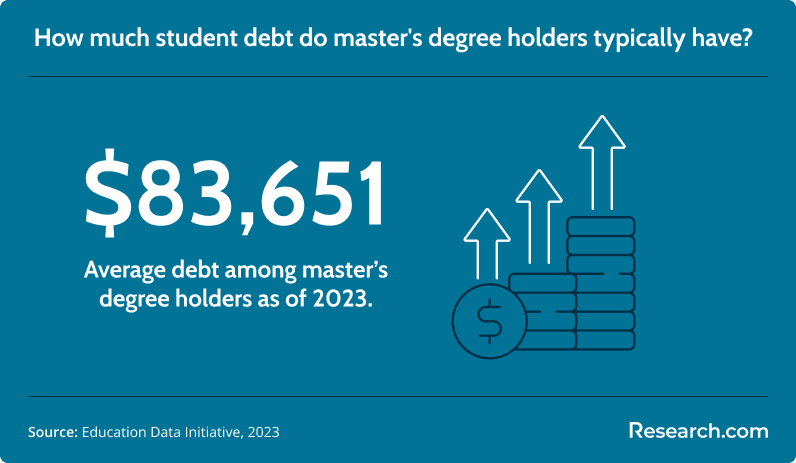
Financial planning matters because Education Data Initiative reported in 2023 that the average debt among master’s degree holders was $83,651. Before borrowing, students should estimate total program cost, expected monthly loan payments, realistic salary change, and whether their employer will contribute.
What is the flexibility of online MBA programs in Healthcare Administration?
Online MBA programs in Healthcare Administration are often designed for working professionals, but flexibility varies by school. Some programs are almost entirely self-paced within weekly deadlines, while others require live class attendance, group meetings, residencies, or scheduled exams.
- Online delivery. Many top healthcare MBA options allow students to complete coursework remotely rather than relocating or commuting frequently.
- No on-campus residency in some programs. Certain programs are 100% online, while others require campus visits or immersion experiences.
- Technical support. Online students may receive 24/7 technical support to reduce disruption when accessing materials or submitting assignments.
- Anytime course access. Many programs provide 24/7 access to lectures, readings, discussions, and assignments.
- Multiple start dates. Programs with several term starts can help students begin sooner instead of waiting for a single annual intake.
- Part-time and full-time pacing. Students can often choose a workload that fits employment, family, and financial obligations.
What networking opportunities are available in online MBA programs in Healthcare Administration?
Strong online healthcare MBA programs do more than post lectures online. They create structured ways for students to meet peers, faculty, alumni, executives, recruiters, and healthcare organizations. Networking may occur through live webinars, virtual conferences, group consulting projects, mentorship programs, alumni platforms, discussion boards, industry panels, and healthcare-focused student organizations.
Students interested in shorter healthcare credentials may also compare how networking differs across programs such as 2-year medical degrees and graduate business programs. Before enrolling, ask whether networking is built into the curriculum or left mostly to the student.
What is the online learning platform used in online MBA programs in Healthcare Administration?
The learning platform depends on the university. Common systems include Blackboard Learn, Canvas, D2L Brightspace, and Moodle. Programs may also use Zoom for live lectures, office hours, group presentations, advising, and team meetings.
Some universities use custom platforms or combine multiple systems. The best platform is not simply the one with the most features; it is the one that lets students reliably access coursework, submit assignments, join discussions, collaborate with teams, review feedback, and communicate with faculty.
Before committing to a program, request a platform demo or orientation preview if available. This is especially important if you will be studying while working full time.
What is the return on investment of an online MBA in Healthcare Administration?
The return on investment of an online MBA in Healthcare Administration depends on total cost, scholarships, employer assistance, time to completion, current salary, target role, regional job market, and how effectively the student uses career services and networking opportunities. Online formats may reduce relocation and commuting costs, but they still require time, tuition, and sustained academic effort.
Students comparing leadership-oriented formats may also review an executive MBA online if they already hold substantial management experience. The better ROI choice is the program that fits your career stage: a healthcare MBA may suit emerging or mid-career managers, while an executive format may better serve senior leaders.
How are experiential learning opportunities integrated into online MBA programs in Healthcare Administration?
Experiential learning helps online students apply concepts instead of only studying theory. Programs may use virtual internships, healthcare simulations, consulting projects, case competitions, capstones, employer-sponsored projects, or collaborations with hospitals and healthcare organizations.
These applied experiences are especially useful for students who want to show evidence of leadership, data analysis, process improvement, budgeting, or strategic problem-solving. When comparing similar programs, review the total price and fee structure as well; Research.com’s guide to online MBA USA costs can help you think through tuition and related expenses.
Can an online MBA in Healthcare Administration be completed in one year?
Yes, some online MBA in Healthcare Administration pathways can be completed in a one-year format. These programs usually compress coursework into intensive modules and may require students to take overlapping or back-to-back classes with limited breaks.
A one-year format can be useful for students who have strong time management skills, stable work schedules, and prior business or healthcare experience. It may not be ideal for students who need lighter terms, extensive career exploration, or more time for networking. If speed is a priority, compare program structures using Research.com’s list of one year MBA online options.
Can I fast-track my online MBA in Healthcare Administration?
Students may be able to fast-track an online MBA in Healthcare Administration through accelerated course modules, transfer credits, prior graduate coursework, multiple start dates, year-round enrollment, or intensive full-time pacing. Policies vary by school, so students should confirm exactly how many credits can transfer and whether professional experience can shorten the degree.
Fast-tracking is most realistic when the student can protect study time each week and avoid overloading work and family responsibilities. Those comparing rapid business pathways may also review the quickest online business administration degree options.
Can an accelerated pathway fast-track career advancement in Healthcare Administration?
An accelerated online MBA can shorten the time needed to earn the credential, but it does not automatically guarantee promotion. Career advancement still depends on experience, performance, employer needs, leadership ability, and the relevance of your projects or concentration.
Accelerated healthcare MBA formats may help experienced professionals move faster if they already understand healthcare operations and can immediately apply coursework at work. Students who want to compare shorter degree structures can review accelerated business degrees online.
What legal and regulatory factors influence online MBA programs in Healthcare Administration?
Healthcare administration programs must prepare students for a heavily regulated industry. Curriculum may address healthcare law, compliance, ethics, privacy, billing rules, risk management, governance, quality reporting, and data protection. HIPAA is one commonly discussed area because healthcare leaders must understand how patient information is handled and protected.
Students should also remember that an MBA is not a clinical license. If your intended role requires state licensure, facility-specific credentials, or professional certification, confirm those requirements separately. Professionals who want deeper legal training may explore the best online master's programs in business law as a supplemental or alternative path.
What is the class schedule for online MBA programs in Healthcare Administration?
Class schedules differ widely, but most online healthcare MBA programs use one of three formats:
- Asynchronous. Students access lectures and assignments on their own schedule while meeting weekly or module-based deadlines.
- Synchronous. Students attend live online classes, discussions, or meetings at scheduled times.
- Hybrid. Programs combine self-paced coursework with live sessions, residencies, or scheduled online meetings.
| Schedule type | Best for | Potential drawback |
| Asynchronous | Students with variable work shifts or family schedules | Requires strong self-discipline and independent learning |
| Synchronous | Students who want live discussion and real-time faculty interaction | Less convenient across time zones or rotating work schedules |
| Hybrid | Students who want flexibility plus structured engagement | May include mandatory attendance or occasional travel |
Emerging Trends in Online MBA Healthcare Administration Programs
Healthcare MBA programs are adapting as the industry becomes more data-driven, technology-enabled, and cost-sensitive. Students should look for curricula that address current operational realities rather than relying only on traditional management theory.
- AI and machine learning in operations. Healthcare organizations use advanced analytics to support scheduling, resource allocation, decision-making, and administrative efficiency.
- Digital health and telemedicine. The COVID-19 pandemic accelerated adoption of digital health platforms, making telemedicine strategy and virtual care operations more relevant for healthcare leaders.
- Health informatics and data governance. Administrators increasingly need to understand EHR systems, data quality, privacy, interoperability, and analytics.
- Sustainability in healthcare operations. Some organizations are emphasizing energy efficiency, waste reduction, and more sustainable supply chain practices.
- Cost-conscious graduate education. Students are paying closer attention to tuition, debt, and ROI. Those focused on affordability may compare the most affordable online MHA programs with healthcare-focused MBA options.
Health Informatics: A Pivotal Specialization in Healthcare Administration MBA Programs
Health informatics focuses on how healthcare organizations collect, manage, analyze, protect, and use data. As healthcare systems rely more heavily on electronic records, telemedicine, analytics, and quality reporting, informatics has become an important specialization for healthcare administration students.
Why choose health informatics as a specialization?
- Data-informed management. Students learn how patient, operational, financial, and quality data can guide better decisions.
- Technology integration. Coursework may address electronic health records, health information exchanges, telemedicine systems, and digital workflows.
- Broader career relevance. Hospitals, insurers, health technology companies, and healthcare startups often need leaders who understand both business operations and health data systems.
Students specifically interested in this area can also compare health informatics degree online options, which may provide more technical depth than an MBA concentration.
How does an online MBA in Healthcare Administration differ from an Executive MBA?
An online MBA in Healthcare Administration is generally designed for professionals who want flexible graduate business education with healthcare-specific coursework. It may serve early-career, mid-career, or career-changing students depending on admissions requirements.
An Executive MBA is usually built for experienced managers and senior professionals. It often emphasizes peer learning, advanced strategy, executive decision-making, and high-level networking. The financial commitment may also differ, so students considering executive formats should review EMBA cost information before applying.
| Factor | Online MBA in Healthcare Administration | Executive MBA |
| Typical audience | Professionals seeking healthcare management or leadership preparation | Senior professionals and experienced managers |
| Curriculum focus | Core MBA plus healthcare administration topics | Executive strategy, leadership, decision-making, and peer-based learning |
| Schedule | Often flexible, part-time, asynchronous, synchronous, or accelerated | Often cohort-based and intensive |
| Best use case | Moving into or advancing within healthcare administration | Strengthening executive leadership and high-level network access |
How to Choose the Right Online MBA Program in Healthcare Administration
The right program is not always the highest-ranked or fastest option. It is the program that fits your career goal, schedule, budget, learning style, and desired healthcare specialization.
Step-by-step program selection checklist
- Confirm accreditation first. Look for institutional accreditation and relevant business or healthcare programmatic accreditation, such as AACSB or CAHME when applicable.
- Match the curriculum to your goal. Hospital management, health policy, healthcare finance, informatics, long-term care, and consulting may require different electives.
- Compare total cost, not only tuition. Include fees, books, travel, software, loan interest, and time away from work.
- Review schedule requirements. Check whether classes are asynchronous, synchronous, hybrid, accelerated, full-time, or part-time.
- Ask about career support. Look for coaching, employer connections, alumni access, internships, fellowships, capstones, and healthcare-specific recruiting.
- Evaluate admissions requirements. If standardized testing is a barrier, compare online MBA programs no GMAT requirements.
- Check experiential learning. Applied projects, simulations, and consulting assignments can help you demonstrate job-ready skills.
- Speak with current students or alumni. Ask about workload, faculty responsiveness, networking quality, and career outcomes.
Common mistakes to avoid
| Mistake | Why it can hurt you | Better approach |
| Choosing only by ranking | A highly ranked program may not fit your schedule, budget, or specialization needs | Use rankings as one input, then compare curriculum, cost, accreditation, and outcomes |
| Ignoring accreditation | Employers and other schools may question program quality | Verify institutional and relevant programmatic accreditation before applying |
| Looking only at tuition | Fees, travel, books, and lost work time can change the true cost | Build a full cost estimate before borrowing |
| Assuming online means self-paced | Some online programs require live attendance or fixed schedules | Ask for a sample course calendar and weekly workload estimate |
| Assuming salary gains are guaranteed | Pay depends on role, employer, location, experience, and performance | Compare alumni outcomes and target realistic roles based on your background |
| Overlooking licensure or credential rules | Some healthcare roles have state-specific or employer-specific requirements | Confirm requirements for your intended job before enrolling |
Key Insights
- An online MBA in Healthcare Administration is best suited for professionals who want business leadership training tied directly to healthcare operations, policy, finance, compliance, and analytics.
- Program quality should be judged by accreditation, curriculum depth, faculty, applied learning, career support, networking, flexibility, and total cost—not by ranking alone.
- Programs in this guide commonly require 30 to 54 credit hours and typically take 12 to 36 months, with some formats extending to 38 months.
- US BLS (2023) projected 28% growth for Medical and Health Services Managers from 2022 to 2032, but career outcomes still depend heavily on experience and employer demand.
- Costs vary widely, with a 2022 tuition range of $9,700 to $106,200, so ROI analysis should include fees, debt, employer reimbursement, and realistic salary expectations.
- Students aiming for healthcare technology, analytics, or digital health leadership should pay close attention to health informatics coursework and applied data projects.
- The strongest choice is the program that aligns with your target role: hospital operations, health policy, healthcare finance, long-term care, insurance, consulting, informatics, or executive leadership.
References:
- Data USA. (n.d.). Medical and Health Services Managers. https://datausa.io/profile/soc/medical-health-services-managers
- Education Data Initiative. (2023). Average Graduate Student Loan Debt. https://educationdata.org/average-graduate-student-loan-debt
- Graduate Management Admission Council. (2022). The Value of Graduate Management Education: From the Candidate’s Perspective. https://www.gmac.com/-/media/files/gmac/research/measuring-program-roi/2022-gmac-white-paper-value-of-gme.pdf
- O*NET OnLine. (n.d.). Medical and Health Services Managers. https://www.onetonline.org/link/summary/11-9111.00
- PayScale. (2023). Average Clinical Manager Salary. https://www.payscale.com/research/US/Job=Clinical_Manager/Salary
- PayScale. (2023). Master of Business Administration (MBA), Health Care Management Degree. https://www.payscale.com/research/US/Degree=Master_of_Business_Administration_(MBA)
- US BLS. (2023). Administrative Services and Facilities Managers. https://www.bls.gov/ooh/management/administrative-services-managers.htm
- US BLS. (2023). Medical and Health Services Managers. https://www.bls.gov/ooh/management/medical-and-health-services-managers.htm#
Other things you should know about online MBA programs in Healthcare Administration
In 2027, typical admission requirements for online MBA programs in Healthcare Administration may include a bachelor's degree, professional work experience, a resume, letters of recommendation, and possibly standardized test scores like the GMAT or GRE, depending on the program's specific criteria.
An online MBA in healthcare administration does not lead to a license. Graduates who plan to manage hospitals or clinics usually pursue optional credentials such as Certified Medical Manager (CMM) or Fellow of the American College of Healthcare Executives (FACHE), which require experience, exams, and continuing education.