
2027 Best MBA in Data Science Degree Programs

Co-Founder and Chief Data Scientist
An MBA in Data Science is for professionals who want to move beyond reporting numbers and start leading data-informed business decisions. The degree blends graduate-level management training with analytics, machine learning, predictive modeling, data visualization, and business intelligence so graduates can translate technical findings into strategy, products, operations, and revenue decisions.
This guide is designed for working professionals, career changers, analysts, managers, and business graduates comparing MBA programs with analytics or data science tracks. You will learn what these programs teach, how long they take, what they cost, how online and campus formats compare, which schools appear in this list, what careers may follow, and how to decide whether the degree is worth the investment.
Demand for leaders who understand both business and data remains strong. The Graduate Management Admission Council reported that 94% of U.S. employers planned to hire MBA graduates with a focus on data science and analytics in the next few years. That does not guarantee a job or salary outcome, but it does show why many MBA programs now emphasize analytics, AI, and data-driven decision-making.
Quick answer: Is an MBA in Data Science worth considering?
An MBA in Data Science can be worthwhile if your goal is to lead analytics teams, manage AI or data products, move into business intelligence leadership, or use quantitative insight to guide strategy. It is usually a better fit for professionals who want management responsibility than for students seeking a deeply technical data science degree focused mainly on coding, algorithms, or research.
- Common outcomes include roles such as Data Science Manager, Business Intelligence Manager, Data Analytics Manager, AI Product Manager, and analytics consultant.
- Entry-level roles can range from $90,000 to $110,000, while senior roles can exceed $150,000.
- Online MBA in Data Science programs can help working students keep their jobs while completing coursework.
What can I expect from an MBA in data science degree programs?
An MBA in Data Science combines the leadership and decision-making focus of a traditional MBA with applied training in analytics. Students usually study finance, marketing, operations, economics, leadership, and strategy while also learning how to work with data tools, statistical models, dashboards, machine learning concepts, and predictive analytics.
The strongest programs do not treat data science as a standalone technical subject. They teach students how to ask useful business questions, evaluate data quality, communicate uncertainty, explain models to nontechnical stakeholders, and choose actions based on evidence. Programs such as the MBA/MS in Applied Data Science at Chicago Booth show how some schools combine management theory, quantitative training, and applied projects through flexible online and in-person options.
What you should be able to do after completing the program
- Interpret complex datasets and connect findings to business goals.
- Lead analytics initiatives across departments such as finance, marketing, operations, healthcare, technology, or consulting.
- Use predictive analytics and data visualization to support decisions.
- Work with technical teams without needing to become a full-time software engineer.
- Assess the business risks of AI, automation, data privacy, model bias, and poor data governance.
Where can I work with an MBA in data science degree programs?
Graduates can work in any industry where organizations use data to improve performance, reduce risk, forecast demand, understand customers, or build technology-enabled products. Common employers include consulting firms, banks, technology companies, healthcare organizations, insurance companies, manufacturers, retailers, logistics firms, sports organizations, and government or nonprofit agencies.
In consulting, graduates may help clients improve operations or build analytics strategies. In finance, they may evaluate risk, market behavior, pricing, or investment patterns. In technology companies, they may manage AI products, analytics platforms, or business intelligence teams. In healthcare, they may use data to support operational planning, patient access, compliance, and resource allocation.
How much can I make with an MBA in data science degree programs?
Compensation depends on the role, employer, location, technical depth, management experience, and industry. In the U.S., salaries for roles like Data Science Manager can reach around $143,200 annually. Senior roles in the U.S. can exceed $150,000, and technology employers often provide higher total compensation than some other sectors.
Salary numbers should be treated as reference points, not promises. Students should compare program cost, current income, career goals, employer demand in their region, and whether the degree will help them qualify for higher-level roles that they could not reasonably reach with experience or a shorter credential alone.
- Best MBA in Data Science Degree Programs for 2027
- How long does an MBA in Data Science take?
- Online vs. on-campus MBA in Data Science programs
- Average cost of an MBA in Data Science
- Financial aid options for MBA in Data Science students
- Admissions requirements and prerequisites
- Typical MBA in Data Science courses
- Common specializations
- Accreditation and program quality
- Emerging trends in MBA in Data Science programs
- How to choose the right program
- Mentorship and networking
- Career paths after graduation
- Industry partnerships and real-world projects
- Healthcare administration opportunities
- Job market outlook
- ROI of an MBA in Data Science
- Accelerated online MBA in Data Science programs
- Specialized industries such as sports managementAccelerated format detailsROI detailsJob market details
List of Best MBA in Data Science Degree Programs
The best MBA in Data Science program is not simply the most recognizable school name. The right choice depends on curriculum depth, analytics coursework, faculty experience, accreditation, cost, completion time, format, career support, and whether the program matches your target role.
Students should look closely at whether a program offers true data science or analytics coursework rather than only a single business analytics elective. A useful curriculum should combine management fundamentals with applied technical content such as machine learning, predictive analytics, database management, data visualization, and quantitative decision-making.
How do we rank schools?
Program evaluation should consider academic quality, affordability, accreditation, student outcomes, curriculum relevance, and delivery format. For MBA programs with data science or analytics content, students should also examine how much hands-on technical work is included and whether projects use real business datasets.
Useful public and institutional data sources for comparing colleges include:
- Integrated Postsecondary Education Data System, available through the IPEDS database
- Peterson’s database, including the Distance Learning Licensed Data Set
- College Scorecard database
- National Center for Education Statistics
| Program | Length | Credits | Estimated cost per credit | Accreditation |
| Auburn University Online MBA Program | 2 years | 39 | $950 | Association to Advance Colleges & Schools of Business, International |
| Babson College MBA concentration in Business Analytics | 2 years | 45 | $2,050 | Association to Advance Collegiate Schools of Business (AACSB) |
| Clemson University MBA with a concentration in Business Analytics | 2 years | 30 | $1,105 | Association to Advance Collegiate Schools of Business (AACSB) |
| University of Iowa MBA-Master of Science in Business Analytics | 4 years | 60 | $2,250 | Association to Advance Collegiate Schools of Business (AACSB) |
| University of New Haven MBA with a Concentration in Data Analytics | 1.5 years | 40 | $852 | Association to Advance Collegiate Schools of Business (AACSB) |
| University of West Alabama MBA | 2 years | 45 | $429 | Accreditation Council for Business Schools and Programs |
| Bryant University MBA | 2 years | 30 | $2,331 | Association to Advance Collegiate Schools of Business (AACSB) |
| Cornell University MBA with Digital Technology Immersion | 2 years | 40 | $2,717 | Association to Advance Collegiate Schools of Business (AACSB) |
| Indiana University Direct Online MBA program | 2 years | 40 | $2,717 | Association to Advance Collegiate Schools of Business (AACSB) |
| Northeastern University Online MBA | 18 months | 50 | $900 | Association to Advance Collegiate Schools of Business International. |
1. Auburn University Online MBA Program
Auburn University offers an Online MBA through the Harbert College of Business for professionals who want graduate business training without stepping away from work. The program includes nine core business courses and four electives, and students may customize the degree through graduate certificates or concurrent master's degrees in areas such as finance, information systems, supply chain management, or industrial and systems engineering. That flexibility can be useful for students who want to build analytics-related expertise within a broader MBA structure. The average completion time is 31 months, and students have up to six years to finish.
- Program Length: 2 years
- Tracks/concentrations: MBA
- Estimated Cost per Credit: $950
- Required Credits to Graduate: 39
- Accreditation: Association to Advance Colleges & Schools of Business, International
2. Babson College MBA concentration in Business Analytics
Babson College provides an MBA concentration in Business Analytics with more than a dozen electives, allowing students to shape the program around their goals. Babson also offers a STEM-designated MBA concentration in Business Analytics and Machine Learning, which adds more technical preparation in advanced modeling and programming languages such as Python and R. The concentration was built with input from industry partners and faculty, helping align the curriculum with business analytics needs.
- Program Length: 2 years
- Tracks/concentrations: MBA
- Estimated Cost per Credit: $2,050
- Required Credits to Graduate: 45
- Accreditation: Association to Advance Collegiate Schools of Business (AACSB)
3. Clemson University MBA with a concentration in Business Analytics
Clemson University offers an MBA concentration in Business Analytics for students who want to use data analysis, modeling, and decision tools in management roles. Coursework covers areas such as data mining, predictive analytics, and decision models while also emphasizing the managerial use of analytics. Faculty expertise in business analytics supports a curriculum designed to keep pace with developments in the field.
- Program Length: 2 years
- Tracks/concentrations: MBA
- Estimated Cost per Credit: $1,105
- Required Credits to Graduate: 30
- Accreditation: Association to Advance Collegiate Schools of Business (AACSB)
4. University of Iowa MBA-Master of Science in Business Analytics (MSBA)
The University of Iowa Tippie College of Business offers a dual MBA and Master of Science in Business Analytics pathway. Students combine MBA coursework with specialized MSBA study and may complete either degree first or work toward both at the same time. The program allows cross-counting of courses, reducing the total requirement by 15 semester hours, which is described as the equivalent of about a year's worth of classes.
- Program Length: 4 years
- Tracks/concentrations: MBA
- Estimated Cost per Credit: $2,250
- Required Credits to Graduate: 60
- Accreditation: Association to Advance Collegiate Schools of Business (AACSB)
5. University of New Haven MBA with a Concentration in Data Analytics
The University of New Haven offers an online MBA concentration in Data Analytics focused on applying mathematical statistics to describe, analyze, and forecast business data. The curriculum includes data visualization, machine learning, database management, and related topics, with emphasis on the R-programming language.
- Program Length: 1.5 years
- Tracks/concentrations: MBA
- Estimated Cost per Credit: $852
- Required Credits to Graduate: 40
- Accreditation: Association to Advance Collegiate Schools of Business (AACSB)
6. University of West Alabama MBA
The University of West Alabama (UWA) offers an online MBA built for students who want a broad understanding of business theory and its application in industry. The program includes foundational business topics and allows students to pursue emphasis or specialization tracks. Its lower listed cost per credit may appeal to students comparing affordability carefully.
- Program Length: 2 years
- Tracks/concentrations: MBA
- Estimated Cost per Credit: $429
- Required Credits to Graduate: 45
- Accreditation: Accreditation Council for Business Schools and Programs
7. Bryant University MBA
Bryant University offers an Online MBA for working professionals seeking flexible graduate business education. The program emphasizes business fundamentals, leadership, real-world problem-solving, and values-based decision-making. Students may choose among three concentrations: Innovative Healthcare Leadership, Strategic Leadership, or General Management.
- Program Length: 2 years
- Tracks/concentrations: MBA
- Estimated Cost per Credit: $2,331
- Required Credits to Graduate: 30
- Accreditation: Association to Advance Collegiate Schools of Business (AACSB)
8. Cornell University MBA with Digital Technology Immersion
Cornell University offers a Digital Technology Immersion through the Johnson Graduate School of Management’s Two-Year MBA. The immersion helps students understand business challenges in digital technology markets and covers topics such as cloud computing, artificial intelligence, blockchain, and augmented and virtual reality. Courses, guest speakers, and case studies connect emerging technology to product and business strategy.
- Program Length: 2 years
- Tracks/concentrations: MBA
- Estimated Cost per Credit: $2,717
- Required Credits to Graduate: 40
- Accreditation: Association to Advance Collegiate Schools of Business (AACSB)
9. Indiana University Direct Online MBA program
The Kelley Direct Online MBA at Indiana University is a flexible option for professionals who need to balance graduate study with work and personal responsibilities. Students can choose courses that match their interests and career plans while completing core business subjects such as finance, marketing, and operations.
- Program Length: 2 years
- Tracks/concentrations: MBA
- Estimated Cost per Credit: $2,717
- Required Credits to Graduate: 40
- Accreditation: Association to Advance Collegiate Schools of Business (AACSB)
10. Northeastern University Online MBA
Northeastern University offers an Online MBA through the D'Amore-McKim School of Business. The program is designed to strengthen business knowledge, leadership ability, and professional effectiveness. Core coursework includes data skills, global strategy, and innovation, along with content on emerging business issues, social responsibility, and human skills needed in a digital economy.
- Program Length: 18 months
- Tracks/concentrations: MBA
- Estimated Cost per Credit: $900
- Required Credits to Graduate: 50
- Accreditation: Association to Advance Collegiate Schools of Business International.
How long does it take to complete an MBA in data science degree programs?
The time required to complete an MBA in Data Science career pathway depends on program design, course load, transfer policies, and whether students enroll full time or part time. Some accelerated online formats can be completed quickly, while dual degrees and part-time programs usually take longer.
Henderson State University offers an online MBA in Data Science that can be completed in as few as 14 months through accelerated 7-week courses. The Swiss School of Business and Management offers an online MBA in Data Science that can be finished in 12 months or less. Other programs, including those offered by MAHE, may take two years. Overall, many MBA in Data Science programs fall between about one year and two years, although dual-degree options may extend beyond that range.
| Program format | Typical timing based on examples provided | Best fit |
| Accelerated online MBA | 12 months or less to as few as 14 months | Experienced professionals who can handle compressed coursework |
| Standard MBA format | About two years | Students who want a steadier pace with room for work or internships |
| Dual MBA/MSBA pathway | 4 years in the listed University of Iowa example | Students who want both management and deeper analytics credentials |
How does an MBA in data science degree program compare to an on-campus program?
The best format depends on your schedule, learning style, networking goals, budget, and need for campus access. On-campus MBA programs can provide stronger in-person networking, immediate faculty interaction, live group work, recruiting events, and immersion in the business school community. The trade-off is that they often require relocation, commuting, or reduced work hours.
Online MBA programs offer flexibility for students who cannot pause their careers. They may also reduce certain expenses related to relocation, commuting, and campus-based fees. Students comparing price-sensitive options may also review Research.com resources on the most affordable online master's in data science programs to understand how analytics-focused graduate costs vary across formats. However, online students need strong time management and should confirm that the program offers meaningful interaction, career support, and applied projects.
| Factor | Online MBA in Data Science | On-campus MBA in Data Science |
| Flexibility | Usually better for working professionals | Often less flexible because of class schedules and location |
| Networking | Depends heavily on live sessions, cohorts, residencies, and alumni engagement | Often stronger for in-person relationship building |
| Cost considerations | May reduce relocation and commuting expenses | May involve higher living and campus-related costs |
| Learning style | Best for self-directed students | Best for students who prefer face-to-face learning |
| Career services | Varies by school and should be verified before enrolling | May provide easier access to recruiting events and campus resources |
Specialized Data Science MBA vs. General MBA: Which Path to Choose?
Format is only one part of the decision. Students should also make a specialized MBA and general MBA degree program comparison before applying. A specialized MBA in Data Science is usually stronger for students targeting analytics leadership, AI product management, business intelligence, data strategy, or technical consulting roles.
A general MBA may be a better choice for students who want broader management mobility across finance, marketing, operations, entrepreneurship, or executive leadership without committing to analytics-heavy work. If your long-term goal depends on managing data teams or translating technical insight into business strategy, specialization can help. If your goal is flexible leadership across many functions, a general MBA may be enough.
What is the average cost of an MBA in data science degree program?
The cost of an MBA in Data Science varies widely by school, format, credit requirements, residency status, fees, and whether the program is public, private, online, or campus-based. When comparing online and on-campus MBA degrees, students should look beyond tuition and calculate the full cost of attendance, including fees, books, technology expenses, travel, residencies, and lost income if they reduce work hours.
Generally, the cost of an MBA program is around $62,600 for a two-year program in the United States. For MBA in Data Science programs specifically, costs can range from about $14,157 for some online programs, like the University of West Alabama, to over $85,000 for more comprehensive campus-based programs, such as Stevens Institute of Technology.
Do not compare MBA pricing directly with unrelated undergraduate programs such as a creative writing online degree. Graduate business programs typically use different pricing models, credit requirements, and employer-value assumptions than bachelor's degrees in other fields.
| Cost item | Why it matters | Question to ask |
| Tuition per credit | Helps compare programs with different credit totals | What is the exact per-credit rate for my residency and format? |
| Total required credits | A lower per-credit price may still lead to a higher total if the program requires more credits | How many credits are required to graduate? |
| Fees | Technology, student, residency, and course fees can change the final price | Which fees are mandatory? |
| Travel or residencies | Hybrid and online programs may still require in-person sessions | Are campus visits required, and who pays for travel? |
| Opportunity cost | Full-time study can reduce income | Can I keep working while enrolled? |
What are the financial aid options for students enrolling in an MBA in data science degree program?
Financial aid for MBA in Data Science students can include scholarships, fellowships, employer support, federal loans, private loans, assistantships, and school-specific awards. Availability depends on the institution, program format, citizenship status, enrollment intensity, academic profile, and professional background.
- Scholarships and fellowships: Universities, companies, and professional organizations may support students pursuing analytics, technology, or business degrees. Students should also avoid assuming aid rules are the same across disciplines; for example, researching online construction management degree cost can show how pricing and aid structures differ by field and degree level.
- Federal and private loans: Eligible students may apply for federal student loans through the Free Application for Federal Student Aid (FAFSA). Federal loans often provide repayment protections that private loans may not match.
- University financial aid: Each school’s financial aid office can explain institutional grants, scholarships, payment plans, and loan options.
- Specialized scholarships: Awards such as the CDS Pathbreaker Scholarship at NYU cover full tuition for select students and focus on diversity and innovation.
- Research assistantships: Assistantships may provide funding and experience, especially at research-oriented institutions.
- Employer tuition assistance: Working professionals should ask whether their employer reimburses graduate coursework tied to analytics, AI, leadership, or business transformation.
What are the prerequisites for enrolling in an MBA in data science degree program?
Admissions requirements differ by school, but MBA in Data Science programs commonly evaluate academic preparation, professional experience, quantitative readiness, leadership potential, recommendations, and career goals. Some programs welcome students from nontechnical backgrounds, while others expect prior coursework or experience in analytics, statistics, programming, or business.
- Bachelor's degree: Most programs require a bachelor's degree from an accredited institution. Business, mathematics, statistics, computer science, and related backgrounds may be helpful, but many MBA programs consider applicants from other fields.
- Relevant coursework: Some schools prefer or require prior study in statistics, mathematics, programming such as Python or R, or business fundamentals.
- Letters of recommendation: Professional recommendations often help admissions committees assess leadership, communication skills, and readiness for graduate work.
- Work experience: Many MBA programs value professional experience, particularly in business, analytics, technology, operations, finance, or management.
Applicants should also review the full MBA application process, including essays, resumes, interviews, transcripts, test requirements, and deadlines. A strong application explains not only why the applicant wants an MBA, but why data science is central to their next career step.
What courses are typically in an MBA in data science degree program?
Most MBA in Data Science programs include a business core plus analytics-focused courses. The exact course list varies, but students should expect a mix of management, quantitative analysis, technology, and communication training.
| Course area | What students learn | Why it matters |
| Organizational Behavior | Leadership, team dynamics, motivation, and organizational change | Analytics leaders must manage people, not only models |
| Strategic Management | Competitive positioning, planning, and decision-making | Data insights need to connect to business strategy |
| Business Ethics | Responsible decision-making and ethical business conduct | Data use raises issues around privacy, bias, transparency, and accountability |
| Business Economics | Economic principles applied to organizations and markets | Analytics often supports pricing, demand, and market decisions |
| Financial Management | Capital allocation, budgeting, risk, and financial decision-making | Leaders must evaluate whether analytics initiatives create business value |
| Machine Learning and Predictive Analytics | Modeling methods used to forecast outcomes and identify patterns | Managers need to understand model capabilities and limitations |
| Data Visualization | Dashboards, charts, storytelling, and communication of findings | Executives act on insights they can understand |
| Database Management | How data is stored, structured, accessed, and governed | Bad data infrastructure weakens analytics decisions |
These subjects can prepare students for leadership roles along the data analytics manager career path, where the main challenge is turning analysis into decisions that teams can execute.
What types of specializations are available in an MBA in data science degree program?
Specializations help students tailor an MBA toward a specific industry, function, or technical focus. Students comparing analytics programs should also understand how related technology fields differ; for example, Research.com’s guide to the most affordable online cybersecurity degrees covers a different but increasingly connected area of digital risk and data protection.
Specializations in Data Science
- Data Analytics: Focuses on using data mining, predictive analytics, and business intelligence to support decisions.
- Business Analytics: Applies analysis to growth, operations, brand management, planning, and performance improvement.
- Machine Learning and AI: Covers business uses of machine learning models, AI systems, automation, and model deployment concepts.
- Information Systems: Emphasizes data systems, databases, architecture, and technology management.
Other Specializations
- Financial Analytics: Uses data science methods for financial markets, risk, investment analysis, and forecasting.
- Marketing Analytics: Applies data to customer behavior, campaign performance, segmentation, and engagement.
- Healthcare Analytics: Uses analytics to improve operations, patient outcomes, compliance, and resource planning in healthcare settings.
How important is accreditation and quality assurance for an MBA in Data Science degree program?
Accreditation is one of the first quality checks students should perform. It helps confirm that a school or business program has been reviewed against academic standards for curriculum, faculty qualifications, student support, and institutional resources. Employers may not always ask about accreditation directly, but graduating from a recognized institution can affect credibility, transferability, financial aid eligibility, and long-term educational options.
Students comparing cost-conscious options can review affordable online MBA programs, but affordability should never replace accreditation review. A low-cost program that lacks recognized quality assurance may create problems later if employers, doctoral programs, or licensing-related pathways do not recognize the credential.
How to verify accreditation before applying
- Check the school’s official accreditation page.
- Confirm institutional accreditation through recognized databases or official agency sites.
- Look for business-school accreditation such as AACSB or ACBSP when relevant.
- Ask whether the online version is covered by the same accreditation as the campus program.
- Verify that the exact MBA concentration or dual-degree pathway appears in official academic materials.
What are the emerging trends impacting MBA in Data Science programs?
MBA in Data Science programs are changing as businesses adopt AI tools, automate workflows, increase cybersecurity attention, and demand faster analytics for strategic decisions. Programs are adding more content in real-time analytics, artificial intelligence, responsible data use, cybersecurity-aware analytics, and digital transformation.
Flexible delivery is also becoming more important. Many professionals want rigorous coursework without leaving their jobs, which is why online MBA programs continue to attract students who need access, scheduling flexibility, and applied learning opportunities. The key is to make sure online convenience does not come at the expense of academic depth, faculty access, or career support.
Current trends students should watch
- AI integration: MBA students increasingly need to understand AI capabilities, risks, governance, and business applications.
- Ethical analytics: Privacy, bias, transparency, and responsible model use are now leadership concerns.
- Hands-on projects: Employers value graduates who can apply analytics to messy, real organizational problems.
- Cross-functional data leadership: Data leaders must work across finance, marketing, operations, legal, IT, and executive teams.
- Credential scrutiny: Students are paying closer attention to accreditation, cost, outcomes, and ROI.
How to choose the best MBA in data science degree program?
Choosing the right program starts with your target role. A student who wants to become a data science manager should evaluate technical depth differently from someone who wants to become a general business executive with analytics literacy. The strongest choice is the program that fits your career direction, schedule, budget, and learning needs.
| Selection factor | What to examine | Red flag |
| Accreditation | Institutional and business-school accreditation | The school cannot clearly document accreditation status |
| Curriculum | Machine learning, predictive analytics, visualization, databases, business strategy, and leadership | The “data science” track contains only one or two light analytics courses |
| Faculty | Academic qualifications and industry experience | No faculty appear to specialize in analytics, AI, statistics, or information systems |
| Format | Online, hybrid, evening, weekend, accelerated, or campus-based options | The schedule conflicts with work or family obligations |
| Career support | Coaching, employer partnerships, alumni network, internships, and projects | Career services are generic and not connected to analytics roles |
| Total cost | Tuition, fees, travel, materials, and opportunity cost | The school advertises tuition but hides mandatory fees |
| Admissions fit | Work experience, prerequisites, test policies, essays, and recommendations | You lack the quantitative preparation needed for the analytics coursework |
Common mistakes to avoid
- Choosing a program because of the school name alone without reviewing analytics coursework.
- Comparing only tuition per credit instead of total program cost.
- Assuming every online MBA offers the same networking and career support as a campus program.
- Ignoring accreditation or assuming all business-school accreditations are identical.
- Enrolling in a technical program without preparing for statistics, programming, or quantitative analysis.
- Expecting the degree by itself to guarantee a specific salary or promotion.
What role do mentorship and networking play in an MBA in Data Science program?
Mentorship and networking can be especially valuable in analytics-focused MBA programs because career advancement often depends on applying technical knowledge in business settings. Students benefit from faculty guidance, peer collaboration, alumni connections, employer panels, career coaching, and project-based relationships with companies.
Programs with strong alumni and employer networks may help students identify analytics leadership opportunities faster. For example, students reviewing an AACSB online MBA may want to ask how the school supports online students through mentoring, alumni access, virtual events, and employer engagement.
Questions to ask about networking before enrolling
- Are online students included in the same alumni network as campus students?
- Does the program offer mentors with analytics, AI, or data leadership experience?
- Are there live networking events, residencies, or employer panels?
- Can students complete projects with real companies?
- Does career coaching include analytics-specific resume, portfolio, and interview preparation?
What career paths are available for graduates of an MBA in data science degree program?
Graduates of an MBA in Data Science can pursue roles that sit between business leadership and technical analytics. Some students may also compare timelines with an accelerated MBA program if they want to move into management faster.
| Career path | Primary responsibility | Why an MBA in Data Science helps |
| Data Scientist | Analyze complex data using statistics, modeling, and machine learning methods | Adds business context and communication skills to technical analysis |
| Data Science Manager | Lead analytics teams, projects, tools, and stakeholder communication | Combines management training with analytics fluency |
| AI Product Manager | Guide development of AI-enabled products and coordinate technical and business teams | Supports product strategy, user value, and technical translation |
| Business Intelligence Analyst | Create reports, dashboards, and insights for decision-makers | Builds ability to connect metrics with strategy |
| Machine Learning Engineer | Design and optimize machine learning systems | Useful for technically prepared students who want leadership or product-facing responsibilities |
| Chief Data Officer | Oversee enterprise data strategy, governance, and value creation | Develops executive-level thinking around data as an organizational asset |
| AI Consultant | Advise organizations on AI adoption, analytics strategy, and implementation | Strengthens client communication, strategy, and business case development |
How do industry partnerships and real-world projects enhance an MBA in Data Science?
Industry projects help students practice the work employers actually need: defining a business problem, cleaning or interpreting imperfect data, choosing an analytical method, presenting results, and recommending action. These experiences can also help students build portfolio examples for interviews.
Partnerships with companies, internships, consulting projects, case competitions, and capstone courses can make a program more practical. Students familiar with project-based training in other areas, such as accelerated online project management bachelor degree programs, will recognize the value of applying structured methods to real organizational challenges.
Can an MBA in Data Science open doors in healthcare administration?
Yes, an MBA in Data Science can support healthcare administration careers when the role requires operational analysis, forecasting, quality improvement, financial planning, patient access optimization, or compliance-related reporting. Healthcare organizations increasingly rely on data to manage resources, improve outcomes, and support evidence-based decisions.
Professionals who want to work specifically in hospitals, biotechnology firms, public health organizations, or healthcare operations may also consider complementary preparation through a health administration degree online. The best path depends on whether the student wants a broad analytics-management role or a healthcare-specific leadership credential.
What is the job market for graduates with an MBA in data science degree program?
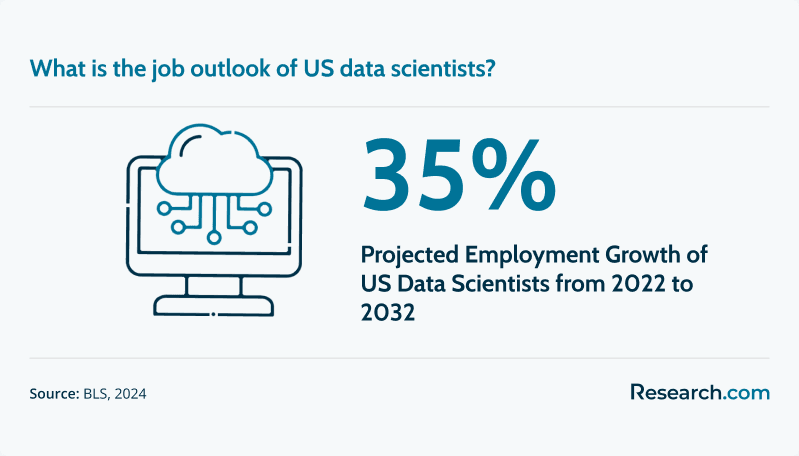
The job market for graduates with an MBA in Data Science is shaped by the continued need for professionals who can interpret data and turn it into business action. Big data specialist roles are projected to see a 36% increase in hiring between 2023 and 2033. The data scientist job market also remains resilient, with approximately 21,000 new job openings anticipated annually over the next decade.
Employers often look for AI and machine learning literacy, especially as these tools become part of routine business operations. Professionals with cross-disciplinary skills in data analysis, engineering, architecture, business strategy, and communication may be especially competitive. Common technical skills include Python, SQL, data wrangling, statistical analysis, PyTorch, and TensorFlow.
Reported compensation for data-focused roles can be high. Data scientist salaries range from $190,000 to $230,000, and machine learning engineers earn $200,000 to $240,000. These figures vary by employer, geography, experience, technical skill, and job scope.
What is the ROI of an MBA in Data Science degree program?
The return on investment of an MBA in Data Science depends on the relationship between program cost and realistic career gains. Students should compare tuition, fees, loan interest, time away from work, expected salary growth, promotion potential, and whether the degree opens roles that would otherwise be difficult to access.
Before enrolling, review the cost of online MBA degree options and compare them with your target salaries, current income, and employer reimbursement opportunities. A lower-cost program may produce a stronger ROI if it has solid accreditation, relevant coursework, and good career support. A more expensive program may be justified if it provides exceptional recruiting access, alumni connections, and measurable advancement opportunities.
Simple ROI questions to answer
- What is the total program cost after scholarships, employer support, and fees?
- Will I need to reduce work hours or pause employment?
- Which roles am I targeting, and do they commonly require or prefer an MBA?
- How much salary growth would I need to justify the cost?
- Does the program provide analytics projects, career coaching, and employer access?
Can an accelerated online MBA in Data Science deliver comparable rigor to traditional programs?
An accelerated online MBA in Data Science can be rigorous if it maintains strong admissions standards, qualified faculty, applied analytics coursework, frequent interaction, reliable technology, and meaningful assessment. The shorter timeline alone does not determine quality.
Students considering an accelerated online MBA should ask how the program compresses coursework, whether students can manage the workload while working, and how much support is available. A fast program can be a good fit for experienced, disciplined professionals, but it may be overwhelming for students who need more time to build quantitative or programming skills.
Can an MBA in Data Science enhance opportunities in specialized industries like sports management?
An MBA in Data Science can be useful in specialized industries that increasingly rely on analytics. In sports management, for example, organizations may use data to evaluate performance, improve fan engagement, optimize pricing, manage sponsorship value, and guide operations.
Students interested in sports leadership can compare analytics-focused MBA options with the best colleges for MBA in sports management. The best choice depends on whether the student wants a sports-specific business credential, a broader analytics leadership degree, or a combination of both.
References:
- Anaconda, Inc. (2023). State of Data Science Report 2023. Anaconda, Inc. Anaconda, Inc.
- Bureau of Labor Statistics. (2023). Occupational employment and wages, May 2023: 15-2041 Statisticians. Bureau of Labor Statistics.
- DataUSA. (2021). Computer and information research scientists. DataUSA.
- Indeed. (2024). Average data scientist salary in the United States. Indeed.
- Kaggle. (2022). 2022 Kaggle Machine Learning & Data Science Survey [Data set]. Kaggle.
- PayScale. (2024). Average data scientist salary. PayScale.
Key Insights
- An MBA in Data Science is best for professionals who want to lead data-driven business decisions, not for students seeking only deep technical training.
- Program quality depends on accreditation, analytics curriculum depth, faculty expertise, applied projects, networking access, and career support.
- Completion time can range from 12 months or less to two years for many programs, while dual-degree options may take longer.
- Costs vary widely, from about $14,157 for some online programs to over $85,000 for some campus-based options, so ROI analysis is essential.
- Online programs can be a strong option for working professionals, but students should verify interaction, mentoring, project work, and employer connections.
- Career paths include Data Science Manager, Business Intelligence Analyst, AI Product Manager, Machine Learning Engineer, AI Consultant, and Chief Data Officer.
- Big data specialist roles are projected to see a 36% increase in hiring between 2023 and 2033, and approximately 21,000 new data scientist openings are anticipated annually over the next decade.
- Salary outcomes vary, but entry-level roles can range from $90,000 to $110,000, senior roles can exceed $150,000, data scientist salaries range from $190,000 to $230,000, and machine learning engineers earn $200,000 to $240,000.
Other Things You Should Know About MBA in Data Science Degree Programs
The average credit requirement for MBA in Data Science programs in 2027 ranges from 45 to 60 credit hours. These programs typically include core business courses along with specialized data science modules to ensure a comprehensive education in both fields.
Many programs ask for GMAT or GRE scores, but waivers are common for applicants with strong work experience, prior graduate study, or a high undergraduate GPA. Some schools also accept alternative assessments such as the EA, and several business schools make test submission optional for 2027 admissions.


