2027 Most Affordable AACSB Online MBA Degree Programs

Co-Founder and Chief Data Scientist
Many working professionals aspire to advance their careers but struggle to find the time and flexibility to pursue higher education. The traditional master of business administration (MBA) programs, with their rigid schedules and on-campus requirements, often seem out of reach for those juggling job responsibilities and personal commitments.
Online MBA degree programs offer a flexible and accessible way for professionals to advance their education and career prospects without attending classes on a physical campus. In this article, we listed AACSB-accredited online MBA programs and the possible career paths you can take. We also discussed the requirements, costs, and job outlook to help you find the right program.
What are the benefits of getting an online MBA degree?
- Online MBA programs allow you to balance your studies with work and personal commitments.
- Graduates of online MBA programs often experience enhanced career opportunities and higher salaries.
- Those with an MBA degree or general business degree can expect to earn an average of $165,372 per year.
What can I expect from an online MBA degree program?
In an online MBA degree program, you can expect a comprehensive curriculum that covers essential business disciplines such as finance, marketing, operations, and strategic management. You will also often have options for specialization in areas like entrepreneurship, healthcare management, or information technology. The flexible learning environment allows you to access course materials and complete assignments on your own schedule, making it possible to balance studies with professional and personal responsibilities. Additionally, you will have opportunities to connect with a diverse cohort of students and faculty worldwide, fostering a broad professional network and exposure to different perspectives and business practices.
Where can I work with an online degree in MBA?
With an online MBA degree, you can work in a wide range of industries and positions. Potential career paths include:
- Corporate management
- Finance
- Marketing
- Entrepreneurship
- Information technology
- Healthcare management
- Nonprofit management
How much can I make with an online degree in MBA?
The salary you can earn with an online MBA degree varies widely based on factors such as industry, job role, experience, and geographic location. On average, MBA graduates can expect a significant earning potential of around $165,372 per year. The salary can also vary depending on various occupations. For example, marketing managers earn around $156,580, while management analysts earn around $99,410 per year. Additionally, entrepreneurs with an MBA have the potential to significantly exceed these figures, depending on the success of their ventures.
- 2027 List of the Most AACSB-Accredited Affordable Online MBA Programs List of Programs
- How long does it take to complete an online MBA program? Completion Time
- How does an online MBA program compare to an on-campus program? How does an online MBA program compare to an on-campus program?
- What is the average cost of an online MBA program? Program Cost
- What are the financial aid options for students enrolling in an online MBA program? Financial Aid Options
- What are the prerequisites for enrolling in an online MBA program? What are the prerequisites for enrolling in an online MBA program?
- What courses are typically in an online MBA program? What courses are typically in an online MBA program?
- What types of specializations are available in an online MBA program? What types of specializations are available in an online MBA program?
- Is an online MBA specialization in accounting worth considering? Is an online MBA specialization in accounting worth considering?
- How do I choose the best online MBA program? How do I choose the best online MBA program?
- How do online MBA programs enhance virtual networking opportunities? How do online MBA programs enhance virtual networking opportunities?
- What challenges might students encounter in online MBA programs? What challenges might students encounter in online MBA programs?
- What experiential learning opportunities do online MBA programs offer? What experiential learning opportunities do online MBA programs offer?
- What career paths are available for graduates of online MBA programs? What career paths are available for graduates of online MBA programs?
- What is the job market for graduates with an online degree MBA? Job Market
- What are the most affordable executive MBA programs? What are the most affordable executive MBA programs?
- Are online MBAs worth the investment? Are online MBAs worth the investment?
- How can I finance my online MBA program affordably? How can I finance my online MBA program affordably?
- Emerging Trends in Online MBA Programs Emerging Trends in Online MBA Programs
- What factors influence the cost of an online MBA program? What factors influence the cost of an online MBA program?
2027 Most Affordable AACSB-Accredited Online MBA Programs: Costs, Timelines, and How to Choose
An online MBA can be a practical way to move into management, finance, analytics, consulting, healthcare administration, operations, or entrepreneurship without leaving a full-time job. The harder decision is choosing a program that is affordable, respected by employers, flexible enough for your schedule, and aligned with your career goals.
This guide focuses on affordable online MBA programs with AACSB accreditation, a specialized business-school accreditation widely recognized in graduate business education. You will find a ranked list of programs, cost and credit comparisons, admissions expectations, common MBA concentrations, career options, financing strategies, online-versus-campus trade-offs, and questions to ask before enrolling.
Quick Answer: What Should You Look for in an Affordable AACSB Online MBA?
The best affordable AACSB-accredited online MBA is not simply the lowest-priced option. A strong choice should combine verified business accreditation, a total cost you can realistically finance, a schedule that fits your work obligations, concentrations that match your goals, and student support that helps you complete the degree. Most online MBA programs in this guide require 30 to 36 credits and can often be completed in about 12 months to two years, depending on the school and pace.
| Decision factor | Why it matters | What to check before applying |
| AACSB accreditation | Signals that the business school has met specialized standards for faculty, curriculum, assessment, and continuous improvement. | Confirm the program or business school is listed by the Association to Advance Collegiate Schools of Business (AACSB). |
| Total program cost | Per-credit tuition does not always show the full price of the MBA. | Ask about fees, books, technology charges, residency costs, and tuition differences for in-state and out-of-state students. |
| Program length | Accelerated programs may save time but can be difficult for students working full time. | Compare 7-week, 8-week, part-time, full-time, and self-paced formats. |
| Concentrations | Your specialization can shape the roles you are prepared to pursue after graduation. | Choose a concentration connected to your target field, such as finance, analytics, healthcare, supply chain, marketing, or leadership. |
| Admissions policy | GMAT or GRE requirements can add time and cost to the application process. | Review test-score requirements, waiver rules, work-experience expectations, transcripts, and recommendation requirements. |
How We Rank Schools
To build this list, Research.com reviews affordability, online delivery, program structure, accreditation, and publicly available school information. Our ranking process uses our methodology along with education and institutional data sources that help verify costs, distance learning availability, and school characteristics.
- IPEDS database
- Peterson's database, including the Distance Learning Licensed Data Set
- College Scorecard database
- National Center for Education Statistics
Affordable AACSB-Accredited Online MBA Programs Compared
The table below summarizes the main cost, credit, length, and concentration details from the schools featured in this guide. Always verify current tuition and fees directly with the university before applying, because MBA costs can change by term, residency status, and course load.
| Rank | School | Program length | Credits | Published cost information | Concentrations or tracks |
| 1 | Georgia Southwestern State University | Two Years | 36 | $263 per credit | N/A |
| 2 | Texas A&M International University | 12 months | 30 | $367 per credit | Human resource development, leadership and decision-making, entrepreneurship |
| 3 | Fayetteville State University | 12 to 72 months | 36 | $560 in-state, $887 out-of-state | Business intelligence and data analytics, health informatics, digital enterprise and cloud management, entrepreneurship, finance, general business, international business, and more |
| 4 | Pittsburg State University | 12 months | 30 | $11,970 | Marketing, international business, human resources, healthcare administration, accounting |
| 5 | Arkansas State University | 12 months | 33 | $514 per credit | Financial planning and analysis, marketing, supply chain management, agricultural business |
| 6 | Florida Gulf Coast University | 12 months | 33 | $373 per credit | Data management, human resource management, big data analytics and data mining, global organization issues, and more |
| 7 | Southeastern Oklahoma State University | 12 months | 30 to 36 | $345 per credit | Organizational management and leadership, general business, accounting, aerospace logistics, data analytics, entrepreneurship, and more |
| 8 | Louisiana State University-Shreveport | At least 10 months | 30 | $14,370 | Accounting, data analytics, finance, marketing, project management, international business, and more |
| 9 | Missouri State University | One to three years | 34 | $16,250 | Applied economics, financial analysis, fintech, management, leadership, cybersecurity, data analytics, and more |
| 10 | Western Illinois University | Two Years | 33 | $3,166.44 per semester | Health services administration, finance, business analytics, and more |
1. Georgia Southwestern State University
Georgia Southwestern State University offers an online MBA built around core business disciplines and the practical experiences students bring into the classroom. The program covers areas such as international business, finance, management, and marketing while emphasizing ethics, service, multicultural business environments, and decision-making in complex organizations.
- Program Length: Two Years
- Tracks/concentrations: N/A
- Cost per Credit/Tuition: $263
- Required Credits to Graduate: 36
- Accreditation: Association to Advance Collegiate Schools of Business (AACSB)
2. Texas A&M International University
Texas A&M International University may appeal to students who want an accelerated MBA schedule. The online MBA can be completed in as fast as 12 months and includes 7-week courses designed for working professionals. Coursework includes business research methods, financial management, managerial economics, marketing management, management theory, leadership, ethics, organizational behavior, and decision-making.
- Program Length: 12 months
- Tracks/concentrations: Human resource development, leadership and decision-making, and entrepreneurship.
- Cost per Credit/Tuition: $367
- Required Credits to Graduate: 30
- Accreditation: AACSB
3. Fayetteville State University
Fayetteville State University provides an online MBA with live lectures, recorded lectures, and digital learning tools. The program is flexible, with completion options ranging from 12 to 72 months. Students can choose from 12 MBA concentrations and eight graduate certificate specialties, making this a strong option for learners who want a customizable business degree.
- Program Length: 12 to 72 months
- Tracks/concentrations: Business intelligence and data analytics, health informatics, digital enterprise and cloud management, entrepreneurship, finance, general business, international business, and many more.
- Cost per Credit/Tuition: $560 (in-state), $887 (out-of-state)
- Required Credits to Graduate: 36
- Accreditation: AACSB
4. Pittsburg State University
Pittsburg State University offers an online MBA that can be completed in 12 months. The curriculum is designed to strengthen leadership competencies through broad business preparation, case-based learning, and simulations. Students may pursue a general track or select a concentration, and the online courses are taught by the same faculty who teach on campus.
- Program Length: 12 months
- Tracks/concentrations: Marketing, international business, human resources, healthcare administration, and accounting.
- Cost per Credit/Tuition: $11,970
- Required Credits to Graduate: 30
- Accreditation: AACSB
5. Arkansas State University
Arkansas State University offers an online MBA general program with attention to international business, ethical leadership, social responsibility, and business technology. Students complete core MBA courses and nine credits of concentration coursework in areas such as financial planning and analysis, marketing, supply chain management, and agricultural business.
- Program Length: 12 months
- Tracks/concentrations: Financial planning and analysis, marketing, supply chain management, and agricultural business.
- Cost per Credit/Tuition: $514
- Required Credits to Graduate: 33
- Accreditation: AACSB
6. Florida Gulf Coast University
Florida Gulf Coast University offers an AACSB-accredited online MBA for students who want to strengthen executive, supervisory, and management capabilities. The curriculum covers technical, analytical, and behavioral approaches to organizational challenges. Students study economics, accounting, financial management, strategy, leadership, teamwork, entrepreneurship, and ethics.
- Program Length: 12 months
- Tracks/concentrations: Data management, human resource management, big data analytics and data mining, global organization issues, and more.
- Cost per Credit/Tuition: $373
- Required Credits to Graduate: 33
- Accreditation: AACSB
7. Southeastern Oklahoma State University
Southeastern Oklahoma State University offers multiple accelerated online MBA options with concentrations tied to different career paths. Each program includes core business training in areas such as marketing, finance, and strategic management. The program offers 14 MBA concentrations and does not require the GMAT for admission.
- Program Length: 12 months
- Tracks/concentrations: Organizational management and leadership, general business, accounting, aerospace logistics, data analytics, entrepreneurship, and many more.
- Cost per Credit/Tuition: $345
- Required Credits to Graduate: 30 to 36
- Accreditation: AACSB
8. Louisiana State University-Shreveport
Louisiana State University-Shreveport offers an online MBA designed for professionals seeking stronger management, leadership, and strategic business skills. Students complete seven core business courses and may pursue a concentration in a selected field. The program emphasizes applying leadership and management concepts across business settings.
- Program Length: At least 10 months
- Tracks/concentrations: Accounting, data analytics, finance, marketing, project management, international business, and many more.
- Cost per Credit/Tuition: $14,370
- Required Credits to Graduate: 30
- Accreditation: AACSB
9. Missouri State University
Missouri State University offers a flexible online MBA that allows students to complete coursework at a pace that fits their schedule. Full-time students may finish in one to two years, while part-time students often take two to three years. Students can also add graduate certificates, many of which are available fully online.
- Program Length: One to three years
- Tracks/concentrations: Applied economics, financial analysis, fintech, management, leadership, cybersecurity, data analytics, and more.
- Cost per Credit/Tuition: $16,250
- Required Credits to Graduate: 34
- Accreditation: AACSB
10. Western Illinois University
Western Illinois University structures its online MBA for working professionals. The program uses 8-week accelerated core courses, allowing students to take two courses per semester without overlapping deadlines. Students can pursue faster or slower timelines and select from concentration areas such as supply chain management, business analytics, finance, and health services administration.
- Program Length: Two Years
- Tracks/concentrations: Health services administration, finance, business analytics, and more.
- Cost per Credit/Tuition: $3,166.44 per semester
- Required Credits to Graduate: 33
- Accreditation: AACSB
What Graduates Say About Earning an MBA Online
- Emma: "Studying online made it possible to keep working full time while managing family responsibilities. I could complete coursework around my schedule, and the program helped me build more confidence as a team leader."
- Michael: "The online format connected me with classmates and faculty from different professional backgrounds. Case studies, discussion boards, and collaborative projects strengthened the way I approach strategy and problem-solving."
- Sarah: "I wanted a rigorous MBA but needed the convenience of remote learning. The virtual collaboration tools and student support helped me stay engaged, and the degree gave me more room to pursue advancement opportunities."
Key Findings
- Affordable AACSB-accredited online MBA programs in this guide generally require 30 to 36 credits.
- Several programs advertise accelerated completion options of 12 months, while others offer part-time timelines that may take two to three years or longer.
- Published tuition varies widely, so students should compare total program price rather than only per-credit tuition.
- Concentrations can make a major difference. Finance, analytics, healthcare administration, supply chain, accounting, leadership, and information technology options prepare students for different career outcomes.
- Online MBAs can work well for experienced professionals, but they require disciplined scheduling, strong self-management, and comfort with virtual collaboration.
How Long Does It Take to Complete an Online MBA Program?
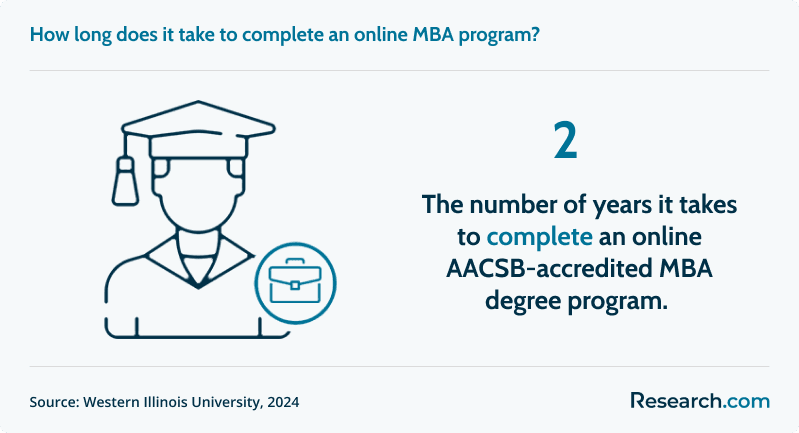
Most online MBA programs in this guide require about 30 to 35 credit hours, with common completion timelines ranging from one to two years. The actual length depends on whether the program is accelerated, full time, part time, or self-paced. Some schools use condensed 7-week or 8-week courses, while others allow students to slow down to accommodate work and family responsibilities.
Accelerated online MBA programs can be efficient, but they usually require a heavier weekly workload. Part-time programs are often more realistic for working professionals because students may take only one or two courses at a time. If cost is your main concern and you are still comparing graduate business-adjacent options, you may also want to review an affordable online master's in taxation.
How Does an Online MBA Compare to an On-Campus MBA?
Online and campus-based MBAs can cover similar business fundamentals, but the student experience is different. The right format depends on your schedule, preferred learning style, networking goals, and budget.
| Category | Online MBA | On-campus MBA |
| Flexibility | Usually better for working professionals because coursework can often be completed from anywhere. This flexibility is similar to other remote graduate options, such as psychology certificate programs online. | More structured, with scheduled class meetings and required campus attendance. |
| Learning format | Uses learning management systems, recorded lectures, live sessions, discussion boards, digital assignments, and online exams. | Relies more heavily on in-person lectures, classroom discussion, campus events, and face-to-face group work. |
| Networking | Networking happens through virtual events, group projects, alumni platforms, online forums, and sometimes optional in-person residencies. | Daily campus interactions can make spontaneous relationship-building easier. |
| Cost | May reduce commuting, relocation, and housing expenses, though tuition still varies by school. | May involve higher living, transportation, and campus-related costs. |
| Best fit | Professionals who need schedule flexibility and want to keep working while studying. | Students who want immersive campus life, frequent in-person networking, and a highly structured schedule. |
What Is the Average Cost of an Online MBA Program?
The cost of an online MBA varies by university, residency status, program length, fees, and whether tuition is charged per credit, per semester, or as a total program price. Based on the programs reviewed here, Georgia Southwestern State University costs around $9,468, while Texas A&M International University costs about $11,010. Arkansas State University costs around $16,962, Florida Gulf Coast University costs around $12,322, and Louisiana State University-Shreveport costs around $14,370.
When comparing programs, do not rely only on the advertised per-credit price. Ask each school for the full estimated cost of attendance, including technology fees, graduation fees, textbooks or course materials, residency or campus visit costs, and tuition increases that may apply before you finish. The chart below compares online MBA costs across selected AACSB-accredited institutions.
What Financial Aid Options Are Available for Online MBA Students?
Online MBA students may qualify for several types of aid, although graduate aid is often different from undergraduate aid. As with other graduate programs such as online master degree programs in counseling, your eligibility depends on enrollment status, school participation, employer benefits, military benefits, and your personal financial profile.
- Federal student loans: Eligible graduate students can apply for Direct Unsubsidized Loans and Direct PLUS Loans by completing the Free Application for Federal Student Aid (FAFSA).
- Federal grants: Grants are less common for graduate business students, but some programs such as the TEACH Grant may apply to specific career pathways.
- Institutional scholarships: Business schools may offer merit-based, need-based, alumni, employer-partner, or concentration-specific scholarships.
- Assistantships: Some universities offer teaching or research assistantships that provide stipends or tuition support in exchange for part-time work.
- Private student loans: Banks and private lenders may offer graduate loans, but rates, repayment terms, and borrower protections vary.
- Employer scholarships or tuition reimbursement: Some employers help pay for an MBA if the degree supports business, leadership, or promotion goals.
- GI Bill benefits: Eligible veterans and service members may use GI Bill benefits for approved tuition, fees, housing, and books.
What Are the Prerequisites for Enrolling in an Online MBA Program?
Admissions requirements vary, but most online MBA programs review academic preparation, work experience, professional goals, and readiness for graduate-level business study. Some schools welcome applicants without an undergraduate business degree, although they may require foundation courses.
- Bachelor’s degree: Applicants typically need a bachelor’s degree from an accredited institution. A business major is not always required.
- Official transcripts: Schools generally require transcripts from all colleges and universities previously attended.
- Resume or CV: Most MBA admissions committees want to see professional experience, leadership duties, promotions, technical skills, and career progression.
- GMAT or GRE scores: Some programs require standardized tests, while others offer waivers based on work experience, GPA, prior graduate study, or professional credentials.
- Recommendations: Many programs request two to three letters from supervisors, professors, or professional contacts who can speak to your readiness for graduate business study.
What Courses Are Typically Included in an Online MBA?
Online MBA curricula usually combine core business courses with electives or concentration courses. While course names vary by school, the following subjects are common across many MBA programs.
- Financial accounting: Covers financial statements, reporting standards, and the interpretation of accounting information.
- Managerial accounting: Focuses on budgeting, cost analysis, internal reporting, and performance measurement for management decisions.
- Investment analysis: Introduces investment strategy, portfolio concepts, risk, return, and financial markets.
- Organizational behavior: Examines motivation, leadership, team performance, culture, and workplace dynamics.
- Strategic management: Teaches students how organizations evaluate competition, set priorities, and implement long-term strategy.
- Operations management: Covers process design, quality improvement, supply chains, service delivery, and production efficiency.
- Data analytics: Builds skills in using business data to support forecasting, decision-making, and performance improvement.
- Business ethics: Explores ethical reasoning, compliance, stakeholder responsibilities, and responsible leadership.
What Online MBA Specializations Are Available?
A specialization can help you tailor a general MBA toward a specific career path. Choose carefully: the best concentration is the one that matches your target industry, not simply the one that sounds most impressive.
| Specialization | What it emphasizes | When it may be a good fit |
| Finance | Corporate finance, investment strategy, financial planning, capital decisions, and financial analysis. | You want roles in corporate finance, banking, investment analysis, budgeting, or financial management. |
| Leadership | Executive leadership, change management, organizational strategy, and decision-making. Students interested in this path can compare MBA organizational leadership programs. | You are aiming for people-management, operations leadership, or senior management responsibilities. |
| Marketing | Brand strategy, consumer behavior, digital marketing, market research, and campaign management. | You want to lead marketing teams, manage brands, or work in growth strategy. |
| Entrepreneurship | New venture creation, innovation, business planning, funding strategy, and small-business growth. | You plan to launch a company, manage a family business, or lead innovation inside an organization. |
| Healthcare management | Healthcare operations, health informatics, healthcare policy, and administrative leadership. If you are comparing healthcare-focused pathways, an MBA concentration may be an alternative to the cheapest online healthcare administration degree. | You want management roles in hospitals, clinics, health systems, insurance, or healthcare services. |
| International business | Global strategy, international trade, cross-cultural management, and multinational operations. | You work with global teams, international clients, supply chains, or overseas markets. |
| Operations and supply chain management | Logistics, procurement, process improvement, production, inventory, and distribution strategy. | You want to manage operations, supply chain systems, manufacturing, or logistics. |
| Information technology | IT management, data systems, cybersecurity awareness, analytics, and digital transformation. Students wanting deeper technical preparation can also explore online cybersecurity classes. | You want to connect business leadership with technology, analytics, cybersecurity, or systems management. |
Is an Online MBA Specialization in Accounting Worth Considering?
An online MBA with an accounting specialization can be useful for professionals who want a management degree with stronger preparation in financial reporting, auditing, compliance, budgeting, and managerial accounting. It may fit students who already work in finance or accounting and want to move toward leadership, controller, compliance, or advisory responsibilities.
Before choosing this specialization, review whether the curriculum is deep enough for your goals. Some MBA accounting tracks are management-focused, while others provide more technical accounting coursework. If you are comparing dedicated accounting-focused MBA options, review programs in MBA in accounting.
How Do I Choose the Best Online MBA Program?
Start with your career goal, then work backward. A low-cost MBA that does not support your target industry, schedule, or learning needs may not be the best value. Use the following checklist before applying.
- Verify accreditation: Confirm institutional accreditation and business-school accreditation. For MBA programs, specialized accreditation from AACSB or the Accreditation Council for Business Schools and Programs can be an important quality signal.
- Calculate the total price: Add tuition, fees, textbooks, technology charges, graduation costs, possible campus visits, and interest if you borrow.
- Match the concentration to your goal: Finance, marketing, healthcare management, business analytics, supply chain, leadership, and technology management can lead to different types of work.
- Choose the right format: Decide whether you need asynchronous classes, live online meetings, part-time enrollment, accelerated terms, or a slower schedule.
- Review admissions rules: Check test requirements, waiver policies, GPA expectations, recommendations, essays, and work-experience preferences.
- Ask about support: Look for academic advising, online library access, tutoring, technical support, career services, and alumni networking.
- Compare outcomes carefully: Ask about graduation rates, employment support, internship or project opportunities, and employer connections, but do not assume any salary outcome is guaranteed.
How Do Online MBA Programs Support Virtual Networking?
Online MBA networking happens through structured digital interaction rather than daily campus contact. Many programs use live webinars, virtual breakout rooms, discussion forums, team projects, alumni panels, online career fairs, and mentorship programs to connect students with peers, faculty, graduates, and employers.
Strong online networking requires active participation. Students who attend optional events, introduce themselves early in courses, volunteer for group leadership, and follow up with classmates tend to get more value from the format. If cost and flexibility are both priorities, compare programs such as an MBA cheapest online option that still offers meaningful peer and alumni engagement.
What Challenges Might Students Face in Online MBA Programs?
Online MBAs are flexible, but they are not effortless. The most common challenges include time management, self-paced workload, isolation, technology fatigue, and balancing school with work and family responsibilities. Accelerated programs can intensify these pressures because assignments, exams, and group projects move quickly.
Students considering a fast pathway should be honest about their weekly availability. If you are comparing compressed timelines, review options such as one year MBA management programs and ask schools how many hours students typically spend per course each week.
| Common mistake | Why it can hurt you | Better approach |
| Choosing only by lowest tuition | The cheapest sticker price may exclude fees or lack the concentration you need. | Compare total cost, curriculum fit, accreditation, and student support. |
| Ignoring accreditation | Unaccredited or weakly accredited programs may create problems with employer recognition or transfer options. | Verify institutional accreditation and business-school accreditation before applying. |
| Underestimating accelerated workloads | Short terms can be difficult with a demanding job or caregiving schedule. | Ask about weekly workload and consider part-time pacing if needed. |
| Assuming online means isolated | Some students miss networking opportunities because they do not participate. | Attend live sessions, join student groups, and use alumni and career services. |
| Expecting guaranteed salary gains | An MBA can support advancement, but results depend on experience, industry, location, and performance. | Evaluate the degree against your actual career plan and employer expectations. |
What Experiential Learning Opportunities Do Online MBA Programs Offer?
Many online MBA programs now include applied learning rather than relying only on lectures and exams. Students may complete live case studies, simulations, consulting-style projects, capstones, group presentations, practicum assignments, and faculty-led discussions based on current business problems.
Experiential learning is especially important if you are trying to change industries or move into management without extensive leadership experience. Ask whether projects involve real companies, whether students can use workplace problems for assignments, and whether the capstone produces a portfolio-ready deliverable. If you want a faster, project-driven path, compare quickest MBA degree online options.
What Career Paths Are Available for Online MBA Graduates?
Online MBA graduates may pursue leadership, management, consulting, finance, marketing, operations, technology, healthcare, entrepreneurship, and nonprofit roles. The degree is broad, so your outcomes depend heavily on your prior experience, chosen concentration, industry, and professional network.
- Corporate leadership: Roles such as business manager, operations manager, department manager, or general manager across sectors including finance, technology, healthcare, manufacturing, and services.
- Consulting: Positions in management consulting, internal consulting, operations improvement, strategy development, and financial planning.
- Finance: Roles such as financial analyst, investment professional, corporate finance manager, or CFO-track leadership positions.
- Marketing: Careers in marketing management, brand management, digital strategy, market research, and campaign leadership.
- Entrepreneurship: Opportunities to start, grow, or acquire businesses using MBA training in strategy, finance, marketing, and operations.
- Information technology management: Roles such as IT manager, project manager, technology operations leader, or CIO-track executive, with responsibilities tied to systems, cybersecurity, data, and digital transformation.
- Nonprofit management: Leadership roles such as program director, development manager, operations leader, or executive director. Students comparing people-focused business degrees may also consider whether an MBA is a broader alternative to an online HR masters degree.
Selected management and finance-related occupations show the range of possible compensation. Accountants and auditors earn an average salary of $79,880, while budget analysts earn around $84,940 annually. Computer and information systems managers average around $169,510. Marketing managers earn an average annual salary of $156,580, and medical and health services managers earn approximately $110,680 per year. These figures are occupation-level averages and should not be interpreted as guaranteed outcomes for MBA graduates.
If you are still comparing graduate paths and want a more specialized or lower-cost option, review related budget-focused guides such as cheap online business analytics MBA degrees, cheap online MBA in entrepreneurship degrees, and cheapest online RN to FNP programs. For students comparing multiple business concentrations, the guides to affordable entrepreneurship MBA programs and affordable business analytics MBA programs can also help narrow the decision.
What Is the Job Market for Graduates With an Online MBA?
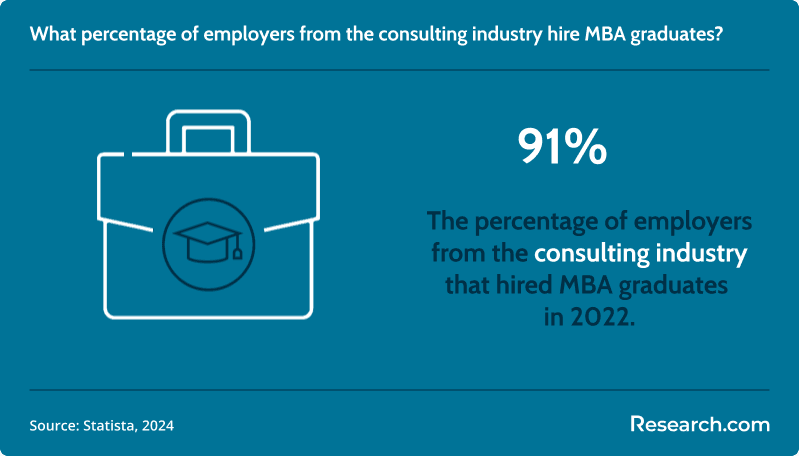
The job market for MBA graduates is broad because business skills apply across industries. Employers hire MBA graduates for consulting, corporate management, finance, marketing, healthcare administration, technology management, operations, and nonprofit leadership. In 2022, 91 percent of employers from the consulting industry hired MBA graduates.
An online MBA can support career mobility, but the degree alone does not guarantee a management role. Employers typically weigh the MBA alongside work experience, leadership history, technical skills, communication ability, industry knowledge, and measurable accomplishments.
GMAT-Free Online MBA Options for Flexible Admissions
Many online MBA programs now offer admissions pathways that do not require GMAT or GRE scores. These options can be useful for experienced professionals whose work history, GPA, leadership experience, or prior graduate coursework demonstrates readiness for MBA study.
GMAT-free admissions can reduce application time and testing costs, but students should still evaluate academic quality and accreditation. If you want to compare programs with test-optional or test-waiver policies, review online MBA programs no GMAT.
What Are the Most Affordable Executive MBA Programs?
Executive MBA programs are designed for experienced professionals who want advanced leadership, strategic management, and executive decision-making training while continuing to work. They often use weekend, hybrid, or online formats and may include executive coaching, cohort-based learning, and applied leadership projects.
EMBA programs can be expensive, so affordability matters. Before choosing one, compare total cost, employer sponsorship options, schedule requirements, travel expectations, and whether the curriculum fits your leadership level. To compare lower-cost options, review this guide to the cheapest executive MBA programs.
Are Online MBAs Worth the Investment?
An online MBA may be worth it if the degree helps you qualify for roles you could not realistically reach otherwise, improves your management skills, expands your network, or supports a planned career pivot. It may not be worth the cost if you choose a program without clear career alignment, borrow heavily without a repayment plan, or expect the credential alone to create a salary increase.
To evaluate return on investment, compare tuition, fees, loan interest, time commitment, lost income if you reduce work hours, employer tuition assistance, and likely career opportunities in your industry. For a deeper discussion of MBA value, review Are online MBAs worth it?.
Emerging Trends in Online MBA Programs
Online MBA programs are changing as business, technology, and employer expectations evolve. Students should look for curricula that build durable management skills while also addressing newer areas of business practice.
- Artificial intelligence and data analytics: MBA programs increasingly emphasize data-informed decision-making, predictive analytics, and the managerial implications of AI-enabled tools.
- Cybersecurity awareness: As organizations face digital risk, MBA students in technology, operations, and leadership tracks often need a working understanding of cybersecurity governance and risk management.
- Sustainability and corporate social responsibility: Programs may include topics related to ethical leadership, environmental responsibility, stakeholder management, and long-term business sustainability.
- Global business and virtual collaboration: Online MBA students often practice working in distributed teams, managing cross-cultural communication, and making decisions in global business contexts.
- Simulations and immersive learning: Some programs use simulations, gamified assignments, and virtual business scenarios to help students practice decision-making before applying concepts at work.
If you want a business degree with a stronger technology focus, compare options such as the cheapest online MBA in information technology.
How Can I Finance My Online MBA Affordably?
Start by reducing the amount you need to borrow. Compare lower-cost AACSB programs, ask about scholarships, check whether your employer offers tuition reimbursement, and complete the FAFSA if you plan to use federal loans. Build a budget that includes tuition, fees, books, technology, and loan interest.
If you want business training but are not ready for the cost of an MBA, you may also compare cheap online business degrees or graduate certificates that could provide targeted skills at a lower total price.
What Factors Influence the Cost of an Online MBA Program?
Several factors affect the final cost of an online MBA: tuition model, number of required credits, public or private university status, residency rules, technology fees, course materials, transfer credit policies, travel or residency requirements, and how long you take to finish. A program with a lower per-credit rate may not always be cheaper if it requires more credits or charges additional fees.
Before enrolling, request a full cost breakdown from each school and compare it with your available aid. For a broader cost overview, review how much does an MBA cost on average.
How Do Online MBA Programs Influence Long-Term Career Earnings?
An online MBA can contribute to long-term earnings by helping graduates qualify for management roles, change functions, strengthen negotiation leverage, or move into higher-responsibility positions. However, salary growth depends on many factors, including industry, location, prior experience, performance, employer demand, and specialization.
To estimate potential value, compare your current compensation, target roles, job postings in your market, alumni outcomes, and the total cost of the program. If you are still deciding between related business pathways, review business management vs business administration salary for additional context.
Questions to Ask Before Choosing an AACSB Online MBA
- Is the business school currently AACSB-accredited, and where can I verify it?
- What is the total program cost, including tuition, fees, books, and technology charges?
- How many credits are required, and can any prior graduate credits transfer?
- Is the program asynchronous, synchronous, or a mix of both?
- How many hours per week should I expect to spend on each course?
- Are GMAT or GRE scores required, waived, or optional?
- Which concentrations are available fully online?
- What career services are available to online MBA students?
- Are there required campus visits, residencies, internships, or live sessions?
- What support exists for online learners who fall behind or need academic help?
Key Insights
- An affordable AACSB online MBA is strongest when it balances price, accreditation, flexibility, concentration fit, and career support.
- Do not compare programs by tuition alone. Use total cost, required credits, fees, and completion timeline to judge affordability.
- Accelerated 12-month MBAs can be efficient, but working professionals should verify weekly workload before committing.
- Specialization matters. Finance, analytics, healthcare, supply chain, accounting, leadership, and IT tracks can lead to different career paths.
- Online MBA networking is possible, but it requires active participation in live events, group work, alumni platforms, and career services.
- GMAT-free programs can simplify admissions, but accreditation and program quality should still drive the decision.
- An online MBA can support advancement, but salary gains are not guaranteed. The best ROI comes when the program directly supports a realistic career plan.
References:
- Arkansas State University. (2024). MASTER OF BUSINESS ADMINISTRATION – GENERAL ONLINE. https://degree.astate.edu/online-programs/business/mba/general-concentration
- Florida Gulf Coast University. (2024). Master of Business Administration (MBA) online. https://onlinedegree.fgcu.edu/programs/mba
- Georgia Southwestern State University. (2024). Master of Business Administration (MBA) Online. https://www.gsw.edu/college-of-business-and-computing/mba-program
- Louisiana State University. (2024). Online Master of Business Administration. https://online.lsu.edu/master-business-administration-lsus-gp
- Statista. (2024). Share of companies hiring MBA graduates from 2020 to 2022, by industry. https://www.statista.com/statistics/233197/change-of-companies-hiring-mba-graduates
- Texas A&M International University. (2024). Master of Business Administration in Management Online. https://online.tamiu.edu/programs/business/mba/management
- U.S. Bureau of Labor Statistics. (2024). Management Occupations. https://www.bls.gov/ooh/management/home.htm
- Western Illinois University. (2024). WIU's Master of Business Administration (MBA). https://www.wiu.edu/cbt/mba
- ZipRecruiter. (2024). MBA Salary. https://www.ziprecruiter.com/Salaries/Mba-Salary
Other Things You Should Know About Online AACSB-Accredited MBA Programs
Many affordable AACSB online MBA programs waive the GMAT or GRE for applicants with a strong GPA or several years of professional experience. When a score is required, schools usually accept either exam and set minimum requirements in their admissions policy, often reviewed by the business school’s admissions office.
Affordable AACSB online MBA programs in 2027 often provide career support services such as virtual job fairs, networking opportunities, career counseling, and resume workshops. These services are designed to help students transition effectively into leadership roles in their respective fields.