2027 How to Become a Nutritionist in Missouri

Co-Founder and Chief Data Scientist
Becoming a nutritionist in Missouri starts with one important distinction: the state treats “nutritionist” and “registered dietitian” differently. You may be able to provide general nutrition education without a state nutritionist license, but diagnosing, treating, or providing medical nutrition therapy can trigger dietitian licensure rules. That difference affects which degree you choose, whether you need supervised practice, what credentials employers may expect, and how quickly you can begin working with clients.
This guide is for students, career changers, wellness professionals, and allied health workers who want a practical 2026 roadmap to nutrition careers in Missouri. You will learn how education, certification, licensure, costs, salary expectations, legal scope of practice, specialization, and career advancement fit together so you can choose the path that matches your goals instead of spending time and money on the wrong credential.
Quick answer: How do you become a nutritionist in Missouri?
Missouri does not require a general nutritionist license for professionals who provide broad wellness or nutrition education. However, professionals who want to practice as registered dietitians or provide medical nutrition therapy must meet dietitian credentialing and licensure requirements. The safest route depends on your career goal: a bachelor’s degree may support entry-level wellness roles, while registered dietitian nutritionist roles require more structured education, supervised practice, examination, and state credentialing.
- General nutritionist roles: Missouri does not require a specific nutritionist license, but education and voluntary certification can improve credibility and employability.
- Registered dietitian nutritionist roles: RDNs must follow specific education, supervised practice, examination, and Missouri credentialing requirements.
- Education: A bachelor’s degree is the usual starting point; a master’s degree is now required for individuals pursuing the registered dietitian nutritionist pathway.
- Certification: Options include credentials from organizations such as the National Association of Nutrition Professionals (NANP), Certified Nutrition Specialist (CNS), Certified Clinical Nutritionist (CCN), and RDN pathways, depending on your intended scope of practice.
- Career planning: Before enrolling, confirm accreditation, supervised practice access, exam eligibility, transfer policies, online format requirements, and whether the program supports your target role.
- Education requirements for nutritionists in Missouri
- Missouri licensing rules for nutritionists and dietitians
- Timeline to become a nutritionist in Missouri
- Certification options for Missouri nutrition professionals
- Practical experience and supervised training
- Cost of becoming a nutritionist in Missouri
- Missouri salary and job outlook
- Continuing education and professional development
- Working with substance abuse counselors
- Using digital tools in nutrition practice
- Career advancement options
- Trends changing nutrition practice in Missouri
- Business skills for private practice and consulting
- Interdisciplinary skills that strengthen nutrition work
- Financial aid and funding options
- Lessons from pharmacist licensure standards
- Public policy and community health advocacy
- Moving from nutritionist to registered dietitian
- Nutrition specialization options in Missouri
- Common challenges in the field
- Legal responsibilities and scope of practice
- Why allied health licensure matters and how it connects to nutrition practice
What are the educational requirements to become a nutritionist in Missouri?
The education you need depends on the type of nutrition work you want to do. Missouri does not require every nutrition professional to hold the same credential, but employers, certification boards, and dietitian licensure rules may set their own standards. Before choosing a program, decide whether your goal is general wellness education, community nutrition, food service, sports nutrition, clinical dietetics, or registered dietitian nutritionist practice.
| Path | Best fit | Typical education | Important decision point |
| General nutrition or wellness educator | Health coaching, wellness programs, community education, fitness-related nutrition support | Bachelor’s degree in nutrition, nutritional science, exercise science, health science, or a related field | Make sure your services stay within general education unless you hold the required clinical credentials. |
| Registered dietitian nutritionist pathway | Hospitals, clinical nutrition, medical nutrition therapy, many healthcare jobs | Bachelor’s preparation plus graduate-level education, accredited dietetics coursework, supervised practice, and examination | Confirm that the program is ACEND-accredited and supports RDN eligibility. |
| Advanced nutrition specialist | Private practice, advanced nutrition counseling, research-informed wellness settings | Master’s degree in nutrition or a related field may be required for certain credentials such as CNS | Check the certification board’s degree, coursework, supervision, and exam requirements before enrolling. |
| Entry-level food, health, or community role | Program assistant, food service, health outreach, community wellness support | Associate degree or undergraduate coursework may help, depending on the employer | Advancement may require a bachelor’s degree, certification, or dietetics training. |
- Bachelor’s degree: A bachelor’s degree in nutrition or a closely related subject is the standard academic foundation. For example, the Bachelor of Science in Nutrition and Exercise Physiology at the University of Missouri combines nutrition science, health principles, and applied wellness preparation. Students who need flexibility can also compare accredited online nutrition bachelor’s programs.
- Master’s degree: Students pursuing registered dietitian nutritionist status now need graduate-level education. Programs such as the online Master of Science in Nutrition and Human Performance at Logan University may appeal to students who want advanced study in nutrition and performance, although students should confirm whether any program meets their specific credentialing goal.
- Accredited dietetics education: If your goal is the RDN credential, accreditation matters. The Accreditation Council for Education in Nutrition and Dietetics (ACEND) recognizes programs that meet national dietetics education standards. Completing the wrong type of nutrition degree can leave you with coursework that does not qualify you for the credential you want.
- Different program models: Missouri students may encounter Didactic Programs in Dietetics and Coordinated Programs in Dietetics. The key difference is how each program handles academic coursework and supervised practice. Ask admissions staff exactly how the program leads to exam eligibility and whether supervised practice is included, matched separately, or completed after graduation.
If you want a broader wellness career, a nutrition or exercise science degree may be enough for some non-clinical roles. If you want to work in hospitals, provide medical nutrition therapy, or use the dietitian title, plan for a more regulated pathway.
Is there a licensing requirement to become a nutritionist in Missouri?
Missouri does not have a general nutritionist license for people who offer broad nutrition education or wellness guidance. The licensing issue becomes important when a professional practices as a dietitian, represents themselves as a licensed dietitian, or provides services that fall under medical nutrition therapy. In those cases, Missouri’s dietitian rules and credentialing process apply.
The Missouri Department of Health and Senior Services oversees dietitian-related regulation. That means a person may call themselves a nutrition professional in some wellness contexts, but they should not imply that they are a licensed dietitian unless they have met the required qualifications. This distinction protects clients and helps professionals avoid scope-of-practice problems.
| Question | General nutritionist | Registered dietitian or licensed dietitian pathway |
| Is a Missouri license required? | Not for general nutrition education, as long as the person does not practice outside legal limits | Yes, when practicing as a dietitian or providing services covered by dietitian regulation |
| Can this role provide medical nutrition therapy? | Not unless the person holds the appropriate dietitian credential and license | Yes, within the professional scope of practice |
| Are employers likely to ask for credentials? | Often, especially in healthcare, wellness, and corporate settings | Yes; healthcare employers commonly require the RDN and state credentialing |
| What is the main risk? | Overstating qualifications or giving disease-specific treatment advice without authority | Failing to maintain credentialing, licensure, or continuing education requirements |
Even when a license is not mandatory, voluntary certification can make a difference. Employers and clients may look for evidence of formal training, ethical standards, and continuing education. Professional membership through organizations such as the Missouri Academy of Nutrition and Dietetics can also help you stay informed about state-level developments and professional expectations.
How long does it take to become a nutritionist in Missouri?
The timeline can range from about two years for some entry-level support roles to six or more years for students pursuing registered dietitian nutritionist preparation. The biggest time drivers are degree level, supervised practice requirements, certification requirements, and whether you study full time or part time.
| Route | Approximate time stated | What it can lead to | When it makes sense |
| Associate degree | About two years | Entry-level health, food service, or community support roles | You want a shorter starting point and may continue later toward a bachelor’s degree. |
| Bachelor’s degree | About four years | Wellness, community nutrition, food service, fitness-related nutrition, or preparation for advanced study | You want a stronger foundation and broader job options. |
| Master’s degree | An additional two years | Advanced nutrition roles, RDN pathway preparation, or eligibility for some certifications | You need graduate education for your target credential or employer. |
| Dietetic internship | Six months to a year | Required practical preparation for many registered dietitian candidates | You are pursuing RDN eligibility and need supervised practice. |
| Certification-focused path such as CCN | One to two years of post-graduate studies after a bachelor’s degree, depending on the program | Alternative nutrition credentialing | You want a non-RDN credential and the program matches your intended practice area. |
A student who already has transferable credits may finish faster than a first-time student. A career changer with a non-nutrition degree may need prerequisite science courses before entering a graduate program. Online study can add flexibility, but it does not remove supervised practice, laboratory, clinical, or internship requirements when those are part of the credential pathway.
Students interested in whole-person nutrition approaches may also compare holistic nutrition career and training options to understand how those roles differ from clinical dietetics.
What are the certification options for nutritionists in Missouri?
Certification is not the same as state licensure. A certification is usually awarded by a professional organization after you meet education, experience, and exam requirements. Licensure is granted by the state and determines whether you may legally perform certain regulated services or use protected titles. In Missouri, certification can strengthen your resume, but it does not automatically authorize medical nutrition therapy.
| Credential | Basic requirements stated | Best for | What to verify |
| Registered Dietitian Nutritionist (RDN) | Bachelor’s degree in nutrition or a related field, supervised practice program, and national examination; graduate-level education is now required for RDN candidates | Clinical dietetics, hospitals, medical nutrition therapy, healthcare systems | ACEND accreditation, supervised practice structure, exam eligibility, Missouri credentialing steps |
| Certified Nutrition Specialist (CNS) | Master’s degree in nutrition or a related field, supervised practice hours, and certification exam; the article states 1,000 hours of supervised practice | Advanced nutrition practice, private practice, wellness and integrative settings | Degree field, approved coursework, supervisor qualifications, state scope limits |
| National Association of Nutrition Professionals (NANP) credentials | Requirements vary by credential and training background | Holistic nutrition and non-clinical wellness education | Whether the credential aligns with your services, employer expectations, and Missouri practice limits |
| Certified Clinical Nutritionist (CCN) | Bachelor’s degree followed by one to two years of post-graduate studies, depending on program design | Nutrition professionals seeking an alternative credential pathway | Education prerequisites, examination requirements, and whether the credential fits your target market |
Choose the credential by working backward from your desired job description. If job postings consistently ask for RDN status, a general nutrition certificate will not be enough. If you want to build a wellness consulting practice, a recognized non-RDN certification may help, but you still need to avoid regulated clinical claims.
What practical experience is required to become a nutritionist in Missouri?
Practical experience is where students learn the difference between knowing nutrition science and applying it responsibly with real people. Missouri nutrition students can build experience through clinical, community, research, food service, and wellness settings. For RDN candidates, supervised practice is not optional; it is part of the credentialing pathway.
- Clinical exposure: Hospitals, outpatient clinics, and healthcare facilities allow students to observe or support nutrition assessment, care planning, documentation, and interdisciplinary communication under qualified supervision.
- Community nutrition: Local health departments, nonprofit organizations, schools, and public health programs help students understand food access, cultural food practices, nutrition education, and prevention-focused care.
- Food service management: Schools, hospitals, long-term care facilities, and institutional kitchens teach menu planning, food safety, budgeting, procurement, and compliance.
- Research experience: Universities such as the University of Missouri can offer exposure to nutrition studies, data collection, dietary behavior research, and public health trends.
- Private practice observation: Shadowing a credentialed practitioner can clarify client communication, intake forms, informed consent, referral boundaries, and business operations.
When evaluating a program, ask whether practical experience is arranged by the school or left to the student. Also ask whether the placement supports your long-term goal. A student interested in pediatric nutrition needs different exposure than someone aiming for corporate wellness or sports nutrition.
How much does it cost to become a nutritionist in Missouri?
The cost of becoming a nutritionist in Missouri depends on the school, degree level, residency status, delivery format, and credentialing path. The original cost range for education is $20,000 to $50,000, but students should build a more detailed budget because tuition is only one part of the total investment.
Tuition and school charges
For a Master of Science in Nutrition and Dietetics, tuition varies by institution. Missouri State University lists about $13,572 for in-state students and approximately $27,066 for out-of-state students. Tuition at institutions such as the University of Missouri may fall between $10,000 and $30,000 annually, depending on the program and resources available.
Additional expenses to include
Students should also plan for student service fees of about $2,659, program fees totaling $1,050, and estimated book costs of $500. Depending on the program, other costs may include laboratory materials, technology, background checks, immunizations, transportation to supervised practice sites, examination fees, professional membership, and certification or licensure application fees.
| Cost category | Why it matters | Question to ask before enrolling |
| Tuition | Usually the largest direct cost | Is tuition charged per credit, per semester, or by program? |
| Fees | Can add materially to the advertised price | Which program, student service, technology, lab, and graduation fees are required? |
| Books and materials | Nutrition and science courses may require updated texts and software | Are books included, estimated, or billed separately? |
| Supervised practice costs | Travel, background checks, health requirements, and placement logistics can affect affordability | Does the school place students, and are placements local? |
| Credentialing and renewal | Certification, exam, license, and renewal fees may continue after graduation | Which fees are required for my intended credential? |
Online study can reduce commuting or relocation expenses, but it is not automatically cheaper. Compare total program cost, not only tuition. Students researching flexible bachelor’s options can review accredited online nutrition degree options as part of a broader cost comparison.
What is the job outlook and salary for nutritionists in Missouri?
According to ONET OnLine, employment for dietitians and nutritionists in Missouri is projected to grow by 7% through 2034, with 180 annual openings over the decade. The median annual wage stated for nutritionists in Missouri is approximately $62,340, although pay varies by credential, employer, city, experience, specialization, and whether the role is clinical or non-clinical.
| Career factor | How it can affect opportunity |
| Credential level | RDN status can be required for many healthcare and medical nutrition therapy roles. |
| Work setting | Hospitals, schools, wellness centers, government programs, long-term care, and private practice have different responsibilities and pay structures. |
| Location | Metropolitan areas may offer more specialized positions, while rural areas may have greater access gaps and broader community needs. |
| Specialization | Areas such as diabetes education, pediatrics, sports nutrition, oncology, food service leadership, and public health can influence advancement. |
| Business model | Private practice and consulting may offer flexibility but require marketing, compliance, documentation, and revenue management skills. |
Nutrition careers are also shaped by public interest in chronic disease prevention, food safety, aging-related health needs, and community wellness programs. Still, salary outcomes are not guaranteed. Students should compare local job postings, required credentials, benefits, supervision expectations, and advancement pathways before choosing a program.
What are the continuing education and professional development options for nutritionists in Missouri?
Continuing education helps nutrition professionals keep current with changing evidence, client needs, technology, ethics, and scope-of-practice expectations. It is especially important for professionals maintaining certifications or licenses, because many credentialing bodies require ongoing professional development.
- Professional conferences: State and national events can provide updates on clinical practice, public health nutrition, counseling methods, food policy, and emerging research.
- Workshops and webinars: Short-format training can help practitioners build skills in topics such as diabetes education, sports nutrition, pediatric nutrition, food safety, motivational interviewing, and telehealth.
- Interdisciplinary learning: Nutritionists who work with nurses, physicians, pharmacists, counselors, and public health teams benefit from understanding how other healthcare roles assess risk and coordinate care. For example, reviewing nursing career preparation in Missouri can help nutrition professionals better understand team-based care.
- Credential renewal: Certification boards may require documented continuing education, so professionals should track hours, certificates, topics, and renewal deadlines carefully.
How can nutritionists collaborate with substance abuse counselors in Missouri?
Nutrition and behavioral health often overlap. Clients in recovery may face appetite changes, digestive issues, food insecurity, medication interactions, chronic disease risk, or disrupted routines. Nutritionists can support recovery-focused care by coordinating with substance abuse counselors while staying within their own scope of practice.
Effective collaboration may include referral protocols, shared client goals, nutrition education for recovery groups, meal planning support, and communication about warning signs that require medical or behavioral health intervention. Nutrition professionals who want to understand this partner role can review substance abuse counselor preparation in Missouri to identify appropriate collaboration points.
How can nutritionists leverage digital solutions to enhance their practice?
Digital tools are now part of routine nutrition work. Telehealth platforms, food tracking apps, secure client portals, wearable data, online scheduling, and data dashboards can help practitioners monitor progress and communicate more efficiently. These tools are useful, but they also require careful judgment about privacy, accuracy, accessibility, and client readiness.
Nutritionists should not rely on app-generated recommendations without professional review. Digital tools can support care, but they do not replace assessment, counseling skill, ethical documentation, or referral when a client needs medical care. Students who want a stronger technology-ready academic foundation can compare a nutritional science degree online with traditional campus options.
What are the career advancement opportunities for nutritionists in Missouri?
Nutrition professionals in Missouri can advance by earning stronger credentials, specializing, moving into leadership, building interdisciplinary experience, or developing a consulting practice. The best advancement path depends on whether you want clinical authority, public health impact, business independence, research involvement, or education-focused work.
| Advancement path | Typical responsibilities | Who should consider it |
| Public health nutritionist | Designing community programs, supporting health education, addressing food access, and evaluating outcomes | Professionals who want population-level impact and community engagement |
| Clinical dietitian | Assessing patient needs, creating nutrition care plans, documenting progress, and coordinating with healthcare teams | Students pursuing the RDN and licensed dietitian pathway |
| Nutrition specialist | Working with a defined population or condition, developing resources, and improving program quality | Practitioners with experience who want deeper expertise |
| Consultant | Serving schools, employers, healthcare organizations, wellness programs, or private clients | Professionals with strong communication, compliance, and business skills |
| Educator or mentor | Training students, interns, community groups, or staff | Experienced professionals who enjoy teaching and supervision |
Advanced education can also support leadership roles. Students comparing long-term academic options may find an online nutritional science degree useful when evaluating nutrition, research, wellness, and healthcare-adjacent career paths.
What are the emerging trends and innovations shaping nutritionist practices in Missouri?
Several trends are changing how nutrition professionals work in Missouri. Telehealth is expanding access, especially for clients who live far from major healthcare centers. Data-driven tools can improve follow-up, but they also raise questions about privacy and accuracy. Interest in personalized nutrition is growing, yet practitioners must be careful not to overpromise results from genetic, microbiome, or app-based recommendations.
Employers are also placing more emphasis on evidence-based practice, interprofessional collaboration, and measurable outcomes. Nutrition professionals who want advanced preparation for clinical or leadership roles may compare the best rated online masters in dietetics degree program options with campus-based alternatives, while verifying accreditation and credential eligibility.
What essential business management skills should Missouri nutritionists develop?
Nutritionists who work in private practice, consulting, corporate wellness, or contract roles need more than nutrition knowledge. They also need to manage client records, scheduling, billing, marketing, professional liability, tax planning, privacy practices, and referral relationships.
- Documentation: Keep clear records of services provided, client goals, referrals, informed consent, and scope-of-practice boundaries.
- Financial planning: Understand pricing, cash flow, expenses, insurance reimbursement limits, and the cost of credential maintenance.
- Client acquisition: Build referral relationships with gyms, healthcare providers, schools, employers, community groups, and wellness organizations.
- Compliance: Know when a client’s needs exceed your training and require referral to a licensed dietitian, physician, or other clinician.
- Billing literacy: Even if you do not bill insurance directly, understanding documentation and reimbursement concepts can improve business decisions. Reviewing medical billing and coding preparation in Missouri can help nutrition professionals understand administrative workflows.
How can interdisciplinary insights benefit nutrition practice in Missouri?
Nutrition work becomes stronger when professionals borrow useful methods from adjacent fields without stepping outside their own role. Public health contributes population-level thinking. Nursing brings care coordination. Counseling offers behavior-change frameworks. Food science supports safety and product development. Data-heavy disciplines can improve assessment habits and documentation discipline.
For example, the structured evidence-handling mindset used in forensic science can encourage nutritionists to separate objective information from assumptions. Students interested in that type of analytical framework can explore forensic scientist education requirements in Missouri as a comparison point for evidence-based reasoning.
What financial assistance options are available for nutritionists in Missouri?
Students preparing for nutrition careers should investigate federal aid, state grants, institutional scholarships, assistantships, work-study, employer tuition support, and awards from professional associations. Funding availability varies by school, degree level, enrollment status, financial need, academic record, and program type.
Do not wait until after admission to ask about funding. Compare net price, not sticker price. Ask whether scholarships renew automatically, whether graduate assistantships include tuition support, whether supervised practice has additional costs, and whether online students qualify for the same aid as campus students. Students comparing allied health funding models can also review nurse practitioner career preparation in Missouri for broader context on graduate healthcare education planning.
Can understanding pharmacist licensure requirements in Missouri benefit nutritionists?
Nutritionists do not need to become experts in pharmacy regulation, but understanding how highly regulated health professions manage scope, documentation, safety, and credentialing can improve nutrition practice. Pharmacist licensure rules demonstrate how healthcare systems protect patients through defined training standards, exams, renewals, and accountability.
Nutrition professionals who collaborate with pharmacists, physicians, and dietitians should understand referral boundaries, supplement-drug interaction concerns, documentation expectations, and patient safety protocols. Reviewing pharmacist licensure requirements in Missouri can help nutritionists see how another profession structures compliance and risk management.
How can nutritionists in Missouri influence public policy to advance community health?
Nutritionists can support better community health by contributing evidence-informed input to school wellness policies, food access initiatives, chronic disease prevention programs, senior nutrition services, and public education campaigns. Policy work may involve public testimony, coalition participation, program evaluation, grant support, or collaboration with health departments and nonprofit organizations.
Nutrition professionals can be especially useful when they translate research into practical recommendations for families, schools, employers, and local leaders. Collaboration with other clinicians, including professionals pursuing the best accredited NP programs in Missouri, can strengthen community health proposals by combining nutrition, primary care, prevention, and access-focused perspectives.
How can I transition from a nutritionist to a registered dietitian in Missouri?
If you are already working as a nutritionist and want to become a registered dietitian, start with a transcript review. The courses that prepared you for wellness or coaching work may not satisfy dietetics requirements. You may need additional science prerequisites, ACEND-accredited coursework, graduate education, supervised practice, and exam preparation.
- Define your target credential: Confirm that you specifically want the RDN pathway and not a different nutrition certification.
- Review your prior education: Ask an accredited dietetics program to evaluate your transcripts.
- Complete missing coursework: Fill gaps in biology, chemistry, nutrition science, food systems, counseling, and dietetics-specific requirements as needed.
- Enter an approved program: Choose a program that clearly supports RDN eligibility.
- Complete supervised practice: Make sure you understand whether placement is integrated, matched, or arranged separately.
- Prepare for the national examination: Build study time into your timeline and budget.
- Complete Missouri credentialing steps: Follow the state process before using protected titles or performing regulated services.
For a focused step-by-step overview, review the requirements to become a registered dietitian in Missouri.
What specialization options are available for nutritionists in Missouri?
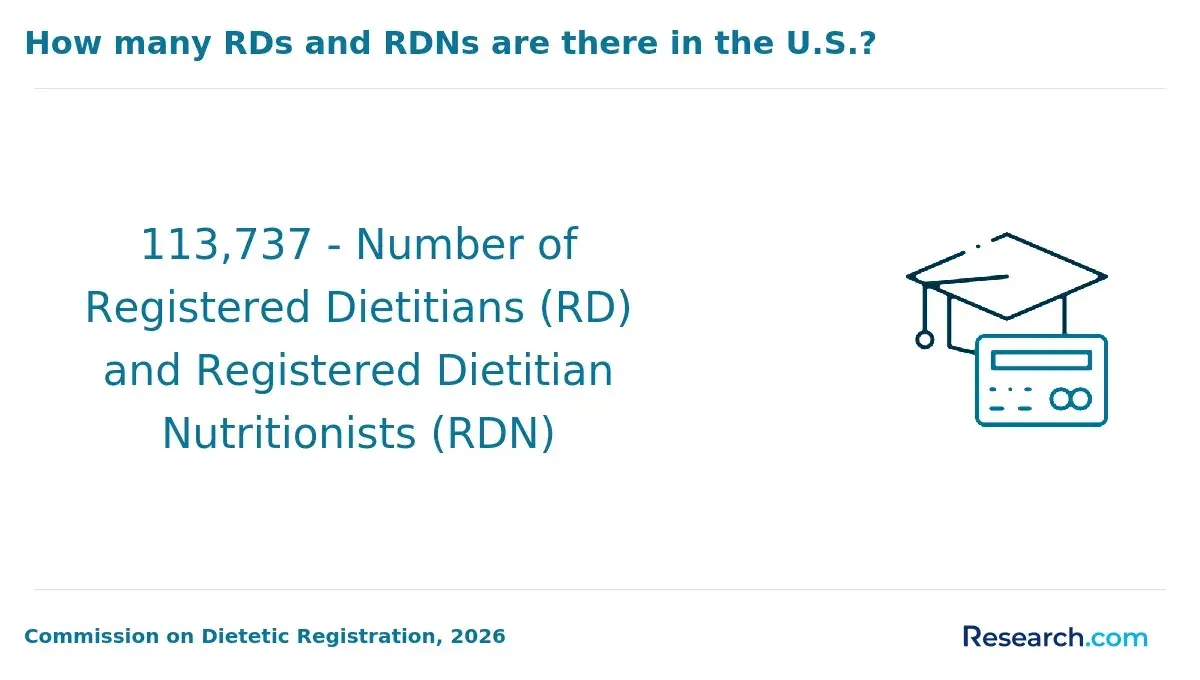
There are around 2,122 RDNs and RDs in the state, and Missouri nutrition professionals can choose from several specialization areas. Specialization can make your work more focused, but it may also require advanced credentials, supervised experience, or employer-specific qualifications.
| Specialization | What the work involves | Best fit |
| Clinical nutrition | Supporting patients with health conditions through evidence-based nutrition care, usually in healthcare settings | RDN-track students and licensed dietitian professionals |
| Sports nutrition | Helping athletes and active people align food, hydration, recovery, and performance goals | Professionals interested in athletics, fitness, and performance; students may also compare exercise science degree job opportunities |
| Pediatric nutrition | Addressing nutrition needs for infants, children, adolescents, and families | Practitioners who want to work with schools, clinics, families, or community programs |
| Public health nutrition | Improving nutrition education, food access, and prevention programs at the community level | Professionals interested in population health and health equity |
| Food science and technology | Working with food safety, product development, agriculture, nutrition labeling, or food systems | Students interested in science, industry, agriculture, and innovation |
When choosing a specialization, consider where you want to work and what authority the role requires. A sports nutrition consultant for a fitness audience has a different scope than a clinical dietitian managing nutrition care for hospitalized patients.
What are the biggest challenges faced by nutritionists in Missouri?
Nutrition professionals in Missouri face practical barriers that go beyond coursework and credentials. Access to care, public confusion, rural service gaps, misinformation, reimbursement limits, and scope-of-practice concerns can all affect daily work.
Healthcare access and rural service gaps
Nearly 20% of Missouri’s population lives in rural regions, where access to healthcare resources and nutrition services can be more limited. Nutritionists serving these areas may need to rely on telehealth, partnerships with community organizations, public health departments, schools, and mobile or outreach-based programs.
Public confusion about nutrition advice
Many clients encounter conflicting diet claims online. Nutrition professionals must explain evidence clearly, avoid exaggerated promises, and help clients build realistic habits. This can be difficult when clients arrive with misinformation about supplements, restrictive diets, food safety, or chronic disease management.
Credential and scope confusion
Clients may not understand the difference between a nutritionist, health coach, dietitian, and registered dietitian nutritionist. Professionals must communicate their qualifications honestly and avoid offering services that require a licensed dietitian or other healthcare provider.
Business and reimbursement limitations
Private practice can be rewarding, but it requires marketing, documentation, pricing, scheduling, compliance, and referral systems. Some nutrition services may not be reimbursed in the way new practitioners expect, so business planning is essential.

What are the legal regulations and responsibilities for nutritionists in Missouri?
Missouri nutrition professionals should understand three core legal ideas: title use, scope of practice, and client safety. General nutrition education may be allowed without a nutritionist license, but medical nutrition therapy and use of protected dietitian titles are regulated. Only qualified, licensed dietitians may provide services reserved for that profession.
The Dietitian Practice Act restricts misrepresentation. A practitioner should not present themselves as a licensed dietitian unless they meet the required qualifications. Holistic or wellness-oriented nutrition professionals should clearly describe their education, training, credential status, and service limits. They should also refer clients to licensed clinicians when symptoms, diagnoses, medications, eating disorders, pregnancy risks, complex medical conditions, or disease-specific treatment needs are involved.
| Common mistake | Why it is risky | Better approach |
| Choosing a program without checking accreditation | The degree may not qualify you for RDN eligibility or certain certifications. | Verify ACEND status or certification-board recognition before enrolling. |
| Assuming “nutritionist” and “dietitian” mean the same thing | Missouri regulates dietitian practice differently from general nutrition education. | Match your education and credential to the services you want to provide. |
| Focusing only on tuition | Fees, books, supervised practice, exams, travel, and renewal costs can change the real price. | Compare total cost of completion and credentialing. |
| Assuming an online program meets all requirements | Some online programs may not include required supervised practice or credential eligibility. | Ask for written confirmation of practicum, internship, and exam pathways. |
| Giving disease-specific advice without proper authority | This may cross into medical nutrition therapy or clinical care. | Stay within general education or refer to a licensed dietitian or medical provider. |
Students who are also considering adjacent wellness degrees may compare affordable exercise science degree programs, but they should still verify whether any program supports their intended nutrition scope.
How does understanding allied health licensure benefit nutritionists in Missouri?
Nutritionists who work around healthcare teams benefit from understanding how licensed professions manage compliance. Nursing, pharmacy, counseling, dietetics, and other allied health fields use defined scopes of practice, documentation standards, renewal rules, and accountability systems. Nutrition professionals can use that knowledge to improve referrals, client communication, risk management, and care coordination.
For example, reviewing board of nursing program requirements in Missouri can help nutritionists understand how another regulated profession approaches education, quality assurance, and patient protection. The goal is not to practice nursing, but to communicate more effectively in interdisciplinary settings.
Questions to ask before choosing a Missouri nutrition program
- Is the program designed for general nutrition education, RDN preparation, public health nutrition, food science, sports nutrition, or another goal?
- Is the program accredited by the right organization for my intended credential?
- Will graduates be eligible for the certification or exam I want?
- Does the program include supervised practice, or must I find it separately?
- How many credits will transfer from my previous college work?
- What is the total cost, including fees, books, placement expenses, exams, and credentialing?
- Are online students eligible for the same services, placements, and financial aid as campus students?
- What job titles have recent graduates pursued?
- Does the curriculum address ethics, counseling, cultural food practices, documentation, and scope of practice?
- Who helps students prepare for internships, exams, and employment?
Here's What Graduates Have to Say About Their Nutritionist Degree
My nutrition studies in Missouri helped me connect science with practical client education. Courses in food, wellness, and behavior change gave me a clearer way to support people who wanted healthier routines. – Jimmy
The degree helped me understand that nutrition work is not only about meal plans. I learned how counseling, culture, health conditions, and evidence all shape responsible guidance. – Nathan
Hands-on learning with community organizations made the biggest difference for me. It showed me how nutrition education works outside the classroom and how much local needs can vary. – Eve
Related Articles for Nearby States
- 2027 How to Become a Nutritionist in Kansas
- 2027 How to Become a Nutritionist in Iowa
- 2027 How to Become a Nutritionist in Nebraska
- 2027 How to Become a Nutritionist in Arkansas
- 2027 How to Become a Nutritionist in Oklahoma
- 2027 How to Become a Nutritionist in Illinois
- 2027 How to Become a Nutritionist in Kentucky
- 2027 How to Become a Nutritionist in Tennessee
- 2027 How to Become a Nutritionist in Indiana
- 2027 How to Become a Nutritionist in South Dakota
References:
- Academy of Nutrition and Dietetics. (n.d.). Missouri Statutes. EatRightPro.
- Accreditation Council for Education in Nutrition and Dietetics. (2024). Program Enrollment Trends 2000-2024. ACEND Data.
- Missouri Department of Health and Senior Services. (n.d.). Registered dietitian credentialing process. Missouri Department of Health and Senior Services.
- College of Agriculture, Food, and Natural Resources. (n.d.). Dietetics. University of Missouri.
- Nutrition Ed. (2025). Steps to become a registered dietitian in Missouri. Nutrition Ed.
- ONET OnLine. (2025). Missouri Employment Trends 29-1031.00 - Dietitians and Nutritionists. Retrieved February 2026, from ONET OnLine.
- University of Missouri Majors. (n.d.). Common career path for students in the following major. University of Missouri.
- Missouri Office of Administration Personnel Division. (n.d.). The work assigned to positions in this series ranges from creating meal plans and overseeing food preparation to planning/implementing comprehensive nutrition programs and services. Missouri Office of Administration.
- Kikuchi, E., Pula, I., Tyson, A., & Yam, E. (2025, May 7). Americans on healthy food and eating. Pew Research Center.
- Commission on Dietetic Registration. (2026, January 26). Registry Statistics. Retrieved January 2026, from CDR.
- Evans, M. C. (2025, August 18). U.S. adults rate their diet as healthy, worry about food safety. Gallup.
- U.S. Bureau of Labor Statistics. (2024, May). Occupational Employment and Wage Statistics (OEWS) Profiles. Retrieved January 2026, from BLS.
- U.S. Bureau of Labor Statistics. (2024, May). Occupational Employment and Wage Statistics - Missouri May 2024. Retrieved January 2026, from BLS.
Key Insights
- Missouri does not require a general nutritionist license, but dietitian practice is regulated. Do not confuse wellness nutrition education with medical nutrition therapy.
- The right education path depends on your target role. A bachelor’s degree may support non-clinical wellness work, while the RDN pathway requires accredited preparation, graduate-level education, supervised practice, examination, and state credentialing.
- Certification can improve credibility, but it does not replace Missouri licensure when a service falls under dietitian regulation.
- The timeline can range from about two years for some entry-level roles to six or more years for RDN preparation.
- Education costs can reach the stated $20,000 to $50,000 range, but students should also budget for fees, books, supervised practice, exams, travel, and credential renewal.
- ONET OnLine projects 7% growth through 2034 for dietitians and nutritionists in Missouri, with 180 annual openings over the decade; the stated median annual wage is approximately $62,340.
- Before enrolling, ask for written confirmation of accreditation, credential eligibility, supervised practice arrangements, total cost, transfer credit policies, and graduate outcomes.
- The strongest nutrition careers combine science knowledge, ethical scope-of-practice awareness, practical experience, communication skills, and ongoing professional development.
Other Things You Should Know about Becoming a Nutritionist in Missouri
In 2027, to become a nutritionist in Missouri, you must earn a bachelor's degree in nutrition or a related field. Certification as a Registered Dietitian Nutritionist (RDN) through the Commission on Dietetic Registration is highly recommended, though state-specific licensure isn't required.
The Missouri Board of Nutrition and Dietetics regulates licensed nutrition practice in the state. Applicants must meet the board’s education, supervised practice, and exam rules before using the protected credential and must follow its renewal and conduct standards once licensed.
In 2027, the University of Missouri and Missouri State University offer approved nutritionist programs. Accreditation by the Accreditation Council for Education in Nutrition and Dietetics (ACEND) is necessary to ensure the program meets professional standards required to practice in the state.