
2027 How to Become a Nutritionist in Minnesota

Co-Founder and Chief Data Scientist
Becoming a nutritionist in Minnesota is not just a matter of choosing a nutrition degree and starting a practice. The state regulates who may use protected titles such as “nutritionist” and “dietitian,” and the right path depends on whether you want to work in clinical care, public health, corporate wellness, private practice, research, or a community setting. If you choose the wrong program or misunderstand licensure rules, you may spend time and money on credentials that do not support your intended role.
This guide explains how to become a nutritionist in Minnesota in practical terms: what education you need, when licensure is required, how supervised practice works, which certifications matter, how long the process can take, what it may cost, and where career opportunities are strongest. It is written for students, career changers, and working health professionals who want a clear roadmap before committing to a nutrition career in the state.
Quick Answer: How Do You Become a Nutritionist in Minnesota?
To use the title “nutritionist” in Minnesota, you generally need to qualify for licensure through the Minnesota Board of Dietetics and Nutrition Practice. The common pathway includes completing a graduate-level degree in nutrition or a closely related field, gaining at least 900 hours of supervised practice, and submitting the required application materials and fees. Those pursuing dietitian roles, especially in clinical or medical nutrition therapy settings, should also plan around national dietitian credentialing requirements and the Commission on Dietetic Registration exam.
Key Things You Should Know About Becoming a Nutritionist in Minnesota
- Minnesota protects the titles “nutritionist” and “dietitian,” so candidates who want to use those titles professionally must meet state licensure requirements through the Minnesota Board of Dietetics and Nutrition Practice.
- Licensed dietitian candidates should be prepared to complete a master's degree in nutrition or a related field, finish supervised practice, and pass the Commission on Dietetic Registration (CDR) exam.
- Nutrition professionals may also pursue the Certified Nutrition Specialist (CNS) credential, which requires a master's degree in nutrition or a related field and an examination administered by the Certification Board for Nutrition Specialists.
- Credential maintenance matters. For example, CNS professionals must complete 75 hours of continuing education every five years.
- The Minnesota licensure application requires documentation of education, supervised experience, exam or credential status when applicable, and payment of the required fee.
- Education requirements for nutritionists in Minnesota
- Minnesota nutritionist and dietitian licensing rules
- How long the nutritionist pathway takes
- Certification options for Minnesota nutrition professionals
- Supervised practice and hands-on experience
- Cost of becoming a nutritionist in Minnesota
- Salary, job outlook, and hiring settings
- Working with nursing professionals
- Nutrition and substance abuse counseling collaboration
- Holistic nutrition in Minnesota
- Staying current with professional standards
- Career advancement opportunities
- Managing the business side of practice
- Research and innovation in nutrition practice
- Emerging trends affecting nutrition careers
- Nutritionist and pharmacist collaboration
- Combining nutrition and nurse practitioner credentials
- Moving from school into practice
- Specialization options
- Whether an advanced degree is worth pursuing
- Common challenges in Minnesota nutrition careers
- Legal responsibilities for nutritionistsKey insights
What are the educational requirements to become a nutritionist in Minnesota?
Minnesota’s education requirements depend on the credential and scope of practice you want. Students should start by deciding whether they are aiming for Licensed Nutritionist (LN), Licensed Dietitian (LD), Registered Dietitian Nutritionist (RDN), Certified Nutrition Specialist (CNS), or a non-licensed wellness role that does not use a protected title.
- Graduate-level preparation: Candidates commonly need a postgraduate degree in human nutrition, public health nutrition, clinical nutrition, nutrition education, community nutrition, or food and nutrition. A bachelor's degree in a related area may support earlier academic preparation, but graduate education is the safer planning standard for licensure and advanced credentials. Students who need a flexible first step can compare online nutrition bachelor’s degree options.
- Required supervised experience: Minnesota requires at least 900 hours of supervised practice for nutritionist licensure. This experience should be completed under an approved professional, such as a licensed nutrition professional or registered dietitian.
- Multiple routes to eligibility: Some candidates qualify through a postgraduate degree plus supervised experience, while others may qualify through recognized credentials such as certification by the Certification Board for Nutrition Specialists or registration with the American Board of Nutrition.
- Minnesota program examples: The University of Minnesota offers a Bachelor of Science in Nutrition and a Master of Science in Nutrition. Minnesota State University, Mankato, offers a Bachelor of Science in Dietetics.
| Education choice | Best for | Important caution |
| Bachelor’s degree in nutrition or a related field | Students building foundational science, food systems, and health knowledge | May not be enough by itself for state licensure or advanced national credentials |
| Master’s degree in nutrition or a related field | Students pursuing LN, LD, RDN, CNS, clinical practice, or leadership roles | Program design matters; confirm whether it supports supervised practice and credential eligibility |
| Doctoral degree | Future researchers, faculty members, advanced clinicians, and policy specialists | Usually requires a longer academic commitment and should match a clear career goal |
| Certificate or non-degree training | Professionals adding nutrition knowledge to coaching, fitness, or wellness work | Does not automatically grant the right to use protected Minnesota titles |
Is there a licensing requirement to become a nutritionist in Minnesota?
Yes. Minnesota requires licensure for individuals who use the title “nutritionist.” To become a Licensed Nutritionist (LN), candidates generally need a master's or doctoral degree in human nutrition, public health nutrition, clinical nutrition, nutrition education, community nutrition, food and nutrition, or a comparable field from an accredited institution. They must also complete at least 900 hours of supervised practice in the United States or its territories under an approved professional, such as a registered dietitian, licensed nutrition professional, or a person with an appropriate doctoral degree.
The CNS credential can also satisfy Minnesota licensure requirements when the candidate meets the education, supervised practice, and examination standards established by the Certification Board for Nutrition Specialists.
Those who want to provide dietitian services in hospitals, clinics, long-term care, or other medical environments should pay close attention to Licensed Dietitian (LD) requirements. LD preparation is especially important for roles involving medical nutrition therapy (MNT), patient care planning, and work as part of a healthcare team.
Some wellness, coaching, education, or corporate health roles may be available to people without Minnesota nutritionist licensure, but the boundaries are important. Unlicensed practitioners should avoid protected titles, avoid implying clinical authority they do not have, and understand when a client should be referred to a licensed dietitian, physician, nurse practitioner, pharmacist, or other qualified health professional.
| Path | When it makes sense | Typical setting |
| Licensed Nutritionist (LN) | You want to use the nutritionist title and provide professional nutrition services within Minnesota’s regulated framework | Private practice, wellness programs, public health, integrative care |
| Licensed Dietitian (LD) | You want to work in clinical nutrition, medical nutrition therapy, or healthcare-based dietetics | Hospitals, clinics, long-term care, rehabilitation, specialty care |
| Registered Dietitian Nutritionist (RDN) | You want a nationally recognized dietetics credential that is often expected by employers | Healthcare, food service management, public health, research, consulting |
| Non-licensed wellness role | You want to provide general wellness education without using protected titles or practicing clinical nutrition | Fitness centers, wellness coaching, corporate wellness, community education |
Professional credibility also depends on more than the license itself. Membership in organizations such as the Minnesota Academy of Nutrition and Dietetics can help practitioners access continuing education, mentorship, networking, and updates on state practice expectations. Many nutrition professionals also carry liability insurance, develop referral relationships, and follow Minnesota Department of Health guidance when working with communities and clients.
How long does it take to become a nutritionist in Minnesota?
The timeline depends on your starting point, degree path, and credential goal. Someone who already has a relevant graduate degree may move faster than a student beginning with no college credits. A student pursuing the full academic route should plan for several years of education, supervised practice, and exam preparation.
- Bachelor’s degree: Students starting from the beginning usually spend about 4 years completing an undergraduate degree in nutrition, dietetics, biology, public health, or a related field.
- Master’s or doctoral degree: A graduate degree in human nutrition, public health nutrition, clinical nutrition, or a related area typically takes 2 to 4 years.
- Supervised practice: The required 900 hours of supervised experience may take about 6 months to 1 year, depending on placement availability and whether the candidate completes hours full time or part time.
- CNS pathway: Candidates pursuing the CNS credential may have a similar academic timeline, though prior experience and program design can affect how quickly supervised practice requirements are completed.
For many candidates, the Minnesota nutritionist pathway takes approximately 2 to 5 years after the undergraduate stage, or longer for those beginning with a bachelor’s degree requirement still ahead of them. Students interested in nutrition-focused healthcare roles can also review related career preparation through this guide to nutrition nursing pathways.
| Starting point | Likely next steps | Planning note |
| No college degree | Complete a bachelor’s degree, then graduate education, supervised practice, and exam or credential steps | This is the longest route but offers the most structured preparation |
| Bachelor’s degree in nutrition or a related field | Enter a qualifying graduate program and plan supervised practice | Check whether earlier coursework satisfies prerequisites |
| Graduate degree already completed | Verify course eligibility, complete supervised practice if needed, and apply for credentialing or licensure | Confirm that the degree field matches Minnesota requirements before applying |
| Licensed health professional changing focus | Identify gaps in nutrition coursework, supervised practice, and title restrictions | Do not assume another healthcare license automatically permits protected nutrition titles |
What are the certification options for nutritionists in Minnesota?
Certification is not the same as licensure, but the right certification can help you qualify for Minnesota licensure, improve employer confidence, and clarify your professional scope. The two most important options for many Minnesota candidates are the Registered Dietitian Nutritionist (RDN) credential and the Certified Nutrition Specialist (CNS) credential.
The RDN route is commonly chosen by students who want clinical, hospital, long-term care, food service management, or public health dietetics roles. It generally involves accredited dietetics education, supervised practice, and passing the national RDN exam through the Commission on Dietetic Registration.
The CNS route may appeal to candidates interested in advanced nutrition science, integrative nutrition, functional nutrition, research-informed counseling, or private practice. The CNS credential requires a master's degree in nutrition or a related field, 1,000 hours of supervised practice, and a qualifying examination administered by the Certification Board for Nutrition Specialists.
| Credential | Best fit | Key requirement mentioned |
| RDN | Clinical dietetics, healthcare systems, medical nutrition therapy, public health nutrition | Supervised practice and the national RDN exam |
| CNS | Advanced nutrition counseling, integrative nutrition, private practice, evidence-based wellness | Master's degree in nutrition or a related field, 1,000 hours of supervised practice, and an exam |
| LN | Use of the protected “nutritionist” title in Minnesota | Minnesota Board of Dietetics and Nutrition Practice licensure requirements |
| LD | Dietitian practice in Minnesota, especially healthcare and clinical settings | Minnesota education, supervised practice, and examination requirements |
A useful way to choose is to start with the job posting you eventually want. If hospitals, clinics, and insurers in your target area request RDN or LD credentials, build your plan around that. If your goal is advanced nutrition consulting or integrative nutrition, evaluate whether the CNS pathway fits your preferred scope and client population.
What practical experience is required to become a nutritionist in Minnesota?
Supervised practice is where nutrition students learn how to apply scientific knowledge responsibly with real clients, patients, programs, and food systems. Minnesota requires at least 900 hours of supervised practice for licensure as a nutritionist, and candidates should use those hours strategically rather than treating them as a checkbox.
- Clinical settings: Hospitals, clinics, rehabilitation facilities, and specialty care environments help students learn nutrition assessment, care planning, charting, and collaboration with medical teams. Minnesota’s healthcare infrastructure, including Mayo Clinic, creates opportunities to see nutrition in complex care settings.
- Community nutrition: Public health programs expose students to food access, maternal and child health, culturally responsive education, and prevention-focused nutrition. WIC and Minnesota Department of Health initiatives can be especially relevant for public health nutrition experience.
- Food service operations: Schools, hospitals, and long-term care facilities help future nutritionists understand menu planning, food safety, budgeting, procurement, and regulatory expectations.
- Research experience: University-based projects, including work through the University of Minnesota, can strengthen skills in evidence review, data interpretation, intervention design, and scientific communication.
- Volunteer work: Food security organizations, including Second Harvest Heartland, may help students understand how poverty, transportation, culture, and access shape nutrition choices.
How to Choose a Strong Supervised Practice Placement
- Ask whether the supervisor meets Minnesota’s requirements for approved supervision.
- Prioritize placements aligned with your target career, such as clinical dietetics, public health, sports nutrition, or private practice.
- Keep detailed records of hours, settings, supervisor information, and learning activities.
- Look for experience with documentation, ethics, client education, and interdisciplinary teamwork.
- Avoid relying only on unpaid volunteer work unless it clearly satisfies supervised practice rules.
How much does it cost to become a nutritionist in Minnesota?
The total cost can vary widely based on degree level, institution type, online or campus format, transfer credits, books, commuting, exams, supervised practice expenses, and licensure fees. Existing estimates place the overall range from $5,000 to $80,000, depending on the education route.
- Degree costs: An associate's degree in nutrition may cost between $5,000 and $30,000. A bachelor's degree can range from $14,000 to $80,000. Students trying to reduce tuition should compare public universities, transfer pathways, employer tuition benefits, and affordable online nutrition and dietetics programs.
- Minnesota licensing fees: The initial application fee is $175, the license fee is $150, the criminal background check is $33.25, and annual renewal is $75.
- Reinstatement cost: If a license lapses, reinstatement costs $100.
- Hidden costs: Candidates may also need to budget for exam preparation, professional memberships, liability insurance, immunizations or background checks for supervised practice sites, technology, transportation, and lost income during intensive fieldwork.
| Cost category | What to verify before enrolling or applying |
| Tuition and fees | Confirm total program cost, not just per-credit tuition |
| Transfer credits | Ask how many credits the school will accept and whether they apply to major requirements |
| Supervised practice | Find out whether placements are included, arranged by the school, or found independently |
| Licensure | Budget for the $175 initial application fee, $150 license fee, $33.25 background check, and $75 annual renewal |
| Credential exams | Ask whether exam preparation is built into the program or purchased separately |
What is the job outlook and salary for nutritionists in Minnesota?
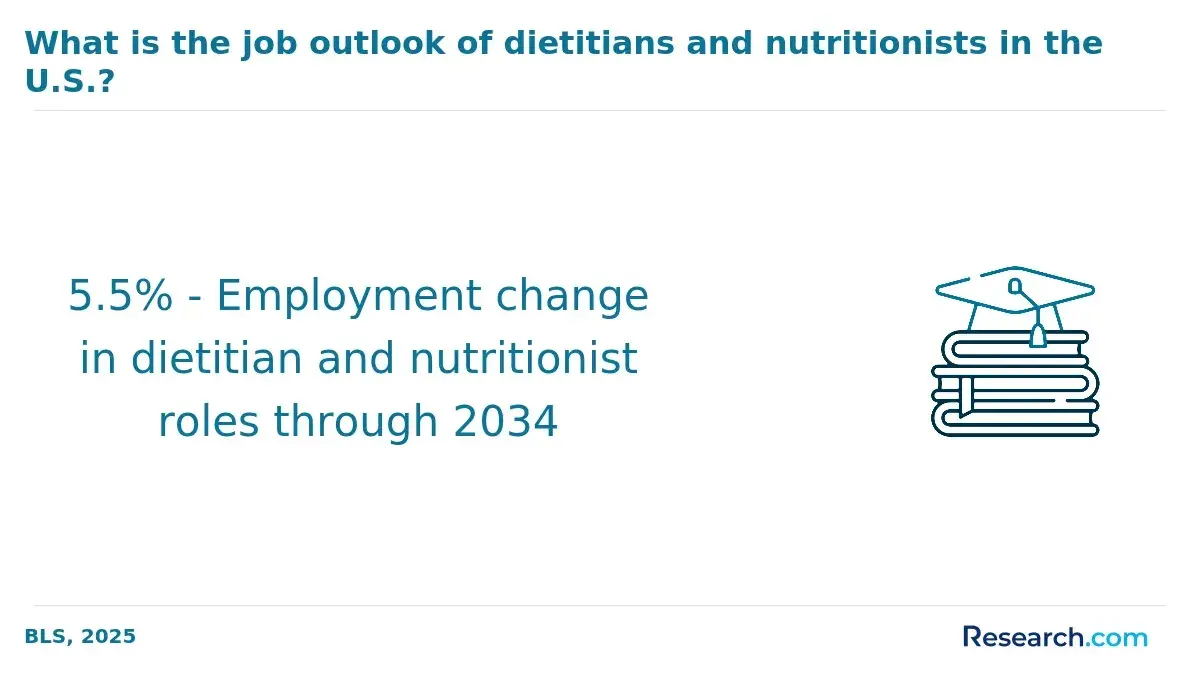
According to ONET OnLine, employment for dietitians and nutritionists in Minnesota is projected to grow by 5% through 2032. The state has around 2,492 registered dietitians and registered dietitian nutritionists, according to the Commission on Dietetic Registration. Minnesota nutrition and dietetics professionals earn $75,600 yearly, with reported salary ranges between $60,020 and $89,480.
The profession is also expected to gain 130 annual openings over the decade. These openings may come from new jobs, retirements, turnover, and movement into other roles. Salary and hiring strength can vary by credential, setting, region, experience level, and whether the role involves clinical care, management, public health, consulting, or specialized practice.
- Healthcare demand: Hospitals, clinics, and long-term care facilities need nutrition professionals who can support patients with chronic disease, recovery needs, digestive conditions, and complex dietary requirements.
- Aging population needs: Older adults often require nutrition support related to chronic illness, medication use, swallowing concerns, appetite changes, and long-term care planning.
- Wellness and prevention: Employers, community programs, and health organizations continue to emphasize nutrition as part of preventive health and lifestyle management.
- Food systems and public health: Minnesota’s agricultural, school food, nonprofit, and public health sectors create roles beyond one-on-one counseling.
| Work setting | Typical work | Credential advantage |
| Hospitals and clinics | Nutrition assessment, patient education, care plans, medical team collaboration | LD and RDN are often important |
| Community and public health programs | Nutrition education, food access initiatives, maternal and child health support | LN, RDN, public health training, or related graduate study may help |
| Schools and food service | Menu planning, nutrition compliance, operations, food safety, student wellness | RDN and management experience can be valuable |
| Private practice | Client counseling, specialty nutrition plans, referral relationships, business operations | LN, LD, RDN, CNS, or specialty credentials may improve credibility |
| Corporate wellness | Employee education, wellness programming, seminars, digital coaching | Strong communication skills and recognized credentials can strengthen trust |
How can nutritionists collaborate effectively with nursing professionals in Minnesota?
Nutritionists and nurses often see different parts of the same patient story. Nurses may notice appetite changes, medication side effects, wound healing concerns, blood glucose patterns, or barriers to following a meal plan. Nutritionists can translate those observations into nutrition assessments, education, and care recommendations. Students comparing healthcare roles can review Minnesota nursing career requirements to better understand how nursing and nutrition responsibilities intersect.
Strong collaboration usually includes shared documentation, clear referral criteria, consistent patient messaging, and respect for each profession’s scope of practice. This is especially important in chronic disease management, long-term care, maternal health, rehabilitation, and community outreach.
Can nutritionists collaborate with substance abuse counselors in Minnesota?
Yes. Nutrition can support recovery work when it is coordinated with behavioral health treatment. Clients in substance use recovery may face appetite changes, nutrient deficiencies, unstable housing, medication interactions, gastrointestinal issues, or limited access to consistent meals. Nutritionists can help address these barriers while substance abuse counselors focus on treatment planning, relapse prevention, and psychosocial support.
Professionals interested in this interdisciplinary area may benefit from understanding substance abuse counselor career requirements in Minnesota. Collaboration works best when nutrition advice supports, rather than replaces, counseling, medical care, and recovery planning.
What role does holistic nutrition play in Minnesota's evolving nutrition landscape?
Holistic nutrition can be useful when it remains evidence-informed and clearly separated from unsupported health claims. In Minnesota, clients may seek nutrition guidance that considers food preferences, culture, stress, sleep, movement, digestion, access to local foods, and long-term behavior change. Nutrition professionals who work in this space should be especially careful about licensure boundaries, documentation, and referral needs.
Those interested in integrative practice can explore what it means to work as a holistic nutritionist. The strongest practitioners combine client-centered counseling with scientific literacy, ethical marketing, and transparency about what nutrition can and cannot treat.
How can nutritionists stay current with evolving industry standards in Minnesota?
Nutrition practice changes as research, clinical guidelines, telehealth tools, food policy, and credentialing expectations evolve. Minnesota practitioners should build continuing education into their career plan instead of waiting for renewal deadlines. Relevant activities may include accredited courses, professional conferences, journal clubs, mentorship, specialty training, and participation in state or national professional associations.
It can also help to understand compliance habits used by other licensed health professions. For example, reviewing Minnesota nursing license requirements can give nutrition professionals a broader view of continuing education, documentation, and professional accountability across healthcare settings.
What are the career advancement opportunities for nutritionists in Minnesota?
Minnesota nutrition professionals can advance by moving into specialized clinical roles, program leadership, management, research, teaching, consulting, or business ownership. Advancement often depends on credentials, supervised experience, graduate education, communication skills, and the ability to work across disciplines.
- Clinical dietitian: Clinical roles involve working with medical teams to design nutrition care for patients with specific conditions. Experience may lead to specialty practice or department leadership.
- Food service management: Nutrition professionals can oversee food service operations in schools, hospitals, and long-term care facilities, combining nutrition knowledge with budgeting, staffing, compliance, and quality control.
- Public health nutritionist: Government agencies and community organizations need professionals who can design programs, evaluate outcomes, and deliver nutrition education across diverse communities.
- Corporate wellness consultant: Employers may hire nutrition professionals to support employee wellness initiatives, workshops, health campaigns, and lifestyle education.
- Research and academia: Graduate education can support teaching, research, grant-funded projects, and leadership in evidence-based nutrition. Students considering this route can compare online master’s programs in nutrition.
| Career goal | What to build next | Why it matters |
| Higher-paying clinical roles | Specialty experience, LD/RDN credentials, strong medical documentation skills | Healthcare employers often value proven clinical competence |
| Leadership or management | Operations, budgeting, compliance, staff supervision, quality improvement | Technical nutrition knowledge alone may not be enough for management roles |
| Private practice | Licensure, niche focus, referral network, billing knowledge, liability coverage | Business skills affect sustainability as much as counseling skills |
| Public health impact | Program evaluation, grant writing, cultural competence, community partnerships | Population-based work requires systems thinking |
How can nutritionists manage the business side of their practice in Minnesota?
Private practice and consulting require more than nutrition expertise. Practitioners must understand scheduling, intake forms, privacy practices, billing, payment policies, referrals, recordkeeping, taxes, marketing ethics, and scope-of-practice boundaries. Those who work with insurance or healthcare organizations may also need a stronger grasp of claims processes and documentation standards.
Nutrition professionals who want to strengthen administrative knowledge can review medical billing and coding career preparation in Minnesota. Even if they do not become billers or coders, understanding reimbursement language can help them communicate more effectively with clinics, insurers, and clients.
How can research innovation enhance nutrition practices in Minnesota?
Evidence-based nutrition depends on the ability to interpret research carefully, not just repeat popular claims. Minnesota nutrition professionals who understand study design, data quality, laboratory methods, and outcome measurement can make better recommendations and evaluate new interventions more responsibly.
Research-minded nutritionists may collaborate with universities, healthcare systems, food companies, public health agencies, and technology teams. Learning how evidence standards operate in other scientific fields can be useful; for comparison, Research.com’s guide to forensic scientist education requirements in Minnesota illustrates how scientific training, documentation, and analytical rigor shape professional credibility.
What emerging trends are shaping nutrition careers in Minnesota?
Several changes are influencing how nutrition professionals work. Telehealth and digital nutrition counseling have made remote support more common. AI-assisted tools can help with meal logging, client communication, and pattern recognition, but practitioners still need to verify accuracy, protect privacy, and apply professional judgment. Personalized nutrition and nutrigenomics are also receiving attention, though nutritionists should avoid overstating what genetic or app-based data can prove for an individual client.
Interdisciplinary care is another major trend. Nutritionists increasingly work with physicians, nurses, nurse practitioners, pharmacists, behavioral health specialists, and fitness professionals. Those interested in broader clinical roles can review how nurse practitioners are trained in Minnesota to understand where advanced clinical decision-making fits into team-based care.
How can nutritionists and pharmacists collaborate to optimize patient care in Minnesota?
Nutrition and pharmacy overlap whenever food, supplements, medications, chronic disease, and lab values interact. Pharmacists can help identify nutrient–drug interactions, medication timing concerns, supplement risks, and adherence barriers. Nutritionists can help translate those considerations into realistic food and behavior plans.
This collaboration is especially useful for patients with diabetes, cardiovascular disease, gastrointestinal disorders, kidney concerns, polypharmacy, or supplement use. Reviewing pharmacist licensure requirements in Minnesota can help nutrition professionals understand pharmacists’ training and scope when building referral relationships.
Can nutritionists integrate nurse practitioner credentials to expand their practice in Minnesota?
A nutritionist who becomes a nurse practitioner may expand into diagnosis, prescribing, and broader clinical management, but this is a separate and demanding healthcare pathway. It is not a shortcut for nutrition practice; it requires nursing education, advanced clinical training, licensure, and compliance with nurse practitioner regulations.
This option may make sense for nutrition professionals who want to work in primary care, metabolic health, chronic disease management, or specialized clinics with a broader clinical scope. Candidates should compare the best accredited nurse practitioner programs in Minnesota and confirm prerequisites, clinical hours, licensing requirements, and total cost before committing.
How can I transition smoothly from education to professional practice in Minnesota?
The transition from student to practitioner should begin before graduation. Start by confirming that your degree, supervised practice, and exam preparation align with your intended credential. Then build a professional network through rotations, volunteer work, mentors, local associations, and interdisciplinary projects.
Students aiming for dietetics should carefully review the steps to become a registered dietitian in Minnesota. Keep copies of transcripts, supervised practice verification, exam results, supervisor information, and continuing education records. Employers and licensing boards may ask for documentation, and missing records can delay your start date.
What specialization options are available for nutritionists in Minnesota?
Specialization can help nutritionists stand out, serve a defined population, and build deeper expertise. The right specialty should match your interests, local demand, credential eligibility, and willingness to complete additional training.
- Clinical nutrition: Focuses on nutrition care for conditions such as diabetes, heart disease, kidney concerns, gastrointestinal disorders, and recovery needs in medical settings.
- Pediatric nutrition: Centers on infants, children, adolescents, school nutrition, feeding concerns, growth, family education, obesity, and malnutrition.
- Sports nutrition: Supports athletes and active clients with fueling, recovery, hydration, body composition, and performance-related nutrition strategies.
- Community nutrition: Addresses public health education, food access, culturally relevant programming, maternal and child nutrition, and community-based prevention.
- Food science and technology: Connects nutrition knowledge with food safety, product development, quality control, labeling, and Minnesota’s agricultural and food industries.
| Specialization | Good fit for | Common employers or clients |
| Clinical nutrition | Practitioners comfortable with healthcare teams and medical documentation | Hospitals, clinics, specialty practices, long-term care |
| Pediatric nutrition | Professionals who enjoy family education and child development | Schools, clinics, community programs, pediatric practices |
| Sports nutrition | Nutritionists interested in performance, training cycles, and active populations | Colleges, teams, gyms, private clients, wellness centers |
| Community nutrition | Practitioners focused on equity, food access, and prevention | Public health agencies, nonprofits, WIC, outreach programs |
| Food science | Professionals who prefer product, safety, or industry-facing work | Food companies, laboratories, agriculture-related organizations |
The University of Minnesota offers a Master of Science in Nutrition with specialization options that can prepare graduates for varied roles across the state’s healthcare, public health, food, and research sectors.
Should I pursue an advanced degree to boost my nutrition career in Minnesota?
An advanced degree can be worthwhile if it directly supports your licensure, credentialing, specialization, salary goals, or leadership plans. It is especially relevant for candidates pursuing LN, LD, RDN, CNS, research, academia, advanced clinical work, or public health leadership.
However, a graduate degree is a major investment. Before enrolling, ask whether the program supports your intended credential, includes or connects to supervised practice, has strong faculty in your specialty area, and offers outcomes that justify the cost. Students comparing graduate routes can start with Research.com’s overview of master’s programs in dietetics.
What are the biggest challenges faced by nutritionists in Minnesota?
The main challenges for Minnesota nutrition professionals include meeting regulatory requirements, working with clients who face food insecurity, correcting nutrition misinformation, and building a sustainable career in a competitive health and wellness market.
- Regulatory complexity: Candidates must understand title protection, licensure requirements, supervised practice, national credentials, and renewal obligations. Confusion can delay employment or create legal risk.
- Food insecurity: Approximately 10% of Minnesota households experience food insecurity, which means nutrition counseling must account for cost, transportation, food storage, cooking access, and cultural preferences.
- Misinformation: Social media, fad diets, supplement marketing, and influencer advice often conflict with evidence-based nutrition. Practitioners must communicate clearly without shaming clients.
- Access and equity: Rural communities, low-income households, older adults, and culturally diverse populations may need different nutrition strategies and referral resources.
- Business pressure: Private practice nutritionists must balance ethical marketing, client acquisition, documentation, pricing, and professional boundaries.
Common Mistakes to Avoid
| Mistake | Why it causes problems | Better approach |
| Choosing a program without checking licensure alignment | The degree may not satisfy Minnesota requirements or national credential expectations | Ask the program and the board how graduates qualify for LN, LD, RDN, or CNS pathways |
| Looking only at tuition | Fees, supervised practice costs, exam prep, commuting, and lost income can change affordability | Calculate total cost from enrollment through licensure |
| Assuming online programs always meet requirements | Some programs may not provide supervised practice support or state-specific guidance | Confirm accreditation, field placement options, and Minnesota eligibility before enrolling |
| Using protected titles too early | Minnesota restricts the use of “nutritionist” and “dietitian” titles | Wait until licensure is approved and use accurate title language |
| Promising guaranteed outcomes | Nutrition results depend on health status, access, behavior, medications, and many other factors | Use evidence-based, realistic language and refer out when needed |
What are the legal regulations and responsibilities for nutritionists in Minnesota?
Minnesota regulates nutrition and dietetics practice through Minnesota Statutes Chapter 148.621 to 148.634. Under these rules, individuals may not use protected titles such as “nutritionist” or “dietitian” unless they hold the appropriate license from the Board of Dietetics and Nutrition Practice.
The licensing process includes qualifying education, supervised practice documentation, application submission, and continuing education for license renewal every three years. Some exemptions apply to professionals in related licensed fields, such as medicine or nursing, but candidates should not assume an exemption applies without reviewing the statute or contacting the board.
Legal responsibilities also include providing accurate information, working within scope, avoiding misleading advertising, documenting services appropriately, protecting client privacy, and referring clients to other health professionals when issues exceed nutrition practice. Those interested in complementary health and wellness fields can also explore career options connected to the most affordable online master’s degrees in exercise science.
Questions to Ask Before Choosing a Nutrition Program in Minnesota
- Does this program meet Minnesota requirements for the credential I want?
- Will I be eligible for LN, LD, RDN, or CNS pathways after graduation?
- Does the school help arrange supervised practice, or must I find placements myself?
- What are the program’s total costs, including fees and fieldwork expenses?
- How many students complete the program and pass required exams?
- Are online students eligible for the same support as campus students?
- Does the curriculum include ethics, counseling, clinical nutrition, public health, and documentation?
- Will the program prepare me for the setting where I want to work?
Here's What Graduates Have to Say About Becoming a Nutritionist in Minnesota
"Working in Minnesota has taught me that nutrition support has to be practical. During long winters, clients may have limited access to fresh local produce, so helping them find realistic and sustainable options has become one of the most meaningful parts of my work." – Elena
"I found my place in school and community nutrition. Minnesota’s public health focus gave me opportunities to teach children and families in ways that felt useful, not abstract. Seeing students get excited about healthier meals was a highlight I did not expect." – Natalia
"The state’s agricultural connections shaped my career more than I imagined. Partnering with local growers and co-ops helped me connect nutrition education with community identity, food access, and support for local businesses." – Claire
Related Articles for Nearby States
- 2027 How to Become a Nutritionist in Wisconsin
- 2027 How to Become a Nutritionist in Iowa
- 2027 How to Become a Nutritionist in North Dakota
- 2027 How to Become a Nutritionist in South Dakota
- 2027 How to Become a Nutritionist in Nebraska
- 2027 How to Become a Nutritionist in Illinois
- 2027 How to Become a Nutritionist in Missouri
- 2027 How to Become a Nutritionist in Michigan
- 2027 How to Become a Nutritionist in Kansas
- 2027 How to Become a Nutritionist in Indiana
Key Insights
- In Minnesota, “nutritionist” and “dietitian” are protected titles, so your first step should be confirming whether your intended role requires LN, LD, RDN, CNS, or another credential.
- The standard Minnesota nutritionist licensure route includes graduate-level education and at least 900 hours of supervised practice; CNS candidates should note the separate 1,000 hours of supervised practice requirement for that credential.
- Costs vary significantly, with education pathways ranging from $5,000 to $80,000, plus Minnesota licensure expenses such as the $175 application fee, $150 license fee, $33.25 background check, and $75 annual renewal.
- Job prospects are steady rather than automatic. ONET OnLine projects 5% growth through 2032, and Minnesota professionals earn $75,600 yearly, with salary ranges between $60,020 and $89,480.
- The best program is not always the highest-ranked or cheapest. Choose one that aligns with Minnesota licensure rules, supervised practice needs, credential exams, career setting, and total cost.
- Nutrition careers in Minnesota are expanding beyond hospitals into public health, schools, corporate wellness, food systems, telehealth, private practice, and interdisciplinary care.
- Avoid common mistakes: do not use protected titles before licensure, do not assume every online program qualifies you for Minnesota practice, and do not make clinical or guaranteed claims outside your scope.
References:
- Become a Nutritionist. (n.d.). Becoming a Registered Dietitian in Minnesota. Become a Nutritionist.
- eatrightPRO. (n.d.). Minnesota Statutes. Licensure Map and Statutes by State. eatrightPRO.
- Kikuchi, E., Pula, I., Tyson, A., & Yam, E. (2025, May 7). Americans on healthy food and eating. Pew Research Center.
- Mayo Clinic. (n.d.). Dietitian. Explore Healthcare Careers. Mayo Clinic.
- Minnesota Board of Dietetics and Nutrition Practice. (n.d.). Application for Nutritionist Licensure. Minnesota Board of Dietetics and Nutrition Practice.
- Minnesota Board of Dietetics and Nutrition Practice. (n.d.). Laws and Rules. Board Information. Minnesota Board of Dietetics and Nutrition Practice.
- Minnesota Legislature. (2025). 2025 Minnesota Statutes. Minnesota Legislature.
- NutritionistDegreeOnline. (n.d.). How to Become a Registered Dietitian in Minnesota. NutritionistDegreeOnline.
- ONET OnLine. (2025). Minnesota Employment Trends 29-1031.00 - Dietitians and Nutritionists. Retrieved February 2026, from ONET OnLine.
- University of Minnesota. (n.d.). Cost. University of Minnesota.
- University of Minnesota. (n.d.). Nutrition Jobs and Opportunities. University of Minnesota.
- U.S. Bureau of Labor Statistics. (2025, August 28). Occupational projections and worker characteristics. Retrieved January 2026, from BLS.
- U.S. Bureau of Labor Statistics. (2024, May). Occupational Employment and Wage Statistics. Retrieved January 2026, from BLS.
- U.S. Bureau of Labor Statistics. (2024, May). Occupational Employment and Wage Statistics - Minnesota May 2024. Retrieved January 2026, from BLS.
- Witters, D., & James, M. P. (2025, October 28). Obesity rate declining in U.S. Gallup.
Other Things You Should Know about Becoming a Nutritionist in Minnesota
In Minnesota, maintaining a nutritionist license requires completing 75 continuing education units (CEUs) every five years. These CEUs must be relevant to the field and approved by the Commission on Dietetic Registration or similar recognized bodies.
In Minnesota, licensure is not required to practice as a nutritionist in 2027. However, becoming registered as a dietitian nutritionist (RDN) can enhance credibility and job prospects. Some employers prefer or require this credential, which mandates meeting specific educational and examination criteria.
In 2027, to become a licensed nutritionist in Minnesota, you must earn at least a bachelor’s degree in nutrition or a related field, complete supervised practice hours, and pass a licensure examination administered by the Minnesota Board of Dietetics and Nutrition Practice.
The Minnesota Board of Dietetics and Nutrition Practice regulates licensed nutritionists. It handles licensure applications, verifies education and supervised practice, and enforces renewal and continuing education rules. In 2027, applicants should use its current forms and standards before practicing under the licensed title.


