2027 Best Online Nutrition Certifications

Co-Founder and Chief Data Scientist
Online nutrition certifications are a dynamic and accessible pathway to entering the field of health and nutrition. As the demand for specialized nutritional knowledge increases, these certifications provide an opportunity to gain expertise and credentials that can open doors to a variety of career paths.
Whether you're transitioning to a health-focused career or seeking to enhance your skills, online certifications offer the flexibility to learn at your pace without compromising the quality of education.
What are the benefits of getting online nutrition certifications?
- Certifications prepare you for roles in hospitals, private practice, and community health programs.
- The median annual salary for nutritionists and dietitians is approximately $69,680, with potential increases based on specialization and location.
- Online programs allow for a flexible learning environment that accommodates any schedule, reducing the need for physical attendance and associated costs.
What can I expect from online nutrition certifications?
Online nutrition certifications offer a gateway to a diverse and expanding field, blending the convenience of digital learning with the rigor of traditional nutrition education. These programs prepare students for a variety of roles in healthcare, wellness, and beyond by providing comprehensive training in nutritional science, dietary management, and health promotion.
Whether you're looking to work in clinical settings, private practice, or community health, these certifications equip you with the necessary skills and knowledge to succeed. Additionally, they offer the flexibility needed to study at your own pace, making them ideal for busy professionals looking to advance their careers or pivot to new opportunities in health and nutrition.
Where can I work with online nutrition certifications?
Graduates with online nutrition certifications can work in various industries and states where their skills are in demand:
Industries:
- Hospitals: Offering a stable environment with diverse clinical conditions.
- Government: Roles in public health and disease prevention.
- Nursing and Residential Care Facilities: Managing nutrition for residents with various dietary needs.
- Outpatient Care Centers: Specializing in health issues like diabetes or digestive disorders.
- Private Practice: For those seeking autonomy and direct client interaction.
Top states for employment:
- California and New York: High salaries and significant opportunities due to large healthcare systems.
- Texas and Florida: Growing job markets with competitive salaries, especially in senior care and health management.
- Pennsylvania: Offers diverse opportunities in both urban and rural settings.
These options, as noted by the Bureau of Labor Statistics (BLS), provide a range of environments and potential for advancement in the nutrition field.
How much can I make with online nutrition certifications?
According to the BLS, the median annual wage for dietitians and nutritionists in 2025 was $73,850. This figure represents the middle of the wage spectrum, with half earning more and half earning less.
Other job sites report varying salaries for nutritionists, reflecting differences in data collection methods, regional factors, and employment contexts:
- Zippia reports that the average salary for a nutritionist is
- Salary.com suggests a somewhat similar range, placing the average at about $69,700 yearly.
- Indeed lists the higher end of the spectrum, reporting an average nutritionist salary of $81,314 annually.
- Payscale gives a slightly lower average of $52,115 per year.
- SalaryExpert provides a figure of $59,580 for the average annual salary.
- Best Online Nutrition Certifications for 2027 Best Certifications
- How long does it take to complete an online nutrition certification? Completion Time
- How does an online nutrition certification compare to an on-campus certification? Online vs. On-campus
- What is the average cost of an online nutrition certification? Certification Cost
- What are the financial aid options for students enrolling in an online nutrition certification? Financial Aid
- What are the prerequisites for enrolling in an online nutrition certification? Prerequisites
- What courses are typically in an online nutrition certification? What courses are typically in an online nutrition certification?
- What types of specializations are available in online nutrition certifications? What types of specializations are available in online nutrition certifications?
- What challenges might you encounter after completing an online nutrition certification? What challenges might you encounter after completing an online nutrition certification?
- Should I pursue an online nutrition certification or an online nutrition degree? Should I pursue an online nutrition certification or an online nutrition degree?
- What additional education pathways can complement your online nutrition certification? What additional education pathways can complement your online nutrition certification?
- How can online nutrition certifications support interdisciplinary healthcare careers? How can online nutrition certifications support interdisciplinary healthcare careers?
- How can combining nutrition certifications with other healthcare credentials advance my career? How can combining nutrition certifications with other healthcare credentials advance my career?
- Is investing in an online nutrition certification financially competitive with other healthcare credentials? Is investing in an online nutrition certification financially competitive with other healthcare credentials?
- How do you choose the best online nutrition certification? How do you choose the best online nutrition certification?
- What career paths are available for graduates of online nutrition certifications? What career paths are available for graduates of online nutrition certifications?
- What is the job market for graduates of online nutrition certifications? What is the job market for graduates of online nutrition certifications?
- What regulatory and accreditation standards validate online nutrition certifications? What regulatory and accreditation standards validate online nutrition certifications?
- How can interdisciplinary studies boost my nutrition career? How can interdisciplinary studies boost my nutrition career?
- How can combining my nutrition certification with healthcare administration expertise advance my leadership potential? How can combining my nutrition certification with healthcare administration expertise advance my leadership potential?
Top Online Nutrition Certifications for 2027
Choosing an online nutrition certification is not the same as choosing a nutrition degree, a dietetics pathway, or a state-regulated clinical credential. Certifications can help fitness professionals, health coaches, wellness educators, and career changers build practical nutrition knowledge faster than a degree program, but they do not automatically qualify graduates for every nutrition job or for licensed dietitian roles.
This guide is for readers comparing online nutrition certifications by cost, completion time, flexibility, credibility, and career usefulness. You will learn which programs stand out, how online certificates compare with campus-based options, what to ask before enrolling, and when a full nutrition degree online may be the better long-term choice.
Quick Answer: What Is the Best Online Nutrition Certification?
The best online nutrition certification depends on your goal. Precision Nutrition is a strong fit for coaching-focused learners, NASM is a fast and lower-cost option for fitness professionals, the T. Colin Campbell Center focuses on plant-based nutrition, Cornell University offers a university-backed certificate, and the Institute for Integrative Nutrition is designed for health coaching. If your goal is clinical dietetics, verify state requirements and consider an accredited degree pathway instead of relying on a standalone certificate.
How We Evaluate Online Nutrition Certification Options
Research.com reviews education options using a structured methodology that considers program relevance, learner flexibility, affordability, institutional credibility, and decision usefulness for prospective students. For education-related data, we reference sources such as the IPEDS database from the National Center for Education Statistics, Peterson's database, including distance learning data, and the College Scorecard database for higher education cost and outcome context.
For this guide, the focus is not only on listing programs. The goal is to help you understand which certification fits your budget, schedule, existing background, and career direction.
Best Online Nutrition Certifications Compared
| Program | Best For | Price | Time to Complete | Flexible Schedule |
| PN Level 1 Nutrition Certification - Precision Nutrition | Coaches who want a structured mix of nutrition science and behavior-change coaching | $599 (discounted from $799) | 20 weeks | Yes |
| Certified Nutrition Coach - NASM | Fitness professionals who want a quick nutrition coaching credential | $49/month after a $25 down payment | As little as 4 weeks | Yes |
| Plant-Based Nutrition Certificate - T. Colin Campbell Center | Learners focused on plant-based eating and wellness education | $949 (payment plans available) | Self-paced | Yes |
| Nutrition and Healthy Living Certificate - Cornell University | Students who want a university-affiliated certificate in nutrition and wellness | $2,999 | 6 months | Yes |
| The Health Coach Training Program - Institute for Integrative Nutrition | Aspiring health coaches seeking a longer coaching-oriented program | $4,895 | 6 months or 12 months | Yes |
1. PN Level 1 Nutrition Certification - Precision Nutrition
The PN Level 1 Nutrition Certification teaches nutrition fundamentals alongside coaching methods that help clients change eating habits over time. The program may appeal to personal trainers, wellness coaches, and professionals who want a guided curriculum without committing to a degree program.
- Price: $599 (discounted from $799)
- Time to complete: 20 weeks
- Flexible schedule: Yes
2. Certified Nutrition Coach - NASM
NASM's Certified Nutrition Coach program is designed for learners who want a faster route into nutrition coaching concepts, especially those already working in fitness or wellness. The curriculum emphasizes nutrition basics, client assessment, behavior change, and practical coaching conversations.
- Price: $49/month after a $25 down payment
- Time to complete: As little as 4 weeks
- Flexible schedule: Yes
3. Plant-Based Nutrition Certificate - T. Colin Campbell Center
The Plant-Based Nutrition Certificate focuses on the science and health implications of plant-based eating. It is best suited for learners who want to deepen their understanding of plant-forward nutrition for personal education, wellness work, or a possible move into health-related coaching.
- Price: $949 (payment plans available)
- Time to complete: Self-paced
- Flexible schedule: Yes
4. Nutrition and Healthy Living Certificate - Cornell University
Cornell University's Nutrition and Healthy Living Certificate examines nutrition science, digestion, wellness, weight management, and diet-related disease prevention from an academic perspective. It is a strong option for students who value a university-branded certificate and a structured learning experience.
- Price: $2,999
- Time to complete: 6 months
- Flexible schedule: Yes
5. The Health Coach Training Program - Institute for Integrative Nutrition
The Health Coach Training Program combines nutrition education, coaching practice, and holistic wellness topics. It may fit learners who want to build a health coaching practice, but prospective students should compare its scope, cost, and recognition against their intended career market before enrolling.
- Price: $4,895
- Time to complete: 6 months or 12 months
- Flexible schedule: Yes
How Long Does It Take to Complete an Online Nutrition Certification?
Most online nutrition certifications can be completed much faster than a degree. Among the programs reviewed here, completion time ranges from as little as 4 weeks to 12 months, depending on the curriculum length, pacing model, and amount of coaching or applied work included.
NASM's Certified Nutrition Coach is the fastest option listed, with completion possible in as little as 4 weeks. The Institute for Integrative Nutrition's Health Coach Training Program takes 6 months or 12 months, making it a better fit for learners who want a longer coaching-focused experience. By comparison, a full nutrition degree typically requires several years and covers a wider academic foundation.
Online Nutrition Certification vs. On-Campus Certification: Which Is Better?
An online nutrition certification can be a practical choice if you need flexibility, already work full time, or want to build targeted skills without relocating. A campus-based option may be better if you want face-to-face instruction, local networking, lab-based learning, or direct access to supervised experiences.
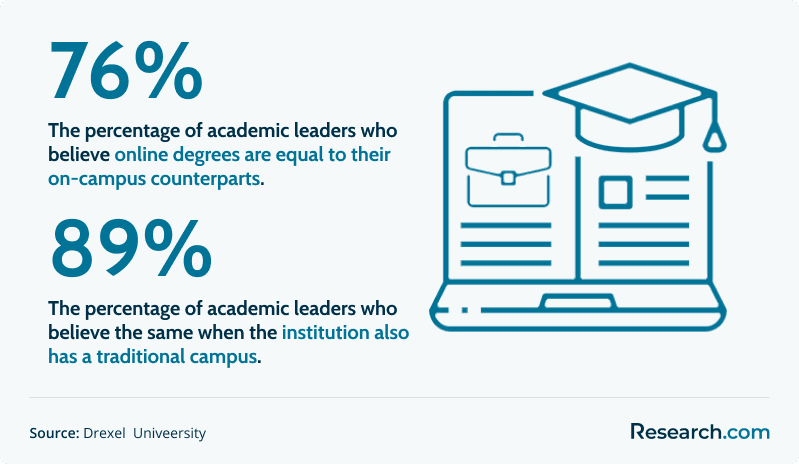
Employer attitudes toward online learning have improved, but the provider still matters. A Drexel University Online discussion of online versus traditional degrees notes that 76% of academic leaders believe online degrees hold the same value as on-campus degrees when offered by an institution with a physical campus, and favorability rises to 89%. While that finding addresses degrees rather than nutrition certificates specifically, it highlights an important point: reputation, accreditation, and instructional quality influence how credentials are perceived.
| Factor | Online Nutrition Certification | On-Campus Nutrition Certification |
| Flexibility | Best for working adults and self-paced learners | Best for students who can attend scheduled classes |
| Networking | Often relies on virtual communities, forums, and online mentorship | May provide stronger local peer and instructor interaction |
| Hands-on practice | May require you to create your own practice opportunities | May offer more direct in-person activities |
| Employer perception | Depends heavily on provider reputation and relevance to the role | May feel more familiar to some employers |
| Best use case | Skill building, coaching, wellness education, career enhancement | Local networking, structured classroom learning, in-person support |
Before choosing any online credential, check whether the provider is respected in your intended field. This matters across healthcare education, whether you are comparing nutrition certificates, an online healthcare administration degree, or even broader online health programs such as the best online bachelor of audiology programs.
What Is the Average Cost of an Online Nutrition Certification?
The average cost of the online nutrition certifications reviewed in this guide is approximately $1,688. The lowest-cost option listed is NASM's Certified Nutrition Coach at $49/month after a $25 down payment, while the highest-cost option is the Institute for Integrative Nutrition's Health Coach Training Program at $4,895.
Cost differences usually reflect more than brand name. Look at course length, instructor access, coaching practice, career support, payment options, and whether the credential is recognized by employers or professional communities you care about. Similar price variation exists in other healthcare education options, including healthcare management certificate programs online.
What Financial Aid Options Are Available for Online Nutrition Certifications?
Many standalone nutrition certifications do not qualify for the same federal financial aid options as degree programs. That does not mean you have to pay the full price upfront. Instead, compare the payment structure and ask the provider what cost-reduction options are available before enrolling.
- Payment plans: Some providers allow learners to divide tuition into smaller payments, as noted for the Plant-Based Nutrition Certificate from the T. Colin Campbell Center.
- Scholarships: Ask the program directly whether it offers need-based, merit-based, military, alumni, or professional association discounts.
- Employer reimbursement: If the credential supports your current role, your employer may cover part or all of the cost through professional development funds.
- Early enrollment or full-payment discounts: Some providers reduce tuition for students who register early or pay in one installment.
- Third-party grants or continuing education funds: Professional organizations and local workforce programs may support career-related training.
If you need access to traditional financial aid, a degree-based route may be worth comparing, including options such as an online MBA healthcare administration program for students moving toward healthcare leadership rather than nutrition coaching.
What Are the Prerequisites for Online Nutrition Certification Programs?
Most online nutrition certifications are designed for broad access and do not require a prior nutrition degree. However, prerequisites vary by provider, so confirm requirements before paying a deposit or starting a payment plan.
- High school diploma or equivalent: Many programs expect learners to have a basic secondary education background.
- Interest in health, fitness, or wellness: Prior professional experience is not always required, but a clear reason for studying nutrition helps you apply the material.
- Reliable technology access: Since coursework is online, you need internet access, basic computer skills, and the ability to use a learning platform.
- English proficiency: Programs delivered in English may require learners to understand lectures, readings, assignments, and assessments in English.
These entry expectations are generally less demanding than graduate healthcare programs, although some flexible healthcare pathways, such as the cheapest online master degree in healthcare administration, may also be designed for working adults.
Nutrition education remains relevant because diet-related health issues and malnutrition continue to affect large populations. The World Health Organization (WHO) describes malnutrition broadly, including undernutrition and diet-related noncommunicable diseases, and notes that these issues affect billions globally.
What Courses Are Usually Included in an Online Nutrition Certification?
Online nutrition certification curricula vary, but most programs introduce the science of food, nutrients, behavior change, and practical dietary guidance. Coaching-oriented programs typically emphasize client communication, while academically oriented certificates may spend more time on physiology, digestion, disease prevention, and public health.
- Nutrition fundamentals: Covers macronutrients, micronutrients, food groups, and basic dietary patterns.
- Nutritional science: Explains digestion, absorption, metabolism, and how nutrients affect body systems.
- Dietary assessment and planning: Teaches learners how to review eating patterns and build practical nutrition strategies.
- Health and wellness coaching: Focuses on goal setting, motivation, adherence, and behavior-change techniques.
- Clinical nutrition concepts: Introduces the relationship between nutrition and health conditions, while generally stopping short of licensed clinical practice.
- Public health nutrition: Examines nutrition at the community or population level, including prevention-focused education.
The United Nations (UN) and UNICEF track global malnutrition concerns such as stunting, wasting, and overweight. These public health issues show why nutrition training can be useful not only for individual coaching but also for community education, health communication, and prevention work.
Students interested in leadership, policy, or systems-level healthcare work may also compare nutrition education with broader training connected to health administration degree requirements.
What Specializations Are Available in Online Nutrition Certifications?
Some nutrition certifications are general, while others focus on a specific population, diet pattern, or professional setting. Choosing a specialization only makes sense if it matches the clients or employers you want to serve.
| Specialization | Focus | Best Fit |
| Sports Nutrition | Fueling, recovery, hydration, and nutrition strategies for active people | Fitness professionals, coaches, and trainers |
| Pediatric Nutrition | Nutrition needs from infancy through adolescence | Learners interested in family wellness or child-focused nutrition education |
| Clinical Nutrition | Nutrition concepts related to medical conditions and care settings | Healthcare professionals who need nutrition literacy, while respecting licensure limits |
| Gerontological Nutrition | Nutrition concerns among older adults | Professionals working with aging populations |
| Community Nutrition | Programs and education designed for groups and public health settings | Nonprofit, public health, school, or outreach professionals |
| Functional Nutrition | Holistic and integrative nutrition approaches | Wellness coaches and integrative health practitioners |
If you want advanced clinical or specialized roles, a certificate may not be enough. For example, pediatric nutrition is listed among the best careers to pursue with a nutrition master’s degree, which signals that some roles require deeper academic preparation than a short certificate provides.
What Challenges Might You Face After Completing an Online Nutrition Certification?
An online nutrition certification can improve your knowledge, but it does not remove every career barrier. Graduates often need to prove practical ability, explain the scope of their credential, and build experience beyond coursework.
- Limited hands-on experience: Online study may not include supervised practice, so you may need volunteer work, internships, coaching practice, or supervised projects.
- Credential confusion: Employers and clients may not understand the difference between a nutrition coach, nutritionist, dietitian, and health coach.
- State practice limits: Some states regulate nutrition counseling, especially when services involve medical nutrition therapy.
- Networking gaps: Without a campus environment, you may need to join professional communities, attend events, and seek mentors intentionally.
- Career positioning: You may need a portfolio that shows what you can do, not just a certificate badge.
For a broader look at job options, role expectations, and career planning, review this guide to nutrition careers.
Should You Choose an Online Nutrition Certification or an Online Nutrition Degree?
Choose a nutrition certification if you want focused, lower-commitment training for coaching, fitness, wellness education, or personal development. Choose a degree if you want a deeper academic foundation, stronger transferability, broader career options, or a path toward roles that require formal education and regulated credentials.
| Path | Best For | Limitations |
| Online nutrition certification | Fast skill development, wellness coaching, fitness-related nutrition education | May not meet requirements for clinical or licensed roles |
| Online nutrition degree | Students seeking academic depth, graduate study, research, or regulated pathways | Usually takes longer and costs more than a certificate |
| Certification plus degree later | Learners testing the field before committing to a full program | Credits from certificates may not transfer into degree programs |
If cost is the deciding factor, compare certification prices with degree options such as the cheapest online nutrition degree programs before choosing the shorter route.
What Additional Education Pathways Can Complement a Nutrition Certification?
A nutrition certification can be a starting point, but additional education can help you qualify for more advanced, regulated, or interdisciplinary roles. The right next step depends on whether you want to coach clients, work in healthcare, enter public health, conduct research, or manage programs.
- Nutrition bachelor's degree: An online degree in nutrition can provide a stronger academic base for science-heavy roles.
- Healthcare administration: Management training can help nutrition professionals move into program leadership or operations roles.
- Health information management: Data and records training can support roles that combine healthcare systems knowledge with nutrition literacy.
- Medical assisting or nursing pathways: Clinical education may be useful for learners who decide they want direct patient-care roles beyond nutrition coaching.
How Can Nutrition Certifications Support Interdisciplinary Healthcare Careers?
Nutrition knowledge can strengthen many healthcare-adjacent roles, especially when professionals need to understand prevention, wellness, chronic disease risk, patient education, or community health. A certification may complement work in care coordination, health coaching, public health outreach, fitness, administrative support, or wellness programming.
If you are comparing nutrition with other healthcare entry points, review practical career guides such as medical coding salary information to understand how administrative healthcare paths differ from coaching-centered work.
Can Combining Nutrition Certifications With Other Healthcare Credentials Help Your Career?
Combining credentials can be useful when each one supports a clear career goal. For example, nutrition training can help a fitness coach provide better wellness education, while administrative healthcare credentials can help someone work in medical office, insurance, or records environments.
However, more credentials are not automatically better. Before stacking certificates, ask whether the combination is recognized by employers and whether it moves you toward a specific job. If you want administrative healthcare skills, compare options such as accredited billing and coding programs and nutrition certifications side by side.
Is an Online Nutrition Certification Financially Competitive With Other Healthcare Credentials?
An online nutrition certification can be financially attractive because it may cost less and take less time than a degree. Still, value depends on the job you want, whether employers recognize the credential, and whether the program helps you earn revenue, qualify for a role, or improve performance in your current work.
Compare the total cost, time to completion, and job relevance against other healthcare credentials. For example, some students may also review cheap medical assistant programs if they want a more clinical support pathway rather than wellness coaching.
What Trends Are Shaping Online Nutrition Certification Programs?
Online nutrition education is becoming more interactive and more career-focused. Programs increasingly use recorded lessons, mobile-friendly platforms, discussion forums, coaching demonstrations, digital assessments, and virtual communities. Some programs also emphasize behavior change because knowing nutrition science is not enough if clients struggle to apply advice consistently.
Healthcare education more broadly is also moving toward flexible online delivery, including areas such as the health information management online degree. For nutrition students, the key is to choose technology that improves learning rather than being impressed by digital features that do not add practical value.
How Do You Choose the Best Online Nutrition Certification?
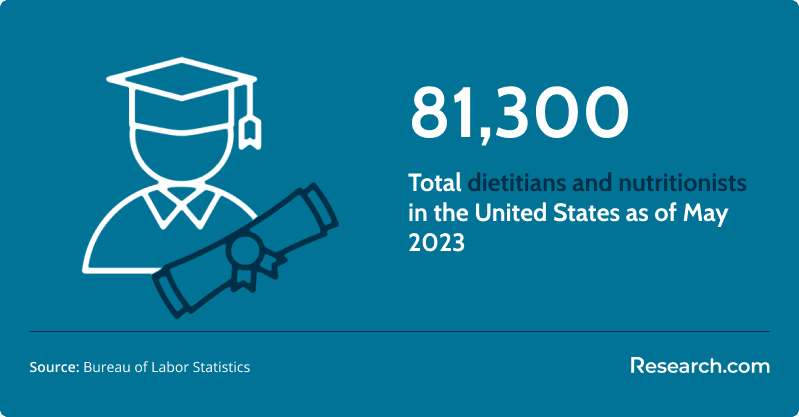
The right online nutrition certification should match your career goal, budget, available study time, and legal scope of practice. This is especially important for learners considering a field that includes approximately 81,300 dietitians and nutritionists employed in the United States.
- Check credential purpose: Confirm whether the program prepares you for coaching, education, continuing education, or another specific use.
- Review accreditation and recognition: Do not assume every certificate is accredited or equally valued by employers.
- Compare curriculum depth: Look for nutrition science, coaching skills, client assessment, ethics, and practical application.
- Verify instructor qualifications: Faculty should have relevant academic, professional, or clinical experience.
- Calculate total cost: Include tuition, fees, textbooks, exam retakes, membership costs, and renewal requirements.
- Ask about support: Look for advising, technical help, instructor access, peer community, and career resources.
- Clarify legal limits: Ask what graduates are allowed to do in your state and what requires dietitian licensure or another regulated credential.
| Question to Ask | Why It Matters |
| Does this certification qualify me for the role I want? | Some nutrition jobs require degrees, supervised practice, or licensure. |
| Is the provider recognized by employers in my field? | A low-cost credential has limited value if employers do not understand or respect it. |
| Are there renewal or continuing education requirements? | Ongoing costs can affect long-term affordability. |
| Does the program teach coaching practice, not just nutrition facts? | Client results often depend on communication and behavior-change skills. |
| Can I speak with graduates or see outcome information? | Graduate experiences can reveal whether the program delivers practical value. |
What Career Paths Are Available After an Online Nutrition Certification?
Career options depend on your previous education, state rules, professional background, and the type of certification you complete. A certificate may support wellness and coaching roles, but clinical dietitian positions typically require more formal preparation than a standalone certificate.
- Nutrition coach: Helps clients set goals, improve food habits, and build sustainable routines within the coach's legal scope of practice.
- Health coach: Supports broader wellness goals that may include nutrition, physical activity, sleep, stress, and lifestyle change.
- Sports nutrition educator: Works with active individuals on fueling habits, recovery, and performance-supportive eating strategies.
- Community nutrition educator: Delivers workshops, outreach, and prevention-focused education in community settings.
- Food service nutrition support: Helps organizations align meals or menus with general nutrition guidance.
- Private wellness consultant: Offers non-clinical nutrition and lifestyle education for individuals or groups.
Some learners use nutrition training as a stepping stone into broader healthcare. If you are considering nursing, compare options such as the easiest direct entry MSN programs to get into or explore entry-level nursing fit through guides on whats the easiest nursing job.
What Is the Job Market for Nutrition Certification Graduates?
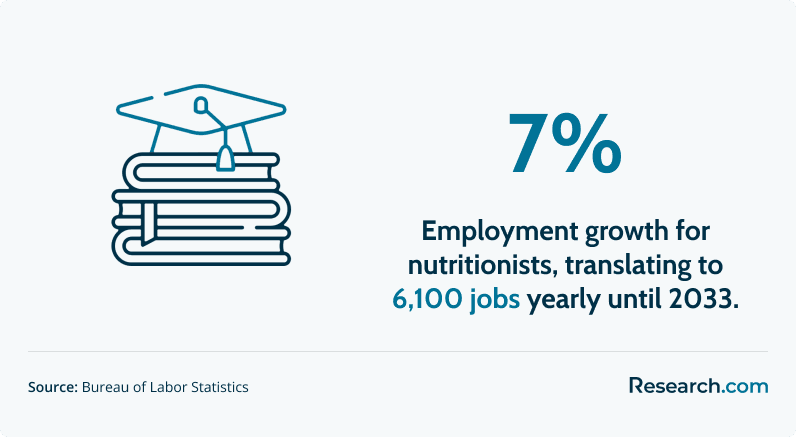
The broader dietetics and nutrition labor market is growing. According to the BLS, employment of dietitians and nutritionists is projected to grow by 6% from 2024 to 2034, faster than the average for all occupations. The BLS also reports about 6,100 job openings each year over the decade.
These figures are encouraging, but they should be interpreted carefully. BLS dietitian and nutritionist roles may require education, supervised training, credentials, or licensure beyond an online certificate. If you want to enter regulated dietetics, do not assume a short certification alone will qualify you. If you want coaching, fitness, wellness, or education roles, a certification may be more directly aligned.
How Can You Build a Strong Professional Portfolio After Certification?
A portfolio helps translate your certificate into visible proof of skill. Instead of only listing the program name, show how you apply nutrition concepts, communicate recommendations, and support behavior change.
- Create sample client plans: Use realistic, non-medical scenarios that demonstrate goal setting, food habit analysis, and coaching strategy.
- Document projects: Include wellness workshops, meal-planning education, community presentations, or fitness-program nutrition materials.
- Collect testimonials ethically: Ask clients or peers for feedback only when appropriate and avoid making medical claims.
- Show continuing education: Add workshops, conferences, readings, and related credentials that keep your knowledge current.
- Clarify your scope: State what services you provide and what you refer to licensed dietitians or medical professionals.
If you want to add practical healthcare skills beyond nutrition, compare targeted programs such as a 6 week medical assistant program online before investing in another credential.
What Accreditation and Regulatory Standards Should You Check?
Accreditation is one of the most important issues in nutrition education because different credentials lead to different professional rights. The Academy of Nutrition and Dietetics' Accreditation Council for Education in Nutrition and Dietetics (ACEND) is central to accredited dietetics education pathways, but not every online nutrition certificate is ACEND-accredited or intended for dietitian preparation.
Before enrolling, ask whether the program is accredited, whether the accreditor is recognized, whether the certificate is accepted for continuing education, and whether it meets requirements in your state. If you are comparing nutrition with health data or systems roles, you can also look at programs such as an accelerated HIM bachelor's degree online to understand how accreditation works in other healthcare education fields.
How Can Interdisciplinary Study Strengthen a Nutrition Career?
Nutrition increasingly intersects with public health, data analysis, digital health, healthcare administration, fitness, behavioral science, and biomedical research. Adding skills outside nutrition can help you work in teams, understand health systems, and communicate more effectively with professionals from other disciplines.
For students interested in research, personalized health, or data-heavy work, a bioinformatics graduate program may offer a very different but complementary direction. This type of pathway is best suited for learners who want analytical or research roles rather than client-facing coaching.
How Can Nutrition Training and Healthcare Administration Support Leadership Goals?
Nutrition professionals who understand management, budgeting, operations, and healthcare systems may be better prepared for leadership roles in wellness programs, community health organizations, food service operations, or healthcare support settings. A certificate can build subject-matter knowledge, while administration training can build the skills needed to manage people, programs, and resources.
If leadership is your long-term goal, compare certificate-only pathways with an online healthcare administration degree to see which option better fits your timeline and career target.
Common Mistakes to Avoid When Choosing an Online Nutrition Certification
- Assuming certification equals licensure: A nutrition certificate does not automatically make you a registered dietitian or licensed nutrition provider.
- Choosing only by price: A cheap program may be useful, but only if it teaches relevant skills and is recognized in your field.
- Ignoring state rules: Nutrition counseling and medical nutrition therapy may be regulated where you live.
- Overlooking renewal costs: Some credentials require continuing education, renewal fees, or membership costs.
- Relying only on rankings: A program that ranks well overall may still be the wrong fit for your goals.
- Skipping outcome research: Ask what graduates do after completion and whether the provider can show credible results.
What Graduates Say About Online Nutrition Certifications
- : "I was unsure whether an online format would feel engaging, but the course structure, instructor support, and peer discussions made the experience more interactive than I expected. The certification helped me take a clearer next step in dietetics-related work. — Lena"
- : "The program gave me a stronger foundation in wellness and nutrition while still fitting around my job. The online platform made it easier to study consistently, and I was able to apply several coaching ideas right away. — Marcus"
- : "Studying on my own schedule made the certification manageable. I could connect the lessons to my work and personal wellness goals without pausing my career. — Jaimie"
Key Insights
- Online nutrition certifications are best for focused skill building. They can help fitness professionals, health coaches, wellness educators, and career changers learn nutrition concepts faster than a degree.
- They are not a shortcut to every nutrition career. Clinical, dietitian, and state-regulated nutrition roles may require accredited education, supervised practice, licensure, or advanced credentials.
- Costs vary widely. The reviewed programs average approximately $1,688, with options ranging from $49/month after a $25 down payment to $4,895.
- Completion time is flexible. Programs reviewed here range from as little as 4 weeks to 12 months.
- Program fit matters more than brand alone. Compare curriculum, support, recognition, legal scope, and career alignment before enrolling.
- A certificate can be a smart first step. If you later want advanced clinical, research, or leadership roles, plan for additional education instead of assuming one credential will cover every path.
References:
- Bureau of Labor Statistics. Occupational Employment and Wages, Dietitians and Nutritionists. BLS.
- Bureau of Labor Statistics. Occupational Outlook Handbook: Dietitians and Nutritionists. BLS.
- Drexel University Online. Online Degree vs. Traditional Degree. Drexel University.
- UNICEF. Malnutrition. UNICEF Data.
- World Health Organization. Malnutrition Fact Sheet. WHO.
- Zippia. Demographics of Nutritionists. Zippia, Inc.
- Zippia. Nutritionist Salary. Zippia, Inc.
Other Things You Should Know About the Best Online Nutrition Certifications
In 2027, online nutrition certifications are accredited by reputable organizations like the Accreditation Council for Education in Nutrition and Dietetics (ACEND) and the National Commission for Certifying Agencies (NCCA), ensuring the programs meet established educational and professional standards.
Prerequisites for the top online nutrition certifications in 2027 generally include a high school diploma or equivalent and a strong interest in nutrition sciences. Some programs might require prior coursework in biology or chemistry, while others may necessitate professional experience or a related undergraduate degree.
Most respected online nutrition certifications require a proctored final exam, often delivered online through a testing platform such as ProctorU or a school’s exam portal. Passing scores are usually set at 70% to 80%, and some programs also require identity verification before testing.