2027 Medical Assistant vs. EMT: Explaining the Difference

Co-Founder and Chief Data Scientist
If you want to enter healthcare quickly, medical assistant and EMT are two of the most common starting points—but they lead to very different workdays. A medical assistant usually supports routine patient care in clinics, physicians’ offices, and outpatient settings. An EMT responds to emergencies, treats patients in the field, and transports them to hospitals when immediate care is needed.
This guide is for students, career changers, and entry-level healthcare workers comparing these two paths. It explains how the roles differ in responsibilities, training, certification, salary, legal scope, job outlook, work environment, stress level, and long-term advancement. The goal is to help you choose the option that fits your personality, schedule, career goals, and tolerance for emergency work.
Quick answer: Medical assistant vs. EMT
Choose medical assisting if you want a more predictable clinical setting, a mix of patient care and administrative work, and a path that can lead into outpatient care, billing, office management, nursing, or allied health programs. Choose EMT if you want emergency response, fast decisions, field-based care, and a possible pathway into paramedic work, firefighting, emergency departments, or other first-responder careers.
Key things you should know about medical assistants vs. EMT:
- Medical assistants most often work in clinics, physicians’ offices, and outpatient care centers, while EMTs usually work in ambulances, emergency scenes, hospitals, and public safety environments.
- MAs commonly complete a 9–12 month certificate or diploma program, while EMTs complete state-approved emergency medical training before seeking certification and licensure.
- Medical assistants earn an average salary of $42,000, while EMTs earn around $44,780 per year.
Table of Contents:
- Medical assistant vs. EMT responsibilities
- Average salary for medical assistants
- Education requirements for medical assistants and EMTs
- Certification steps for medical assistants and EMTs
- Average salary for EMTs
- What medical assistants can legally do
- Job outlook for EMTs and medical assistants
- Challenges and opportunities in both careers
- Further education and specialization options
- Common EMT work settings
- Long-term growth: EMT vs. medical assistant
- Technology trends affecting both roles
- How to choose between EMT and medical assistant
- Work-life balance and well-being
- Healthcare policy and career prospects
Medical assistant vs. EMT at a glance
| Factor | Medical Assistant | EMT |
| Primary purpose | Supports routine patient care and medical office operations | Responds to urgent medical situations and provides prehospital emergency care |
| Common setting | Clinics, physicians’ offices, outpatient centers, specialty practices | Ambulances, emergency scenes, hospitals, local government, public safety agencies |
| Typical training length | 9–12 months for many certificate or diploma programs | 3 to 6 months for many EMT training programs |
| Average salary | $42,000 per year | $44,780 per year |
| Best fit for | People who want structured patient interaction and administrative variety | People who want emergency response, fast decisions, and field work |
| Advancement options | Billing, coding, office management, phlebotomy, EKG, nursing, allied health | Advanced EMT, paramedic, firefighter, emergency room technician, public safety roles |
What are the main responsibilities of a medical assistant vs. an EMT?
Medical assistants and EMTs both interact with patients and support licensed healthcare professionals, but they do so in very different circumstances. Medical assistants help with scheduled care and office workflow. EMTs provide immediate care when a patient may be unstable, injured, or in distress.
Medical assistant responsibilities
Medical assistants usually divide their time between clinical support and administrative tasks in non-emergency healthcare environments. Their work may include:
- Measuring and documenting vital signs, symptoms, and medical histories
- Preparing patients for exams and helping providers during routine procedures
- Administering medications or injections when allowed by state rules and employer policy
- Scheduling visits, answering patient questions, and supporting front-office operations
- Handling insurance forms, billing information, and electronic health record updates
- Cleaning exam rooms, sterilizing instruments, and preparing supplies for the next patient
In many practices, the medical assistant is the person who helps the visit run smoothly from check-in to discharge. MAs who want stronger administrative skills may also consider a low cost medical coding and billing online program, especially if they want to move toward documentation, claims processing, or revenue cycle support.
EMT responsibilities
EMTs work in emergency medical services and must be prepared to act before a patient reaches the hospital. Their duties often include:
- Responding to 911 calls, accidents, medical crises, and other urgent situations
- Quickly assessing a patient’s condition and identifying immediate risks
- Providing CPR, bleeding control, airway support, basic life support, and first aid
- Stabilizing patients for safe transport to an emergency department or trauma center
- Communicating with dispatchers, hospitals, paramedics, firefighters, and police when needed
- Documenting care provided during the call and transport
EMT work is less predictable than medical assisting. Calls can involve trauma, cardiac symptoms, breathing problems, childbirth, falls, overdoses, and other emergencies. The role requires emotional control, physical stamina, teamwork, and the ability to follow protocols under pressure.
What is the average salary for medical assistants?
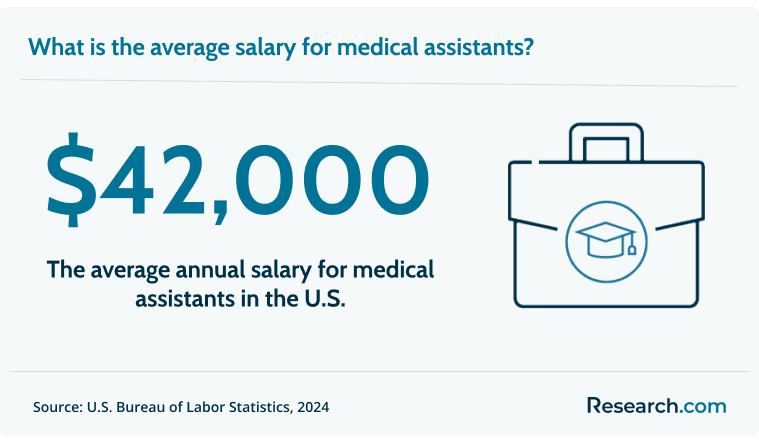
The average salary for medical assistants in the United States is approximately $42,000 per year, or about $20.19 per hour. Actual pay can differ by location, experience, certification, employer type, specialty area, and shift schedule. A certified medical assistant in a high-volume specialty clinic or urban healthcare system may earn more than a new medical assistant in a smaller general practice or rural office.
Benefits can also affect the value of the job offer. Many full-time medical assistants receive health insurance, dental and vision coverage, paid time off, retirement benefits, and sometimes tuition support. Some workers use medical assisting as a first clinical role before moving into diagnostic imaging, nursing, healthcare administration, or other allied health fields. For example, an MA interested in diagnostic procedures may later compare programs through an online ultrasound tech school.
What can increase a medical assistant’s earning potential?
- Certification: Credentials such as CMA or RMA can make an applicant more competitive.
- Specialty experience: Dermatology, cardiology, orthopedics, urgent care, and other specialty settings may value specific clinical skills.
- Administrative expertise: Billing, coding, scheduling, prior authorization, and EHR skills can support advancement.
- Additional clinical skills: Phlebotomy, EKG, injections, and lab support may broaden job options, depending on state rules and employer needs.
What education is required to become a medical assistant vs. EMT?
The two training paths are designed around different types of care. Medical assistant programs prepare students for outpatient clinical and administrative support. EMT programs focus on emergency assessment, stabilization, transport, and field response.
Medical assistant education requirements
Most aspiring medical assistants complete a postsecondary certificate, diploma, or similar training program. Many programs take 9 months to 1 year, while some accelerated options, including 4-week online medical assistant certification programs, are designed for students who need a shorter or more flexible route. Students commonly study:
- Anatomy and physiology
- Medical terminology
- Vital signs, infection control, and basic clinical procedures
- Phlebotomy, injections, EKG basics, or lab procedures where included
- Medical billing, coding, scheduling, and electronic health records
Certification is not legally required in most states, but many employers prefer applicants who have completed a recognized program and earned a national credential. Before enrolling, students should ask whether the program meets eligibility requirements for the certification exam they plan to take.
EMT education requirements
EMT candidates complete a state-approved EMT training program, often lasting 3 to 6 months. Programs combine classroom learning, skills labs, and practical experience. Common topics include:
- Emergency medical procedures and scene safety
- Patient assessment, triage, and documentation
- CPR and basic life support (BLS)
- Trauma care, bleeding control, and airway management
- Safe lifting, patient movement, and ambulance operations
After training, EMT candidates typically take the National Registry of Emergency Medical Technicians (NREMT) exam. States may also require licensure, background checks, continuing education, and periodic renewal.
How do you get certified as a medical assistant vs. an EMT?
Certification requirements differ because medical assistants and EMTs are regulated in different ways. EMT licensure is tied closely to state emergency medical services rules. Medical assistant certification is often employer-preferred rather than state-mandated, although legal scope still depends on state law and supervision requirements.
Medical assistant certification steps
- Choose an appropriate training program. Look for a certificate or diploma program that covers both clinical and administrative skills and prepares students for the credential they want.
- Confirm exam eligibility. If you plan to pursue CMA or RMA certification, verify that your education path qualifies before paying tuition.
- Take a national certification exam. The CMA exam is administered by the American Association of Medical Assistants (AAMA), while the RMA is offered by AMT. Research.com also provides a detailed guide on how to get CMA certification.
- Keep the credential active. Certified medical assistants usually renew through continuing education or recertification.
- Add specialized skills if useful. Phlebotomy, EKG, billing, coding, and specialty-practice experience can make an MA more versatile.
EMT certification steps
- Complete a state-approved EMT program. Training includes emergency care knowledge, skills practice, and hands-on preparation for field response.
- Pass the NREMT exam. The exam process includes a cognitive component and a practical skills assessment.
- Apply for state licensure. Most states require proof of training and certification, and many require background checks or other documentation.
- Renew as required. EMTs must recertify every two years, often through refresher coursework or continuing education credits.
- Advance if the role fits your goals. EMTs may continue to Advanced EMT or paramedic training. Some later move toward nursing, including bridge-style education such as the easiest RN to BSN program available for their background and goals.
| Question | Medical Assistant | EMT |
| Is certification always legally required? | Not in most states, but employers often prefer it | Certification and state licensure are typically required |
| Who administers a major national exam? | AAMA for CMA; AMT for RMA | NREMT |
| How often is renewal needed? | Varies by credential | Every two years |
| What is the main focus? | Outpatient clinical and administrative support | Emergency assessment, stabilization, and transport |
What is the average salary for EMTs?
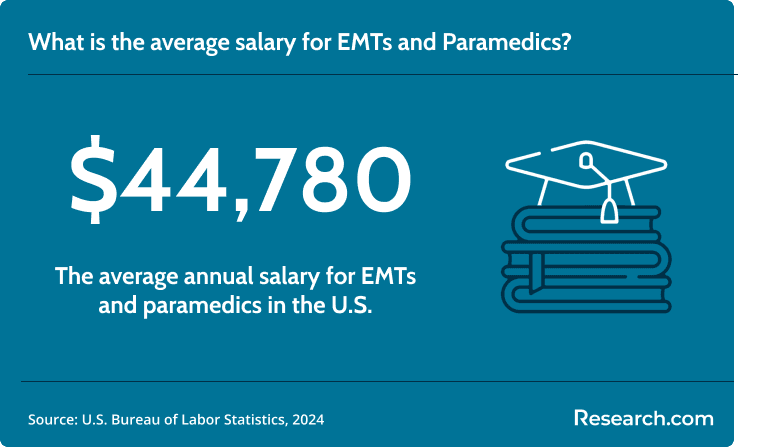
The average salary for Emergency Medical Technicians (EMTs) in the United States is approximately $44,780 per year, or about $21.53 per hour. Pay may vary by employer, region, experience, shift schedule, public versus private employment, and level of certification. EMTs in urban systems, government roles, or specialized facilities may have different compensation than those working for smaller or private ambulance providers.
Benefits may include health insurance, retirement plans, paid time off, overtime opportunities, and additional pay in high-demand areas. EMT experience can also support career movement into paramedic roles, emergency room technician positions, fire service jobs, supervisory EMS work, or healthcare management.
Salary comparison: medical assistant vs. EMT
| Career | Average annual salary | Average hourly pay | Common factors that affect pay |
| Medical Assistant | $42,000 | $20.19 | Certification, specialty clinic experience, location, employer type, administrative skills |
| EMT | $44,780 | $21.53 | Location, employer, overtime, experience, advanced certification, public sector employment |
What procedures can a medical assistant legally perform?
Medical assistants can perform many clinical support tasks, but their legal scope depends on state law, employer policy, training, and supervision by a licensed provider. MAs should never assume that a procedure allowed in one state or clinic is automatically allowed everywhere.
- Take vital signs: MAs commonly record temperature, pulse, respiration, blood pressure, height, weight, and other basic measurements.
- Give injections: In many states, trained medical assistants may administer vaccines or certain injections under provider direction.
- Perform phlebotomy: Drawing blood may be part of the role when the MA has proper training and the employer permits it.
- Conduct EKGs: MAs may place leads, run electrocardiograms, and prepare results for provider review. Those who prefer diagnostic procedures may later explore online radiology tech programs.
- Assist with minor office procedures: This may include preparing instruments, positioning patients, handing tools to the provider, and dressing wounds.
- Schedule appointments: MAs often coordinate visits, follow-ups, reminders, and provider calendars.
- Support billing and coding: Some MAs help enter codes, process insurance information, and verify coverage.
- Maintain electronic health records: Accurate EHR updates help providers document care, track results, and coordinate treatment.
What medical assistants generally should not do
Medical assistants should not diagnose conditions, independently prescribe treatment, interpret test results for patients, or perform tasks reserved for licensed professionals unless state law clearly permits the task under required supervision. When in doubt, check the state medical board, employer policy, and supervising provider’s instructions.
What is the job outlook for EMTs and medical assistants?
Both roles are projected to grow, but the scale and drivers of demand are different. Medical assisting is expanding rapidly because more care is delivered in outpatient and preventive settings. EMT demand remains steady because communities continue to need emergency response and medical transport services.
- Medical Assistants: Employment of medical assistants is projected to grow 15% from 2023 to 2033, much faster than the average for all occupations. This medical assistant job growth is connected to an aging population, more preventive care, and continued expansion of outpatient clinics and physicians’ offices. About 119,800 new openings are expected each year.
- EMTs and Paramedics: Employment for EMTs and paramedics is expected to grow 6% from 2023 to 2033, faster than average. Demand is supported by population growth, emergency call volume, and the need to replace workers who retire or leave the field. Approximately 19,200 openings are projected each year.
For someone choosing between the two, the outlook suggests different career strategies. Medical assisting may offer more openings and broader outpatient opportunities. EMT work may be a stronger fit for people committed to emergency response, public service, and advancement into paramedic or first-responder roles.
What challenges and opportunities can impact career success in these roles?
Both careers can be rewarding, but neither is easy. Medical assistants may face heavy patient volume, multitasking pressure, documentation demands, insurance complexity, and changing office workflows. EMTs face unpredictable calls, physical strain, emotional stress, night or weekend shifts, and situations where rapid decisions matter.
The opportunity in both roles is that they provide early, practical healthcare experience. Medical assistants can build skills in patient communication, clinical procedures, scheduling, billing, and EHR systems. EMTs develop emergency assessment, crisis response, teamwork, and field judgment. Workers who want to broaden their administrative options may compare medical billing and coding online schools as one way to move toward documentation or revenue cycle roles.
| Challenge | Medical Assistant Strategy | EMT Strategy |
| Stress and workload | Use checklists, clarify priorities, and improve EHR efficiency | Practice recovery routines, debrief difficult calls, and maintain fitness |
| Limited advancement without more training | Add CMA, RMA, phlebotomy, EKG, billing, or coding skills | Move toward Advanced EMT, paramedic, fire service, or ER technician roles |
| Burnout risk | Watch for routine fatigue and seek better scheduling or specialty fit | Prepare for emotional exposure and seek peer and supervisor support |
| Regulatory changes | Track state scope-of-practice rules and employer protocols | Maintain licensure, continuing education, and protocol updates |
What opportunities exist for further education and specialization?
Medical assistants and EMTs often use their first healthcare role as a foundation. The best next step depends on whether you want more clinical responsibility, a higher credential, administrative leadership, or a different healthcare specialty.
Specialization options for medical assistants
- Phlebotomy
- EKG support
- Medical billing and coding
- Clinical office coordination
- Specialty clinic support, such as cardiology, dermatology, pediatrics, or orthopedics
- Nursing or allied health programs
Specialization options for EMTs
- Advanced EMT
- Paramedic
- Emergency room technician
- Fire service or rescue roles
- Critical care transport, where additional training is available and required
- Public safety supervision or EMS operations
Some healthcare workers eventually move into management or nonclinical fields. A degree such as the cheapest online sports management master's is not a direct credential for EMTs or medical assistants, but it may interest professionals who want broader training in leadership, operations, or organizational management outside traditional clinical pathways.
Where do EMTs usually work?
EMTs work in several healthcare and public service environments. The setting affects the pace of work, patient population, schedule, risk level, and pay.
- Outpatient Care Centers: EMTs in outpatient care centers may support urgent care or specialty services. This setting has the highest average salary listed here, at $65,660 per year.
- Private General Medical and Surgical Hospitals: EMTs may assist in emergency departments, patient transport, or stabilization workflows. The average salary in this setting is $41,690 per year.
- Local Government, excluding education and hospitals: EMTs working for city or county agencies often respond to 911 calls and coordinate with fire and police departments. The average salary is $39,270 per year.
- Local General Medical and Surgical Hospitals: EMTs in publicly funded hospitals may work in emergency departments or patient movement roles. The average annual salary is $38,410.
- Ambulance Services: EMTs in ambulance services provide frontline emergency response and patient transport. They earn an average of $37,620 per year in this industry.
The highest-paying setting is not automatically the best fit. Some EMTs prefer ambulance-based emergency response, while others want a more structured hospital or outpatient environment. Before accepting a job, compare shift length, overtime expectations, call volume, safety protocols, advancement pathways, and benefits.
Which career has more long-term growth: EMT or medical assistant?
Medical assisting generally offers broader long-term growth within outpatient healthcare because projected employment growth is higher and the role connects to both clinical and administrative career ladders. EMT work still has strong value, especially for people who want to move into emergency services, paramedic training, firefighting, or hospital emergency care.
- Medical Assistant: Medical assistants have a 15% projected employment growth rate from 2023 to 2033. Their experience can lead to office management, billing, coding, specialty-practice roles, nursing prerequisites, or other allied health programs. Some MAs also add wellness-focused credentials, such as a nutrition certificate online accredited, if they want to support preventive health or patient education.
- EMT: EMTs have a 6% projected employment growth rate from 2023 to 2033. The clearest advancement route is usually Advanced EMT or paramedic training, although EMT experience may also support firefighter, emergency room technician, or public safety careers. Because the job can be physically and emotionally demanding, many EMTs plan early for advancement or a related transition.
Which path is better for your goals?
| Choose this goal | Better starting point | Why |
| Work in a clinic or physician’s office | Medical Assistant | The training aligns with outpatient workflow, EHRs, scheduling, and routine patient care |
| Respond to emergencies | EMT | The role is built around urgent assessment, stabilization, and transport |
| Move into paramedic or fire service | EMT | EMT training is the usual entry point for EMS advancement |
| Build both clinical and administrative skills | Medical Assistant | MAs often work across patient care, documentation, scheduling, billing, and provider support |
| Find a healthcare entry point with more projected openings | Medical Assistant | About 119,800 openings are expected each year, compared with approximately 19,200 for EMTs and paramedics |
How is emerging technology transforming the roles of EMTs and medical assistants?
Technology is changing both careers, but not in the same way. Medical assistants increasingly use electronic health records, automated scheduling tools, patient portals, digital intake forms, and telehealth support systems. EMTs rely on mobile documentation, dispatch technology, communication systems, and tools that help coordinate care before the patient reaches the hospital.
These changes do not remove the need for human judgment, communication, and hands-on care. Instead, they raise the value of workers who can use digital tools accurately while still treating patients with calm, respectful attention. Professionals who want to connect healthcare, prevention, and digital learning may also explore advanced study options such as an accelerated masters of nutrition online, depending on their long-term career direction.
How do I decide between being an EMT and a medical assistant?
The best choice depends less on which job sounds better and more on how you want to spend your workday. Be honest about your stress tolerance, schedule needs, physical stamina, communication style, and long-term goals. Research.com’s guide on reasons to become a medical assistant can help if you are leaning toward clinic-based patient care.
Choose medical assistant if you want:
- A more predictable clinic, office, or outpatient schedule
- A mix of direct patient care and administrative work
- Ongoing interaction with patients who may return for follow-up visits
- A pathway into billing, coding, office leadership, nursing, or allied health
- Less exposure to emergency scenes and field hazards
Choose EMT if you want:
- Emergency response and a high-adrenaline work environment
- Hands-on care before a patient reaches the hospital
- A possible path into paramedic work, firefighting, rescue, or emergency departments
- Work that changes from call to call
- A shorter training period of around 3 to 6 months before certification steps
Questions to ask before choosing a program
- Is the program accredited or state-approved for the credential or license I need?
- Will the training qualify me for the CMA, RMA, NREMT, or state licensing process?
- Does the program include hands-on practice, clinical experience, externships, or skills labs?
- What are the total costs beyond tuition, including books, uniforms, exams, background checks, and supplies?
- Does the schedule fit my work, family, and transportation needs?
- What job placement support, employer partnerships, or career advising does the school provide?
- If I plan to advance later, will credits transfer or will the training count toward another program?
Common mistakes to avoid
| Mistake | Why it can hurt you | Better approach |
| Choosing only by salary | The average pay is close, but the work conditions are very different | Compare schedule, stress, physical demands, advancement, and benefits |
| Ignoring accreditation or state approval | You may not qualify for the credential or license you need | Confirm requirements with the certifying body and state agency before enrolling |
| Assuming online training is always enough | Healthcare roles often require in-person skills practice or clinical experience | Check whether the program includes labs, externships, or approved field training |
| Overlooking scope-of-practice rules | Medical assistant duties vary by state and employer | Review state rules and ask employers what procedures MAs may perform |
| Not planning the next step | Entry-level roles can feel limiting without a growth plan | Map whether you want CMA, RMA, paramedic, nursing, billing, management, or another path |
If you want long-term flexibility beyond these two roles, compare related healthcare careers early. Some workers eventually move toward nursing, diagnostic imaging, administration, or an in demand therapy specialization, depending on their interests and education plans.
How do EMT and medical assistant careers impact work-life balance and personal well-being?
Work-life balance differs sharply between the two roles. Medical assistants may have more regular daytime schedules, especially in physicians’ offices, but they can still experience fatigue from patient volume, front-desk pressure, and constant multitasking. EMTs may work nights, weekends, holidays, long shifts, and unpredictable calls, which can affect sleep, family time, and emotional recovery.
Neither path should be chosen without considering well-being. EMTs need strategies for processing difficult calls, maintaining physical health, and managing irregular schedules. Medical assistants need boundaries, workflow skills, and support when patient volume or administrative demands become overwhelming. If your main priority is balancing income, stress, and clinical responsibility, it may help to compare these roles with other high paying jobs in medical field.
How do evolving healthcare policies influence career prospects?
Healthcare policy affects both roles through reimbursement rules, staffing models, training standards, licensure requirements, and scope-of-practice changes. For medical assistants, policy shifts can influence what tasks employers delegate, how outpatient practices document care, and which credentials become preferred. For EMTs, state EMS rules, public funding, and protocol updates can affect training, employment, and day-to-day practice.
The practical takeaway is simple: do not treat certification as a one-time event. Keep track of state requirements, employer policies, renewal rules, and continuing education expectations. Workers who want to diversify into science-related or healthcare-adjacent roles can also review biology careers that pay well as part of a broader career plan.
Graduate perspectives on medical assistant and EMT careers
-
: "
Medical assisting gave me a steady healthcare role where I can support patients, work closely with providers, and feel useful every day. The patient relationships are what keep me committed to the field. – Vivian
"
-
: "
I became an EMT because I wanted a job where quick thinking matters. Some calls are difficult, but helping someone during a critical moment makes the work meaningful. – Jake
"
-
: "
As a medical assistant, I like that no two days feel exactly the same. I may help patients, manage office tasks, and support exams all in one shift, which makes the role feel active and connected to the care team. – Claire
"
Key Insights
- Medical assisting is usually the better fit for people who want a structured healthcare setting, steady patient interaction, and a mix of clinical and administrative duties.
- EMT is usually the better fit for people who want emergency response, field care, urgent decision-making, and a path toward paramedic, fire service, or emergency department work.
- Medical assistants earn an average salary of $42,000 per year, while EMTs earn an average salary of $44,780 per year.
- Employment for medical assistants is projected to grow 15% from 2023 to 2033, with about 119,800 new openings expected each year.
- Employment for EMTs and paramedics is expected to grow 6% from 2023 to 2033, with approximately 19,200 openings projected each year.
- The right choice depends on work environment, stress tolerance, physical demands, schedule preferences, and advancement goals—not salary alone.
- Before enrolling, verify accreditation, certification eligibility, state licensure rules, hands-on training requirements, total program cost, and transfer options.
References:
- U.S. Bureau of Labor Statistics. (2024). OOH: Medical Assistants. https://www.bls.gov
- U.S. Bureau of Labor Statistics. (2024). OOH: EMT and Paramedics. https://www.bls.gov
Other Things You Should Know About Medical Assistants vs. EMTs
EMT credential standards are set by state EMS offices and tested through the National Registry of Emergency Medical Technicians, or NREMT, in many states. Medical assistant certification is usually set by national certifiers such as the AAMA, AMT, and NCCT, while states decide whether certification is required.
In 2027, EMTs require specific training and certification, typically through accredited programs and state exams. They must renew certification regularly. In contrast, medical assistants often complete diploma programs and may seek optional certification, with state requirements varying widely.