2027 How to Become a Mental Health Counselor in Austin, TX: Education Requirements & Certification

Co-Founder and Chief Data Scientist
Becoming a mental health counselor in Austin means planning for more than graduate school. You need a qualifying counseling degree, supervised practicum experience, post-graduate clinical hours, Texas exams, and a license issued through the Texas Behavioral Health Executive Council. For many people, the hardest part is not deciding whether counseling is meaningful work; it is understanding the exact sequence of requirements and whether the time, cost, and career outlook make sense.
Austin has a sizable behavioral health workforce, with around 2,600 mental health counselors employed in the metropolitan area according to U.S. Bureau of Labor Statistics metropolitan data. At the same time, growing public awareness, telehealth adoption, school-based services, and community mental health needs have made counseling an increasingly visible career path in Central Texas.
This guide explains how to become a mental health counselor in Austin, TX, including education requirements, practicum and supervised-hour expectations, Texas LPC licensure steps, certification options, common specializations, salary information, workplaces, financial aid, and practical ways to avoid delays.
Quick Answer: How do you become a mental health counselor in Austin, TX?
To become a mental health counselor in Austin, you typically complete a bachelor’s degree, earn a qualifying master’s or doctoral degree in counseling or a closely related field, finish a 300-hour supervised practicum with at least 100 direct client contact hours, apply for LPC Associate status, complete 3,000 supervised post-graduate hours over at least 18 months, pass the required national counseling exam and Texas Jurisprudence exam, submit fingerprints, and apply for full Licensed Professional Counselor status through the Texas Behavioral Health Executive Council.
- The career path is structured but manageable: most candidates move from undergraduate study to graduate training, then into supervised practice before independent licensure.
- Austin offers multiple practice settings: counselors may work in private practices, hospitals, schools, community agencies, telehealth platforms, addiction programs, and crisis-response services.
- Specialization matters: training in substance use, trauma, child and adolescent counseling, couples work, and telehealth can improve fit for local employer needs.
- Academic requirements for mental health counselors in Austin
- Financial aid options for counseling students
- Texas LPC licensure process
- License reciprocity and endorsement rules
- Counseling certifications available in Austin
- In-demand counseling specializations
- Mental health counselor salary in Austin
- Demand for mental health counselors
- Common workplaces for counselors
- Challenges of entering the field
- Ways to move through licensure efficiently
- Transitioning into substance abuse counseling
- Continuing education and renewal expectationsFrequently asked planning questionsTimeline to become a counselorPrivate practice considerationsDiagnosis authority in counseling practiceDegree requirements for counseling licensureSources and references
What are the academic requirements to become a mental health counselor in Austin, TX?
Austin follows Texas licensure rules, so your education must prepare you for Licensed Professional Counselor eligibility in the state. The central requirement is graduate-level counseling preparation that includes the right credit load, required content areas, and supervised practicum experience.
- Bachelor’s degree: Start with an undergraduate degree. Texas does not require one specific major, but psychology, counseling, social work, human services, sociology, or a related field can make graduate coursework easier to enter and understand.
- Graduate degree: Complete a master’s or doctoral degree in counseling or a closely related discipline such as psychology, social work, marriage and family therapy, or psychiatry. Since 2017, the qualifying graduate program must include at least 60 semester credit hours.
- Core coursework: Your graduate transcript should show training in areas such as human development, abnormal behavior, assessment, counseling theories, research methods, career development, multicultural and family systems, ethics, addictions counseling, family therapy, and psychopathology.
- Supervised practicum: Before applying for licensure, you need at least 300 practicum hours, including a minimum of 100 hours spent in direct client contact.
- Accreditation fit: A CACREP-accredited program can help align your education with counseling standards, but students should still verify that a specific program satisfies Texas Behavioral Health Executive Council requirements before enrolling.
| Requirement | What it means for Austin students | Decision point |
| Bachelor’s degree | Provides the academic foundation for graduate counseling admission. | Choose a major that helps you build writing, research, psychology, and human behavior knowledge. |
| 60-credit graduate degree | Meets the Texas expectation for qualifying graduate-level preparation. | Confirm the credit total and required counseling coursework before applying. |
| 300-hour practicum | Builds supervised clinical experience before post-graduate licensure work. | Ask programs how they place students in Austin-area practicum sites. |
| 100 direct client hours | Ensures you have direct counseling exposure before moving toward LPC Associate status. | Check how the school tracks and documents client-contact hours. |
| Accreditation review | Protects you from choosing a program that may not meet licensure expectations. | Verify both institutional accreditation and Texas LPC coursework alignment. |
Before committing to a program, ask the admissions office whether graduates have successfully applied for LPC Associate status in Texas, how practicum placements are arranged, and whether online students receive the same field-placement support as campus students.
Are there financial aid programs for mental health counselors in Austin, TX?
Yes. Counseling students in Austin can look for support through scholarships, professional organizations, university-based awards, employer benefits, and loan repayment programs tied to service in underserved communities. Because graduate counseling programs can require several years of tuition, fees, books, supervision-related expenses, and unpaid or low-paid clinical hours, funding strategy should begin before enrollment.
- AGPS Scholarship Program: The Austin Group Psychotherapy Society offers support for graduate students and early-career professionals pursuing education and advanced training in group psychotherapy, including help with event and training costs.
- Hogg Foundation for Mental Health Awards: Located at The University of Texas at Austin, the foundation supports several awards, including the Ima Hogg Scholarships, which provide annual $5,000 awards for Texas graduate social work students, and the Stephany June Bryan Scholarship, which awards two $5,000 scholarships each year to students with mental health lived experience or students from historically excluded groups, with attention to Central Texas.
- Frances Fowler Wallace Memorial for Mental Health Award: This award provides $3,000 annually to Texas doctoral students completing dissertation research connected to mental health and counseling.
- Mental health scholarships and grants: Students in counseling and psychology can also search broader scholarship databases and nonprofit programs, though award amounts and eligibility rules differ by sponsor.
Do not evaluate affordability by tuition alone. A realistic budget should include practicum transportation, background checks, testing fees, application fees, supervision costs, books, technology, professional memberships, and the possibility of reduced income during field training.
| Cost-control strategy | Why it helps | What to ask before enrolling |
| Apply early for scholarships | Some awards have limited cycles and competitive deadlines. | Does the school maintain a scholarship list for counseling students? |
| Use employer tuition assistance | Behavioral health, education, and healthcare employers may help pay for graduate study. | Will your employer cover counseling coursework or require a service commitment? |
| Compare practicum support | A program that helps secure placements can reduce delays and hidden costs. | Who is responsible for finding Austin-area practicum sites? |
| Explore service-based repayment | Loan repayment may be available for counselors serving underserved populations. | Which employment settings qualify, and what documentation is required? |
| Join professional associations | Memberships may provide discounted training, networking, or scholarship access. | Are student rates available? |
If you are mapping the full training timeline before taking on graduate debt, Research.com’s guide on how long it takes to become a licensed mental health counselor can help you estimate the years of education and supervised practice involved.
What is the licensure process for mental health counselors in Austin, TX?
Texas regulates mental health counselor licensure through the Texas Behavioral Health Executive Council. Austin applicants follow the same statewide process: finish the required graduate education, become an LPC Associate, complete supervised clinical practice, pass exams, and apply for full LPC licensure.
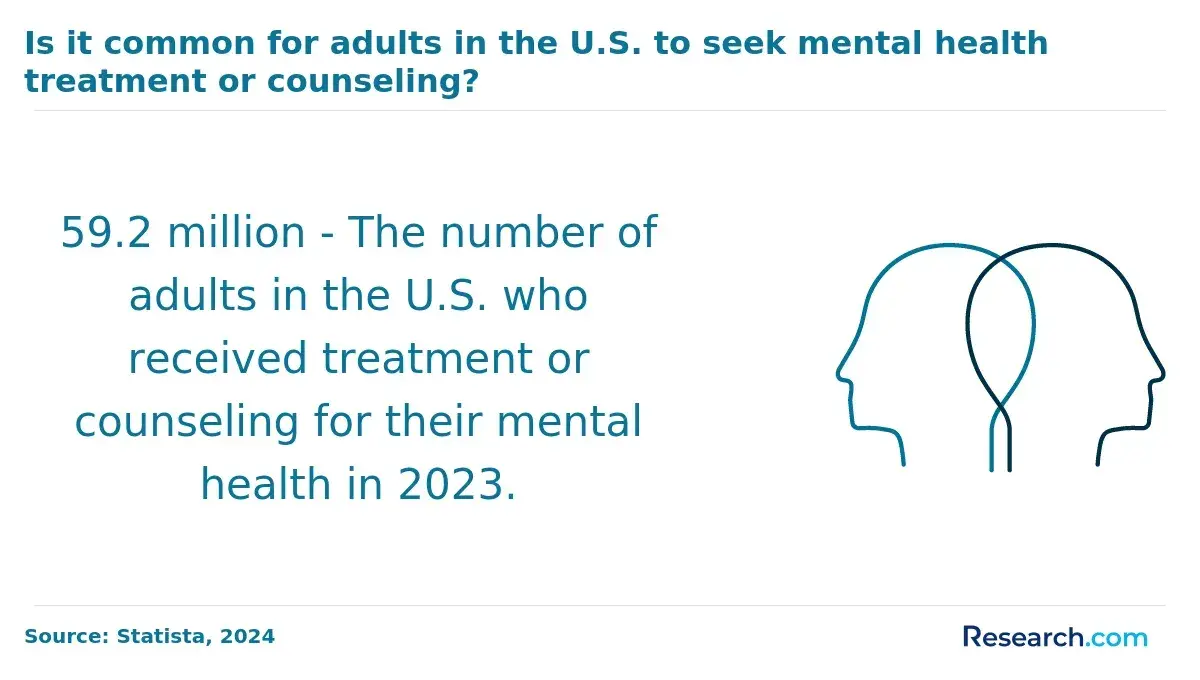
The need for qualified counselors is substantial, with almost 60 million adults in the U.S. receiving mental health treatment. For candidates in Austin, the licensure process generally includes the following steps:
- Complete a qualifying graduate degree that meets Texas coursework, credit-hour, and practicum expectations.
- Apply for LPC Associate status so you can begin supervised post-graduate clinical practice.
- Secure supervision from a board-approved LPC-Supervisor and keep weekly supervision records properly documented.
- Complete 3,000 supervised experience hours over at least 18 months, including at least 1,500 direct counseling hours; the remaining hours may include indirect activities such as case documentation, training, and related clinical duties.
- Pass either the National Counselor Examination (NCE) or the National Clinical Mental Health Counseling Examination (NCMHCE).
- Complete the Texas Jurisprudence exam to show familiarity with Texas laws and professional rules.
- Submit fingerprints for the required criminal background check.
- File final documentation through the TBHEC online portal once all requirements are met.
Many LPC Associates complete supervised clinical hours in 18 to 24 months, although candidates may have up to 60 months. The actual timeline depends on caseload size, supervision availability, employment setting, and whether your role provides enough direct client contact.
| Licensure stage | Minimum requirement or action | Common delay to avoid |
| Graduate education | Master’s or doctoral degree with at least 60 semester credit hours and required practicum. | Assuming any psychology-related graduate degree automatically qualifies. |
| LPC Associate application | Apply after completing the required degree and practicum. | Submitting incomplete transcripts or missing documentation. |
| Supervised practice | 3,000 hours over at least 18 months, with 1,500 direct client counseling hours. | Accepting a job that does not provide enough direct counseling experience. |
| Exams | NCE or NCMHCE, plus the Texas Jurisprudence exam. | Waiting until late in the process to plan exam preparation. |
| Full LPC application | Final submission through TBHEC after hours, supervision, exams, and background check are complete. | Poor hour tracking or missing supervisor verification. |
Students who need flexibility while preparing for licensure may want to compare online counseling degree programs, but they should confirm that any online program meets Texas fieldwork and licensure expectations before enrolling.
Is there license reciprocity for mental health counselors in Austin, TX?
Texas does not grant automatic LPC reciprocity simply because a counselor holds a license in another state. Instead, out-of-state counselors generally pursue licensure by endorsement, which allows Texas to review whether their education, exams, supervision, and current license are comparable to Texas standards.
Applicants should expect to submit official graduate transcripts showing a master’s degree in counseling or a related field. The record must include at least 300 supervised practicum hours, with 100 hours of direct client contact. A passing score on a national exam such as the NCE or NCMHCE is also required, and Texas-specific jurisprudence or ethics requirements may apply.
Endorsement applicants usually need proof of an active, unrestricted license from another state. Additional materials, such as professional references or verification of supervised practice, may be requested. This route can be faster than completing the entire Texas process from the beginning, but it is still a detailed credential review rather than a simple transfer.
What counseling certifications can you get in Austin, TX?
Licensure gives counselors the legal authority to practice within Texas rules, while optional certifications can demonstrate additional training or specialization. In Austin’s competitive market, credentials can help signal readiness for specific populations, practice settings, or treatment approaches.
- Licensed Professional Counselor (LPC): This Texas credential is overseen by the Texas State Board of Examiners of Professional Counselors. The path includes a 60-credit master’s degree in clinical mental health counseling, a 300-hour practicum, 3,000 hours of supervised post-graduate experience, and a passing score on the National Counselor Examination (NCE). LPCs may work in private practice, schools, agencies, and healthcare settings.
- National Certified Counselor (NCC): Offered by the National Board for Certified Counselors, this certification is available to eligible students and graduates who meet education, coursework, practicum, and NCE requirements. It is a national professional credential rather than a substitute for Texas licensure.
- Registered Play Therapist (RPT): Counselors who want to work extensively with children and adolescents may pursue this credential through added training and supervised play therapy experience. RPTs often serve young clients in schools, clinics, community programs, or private practice.
| Credential | Best fit | Important caution |
| LPC | Counselors who want to practice independently in Texas. | This is the core legal credential for professional counseling practice; optional certifications do not replace it. |
| NCC | Counselors who want a national professional designation. | It may strengthen a resume, but Texas licensure rules still control practice authority in Austin. |
| RPT | Clinicians focused on children, adolescents, and play-based interventions. | Additional supervision and specialized training are required beyond general counseling preparation. |
Choose certifications based on the clients you want to serve, not just the letters after your name. A trauma credential, play therapy credential, or addiction-focused pathway is most useful when it aligns with your clinical work and employer expectations.
What types of counseling specializations are in demand in Austin, TX?
Austin’s counseling needs reflect population growth, school and workplace stress, substance use concerns, family transitions, and wider acceptance of therapy. Generalist training is useful, but specialization can help new counselors stand out and serve populations with more targeted needs.
- Substance abuse and addiction counseling: Counselors in this area help clients address alcohol and drug dependency, relapse prevention, co-occurring mental health concerns, and recovery planning. Rising opioid and stimulant misuse in Texas has increased the need for addiction-informed clinicians.
- Trauma and crisis intervention counseling: Trauma-focused counselors support people affected by domestic violence, acute crisis, natural disasters, grief, and other destabilizing events. Austin-area services may include hospitals, crisis centers, community agencies, and telehealth settings.
- Child, adolescent, and school counseling: Youth-focused counselors address anxiety, depression, bullying, academic stress, family disruption, and developmental concerns. Growth in Austin-area school systems and stronger attention to student well-being support demand in this specialty.
- Marriage, family, and couples therapy: Relationship-focused clinicians help couples and families improve communication, navigate conflict, adjust to life transitions, and strengthen support systems.
If you are comparing graduate programs, look beyond the program title. Review elective options, practicum partners, faculty expertise, and whether the curriculum supports your preferred population. Research.com’s resource on online master’s programs in mental health counseling can help you compare programs that may support specialized preparation.
How much do mental health counselors typically earn in Austin, TX?
Mental health counselor salaries in Austin vary by license level, experience, employer, caseload, specialization, insurance participation, and whether the counselor works in an agency, school, healthcare system, group practice, or private practice. Early-career income is often different from earnings after full LPC licensure.
Counselors with one to four years of experience generally earn about $43,659 annually, while professionals with ten or more years of experience may earn closer to $56,250. Broader salary summaries place mental health counselors in Austin between $63,000 and $75,553 per year on average.
The 25th percentile is around $59,500, while the 75th percentile reaches $84,200. High earners may make as much as $109,997 annually. Licensed Professional Counselors average $62,895 per year, and some mental health therapists with advanced qualifications report salaries up to $114,117.
| Career or salary point | Reported Austin figure | How to interpret it |
| One to four years of experience | About $43,659 annually | Represents early-career earning expectations before major specialization or advancement. |
| Ten or more years of experience | Closer to $56,250 | Experience helps, but workplace type and credentials still affect pay. |
| Typical average range | $63,000 to $75,553 per year | Useful for general planning, but not a guaranteed outcome. |
| 25th percentile | Around $59,500 | Shows a lower but common earnings point within the market. |
| 75th percentile | $84,200 | Often reflects stronger credentials, experience, or higher-paying settings. |
| High earners | As much as $109,997 annually | May involve advanced qualifications, private practice, supervisory roles, or specialized services. |
| Licensed Professional Counselors | $62,895 yearly | A useful comparison point for LPC-focused career planning. |
| Mental health therapists with advanced qualifications | Up to $114,117 | Shows potential upside, not a typical starting salary. |
When comparing earnings, consider take-home pay after supervision costs, continuing education, professional liability insurance, taxes for self-employed clinicians, and unpaid administrative time. If you are still deciding which counseling route fits your goals, review different types of counseling degrees and related jobs.
Are mental health counselors in demand in Austin, TX?
Yes, demand for mental health counselors in Austin is supported by population growth, expanded use of telehealth, broader acceptance of therapy, and increased counseling services in schools, healthcare organizations, community agencies, and workplaces. Texas expects a 19% rise in mental health counseling jobs from 2023 to 2033.
Demand does not mean every applicant will find the ideal job immediately. Employers may prefer candidates with full licensure, bilingual skills, crisis experience, telehealth familiarity, substance use training, or experience with children and adolescents. New LPC Associates may also need to search carefully for roles that provide both paid clinical experience and qualifying supervision.
- : "“Finding the right position took patience since many openings required specific certifications or experience with telehealth platforms. Networking in the local counseling community and staying open to new service models made the search much easier.”"
For job seekers, the best approach is to build a focused profile: know the population you want to serve, document your hours carefully, pursue relevant training, and connect with Austin-area agencies, clinics, schools, and supervisors before graduation.
Where do mental health counselors typically work in Austin, TX?
Mental health counselors in Austin work across private, nonprofit, educational, medical, and community settings. Each workplace has a different pace, client population, pay model, supervision structure, and level of administrative responsibility.
- Private practices and counseling centers: Counselors may provide individual, couples, family, or group therapy; complete assessments; develop treatment plans; and support clients dealing with anxiety, depression, trauma, relationship issues, and life transitions. Therapy Austin is one example of a counseling setting that may offer private-pay roles, mentoring, and advancement opportunities.
- Healthcare facilities and hospitals: Medical settings may involve crisis intervention, inpatient support, outpatient therapy, care coordination, and collaboration with physicians, nurses, psychiatrists, and social workers. Counselors may support clients with severe mental illness, substance use disorders, chronic health conditions, or acute distress. Ascension Seton Medical Center Austin is one local example of an employer that integrates behavioral health professionals into interdisciplinary care.
- Educational settings: Schools and colleges use counselors to support emotional health, crisis response, group counseling, student referrals, and coordination of services for at-risk students or students with special needs. Austin Independent School District employs professionals who address concerns such as bullying, academic stress, family instability, and student mental health needs.
| Work setting | Best for counselors who want | Potential trade-off |
| Private practice or counseling center | More focus on therapy sessions and client relationships. | May involve marketing, documentation, insurance, or private-pay business considerations. |
| Hospital or healthcare facility | Team-based care and exposure to complex clinical needs. | Can involve crisis work, high acuity, and fast-moving caseloads. |
| School or college | Work with students, families, and educational support teams. | Schedules, duties, and credential expectations may differ by employer. |
| Community agency | Service to underserved populations and broad clinical exposure. | Caseloads may be heavy, and resources may be limited. |
| Telehealth provider | Flexible service delivery and remote client access. | Requires comfort with technology, privacy rules, and virtual engagement. |
Is it challenging to become a mental health counselor in Austin, TX?
Yes. The career can be rewarding, but the path is demanding. Students must complete graduate coursework, practicum hours, exams, post-graduate supervision, state paperwork, background checks, and continuing education. The emotional demands of the work also require strong boundaries and support systems.
Austin’s growth and high need for care can create opportunities, but they can also produce heavy caseloads, long waitlists, and pressure on public mental health resources. Counselors working with chronic, severe, or crisis-related conditions may face burnout if they lack supervision, manageable schedules, peer consultation, and recovery time.
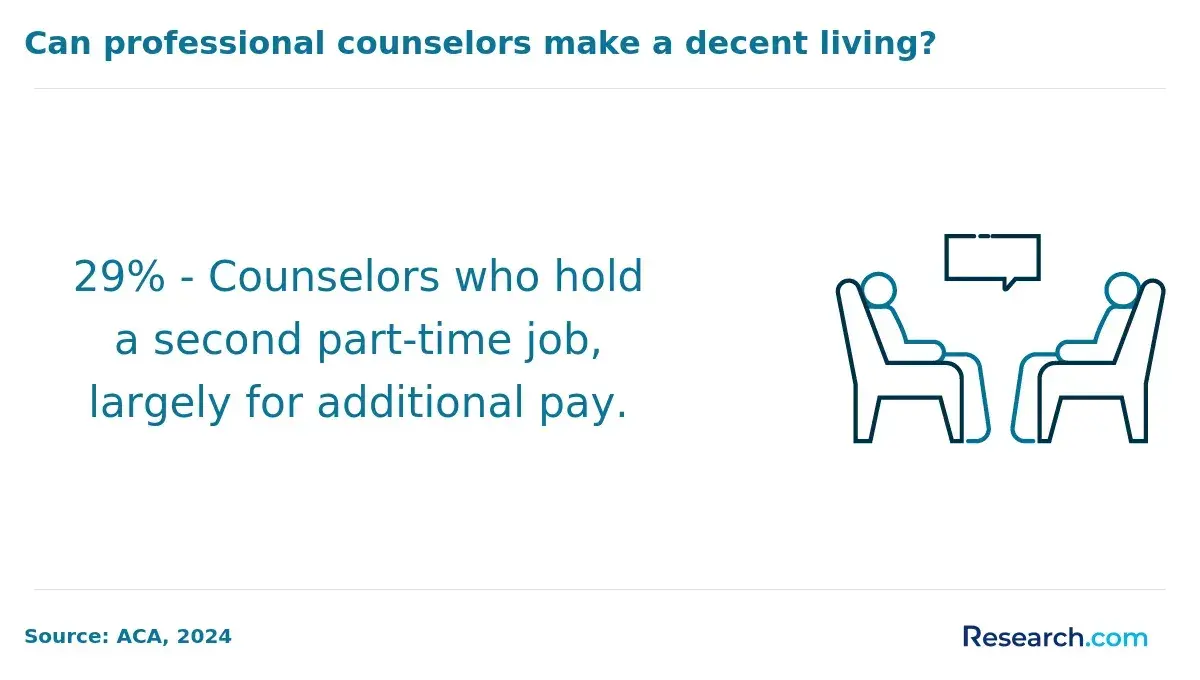
Compensation can also be a concern. Texas ranks last nationally in mental health counselor wages, with average salaries near $63,000 annually, which can feel tight against Austin’s cost of living. Early-career counselors may earn under $45,000, while experienced licensed counselors may approach $100,000 depending on credentials, employer, specialty, and practice model.
Competition can be strongest for desirable roles that include quality supervision, predictable hours, strong benefits, or telehealth flexibility. To improve your chances, develop a specialty before graduation, build relationships with supervisors, learn documentation and ethics thoroughly, and review career options for counseling degree graduates so you are not limited to one narrow job type.
What Mental Health Counselors in Austin, TX, Say About Their Careers
- : "“Working as a counselor in Austin has given me both stability and purpose. The need for services is real, and it feels meaningful to practice in a city where mental health care is becoming a more open part of everyday life.” Jordan"
- : "“Austin’s diversity keeps the work intellectually and personally engaging. Every week brings different family systems, cultural backgrounds, and client goals, which pushes me to keep learning and stay clinically flexible.” Priya"
- : "“The professional community here has helped me grow. Trainings, university events, peer consultation, and local organizations make it easier to stay connected instead of feeling isolated in the work.” Marcus"
How Can I Fast-Track My Licensure and Career Growth in Austin, TX?
You cannot skip Texas licensure requirements, but you can reduce avoidable delays. The smartest strategy is to choose a qualifying graduate program from the start, secure strong practicum support, identify a board-approved supervisor early, and select jobs that provide enough direct client hours to progress toward full LPC status.
- Pick the right program before enrolling: confirm the 60-credit requirement, practicum structure, and Texas LPC alignment in writing.
- Plan practicum early: Austin placements can be competitive, so ask how far in advance the school begins placement coordination.
- Use supervision strategically: choose an LPC-Supervisor who understands your specialty interests and can help you document hours correctly.
- Build marketable skills: telehealth, trauma-informed care, addiction counseling, crisis response, and child/adolescent experience can strengthen your job search.
- Network before you need a job: attend trainings, join professional groups, and talk with Austin clinicians about employers that support LPC Associates.
For a more detailed local licensing roadmap, see Research.com’s guide on how to become a therapist in Austin.
How Can I Transition to Substance Abuse Counseling in Austin, TX?
Substance abuse counseling can be a strong path for mental health professionals who want to work with addiction, recovery, relapse prevention, family impact, and co-occurring disorders. In Austin, this specialty can fit community agencies, healthcare programs, residential treatment, outpatient clinics, criminal justice-related services, and private practice.
The transition usually requires more than general counseling knowledge. You may need additional training in substance use assessment, motivational interviewing, group treatment, harm reduction, relapse prevention, trauma, ethics, and coordination with medical or peer recovery services. If you are already on the LPC path, verify how any addiction credential or training fits Texas rules and employer expectations.
Research.com’s local guide on how to become a substance abuse counselor in Austin explains training and career steps for this specialization.
What Are the Continuing Education and License Renewal Requirements in Austin, TX?
Licensed counselors in Austin must keep their Texas license active by following state renewal and continuing education rules. Requirements can include ethics, legal updates, and training that supports safe and current counseling practice. Because renewal rules can change, counselors should verify current CEU requirements and approved providers directly through the Texas Behavioral Health Executive Council.
Continuing education should not be treated only as a compliance task. The right training can help counselors expand into higher-need specialties, improve clinical quality, reduce risk, and prepare for supervision or private practice. For example, clinicians interested in relationship and family systems may benefit from reviewing MFT license requirements in Austin to understand how marriage and family therapy pathways compare.
Common mistakes to avoid when becoming a mental health counselor in Austin
| Mistake | Why it can hurt your progress | Better approach |
| Choosing a graduate program without checking Texas LPC alignment | You may finish a degree and later discover missing coursework or practicum requirements. | Ask the program for written confirmation that it prepares students for Texas LPC Associate eligibility. |
| Assuming all online programs meet licensure rules | Online format does not guarantee acceptable coursework, practicum, or supervision placement. | Verify accreditation, fieldwork support, and Texas-specific requirements before applying. |
| Focusing only on tuition | Licensure costs include exams, applications, supervision, transportation, books, and continuing education. | Build a full cost estimate for the entire path, not just the degree. |
| Waiting too long to find a supervisor | Poor supervision planning can slow the 3,000-hour post-graduate requirement. | Start researching LPC-Supervisors before graduation. |
| Taking a job with limited direct client contact | You may work many hours without accumulating enough qualifying direct counseling hours. | Ask employers how many direct client hours LPC Associates typically earn each week. |
| Assuming salary outcomes are guaranteed | Pay varies by setting, license level, specialty, benefits, and employment model. | Compare realistic entry-level, associate-level, and fully licensed compensation before committing. |
| Relying only on rankings | A highly ranked program may still be a poor fit for your schedule, budget, specialty, or Texas licensure needs. | Use rankings as one input, then compare outcomes, practicum support, costs, and licensure preparation. |
Questions to ask before choosing a counseling program in Austin
- Does the program meet the 60 semester credit hour expectation for Texas LPC preparation?
- How does the school document the 300-hour practicum and 100 direct client contact hours?
- Are Austin-area practicum placements arranged by the school, the student, or both?
- What percentage of graduates pursue LPC Associate status in Texas?
- Does the curriculum include coursework in assessment, ethics, addictions, family systems, multicultural counseling, and psychopathology?
- Can online students complete practicum and internship requirements near Austin?
- What are the total costs beyond tuition?
- Does the program offer faculty or fieldwork support for your preferred specialty?
- How soon do students typically find qualifying supervised roles after graduation?
- What exam-preparation resources are available for the NCE or NCMHCE?
Frequently Asked Planning Questions
How long does it take to become a mental health counselor in Austin, TX?
The timeline depends on your starting point, enrollment pace, and ability to accumulate supervised hours. After completing a bachelor’s degree, students must finish a qualifying graduate program, complete practicum, obtain LPC Associate status, and then complete 3,000 supervised hours over at least 18 months. Many candidates need multiple years from graduate enrollment to full LPC licensure.
Is it difficult for mental health counselors to open a private practice in Austin, TX?
Opening a private practice is possible, but it requires more than clinical skill. Counselors need full licensure, a clear niche, business planning, documentation systems, liability coverage, privacy-compliant technology, referral networks, and a realistic plan for insurance or private-pay billing. Many clinicians gain agency or group-practice experience before practicing independently.
Can mental health counselors diagnose in Austin, TX?
Licensed counselors may assess and treat mental health concerns within their scope of practice and Texas rules. Because diagnosis authority can depend on license type, setting, payer rules, supervision status, and current state regulations, counselors should verify scope-of-practice details through the Texas Behavioral Health Executive Council and their employer or supervisor.
Can you become a mental health counselor in Austin, TX without a degree?
No. The LPC pathway requires graduate-level education. You may work in some behavioral health support roles without becoming an LPC, but independent professional counseling licensure in Texas requires a qualifying master’s or doctoral degree, practicum, supervised post-graduate experience, examinations, and state approval.
Related Articles for Nearby Cities
- 2027 How to Become a Mental Health Counselor in San Antonio, TX: Education Requirements & Certification
- 2027 How to Become a Mental Health Counselor in Houston, TX: Education Requirements & Certification
- 2027 How to Become a Mental Health Counselor in Corpus Christi, TX: Education Requirements & Certification
- 2027 How to Become a Mental Health Counselor in Fort Worth, TX: Education Requirements & Certification
- 2027 How to Become a Mental Health Counselor in Arlington, TX: Education Requirements & Certification
- 2027 How to Become a Mental Health Counselor in Irving, TX: Education Requirements & Certification
- 2027 How to Become a Mental Health Counselor in Dallas, TX: Education Requirements & Certification
- 2027 How to Become a Mental Health Counselor in Garland, TX: Education Requirements & Certification
- 2027 How to Become a Mental Health Counselor in Plano, TX: Education Requirements & Certification
- 2027 How to Become a Mental Health Counselor in Laredo, TX: Education Requirements & Certification
References:
- All Psychology Schools. (2025, June 10). Texas Psychology & Social Work Licensure. Source: All Psychology Schools.
- BetterHelp Editorial Team. (2025, April 29). Which states offer reciprocity for LPC licensure for mental health counselors? Source: BetterHelp.
- BLS. (2025). Occupational Employment and Wage Statistics: Austin-Round Rock-San Marcos, TX. Source: BLS data tool.
- CACREP. (2025). 2024 Vital Statistics Report. Source: CACREP report.
- College of Education - UT Austin. (2025, June 3). Certification and licensing requirements for working in other states. Source: UT Austin College of Education.
- Concordia University Texas. (n.d.). How to become a therapist in Texas. Source: Concordia University Texas.
- Ethics Demystified. (2025, March 4). 5 steps to transferring your LPC License for all 50 States. Source: Ethics Demystified.
- Headway. (n.d.). What are reciprocity states for therapists? Source: Headway.
- McPherson, L. (2024, November 26). Counseling license reciprocity guidelines by state. Counseling Degree Guide. Source: Counseling Degree Guide.
- Monti, J., PhD. (2025, April 4). Counseling license requirements in Texas. Psychology.org. Source: Psychology.org.
- NCHWA. (2025). Workforce projections. Source: HRSA workforce projections.
- onlinecounselingprograms.com. (2025, January 2). How to become a Licensed Counselor (LPC) in Texas. Source: OnlineCounselingPrograms.com.
- PayScale. (n.d.). Mental health Counselor salary in Austin, Texas in 2025. Source: PayScale.
Key Insights
- Becoming a mental health counselor in Austin requires a qualifying graduate degree, a 300-hour practicum with 100 direct client hours, LPC Associate status, 3,000 supervised post-graduate hours, exams, fingerprints, and final Texas approval.
- Texas does not provide automatic LPC reciprocity. Out-of-state counselors must use the endorsement process and show that their education, exam history, supervised experience, and license status meet Texas expectations.
- Austin’s strongest opportunities may be in settings and specialties tied to substance use, trauma, youth mental health, crisis care, couples and family work, telehealth, and community-based services.
- Salary potential varies widely. Early-career counselors may earn far less than fully licensed or specialized clinicians, so candidates should compare costs, supervision requirements, and realistic pay before choosing a program.
- The best way to avoid delays is to verify licensure alignment before enrolling, plan practicum placements early, choose supervised roles carefully, document hours consistently, and build a specialty that matches Austin employer needs.
Other Things You Need to Know About Becoming a Mental Health Counselor in Austin, TX
To practice independently in Austin, counselors need a Texas Licensed Professional Counselor (LPC) license issued by the Texas State Board of Examiners of Professional Counselors. Applicants must complete a master’s degree, supervised experience, and pass the NCE or the NCMHCE.
In 2027, licensed mental health counselors in Austin, TX must complete 30 hours of continuing education every two years, including 6 hours in ethics. This is mandated by the Texas Behavioral Health Executive Council to maintain and renew their licensure.