
2027 What Is the Fastest Way to Become a Counselor?

Co-Founder and Chief Data Scientist
Embarking on a career as a counselor is a rewarding yet challenging journey, filled with numerous steps that can often seem daunting to prospective students. From selecting the right educational program to meeting licensure requirements, the path to becoming a counselor involves careful planning and dedication.
One of the main challenges aspiring counselors face is navigating the complex and varied requirements across different states and specializations. Additionally, balancing the demands of education, supervised experience, and personal commitments can be overwhelming.
This article aims to guide you through the fastest and most efficient ways to become a licensed counselor. We will explore accelerated educational programs, state-specific licensure shortcuts, and practical tips for gaining necessary experience quickly. By addressing these key areas, I will help you streamline your path to a counseling career, making it more manageable and achievable.
What are the benefits of becoming a counselor?
- Mental health counselors and marriage and family therapists earn a median salary of around $50,000 to $60,000 per year. Counselors in private practice, those with advanced certifications, or those in high-demand urban areas can earn significantly higher salaries.
- Substance abuse, behavioral disorder, and mental health counselors will grow by 23% from 2020 to 2030, driven by the increasing awareness and need for mental health services.
- The main benefit of becoming a counselor through online classes is their flexibility and convenience, allowing students to balance their education with personal and professional commitments, access programs regardless of location, save on costs, and utilize diverse learning resources and technologies.
- How long does it take to become a counselor? Becoming a Counselor
- Can I get a combined bachelor's and master's degree in counseling? Can I get a combined bachelor's and master's degree in counseling?
- Are there ways to become a counselor without a master's degree? Are there ways to become a counselor without a master's degree?
- Are there accelerated bachelor's programs for counseling? Accelerated Programs
- Can I become a counselor with a degree in a different field? Can I become a counselor with a degree in a different field?
- How much does it cost to become a counselor? Cost
- What are the different types of counseling careers? Careers
- What are the key challenges and rewards of a counseling career? What are the key challenges and rewards of a counseling career?
- What is the average salary for counselors? Salary
- What is the job outlook for counselors in the next decade? What is the job outlook for counselors in the next decade?
- Are there any quick certification programs for counseling? Quick Certifications
- How can I finance my counseling education? How can I finance my counseling education?
- What are the career growth opportunities in counseling? What are the career growth opportunities in counseling?
- What are the steps to take to start a career in counseling? What are the steps to take to start a career in counseling?
- What soft skills are essential for a successful counseling career? What soft skills are essential for a successful counseling career?
- How can continuous professional development boost my counseling practice? How can continuous professional development boost my counseling practice?
- How can networking and mentorship accelerate my counseling career? How can networking and mentorship accelerate my counseling career?
- How do I choose the right counseling degree program? How do I choose the right counseling degree program?
- How can I strategically elevate my earning potential as a counselor? How can I strategically elevate my earning potential as a counselor?
- How is technology shaping the counseling practice? How is technology shaping the counseling practice?
- What emerging counseling specializations can broaden my career opportunities? What emerging counseling specializations can broaden my career opportunities?
Fastest Path to Becoming a Counselor: What to Know Before You Choose a Program
Becoming a counselor can be a practical way to enter a helping profession, but the fastest route depends on one important question: what kind of counseling do you want to practice? Some counseling-related roles can begin with a certificate, associate degree, or bachelor’s degree, while licensed clinical roles usually require a master’s degree, supervised experience, and state approval.
This guide explains how long different counseling paths take, which options may be completed more quickly, when a master’s degree is required, how much the process can cost, and what to check before enrolling in an accelerated or online program. It is designed for students, career changers, and working adults who want a realistic path into counseling without choosing a shortcut that fails to meet licensure or employer requirements.
Quick Answer: What Is the Fastest Way to Become a Counselor?
The fastest counseling-related route is usually an entry-level substance abuse counseling, peer support, behavioral health technician, or life coaching path, depending on state rules and employer requirements. These roles may take a few months to several years. Licensed mental health counseling, school counseling, marriage and family therapy, and many clinical counseling careers usually take longer because they require graduate education, supervised clinical hours, exams, and state licensure.
If your goal is full professional licensure, an accelerated or online program may shorten the classroom portion, but it usually cannot eliminate state-mandated supervised experience. The best strategy is to choose a properly accredited program, confirm state licensure alignment before enrolling, and use transfer credits, year-round study, or combined bachelor’s/master’s options where available.
What counselors say about accelerated counseling pathways
-
: "An accelerated counseling program helped me begin serving clients sooner than I expected. Online coursework gave me enough flexibility to keep working while I completed my training, and that preparation eventually helped me build a private practice focused on everyday mental health challenges.
— Sarah"
-
: "Moving through a streamlined licensure pathway made a major difference for me. The mentoring and supervision I received helped me stay focused, and I am now working as a licensed school counselor supporting students through academic and personal challenges.
— James"
-
: "Taking the quickest responsible route into counseling was demanding, but it was worth it. I now work in a community health center where I provide mental health support to people who need accessible care, and the work feels deeply meaningful.
— Emily"
How long does it take to become a counselor?
The time required to become a counselor depends on the counseling specialty, degree level, state rules, and whether the role requires licensure. In general, the timeline ranges from about 2.5 years for some entry-level substance abuse counseling roles to around 9 years for advanced licensed roles such as mental health counseling or marriage and family therapy.
Students who want to move faster often compare fast online degree programs and lower-cost options such as the cheapest online LPC programs. These formats may help reduce calendar time, especially if they offer accelerated terms, transfer credit, or year-round enrollment. However, state-required supervised hours and licensure exams still apply for licensed roles.
As of 2023, there were 35,580 counselors in the U.S., excluding those focused on mental health, behavioral disorder, and substance abuse. That broad category shows that counseling is not a single career track; timelines differ sharply by specialization.
| Counseling Path | Typical Total Time | What Usually Drives the Timeline |
| Substance Abuse Counselor | 2.5 to 6 years | Degree level, state certification rules, supervised experience, and addiction counseling requirements |
| Mental Health Counselor | 7 to 9 years | Bachelor’s degree, master’s degree, clinical supervision, exam, and state licensure |
| School Counselor | 6 to 7 years | Graduate school counseling program, school-based fieldwork, and state certification or licensure |
| Marriage and Family Therapist (MFT) | 8 to 9 years | Graduate MFT training, supervised clinical practice, exam, and state licensure |
| Career Counselor | 6 to 7 years | Graduate education, counseling preparation, and role-specific certification or employer expectations |
What can actually speed up the process?
- Transfer credits: Prior college credits may reduce the number of courses needed for a bachelor’s degree.
- Accelerated terms: Eight-week or condensed terms can let students complete more courses per year.
- Combined degree pathways: Some schools allow graduate coursework to begin before the bachelor’s degree is fully completed.
- Concurrent experience: In some non-licensed or certification-based roles, students may gain relevant work experience while studying.
- Clear licensure planning: Choosing a program aligned with your state’s rules prevents delays after graduation.
Can I get a combined bachelor's and master's degree in counseling?
Yes. Some universities offer combined or accelerated bachelor’s-to-master’s pathways in counseling or closely related fields. These programs are built for students who already know they want to pursue graduate-level counseling preparation and want a more continuous route than applying separately to bachelor’s and master’s programs.
The main advantage is efficiency. A combined structure may allow students to take graduate-level coursework while finishing undergraduate requirements, which can reduce duplicated credits and shorten the overall timeline. The American Counseling Association reported that the average lifetime earning of counselors with some college degrees is $1.3 million, so students considering long-term counseling careers should compare both time-to-completion and total cost. At the master’s level, students should also understand the difference between an MA vs MS counseling degree, because program structure and career focus can vary.
How combined bachelor’s/master’s counseling programs usually work
| Program Feature | Why It Matters | Question to Ask |
| Integrated undergraduate and graduate coursework | Students may begin graduate classes before completing all bachelor’s requirements. | Which graduate credits count toward both degrees? |
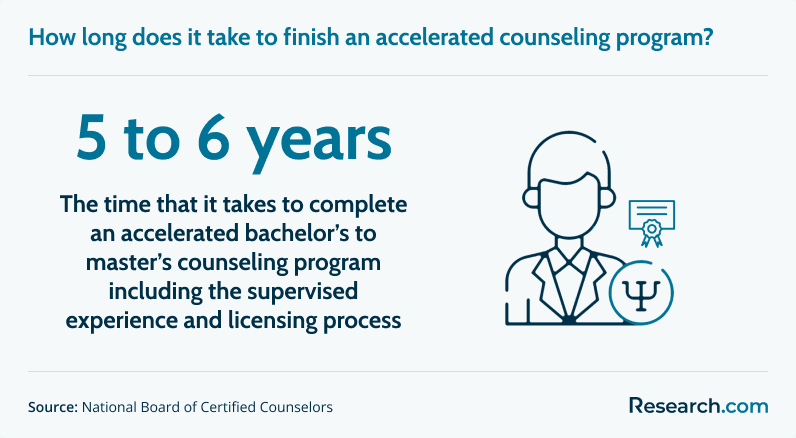
| Accelerated completion | Some combined programs can be completed in 5 to 6 years, compared with the usual 6 to 7 years when the degrees are completed separately. | Is the shorter timeline guaranteed, or does it depend on course load and sequencing? |
| Potential cost savings | Fewer total semesters may reduce tuition, fees, and living expenses. | Are graduate courses billed at undergraduate or graduate tuition rates? |
| Early commitment to counseling | The format is best for students who are already confident about a counseling career. | What happens if I decide to change majors or pursue a different graduate program? |
A combined bachelor’s/master’s option can be a smart choice if you are committed to counseling and can handle an intensive schedule. It may not be ideal if you are still deciding between psychology, social work, counseling, education, or human services, because switching tracks later can reduce the time and cost benefits.
Are there ways to become a counselor without a master's degree?
Yes, but the answer depends on how the word “counselor” is used in your state and workplace. Many independently licensed clinical counseling roles require a master’s degree. However, several counseling-related positions may be available with a certificate, associate degree, bachelor’s degree, specialized training, or lived-experience certification.
For substance abuse, behavioral disorder, and mental health counselors, the cited 2033 employment figure is 388,200, with a bachelor’s degree listed as the typical entry-level education. Requirements still vary by state, setting, and job title, so students should confirm whether the role they want is licensed, certified, registered, or employer-defined.
| Role | Typical Time Frame | Common Education or Training | Best Fit |
| Substance Abuse Counselor | Approximately 2-4 years for an associate degree or 4 years for a bachelor’s degree, plus supervised experience and certification | Addiction counseling or related degree; state board or professional certification such as NAADAC may apply | Students who want to work in addiction recovery, treatment centers, or community programs |
| Peer Support Specialist | A few months to 1 year, depending on the certification process | High school diploma or equivalent; state training, supervised experience, and exam may be required | People with lived experience who want to support others in recovery or behavioral health systems |
| Behavioral Health Technician | A few months to 2 years, depending on education and certification | High school diploma or equivalent; some employers prefer a certificate or associate degree | Entry-level workers who want clinical exposure before pursuing advanced counseling education |
| Case Manager | 4 years for a bachelor’s degree, plus certification if required | Bachelor’s degree in social work, psychology, or a related field; Certified Case Manager credential may be preferred | Students interested in client coordination, referrals, social services, and care planning |
| Life Coach | A few months to 1 year for certification programs | No specific degree is required; training and certification from organizations such as the International Coach Federation can improve credibility | People focused on goal setting, personal development, and non-clinical support |
Important warning about non-master’s counseling paths
Do not assume that a short certificate gives you the right to diagnose, treat mental health disorders, or practice psychotherapy independently. Those activities are regulated in many states. Before choosing a fast program, check the title you can legally use, the scope of practice, and whether employers in your area accept the credential.
Are there accelerated bachelor's programs for counseling?
Yes. Accelerated bachelor’s programs are available in counseling-related fields such as psychology, human services, behavioral health, addiction studies, and substance abuse counseling. These programs are usually designed for adult learners, transfer students, or working professionals who want a faster path to entry-level human services roles or graduate counseling programs.
Demand for mental health services is one reason these pathways matter. Based on the 2023 report of the US Conference of Mayors, 82% of the cities reported that they developed new initiatives and increased funding for programs addressing growing mental health needs within specific community groups. Accelerated education alone will not solve workforce shortages, but it can help qualified students reach supervised practice and employment sooner.
Common features of accelerated bachelor’s programs
- Shorter academic terms: Courses may run in 8-week sessions rather than traditional 16-week semesters, allowing students to complete more credits in a year.
- Year-round course availability: Summer, fall, spring, and sometimes multiple start dates can reduce downtime.
- Credit for prior learning: Some schools evaluate work training, military education, previous coursework, or professional certifications for possible credit.
- Online or hybrid delivery: Flexible formats can help students balance school, employment, and family responsibilities. Students interested in addiction counseling can compare accredited online colleges for drug and alcohol counseling.
When an accelerated bachelor’s degree makes sense
- You already have transfer credits and want to finish a bachelor’s degree efficiently.
- You plan to apply to a master’s program in counseling and need the undergraduate credential first.
- You want entry-level work in behavioral health, addiction services, case management, or human services.
- You can handle a heavier reading, writing, and assignment schedule in compressed courses.
When to be cautious
- The program is not regionally accredited or recognized by employers.
- The curriculum does not include prerequisites expected by graduate counseling programs.
- The school makes vague promises about licensure without identifying state-specific requirements.
- The short timeline requires a course load that is unrealistic with your work schedule.
Can I become a counselor with a degree in a different field?
Yes. Many counseling students begin with undergraduate degrees in psychology, sociology, education, social work, criminal justice, health sciences, business, humanities, or other fields. A non-counseling bachelor’s degree does not automatically disqualify you from graduate counseling study, but you may need prerequisite coursework and careful licensure planning.
Interest in career changes toward counseling is also tied to workforce need. The American Counseling Association has discussed the mental health provider shortage, and the US health behavior market is expected to grow $49.3 billion in the next decade. For career changers, the key is not the name of the undergraduate major; it is whether the graduate program and supervised experience meet the requirements for the credential you want.
Step 1: Apply to a master’s program that accepts non-counseling majors
Many graduate counseling programs admit students from unrelated academic backgrounds. Admissions committees may value relevant work experience, volunteer service, strong writing skills, and a clear statement of professional goals. Some programs require prerequisite courses in psychology, human development, statistics, or research methods before students begin the core counseling sequence.
Step 2: Consider bridge certificates when appropriate
Post-baccalaureate certificates can help career changers build foundational knowledge before applying to a master’s program. In some faith-based or specialized areas, students may compare options such as a masters in Christian counseling. Before enrolling, ask whether certificate credits transfer into a licensure-track master’s degree or whether the certificate is only for enrichment.
Step 3: Match your target state’s licensure rules
Licensure is state-specific. A graduate degree from the wrong type of program can create delays if it does not include required coursework, practicum hours, internship hours, or accreditation expectations. Before you enroll, review your state counseling board’s rules and ask the school to identify exactly how the program maps to those requirements.
How much does it cost to become a counselor?
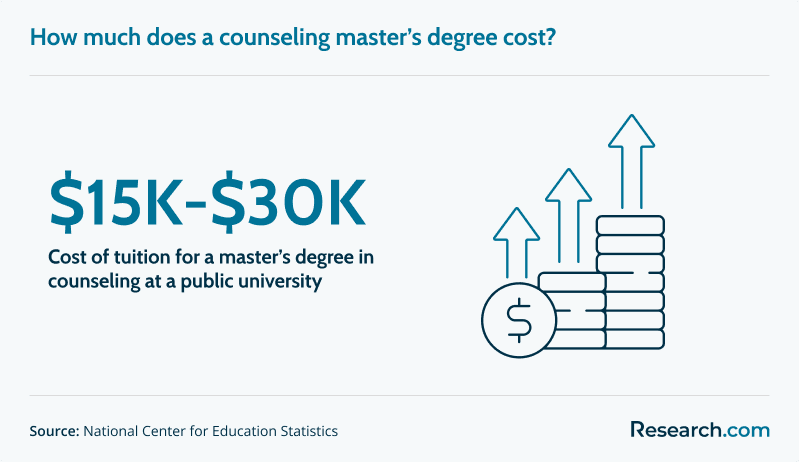
The cost to become a counselor depends mainly on degree level, school type, residency status, online versus campus format, transfer credit, and licensure expenses. For a master’s degree in counseling, public university tuition typically ranges from $15,000 to $30,000 for in-state students and can be higher for out-of-state students. Students looking for lower-cost school counseling pathways may compare affordable online CACREP school counseling programs.
Private universities often charge between $30,000 and $60,000 or more for a comparable master’s program. Tuition is only part of the total cost. Textbooks, technology fees, background checks, liability insurance, travel for field placements, and other program charges can add several thousand dollars.
Licensure adds another layer of cost. Fees for the National Counselor Examination (NCE) or similar exams generally range from $200 to $400. State licensure application fees vary widely but typically fall between $100 and $300. Supervised practice can also create costs if paid supervision is required or if lower-paid clinical work is needed before full licensure.
Overall, education, exam, and licensing expenses can range from $20,000 to $70,000 or more, depending on the school, state, residency status, and credential pathway.
| Cost Category | Typical Amount Stated | What to Check Before Enrolling |
| Public master’s tuition for in-state students | $15,000 to $30,000 | Whether the rate applies to all credits, clinical courses, and online students |
| Private university master’s tuition | $30,000 to $60,000 or more | Scholarships, assistantships, employer tuition support, and total program fees |
| NCE or similar exam fees | $200 to $400 | Whether the exam is required for your state and when you become eligible |
| State licensure application fees | $100 to $300 | Initial application, background checks, renewals, and jurisprudence exams |
| Total estimated path cost | $20,000 to $70,000 or more | Tuition, fees, supervision, exams, lost wages, and time to licensure |
Ways to reduce the cost of counseling education
- Start at a lower-cost institution for general education credits if they will transfer cleanly.
- Choose a program with transparent tuition and limited hidden fees.
- Ask whether practicum and internship placements require travel or unpaid hours.
- Compare public, private, online, and hybrid programs by total program cost, not just per-credit tuition.
- Use employer tuition benefits, scholarships, grants, and federal aid when eligible.
What are the different types of counseling careers?
Counseling includes multiple professional tracks, and each one has different populations, work settings, and credential requirements. Some roles require graduate-level training. For marriage and family therapists, 79% of employers required a master’s in 2023.
| Counseling Career | Main Focus | Common Work Settings | Typical Requirement |
| Mental Health Counselor | Supports individuals, couples, or groups dealing with anxiety, depression, stress, and other mental health concerns | Private practice, hospitals, community agencies, and mental health clinics | Usually a master’s degree in counseling or clinical psychology and state licensure |
| School Counselor | Helps students with academic planning, career readiness, and social or personal development | Elementary, middle, and high schools | Master’s degree in school counseling and state certification or licensure |
| Career Counselor | Guides clients through career exploration, job searches, workplace transitions, and professional goals | Colleges, universities, career centers, workforce agencies, and private practice | Master’s degree in counseling or a related field; additional certification may be expected |
| Substance Abuse Counselor | Works with clients affected by addiction, substance use, and recovery challenges | Rehabilitation centers, hospitals, community agencies, and private practice | Often a bachelor’s degree in addiction counseling or a related field; students may consider an online substance abuse counseling degree |
| Marriage and Family Therapist (MFT) | Helps couples and families address relationship patterns, communication problems, and family systems issues | Private practice, community agencies, and hospitals | Master’s degree in marriage and family therapy and state licensure |
Students drawn to relationship and family systems work can explore an online masters degree in family counseling as one possible academic route.
What are the key challenges and rewards of a counseling career?
Counseling can be meaningful work, but it is not an easy career. The rewards are real: counselors may help clients rebuild relationships, manage emotional distress, recover from addiction, navigate school challenges, or make major life decisions. The work can also offer room for specialization, from family systems and addiction recovery to school counseling, grief support, and creative therapies.
The challenges are equally important to understand before committing to the field. Counselors may work with clients in crisis, hear traumatic stories, manage safety concerns, and handle cases where progress is slow or uneven. Over time, this emotional exposure can contribute to compassion fatigue or burnout if counselors do not use supervision, peer consultation, boundaries, and self-care strategies.
Ethical and legal responsibilities also shape the profession. Counselors must protect confidentiality, recognize mandated reporting duties, maintain appropriate boundaries, document carefully, and stay current with continuing education requirements. The path into the field can also be expensive because of graduate tuition, supervised experience, exam fees, and licensure costs.
| Rewards | Challenges | How to Prepare |
| Direct impact on individuals, families, students, and communities | Emotional intensity and exposure to trauma | Use supervision, peer consultation, and healthy caseload boundaries |
| Multiple specialization options | Long education and licensure process for clinical roles | Plan the full timeline before choosing a degree |
| Opportunities in schools, clinics, agencies, hospitals, private practice, and telehealth | Ethical, legal, and documentation responsibilities | Choose programs with strong ethics, practicum, and legal training |
| Potential for private practice or leadership roles over time | Uncertain income during early supervised practice | Evaluate local job markets and supervision costs before enrolling |
Students interested in combining counseling and creative expression may also research art therapy master's programs, which can lead to a more specialized therapeutic pathway.
What is the average salary for counselors?
Counselor salaries vary by specialty, state, work setting, education level, licensure status, years of experience, and whether the counselor works for an employer or in private practice. The ranges below show how widely compensation can differ across counseling-related fields.
| Counselor Type | Salary Range |
| Mental Health Counselor | $35,000 to $75,000 per year |
| School Counselor | $45,000 to $80,000 per year |
| Career Counselor | $40,000 to $75,000 per year |
| Substance Abuse Counselor | $35,000 to $65,000 per year |
| Marriage and Family Therapist (MFT) | $40,000 to $80,000 per year |
| Rehabilitation Counselor | $35,000 to $65,000 per year |
| Child and Adolescent Counselor | $40,000 to $70,000 per year |
| Genetic Counselor | $65,000 to $120,000 per year |
| Clinical Social Worker | $45,000 to $80,000 per year |
| Grief Counselor | $40,000 to $70,000 per year |
What affects counselor pay?
- Licensure: Fully licensed clinicians often qualify for roles that are not open to pre-licensed workers.
- Specialization: Trauma, family therapy, addiction treatment, rehabilitation, genetic counseling, and other specialties may have different pay ranges.
- Setting: Schools, hospitals, community agencies, government programs, and private practice can pay differently.
- Location: Salaries and demand vary by state, city, and rural versus urban setting.
- Business model: Private practice may offer more autonomy, but it also brings marketing, billing, insurance, and administrative responsibilities.
What is the job outlook for counselors in the next decade?
The overall outlook for many counseling fields is positive, supported by demand for mental health services, addiction treatment, school support, and career guidance. Still, job prospects depend on specialty, location, licensure, and employer setting.
The projected growth for mental health counselors is 22% through 2031, supported by demand for mental health services, greater acceptance of care, and broader insurance coverage for mental health. School and career counselors are projected to grow by 10% within the same period, with demand connected to student enrollment, academic support, career planning, and social development needs.
Substance abuse and behavioral disorder counselors have a projected demand level of 23%, influenced by awareness of substance use treatment, changes in legislation related to drug offenders, and increased funding for addiction treatment. Broader discussion of the workforce gap also appears in coverage of the increasing demand for mental health services.
| Field | Projected Growth Stated | Main Demand Drivers |
| Mental Health Counselors | 22% through 2031 | Mental health needs, increased acceptance of counseling, and expanded insurance coverage |
| School and Career Counselors | 10% within the same period | Student enrollment, academic planning, career guidance, and social development support |
| Substance Abuse and Behavioral Disorder Counselors | 23% | Addiction treatment demand, policy changes, and treatment funding |
Students should treat job outlook data as a broad signal, not a guarantee. A strong local job market still depends on licensure eligibility, practicum quality, supervision access, and the types of employers hiring in the region where you plan to work.
Are there any quick certification programs for counseling?
Yes. Shorter certification programs can help people enter counseling-adjacent roles, add a specialty, or strengthen qualifications. They are usually not the same as state licensure and may not authorize independent clinical practice. Some students compare these with quick and easy online degrees, but the right choice depends on whether you need a credential, degree, license, or employer-recognized training.
| Certification | Purpose | Typical Candidate | Important Limitation |
| Certified Alcohol and Drug Counselor (CADC) | Provides focused preparation for addiction and substance abuse counseling roles | People pursuing work in rehabilitation centers, hospitals, or community agencies | Requirements are set by state boards or professional organizations such as NAADAC |
| Certified Rehabilitation Counselor (CRC) | Prepares professionals to support people with disabilities in personal, social, and vocational goals | Usually candidates with a master’s degree in rehabilitation counseling or a related discipline | Candidates typically need supervised experience before taking the CRCC exam |
| Certified Grief Counselor | Builds skills in bereavement support and grief-informed care | Professionals in social work, pastoral care, nursing, or counseling backgrounds | Often supplements an existing helping profession rather than replacing licensure |
| Certified Clinical Trauma Professional (CCTP) | Focuses on trauma-informed assessment and treatment of trauma and PTSD | Usually professionals with a master’s degree in a mental health field | Appropriate scope of practice depends on licensure and state rules |
| National Certified Counselor (NCC) | Shows general counseling competency through a national credential | Individuals with a master’s degree in counseling or a related field who meet coursework, fieldwork, and exam requirements | Certification does not automatically replace state licensure |
Certified Alcohol and Drug Counselor (CADC)
The CADC credential is intended for professionals who want to support clients affected by addiction and substance use. In 2023, CACREP conferred 61 addiction counseling specializations. Certification requirements may include approved education, supervised experience, and an exam, depending on the state board or organization involved.
Certified Rehabilitation Counselor (CRC)
The CRC credential is designed for professionals who work with individuals with disabilities, including vocational assessment, job placement, advocacy, and adjustment support. As of 2023, there were 47 rehabilitation specialization programs accredited by CACREP. Candidates commonly need a master’s degree in rehabilitation counseling or a related field plus supervised experience before taking the Commission on Rehabilitation Counselor Certification exam.
Certified Grief Counselor
Grief counseling certification gives professionals additional preparation for supporting clients after death, loss, or major life transition. It is often pursued by people already working in counseling, nursing, social work, hospice, pastoral care, or community support roles.
Certified Clinical Trauma Professional (CCTP)
The CCTP credential focuses on trauma-informed care, PTSD treatment concepts, ethical considerations, and evidence-based interventions. Candidates typically already have graduate-level mental health preparation, and the credential is best viewed as an advanced specialization rather than an entry-level license.
National Certified Counselor (NCC)
The NCC credential indicates broad professional counseling competence. Candidates generally need a master’s degree in counseling or a related field, approved coursework and fieldwork, and a passing score on the National Counselor Examination. It can strengthen professional credibility, but state licensure remains the key requirement for many clinical roles.
Graduate education may also support advancement and higher-level roles. Professionals with undergraduate social work degrees who want doctoral-level preparation can compare the cheapest online DSW programs.
How can I finance my counseling education?
Financing a counseling degree usually requires combining several funding sources rather than relying on one option. Students should review federal financial aid, school-based scholarships, grants, employer tuition assistance, graduate assistantships, loan repayment programs, and payment plans. Counseling students should also compare program length and total cost because a cheaper per-credit rate may not be the cheapest overall pathway.
Students pursuing marriage and family therapy can compare lower-cost options such as the cheapest online MFT programs, but affordability should never be separated from licensure alignment. A program that is inexpensive but does not meet your state’s requirements can become costly if you need extra coursework after graduation.
Financial questions to ask before enrolling
- What is the total tuition for the full program, not just the cost per credit?
- Are practicum, internship, technology, residency, background check, and graduation fees included in the estimate?
- Does the school offer counseling-specific scholarships or assistantships?
- Can I keep working while completing practicum and internship requirements?
- Does the program qualify for federal financial aid?
- Will I need paid supervision after graduation, and what does that typically cost in my state?
What are the career growth opportunities in counseling?
A counseling career can expand in several directions after graduation and licensure. Some counselors deepen their clinical specialty, while others move into supervision, program leadership, private practice, teaching, consulting, or telehealth-based services. The right growth path depends on your interests, risk tolerance, preferred client population, and long-term income goals.
Common counseling specializations
- Mental Health Counseling: Focuses on emotional, behavioral, and psychological concerns.
- Marriage and Family Therapy: Addresses couple, family, and relationship dynamics.
- Substance Abuse Counseling: Supports clients working through addiction and recovery.
- School Counseling: Helps students with academic, social, personal, and career development.
- Career Counseling: Guides people through job searches, career changes, and professional planning.
- Rehabilitation Counseling: Assists people with disabilities in pursuing personal, social, and vocational goals.
Advancement options after experience
- Private practice: Offers autonomy and potential income growth, but requires business, marketing, billing, and compliance skills.
- Clinical supervision: Allows experienced counselors to mentor new professionals and oversee ethical practice.
- Program leadership: Includes roles such as clinical director, behavioral health manager, or agency administrator.
- Consulting or education: Experienced counselors may train professionals, teach, or advise organizations.
- Telehealth practice: Expands service reach but requires attention to licensure jurisdiction, privacy, and digital engagement.
Students who want a broad view of options can review careers in counseling to compare specialties, settings, and long-term pathways.
What are the steps to take to start a career in counseling?
The safest route into counseling is to work backward from the job title and state credential you want. “Counselor” can mean different things depending on setting, so the steps for a school counselor, licensed professional counselor, behavioral health counselor, substance abuse counselor, or MFT are not identical.
- Choose a target counseling role. Decide whether you want mental health, school, addiction, family, career, rehabilitation, or another specialty.
- Check state requirements first. Review your state licensing or certification board before choosing a school.
- Select the correct degree level. Entry-level support roles may not require a master’s, while clinical licensure usually does.
- Confirm accreditation and curriculum fit. Make sure the program includes required coursework, practicum, internship, and supervision preparation.
- Build related experience. Volunteer work, behavioral health technician roles, case management, crisis lines, and human services jobs can strengthen readiness.
- Complete supervised fieldwork. Practicum, internship, and post-graduate supervision are central to licensed practice.
- Pass required exams. Depending on the credential, this may include the NCE or another state-approved exam.
- Apply for licensure or certification. Submit transcripts, supervised-hour documentation, exam scores, background checks, and fees.
- Continue professional development. Maintain credentials through continuing education and ethical practice.
Students considering behavioral health can also review how to become a behavioral health counselor for a more focused pathway.
What soft skills are essential for a successful counseling career?
Degrees and licenses matter, but counseling effectiveness also depends heavily on interpersonal skill. Counselors need empathy, active listening, emotional self-regulation, clear communication, cultural humility, and the ability to build trust while maintaining boundaries. These skills help clients feel heard without shifting responsibility away from the client’s own goals and choices.
Strong counselors also learn to tolerate ambiguity. Clients may not improve quickly, may miss appointments, may resist change, or may present complex trauma, family, substance use, or social challenges. Counselors must respond professionally while following ethical standards and documenting carefully.
| Skill | Why It Matters | How to Build It |
| Active listening | Helps clients feel understood and supports accurate assessment | Practice reflective responses, summarizing, and open-ended questions |
| Empathy | Builds rapport without minimizing client distress | Use supervision and feedback to improve client-centered responses |
| Cultural sensitivity | Supports ethical care across different backgrounds and identities | Pursue training, consultation, and self-reflection |
| Boundary setting | Protects both client welfare and counselor sustainability | Study ethics, document clearly, and use supervision |
| Emotional resilience | Reduces burnout and compassion fatigue risk | Maintain consultation, self-care routines, and manageable caseloads |
Specialized career paths can also affect compensation and role expectations, as shown in discussions of grief counselor salary.
How can continuous professional development boost my counseling practice?
Continuing education keeps counselors current with ethical standards, clinical methods, technology, cultural issues, and emerging client needs. It can also help counselors move into specializations such as trauma care, teletherapy, grief counseling, addiction treatment, family systems, or school-based interventions.
Professional development can include workshops, supervision groups, peer consultation, conferences, certificate programs, research review, and advanced degrees. For practical skill growth and platform-based therapy considerations, students and counselors may review how to become a better help therapist.
High-value professional development areas
- Ethics, documentation, confidentiality, and mandated reporting
- Trauma-informed care and crisis response
- Telehealth laws, privacy, and virtual engagement skills
- Cultural responsiveness and work with underserved communities
- Assessment, treatment planning, and evidence-based interventions
- Practice management for counselors planning private practice
How can networking and mentorship accelerate my counseling career?
Networking and mentorship can help new counselors make better decisions about graduate programs, supervision, licensure, specialization, and job opportunities. Professional relationships also expose students to real-world practice settings that may not be obvious from program brochures.
Students can build a network through professional associations, school faculty, internship supervisors, alumni groups, conferences, online communities, and local behavioral health agencies. Mentors can help with ethical questions, clinical growth, workplace fit, and long-term planning. Students interested in faith-integrated counseling may also compare options such as a top online Christian counseling master's degree.
How to use mentorship well
- Ask specific questions about licensure, supervision, and early-career mistakes.
- Request feedback on practicum choices and specialization plans.
- Learn how different work settings affect caseload, income, burnout risk, and advancement.
- Build relationships before you need a job recommendation.
How do I choose the right counseling degree program?
Choosing a counseling program should start with licensure fit, not advertising language. A program may be flexible, affordable, or fast, but it is not a good choice if it does not meet your state’s requirements for the role you want. Students comparing clinical counseling and social work should also understand whats the difference between LPC and LCSW, because these credentials lead to different training models and licensing boards.
| Factor | Why It Matters | What to Ask |
| Accreditation | Accreditation can affect financial aid, licensure eligibility, transferability, and employer trust. | Is the institution accredited, and does the counseling program meet my state’s expectations? |
| Licensure alignment | State boards often require specific coursework and supervised hours. | Which states does the program explicitly prepare students for? |
| Practicum and internship support | Field placement quality affects readiness and licensure progress. | Does the school help secure placements, or must students find their own? |
| Online versus campus format | Online programs can be flexible, but clinical training still requires approved field sites. | Are there in-person residencies, synchronous classes, or local placement requirements? |
| Total cost | Tuition alone does not show the full financial commitment. | What is the total program cost including fees, books, travel, and supervision? |
| Faculty and specialization options | Faculty expertise can shape training quality and career direction. | Are there courses or supervisors in my intended specialty? |
Common mistakes when choosing a counseling program
- Assuming all online programs meet licensure requirements: Online delivery does not automatically mean state approval.
- Choosing only by speed: A fast program that lacks required fieldwork can delay licensure.
- Looking only at tuition: Fees, travel, books, background checks, and supervision can change the real cost.
- Ignoring accreditation: Accreditation problems can affect licensure, transfer credits, and employer acceptance.
- Relying only on rankings: A highly ranked program may not fit your state, schedule, budget, or specialty goals.
- Assuming salary outcomes are guaranteed: Pay depends on specialty, location, licensure, employer, and experience.
How can I strategically elevate my earning potential as a counselor?
Counselors who want to improve earning potential should focus on credentials, specialization, experience, and practice setting rather than expecting income to rise automatically with time. Advanced certifications, high-demand specialties, supervision credentials, and private practice skills can help, but income still varies by market and scope of practice.
Specializing in areas such as trauma recovery, substance use, family therapy, teletherapy, or integrated behavioral health may improve competitiveness. Counselors interested in higher-earning paths can review what type of therapist get paid the most for additional context.
Practical ways to improve earning potential
- Complete full licensure as soon as you are eligible.
- Choose a specialty with consistent local demand.
- Develop skills in assessment, treatment planning, documentation, and measurable outcomes.
- Learn billing, insurance, marketing, and compliance if private practice is a goal.
- Pursue supervision, leadership, or program management roles after gaining experience.
- Use continuing education strategically instead of collecting unrelated certificates.
How is technology shaping counseling practice?
Technology is changing how counseling is delivered, documented, marketed, and taught. Teletherapy, digital mental health tools, online education, electronic health records, and AI-supported platforms can expand access, but they also introduce privacy, ethics, quality, and licensure concerns.
Teletherapy and remote care
Teletherapy allows counselors to meet with clients through video, phone, or text-based systems. It can improve access for clients who live far from providers, have transportation barriers, or need more flexible scheduling. However, counselors must follow state licensure rules, emergency protocols, privacy standards, and platform security requirements.
Digital mental health tools
Apps and online tools may support mood tracking, mindfulness, coping skills, CBT-based exercises, DBT-informed skills, and between-session practice. These tools can supplement counseling, but they should not replace clinical judgment, informed consent, or appropriate risk assessment.
Online counseling education
Online counseling programs can help working adults and geographically limited students access graduate training. Technology has also contributed to accelerated online formats. Students interested in school counseling can compare the most affordable online school counseling degrees, but they should still verify field placement support and state certification alignment.
Ethical issues in tech-enabled counseling
- Protecting client confidentiality on digital platforms
- Using HIPAA-compliant tools when required
- Managing emergencies when clients are remote
- Understanding interstate licensure restrictions
- Interpreting nonverbal cues in virtual sessions
- Evaluating AI-based tools carefully before using them in client care
What emerging counseling specializations can broaden my career opportunities?
Emerging and expanding counseling specializations can help counselors serve specific populations and stand out in the job market. Areas such as trauma-informed care, art-based therapy, teletherapy, addiction counseling, grief support, and integrated behavioral health are examples of focused paths that may appeal to different interests and settings.
Substance abuse counseling remains one pathway with relatively clear certification options and strong community need. Students considering this direction can review substance abuse counselor job opportunities to better understand education and career considerations.
How to choose a specialization
- Identify the client population you most want to serve.
- Check whether the specialty requires a license, certificate, supervised experience, or graduate coursework.
- Look at local employer demand before investing in additional training.
- Ask supervisors which credentials are respected in your target setting.
- Choose training that deepens your scope of practice rather than adding unrelated credentials.
Key Insights
- The fastest counseling-related roles may take only a few months to several years, but independently licensed clinical counseling careers usually require a master’s degree, supervised hours, exams, and state licensure.
- Accelerated and online programs can reduce classroom time, especially through transfer credit and year-round enrollment, but they do not erase state-mandated clinical requirements.
- Combined bachelor’s/master’s programs can shorten the academic path to about 5 to 6 years for committed students, but they are best for those who are already certain about counseling.
- Some counseling-adjacent roles do not require a master’s degree, including peer support, behavioral health technician, case management, life coaching, and some substance abuse counseling pathways.
- Total costs can range from $20,000 to $70,000 or more once tuition, exams, licensure fees, supervision, and related expenses are included.
- Program choice should be based on accreditation, licensure alignment, field placement support, total cost, and career fit—not speed alone.
- Technology is expanding access through teletherapy and online education, but counselors must pay close attention to privacy, ethics, emergency planning, and state licensure rules.
- The best next step is to choose your target counseling role, check your state’s requirements, and compare programs only after you know which credential you need.
References:
- American Counseling Association (2024). Counseling Workforce Survey Report.
- Bureau of Labor Statistics. (n.d.). Counselors, All Other.
- U.S. Bureau of Labor Statistics. (2024). Substance Abuse, Behavioral Disorder, and Mental Health Counselors: Occupational Outlook Handbook.
- O*NET Online. (2024). 21-1015.00 - Rehabilitation Counselors.
Other Things You Should Know About the Fastest Way to Become a Counselor
Yes, accelerated counseling programs typically require passing exams like the National Counselor Examination (NCE) in 2027. This exam is crucial for obtaining licensure. It's essential to prepare thoroughly to meet the standards set by governing bodies for a quick transition into counseling.
Most states require 2,000 to 4,000 hours of supervised clinical experience after the degree, completed over about 1 to 3 years. These hours must usually be earned under a licensed supervisor and documented before you can sit for the state licensing exam.
To become a counselor quickly in 2027, a master’s degree in counseling or a related field is essential. Some programs offer accelerated tracks, allowing completion in as little as 18 months, which can expedite the path to licensure.
In 2027, the timeline to become a licensed counselor can significantly vary by state because each state has unique requirements. These can affect the length of time needed for required education, supervised hours, and exams. Research specific state guidelines to streamline the process.


