
2027 How to Become a Mental Health Counselor in South Dakota

Co-Founder and Chief Data Scientist
Becoming a mental health counselor in South Dakota is a licensure-driven career choice, not just an academic one. You need the right graduate degree, supervised clinical experience, a passing exam score, and a clear understanding of where counselors are needed across the state. This guide explains the South Dakota pathway for future licensed professional counselors, what the work looks like, how to compare education options, and how to decide whether the career fits your goals, finances, and preferred practice setting.
The need is real. In February 2021, 29.1% of adult residents in South Dakota reported symptoms of anxiety or depression, and 16.9% said they were unable to receive needed treatment (National Alliance on Mental Illness, 2023). For students and career changers, that demand creates opportunity—but it also means the work can be emotionally demanding, especially in communities with limited mental health access.
Quick Answer: How Do You Become a Mental Health Counselor in South Dakota?
To become a licensed professional counselor (LPC) in South Dakota, you generally need to complete a master’s degree in counseling or a closely related field, finish supervised clinical experience, and pass the National Counselor Examination (NCE). South Dakota requires at least 2,000 hours of post-graduate supervised counseling practice over a two-year period before candidates can move toward full licensure.
Before enrolling in a program, confirm that the degree meets South Dakota licensing rules, ask how practicum and internship placements are arranged, and review total cost—not just tuition. A counseling degree can lead to roles in community mental health, substance abuse treatment, schools, private practice, rehabilitation services, and family-focused settings, but licensure requirements vary by role and specialization.
Key Things You Should Know About Becoming a Mental Health Counselor in South Dakota
- Across the US, 28.2% of adults reported symptoms of anxiety and/or depressive disorder in May 2022. In South Dakota, 22.6% of adults reported the same symptoms during the same period (Kaiser Family Foundation, 2024).
- In the US, employment for substance abuse, behavioral disorder, and mental health counselors is expected to grow by 18% between 2022 and 2032 [US Bureau of Labor Statistics (BLS), 2024].
- Substance abuse, behavioral disorder, and mental health counselors in South Dakota had a median hourly wage of $23.33 in May 2023 (US BLS, 2024), which is equivalent to an estimated $44,793.6 annual wage.
- Single adult residents without children in South Dakota can live comfortably with a gross annual income of $40,718 (Glasmeier & Massachusetts Institute of Technology, 2024).
- To become a licensed professional counselor (LPC), candidates must complete a master's degree in a related field, undergo supervised clinical experience, and pass the National Counselor Examination (NCE).
- What does a mental health counselor do in South Dakota?
- What steps are required to become a mental health counselor in South Dakota?
- How should students prepare for a counseling career in South Dakota?
- Why does practicum experience matter for future counselors?
- Which counseling specializations are available in South Dakota?
- What education and licensing requirements apply to South Dakota mental health counselors?
- Is South Dakota a good state for mental health counselors?
- How strong is demand for mental health counselors in South Dakota?
- What jobs can mental health counseling graduates pursue in South Dakota?
- What are South Dakota’s marriage counselor education requirements?
- Is a master’s in counseling worth the cost?
- What legal and ethical issues should South Dakota counselors understand?
- Which trends may shape counseling work in South Dakota?
- Which programs can prepare students for counseling careers in South Dakota?
- How can mentorship and networking support a counseling career?
- Can counselors move into related specialties?
- How can candidates avoid delays in the LPC licensing process?
- What challenges should South Dakota counselors expect?
- Which extra certifications can expand counseling practice?
- How can counselors reduce burnout risk?
- How are telehealth and online education changing counseling in South Dakota?
What does a mental health counselor do in South Dakota?
Mental health counselors help clients understand emotional, behavioral, and relational problems and develop healthier ways to manage them. In South Dakota, their work often includes counseling people experiencing anxiety, depression, trauma, substance use concerns, family conflict, grief, stress, and major life transitions.
The role matters because access to behavioral health care is uneven across the state. Across the US, 28.2% of adults reported symptoms of anxiety and/or depressive disorder in May 2022. In South Dakota, 22.6% of adults reported the same symptoms during the same period (Kaiser Family Foundation, 2024). Counselors may work in Sioux Falls or Rapid City, but they may also serve rural communities where long travel distances, provider shortages, stigma, and limited specialty services can affect care.
Typical responsibilities include:
- Assessment and intake: gathering client history, identifying symptoms, evaluating risk, and determining whether the client needs counseling, referral, crisis support, or coordinated care.
- Individual counseling: helping clients process emotions, change harmful patterns, strengthen coping skills, and work toward treatment goals.
- Group counseling: facilitating structured sessions for clients dealing with grief, addiction recovery, stress, anger, trauma, or related issues.
- Family and relationship support: addressing communication problems, conflict patterns, parenting stress, and relational strain.
- Care coordination: collaborating with physicians, schools, social workers, rehabilitation teams, addiction treatment providers, and community agencies when appropriate.
- Documentation and ethics: maintaining clinical records, protecting confidentiality, obtaining informed consent, and following state and professional standards.
In practice, the job requires more than empathy. Counselors need clinical judgment, cultural humility, crisis awareness, strong boundaries, and comfort working with people whose needs may exceed what one provider can solve alone.
| Work Setting | Common Clients | What the Counselor Often Does | Best Fit For |
| Community mental health center | Adults, families, and clients with limited access to private care | Provides therapy, crisis support, referrals, and case coordination | Counselors who want broad clinical experience and public-service work |
| Private practice | Individuals, couples, families, or specialty populations | Offers scheduled therapy and may manage billing, marketing, and business operations | Experienced clinicians who want autonomy |
| School or college setting | Students and young adults | Supports academic, social, emotional, and behavioral concerns | Counselors interested in youth development and prevention work |
| Substance use treatment program | Clients with addiction or co-occurring concerns | Conducts recovery counseling, relapse-prevention planning, and group sessions | Counselors drawn to addiction treatment and recovery systems |
| Hospital or integrated care setting | Patients with medical and behavioral health needs | Coordinates with medical teams and supports clients through acute or ongoing conditions | Counselors comfortable in fast-moving clinical environments |
What steps are required to become a mental health counselor in South Dakota?
The South Dakota counseling pathway is easiest to manage when you treat it as a sequence: undergraduate preparation, graduate training, supervised practice, examination, and licensure. Skipping early verification can create expensive delays later, especially if a degree does not align with state expectations.
- Complete a bachelor’s degree. Most students begin with psychology, counseling, human services, social work, sociology, or a related major. A bachelor’s degree alone does not qualify you for independent mental health counseling practice, but it builds the foundation for graduate study. Students comparing early career options can review broader counseling career pathways.
- Enroll in a master’s program that supports licensure. South Dakota LPC candidates need graduate education in counseling or a related field. Before applying, ask whether the curriculum is designed for LPC preparation in South Dakota and whether it includes required clinical training components.
- Finish practicum and internship requirements. Graduate programs typically include supervised fieldwork. These placements help students connect classroom learning to real clients, documentation, ethics, and treatment planning.
- Complete supervised post-graduate practice. South Dakota mandates at least 2,000 hours of post-graduate supervised counseling practice over a two-year period. Candidates should document hours carefully and confirm supervisor qualifications before beginning.
- Pass the required examination. Candidates must pass the National Counselor Examination (NCE) or another equivalent test recognized by the South Dakota Board of Examiners for Counselors and Marriage and Family Therapists.
- Apply for licensure. Submit transcripts, supervision records, exam results, application forms, fees, and any other required documentation to the state board.
- Maintain the license. After licensure, counselors are responsible for renewal, continuing education, ethical practice, and staying current with state requirements.
| Stage | Main Decision | Risk to Avoid | Practical Action |
| Bachelor’s degree | Choose a relevant major and build helping-skills experience | Assuming an undergraduate degree is enough for independent counseling | Use electives, volunteer work, and research experience to prepare for graduate school |
| Master’s program | Select a degree aligned with South Dakota licensure | Choosing a program based only on convenience or price | Ask the program to confirm how graduates meet South Dakota LPC requirements |
| Fieldwork | Secure practicum and internship placements | Waiting too long to plan clinical placements | Ask early whether the school helps arrange sites in South Dakota |
| Supervision | Complete required post-graduate hours | Poor hour tracking or using an unapproved supervisor | Document hours, supervision dates, and client-contact details consistently |
| Examination and application | Pass the accepted exam and submit a complete file | Missing forms or outdated requirements | Verify instructions directly with the state board before applying |
For a broader look at how counseling careers, education, and pay fit together, Research.com also offers a guide on how to become a counselor.
How should students prepare for a counseling career in South Dakota?
Students can strengthen their chances of entering the field by making practical choices before graduate school, not after. The best preparation combines academic planning, direct exposure to helping professions, and early familiarity with South Dakota’s licensing process.
- Choose an accredited and licensure-aligned program. Ask whether the curriculum is designed for professional counseling licensure and whether the program meets South Dakota expectations. Some students may review institutions such as the University of South Dakota and South Dakota State University, but the key issue is whether the specific program—not just the school—fits the licensing goal.
- Build experience with people, not only coursework. Volunteer work, peer support roles, crisis line training, human services employment, research assistance, and community outreach can help students test whether counseling work fits their strengths.
- Study ethics early. Confidentiality, mandated reporting, informed consent, documentation, boundaries, and cultural responsiveness are not “later” topics. They affect how counselors practice from the first field placement.
- Develop rural-service awareness. Students planning to remain in South Dakota should understand how transportation barriers, provider shortages, stigma, tribal community needs, and limited specialty care can shape counseling practice.
- Start networking before graduation. Faculty, supervisors, alumni, local clinics, professional associations, and internship sites often become sources of mentorship and employment leads.
The chart below provides a visualization of the education attainment of mental health counselors in the US by gender, according to 2022 data from Data USA.
Why does practicum experience matter for future counselors?
Practicum and internship training are where future counselors learn whether they can apply theory under supervision with real clients. In South Dakota, this experience is especially important because counselors may serve clients with complex needs in settings where referral options are limited.
Strong clinical placements help students practice:
- Client assessment: learning how to gather information, identify risk, and understand presenting problems without rushing to conclusions.
- Treatment planning: connecting client goals to interventions, timelines, and measurable progress.
- Crisis response: recognizing when a client may need immediate support, safety planning, or referral.
- Documentation: writing clear, ethical, and clinically useful notes.
- Professional boundaries: balancing compassion with appropriate limits, especially in small or rural communities where dual relationships may arise.
- Supervision use: receiving feedback, asking for help, and reflecting on clinical decisions.
When comparing graduate programs, students should ask where practicum sites are located, whether placements are available near their community, how supervision is structured, and what happens if a site falls through. A program that looks affordable may become costly if students must travel extensively or find placements without support.
Which counseling specializations are available in South Dakota?
Specialization can help counselors focus their training, choose the right practicum sites, and compete for roles that require specific experience. It should be chosen strategically: the best specialty is not simply the most interesting one, but the one that matches community need, licensure rules, supervision opportunities, and the population you want to serve.
| Specialization | Primary Focus | Where It May Lead | Questions to Ask Before Choosing It |
| Addiction counseling | Substance use disorders, recovery planning, relapse prevention, and co-occurring concerns | Treatment centers, community agencies, hospitals, correctional settings, and recovery programs | Will I need additional state certification or supervised experience for this role? |
| Marriage and family therapy | Relationship patterns, family systems, couples work, parenting stress, and family conflict | Family therapy agencies, private practice, community clinics, and integrated care teams | Should I pursue an MFT-specific pathway instead of an LPC pathway? |
| Child and adolescent counseling | Youth mental health, behavior concerns, trauma, school stress, and family involvement | Schools, youth programs, clinics, hospitals, and community organizations | Does my program include child development and youth-focused clinical placements? |
| Trauma-informed counseling | The emotional, behavioral, and physical impact of trauma | Community mental health, crisis services, domestic violence agencies, veterans services, and private practice | Will I receive supervised training in trauma assessment and evidence-informed care? |
| Clinical mental health counseling | Broad counseling practice with adults, groups, and diverse presenting concerns | Community clinics, private practice, hospitals, telehealth, and nonprofit agencies | Does this track meet South Dakota LPC education requirements? |
Students researching requirements in other states can compare how licensure rules differ by reviewing Research.com’s guide to LPC education requirements in Indiana. State-to-state differences matter, particularly for students considering relocation or future telehealth practice.
The chart below provides a visualization of the total employment of mental health workers in South Dakota by profession, according to 2024 data from the US BLS.
What education and licensing requirements apply to South Dakota mental health counselors?
South Dakota counseling licensure requires graduate-level preparation and supervised professional practice. A bachelor’s degree can prepare you for entry-level human services work or graduate admission, but independent counseling practice requires more advanced education and state approval.
The typical LPC preparation sequence includes a master’s degree in counseling, mental health counseling, or a closely related discipline; supervised clinical training during the degree; post-graduate supervised practice; and a passing score on the National Counselor Examination (NCE) or another equivalent test recognized by the South Dakota Board of Examiners for Counselors and Marriage and Family Therapists.
South Dakota mandates at least 2,000 hours of post-graduate supervised counseling practice over a two-year period. Candidates should verify current supervision requirements before starting because state boards may have specific rules about supervisor credentials, documentation, client-contact hours, and application materials.
Students should also understand the difference between program accreditation and state licensure eligibility. Accreditation can signal academic quality, but the state board determines whether your education and supervised experience qualify you for licensure. For a more detailed South Dakota licensing walkthrough, see Research.com’s guide on how to become a therapist in South Dakota.
Is South Dakota a good state for mental health counselors?
South Dakota can be a good place to work as a mental health counselor if you value community impact, are comfortable with rural-service realities, and understand the financial trade-offs. The state has documented mental health workforce needs, but salaries, caseloads, supervision access, and employment options can vary by location and setting.
| Factor | What the Data or Context Suggests | Decision Takeaway |
| Income | Substance abuse, behavioral disorder, and mental health counselors in South Dakota had a median hourly wage of $23.33 in May 2023 (US BLS, 2024), which is equivalent to an estimated $44,793.6 annual wage. | Compare expected earnings with loan payments, supervision costs, and the type of employer you plan to work for. |
| Cost of living | Single adult residents without children in South Dakota can live comfortably with a gross annual income of $40,718 (Glasmeier & Massachusetts Institute of Technology, 2024). | The median wage may be workable for some single adults without children, but family size, debt, housing, and location can change the calculation. |
| Licensure mobility | South Dakota offers licensing reciprocity for counselors from other states. | Relocating counselors should still confirm documentation, exam, education, and supervision requirements with the state board. |
| Interstate practice | South Dakota is a member of the Interstate Medical Licensure Compact. | Professionals interested in cross-state or telehealth work should check which compact or licensure rules apply to their exact credential. |
| Community need | Rural areas may have fewer mental health providers and fewer specialty referrals. | Counselors willing to serve underserved communities may find meaningful opportunities, but should prepare for high responsibility and complex cases. |
In short, South Dakota may be a strong fit for counselors who want mission-driven work and are ready to manage the realities of access gaps. It may be less ideal for people who want a large specialty-provider network, highly urban practice options, or immediate private-practice independence after graduation.
How strong is demand for mental health counselors in South Dakota?
Demand for mental health counselors is supported by both national employment projections and South Dakota’s workforce shortage indicators. In the US, employment for substance abuse, behavioral disorder, and mental health counselors is expected to grow by 18% between 2022 and 2032 [US Bureau of Labor Statistics (BLS), 2024].
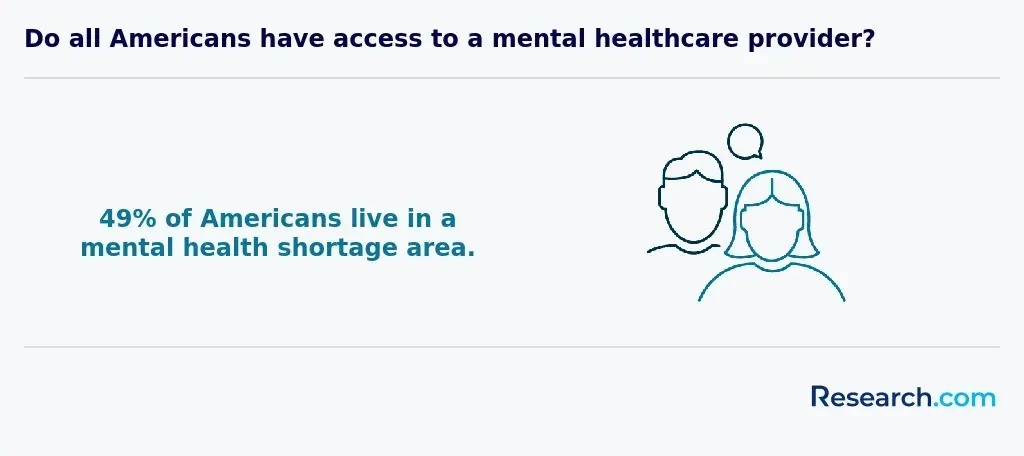
At the state level, South Dakota is designated as a Health Professional Shortage Area (HPSA). As of April 1, 2024, only 32.6% of the need for mental health professionals is met in the state, and 99 new professionals in the field are needed to be able to remove the HPSA designation (Bureau of Health Workforce, 2024).
That does not mean every applicant will receive a job offer immediately or that all roles pay the same. Demand is shaped by location, specialization, reimbursement, employer funding, licensure level, and willingness to work in high-need areas. Hospitals, community health centers, private practices, nonprofit agencies, substance use treatment programs, and schools may all need behavioral health professionals, but requirements can differ.
Candidates who may move across state lines should compare rules early. For example, Research.com’s guide to LPC education requirements in Utah can help students see how licensing expectations may vary outside South Dakota.
What jobs can mental health counseling graduates pursue in South Dakota?
A mental health counseling graduate may qualify for different roles depending on degree focus, license status, supervision progress, and additional credentials. Some positions are available before full independent licensure, while others require an active professional license or specialized certification.
| Career Path | Typical Work | Common Employers | Important Requirement to Check |
| Mental health counselor | Provides individual, group, and sometimes family counseling for emotional and behavioral concerns | Community clinics, private practices, hospitals, nonprofit agencies, and telehealth providers | LPC eligibility, supervision status, and scope of practice |
| Substance abuse counselor | Supports clients working through substance use disorders and recovery planning | Treatment centers, correctional programs, community agencies, and healthcare systems | Addiction-specific credential or experience requirements |
| School counselor | Helps students with academic, social, emotional, and developmental concerns | Public and private schools | School counseling credential and education requirements |
| Rehabilitation counselor | Assists clients with disabilities, recovery needs, employment goals, and independent living | Rehabilitation agencies, government programs, healthcare systems, and nonprofits | Role-specific certification, counseling license, or agency requirements |
| Geriatric counselor | Works with older adults coping with grief, isolation, transitions, illness, or family stress | Nursing homes, assisted living facilities, hospitals, agencies, and private practices | Training in aging, grief, healthcare coordination, and family systems |
Graduates should read job descriptions carefully. A title may sound clinical, but employers may require a license, a supervised licensure plan, a specific master’s concentration, or experience with crisis work, addiction, children, or trauma.
What are South Dakota’s marriage counselor education requirements?
Marriage counseling is closely related to mental health counseling, but the training emphasis is different. Marriage and family therapy focuses on relationships, family systems, couples dynamics, communication patterns, and relational distress. Students interested in this path typically complete a graduate program that prepares them for marriage and family therapy practice rather than a general counseling track.
Prospective marriage counselors should confirm degree requirements, supervised clinical-hour expectations, and examination rules before choosing a program. For a focused explanation of this pathway, review Research.com’s guide to marriage counselor education requirements in South Dakota.
Is a master’s in counseling worth the cost?
A master’s in counseling can be worth the investment if it leads to the license, work setting, and client population you want. It is less likely to pay off if the program does not meet state licensing requirements, requires excessive borrowing, offers weak placement support, or does not align with your long-term career plan.
Before enrolling, calculate the total cost of attendance, expected loan payments, time out of the workforce, supervision expenses, and likely entry-level income. Then compare those costs with the roles you want and the licensure timeline in South Dakota. For a broader return-on-investment discussion, see Research.com’s article on the benefits of a master’s in counseling.
| A Master’s in Counseling May Be Worth It If... | Consider Another Path If... |
| You want to become a licensed professional counselor and provide therapy. | You want a faster route into a helping profession without graduate school. |
| The program clearly supports South Dakota licensure requirements. | The school cannot explain how its curriculum maps to state licensing rules. |
| You can manage tuition, fees, living costs, and supervision-related expenses. | You would need debt that feels unrealistic compared with expected earnings. |
| You are prepared for emotionally demanding work with clients in distress. | You prefer administrative, research, coaching, or nonclinical roles. |
What legal and ethical issues should South Dakota counselors understand?
Mental health counselors must practice within legal, ethical, and professional boundaries. In South Dakota, that means understanding confidentiality, informed consent, mandatory reporting, documentation standards, professional competence, supervision requirements, dual relationships, telehealth rules, and crisis procedures.
Small communities can create additional ethical complexity. A counselor may know a client outside the therapy setting, share community networks, or encounter clients in public. These situations require careful boundary management and consultation. Counselors should also stay current on ethical expectations for remote services, especially when clients are located in rural areas or across state lines.
Students comparing mental health roles with related fields may find it useful to read Research.com’s guide, How long does it take to become a school psychologist in South Dakota?.
Which trends may shape counseling work in South Dakota?
Several trends are likely to affect how counselors train, find jobs, and deliver care in South Dakota. The most visible are telehealth growth, continued attention to rural access, integration of behavioral health with primary care, and employer interest in clinicians who can work with trauma, addiction, youth, and co-occurring conditions.
Technology may make scheduling and remote counseling more flexible, but it does not remove the need for licensure compliance, privacy safeguards, appropriate crisis planning, and careful assessment of whether telehealth fits a client’s needs. Counselors should also expect growing use of digital records, outcome tracking, online continuing education, and interdisciplinary care teams.
Those considering adjacent public-service roles can compare counseling with social work by reviewing Research.com’s guide to social worker education requirements in South Dakota.
Which programs can prepare students for counseling careers in South Dakota?
The best program is the one that matches your intended license, budget, schedule, and preferred client population. Reputation matters, but it should not replace due diligence. Students should verify curriculum alignment, accreditation status, clinical placement support, faculty expertise, exam preparation, graduate outcomes, and whether online coursework creates any placement or licensure complications.
Students beginning their search can review Research.com’s resource on the best psychology schools in South Dakota, then narrow choices by asking each program direct licensing and practicum questions.
Questions to Ask Before Choosing a Counseling Program
- Does this degree meet South Dakota LPC education requirements?
- Who confirms that the curriculum satisfies state board expectations?
- Is the program accredited, and by which recognized accrediting body?
- How are practicum and internship placements arranged?
- Can students complete fieldwork in rural South Dakota communities?
- What support is available for NCE preparation?
- What is the total cost, including fees, books, travel, technology, and supervision-related expenses?
- How does the program support working adults or part-time students?
- What happens if a student needs to relocate or complete clinical hours out of state?
- How does the program help graduates transition into supervised post-graduate practice?
How can mentorship and networking support a counseling career?
Mentorship can shorten the learning curve for new counselors. A good mentor can help students understand local employers, supervision expectations, ethical dilemmas, rural practice issues, specialty training, and realistic career timelines.
Networking should be practical rather than performative. Students can build useful relationships through practicum supervisors, faculty, professional associations, continuing education events, community agencies, and alumni. These connections can lead to supervision options, job leads, consultation groups, and referrals after licensure.
Candidates trying to move efficiently through the process can also review Research.com’s article on the quickest path to becoming a counselor in South Dakota.
Can counselors move into related specialties?
Yes. Mental health counselors may later build expertise in closely related areas, but each path has its own education, supervised experience, credential, or scope-of-practice rules. Marriage and family therapy is a common example because it overlaps with counseling while emphasizing systems-based relational care.
If you are considering that direction, review Research.com’s guide on how to become a marriage and family therapist in South Dakota. Comparing the LPC and MFT routes before graduate school can prevent choosing a program that does not match your intended license.
How can candidates avoid delays in the LPC licensing process?
Licensing delays often happen because candidates wait too long to verify requirements, submit incomplete documents, misunderstand supervision rules, or assume their program automatically qualifies them for licensure. The fastest path is usually the most organized path.
- Confirm requirements before enrolling. Do not rely only on admissions language. Ask how the program prepares students for South Dakota LPC licensure.
- Keep copies of every key document. Save transcripts, syllabi, practicum records, supervision forms, exam records, and board correspondence.
- Choose supervisors carefully. Make sure your supervisor meets state requirements before counting hours.
- Track hours consistently. Waiting until the end of supervision to reconstruct records can create serious problems.
- Prepare early for the exam. Build study time into your post-graduate plan rather than treating the exam as an afterthought.
- Check board instructions directly. Requirements and forms can change, so use current board guidance before submitting materials.
For a concentrated review of exam, education, and application expectations, see Research.com’s guide to LPC license requirements in South Dakota.
What challenges should South Dakota counselors expect?
Counseling in South Dakota can be meaningful, but it is not easy work. Future counselors should understand the pressures that may affect both client care and long-term career satisfaction.
- Provider shortages: South Dakota is a Health Professional Shortage Area (HPSA), which can contribute to high demand, long waitlists, and heavy caseloads.
- Rural access barriers: Clients may face transportation limits, privacy concerns in small towns, limited specialty referrals, or unreliable internet access for telehealth.
- Licensure complexity: Candidates must manage graduate requirements, supervised hours, exams, and documentation before practicing independently.
- Funding constraints: By August 2024, South Dakota ranked 17 out of all 50 US states in terms of economic performance (American Legislative Exchange Council, 2024). Even when a state performs well economically, agency-level funding, reimbursement, staffing, and client affordability can still affect service delivery.
- Emotional strain: Counselors regularly work with trauma, crisis, grief, addiction, family conflict, and chronic stress. Without boundaries and support, burnout risk increases.
- Continuing education access: Counselors in rural areas may need to rely on online training, remote supervision, or travel to maintain and expand skills.
Students trying to reduce educational costs can compare options such as affordable online counseling programs, while still confirming that any program they choose meets South Dakota licensure expectations.
Which extra certifications can expand counseling practice?
Additional credentials can help counselors serve specific populations and qualify for more specialized roles. The right certification depends on your clients, employer requirements, state rules, and supervision opportunities.
Common areas for further training include trauma-informed care, substance use treatment, crisis intervention, grief counseling, child and adolescent work, family systems, telehealth, and co-occurring disorders. These credentials should build on—not replace—core licensure requirements.
Counselors interested in addiction work can review Research.com’s guide on how to become a substance abuse counselor in South Dakota.
How can counselors reduce burnout risk?
Burnout prevention should begin during training, not after a counselor is overwhelmed. South Dakota counselors may face high demand, limited referral networks, and emotionally intense caseloads, so sustainability has to be part of the career plan.
- Use supervision well. Bring difficult cases, ethical concerns, emotional reactions, and boundary issues to supervision or consultation.
- Set caseload limits when possible. More clients do not always mean better care if quality and counselor health suffer.
- Build peer support. Consultation groups and professional networks reduce isolation, especially in rural practice.
- Protect recovery time. Schedule breaks, time off, and nonclinical activities deliberately.
- Keep learning. Training in trauma, crisis work, and resilience can improve competence and reduce helplessness.
- Know when to change settings. Some counselors remain in the field longer by moving from crisis-heavy work into schools, integrated care, private practice, supervision, or specialized programs.
Professionals considering school-based work can compare expectations by reading Research.com’s guide on how to become a school counselor in South Dakota.
How are telehealth and online education changing counseling in South Dakota?
Telehealth can help reduce distance barriers for South Dakota clients who live far from providers, lack transportation, or prefer remote appointments. It can also make counseling more flexible for clinicians. However, telehealth must still follow licensing, privacy, informed consent, documentation, emergency planning, and cross-state practice rules.
Online education is also changing how future counselors train. Distance learning can help working adults or rural students access graduate coursework, but students must verify field placement support. A program that offers online classes may still require in-person practicum or internship hours in approved settings.
Some professionals compare counseling with social work or integrated clinical practice when planning graduate education. Research.com’s guide to online clinical MSW programs can help readers evaluate a related route.
Common Mistakes to Avoid When Pursuing Counseling Licensure in South Dakota
| Mistake | Why It Can Hurt You | Better Approach |
| Choosing a program before checking licensure fit | You may graduate with credits that do not meet state expectations. | Ask the program and the state board how the degree aligns with South Dakota LPC requirements. |
| Looking only at tuition | Fees, books, travel, lost work time, and supervision costs can change the real price. | Estimate total cost of attendance and compare it with expected income and loan payments. |
| Assuming online programs are automatically acceptable | Online coursework may be fine, but field placement and state approval still matter. | Confirm practicum, internship, and licensure eligibility before enrolling. |
| Waiting to plan supervision | Post-graduate hours can be delayed if you cannot find an eligible supervisor. | Ask practicum sites, faculty, and employers about supervision options before graduation. |
| Ignoring specialization requirements | Addiction, school counseling, and marriage and family therapy may involve different credentials. | Match your degree and fieldwork to the exact role you want. |
| Assuming salary outcomes are guaranteed | Pay varies by location, employer, experience, and license status. | Review job postings and compare salary with cost of living and debt. |
Key Insights
- South Dakota needs more mental health professionals, but candidates still need the right degree, supervised experience, exam, and license before practicing independently.
- The LPC path generally requires a master’s degree in a related field, at least 2,000 hours of post-graduate supervised counseling practice over a two-year period, and a passing score on the National Counselor Examination (NCE) or an accepted equivalent.
- Substance abuse, behavioral disorder, and mental health counselors in South Dakota had a median hourly wage of $23.33 in May 2023 (US BLS, 2024), equal to an estimated $44,793.6 annual wage. Compare that with debt, family needs, and local cost of living before enrolling in a program.
- Program choice is the biggest early decision. Verify accreditation, South Dakota licensure alignment, practicum support, supervision planning, and total cost before committing.
- Rural practice, telehealth, addiction treatment, trauma-informed care, and integrated behavioral health may shape future opportunities for counselors in South Dakota.
- A counseling master’s can be worthwhile for students committed to clinical practice, but it is not the only helping-profession route. Compare LPC, MFT, school counseling, social work, and substance abuse counseling pathways before choosing a degree.
Related Articles for Nearby States
- 2027 How to Become a Mental Health Counselor in North Dakota
- 2027 How to Become a Mental Health Counselor in Nebraska
- 2027 How to Become a Mental Health Counselor in Minnesota
- 2027 How to Become a Mental Health Counselor in Wyoming
- 2027 How to Become a Mental Health Counselor in Iowa
- 2027 How to Become a Mental Health Counselor in Montana
- 2027 How to Become a Mental Health Counselor in Colorado
- 2027 How to Become a Mental Health Counselor in Kansas
- 2027 How to Become a Mental Health Counselor in Wisconsin
- 2027 How to Become a Mental Health Counselor in Missouri
References:
- American Legislative Exchange Council. (2024). South Dakota. Rich States, Poor States. https://www.richstatespoorstates.org/states/SD
- bouve.northeastern.edu. (2023, May 28). What do Mental Health Counselors Do? Role & Responsibilities. bouve.northeastern.edu https://bouve.northeastern.edu/news/what-do-mental-health-counselors-do-role-responsibilities
- Bureau of Health Workforce. (2024, April 1). Health Workforce Shortage Areas. https://data.hrsa.gov/topics/health-workforce/shortage-areas
- careervillage.org. (2024, May 22). How can I best prepare myself for working in the world of counseling? https://www.careervillage.org/questions/913920/how-can-i-best-prepare-myself-for-working-in-the-world-of-counseling
- The Chicago School. (2019, March 26). Careers You Can Pursue with a Master’s Degree in Clinical Mental Health Counseling. https://www.thechicagoschool.edu/insight/career-development/careers-with-masters-degree-clinical-mental-health-counseling
- counseling.education.wm.edu. (2023, October 24). The Different Types of Counseling Careers and Their Challenges. https://counseling.education.wm.edu/blog/opportunities-and-challenges-in-the-counseling-field
- Glasmeier, A. K. & Massachusetts Institute of Technology. (2024). Living Wage Calculation for South Dakota. https://livingwage.mit.edu/states/46
- Grey, S. (2024, February 21). How To Become A Mental Health Counselor: Salary, Education Requirements And Job Growth. Forbes. https://www.forbes.com/advisor/education/psychology-and-counseling/become-a-mental-health-counselor
- Kaiser Family Foundation. (2023). Mental Health in South Dakota. https://www.kff.org/statedata/mental-health-and-substance-use-state-fact-sheets/south-dakota
- National Alliance on Mental Illness. (2023). Mental Health in South Dakota. https://www.nami.org/wp-content/uploads/2023/07/SouthDakotaStateFactSheet.pdf. Additional licensure overview: https://www.ncsbn.org/nursing-regulation/licensure.page. Local occupational trends: https://www.onetonline.org/link/localtrends/21-1014.00?st=SD
Other Things You Should Know About Mental Health Counseling in South Dakota
In 2027, candidates must possess a master’s or doctoral degree in counseling or a related field from a CACREP-accredited program. They also need to complete specific coursework, including ethics, human development, and counseling techniques, to meet South Dakota's licensure requirements.
To maintain your mental health counseling license in South Dakota in 2027, you need to complete 40 hours of continuing education every two years. This includes a minimum of four hours in ethics. Licenses must be renewed biennially.
In 2027, to become a licensed mental health counselor in South Dakota, you must earn a master's degree in counseling, complete post-graduate supervised experience, pass the National Counselor Examination (NCE), and apply for licensure through the South Dakota Board of Examiners for Counselors and Marriage and Family Therapists.


