
2027 How to Become a Mental Health Counselor in Vermont

Co-Founder and Chief Data Scientist
Becoming a mental health counselor in Vermont means preparing for a licensed clinical role in a state where access to behavioral health care remains a serious need. Vermont performs well on many health measures, but mental health is still a major concern: the state experienced high suicide rates and a substantial number of residents with unmet mental health needs last year, exceeding national thresholds (KFF, 2023).
This guide explains how to become a Licensed Clinical Mental Health Counselor (LCMHC) in Vermont, what education and supervised experience you need, how licensure works, where counselors are employed, what specializations are available, and how to decide whether this career path fits your goals. It is written for students, career changers, graduate applicants, and practicing counselors considering Vermont as a place to work.
Quick Answer: How do you become a mental health counselor in Vermont?
To become a mental health counselor in Vermont, you generally need to earn a bachelor’s degree, complete a qualifying master’s degree in counseling or a closely related field, pass the National Clinical Mental Health Counseling Examination (NCMHCE) and the National Counselor Examination (NCE), complete 3,000 hours of supervised post-graduate clinical experience within two years, obtain a required 90-day provisional license, and then apply for full LCMHC licensure through the Vermont Board of Allied Mental Health.
Key Things You Should Know About Becoming a Mental Health Counselor in Vermont
- Vermont’s need for mental health counselors is expanding, with projected job growth of 22% through 2030.
- The state’s mental health priorities include improving access to care, reducing stigma, and supporting residents who face barriers to treatment.
- Mental health counselors in Vermont earn an average salary of $58,880 annually, although pay varies by setting, location, experience, and specialization.
- The Vermont Department of Health emphasizes broad, person-centered approaches to behavioral health, which can support counselors who use evidence-based and holistic treatment strategies.
- This career may be a strong fit if you want clinical work that combines therapy, assessment, treatment planning, crisis response, and long-term client support.
- Role of mental health counselors in Vermont
- Steps to become a licensed mental health counselor in Vermont
- How students can prepare for a counseling career
- Why practicum and internship experience matter
- Counseling specializations available in Vermont
- Is Vermont a good state for mental health counselors?
- Other counseling careers to consider in Vermont
- Adding substance abuse counseling to your practice
- Using a DSW degree for leadership roles
- Marriage counseling certification options
- Online education options for Vermont counselors
- Burnout prevention and career sustainability
- Collaboration with social work professionals
- Telehealth and counseling access in Vermont
- Fastest path to becoming a counselor in Vermont
- Demand for mental health counselors in Vermont
- Career options for mental health counseling graduates
- Challenges counselors face in Vermont
- Continuing education requirements
- How state policy affects counseling practice
- Detailed Vermont LPC and LCMHC licensing requirements
What is the role of a mental health counselor in Vermont?
Mental health counselors in Vermont assess, diagnose, and treat emotional, behavioral, and psychological concerns. Their work matters because one in six adults reported poor mental health (Vermont Department of Health, 2024a), and many communities continue to face barriers related to distance, provider shortages, affordability, stigma, and transportation.
Licensed Clinical Mental Health Counselors, or LCMHCs, provide therapy, create treatment plans, document clinical progress, coordinate referrals, and help clients build coping skills. Depending on the setting, they may work with individuals, couples, families, groups, students, veterans, people in crisis, or clients with co-occurring mental health and substance use concerns.
| Work setting | What counselors typically do there | Why it matters in Vermont |
| Schools | Support students with emotional, social, behavioral, and academic concerns. | Early intervention can help young people manage stress, trauma, family issues, and developmental challenges. |
| Community health centers | Provide therapy, crisis support, referrals, and care coordination for local residents. | These settings often serve people who might otherwise struggle to access mental health care. |
| Private practice | Offer individualized therapy to adults, children, couples, or families. | In Vermont, 48.3% of LCMHCs work in individual private practices (Vermont Department of Health, 2024b). |
| Outpatient clinics | Deliver scheduled counseling, assessment, and treatment services. | Outpatient care helps clients receive ongoing support without inpatient hospitalization. |
The day-to-day work can include intake interviews, risk assessments, safety planning, psychotherapy sessions, documentation, treatment plan reviews, consultation with other providers, and continuing education. Counselors may also specialize in addiction, trauma, child and adolescent counseling, family systems, or community mental health.
What are the steps to pursue mental health counseling in Vermont?
The path to Vermont LCMHC licensure is structured because counselors provide clinical services that affect client safety and well-being. Before enrolling in a program, confirm that the degree, internship structure, and supervision plan match Vermont Board of Allied Mental Health requirements.
| Step | Requirement | Decision tip |
| 1. Earn a bachelor’s degree | Complete a four-year undergraduate degree, often in psychology, counseling, social work, human services, or a related field. | Choose courses in abnormal psychology, lifespan development, research methods, ethics, and human behavior if available. |
| 2. Complete a graduate counseling program | Earn a master’s degree in counseling or a closely related discipline with coursework in counseling theories, ethics, diagnosis, assessment, and clinical practice. | Ask programs directly whether graduates meet Vermont LCMHC educational requirements. |
| 3. Complete practicum or internship training | Vermont requires supervised clinical training as part of preparation for licensure. | Look for placements that match your intended population, such as children, adults, addiction treatment, trauma care, or community mental health. |
| 4. Pass licensing examinations | Candidates must complete both the National Clinical Mental Health Counseling Examination (NCMHCE) and the National Counselor Examination (NCE). | Build exam preparation into your final year or early post-graduate plan so testing does not delay licensure. |
| 5. Register before supervised practice | Before beginning post-graduate supervised clinical work, candidates must be listed on the roster of non-licensed non-certified psychotherapists. | Do not start counting hours until you understand Vermont’s registration and documentation rules. |
| 6. Complete supervised clinical experience | Finish 3,000 hours of hands-on supervised clinical experience within two years. | Clarify supervision frequency, supervisor credentials, client-contact expectations, and documentation forms before accepting a job. |
| 7. Apply for licensure | Apply for the required 90-day provisional license, then apply for full LCMHC licensure after the Board verifies your requirements. | Keep copies of transcripts, exam results, supervision records, and employment verification. |
| 8. Consider added credentials | Optional certifications can support specialization in areas such as addiction, trauma, couples counseling, or school-based services. | Pursue additional credentials only when they support your target clients, employer requirements, or long-term practice model. |
If you plan to practice across state lines in the future, it can help to compare Vermont’s rules with neighboring or Compact-state pathways. For example, reviewing New Jersey LPC training programs can show how licensing expectations may differ across jurisdictions.
How can students in Vermont prepare for a career in mental health counseling?
Students can prepare for counseling careers by choosing the right graduate program, building supervised experience early, developing strong clinical skills, and learning how Vermont’s licensing process works before graduation. Preparation should begin before applying to master’s programs, not after coursework is complete.
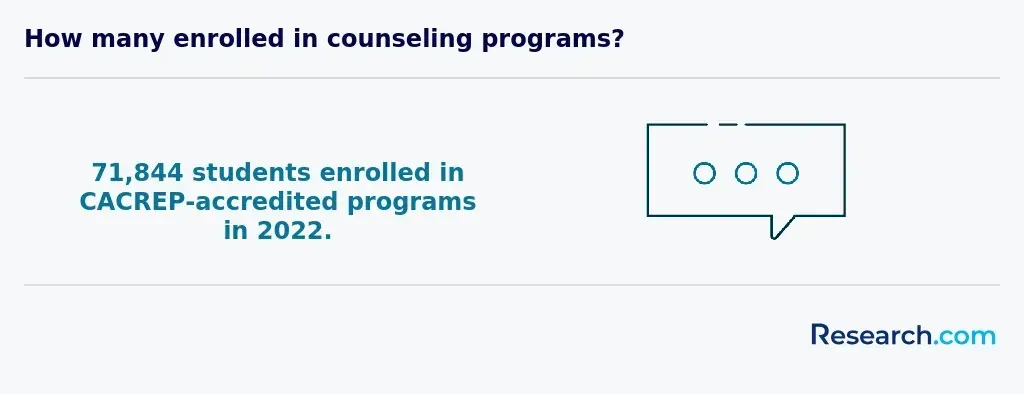
- Prioritize licensure alignment: Ask each program whether its curriculum is designed to meet Vermont LCMHC requirements. Accreditation can matter for portability and employer confidence. In 2022, a total of 71,844 students were enrolled in CACREP-accredited graduate programs.
- Build practical counseling skills: Coursework is important, but employers also look for applied skills such as assessment, treatment planning, documentation, crisis response, cultural humility, and ethical decision-making. Reviewing core mental health counselor skills can help students identify areas to strengthen.
- Choose field placements strategically: Select practicum and internship sites that expose you to the populations you may want to serve after graduation, such as youth, rural communities, adults with trauma histories, or clients with co-occurring substance use disorders.
- Join professional networks: Organizations such as the Vermont Mental Health Counselors Association and the American Counseling Association can help students find mentorship, training, policy updates, and professional contacts.
- Learn Vermont’s documentation expectations: Supervision hours, exam results, transcripts, and licensing forms must be documented carefully. Poor recordkeeping can create delays even when you have completed the work.
Students should also compare costs, delivery formats, clinical placement support, faculty experience, and graduate outcomes. A lower tuition price is helpful, but a program that does not support licensure preparation can cost more in delays and additional coursework later.
How important is practicum experience for mental health counselors in Vermont?
Practicum and internship experience are essential because counseling is a clinical profession that cannot be learned through lectures alone. The Vermont Board of Allied Mental Health requires candidates to complete a minimum of 700 hours of supervised internship experience, which may include up to 100 hours of practicum or fieldwork.
High-quality field experience helps students move from theory to practice. It gives them the opportunity to conduct intake sessions, practice active listening, use evidence-based interventions, receive supervision, handle documentation, and understand the realities of client care.
- Clinical skill development: Students practice counseling techniques with real clients while receiving feedback from supervisors.
- Professional judgment: Fieldwork exposes students to ethical questions, mandated reporting issues, crisis situations, confidentiality concerns, and interdisciplinary care.
- Career clarity: Placements help students decide whether they prefer private practice, community mental health, school-based services, addiction treatment, or another setting.
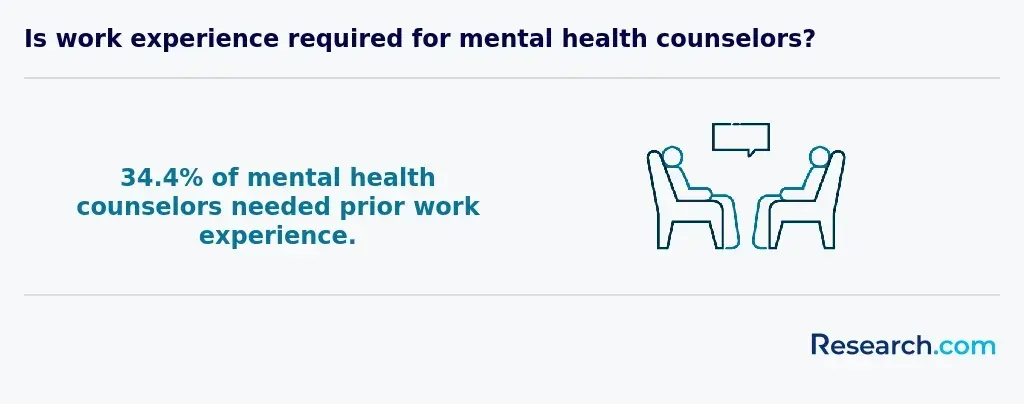
- Employer readiness: Practical experience strengthens a candidate’s resume. Nationwide, the U.S. Bureau of Labor Statistics records that 34.4% of counselors are required to have prior experience in the field.
- Networking: Supervisors, site directors, and colleagues may later become references, employers, or collaborators.
Before accepting a placement, ask how many direct client-contact hours are available, whether supervision meets Vermont requirements, which populations you will serve, and how the site handles risk assessment and crisis protocols.
What specializations can mental health counselors in Vermont pursue?
Specialization allows Vermont counselors to focus their training, clinical experience, and continuing education around a defined client population or treatment need. Choosing a specialization can also help you decide where to complete internships, which certifications to pursue, and what type of employer to target.
| Specialization | Typical focus | Vermont salary or workforce detail stated |
| Substance abuse counseling | Helps clients address addiction involving alcohol, drugs, and other dependencies, often alongside family education and relapse-prevention planning. | The average annual salary for substance abuse counselors in Vermont is $59,973. Students can explore substance abuse counselor education to understand training options. |
| Behavior disorder counseling | Supports clients with behavioral concerns such as ADHD, oppositional defiant disorder, and conduct disorder. | The average salary for behavior disorder counselors in Vermont is around $53,609 per year. |
| Trauma counseling | Works with clients affected by abuse, accidents, disasters, violence, grief, or other distressing experiences. | In Vermont, 12.1% of mental health counselors specialize in trauma counseling, and they earn $53,609. |
| School counseling | Supports students’ academic, emotional, social, and career development in educational settings. | The annual income is $57,971. |
When choosing a specialization, consider three questions: Which clients do you want to serve? Which settings are hiring in your area? Which credentials, supervision, or continuing education will employers expect?
Is Vermont a good place to work as a mental health counselor?
Vermont can be a strong place to work as a mental health counselor if you value community-based practice, rural and small-town service, interdisciplinary care, and growing attention to behavioral health access. It may be less ideal if your main priority is working in a large urban labor market with many employer types concentrated in one area.
| Factor | What to know | How to evaluate it |
| Community need | Mental health access remains a concern, especially for residents facing rural isolation or limited local provider options. | Research openings in community health centers, outpatient clinics, schools, and private practices. |
| Salary | The average salary for mental health counselors in Vermont is below the national average of $60,080. In Burlington, counselors earn as much as $63,580. | Compare pay by city, county, setting, caseload expectations, benefits, and supervision support. |
| Cost of living | Costs can be higher than the national average, particularly in areas such as Burlington. | Evaluate housing, commuting, student loan payments, health benefits, and whether remote or hybrid work is available. |
| Counseling Compact | Vermont is a member of the Counseling Compact, which is intended to let LCMHCs serve clients in other Compact states without additional licenses. | Until the Compact becomes operational in 2025, counselors must apply for licensure through endorsement. |
| Public investment | Vermont has pursued mental health funding efforts, including Demonstration Grants intended to increase mental health funding in healthcare clinics (Weiss-Tisman, 2024). | Monitor state funding, clinic hiring, reimbursement changes, and workforce initiatives. |
Vermont may appeal to counselors who want meaningful community impact and flexible practice settings. However, prospective counselors should look beyond average salary and ask whether the role offers supervision, manageable caseloads, strong benefits, continuing education support, and realistic productivity expectations.
What other types of counseling careers are available in Vermont?
Mental health counseling is not the only helping profession available in Vermont. Students who are drawn to therapy but want a different scope of practice may also consider marriage and family therapy, school counseling, substance abuse counseling, social work, or psychology-related roles.
Marriage and family therapy focuses on relationship systems, family conflict, couples counseling, communication patterns, and relational distress. If that work aligns more closely with your goals than individual mental health counseling, review this guide on how to become a marriage and family therapist in Vermont.
How can mental health counselors diversify their practice by integrating substance abuse counseling?
Substance use and mental health concerns often overlap, so training in addiction counseling can make a clinician more useful in community clinics, integrated care settings, private practice, and crisis-oriented services. Counselors who understand co-occurring disorders can coordinate treatment plans that address both mental health symptoms and substance use patterns.
This path may be especially useful for counselors who want to work with adults, families affected by addiction, justice-involved clients, or clients transitioning from higher levels of care. To compare requirements and career steps, see this guide on how to become a substance abuse counselor in Vermont.
Can pursuing a DSW degree enhance leadership opportunities in Vermont's mental health landscape?
A doctoral credential may help experienced professionals move beyond direct clinical service into leadership, teaching, program administration, policy work, or advanced consultation. A DSW degree is generally more practice- and leadership-oriented than a research-focused doctorate, although program goals vary.
This option is usually not necessary for entry-level counseling licensure. It may make sense later if you want to lead behavioral health programs, influence service delivery systems, supervise teams, teach in professional programs, or work on statewide mental health initiatives.
What are the specialized certification pathways for marriage counseling in Vermont?
Mental health counselors who want to expand into relationship-focused care may pursue additional training in couples therapy, family systems, conflict resolution, communication patterns, and relational assessment. This can be useful for private practice clinicians, community counselors, and professionals who regularly work with families affected by trauma, addiction, parenting stress, or major life transitions.
Because marriage and family therapy has its own licensing and training expectations, counselors should distinguish between adding couples-focused continuing education and pursuing a separate MFT pathway. For more detail, review marriage counselor education requirements in Vermont.
Are online education options a viable path for enhancing your counseling career in Vermont?
Online education can be practical for Vermont students and working professionals, especially those who live far from campus or need flexible scheduling. However, online format alone does not determine whether a program is appropriate. The key question is whether the program’s curriculum, clinical placement structure, faculty qualifications, and supervised experience requirements align with Vermont licensure standards.
Online programs can be useful for advanced training in areas such as trauma-informed care, family systems, addiction counseling, or telehealth practice. Cost also matters. If you are comparing affordable online options in a related field, this guide to the cheapest online MFT programs may help you understand how to evaluate price, format, and accreditation.
How can mental health counselors manage burnout and sustain resilience in Vermont?
Mental health counseling can be emotionally demanding, particularly in roles with high caseloads, crisis work, limited referral options, or extensive documentation. Burnout prevention should be treated as a professional responsibility, not an afterthought.
- Use supervision intentionally: Discuss clinical complexity, countertransference, safety concerns, and workload stress before they become unmanageable.
- Set boundaries around availability: Clarify crisis procedures, after-hours expectations, response times, and documentation deadlines.
- Build peer consultation: Regular consultation reduces isolation and supports ethical decision-making.
- Vary professional activities when possible: A mix of individual therapy, groups, supervision, training, or program work may reduce emotional fatigue.
- Use continuing education strategically: Training in trauma, crisis intervention, documentation efficiency, and self-care can improve both care quality and sustainability.
Counselors considering a related school-based role can compare career preparation timelines through this guide: How long does it take to become a school psychologist in Vermont?.
How can collaborating with social work optimize mental health care in Vermont?
Collaboration with social workers can strengthen client care because many mental health problems are connected to housing, food security, family stress, transportation, healthcare access, benefits, and community resources. Counselors often focus on clinical treatment, while social workers may bring additional expertise in systems navigation and resource coordination.
Interdisciplinary care can be especially valuable in rural areas where clients may have fewer local services. Counselors who want to understand related training and scope of practice can review social worker education requirements in Vermont.
How is telehealth reshaping mental health counseling in Vermont?
Telehealth has become an important tool for expanding counseling access in Vermont, particularly for clients who face long travel times, transportation barriers, mobility limitations, scheduling constraints, or stigma around seeking in-person care. It does not replace all in-person services, but it can make ongoing therapy more reachable for many clients.
Counselors using telehealth should be prepared to manage privacy, informed consent, emergency planning, documentation, technology failures, and interstate practice rules. Students comparing training options may want to review the best psychology schools in Vermont to understand broader behavioral health education pathways in the state.
What is the fastest way to become a mental health counselor in Vermont?
The fastest realistic route is to choose a Vermont-aligned graduate program, attend full time if possible, complete practicum and internship requirements without delays, pass the NCMHCE and NCE promptly, and enter a supervised post-graduate position that allows you to complete the required 3,000 hours within two years.
Students should be cautious with “fast-track” claims. A quicker program is only useful if it still satisfies Vermont’s education, supervised experience, examination, and licensing requirements. Before enrolling, ask whether the school helps with field placement, whether graduates qualify for Vermont licensure, and whether accelerated pacing affects internship quality. For a focused comparison, review the quickest path to becoming a counselor in Vermont.
What is the demand for mental health counselors in Vermont?
Demand for mental health counselors in Vermont is supported by both unmet mental health needs and workforce growth. Full-time equivalent LCMHCs in the state grew by 20.2%, from 547.9 in 2021 to 658.6 in 2023 (Vermont Department of Health, 2024b).
Hiring opportunities may appear in several settings:
- Community health centers: These organizations often provide therapy, care coordination, and access for underserved populations.
- Private practices: Solo and group practices serve clients seeking outpatient therapy, couples counseling, family work, trauma treatment, and other services.
- Outpatient clinics: Clinics may offer individual therapy, group therapy, psychiatric collaboration, and structured treatment programs.
- Schools: Educational settings need professionals who can support students’ emotional, behavioral, and developmental needs.
Nationally, the job outlook for mental health counselors is 18%, with 42,000 annual job openings. In Vermont, employment growth is expected to yield 230 yearly opportunities.
Regional comparison can also matter. The Maine LPC career outlook is 5%, while New Hampshire anticipates a 25% growth rate. Because Vermont is part of the Counseling Compact, future cross-state practice may become more relevant once implementation is operational.
The chart below provides additional context on projected growth in mental health professions.
What careers are available to mental health counseling graduates in Vermont?
A master’s degree in clinical mental health counseling can lead to several clinical and adjacent roles, depending on licensure status, supervision, specialization, and employer requirements. Graduates should distinguish between roles they can enter immediately after graduation under supervision and roles that require full independent licensure.
| Career path | Typical responsibilities | Best fit for |
| Mental health counselor | Provides therapy, assessment, treatment planning, and clinical documentation for individuals, groups, or families. | Graduates seeking direct clinical practice and eventual independent licensure. |
| Substance abuse counselor | Supports clients with addiction, relapse prevention, recovery planning, and co-occurring mental health concerns. | Counselors interested in integrated behavioral health and recovery services. |
| Geriatric counselor | Helps older adults navigate grief, illness, life transitions, isolation, caregiving stress, and adjustment concerns. | Clinicians interested in aging, healthcare collaboration, and family support. |
| Employee Assistance Program counselor | Provides confidential short-term support, referrals, crisis response, and workplace mental health resources. | Counselors interested in workplace wellness and brief intervention models. |
| Family and relationship therapist | Works with couples and families on communication, conflict, parenting, separation, grief, and relational stress. | Clinicians who want to focus on systems-based and relationship-centered care. |
| Social service or care coordination role | Connects clients with resources and collaborates with healthcare, school, or community agencies. | Graduates who want client-facing work that blends counseling knowledge with systems navigation. |
Career choice should be based on more than job title. Compare supervision quality, client population, documentation burden, crisis expectations, benefits, salary, and opportunities for advancement.
What challenges do mental health counselors face in Vermont?
Vermont offers meaningful opportunities for counselors, but the work also comes with practical and professional challenges. Understanding these issues before entering the field can help students choose better programs, employers, and supervision plans.
| Challenge | How it affects counselors | Better way to prepare |
| Access to care | Rural geography can make it difficult for clients to reach services, and some areas may have long wait times. | Build skills in telehealth, crisis planning, referral coordination, and community-based care. |
| Licensure complexity | Documentation, supervision rules, exam requirements, and Board processes can delay practice if misunderstood. | Track requirements from the start of graduate school and maintain organized records. |
| Economic pressure | Budget limits may affect staffing, salaries, caseloads, and program resources. | Compare total compensation, benefits, supervision, productivity expectations, and retention practices before accepting a role. |
| Competition from related fields | Some students may choose psychology or social work because of different scopes or earning potential. In the U.S., counseling psychologists earn as much as $106,600 annually. | Choose counseling if the clinical scope, training model, and client work match your goals rather than focusing only on salary comparisons. |
| Work-life balance | Heavy caseloads, crisis work, and emotional labor can contribute to burnout. | Ask employers about caseload size, on-call duties, supervision, administrative time, and wellness support. |
| Professional development access | Rural professionals may have fewer in-person training options. | Use online continuing education, professional associations, and peer consultation groups. |
Some counselors compare other state markets when weighing salary and opportunity. For example, this resource on Alaska licensed counselor job opportunities can help illustrate how location affects employment considerations.
The chart below lists average salaries across the mental health workforce in the U.S.
What are the continuing education requirements for mental health counselors in Vermont?
Licensed Clinical Mental Health Counselors in Vermont must complete 40 hours of continuing education every two years for license renewal. At least four of those hours must focus on professional ethics.
Continuing education helps counselors maintain competent practice as research, treatment methods, legal standards, documentation expectations, and ethical guidance evolve. Common CE topics include psychotherapy methods, suicide risk assessment, trauma-informed care, cultural responsiveness, diversity and inclusion, legal updates, telehealth practice, addiction counseling, and professional ethics.
When choosing CE courses, counselors should verify that the training is acceptable for Vermont renewal and relevant to their clinical work. A counselor who treats trauma survivors, for example, may need different professional development than someone focused on couples therapy, school-based services, or addiction recovery.
For a broader licensure roadmap, see this guide on how to become a therapist in Vermont.
How do state regulatory policies influence mental health counseling practice in Vermont?
State rules shape who may practice, what credentials are required, how supervision is documented, how confidentiality is protected, and how ethical standards are enforced. Vermont counselors need to monitor policy updates because changes can affect licensure, renewal, telehealth, reimbursement, documentation, and practice across state lines.
Regulatory awareness is especially important for counselors who supervise others, own a private practice, bill insurance, use telehealth, work across jurisdictions, or provide services in schools and community agencies. Professionals interested in a related education-focused counseling pathway can review how to become a school counselor in Vermont.
What are the detailed LPC licensing requirements in Vermont?
Vermont’s counseling license is commonly discussed alongside LPC terminology, but the state credential for independent clinical mental health counseling is LCMHC. Candidates must meet education, examination, supervised experience, provisional licensure, and documentation requirements established by the Vermont Board of Allied Mental Health.
Because licensing rules can be detailed, applicants should confirm requirements directly with the Board and keep records of transcripts, supervised hours, exam results, roster status, and employment verification. For a step-by-step licensing breakdown, review the LPC license requirements in Vermont.
Common mistakes to avoid when becoming a mental health counselor in Vermont
| Mistake | Why it can hurt you | What to do instead |
| Choosing a program without checking licensure alignment | You may graduate missing coursework or clinical requirements needed for Vermont licensure. | Ask the program and the Vermont Board how the degree maps to LCMHC requirements before enrolling. |
| Focusing only on tuition | A cheaper program may become expensive if it lacks placement support, delays graduation, or requires extra coursework. | Compare total cost, placement quality, exam preparation, graduation support, and licensure outcomes. |
| Assuming online programs automatically qualify | Online delivery does not guarantee that curriculum or fieldwork meets Vermont standards. | Verify accreditation, clinical placement structure, supervised hours, and state authorization. |
| Waiting too long to plan supervision | Post-graduate hours may not count if supervision or registration requirements are not handled properly. | Confirm supervisor credentials, documentation forms, and roster requirements before starting supervised work. |
| Ignoring exam timing | Delaying the NCMHCE or NCE can slow down licensure progression. | Create an exam study plan before graduation or early in supervised practice. |
| Assuming salary outcomes are guaranteed | Pay varies by county, setting, licensure status, specialization, and experience. | Compare real job postings and total compensation rather than relying only on averages. |
Questions to ask before choosing a Vermont counseling program
- Does the program meet Vermont LCMHC educational requirements?
- Is the program CACREP-accredited or otherwise structured to support counseling licensure?
- How does the school help students secure practicum and internship placements?
- Will the program prepare students for both the NCMHCE and the NCE?
- What populations and settings are available for clinical training?
- How many graduates pursue Vermont licensure after completing the program?
- What is the total cost after tuition, fees, books, travel, residency requirements, and lost work time?
- Does the program support online, hybrid, part-time, or full-time study?
- How are students advised on post-graduate supervision and provisional licensure?
- What career services, alumni networks, and employer connections are available in Vermont?
Key Insights
- Vermont’s LCMHC pathway requires graduate education, national exams, supervised clinical experience, provisional licensure, and Board approval.
- The fastest route is not simply the shortest program; it is the program that meets Vermont requirements without remediation, placement delays, or documentation problems.
- Practicum and internship training are central to career readiness because they build clinical judgment, ethical awareness, documentation skills, and client-facing confidence.
- Vermont offers opportunities in private practice, community health, schools, outpatient clinics, substance abuse treatment, and telehealth-supported care.
- Salary should be evaluated alongside cost of living, supervision quality, benefits, caseload expectations, and long-term career goals.
- Specializations such as substance abuse counseling, trauma counseling, behavior disorder counseling, and school counseling can help clinicians target specific client needs and employment settings.
- Continuing education is mandatory: Vermont LCMHCs must complete 40 hours every two years, including at least four hours in professional ethics.
- Before enrolling in any counseling program, verify licensure alignment, clinical placement support, exam preparation, and total cost.
Related Articles for Nearby States
- 2027 How to Become a Mental Health Counselor in New Hampshire
- 2027 How to Become a Mental Health Counselor in Massachusetts
- 2027 How to Become a Mental Health Counselor in New York
- 2027 How to Become a Mental Health Counselor in Connecticut
- 2027 How to Become a Mental Health Counselor in Rhode Island
- 2027 How to Become a Mental Health Counselor in Maine
- 2027 How to Become a Mental Health Counselor in New Jersey
- 2027 How to Become a Mental Health Counselor in Pennsylvania
- 2027 How to Become a Mental Health Counselor in Delaware
- 2027 How to Become a Mental Health Counselor in Maryland
References:
- KFF. (2023). Mental Health in Vermont. https://www.kff.org/statedata/mental-health-and-substance-use-state-fact-sheets/vermont
- National Alliance on Mental Illness. (2021, February). Mental Health in Vermont. https://nami.org/wp-content/uploads/2023/07/VermontStateFactSheet.pdf
- U.S. Bureau of Labor Statistics. (2024, April 3). May 2023 state occupational employment and wage estimates - Vermont. Occupational Employment and Wage Statistics. https://www.bls.gov/oes/current/oes_vt.htm
- Vermont Board of Allied Mental Health. (n.d.). Allied mental health statutes, rules & resources. Vermont Secretary of State Office of Professional Regulation. https://sos.vermont.gov/allied-mental-health/statutes-rules-resources
- Vermont Department of Health. (2024a, January). Behavioral risk factor surveillance system: 2022 report. https://www.healthvermont.gov/sites/default/files/document/HSI-BRFSS-2022-DataSummary.pdf
- Vermont Department of Health. (2024b, April). Health care workforce census: Mental health counselors, 2023. https://www.healthvermont.gov/sites/default/files/document/HSI-stats-prov-mhc23.pdf
- Weiss-Tisman, H. (2024, June 27). State wins crucial federal funding for mental health programs. Vermont Public. https://www.vermontpublic.org/local-news/2024-06-27/state-wins-crucial-federal-funding-for-mental-health-programs
Other Things You Should Know About Mental Health Counseling in Vermont
To apply for a mental health counselor license in Vermont in 2027, you must submit an application to the Vermont Office of Professional Regulation, pass the National Clinical Mental Health Counseling Examination, and complete 3,000 hours of supervised practice. Ensure you meet all academic requirements before applying.
To become a mental health counselor in Vermont in 2027, you'll need a master’s degree in a relevant field such as counseling or psychology. This education must be from a program accredited by the Council for Accreditation of Counseling and Related Educational Programs (CACREP) or an equivalent body.
The Vermont Board of Allied Mental Health Practitioners issues licenses for mental health counselors. Applicants submit materials through the Vermont Office of Professional Regulation, which handles licensing and renewal administration. This board also enforces the education, supervision, and examination standards required for licensure in 2027.


