2027 How to Become a Licensed Counselor (LPC) in Minnesota

Co-Founder and Chief Data Scientist
Becoming a licensed professional counselor in Minnesota is a serious education, training, and licensure decision. The state has a clear need for behavioral health professionals: 31.4% of adults in Minnesota reported symptoms of anxiety and/or depression (KFF, 2025), while O*NET OnLine (2025) reports 520 licensed professional counselors for every one million residents. For students, career changers, and out-of-state counselors considering Minnesota licensure, the key question is not only whether counseling is meaningful work, but whether the path fits your time, budget, clinical interests, and long-term career goals.
This guide explains how the Minnesota LPC pathway works, what graduate education and supervised experience are required, how licensing and renewal are handled, and how to compare counseling programs in the state. It also covers job market factors, online versus in-person training, specialization options, teletherapy, burnout prevention, cultural competence, and common mistakes to avoid before investing in a counseling degree.
Quick Answer: How Do You Become an LPC in Minnesota?
To become a Licensed Professional Counselor (LPC) in Minnesota, you generally need to complete a counseling graduate degree from a CACREP-accredited program, meet supervised professional experience requirements, pass the National Counselor Examination for Licensure and Certification or an equivalent exam accepted by the Minnesota Board of Behavioral Health and Therapy, and apply through the Board. Minnesota LPCs must also renew their license and meet continuing education requirements to stay in good standing.
| Step | What It Means for Applicants |
| Earn the right degree | Complete a master’s degree or higher in counseling from a CACREP-accredited program. |
| Build supervised experience | Complete at least 2,000 hours of supervised experience under a Board-approved supervision plan. |
| Pass the required exam | Take the NCE or another exam considered equivalent by the Minnesota Board. |
| Apply for licensure | Submit the required application materials and follow Board instructions for review and approval. |
| Maintain the license | Renew on time and complete required continuing education. |
How to Become a Licensed Counselor (LPC) in Minnesota Table of Contents
- Minnesota LPC Career Outlook and Market Overview
- Education and Training Requirements for Minnesota LPCs
- Licensure Application, Exams, Renewal, and Reciprocity
- Working with Marriage and Family Therapists
- Best First Steps for Starting an LPC Career in Minnesota
- Top Counseling Programs in Minnesota for 2027
- Advancement and Specialization Paths for Minnesota LPCs
- Spiritual Counseling Opportunities for LPCs
- Online, Hybrid, and In-Person Counseling Training
- Burnout Prevention and Self-Care for Counselors
- Behavioral Analysis as a Complementary Skill
- Financial Aid for LPC Education in Minnesota
- Interdisciplinary Specializations for LPCs
- How to Track Minnesota LPC Requirement Changes
- Legal and Ethical Issues in Minnesota Counseling Practice
- Teletherapy Best Practices for Minnesota LPCs
- How to Compete for Counseling Jobs in Minnesota
- Cultural Competence and Inclusive Counseling Practice
Overview of the Industry of LPC in Minnesota
Minnesota’s counseling field can be a practical career option for people who want to provide mental health support while entering a regulated profession with defined training standards. According to O*NET OnLine, an LPC in Minnesota can expect a salary range of $31,100 to $64,350. For context, the cost of living in Minnesota for an individual with no dependents is $37,752 (MN Employment and Economic Development, 2025).
Salary should not be interpreted as a guarantee. Earnings vary by license level, clinical focus, employer, experience, location, caseload, and whether the counselor works in private practice, community mental health, schools, healthcare, or nonprofit settings. Applicants comparing the LPC and LPCC routes should review Board rules carefully because scope, supervision expectations, and career options can differ.
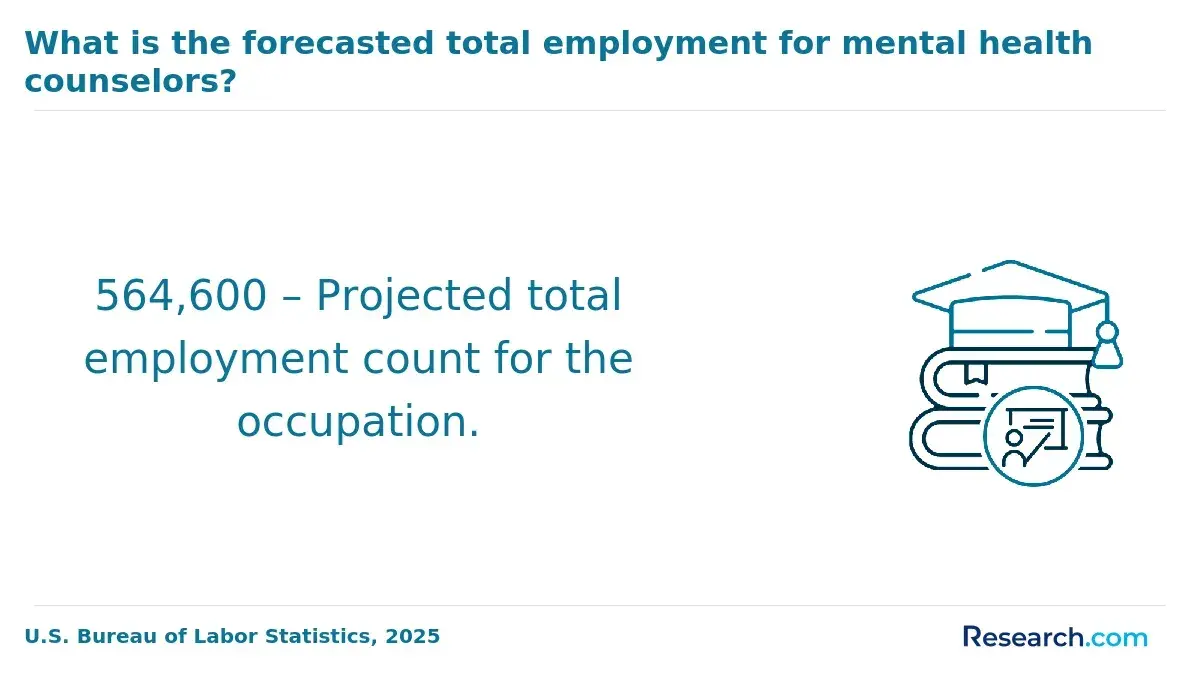
Demand is also part of the decision. For readers exploring broader careers in counseling and therapy, Minnesota’s employment outlook points to continued need. Data shows that by 2033, there will be 570 counseling jobs available in the state, reflecting a projected 9% growth rate over the coming decade.
| Career Factor | Minnesota Data or Consideration | How to Use This Information |
| Adult mental health need | 31.4% of adults reported anxiety and/or depression symptoms. | Consider whether you want to work with individual adults, groups, families, crisis cases, or specialized populations. |
| Provider availability | 520 licensed professional counselors are available for every one million residents. | Evaluate opportunities in underserved areas, community agencies, teletherapy, and integrated care settings. |
| Salary range | $31,100 to $64,350. | Compare expected income with graduate school cost, debt, and preferred work setting. |
| Living cost benchmark | $37,752 for one adult with no dependents. | Use this as one input when estimating financial fit, especially during supervised experience or early career roles. |
| Projected openings | 570 counseling jobs by 2033 with a projected 9% growth rate. | Look beyond job counts and compare employer types, supervision availability, and specialization demand. |
The main takeaway is that counseling in Minnesota can be both service-oriented and professionally viable, but the return on investment depends heavily on choosing an accredited program, managing education costs, securing quality supervision, and developing skills that match employer and client needs.
Educational Requirements for LPCs in Minnesota
The Minnesota LPC pathway begins long before the application is submitted. Most applicants first complete an undergraduate degree, often in counseling, psychology, human services, social science, or a related field. A student who is still at the bachelor’s level may want to compare options such as a bachelor degree in psychology online before committing to graduate counseling study.
The most important education decision is the graduate program. Licensure-focused counseling programs are not interchangeable, and a degree that sounds relevant may not meet Minnesota’s requirements. Before enrolling, confirm accreditation, required credits, clinical placement structure, faculty qualifications, exam preparation, and whether the curriculum aligns with your intended license path.
Earn a Counseling Graduate Degree
Minnesota LPC candidates must earn a master’s degree or higher from a program accredited by the Council for Accreditation of Counseling & Related Education Programs (CACREP). Many full-time counseling graduate programs in Minnesota take two to three years, while part-time enrollment may extend the timeline to three to four years.
Typical graduate counseling curricula include counseling theories, ethics, assessment, group counseling, multicultural counseling, human development, diagnosis, psychopathology, research methods, career counseling, and supervised clinical practice. The best program for you is not necessarily the cheapest or the most well-known; it is the one that meets licensure requirements, supports your preferred population, and gives you access to appropriate field training.
Complete Supervised Professional Experience
Applicants seeking the LPC credential in Minnesota must complete at least 2,000 hours of supervised experience. The supervision plan must be approved by the Minnesota Board of Behavioral Health and Therapy, and hours may be completed before or after licensure if the Board accepts the prior supervision. Supervision is required at a rate of 2 hours for every 40 hours of professional practice, totaling 100 hours of supervision. At least 50% of the required supervision hours must occur one-to-one (Minnesota Board of Behavioral Health and Therapy, n.d.).
| Requirement | Minimum Standard Stated | Decision Point for Students |
| Graduate education | Master’s degree or higher from a CACREP-accredited counseling program. | Verify accreditation before applying, not after enrolling. |
| Program timeline | Two to three years full time; three to four years part time. | Choose a schedule that allows you to complete coursework and clinical training without overextending yourself. |
| Supervised experience | At least 2,000 hours. | Ask programs and employers how students or graduates typically secure supervised placements. |
| Supervision ratio | 2 hours of supervision for every 40 hours of professional practice. | Confirm that your supervisor can document hours according to Board expectations. |
| Individual supervision | At least 50% of supervision hours must be one-to-one. | Do not rely only on group supervision unless it meets the required mix. |
Skills Minnesota Counseling Students Should Build Early
Licensure requirements define the minimum pathway, but employability depends on applied competence. Students should develop interviewing skills, documentation habits, crisis response awareness, cultural humility, ethical decision-making, treatment planning, referral judgment, and comfort with supervision. Employers may also value experience with electronic health records, telehealth workflows, interdisciplinary teams, and evidence-informed interventions.
- Clinical communication: Practice active listening, reflective responses, rapport-building, and clear treatment conversations.
- Ethical judgment: Learn how to manage confidentiality, informed consent, boundaries, mandated reporting, and scope of practice.
- Documentation: Build accurate, timely, and clinically appropriate note-taking habits during practicum and internship.
- Cultural responsiveness: Prepare to work with clients whose identities, languages, family structures, beliefs, and lived experiences differ from your own.
- Professional resilience: Develop consultation routines and self-care practices before burnout becomes a crisis.
Minnesota Licensure Application and Renewal Process
Licensure protects clients by setting minimum standards for education, supervised practice, examination, ethics, and renewal. It also gives counselors a professional structure for accountability, development, and networking. After licensure, many professionals connect with organizations such as the Minnesota Counseling Association to build relationships, follow policy updates, and find continuing education opportunities.
Examination Requirements
Minnesota counseling applicants must pass the National Counselor Examination for Licensure and Certification (NCE) or another examination the Minnesota Board considers equivalent. The NCE is administered by the National Board for Certified Counselors and includes 200 multiple-choice questions. Its purpose is to evaluate counseling knowledge, applied skills, and readiness to provide professional counseling services.
LPC License Renewal
The Professional Counseling license in Minnesota is valid for one year and expires on the final day of the month before the month in which the license originally became effective. Renewal notices are sent 45 days before expiration, but licensees are responsible for renewing even if a notice is not received. Keeping a current mailing address on file with the Board is essential.
To renew, an applicant must submit a completed and signed renewal application, notarized if submitted on paper, and pay the required fee. The LPC renewal fee is $250. A late renewal adds $100 per month (Minnesota Board of Behavioral Health and Therapy, n.d.). Renewal can be completed online, by mail, or through drop-off at the Board office. The Board must receive the renewal application and fee before midnight on the license expiration date, and incomplete applications are not processed.
| License | Fee |
| Licensed Professional Counselor (LPC) Renewal | $250 |
| Licensed Professional Counselor (LPC) Inactive Renewal | $125 |
| Late Renewal | $100 per month |
Continuing Education
During the first four years of licensure, an LPC in Minnesota must complete 40 hours of continuing education and 12 graduate semester hours. The semester hours may count toward the 40-hour requirement, with 15 continuing education hours credited for each semester credit hour. After the initial four years, licensees must document 40 continuing education hours every two years (Minnesota Board of Behavioral Health and Therapy, n.d.).
Continuing education is more than a renewal task. It is a practical way to keep current with legal requirements, clinical methods, documentation standards, telehealth practices, and emerging client needs. Counselors should choose CE activities that strengthen their actual practice area rather than collecting credits at the last minute.
Licensure by Reciprocity for Out-of-State Counselors
Minnesota provides a license through reciprocity option for counselors already licensed in another state. Applicants must submit the LPC licensure application and include the relevant regulations for the license they hold. If the existing license does not meet Minnesota’s reciprocity criteria, the applicant may need to use a different application pathway.
| If You Are... | What to Check Before Applying |
| A current Minnesota graduate student | Confirm your program is CACREP-accredited and ask how practicum, internship, and supervision documentation are handled. |
| A career changer | Compare total graduate program cost, timeline, field placement expectations, and income during training. |
| An out-of-state counselor | Review reciprocity rules and gather license regulations, supervision records, exam documentation, and transcripts. |
| A licensed counselor renewing | Track renewal dates, CE documentation, fees, and address updates with the Board. |
Exploring Collaborative Opportunities with Marriage and Family Therapists
Collaboration with Marriage and Family Therapists can help Minnesota LPCs serve clients whose concerns involve both individual mental health and family-system dynamics. This is especially useful when treatment includes relationship distress, parenting challenges, blended family concerns, communication patterns, or conflict that affects multiple members of a household.
LPCs and MFTs can work together through referrals, case consultation, co-designed treatment plans, community workshops, or coordinated care when the client’s needs require multiple perspectives. For an LPC, these partnerships can deepen understanding of family systems, attachment patterns, interpersonal conflict, and relational interventions. For clients, collaboration may reduce fragmented care and support more consistent treatment goals.
Counselors who want to move more formally into relational practice may benefit from reviewing how to become a marriage and family therapist in Minnesota. That pathway can clarify whether an additional credential, training sequence, or specialization would support your long-term practice goals.
The best collaborations are not casual handoffs. They require clear consent, defined roles, accurate documentation, and respect for each provider’s scope of practice. When done well, LPC-MFT collaboration can expand access to comprehensive mental health care for individuals, couples, and families across Minnesota.
What is the best way to start a career as a licensed professional counselor in Minnesota?
The strongest way to begin an LPC career in Minnesota is to work backward from licensure. Before choosing a graduate school, confirm the degree meets Minnesota requirements, compare costs and clinical placement support, and understand how supervised experience will be documented. Students should also review how to become a licensed mental health counselor in Minnesota to compare related mental health counseling pathways and terminology.
- Clarify your counseling population. Decide whether you are most interested in adults, children, families, school settings, substance use, trauma, crisis care, career counseling, or community mental health.
- Choose a CACREP-accredited graduate program. Do not assume a counseling-related degree automatically qualifies you for licensure.
- Ask about field placement support. A program’s practicum and internship structure can affect your training quality and professional network.
- Plan for supervised hours early. Learn what counts, who can supervise, and how documentation must be maintained.
- Prepare for the licensing exam. Use coursework, study plans, and practice questions to build readiness for the NCE or approved equivalent exam.
- Build professional connections. Attend association events, seek mentorship, and maintain relationships with supervisors and faculty.
- Protect your financial position. Compare tuition, fees, commuting costs, lost income, transfer policies, and financial aid before enrolling.
List of Top Counseling Programs in Minnesota for 2027
Choosing a counseling program is one of the most important decisions in the Minnesota LPC process. Similar to comparing online psychology graduate programs, prospective counseling students should look beyond convenience and reputation. The right program should meet licensure requirements, fit your schedule, offer strong clinical preparation, and make financial sense.
The programs below were evaluated using practical selection factors such as accreditation, affordability, program structure, and faculty expertise. Use this list as a starting point, then verify current requirements, tuition, admission standards, field placement policies, and licensure alignment directly with each school.
| Program | Degree | Length | Credits | Accreditation |
| Minnesota State University Mankato | MS in Mental Health Counseling | Two years | 60 | CACREP |
| Bethel University Minnesota | MA in Counseling | 33 months | 60 | CACREP |
| Winona State University | MS in Clinical Mental Health Counseling | Two years | 59 | CACREP |
| St. Cloud State University | MS in School Counseling | Two years | 48 | CACREP |
| Crown College | MA in Counseling | Two years | 60 | CACREP |
1. Minnesota State University Mankato
Minnesota State University Mankato offers an MS in Mental Health Counseling designed for students preparing for clinical counseling work. The program gives students opportunities to explore research topics, participate in regional and national conferences, and train in a dedicated counseling skills facility. Coursework includes Counseling Theories and Skills, Human Development, Psychopathology, Multicultural Counseling, Crisis Intervention, Career Counseling, and Research Methods.
- Program Length: Two years
- Cost-per-Credit: $557.17 to $812.22
- Required Credits to Graduate: 60
- Accreditation: CACREP
2. Bethel University Minnesota
Bethel University Minnesota provides an MA in Counseling that combines clinical preparation with coursework in faith, spirituality, social justice, and counseling practice. Students study Foundations of Clinical Mental Health Counseling, Counseling Microskills, Worldview and Integration of Faith and Spirituality in Counseling, Family Systems, Multicultural Counseling and Social Justice, Addictions Counseling, Theories and Techniques of Group Counseling, and Lifespan Development. The final year includes a 12-month clinical practicum and internship sequence.
- Program Length: 33 months
- Cost-per-Credit: $618
- Required Credits to Graduate: 60
- Accreditation: CACREP
3. Winona State University
Winona State University offers an MS in Clinical Mental Health Counseling with coursework in Multiculturalism and Diversity, Development over the Lifespan, Foundations of Counseling, Research Design, Family Systems Counseling, Group Theory and Practice, Tests and Measurements, and Career Development and Appraisal. The program emphasizes ethical and culturally responsive practice, and students complete two clinical practice experiences supervised by licensed mental health professionals.
- Program Length: Two years
- Cost-per-Credit: $480.59 to $725.35
- Required Credits to Graduate: 59
- Accreditation: CACREP
4. St. Cloud State University
St. Cloud State University offers an MS in School Counseling with small classes and clinical counseling facilities. Its multicultural and developmental orientation prepares students to support diverse learners in educational environments. Coursework covers Counseling Theories and Techniques, Multicultural Counseling, Career Counseling, Research Methods in Counseling, Group Counseling, Assessment Techniques in Counseling, Ethics and Professional Issues in Counseling, and Psychopathology and Diagnosis.
- Program Length: Two years
- Cost-per-Semester: $4406 to $9,348
- Required Credits to Graduate: 48
- Accreditation: CACREP
5. Crown College
Crown College offers an MA in Counseling that integrates counseling theory, applied skills, professional identity, and a Christian worldview. Students take courses such as Human Growth and Lifespan Development, Theories and Practices of Counseling, Orientation to Counseling and Integration of the Christian Worldview, Counseling Skills, Methods and Techniques, Legal and Ethical Issues in Counseling, Testing and Measurement in Counseling, Assessment, and Addictions and Substance Abuse.
- Program Length: Two years
- Cost-per-Semester: $14,650
- Required Credits to Graduate: 60
- Accreditation: CACREP
Questions to Ask Before Choosing a Minnesota Counseling Program
| Question | Why It Matters |
| Is the program CACREP-accredited? | Accreditation is central to meeting Minnesota LPC education expectations. |
| How are practicum and internship placements arranged? | Clinical placement quality affects supervision, skill development, and job connections. |
| What is the total cost, not just tuition? | Fees, books, commuting, residency requirements, and lost work hours can change affordability. |
| Does the curriculum fit your intended setting? | School counseling, clinical mental health, substance use, and family-focused work may require different preparation. |
| What exam preparation support is available? | Structured preparation can help students approach the NCE or equivalent exam with confidence. |
| Can working adults complete the program realistically? | Even flexible programs may require daytime field hours or in-person clinical training. |
| How does the program track licensure outcomes? | Ask for clear guidance on how graduates move from degree completion to licensure. |
What are the benefits of obtaining additional certifications as an LPC in Minnesota?
Additional certifications can help Minnesota LPCs deepen expertise, serve specific client populations, and compete for roles that require specialized training. A certification does not automatically expand legal scope of practice or guarantee higher income, so counselors should choose credentials that align with employer needs, client demand, and ethical competence.
- More focused clinical skills: Training in trauma-focused therapy, substance abuse counseling, family work, or other modalities can help counselors respond to complex client needs more effectively.
- Stronger employment profile: Specialized credentials may help applicants stand out for roles in community agencies, hospitals, specialty clinics, schools, and private practices.
- Possible income advantages: Some employers or practice models may reward advanced specialization, although compensation depends on setting, payer mix, experience, and demand.
- Improved treatment planning: Specialized training can support more targeted interventions for populations such as people with PTSD, clients affected by addiction, or families in transition.
- Professional credibility: Thoughtfully chosen credentials show ongoing learning and can build trust with referral partners and clients.
Career Advancement and Specialization Opportunities for LPCs in Minnesota
After gaining experience, Minnesota LPCs can build careers in clinical practice, leadership, supervision, education, consultation, private practice, and niche counseling areas. Advancement usually depends on a combination of licensure status, supervised experience, continuing education, specialization, reputation, and business or leadership skills.
Marriage and Family Therapy
Some LPCs expand into work with couples and families by pursuing additional training in family systems, relational assessment, parenting concerns, conflict resolution, and couples counseling. This can be useful in private practice, community mental health, and integrated behavioral health settings. If this direction interests you, review the Marriage and Family Therapist Education Level requirements to understand how the MFT pathway differs from an LPC credential.
Trauma-Informed Counseling
Trauma-informed practice prepares counselors to recognize the effects of trauma and avoid approaches that may unintentionally retraumatize clients. LPCs may pursue training related to PTSD, childhood adversity, abuse recovery, crisis stabilization, and evidence-informed trauma interventions. This specialization can be relevant across community agencies, schools, healthcare systems, and private practice.
Substance Abuse Counseling
Counselors who add addiction-related training can support clients dealing with substance use, co-occurring mental health concerns, relapse risk, family stress, and recovery planning. These skills may be useful in rehabilitation programs, outpatient clinics, hospitals, correctional settings, and nonprofit organizations.
Clinical Supervision and Teaching
Experienced counselors may move into roles that train, mentor, and supervise emerging professionals. This path requires strong ethics, documentation knowledge, communication skills, and the ability to evaluate clinical work constructively. Teaching and supervision can also create a more varied career for counselors who want to combine practice with education.
Private Practice Ownership
Private practice can offer autonomy, flexible scheduling, and the ability to focus on a chosen niche. It also requires business planning, billing knowledge, legal compliance, marketing, referral development, emergency protocols, recordkeeping, and clear policies. Counselors considering this route should not underestimate the non-clinical responsibilities involved.
Advanced Modalities and Continuing Education
Many LPCs pursue training in approaches such as cognitive-behavioral therapy, dialectical behavior therapy, art therapy, mindfulness-based interventions, or other evidence-informed methods. Continuing education should be selected strategically: choose training that improves the work you actually do and that fits the clients you serve.
| Advancement Path | Best Fit | Key Caution |
| Specialized clinical certification | Counselors who want deeper expertise with a specific population or condition. | Confirm the credential is respected by employers and relevant to your scope. |
| Private practice | Counselors who want independence and can manage business operations. | Clinical skill alone is not enough; operations, compliance, and marketing matter. |
| Supervision or teaching | Experienced clinicians who enjoy mentoring and professional education. | Supervision requires strong ethical judgment and careful documentation. |
| Interdisciplinary collaboration | Counselors working with complex client needs across systems. | Clarify roles, consent, referral boundaries, and communication procedures. |
Can LPCs in Minnesota Explore Spiritual Counseling Roles?
Yes. Minnesota LPCs may incorporate spiritually informed counseling when it is clinically appropriate, client-centered, ethical, and within the counselor’s competence. This work may appeal to professionals serving clients who want therapy to acknowledge religious identity, spiritual distress, moral injury, grief, meaning-making, or faith-community concerns.
Spiritual counseling should not become coercive, judgmental, or outside the client’s goals. LPCs need clear informed consent, respect for diverse beliefs, and training in how spirituality intersects with mental health. Counselors exploring this niche can review spiritual counselor salary information while recognizing that compensation depends on setting, credentials, experience, and client demand.
How can aspiring LPCs in Minnesota balance online and in-person training?
Online and hybrid counseling programs can help working adults and rural students access graduate education, but counseling is not a fully theoretical profession. Students still need supervised clinical practice, direct client contact, skills feedback, and professional supervision. A hybrid format can work well when online coursework is paired with strong local practicum and internship placements.
| Training Format | Advantages | Potential Drawbacks | Best For |
| Online coursework with local clinical placements | Greater scheduling flexibility and reduced relocation burden. | Students may need to arrange or travel to approved field sites. | Working adults and students outside major campus areas. |
| Hybrid program | Combines remote learning with in-person skills practice or residencies. | Campus visits can add travel and lodging costs. | Students who want flexibility but value face-to-face training. |
| Campus-based program | More direct access to faculty, peers, facilities, and local networks. | Less flexible for students with full-time jobs or family obligations. | Students who learn best in structured, in-person environments. |
- Flexibility and affordability: Online options may help students manage work and family responsibilities. Those comparing related fields can also review the cheapest online MFT programs for cost-comparison context.
- Clinical quality: In-person client work remains essential because counseling skills develop through practice, observation, and supervision.
- Networking: Local placements, professional associations, and supervisor relationships often influence first jobs after graduation.
Before enrolling in any online or hybrid program, ask how the school approves Minnesota placements, whether faculty help secure sites, and whether the program’s clinical requirements align with Minnesota Board expectations.
How can LPCs in Minnesota manage burnout and ensure effective self-care?
Counseling work can be emotionally demanding, especially for clinicians carrying high caseloads, working with trauma, or serving clients with complex needs and limited resources. Burnout prevention should be treated as a professional responsibility, not a personal luxury.
- Use consultation regularly: Case consultation and supervision help counselors process difficult work and reduce isolation.
- Set workable boundaries: Clear scheduling, documentation time, emergency procedures, and communication policies help prevent chronic overextension.
- Monitor workload quality, not just workload size: A small caseload of highly acute clients can still be draining.
- Create transition rituals: Brief end-of-day routines can help separate client concerns from personal time.
- Seek peer support: Professional communities, mentorship, and peer groups can normalize challenges and provide practical coping strategies.
Some LPCs also broaden their perspective by learning from adjacent helping professions. For example, reviewing how to become a social worker in Minnesota can help counselors better understand interdisciplinary roles, case management, systems advocacy, and client resource coordination.
Can LPCs in Minnesota integrate behavioral analysis to enhance therapeutic outcomes?
Behavioral analysis can complement counseling when used ethically and within the counselor’s competence. Data-informed observation, behavior tracking, reinforcement patterns, and measurable intervention planning can help some clients clarify goals and monitor progress. This can be particularly useful when working with behavioral change, skill-building, routines, or environmental triggers.
LPCs should avoid presenting themselves as behavior analysts unless they hold the appropriate credential. Counselors interested in this area can explore how to become a behavior analyst in Minnesota to understand the separate training pathway and how behavioral expertise may align with evidence-based counseling practice.
Are there financial aid opportunities available for LPC education in Minnesota?
Yes. Prospective LPC students may be able to use institutional scholarships, grants, payment plans, federal aid through FAFSA, student loans, work-study options, employer tuition support, state-funded programs, and private foundation awards. Availability differs by school, program, enrollment status, academic record, financial need, and specialization.
Do not compare programs by tuition alone. A lower tuition rate may still be expensive if the program has high fees, limited placement support, travel requirements, or a structure that reduces your ability to work. Students interested in addiction treatment can also review how to become a substance abuse counselor in Minnesota to compare related credentialing and funding possibilities.
| Cost or Aid Factor | What to Ask |
| Tuition and fees | What is the full program cost, including required fees and clinical expenses? |
| Scholarships and grants | Are awards available for counseling students, adult learners, or mental health workforce preparation? |
| Federal aid | Is the program eligible for FAFSA-based aid? |
| Work schedule impact | Will practicum or internship hours require reducing paid employment? |
| Transfer credit | Can previous graduate coursework reduce cost or time to completion? |
| Employer support | Does your current employer offer tuition reimbursement or paid training support? |
What interdisciplinary specialization options can enhance an LPC’s career in Minnesota?
Interdisciplinary specialization can help Minnesota LPCs serve complex client needs and work across systems such as healthcare, education, corrections, community agencies, and faith-based or nonprofit organizations. Useful areas may include forensic assessment, mindfulness-based interventions, trauma-informed care, academic counseling, addiction treatment, behavioral consultation, crisis work, and culturally responsive counseling.
Counselors interested in education settings can review becoming a school counselor in Minnesota to understand how school-based roles differ from general clinical counseling. The right specialization should strengthen your practice, match client demand, and remain within your legal and ethical scope.
How can I stay updated on changes to Minnesota LPC license requirements?
The safest approach is to rely on official and professional sources rather than secondhand advice. Minnesota LPCs and applicants should monitor Board updates, review renewal notices carefully, attend relevant webinars, and keep documentation organized. Professional associations and continuing education providers can also help counselors interpret changes, but official Board information should guide compliance decisions.
For a focused overview, consult Minnesota LPC license requirements. When in doubt, contact the Minnesota Board of Behavioral Health and Therapy directly before making education, supervision, or renewal decisions.
What legal and ethical challenges do LPCs in Minnesota face?
Minnesota LPCs must manage confidentiality, informed consent, mandated reporting, documentation, professional boundaries, dual relationships, telehealth consent, crisis response, and scope-of-practice limits. Ethical practice also requires cultural responsiveness, accurate representation of credentials, careful referral decisions, and ongoing consultation when cases become complex.
Training programs, supervision, and continuing education should prepare counselors for practical ethical decision-making, not just rule memorization. Students comparing flexible education options can review online counseling degree programs, but they should make sure any program teaches state-specific legal issues and provides meaningful clinical supervision.
How can LPCs in Minnesota effectively adopt teletherapy practices?
Teletherapy can improve access for clients who face transportation barriers, rural access issues, scheduling challenges, or mobility limitations. To use it responsibly, LPCs should use secure and appropriate platforms, obtain informed consent for remote services, document sessions carefully, maintain emergency protocols, verify client location when clinically necessary, and follow applicable Minnesota rules and professional standards.
Teletherapy is not ideal for every client or every clinical situation. Counselors should assess risk level, privacy at the client’s location, technology reliability, and whether remote care supports the treatment goals. Professionals interested in broader mental health licensure comparisons can review how to become a psychologist in Minnesota for context on related regulated roles.
How can LPCs in Minnesota navigate the competitive job market?
Minnesota LPCs can improve job prospects by developing a clear clinical identity, gaining strong supervision, documenting specialized training, and building relationships with employers before graduation. Networking through professional associations, practicum sites, faculty, supervisors, and local behavioral health organizations can be more effective than relying only on online applications.
- Tailor your resume: Highlight populations served, clinical modalities, practicum settings, documentation systems, crisis experience, and supervision status.
- Use field placements strategically: Treat practicum and internship sites as both learning environments and professional references.
- Show readiness for real-world practice: Employers often value ethical judgment, documentation speed, teamwork, and comfort with diverse clients.
- Keep learning visible: Add relevant CE, certifications, and training to your professional profile.
- Compare educational ecosystems: Students exploring undergraduate or graduate preparation can review good colleges for psychology in Minnesota as part of broader planning.
How can LPCs in Minnesota enhance cultural competence and inclusivity in their practice?
Cultural competence is not a one-time workshop. Minnesota LPCs need an ongoing practice of self-reflection, community learning, evidence-informed adaptation, and humility. Inclusive counseling requires attention to race, ethnicity, language, immigration history, disability, religion, gender identity, sexual orientation, socioeconomic status, rural or urban context, and family structure.
Practical steps include seeking training from credible instructors, consulting with colleagues who understand specific communities, using interpreters appropriately when needed, avoiding assumptions, and asking clients how culture and identity shape their goals. Students seeking a quicker route into the field should still avoid shortcuts that compromise preparation; the fastest way to become a counselor in Minnesota should be evaluated against accreditation, supervision quality, and licensure alignment.
Common Mistakes to Avoid When Becoming an LPC in Minnesota
| Mistake | Why It Can Hurt You | Better Approach |
| Choosing a program without verifying accreditation | A counseling-related degree may not meet Minnesota LPC education requirements. | Confirm CACREP accreditation and licensure alignment before enrolling. |
| Looking only at tuition | Fees, travel, placement costs, and reduced work hours can change the real cost. | Calculate total cost of attendance and expected income during training. |
| Assuming online means fully remote | Counseling programs still require supervised clinical practice. | Ask how practicum and internship placements are arranged in Minnesota. |
| Waiting too long to plan supervision | Supervised hours must be documented and aligned with Board expectations. | Discuss supervision plans with advisors, employers, and prospective supervisors early. |
| Ignoring renewal deadlines | Late renewal adds fees and may affect professional standing. | Track deadlines and complete CE throughout the renewal cycle. |
| Assuming salary outcomes are guaranteed | Income varies by employer, license level, location, specialization, and experience. | Compare job postings, supervision opportunities, and career paths before borrowing heavily. |
| Relying only on rankings | A highly ranked program may not fit your schedule, budget, or clinical goals. | Use rankings as one input alongside accreditation, cost, placement support, and licensure fit. |
Gain Personal and Professional Satisfaction as an LPC in Minnesota
An LPC career in Minnesota can offer meaningful work, defined licensure standards, and opportunities across mental health, education, healthcare, nonprofit, community, and private practice settings. It can also be financially and emotionally demanding. The best candidates enter the field with a realistic understanding of graduate school cost, supervision requirements, ongoing renewal, and the importance of professional support.
For many counselors, the value of the profession comes from helping clients improve daily functioning, relationships, resilience, and emotional well-being. Others may find satisfaction in advocacy, community education, supervision, or interdisciplinary collaboration. Counselors comparing helping professions may also want to explore the relationship between counseling and social work to determine which role best matches their interests.
Minnesota’s reciprocity option can also make the state accessible to counselors licensed elsewhere, although applicants should verify eligibility before assuming a smooth transfer. Whether you are a student, a career changer, or a licensed professional relocating to Minnesota, the smartest path is to confirm requirements early, document everything, and choose training that supports the clients you want to serve.
Key Insights
- Minnesota has a documented mental health need. KFF reported that 31.4% of adults experienced anxiety and/or depression symptoms, and O*NET OnLine reported 520 licensed professional counselors per one million residents.
- The LPC pathway is education-intensive. Candidates need a CACREP-accredited master’s degree or higher and at least 2,000 hours of supervised experience.
- Supervision details matter. Minnesota requires 2 hours of supervision for every 40 hours of professional practice, totaling 100 hours, with at least 50% completed one-to-one.
- Licensure is not a one-time event. Minnesota LPCs renew annually, pay the required renewal fee, and must meet continuing education expectations.
- Program choice affects cost, timeline, and licensure readiness. Before enrolling, verify accreditation, clinical placement support, total cost, and fit with your intended counseling population.
- Specialization can improve career direction. Trauma-informed care, substance abuse counseling, family work, spiritual counseling, school counseling, and behavioral analysis can all strengthen a counselor’s profile when pursued ethically and strategically.
- Online programs can work, but clinical training remains essential. Students should confirm how in-person practicum and internship requirements are handled in Minnesota.
- Career success depends on more than obtaining the license. Strong documentation, ethical judgment, cultural competence, self-care, teletherapy readiness, and professional networking all shape long-term practice quality.
Related Articles for Nearby States
- 2027 How to Become a Licensed Counselor (LPC) in Wisconsin
- 2027 How to Become a Licensed Counselor (LPC) in Iowa
- 2027 How to Become a Licensed Counselor (LPC) in North Dakota
- 2027 How to Become a Licensed Counselor (LPC) in South Dakota
- 2027 How to Become a Licensed Counselor (LPC) in Nebraska
- 2027 How to Become a Licensed Counselor (LPC) in Illinois
- 2027 How to Become a Licensed Counselor (LPC) in Missouri
- 2027 How to Become a Licensed Counselor (LPC) in Michigan
- 2027 How to Become a Licensed Counselor (LPC) in Kansas
- 2027 How to Become a Licensed Counselor (LPC) in Indiana
References:
- American Counseling Association. (2026). Licensure requirements for professional counselors. https://www.counseling.org/knowledge-center/licensure-requirements
- Council for Accreditation of Counseling and Related Educational Programs. (2025). Accredited counseling programs directory. https://www.cacrep.org/directory/
- KFF. (2025, February 12). Mental Health and Substance Use State Fact Sheets: Minnesota. https://www.kff.org/statedata/mental-health-and-substance-use-state-fact-sheets/minnesota/
- Minnesota Board of Behavioral Health and Therapy. (n.d.). Apply for LPC Licensure. https://mn.gov/boards/behavioral-health/applicants/apply/apply-for-lpc.jsp
- Minnesota Board of Behavioral Health and Therapy. (n.d.). LPC/LPCC Continuing Education. https://mn.gov/boards/behavioral-health/licensees/continuing-education/lpc-lpcc-continuing-education.jsp
- Minnesota Department of Employment and Economic Development. (2025). Cost of Living in Minnesota. https://mn.gov/deed/data/data-tools/col/
- Minnesota Board of Behavioral Health and Therapy. (2025). Licensed professional counselor (LPC) requirements. https://mn.gov/boards/behavioral-health/licensure/lpc/
- Minnesota Board of Behavioral Health and Therapy. (n.d.). Professional Counselor License (LPC) Renewal. https://mn.gov/boards/behavioral-health/licensees/license-renewal/lpc-renewal.jsp
- O*NET OnLine. (n.d.). Minnesota Employment Trends. https://www.onetonline.org/link/localtrends/21-1019.00?st=MN
- O*NET OnLine. (n.d.). Minnesota Wages. https://www.onetonline.org/link/localwages/21-1019.00?st=MN
- U.S. Bureau of Labor Statistics. (2025). Substance abuse, behavioral disorder, and mental health counselors. https://www.bls.gov/ooh/community-and-social-service/substance-abuse-behavioral-disorder-and-mental-health-counselors.htm
Other Things You Should Know About Becoming a Licensed Counselor (LPC) in Minnesota
To become a Licensed Professional Counselor in Minnesota in 2027, candidates must have a master's or doctoral degree in counseling or a related field from an accredited program. The program must include at least 48 semester hours of coursework in specific counseling-related subjects.
Licensed Professional Counselors in Minnesota are required to complete 40 hours of continuing education every two years. This includes training on ethics and professional conduct, as defined by the Minnesota Board of Behavioral Health and Therapy's guidelines for the 2027 licensing period.
The Minnesota Board of Behavioral Health and Therapy issues LPC licenses. It reviews education, supervised practice, and exam requirements, then grants licensure under Minnesota law. Applicants must meet the board’s standards before they can practice as licensed professional counselors in the state.
To become a Licensed Professional Counselor in Minnesota, candidates must complete 700 hours of supervised practical training. This includes engaging in client contact and direct counseling activities, which provide essential real-world experience before obtaining licensure.