
2027 LPC Counseling Licensure Requirements in Minnesota

Co-Founder and Chief Data Scientist
If you want to practice counseling in Minnesota, the central question is not simply whether you need a graduate degree. You also need to know which degree qualifies, which courses the Minnesota Board of Behavioral Health and Therapy expects to see, how supervised practice is counted, which exam applies to your target license, and how LPC differs from LPCC. Missing one requirement can delay your application, cost extra money, or force you to take additional graduate coursework later.
This guide explains Minnesota LPC counseling licensure requirements in practical terms for prospective graduate students, career changers, and counselors moving from another state. You will learn the education pathway, fieldwork and supervision expectations, exam options, application steps, renewal considerations, reciprocity rules, and career implications so you can plan your next move with fewer surprises.
Quick Answer: Minnesota LPC Requirements at a Glance
- Minnesota LPC applicants need a qualifying graduate degree in counseling or a closely related field. Many applicants should pay close attention to whether their program includes at least 48 semester hours, while some licensure planning discussions also reference 60 semester hours depending on the credential path and coursework review.
- Your graduate coursework must cover required counseling foundations such as helping relationships, human development, assessment, ethics, multicultural counseling, research, career development, group counseling, and mental health treatment planning.
- Candidates must complete supervised field experience during graduate study and post-degree supervised practice before full professional licensure. Minnesota LPC planning commonly includes 700 hours of supervised practicum or internship and 2,000 hours of post-master’s supervised counseling experience; some summaries also discuss 2 years or 3,000 hours, so applicants should confirm the exact requirement for their intended license with the Minnesota Board of Behavioral Health and Therapy.
- The National Counselor Examination (NCE) is commonly used for LPC licensure, while the National Clinical Mental Health Counseling Examination (NCMHCE) is important for candidates pursuing the Licensed Professional Clinical Counselor credential.
- Licensure can improve access to counseling roles in schools, agencies, healthcare settings, community programs, and private practice, but salary and job opportunities depend on specialization, location, employer, supervision status, and experience.
- What degree do you need to become an LPC in Minnesota?
- Which graduate courses count toward Minnesota LPC licensure?
- How many supervised counseling hours does Minnesota require?
- Which exams are required for LPC and LPCC licensure?
- How do you submit a Minnesota LPC application?
- How long does Minnesota LPC licensure usually take?
- Do Minnesota LPCs have renewal and continuing education requirements?
- What is the fastest realistic route to counseling licensure in Minnesota?
- What counseling license types are available in Minnesota?
- Can out-of-state counselors qualify through reciprocity?
- What is the job outlook for Minnesota LPCs?
- How can LPC licensure support career growth?
What degree is required to become an LPC in Minnesota?
Minnesota LPC licensure starts with graduate-level counseling education. A bachelor’s degree alone is not enough for professional counselor licensure. Applicants generally need a master’s or doctoral degree in counseling or a closely related field, and the Board reviews whether the program’s accreditation, credits, fieldwork, and course content match Minnesota standards.
- Master’s degree in counseling or a closely related field: The standard route is a graduate counseling degree from a CACREP-accredited program or an institution with comparable recognized accreditation. Minnesota materials commonly reference at least 48 semester credits for the LPC academic pathway.
- Doctoral degree in counseling or a closely related field: A doctoral program can also satisfy the graduate-degree requirement when it meets the required counseling content. This route may also support future work in teaching, supervision, research, leadership, or advanced clinical roles.
- Related graduate degrees reviewed individually: Degrees in psychology, social work, human services, or similar areas may be considered if the transcript includes the required counseling coursework and field experience. Applicants with related degrees should expect a closer transcript review and may need additional courses if gaps exist.
| Education route | When it may make sense | Licensure risk to check before enrolling |
| Master’s in counseling | Best fit for students who know they want LPC or LPCC licensure and want a curriculum built around counseling competencies. | Confirm the program includes Minnesota-required coursework, graduate credits, and supervised field experience. |
| Doctoral degree in counseling | Useful for counselors aiming for advanced clinical, academic, research, or supervisory work. | Do not assume a doctoral title automatically satisfies every Minnesota counseling content area. |
| Related mental health graduate degree | May fit career changers or professionals who already completed graduate study in a related field. | Course gaps can delay licensure, so request a transcript review or compare courses carefully with Board expectations. |
Before choosing a program, ask admissions staff whether graduates have successfully pursued Minnesota LPC or LPCC licensure and whether the curriculum is designed to meet Board of Behavioral Health and Therapy requirements. This is especially important for online programs based outside Minnesota.
What core coursework is required for LPC licensure in Minnesota?
Your transcript matters as much as your degree title. Minnesota expects graduate counseling education to cover specific professional knowledge areas, not just general psychology or human services topics. If one required area is missing, the Board may ask for additional graduate coursework before approving your application.
- Helping relationship: Training in counseling skills, therapeutic communication, client engagement, and the structure of effective counselor-client relationships.
- Human growth and development: Study of biological, psychological, social, and developmental factors across the life span.
- Lifestyle and career development: Coursework in career counseling theories, vocational decision-making, life planning, and support for clients from varied backgrounds.
- Group dynamics, processes, counseling, and consultation: Preparation for leading groups, understanding group stages, managing group interaction, and consulting in professional settings.
- Assessment and appraisal: Instruction in selecting, administering, interpreting, and ethically using assessments to inform counseling decisions.
- Social and cultural foundations: Development of multicultural counseling competence, awareness of identity and systemic factors, and ethical practice with diverse communities.
- Principles of etiology, treatment planning, and prevention of mental and emotional disorders: Study of the causes, presentation, prevention, and evidence-informed treatment planning for mental and emotional conditions.
- Family counseling and therapy: Introduction to family systems, couple and family interventions, and relational approaches to counseling.
- Research and evaluation: Training in research literacy, program evaluation, data-informed practice, and the use of evidence in counseling.
- Professional counseling orientation and ethics: Coverage of counselor identity, legal duties, ethical decision-making, professional boundaries, and Minnesota-relevant practice responsibilities.
Minnesota LPC academic planning commonly includes at least 48 semester hours, or 72 quarter hours, of graduate study and at least 700 hours of supervised field experience. If you are still comparing counseling pathways, Research.com’s broader guide on how long it takes to become a licensed counselor can help you understand how coursework, exams, and supervision affect the total timeline.
| Coursework area | Why it matters for practice | What to verify on your transcript |
| Ethics and professional orientation | Protects clients and prepares counselors for legal and professional obligations. | The course clearly addresses counseling ethics, not only general professional behavior. |
| Assessment and appraisal | Supports intake, treatment planning, referral decisions, and progress monitoring. | The course includes counseling assessment concepts and ethical use of testing. |
| Social and cultural foundations | Builds competence for work across cultures, identities, communities, and systems. | The course goes beyond a brief diversity module and is identifiable as a graduate counseling content area. |
| Practicum or internship | Connects classroom learning to supervised counseling work with clients. | Documentation shows at least 700 hours of supervised field experience when required for the pathway. |
How many supervised counseling hours are required for LPC licensure in Minnesota?
Supervised experience is where Minnesota verifies that you can apply counseling knowledge in real client settings. For LPC planning, candidates commonly complete 2,000 hours of post-master’s supervised professional counseling experience after the qualifying graduate degree, in addition to supervised practicum or internship completed during the degree program.
- Total post-degree supervised experience: Candidates are expected to complete 2,000 hours of supervised professional counseling practice after earning the master’s degree.
- Graduate practicum or internship: Before post-master’s supervised experience begins, the graduate program should include at least 700 hours of supervised counseling fieldwork in an appropriate setting.
- Supervision within the 2,000 hours: At least 100 hours must be direct supervision, including at least 50 individual one-on-one supervision sessions with an approved supervisor.
- Permitted supervision formats: At least 75% of supervision must be in person. Up to 25% may occur through telephone or video conferencing, and group supervision may make up as much as 50% of the supervision hours.
- Supervisor qualifications: Supervisors must be approved by the Minnesota board, hold an LPC or LPCC license, have at least four years of clinical experience after licensure, and complete 45 hours of supervisor-specific training.
One Minnesota licensed professional counselor described the supervised-hours phase as the point where the profession became real. She said that managing employment, client care, supervision meetings, documentation, and hour tracking required more planning than she expected. Her post-master’s supervision took approximately two years because she chose multiple clinical settings and carefully documented each requirement.
She also noted that the individual supervision sessions were not just a regulatory hurdle. They helped her review difficult cases, build confidence, and move from student thinking to professional judgment. For many candidates, the fastest route is not the best route if it results in weak supervision, poor documentation, or a placement that does not count.
| Supervision requirement | Minimum or rule stated | Planning tip |
| Graduate field experience | At least 700 hours | Confirm the hours appear clearly on official program documentation. |
| Post-master’s supervised practice | 2,000 hours | Start tracking hours immediately after graduation using a consistent log. |
| Direct supervision | At least 100 hours | Schedule supervision regularly instead of trying to catch up near the end. |
| Individual supervision | At least 50 one-on-one sessions | Keep signed records showing date, duration, format, and supervisor credentials. |
| In-person supervision | At least 75% | Do not rely too heavily on remote supervision unless it fits the permitted limit. |
What exams are required for LPC licensure in Minnesota?
Minnesota uses national counseling examinations to evaluate whether applicants have the professional knowledge and clinical judgment needed for safe practice. The exam you need depends on whether you are pursuing LPC licensure or the more advanced LPCC credential.
- National Counselor Examination (NCE): The NCE is a 200-question multiple-choice exam covering core counseling knowledge, including assessment, diagnosis, counseling processes, professional practice, and ethics. Passing the NCE is commonly associated with the LPC route.
- National Clinical Mental Health Counseling Examination (NCMHCE): The NCMHCE uses 10 case simulations to assess clinical decision-making, diagnosis, treatment planning, and response to client scenarios. It is especially important for candidates seeking LPCC licensure.
Do not choose an exam based only on what classmates are taking. Match the exam to your intended Minnesota credential and confirm with the Board before paying registration fees. If you are comparing counseling, therapy, and clinical mental health roles, Research.com’s guide on how to become a therapist explains how license titles and exam requirements can differ by profession and state.
| Exam | Format stated | Best aligned with | What it measures |
| NCE | 200-question multiple-choice exam | LPC licensure pathway | General counseling knowledge, professional practice, assessment, diagnosis, psychotherapy, and ethics. |
| NCMHCE | 10 case simulations | LPCC licensure pathway | Clinical reasoning, mental health diagnosis, case conceptualization, and treatment decisions. |
How do you apply for LPC licensure in Minnesota?
The Minnesota LPC application is a documentation process. The Board needs evidence that your degree, coursework, supervised experience, exam result, background check, and fee payment meet state requirements. A complete application is easier to review and less likely to be delayed.
- Complete a qualifying graduate degree: Earn a master’s or doctoral degree in counseling or a closely related field from a CACREP-accredited program or from an institution accredited by a recognized regional agency. The degree should include at least 48 semester hours and 700 hours of supervised practicum or internship experience.
- Finish the required supervised practice: Complete at least 2,000 hours of supervised counseling experience after graduation, including 100 hours of direct supervision and 50 hours of individual supervision. If applicable, follow any board-approved supervision plan.
- Pass the required national exam: Take and pass the NCE or NCMHCE through the NBCC, depending on the license route you are pursuing.
- Request official transcripts and records: Have your graduate institution send official transcripts to the Minnesota Board of Behavioral Health and Therapy. Gather supervision verification forms and any approved supervision-plan records.
- Complete the criminal background check: Minnesota requires a background check as part of the licensing process to support client safety and professional accountability.
- Submit the LPC application: Complete the application carefully, including education, exam, supervision, personal, and professional history information. Incomplete or inconsistent records can slow review.
- Pay the required fees: Submit the required non-refundable application fee of $432 with the application as of February 2025, along with any required background check payment.
- Wait for Board review: The Board reviews your file and may request clarification or additional documents. Once approved, you receive the Minnesota LPC license.
| Application item | Common delay | Better approach |
| Transcript | Unofficial copies or missing course details. | Request official transcripts early and keep syllabi for courses that may need review. |
| Supervision records | Hours are logged inconsistently or supervisor credentials are unclear. | Use a consistent tracking system and obtain signatures while the experience is current. |
| Exam score | Applicant takes the wrong exam for the intended credential. | Confirm whether the NCE or NCMHCE matches your license goal before registering. |
| Fee and background check | Application is submitted without all required administrative pieces. | Review the current Board checklist before submission. |
How long does it take to be a Licensed Professional Counselor in Minnesota?
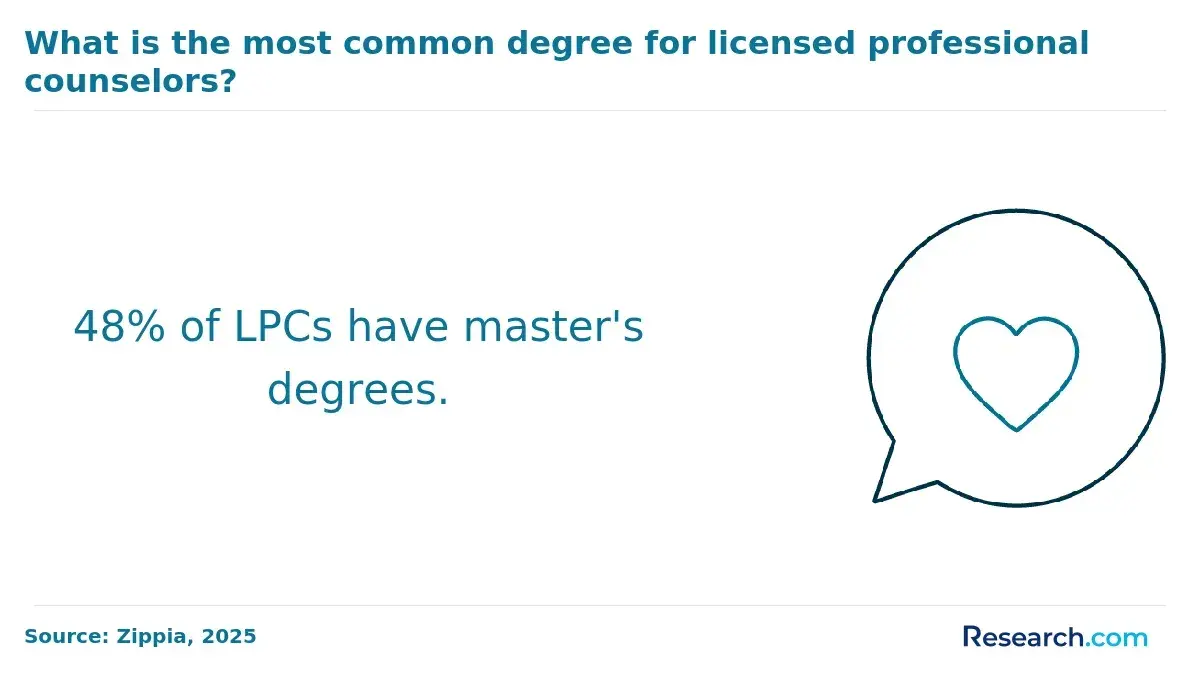
The full Minnesota LPC pathway often takes seven to eleven years from the start of college through licensure, depending on your undergraduate timeline, graduate program format, supervised-hour pace, exam timing, and application processing. Students who already hold a bachelor’s degree may move faster, while part-time graduate students or candidates with supervision delays may take longer.
- Bachelor’s degree: A typical full-time undergraduate degree takes about four years. Psychology, human services, social science, or related majors can help prepare students for graduate counseling coursework.
- Master’s degree in counseling: Graduate counseling study usually takes two to three years and includes at least 48 semester hours plus at least 700 hours of supervised fieldwork.
- Post-master’s supervised experience: The required 2,000 supervised professional practice hours often take one to two years, depending on job setting, caseload, supervision availability, and whether the candidate works full time.
- Licensing exam: Candidates often spend several months preparing for the NCE or another accepted exam before sitting for the test.
- Application review: Submitting the application, background check, documentation, and fees can take several weeks to a few months before a final decision.
A Minnesota LPC described the process as long but sequential: school, fieldwork, supervision, exam preparation, and then the administrative review. He said that working while completing a master’s program was demanding, and that the supervised-hours phase required careful scheduling around clients, supervisors, and employment obligations.
His main lesson was that the licensure timeline becomes more manageable when candidates plan each stage before they reach it. Waiting until graduation to find a supervisor, learn the hour rules, or choose an exam can add unnecessary time.
| Stage | Typical time stated | How to avoid delays |
| Bachelor’s degree | About four years | Choose prerequisites and volunteer experiences that strengthen graduate applications. |
| Graduate counseling degree | Two to three years | Select a program designed around Minnesota counseling licensure requirements. |
| Supervised post-master’s practice | One to two years | Secure an approved supervisor and track hours from the first eligible day. |
| Exam and application | Several weeks to a few months for processing after submission | Prepare early, request transcripts in advance, and submit a complete file. |
Are there continuing education and renewal requirements for LPCs in Minnesota?
Yes. Minnesota LPCs must renew their license periodically and complete continuing education that supports ethical, competent, and current counseling practice. Renewal is not just a payment step; counselors are responsible for maintaining documentation and choosing courses that meet Board expectations.
Continuing education helps counselors stay current with changes in clinical practice, ethics, client needs, documentation standards, telehealth, and state regulations. Before paying for a course, verify that the provider and topic are acceptable for Minnesota renewal. For a broader overview of the state pathway, see Research.com’s guide on how to become a mental health counselor in Minnesota.
What is the fastest way to become a counselor in Minnesota?
The fastest responsible path is to remove avoidable delays, not to bypass training quality. Choose a qualifying counseling program from the start, confirm that the curriculum includes required courses and fieldwork, line up an approved supervisor before graduation when possible, prepare for the correct national exam early, and keep clean documentation for every hour of experience.
Accelerated or well-structured programs may help some students move efficiently, especially if coursework and field placements are coordinated. However, speed should not come at the cost of licensure eligibility. A program that is fast but missing required coursework can become the slower and more expensive option. For more targeted planning ideas, review Research.com’s guide to the fastest way to become a counselor in Minnesota.
| Speed strategy | Why it helps | Risk to avoid |
| Choose a licensure-aligned graduate program | Reduces the chance of missing required coursework. | Do not rely only on program marketing language; ask about Minnesota licensure outcomes. |
| Plan field placements early | Helps you complete the 700 hours of supervised field experience without last-minute placement problems. | A placement may not count if it does not meet supervision or setting expectations. |
| Find an approved supervisor quickly | Allows eligible post-master’s hours to accumulate efficiently. | Unapproved supervision can create documentation problems later. |
| Prepare for the exam before the application deadline | Prevents exam scheduling from becoming the bottleneck. | Taking the wrong exam can delay the intended credential path. |
What types of LPC licenses are offered in Minnesota?
Minnesota distinguishes between counseling credentials that reflect different scopes of practice, levels of clinical preparation, and supervision expectations. The two credentials most candidates compare are LPC and LPCC.
- Licensed Professional Counselor (LPC): This credential is for applicants with a qualifying master’s or doctoral degree, supervised internship experience of 700 hours, and a passing national exam. It supports professional counseling practice within the scope allowed by Minnesota rules and may involve supervision limits depending on the counselor’s role and setting.
- Licensed Professional Clinical Counselor (LPCC): The LPCC builds on the LPC pathway and includes additional clinical requirements, including 2,000 hours of supervised clinical experience and a clinical exam. The Minnesota licensed professional clinical counselor license is commonly pursued by counselors seeking independent clinical practice and diagnostic authority.
- Licensure by reciprocity: Counselors licensed in another state may apply if their existing license was earned under standards that substantially match Minnesota’s requirements.
If you are still comparing programs, accreditation should be part of the decision. Understanding the CACREP accreditation process can help you evaluate whether a counseling program is likely to support future licensure planning.
| Credential | Best for | Key requirement stated | Decision point |
| LPC | Candidates entering professional counseling practice in Minnesota. | Graduate degree, 700 hours of supervised internship, and national exam. | Good fit if your immediate goal is counseling licensure and supervised professional practice. |
| LPCC | Counselors seeking broader clinical independence. | Additional 2,000 hours of supervised clinical experience and clinical exam. | Consider this route if you want independent clinical practice, diagnosis-related responsibilities, or advanced mental health roles. |
| Reciprocity route | Already-licensed counselors relocating to Minnesota. | Comparable out-of-state license requirements and documentation. | Useful if your original state’s standards align closely with Minnesota’s. |
Does Minnesota have LPC reciprocity with other states?
Minnesota has a reciprocity pathway for LPC and LPCC applicants, but reciprocity is not automatic. The Board reviews whether your current out-of-state license was issued under requirements that are substantially equivalent to Minnesota’s standards.
Applicants typically need a reciprocity application, official license verification, academic transcripts, documentation of at least 700 hours of counseling field experience, and proof of passing an NBCC exam such as the NCE or NCMHCE. If the Board determines that your previous state’s requirements do not fully match Minnesota’s, you may need additional education, supervision, a background check, or another licensure route.
The Minnesota Board of Behavioral Health and Therapy identifies Kansas, Massachusetts, Ohio, and Virginia as states with equivalent requirements. Applicants from other states may still apply, but they may need to submit their state’s licensure laws for review. If you are relocating, start this process before accepting a role that requires Minnesota licensure.
What is the demand for LPCs in Minnesota?
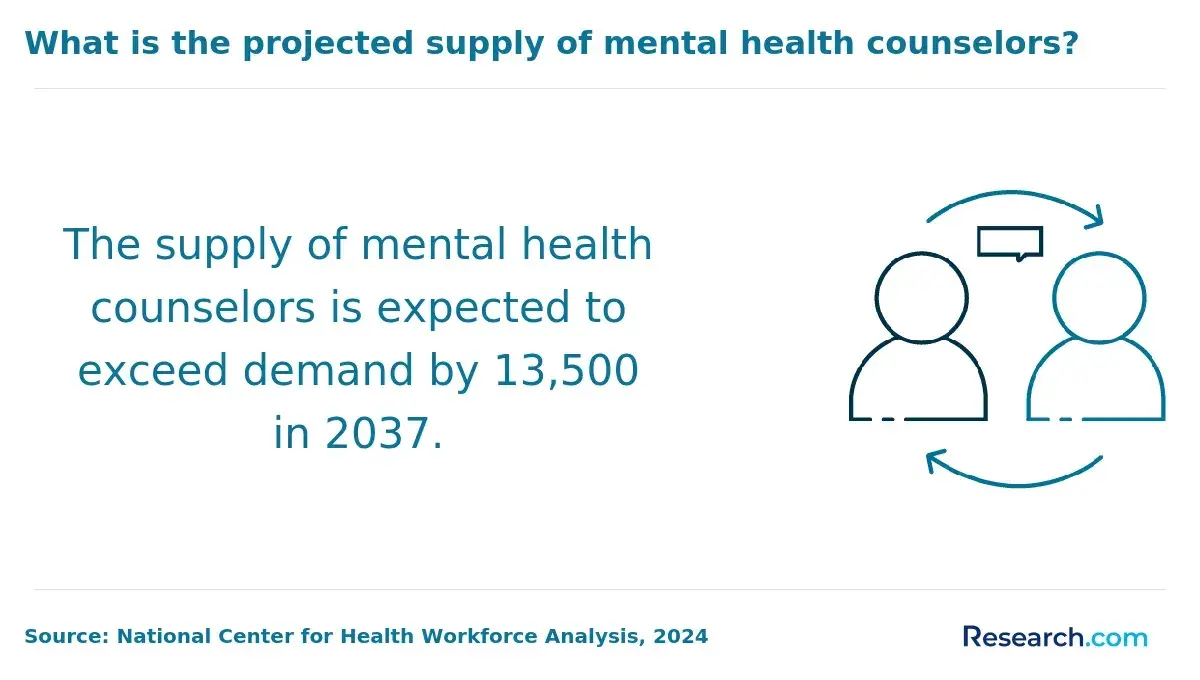
Minnesota’s need for licensed counselors is shaped by mental health access needs, school and community demand, healthcare integration, and the need for services in both urban and rural areas. The state reports a steady 12% growth in counseling jobs through 2030. Nationally, counselor jobs are projected to grow by 18% from 2022 to 2032, and Minnesota is affected by many of the same pressures driving demand.
Employers that may hire LPCs include schools, hospitals, behavioral health clinics, community agencies, nonprofits, substance use treatment programs, and private practices. Schools often need counselors to support student mental health and behavioral concerns. Hospitals and healthcare systems use counselors as part of integrated care teams. Community organizations rely on counselors for crisis support, prevention, substance use services, and care in underserved areas.
Current trends are also changing what employers expect. Counselors may need comfort with telehealth, electronic documentation, outcome measurement, interdisciplinary care, and culturally responsive practice. Artificial intelligence and digital tools may support scheduling, documentation, screening, and administrative tasks, but they do not replace the licensure, ethical judgment, therapeutic relationship, and clinical accountability required of professional counselors.
If you are deciding whether graduate counseling study is the right investment, Research.com’s guide to master’s in counseling programs can help you compare the academic path with your career goals, cost tolerance, and readiness for supervised clinical training.
How does LPC licensure affect career growth in Minnesota?
LPC licensure can expand your professional options because many employers need counselors who meet state credentialing standards. It also signals that you have completed graduate education, supervised practice, examination, and background review. However, licensure is not a salary guarantee; outcomes vary by setting, specialization, geography, experience, and whether you later pursue LPCC status.
- More eligible job options: Hospitals, schools, clinics, community mental health centers, and other employers may require or strongly prefer LPC licensure for counseling roles. One cited workforce point notes that over 80% of licensed counselors plan to remain in the field for more than ten years.
- Potential for stronger earnings: Licensed counselors often qualify for roles unavailable to unlicensed workers. Mental health counselors in Minnesota are cited as averaging about $59,020 annually, though individual pay depends on employer type, specialization, credentials, and experience.
- Pathway toward private practice: Licensure can support movement toward independent or semi-independent practice, especially for counselors who later meet LPCC requirements where appropriate.
- Supervision and leadership opportunities: Experienced counselors who pursue additional credentials may qualify for supervisory, administrative, program development, or training roles.
- Room for specialization: Licensure can support focused practice in areas such as addiction, school counseling support, trauma-informed care, family work, crisis services, or community mental health.
If you are comparing graduate degree names, the difference between a Master of Arts and a Master of Science in counseling can matter less than whether the program meets Minnesota licensure requirements, includes appropriate fieldwork, and fits your long-term clinical goals.
Common mistakes to avoid when planning Minnesota LPC licensure
- Choosing a program before checking licensure fit: A counseling-related degree is not always the same as a licensure-aligned counseling degree. Compare courses, credits, fieldwork, and accreditation before enrolling.
- Focusing only on tuition: A cheaper program can cost more later if you need extra coursework, additional supervision, or delayed employment eligibility.
- Assuming online programs automatically qualify: Out-of-state online programs may be excellent, but you must verify that they meet Minnesota-specific LPC or LPCC requirements.
- Waiting too long to plan supervision: Approved supervision can be a bottleneck. Identify qualified supervisors and documentation expectations early.
- Poor hour tracking: Missing dates, unclear supervision formats, or unsigned records can slow Board review.
- Confusing LPC and LPCC requirements: The credentials overlap but are not identical. Know which license you need for your intended scope of practice.
- Relying only on rankings or reputation: A well-known school is not automatically the best licensure choice. Ask direct questions about Minnesota licensure outcomes.
Questions to ask before choosing a Minnesota counseling program
- Does the program’s curriculum cover every Minnesota-required counseling content area?
- Does the program include at least 700 hours of supervised practicum or internship experience?
- Are graduates eligible to pursue LPC, LPCC, or both?
- Is the program CACREP-accredited or otherwise accepted for Minnesota licensure review?
- How does the school support field placement, supervisor selection, and licensure documentation?
- What percentage of students complete the program while working, and how are evening, weekend, or online requirements handled?
- Does the program prepare students for the NCE, NCMHCE, or both?
- Will the school provide syllabi, fieldwork verification, and official documentation if the Board requests it?
What do LPCs in Minnesota say about their career?
- My LPC preparation at the University of Minnesota changed how I understood counseling work. Staying in the state allowed me to build local connections, and my first school-based role showed me how much students can grow when consistent mental health support is available. Minnesota’s attention to behavioral health made the early years feel more supported, and I value the mix of career stability and daily purpose. - Jani
- Becoming a licensed professional counselor in Minnesota pushed me academically and personally. St. Cloud State University helped me develop culturally responsive skills that I use with students and families from many backgrounds. The state’s urban and rural needs make the work varied, challenging, and meaningful, especially in an academic setting where counseling can shape long-term student well-being. - Eron
- After completing my program at Metropolitan State University, I found opportunities in Minnesota that I had not expected. Schools and community settings here value counselors who combine empathy, professional growth, and creativity. Working in the local education system has connected me more deeply with community concerns and strengthened my commitment to helping students build resilience. - Ava
Related Articles for Nearby States
- 2027 LPC Counseling Licensure Requirements in Wisconsin
- 2027 LPC Counseling Licensure Requirements in Iowa
- 2027 LPC Counseling Licensure Requirements in North Dakota
- 2027 LPC Counseling Licensure Requirements in South Dakota
- 2027 LPC Counseling Licensure Requirements in Nebraska
- 2027 LPC Counseling Licensure Requirements in Illinois
- 2027 LPC Counseling Licensure Requirements in Missouri
- 2027 LPC Counseling Licensure Requirements in Michigan
- 2027 LPC Counseling Licensure Requirements in Kansas
- 2027 LPC Counseling Licensure Requirements in Indiana
References:
- Minnesota Board of Behavioral Health and Therapy, LPC application information: https://mn.gov/boards/behavioral-health/applicants/apply/apply-for-lpc.jsp
- Research.com, Minnesota LPC career guide: https://research.com/careers/how-to-become-a-licensed-counselor-lpc-in-minnesota
- Minnesota Council of Nonprofits Career Center, clinical mental health counselor jobs: https://jobs.minnesotanonprofits.org/q-clinical-mental-health-counselor-jobs.html
- Saint Mary's University of Minnesota, LPCC overview: https://www.smumn.edu/blog/how-to-become-a-licensed-professional-clinical-counselor/
- Psychology.org, Minnesota counselor licensure requirements: https://www.psychology.org/counseling/licensure/minnesota/
- MentalHealthCounselorLicense.com, Minnesota LPC and LPCC requirements: https://www.mentalhealthcounselorlicense.com/license/mental-health-counselor-minnesota/
- Headway, therapist reciprocity overview: https://headway.co/resources/reciprocity-states-for-therapists
- Minnesota Clinic for Health and Wellness, mental health credentials and licensure explanation: https://mnclinicforhealth.com/decoding-mental-health-professional-credentials-and-licensures-in-minnesota/
- Wilder, supervision barriers in Minnesota mental health licensure: https://www.wilder.org/mental-health-licensure-barriers-in-minnesota-a-closer-look-at-supervision/
- All Psychology Schools, Minnesota marriage and family therapy salary and job growth resource: https://dev.allpsychologyschools.com/marriage-and-family-therapy/salary/minnesota/
Key Insights
- Minnesota LPC licensure is a multi-step process: qualifying graduate education, required counseling coursework, supervised fieldwork, post-master’s supervised practice, national examination, background check, and Board approval.
- The safest program choice is one built around Minnesota counseling licensure requirements. Do not rely only on the degree title, school reputation, or online convenience.
- Coursework gaps are one of the most preventable licensure problems. Keep syllabi, fieldwork records, and transcript details in case the Board needs clarification.
- Supervision planning matters. Candidates should understand the 700-hour field experience expectation, the 2,000 post-master’s supervised-hour requirement, the 100 supervision hours, and the 50 individual supervision sessions before starting the post-degree phase.
- LPC and LPCC are related but different credentials. LPC may be the first professional licensure goal, while LPCC generally supports broader independent clinical practice.
- Minnesota offers reciprocity, but only when another state’s requirements are substantially equivalent. Out-of-state counselors should begin credential review before relocating or accepting a Minnesota role.
- Licensure can improve employability and professional credibility, but career outcomes depend on setting, specialization, experience, location, and whether you pursue additional clinical credentials.
Other Things You Should Know About Being an LPC in Minnesota
Minnesota LPC candidates must pass the National Counselor Examination (NCE) for licensure in 2027. The exam is administered through the National Board for Certified Counselors, and applicants usually complete it after meeting the graduate education and supervision requirements set by the Minnesota Board of Behavioral Health and Therapy.
Minnesota requires LPC candidates in 2027 to complete 2,000 hours of supervised clinical experience. This experience must be under the supervision of a board-approved supervisor and is essential for meeting licensure eligibility criteria in the state.
In 2027, aspiring LPCs in Minnesota must hold a master's or doctoral degree in counseling or a closely related field from a regionally accredited institution. This educational requirement is a fundamental step before applying for licensure as a counseling professional in the state.


